If your kitchen or bathroom feels stuck in a style rut, a cabinet makeover is the fastest way to shift the whole room’s personality. You don’t need a full renovation to get a fresh look, sometimes a new color, hardware swap, or door detail is all it takes.
We’ve rounded up 31 trendy cabinet makeover ideas for 2027 that span modern farmhouse, Japandi, and bold color moments. Whether you’re into two-tone combos, glass fronts, or unexpected accents like neon signs, these real-life examples show how a focused update can change how a space lives.
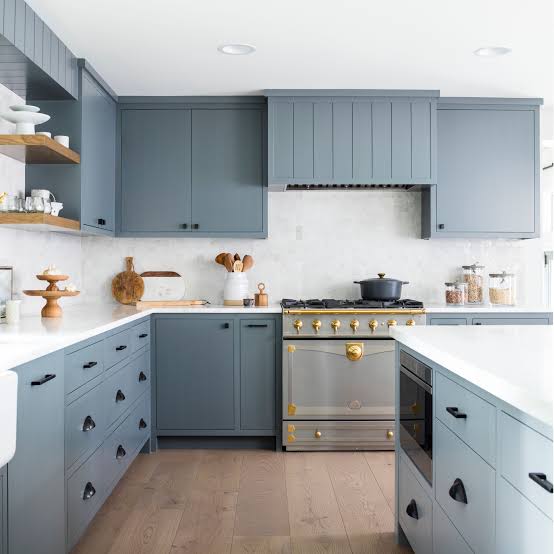
Modern farmhouse blue-gray cabinetry with black hardware
Blue-gray cabinetry looks a neutral that still has a point of view. The shade sits between a true gray and a muted blue, so it brings color into the room while the white marble countertops and wood-toned open shelving stay prominent. Black hardware anchors the look, giving each door a defined edge. The palette works because the cool cabinet color lets the warm wood finishes and stainless steel range stand out on their own. Keep the rest of the room simple and let the cabinetry carry the color.
Two-tone farmhouse cabinets: white uppers, wood lowers
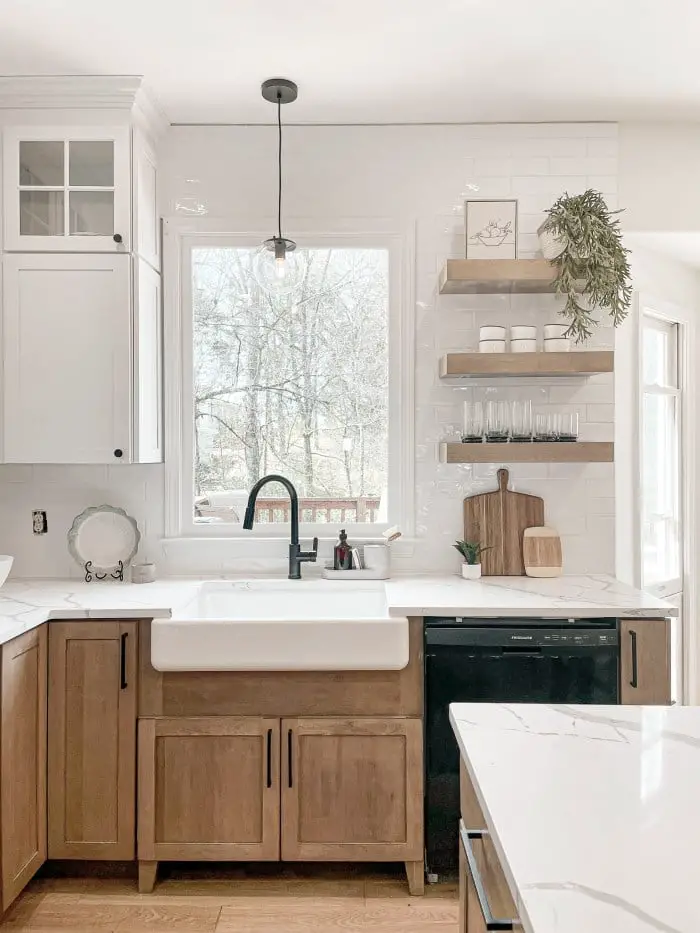
White uppers paired with wood lowers is a palette trick that adds depth without extra square footage. The white keeps the upper half of the kitchen light and open, while the wood tones ground the space around the farmhouse sink and black faucet. The two-tone approach breaks the visual line of a single color, making the room feel taller and more intentional. A practical rule for this setup: match the wood lower tone to the flooring or countertop material so the palette stays cohesive. Floating shelves in the same wood finish tie the look together.
Japandi style light wood cabinet with sliding doors
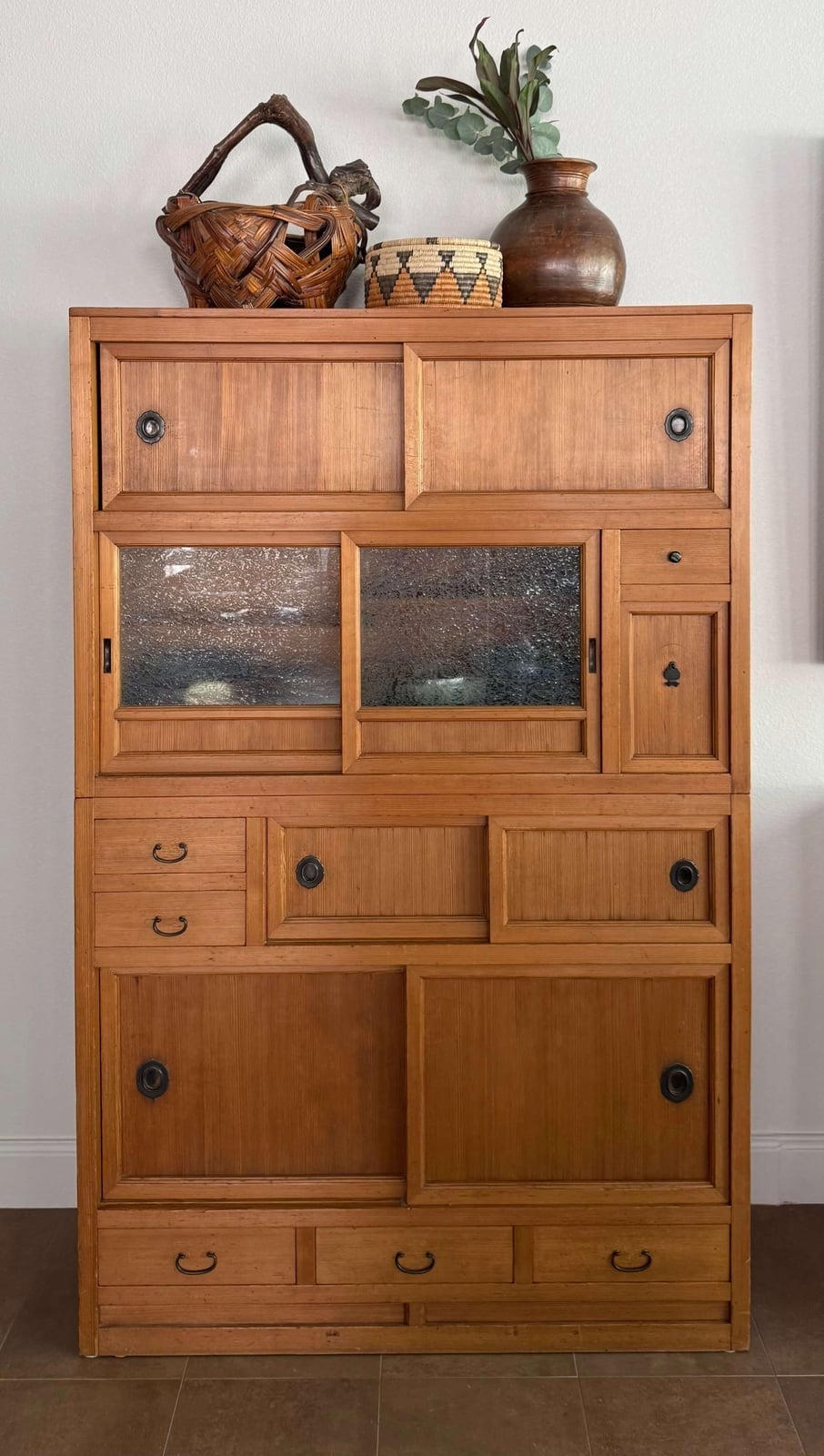
How do you add storage without making a small living room feel crowded? A light wood cabinet with sliding doors. The vertical design uses vertical space efficiently, with drawers below and sliding doors above that hide clutter without swinging into the room. The materials do the work here: natural wood keeps the piece warm, while glass panels in the doors let you display a ceramic vase or plant without opening up everything. Wicker baskets on the lower shelves add texture and hide smaller items. The japandi approach pairs the clean lines of Scandinavian design with the earthy materials of Japanese interiors, so the cabinet feels sculptural rather than purely functional.
Farmhouse cabinetry with bold neon sign accent
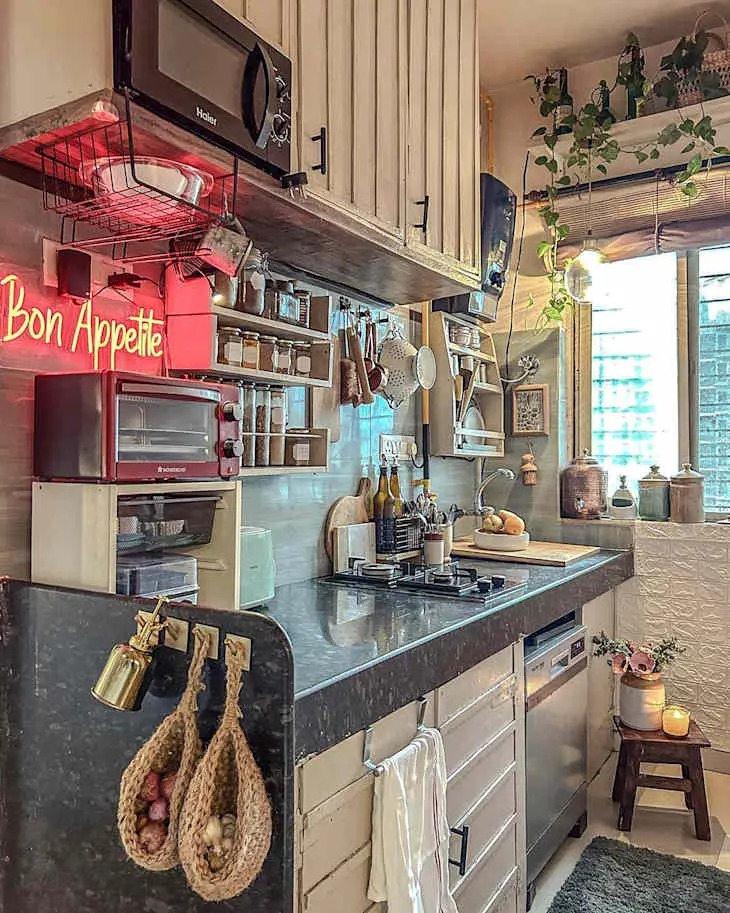
A red neon sign reading ‘Bon Appetit’ sits above the cabinets in a compact galley kitchen, turning an otherwise neutral farmhouse space into something with personality. The white cabinetry and wood tones stay classic, while the neon adds a warm glow that overhead cabinet lights alone cannot match. The sign becomes the room’s focal point without requiring any permanent changes to the cabinets themselves. For a renter-safe swap, mount the sign with removable adhesive strips and plug it into an existing outlet rather than hardwiring it into the wall.
Dark blue kitchen cabinets with brass hardware and wood shelving
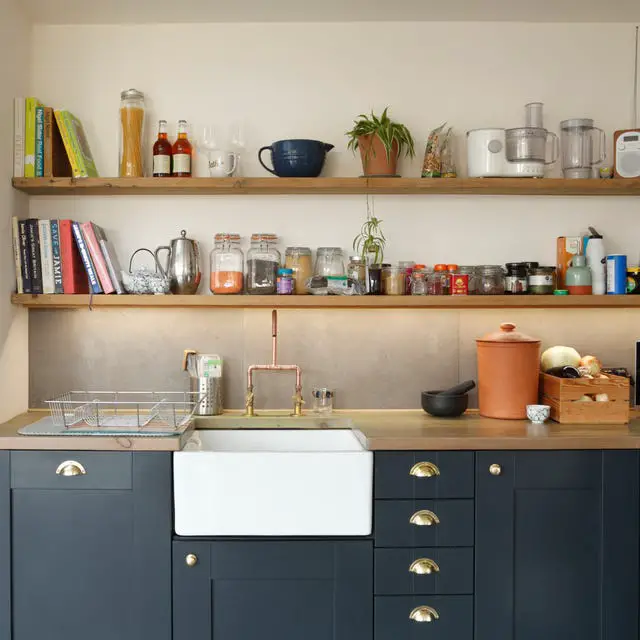
Dark blue cabinets with brass hardware create a natural focal point in a compact kitchen. The deep color acts as a dark neutral tone, so it does not fight with the wood shelves above or the copper faucet at the apron sink. Limit bright accent colors to one or two pieces on the open shelves, like a ceramic pitcher or a glass jar, so the dark cabinets stay the main focus. Under-cabinet lighting helps keep the countertop workable when the cabinets absorb more ambient light than white ones would.
Sage green lower cabinets contrasting white uppers
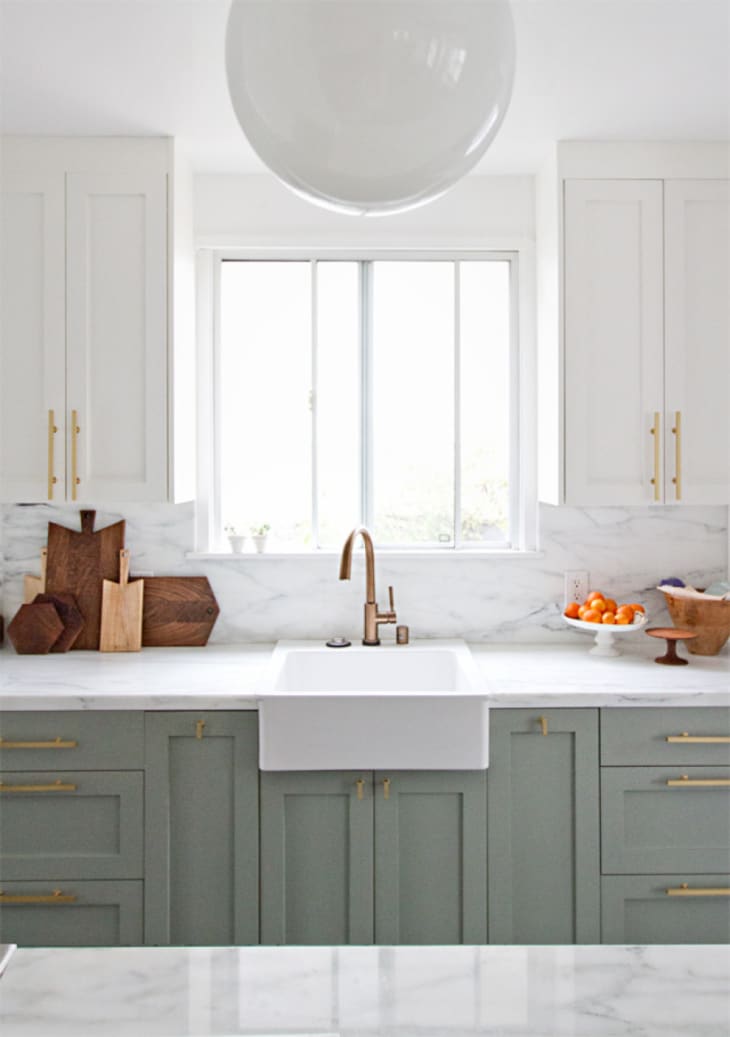
A different take on the two-tone kitchen skips the usual white-and-wood combo for sage green base cabinets paired with white uppers. The sage green lower cabinets anchor the room while the white uppers keep the kitchen feeling open. A farmhouse sink sits centered under a window, with a brass faucet and a marble countertop adding contrast. The palette here is sage green, white, gold, and marble, with wood cutting boards and ceramic pieces as natural accents. A pendant light above the sink provides task lighting. A darker lower cabinet color hides daily scuffs and splashes better than white, making this a practical swap for busy kitchens.
Luxury feel with dark marble countertops and wood tones
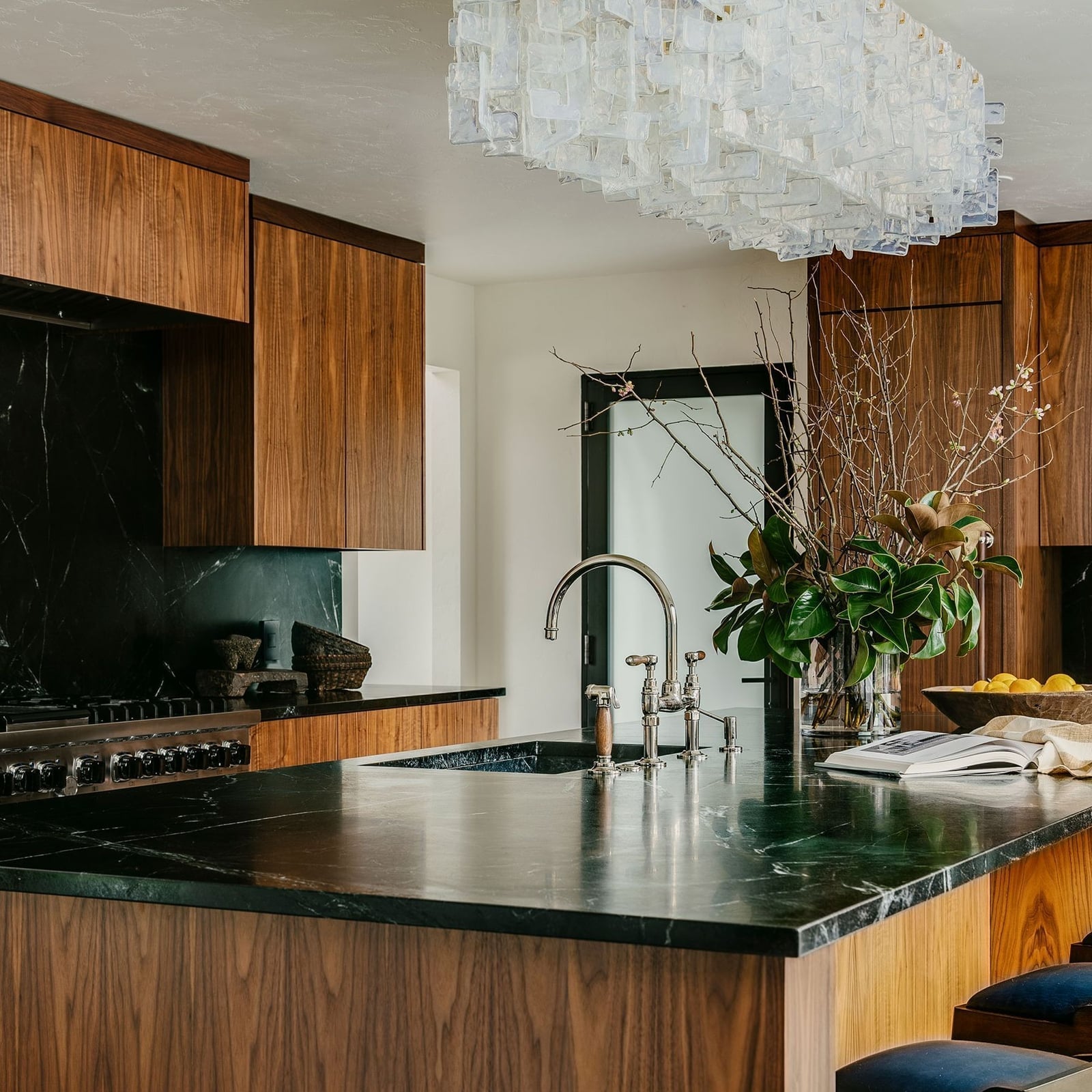
A large glass chandelier hangs above a kitchen island with dark marble countertops and warm wood cabinetry. The combination of black marble, wood tones, and a touch of green from a vase of branches creates a modern look that looks high-end without being cold. The island includes a sink and seating, making it both a prep and gathering spot. A renter-safe way to get this feel is to swap out a standard light fixture for a striking chandelier and add a marble-look countertop contact paper to the island.
White shaker cabinets with elegant brass hardware
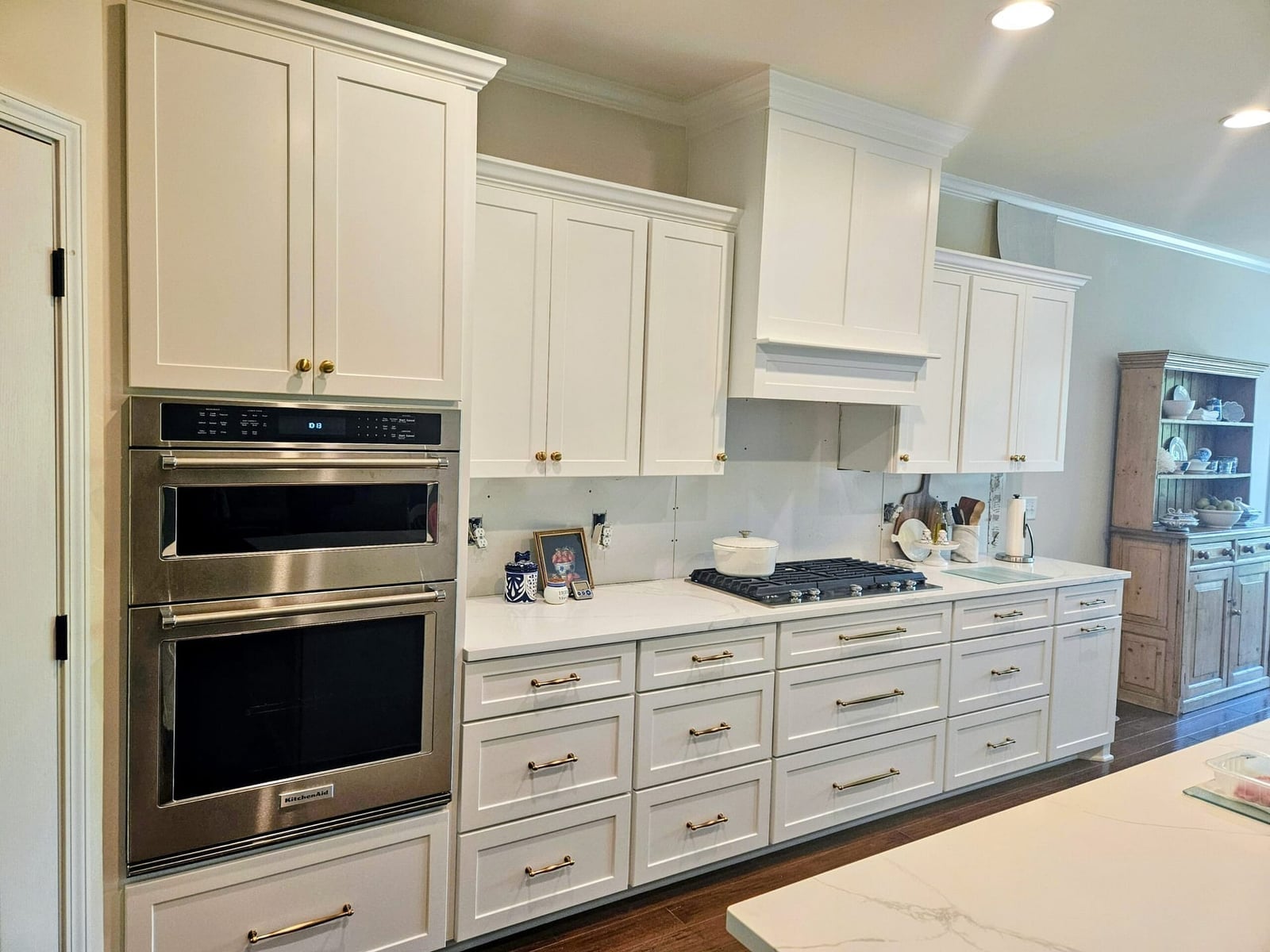
White shaker cabinets paired with brass hardware create a clean, classic look that looks updated. The kitchen has an L-shaped counter with an island, a stacked oven unit, and a gas range. The palette stays in the white, brass, stainless steel, and wood family, with a marble countertop tying it together. Recessed ceiling lights provide even illumination. The styling variation here is the hardware: brass pulls on white shaker doors add warmth without overwhelming the simple cabinet profile. This approach works for anyone wanting a classic kitchen that can shift with future decor changes.
Mint green cabinets meet wood lowers on a central island
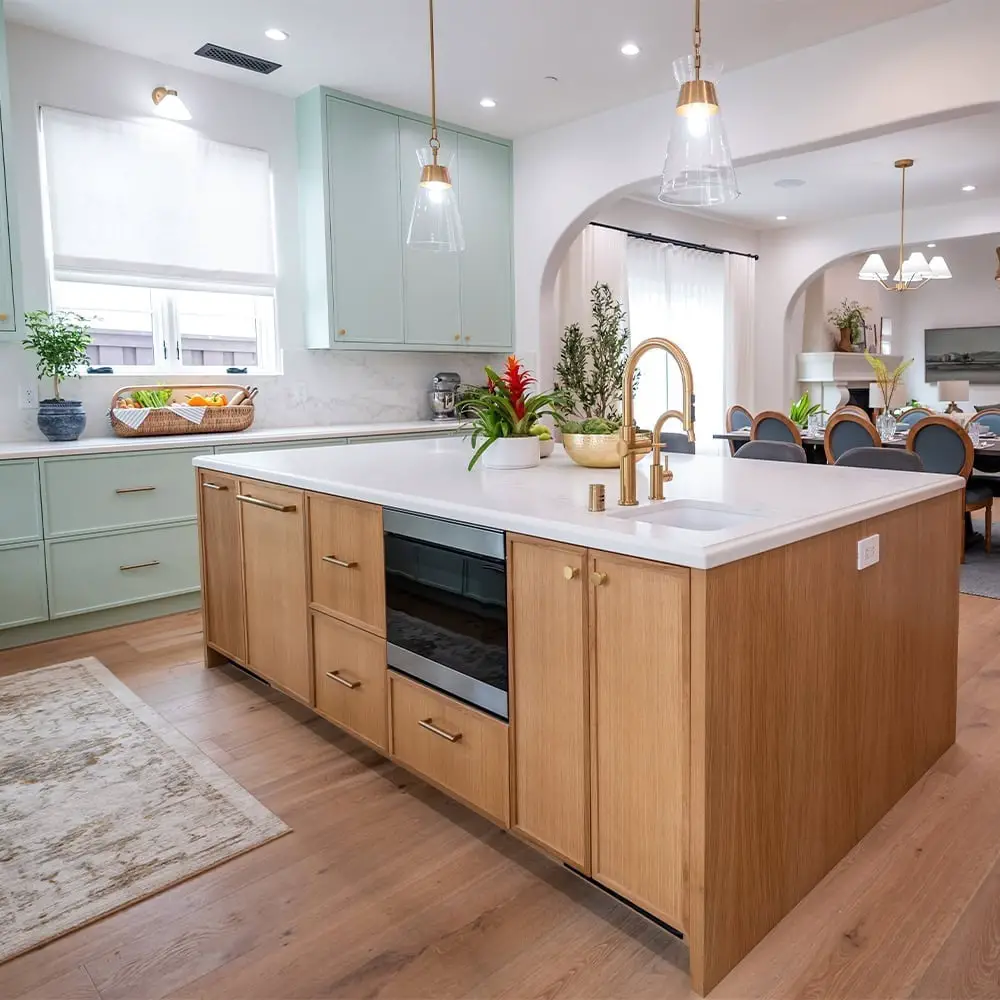
Can you make a colored island work without it taking over the whole kitchen? This open plan kitchen and dining area does it with mint green cabinets on the central island and light wood cabinets on the lowers. The island sits under pendant lights, with a marble countertop and brass accents. A dining table nearby keeps the space connected. The palette is mint green, light wood, white, and brass, with tile as a backsplash. The principle is that an island in a bold color can act as the room’s focal point while the perimeter cabinets stay neutral. This keeps the look balanced and the color from feeling overwhelming.
Dramatic cabinet makeover: warm wood to deep brown
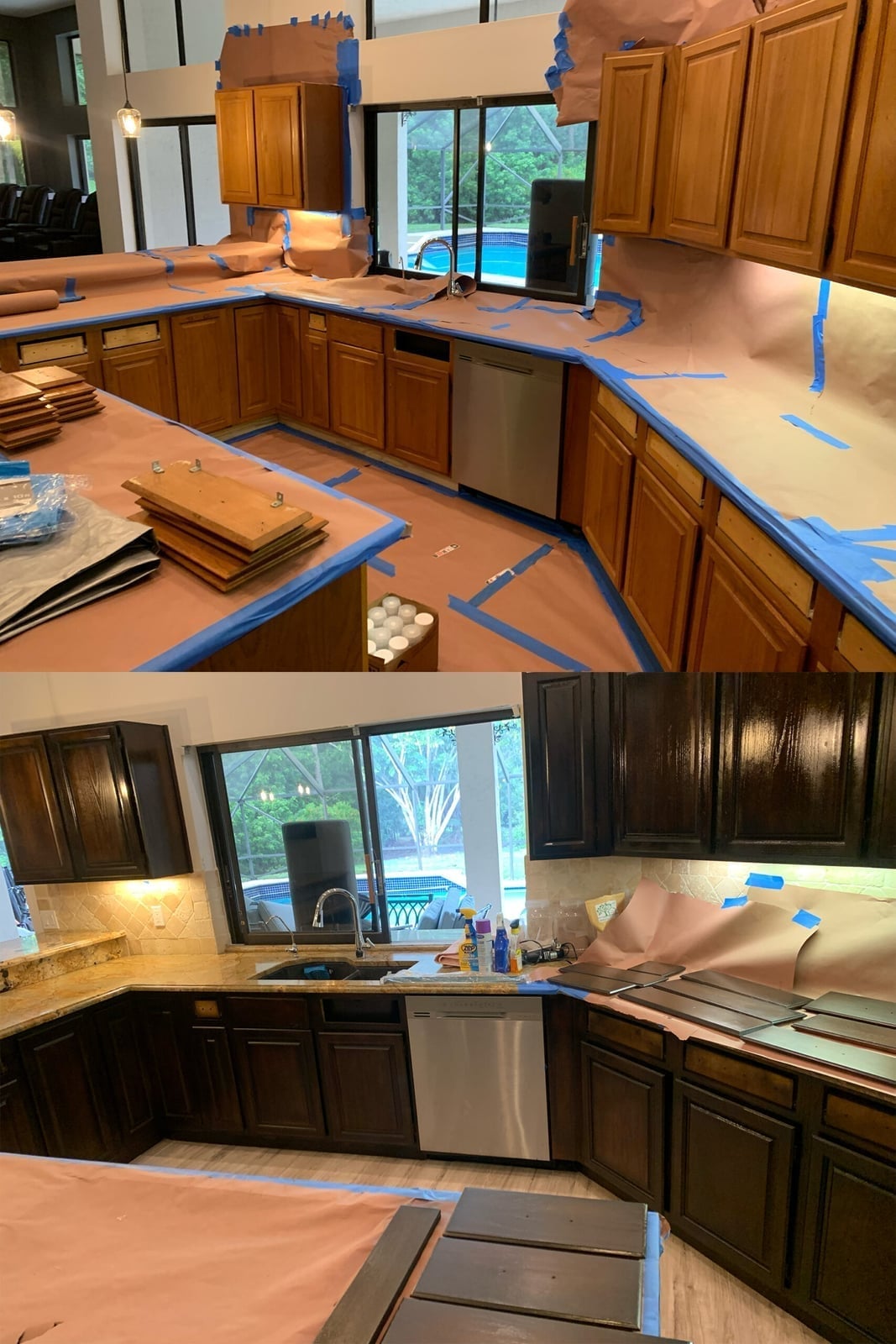
A u-shaped kitchen with warm wood cabinets was given a deep brown paint makeover, changing the entire feel of the room. The deep brown cabinets pair with a granite countertop and stainless steel appliances. Under cabinet lighting and pendant lights provide task and ambient light. The transformation shows how a single coat of paint on existing cabinets can shift a kitchen from dated to traditional and grounded. The durability angle is that a deep brown finish hides wear better than lighter colors, making it a practical choice for a busy kitchen.
Cream dining room cabinet with green floral interior
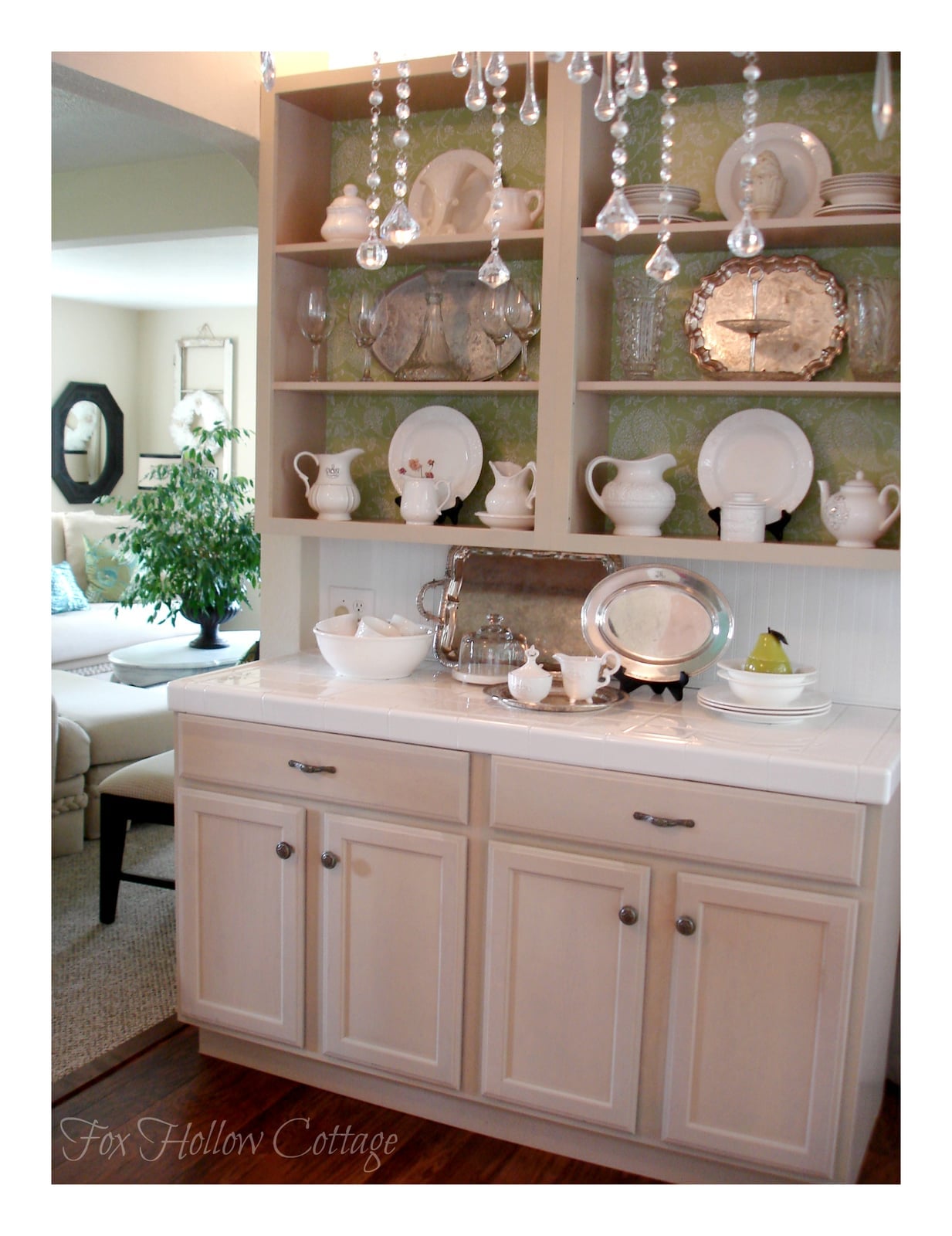
This traditional china cabinet uses a cream finish as a neutral frame for the green floral interior and crystal chandelier overhead. The built-in has glass shelves and lower cabinets, while the walls or tile stay quiet. White pitchers and silver serving platters stand out against the cream, green, white and silver palette. To recreate the look, line the back panel of an existing cabinet with peel-and-stick wallpaper in a green floral pattern. That gives depth without painting the whole piece. The crystal chandelier adds sparkle that keeps the eye moving upward.
Glass-front white uppers with dark green lower cabinets
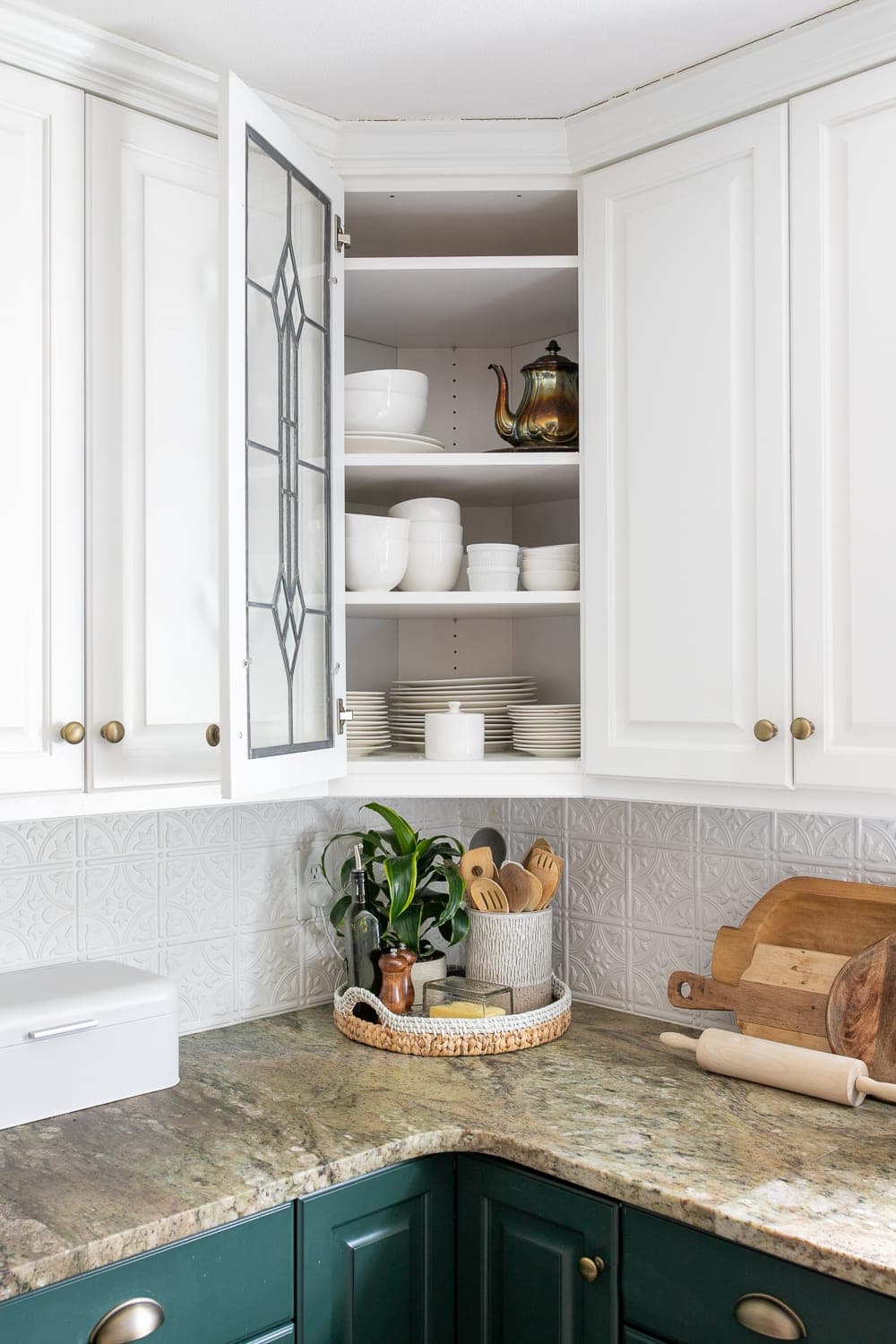
This look is often set against all-white cabinetry, and the difference is that the color lives where it can anchor the room. White upper cabinets with glass fronts sit above dark green lower cabinets in this farmhouse kitchen. The glass doors show white dishes stored inside, so the upper half stays light and open. The lower cabinets bring the green down to counter height, which makes the countertop and backsplash look a clear middle band.
Storage here follows a simple pattern: everyday items live behind the lower solid doors, and display pieces go behind the glass uppers. The granite countertop picks up gray and brown tones from the green, so nothing feels disconnected. The corner cabinet layout means the glass-front door catches light from the overhead fixture, making the white dishes visible without adding extra task lighting.
Modern light wood cabinets with sleek gold hardware
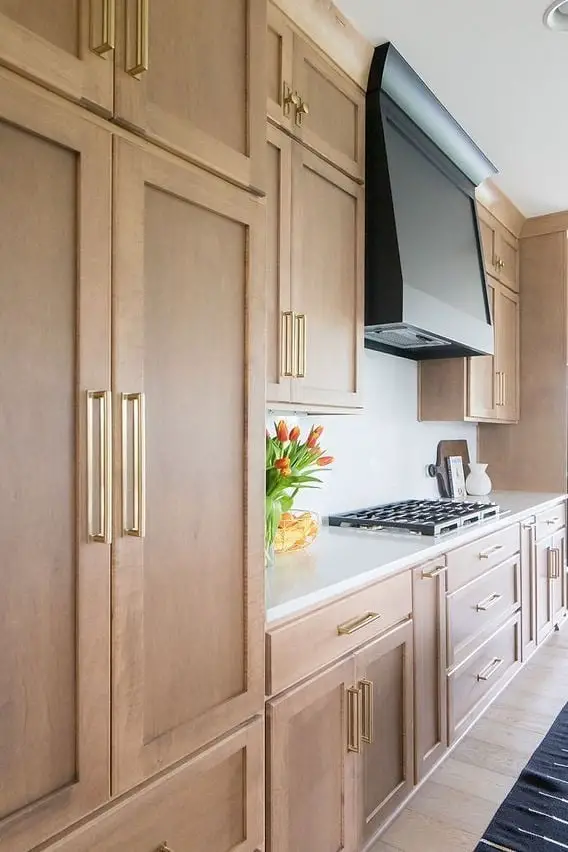
The precise detail here is that the gold hardware is the only metallic element against the light wood and white countertop. The modern kitchen has a linear layout with ample cabinet storage, and the gas range and range hood sit on one wall. The wood tones stay warm, and the black range and white marble-look tile backsplash keep the palette from going too sweet. The gold pulls run vertically on the cabinet fronts, which draws the eye up to the overhead lighting. The balance works because the wood is pale enough to let the brass look an accent rather than a competing finish.
Deep green glass-front cabinets with wine fridge
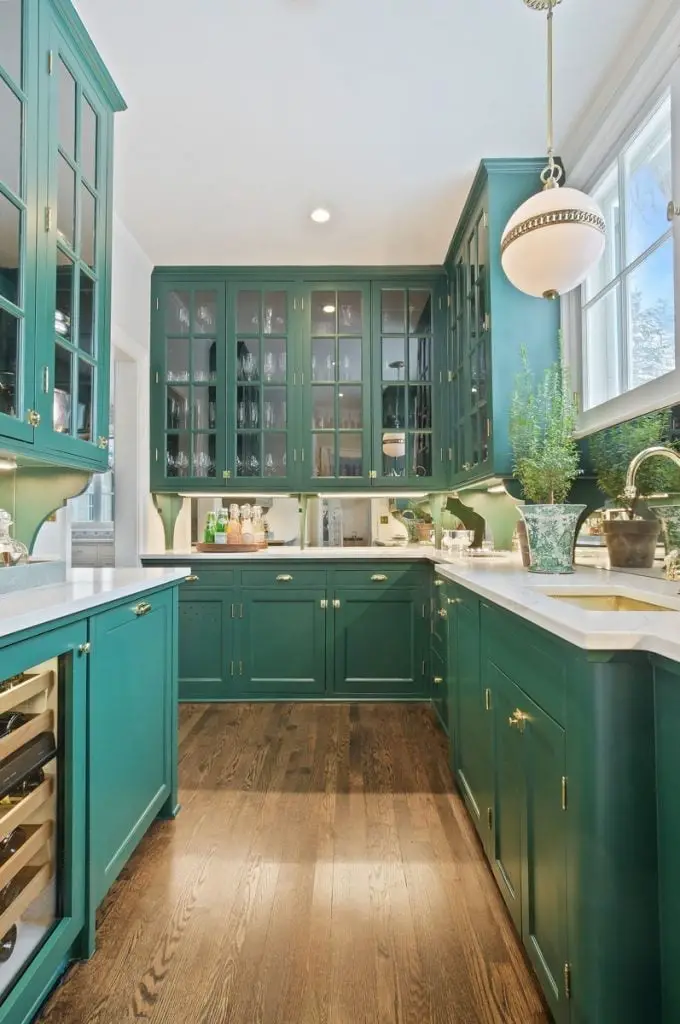
This is a direct assessment: the deep green cabinetry works because the lighting makes it readable. The traditional kitchen uses an L-shaped counter layout with a wine fridge built in below the glass-front cabinets. Overhead lighting and under-cabinet strips hit the wood and brass finishes, and natural light from a nearby window keeps the green from going flat. The glass fronts show the contents of the upper cabinets, which means they need to stay organized, but the payoff is that the room feels larger. The brass hardware and marble countertop add warm and cool notes that stop the deep green from dominating. The pendant light above the counter echoes the brass finish and keeps the lighting layered.
White cabinet doors with festive plaid inserts
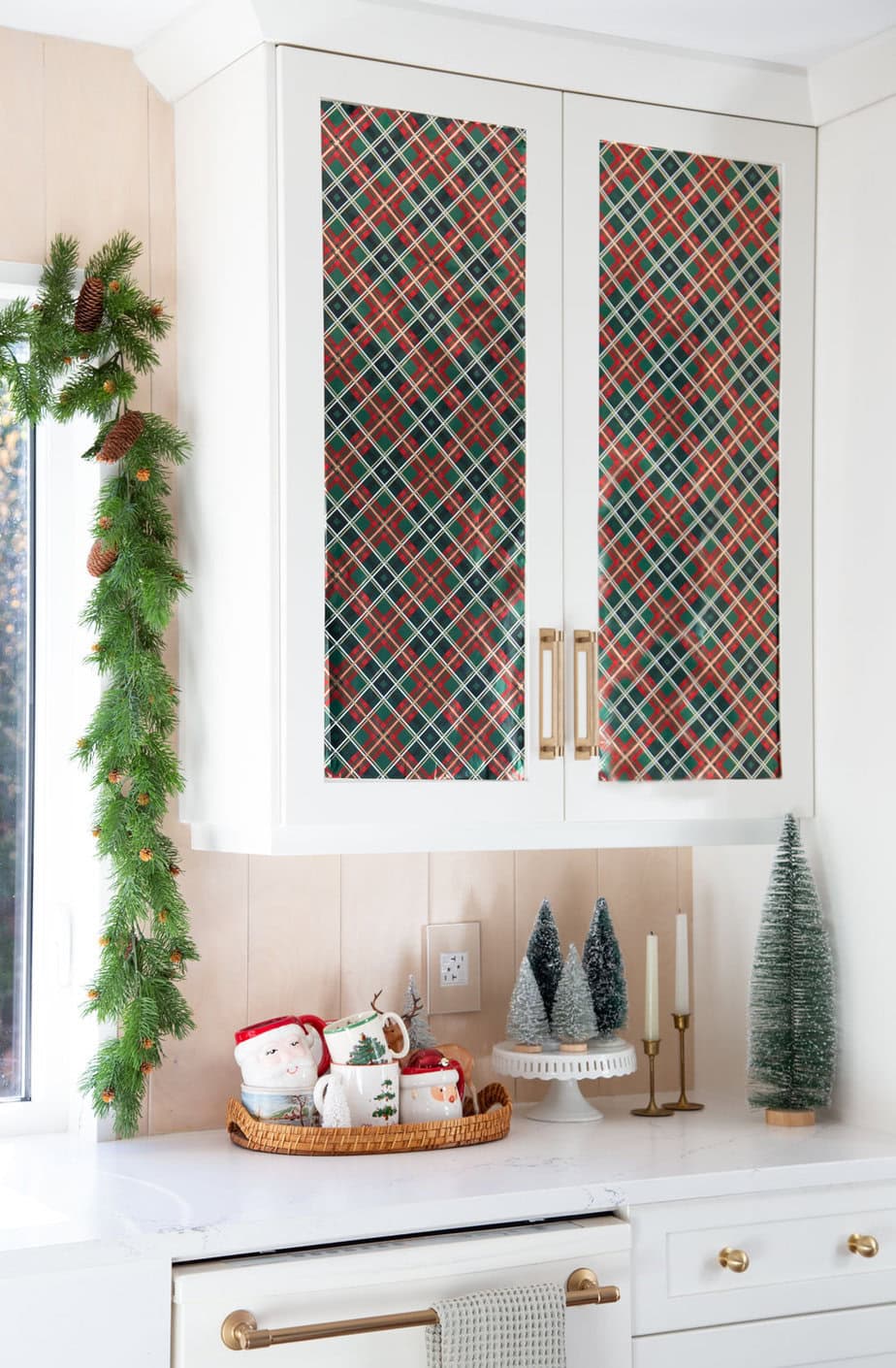
Decorative inserts work best when the surrounding space stays simple. The white upper cabinets in this modern kitchen have plaid panels set into the door frames, with red and green tones that match the bottle brush trees and mugs on the counter. The brass hardware and wicker accessories keep the look from tipping into full holiday decor.
The layout here is compact, so the plaid inserts act as the focal point without needing more decoration. Natural light from a window behind the counter hits the glass in the cabinet doors and the brass hardware, which keeps the white cabinets from looking plain. The countertop display of small trees and mugs repeats the plaid colors, but the white cabinet frames hold the pattern in place so the kitchen still looks like a kitchen rather than a seasonal display.
Distressed light gray corner cabinet with farmhouse decor
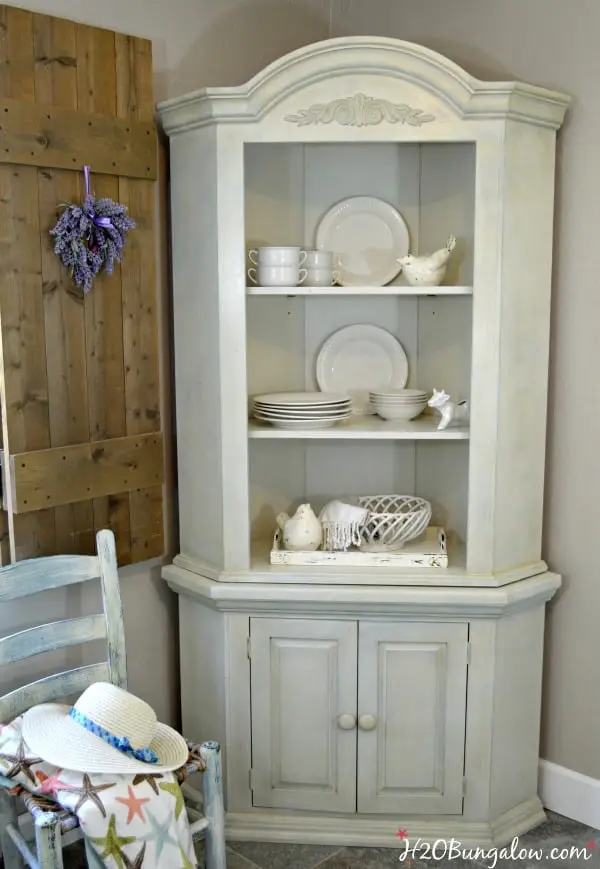
A distressed light gray corner cabinet brings the farmhouse look into a compact kitchen spot without taking up floor space. The finish is softly weathered, not rough, so it looks aged charm rather than neglect. White ceramic plates and bowls sit on the open shelves, with small decorative chickens and cows adding a playful country note. A lavender tone in a few accents keeps the palette from turning purely neutral. The practical principle here is storage: a corner cabinet uses an area that often goes empty, and open shelves keep everyday dishes within reach while making the corner feel part of the room, not a dead end.
Distressed white and dark green bathroom cabinet
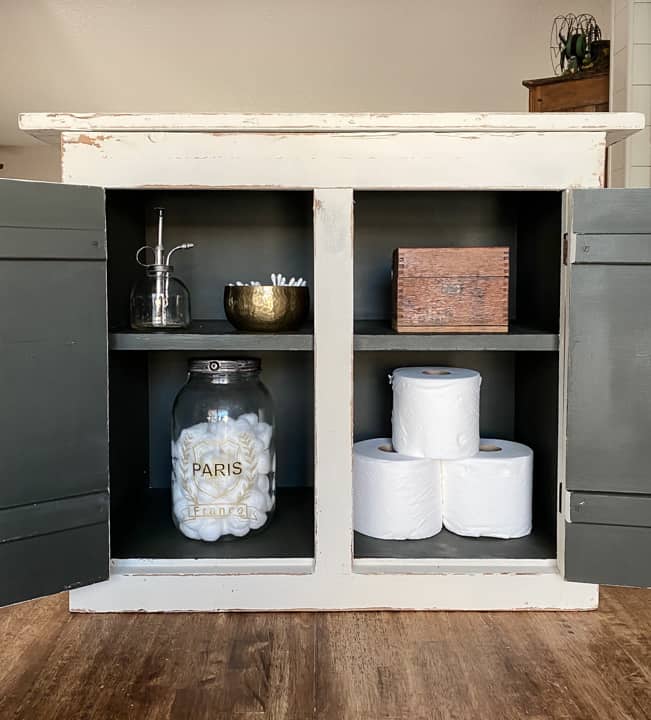
To add character to a rental bathroom, choose a standalone cabinet instead of changing tile or plumbing. This distressed white cabinet has a worn finish that hides scuffs better than a glossy surface would, and the dark green interior provides a surprise contrast when the doors open. The palette does the work: white keeps the compact room feeling open, while green adds depth without overwhelming the space. A brass bowl and a wooden box on top bring in warm metal and natural wood tones that tie the cabinet to the room. This piece stands alone and can move with you to the next place.
Modern kitchen with white cabinets and open corner shelving
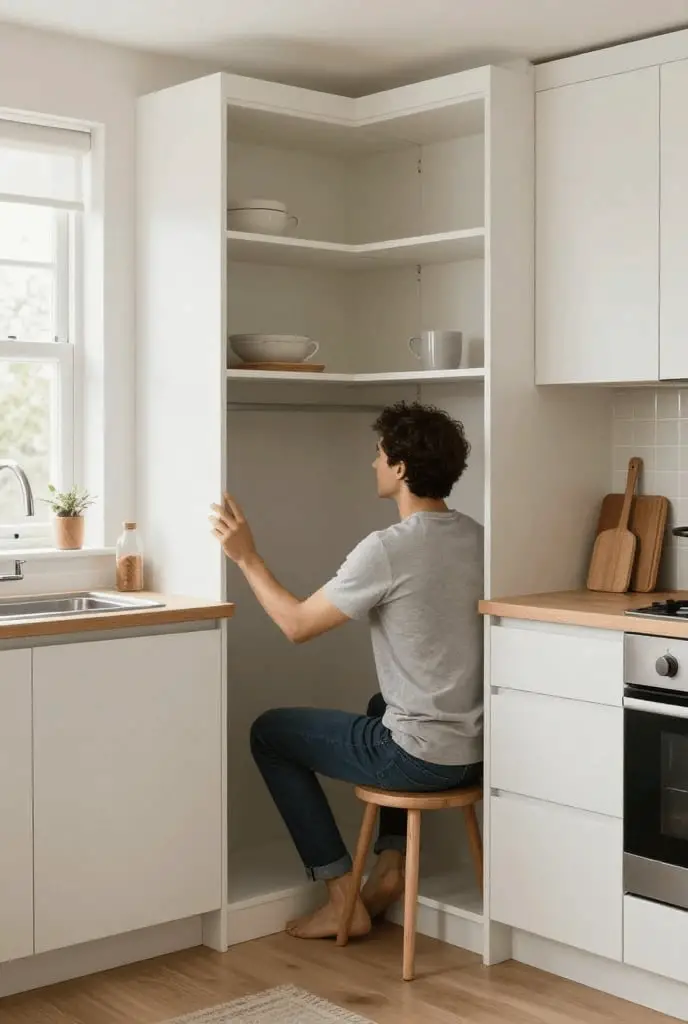
Where a standard corner cabinet often hides items behind a deep dark space, open corner shelving turns that same area into a display zone. White cabinets keep the kitchen bright, while a wooden countertop and a light gray stool add warmth without clutter. The natural light from a window hits the open shelves, making everyday dishes or cookbooks feel like part of the decor. The practical storage principle here is visibility: open shelving forces you to edit what you keep, which reduces the odds of accumulating items you never use. It works best for kitchens where you reach for the same pots or plates daily.
Dark green shaker cabinets with bell-shaped pendant lights
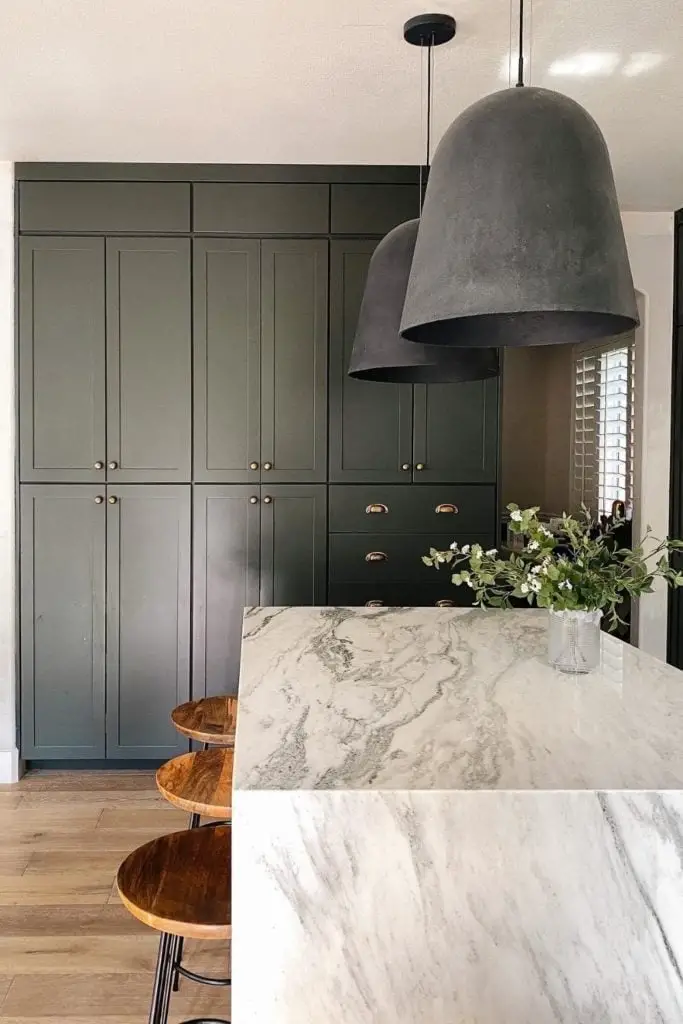
Dark green shaker cabinets make a strong statement against white walls and a gray island, but the real trick here is the pendant lights. Large bell-shaped fixtures hang over the island, casting light directly onto the work surface while their metallic finish picks up warm notes in the wood tones. The lighting principle is simple: pendants should hang low enough to light the counter, not the room at large. In a roomy kitchen with tall cabinets lining one wall, those pendants break up the vertical mass and draw the eye to the island, which keeps the space from feeling like a corridor of cabinetry.
Light gray shaker cabinets with glass-front uppers and desk area
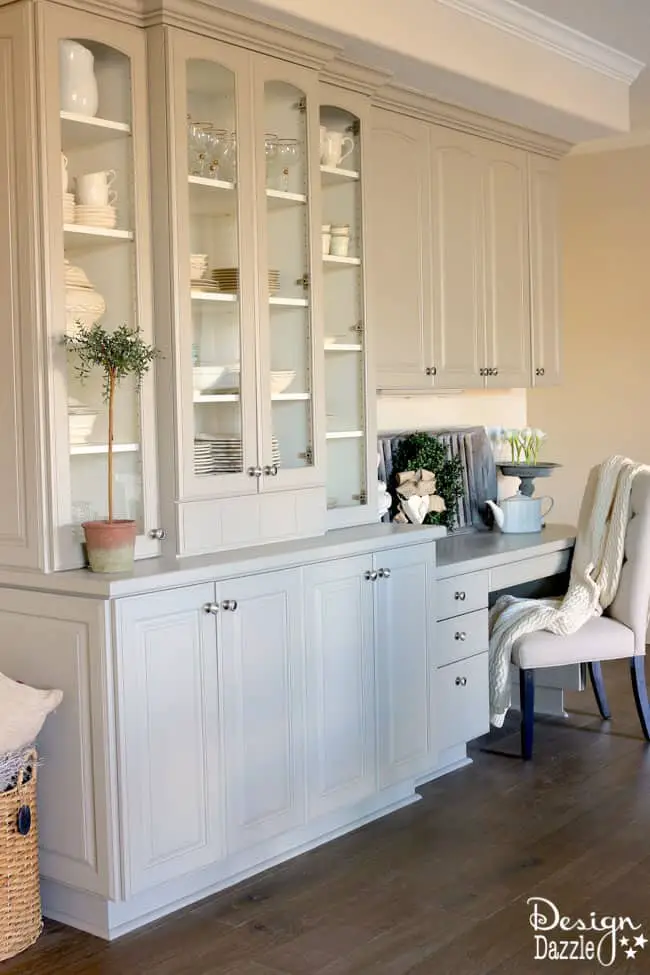
This kitchen is a clear example of making a compact layout work harder. Light gray shaker cabinets run along one wall, with glass-front uppers that display matching dishes and keep the upper zone from feeling heavy. The integrated desk area with an upholstered chair turns an otherwise dead stretch of wall into a practical spot for meal planning or paying bills. The storage principle here is about mixing open and closed storage: the glass fronts show off your best pieces, while solid lowers hide the less attractive pans and cleaning supplies. The cream and beige palette keeps the room feeling warm but not dark.
Transitional two-tone cabinets: white uppers, gray lowers, kitchen
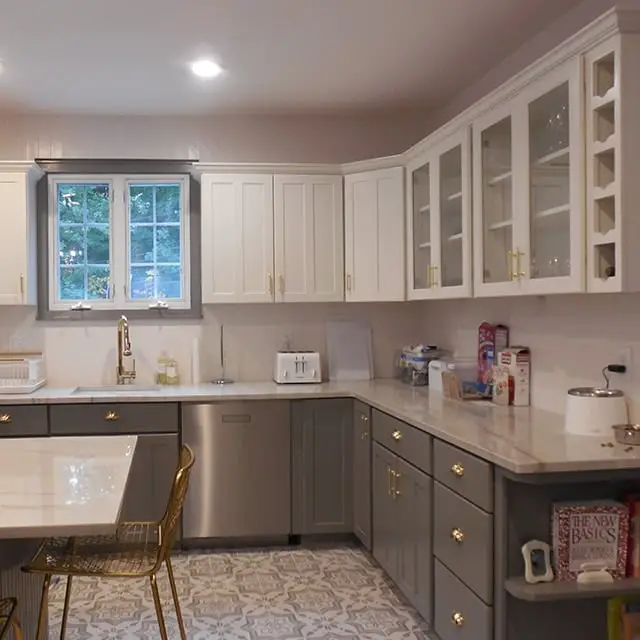
A two-tone palette works best when one color anchors the lower half and the other keeps the walls from closing in. Here, white upper cabinets reflect light from the window and overhead fixtures, while gray lowers ground the L-shaped layout. Gold hardware ties the two together and adds a warm accent against the marble countertops. A wood island introduces a third tone that keeps the room from looking too clinical. The gold chair pulls the metallic finish across the room, balancing the palette without repeating the same piece.
Two-tone cabinets with white uppers, gray lowers, and black accents
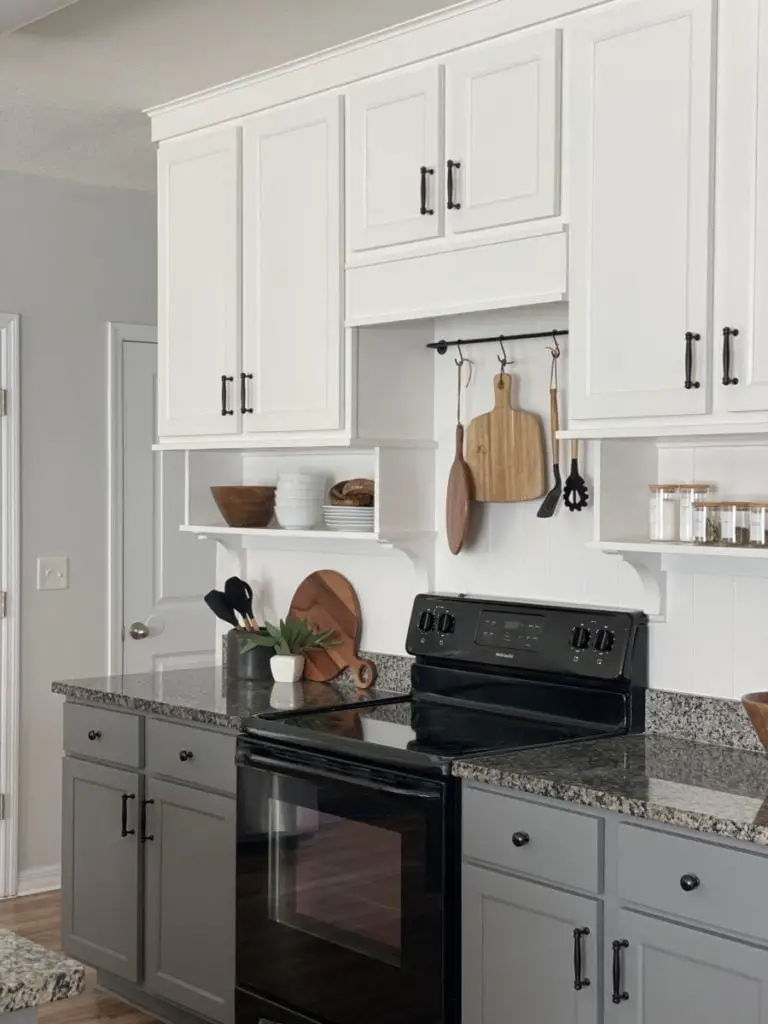
White upper cabinets and gray lowers create a clean foundation, but it is the black range that gives this compact kitchen its edge. The dark appliance breaks up the neutral palette and adds contrast without extra color. Wood cutting boards on the counter introduce a natural texture that softens the black and gray. This three-color formula keeps the design simple while adding enough depth to feel intentional.
Dark gray glass-front cabinet in farmhouse kitchen corner
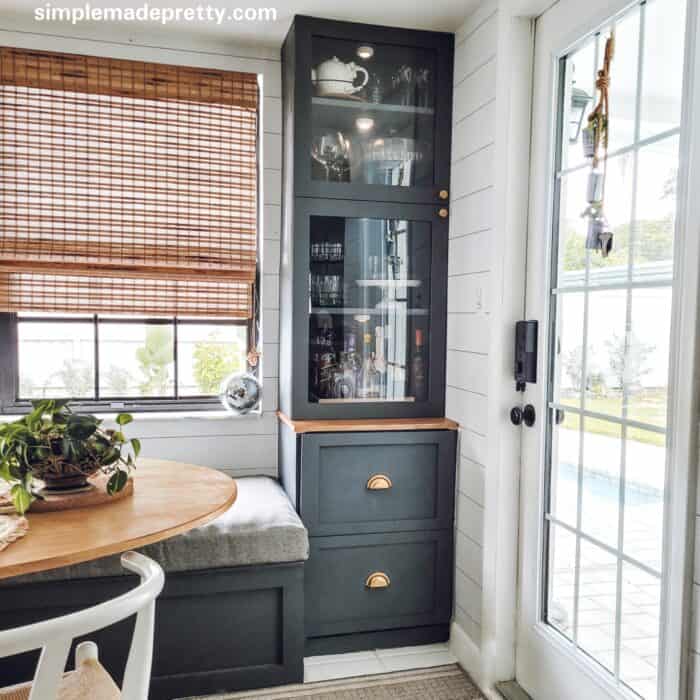
A glass-front cabinet works best when you treat it as a display. This dark gray corner cabinet with brass hardware sits next to a banquette and round dining table, making the most of a compact kitchen. The glass panels show off curated items inside, while the solid drawer base below stores the less pretty stuff. Overhead cabinet lights and natural light from the window and door hit the glass, so the cabinet appears lighter than its dark finish suggests. Brass hardware picks up that light and pulls the metal tone across the corner.
Spacious kitchen island pairs with subway tile backsplash
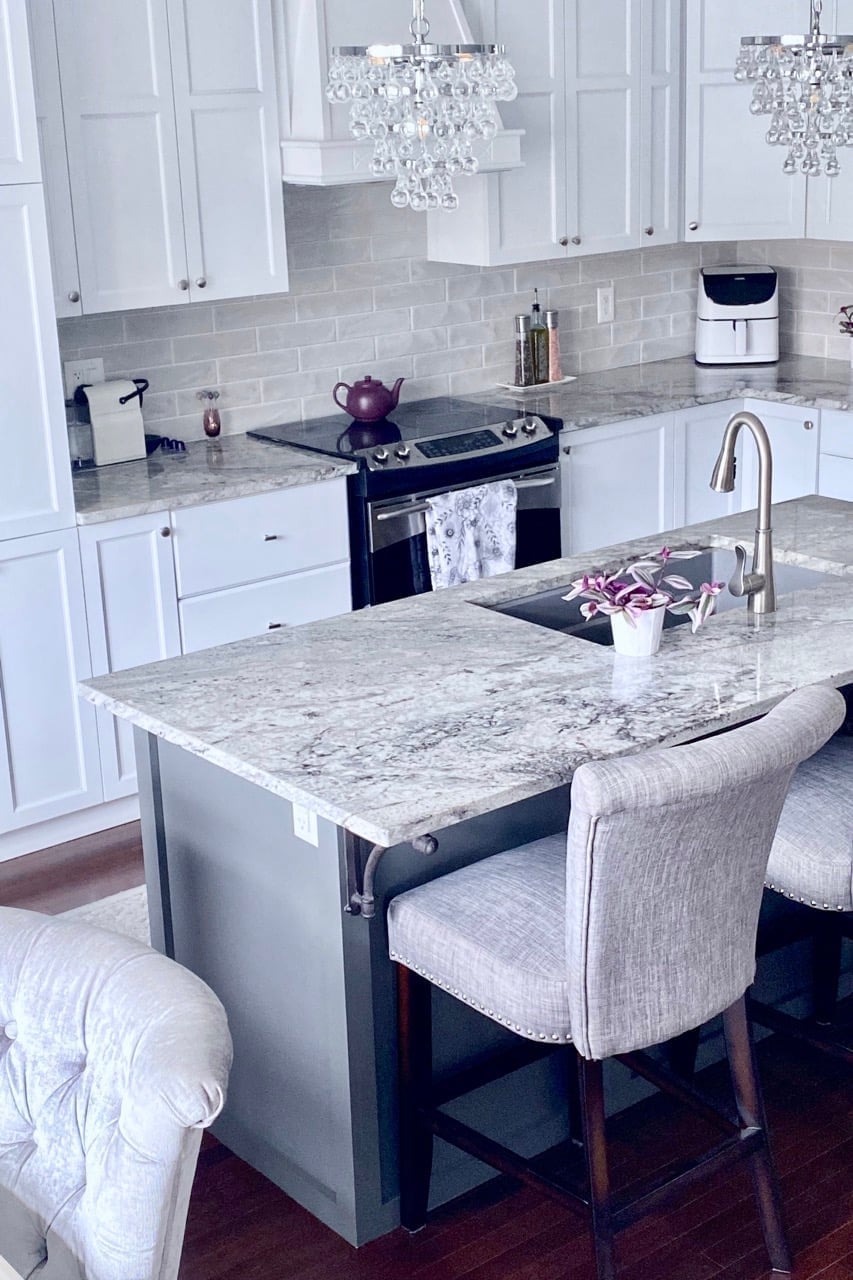
Crystal chandeliers in a kitchen sound like overkill until you see them soften a room dominated by hard surfaces. Here, a pair of chandeliers hang above a gray island with bar stools, while white shaker cabinets and a subway tile backsplash keep the backdrop quiet. The granite counters and silver fixtures lean cool, so the chandeliers add a touch of sparkle that feels like a deliberate choice. Overhead lighting handles task work, but the chandeliers are the room’s jewelry.
If you like the idea but crystal feels too formal, consider a faceted glass pendant in a similar shape. It provides the same reflective quality without the ornate detailing. The key is letting the chandelier be the only reflective element overhead, so the eye lands there first.
Cream and light blue farmhouse cabinets with ornate range hood
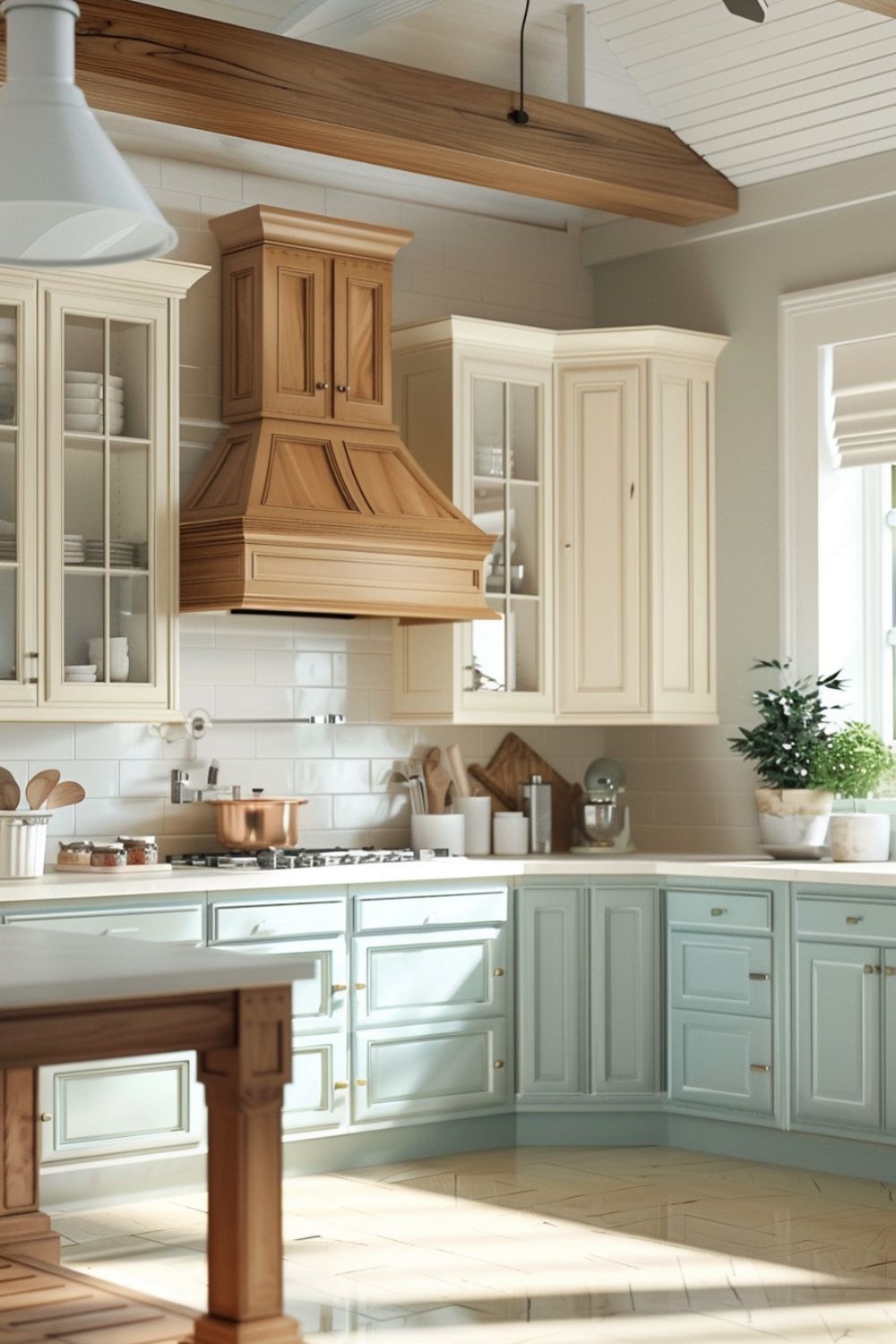
An ornate wooden range hood becomes the focal point when the surrounding cabinets stay quiet. Cream upper cabinets and light blue lowers frame the hood without competing for attention. The carved wood detailing adds depth to the farmhouse style, while a single pendant light draws the eye upward. This setup works because the range hood is the most detailed piece in the room, and everything else supports it.
Sage green cabinets with large island and natural wood stools
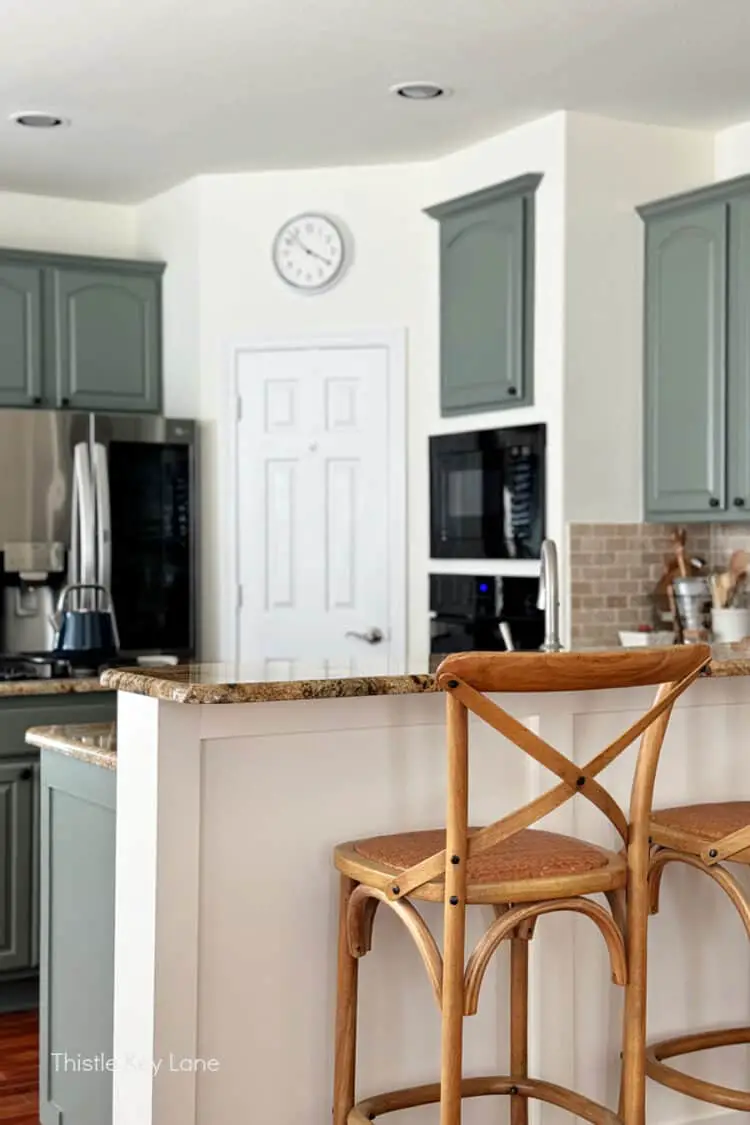
Sage green cabinetry is a flexible choice for a modern farmhouse kitchen. The large island anchors the roomy layout, and natural wood bar stools add warmth against the cool green tone. Granite countertops keep the palette grounded. Recessed ceiling lights and natural light from nearby windows make the sage color shift through the day, from muted gray-green in morning shade to a truer green in afternoon sun. A good palette ratio is roughly two thirds color to one third natural wood. That stops the green from dominating and lets the room breathe.
Cream cabinetry with dark wood paneled island
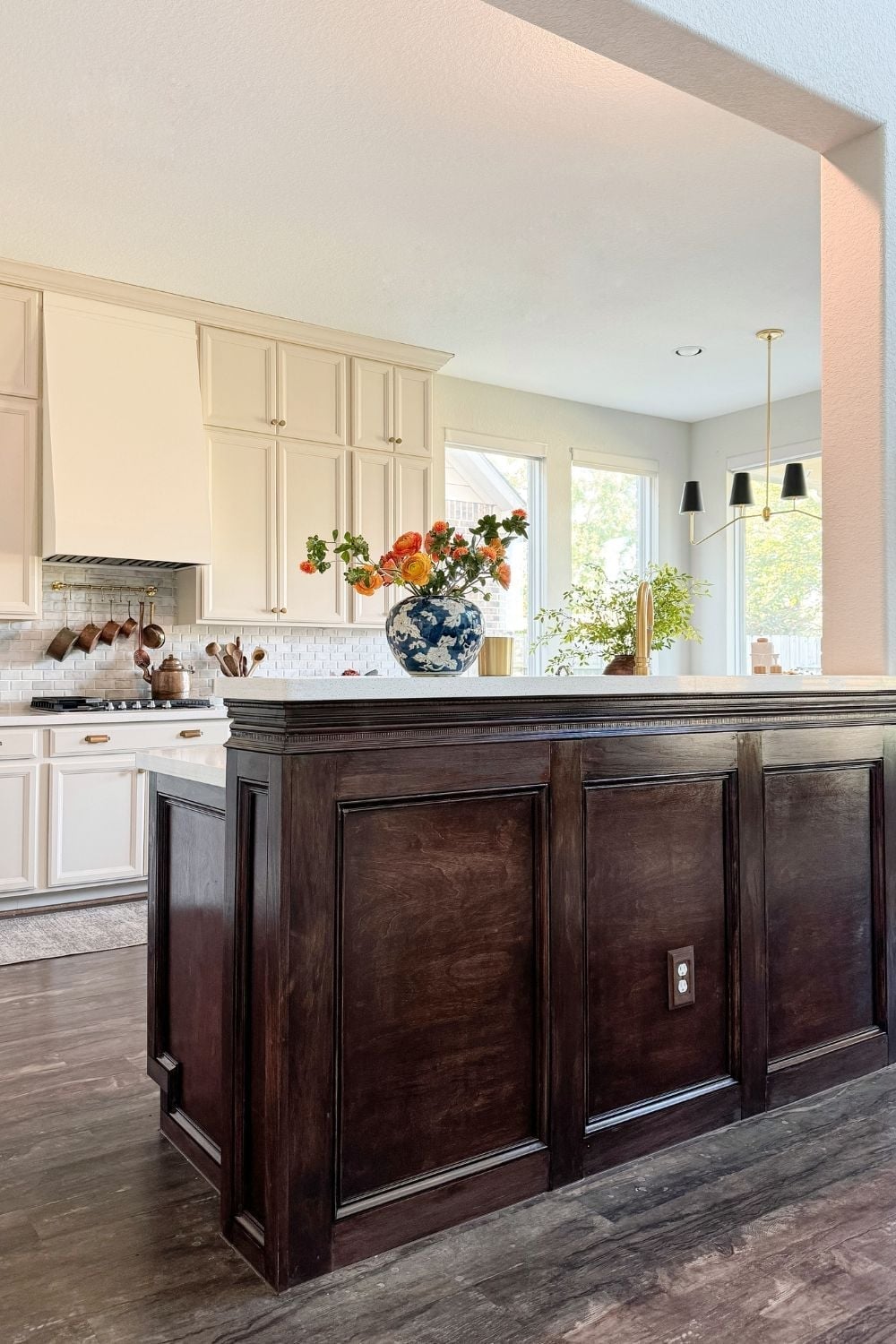
A practical rule for a renter-friendly update is to focus on the island rather than the whole kitchen. Cream perimeter cabinets keep the room light, while a dark wood paneled island adds weight and a traditional feel. The island becomes the hero element without touching the landlord’s existing cabinetry.
Pendant lights hung above the island reinforce the visual divide between the pale cabinets behind and the darker anchor in front. Marble countertops on the island tie the two zones together. For renters, swapping out island hardware or adding a washable runner along the island base creates contrast without permanent changes.
Vibrant turquoise cabinets with matching glassware display
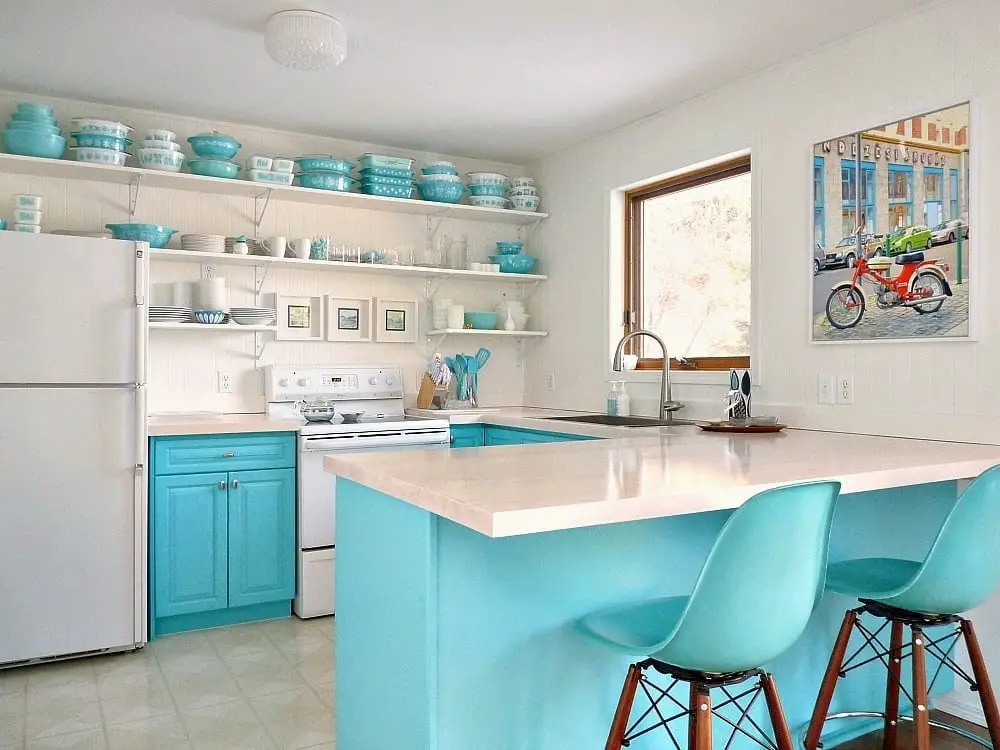
Turquoise cabinets set the pace for a modern kitchen. Open shelving above the counters displays matching glassware, turning functional storage into a deliberate color echo. White appliances and an island keep the look from looking too busy. The palette works because the turquoise is the only saturated color; wood tones and white act as buffers. A single light pink accent, visible in the glassware, breaks the scheme just enough to keep it from feeling like a uniform. That one intentional break is what separates a styled room from a painted one.
Sage green cabinets with brass hardware and subway tile
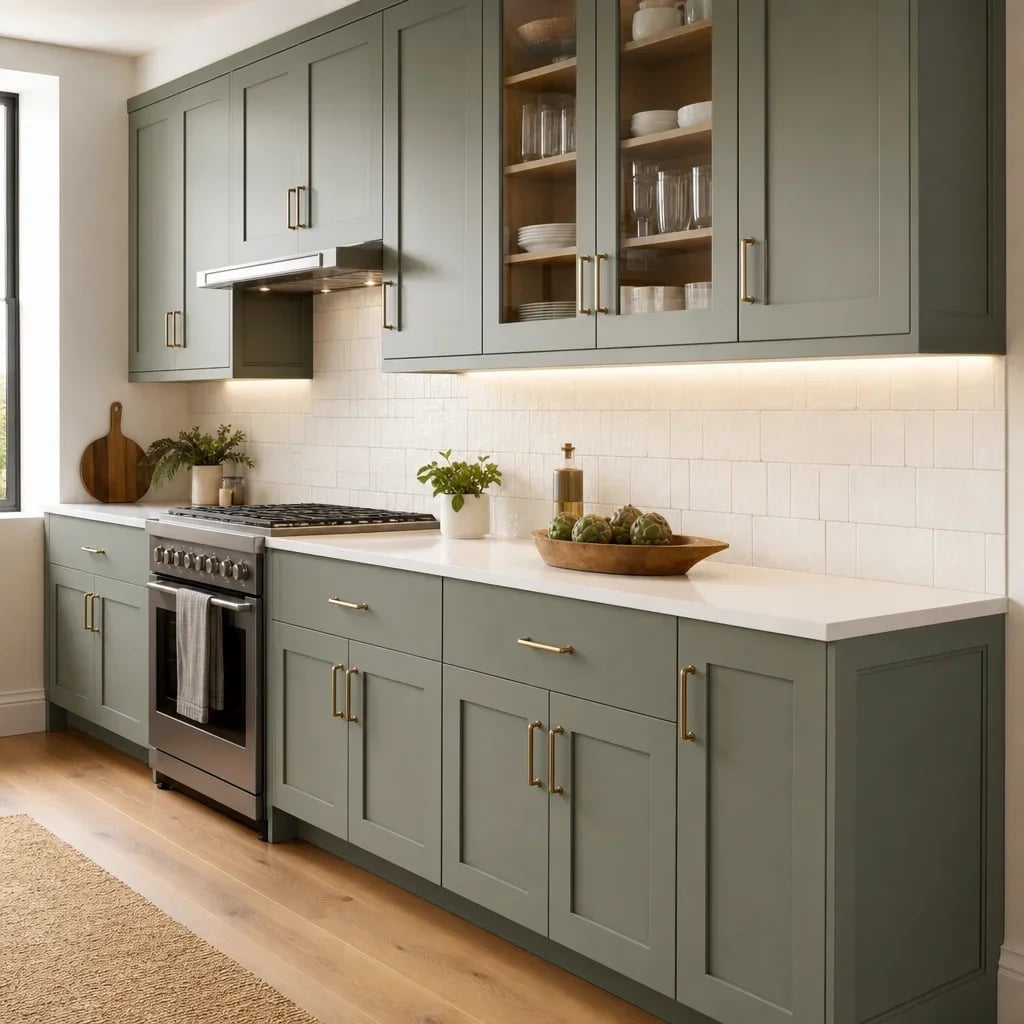
Sage green cabinets with brass hardware and white subway tile backsplash create a finish that holds up to daily kitchen use. The brass hardware adds a warm metallic note that contrasts with the cool green. Glass-front upper cabinets break up the solid color and add visual depth. Under cabinet lighting makes the tile and countertops easier to keep clean. The practical rule for palette balance here is to limit the brass to hardware and fixtures only; too much metallic finish would pull attention away from the sage green that defines the room.
Crisp white cabinets with glass-front uppers and graphic towel
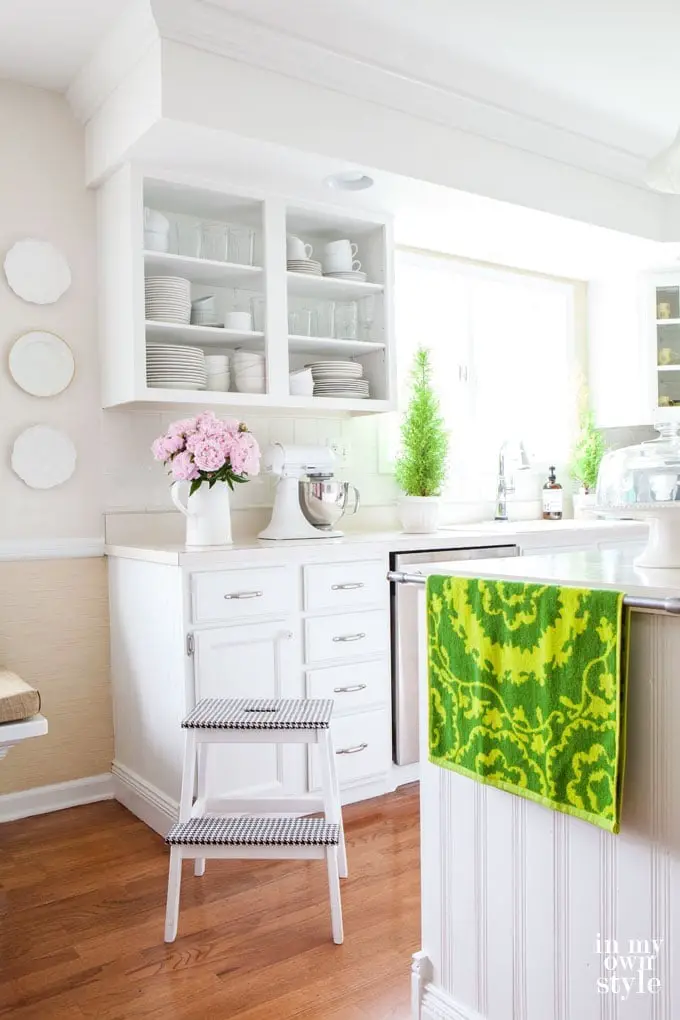
Where all-white kitchens can feel sterile, this corner vignette uses a single bright green patterned towel to add personality. White cabinets with glass-front uppers keep the compact kitchen feeling open. A white mixer and step stool stay within the neutral palette, letting the towel and decorative plates stand out.
The scale trick is to limit bold color to small, easily swapped items. A graphic towel, a set of plates, or a vase costs little and takes minutes to change. That approach gives renters and homeowners alike the freedom to update the look each season without repainting cabinets or replacing tile.
Sage green painted cabinets with island gas range
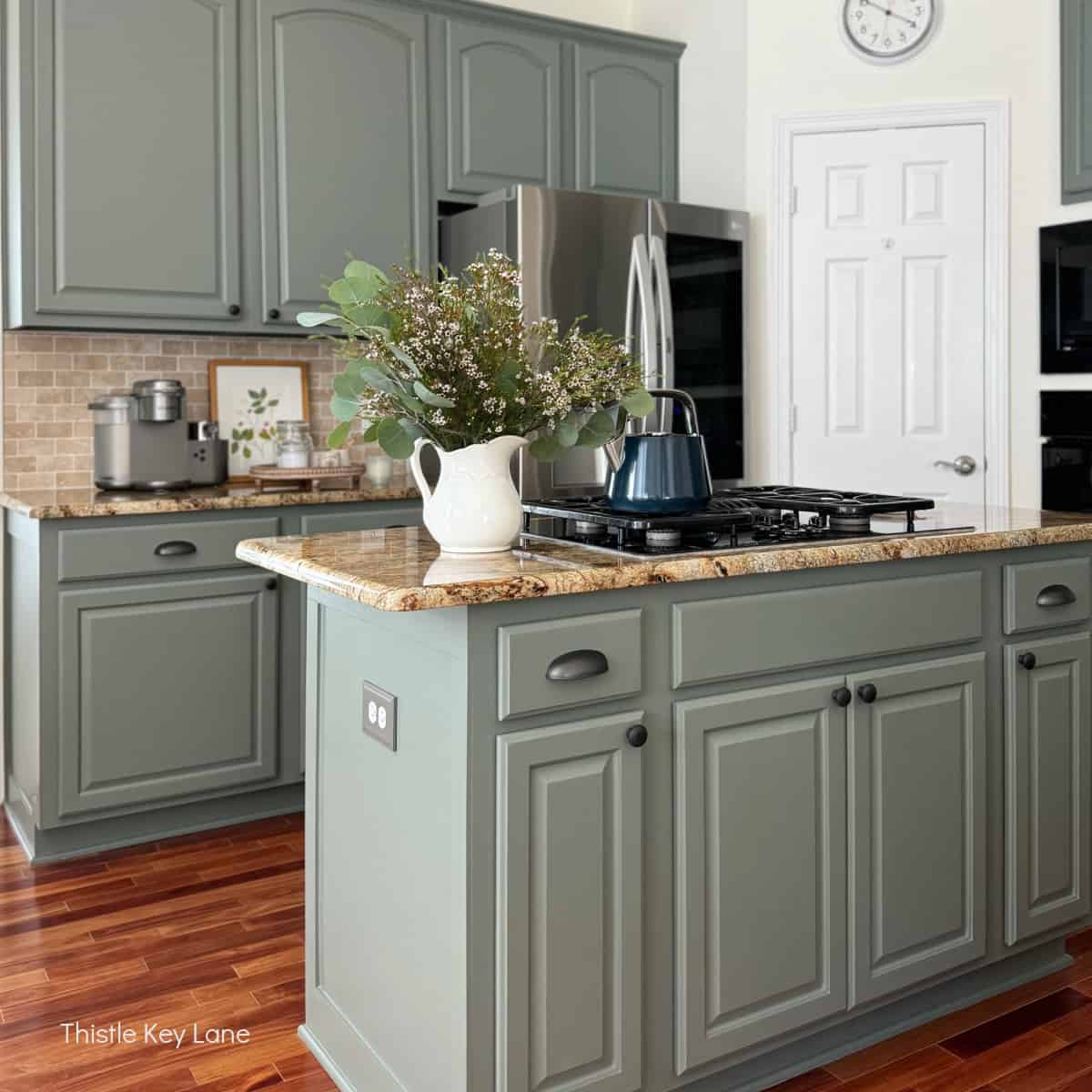
The layout places the gas range directly on the kitchen island, which changes how you move through the room. Perimeter cabinets stay clear of the cooktop, so counters on both sides of the range stay open for prep or serving. Sage green paint on the island and perimeter cabinets ties the two zones together. A beige stone countertop and white tile backsplash keep the palette grounded, while natural light softens the green against stainless steel appliances. The island becomes the functional and visual center of the cabinetry.
Final Thoughts
A cabinet makeover doesn’t have to mean a full gut job. The most effective updates in this collection rely on paint, hardware, and thoughtful contrasts, white uppers with dark lowers, warm wood against cool gray, or a single accent color like sage green. For painted cabinets, expect to spend a weekend on prep and two coats of quality paint. Glass-front doors need regular dusting, while distressed finishes hide everyday wear well. Check your climate before adding open shelving in a damp area. Whichever look you choose, the storage stays the star.