The bathroom rug has a tough job: it needs to feel soft underfoot, handle moisture, and still look good. For 2027, the focus shifts from basic mats to rugs that anchor the room’s style, whether you lean toward playful patterns or quiet textures.
These 29 ideas keep the rug as the hero, letting it define the space without overwhelming it. Expect a mix of bold shapes, natural fibers, and subtle details that make a small change feel deliberate.
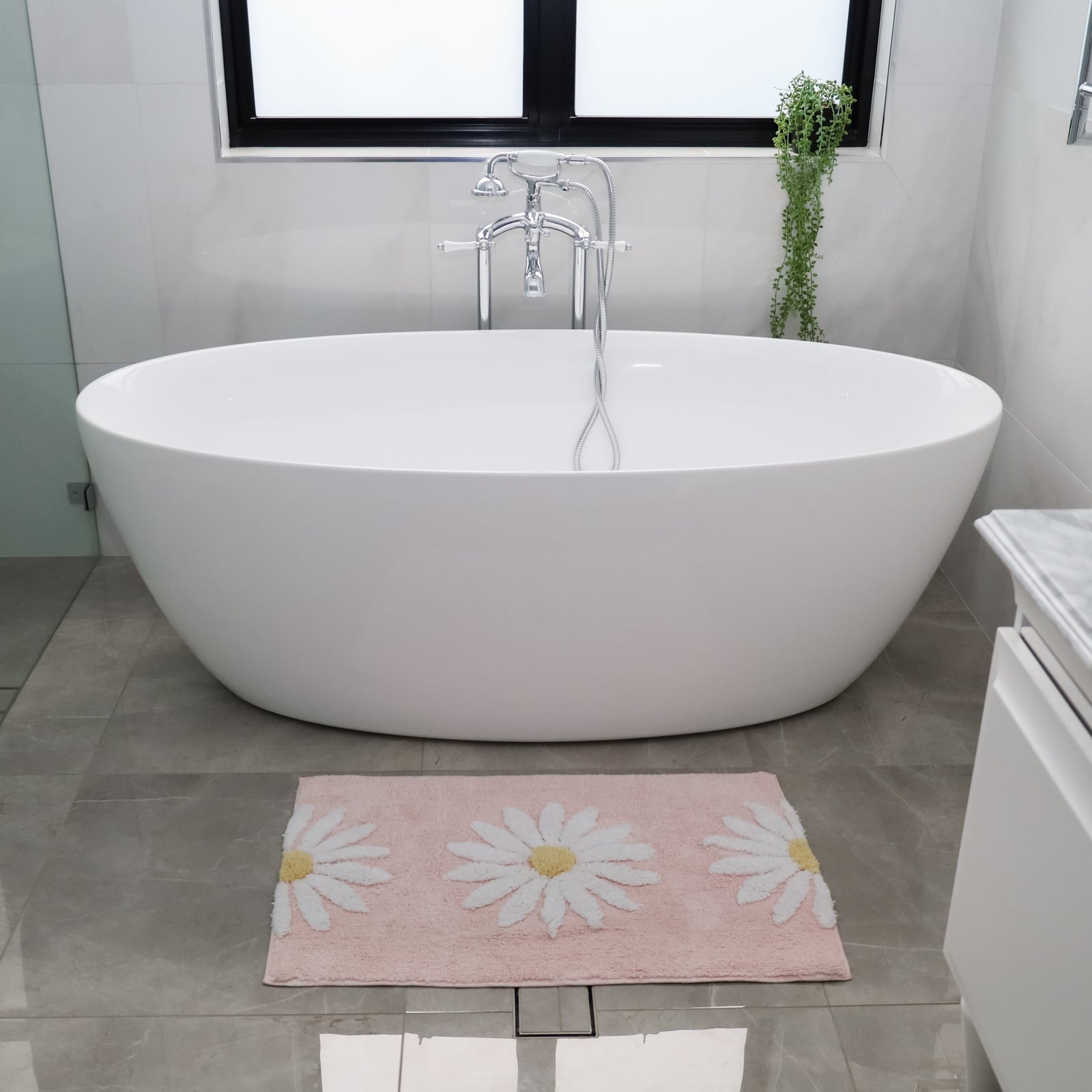
A daisy-patterned pink rug adds whimsy to a modern bathroom
A pink rug scattered with daisies sits in front of a freestanding bathtub, and the contrast with the clean white tile and marble around it is immediate. The room keeps everything else neutral, gray tones, chrome fixtures, a hanging plant, so the rug looks a deliberate moment of play rather than a mismatch. In a modern bathroom that leans minimalist, a single patterned piece like this one draws the eye without competing with the architecture. The key is that the rug does not have to match anything; it just has to land in a space that lets it breathe.
Textured jute rug brings natural warmth to a minimalist bath
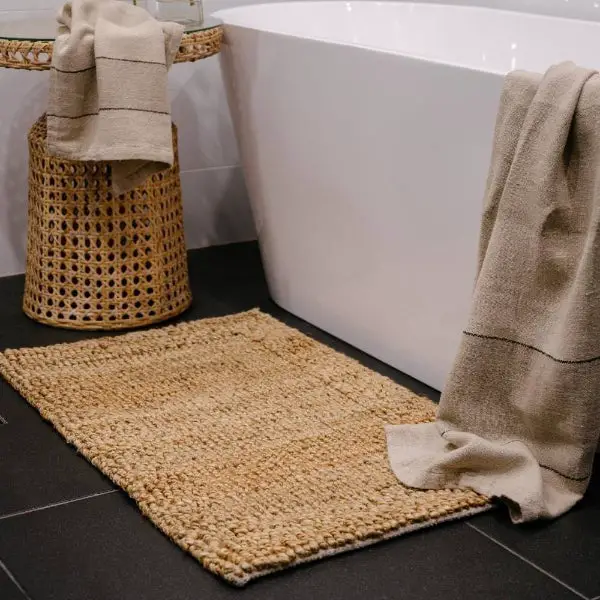
A woven jute rug next to a freestanding tub is a straightforward swap for anyone who finds solid cotton mats too ordinary. The beige fibers warm up the black-and-white tile and the glass shower enclosure without introducing a new color. A rattan side table nearby reinforces the natural texture without feeling styled. The principle here is about palette: when a room sticks to beige, black, and white, texture carries all the visual interest. A flat cotton rug would disappear; jute adds grain and shadow that make the floor feel layered rather than flat.
Plush beige rug enhances comfort in a light wood bathroom
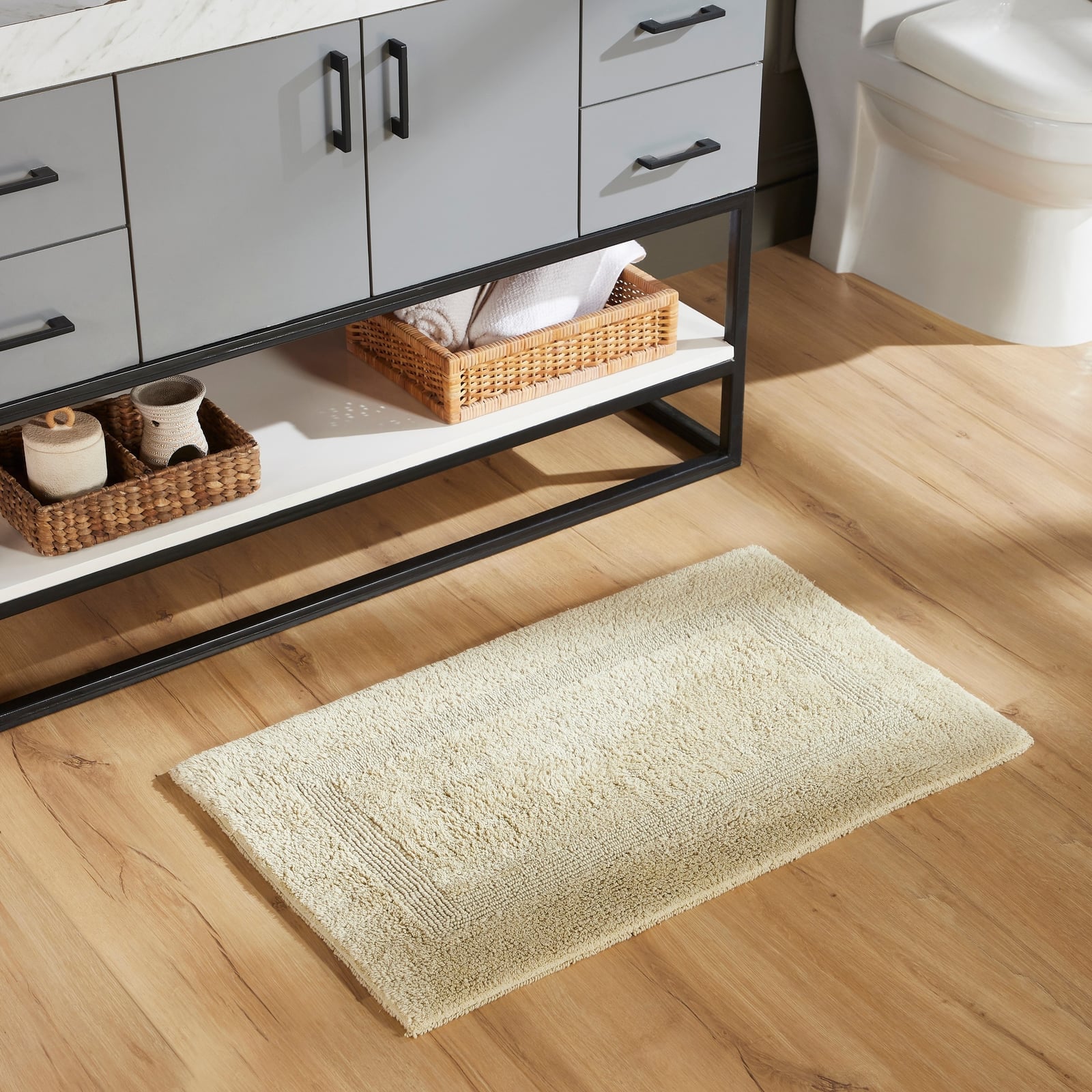
What makes a soft rug work on a wood floor without looking like a bath mat that wandered into the wrong room? The answer is material. This plush beige rug is placed on the floor in front of a vanity in a bathroom with light wood cabinetry, white walls, and gray stone countertops. The thick pile absorbs sound and feels warm underfoot, which matters more in a bathroom with hard surfaces everywhere. The wicker baskets nearby echo the natural tones, so the rug connects to the room instead of floating on it. A plush rug in a pale neutral works well when the color scheme stays soft and muted. It softens the transition from wood floor to bare feet against the marble or metal finishes.
Emerald vanity paired with a blue and gray patterned rug
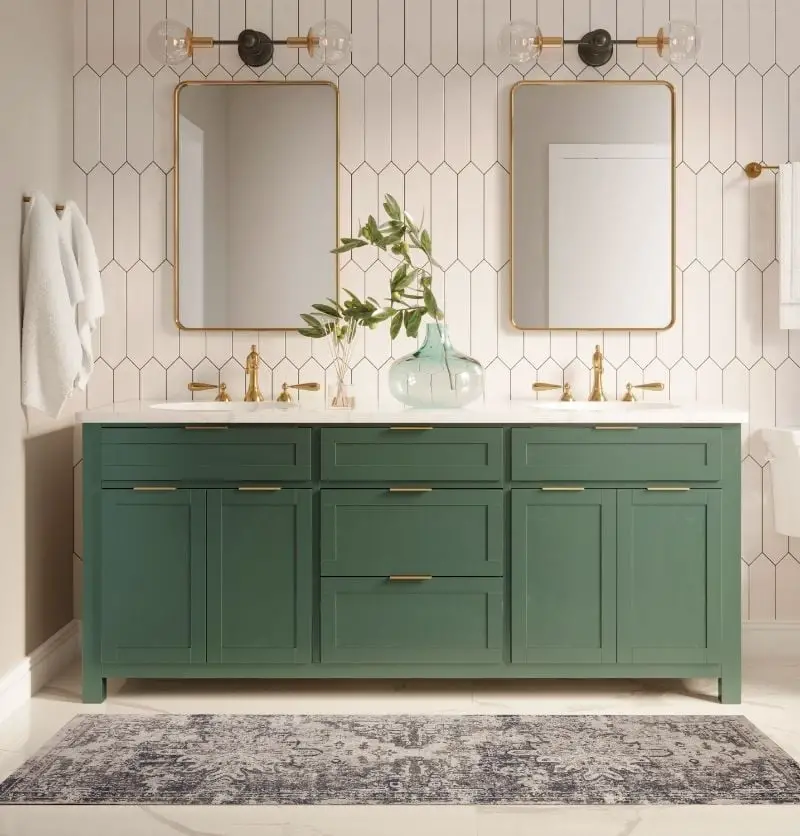
A green double vanity is the anchor here, and the rug in front of it pulls in blue and gray tones that keep the emerald from feeling overwhelming. The palette works because the rug shares a cool undertone with the vanity, so the two colors sit next to each other rather than clash. Brass sconces with globe bulbs add warmth without shifting the balance. The takeaway is that a patterned rug does not have to echo the dominant color exactly; it just needs to share the same temperature. Gray and blue look cooler cousins to green, which is why this combination holds together without a third accent color.
Scalloped gray border adds detail to a white bath rug
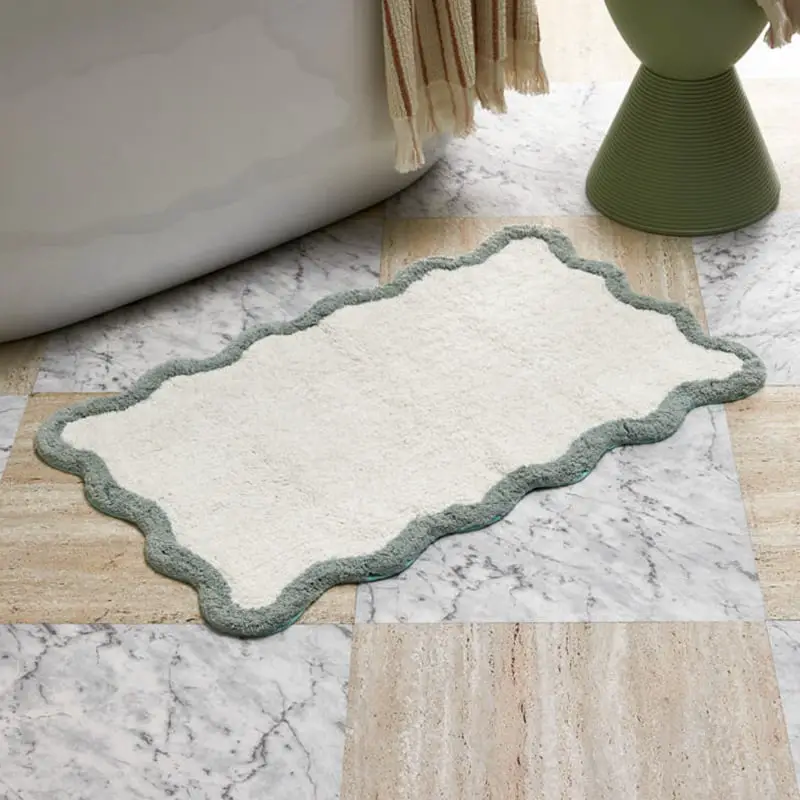
A practical rule for choosing a bath rug in a compact bathroom is to let the edge detail do the work. This white rug with a scalloped gray border sits on marble and travertine tile, and the subtle trim gives it enough presence to hold its own next to a bathtub and a small stool. The scalloped shape softens the straight lines of the tile without introducing a new pattern. For renters or anyone who wants a rug that looks finished without a lot of pattern, a border detail in a contrasting neutral is a reliable choice. It adds definition to a white surface without needing a busy print.
Geometric cream and black rug with fringe for a boho vibe
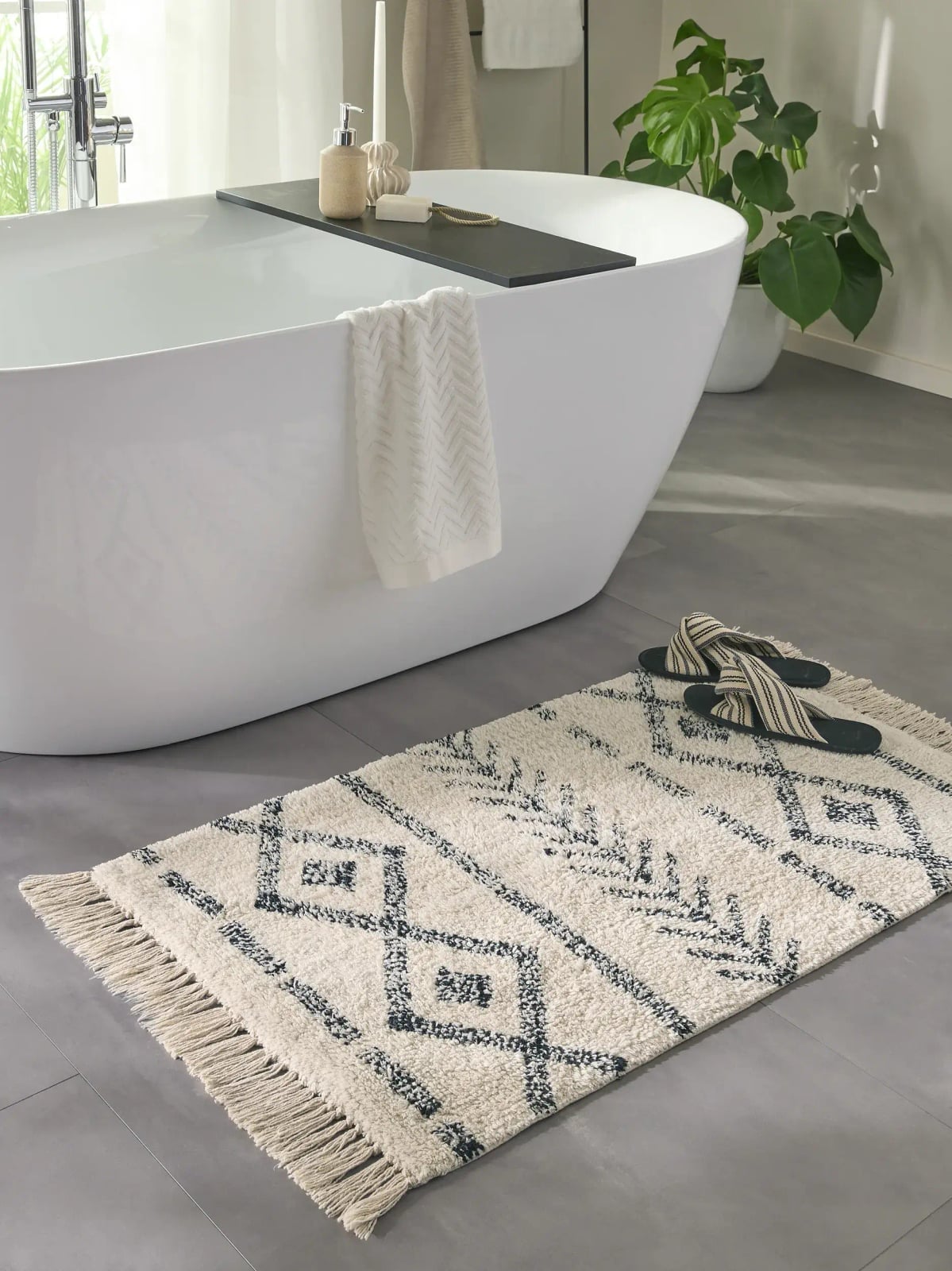
A cream and black geometric rug with fringe placed in front of a bathtub does what a plain bath mat cannot: it anchors the tub and creates a clear center. The white and gray tile keeps the background quiet, while the rug’s pattern adds visual interest that makes a modern boho bathroom feel collected. A tall plant nearby softens the straight lines, and a pair of slippers on the floor hints that this is a space meant for lingering.
The trick with a bold patterned rug is to let it carry the color. Keep the walls, tile, and fixtures neutral so the rug stands out without fighting for attention. To recreate it, look for a rug with a low pile and a non-slip pad underneath; it stays put and comes out easily for washing.
Square brown fabric rug grounds a modern toilet area
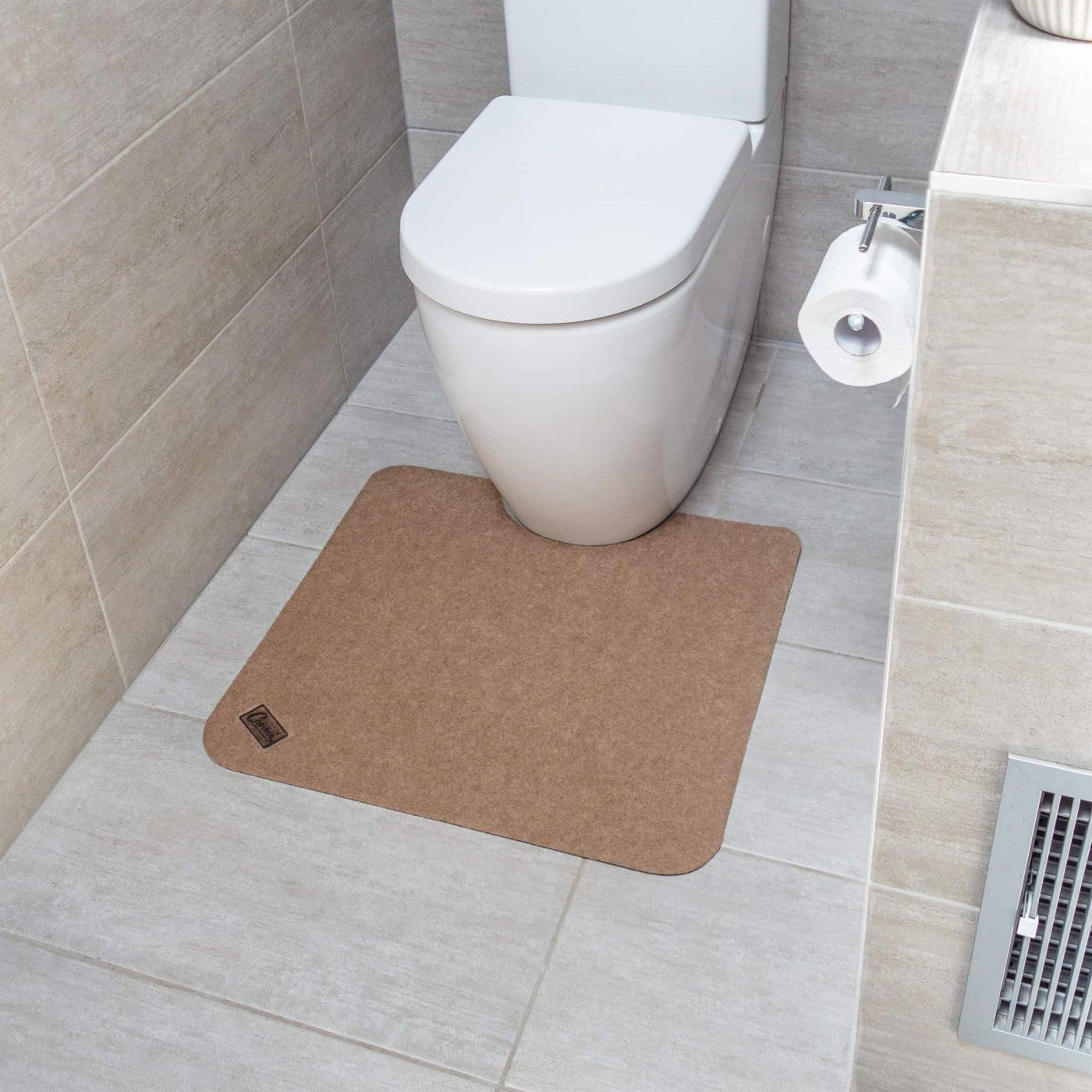
A square brown fabric rug placed in front of the toilet does more than catch stray drops; it defines a zone in a compact modern bathroom where beige, white, and gray tiles could otherwise blur together. The square shape echoes the lines of the toilet and the wall-mounted holder, creating a sense of order. In a small space, a rug that matches the floor’s neutral tone keeps the eye moving, while the darker brown adds just enough contrast to ground the fixture. It is a simple, renter-friendly swap: no adhesive, no permanent change, just a soft surface that can be rolled up and stored when you move.
Blue rug adds color near bathtub
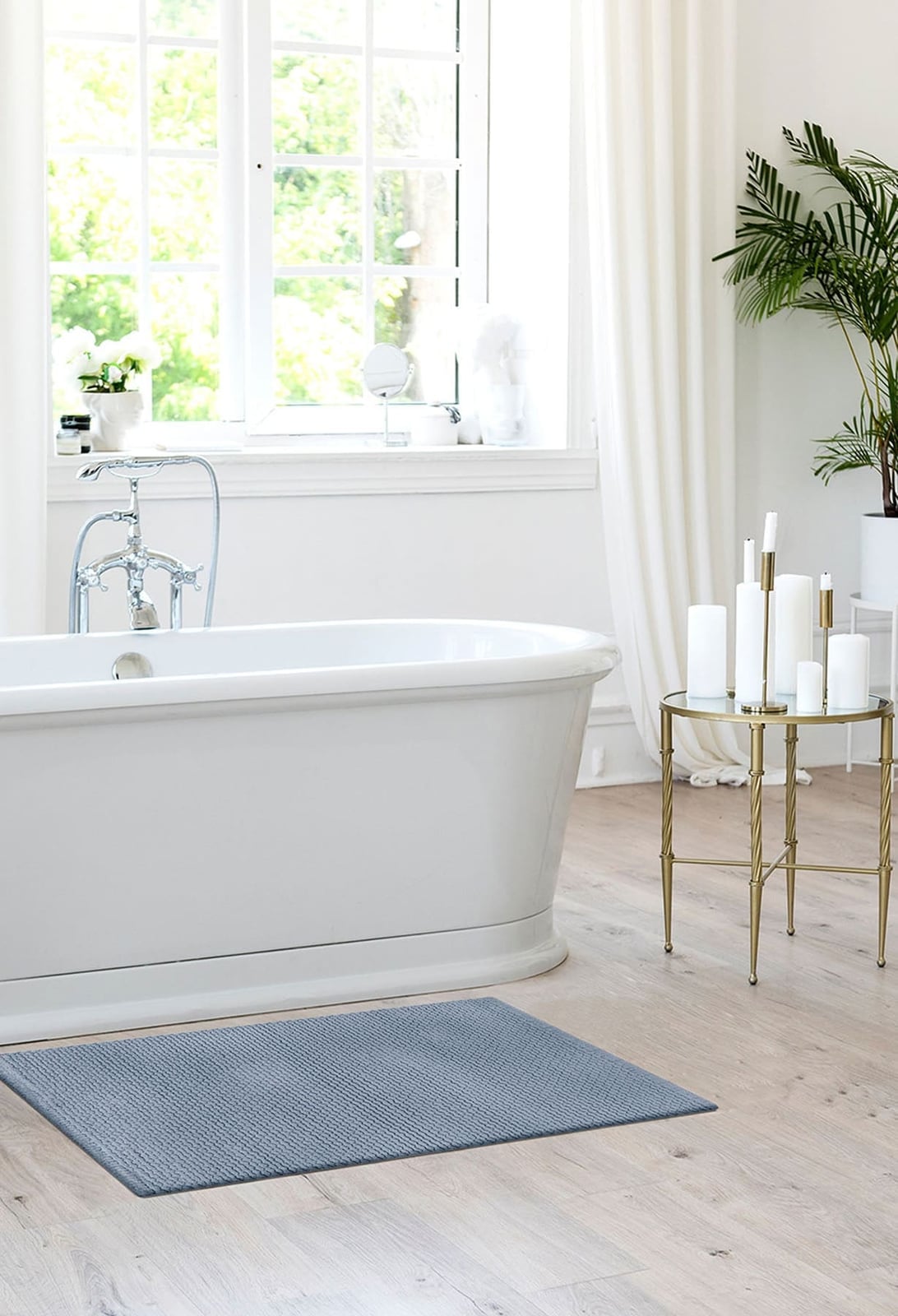
A blue textured rug in front of a freestanding bathtub is the quickest way to inject color into a bathroom that leans white and light wood. The blue picks up the green of a tall plant and the brass of a round side table, tying the whole corner together. Against white tile and pale wood, the rug becomes the focal point without overwhelming the room. If you are working with a neutral palette, a single saturated hue like this does the heavy lifting; everything else stays calm. The texture adds depth, so the rug feels intentional even when the pattern is simple.
Cream rug lies on stone tile
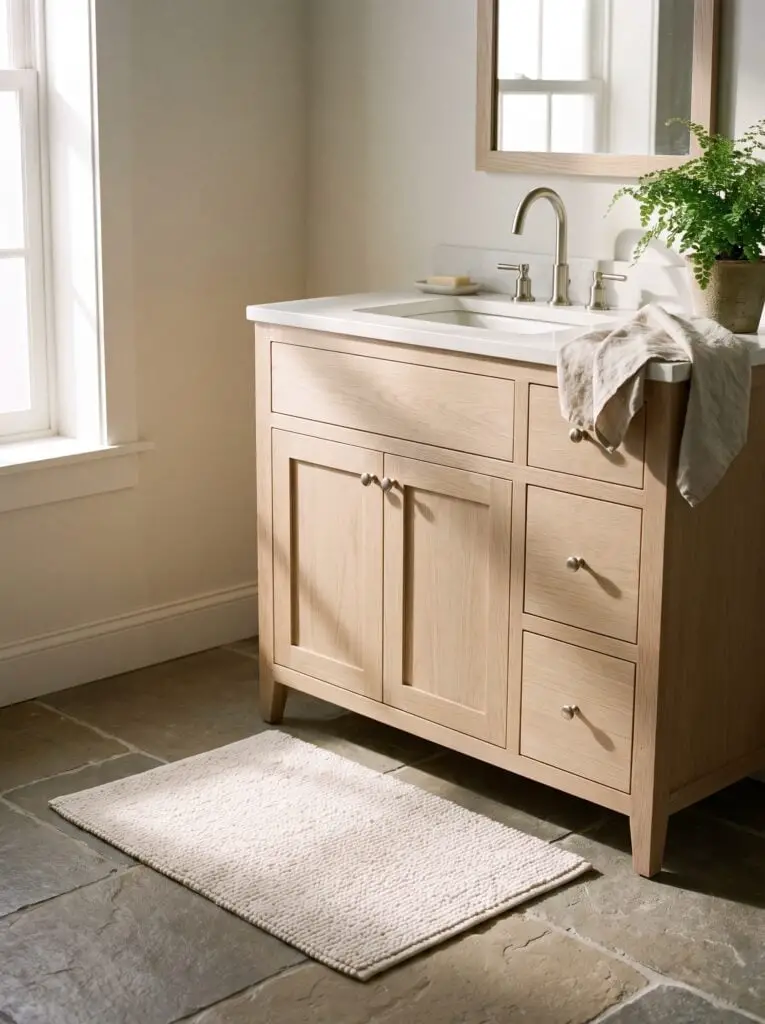
Can a cream rug really hold up on stone tile? Yes, when you choose the right material. A textured cream rug placed in front of a vanity with a sink, faucet, and mirror brings softness to a room that mixes wood, stone, and marble. The neutral tone blends with the beige and white palette, while the texture adds a layer that flat tile cannot. In a bathroom where the floor is hard and cool, a rug like this makes the first step out of the shower or bath more comfortable. Natural fibers like cotton or wool breathe well and dry faster than synthetic options, which matters in a humid space. Look for a rug with a non-slip backing or use a pad underneath so it stays in place on smooth stone.
Runner rug spans vanity and shower
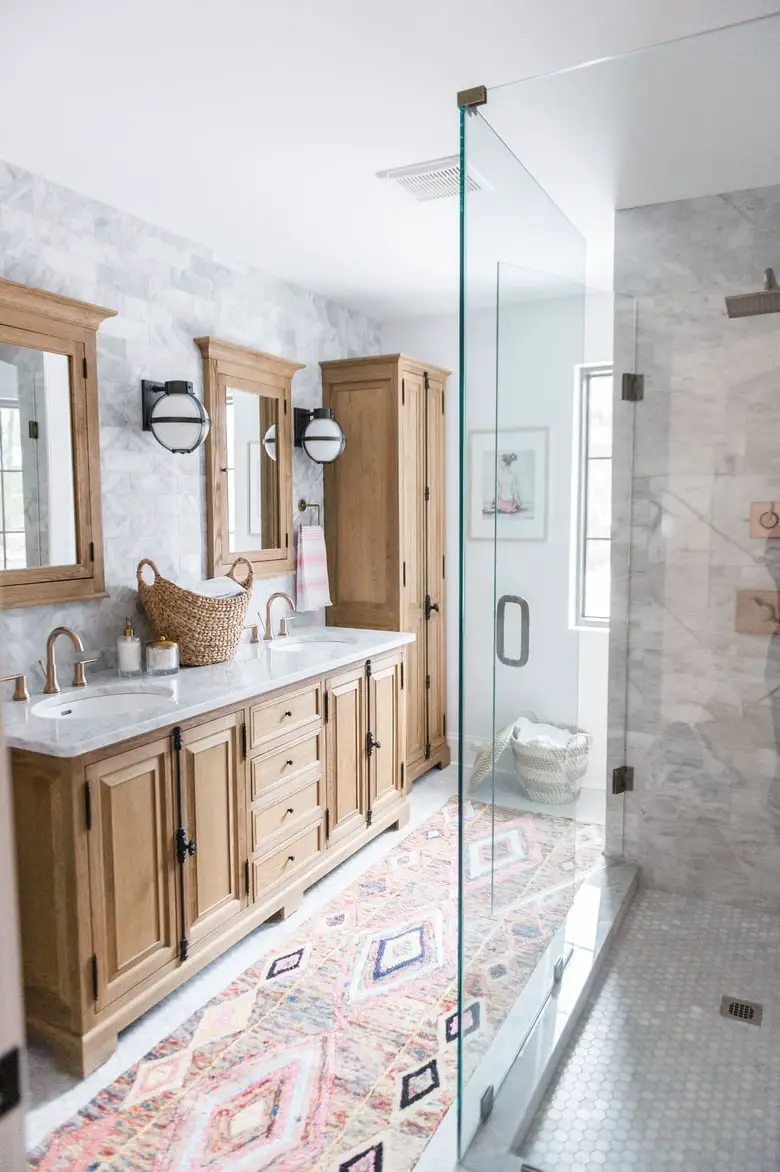
A geometric runner rug stretches in front of a double vanity and a glass shower enclosure, tying two separate zones into one continuous line. The runner’s pattern mixes white, gray, and wood tones with subtle hints of pink, blue, and peach, so it pulls colors from the marble counter and the cabinetry together. In a roomy transitional bathroom, a runner like this defines the path from vanity to shower and adds a soft surface underfoot where you stand most. It also breaks up the expanse of marble and tile, giving the eye a place to rest. When you choose a runner, measure the distance between the vanity and the shower so it spans the gap without bunching at either end.
Flower-shaped rug in vibrant hues adds playful charm
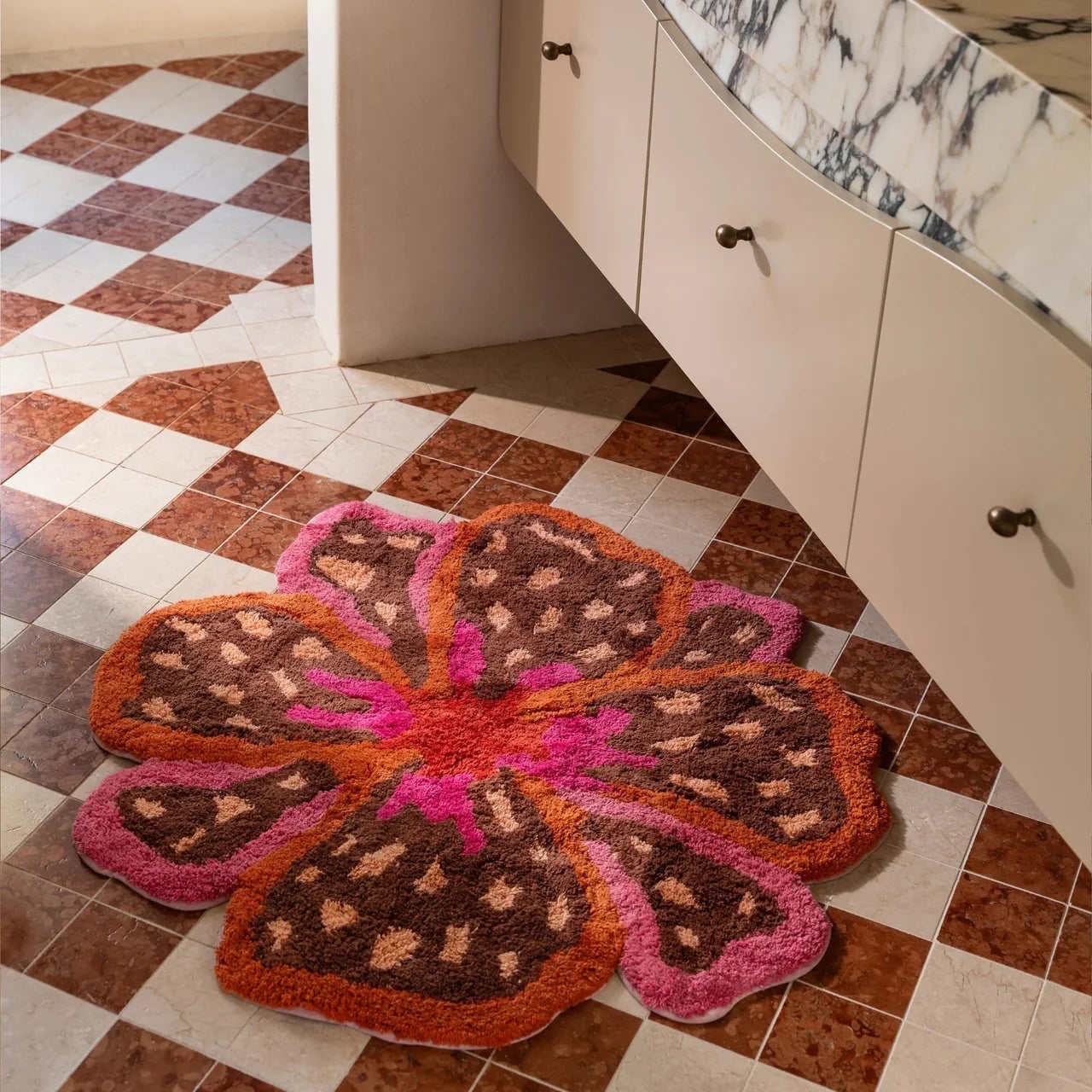
A flower-shaped rug works best when everything else in the room steps back. Here, a plush rug in brown, pink, orange, cream, and white sits on a checkered tile floor while simple vanity cabinets stay neutral. The eclectic contrast keeps the rug central without the space feeling busy. Because the rug is the hero element, the surrounding palette should stay quiet enough to let that shape read clearly.
Set of geometric rugs defines multiple zones in a modern bath
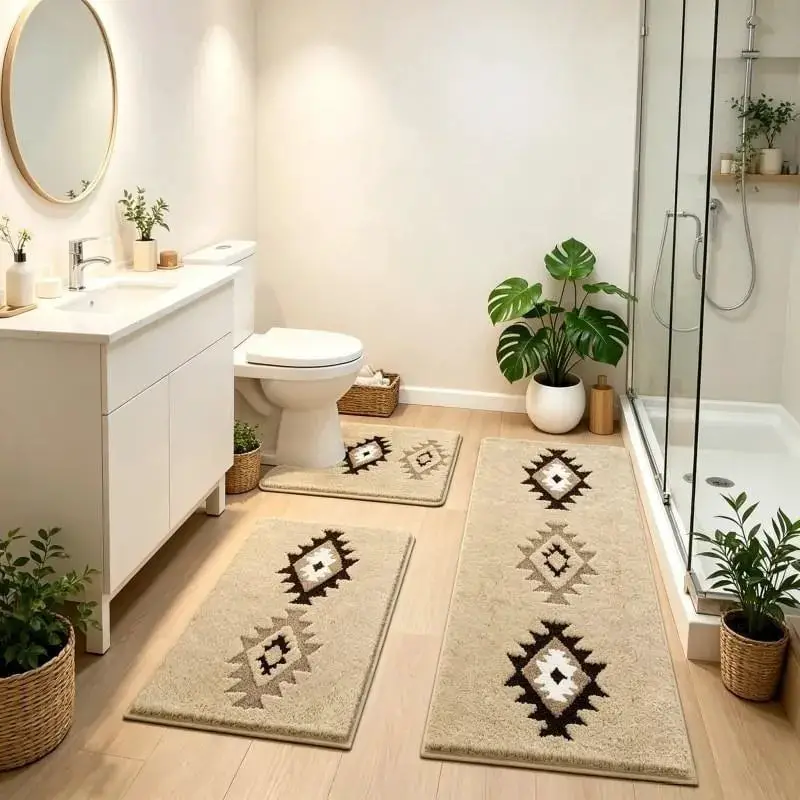
A single large rug can blur a room, but a set of smaller geometric rugs carves out distinct zones. In this modern bathroom, rugs sit in front of the vanity, the toilet, and the shower, each one anchoring its own area on the tile floor. The palette uses white, beige, brown, and black, so the repeated pattern looks cohesive.
Matching rugs across zones works when the bathroom is open and each fixture has its own footprint. The consistent geometric pattern ties the vanity, toilet, and shower together visually, even though they sit at different points in the room. Plants and natural light prevent the design from feeling too rigid.
Gold geometric pattern on white rug for luxury appeal
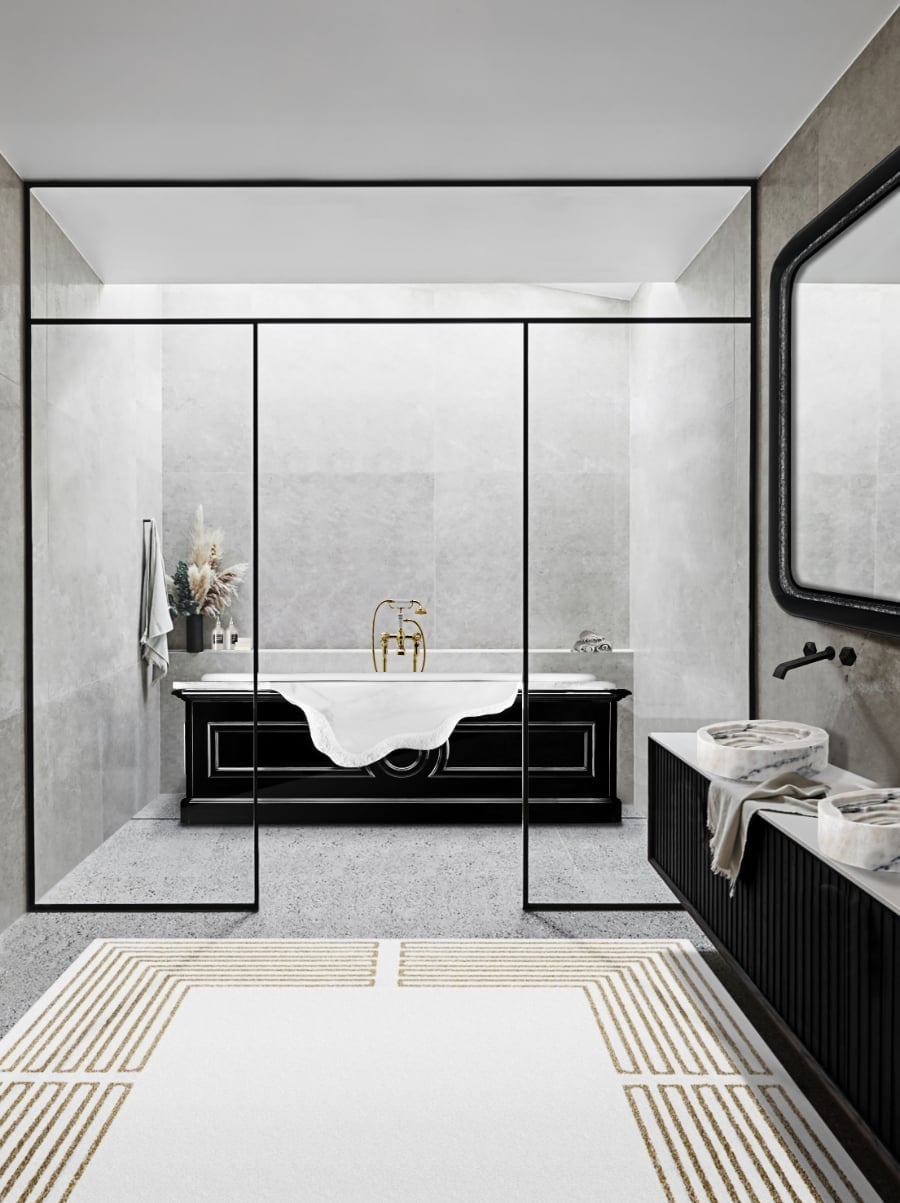
The gold geometric pattern on a white rug catches the eye because it sits against a restrained backdrop of gray tile, marble, and a glass partition. The rug sits in the foreground while a vanity sits behind the glass, which keeps the metallic detail from competing with the gray tile and marble. A white base lets the gold function as an accent, which suits a modern luxury bathroom where the finish should feel planned.
Pink striped rug adds a bright accent to a modern bath
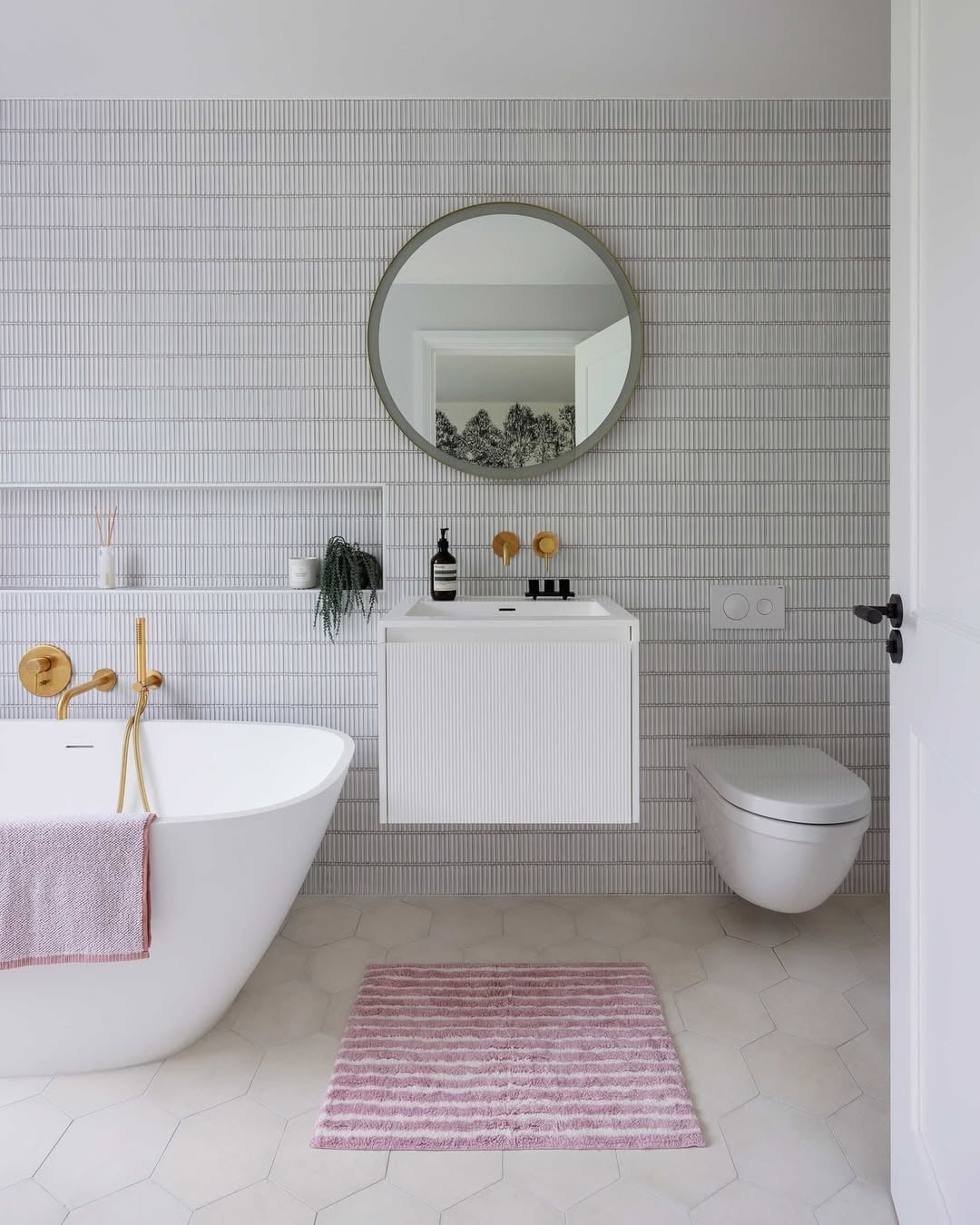
A pink striped rug adds color without overwhelming a white and gray bathroom. The rug is placed in front of the vanity and bathtub, with gold fixtures and a round mirror keeping the look modern. The stripe pattern breaks up the pale tile floor and creates a focal point. Because the palette stays neutral, the pink works as a deliberate accent.
Softness comes from scalloped floral rug
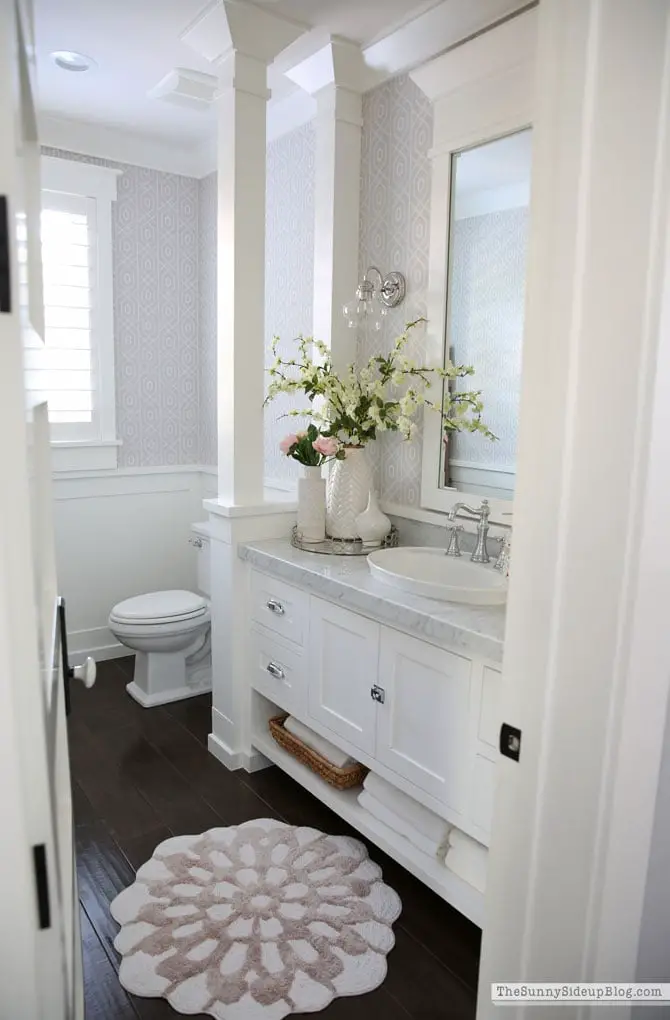
A scalloped floral rug softens the hard surfaces common in a traditional bathroom. Here, the rug is placed on a floor of marble, wood, and tile, with sconce and overhead light casting even illumination. The scalloped edge and floral pattern bring a gentle texture that contrasts with the straight lines of the vanity and sink.
This look is traditional because the floral pattern and soft beige, white, and gray palette lean into classic decor cues. The dark wood vanity grounds the rug and keeps it from floating visually. What breaks the formality is the scalloped edge, which adds a playful detail that keeps the space from feeling too stiff.
Ribbed beige bath rug for understated modern texture
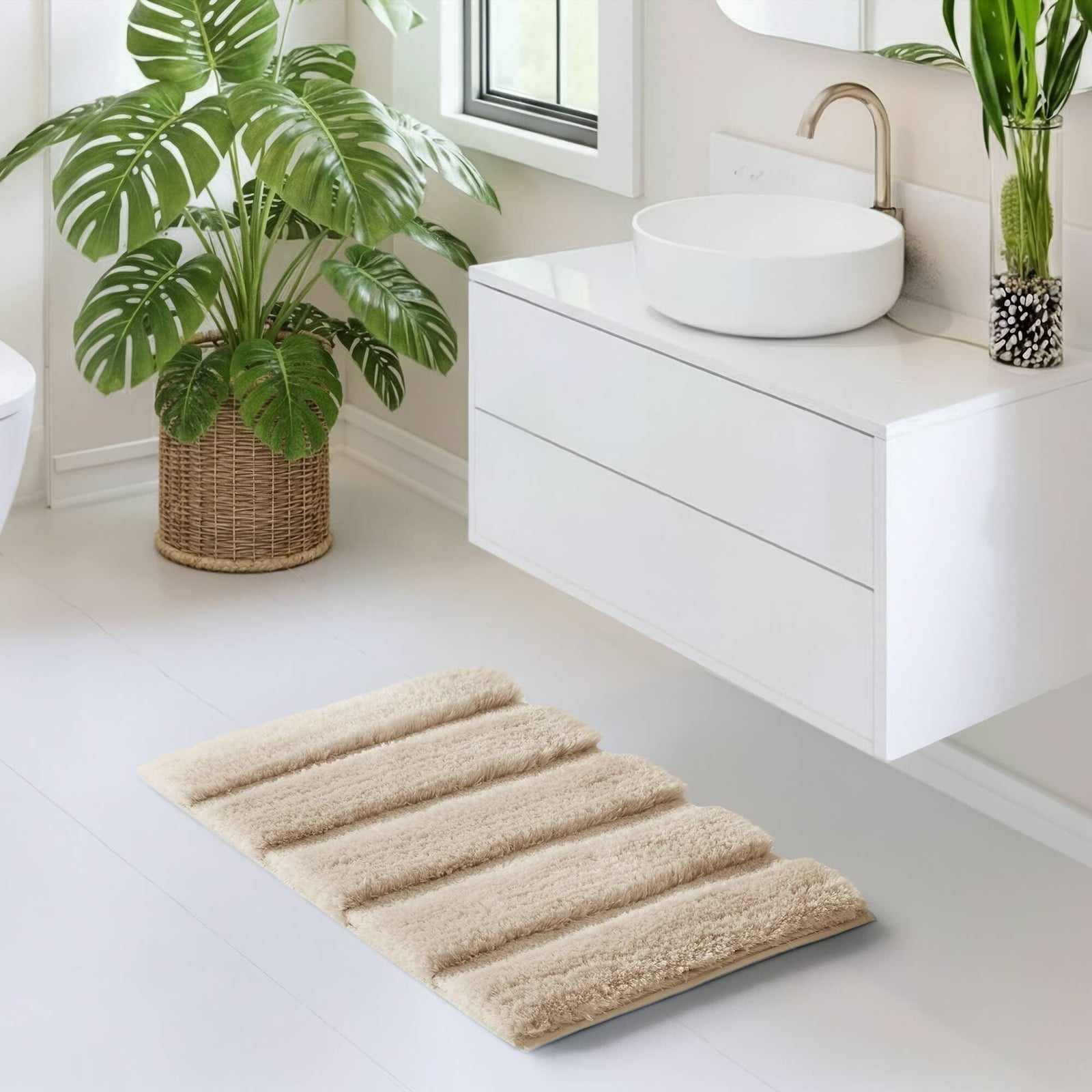
The ribbed surface of this beige bath rug adds a tactile layer that the smooth tile and glossy vessel sink do not provide. Wicker and brass accents in the room already lean natural, so the fabric feels right at home. A floating vanity keeps the floor clear, and the rug sits squarely in front of it, catching the natural light from the window. The beige tone bridges the white walls and the green of the monstera plant without competing. As a materials choice, a ribbed weave offers grip and visual depth without a pattern, which keeps the modern look clean.
Bold black and white patterned rug creates a graphic statement
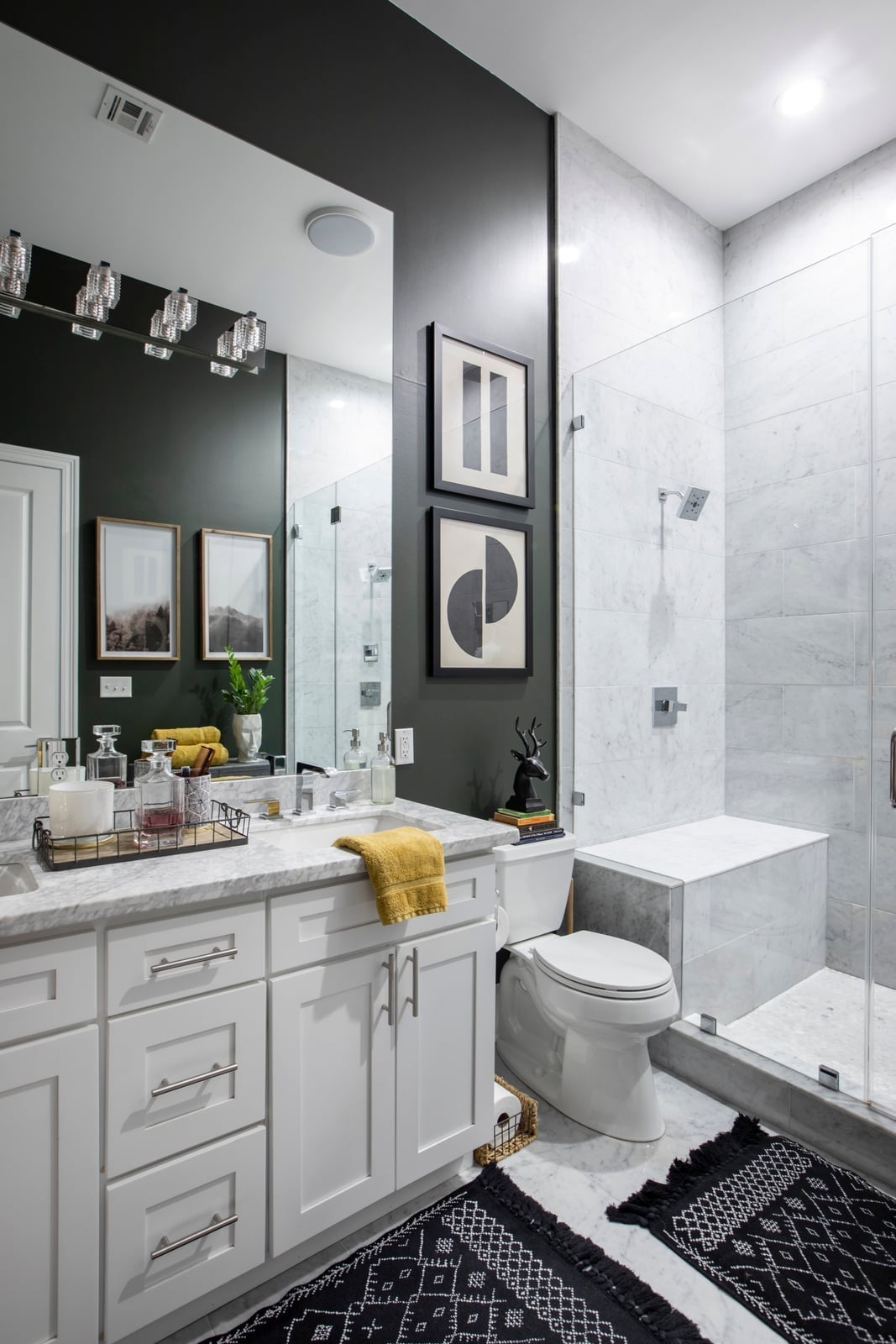
A bold pattern works best as the only graphic element in a room. A black and white rug with a repeating motif sits on marble flooring, and the bathroom stays neutral with white walls, a gray vanity, and a dark green accent. Overhead and vanity lights hit the rug from two directions, so the contrast stays sharp all day. To make a renter-safe swap, use a rug instead of tile or wallpaper to introduce pattern. The layout already has the vanity and toilet lined up in front of a mirror, with the shower to the side, so the rug breaks up the straight lines without touching any fixture.
Gray mat by glass shower enclosure
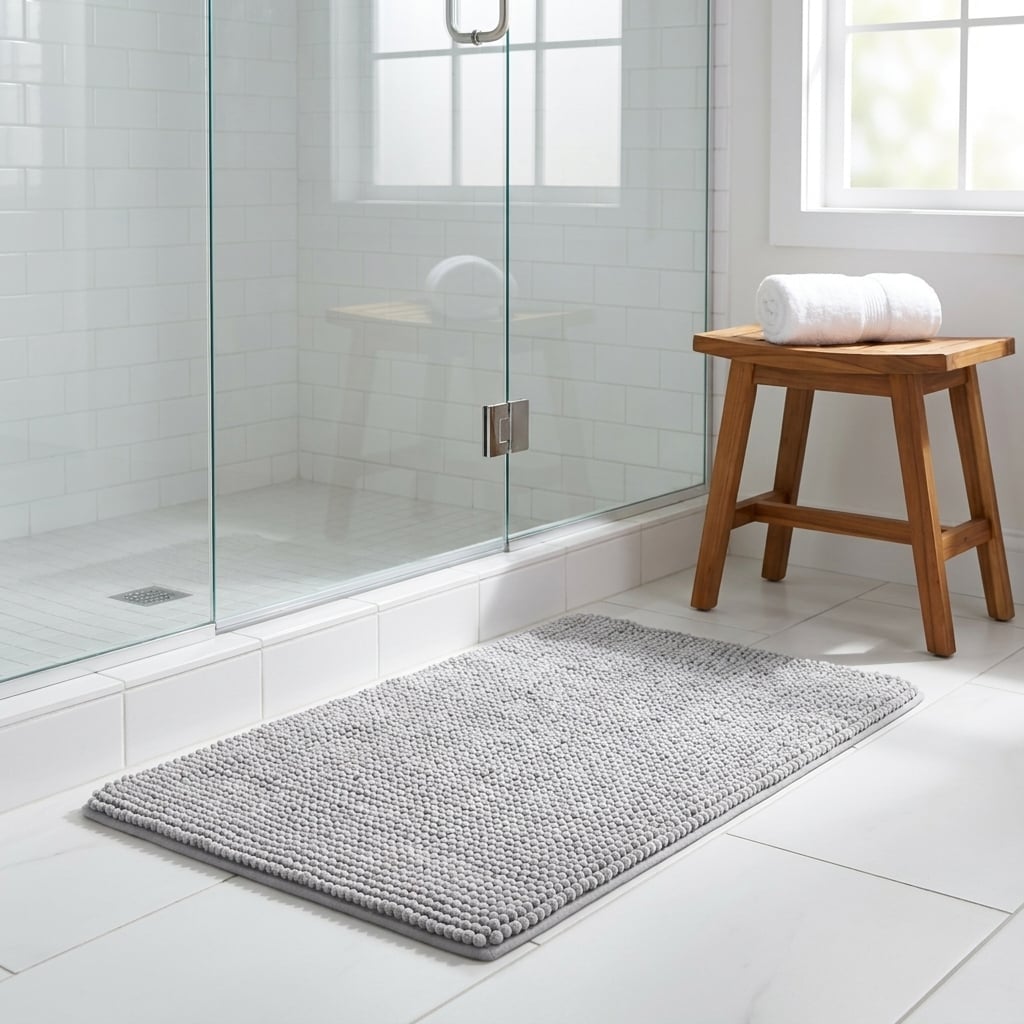
A small mat differs from a runner. A textured gray bath mat in front of a glass shower enclosure does not try to fill the whole room. It sits underfoot right where you step out, and the wooden stool nearby offers a visual pause. The window light hits the mat and the tile floor at a similar angle, so the gray appears as a soft extension of the floor, not a separate rectangle.
The layout works because the mat defines the exit zone without blocking the door swing. The glass enclosure keeps the shower visible, so the mat does not need to signal wet area status. In a smaller bath, match the mat width to the door opening, not the full wall.
Light gray patterned rug connects vanity and bathtub
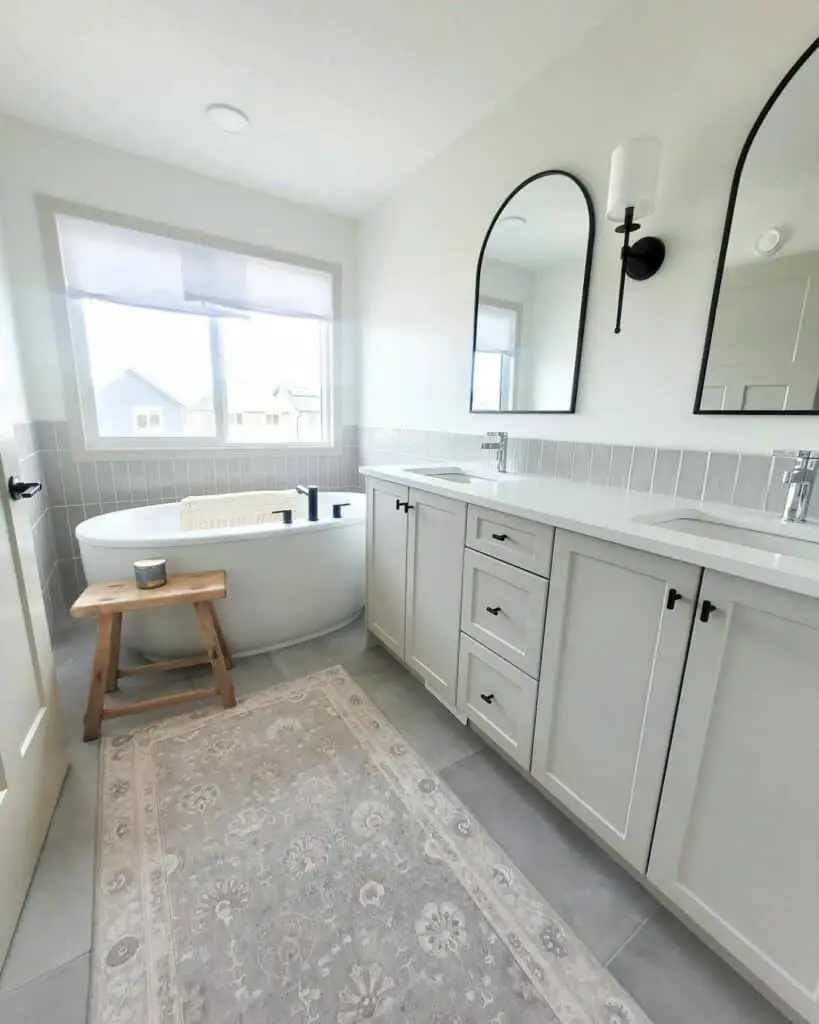
A light gray rug with an ornate repeat pattern sits between a double vanity and a freestanding bathtub, linking two separate zones into one continuous surface. The tile floor runs under both, but the rug softens the transition from the vanity area to the tub. Wall sconces and natural light from the window hit the rug evenly, so the pattern reads clearly without harsh shadows. The light blue and beige threads in the design pick up the wall color and the marble top. As a layout move, placing a rug in the center of the floor rather than against a wall creates a visual anchor that pulls the vanity and tub together.
Long textured beige rug defines the shower area
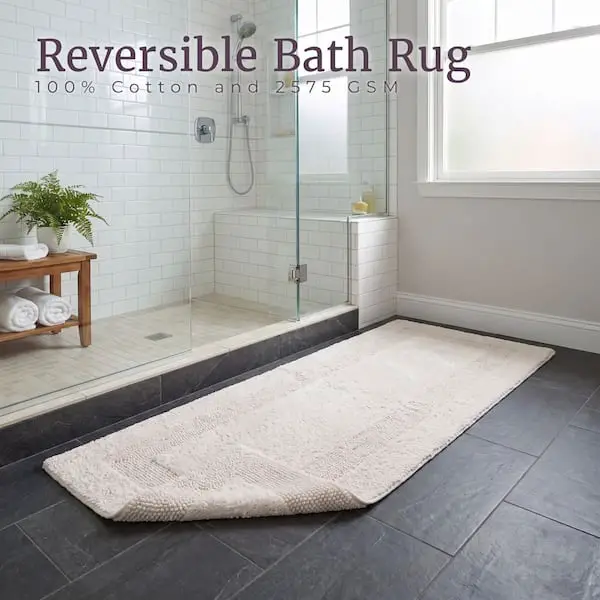
A long textured beige rug running the full width of the shower opening defines the wet zone without a door or curtain. The tile floor continues past the rug, but the fabric marks where you step out. Natural light from a nearby window keeps the beige from looking dull, and the cotton texture adds grip on the smooth tile. A wooden shelf on the wall echoes the natural tone. For scale, the rug should match the shower opening width plus a few inches on each side so it feels intentional rather than like a leftover piece. The bench inside the shower stays visible, so the rug does not block the sightline.
Waffle-weave bath mat on warm wood floor
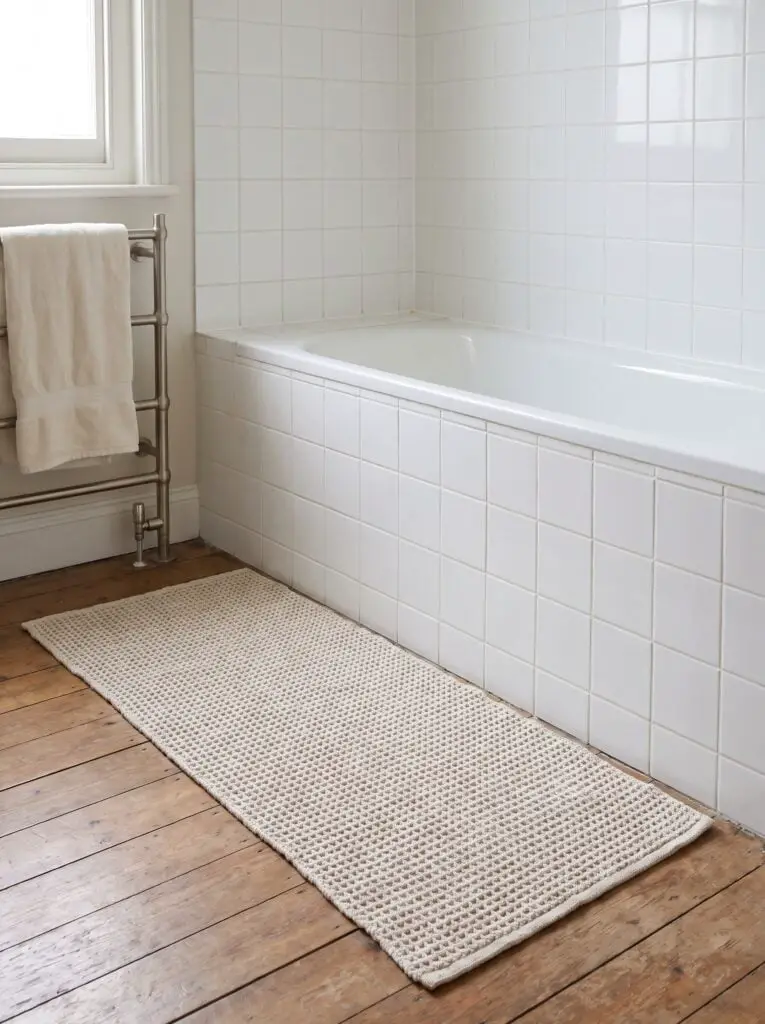
A waffle-weave bath mat brings a tactile contrast to a smooth wooden floor, and that texture does more than please the eye. The raised squares catch water quickly, which matters when the mat sits beside a bathtub on a surface you want to keep dry. In a minimalist bathroom where the palette stays white, beige, and wood tones, the mat adds visual interest without introducing a new color. The natural light from a window will show off the weave’s depth, making the mat look almost sculptural. For a compact space, choose a mat that fits neatly beside the tub, leaving a few inches of wood visible on each side. That gap keeps the room from feeling crowded and lets the floor’s warmth carry the design.
Ornate beige runner rug in a farmhouse bathroom
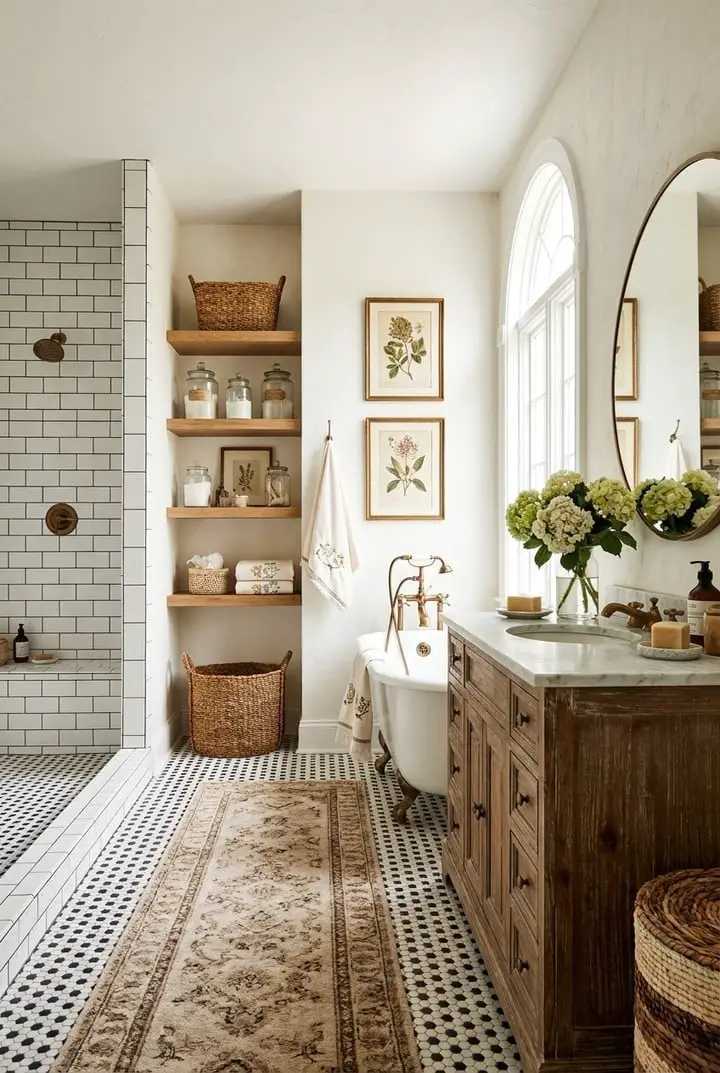
The ornate pattern on this beige runner rug softens the hard lines of a farmhouse bathroom, where white tile, wood, and black accents already carry plenty of character. The runner stretches between the vanity and the shower, tying those two zones together with a single warm tone. Against the wicker baskets and brass details, the rug’s intricate design feels at home, not fussy. The natural light from the arched window brings out the beige and brown threads, making the pattern look richer. A runner like this works because it echoes the room’s existing palette without competing with the clawfoot tub or the wooden vanity. It is the quiet anchor that lets the farmhouse details shine.
Flat lay of a textured beige bath mat with subtle border
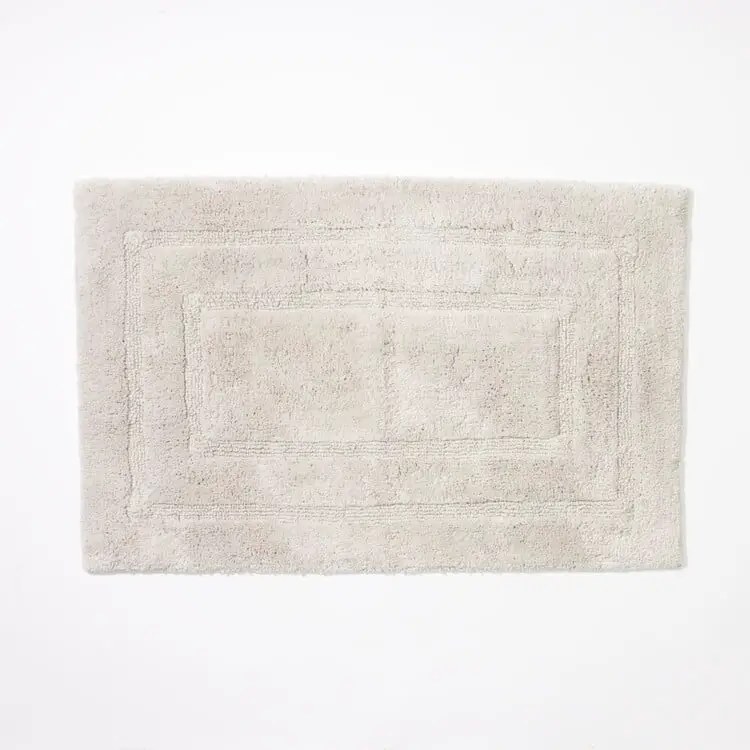
When a bath mat is laid flat, you notice the details that get lost underfoot, and this one has a subtle border that frames the textured center. The beige cotton weave feels soft and absorbent, a good choice for a modern bathroom where you want function without visual noise. The border adds a hint of structure, so the mat looks deliberate instead of like an afterthought. In a compact space, a flat lay view helps you judge how the mat will sit against white tile or a simple floor. Choose a mat with a defined edge like this one when your bathroom leans minimal, because the detail provides a resting point for the eye without adding color.
Dark gray rug with white circular pattern on marble
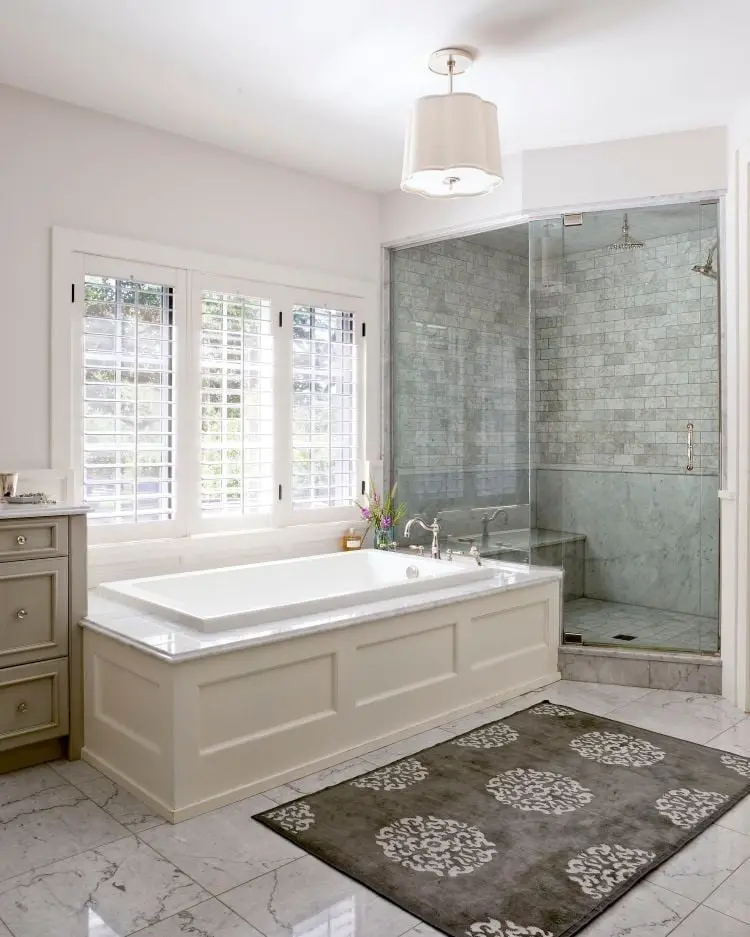
A dark gray rug with a white circular pattern stands out against a marble floor, where lighter tones usually dominate. The contrast turns the rug into the focal point, drawing the eye down from the pendant light and the window. In a traditional bathroom with a bathtub and a shower stall, the rug anchors the space in front of the tub, giving your feet a warm landing spot on cold tile. The white circles echo the veining in the marble, so the rug feels connected to the room. If you are torn between a solid mat and a patterned one, consider how much visual weight you want at floor level. A bold pattern like this pairs well with neutral walls and fixtures, letting the rug carry the design.
Striped beige and taupe rug adds warmth to dark tiles
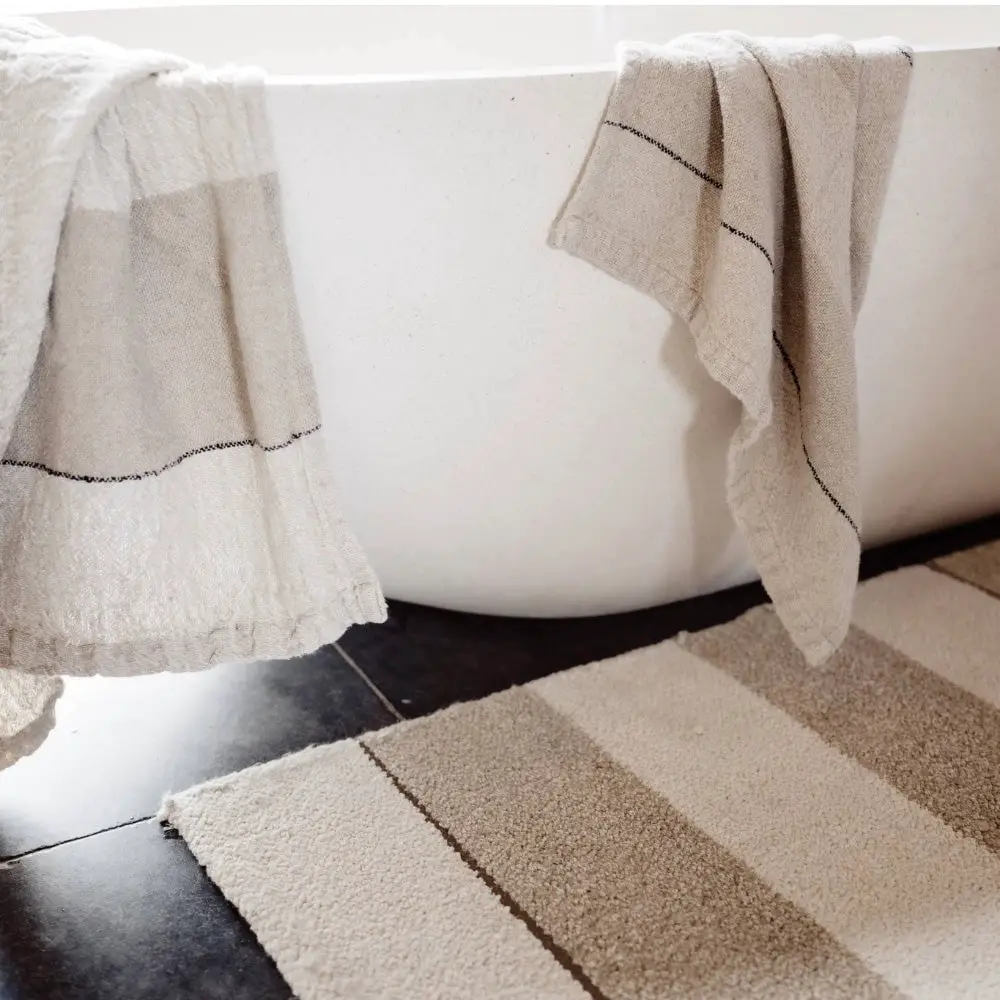
The stripes on this beige and taupe rug run parallel to the dark tiles, a detail that makes the floor feel longer and the room more grounded. The warm tones lift the dark surface, so the space does not feel heavy even with stone and black accents nearby. The freestanding bathtub sits beside the rug, and the linen towels pick up the same earthy palette. In a compact bathroom, a striped rug like this can make the floor appear wider, which is a useful trick when you are working with limited square footage. The pattern is busy enough to add interest but stays within a neutral range, so it pairs easily with the stone and tile already in the room.
Navy mat on terracotta tiles
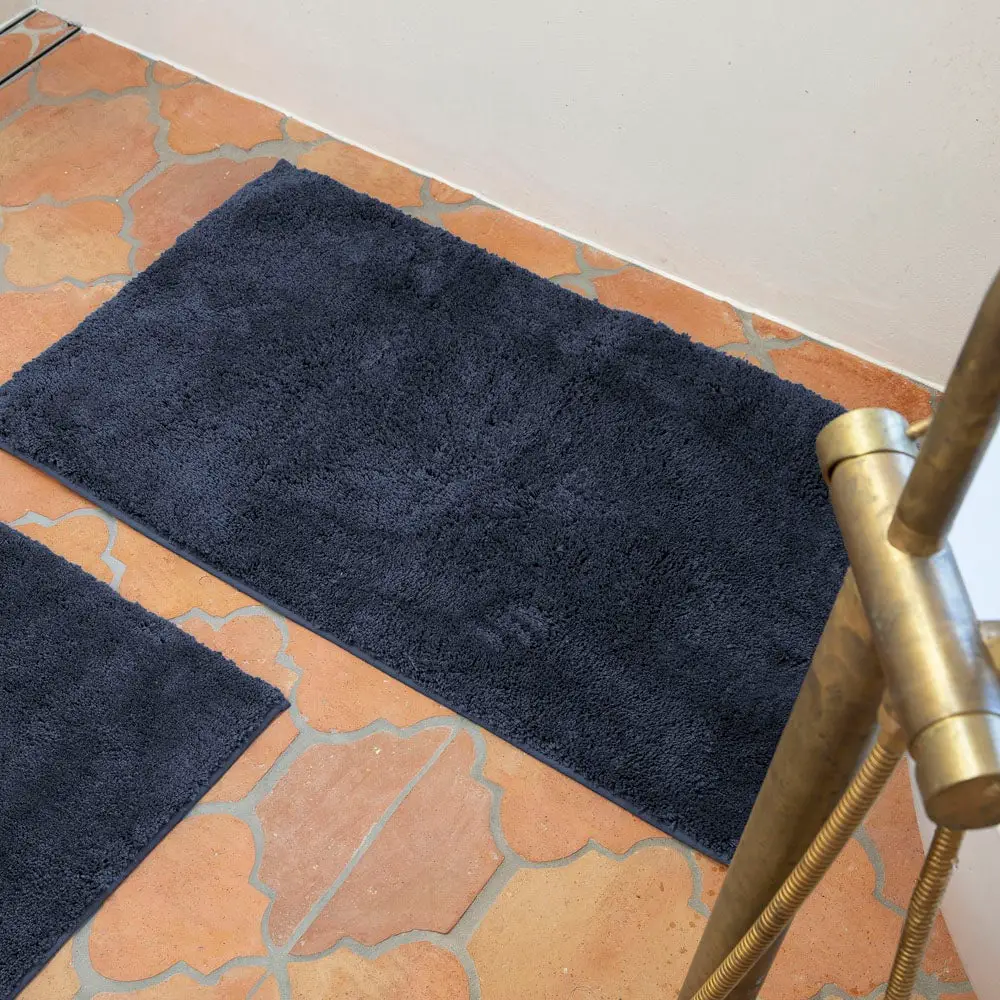
A plush navy rug on warm terracotta tile is an easy palette trick that costs nothing to try. The deep blue looks neutral against the earthy orange, so the contrast feels intentional without being loud. Natural light from the room keeps the navy from flattening, and the brass accents around the space echo the rug’s richness. This is a palette-first swap: you get a traditional look by pairing a saturated cool tone with a warm ground. No need to change the tile or paint. Just set the mat where it lands, and let the two colors do the work.
Sage green bath rug and ribbed runner for natural tones
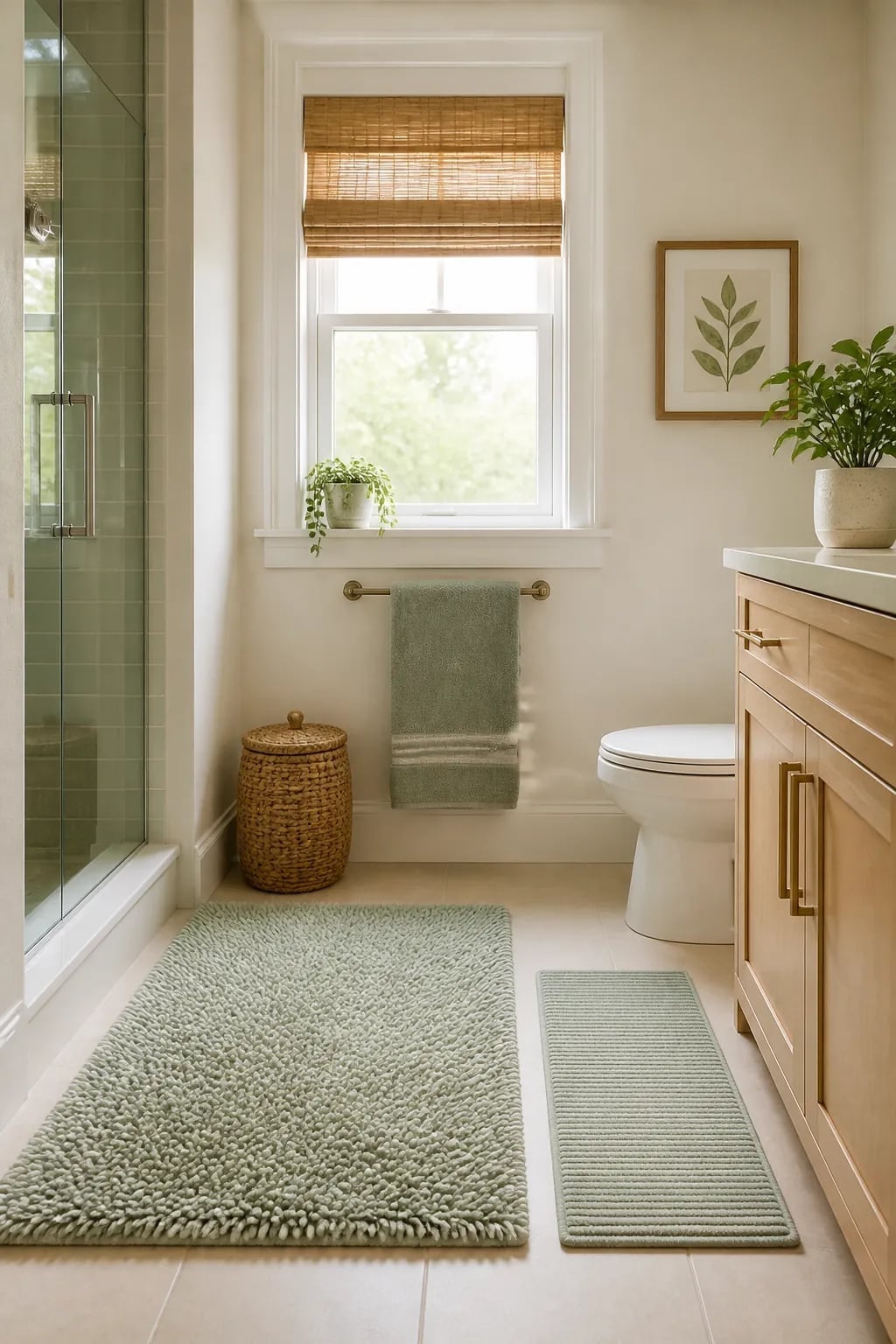
A ribbed runner can feel like the obvious choice for a modern bath, but a textured sage green rug in front of the vanity shifts the whole palette toward something softer. The green picks up the wood tones from the vanity and the woven basket, while the beige tile and glass shower stall keep the look airy. A second rug near the shower creates a visual path without blocking the layout. For renters, this is a no-commitment way to bring in a natural color scheme. The rugs sit on top of existing tile, so you can take the whole palette with you when you leave.
Hexagon tiles replace rug alternative
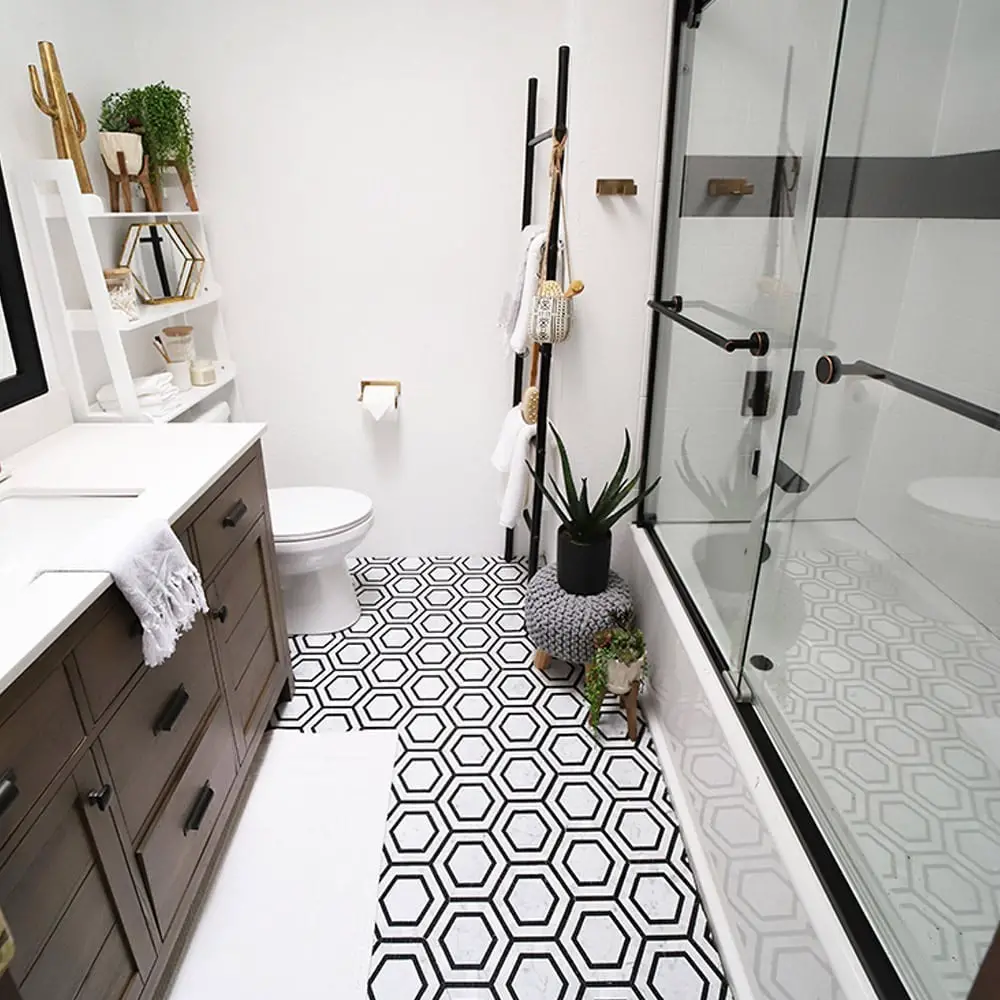
A geometric hexagon tile floor does the job of a rug without adding a textile. The white and black pattern creates a defined zone under the vanity and shower, and the gold and brown accents in the room keep it from feeling cold. Overhead lighting makes the tile pattern read clearly, so you get the visual anchor of a rug with the durability of tile. This works best when the rest of the bath stays simple.
Deep blue bath rug complements navy towels and shower curtain
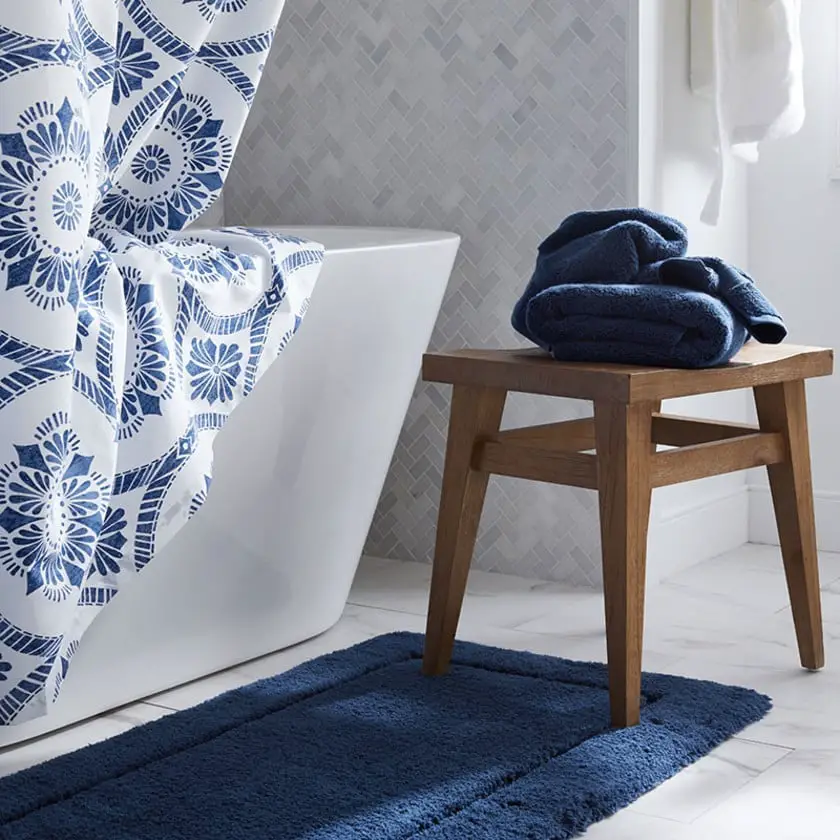
A deep blue rug in front of the tub matches the navy towels and the blue patterned shower curtain, creating a layered blue scheme that holds the room together. Natural light keeps the dark shade from shrinking the space, and the light wood stool and gray tile floor provide breathing room. The rug acts as the middle note between the curtain and the towels, so the whole palette comes across as one deliberate choice instead of a collection of separate blues.
Final Thoughts
Choosing a bathroom rug for 2027 is about matching personality with practicality. A plush beige style softens hard floors, while a geometric runner can connect separate zones. Natural fibers like jute add warmth but need regular drying to stay fresh. Scalloped edges or bold patterns offer a low-commitment way to update the room. The takeaway: let the rug lead, and keep the surrounding finishes simple so it gets the attention it deserves.