Your front porch is the first thing guests see, so why not make it the cutest spot on the block? This roundup of 27 cute front porch design ideas for 2027 is packed with real-world inspiration to help you create a welcoming entry that feels like you.
From farmhouse favorites with rocking chairs and ferns to modern takes with bold doors and seasonal touches, you will find practical ways to layer rugs, choose planters, and add seating without overcomplicating the space. Whether you love a traditional wreath or a playful autumn display, these porches prove that small changes make a big difference.
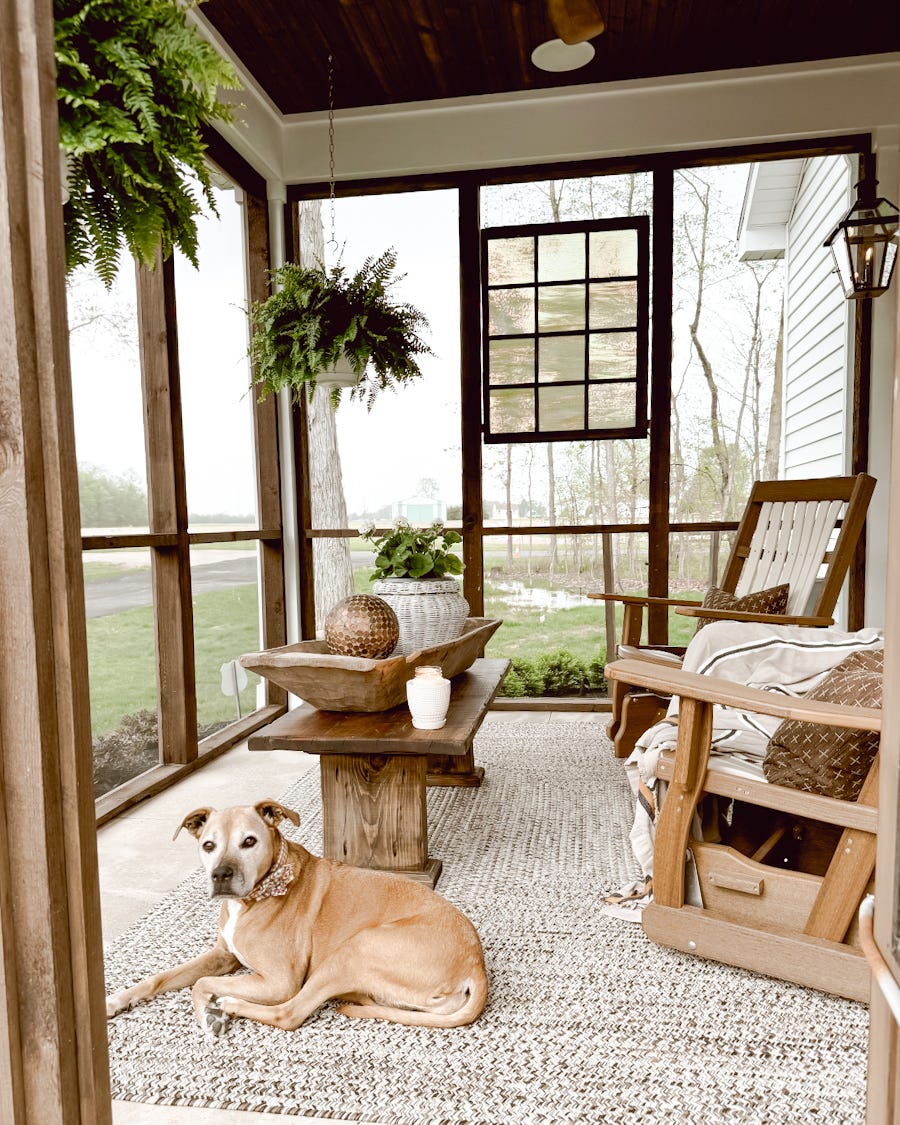
Cozy farmhouse porch with rustic rocking chairs and hanging ferns
A porch that invites you to sit tends to get used. Here, two wooden rocking chairs flank a small wooden coffee table, creating a clear spot to pause. Hanging ferns add a soft curtain of green at the edge, while a patterned rug underfoot stops the seating area from floating in the open space. A lantern sconce and a ceiling fan light offer two layers of illumination, so the spot works for both a morning coffee and an evening chat. In room mode, the layout keeps the chairs as the hero: everything else steps back.
Modern farmhouse entrance with vibrant coral door and planters
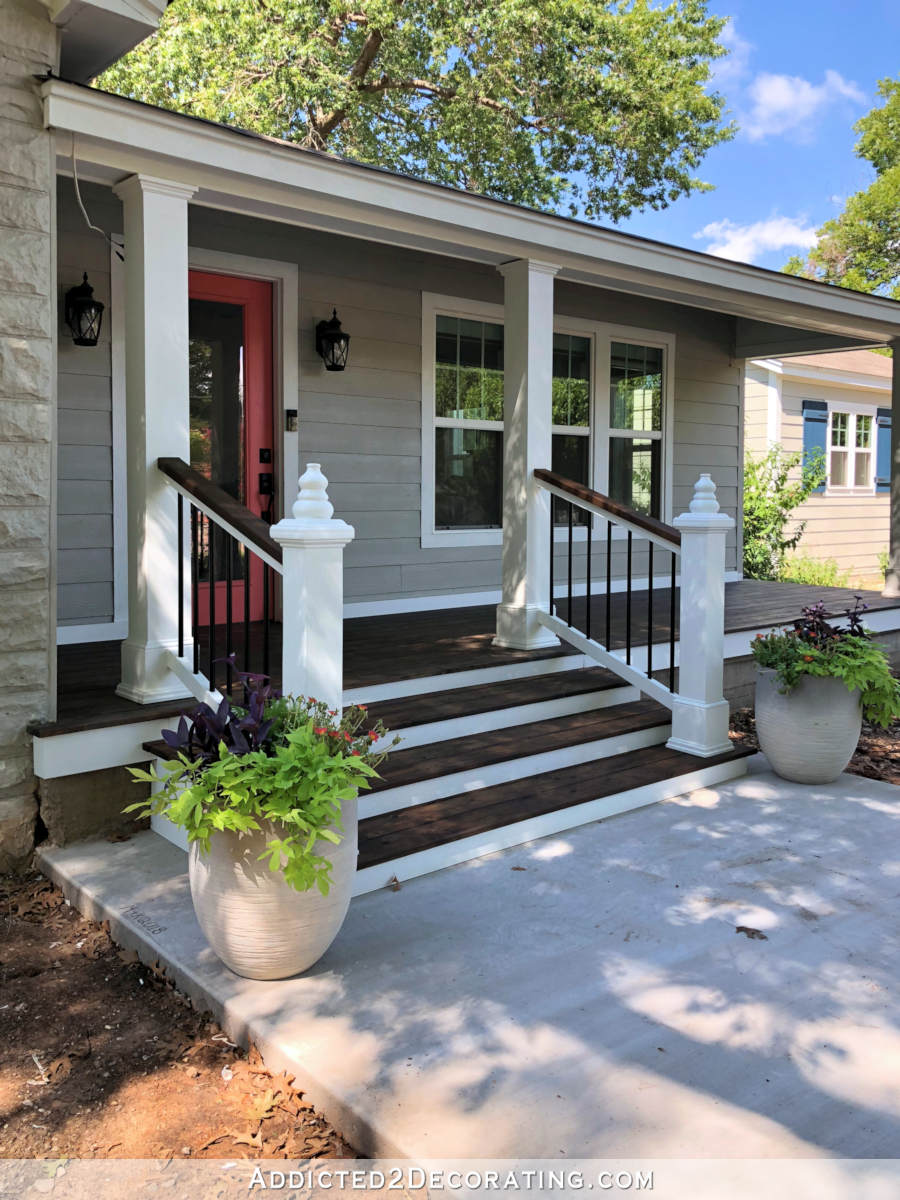
A bright coral front door signals confidence against gray siding and white porch columns. Two large planters flank the entrance, their deep green leaves balancing the door’s saturated hue without competing with it. Dark wood stairs lead up to the covered porch, where black outdoor sconces add a crisp industrial note. The palette stays within a narrow band of coral, gray, white, and dark wood, directing attention straight to the door. To recreate it, look for one saturated color for the door and keep everything else neutral.
Charming farmhouse porch with layered rugs and welcoming sign
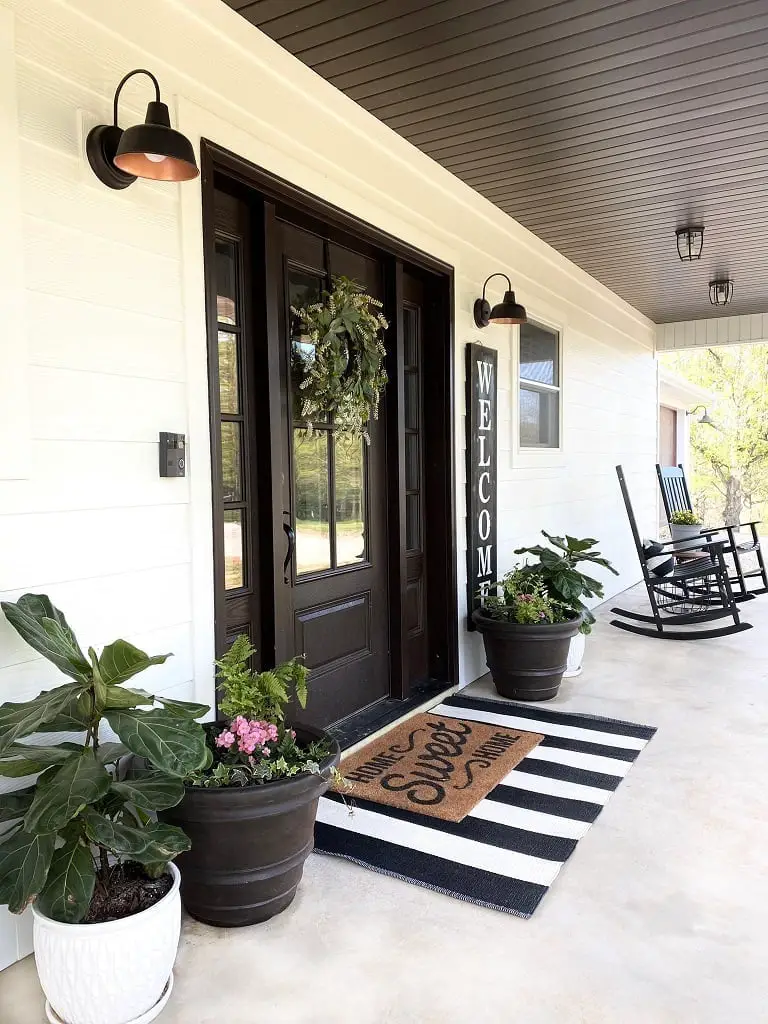
How do you make a wide porch feel more intimate without a full renovation? Layering rugs is a practical rule that works here. A striped outdoor rug sits under a smaller coir doormat, creating visual depth at the doorway. The double doors are flanked by potted plants, and a welcome sign hangs above a rocking chair.
The materials do the work: coir for scraping boots, a woven rug for softness underfoot, and metal sconces for weather resistance. A grapevine wreath on the door adds a natural texture that ties the green of the plants to the brown of the rug fibers. The look looks layered but not busy, because the palette sticks to white, black, brown, and green.
Traditional porch with floral wreath and symmetrical planters
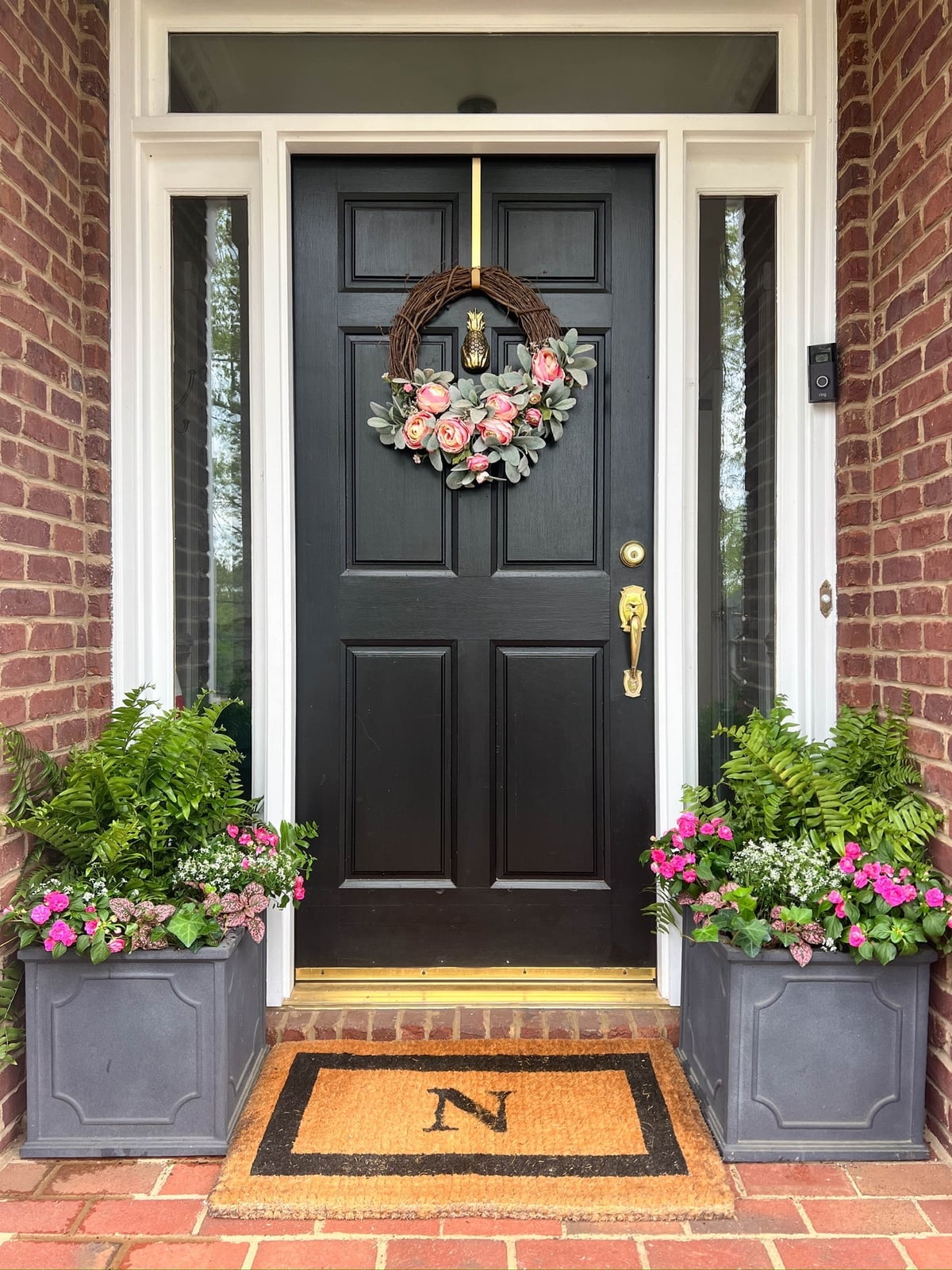
A grapevine wreath with pink flowers hangs on a black door, and two large planters sit at equal distance from the center. The symmetry is the layout principle here: it directs the eye straight to the entrance. A coir doormat with a letter N anchors the threshold. Daylight keeps the pink blooms and the green foliage crisp, so the color contrast looks fresh rather than muted. For a traditional porch, matching planters on both sides of the door is the quickest way to signal order.
Inviting farmhouse entrance with dark green door and wooden bench
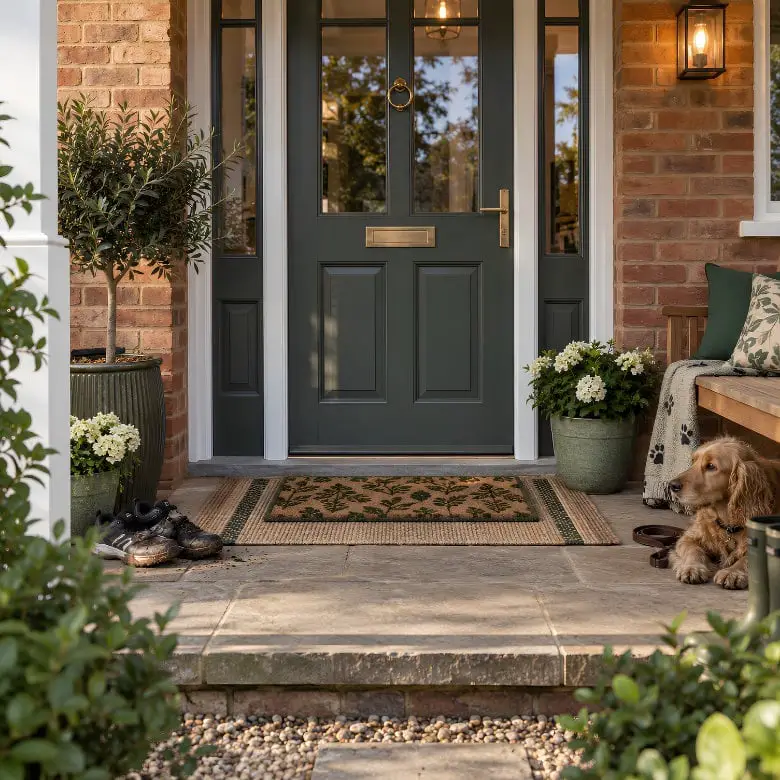
A front porch that doubles as a drop zone needs a spot for bags, shoes, or a mail stack. Here, a wooden bench sits to the right of a dark green door, offering a place to sit while you unlock the lock or set down groceries. A potted olive tree and a smaller plant flank the entrance, while a coir doormat catches dirt before it reaches the brick steps. A wall lantern provides focused light near the door. The bench is furniture, not storage, so the entrance stays welcoming and uncluttered.
Festive farmhouse porch with Halloween decor and seasonal accents
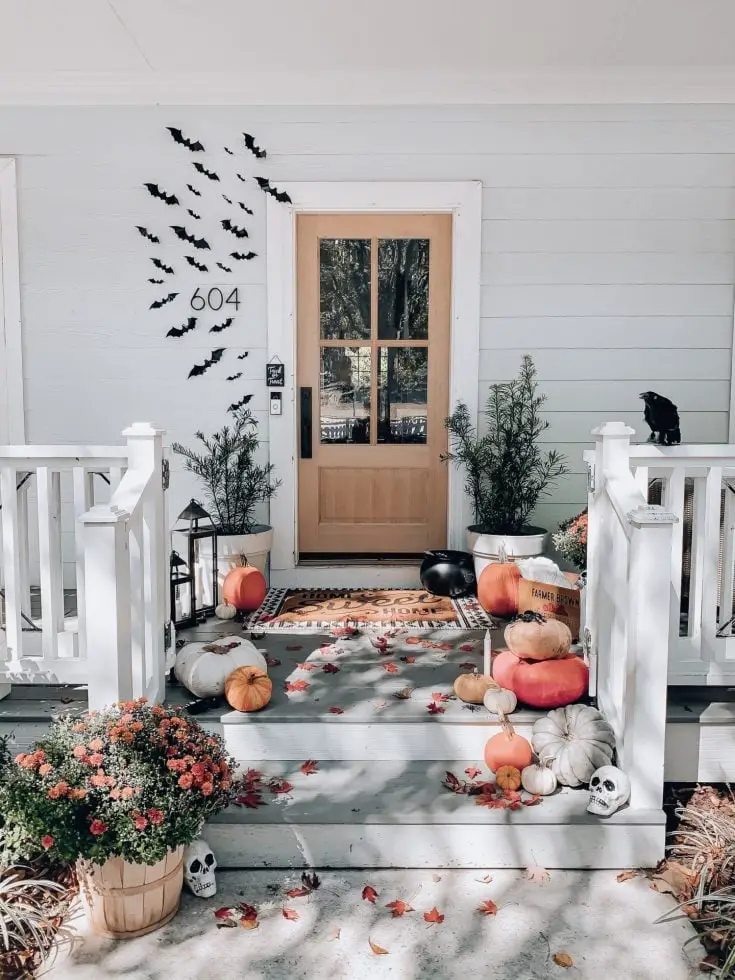
A farmhouse porch can look festive without a full seasonal overhaul. Here, a compact porch uses a few key pieces to mark Halloween: pumpkins, mums, lanterns and a welcome mat. White and light blue paint on the house keep the backdrop neutral, so orange and cream accents pop. The layout makes the most of the steps, placing seasonal items where they catch the eye. Bat decals on the wall add a playful touch that is easy to remove. The palette stays restrained, with wood tones and metal details grounding the brighter seasonal hues. This approach works for anyone who wants to decorate for a holiday without committing to a full theme. A small collection of seasonal items on the steps looks arranged rather than cluttered.
Dark green siding with copper roof and stone accents
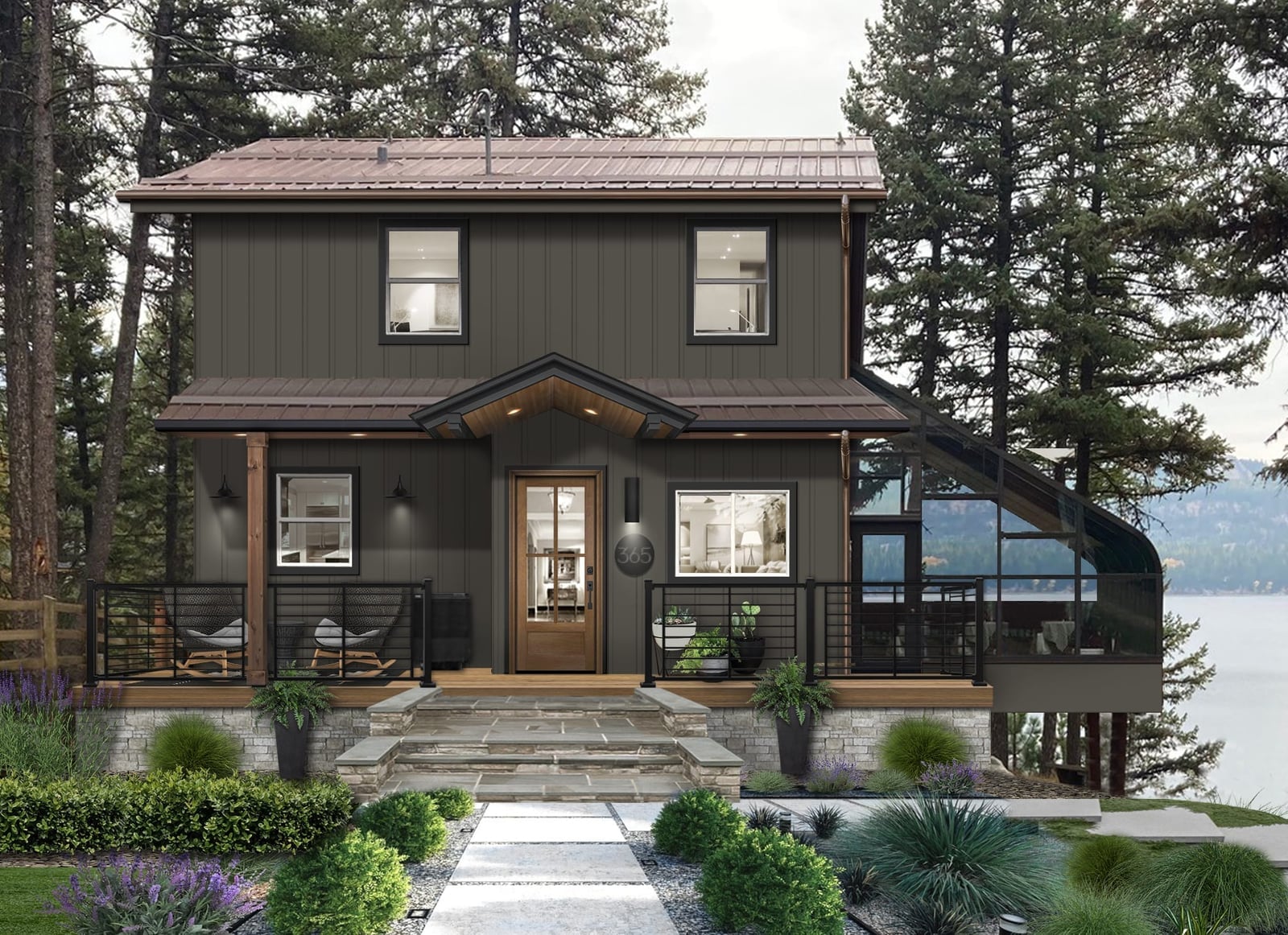
The combination of dark green wood siding and a copper metal roof gives this modern farmhouse porch a distinct look. Stone accents on the lower exterior add texture, while the glass front door keeps the entry feeling open. Overhead sconces and recessed porch lights provide even illumination. The wrap-around deck creates a sense of roominess, and a pair of rocking chairs with potted plants completes the seating area. For renters, the takeaway is that permanent materials like stone and metal are not required. A dark green paint on the front door and copper-toned accessories can suggest the same palette without changing the siding or roof.
Traditional porch with dark gray doors, green wreaths, and metal bench
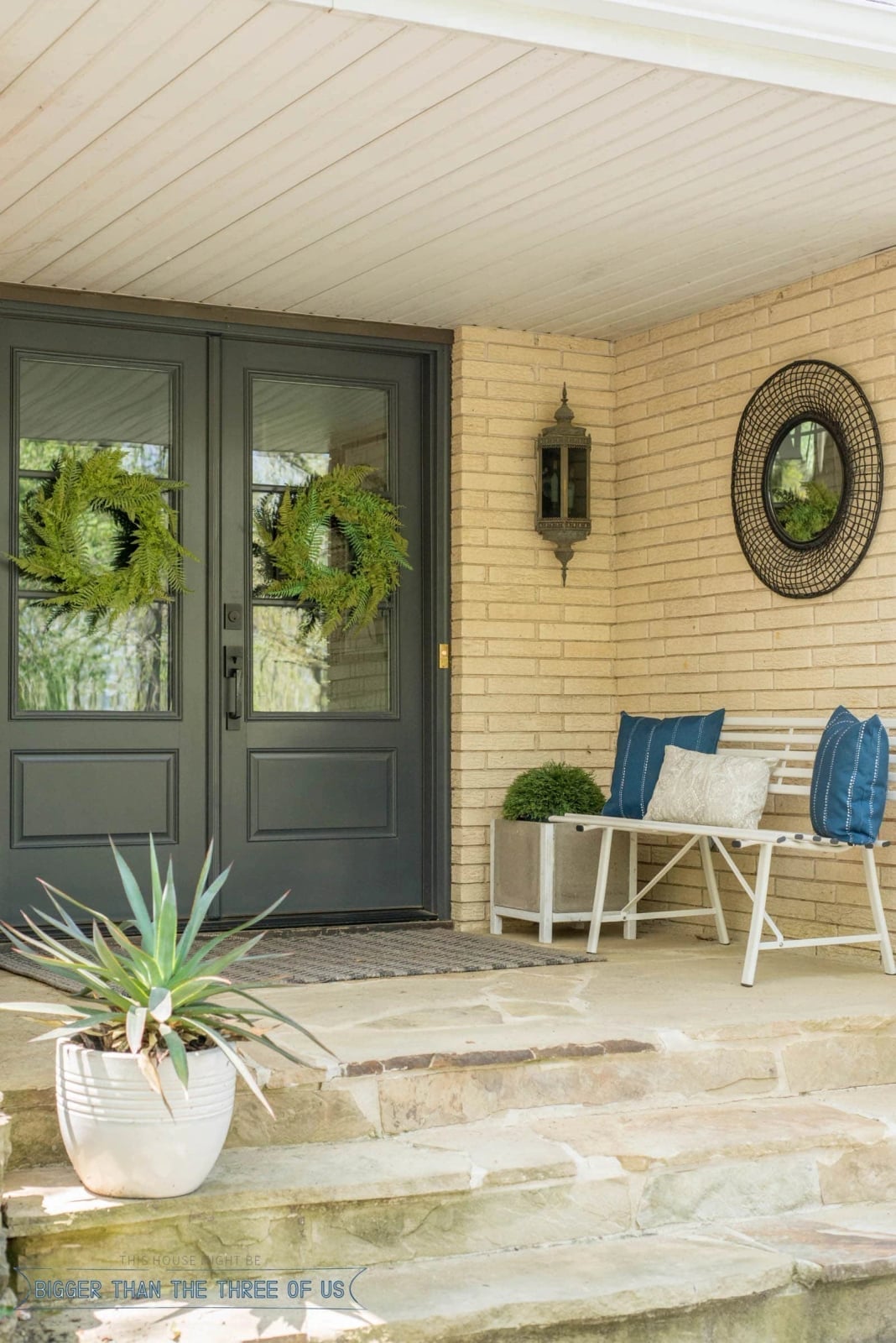
This traditional porch uses symmetry and a restrained color palette to create a welcoming entry. The dark gray double doors are each dressed with a green wreath, tying the two sides together. A metal bench sits to one side, paired with planters and a lantern sconce on the brick wall. A mirror mounted nearby reflects light and makes the compact space feel larger. The layout places the bench and planters off-center, balancing the visual weight of the doors. Beige brick, stone and blue fabric accents keep the look grounded. On a smaller porch, focus on repeating one element like a wreath on each door and keep the decor minimal.
Farmhouse porch with white rocking chairs and blue ceramic stool
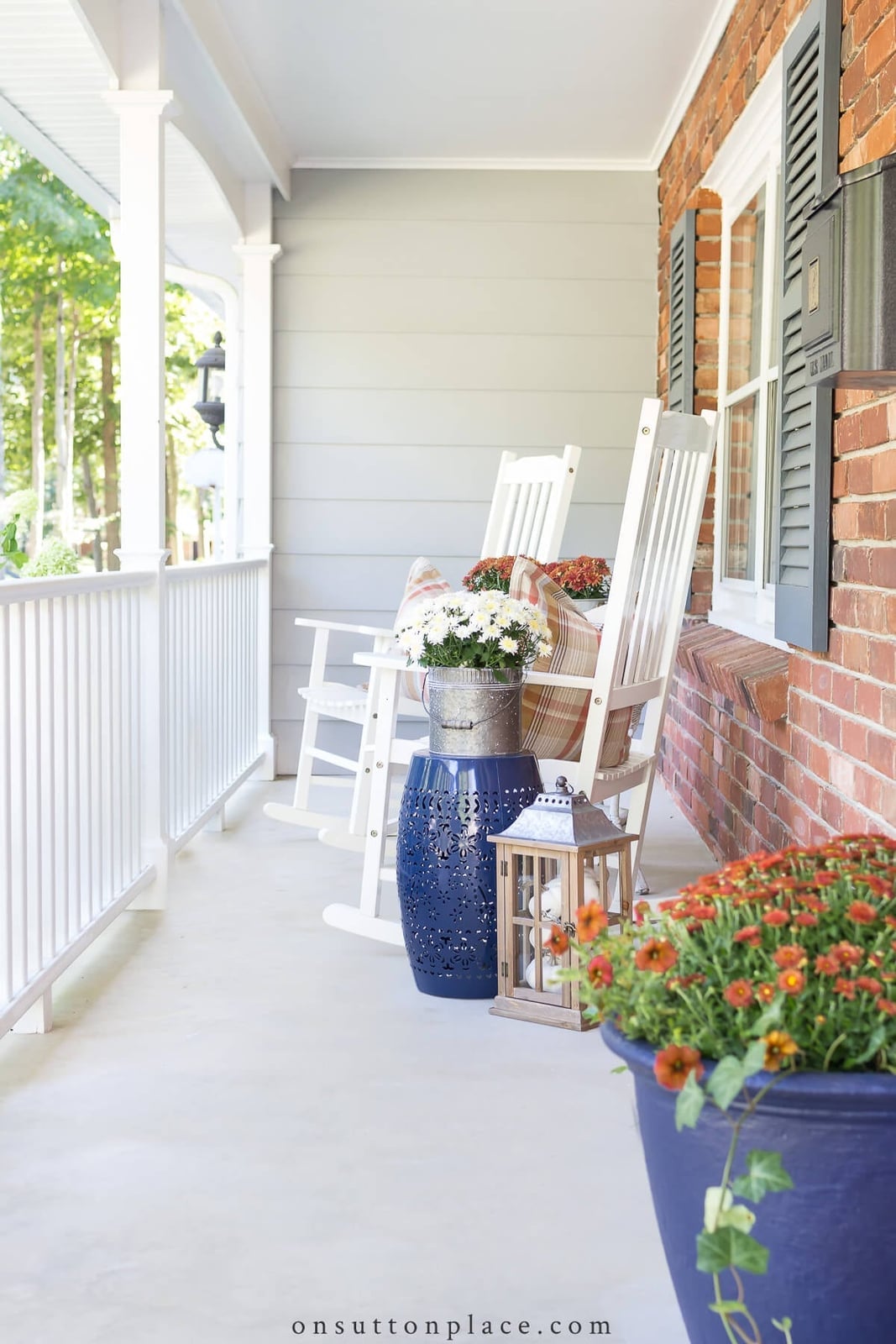
Can a single piece of furniture change the whole mood of a porch? Here, a blue ceramic garden stool does just that. The porch is anchored by two white rocking chairs facing forward, with a hanging lantern overhead. The color scheme is mostly white and gray, with wood tones on the house and brick underfoot. Against that neutral base, the blue stool adds a clear focal point. Orange and green accents in nearby plants keep the color from feeling isolated. The arrangement puts the chairs and stool side by side, so the blue becomes part of the seating group. This trick works on any porch: pick one accent piece in a strong color and place it near the main seating. The palette stays simple so that color stands out.
Rustic farmhouse porch with stone fireplace and exposed beams
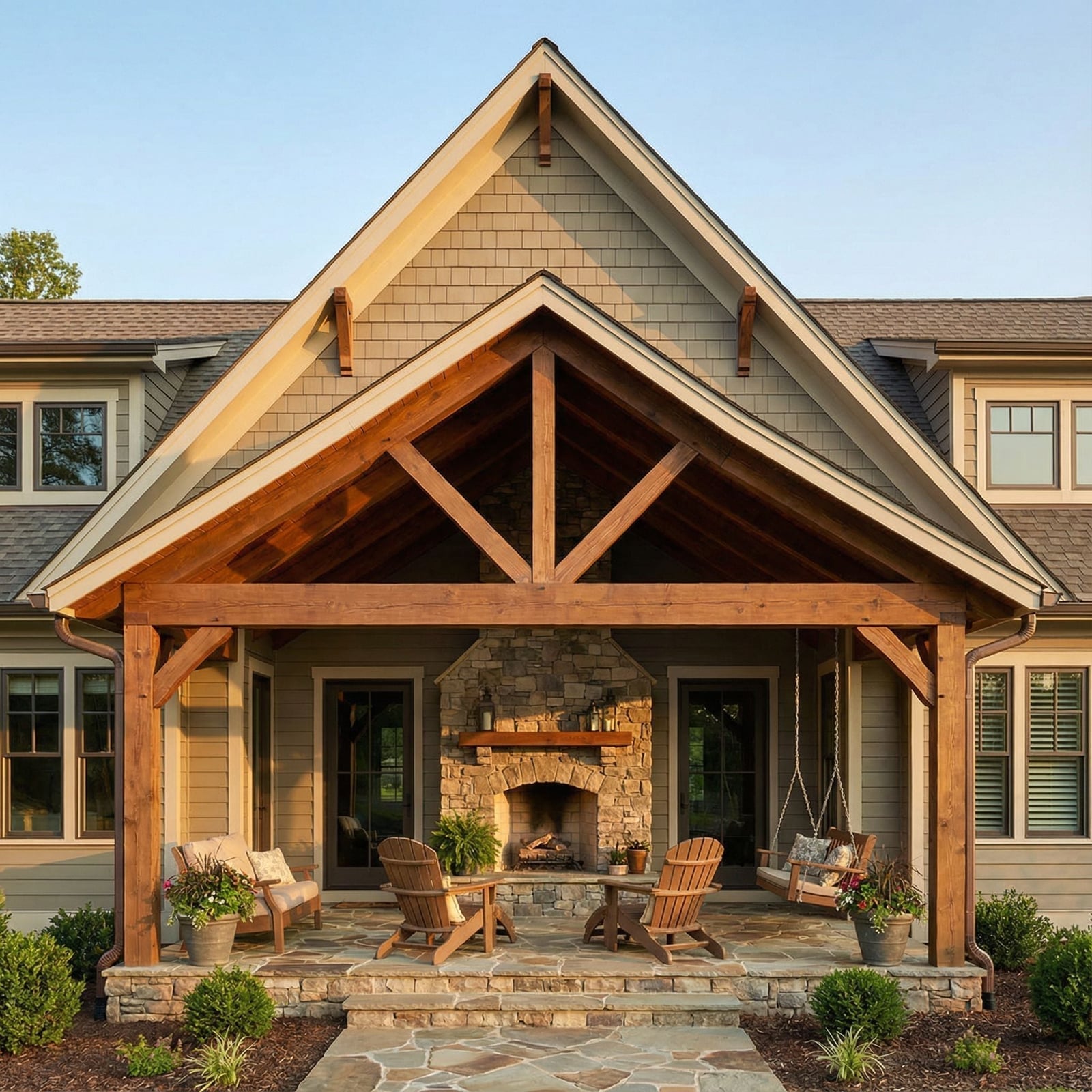
A stone fireplace anchors this roomy porch, with exposed wooden beams overhead defining the ceiling. The palette mixes tan, brown and gray, with green accents from the surrounding landscape. Adirondack chairs sit on one side of the fireplace, while a porch swing is on the other. Outdoor sconces provide evening light without competing with the natural daylight. The layout creates two distinct seating areas around the central fireplace, making the porch feel like an outdoor living room. For anyone with a porch large enough to zone, placing the biggest element in the center and arranging seating around it is a straightforward way to define the space.
White wicker furniture with patterned pillows and gardening supplies
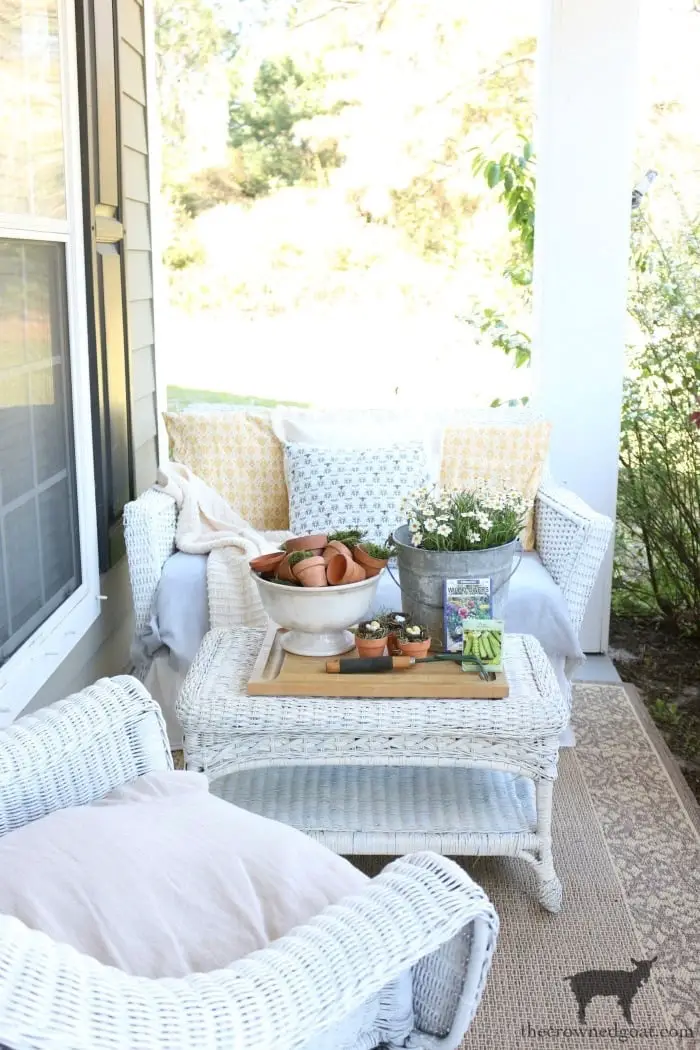
For a compact porch, keep the seating tight and the surface low. This arrangement centers on a white wicker sofa and chair, both softened by yellow and beige patterned pillows, with a wicker coffee table within easy reach. The materials ground the look: natural wicker, metal legs on the table, a galvanized bucket holding a ceramic bowl. A terracotta pot adds warmth, and the wood siding provides a neutral backdrop. The palette stays in the white, yellow, beige, and green range, so the eye lands on the woven texture instead of competing color blocks.
Arranged pumpkins and gourds for an autumn display
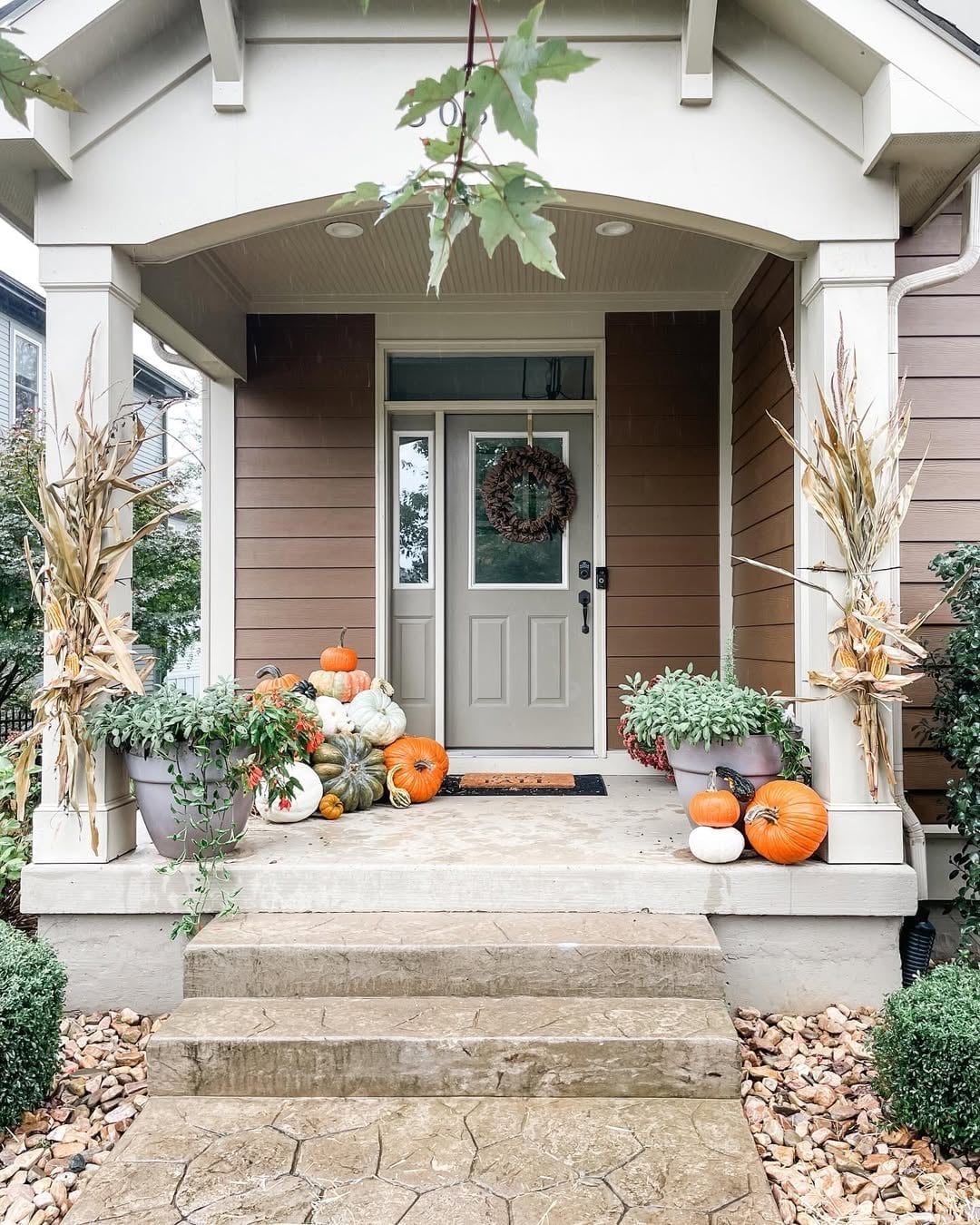
A loose, abundant display of pumpkins and gourds creates a natural fall look, while a tightly symmetrical one appears planned. This farmhouse porch uses the first approach: pumpkins in brown, gray, orange, green, and white are scattered across the steps and porch floor, with dried corn stalks leaning against the wood siding for height. The color story is the defining move here. The ratio of warm orange to muted brown and gray keeps the display from feeling too monochrome or too carnival. Concrete urns and stone planters hold potted greenery, and a wreath on the door echoes the orange and green tones. What breaks the palette is the white of the wood siding and the gray of the stone, which act as neutral pauses between the seasonal color.
Traditional autumn porch with double doors and layered rugs
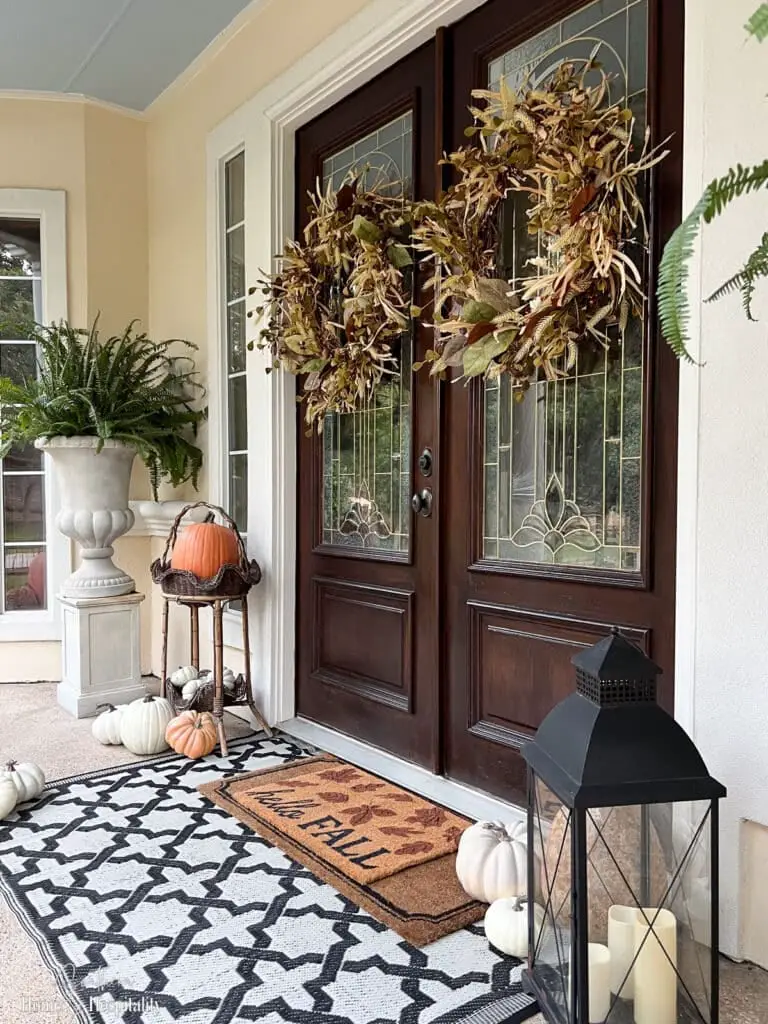
The double doors are the natural anchor here, each one fitted with a large fall wreath in green and orange tones. The arrangement follows a clear axis: a patterned rug sits directly in front of the doors, layered over a second rug that extends the welcome zone. A large lantern with candles stands to one side, and pumpkins are scattered near the steps and the potted fern. The materials work together without competing: the wood and glass of the doors, the metal of the lantern, the wicker of the fern basket, and the fabric of the rugs. The symmetry of the wreaths and the balanced placement of the pumpkins make the entrance feel organized, not crowded.
Tiered steps decorated with pumpkins mums and lanterns
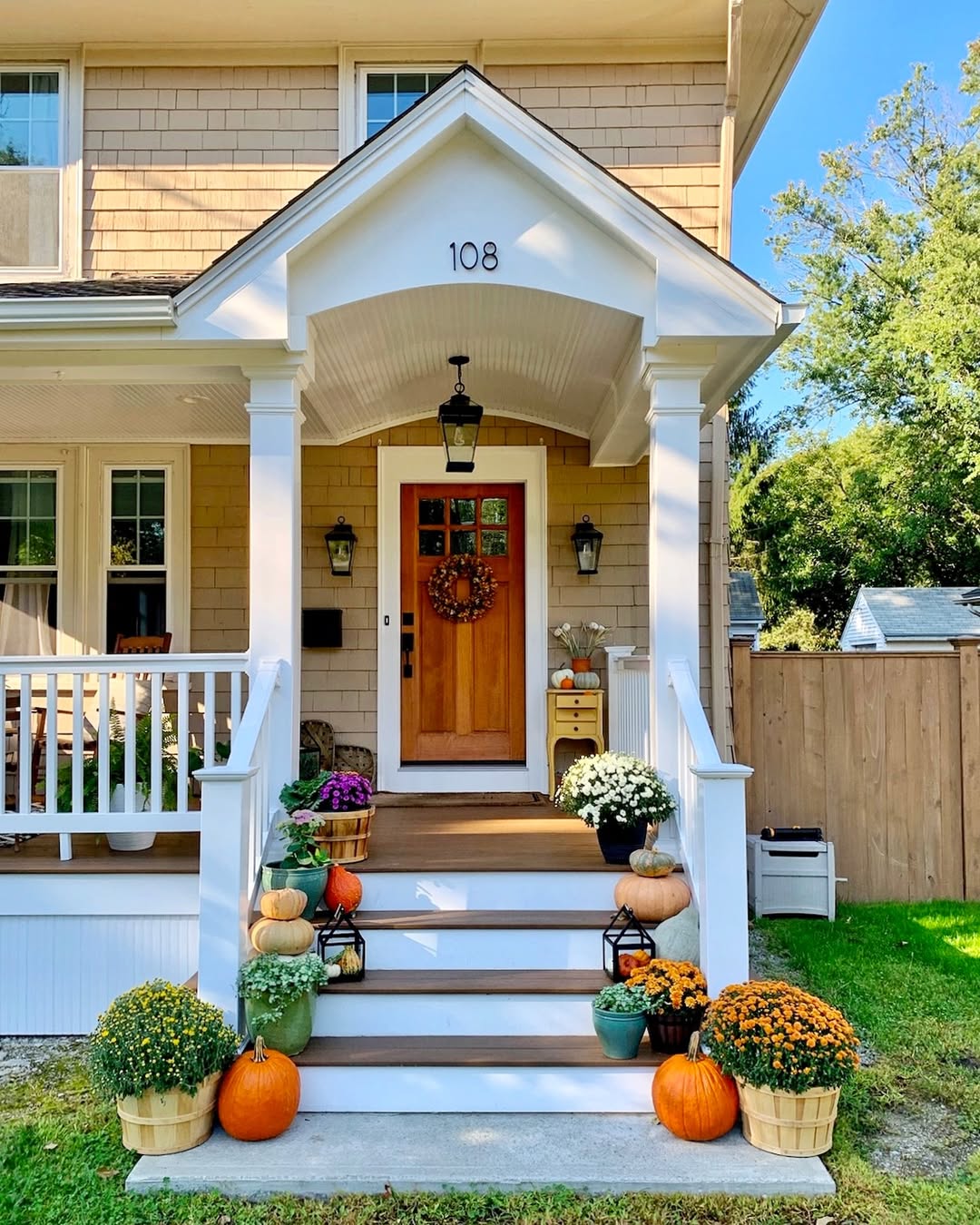
The tiered steps do the layout work here. Instead of clustering everything at the door, the arrangement uses each step as a shelf: pumpkins and mums sit on the lower treads, while taller lanterns and a wreath draw the eye up to the wooden door. The lighting is worth noting. A hanging lantern and wall sconces frame the entrance, casting light across the steps from above and the sides. That vertical spread matters because it keeps the pumpkins and mums visible even as the days shorten. The color scheme stays in tan, white, orange, green, and brown, with the wood door and metal accents tying the whole arrangement to the farmhouse style.
Black timber structure over a natural wood door
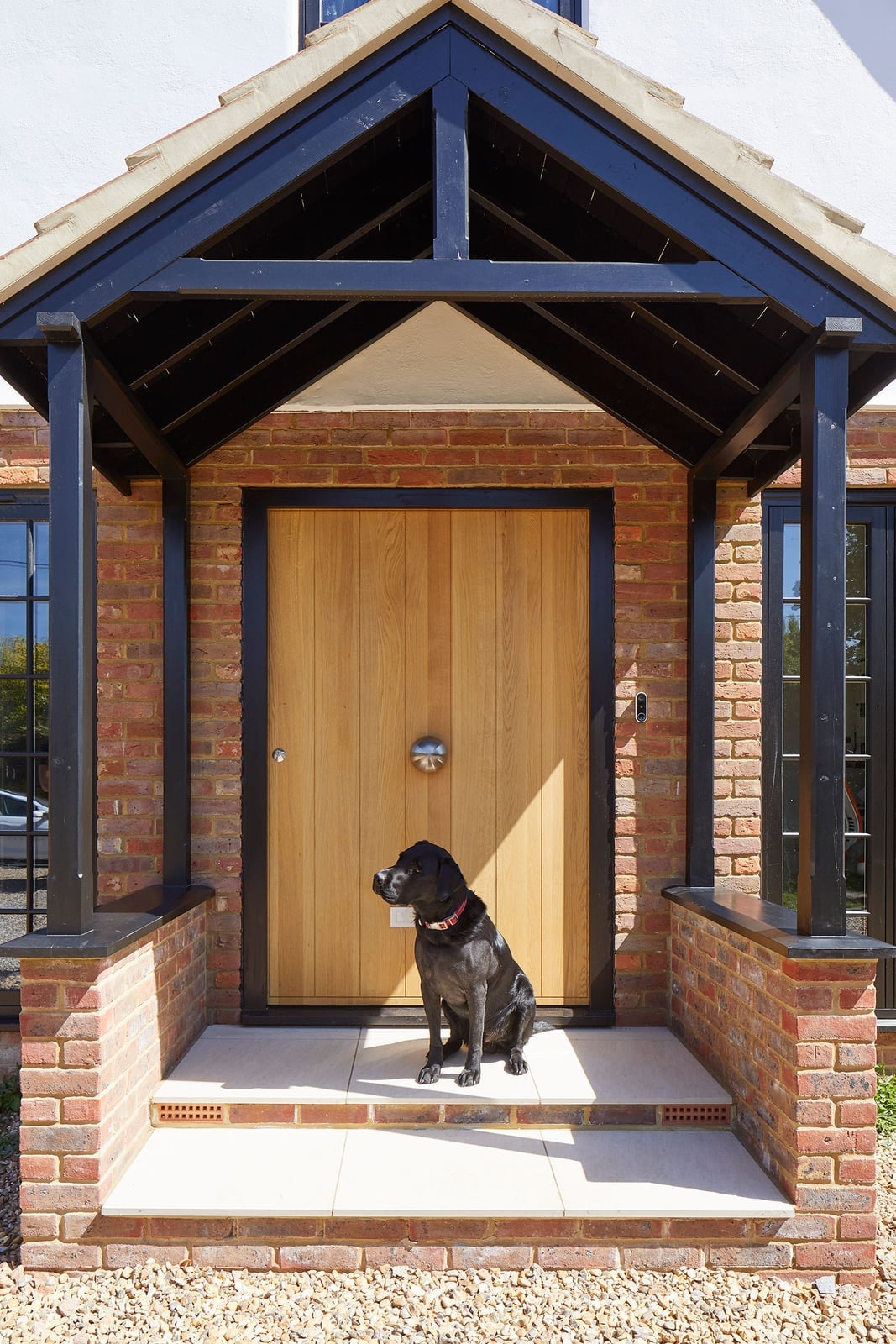
A porch with strong architectural lines can set the tone. Here, black timber beams frame the entrance, creating a covered porch area that functions as both shelter and statement. The natural wood door sits at the center, its warm tone contrasting with the dark beams. The palette runs on contrasts: red brick walls, the wood door, black timber, and white trim on the house siding. Stone steps lead up to the door, and the brick extends to the porch floor. The materials ground the look: brick, wood, tile, and metal. The black timber works because it is the only dark element at the top of the composition, drawing the eye from the broad structure down to the door.
Pale green door with a wicker basket of flowers
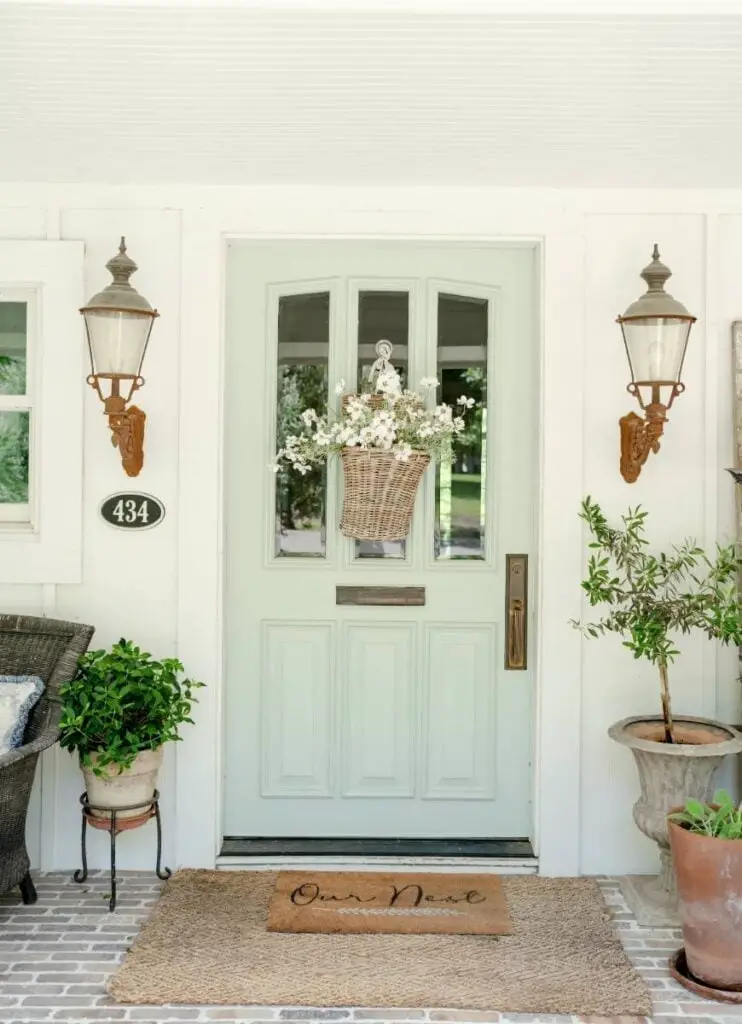
A pale green front door feels fresh and grounded against white siding and brick steps. The hanging wicker basket of flowers softens the vertical line of the door, while the jute doormat and terracotta pots on either side keep the palette rooted in natural browns. Wall-mounted lanterns flank the door at eye level, giving the entrance a balanced feel without extra hardware. When the door is the only pastel element, the porch stays calm.
Brown adirondack chairs with a metal coffee table
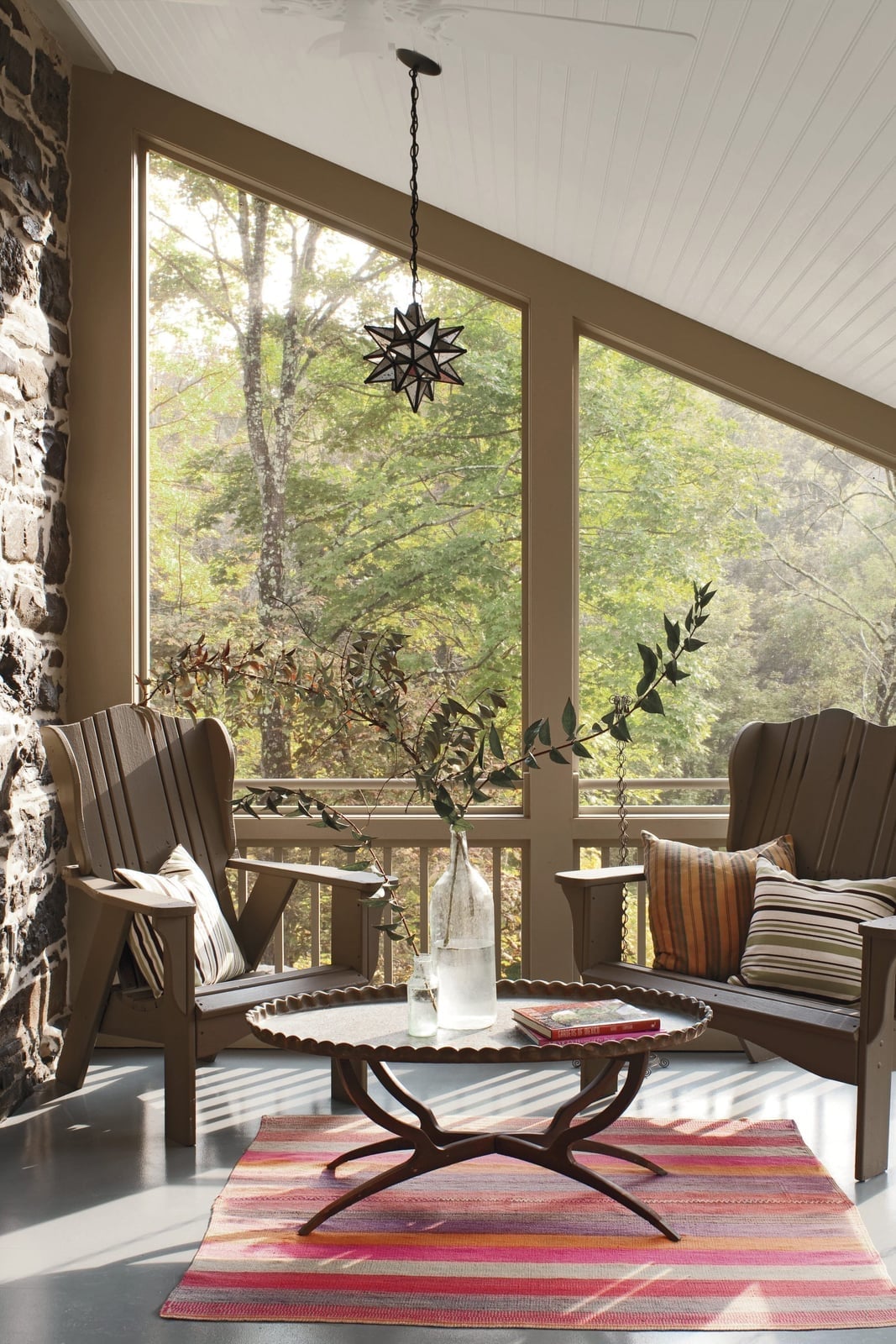
A practical rule for porches with no built-in seating: choose pieces that define the zone on their own. Two brown Adirondack chairs face the view, with a scalloped metal coffee table between them and a striped rug underfoot. The starburst pendant light above anchors the seating area without touching the walls. Renters can replicate this layout with freestanding furniture and a plug-in pendant light that hangs from a hook or bracket. Nothing is bolted or wired into the structure, so the whole setup can move when you do.
Coastal front porch with bright green shutters and wicker seating
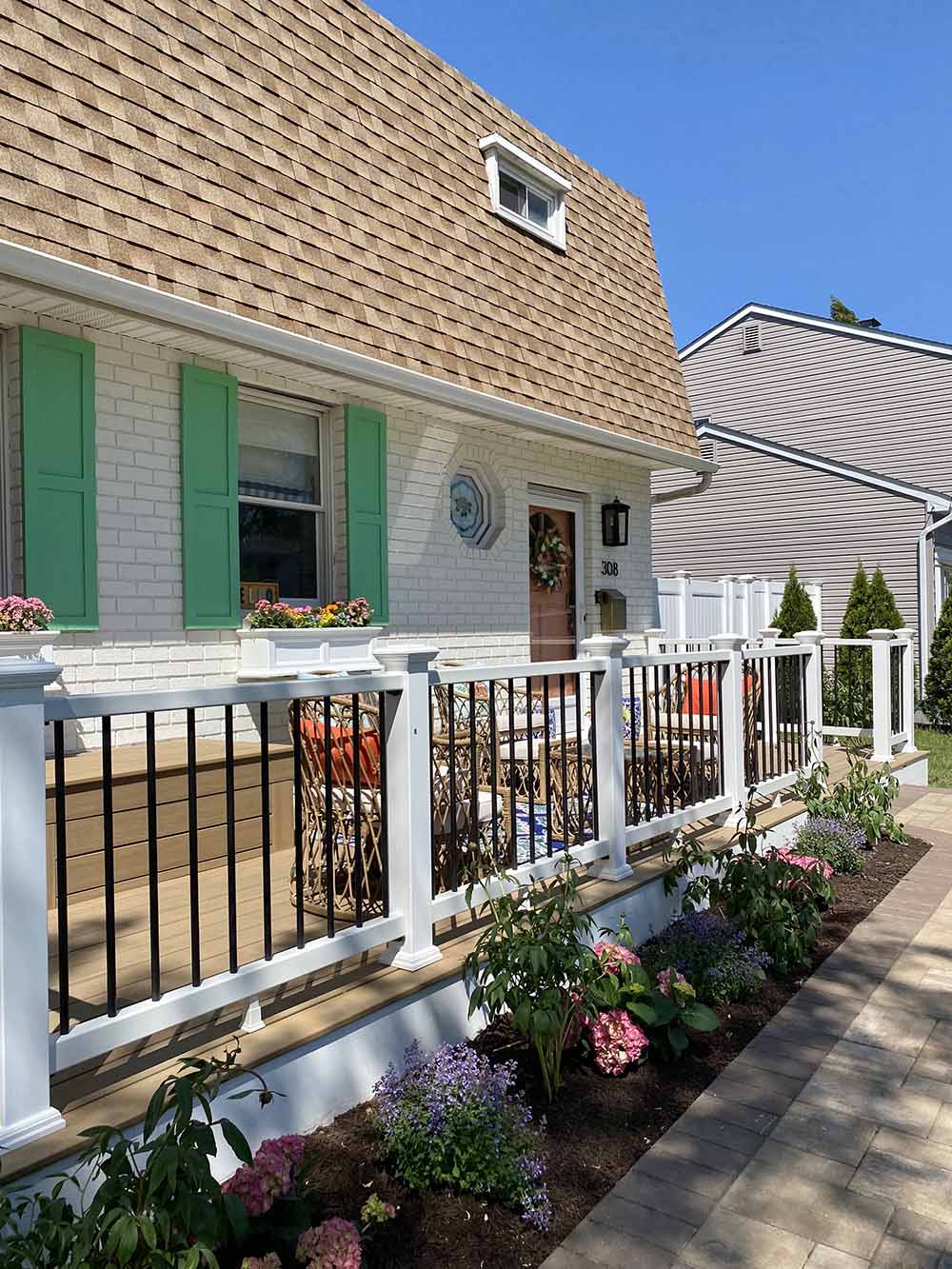
This porch leans into a coastal palette that stops short of nautical cliche. Bright green shutters against white siding give the color story an anchor, while the wicker chairs and blue-toned outdoor rug keep the look relaxed rather than formal. The brick floor adds warmth that balances the cooler green and blue. In a room-mode reading, the palette is defined by the shutter color, and the ratio works because the green appears on a single repeated element, not on every surface. What breaks the coastal formula is the absence of seashells or rope accents, leaving the style readable but not literal.
Double doors with rustic lanterns and a fall garland
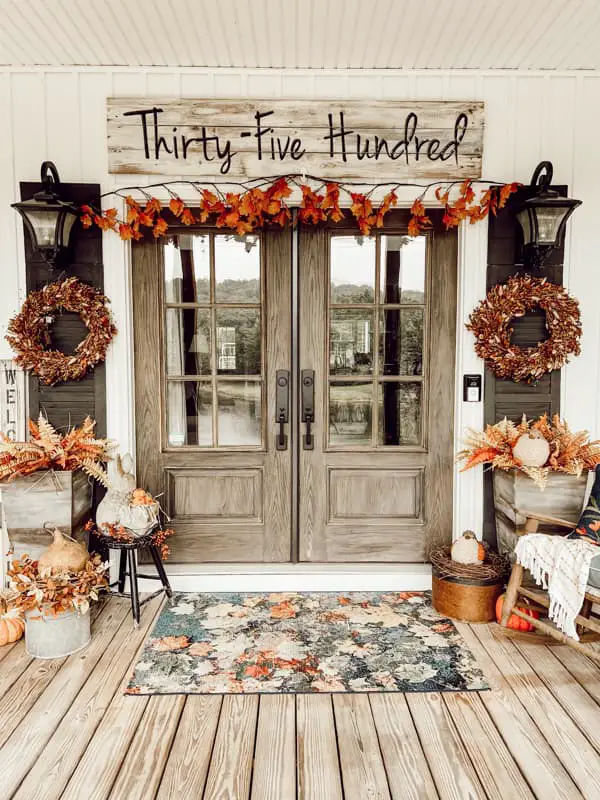
The double doors here are the hero element, and everything else steps back. A fall garland drapes across the top, while smaller wreaths hang on each door panel. Rustic lanterns flank the doors on wall brackets, and a wooden sign with the house number sits near the welcome mat. The symmetrical layout means the garland and wreaths don’t compete, because each piece has its own vertical zone. For durability, the metal lanterns and fabric garland can handle a season of outdoor exposure, though a wooden sign may need a sealant coat in wet climates.
Layered mats over a buffalo check rug with seating
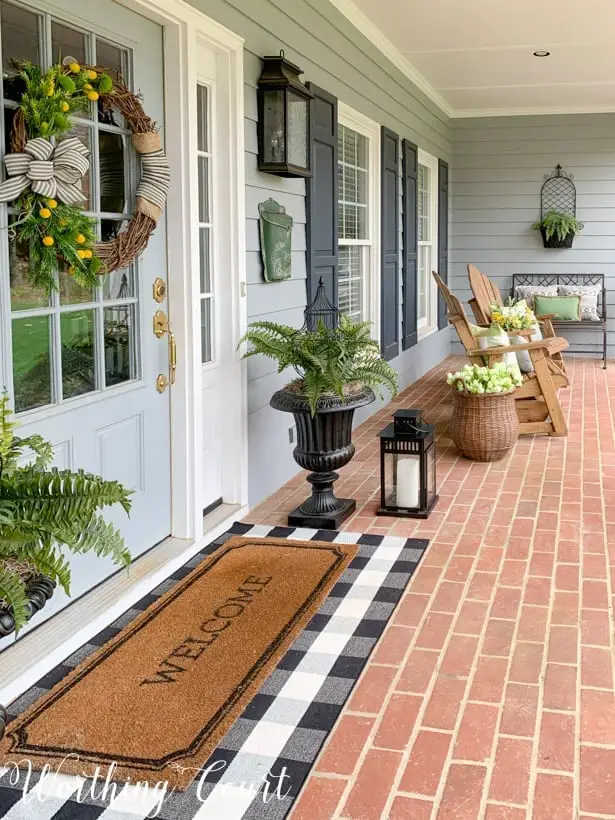
A layered mat approach solves the problem of a large porch needing a defined entry zone. A buffalo check rug sits under two Adirondack chairs and a bench, with a smaller welcome mat placed at the door. The light blue and gray palette in the rug ties the seating area to the brick floor and the green plants in their pots. Lanterns on either side of the door add evening visibility. The styling variation here is about scale: the rug is large enough to reach under all the seating, so the mats on top don’t look like an afterthought.
Farmhouse porch with checkerboard floor and white swing
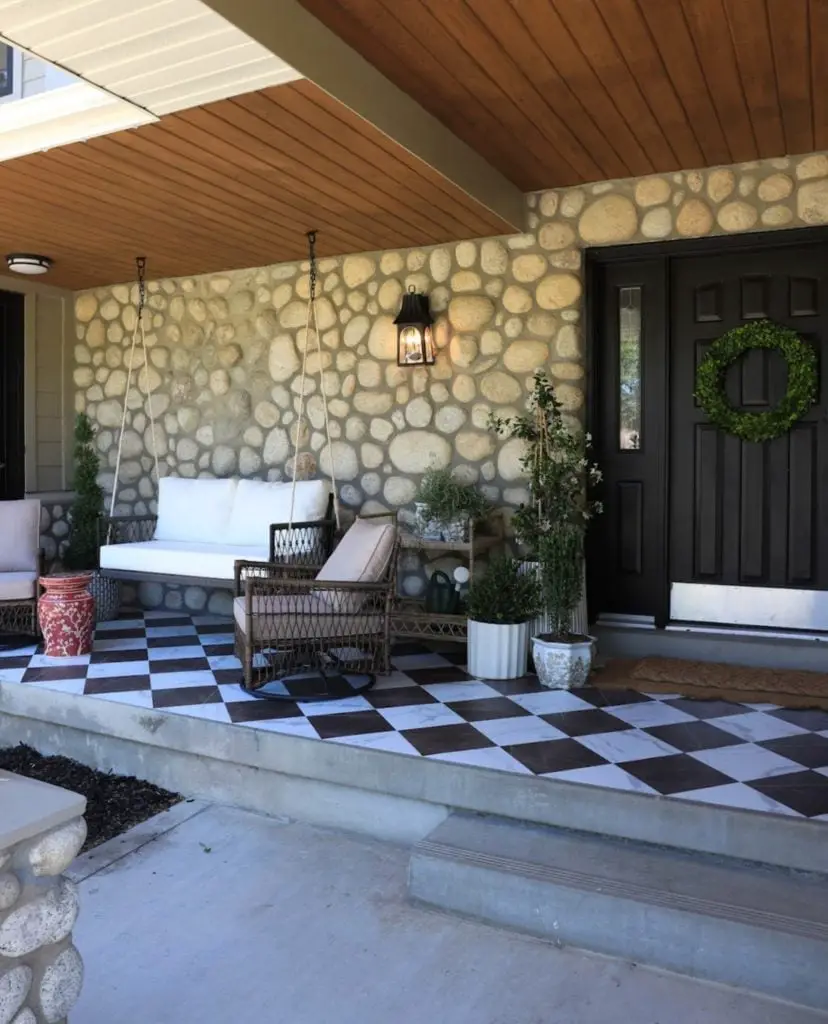
A porch that works for sitting and for passing through depends on durable surfaces underfoot. The checkerboard tile floor handles muddy boots and wet dog paws without showing every scuff, which matters when the swing is the main destination. White painted wood on the swing and the pair of chairs keeps the seating area light against the stone wall and dark wood ceiling. Wicker seats add texture against the tile pattern. Potted plants near the front door soften the transition from stone to wood. Wall lanterns and a ceiling light keep the space usable after sunset without washing out the warm tones.
For anyone renting, a stick-on tile floor is a reasonable swap for real checkerboard. The layout works because the swing faces the door, turning the whole depth of the porch into a conversation zone.
Wicker dining set on a brick base with columns
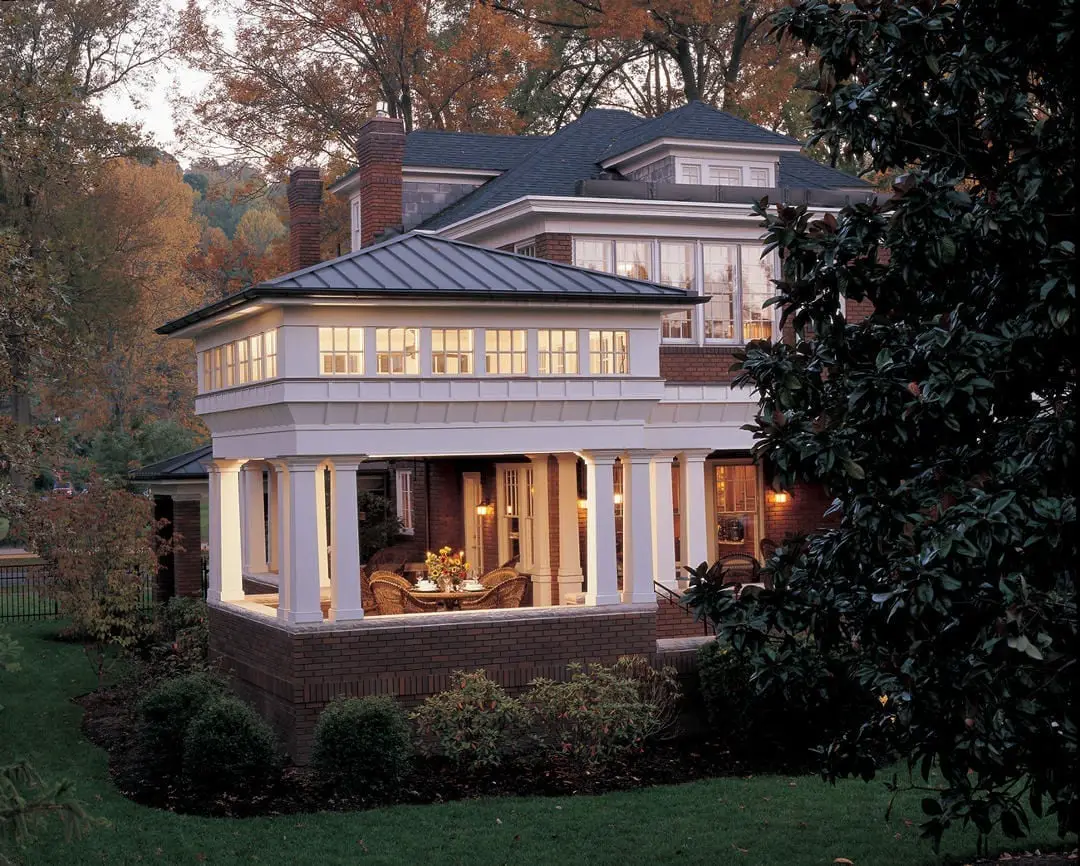
White columns support the roof and frame the brick base, giving the porch a defined edge without closing it in. The wicker dining table and chairs sit centered on the brick floor, leaving room to walk around the table. The color scheme stays restrained: brick red, white trim, dark green from nearby plants, and a touch of autumn orange from a small arrangement on the table. Overhead lights and wall sconces extend the usable hours, while interior light from the windows keeps the porch from feeling like a separate room.
Corn stalks framing an olive green door with a wreath
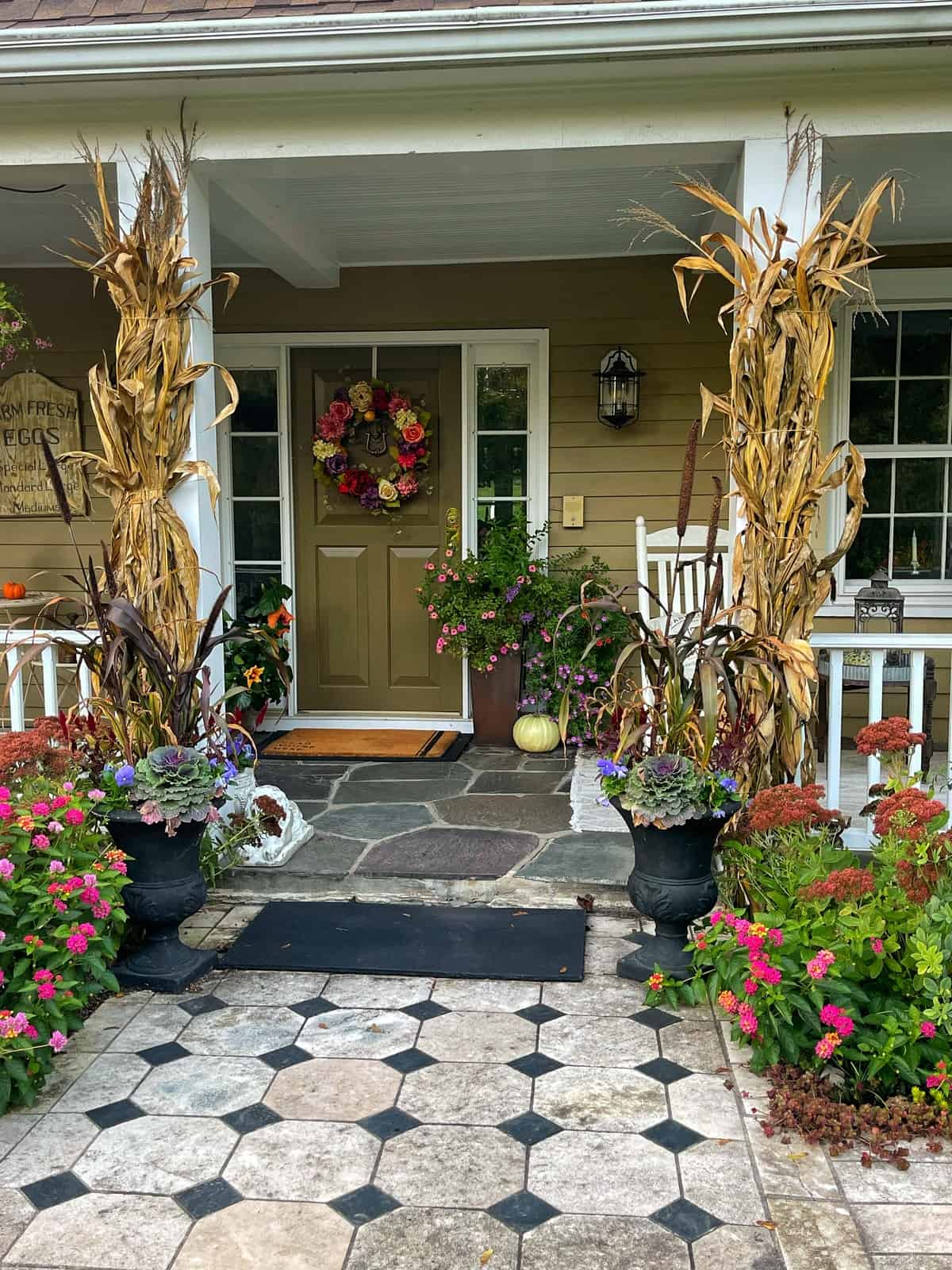
Repeating a single natural element on both sides of the doorway gives the entrance structure without adding clutter. Tall corn stalks in urn planters frame the olive green door, drawing the eye upward and balancing the scale of the porch. A floral wreath on the door adds pink and purple in a soft contrast to the brown stalks. A rocking chair to one side breaks the symmetry just enough to keep the arrangement from looking too formal. The stone floor and tile step provide a neutral base that lets the plants and the olive door carry the color.
Symmetrical pumpkins flanking a black door with glass
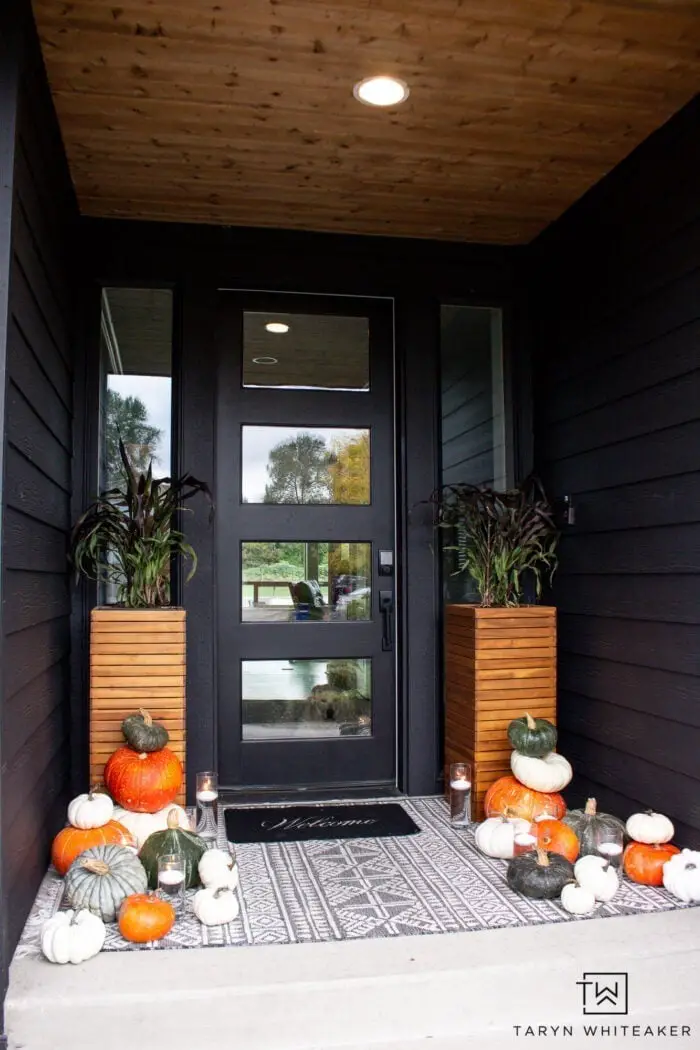
Symmetrical planters work best when the door has enough visual weight to anchor them. The black door with glass panes does exactly that. Wooden planters on each side hold pumpkins in various sizes and colors, from creamy white to deep orange, creating a display that feels abundant rather than sparse. A dark rug and a welcome mat sit centered on the porch floor, tying the two sides together. The overhead recessed light keeps the entry visible at night without competing with the pumpkins. For a compact porch, this arrangement uses the vertical space of the planters and the horizontal line of the rug to make the area feel wider.
Wooden bench integrated into a slatted wood facade
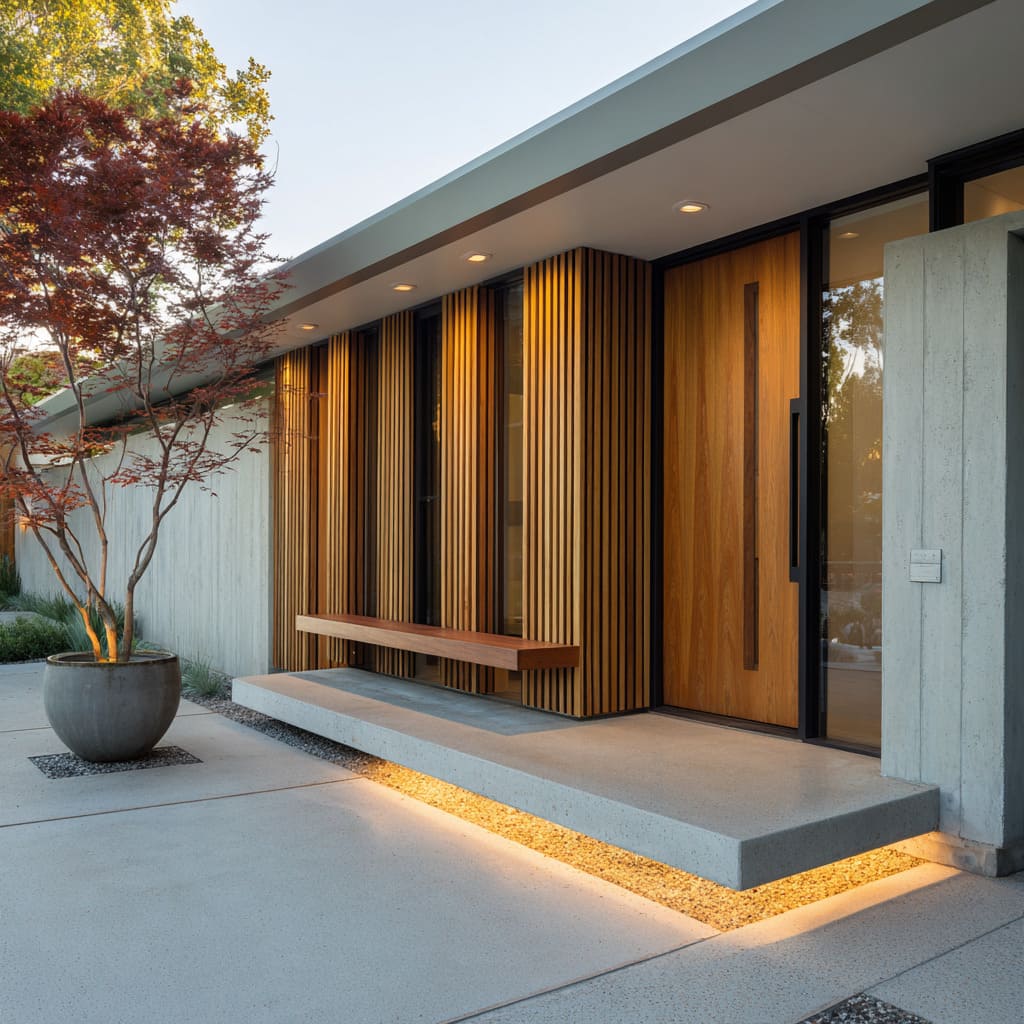
The bench is built directly into the slatted wood facade, so it looks like part of the architecture. A single potted tree in a concrete planter stands beside it, softening the straight lines of the wood. The concrete walkway leads to the bench, making the transition from path to seating feel planned. Recessed ceiling lights and accent strip lighting along the bench edge provide visibility without the glare of a bare bulb. The color scheme stays within wood tones, gray concrete, and the green of the tree, keeping the look clean enough for a modern home.
Traditional porch with black door, magnolia wreath, and white columns
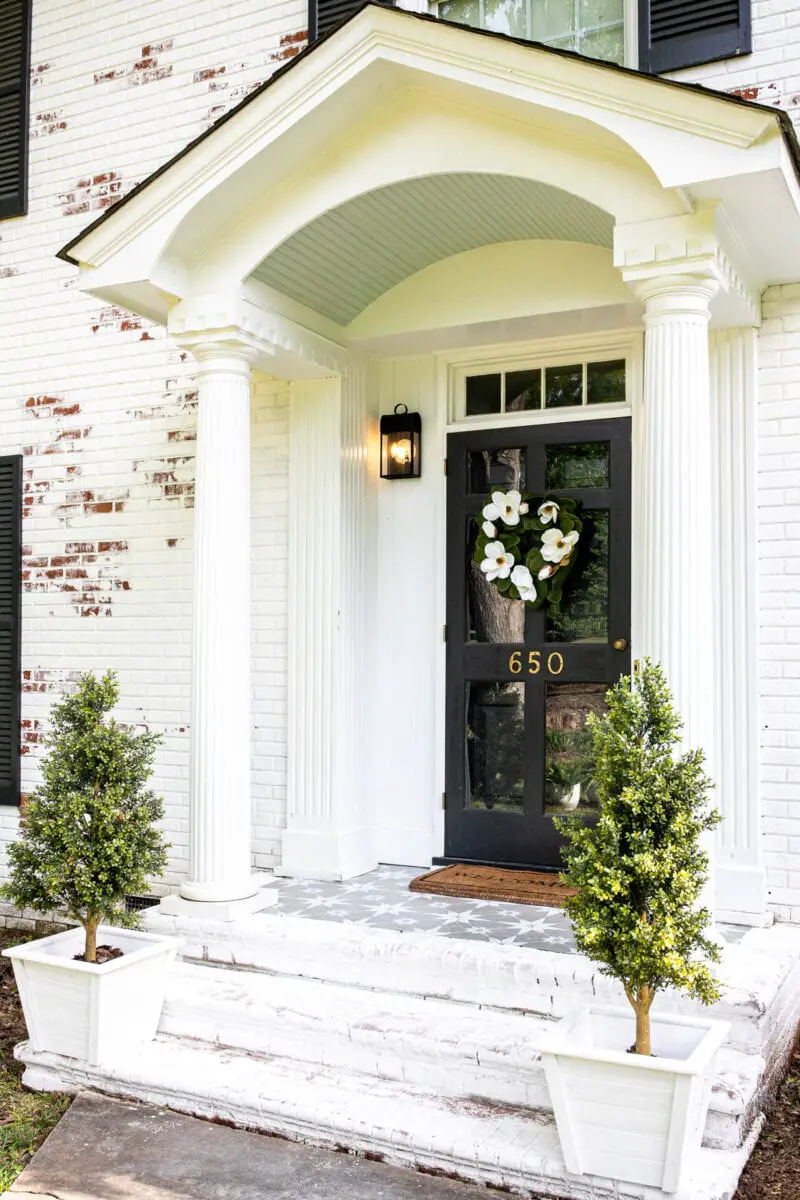
A black front door gives a traditional porch a sharp, grounded anchor point. Here, the dark finish pairs with white columns and brick to keep the look clean rather than heavy. A magnolia wreath in green and gold adds soft texture against the door, while white planters with potted trees frame the entrance. The centered door with flanking columns creates a balanced layout that feels open and inviting. A single lantern sconce provides the right amount of light without clutter. For a similar effect, choose a front door color that contrasts with the surrounding brick or siding, then let greenery carry the decoration.
Brick steps with pumpkins and mums in autumnal shades
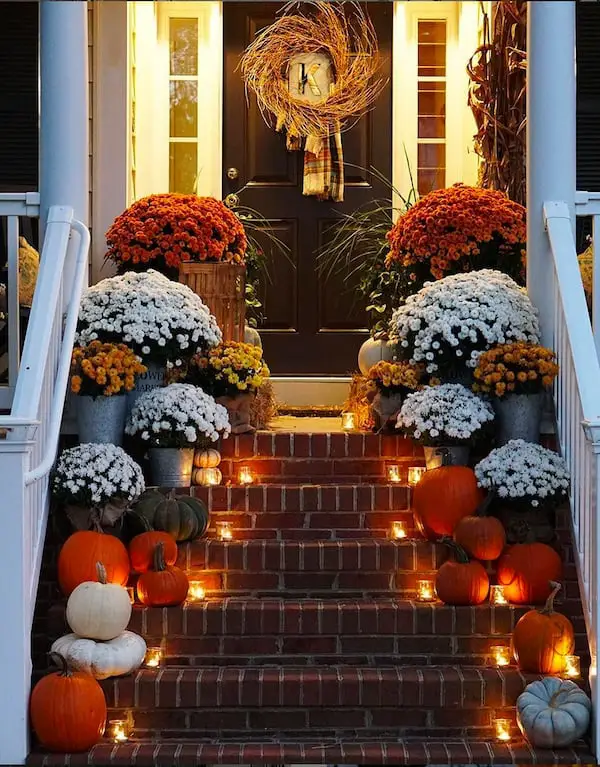
Instead of a single cluster by the door, this porch spreads the autumn display across the entire set of brick steps. Pumpkins in orange, white, and green mix with yellow mums in metal planters, creating a layered look that follows the natural rise of the stairs. Lanterns with warm evening light and a wreath on the door tie the top and bottom together. The abundance of pumpkins makes the entrance feel generous without requiring any permanent changes to the house.
A setup like this works well for renters since nothing is attached to the structure. The pumpkins, mums, and lanterns all sit on the steps or on the porch floor, so they can be rearranged or packed up when the season ends. The key is to repeat a few colors across different heights and materials, so the eye moves from the bottom step up to the door naturally.
Final Thoughts
A front porch sets the tone for your home, and these 27 ideas show that small changes make a big difference. Layer rugs for warmth, swap out planters by season, and choose seating that fits your daily rhythm. A wreath, a fresh coat of paint on the door, or a pair of lanterns can shift the whole feel without a major project. The best porches feel lived-in and inviting, not staged. Pick one or two elements that speak to you and build from there. Your front door is the handshake of your home, and with a little thought, it can say exactly what you want it to.