Deck rails do more than keep you safe. They frame your outdoor view and set the style for your entire deck. In 2027, the options are sharper and more varied than ever.
This article covers 28 cute deck rail ideas, from sleek metal cables to classic white balusters and modern glass panels. You will find practical inspiration for updating your railing, no matter your home’s style or your budget.
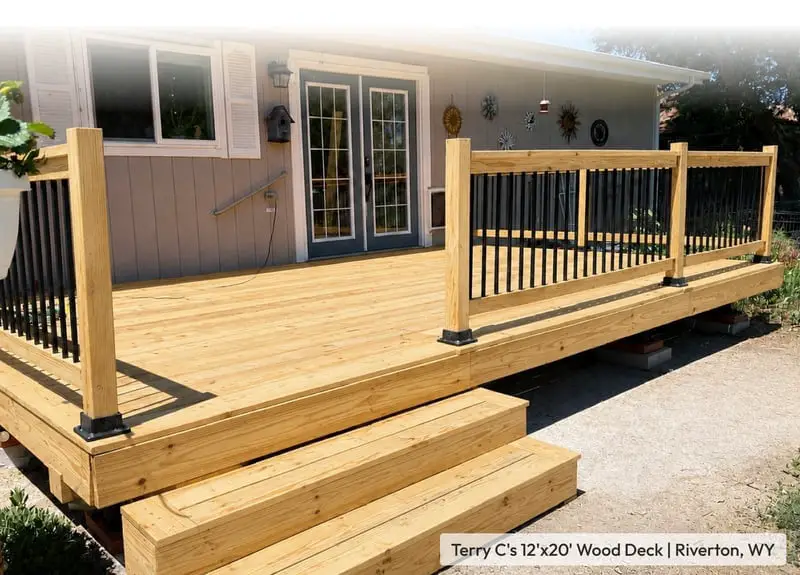
Modern deck with contrasting black metal balusters
A wood deck painted in a natural brown shade gets an immediate edge from black metal balusters that stand out without stealing the scene. The contrast looks intentional because the dark vertical lines echo the deep tones found in the surrounding greenery. This setup works especially well for multi-level decks where the balusters help define the transition between levels. The palette stays simple: warm wood surfaces against the black metal, with daylight doing the rest. It is a classic formula that keeps the deck looking clean and the view wide open.
Sleek dark metal rails for a minimalist deck
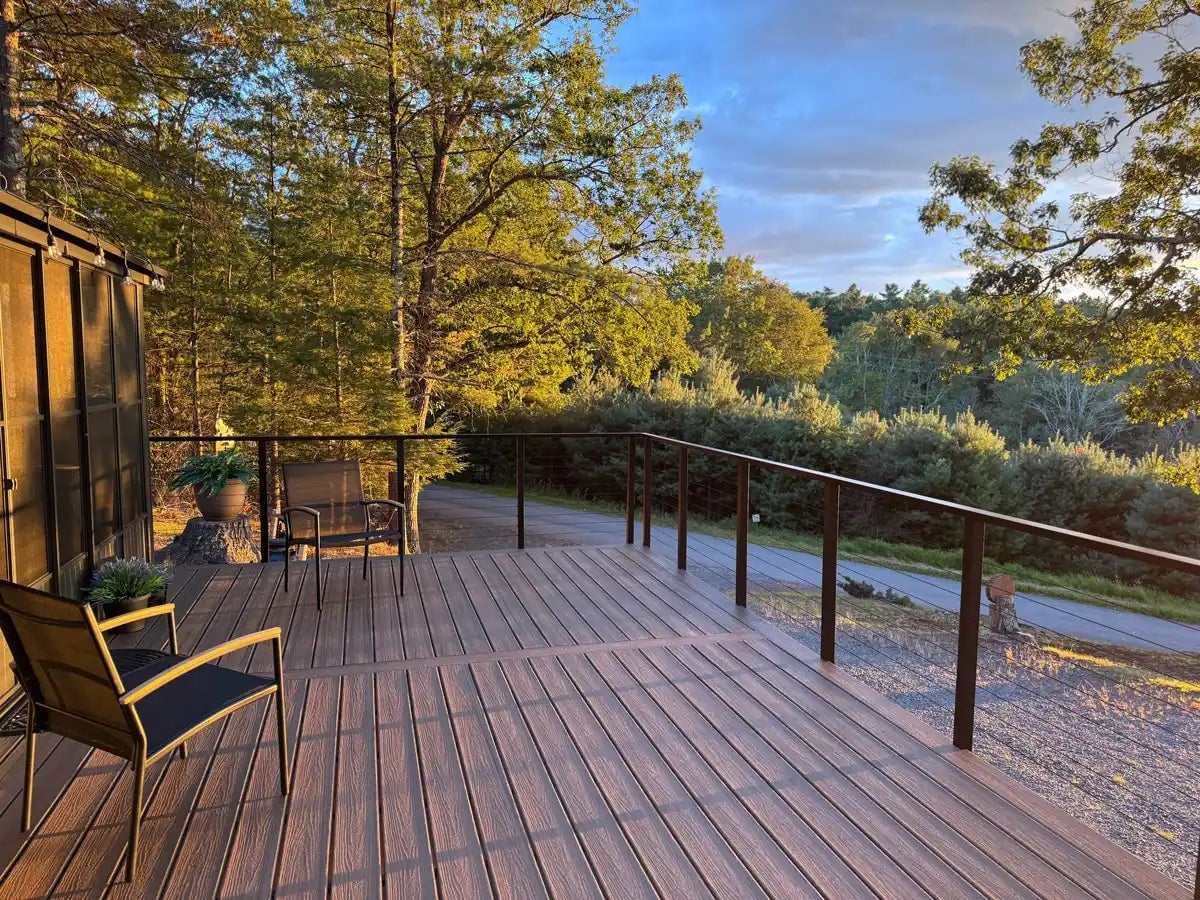
The dark metal railings here act as the quiet anchor for an otherwise airy deck space. The palette leans into brown, black, green, and blue tones, with the rails grounding the lighter shades of the furniture and plants. Minimalist deck design often depends on keeping the visual weight low, and the slim profile of these rails helps the eye move past them to the view beyond. The ratio of dark metal to open space leans heavily toward openness, with the rails reading more as a line than a barrier. What breaks the minimalism is the addition of potted plants and two chairs, which soften the hard edges and make the deck feel lived in.
Integrated stair lights enhance modern deck railing
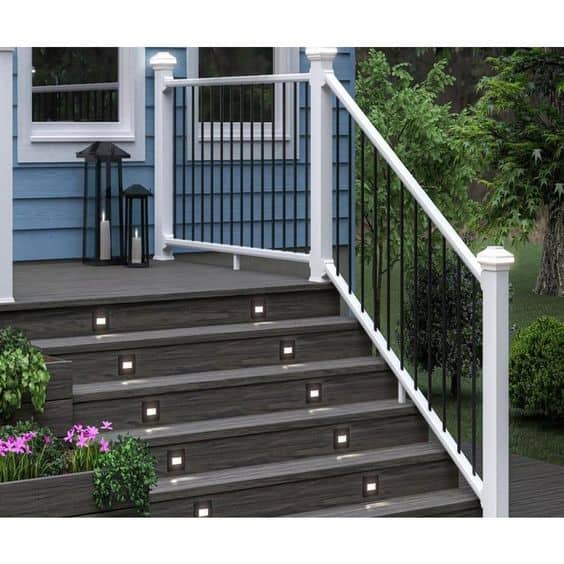
How do you make a deck railing work harder after dark? Integrated stair lights placed along the risers turn a standard set of stairs into a guiding feature. The blue, white, black, gray, and green palette stays cool and cohesive, with the lights adding a warm glow that contrasts the dark metal and glass panels. The tiered layout benefits from this lighting because each step becomes visible without needing overhead fixtures. Lanterns placed nearby add a secondary layer of light for the seating area. The practical gain here is simple: the lights improve safety on the stairs while the railings keep the boundary clear. It is a setup that blends function with the modern aesthetic without adding clutter.
Coastal porch with glass panel deck rails
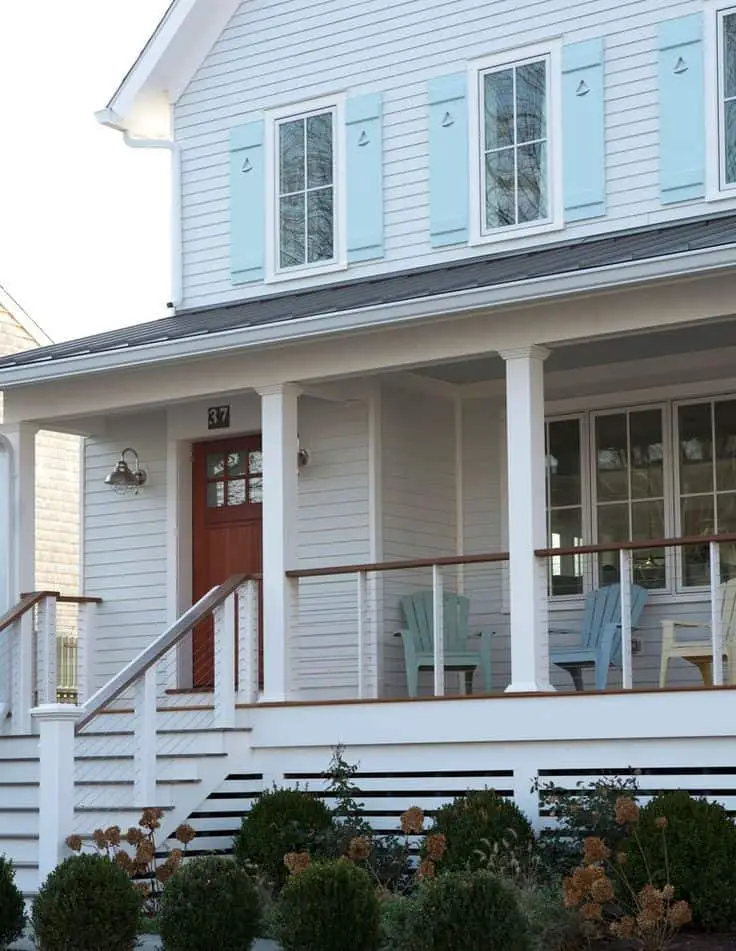
Glass panel deck rails let the coastal palette of white, light blue, and wood tones take center stage. The glass keeps the view of the yard and sky uninterrupted, which matters more on a porch where you want the outdoors to feel close. A pair of Adirondack chairs and a wooden door with light blue shutters reinforce the relaxed seaside feel. The wall sconce adds a warm light that balances the cool daylight. For a coastal porch, glass panels are a practical choice because they resist the salt air better than untreated wood and require less upkeep than painted balusters.
Horizontal metal railing for an open deck view
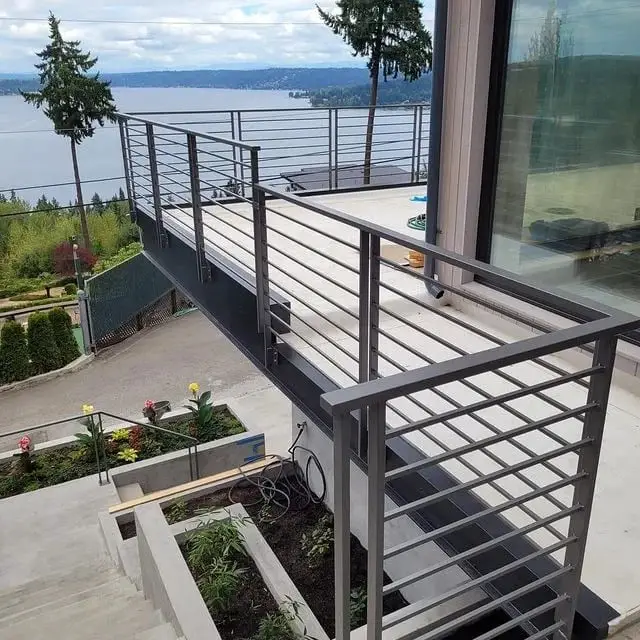
Choose a railing that does not block the view, and horizontal metal rails deliver exactly that. The gray and white palette keeps the structure light, while the concrete planters add a grounded element that prevents the deck from feeling too sparse. The horizontal lines guide the eye outward rather than up, making the lake or yard beyond feel like part of the deck. This layout works best on roomy decks where the stairs lead down to a lower level. The glass panels between the rails keep the wind out without interrupting the sightline, a detail that matters when the deck sits high above the ground.
Traditional deck with black metal rails and stone accents
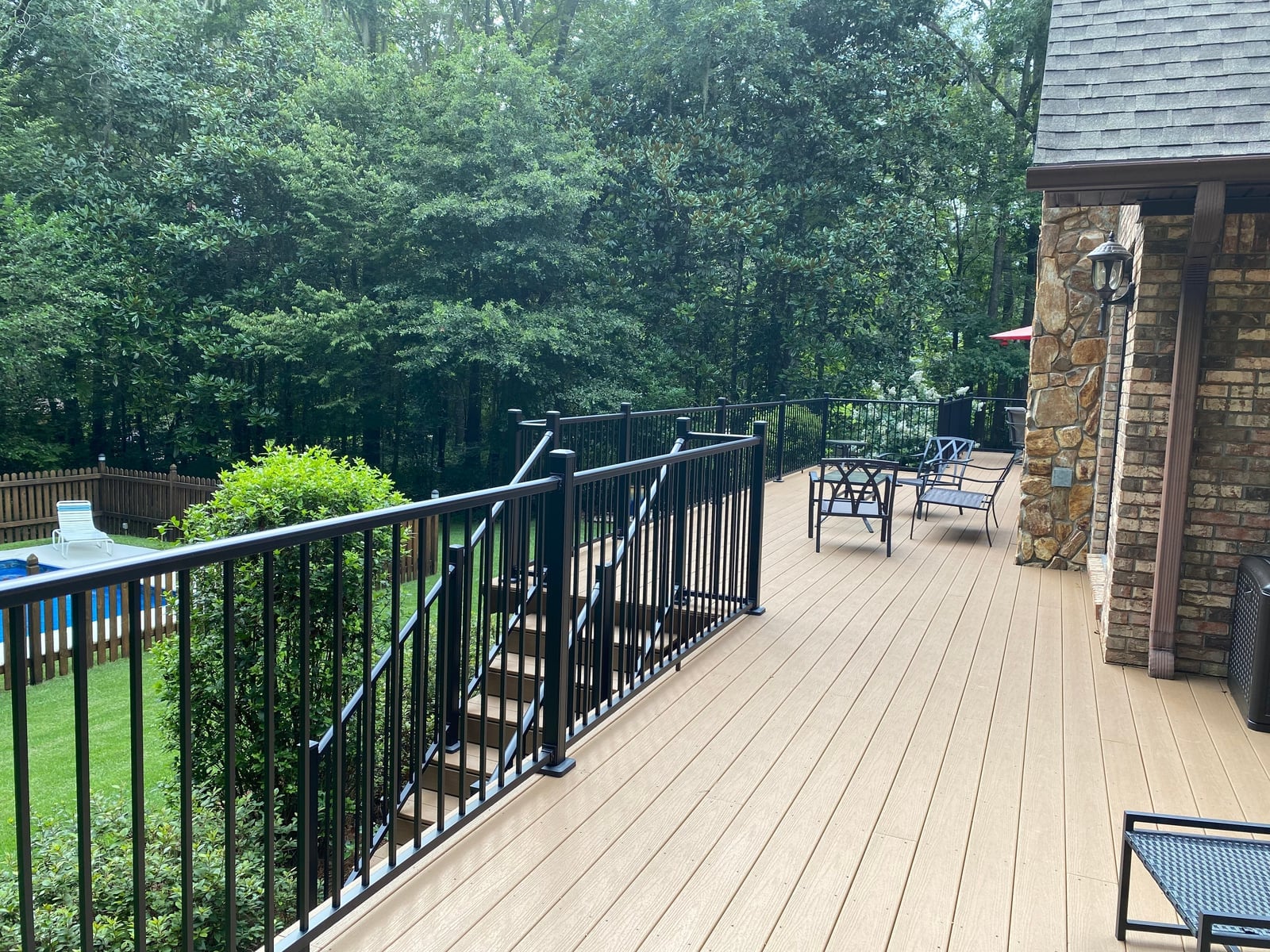
Black metal rails strike a balance that white wrought iron or raw stainless steel do not. On this spacious deck the black metal balusters stand out against tan composite decking and a backdrop of brick and stone, so the railing defines the edge without clashing with the outdoor furniture or the grill. The color range stays within tan, black, stone and brick red, which keeps the look grounded. To recreate it, look for paint existing metal posts or balusters a matte black. That swap costs only a weekend of prep and a can of exterior metal paint, and it transforms the railing from background noise into a deliberate design element.
Spacious multi-level deck with glass railing
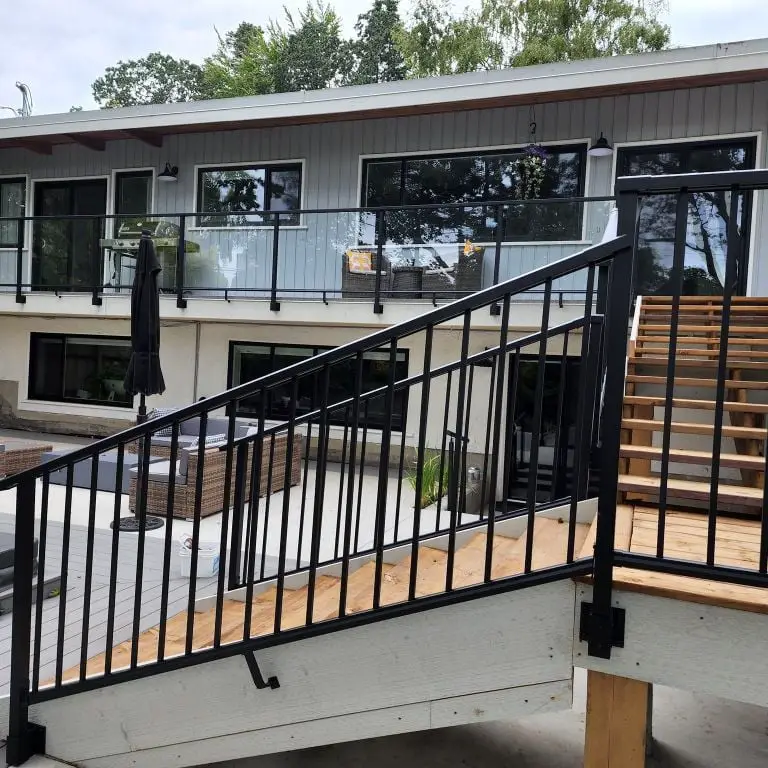
Glass panels erase the visual weight that solid or baluster rails add to a multi-level deck. The transparent infill lets the eye travel across the two levels without interruption, so the deck looks one continuous space rather than a stack of separate platforms. That is a useful insight for any deck with multiple levels: transparent railing preserves the flow and keeps the layout from feeling choppy. Renter-safe swap? Temporary glass-look acrylic panels that mount to existing posts with brackets give the same open effect without altering the structure.
Ornate black aluminum rails on a stone porch
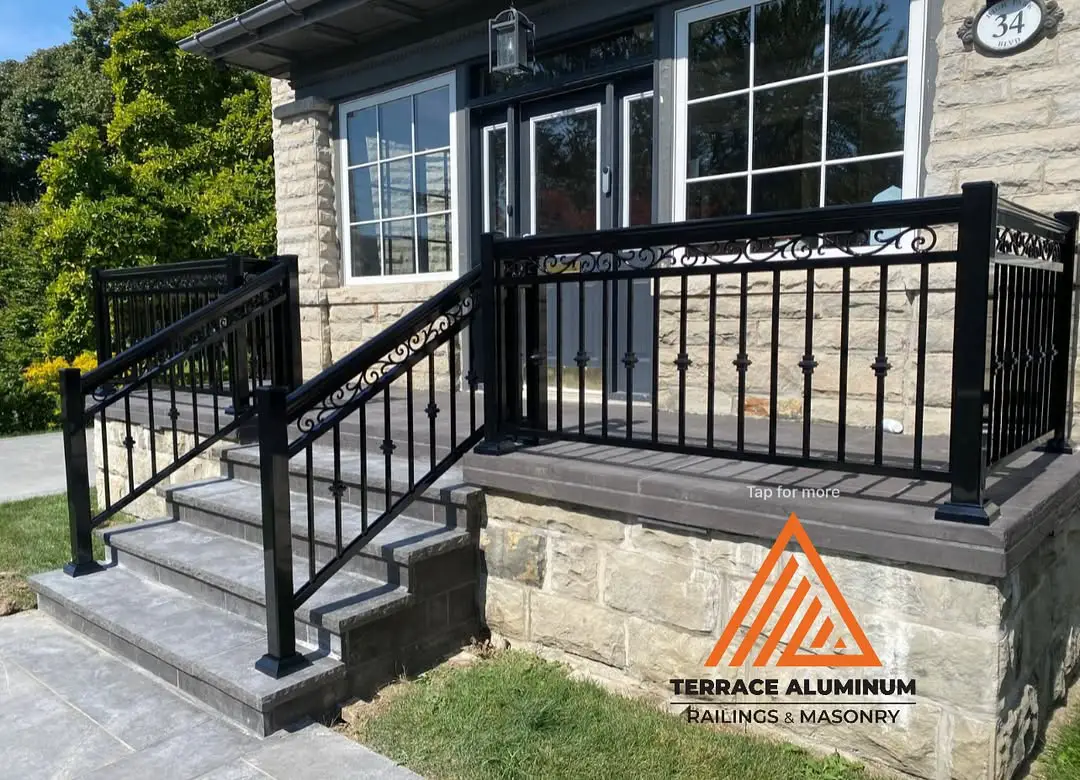
This porch proves that ornate does not mean fussy. The black aluminum rails feature scrollwork and decorative finials, yet the dark finish and the simple gray stone steps keep the look crisp. The defining ratio here is about 80 percent restrained stone and 20 percent detailed metal. That proportion lets the railing be a focal point without overwhelming the porch. Adding more ornament elsewhere, like patterned tile or a second decorative material on the railing, would break the look. Let the scrollwork be the only flourish and the porch stays refined.
Weathered wood deck pathway with white railings and solar lights
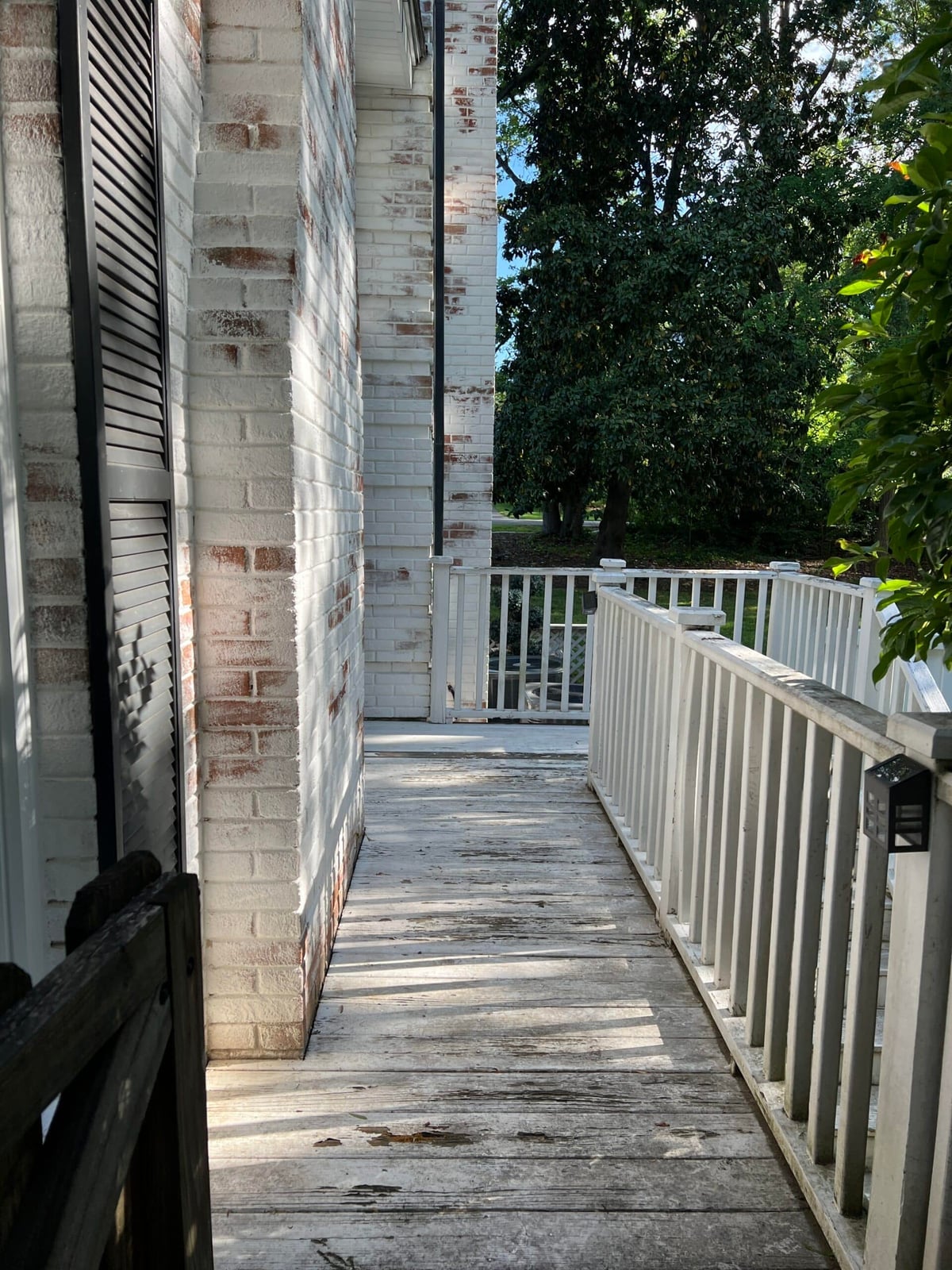
White railings along a narrow walkway can feel stark, so how do you soften them without cluttering the path? Solar lights. In this scene, small solar fixtures sit along the rail, casting a warm glow over weathered wood planks at night and adding a subtle daytime detail. The white pickets and the brick red of the adjacent wall create a contrast that would be harsh without the softening effect of the lighting. The takeaway for a narrow deck or pathway is to use the railing as a mounting surface for light sources instead of relying on overhead fixtures. Solar options require no wiring, so they work for any deck that gets direct sun during the day.
Wood slat rails with black metal frame
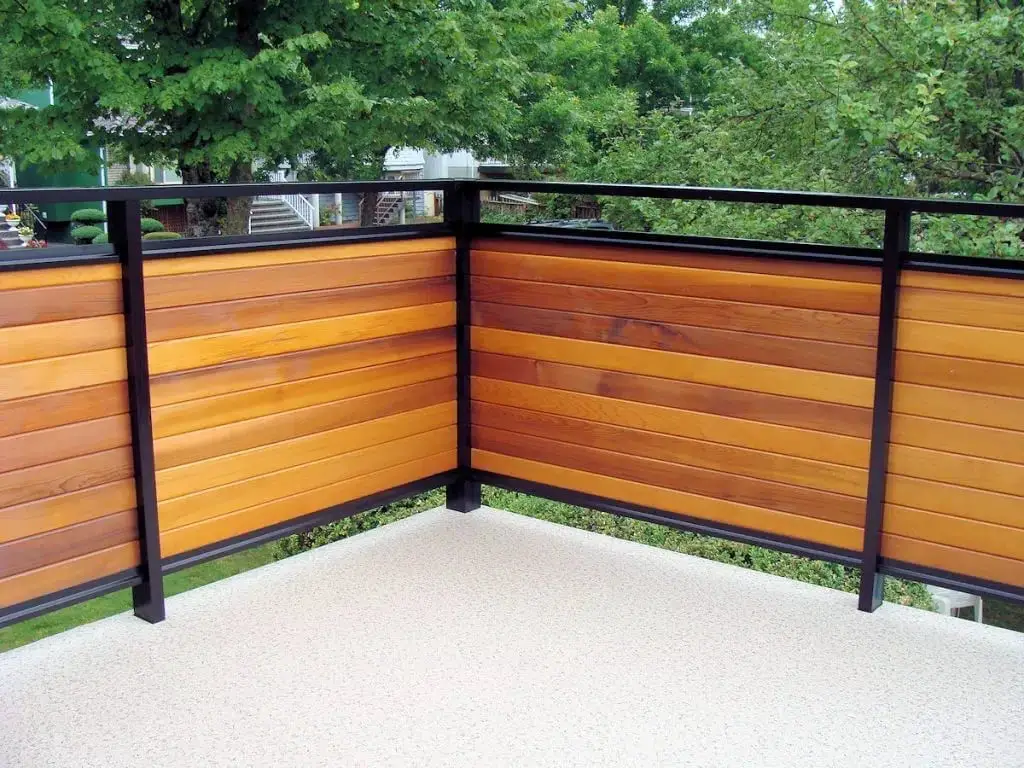
Horizontal wood slats set inside a black metal frame create a railing that looks like furniture. The warm wood tones and the black frame echo the outdoor seating and the concrete deck surface, so the railing feels intentional. The key material move here is the contrast between the organic grain of the slats and the rigid geometry of the metal frame. That mix works best when the wood finish is allowed to weather naturally over time, which the black frame will not do, so the two materials will age differently and add character.
White columns frame a wide outdoor view
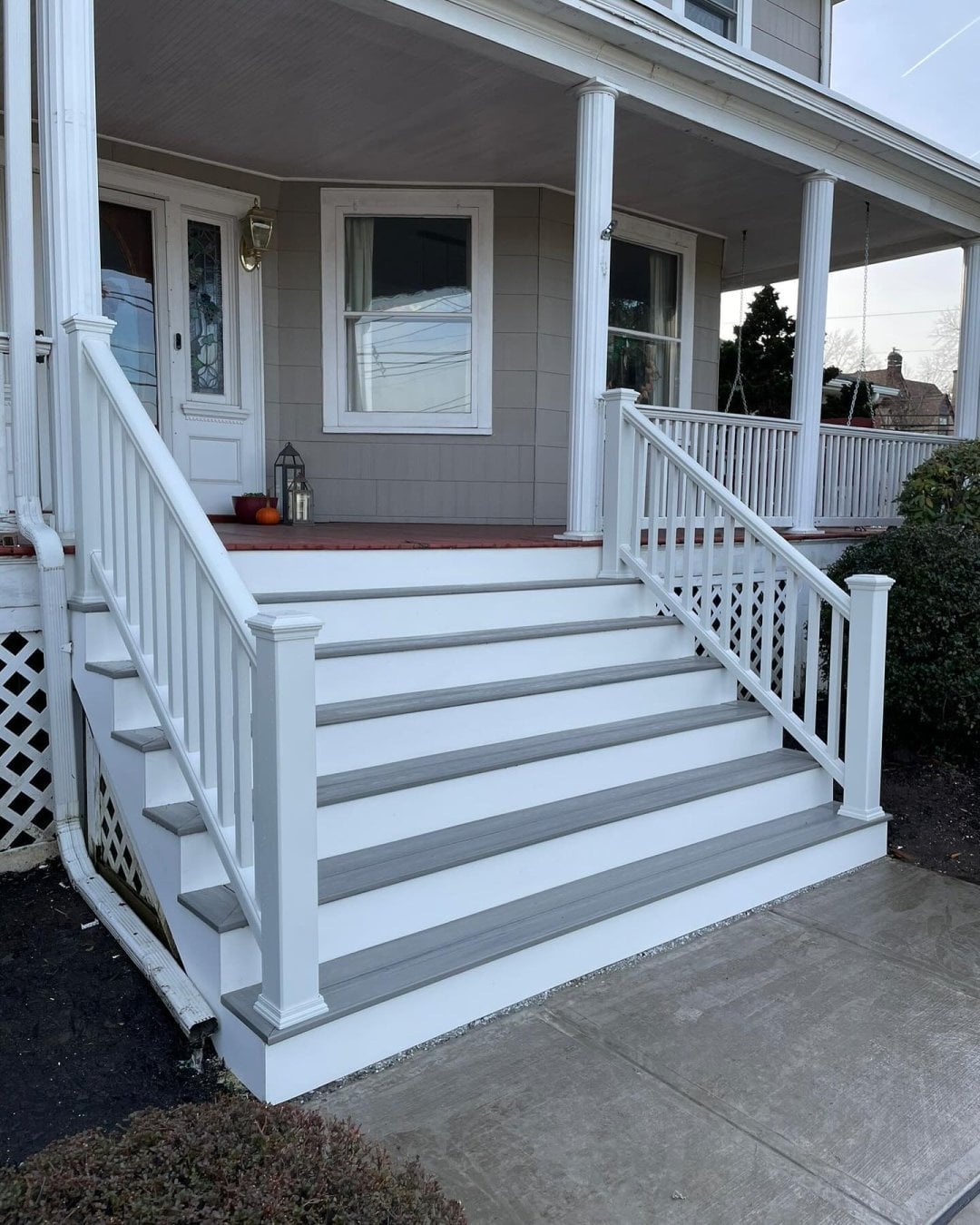
For a wide porch with a view, keep the railing quiet so the landscape is the main event. White balusters and matching columns frame the scene without competing, while gray steps and a beige house base add subtle contrast. The traditional palette of white, gray and beige stays grounded, no bright accents pull the eye away from the yard. Scale matters. If the columns feel too thin or too thick for the porch depth, the whole balance shifts. For a renter safe version of this approach, paint existing wood rails a crisp white and add tall planters near the posts to mimic the visual weight of columns.
Rustic deck with wire mesh infill railing
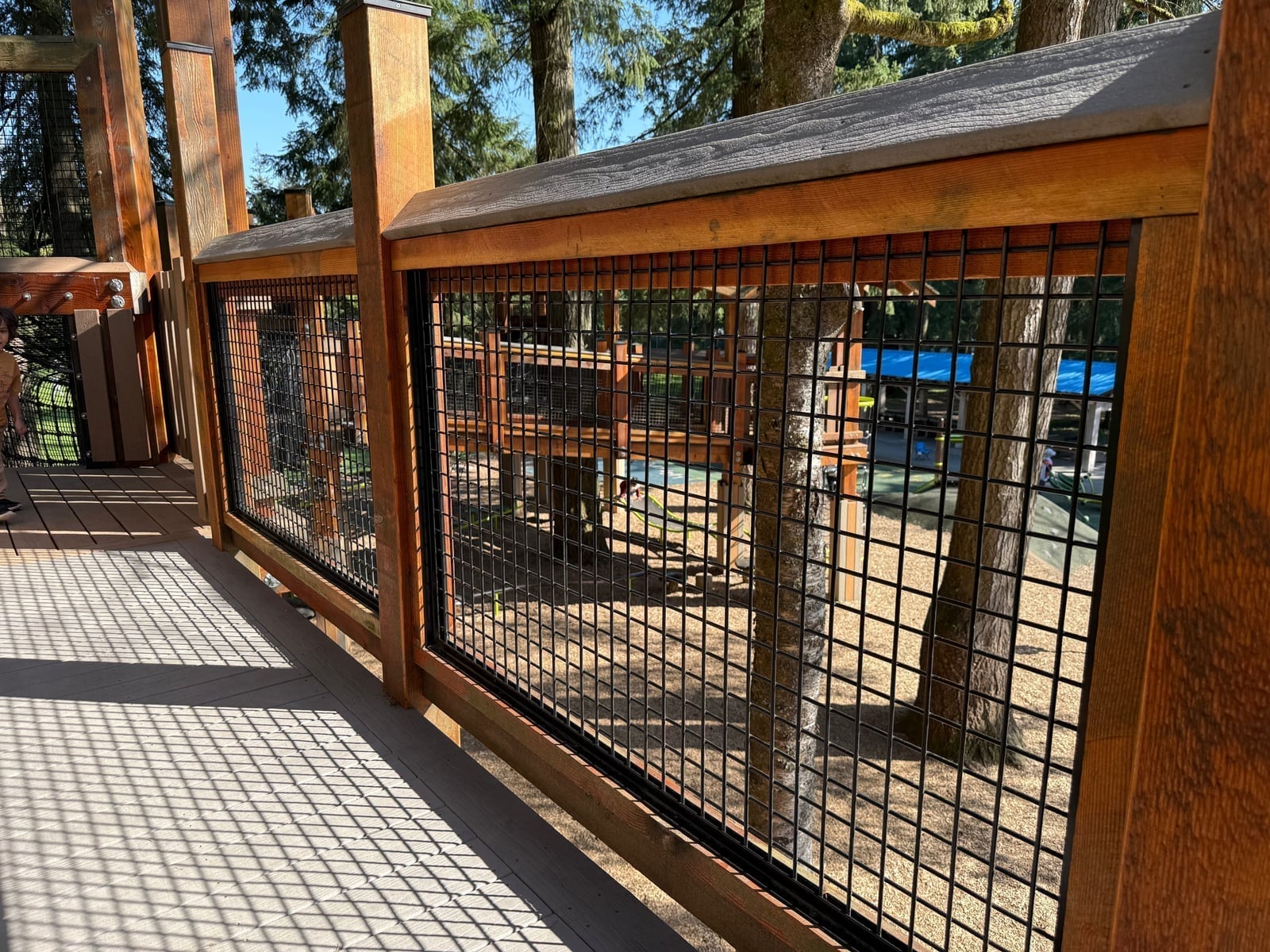
Wire mesh infill sits between a solid rail and an open baluster system. It offers more screening than cables but keeps the deck feeling airy. The mesh panels here sit between thick wooden posts, with brown wood and gray metal creating a palette that blends into the surrounding trees. Dappled shadows from the mesh add texture to the composite decking below. What defines this look is the mix of rugged materials: rough-hewn posts against industrial mesh create a purposeful rustic finish. The ratio matters: wide posts need a taut mesh to avoid looking saggy. A close alternative would be welded wire panels in a smaller grid for a tighter, more refined version of the same idea.
Metal posts with horizontal cables and chairs
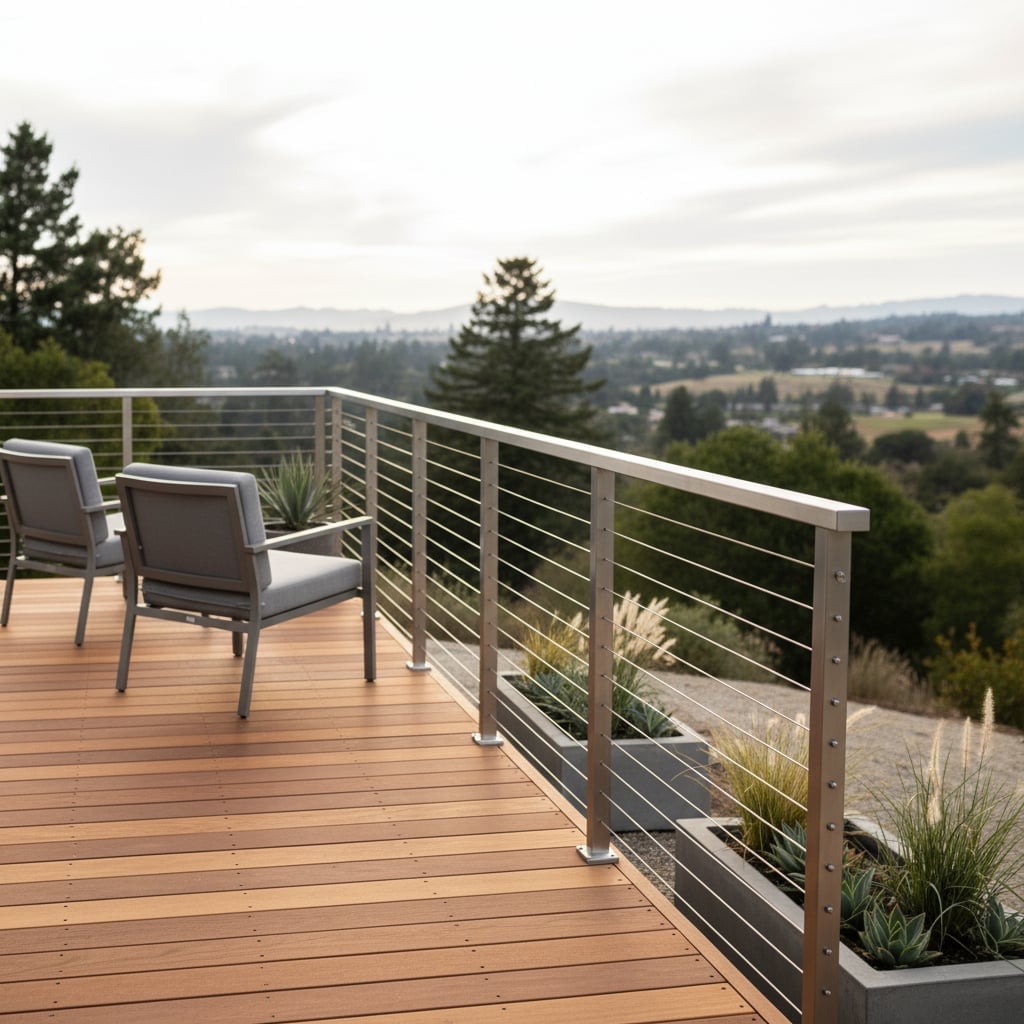
Horizontal cable railing does more than secure a deck. It creates a visual line that pulls the eye across the space. Here metal posts support thin cables that stretch the full length of the deck, with a warm wood top rail adding a natural counterpoint. The gray deck and brown wood tones let the green planters and chairs add life without cluttering the view. A detail worth noting: the cables sit low enough that the landscape stays visible from a seated position. For a deck that doubles as a lounge area, that sightline matters more than a fully open baluster.
Clear glass panels with dark metal posts
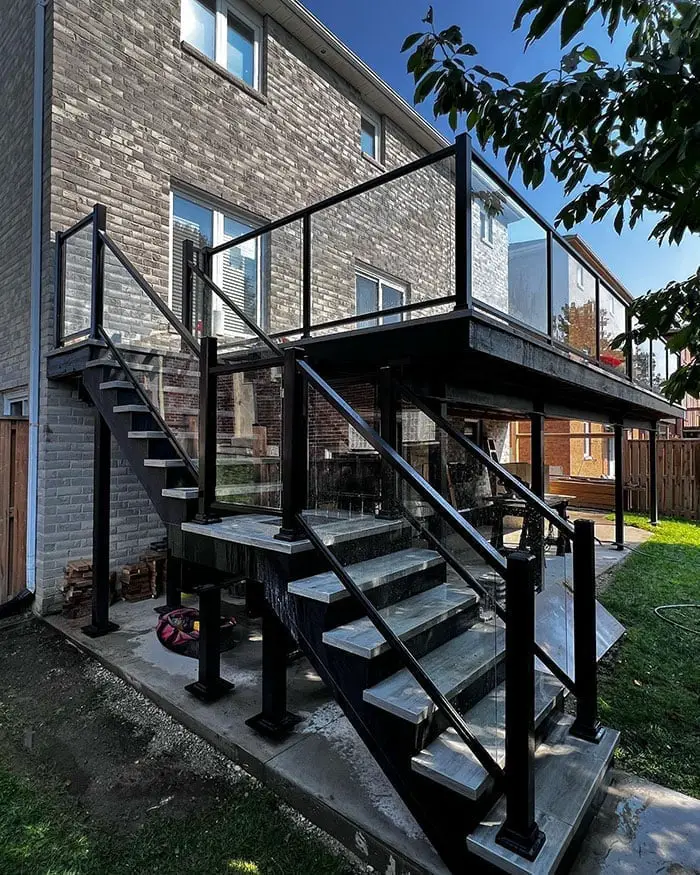
Glass railing is the closest you get to an invisible barrier. The clear panels here sit between dark metal posts on a multi-level deck with stone steps, and the effect is that the deck feels almost as open as the yard itself. Daylight passes through without obstruction, so nothing blocks the view down the stairs or across the lower level. What makes this setup work is the contrast between the transparent glass and the solid metal frame, the posts anchor the structure while the glass disappears. A renter-friendly alternative is a panel system that clamps onto existing posts, though glass needs a structural inspection before installation.
Black top rail and stainless steel cables
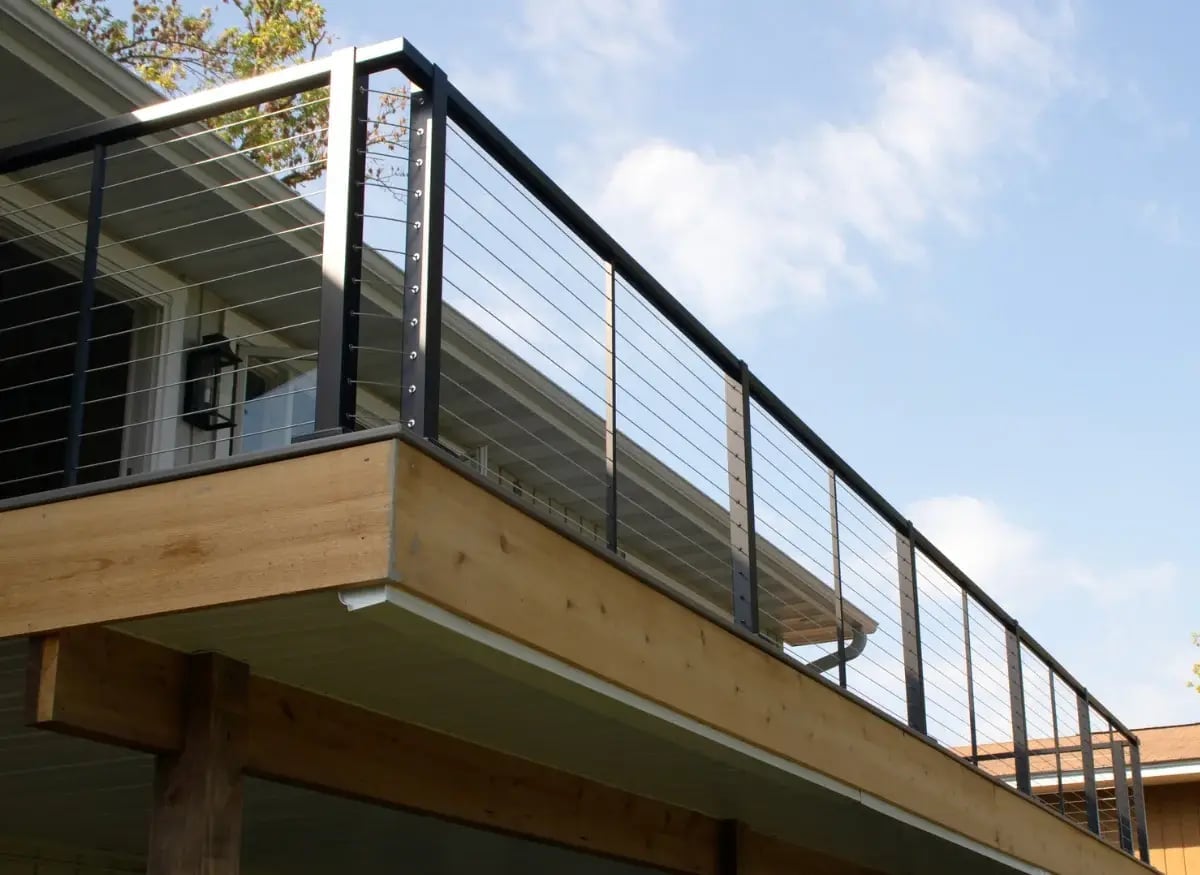
For a minimalist deck, limit the palette to black, silver and natural wood so the materials speak for themselves. Here a black top rail and stainless steel cables stretch across the deck, with warm wood tones beneath the handrail adding the only softness. The horizontal cables define the look. They are industrial but not cold, because the wood inserts a natural break in the metal. What breaks the style is clutter. Cables already create visual lines, so adding patterned furniture or busy planters fights the geometry. Stick to simple shapes in the seating and let the railing do the structural work.
Traditional deck railing with integrated lights and planters
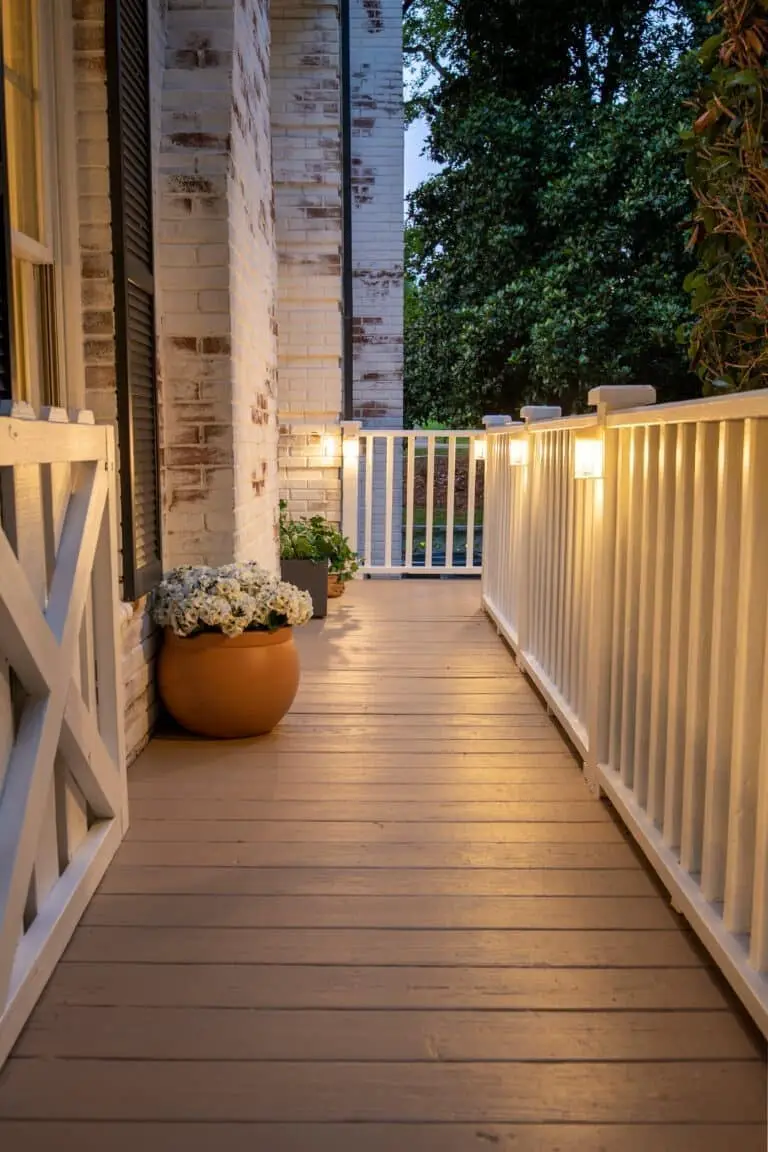
A white deck railing with built-in wall lights turns a simple pathway along the house into a welcoming evening route. The traditional wood rail stays the hero element, while terracotta planters and potted plants add warmth against brick and tan tones. A large planter anchors one end, keeping the layout balanced. When you add integrated lighting to a standard railing, you extend the deck’s usable hours without changing its classic look.
Gray sofa and armchairs with dark metal frames
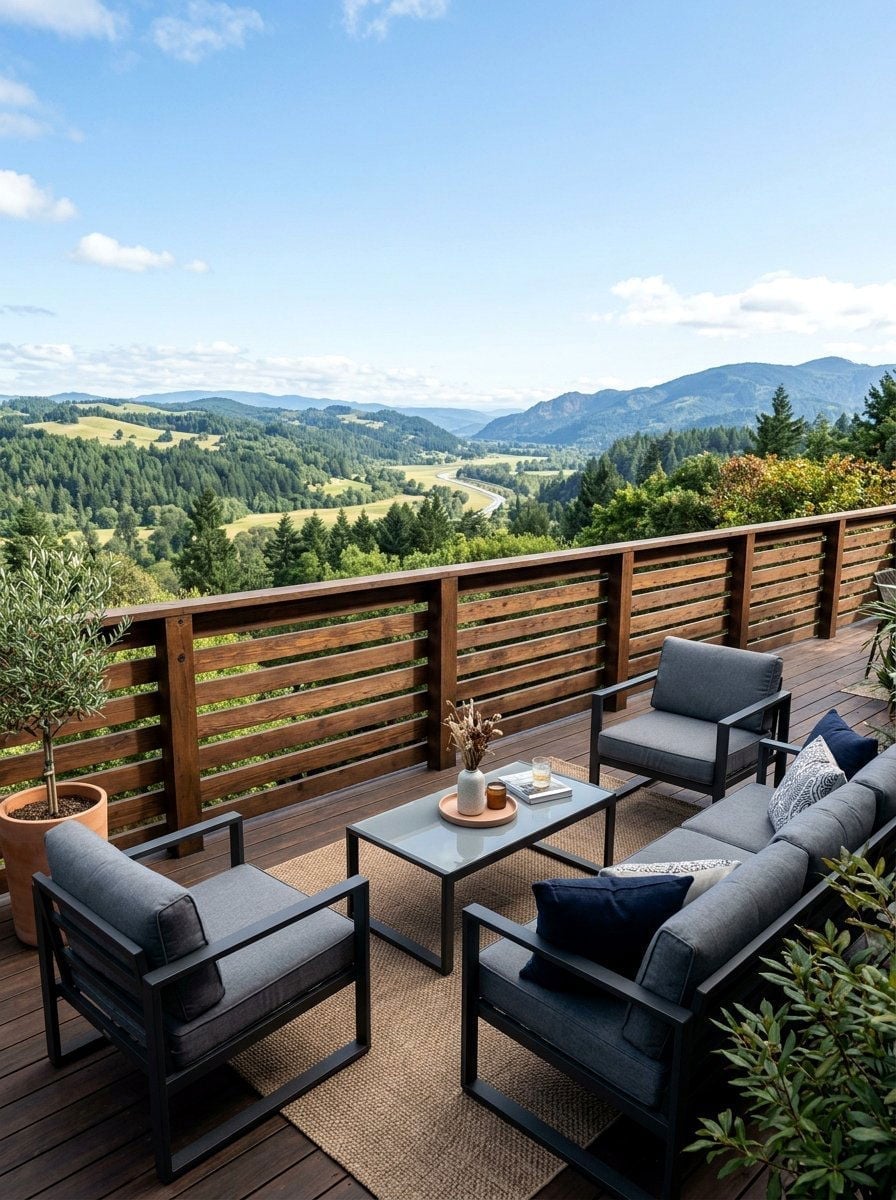
On a deck with a view, arrange seating to face the scenery, not each other. A gray sectional sofa and matching armchairs with dark metal frames form a U around a coffee table, all oriented toward the expansive scenic outlook. The dark metal acts as a natural frame for the landscape, while the gray fabric keeps the focus on the blues and greens beyond. A single terracotta pot on the table adds a warm accent without pulling attention from the view. Arrange outdoor seating so the horizon is the main event, and the furniture is just a comfortable place to watch it.
Glass railing offers unobstructed water view
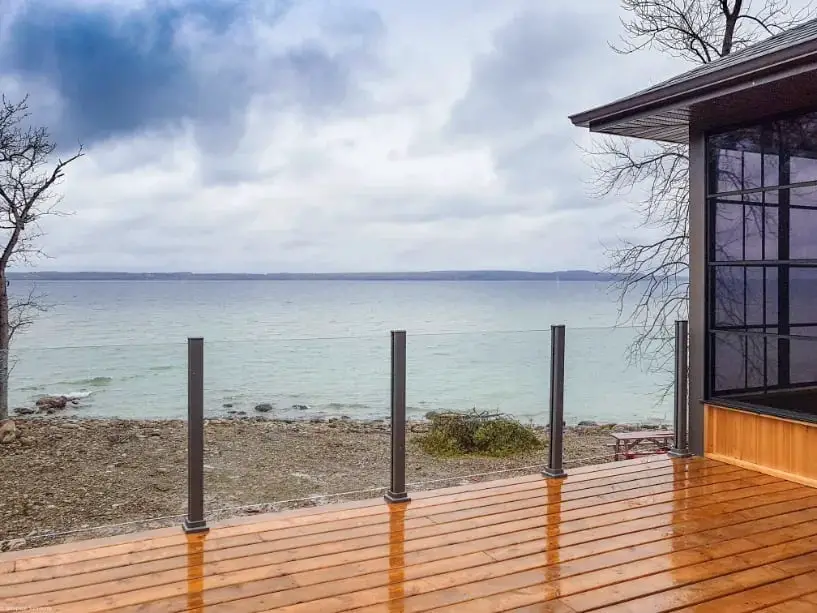
A solid wood railing would cut the sightline. Glass panels let the water view stay the main event. On this roomy open-plan deck, clear glass sections sit between dark metal posts, with a wooden deck underfoot in brown tones. The gray-blue water and green landscape beyond form one continuous scene.
The layout strategy here is subtraction: a glass railing removes the visual barrier between you and the outdoors. For a deck with a strong natural view, glass is the choice that keeps the eye moving outward instead of stopping at the rail.
Modern deck railing with horizontal metal bars and wood top rail
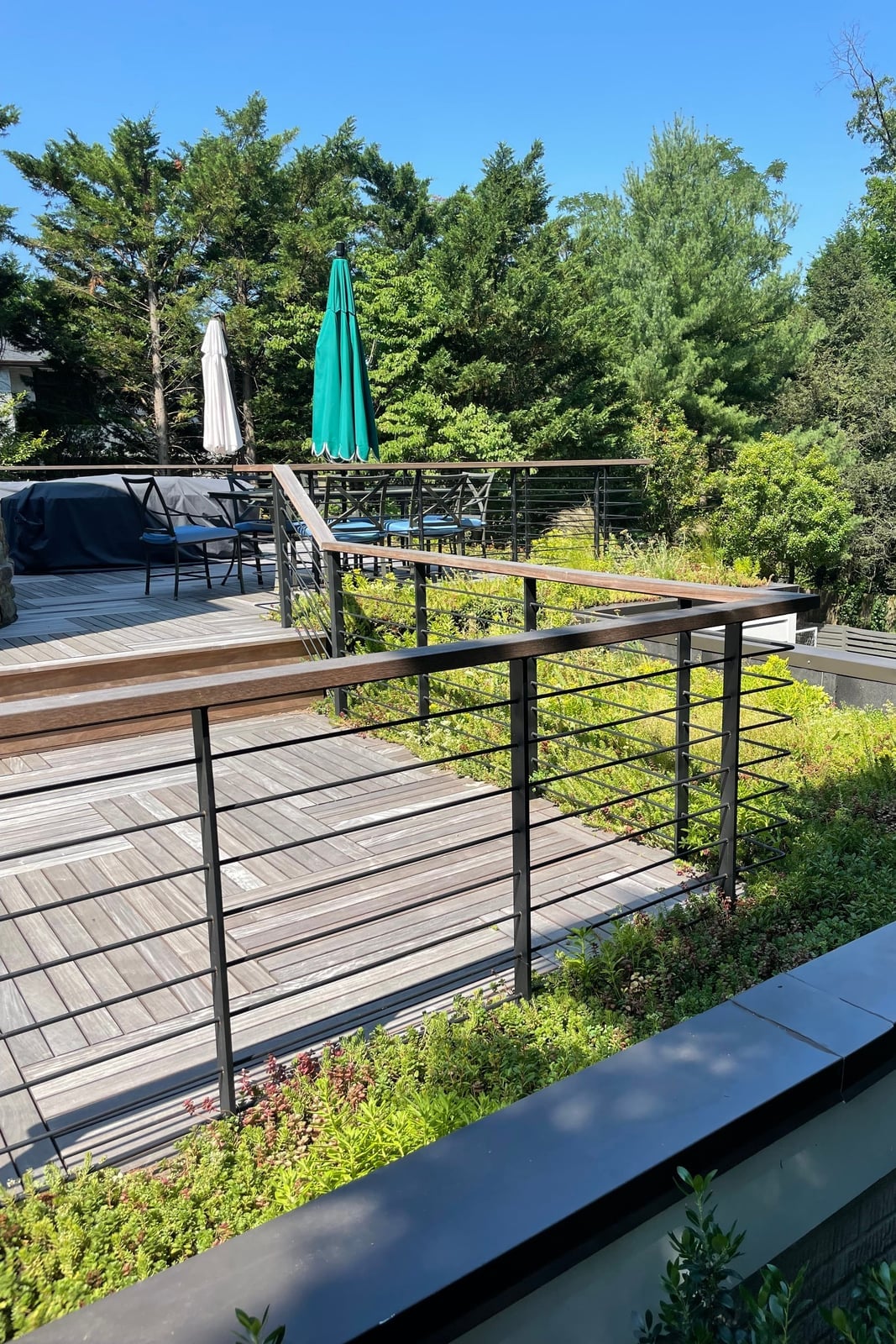
The horizontal metal bars here run parallel to the deck boards, creating a clean linear rhythm that echoes the long sightline toward the yard. A wood top rail adds a warm handhold against the black metal, while patio chairs and umbrellas sit beyond the railing as quiet background detail. The principle: matching the rail direction to the deck layout reinforces the sense of length and openness. Horizontal bars look wider and more modern than vertical spindles, and the wood top keeps the metal from feeling too industrial.
Modern deck with integrated step lights and composite decking
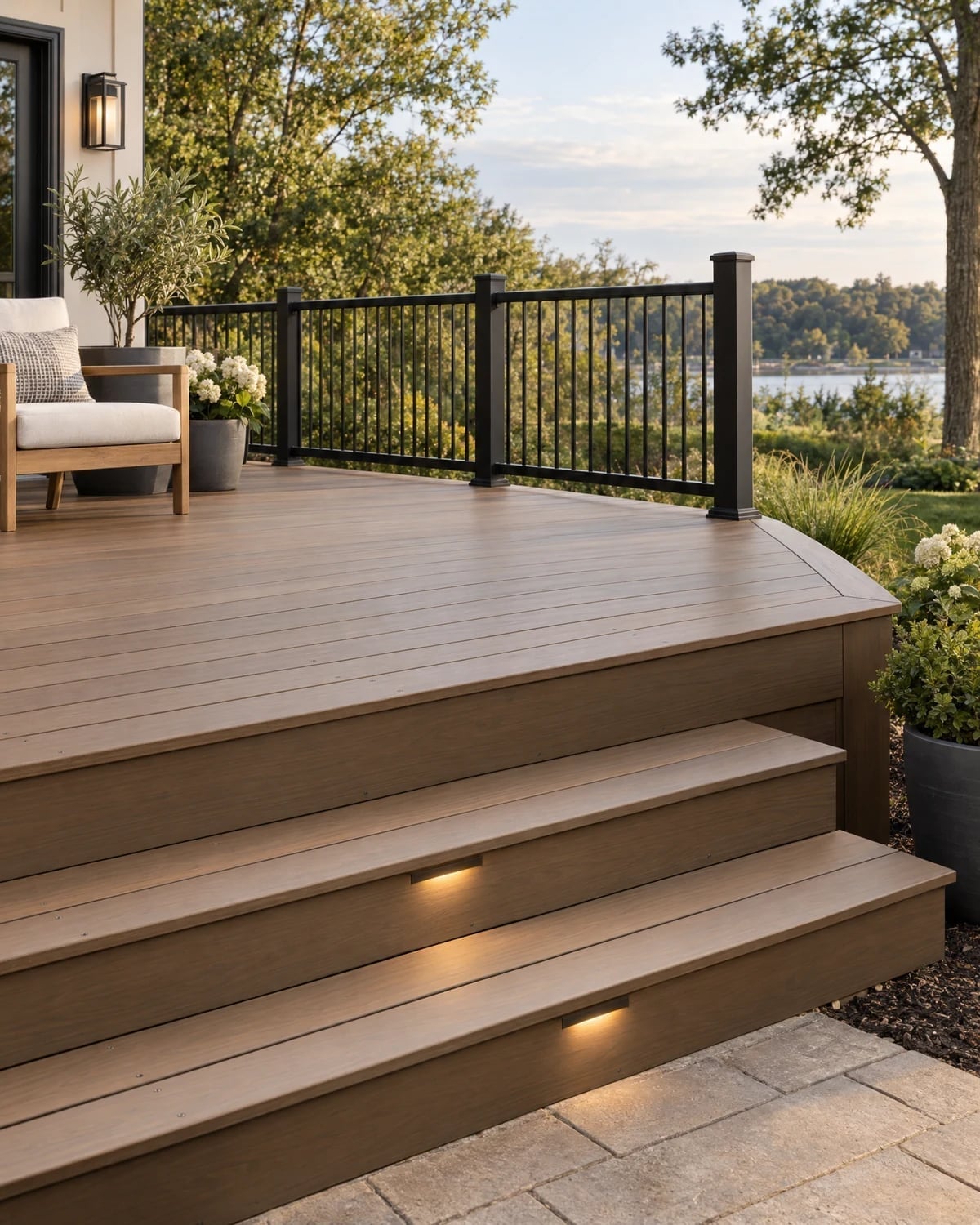
This deck earns a clear one-line assessment: integrated step lights and composite decking make a practical pair. The tiered steps leading up to the main deck level have low-voltage lights built into the risers, so each tread is visible after dark without overhead glare. The dark metal railing and black-finished wall sconce keep the lighting scheme cohesive, while a deck chair and potted plants soften the modern lines. The principle: step lights belong in the riser, not the tread, so the light casts downward and avoids shining in your eyes as you climb.
Modern deck staircase with black balusters and wood posts
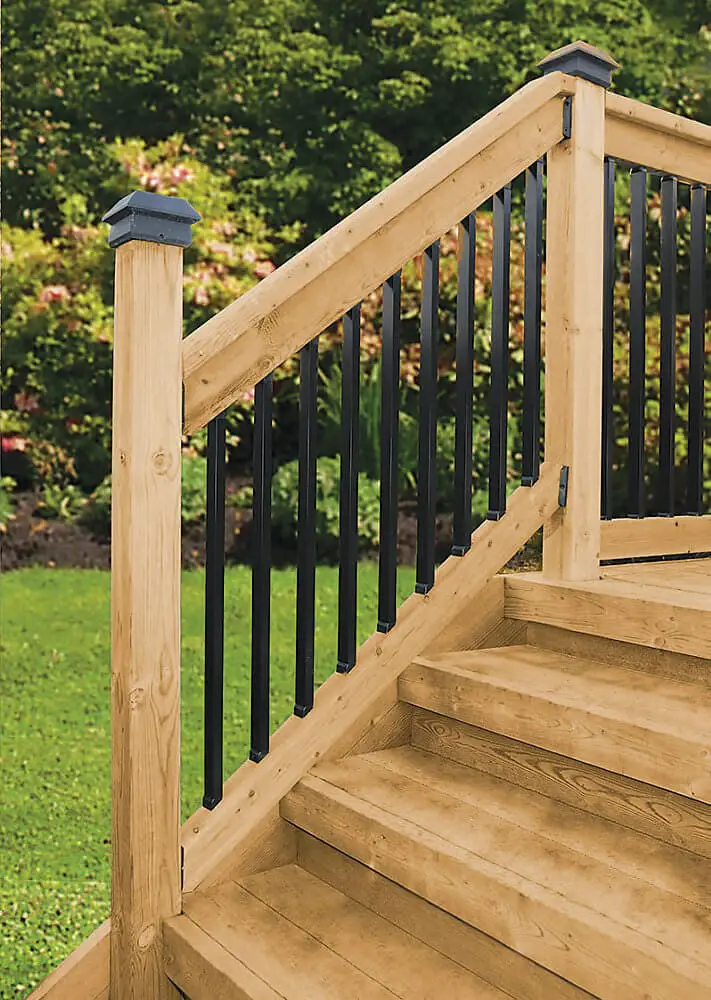
A deck staircase with a strong contrast between its elements is a good place to start. The palette here pairs natural wood tones with black metal, giving the structure a clear, modern look. The decking, stairs, and railing posts stay in warm brown wood, while the balusters are a crisp black. This ratio of wood to metal keeps the railing from feeling too heavy. The black vertical lines against the wood create a rhythm that guides the eye up the staircase. Choose a matte black finish for the balusters so they stand out as a deliberate accent.
Wooden rails with black metal mesh inserts
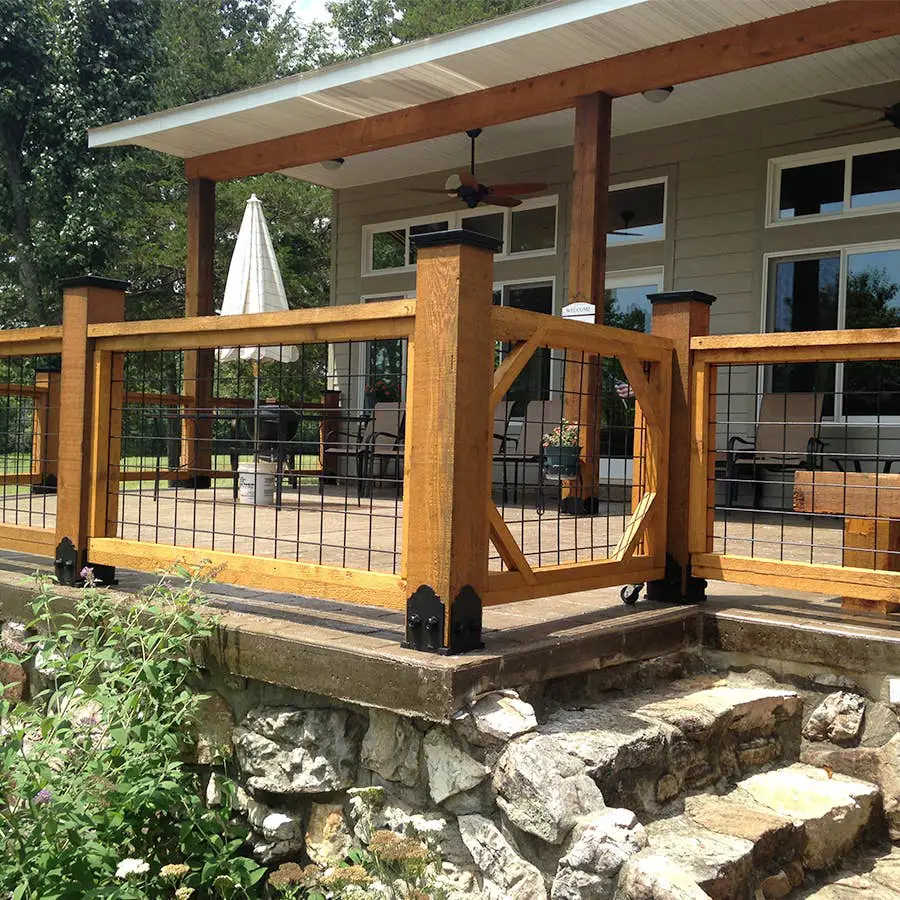
Wooden deck rails with black metal mesh inserts offer a rustic look that is still practical. The warm wood tones and beige stone steps are grounded by the black mesh, which adds a layer of security without blocking the view. The ceiling fans overhead suggest this is a covered area, so the materials stay protected from direct weather. The gate in the railing is a smart addition for controlling access to the stone steps leading up.
Dark metal rails with cable infill system
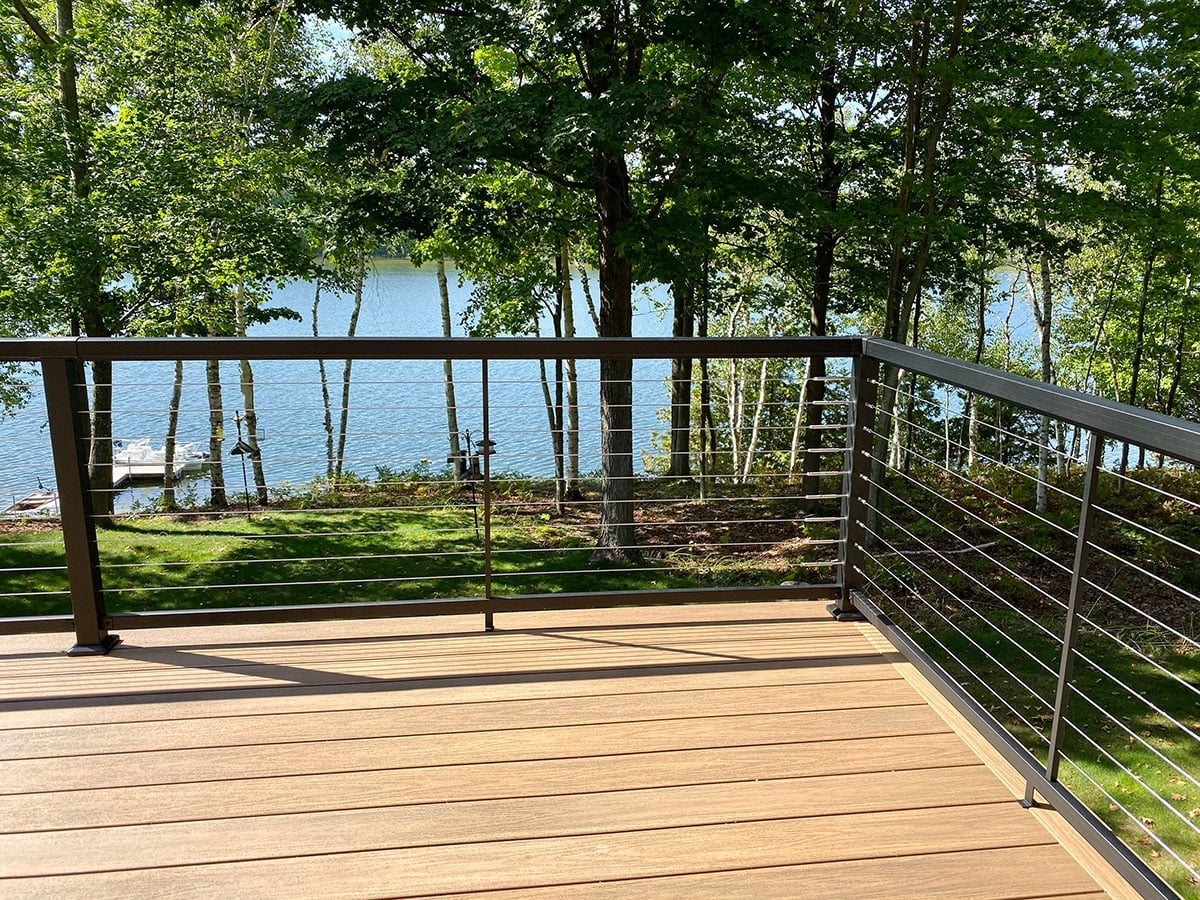
A cable railing system uses thin stainless steel cables stretched between posts instead of vertical balusters. The dark metal posts and frame keep the structure sturdy, while the cables create a nearly invisible barrier. This is a smart choice for a corner view where you want to keep the sightline open to the landscape. The mix of brown wood decking and silver cables looks clean and contemporary. For a similar setup, make sure the cables are tensioned properly so they stay tight and safe.
Modern deck with horizontal metal railing and wooden handrail
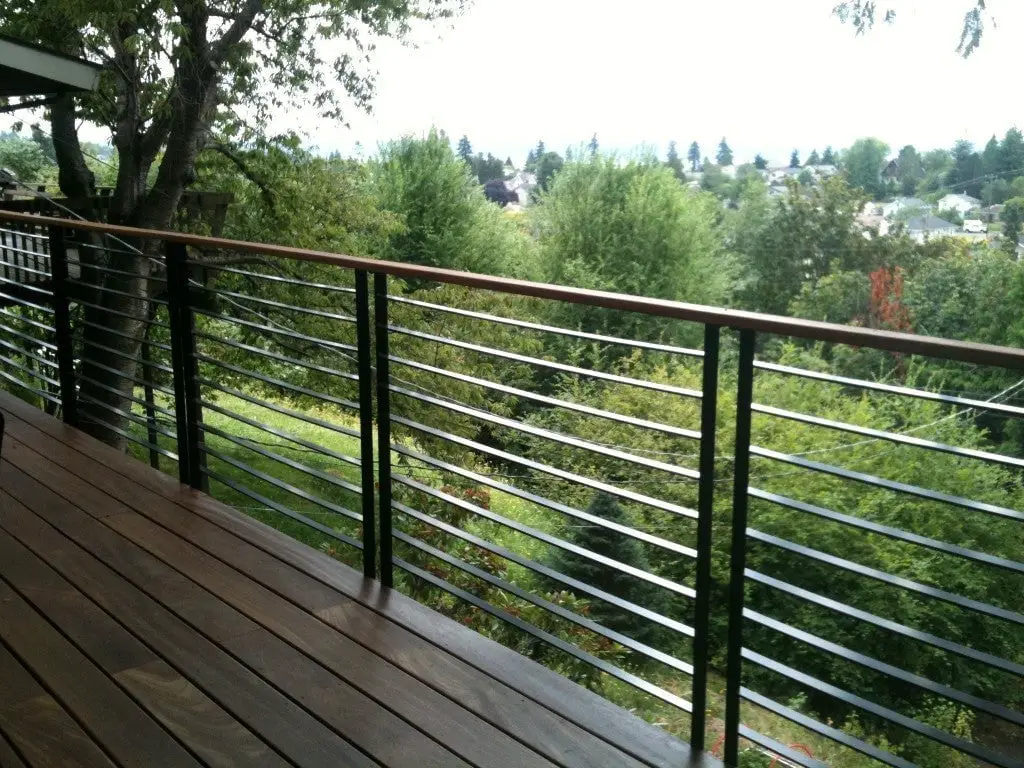
A horizontal metal railing with a wooden handrail is a practical alternative to a traditional vertical baluster design. The horizontal lines of the dark metal rails draw the eye across the deck, making the space feel wider. The warm brown wood handrail on top provides a comfortable grip and adds a natural element to the metal structure. It suits a modern deck where you want a clean look that does not interrupt the view. The horizontal rails also create a strong visual anchor for the outdoor space.
Traditional porch with welcoming front door and wicker chairs
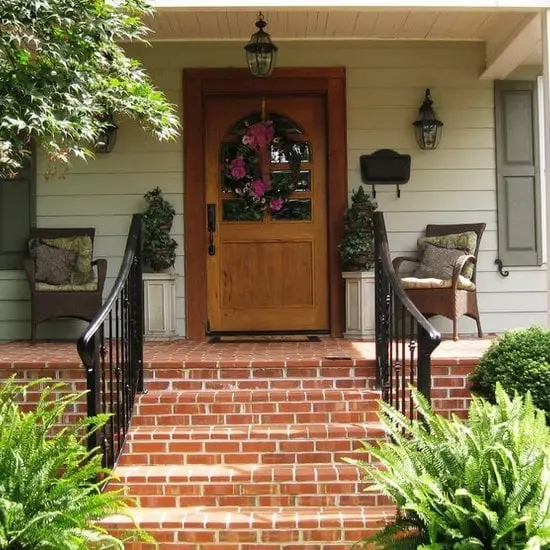
A traditional porch with a welcoming front door and wicker chairs relies on thoughtful placement. The wooden door with a floral wreath becomes the focal point, while the wicker chairs on either side create a balanced seating area. The brick and stone materials give the porch a solid, grounded feel, while the cream and green accents in the planters and chairs add softness. The lanterns on either side of the door offer warm lighting for evening. This arrangement makes the porch feel like an extension of the home’s living space.
Modern deck railing with gray metal top rail and cable infill
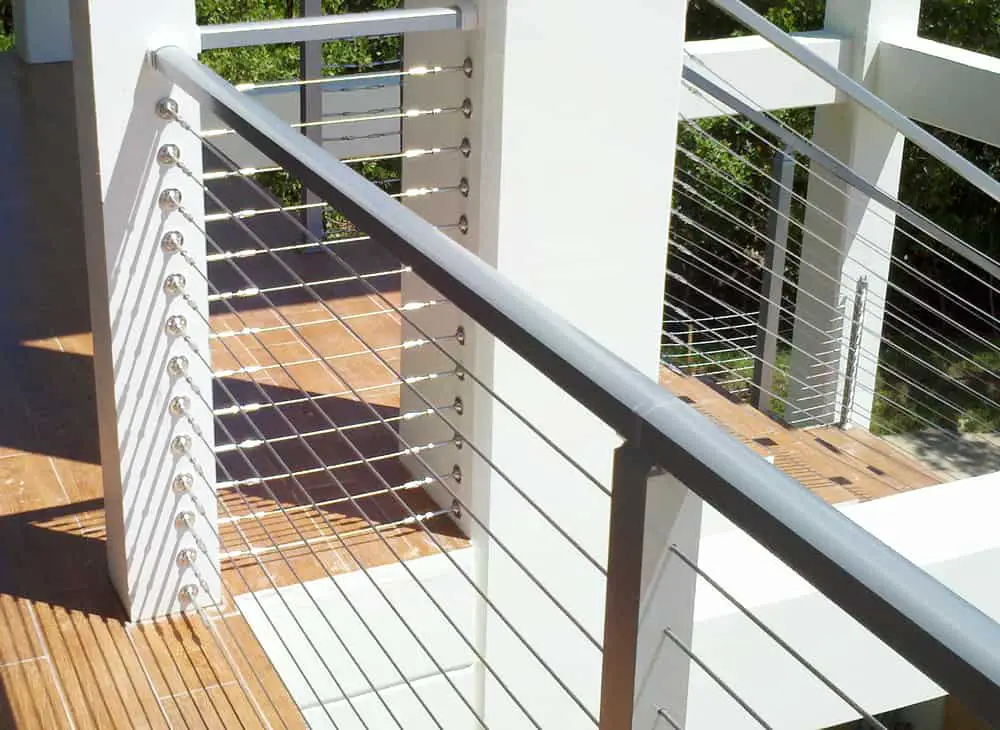
A gray metal top rail looks a softer alternative to black without losing the modern edge. The palette works because the gray metal, white decking and wood tones stay within a narrow tonal range, so the cable infill becomes the texture instead of a color contrast. The horizontal cables keep the view open, which is the main point of a cable system. For a deck that faces a backyard or a treeline, this setup lets the landscape do the decorating.
Modern deck with white baluster rails and wood accent
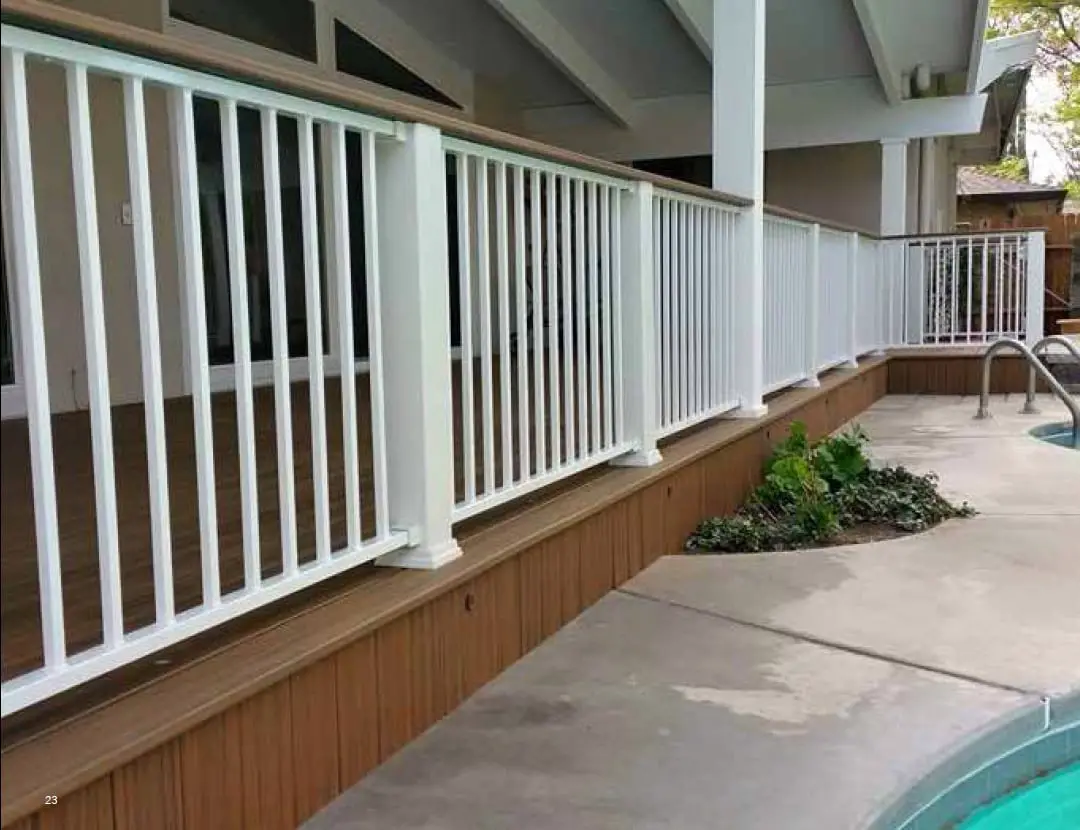
White baluster rails can feel too traditional for a modern pool deck, but the wood skirting here changes the balance. The white balusters keep the railing light and open, while the warm wood tone along the base of the deck adds a grounded, horizontal line that echoes the pool edge.
The concrete pool surround reinforces the clean geometry. What defines the look is the ratio: mostly white verticals with one continuous wood band. A darker deck stain or a gray concrete finish would break the lightness, so if you are renting, ask about painting or staining the skirting rather than replacing rails.
Modern deck rails with dark wood top and cable infill
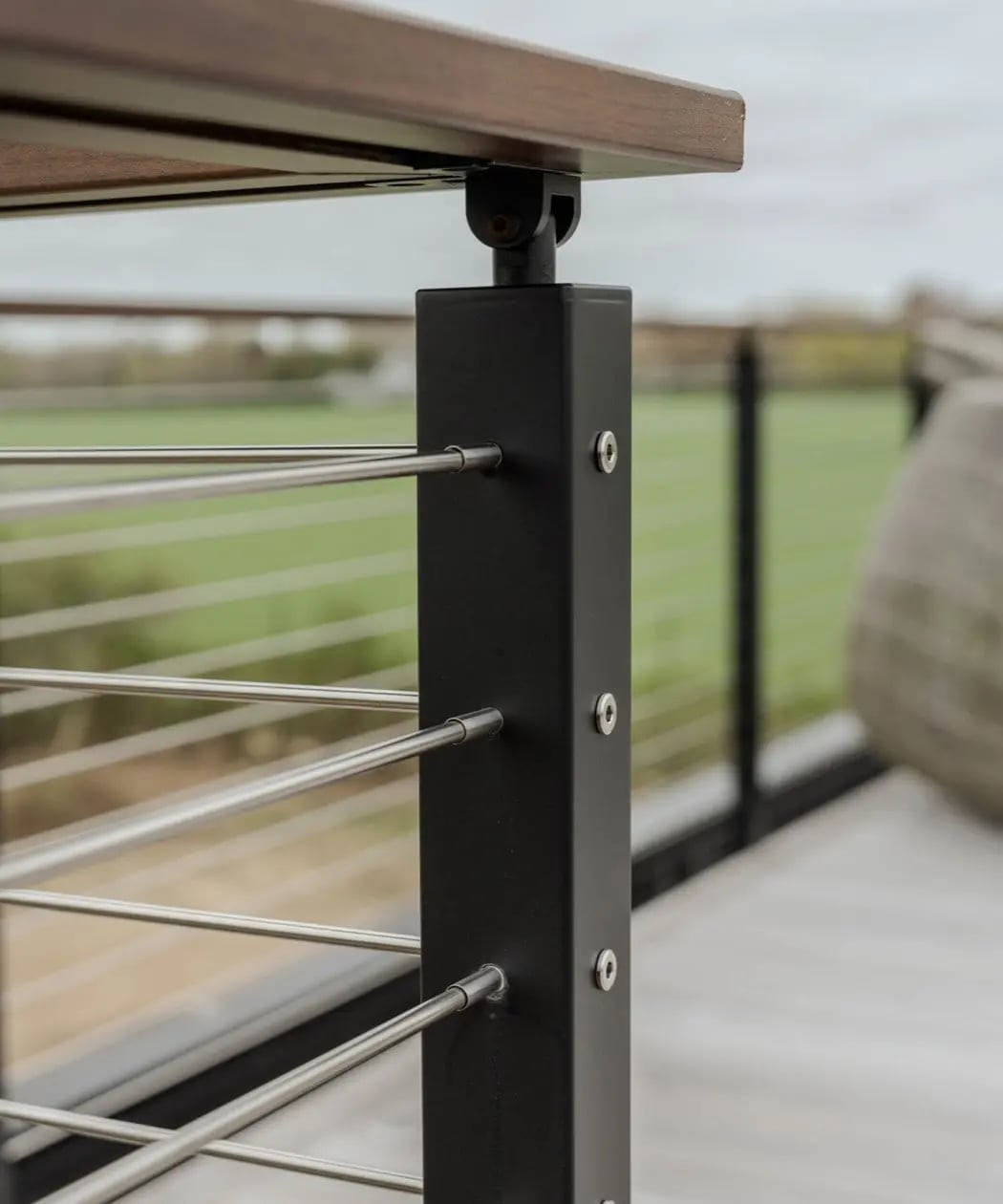
A dark wood top rail paired with silver cable infill gives the railing a clear horizontal line without adding bulk. The wood brings warmth, the metal cables keep the view unobstructed, and the silver hardware ties to the gray deck surface below. The combination works because the materials stay neutral but differ in finish: wood is matte, metal is reflective. That subtle contrast is enough definition for a modern deck.
Final Thoughts
A good deck rail balances safety with the view you want to keep. Metal and cable systems offer clean sightlines with minimal upkeep, while wood and glass bring warmth or openness. Integrated lights and planters add function without clutter. Match your choice to your climate, check your USDA zone for materials that hold up. The best rail is the one you stop noticing because it just works.