Shower tile is one of those things you don’t think about until you’re staring at a wall of beige builder-grade squares. But a well-chosen tile can turn a daily rinse into something you actually look forward to. This isn’t about trends that will look dated by next year; it’s about classic choices that feel fresh and intentional.
We’ve gathered 25 classy shower tile ideas for 2027 that focus on material, pattern, and texture rather than flashy gimmicks. Whether you’re planning a full renovation or just dreaming, these looks offer real inspiration for a space that feels both classic and personal.
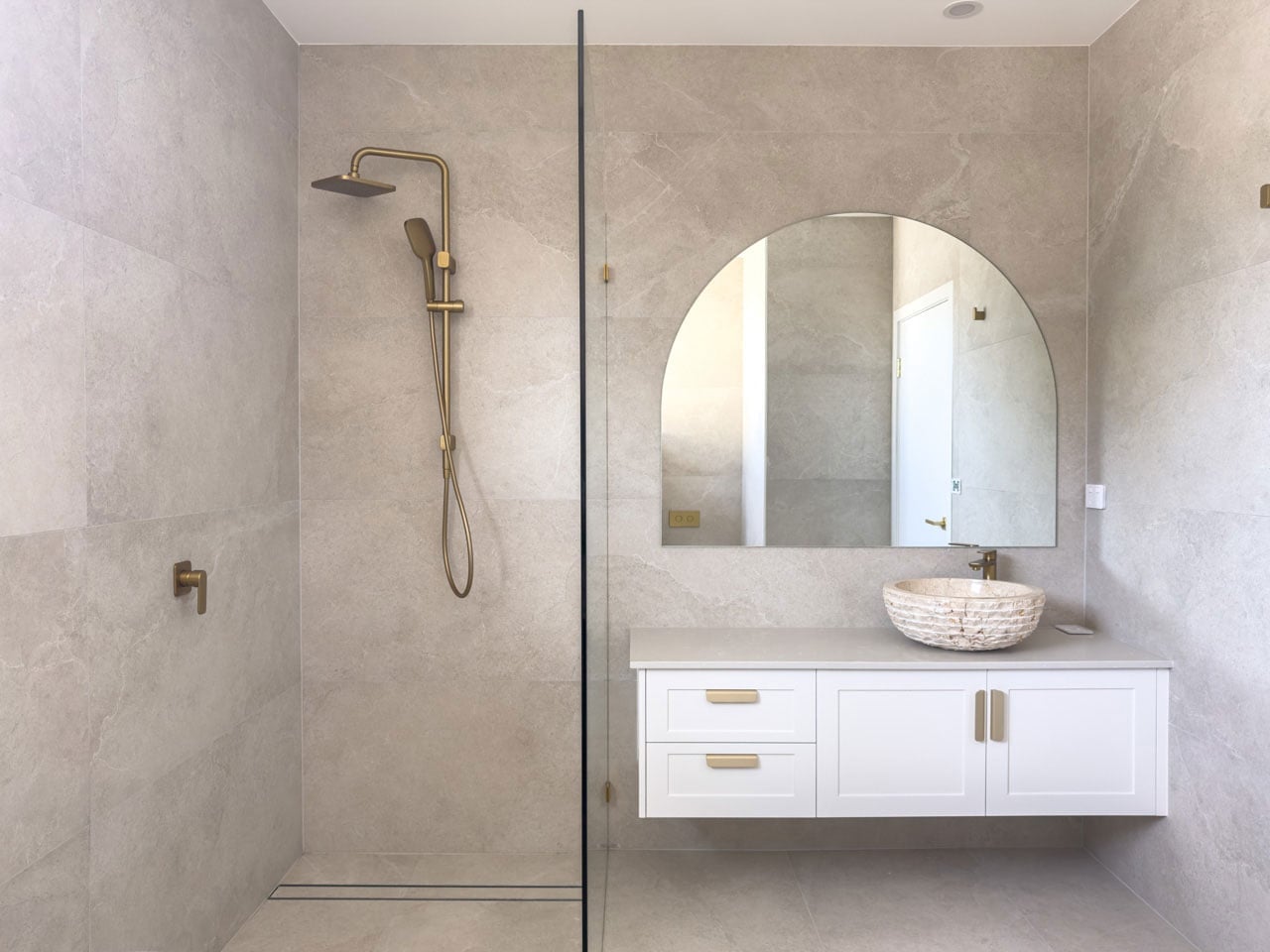
Smooth sophistication with large format stone-look shower tiles
The scale of a large format tile changes how a shower reads. In this roomy walk-in shower, beige and gray stone-look tiles cover the walls with minimal grout lines, letting the subtle texture of the material stand forward. A gold framed arched mirror and a vessel sink on a wood vanity add warmth without competing with the tile. The result is a modern bathroom that feels calm and put together, where the shower stall does not dominate but anchors the space.
Modern elegance with gray herringbone shower tile walls
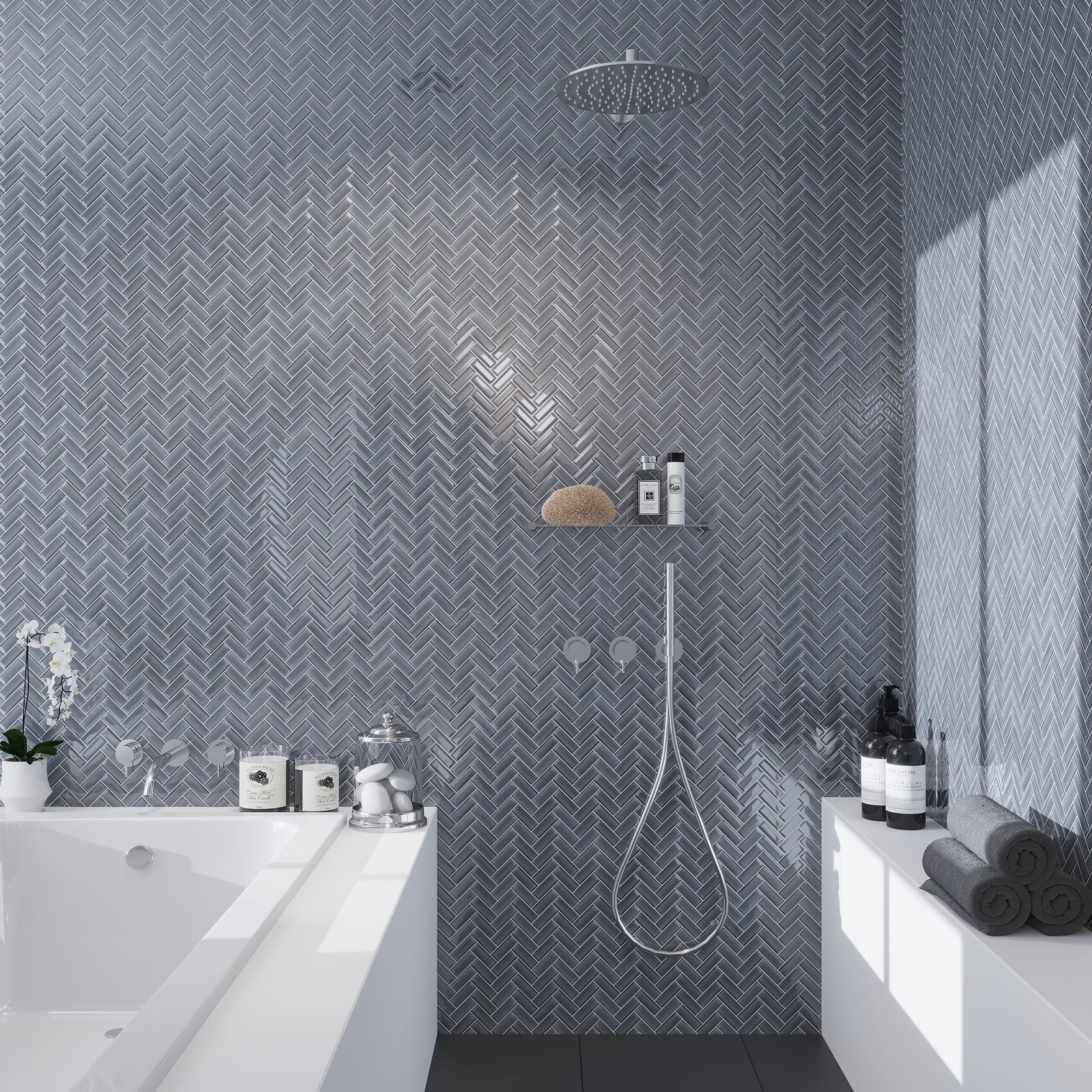
A herringbone pattern in gray tile brings structure to a shower wall without making the room feel busy. The angled lines catch natural light from a nearby window, shifting the look of the gray through the day. Chrome fixtures and white trim keep the palette clean, so the pattern stays the focus. This layout works because the herringbone is confined to the shower area, with the rest of the bathroom in solid white tile. The contrast gives the eye a clear place to rest.
Eclectic charm with patterned teal and blue shower tile accents
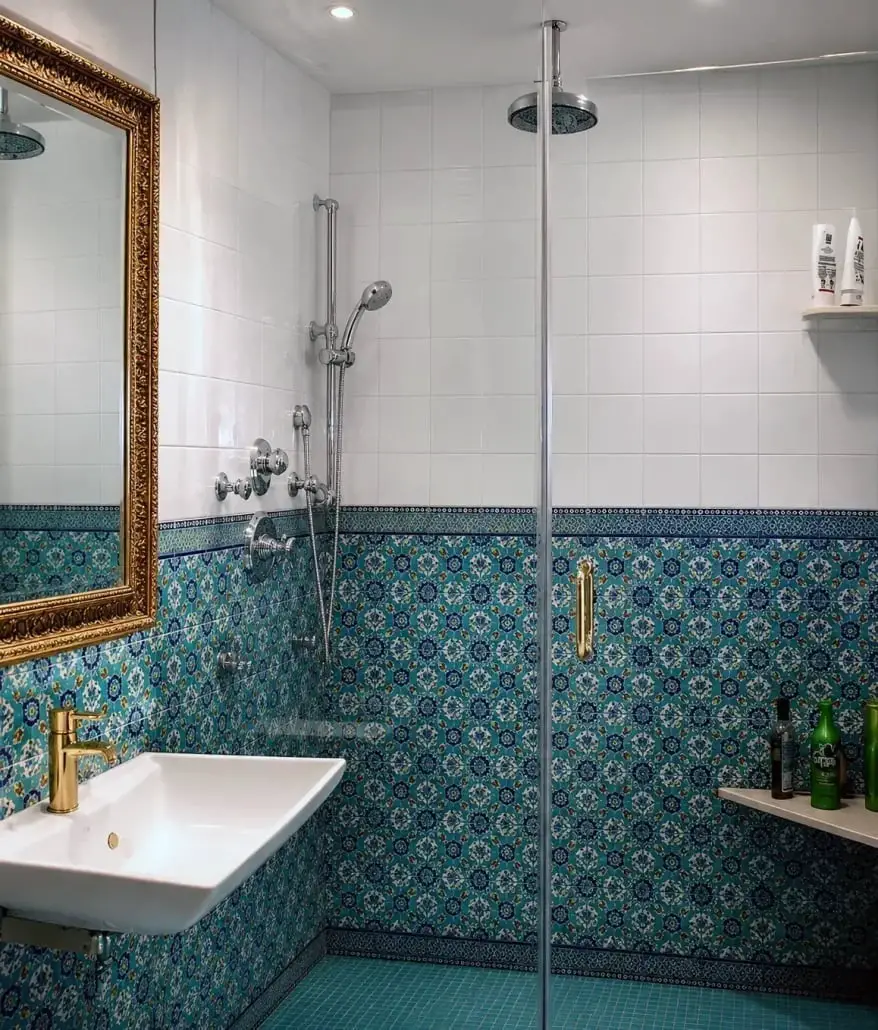
How do you add color to a small shower without it feeling cramped? A patterned teal and blue tile on one wall does the job. In this compact walk-in shower, the ornate tile sits behind a glass enclosure, creating a focal point that draws the eye inward. White walls and a wall-mounted sink keep the room light. Brass fixtures tie the gold accents in the tile to the bathroom. Let the pattern be the only busy element. Keep everything else simple, and the color appears planned rather than chaotic.
Vertical light blue subway tiles for a fresh shower
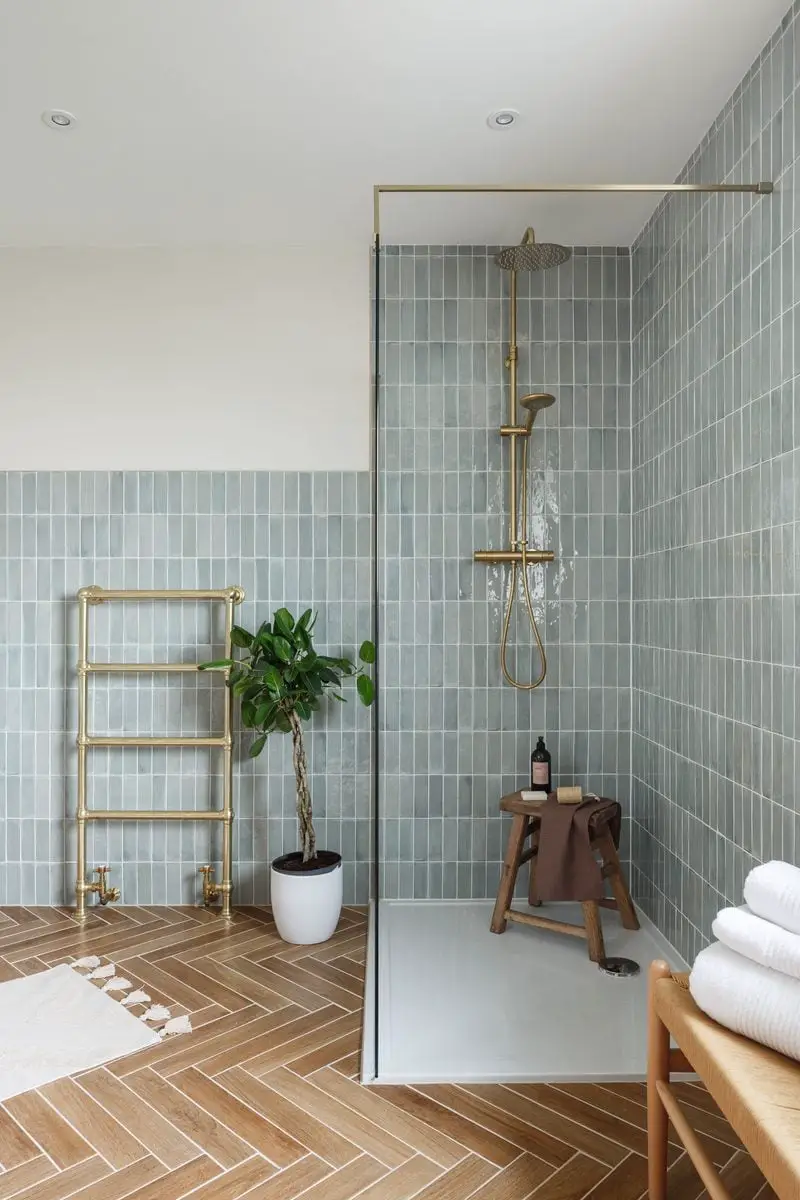
Light blue subway tile set vertically makes a shower feel taller and fresher. In this roomy corner shower, the vertical lines draw the eye upward, and the pale blue adds a soft wash of color without overwhelming the space. A brass shower fixture and a wooden bench bring in warmth, while a potted plant adds life. The vertical layout also works with the glass enclosure, letting the tile look a full surface rather than a patchwork of small rectangles.
Dramatic texture with large format slate-like shower tiles
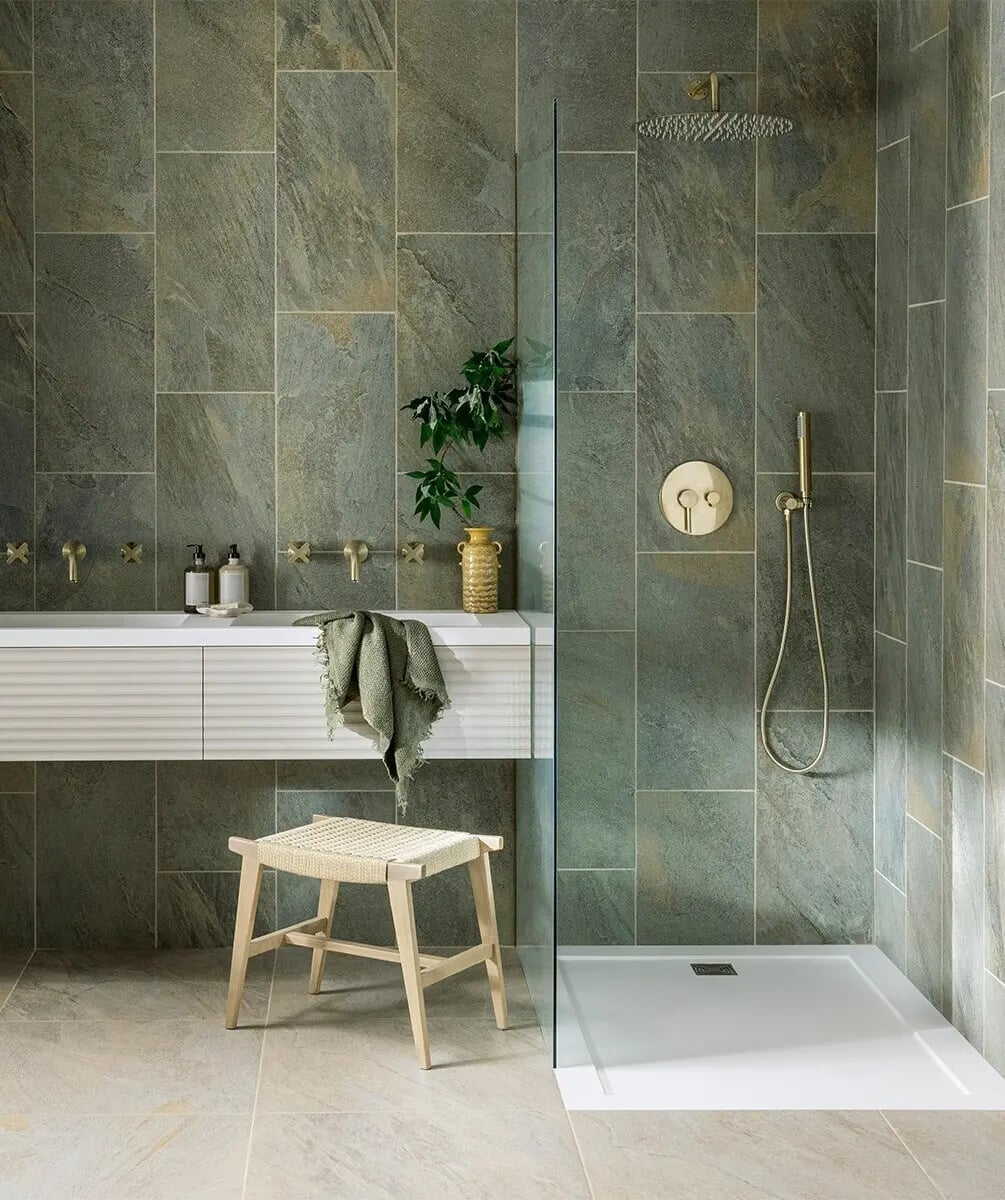
A large format slate-like tile adds texture and depth to a shower without the busy look of smaller pieces. This roomy corner shower uses green and gray stone tiles on the walls, their natural variation creating visual interest. A floating vanity and a wooden stool keep the room grounded, while the glass enclosure lets the tile stay the main event. The dark, textured surface pairs well with brass fixtures and woven accents, giving the bathroom a modern, organic feel that still looks clean and intentional.
Warm ambiance with pink mosaic shower tiles
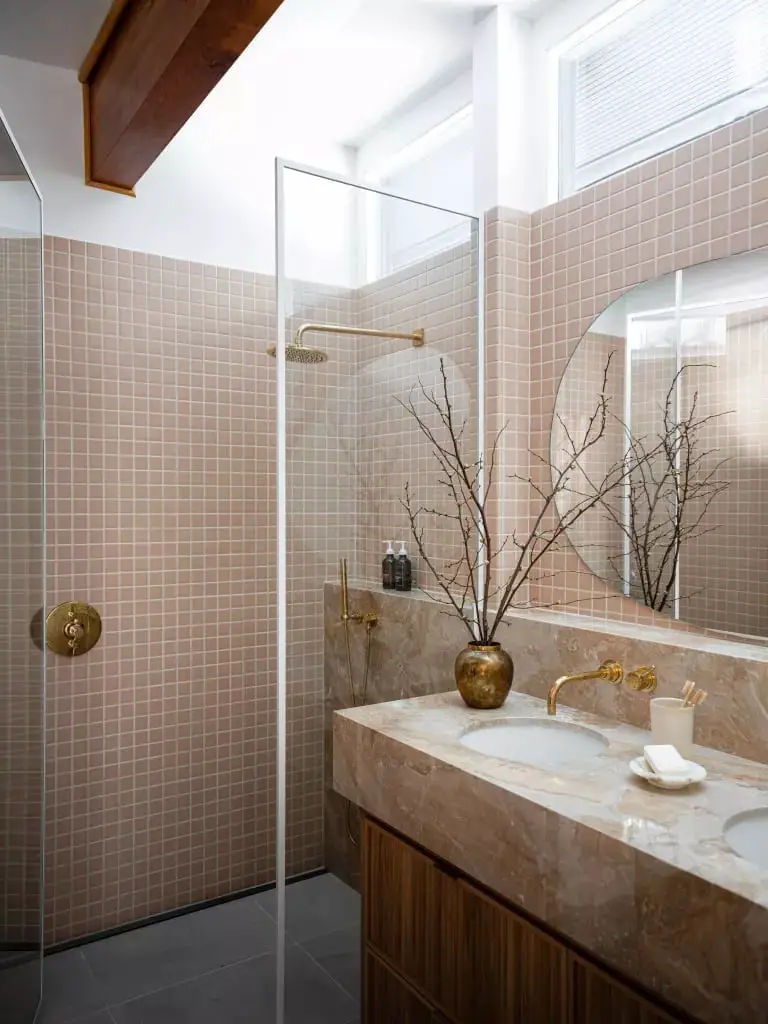
If beige and gray feel too safe, pink mosaic tile brings warmth without going full blush. The small tiles catch light from the window and shift between pink, beige, and brown tones, so the wall never appears one flat color. A marble vanity and brass fixtures keep the look grounded. The glass shower enclosure lets the tile stay the focal point, and the roomy corner layout with a double vanity balances the visual weight. The palette is warm but restrained: gold fixtures against pink and beige, with brown accents in the wood trim. Avoid adding too many competing pastels or cold white fixtures. Stick to brass or oil-rubbed bronze for the metal, and let the tile do the talking.
Grown-up contrast with vertical stacked cream shower tiles
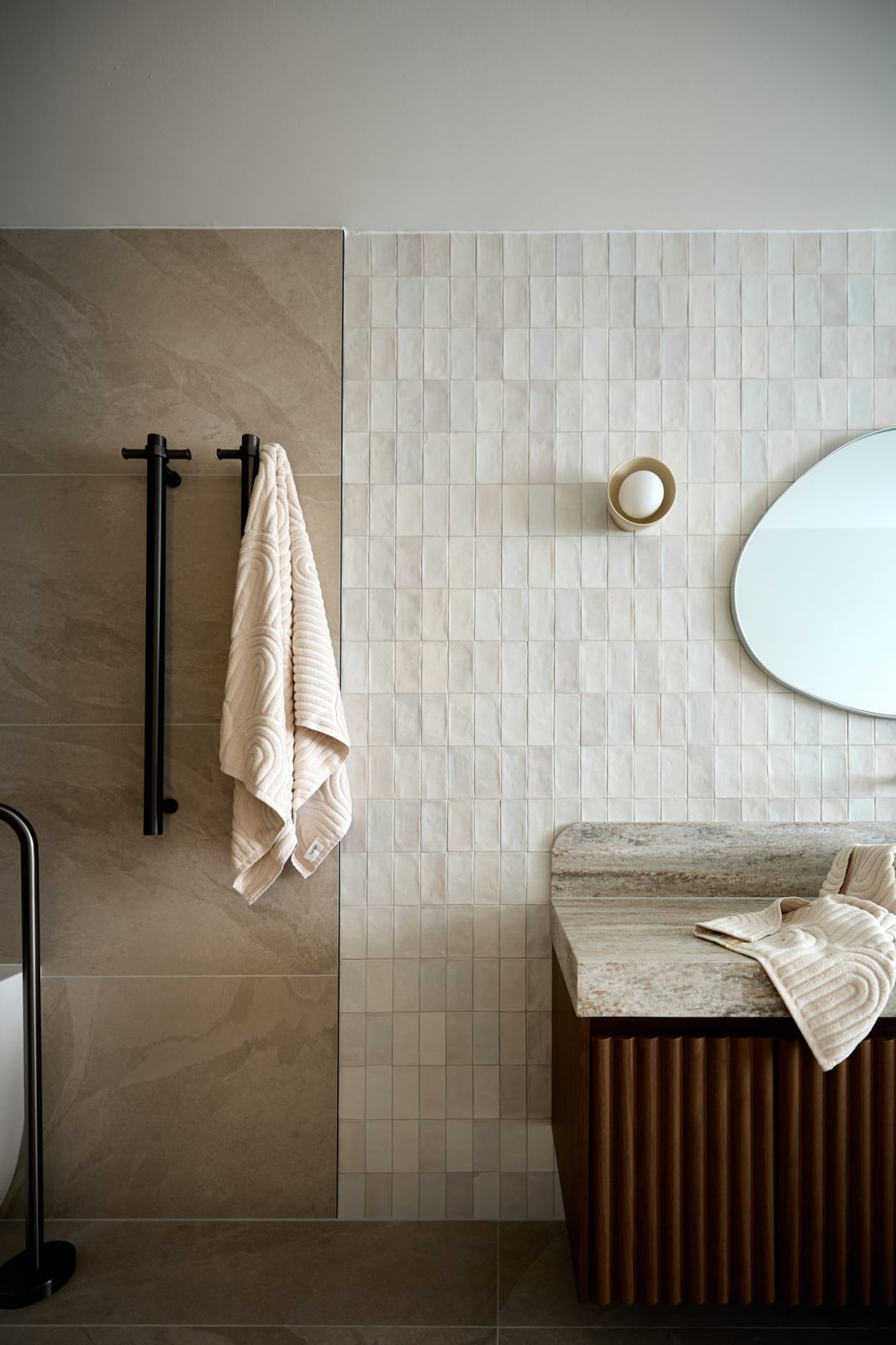
The vertical stacked layout draws the eye upward, making a compact bathroom feel taller than it is. Cream tiles against a gray stone vanity and warm wood accents create a quiet contrast that does not rely on bold color. A wall sconce above the mirror adds a soft glow without overpowering the tile. The key detail is the proportion: the vertical lines of the tile balance the horizontal lines of the vanity and towel rack. In a small space, this trick adds height without needing a renovation. Renter-friendly swaps include peel-and-stick vertical tile panels or a temporary wallpaper with a stacked pattern.
Classic luxury with white marble shower walls
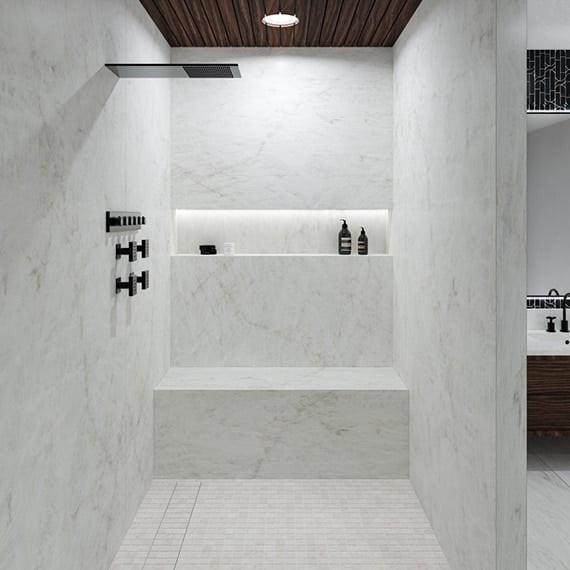
White marble shower walls are a classic choice for a reason: they reflect light and make a roomy shower feel even more open. The natural veining in gray adds texture without needing pattern. A built-in bench and recessed shelf keep the look clean, while the rainfall showerhead and black metal fixtures add a modern edge. Recessed ceiling lights and shelf lighting highlight the marble without glare. The wood tones in the vanity and bench warm up the cool white and gray palette. For a similar effect, consider large-format porcelain tiles with a marble finish, which offer the same look with less upkeep.
Textural depth with dark gray herringbone shower tiles
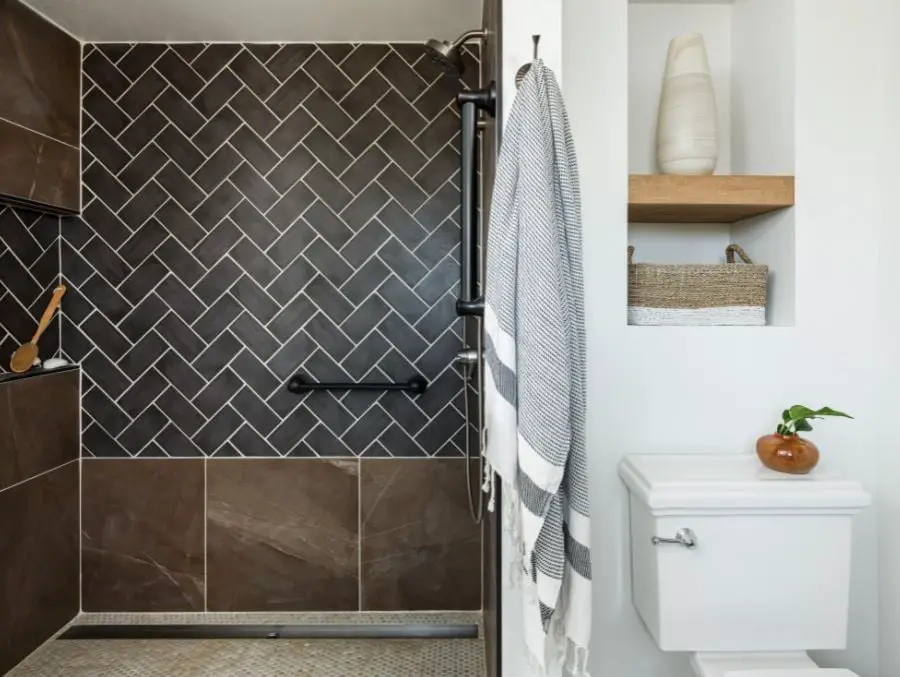
Can dark tile feel inviting? Yes, when you use a herringbone pattern. The angled lines add movement and texture, so the dark gray appears rich and dimensional. In a compact corner shower, the pattern draws the eye across the wall and makes the space feel wider. A white showerhead and grab bar pop against the dark background, and a small basket and vase add soft, natural shapes. The palette stays simple: dark gray, white, brown, and beige. The herringbone layout does require more skill to install than a straight stack, so plan for that if you are hiring. The payoff is a wall that looks like a tailored piece of design.
Striking geometric mosaic shower tiles for a modern statement
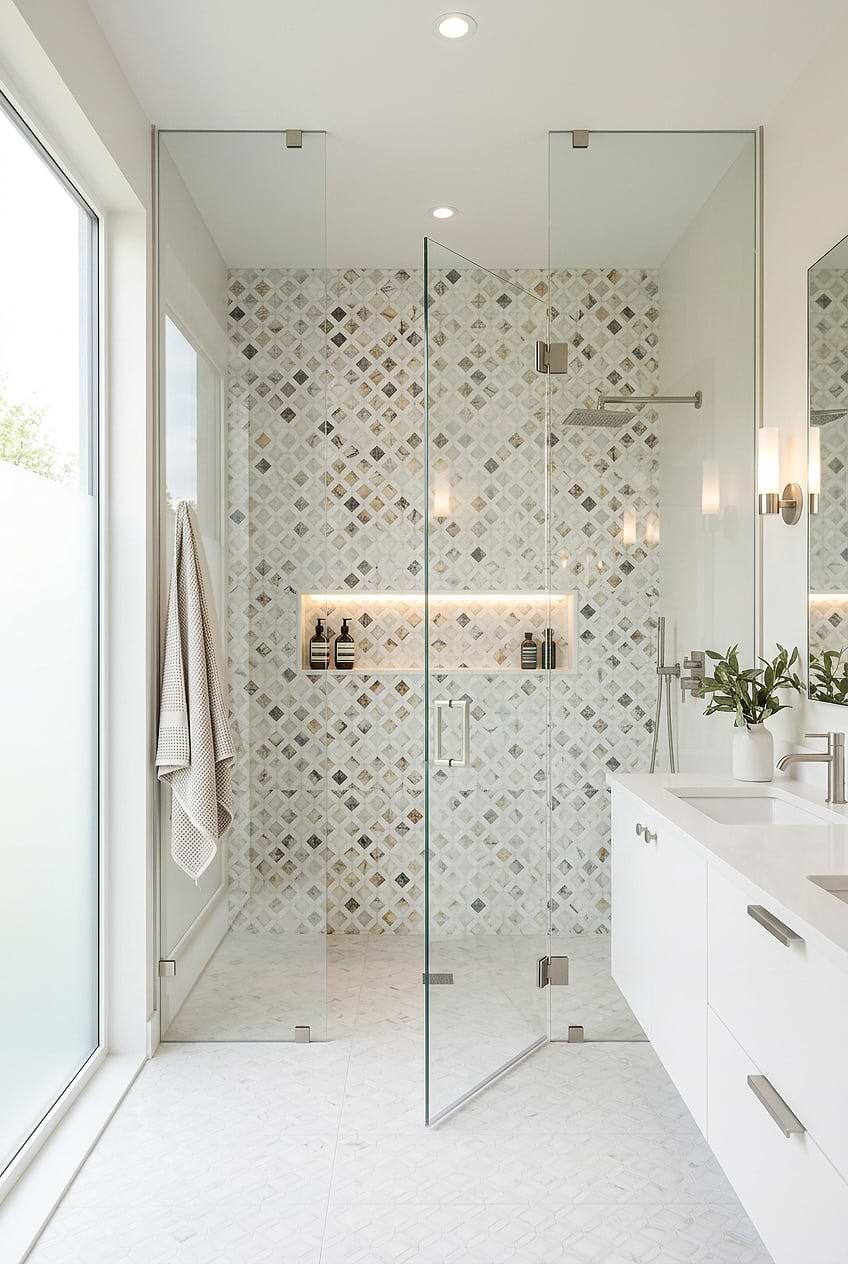
A geometric mosaic in white, gray, and beige creates a focal wall that does not overwhelm the room. The mix of glass, marble, and stone tiles creates a shifting surface as light changes throughout the day. In a roomy corner shower with a glass enclosure, the pattern anchors the space while the surrounding finishes stay simple. Recessed ceiling lights and shelf lighting keep the mosaic visible without harsh shadows. The vanity opposite the shower uses clean lines and a neutral palette so the tile remains the focal point. For a less permanent version, try a large-format tile with a geometric print or a mosaic decal sheet designed for wet areas.
Elegant geometric marble mosaic shower tile feature
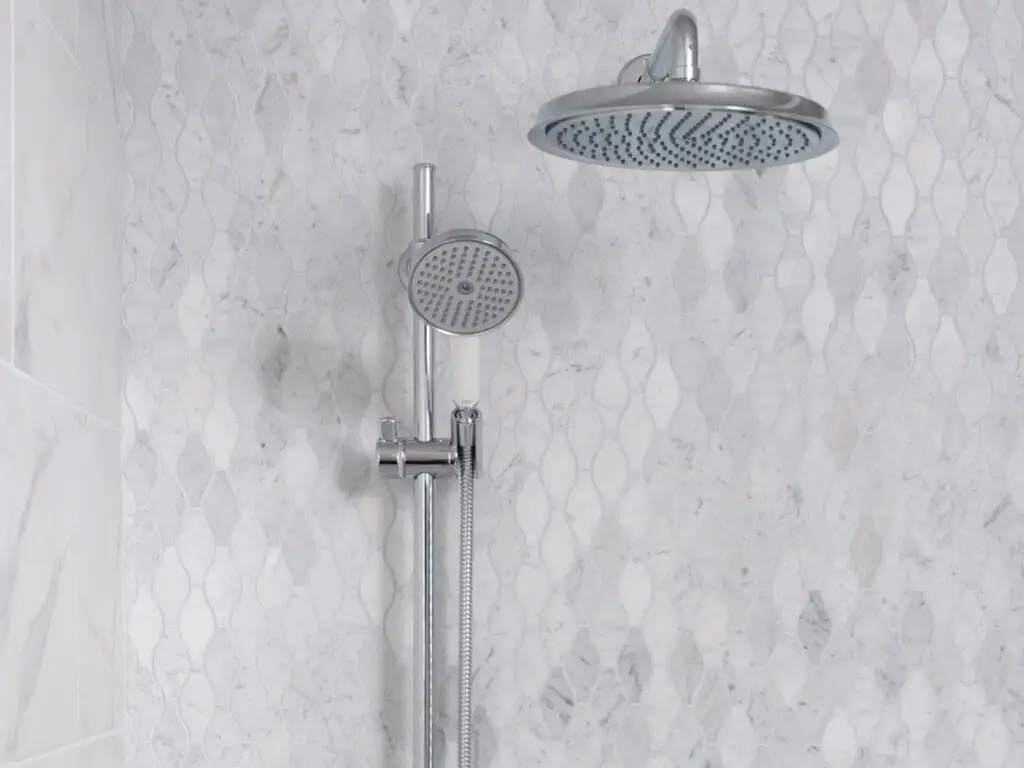
A good rule for a feature wall is to let the pattern do the talking. This compact shower keeps finishes simple with chrome fixtures and neutral wall tones, so the geometric marble mosaic becomes a clear focal point. The mix of white, gray, and beige marble pieces creates visual texture without overwhelming the small space. Ambient light shows off the stone’s subtle variation, proving that a detailed wall does not need extra drama. The handheld wand adds function without competing for attention.
Classic marble subway tiles for a traditional shower
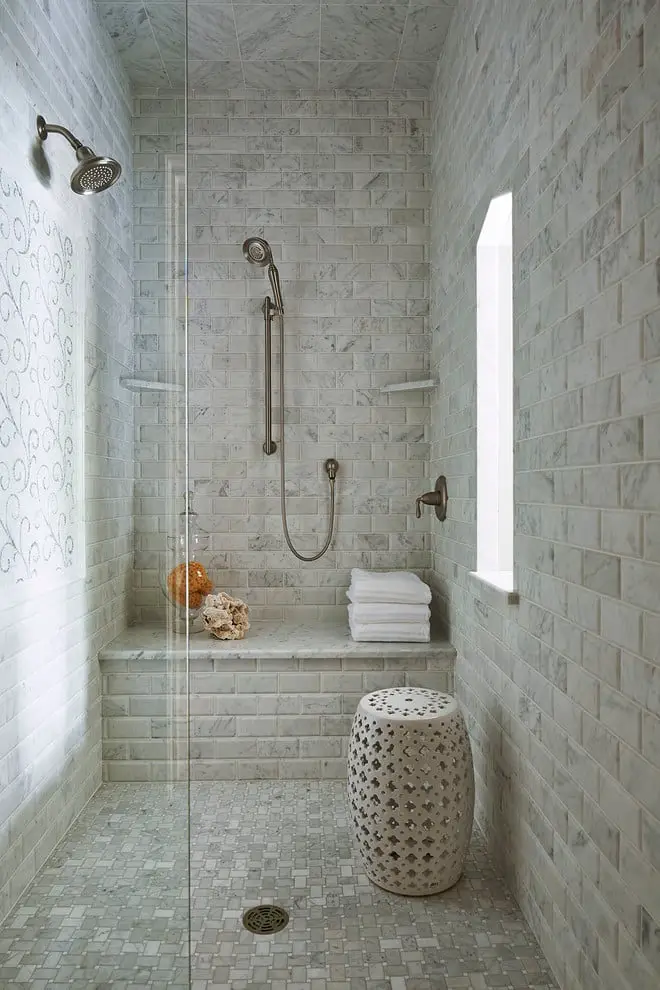
Marble subway tiles are sometimes compared to basic white subway tile, but the difference is in the surface. Where standard ceramic is flat, marble brings natural veining and a soft, slightly uneven tone that reflects natural light from a window in a way that feels grounded. This corner shower pairs the marble subway walls with a built-in bench and a glass enclosure that keeps the view open. The compact layout works because the tile is the main event, and the decorative stool adds a spot of warmth without cluttering the shower floor. The white, gray, and beige palette keeps the traditional look from feeling dated. Avoid a competing pattern or a dark grout that fights the veining.
Gray tiles with pebble tile accent strip
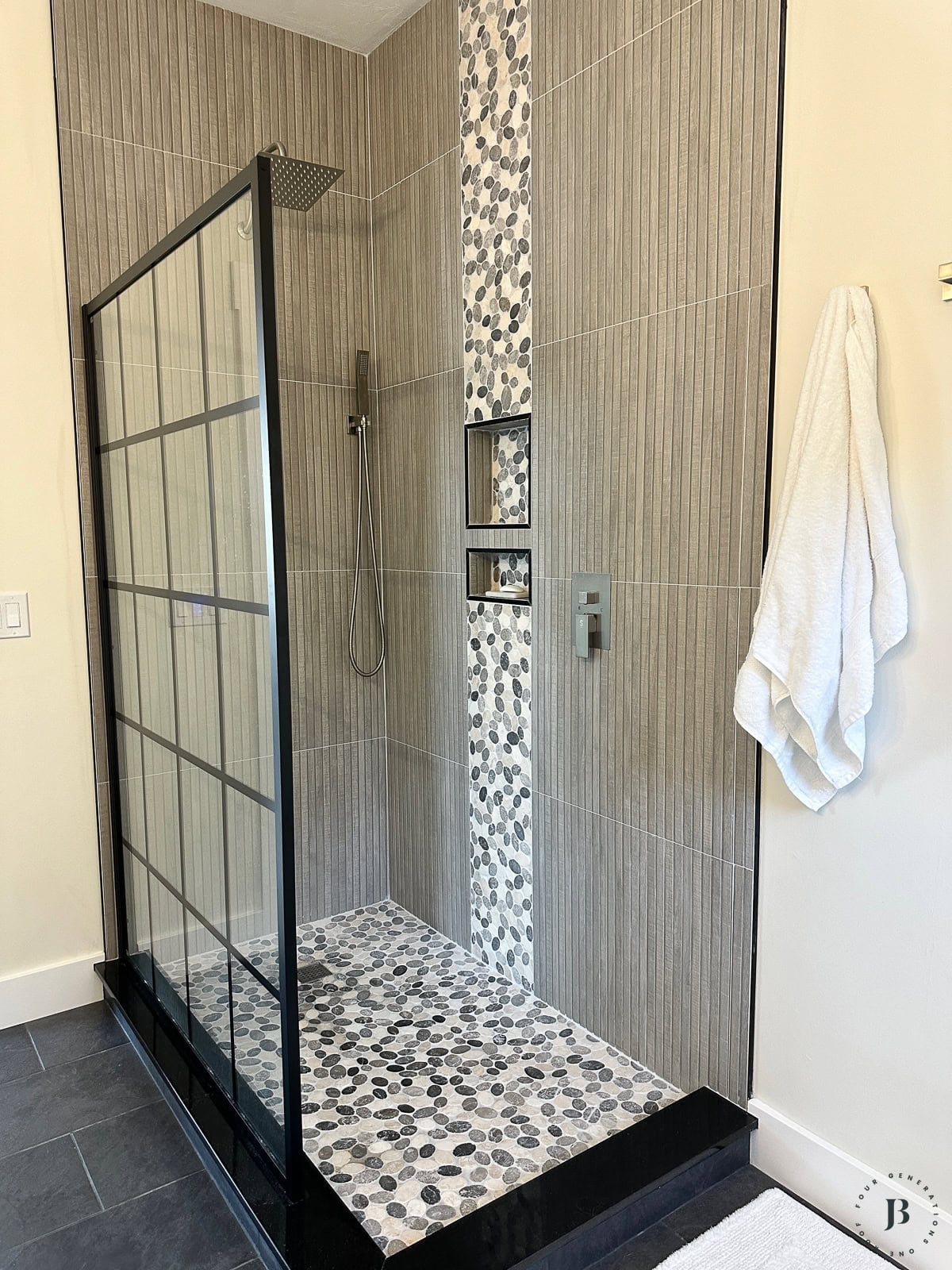
The pebble tile floor is the expected move in a modern shower, but the real detail here is the matching pebble accent strip set into the gray wall tile. It ties the shower enclosure together without adding a second pattern or color. The built-in niches keep bottles off the floor, and the metal trim around the glass door looks clean and intentional. Ambient light keeps the gray from feeling cold, and the black shower head and faucet add a subtle contrast that keeps the look from being too uniform.
Bold contrast with large dark gray hexagonal shower tiles
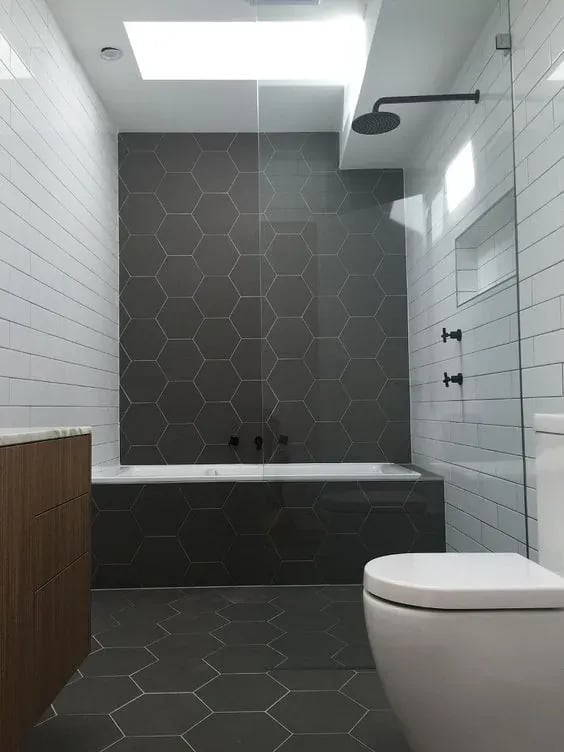
Large dark gray hexagonal tiles make a strong first impression. They cover the shower wall and continue into the bathtub surround, creating a continuous dark surface. The key to making this work is the skylight and overhead light, which keep the gray from swallowing the room. The white toilet and vanity break up the dark mass, and the wood tone on the vanity adds warmth. A compact bathroom like this one benefits from the large tile format because fewer grout lines mean less visual busyness. Using a dark grout that blends in too much turns the hexagons into a single dark slab.
Clean, modern look with patterned floor
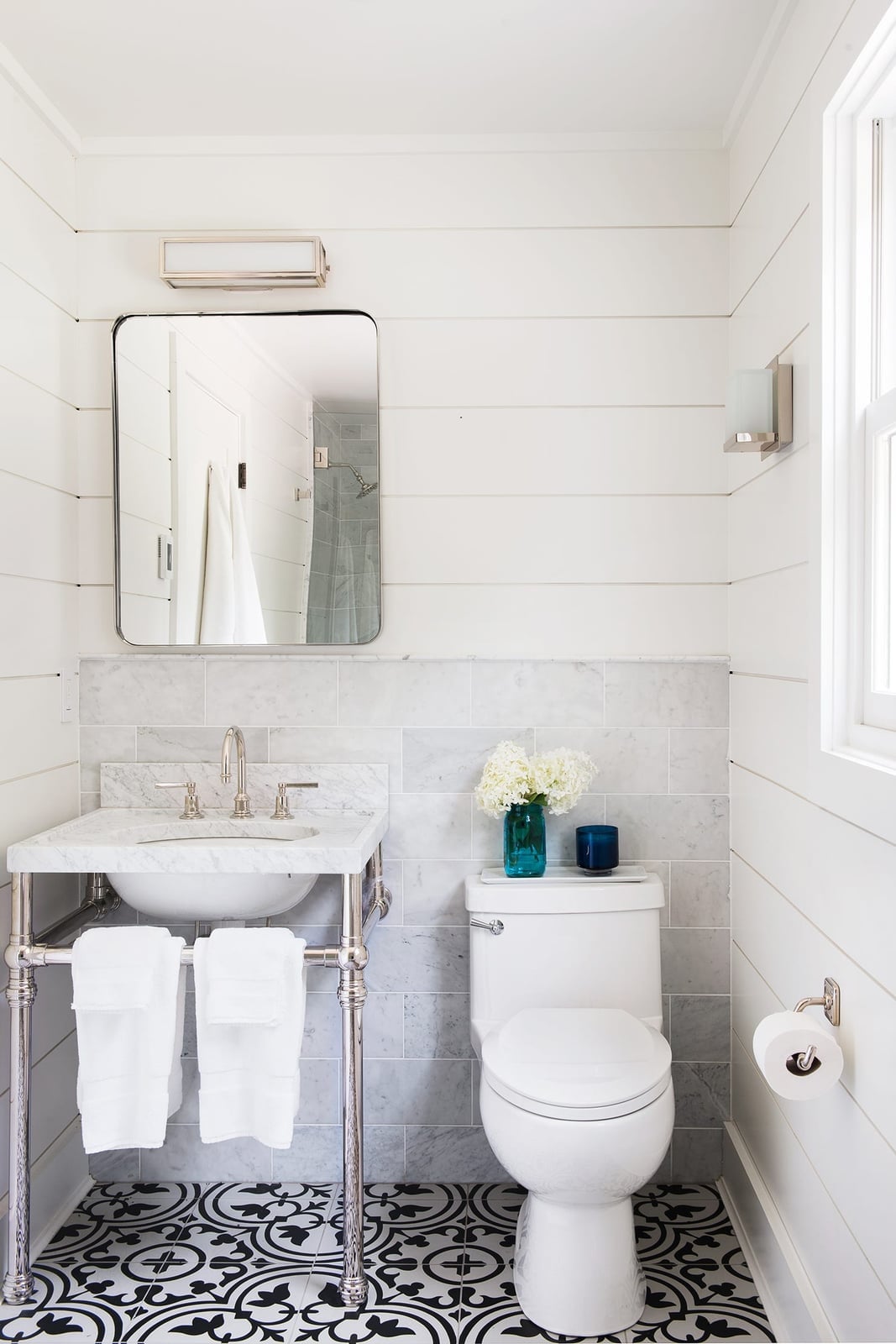
For a compact bathroom, put the pattern on the floor and keep the walls quiet. This layout pairs a black and white patterned floor tile with a pedestal sink, toilet, and a simple mirror, all in white. The chrome fixtures keep the look light, and the wall sconce provides task lighting that highlights the floor pattern without casting harsh shadows. The overhead light fills the room evenly, which is important when the walls are bare. The scale of the pattern is small enough to look texture from a distance. Avoid adding a patterned wall or a bold vanity color that competes with the floor.
Dark subway tile shower for a moody aesthetic
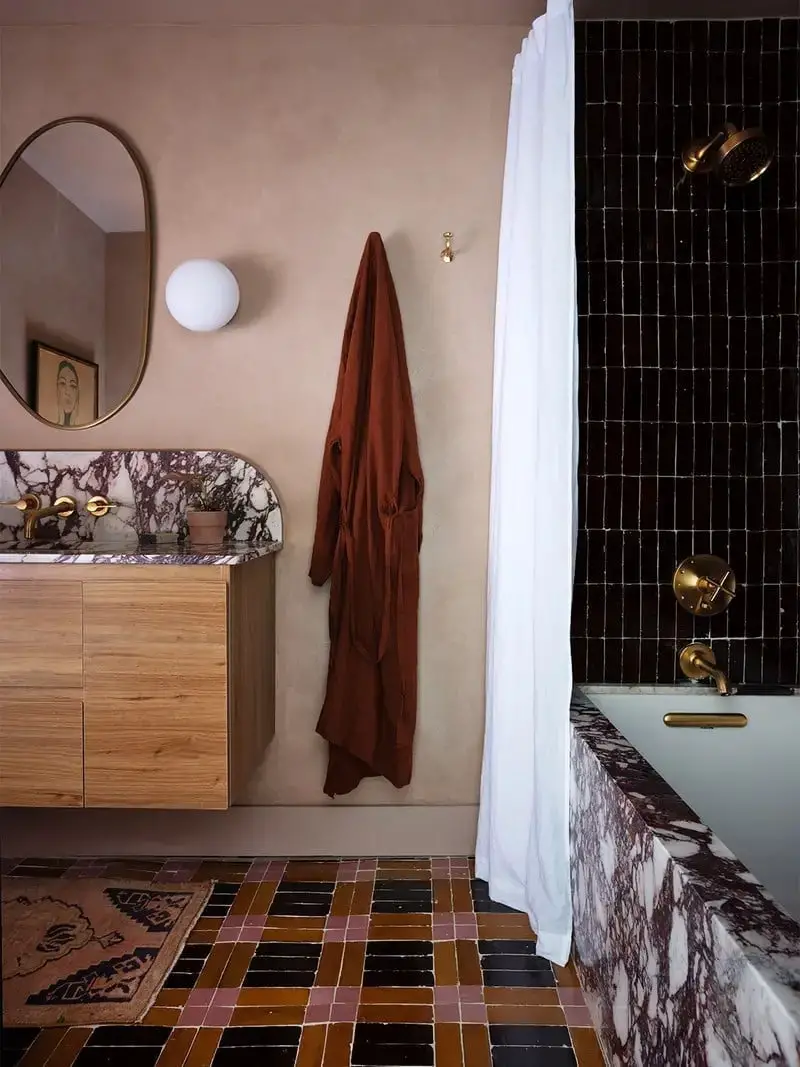
Brown and black subway tile wrapping a compact corner shower creates a moody backdrop that pulls the eye. With a white marble vanity and wood tones nearby, the dark tile stays grounded without feeling heavy. Brass accents on the wall sconce and faucet add warmth without fighting the palette. A pink robe draped by the tub softens the look further, proving that one lighter accent keeps a dark shower from feeling closed in.
Sleek vertical stacked gray and silver shower tiles
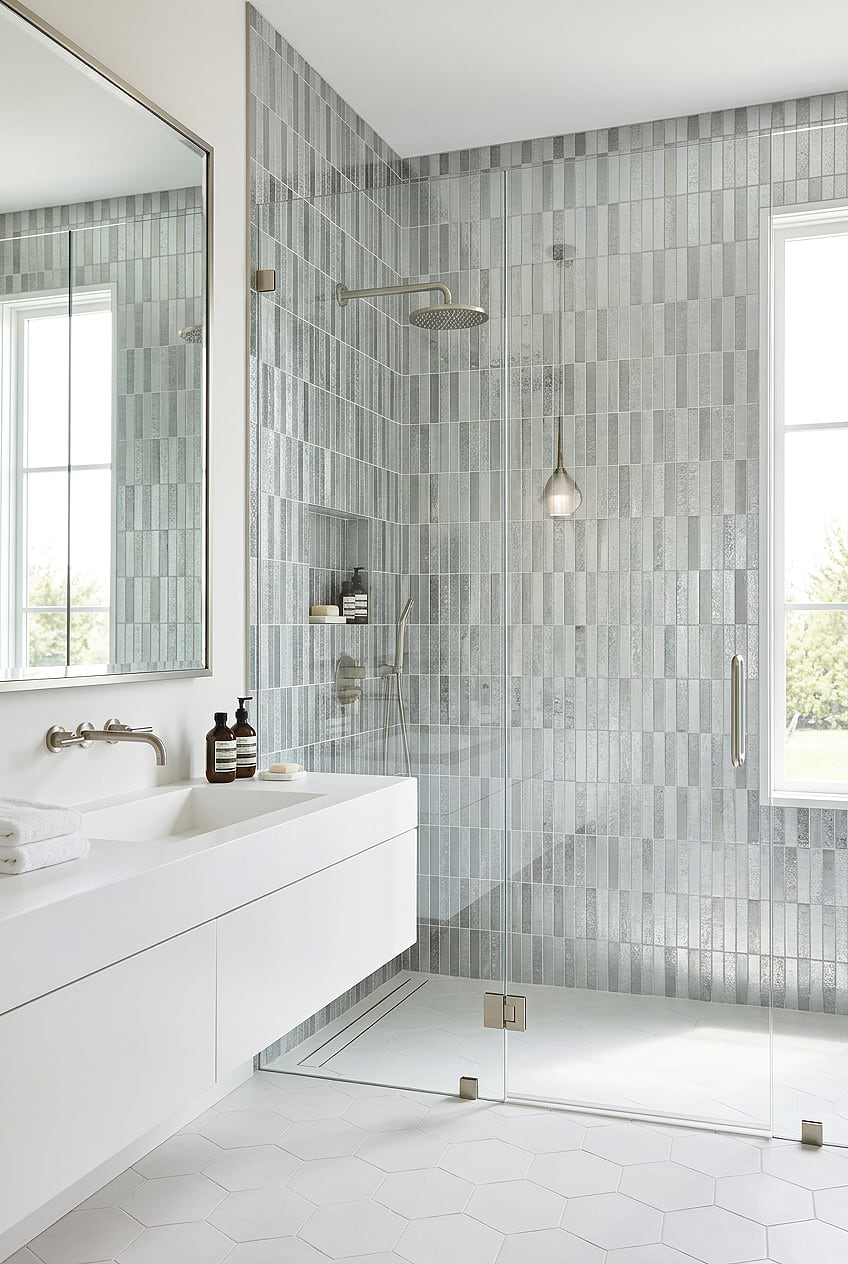
A practical rule for tile layout is that vertical stacking makes a space feel taller, especially in a walk-in shower with a corner placement. The gray and silver tiles here are set in clean vertical lines, which draws the eye up and gives the roomy bathroom a taller silhouette. Chrome fixtures and a glass enclosure keep the look lean, while a single pendant light above the vanity adds soft contrast. For renters, peel-and-stick vertical stack tiles offer a similar elongating effect without permanent changes to the wall.
Dramatic dark stone tile walls for a bold statement
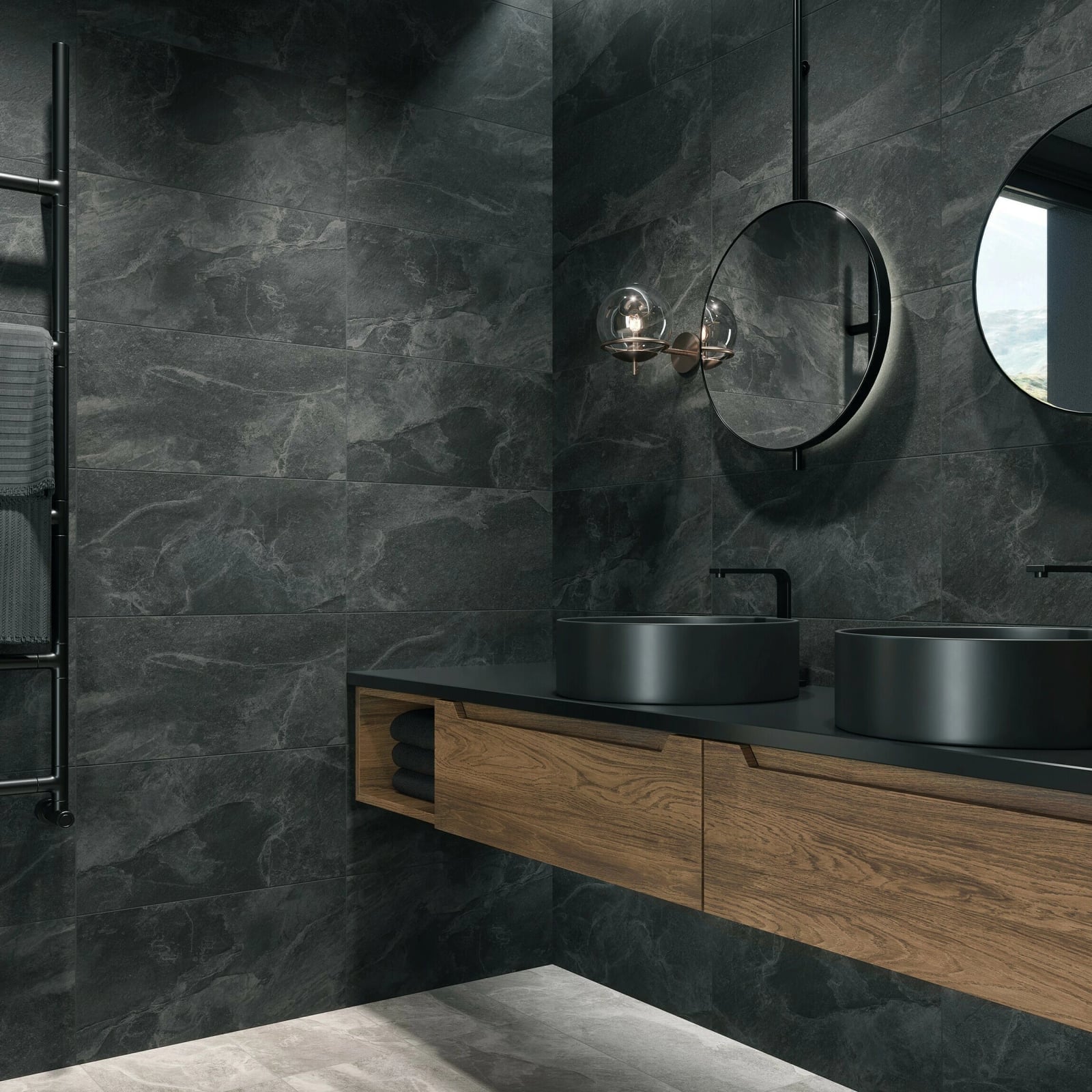
Where large-format stone-look tiles aim for subtle texture, this dark stone tile wall goes for full drama. The deep gray surface, paired with a black metal towel warmer and double vessel sinks on a floating vanity, gives the bathroom a modern, almost spa-like edge. Wood tones on the vanity shelf and glass globe sconces break the darkness without softening it. The key difference between stone-look and real stone tile is weight: stone tile is heavier and often requires a reinforced substrate, so check your wall structure before installation.
Neutral palette with diamond patterned tile
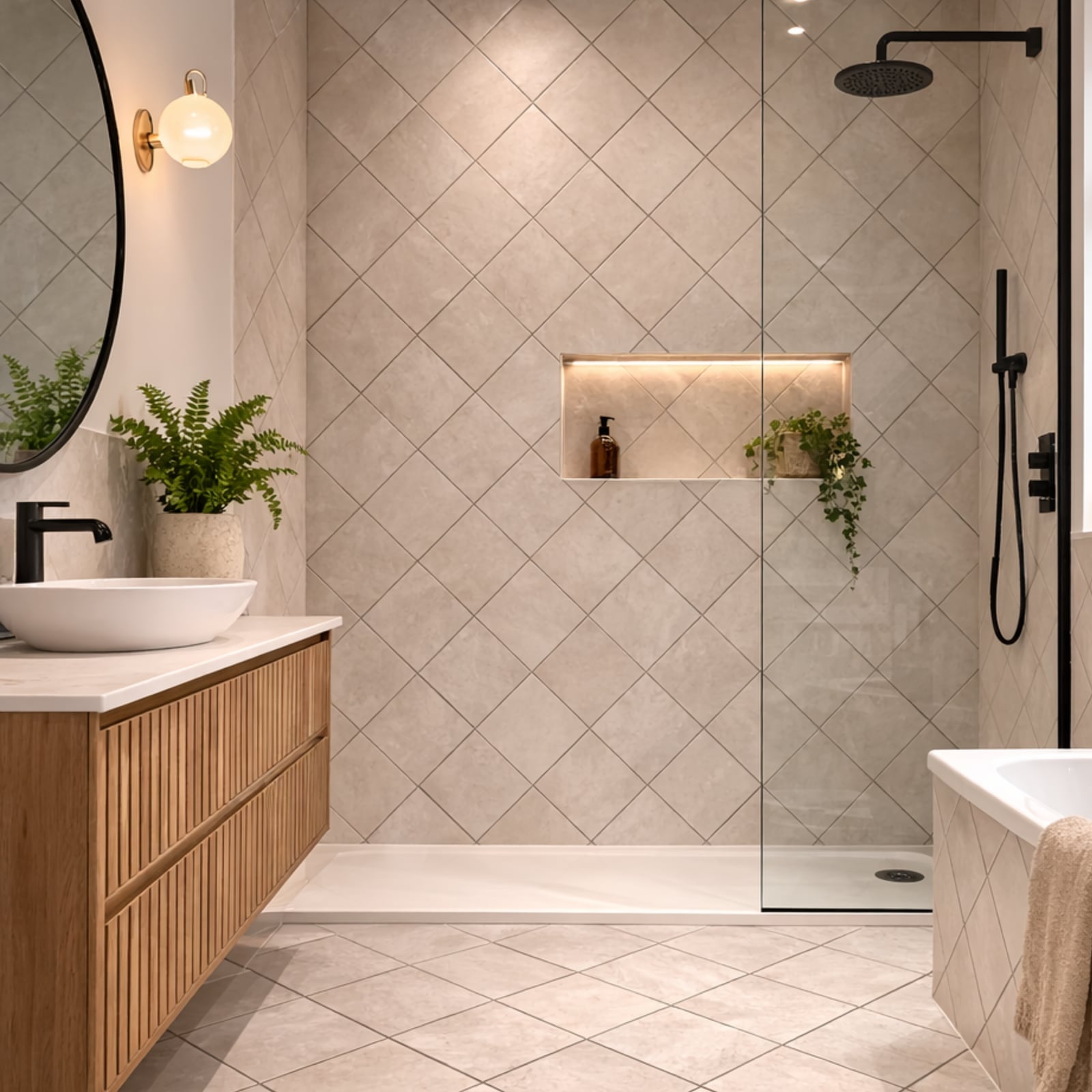
A diamond pattern tile in beige and white runs across the corner shower wall, adding geometry without introducing a strong color. The rest of the room stays neutral with wood tones on the vanity and a white marble counter, so the pattern stands out as the focal point. Recessed lighting keeps the ceiling clean, while a wall sconce near the bathtub adds a soft glow. The effect is layered but calm, making this a good option for anyone who wants pattern without a bold palette shift.
When you want a striking accent wall without overwhelming gray
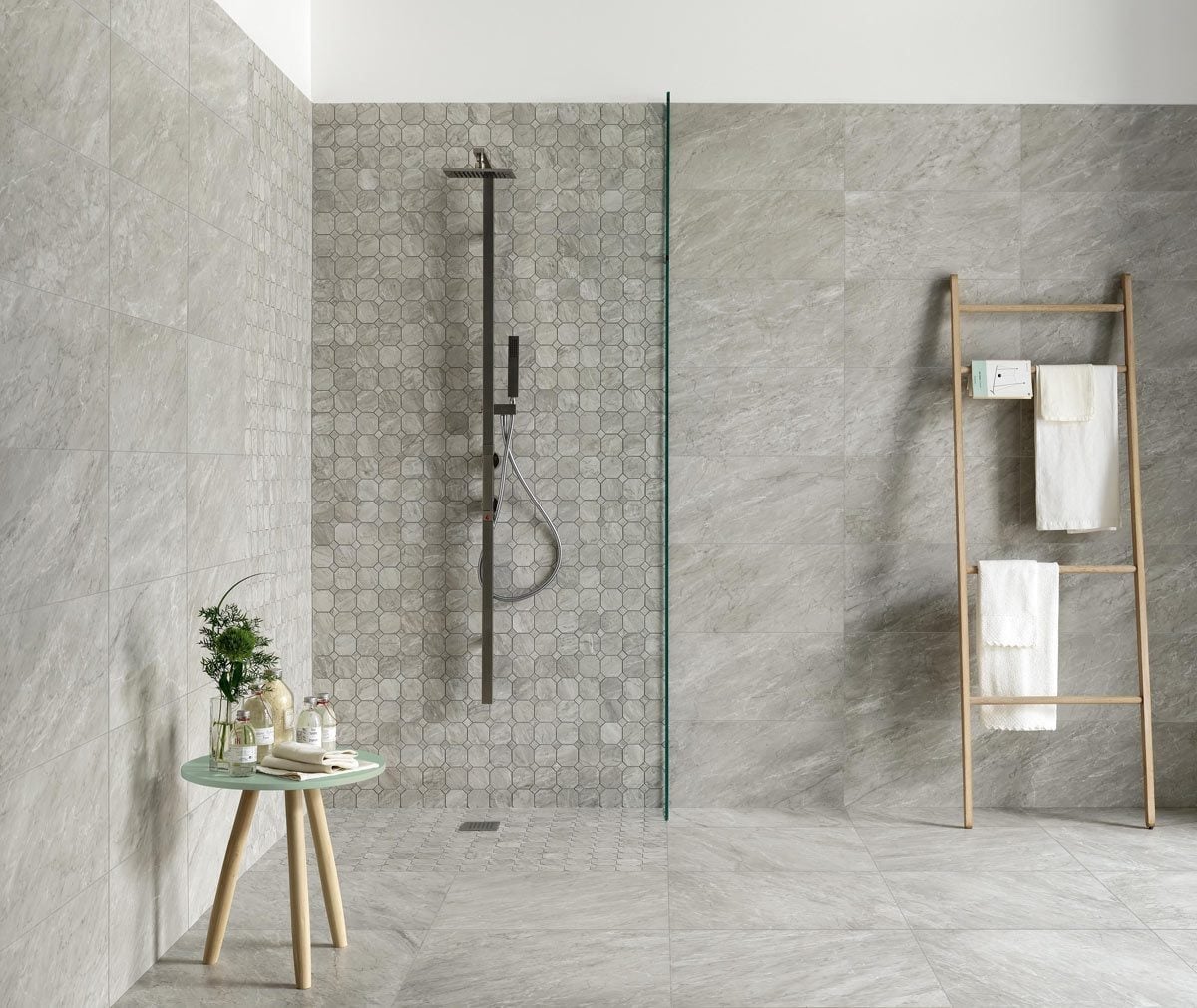
A geometric mosaic wall in gray and white gives this roomy corner shower a clear focal point. The surrounding tile stays a solid light gray, so the pattern provides an accent without a full commitment. A wooden ladder and small side table introduce natural texture, while the glass enclosure keeps the space open. The trick is scale: a busy mosaic works best on one wall, leaving the others plain to avoid visual noise. This approach suits anyone who wants a statement tile without the whole room feeling busy.
Travertine tiles for a natural, modern bathroom
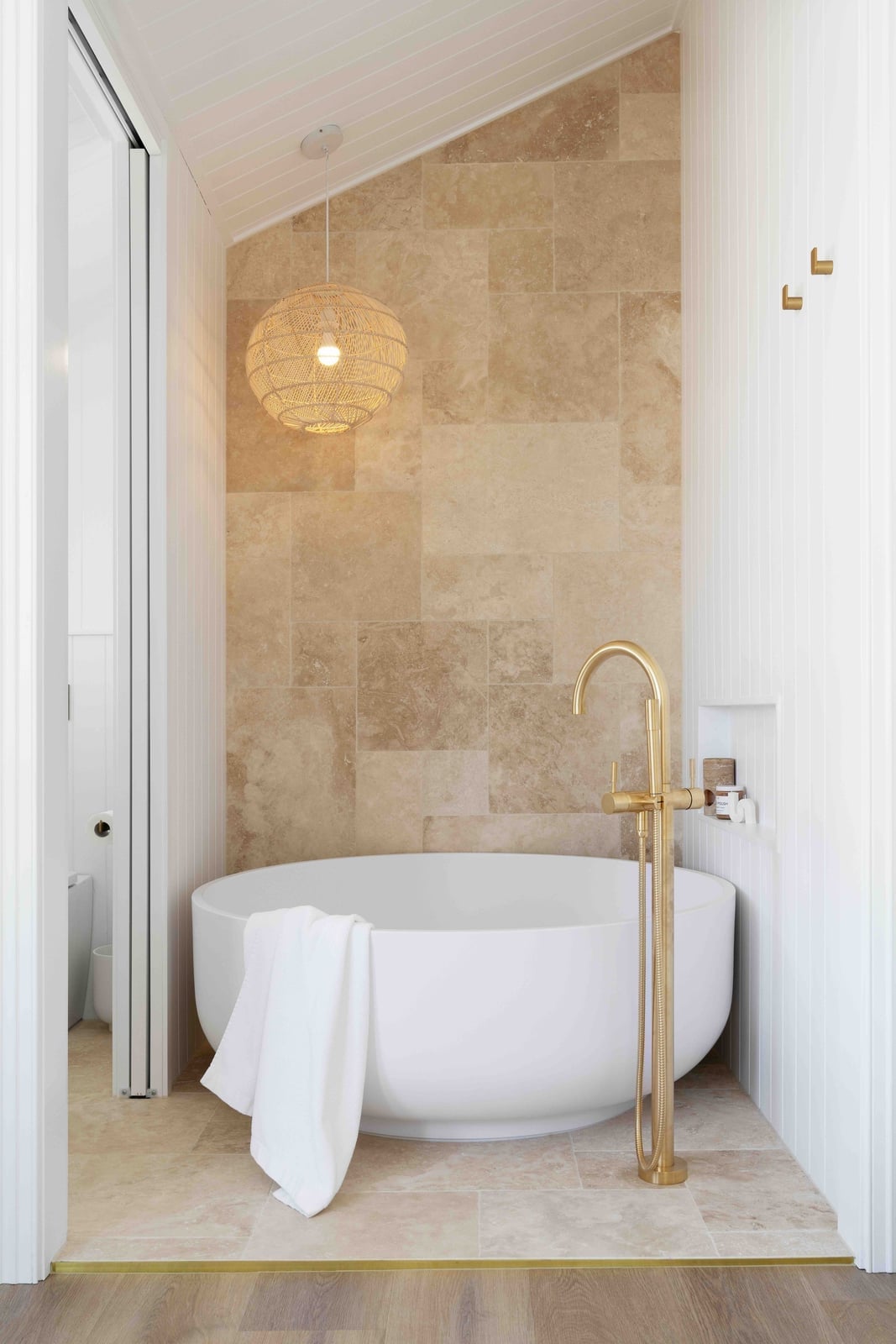
A natural stone like travertine brings texture and warmth that standard ceramic tile cannot fake. This compact bathroom centers a freestanding bathtub against a travertine wall, with a floor-mounted gold faucet as the focal point. The beige and white palette keeps the room airy, while the brass and rattan pendant light add an organic contrast. Travertine is porous, so it needs sealing before installation and periodic resealing after. For a renter-safe swap, use a large-format ceramic tile with a travertine pattern and opt for a peel-and-stick backsplash behind the tub area.
Horizontal wood-look shower tiles for an earthy feel
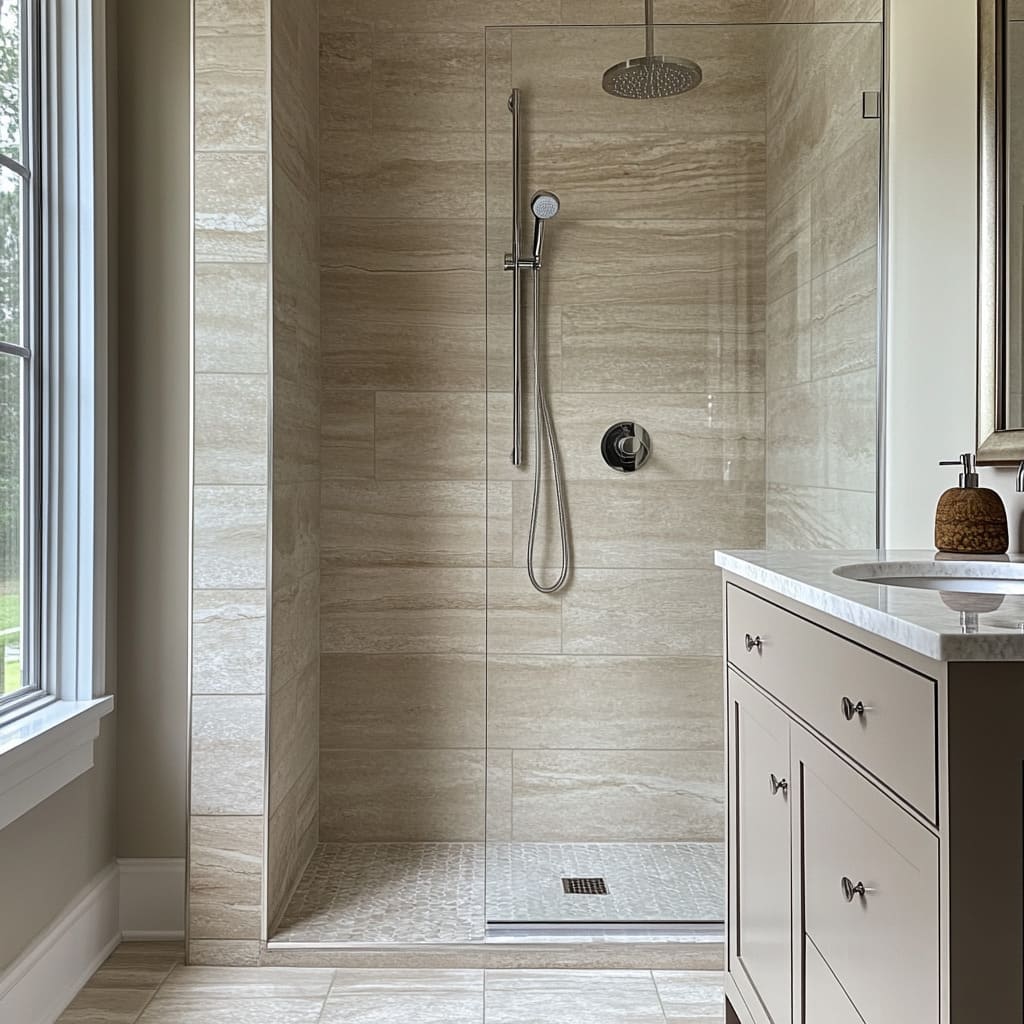
Horizontal wood-look tiles run along the shower wall in a warm beige and taupe palette, creating the feel of a spa without actual wood maintenance. The corner walk-in shower sits next to a vanity, with natural light from a window softening the look. Cream walls and marble surfaces balance the earthy tile, while metal fixtures keep it modern. The horizontal stacking makes a narrow shower feel wider, which is useful for small bathrooms.
Large format gray stone-look tiles in a spacious shower
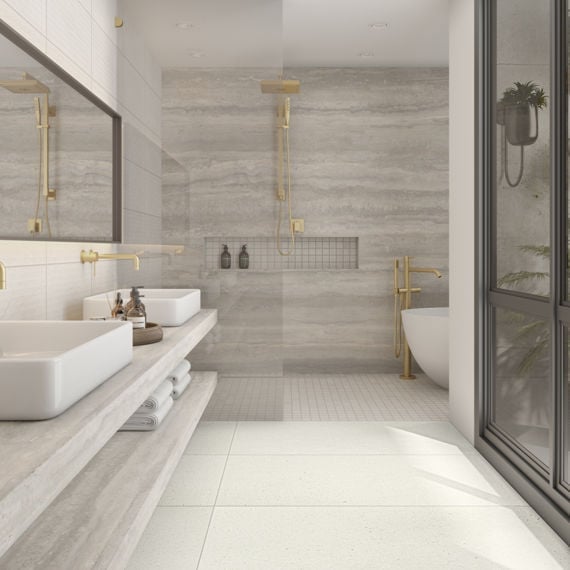
Large format tiles have fewer grout lines, which means less scrubbing. This roomy bathroom uses large gray stone-look slabs from floor to ceiling in the shower. The palette uses gray, white, and gold, with a freestanding tub and double vanity completing the layout. Recessed ceiling lights keep the finish flat and even. The large scale of the tile makes the space feel continuous, so this look suits an open plan shower rather than a tight alcove.
Geometric hexagonal floor tiles with white subway shower tile
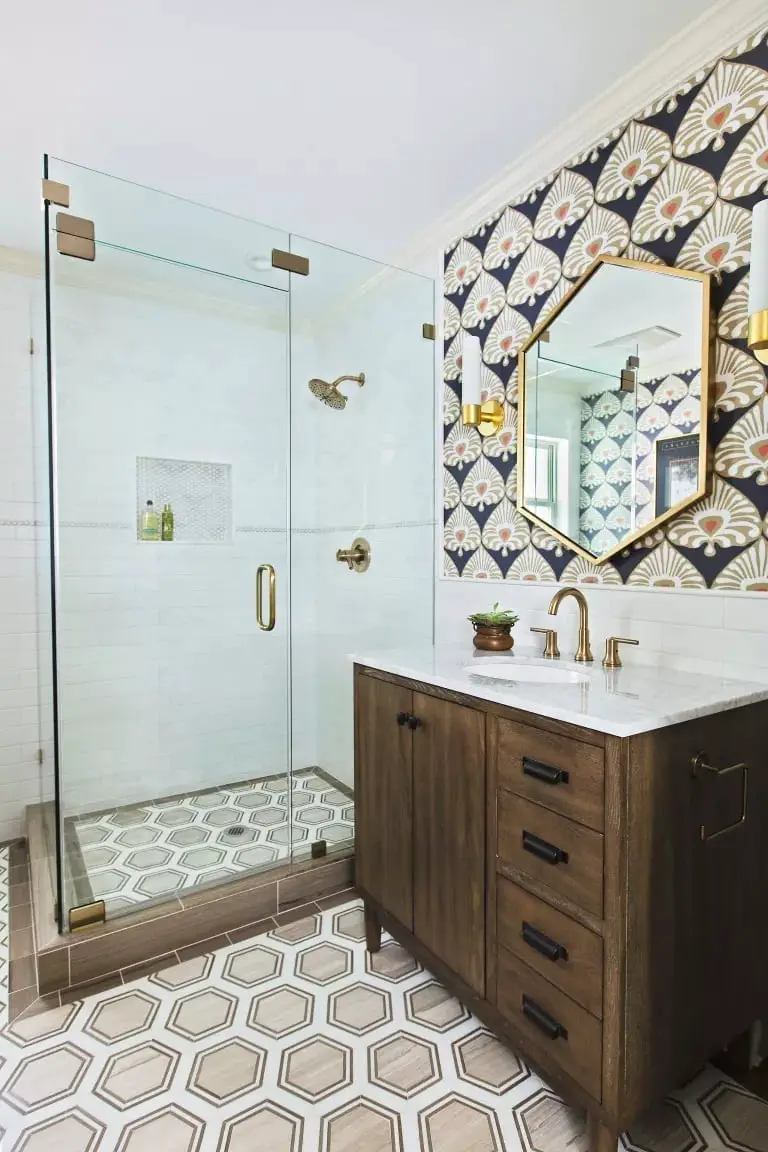
White subway tile on the walls is classic, but pairing it with a geometric hexagonal floor tile in navy and beige shifts the look toward eclectic. This compact corner shower uses the floor pattern to add visual interest without overwhelming the space. A wood vanity and hexagonal mirror continue the mix of materials.
Wall sconces and natural light keep the navy from darkening the room. The floor tile is the statement. Keep the wall tile simple and the vanity light in tone. A third pattern on the walls or countertop would compete with the floor.
Textured fluted shower wall tiles for modern elegance
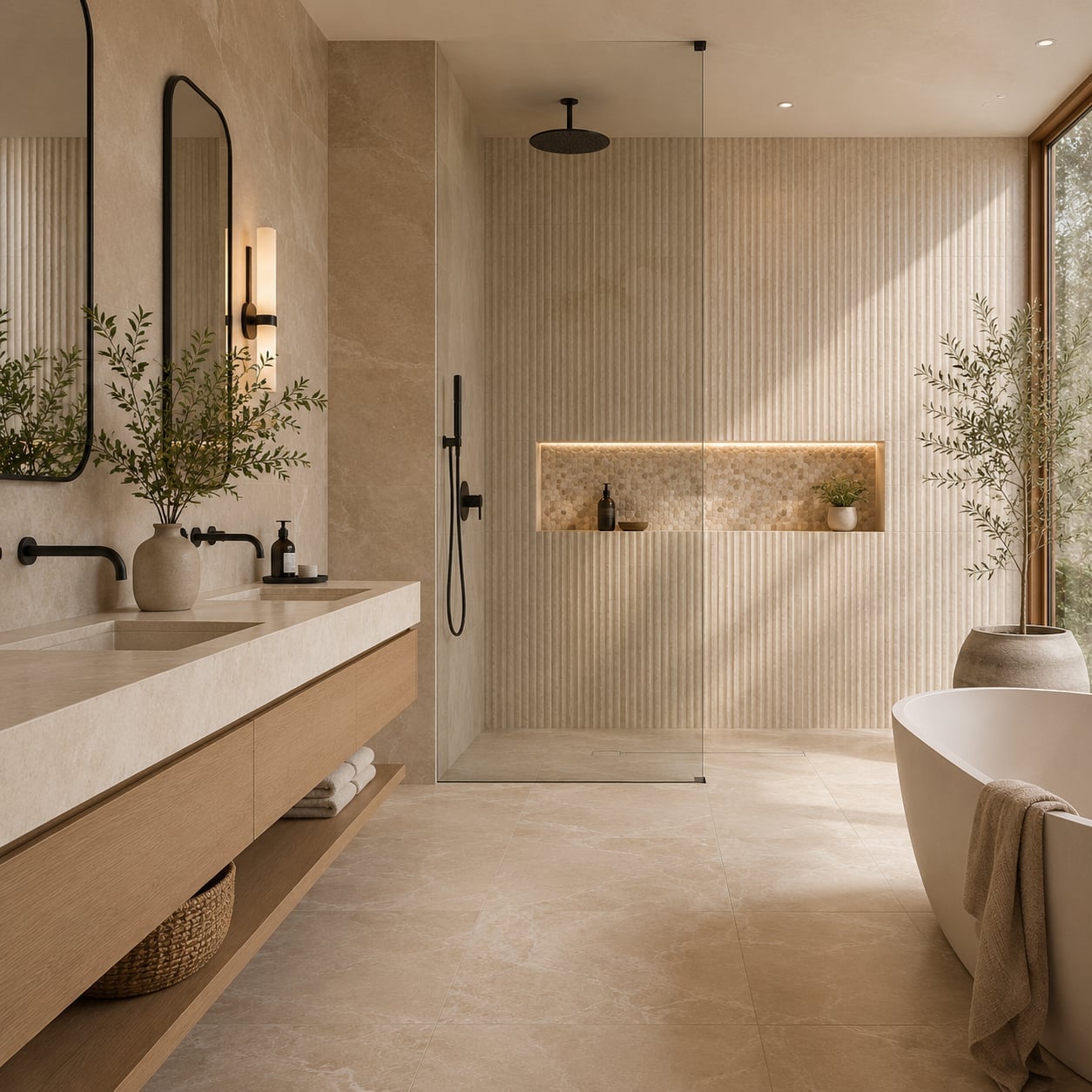
Fluted shower wall tiles use vertical grooves to catch light and shadow, creating a surface that feels both sculptural and calm. This roomy bathroom runs fluted tile from floor to ceiling across the shower and tub area. The beige and cream palette stays soft, while recessed ceiling lights and a wall sconce highlight the texture. A niche with its own lighting breaks the tile run without disrupting the rhythm. The fluted profile works best in a room with good daylight or layered fixtures.
Final Thoughts
Choosing the right tile for your shower comes down to how you want the space to feel. Large formats offer a smooth, clean look, while patterns and mosaics add personality without clutter. Vertical stacking can make a small shower feel taller, and darker tones bring moody drama. Maintenance matters too: textured or natural stone tiles may need more sealing than smooth porcelain. Always check your specific tile’s care instructions before installation. The best shower tile is one that balances visual appeal with real-world upkeep, so you can enjoy the look without constant worry.