A front porch sets the tone for your home before anyone steps inside. Whether you lean toward farmhouse charm or modern simplicity, the right mix of seating, greenery, and door color can make the space feel both welcoming and personal. This roundup of 30 cute front porch ideas for 2027 covers a range of styles, from rustic swings and boho chairs to bold doors and seasonal accents.
You’ll find practical inspiration for arranging furniture, choosing planters, and adding those finishing touches that turn a plain entry into a spot you actually want to linger on. No major renovation required, just thoughtful choices that suit your porch’s size and your own taste.
Farmhouse charm: a white swing and rustic accents
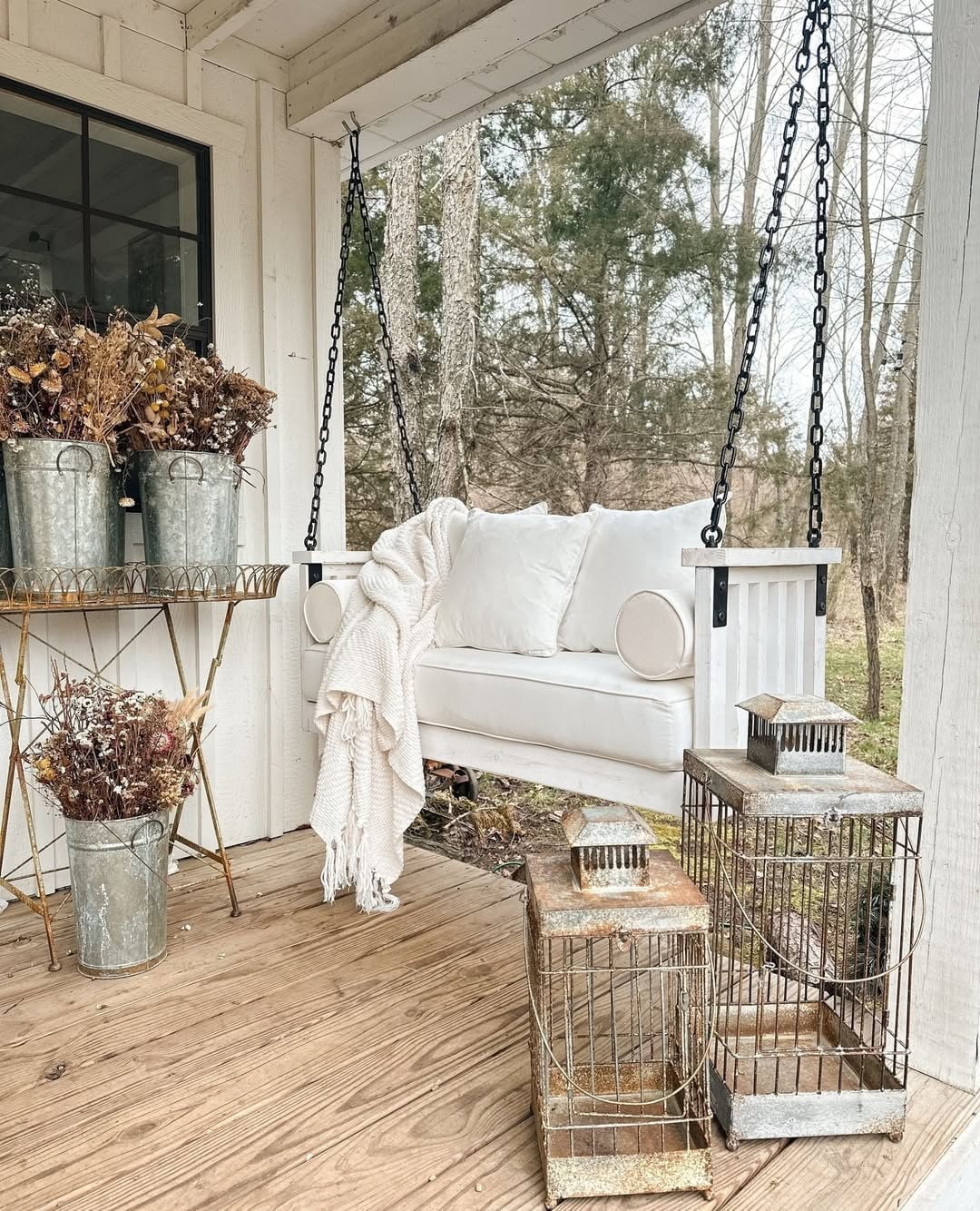
A white swing with cushions sits centered on a compact porch, and everything else arranges around it. Galvanized buckets and a metal plant stand bring in the weathered metal look that defines farmhouse style. Metal lanterns and a throw blanket add softness without crowding the space. The layout treats the swing as the main event, so the decor stays simple and lets the swing do the work. That centered placement gives the eye a single place to land, which keeps a small porch from feeling cluttered.
Boho vibes: macrame chairs and contrasting accents
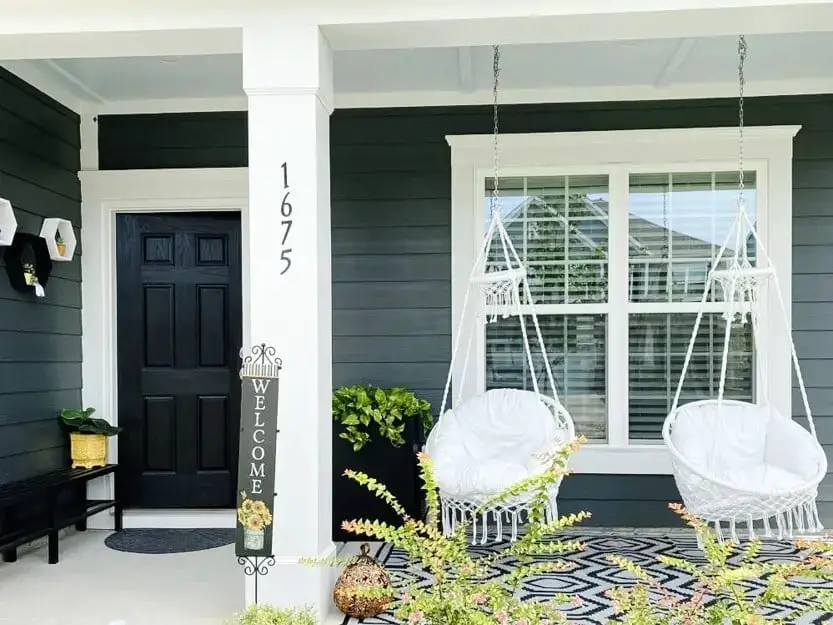
This porch palette runs on contrast: dark gray, white, black, and green. Two macrame hanging chairs flank a window, their rope texture breaking up the dark wall behind them. A black front door and a black bench echo the dark notes, while the green of nearby plants adds life. White acts as the light anchor and black as the grounding edge. What breaks the scheme is the rope itself. Its natural tan weaves through the macrame and adds a warmth that the dark colors alone would miss.
Traditional elegance: ornate railing and lush greenery
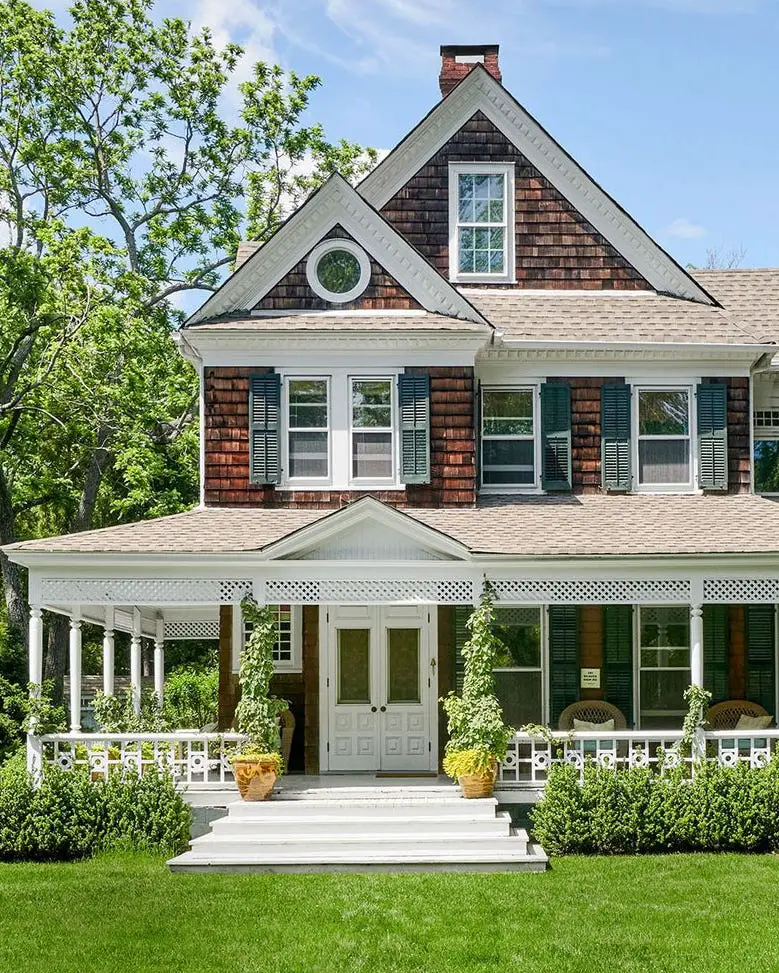
A spacious covered porch feels finished when you start with the railing. An ornate white porch railing sets the traditional tone, and the materials follow its lead. Wood double doors, glass panes, and stone flooring create a solid, classic base. Potted plants bring in greenery, and wicker chairs add woven texture that softens the hard surfaces.
The material mix works because the railing is the most detailed element, so the other pieces stay simple. The wicker chairs have a neutral finish, the stone floor is uniform, and the plants are green without variegation. That lets the railing stand out without competition. For traditional charm, let one architectural detail lead and keep everything else as a supporting player.
Adirondack chairs with plaid cushions and urn
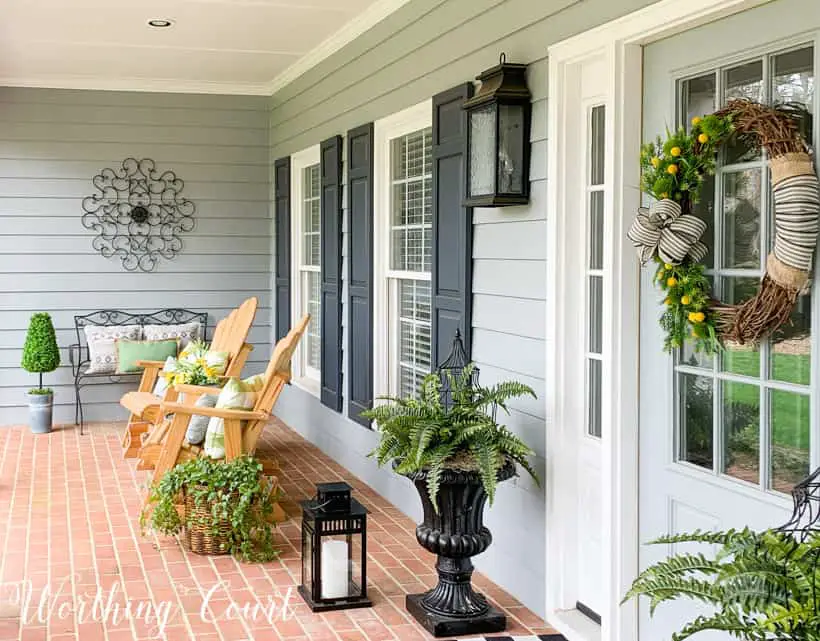
Two Adirondack chairs with plaid cushions sit on a roomy porch, facing outward toward the yard. A bench nearby and an urn planter filled with greenery balance the seating. The lighting comes from lanterns and an outdoor sconce, which cast a warm glow that makes the space feel lived in after dark. The layout creates a clear front row for conversation or just watching the street, with the bench acting as a secondary spot. That outward-facing arrangement works well for porches that double as a social hub rather than a quiet retreat.
Modern sharp: black rattan chairs and woven mirror
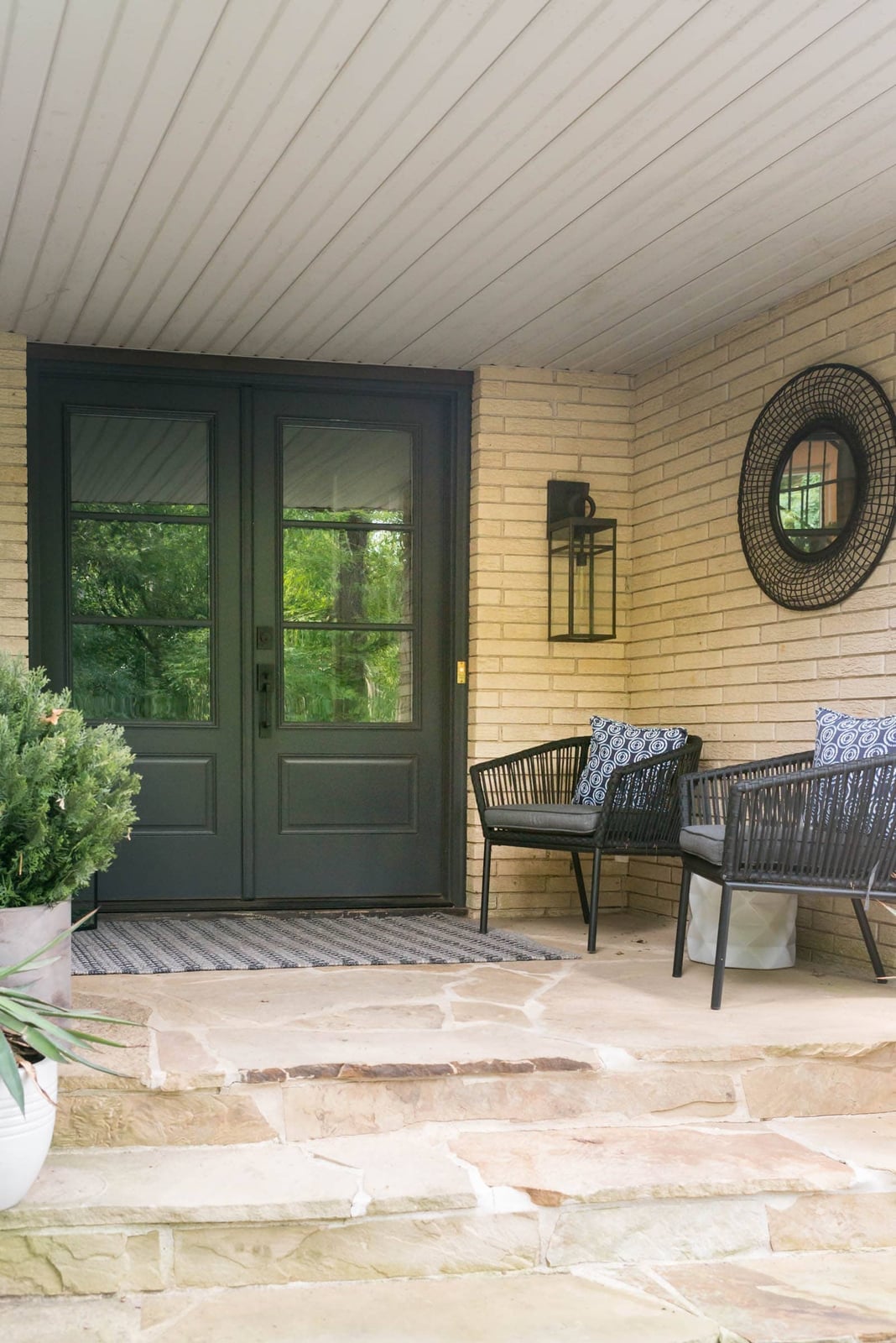
For a compact porch, use vertical space for storage and decor. Two black rattan chairs face the door, and a round woven mirror hangs on the brick wall above them. The mirror reflects light from a wall lantern, making the small space feel larger without adding furniture. The chairs sit low and simple, so the mirror becomes the visual anchor. A blue accent in the rug or planter breaks the tan-and-black palette and adds a playful touch. For a porch that doubles as an entry, the mirror also gives you a last check before you walk out the door.
Rustic farmhouse: rocking chairs and stone pathway
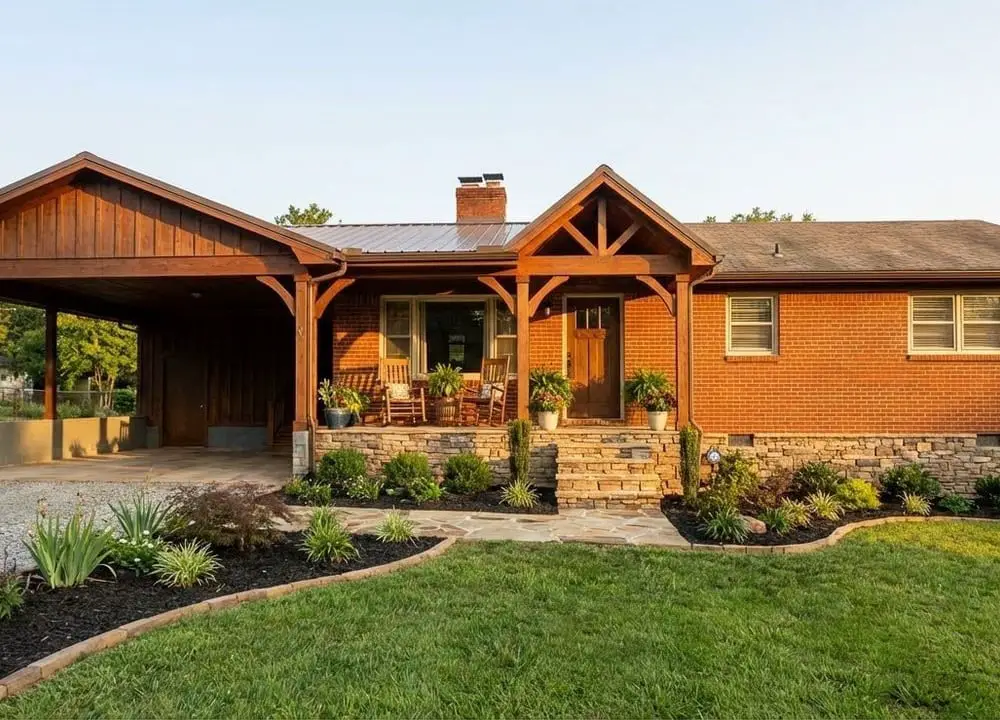
A wooden porch often looks a single note, but swapping a painted floor for a stone pathway changes the whole texture. The red brick of the house and the green potted plants keep the palette grounded, while the wood rocking chairs and the wooden door tie the warm tones together. A covered porch with this kind of seating area relies on the materials themselves to create the farmhouse look. The stone steps leading up to the porch add a natural transition from the yard, and the metal roof overhead keeps the seating area shaded. The key is letting the brick, wood, and stone do the talking instead of adding extra color or pattern.
Cozy gathering: wicker swing and fire pit
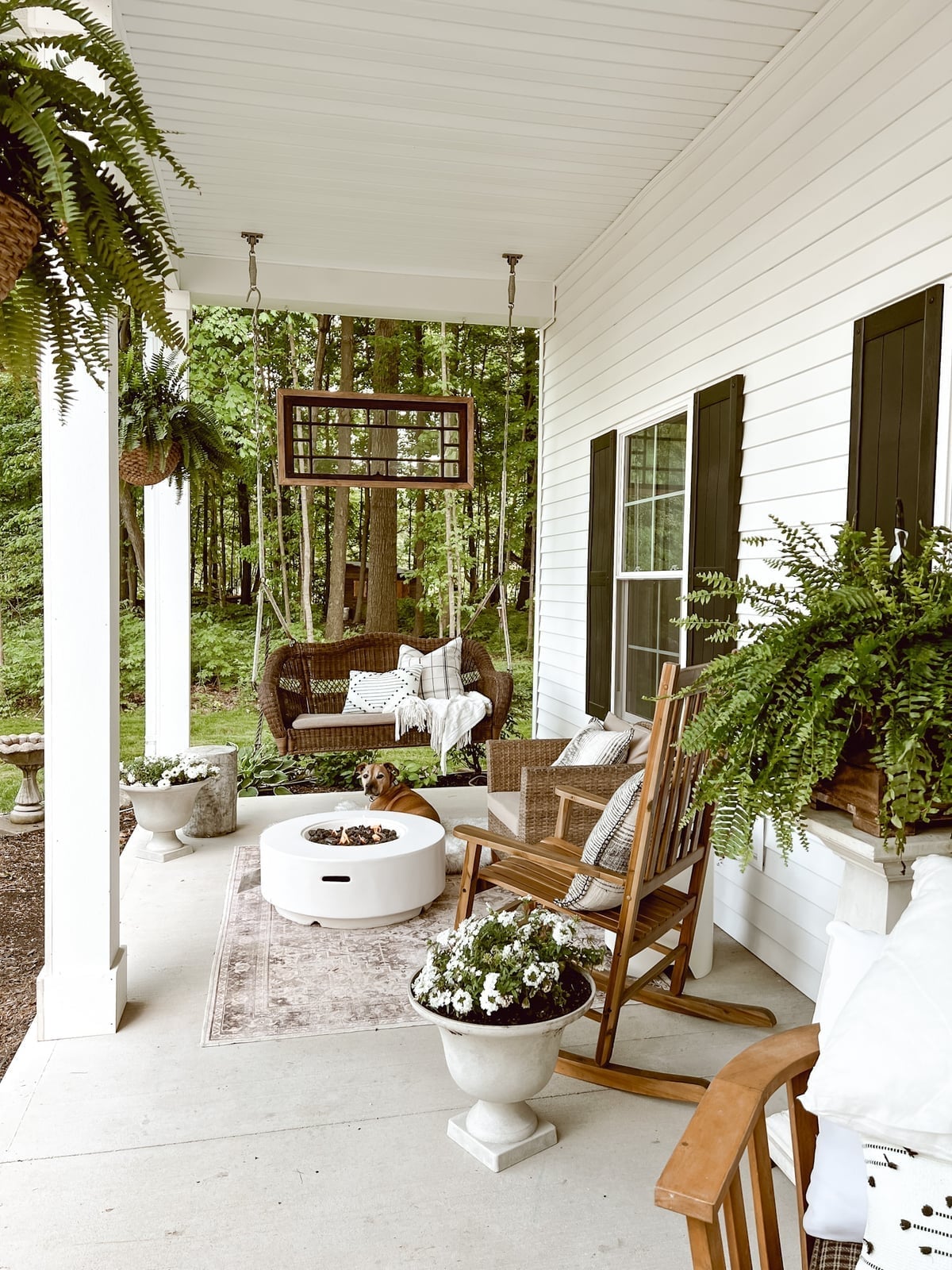
A wicker swing with a decorative window frame behind it sets the seating area apart from the rest of the porch. The fire pit in front of it pulls the rocking chair and the planters into a natural circle, so the layout feels like a conversation instead of a lineup. For renters, this arrangement works because nothing is attached to the house; the swing hangs from the ceiling, and the fire pit sits on the concrete floor. The white, brown, and beige palette keeps the whole scene calm even with multiple pieces in play.
Green wreaths on double doors with white bench
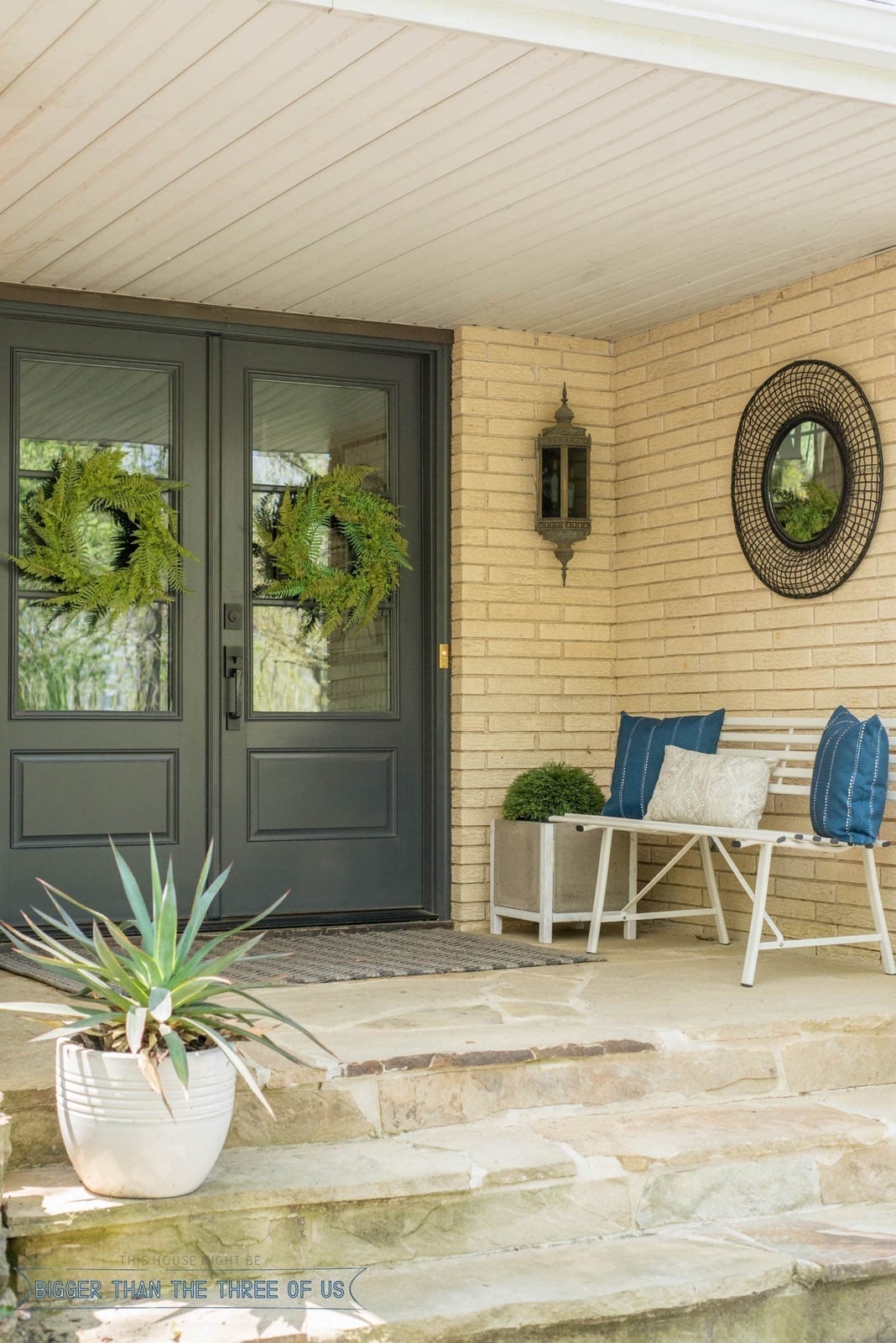
Two green wreaths on double doors are a straightforward way to signal a traditional entry. The white bench to the side and the brick wall behind it keep the composition balanced without crowding the compact porch. A lantern sconce on the wall adds a warm light source, and the stone floor ties the gray and beige accents together. The mirror on the wall reflects some of the greenery, which makes the small space feel wider. The blue planter and the gray bench break the green-and-white palette just enough to keep the look from feeling staged.
Classic charm: deep green door and brass accents
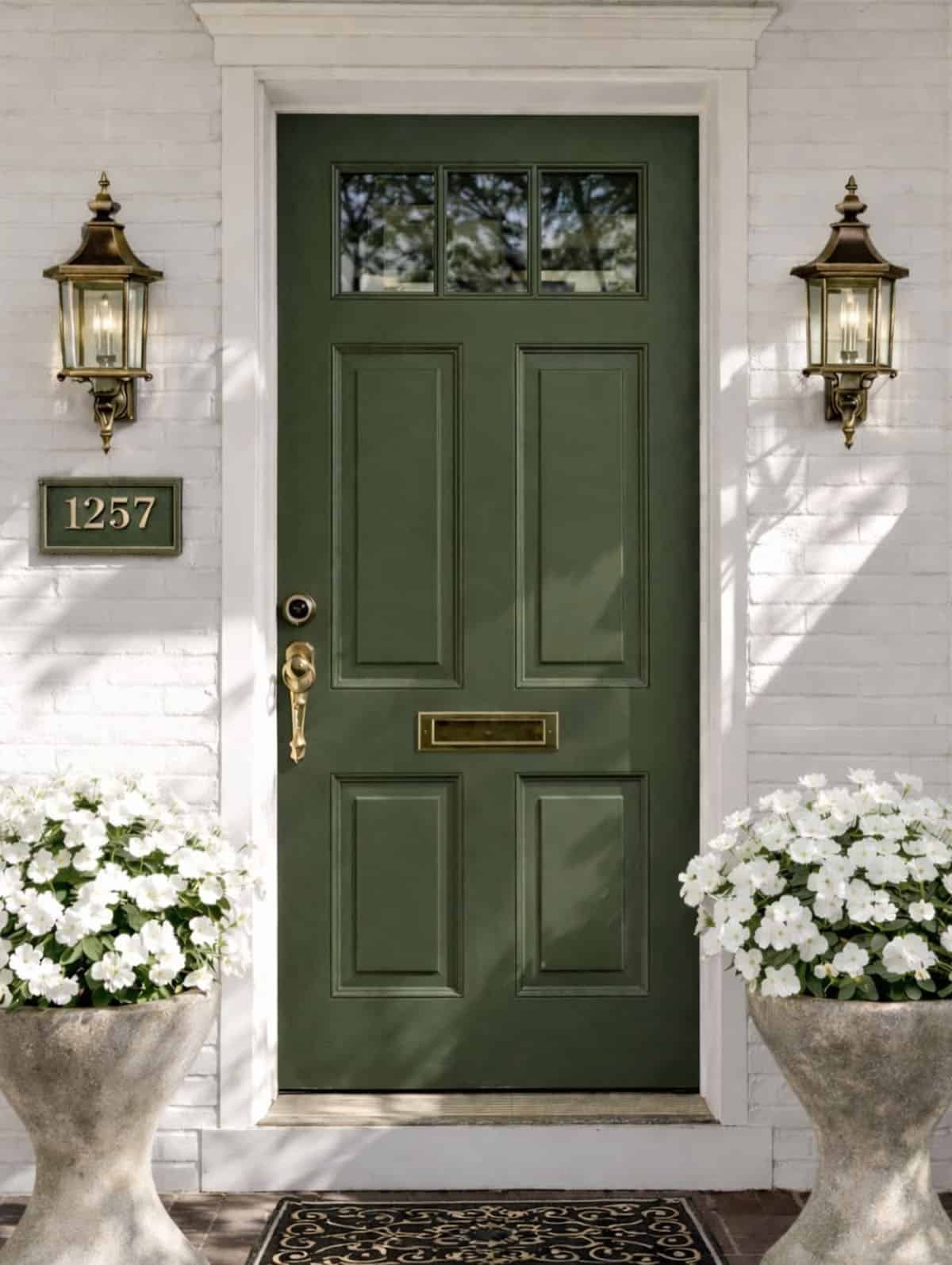
Can a deep green front door hold its own against brick and stone without fading into the background? Yes, when the brass hardware and the wall lanterns pick up the warm undertones in the green. The white trim and the gray stone planters with white flowers keep the palette crisp, and the doormat adds a soft texture at the threshold. The symmetrical layout works because the green door is the focal point; the two lanterns flank it evenly, and the planters on either side mirror the shape. The brass accents are what break the green-and-white scheme, adding a metallic note that keeps the eye moving. This kind of palette works well on a compact porch because the dark door anchors the space without overwhelming it.
Black door with basket wreath and striped chair
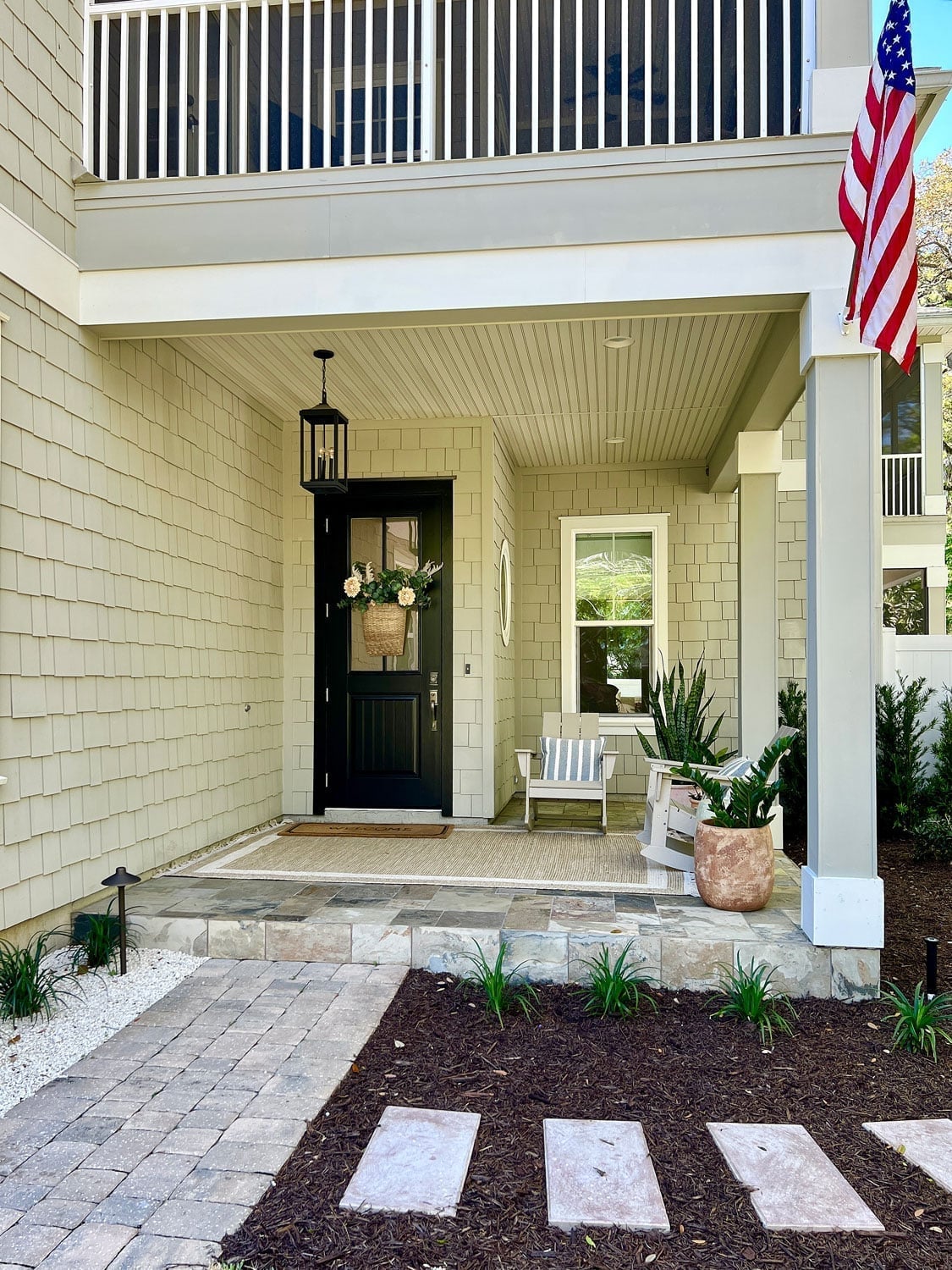
A black front door with a floral wreath in a basket sets a clear focal point on a compact porch. The shingle siding and the stone tile pathway lead the eye straight to the door, while the rocking chair and the striped chair create a small seating area off to the side. The hanging lantern and the recessed ceiling lights add layers of light without taking up floor space. The terracotta potted plants on the steps bridge the gap between the stone tile and the wood porch. The striped chair breaks the solid tones of the black door and the tan siding, adding a pattern that keeps the farmhouse look from feeling too uniform.
Cottage garden: light green railing and blue sofa
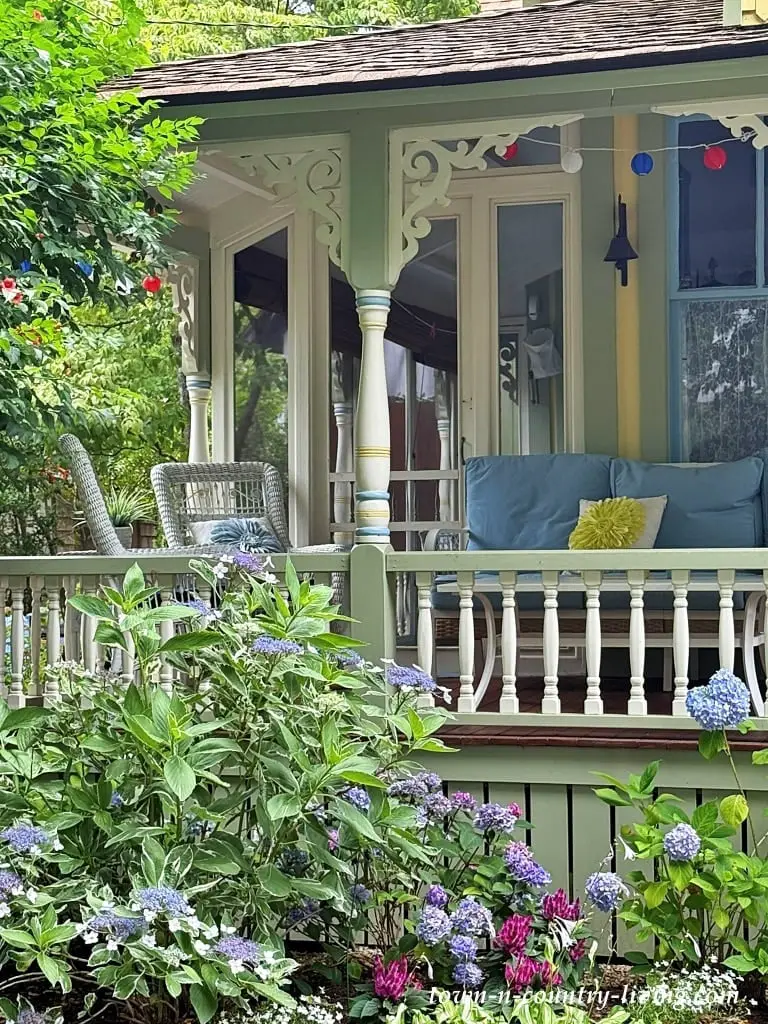
A porch that mixes pastels and white trim needs a visual anchor to keep it from feeling washed out. The blue sofa here does that work, grounding the light green railing and wicker chair so the palette feels intentional rather than accidental. String lights above add warmth when the sun drops, and the ornate white posts break up the color with a classic vertical line.
Dark wood double doors with white railings
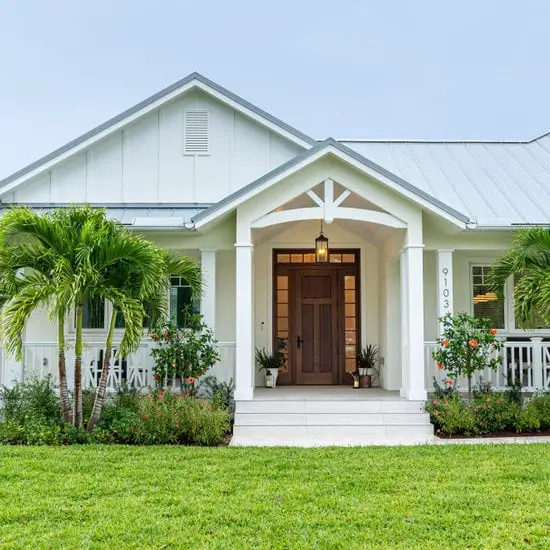
A pale farmhouse porch with white railings and gray siding could easily feel flat. The dark wood double doors prevent that by giving the facade a clear focal point, drawing the eye to the entrance instead of letting it wander across the whole front. A hanging porch light above the doors reinforces the entry as the destination.
Potted plants on either side of the doors soften the transition between the dark wood and the light surroundings. The greenery bridges the two palettes without competing with either one, which helps create contrast without a hard line in any entry.
Navy blue door with tile mat
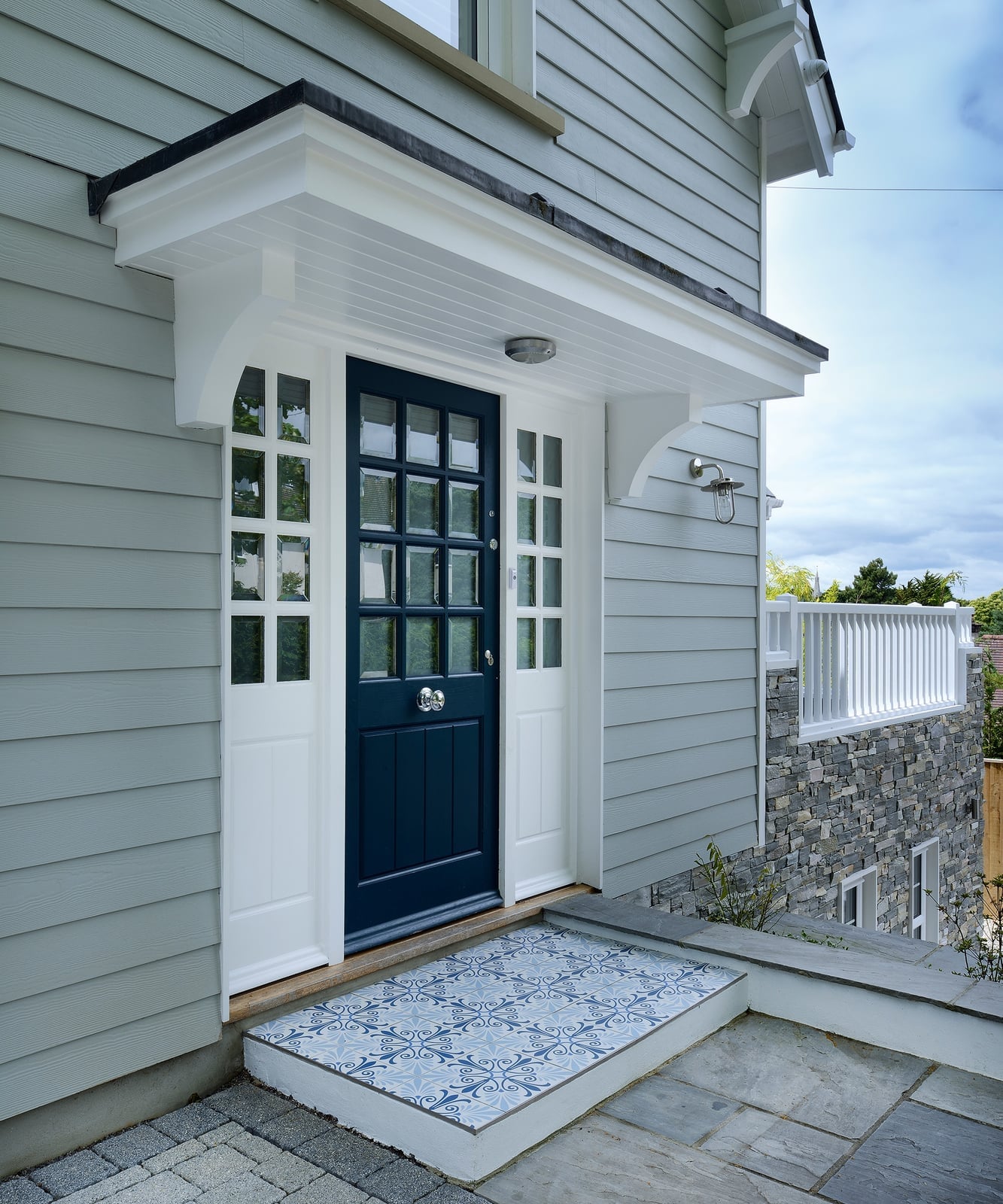
The navy blue door stands out against the gray wood siding, but the patterned tile mat is the detail that makes the entry memorable. It adds a layer of texture at the threshold that a solid mat cannot match, and the white sidelights frame the door so the tile looks like a deliberate choice, not an afterthought.
Double wooden door with rustic wreath
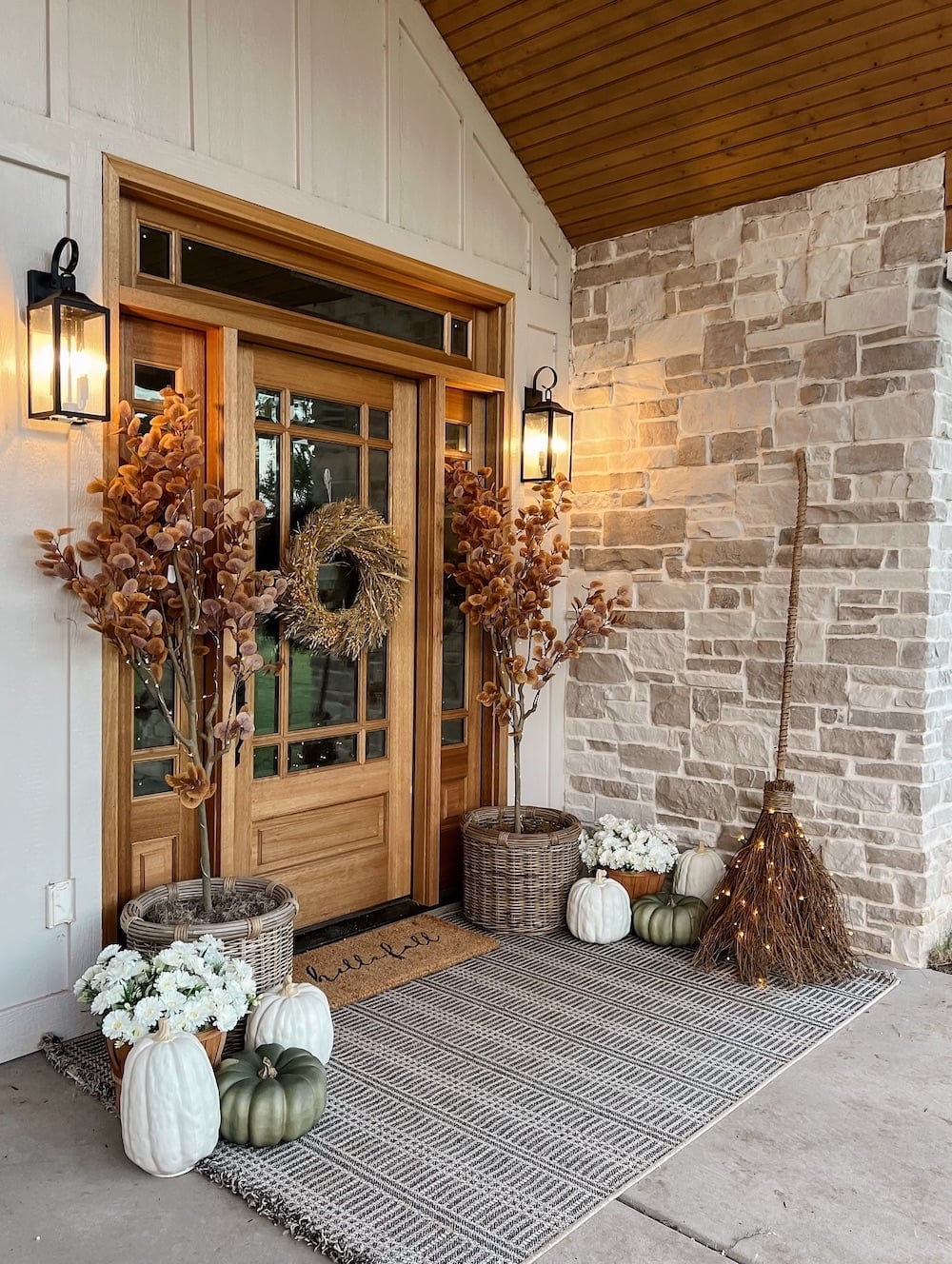
The double doors themselves are already a statement, so the decor around them needs to support without overwhelming. The rustic wreath centered on the door pairs with a decorative broom and lanterns to create a layered entry that stays uncluttered. String lights overhead tie the elements together, making the whole doorway feel like a single composed scene.
Peach door with glass panels and potted plant
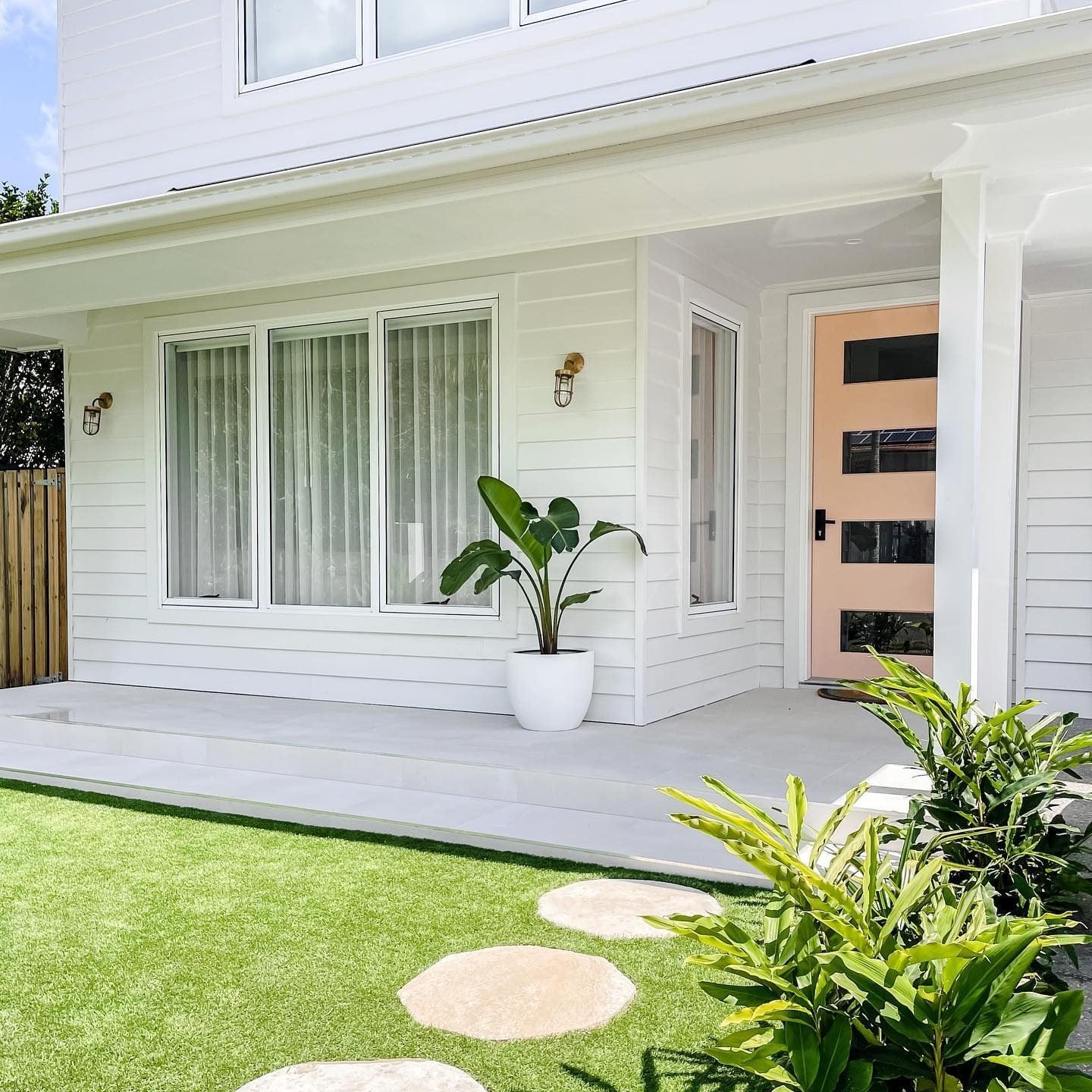
A peach front door on a modern porch is a risk that pays off when the surrounding palette stays simple. White wood siding and beige stepping stones let the door carry the color without competition, and the large potted plant on the walkway echoes the green in the glass panels. Wall sconces flanking the door add a soft glow that keeps the peach from looking too warm after dark.
The glass panels in the door are the practical detail here: they let light through the color, so the peach reads differently at different times of day. That shifts the palette without changing a thing.
Striped armchair with pouf and hanging planters
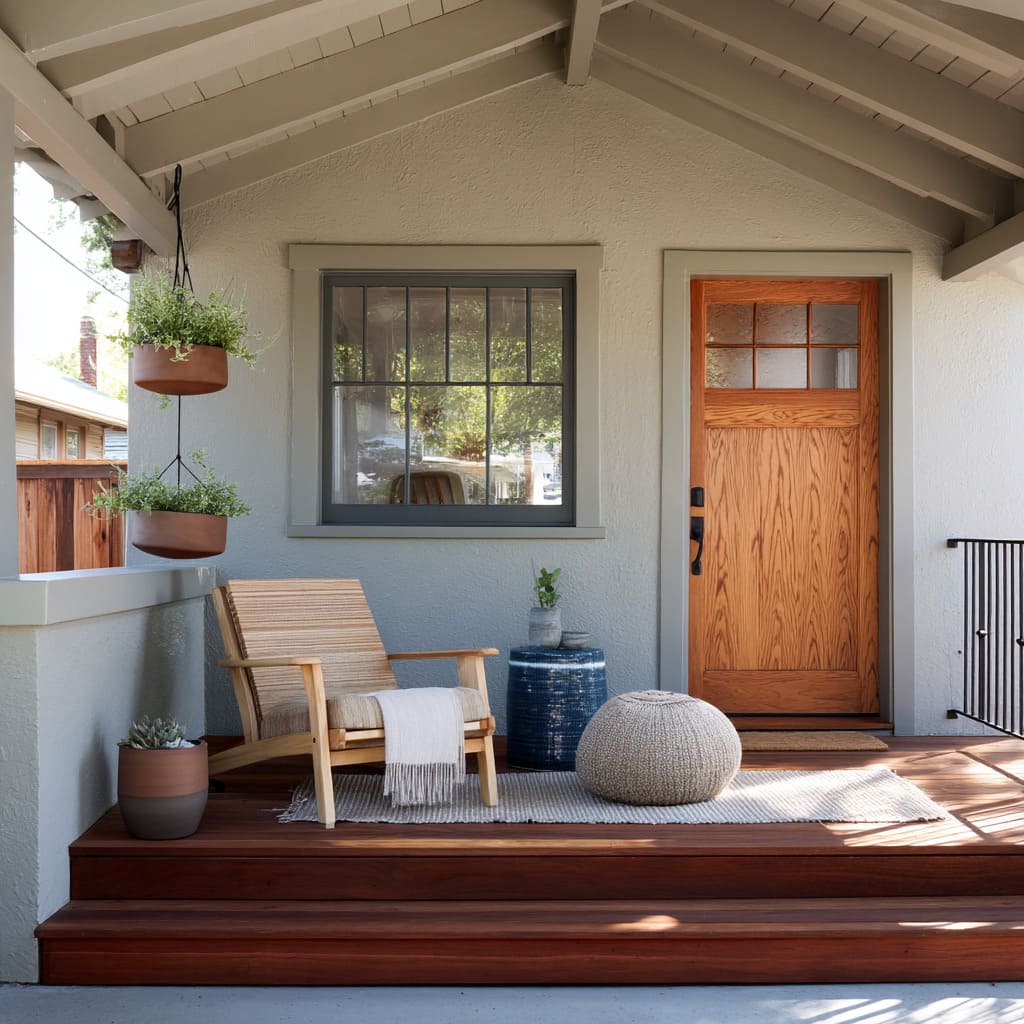
A striped armchair on a porch creates a seating spot that feels both casual and planned. The gray and white fabric pairs with a round pouf and a blue side table for a place to set down a drink or a book. Hanging planters and a potted succulent bring in green without crowding the wooden steps. The key is keeping the setup simple so the chair remains the focal point. This layout works on a compact porch where a full sofa would feel heavy. The rattan and wood tones keep the look warm without drifting into rustic.
Whimsical farmhouse: pig planters and floral accents
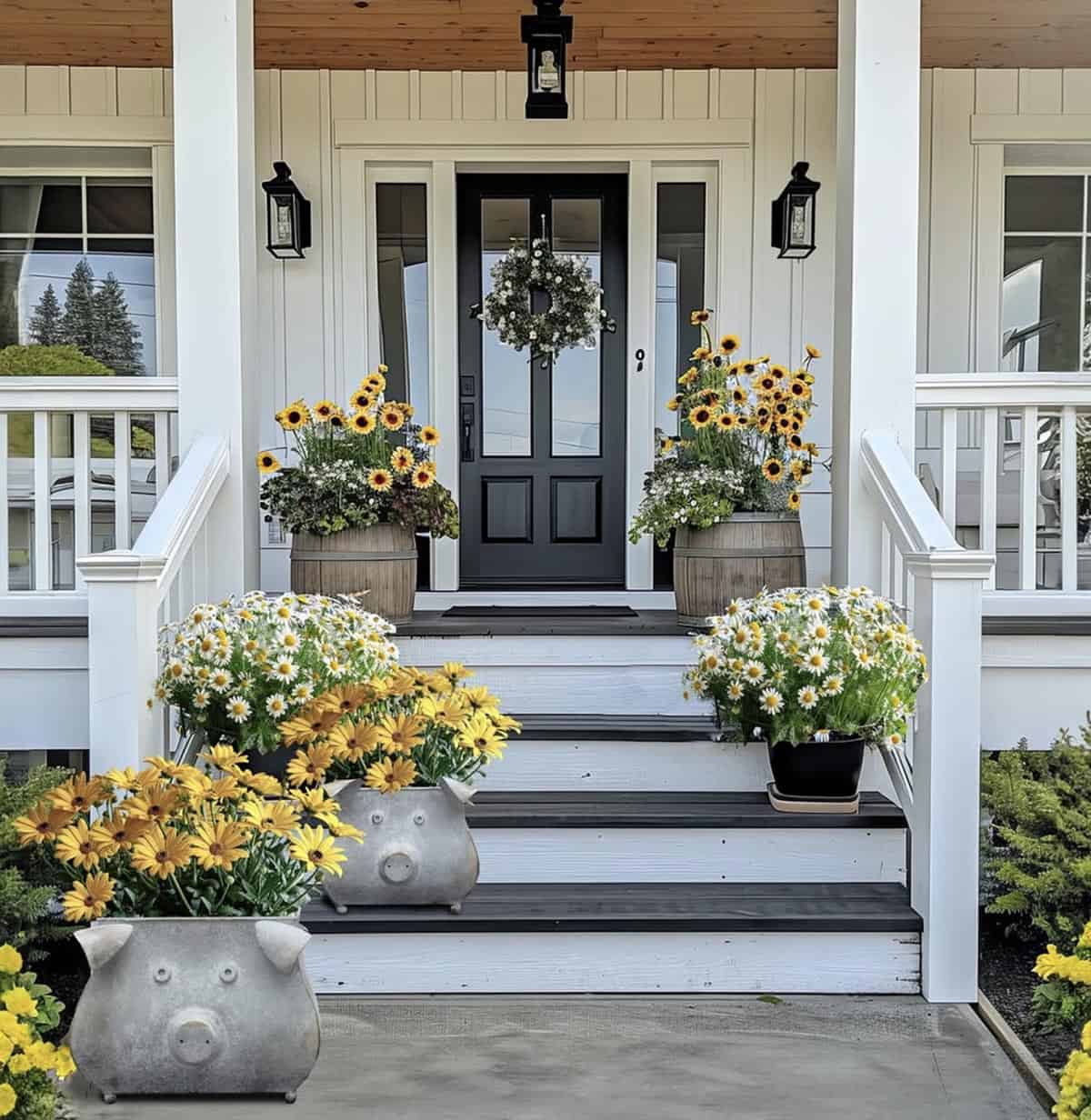
A practical rule for porch decor is to let one unexpected piece set the tone. Pig-shaped planters filled with yellow and green flowers do exactly that on this farmhouse entry. They sit on the steps alongside barrel planters, with a wreath on the door and lanterns for evening glow. The white and black palette keeps the whimsy from tipping into clutter. For renters who cannot change the door color or railing, swapping in playful containers is a low-commitment way to add personality. The arrangement draws the eye up the steps and toward the entrance.
Sleek modern: slatted bench and stone pathway
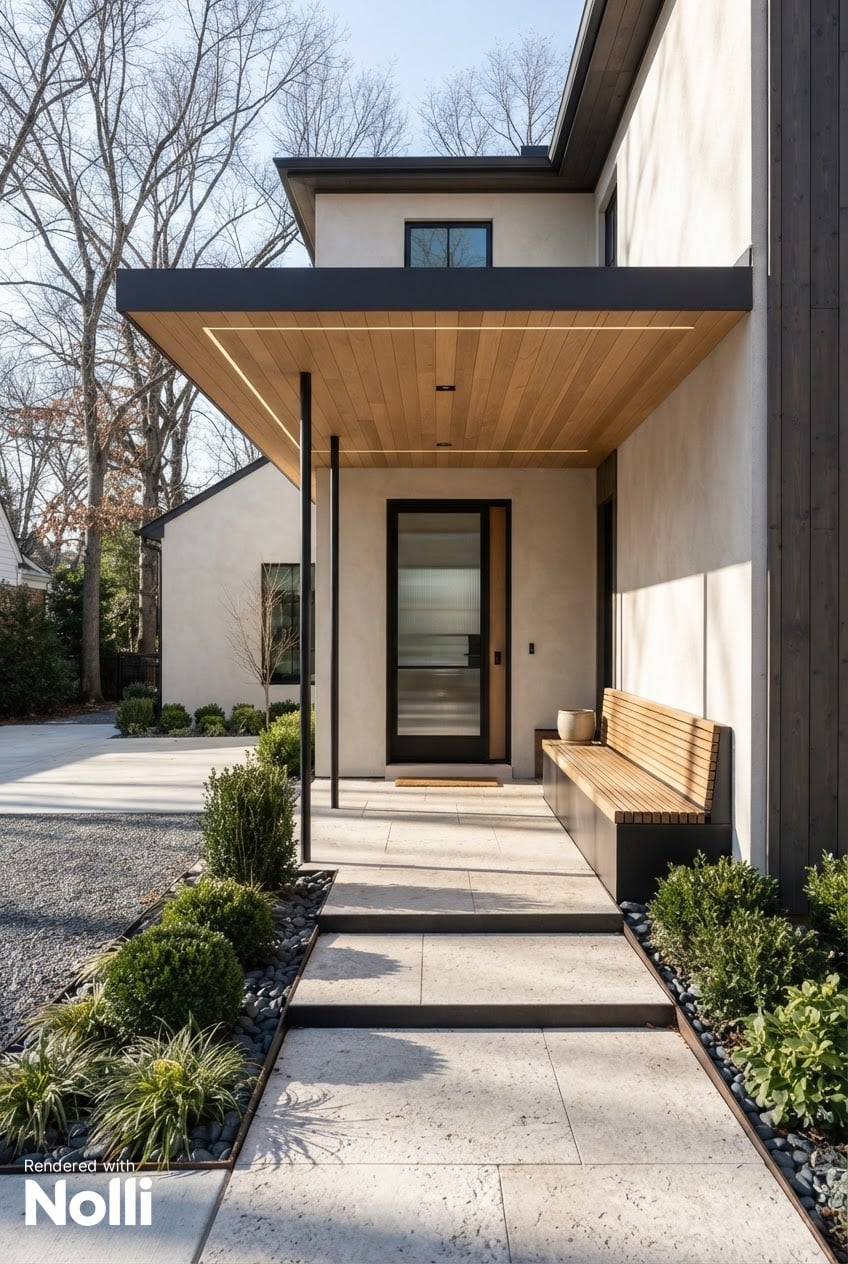
Where a traditional porch leans on ornate details, this modern version strips things back to clean lines and honest materials. A slatted wood bench sits beside a glass door, offering a perch without visual weight. The stone pathway leads straight to the entry, flanked by planters that soften the hardscape. Recessed ceiling lights and linear accent lighting keep the space usable after dark without adding fixtures that compete with the architecture. Wood tones and beige keep the palette warm, while black accents in the metal and door frame add contrast. The bench is the only furniture, which makes the open layout feel intentional rather than sparse.
Teal door with white picket fence and greenery
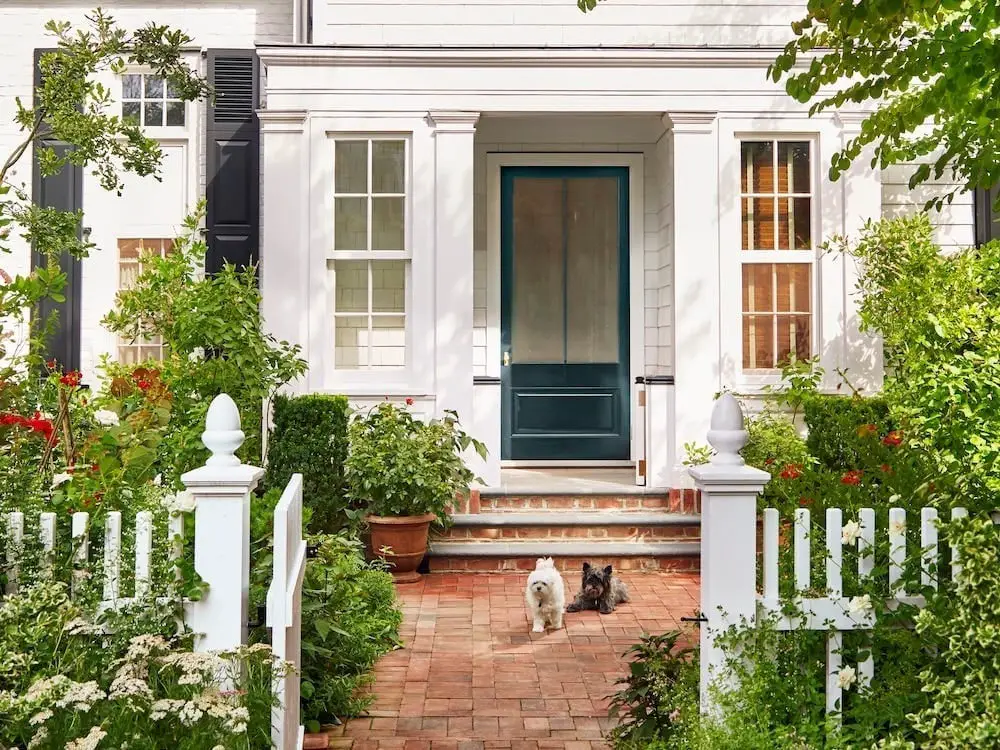
A teal front door against a white picket fence creates a crisp entry that is cheerful without being loud. The brick steps and stone path lead guests through potted greenery that softens the hard lines of the walkway. The lush plants make the porch feel established, even if the door itself is a recent change. This setup works because the fence and door share a clean white trim, so the teal feels like a deliberate bright accent. A simple wreath or seasonal basket could swap in without upsetting the balance.
Charming cottage: sage green door and wicker heart
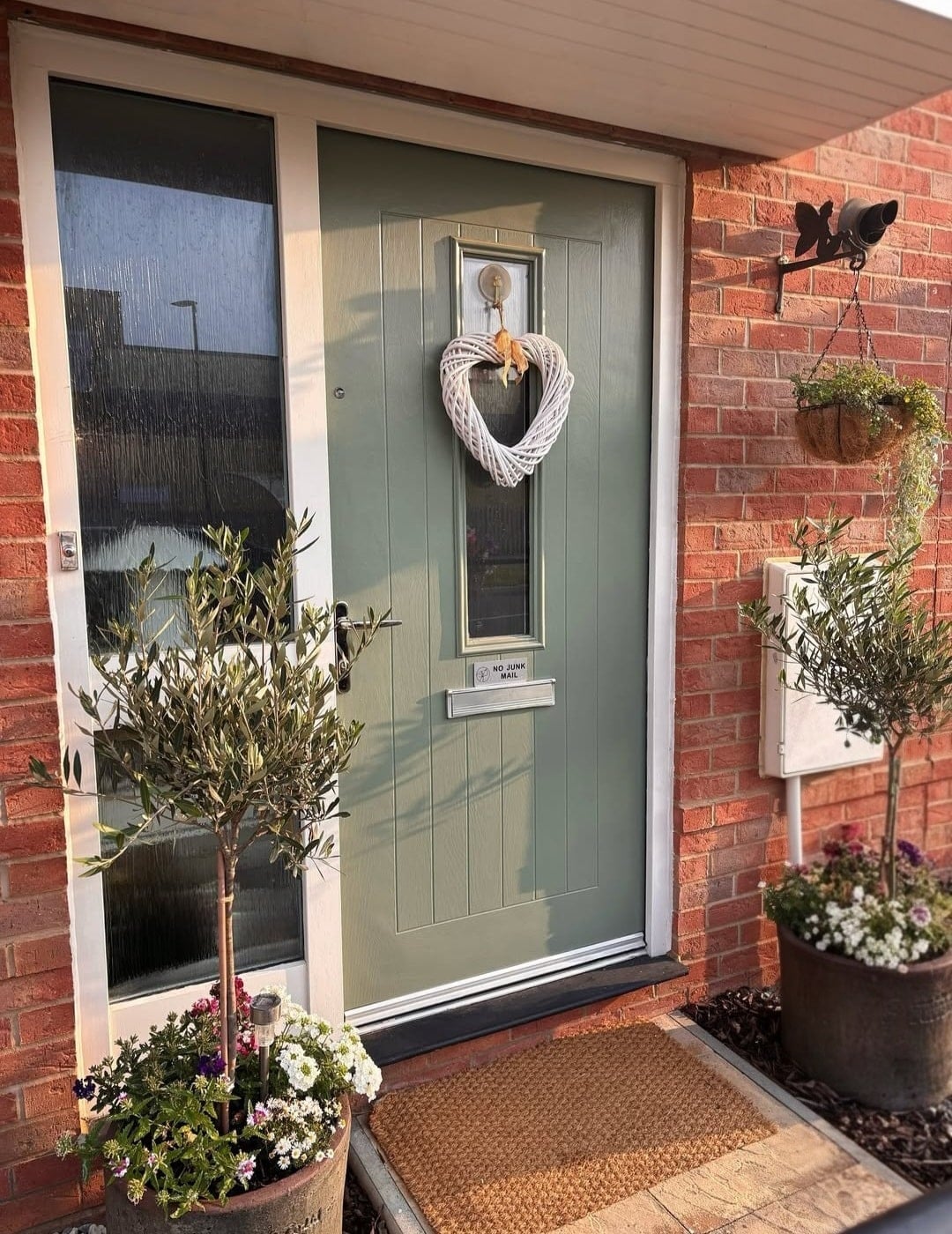
This porch gets its charm from a single color choice: a sage green door that sits quietly against brick and white trim. A white wicker heart wreath on the door adds texture against the muted palette. Potted olive trees flank the entrance, and a hanging basket hangs above the step. The compact layout keeps everything within arm’s reach, which makes the entry feel cozy. The sage green complements the brick, so the door stands out. A darker wreath or a glossy finish would change the proportions entirely.
Gray door with potted trees and red berries
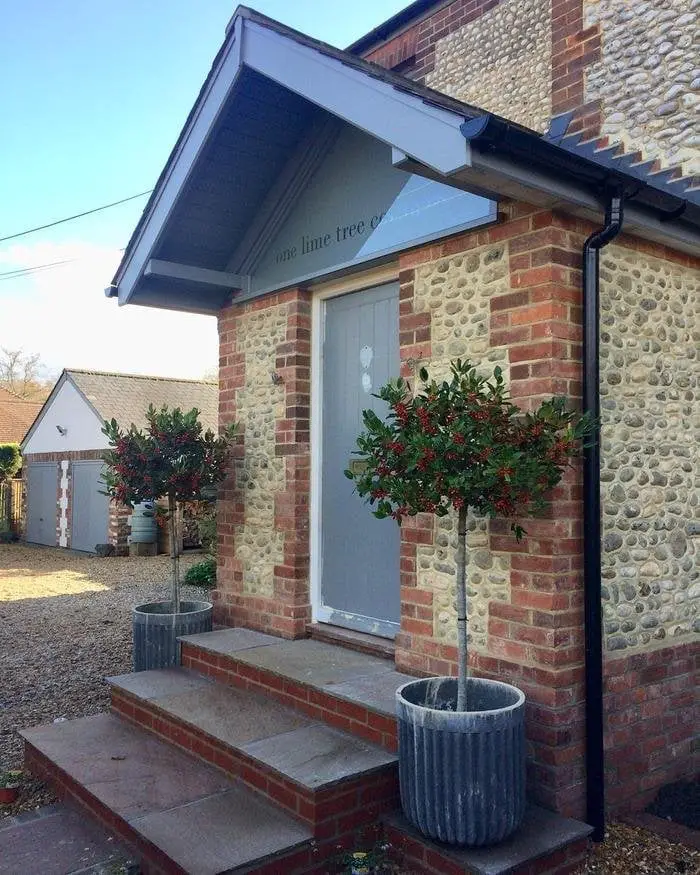
The layout of a compact porch sets the rules for how you arrange things. Steps lead up to the front door, with concrete planters on each side holding small trees with red berries. The gray door sits against red brick and stone, so the greenery and berries add color without fighting the existing materials. A traditional porch like this works when the planters echo the door height and the path stays clear for walking.
Stick to two tall planters flanking the entrance rather than scattering smaller pots. This keeps the eye moving forward and gives the gray door a frame of green and red. The stone steps and brick walls already provide texture, so the planters can be simple concrete or stone to match.
Elegant traditional: sage green doors and metal awning
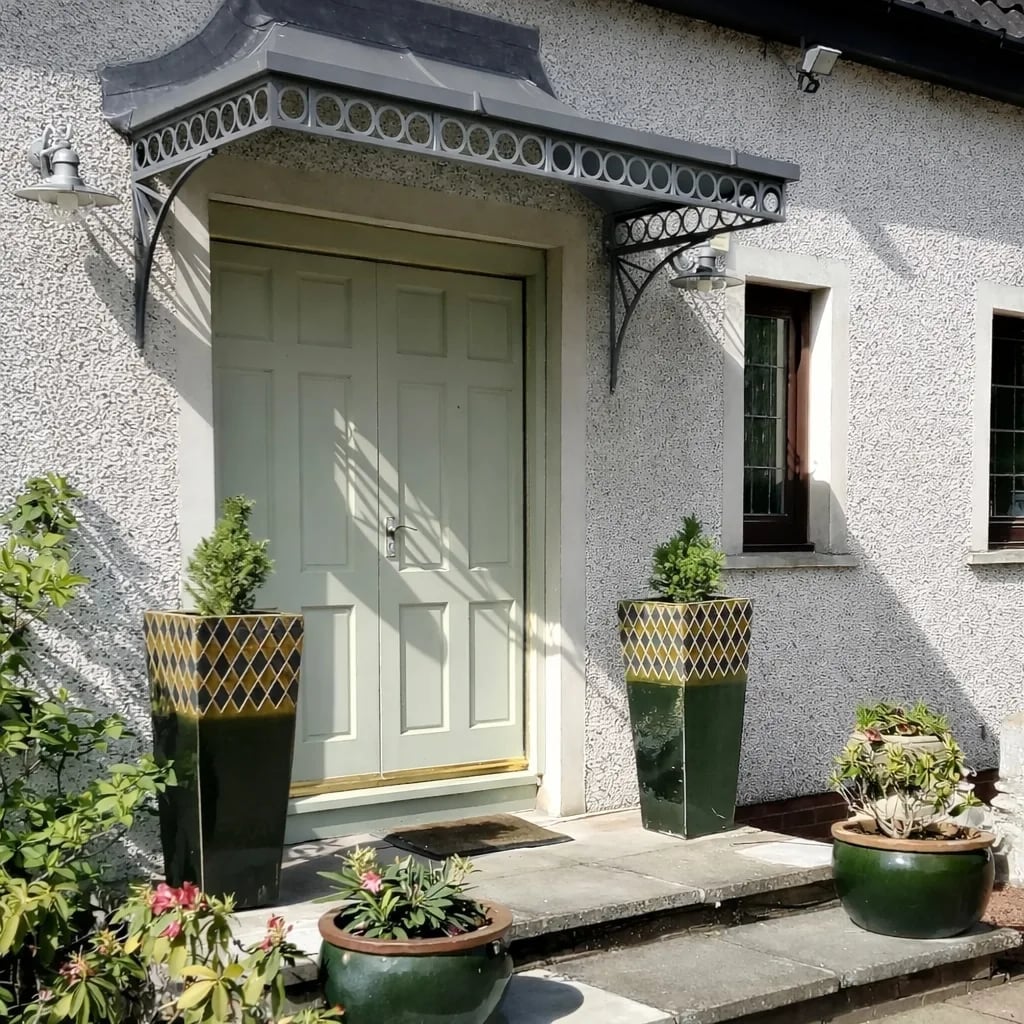
The double doors are painted sage green, with dark green trim and gold accents on the hardware and wall sconces. An ornate metal awning stretches above the doors, its dark gray finish tying the porch to the stone floor and gray roof line. Tall ceramic planters and round stone urns flank the entrance, filled with clipped greenery that keeps the palette tight. The sconces on either side of the doors add warm light in the evening, while natural daylight reads the soft green against the white trim.
Wood frame with arched beams and stone base
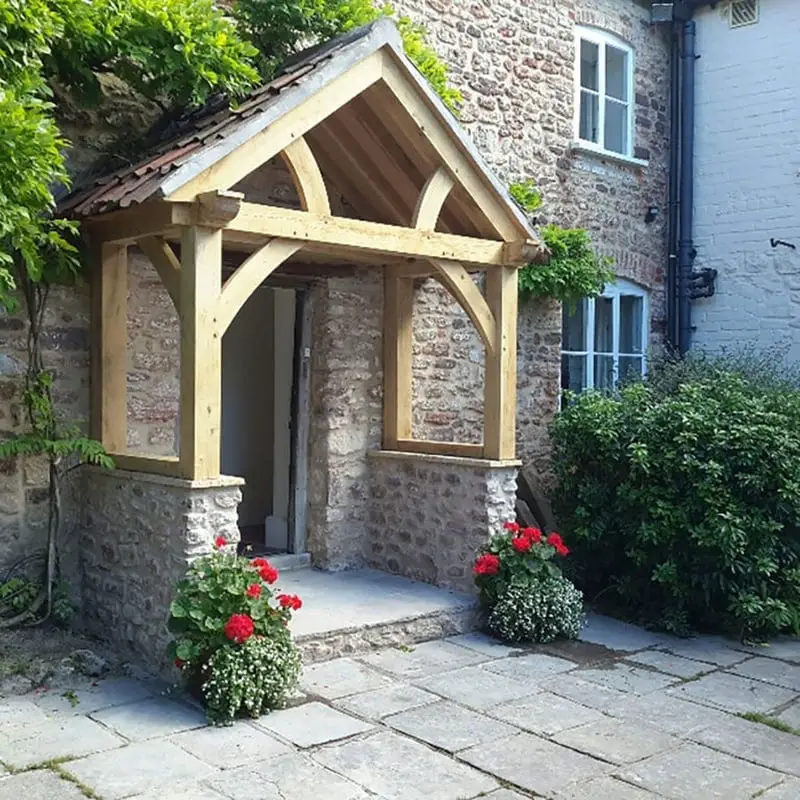
A practical rule for a covered entrance is to let the structure show. Here the porch has arched wooden beams that form a frame overhead, supported by a stone base that runs along the ground. The natural wood and gray stone stay neutral, so potted red flowers in terra cotta or glazed pots add a bright accent without clashing. The tile floor underfoot keeps the surface clean and dry, and the wood beams give the small porch a sense of height and shelter.
White dutch door with dog and terracotta planters
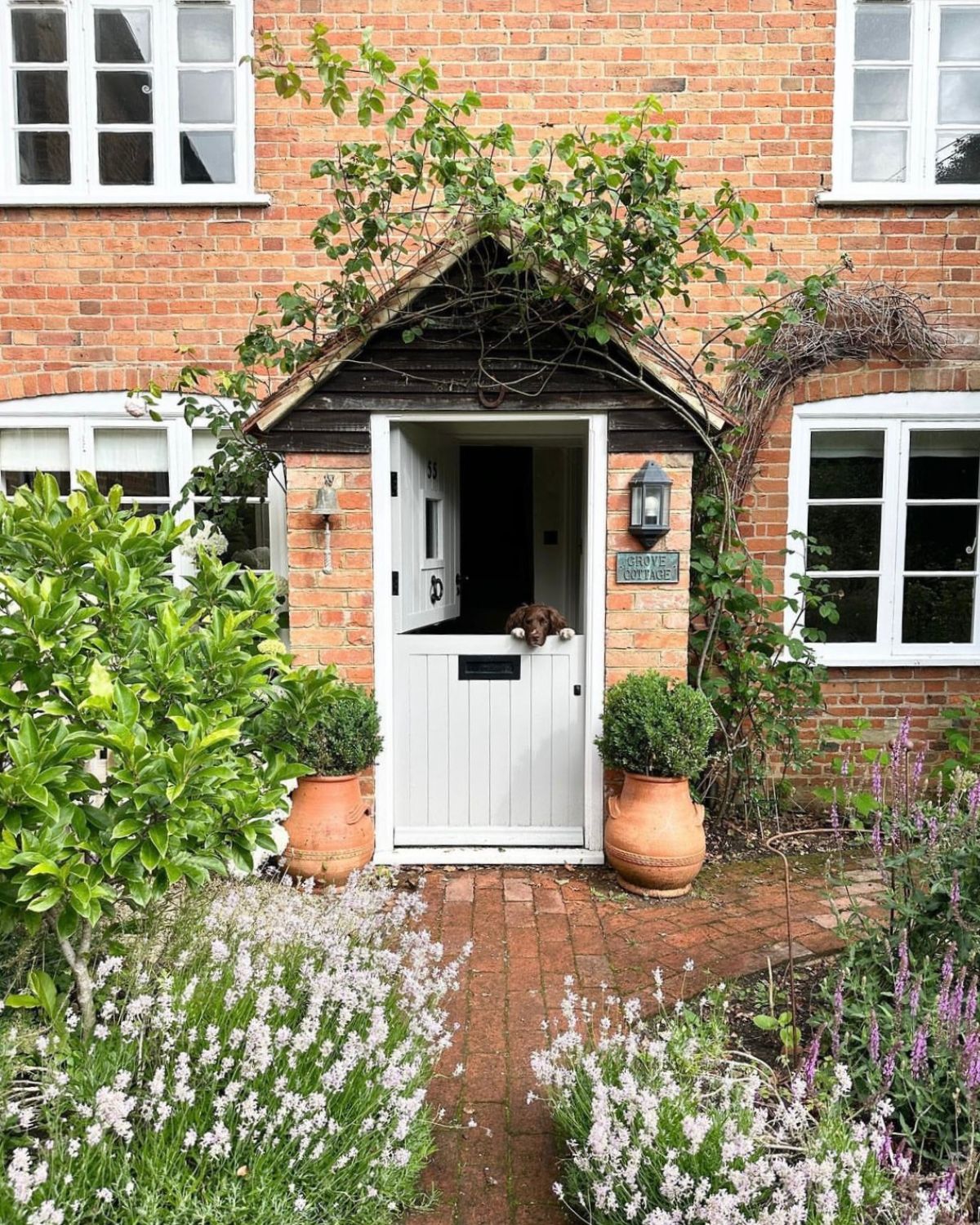
A white dutch door on a cottage porch reads differently than a solid front door. The top half opens separately, which lets in light and air while keeping pets and kids inside. Here, a dog peeks out from the open top half, and the red brick walls and glass panels in the door catch the daylight. Terracotta planters with boxwood topiaries sit on either side, their warm orange-brown clay repeating the brick tone.
A lantern mounted near the door adds a soft glow at dusk, extending the porch’s use into the evening. The path leading to the door is clear, so the planters frame the entrance without blocking the walkway. For a small porch, a dutch door makes the entry feel more open without losing security.
Autumnal farmhouse: swing bench and wicker pram
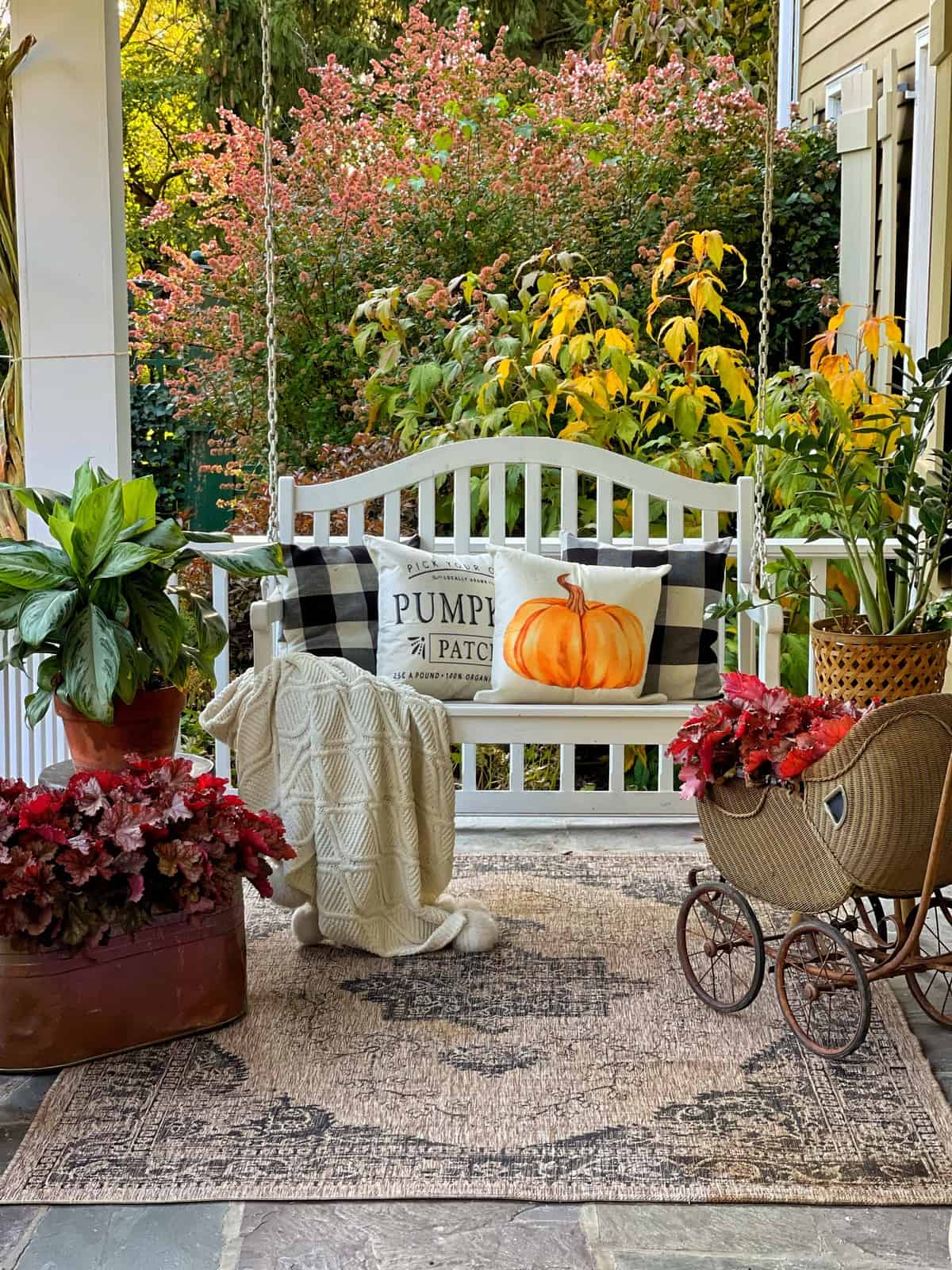
A white swing bench is centered on the porch, with a patterned rug underneath that anchors the seating area. A wicker pram sits nearby, filled with red plants that echo the orange and red accents in the rug and the fall flowers in the pots. The black door and white trim keep the base neutral, so the warm tones of autumn stand out without overwhelming the small space. Potted plants flank the bench on both sides, creating a balanced arrangement that feels full but not crowded.
Farmhouse autumn: black door and seasonal display
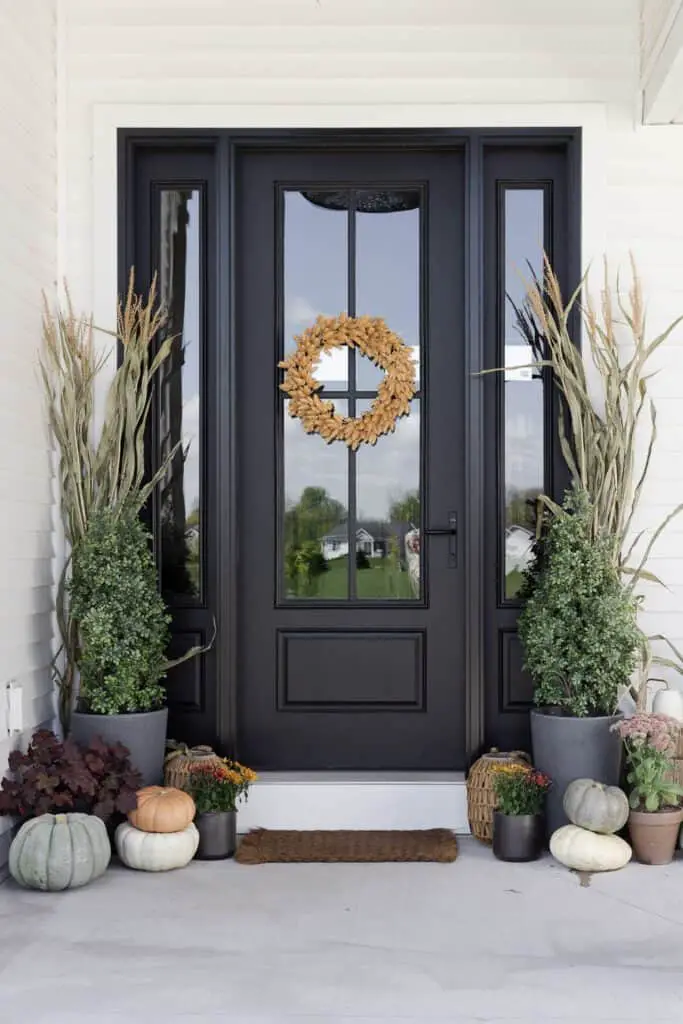
A black door is a rare backdrop that makes autumn color look richer. Here a wide wheat wreath hangs centered on the door, its pale beige tones a quiet contrast to the dark paint. Pumpkins in orange and white sit on concrete steps, and corn stalks lean against the house on either side. The symmetry is the anchor: planters and stalks mirror each other, so the eye rests on the door. Start with the door as the anchor, then build outward in pairs. One wreath, one set of pumpkins per side, one bundle of stalks. Stop there. The layout creates a full, balanced look.
Grand farmhouse: wooden columns and woven planters
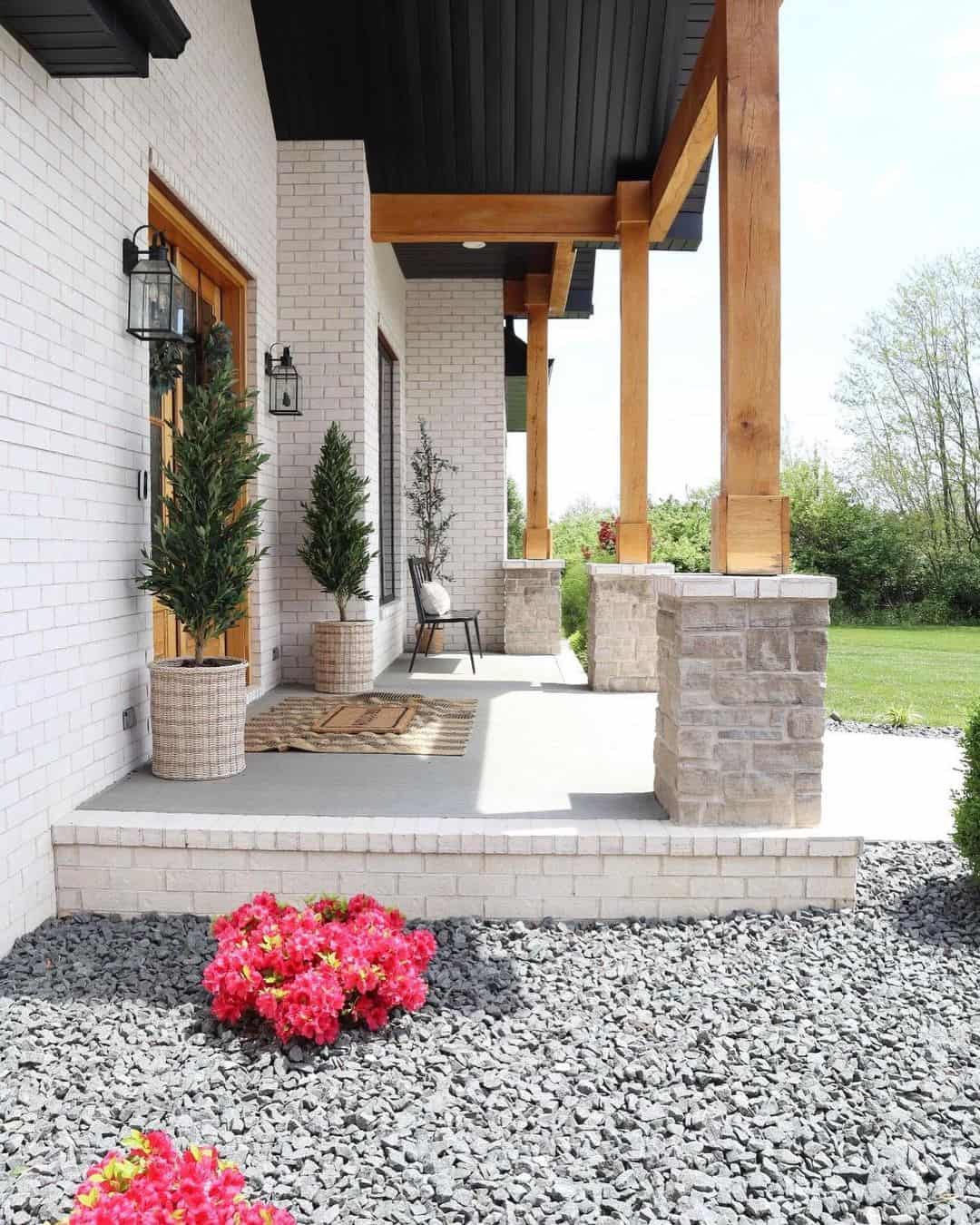
A porch with large wooden columns often seems too formal for casual seating. This one softens the scale with woven textures and a grounded layout. Tall potted trees in rattan planters flank the columns, their organic shape breaking up the vertical wood. An outdoor chair and a woven rug create a seating area that feels comfortable without competing with the architecture. Lantern sconces on the columns add warm light without overwhelming the space.
For renters, the lesson is about proportion. You cannot change the columns, but you can control what sits beside them. Choose tall, narrow planters instead of squat ones to match the vertical line. A rug defines the zone, and one chair is enough to signal a sitting area. The columns stay grand, but the space feels lived in.
Spooky traditional: black door and spiderweb decor
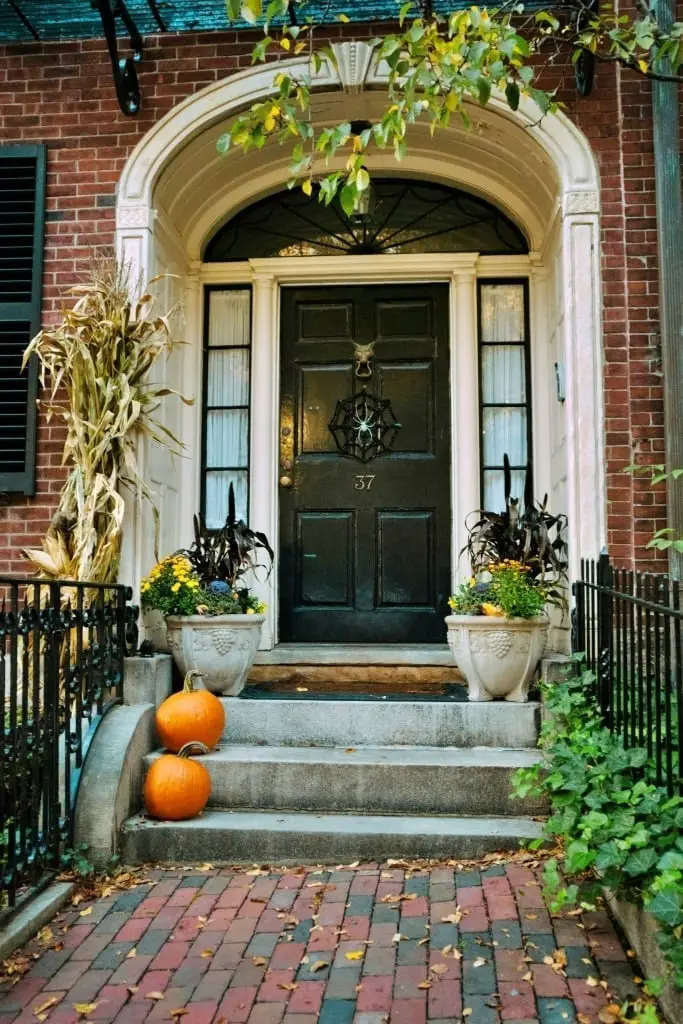
A black door with a spiderweb decoration is the centerpiece here, and the rest of the porch stays quiet so it reads. Brick steps lead up to the door, with pumpkins and potted plants on either side. Corn stalks flank the entrance, and a wrought iron fence frames the front. An overhead light fixture keeps the entry visible after dark. The palette is controlled: black, brick red, green, orange, and yellow. The spiderweb is the only novelty element, so it stands out without needing more. One unexpected piece, placed on a familiar door, is enough to shift the whole porch.
Rocking chairs and swing bench with pumpkins
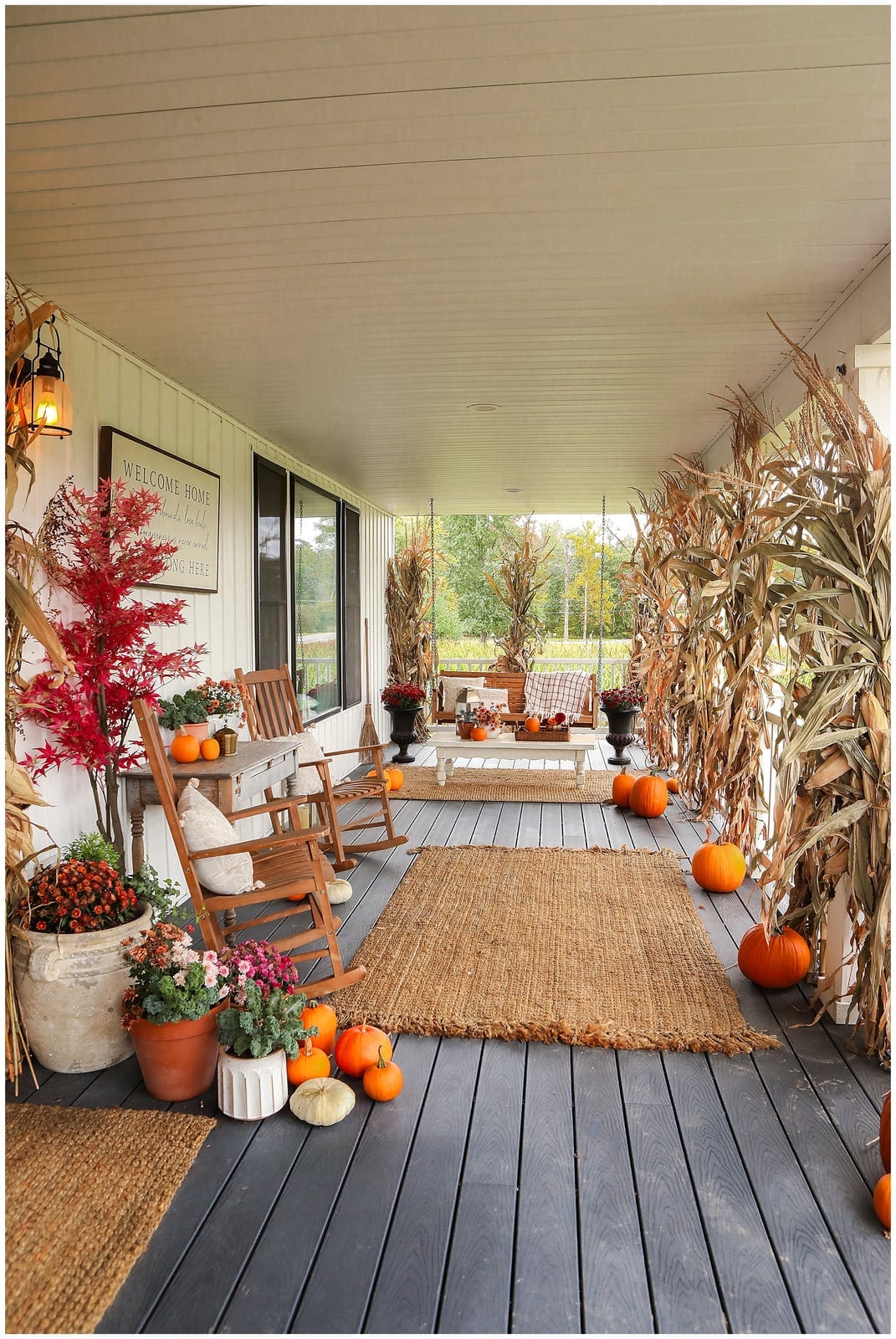
A porch with a swing bench against the house and two rocking chairs facing outward creates a U-shaped seating layout that naturally encourages conversation. A coffee table sits in the center, with jute rugs underfoot. Pumpkins and corn stalks are placed at the edges, not in the walkway, so the seating zone stays clear. The rocking chairs sit near a console table, giving a spot for drinks or a lantern. The layout works because the furniture is arranged for movement, not just display. You can walk from the steps to the door without weaving around pumpkins. The seasonal decor frames the space rather than filling it.
Pink flowers in planters with black door
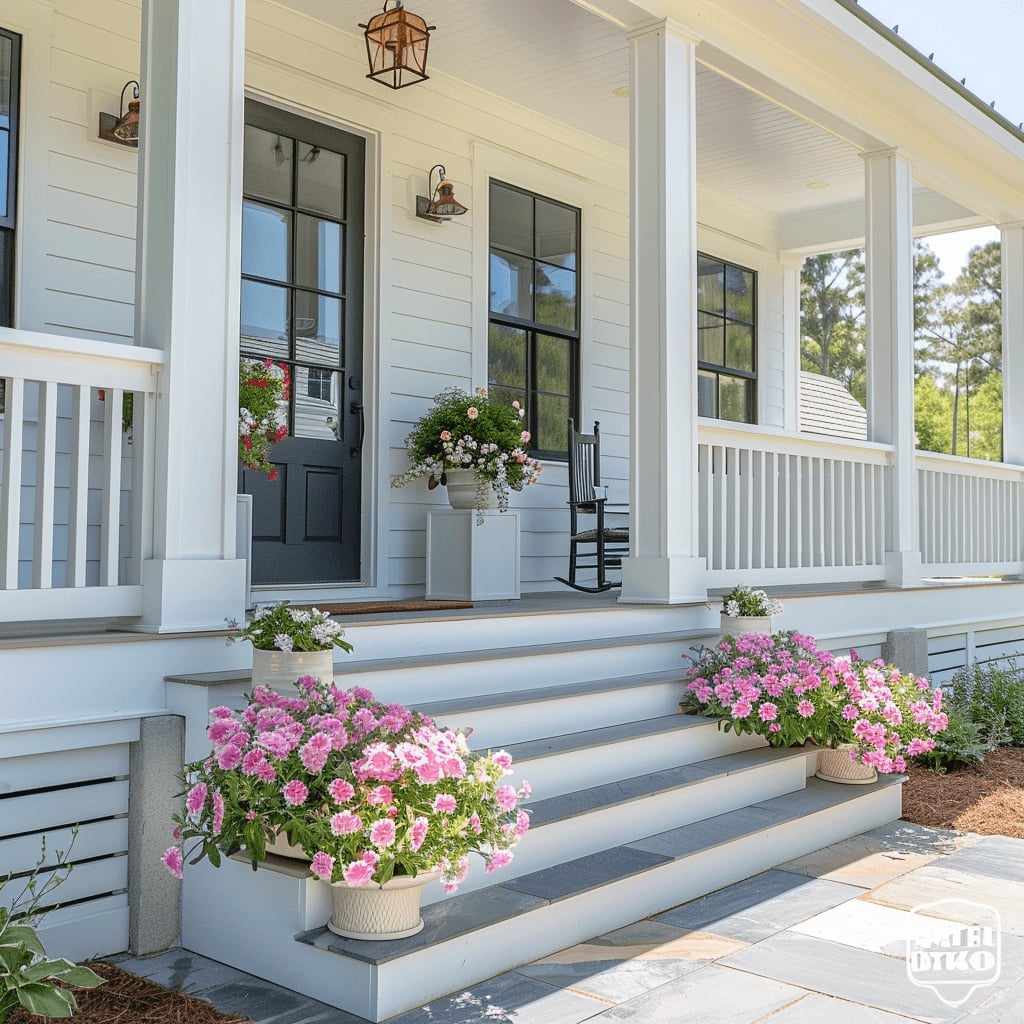
A black door is a strong statement, but it can feel heavy without something to soften it. Here, abundant pink flowers in planters are placed on the steps leading up to the door. The pink is a direct contrast to the black, and it works because the palette stays simple: white trim, green foliage, and the warm wood of a rocking chair. The flowers are the main color source, so they provide a deliberate focal point.
For a similar balance, choose one bright color and repeat it in every planter. Pink flowers, for example, can be grouped in three or four planters along the steps. The repetition creates a rhythm that draws the eye upward. A single rocking chair on the porch adds a place to sit and enjoy the view. The door stays dark, but the flowers make the entry feel welcoming, not severe.
Final Thoughts
A welcoming porch doesn’t require a full renovation. A fresh coat of paint on the door, a new wreath, or a pair of chairs can shift the whole feel. Watch how the light hits your space at different times of day and swap seasonal decor like pumpkins in fall or flowers in spring. Keep cushions covered or stored during rain, and sweep steps weekly. The best porches feel lived in, not staged. Pick one idea from this list, try it, and see how it changes your coming-home moment.