Choosing the right floor tile can shape the entire feel of a room. For 2027, the trends lean toward warm tones, natural textures, and bold patterns that turn the floor into a focal point. This article shares 30 sharp floor tile ideas, from soft peach rectangles to geometric patterns and marble looks.
Whether you’re planning a bathroom refresh, a living room update, or an outdoor patio, these tile styles offer a range of options to suit your space. Each idea focuses on one tile type and how it can anchor a room without overwhelming it. You will see how color, shape, and scale can make a floor feel both modern and classic.
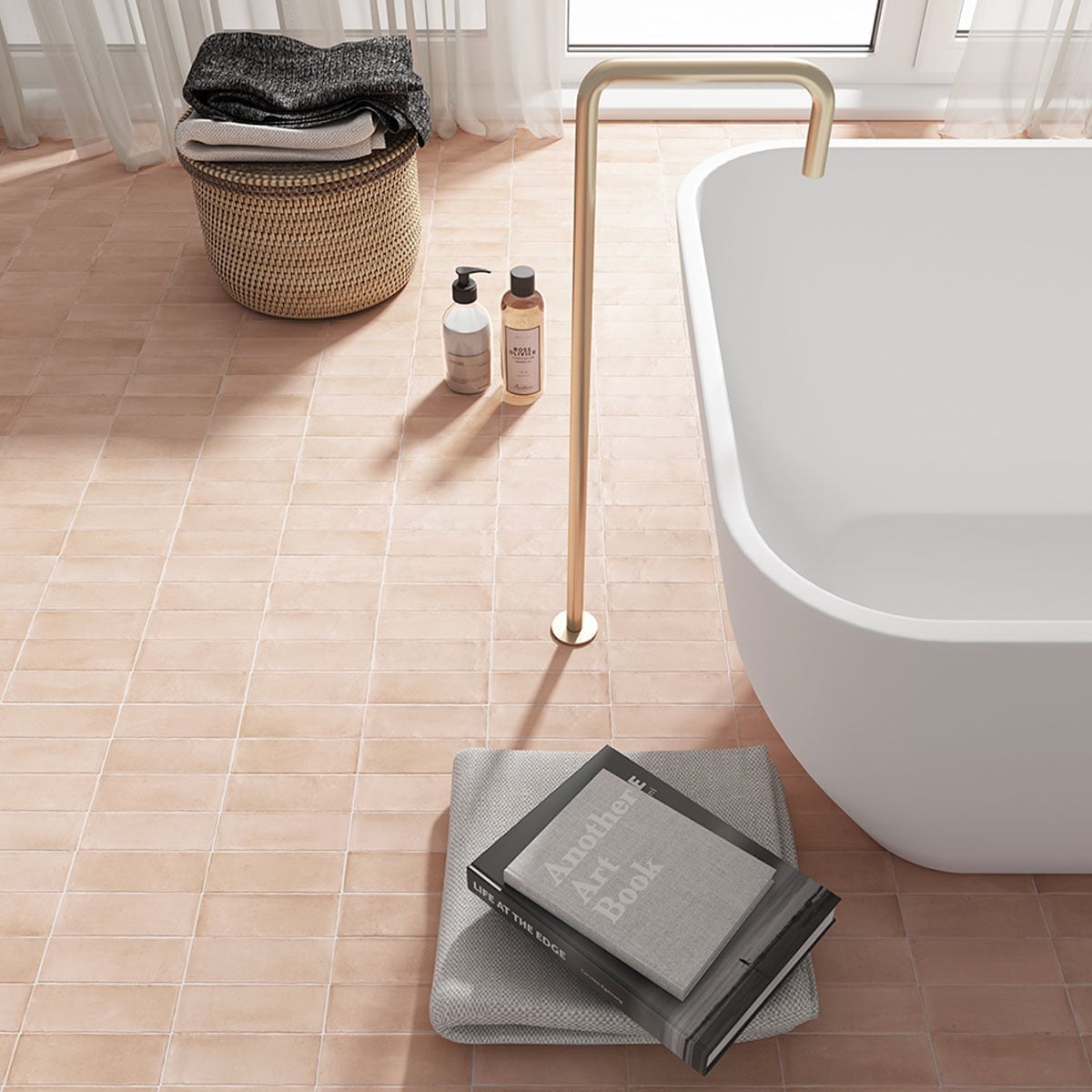
Peach rectangular tiles for a warm modern bathroom
Peach rectangular floor tiles in a grid pattern warm up a modern bathroom without overwhelming it. The soft peach looks a neutral against white walls, a brass faucet, and a dark gray vanity, so the floor stays the focal point. A wicker basket and a few books on the floor keep the space feeling lived-in rather than clinical. Natural light from the window helps the peach tone shift throughout the day, which keeps the room from looking flat.
Large format marble-look tiles for airy living rooms
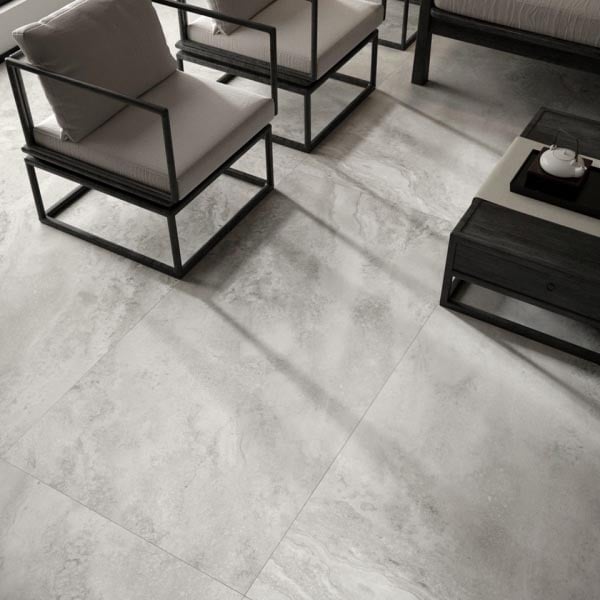
Large format marble-look tiles make a living room feel more open because fewer grout lines mean the floor looks one continuous surface. The light gray base with subtle veining keeps the room airy without feeling cold. A pair of armchairs and a coffee table sit on the tile, and the natural light and soft shadows add depth. The key is scale: the tile needs to be big enough that the marble pattern can spread out. If the pattern repeats too tightly, the effect looks busy rather than calm.
Stone-look tiles for elegant modern living spaces
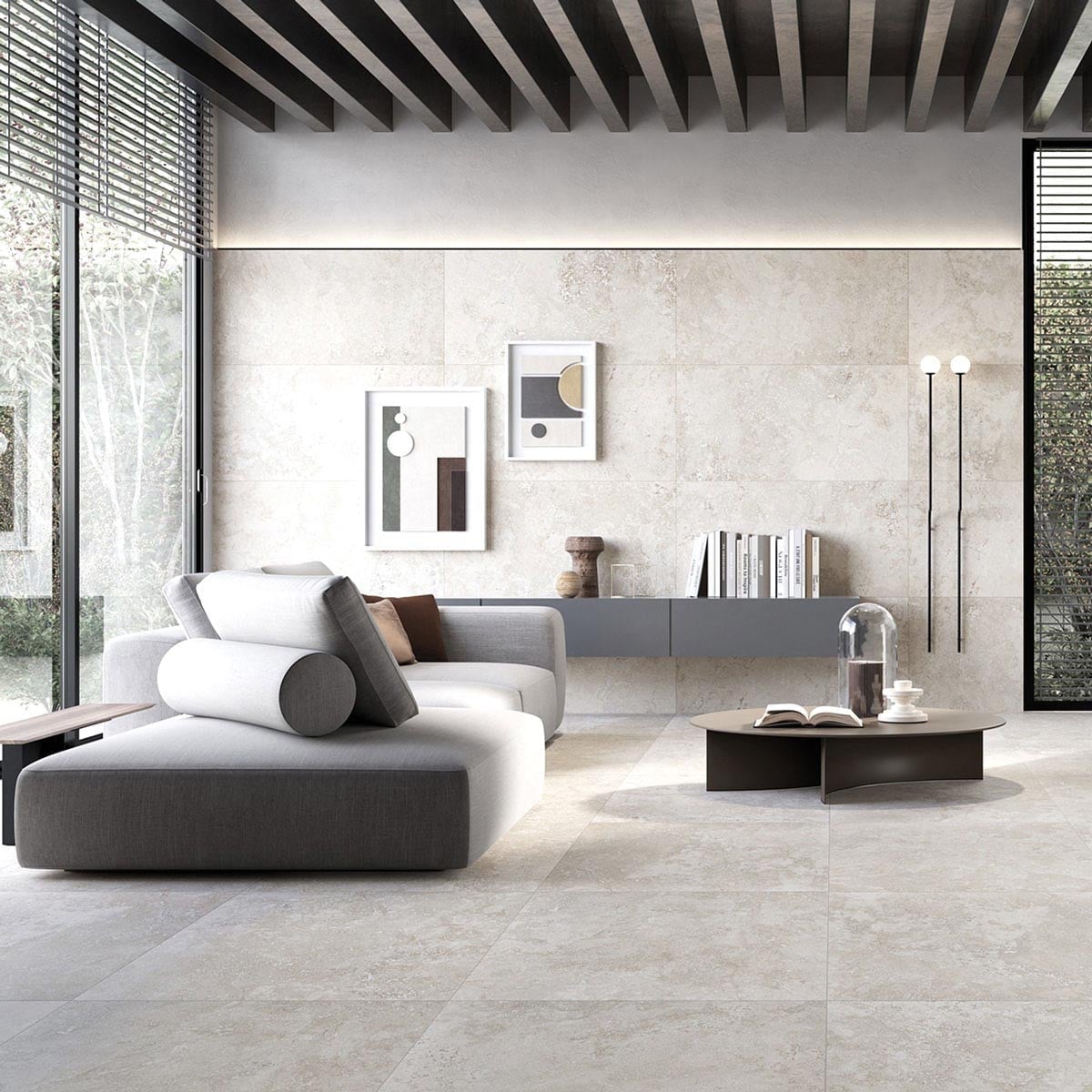
Can a stone-look floor feel modern without looking a direct copy of natural stone? Yes, when the tile stays neutral and the room keeps a clean layout. The beige and gray large format tiles here anchor an open plan living room with a sectional sofa, coffee table, and console table. Recessed ceiling lights and floor lamps add layers of light that keep the floor from looking washed out.
The stone texture has a matte finish, which avoids the glossy look that can feel dated. The furniture sits around the coffee table in a way that leaves the tile visible, so the floor acts as the visual anchor. The palette stays simple: beige, gray, and white, with the wood and fabric pieces adding warmth.
Hexagonal tiles for a traditional bathroom statement
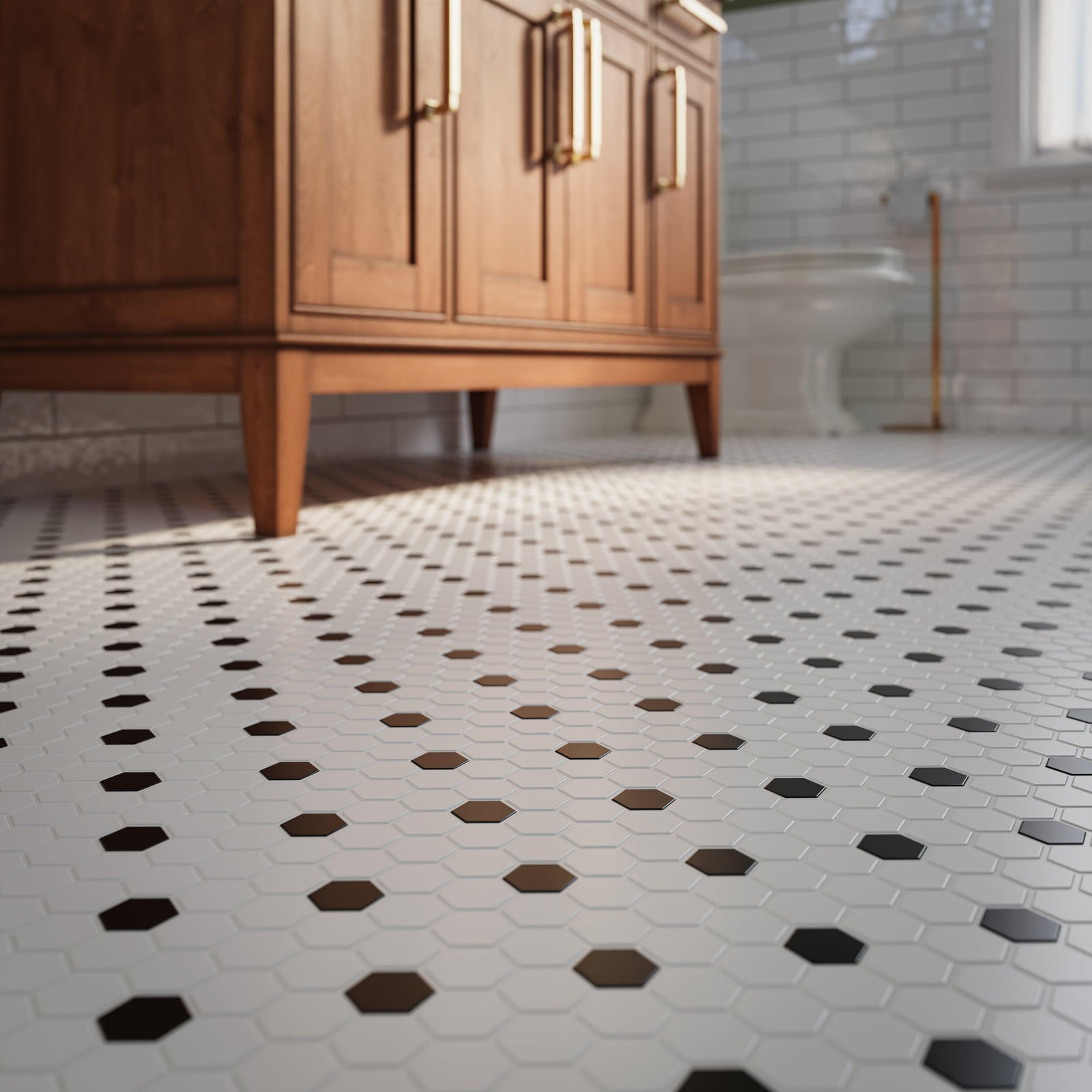
Hexagonal floor tiles in white and black bring a traditional bathroom into focus without needing a bold wall color. The hex shape adds visual texture, while the black accents in a mostly white layout keep the pattern from feeling too sweet. A wood vanity and brass hardware warm up the tile, which can lean cold on its own. Daylight from the window softens the contrast between the two colors.
Checkered blue and white tiles for a sharp closet
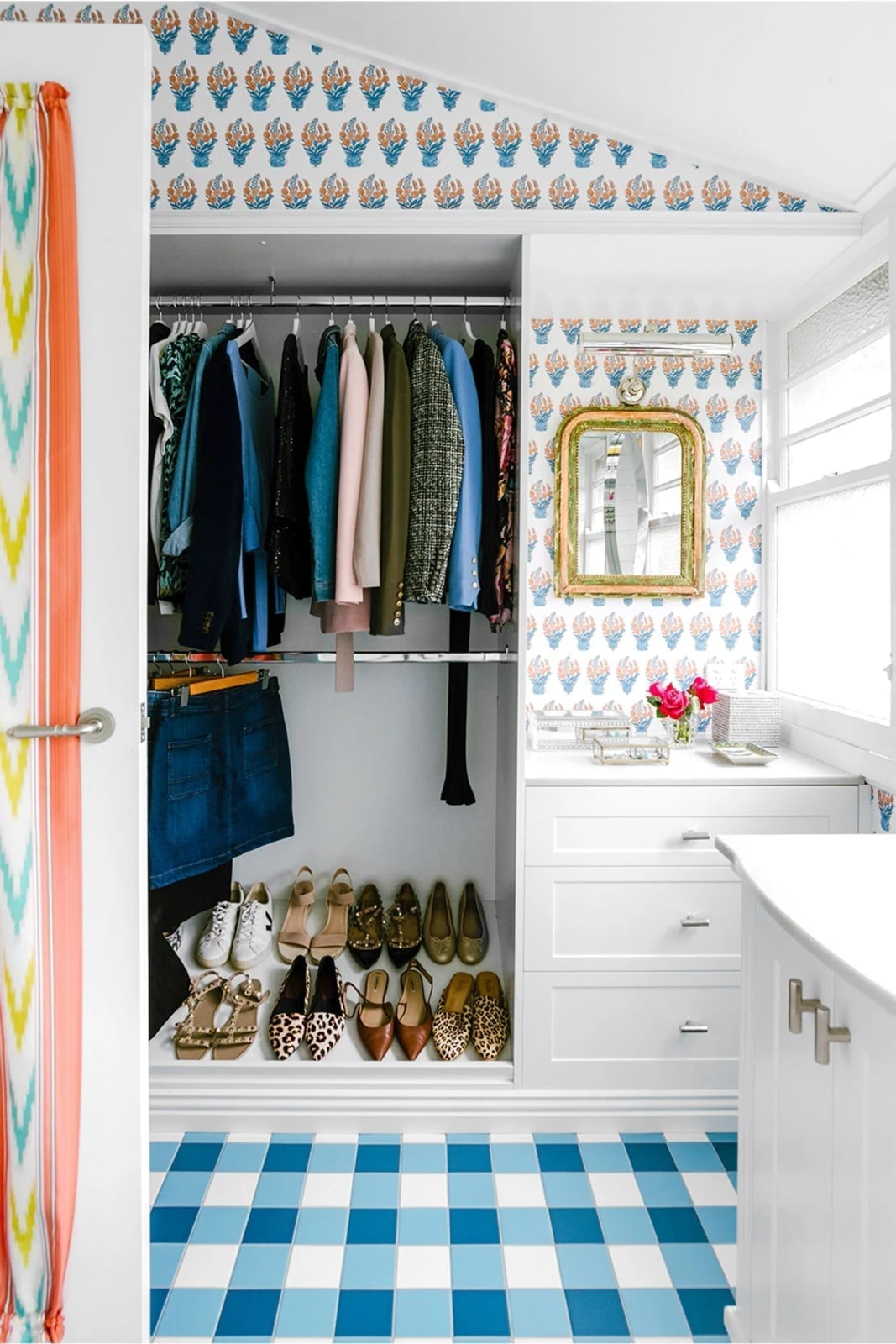
A checkered tile floor in blue and white turns a closet into a room you want to spend time in. The pattern draws the eye down, so the clothing and shelves above feel lighter. An open closet with a clothing rack, drawers, and a mirror sits on the checkerboard, and the orange and green accents in the room keep the blue from feeling too cool. Overhead light and the window both hit the tile, so the pattern stays visible even on overcast days.
Geometric tiles for a modern kitchen design
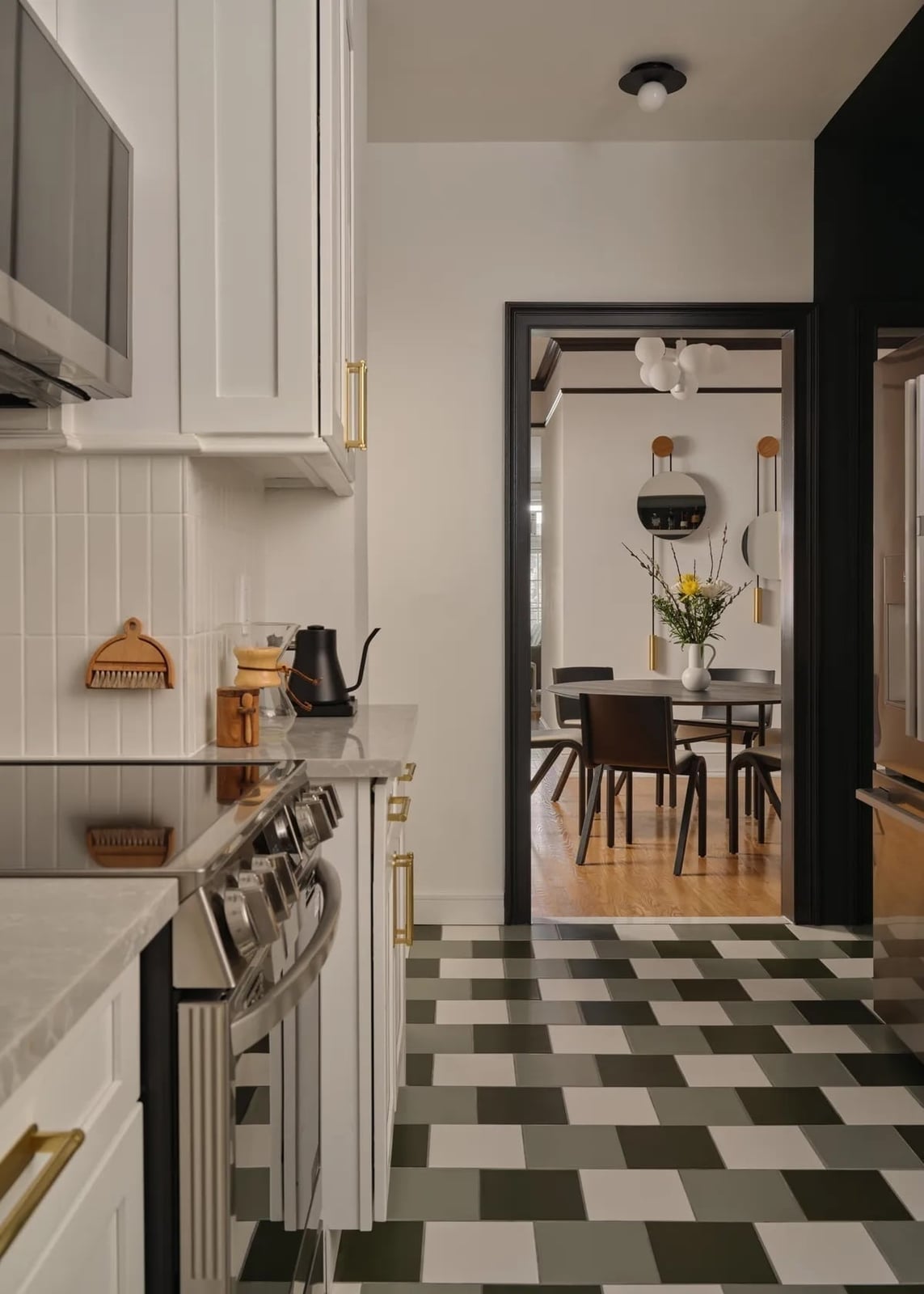
A geometric tile floor sets a modern kitchen apart from one that plays it safe with solid neutrals. The pattern here mixes white, gray, black, and green shapes that look deliberate without demanding attention from the rest of the room. An open doorway leads to a dining area, so the tile acts as a visual anchor that defines the kitchen zone while the marble countertops and stainless steel range stay simple. The layout works because the floor is the hero; cabinets and the dining table keep to clean lines and neutral finishes. A single overhead fixture provides general light, which is enough when the tile already supplies the pattern.
Marble-look tiles for a modern farmhouse entryway
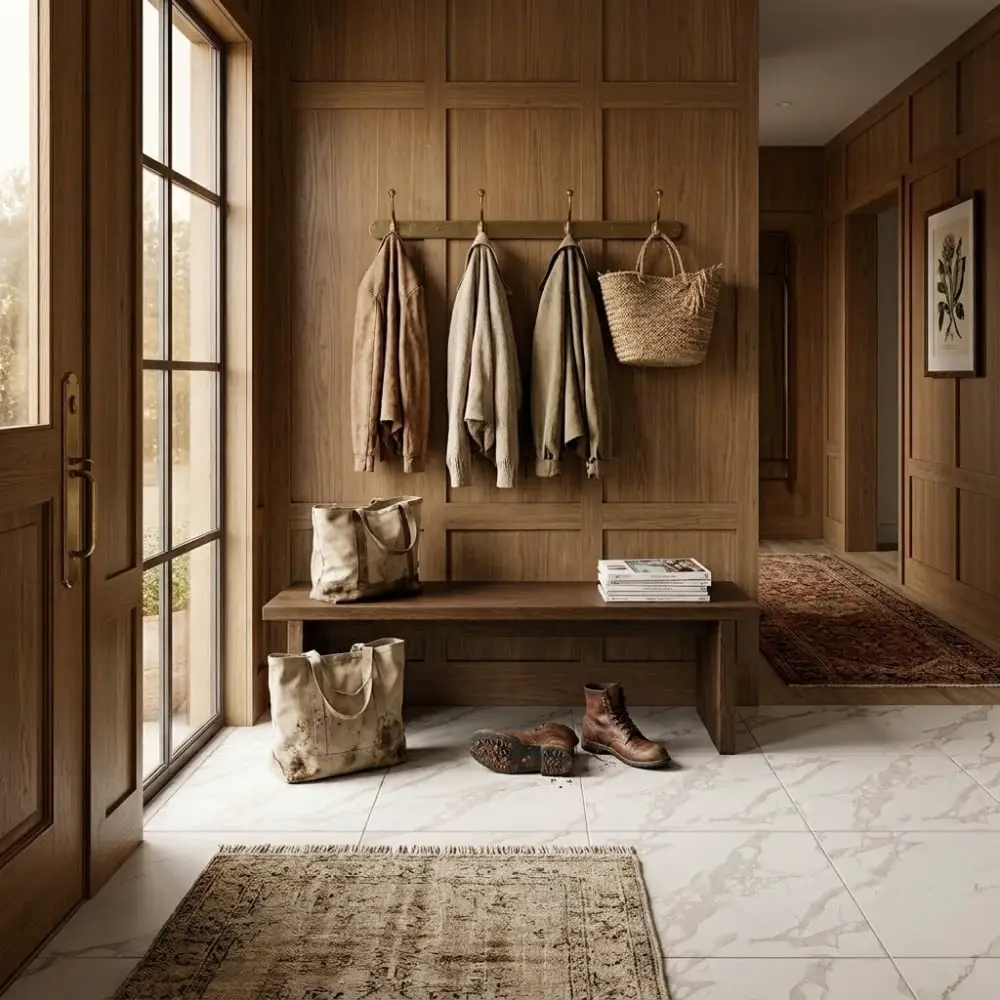
The large format marble-look tiles mimic neat stone, which lifts a modern farmhouse entryway above the expected wood plank floor. A wooden bench, leather bags, and linen coats sit against the white and gray tile, creating a mix of refined and rugged that defines the look. Avoid adding too many competing patterns; the veining in the tile is the only texture needed on the floor. Light from a window keeps the space feeling open and clean, which matters in a hallway that sees coats and boots daily.
Large gray stone-look tiles for contemporary living
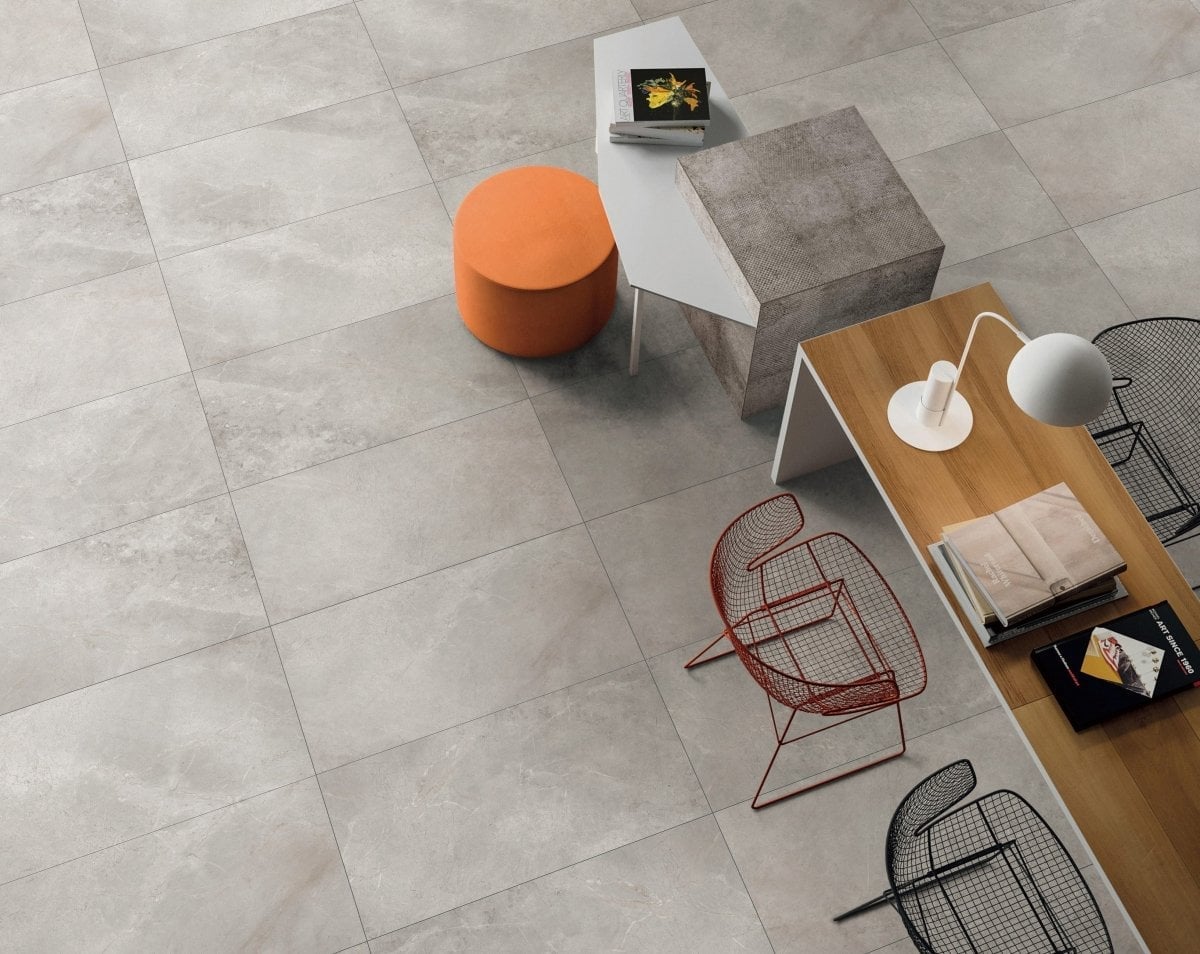
Large format gray stone-look tiles make the living room feel grounded without going dark or heavy. The palette stays in a narrow range of gray and white, with orange accents from the wire chairs and a modern lamp providing the only contrast. The tile looks concrete or natural stone, which suits the metal and wood furniture around it. Keeping the floor monochrome lets those orange pieces stand out without clashing. An overhead light keeps the room evenly lit, so the stone texture stays visible without casting harsh shadows.
Light gray large-format tiles in open-plan living
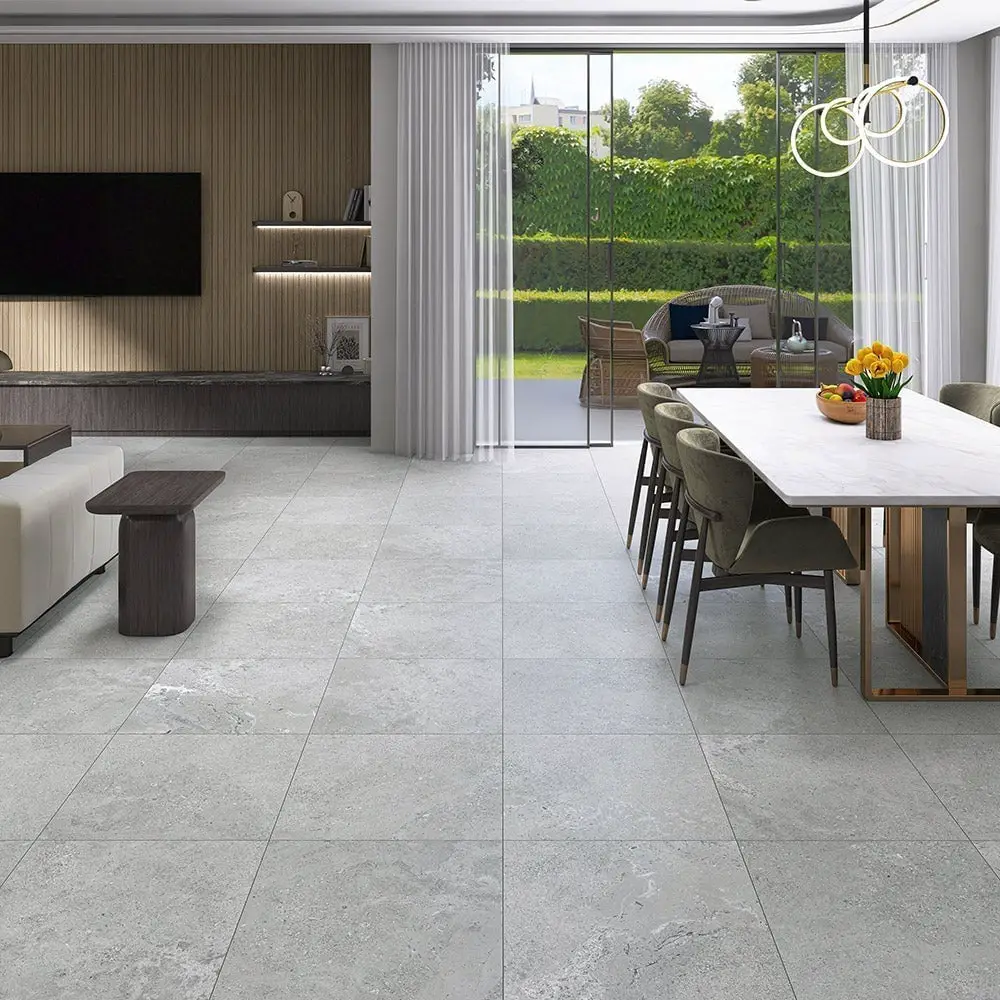
Can wide tiles make an open plan feel larger without looking bare? In a living and dining area that flows together, light gray tiles create a continuous surface that lets the eye travel from the sofa to the dining table without a visual break. The scale of the tiles matters: wide planks reduce grout lines, which keeps the floor from feeling busy. A modern pendant light hangs above the dining table while daylight from large windows fills the room, so the pale gray floor stays bright. Wood tones in the furniture and green plants add warmth against the cool tile, which keeps the space from feeling clinical. The open layout benefits from a floor that unites both zones instead of dividing them with different materials.
Checkerboard tiles for a modern outdoor patio
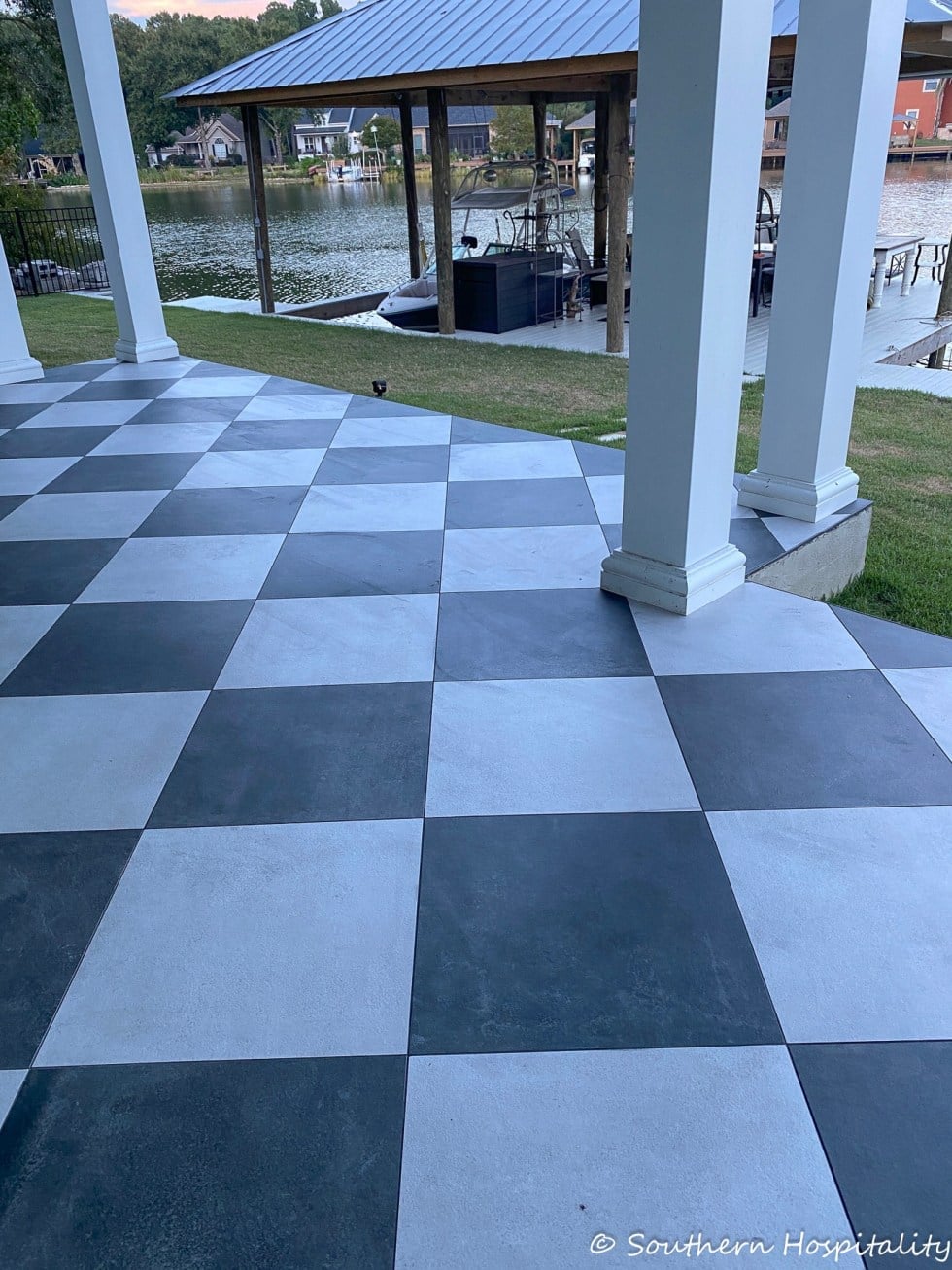
A large checkerboard pattern in gray and white gives an outdoor patio a clean, graphic look. White columns define the edges of the space, and the tile extends toward a boat dock, so the pattern helps connect the patio to the waterfront beyond. Keeping the furniture minimal prevents the floor from competing with seating or planters. Sunlight does the work here; the high contrast of the checkerboard needs no extra accent lighting to make an impression.
Vertical gray tiles in a modern mudroom
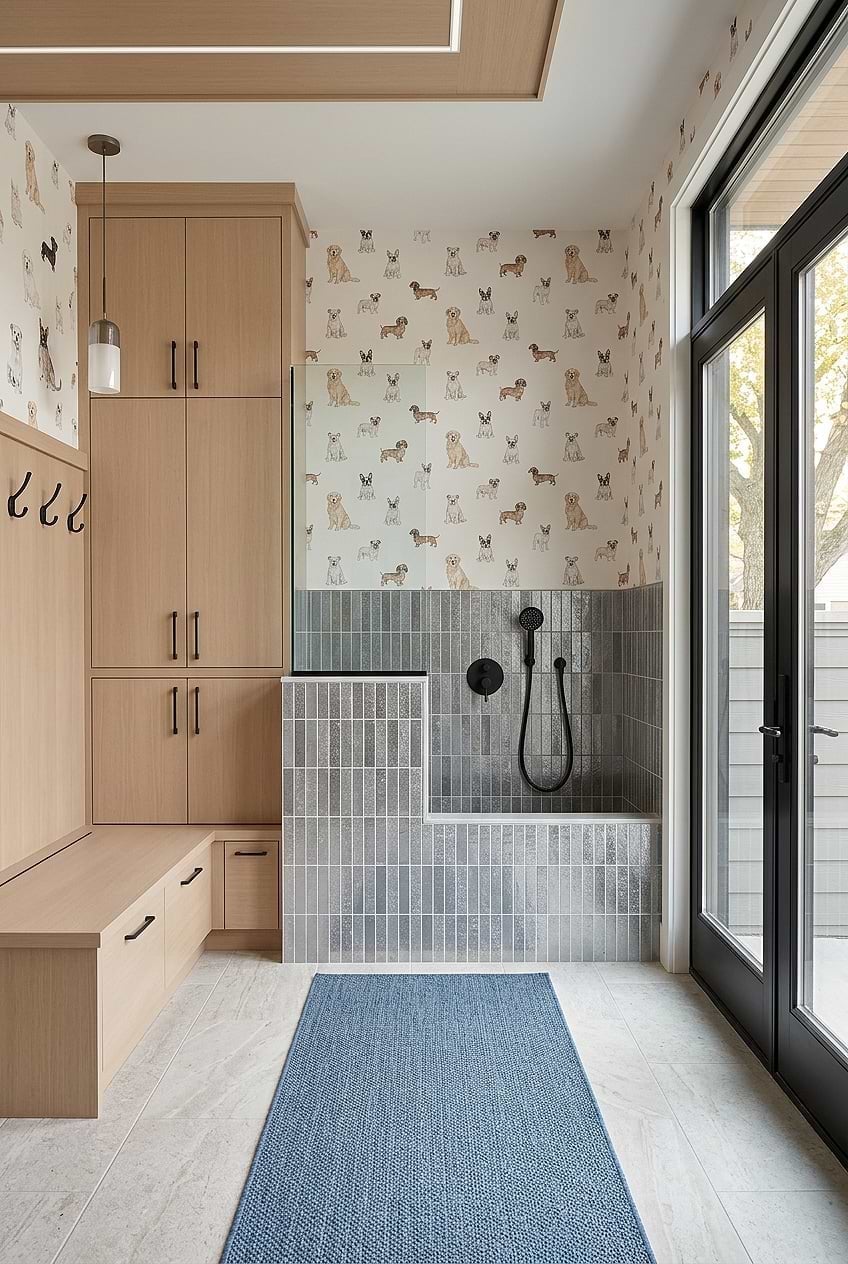
A dog shower in a mudroom is a layout choice that pays off every single day. With built-in cabinets running along one wall and a linear bench nearby, the space keeps wet gear contained and off the main floor. The vertical gray tiles behind the shower add texture without fighting the dog-themed wallpaper or the white and blue palette. A pendant light and a ceiling fixture keep the area bright enough for quick rinses. For a renter, a handheld sprayer on a low-pressure hose and a waterproof mat over existing flooring can mimic this setup without permanent changes.
Yellow herringbone tiles for a mid-century hallway
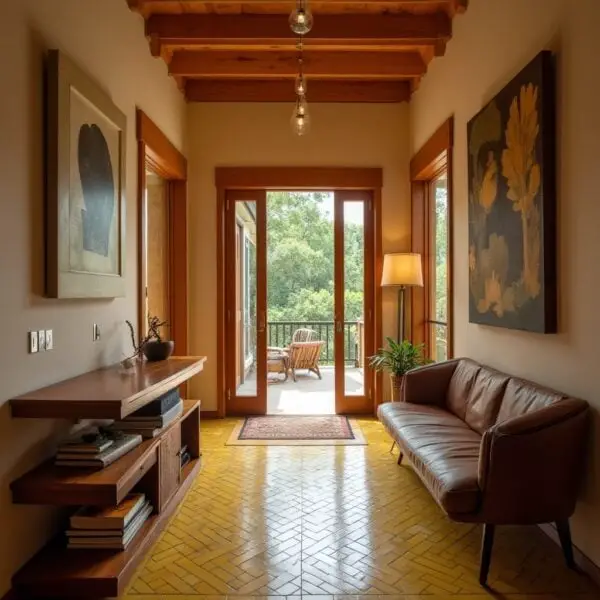
Brown leather and wood feel classic, but yellow herringbone floor tiles push a hallway into mid-century modern territory. The warm yellow, beige, and brown palette keeps the look grounded. A console table and a small sofa anchor the long run, while hanging lights and a floor lamp layer in soft glow.
A busy wall treatment or too many small rugs can distract from the tile. The herringbone pattern already creates visual movement, so the walls and furniture stay simple. A single runner in a neutral tone can protect the tile without fighting it.
Cream and gold marble-look tiles for a spacious living room
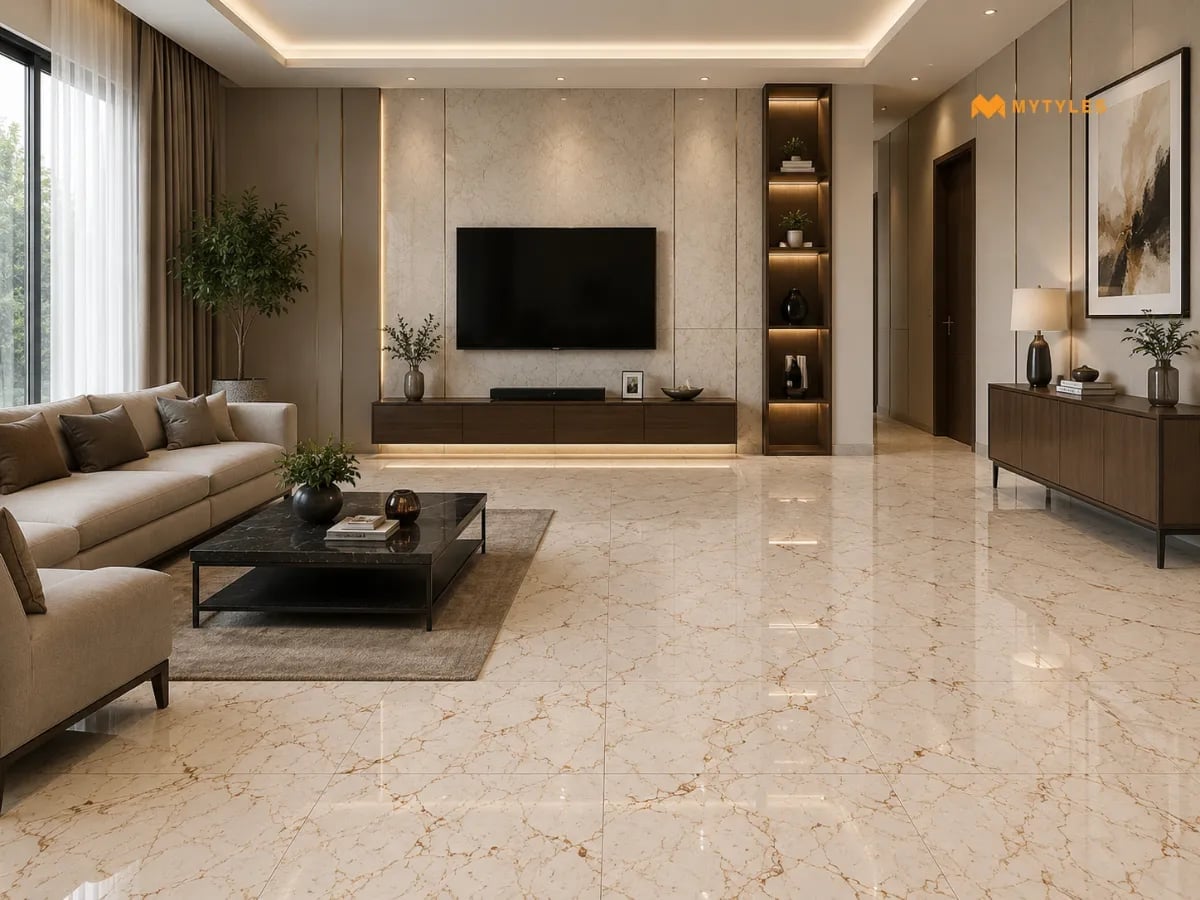
Marble-look tiles in cream and gold bring a warm base to an open plan living room. The subtle veining looks stone without the upkeep of real marble. A beige sofa, a wood coffee table, and a media console sit naturally on top, and recessed ceiling lights keep the palette even. The gold tones in the tile tie into warm wood and brass accents rather than fighting them.
Mosaic tiles contrasting with large marble walls in a bathroom
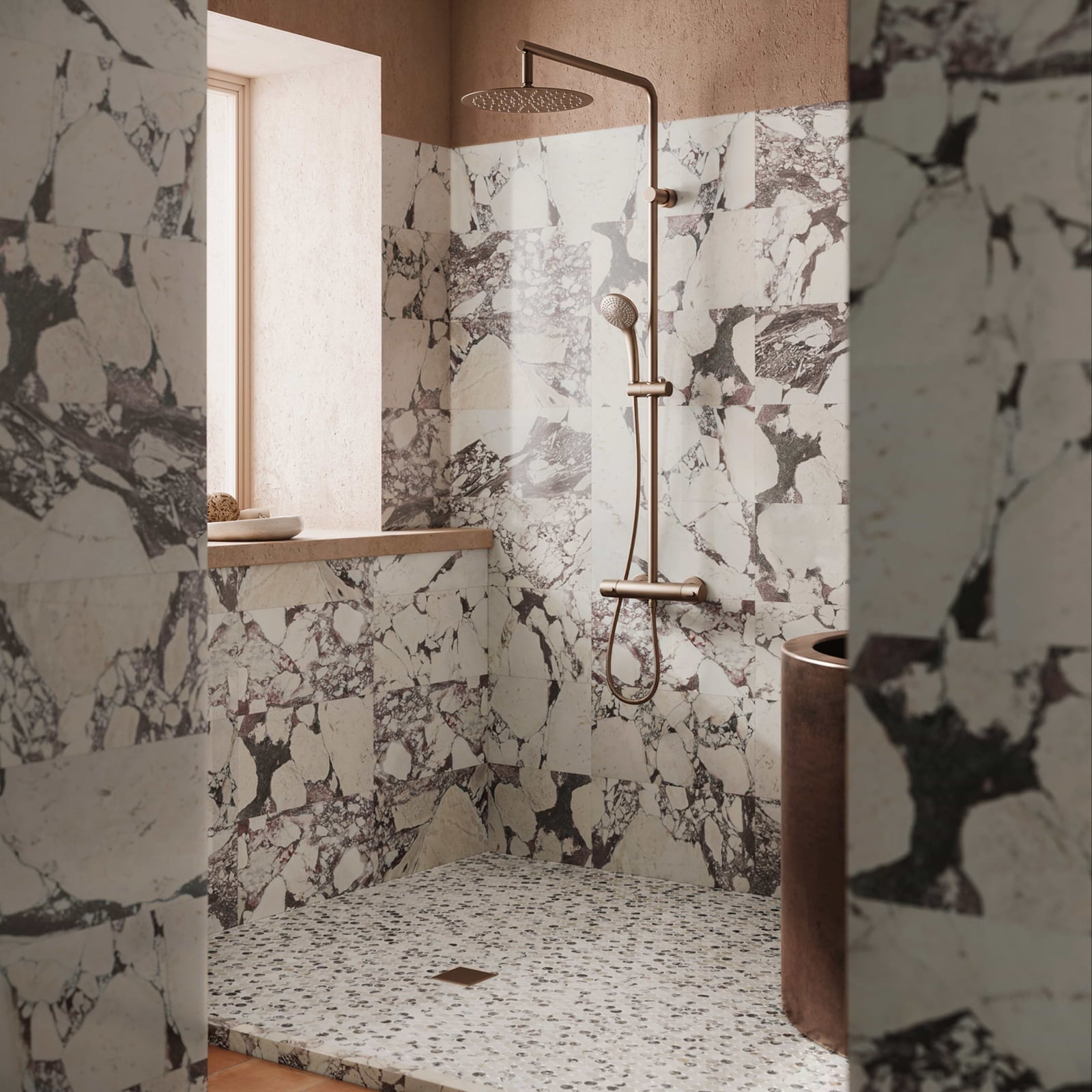
A compact bathroom with large marble wall tiles and a mosaic floor is a direct contrast that works. The marble reads smooth and expansive, while the small mosaic pieces add grip and visual texture underfoot. Daylight from a nearby window softens the pink and brown notes in the mosaic. The copper shower fixture picks up the warm side of the palette. For a similar effect in a rental, a peel-and-stick mosaic sheet over the existing floor and a marble-look contact paper on the walls can give the same contrast without tile work.
Black marble tiles for a glamorous bathroom floor
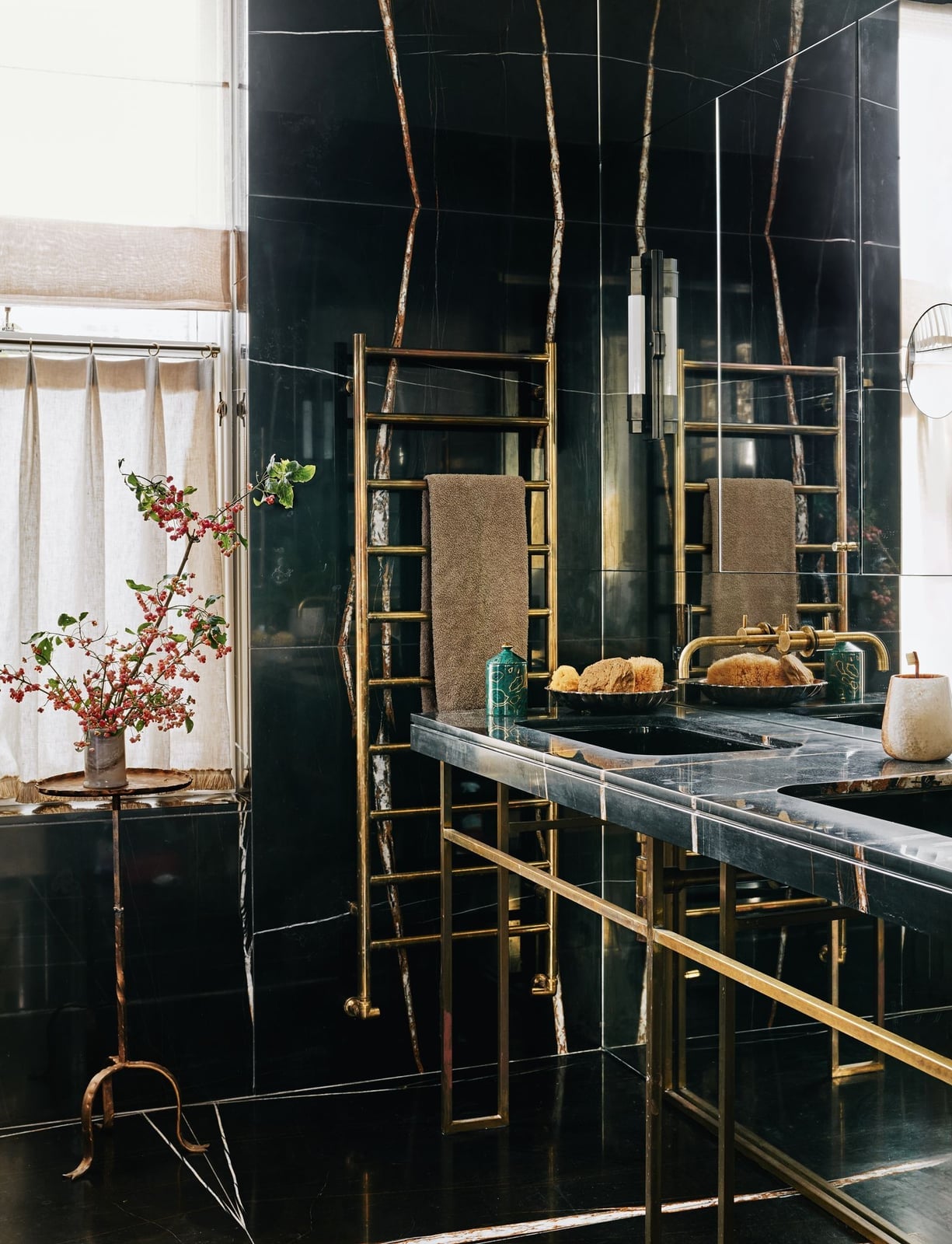
Black marble tile with white veining sets a dramatic base for a glamorous bathroom. The room stays light with a double vanity, towel warmers, and a decorative plant. A window and an overhead fixture balance the dark floor.
Too many competing finishes break this look. Black marble asks for brass or gold accents, not chrome, and the wall color needs to stay light. White or cream walls keep the room from shrinking. A glass shower enclosure maintains the open feel.
Large format gray tiles for a smooth modern bathroom
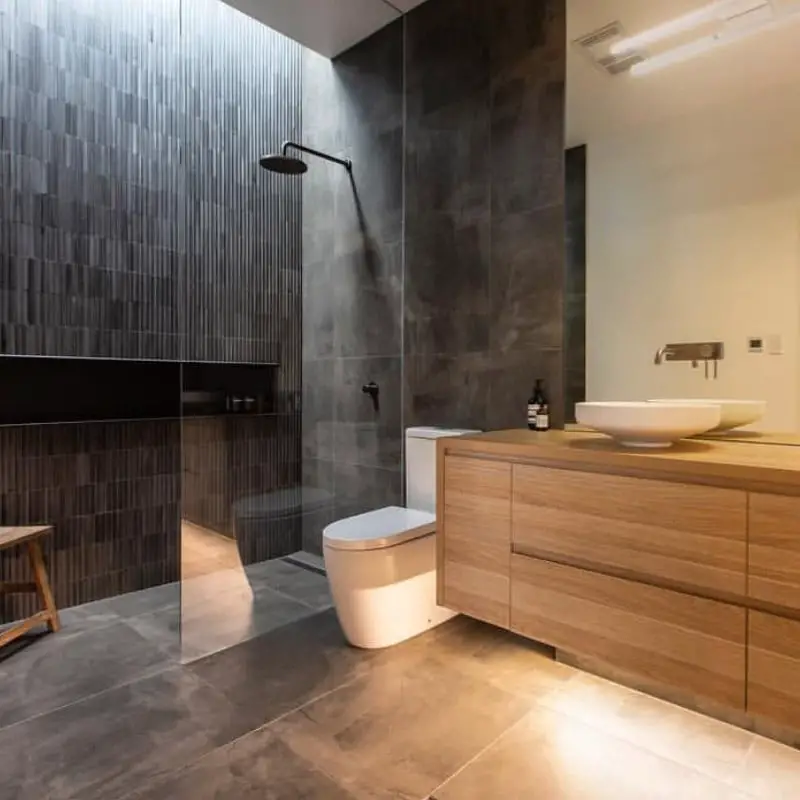
Large format gray floor tiles reduce grout lines, which helps a roomy bathroom feel even more open. The soft gray acts as a neutral base that lets wood tones from the vanity and white fixtures stand out without fighting. A corner shower keeps the layout efficient, while a skylight pulls daylight across the tile surface. The practical takeaway is that larger tiles mean fewer cuts and less grout to maintain, making the install simpler for a tiler and the daily cleaning faster.
Terracotta hexagonal tiles for a boho living space
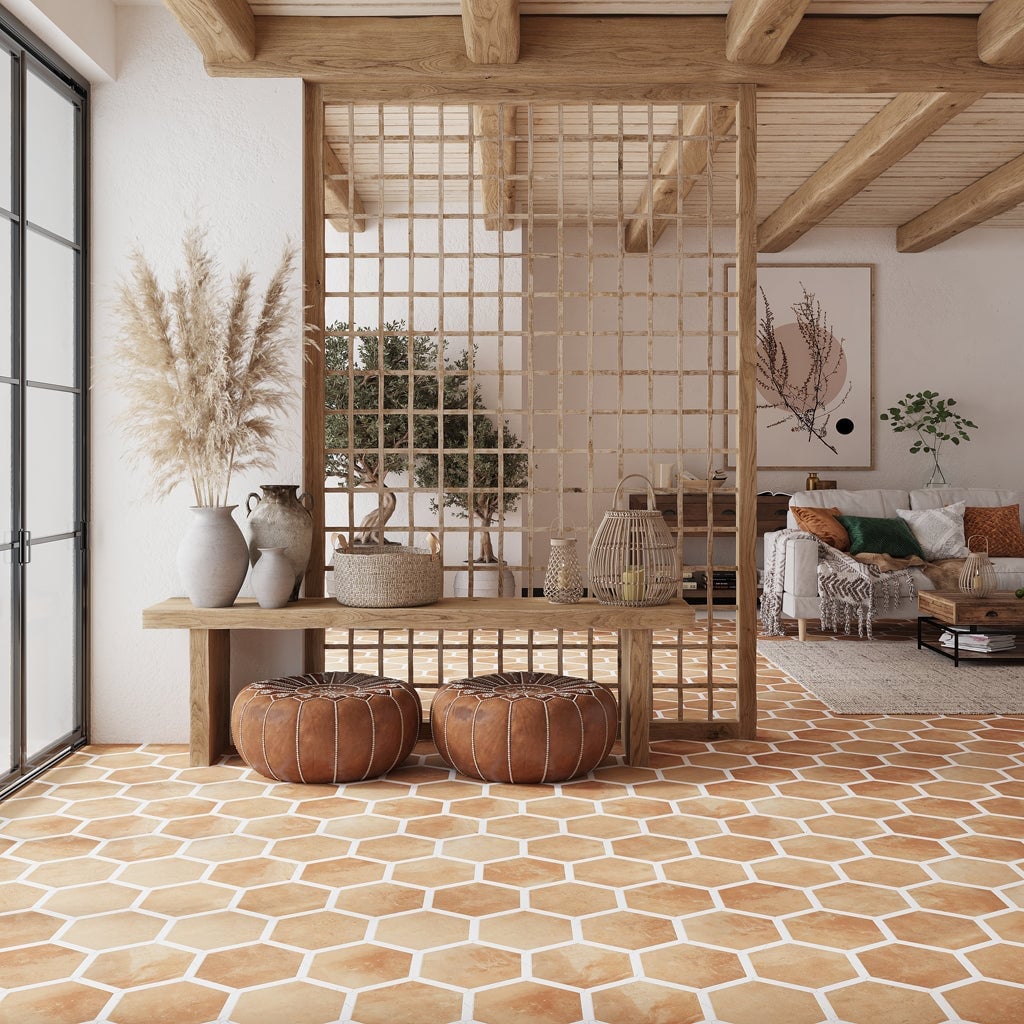
Let one warm tone lead the palette and keep everything else in supporting roles. Hexagonal terracotta floor tiles bring that warmth, while white walls and natural wood, rattan, and linen pieces keep the space feeling light. An open plan with a decorative screen divides the room without blocking daylight. Green accents from plants or vases echo the earthy tile color. The palette stays cohesive when terracotta covers roughly a third of the visual field, with cream and wood tones filling the rest.
Marble tiles create a luxurious modern bathroom
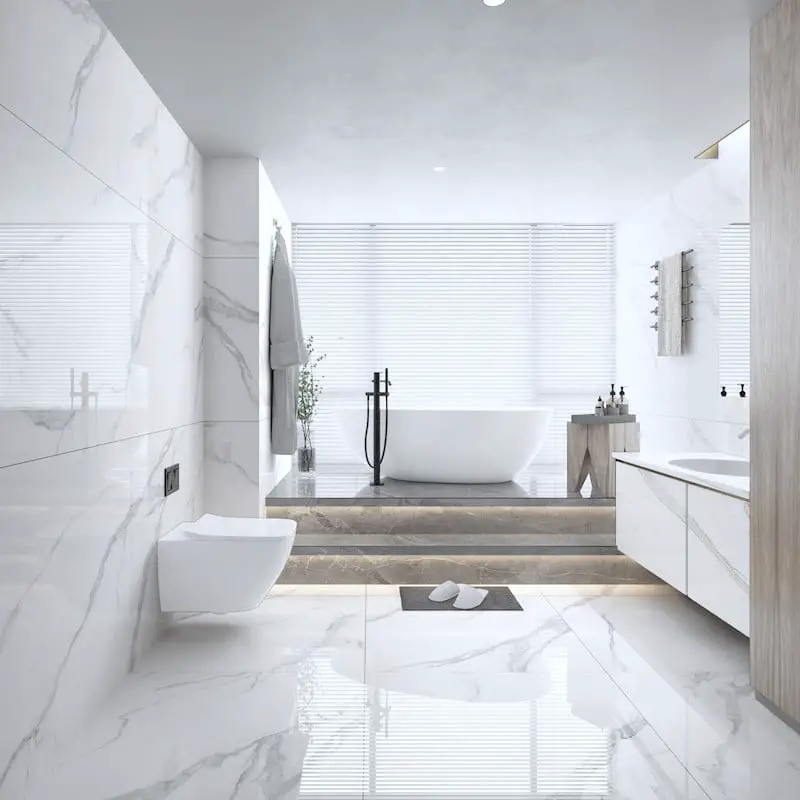
Close your eyes and picture a marble floor with small square tiles, then imagine the same stone cut into large slabs. The difference is scale. Large marble floor tiles with soft gray veining make a bathroom look more expansive because fewer grout lines break up the surface. An sharper platform for a freestanding bathtub adds architectural weight without crowding the room.
The real trick is pairing the marble with simple fixtures like a wall-mounted toilet and a sleek vanity. This lets the stone be the focal point rather than competing with ornate hardware. Accent lighting from above and around the room catches the veining and gives the floor a neat, almost wet look.
Textured travertine tiles for a clean interior
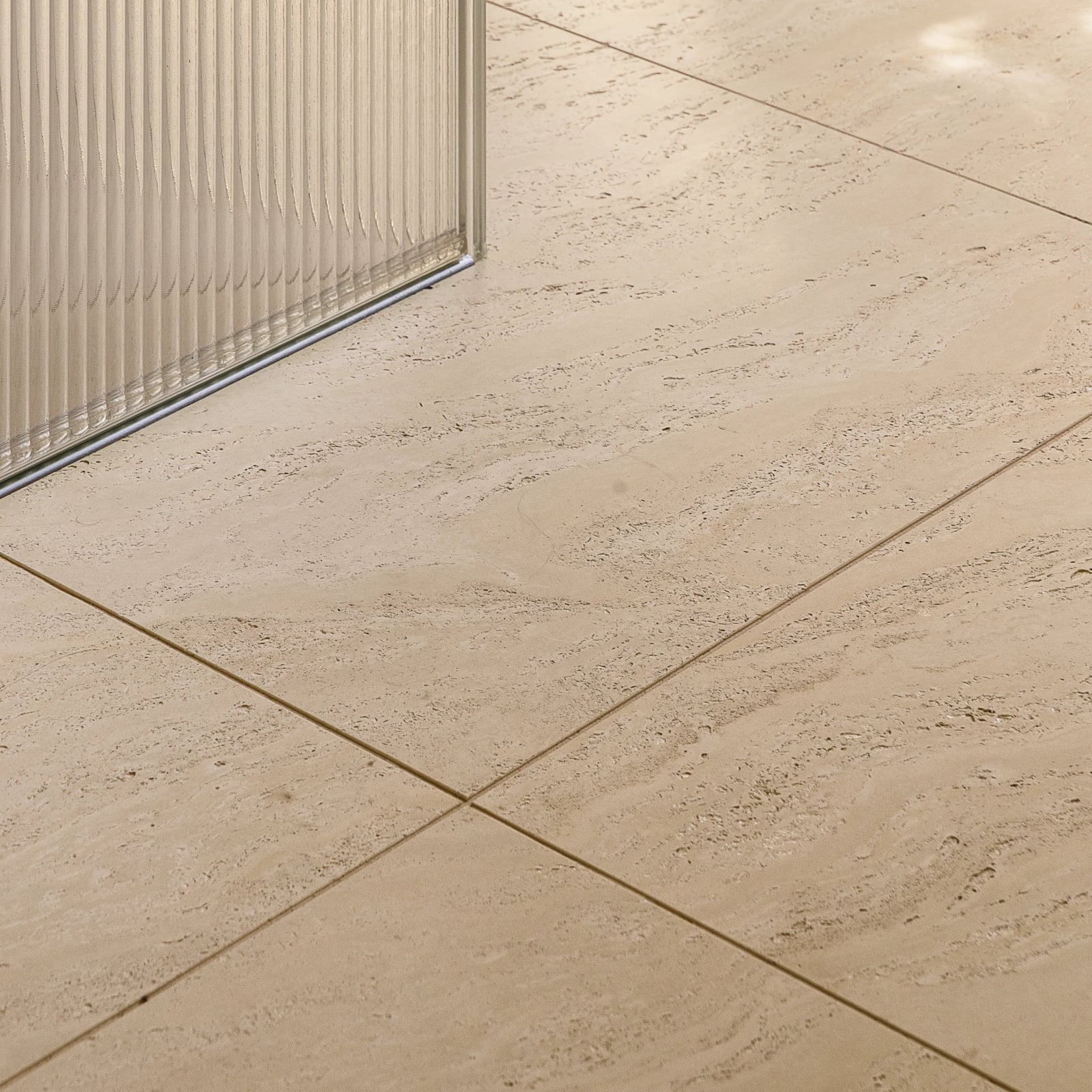
Travertine tiles have a naturally pitted surface that catches light differently than neat stone. The beige tones keep the floor feeling warm and neutral, while the texture adds visual interest without a pattern. A fluted glass partition nearby echoes the vertical lines in the tile surface. The material choice matters here: travertine is softer than granite, so it works best in low-traffic indoor spots where it won’t see heavy scuffs or dirt.
Speckled terrazzo floor for a modern living room
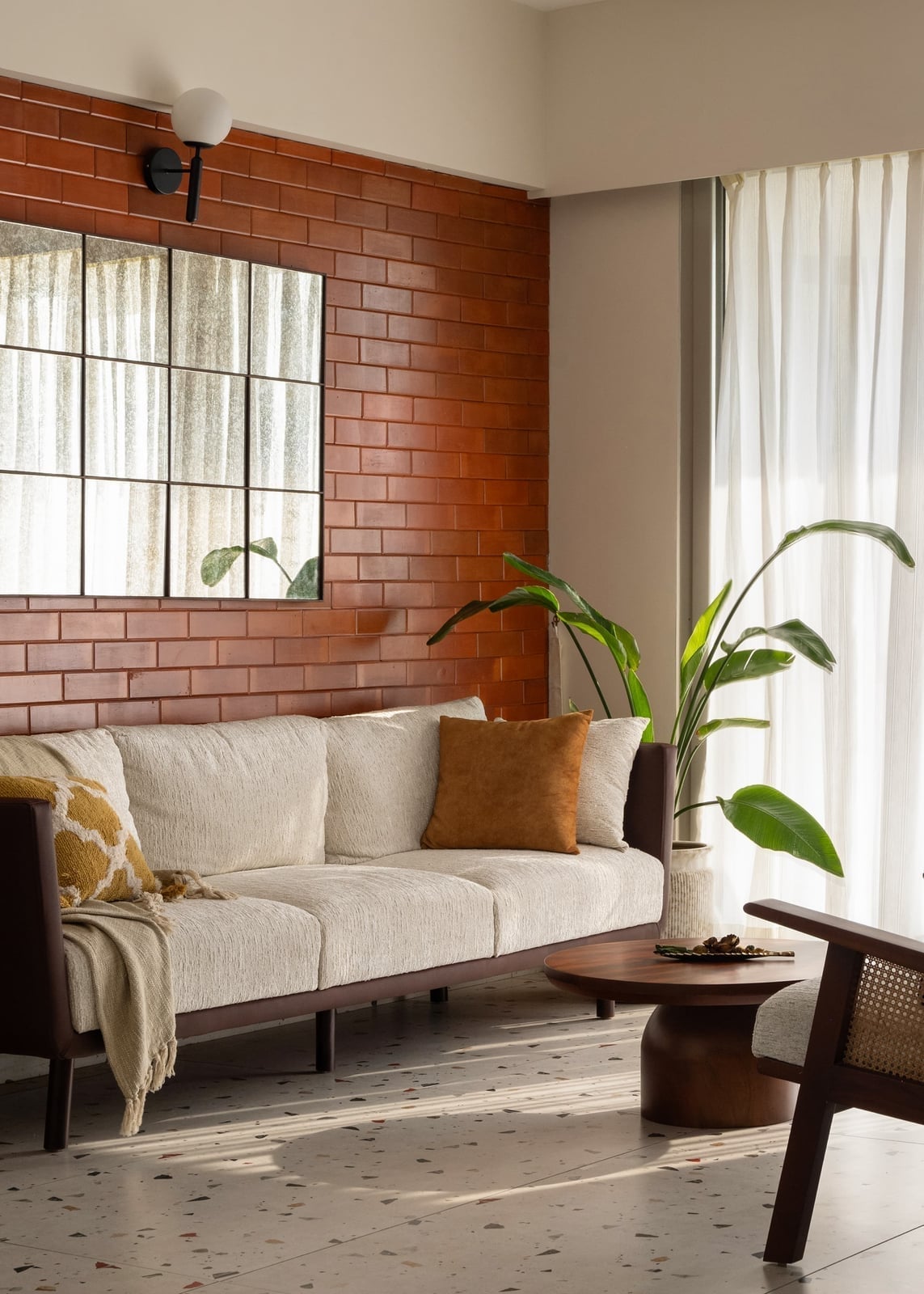
A terrazzo floor looks busy or calm depending on the size of the chips and the base color. A white or beige base with small terracotta, brown, and green flecks keeps the pattern subtle enough for a living room. The terrazzo anchors the space while a neutral sofa, wood coffee table, and a single armchair keep the layout open. A wall sconce and nearby window keep the room bright. To go bolder, choose a darker base with larger chips, but for everyday living, the fine speckle hides dust and wear better.
Large gray tiles for a spacious outdoor patio
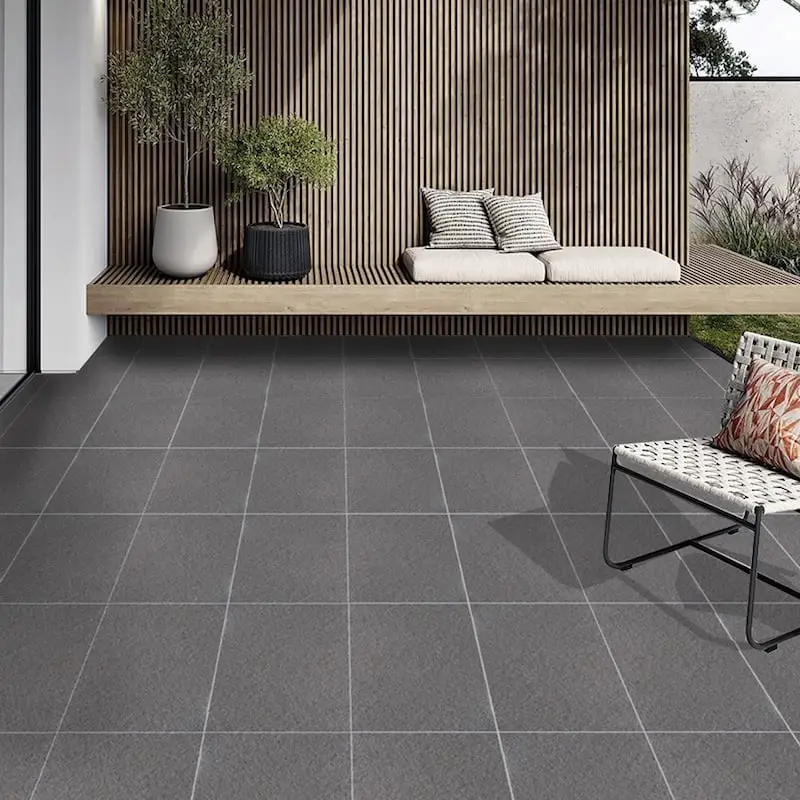
For an outdoor patio, the rule is to match the tile scale to the space. Wide gray floor tiles keep the ground from feeling busy, so the eye stays on the seating area instead. A bench with cushions, a chair, and potted plants sit against a slatted wall, with wood tones and green breaking up the gray. Daylight does the work here, making the roomy layout feel open without needing more decor. The palette stays in grays, wood, white, and green, which keeps the patio looking clean through the seasons.
Starburst tiles define a bold modern bathroom
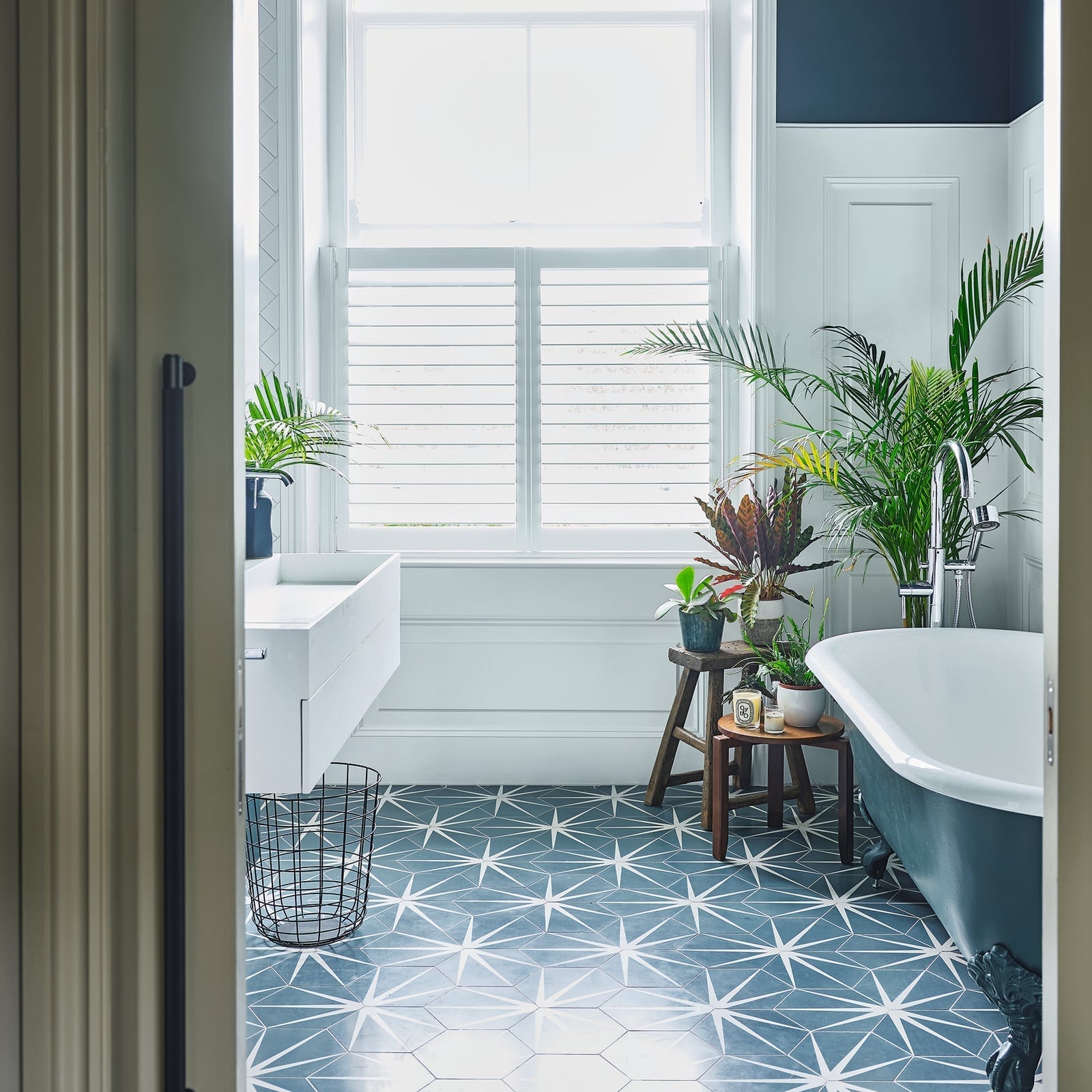
A geometric starburst pattern on the floor gives this bathroom its personality. The blue, white, and dark blue tiles create a central focal point that the clawfoot tub and vanity sit around. Wooden stools and plants soften the geometry, while daylight from the window keeps the room feeling open. What defines this look is the contrast: the bold floor against the simple white tub and vanity. Adding more patterns would break the balance, so keep the walls and fixtures neutral.
Bold marble pattern creates a sharp dining area
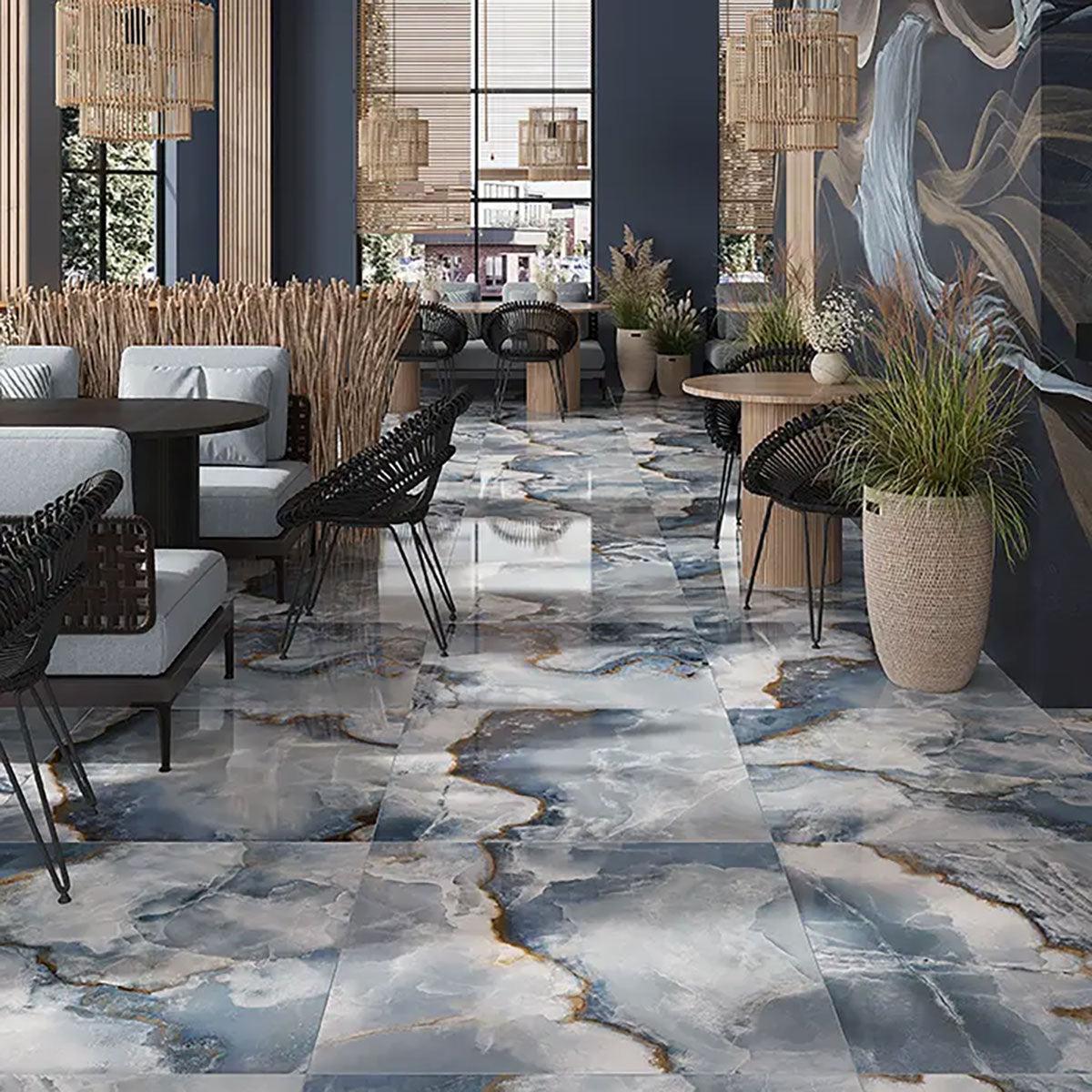
Let the floor anchor the whole room. Marble-look tiles in blue, gray, and white do exactly that here. The bold veining adds movement without overwhelming the space, because the dining tables, chairs, and sofas stay in neutral tones. Hanging lights and windows keep the palette light. The gold accents in the room pick up the warm undertones in the marble pattern, which keeps the look cohesive.
Hexagonal blue terrazzo tiles in a modern cafe
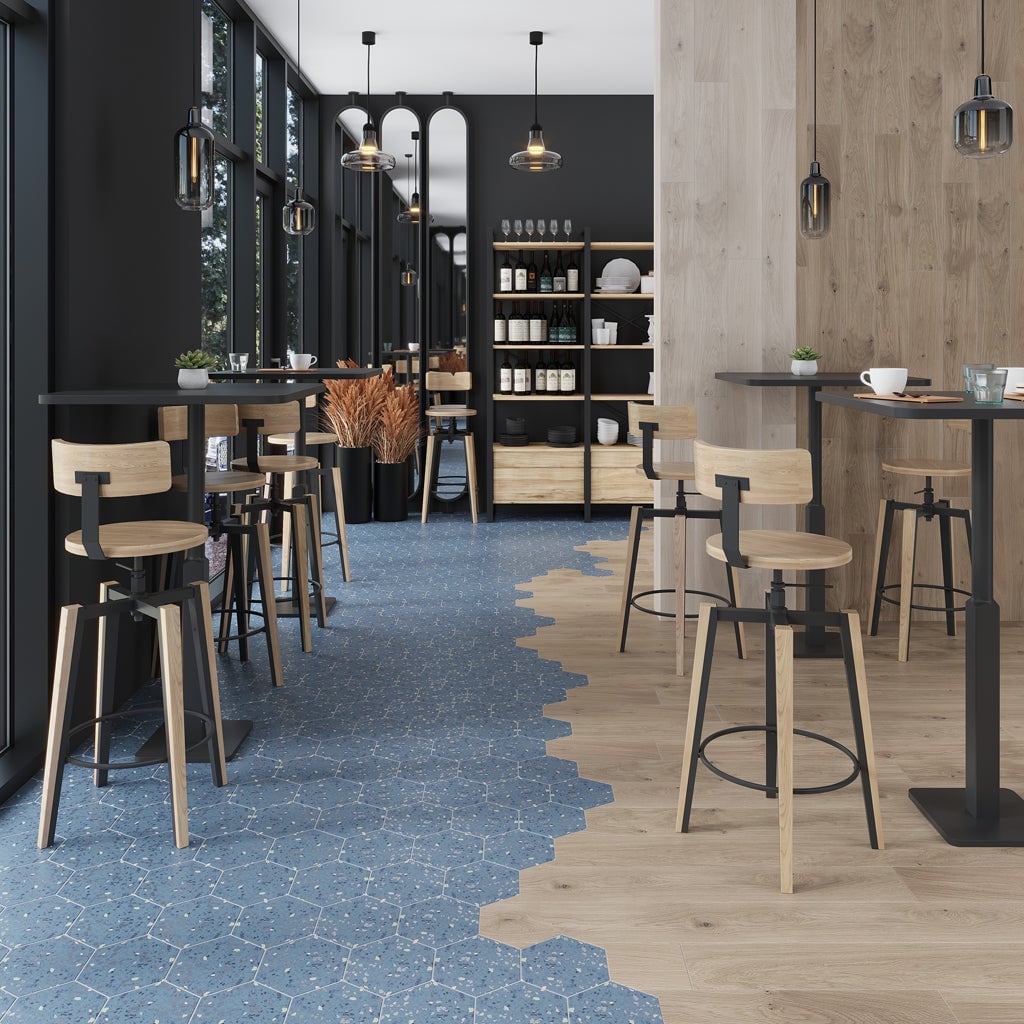
Hexagonal blue terrazzo tiles anchor the floor in this open plan cafe seating area. The blue tiles contrast with wood tones from the bar stools and high tables. Hanging lights hang low, drawing the eye up. A shelving unit in black metal and glass adds storage. The wood tones break up the blue just enough to balance the cool palette.
Beige and cream veined stone tile sample
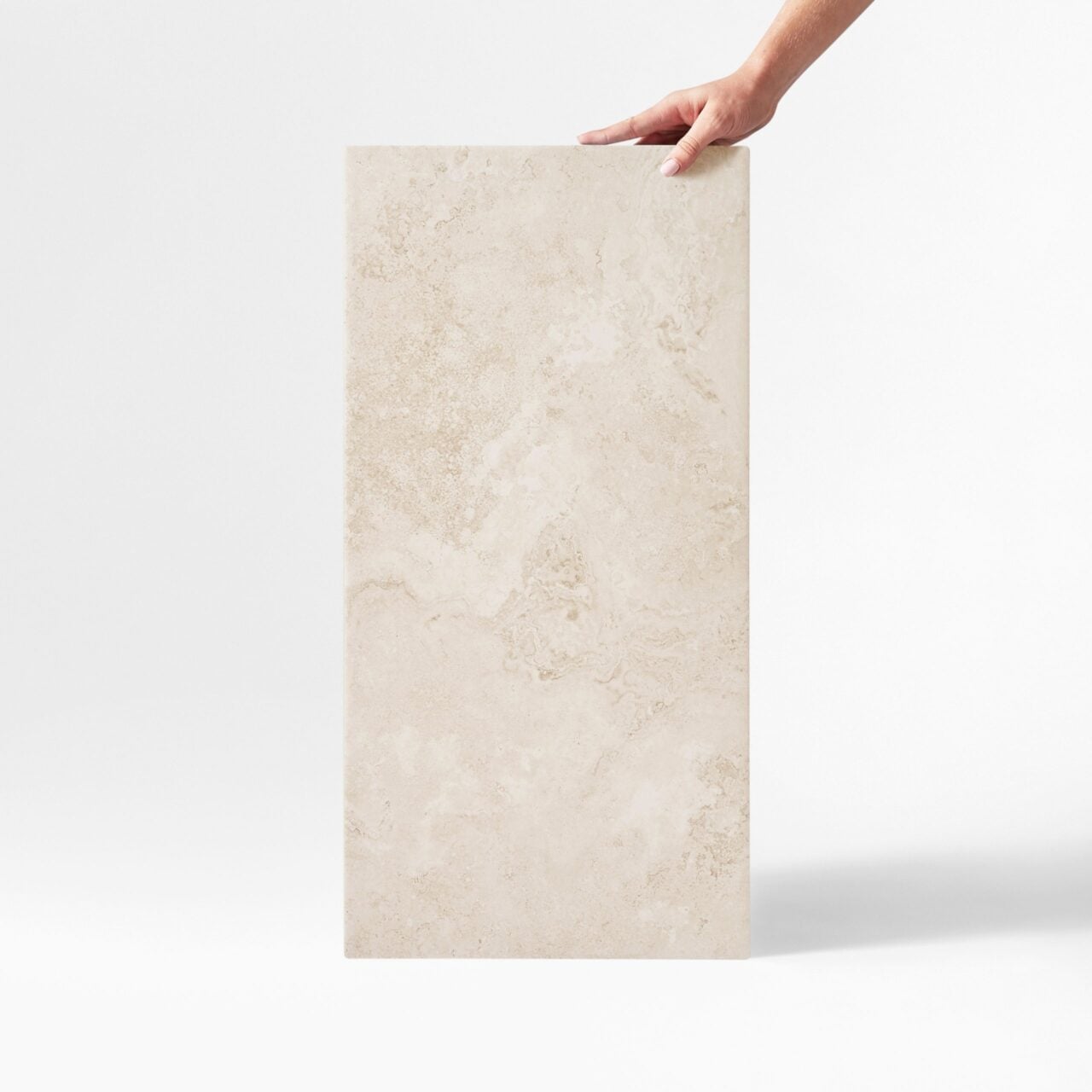
A beige and cream veined stone tile sample shows how subtle pattern can still add texture. The veins run through the tan base in a way that mimics natural stone without being too regular. This kind of finish works well when you want a floor that looks neutral up close but has enough interest to hold a room together. The studio lighting here makes the veins pop, but in a real room, daylight will soften them. A tile like this pairs well with warm wood or white cabinetry.
Geometric beige stone tiles for a traditional foyer
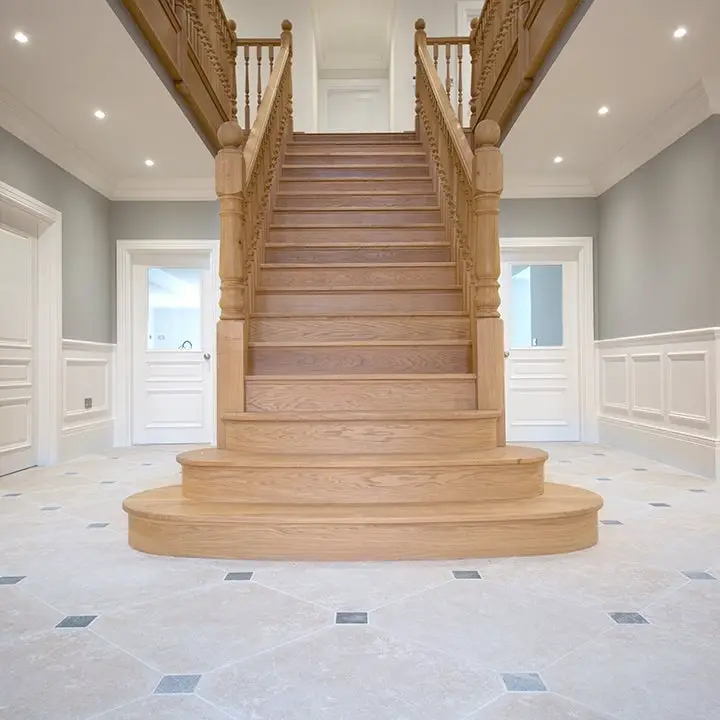
A roomy foyer with a grand staircase and paneled doors calls for a floor that can hold its own without shouting. Geometric beige stone tiles in a repeating pattern do exactly that. The beige, gray and white palette looks neutral but has enough structure to anchor the entry. The layout is symmetrical: the central staircase and matching doors frame the space, so the geometric tile pattern becomes the logical visual base. For a traditional foyer like this one, a geometric stone tile is a solid swap for a patterned rug. It gives the same sense of order without the upkeep of fibers in a high-traffic zone.
White and gold marble-look porcelain tiles in a bathroom
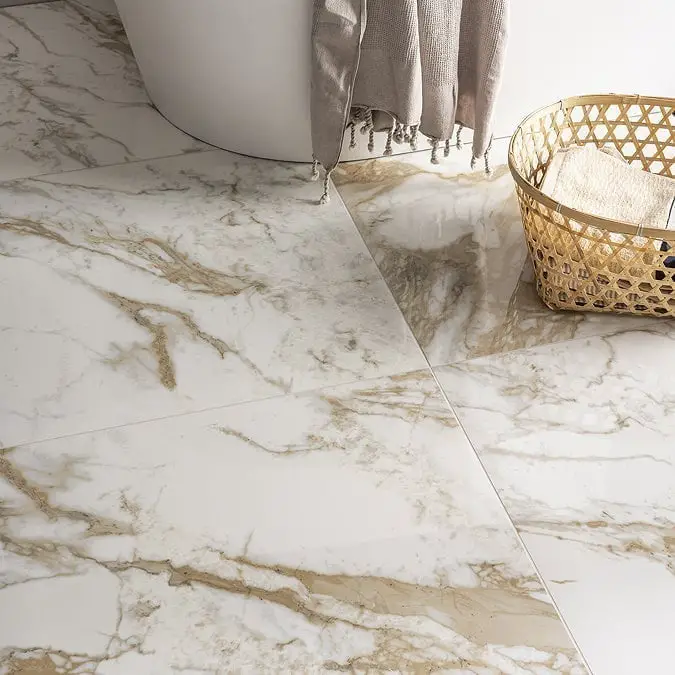
Real marble in a compact bathroom can feel like a gamble with moisture and maintenance. White and gold marble-look porcelain tiles offer a similar veined look without the same worry. The palette stays pale: white tile with soft gold veining, a freestanding bathtub, and a woven basket for texture. Daylight keeps the space from feeling closed in. Swapping the floor tile is a practical move for updating the room. Porcelain holds up to humidity better than natural stone, and the gold veining adds warmth without requiring a full renovation. A small bathroom reads larger when the floor stays light and the pattern stays subtle.
Geometric wood-look tiles for a modern living room
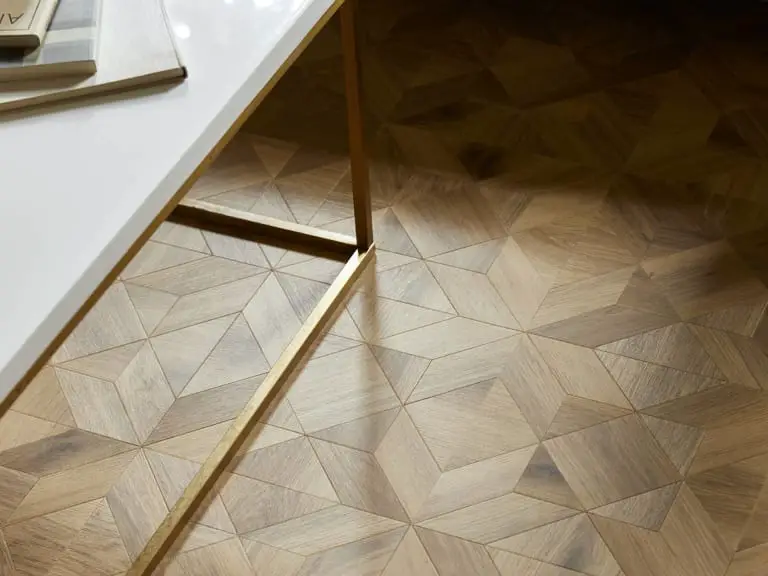
Wood-look tiles arranged in a geometric pattern give an open-plan living room the warmth of hardwood with the durability of tile. The palette mixes light and dark brown planks against a white coffee table and books. Daylight softens the contrast between the tones. A geometric layout like this one works well in a room that needs visual structure but not a busy wall pattern. The tile becomes the anchor while the furniture stays neutral and low.
Gray, blue, and white geometric tiles for a hallway
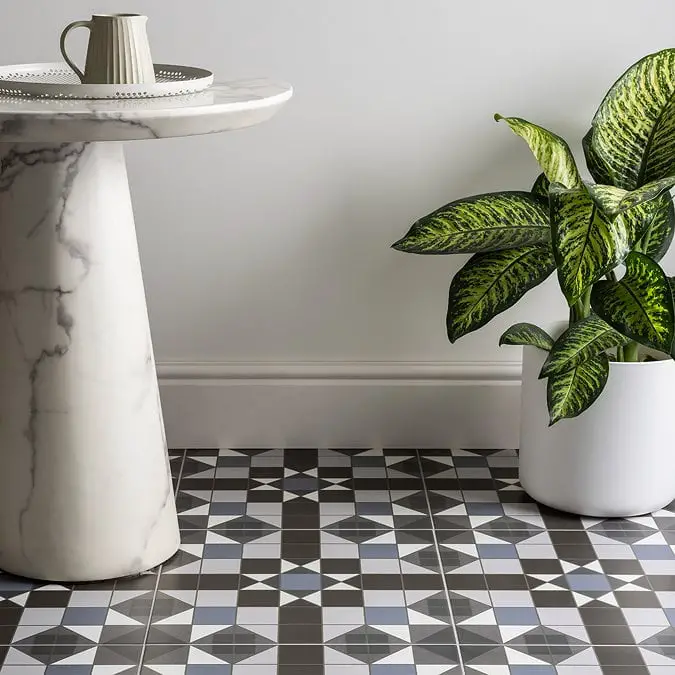
A hallway with daylight from one side can feel narrow if the floor has no direction. Gray, blue and white geometric tiles arranged in a repeating pattern give the space a clear visual rhythm. The palette stays cool: gray and blue against white, with black accents in the tile lines. A pedestal table and potted plant break up the run of the floor without blocking the pattern. For a roomy hallway like this one, the scale of the geometric repeat matters. A larger repeat suits the open feel, while a tighter grid would look busy. The tile pattern does the work of a runner but covers the whole floor.
Stone tiles create a sharp outdoor patio setting
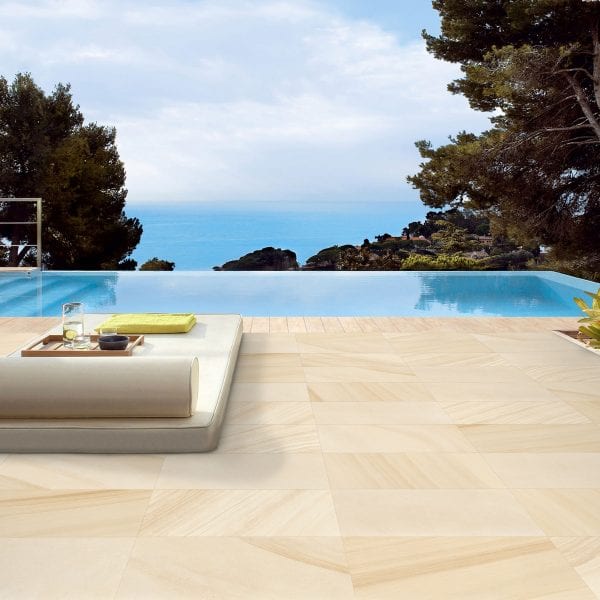
A wooden deck can feel too rustic for a modern patio, and concrete slabs can look cold. Wide stone-look tiles split the difference. The beige and cream palette blends with the blue of the outdoor setting without fighting it. A daybed, tray and glass keep the furniture minimal so the tile pattern stays central. For outdoor use, the material matters. Stone-look porcelain or ceramic tiles handle freeze-thaw cycles better than natural stone in many climates. Check your USDA zone before committing to a specific finish. The wide format reduces grout lines, which means less cleaning between tiles over time.
Final Thoughts
A tile floor is a long-term investment in how a room looks and lives. The ideas here show that pattern, scale, and color are all levers you can adjust to fit your space. A large format tile keeps things quiet; a hexagonal or checkered tile adds energy. The practical takeaway is to pick one tile that does the work and let the room stay simple around it. That approach keeps the floor from competing with furniture or walls. For upkeep, most tile needs only regular sweeping and occasional mopping with a pH-neutral cleaner. Grout lines will need sealing every year or two, especially in wet areas. Always order a few extra tiles from the same batch for future repairs. When you let the floor lead, the rest of the room can follow.