Choosing a paint color for your kitchen can feel like a high-stakes decision. You want something that looks good now and won’t feel dated next year. That’s where the aesthetic kitchen paint colors 2027 come in, offering a range of looks from cozy farmhouse to clean modern.
We have rounded up 26 ideas that focus on the color itself as the hero, keeping the surrounding space simple so the shade can shine. Whether you are drawn to soft greens, warm creams, or unexpected pale pink, this guide walks through options that are both stylish and livable.
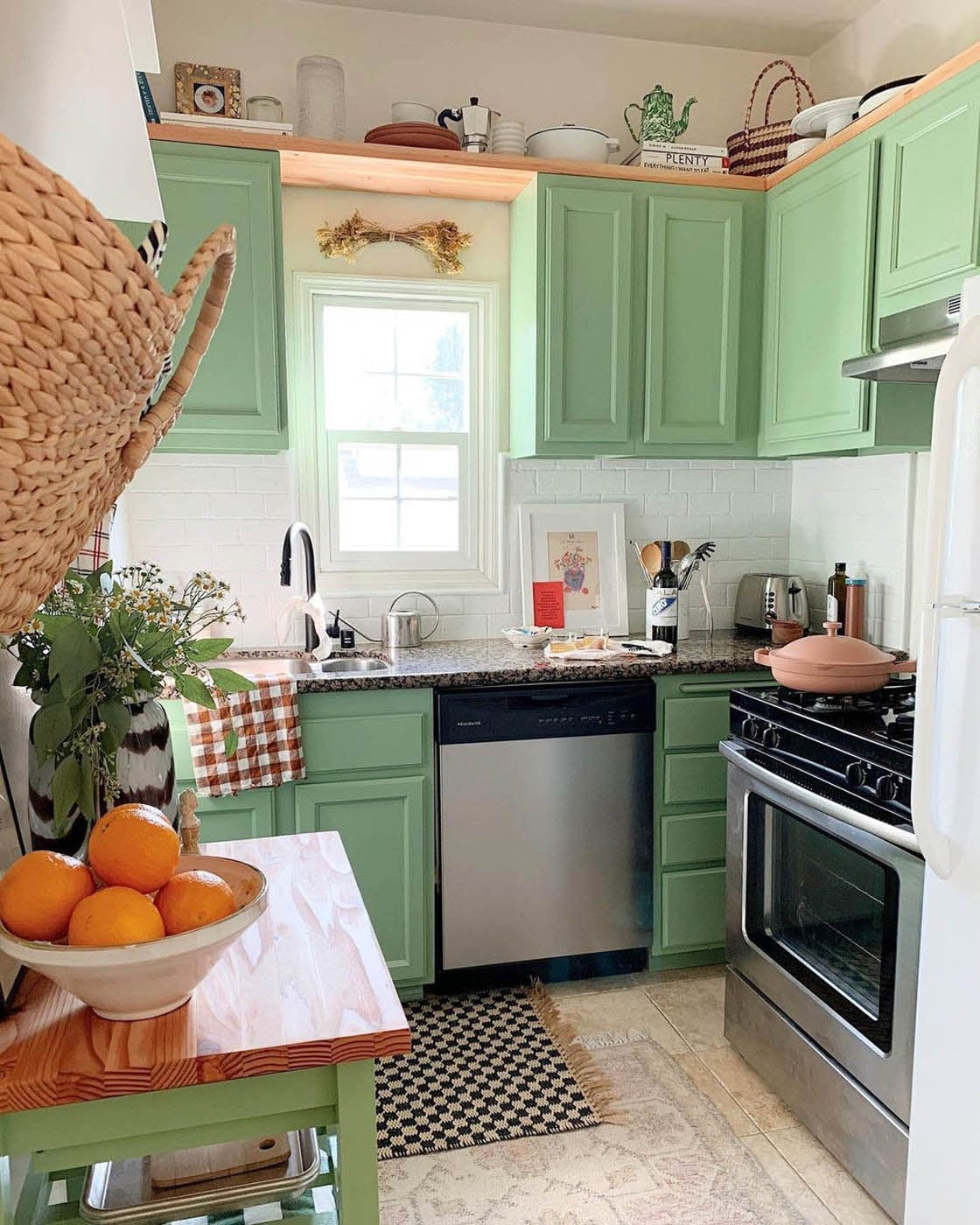
Sage green cabinets for a cozy farmhouse kitchen
Sage green cabinets bring a calm, grounded feel to a compact corner kitchen. The muted green pairs naturally with white subway tile and a checkered rug, while wood tones and black hardware keep the look from turning too sweet. Overhead light and a window keep the space bright. For a palette like this, aim for one warm accent, here, the wooden shelf does the job, so the green looks intentional rather than accidental.
Soft off-white cabinetry for a clean, inviting kitchen
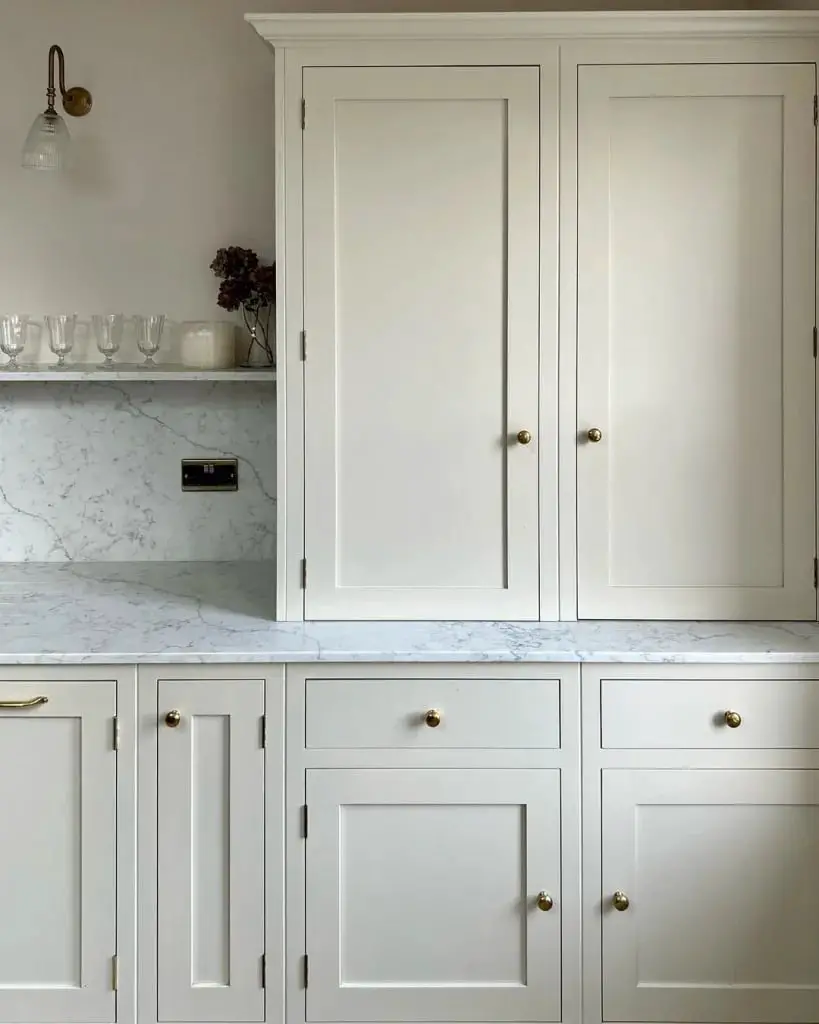
Off-white shaker cabinets work because they are warm without being yellow. In this vignette, the cream tone softens the marble and brass, while a wall sconce adds a layer of light that keeps the palette from falling flat. The mix of closed cabinetry and open shelving gives the kitchen a practical rhythm: everyday glassware within reach, extra storage tucked behind doors. A true off-white, one that leans beige rather than gray, will hold its warmth under both natural and artificial light.
Pale blue-green cabinetry for a spacious modern farmhouse
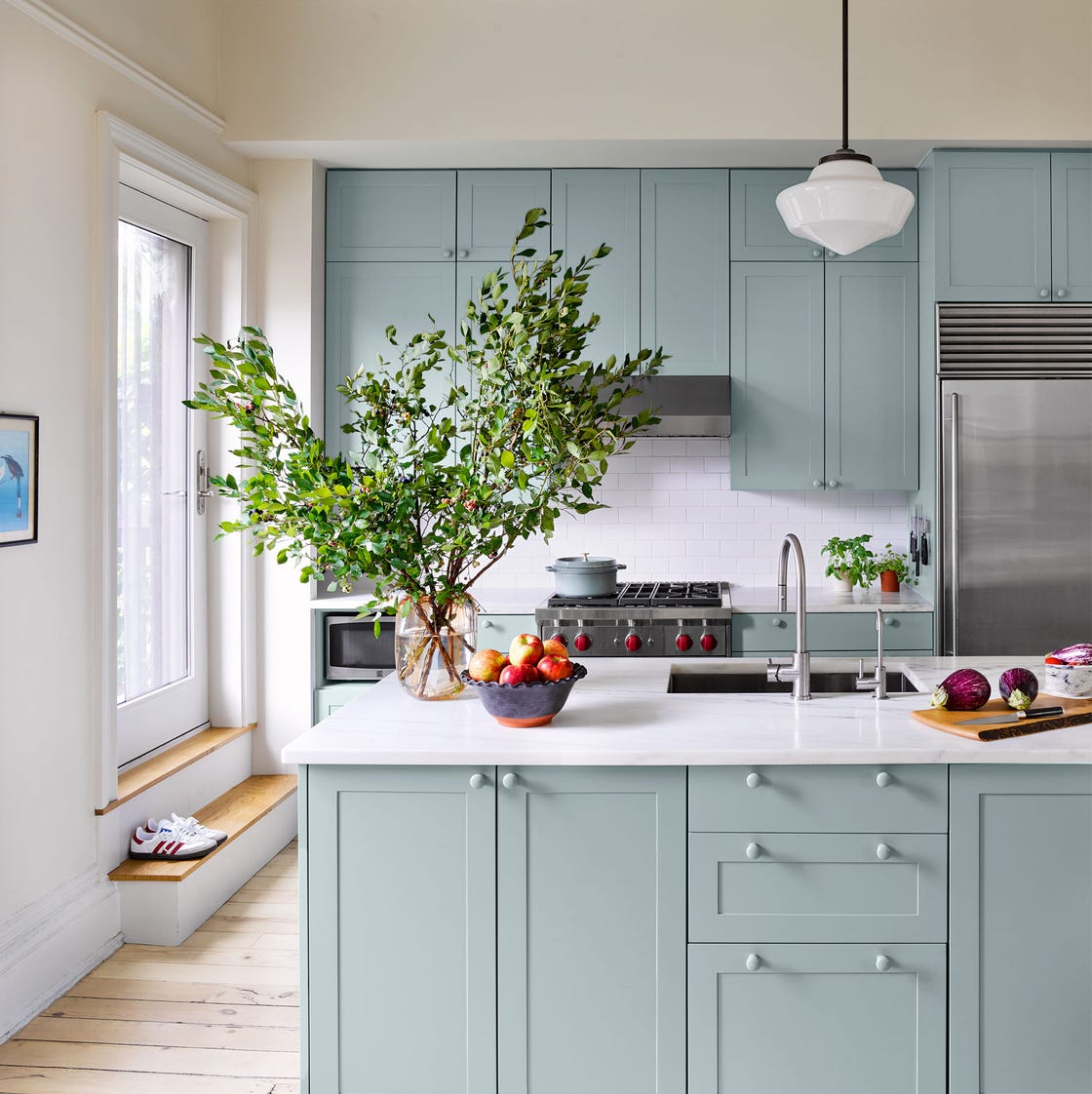
Can a cool cabinet color make a kitchen feel bigger? Pale blue-green does exactly that. The cabinets blend into the white walls and subway tile, so the eye moves past them to the roomy island and stainless steel range. Marble countertops and a wood floor add texture without breaking the quiet palette. A single pendant light over the island anchors the layout, while natural light from the door keeps the blue-green from feeling cold. The trick is to keep the surrounding surfaces light and the hardware minimal so the cabinet color stays the main event.
Striking two-tone cabinetry: dark blue and white
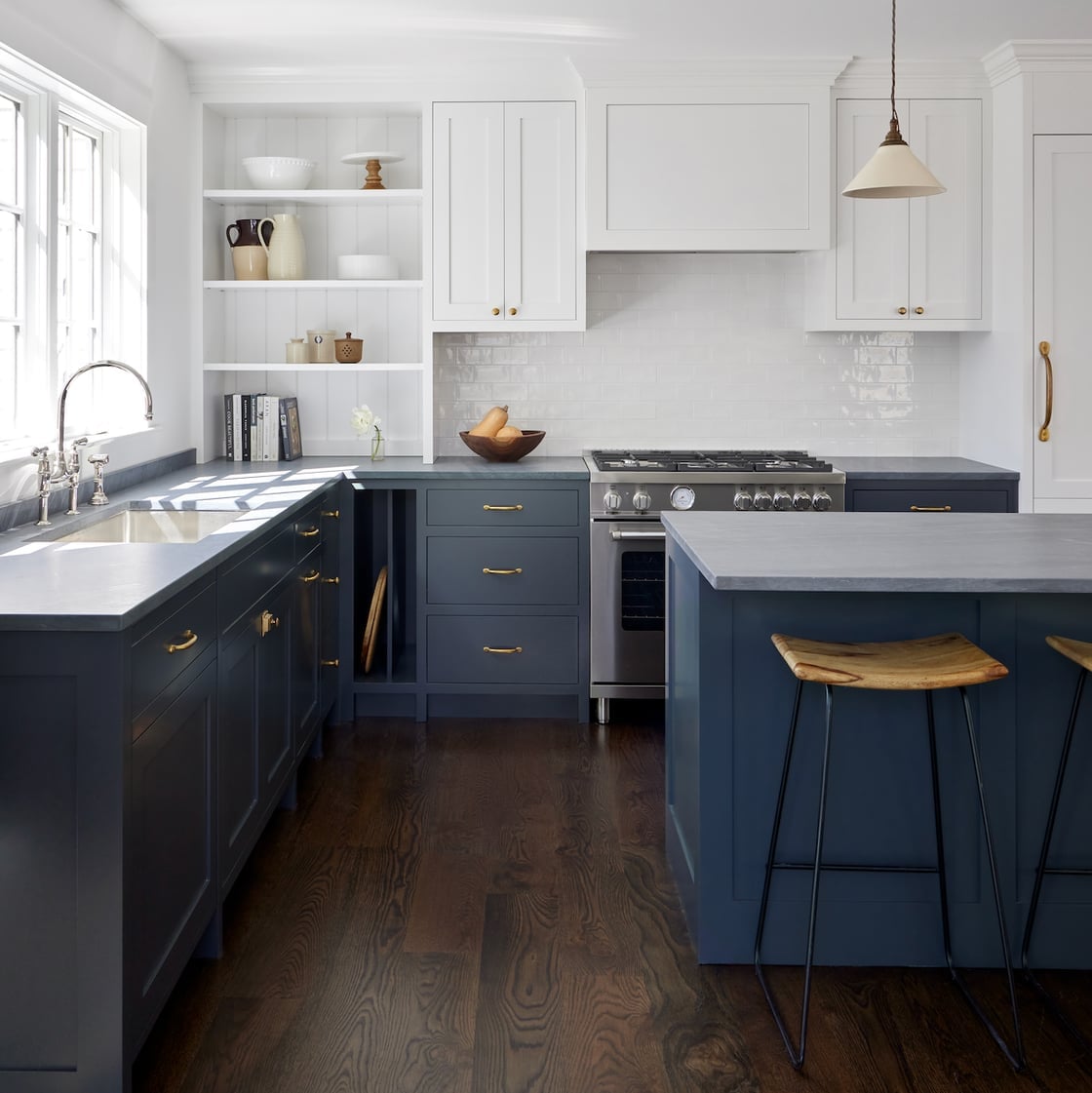
Two-tone cabinetry uses contrast to define zones. Dark blue on the island anchors the room, while white perimeter cabinets keep it airy. The dark hue hides wear on a high-traffic surface and makes the marble countertop pop. Brass hardware and open shelving add warmth. A pendant over the island balances the deep tone. A two-tone layout works best when the darker color sits on a single piece, island, hutch, or base cabinets, so the room doesn’t feel cut in half.
Cream arched cabinet doors for traditional elegance
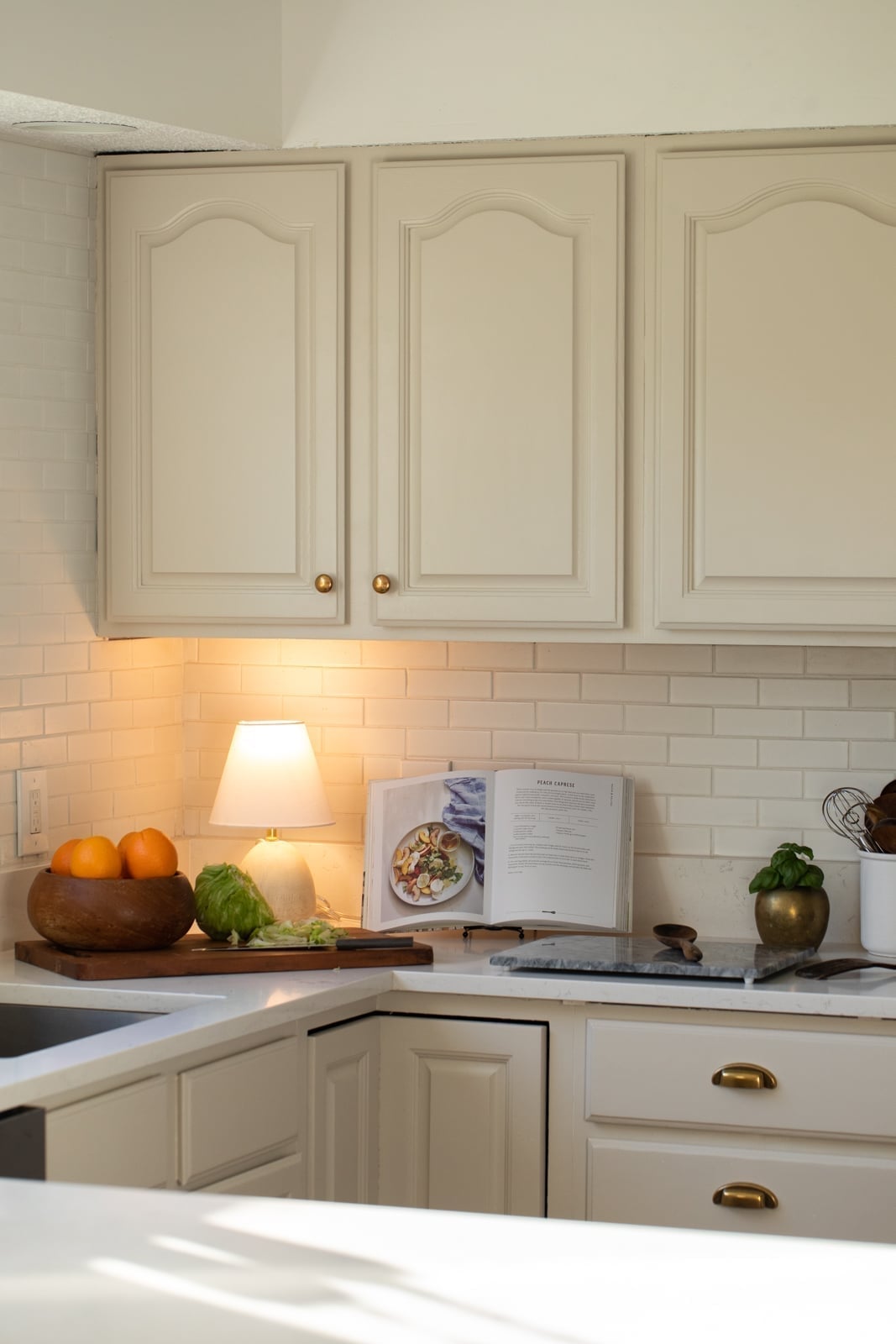
Arched cabinet doors add architectural interest without extra square footage. The curve breaks up a long run of cabinets and draws the eye upward, making a compact kitchen feel taller. Cream paint keeps the look soft and traditional, while brass hardware and a marble countertop add weight. Under-cabinet lighting ensures the arch reads clearly, even at night. For a similar effect, paint the surrounding trim the same cream so the cabinets feel built in, not added on.
Pale yellow cabinetry for a bright farmhouse kitchen
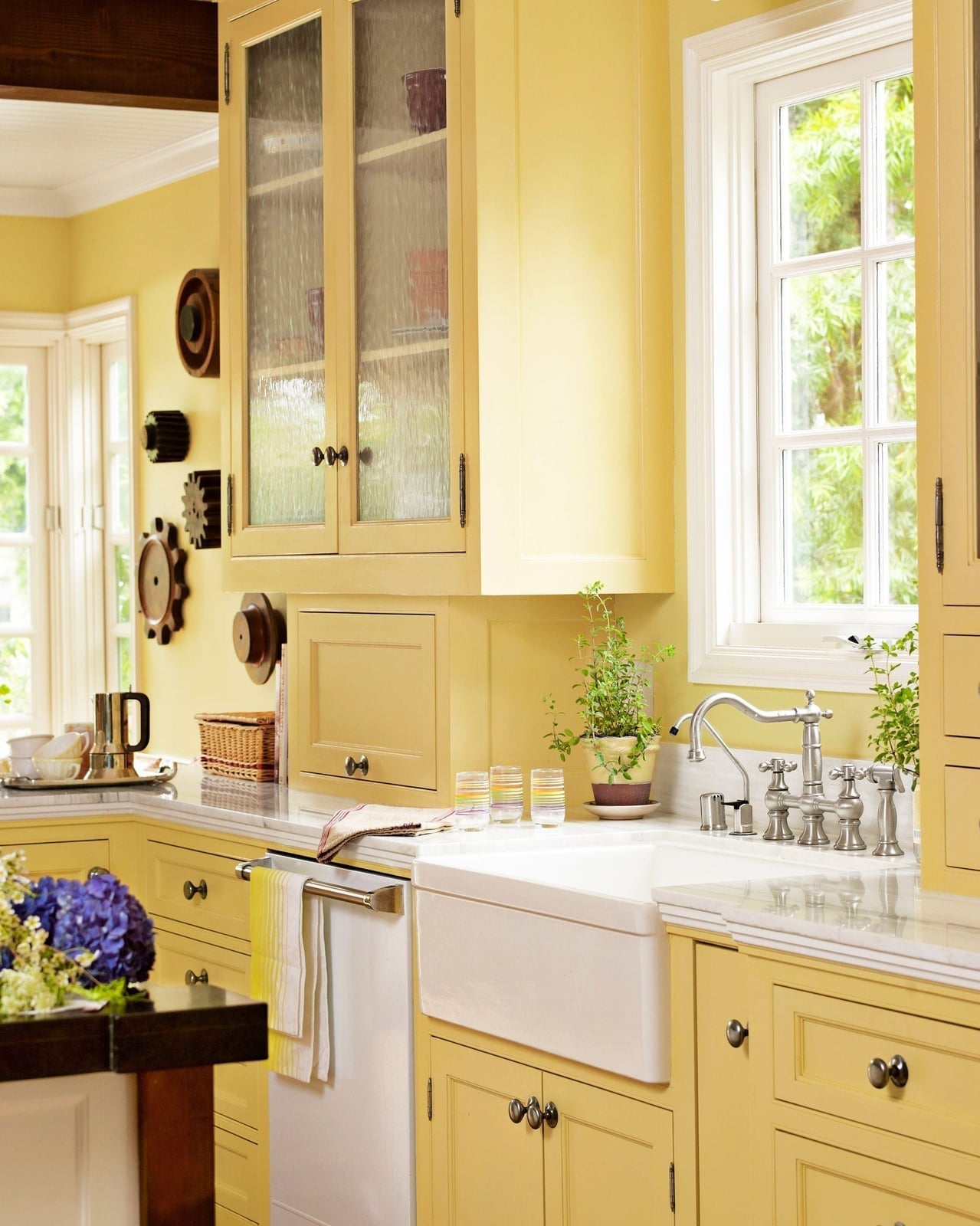
Pale yellow is a warmer answer to white, one that keeps the same airy feeling without the clinical edge. The farmhouse sink anchors the compact corner layout, and the marble countertops catch daylight, letting the pale yellow walls and cabinetry do the rest. Glass-front cabinets break up the wood and give the eye somewhere to rest. The palette works because it stays simple: yellow, white, marble. Nothing else competes, so the color feels deliberate.
Off-white shaker cabinets with a charcoal island contrast
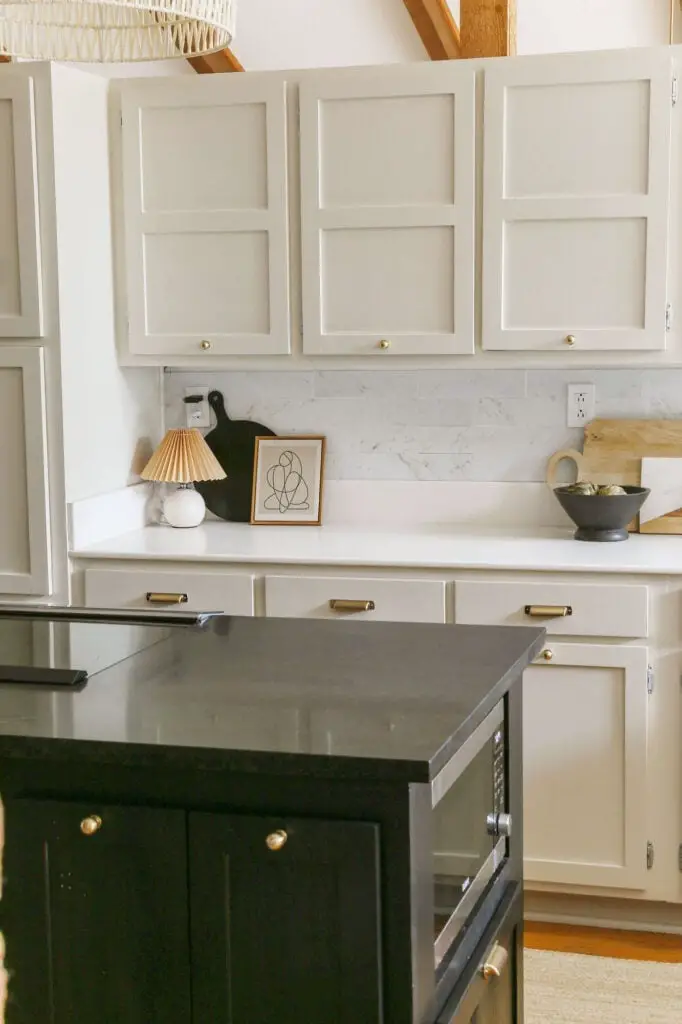
Off-white shaker cabinets feel warm and approachable, but the charcoal island gives the room a spine. The marble countertop and brass hardware keep the palette from feeling too heavy, while the pendant light adds task lighting right where you need it. For a temporary swap, consider a charcoal island via peel-and-stick panels or a furniture-grade island cart instead of painting the existing one.
Expansive beige built-in cabinetry in a farmhouse kitchen
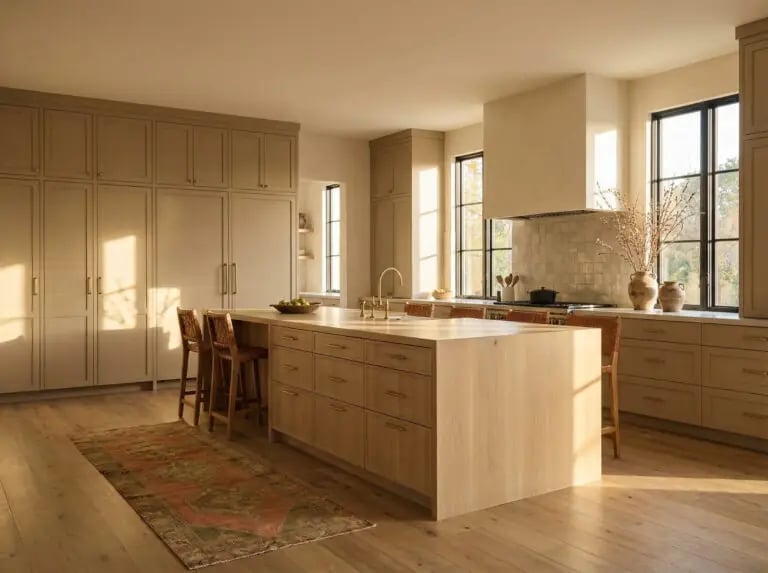
This is a kitchen built for storage. The beige built-in cabinetry wraps the perimeter, leaving the central island as the clear focal point. Bar stools tuck under the island, and the range hood sits within the cabinetry run, keeping the sightlines clean. The muted terracotta and warm ambient light from the windows add a cozy feel. The beige acts as a neutral backdrop, so the marble countertops can do the talking.
Tall cream cabinetry with brass hardware
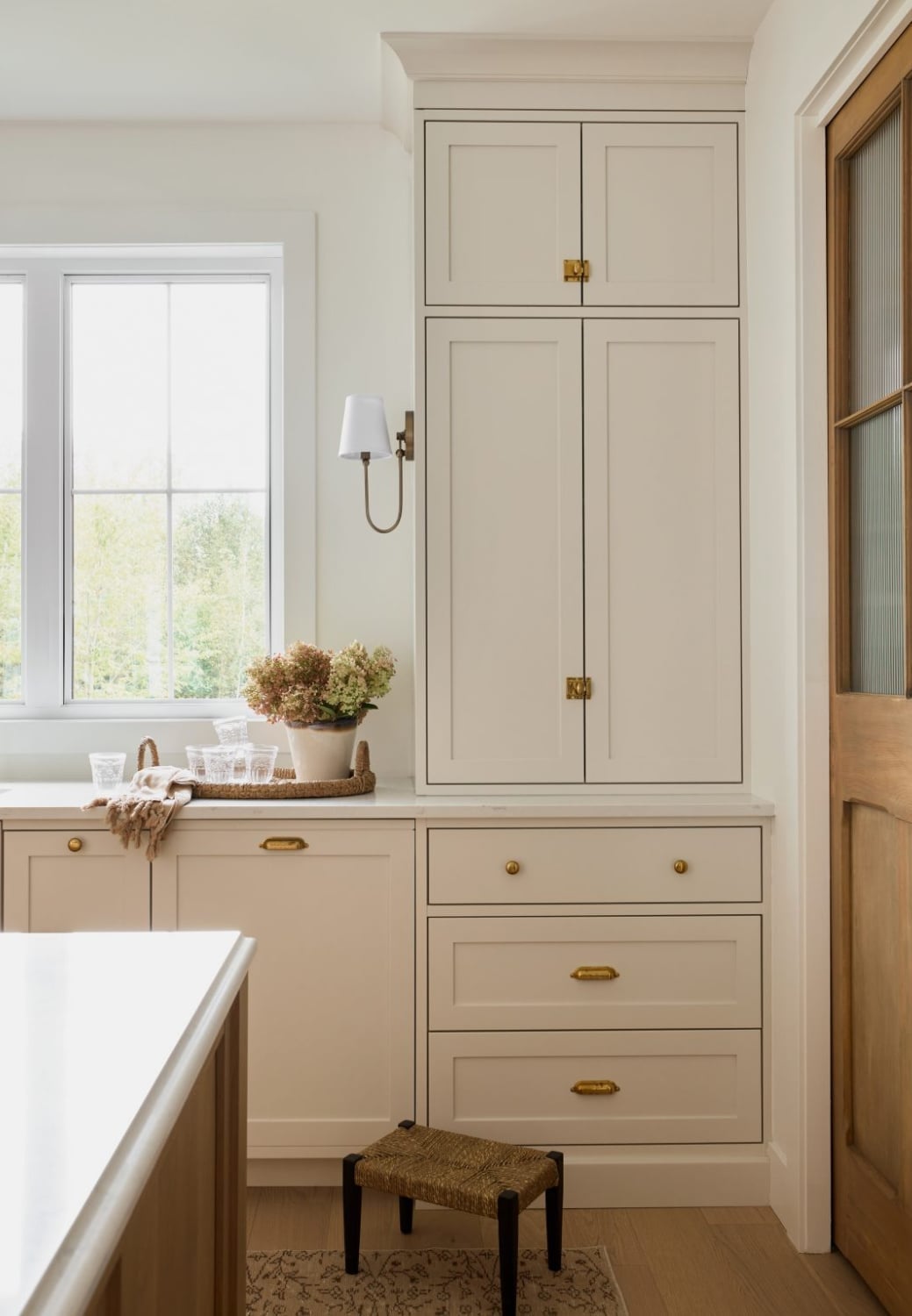
Can tall cabinetry make a room feel bigger instead of boxed in? Yes, if the hardware works with the scale. The cream cabinetry here reaches up, and the brass handles break the vertical run into readable sections. The woven rattan stool and wall sconce add softness, while the marble countertop keeps it grounded. Daylight helps the cream appear warm and not flat. The scale works because the cabinetry is the hero element, and everything else stays simple.
Pale pink walls for a charming farmhouse kitchen
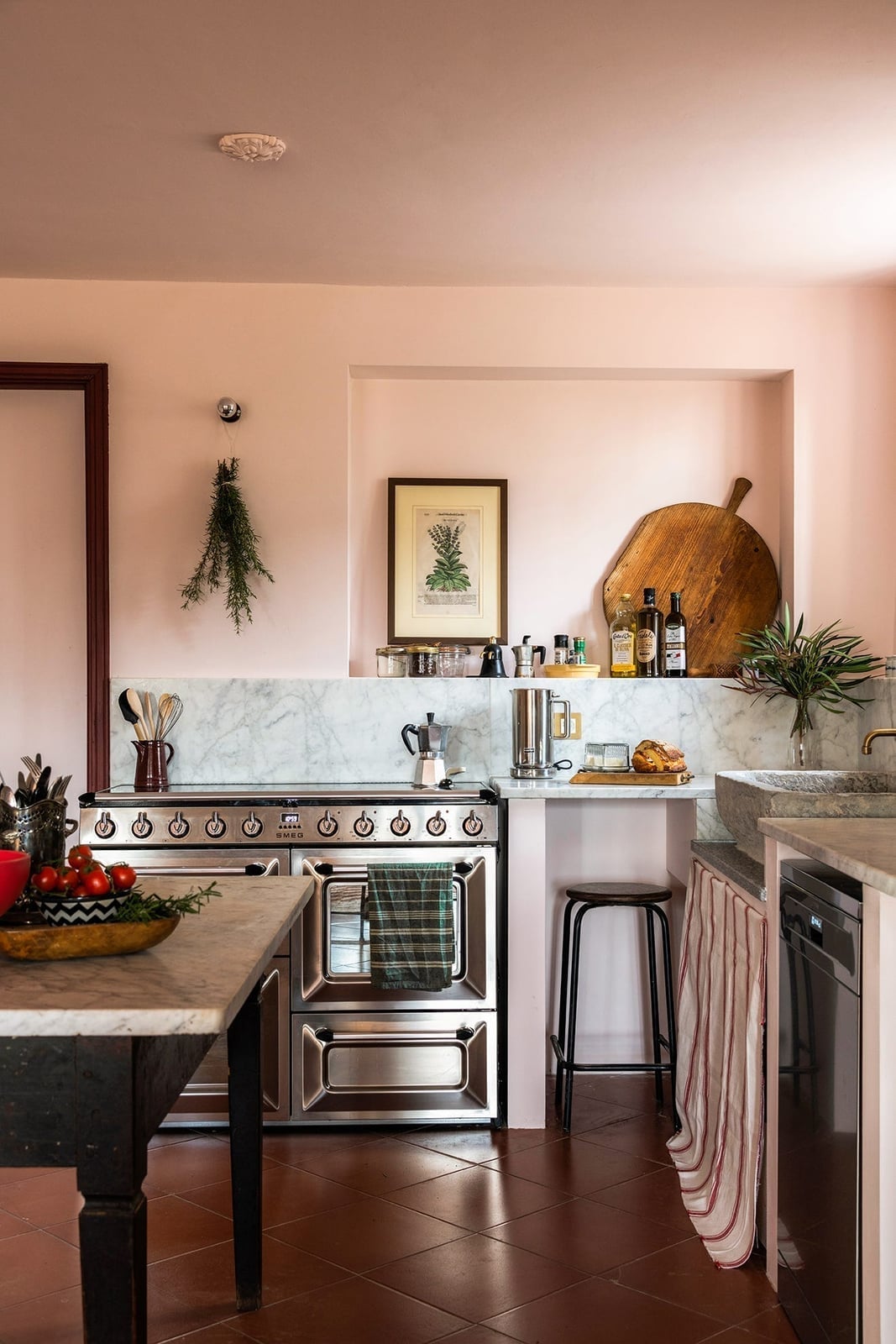
Pale pink walls work because the rest of the kitchen stays neutral. The marble backsplash and countertop keep the palette clean, the stainless steel range adds a practical edge, and the terracotta floor tiles warm up the room from below. The wooden cutting board and stone sink are small touches that reinforce the farmhouse feel. The pink is the accent, not the whole story.
Sage green shaker cabinets with exposed wooden beams
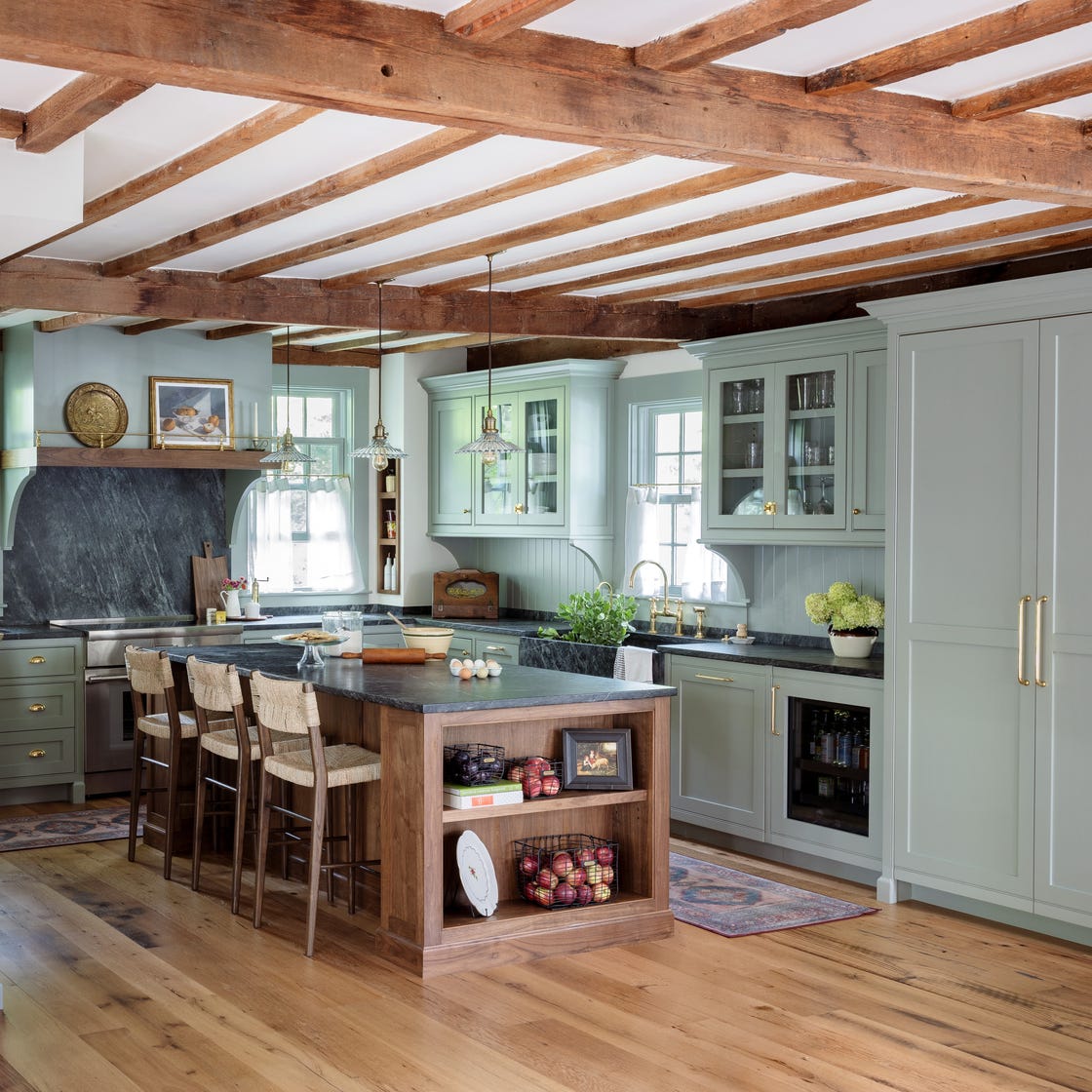
Exposed beams look cohesive when their wood tone appears elsewhere in the room. Here, sage green shaker cabinets sit below a dark wood ceiling, while the island’s open shelving and the bar stools repeat the warm brown. The stone countertops and white built-in refrigerator keep the palette from feeling heavy, and the glass-front upper cabinets let the wall color peek through. Two pendant lights over the island and windows make the green look like a muted gray-green shade. The result is a farmhouse kitchen where the beams feel structural, not rustic by force.
Crisp white cabinets and island for a bright kitchen
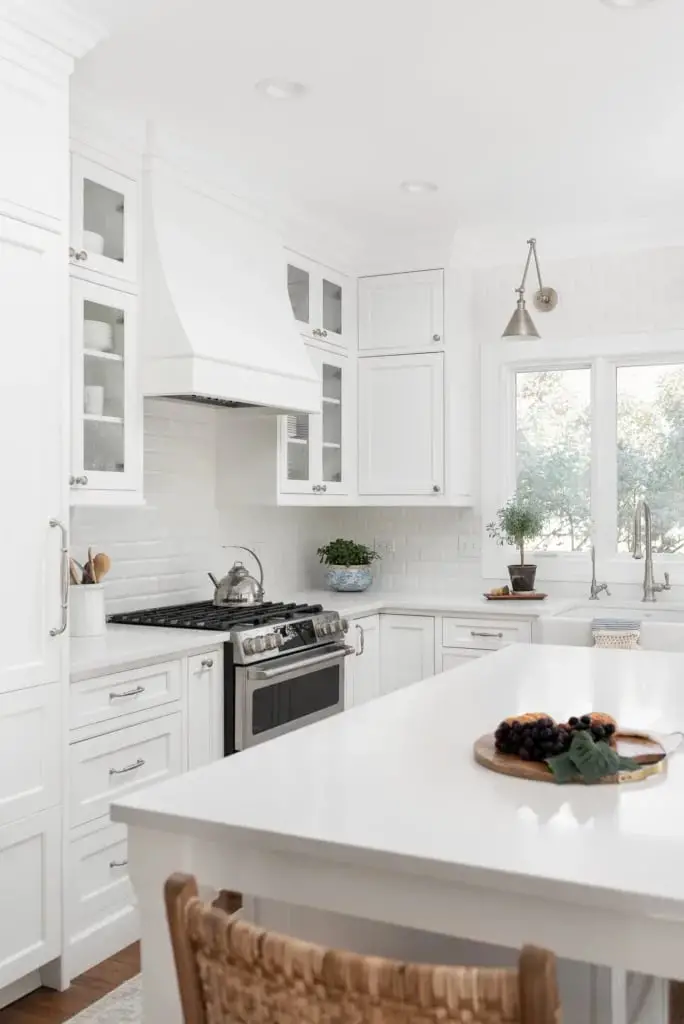
White cabinets read differently depending on what they sit next to. Here, the island and perimeter cabinets are the same crisp white, but the room avoids looking sterile by pairing them with warm wood tones in the floor and a marble countertop with gray veining. The stainless steel range and the green from a plant add contrast without competing.
The L-shaped counter with an island keeps the layout open. A wall sconce near the sink and daylight from a window give the white surfaces a soft, slightly warm cast. For a modern farmhouse kitchen that needs to feel bright but not cold, this balance of white, wood, and stone is worth considering.
Light blue accent wall in a transitional kitchen
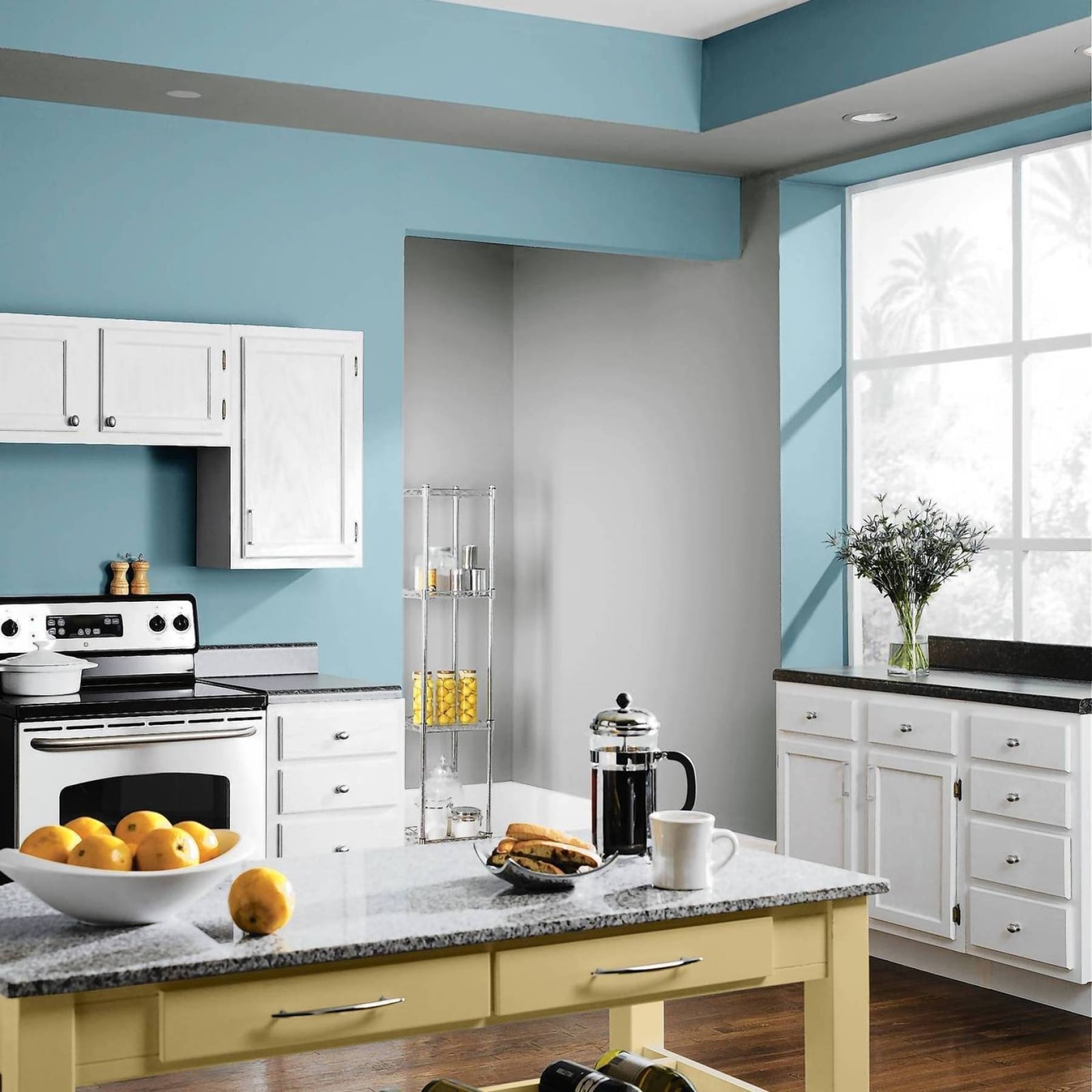
A light blue accent wall works well in a transitional kitchen because it adds color without changing the neutral foundation. The white cabinets and gray granite counters stay the same. The wall picks up the cool tones in the stone and the warm ones in the wood floor, while a stainless steel shelving unit and a yellow accent from a french press break the blue-gray scheme. Overhead recessed lighting and natural light from a window keep the blue from feeling heavy. This approach lets you update the room’s personality with paint alone.
Light blue walls in a modern farmhouse kitchen
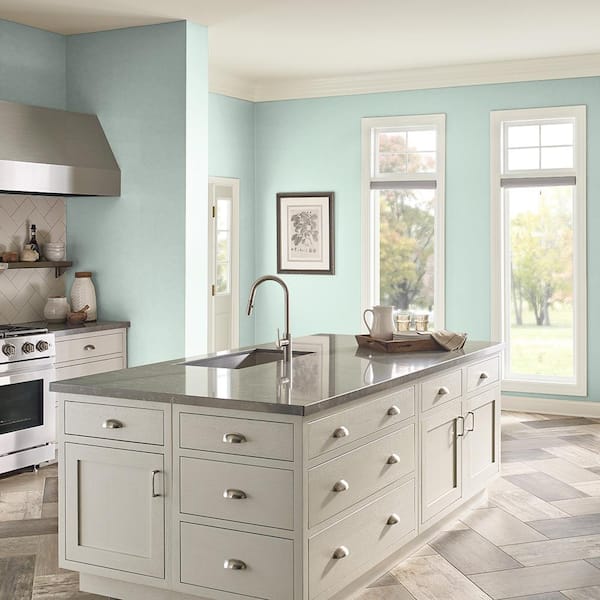
Light blue walls in a modern farmhouse kitchen are a solid choice for rooms that get good natural light. The pale blue looks airy and clean, especially when paired with off-white cabinetry and a gray range hood. The wood tones from the island and flooring keep the space from feeling too cool. An open plan layout with a central island means the blue wraps the whole room, not just one wall. Overhead lighting and windows keep the color from dimming toward gray. For a kitchen that needs a subtle color story without sacrificing brightness, this palette holds up well.
Vibrant teal cabinetry for a retro kitchen
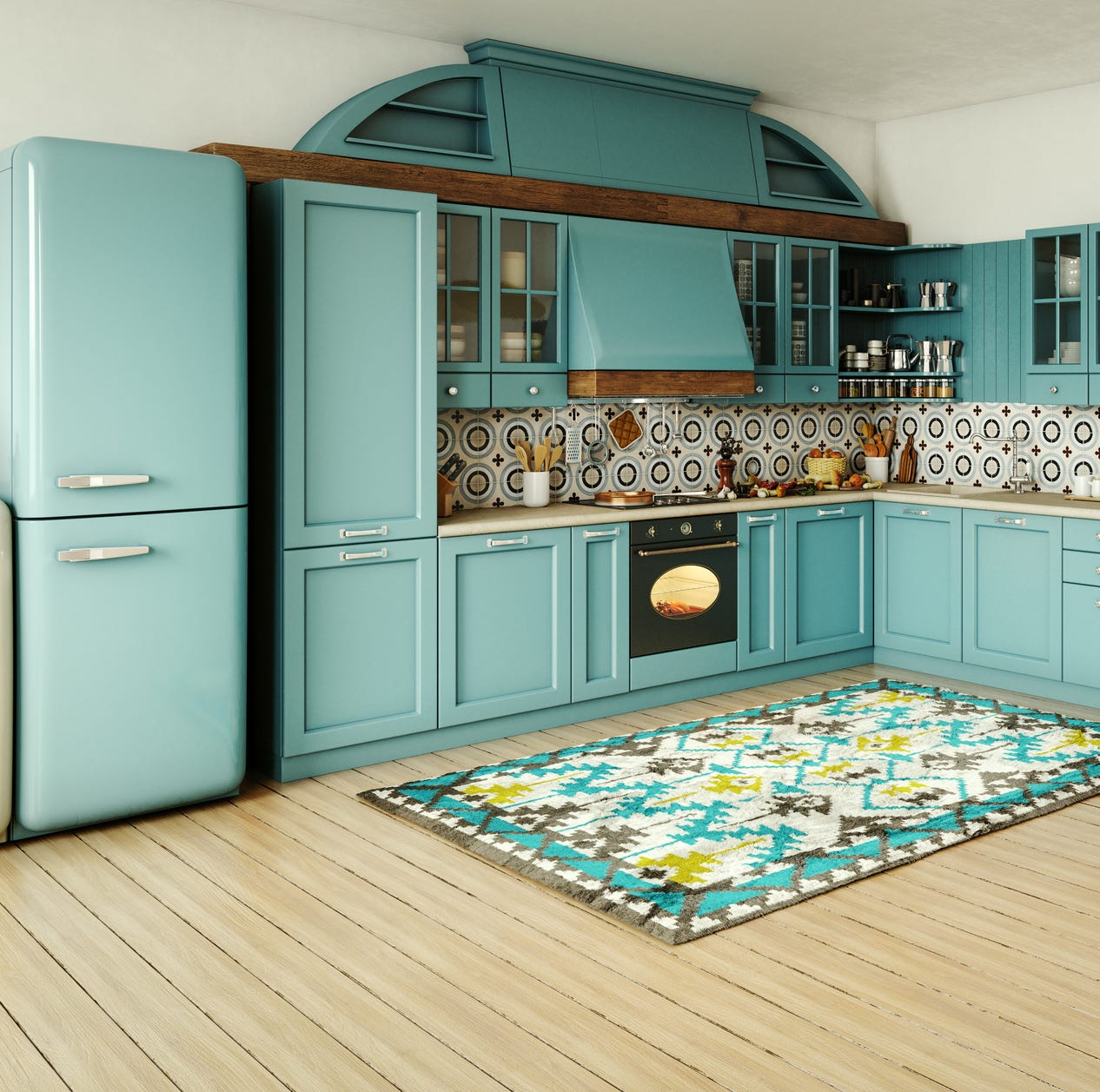
A practical rule for a retro kitchen is to let the cabinet color lead the room. Here, the teal cabinetry sets the tone, and everything else stays quiet. White walls and a wood floor keep the background neutral, while a patterned backsplash and a colorful rug add the playful notes typical of the style.
The teal is vibrant enough to work as the main event, but repeating it on the retro refrigerator ties the layout together. Overhead and under cabinet lighting ensure the color reads clearly, even on gray days. For a kitchen that feels energetic without being chaotic, teal cabinets with a few patterned accents are a reliable path.
Muted blue cabinetry and walls for a modern aesthetic
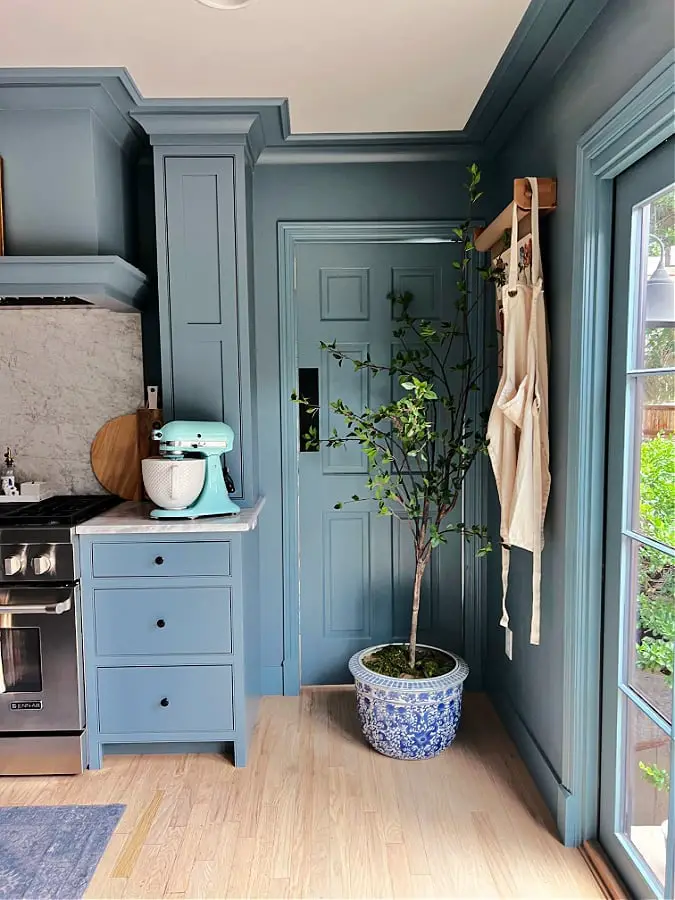
In a compact corner kitchen, painting both the cabinets and the walls a single muted blue makes the room feel larger and more deliberate. The pale white countertop and marble-toned backsplash break up the color without competing with it, while a small green tree and a patterned planter add a natural counterpoint. A light wood floor keeps the space from feeling too cool. The effect is calm and cohesive, ideal for anyone who wants a modern look that does not rely on stark white or dark contrast. The single-hue treatment works best in smaller kitchens where the color can wrap the room without overwhelming it.
Sage green walls complementing white cabinetry
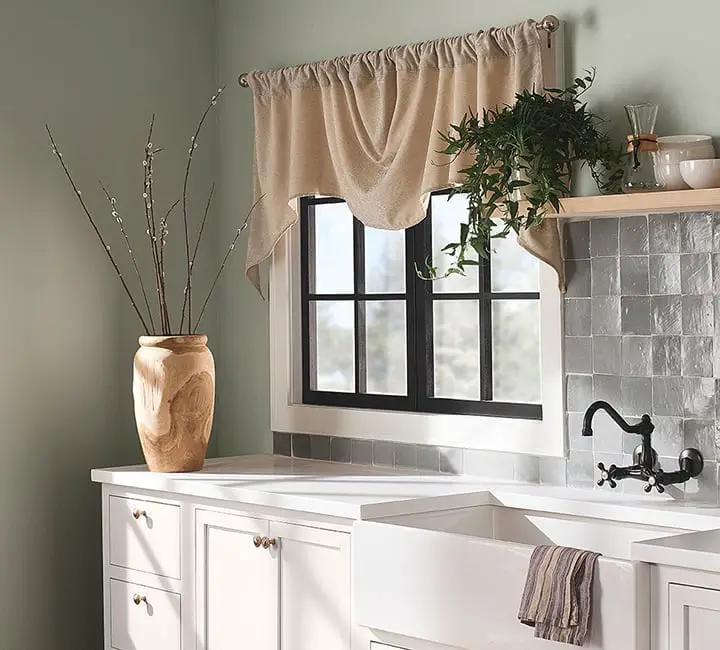
To update a rented kitchen, keep cabinets neutral and use wall color for personality. Sage green walls behind white shaker cabinets and a farmhouse sink create a fresh, garden-like backdrop that can be repainted when you move out. A wooden vase with bare branches and a small potted plant reinforce the organic feel. The brass hardware on the cabinets and the linen valance at the window add warmth without extra paint. This approach lets you change the whole mood of the kitchen with a weekend paint job, leaving the larger investment of cabinetry untouched.
A striking blue island complements white farmhouse cabinets
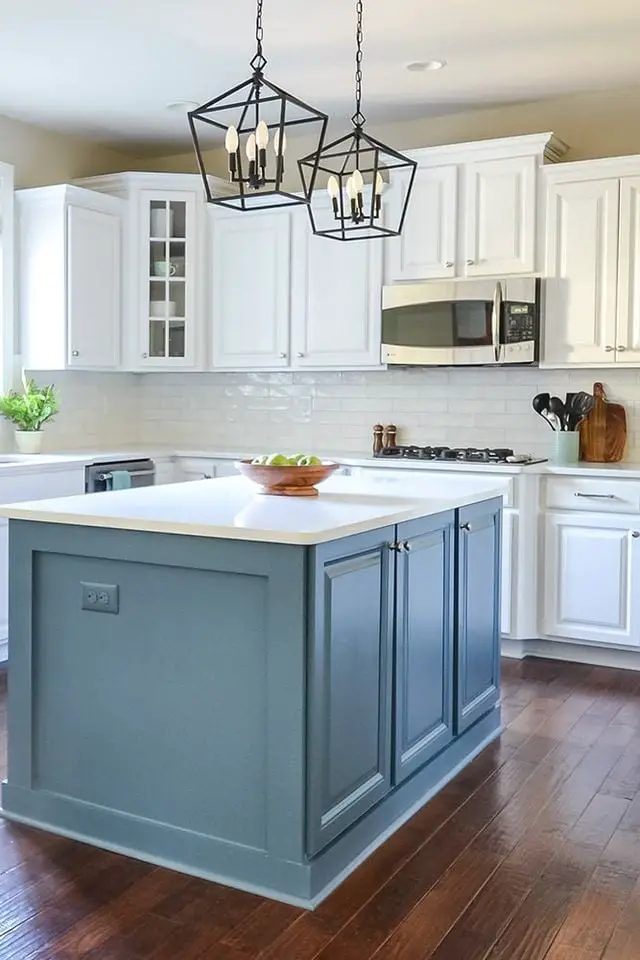
A white kitchen with perimeter cabinetry and a central island is a familiar layout, but swapping the island color to a deep blue shifts the whole feel. The blue island becomes the focal point against all-white shaker cabinets, while the marble countertop and pendant lights above keep the look refined. The wood tones in the island base and floor add warmth that prevents the blue from looking cold.
Herringbone marble backsplash with white cabinets
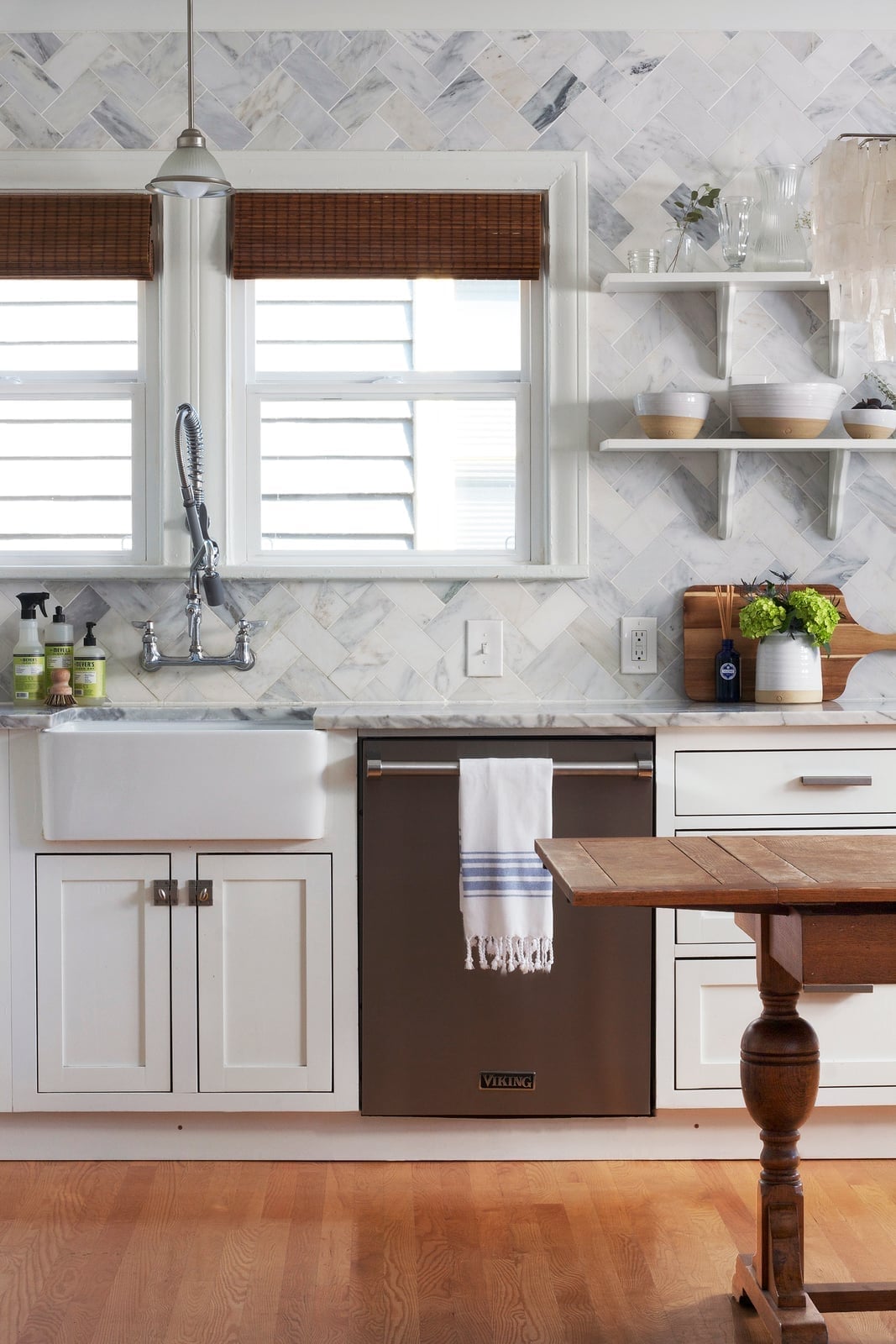
The herringbone pattern in a marble backsplash catches the eye even before the sink does. White shaker cabinets keep the kitchen bright, while the gray veining in the marble adds depth without introducing a new color. An apron sink and a small wooden table under open shelving reinforce the farmhouse character. The herringbone layout is a classic choice that hides wear well because the busy pattern disguises splashes and stains better than a solid tile. It also gives a compact kitchen a custom, finished look without requiring full renovation.
Pale yellow beadboard cabinetry with amber lighting
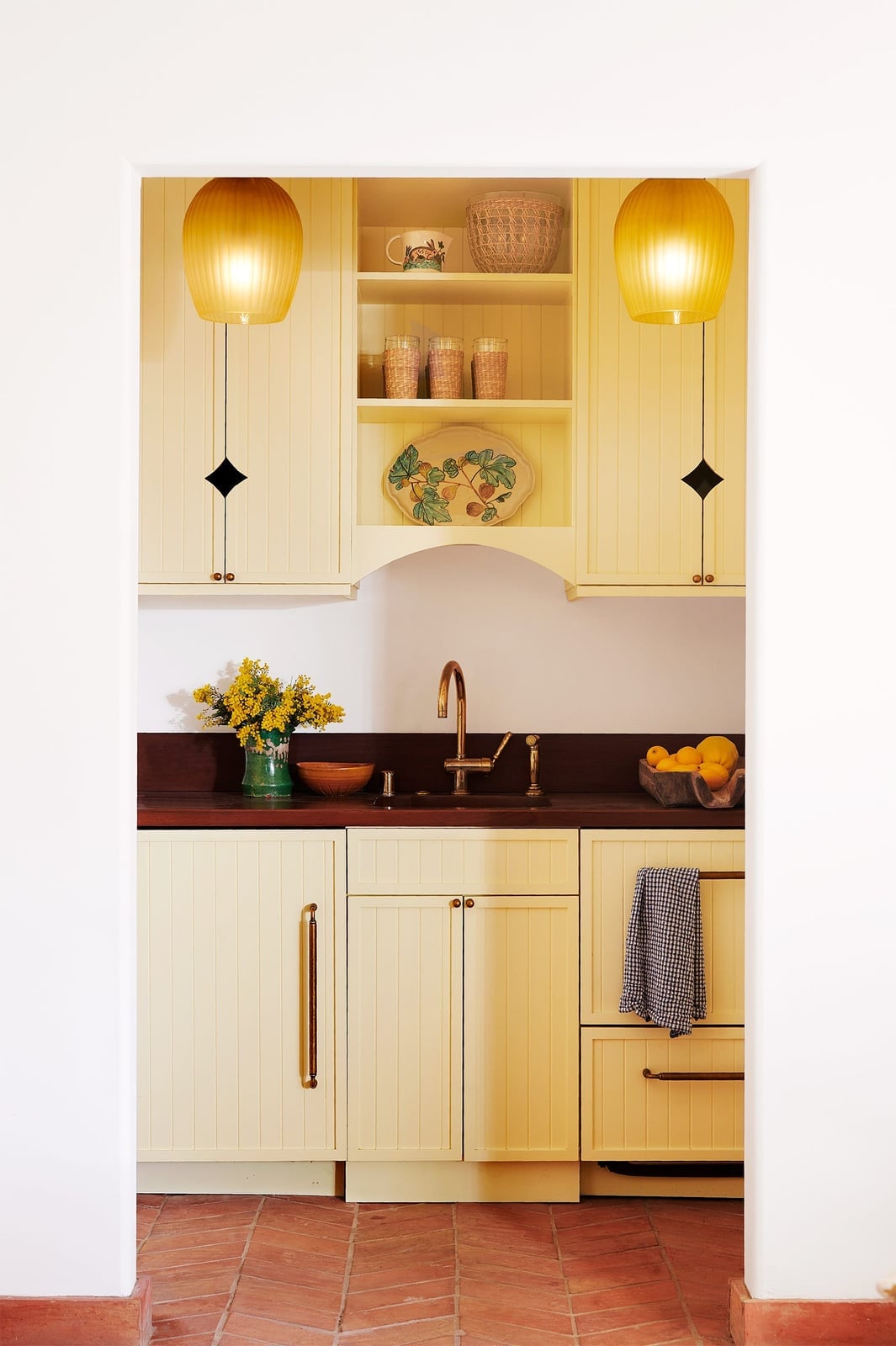
Pale yellow beadboard cabinets bring a soft, sunny quality to a compact farmhouse kitchen. The warm tone is grounded by a wooden countertop and terra cotta floor tiles, while fluted amber glass pendant lights cast a honeyed glow over the work area. The amber glass picks up the yellow in the cabinets and the terracotta in the floor, tying the palette together. In a small alcove kitchen with upper shelves, the beadboard texture adds visual interest without needing extra accessories. Keep the surrounding surfaces, counter, floor, and hardware in warm neutrals so the yellow blends naturally with the space.
Soft pink accent wall behind the range hood
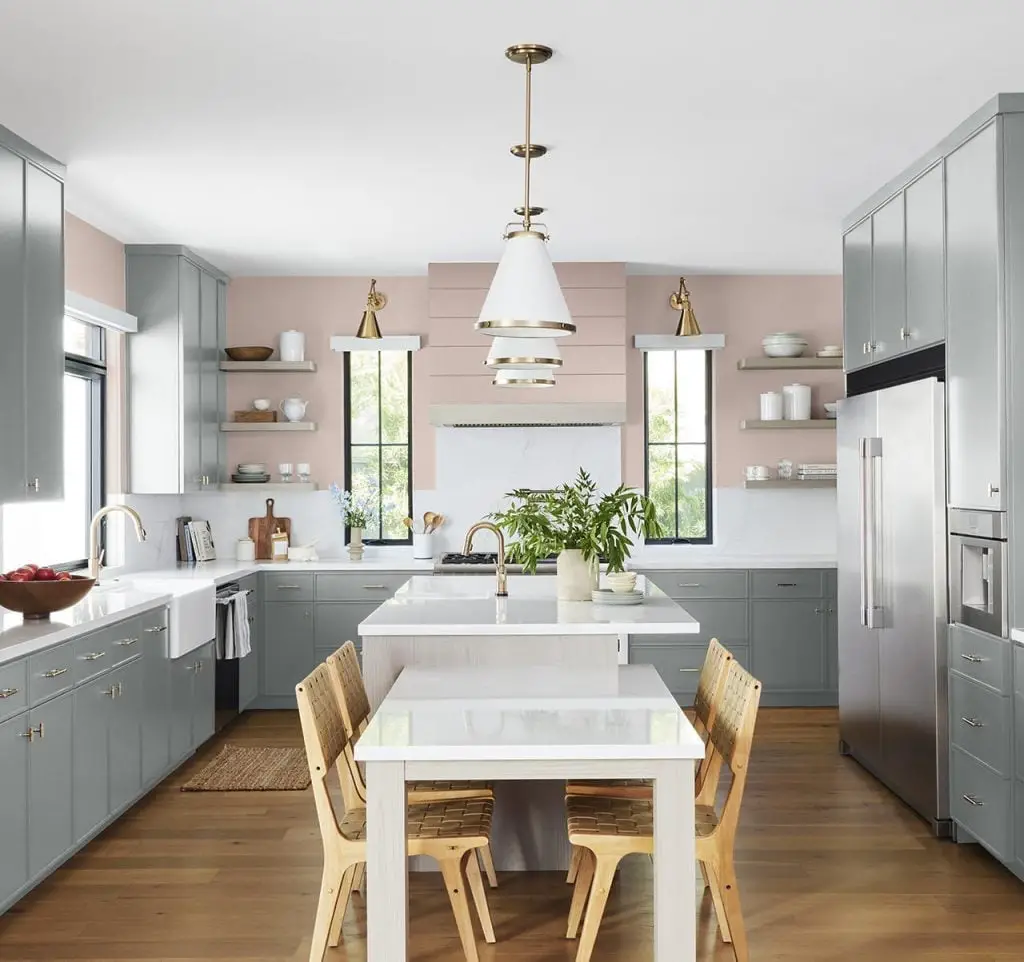
A pale pink accent wall creates a deliberate focal point behind the range hood in a cool-toned kitchen. The pink wall ties the space together with gray cabinets and a marble backsplash. Brass fixtures and wall sconces pick up the warmth from the pink, while window light keeps the whole room from feeling too sweet. The two-tiered island with wooden chairs anchors the galley layout, and the farmhouse sink adds a practical spot for daily prep. For renters, a peel-and-stick pink wallpaper on the accent wall gives the same soft effect without a permanent commitment to paint.
Sage green cabinetry with a white marble island
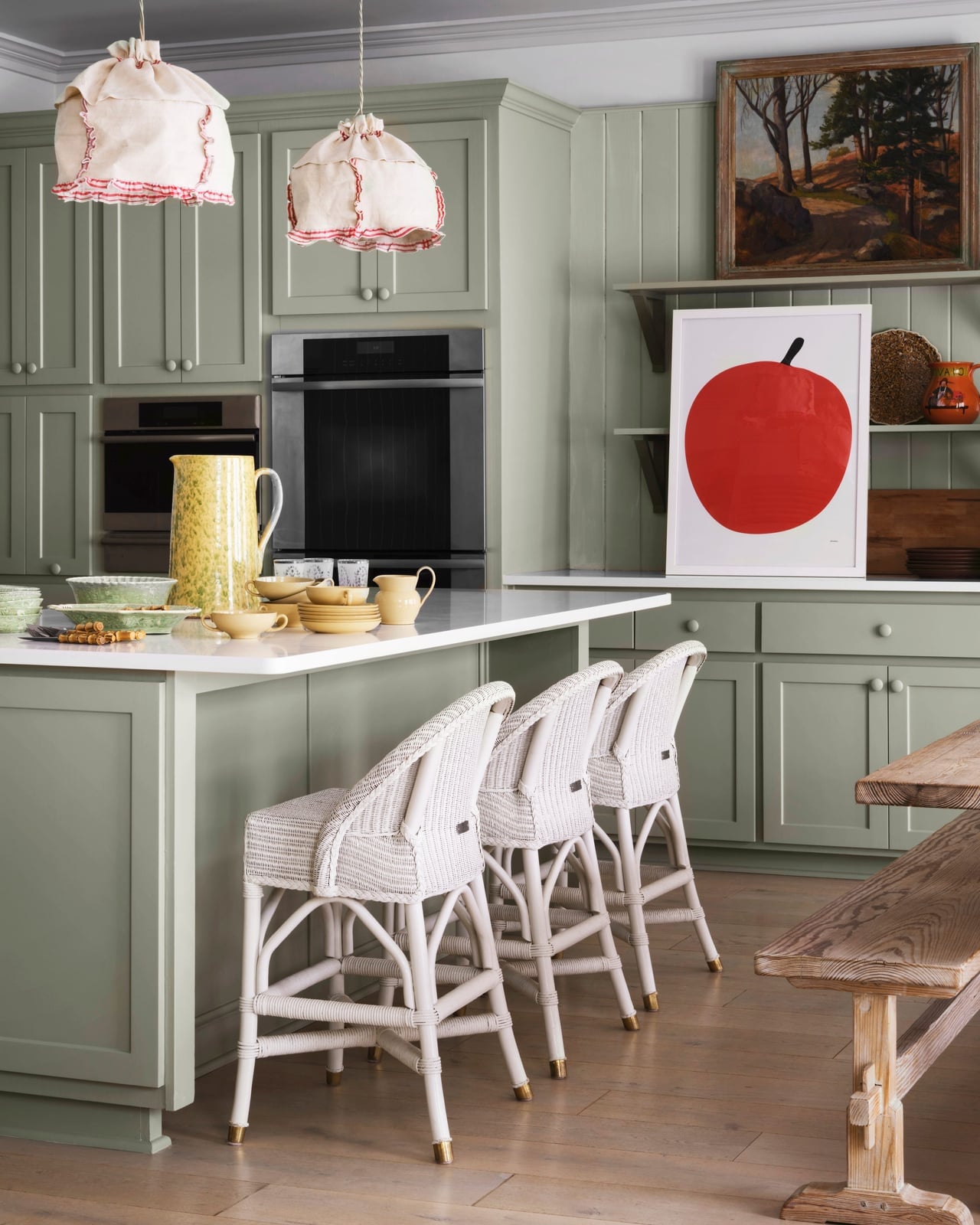
Sage green cabinets wrap the perimeter of this kitchen, and the white marble island sits at the center as the lightest surface in the room. The green looks a neutral because it has enough gray in it to stay grounded, and the white marble keeps the island from feeling heavy. Wicker bar stools and a wooden bench add texture, while a large yellow pitcher on the counter introduces a single warm accent. The pendant lights above the island cast light directly onto the marble, which helps the white stone reflect brightness back into the sage tones.
Warm brown cabinetry with dark stone tile floor
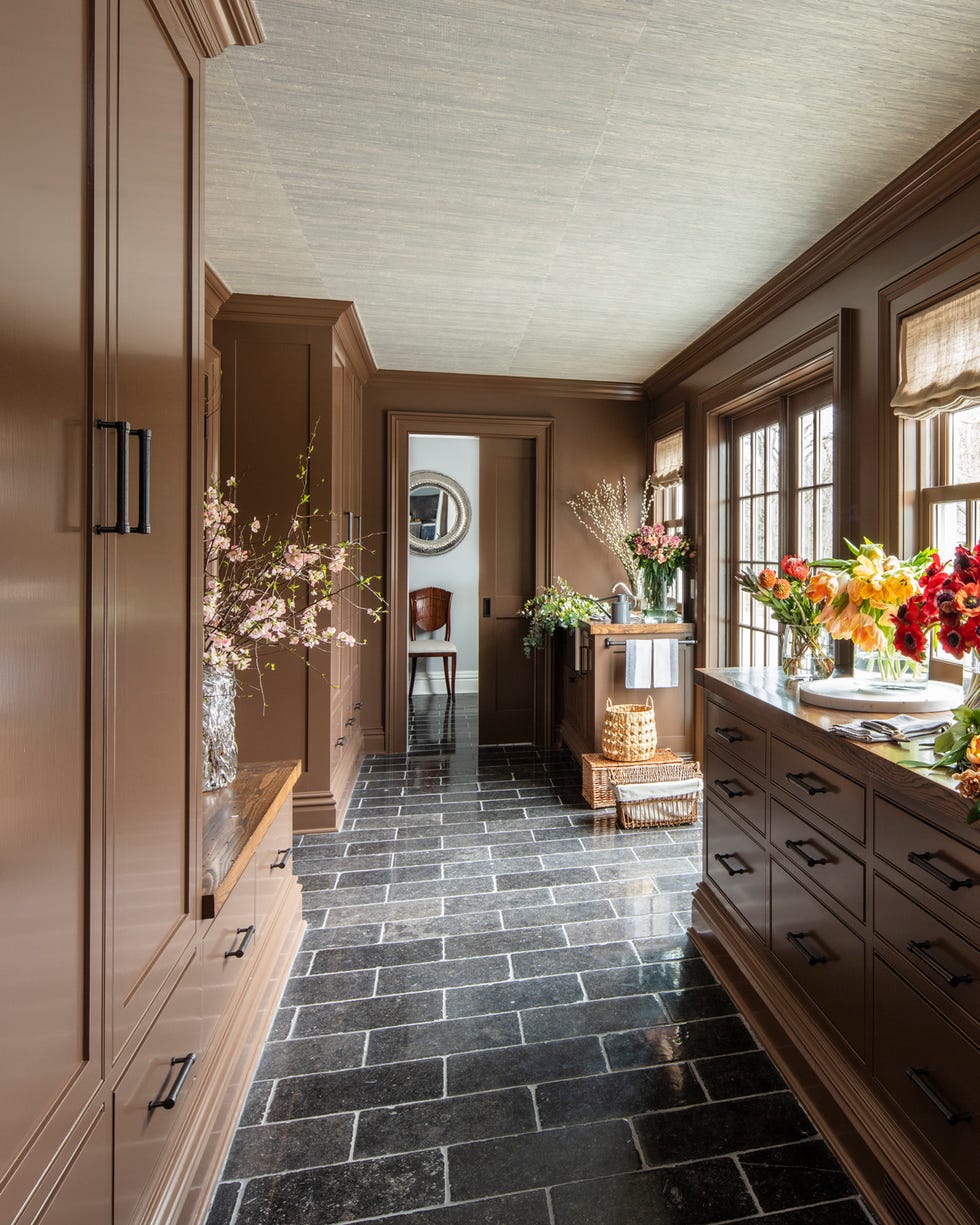
Warm brown cabinets work best when the floor does not try to match them. Here the dark stone tile floor is a full shade darker than the cabinetry, which gives the room a clear top-to-bottom weight. The brown cabinets line both sides of a long hallway layout, and the island drawers sit in the middle as a practical prep station. A wooden cart on casters adds mobile storage for produce or cookware, and the floral arrangements on the counter soften the darker tones. Natural light from the windows keeps the brown from looking too heavy, and the overhead lighting fills in the center of the room where the cabinets meet.
Deep plum cabinets with sage green walls
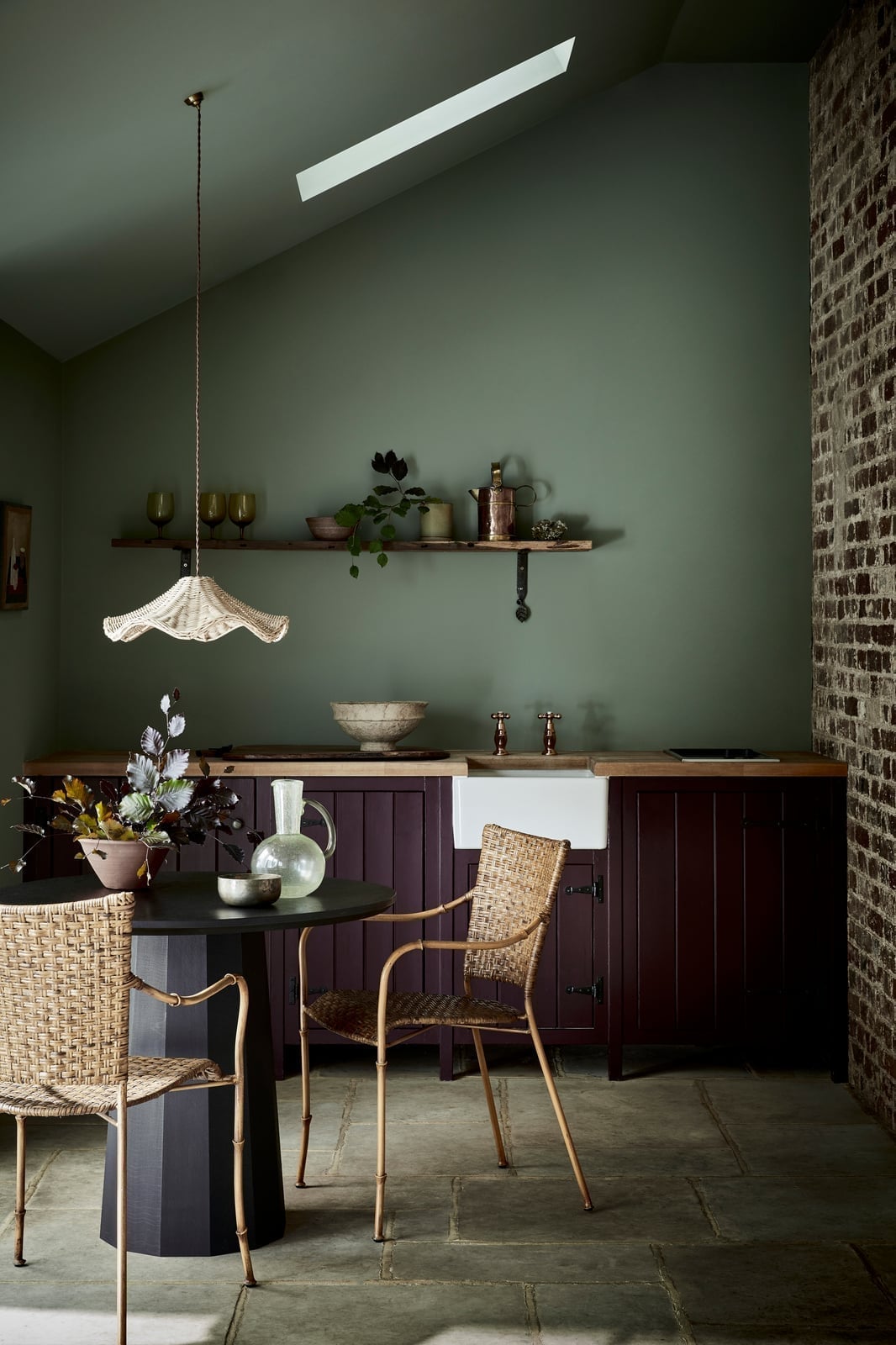
Deep plum cabinets might look too dark in a white kitchen, but against sage green walls the two colors balance each other. The plum is warm and the sage is cool, so neither one dominates the compact space. Natural wood countertops bridge the two tones, and the stone floor keeps the palette grounded. A dark pedestal dining table with wicker chairs sits nearby, making the kitchenette feel like part of the whole room rather than a separate zone. The skylight above the sink brings in direct daylight, and the pendant light over the table adds a lower, warmer layer for evening. The farmhouse sink and wooden shelf keep the practical elements simple so the plum cabinets stay as the focal point.
Sage green walls and white shaker cabinets
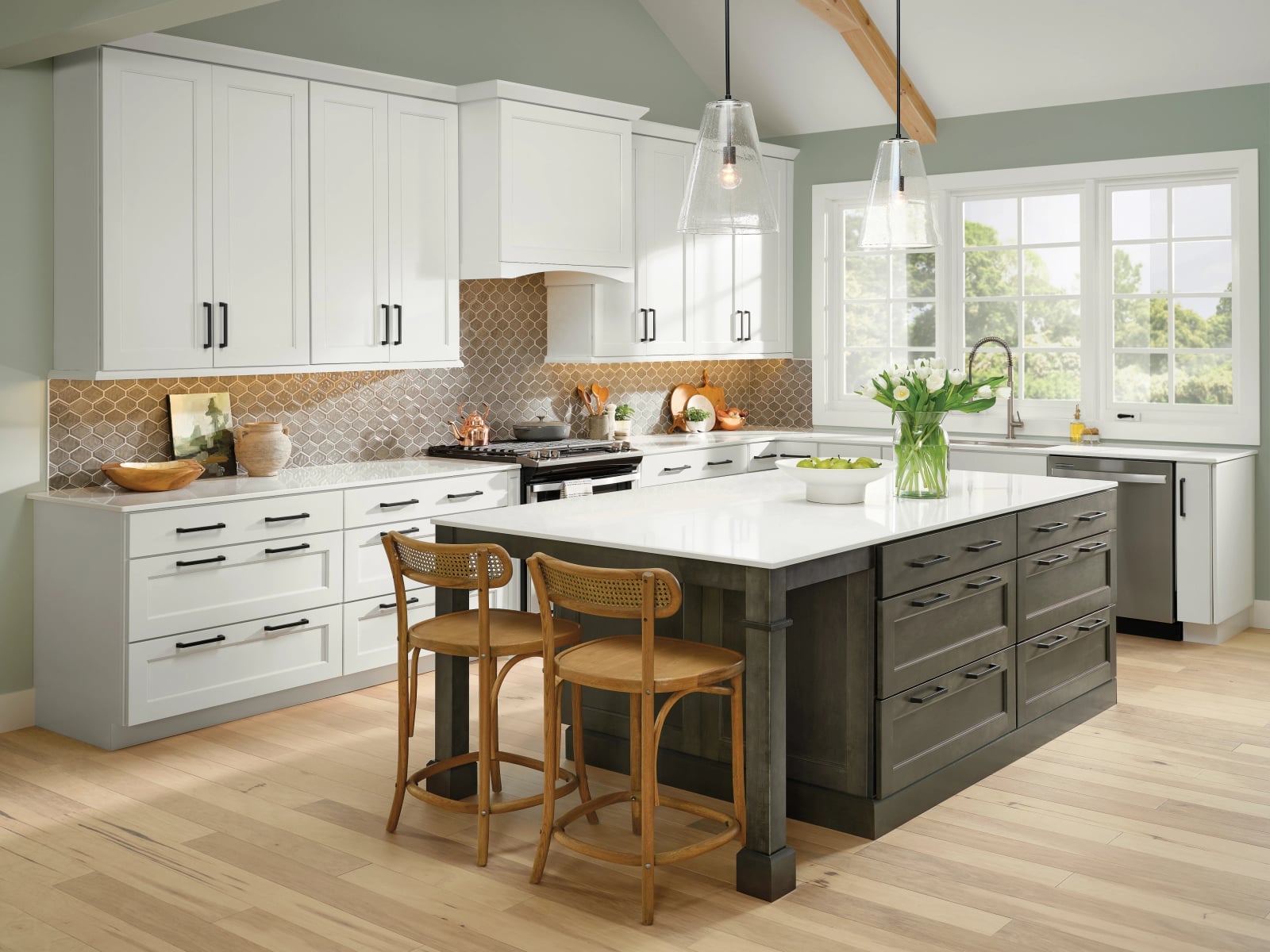
Sage green walls behind white shaker cabinets create a layered look where the wall color works as a backdrop. The white cabinets pop against the green, and the gray island in the center adds a third neutral tone that prevents a two-color scheme. The marble countertops on the island reflect light from the windows, and the glass pendants above cast a soft glow that keeps the sage from looking flat at night. The rattan chairs at the island add a natural texture that connects the green walls to the wood floors.
Pale pink shaker cabinets in a modern farmhouse kitchen
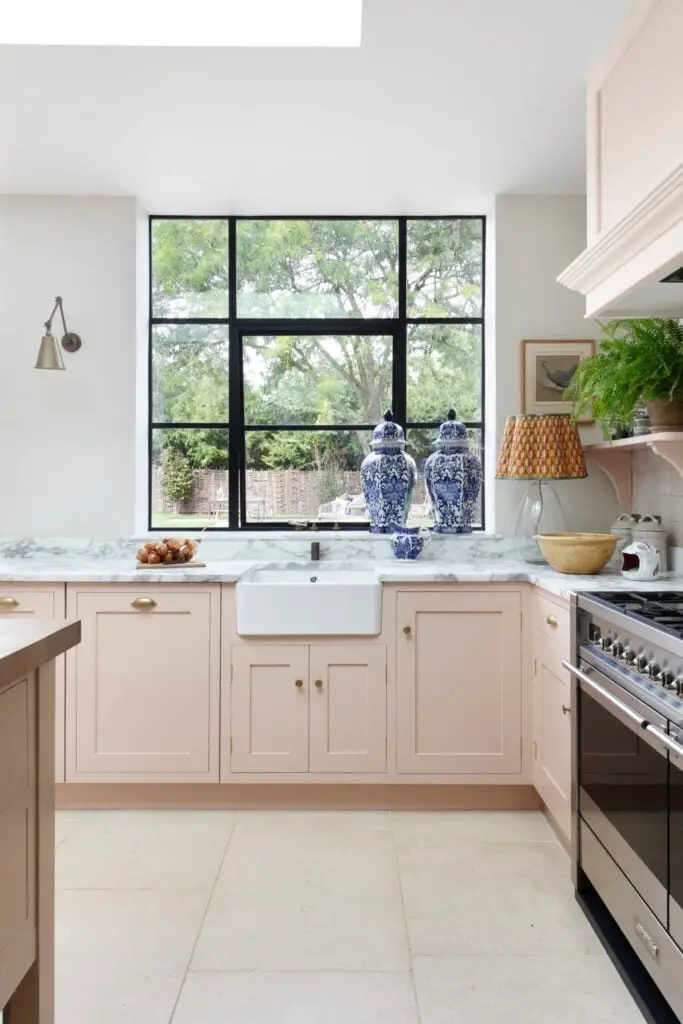
Pale pink shaker cabinets bring a gentle warmth that feels deliberate in a neutral kitchen. The marble countertops and white farmhouse sink keep the palette grounded, while the blue-and-white ceramic jars and a hint of green from a countertop plant add just enough contrast. An L-shaped layout places the range cooker and sink along one run, leaving the opposite counter clear for prep. The large window softens the pink further, making it look more like a blush stone than a pastel. Wall sconces with warm bulbs keep that effect going after sundown. For renters, a peel-and-stick film in a similar dusty pink over existing cabinet fronts gives the same look without a permanent change.
Final Thoughts
Picking a kitchen paint color is about what makes you feel good every time you walk in. The options here show that color can be the main event without needing a full renovation. A fresh coat on cabinets or walls changes the whole mood. Keep samples on your cabinets for a few days and watch them in morning and evening light. Your kitchen should feel like yours, not a catalog page. Choose the shade that makes you want to be in the room, and you have already won.