Cream cabinets have a way of making a space feel both luxurious and lived-in. For 2027, the trend leans into softer finishes and thoughtful details that let the storage itself become the focal point. This collection of 28 ideas shows how cream cabinetry can anchor a kitchen, living area, or dining room without overwhelming it.
Expect to see paneled fronts, brass accents, and natural textures that keep the look neat but approachable. Whether you’re planning a full remodel or just refreshing a corner, these examples offer practical inspiration for making cream cabinets work in your home.
Transitional kitchen with paneled cream upper cabinets
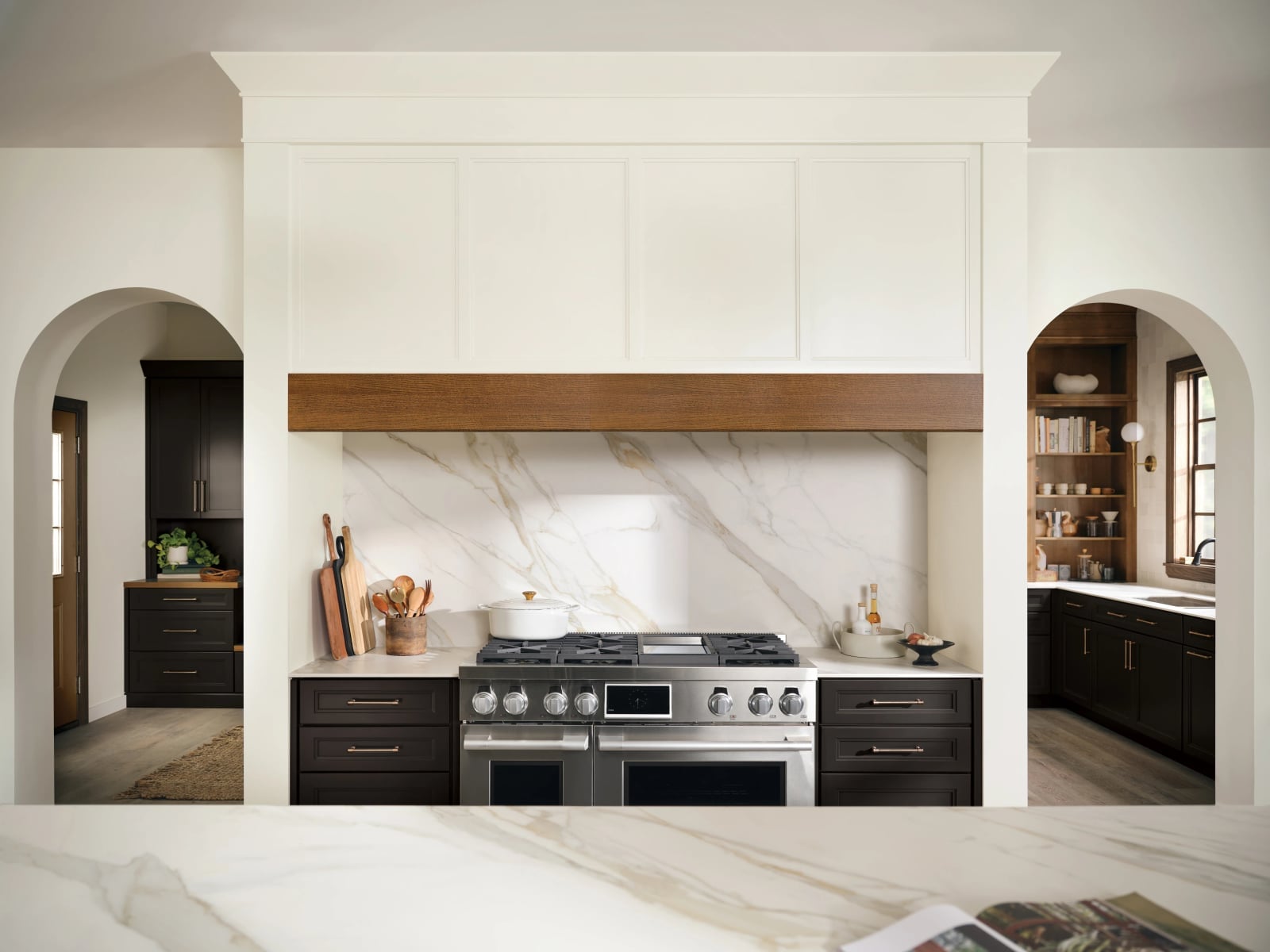
A kitchen that balances old and new often uses cream cabinets to soften the line between them. Here paneled cream upper cabinets sit above a professional range, while dark wood lower cabinets anchor the room. White marble counters and stainless steel hardware keep the look neat. Arched doorways and overhead lighting make the open plan feel connected rather than cut up. The layout puts the range at center with cabinetry on both sides, which creates a natural workflow zone without extra walking.
Modern living room corner with rounded cream cabinet
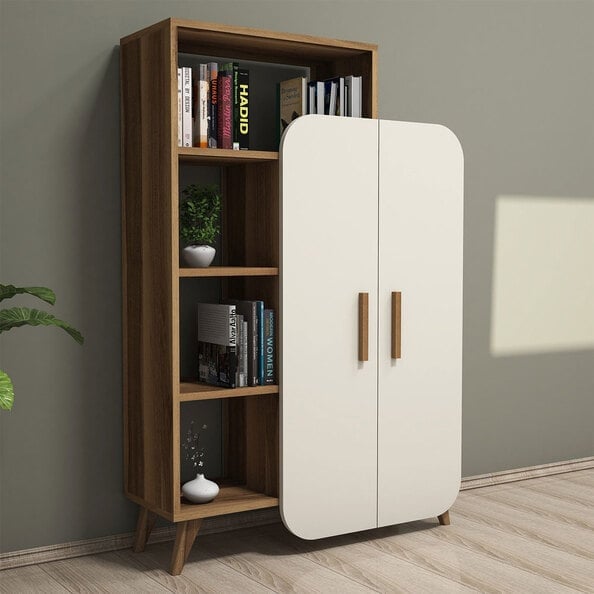
A single rounded cream cabinet can hold its own in a compact corner. This one pairs open shelving on one side with closed storage behind rounded doors, which keeps the look balanced. Books, a small plant, and a vase sit on the shelves. The cream finish keeps the piece from feeling heavy against the gray wall. For storage, the mix of open and closed sections means you can keep everyday items handy and tuck the rest out of sight.
Kitchen with cream cabinets and fluted pink plinth detail
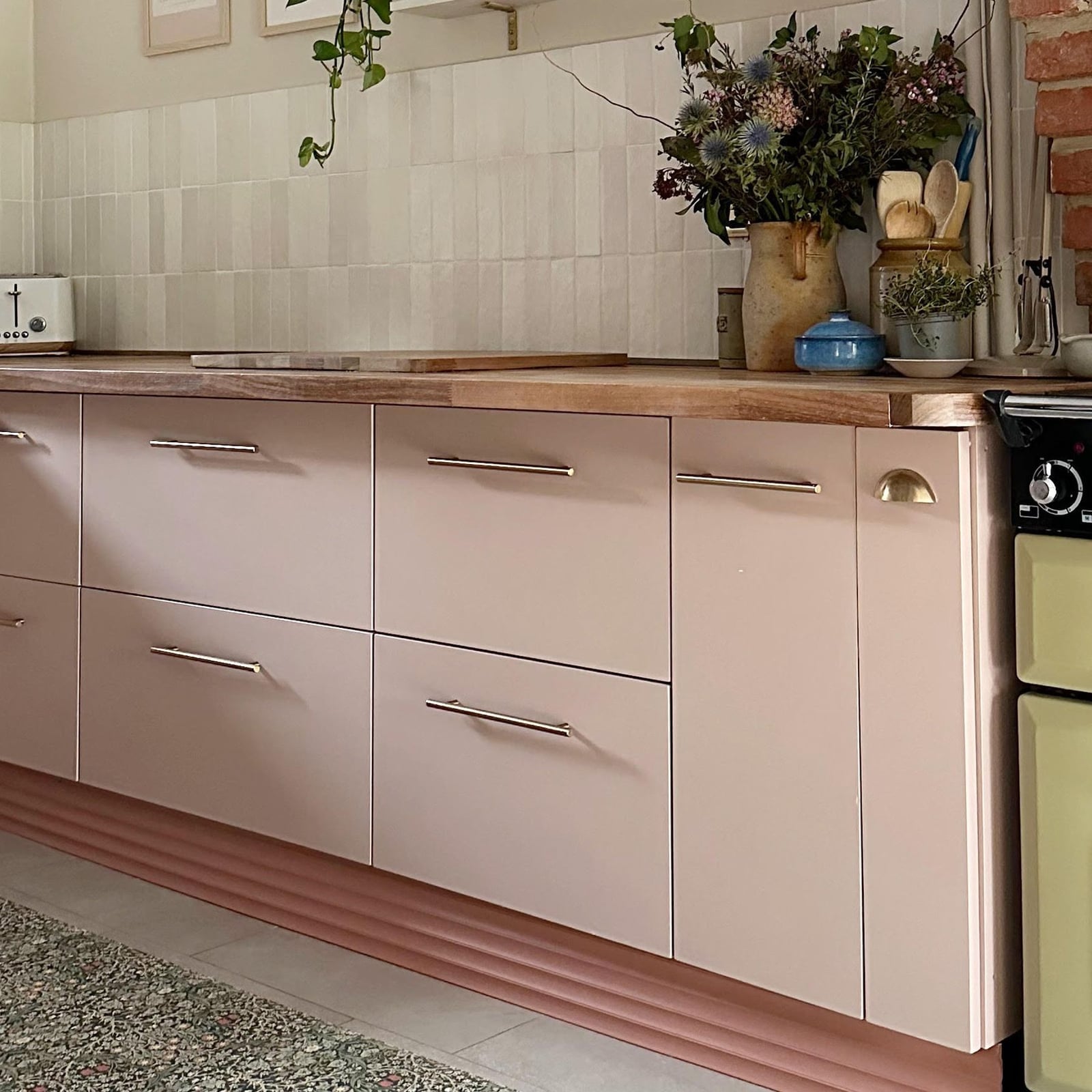
How do you add personality to cream cabinets without a full color overhaul? A fluted pink plinth along the base of the cabinetry does it without shouting. This compact kitchen keeps the upper and lower cabinets in cream, then lets that pink detail run along the bottom edge. Brass hardware and a tiled backsplash add warmth, while a vase and a toaster in muted tones keep the counter from feeling busy. The palette stays grounded with wood and green accents, so the pink looks intentional rather than random.
Traditional farmhouse kitchen with cream shaker cabinets
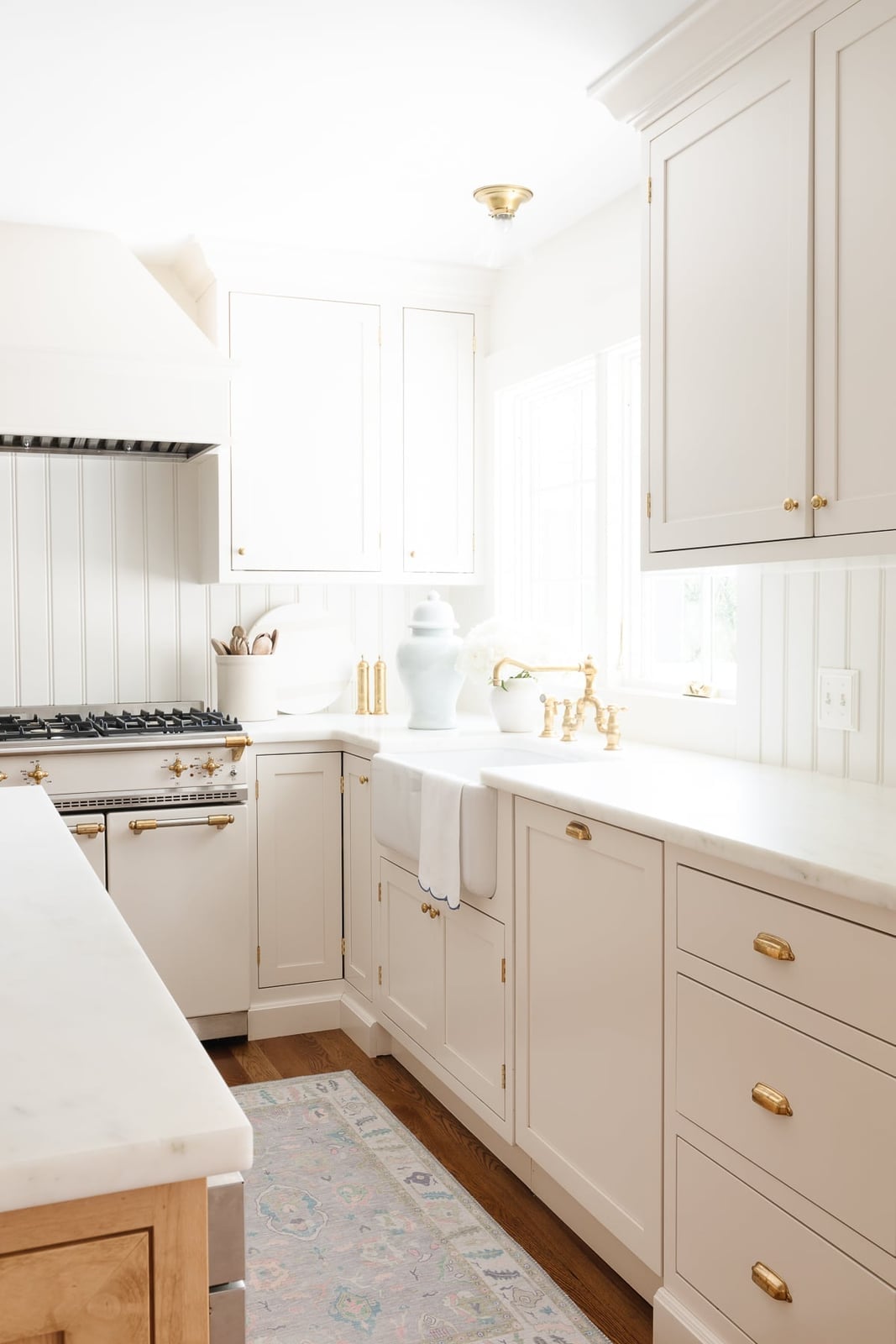
Cream shaker cabinets pair well with brass hardware and marble countertops in a traditional farmhouse kitchen. This compact L-shaped layout centers on a farmhouse sink and a range, with a pastel rug adding softness underfoot. The flush mount light provides general brightness, while daylight reaches the work surfaces. The cream color keeps the space open, and the brass pulls add a subtle contrast that does not compete with the wood tones.
Display cabinet holds ceramic dishes and baskets
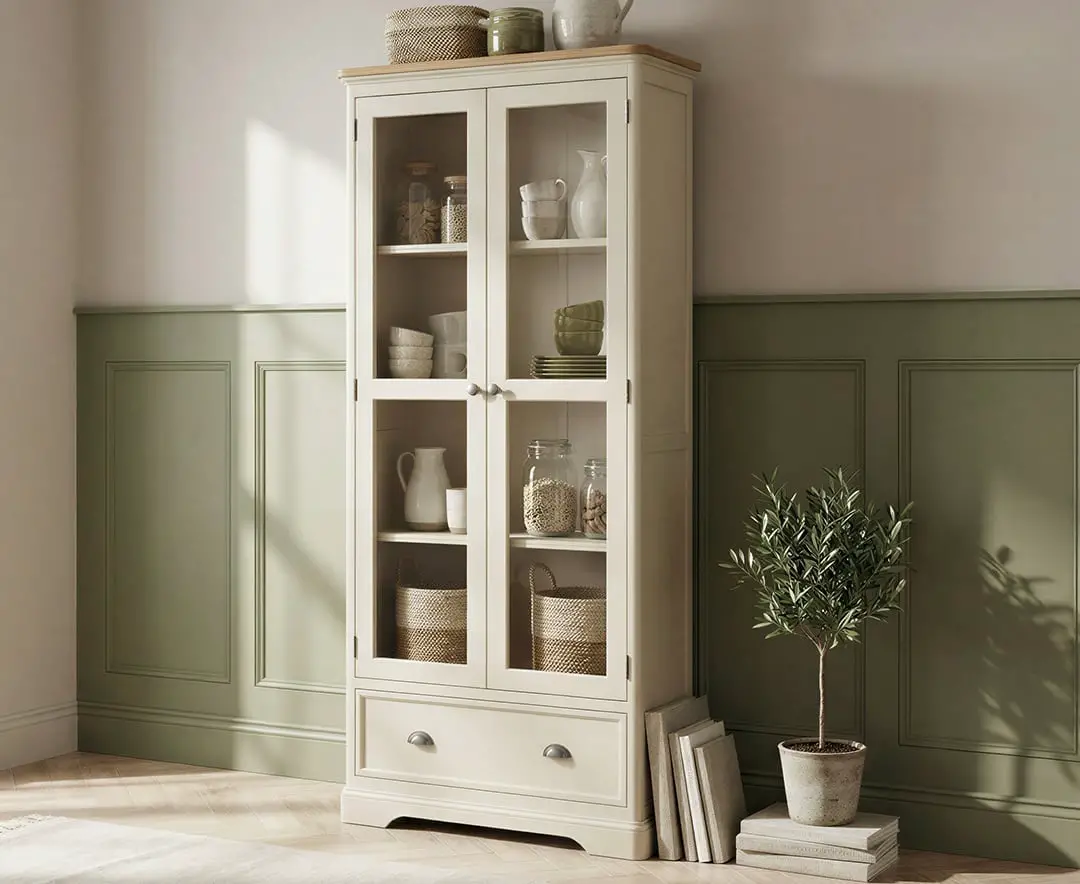
A practical rule for display cabinets: group similar items so the eye rests rather than searches. This cream display cabinet sits against a sage green wall, with ceramic dishes on the shelves and wicker baskets tucked below. A potted olive tree beside it softens the straight lines. The glass doors mean you see the contents at a glance, so keeping plates and bowls in matching tones helps the whole thing look one composition. The natural wood tones in the baskets and tree tie back to the beige and cream palette.
Elegant farmhouse kitchen with cream shaker cabinets and wood beam
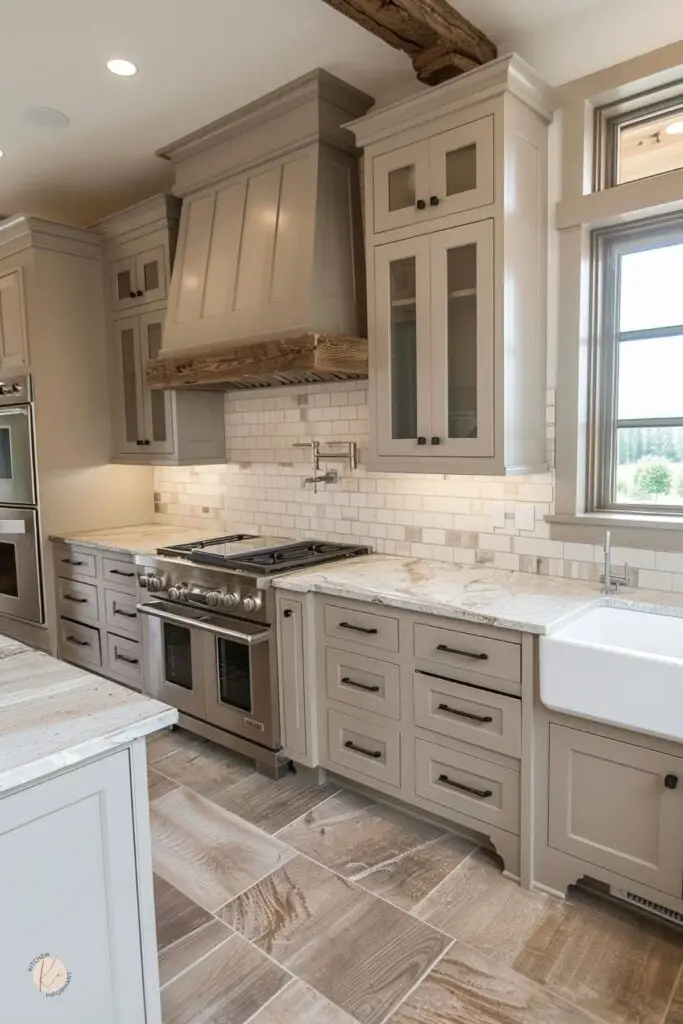
A wood beam range hood is a classic farmhouse detail, but it can feel heavy in a smaller kitchen. Here the cream shaker cabinets keep the look airy while the dark wood beam adds warmth. The farmhouse sink and large range anchor the work zone, and the marble countertop and backsplash tie the cream and wood tones together. For a similar balance in a rental, try a faux wood beam made from lightweight polyurethane that mounts with adhesive. It gives the same visual weight without structural changes, and you can take it down when you move.
Cream, beige, and gray tones keep the wood as an accent color. Under cabinet lighting helps the cream cabinets appear white adjacent even in late afternoon light. If your ceiling is lower than eight feet, keep the beam narrow, six inches wide at most, so it does not drop the visual ceiling height.
Farmhouse kitchen pantry with open cream cabinet shelves
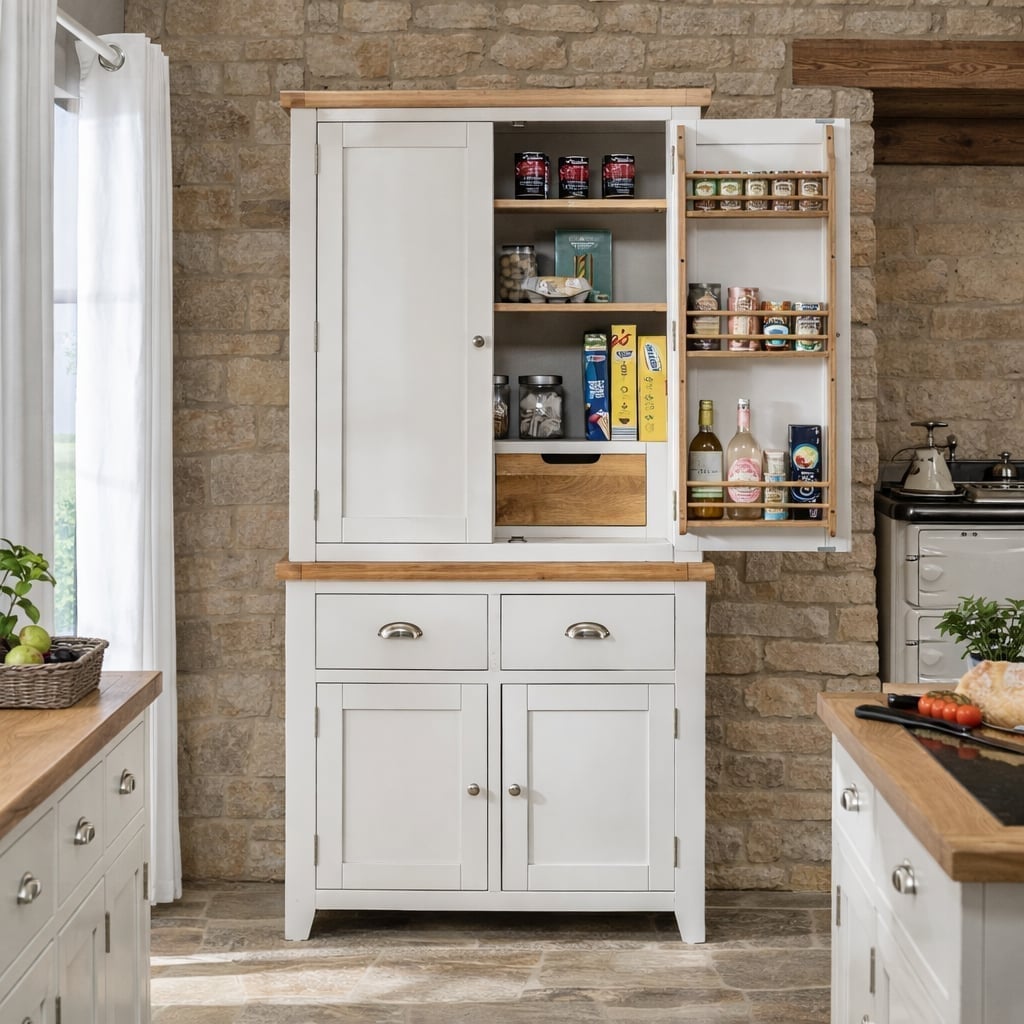
The open shelves of this cream pantry cabinet show exactly what’s inside: jars of staples, stacked bowls, a few cookbooks. Glass doors would hide the clutter, but open shelves force you to edit, which is the real trick. The wooden countertop below gives a landing spot for a kettle or a basket of onions, and the stone wall behind adds texture without competing. If you rent, a freestanding pantry like this one is a smart swap, no drilling into walls, and it moves with you. Just measure your doorway first; most standard pantry cabinets are eighteen to twenty-four inches deep.
Stools at island with marble countertop
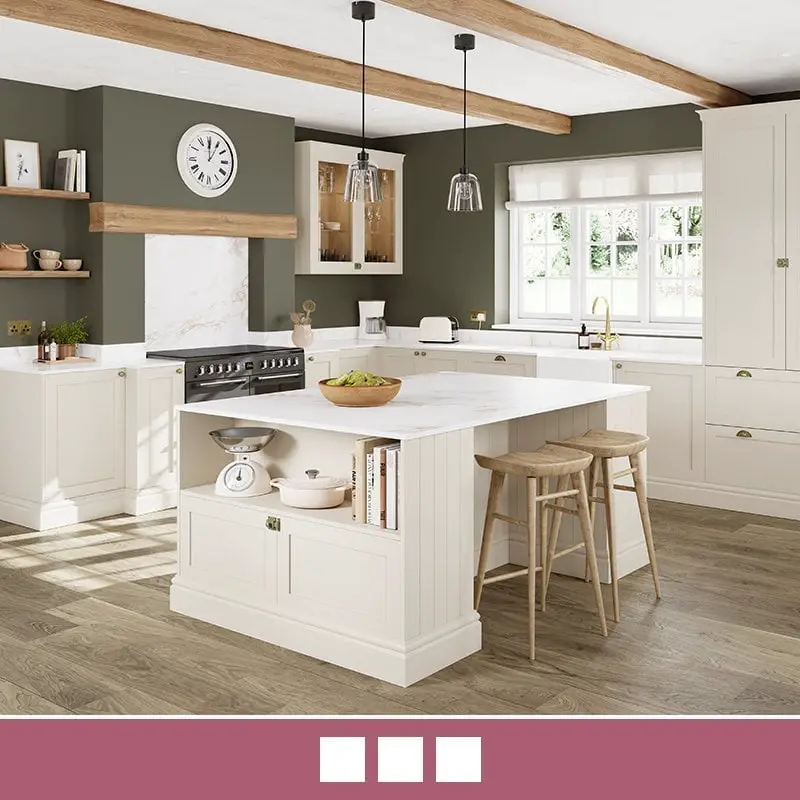
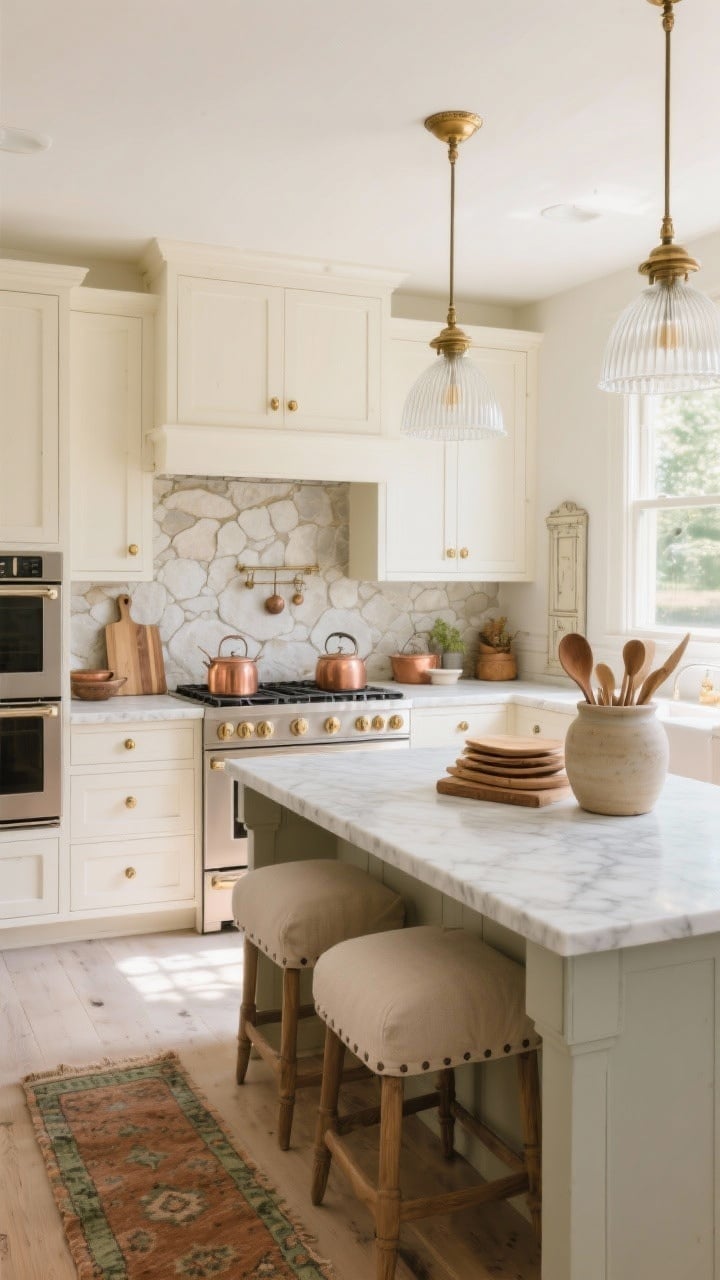
A cream island with a marble countertop is a solid anchor for a busy kitchen. Here the wooden stools add warmth and keep the seating from feeling too formal. The L-shaped counter layout gives the cook room to work while guests sit at the island without blocking traffic. Pendant lights hang low enough to define the seating zone but high enough to not bump heads, aim for thirty to thirty-six inches above the counter. If your island faces a wall rather than open space, skip the stools and use the overhang for extra prep area instead.
Brass hardware on cream cabinets shines
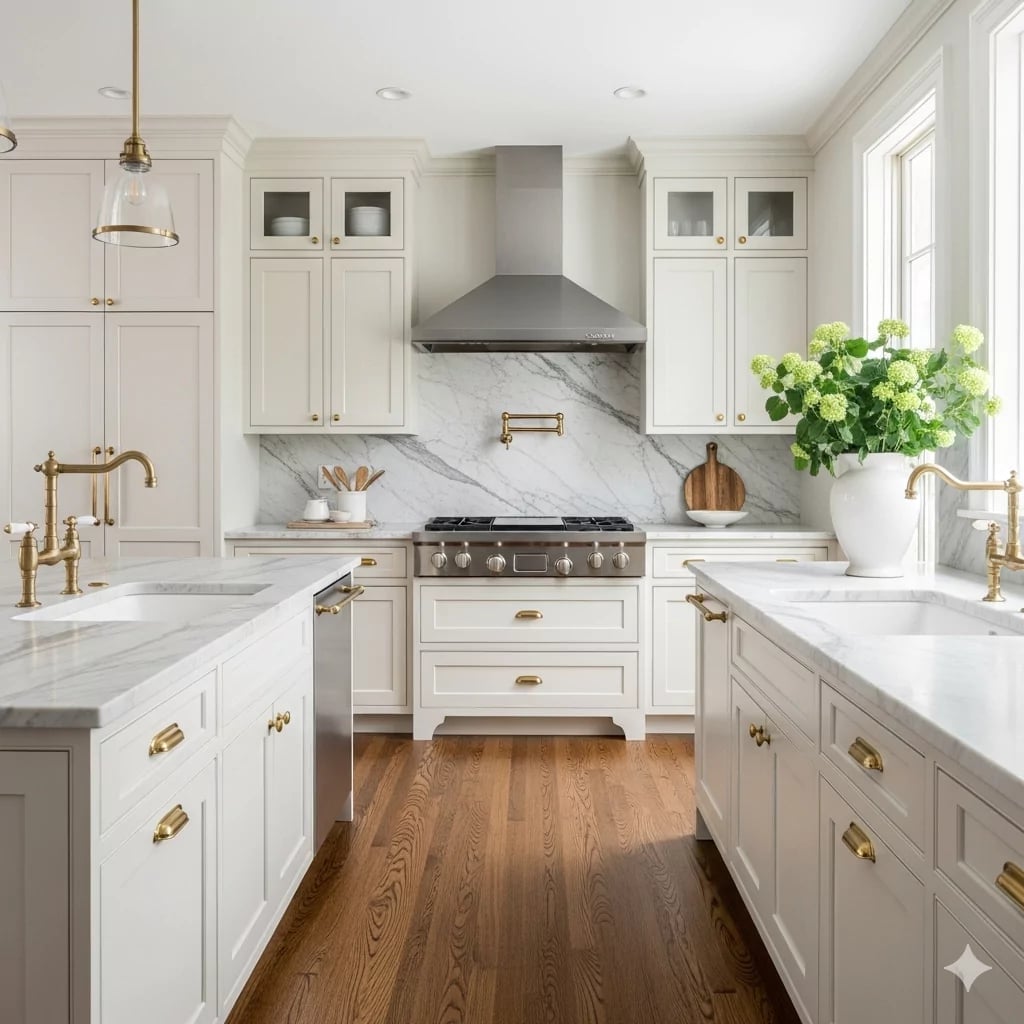
Does brass hardware on cream cabinets look dated or classic? It depends on the finish. Neat brass reads traditional; brushed or unlacquered brass feels modern. This galley kitchen uses brass pulls and fixtures against cream cabinets and white marble countertops, and the mix works because the brass has a warm undertone that matches the wood accents. The stainless steel range breaks up the brass and keeps the kitchen from looking like a jewelry box.
If you’re worried about brass patina over time, unlacquered brass will darken and develop a natural aged look, while lacquered brass stays shiny. For a renter-safe version, swap in brass cabinet knobs from a big-box store. They’re easy to install and replace before you move out, and they change the whole feel of a standard white or cream cabinet.
Bright kitchen with cream glass-door cabinets and banquette
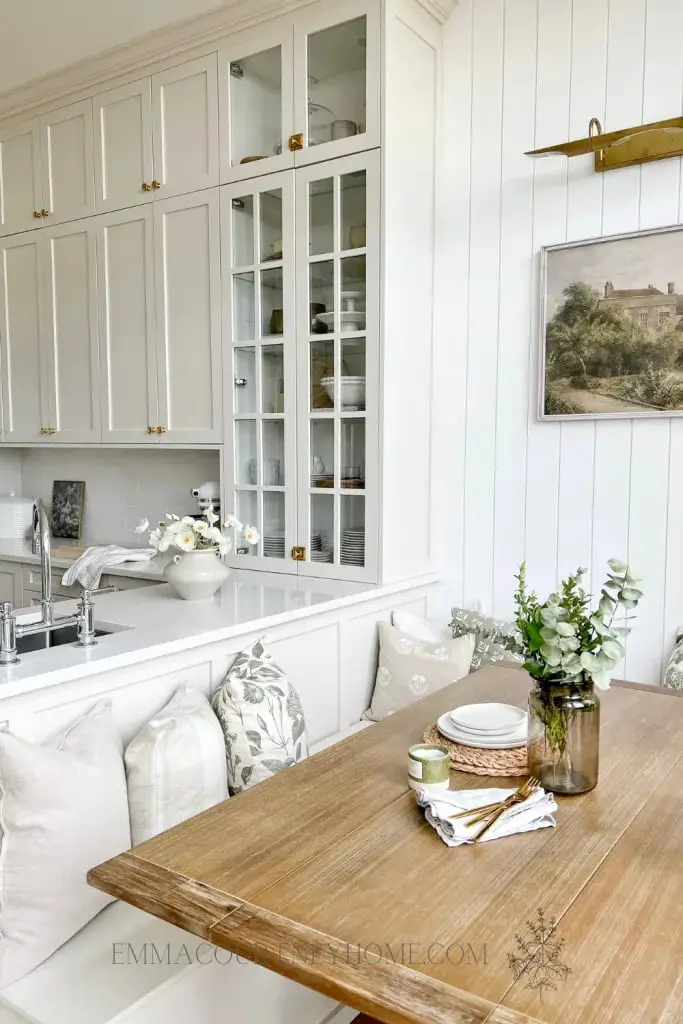
Glass-door cream cabinets let you display matching dishware while keeping the kitchen open and bright. Here the glass fronts face a dining area with a built-in banquette and a wooden table, so the cabinets act as a visual bridge between the cooking zone and the eating zone. The brass overhead fixture adds a warm glow at mealtime. To keep glass-front cabinets from looking cluttered, stick to one color family for the contents, white and cream ceramics work, as do clear glassware. If you rent, swapping solid doors for glass is usually a landlord no-go, but you can add glass inserts to existing cabinet doors with a little woodworking skill and a weekend.
Shaker cabinets offer classic charm
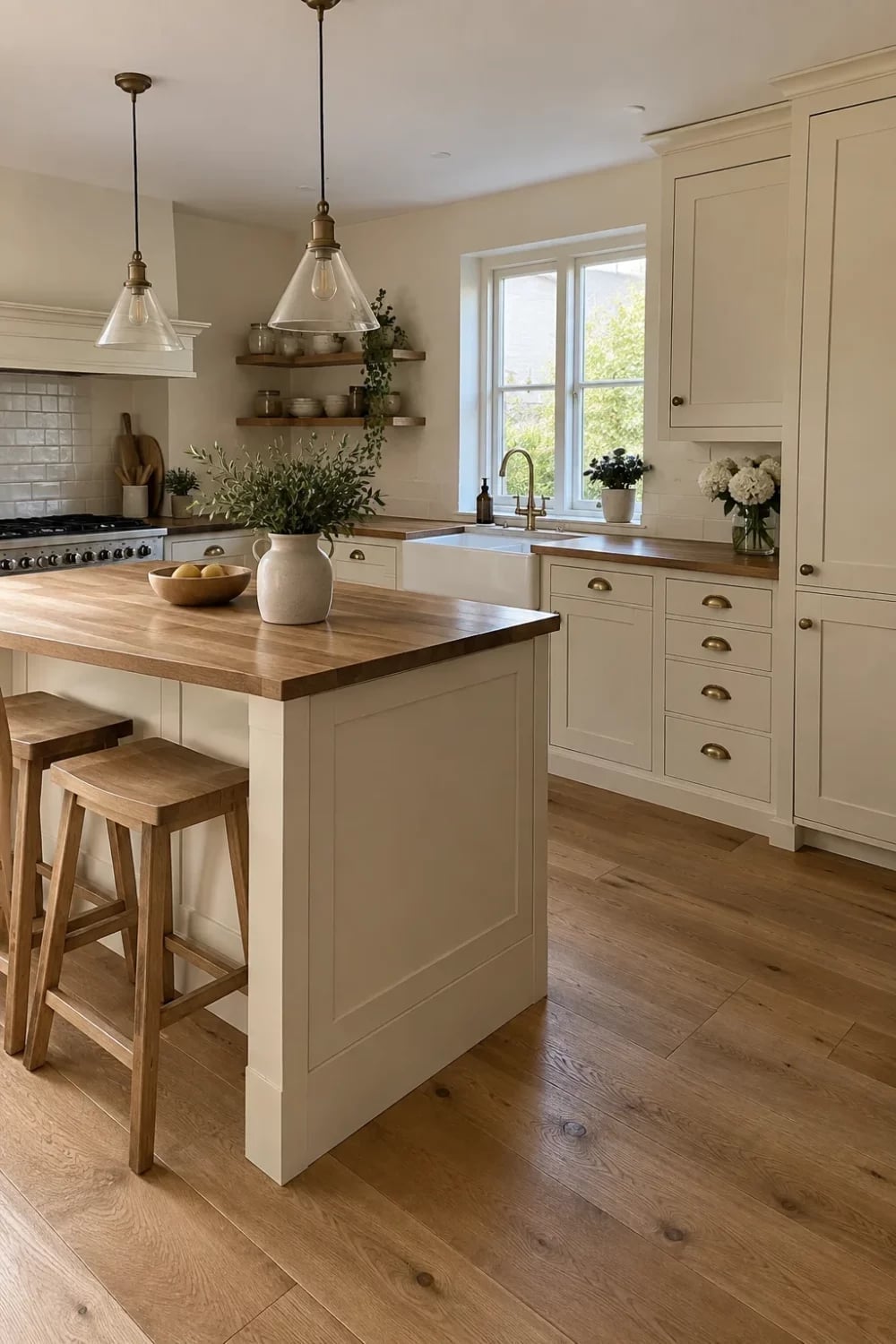
A kitchen island with seating defines the work zone and keeps the cook connected to the room, especially in a farmhouse layout with cream shaker cabinets. Wooden stools tuck under the counter, creating a breakfast spot that does not block the path to the farmhouse sink. Pendant lights hang low enough to light the island surface but high enough to clear sightlines. The cream cabinets wrap the perimeter, their recessed panel doors adding shadow lines that shift with natural light from the window. For a similar layout, keep the island proportional to the floor area: a roomy space can handle a longer island without crowding the cabinet aisles.
Wood shelves add natural green touch
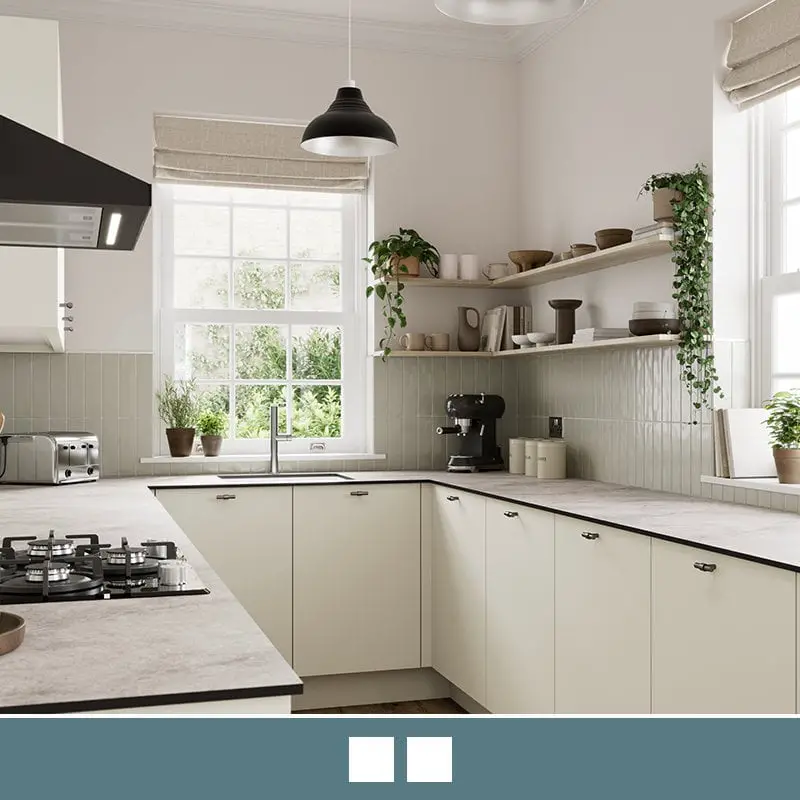
A cream cabinet kitchen can lean cool with gray counters and a black range hood, or warm with open wood shelving. The latter softens the modern edge and brings in a green element through the natural wood tone, which looks organic rather than decorative. The shelves sit above the counter in a corner layout, giving the coffee machine and daily dishes a home that is both handy and visible.
The palette stays restrained: cream, gray, beige, and the wood of the shelves. The green comes from the wood itself, not from paint or plants, so it holds the same weight no matter the season. A pendant light overhead casts light down across the shelving, making the wood grain a focal point against the flat cabinet fronts. For anyone drawn to this balance, the trick is choosing a shelf wood with visible grain and a clear finish rather than a stained tone.
Cream island cabinets stand out
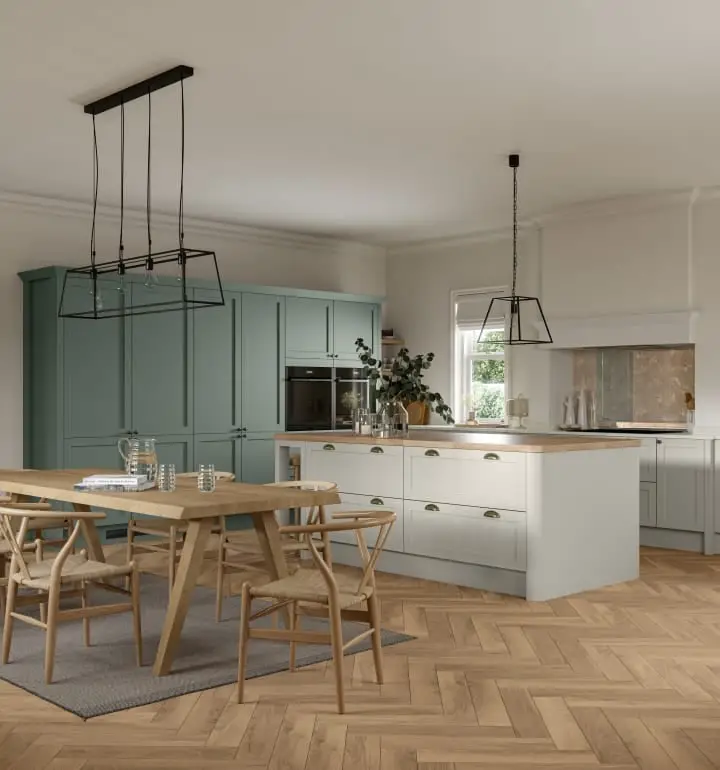
The kitchen island looks a separate piece of furniture, and that is partly due to the cream finish against the sage green perimeter cabinets. The contrast makes the island the visual anchor of the open plan kitchen and dining area, with the large wooden dining table and wishbone chairs extending the same natural wood language. Pendant lights hang above the island, and the cream surface receives the most light in the room, reinforcing its role as the lightest element. Ask your colorist for: one cabinet color for the island and a darker shade for the walls to create that deliberate separation.
Glass front cabinets show glassware
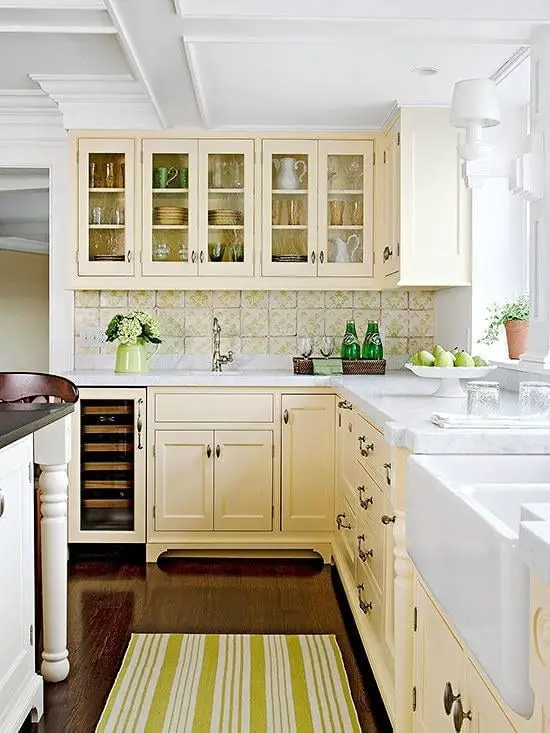
Glass-front cabinets are storage that doubles as display, and they work best when the contents are edited rather than crammed. In this traditional kitchen, the cream cabinets with glass fronts sit above an L-shaped counter, showing glassware and ceramics against a patterned backsplash. The farmhouse sink below anchors the work zone, while a wine fridge tucks into the lower cabinetry. Overhead lighting and wall sconces illuminate the glass shelves from multiple angles, which keeps the contents from going dark and dusty-looking. For anyone considering glass fronts, plan to store items that are either matching in color or deliberately varied, since the cabinet becomes part of the room’s visual texture.
Luxurious kitchen with ornate cream cabinets and granite island
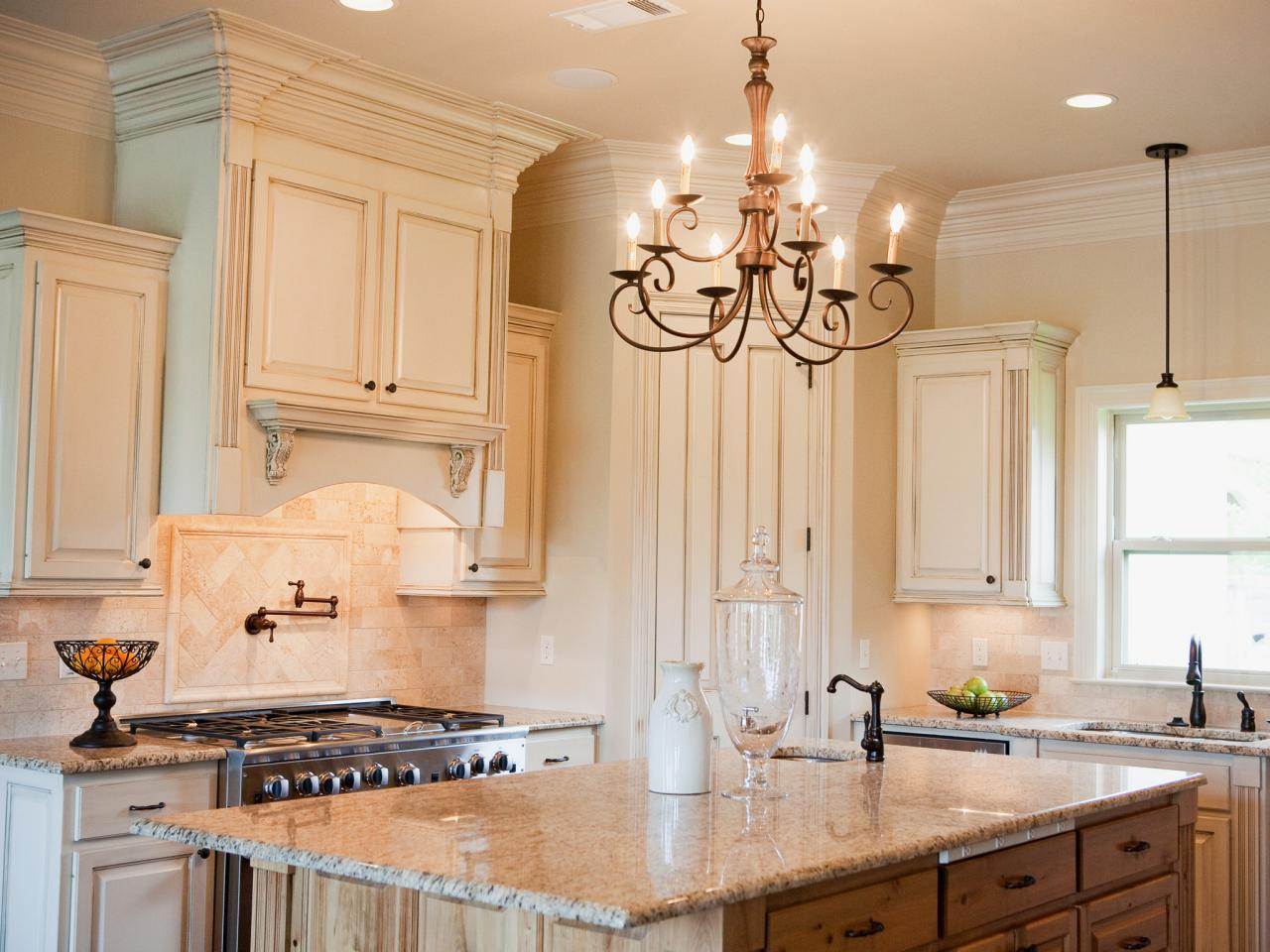
Ornate cabinetry asks for a countertop that can hold its own, and granite is a natural match because its pattern does not compete with the carved wood details. The cream cabinets have raised panel doors and decorative molding, and the chandelier and recessed fixtures highlight the woodwork. The granite island sits at the center, its darker veining grounding the pale perimeter. A pendant light above the island adds task lighting, while the chandelier near the range hood balances the room’s vertical interest.
For a kitchen with this level of cabinet detail, the material strategy is to keep the countertop and backsplash in the same tonal family as the cabinets. Beige granite and cream wood form one composition. The brass hardware and light fixtures add a third material, but they stay in small doses so the cabinetry remains the main event.
Dark hardware on cream cabinets
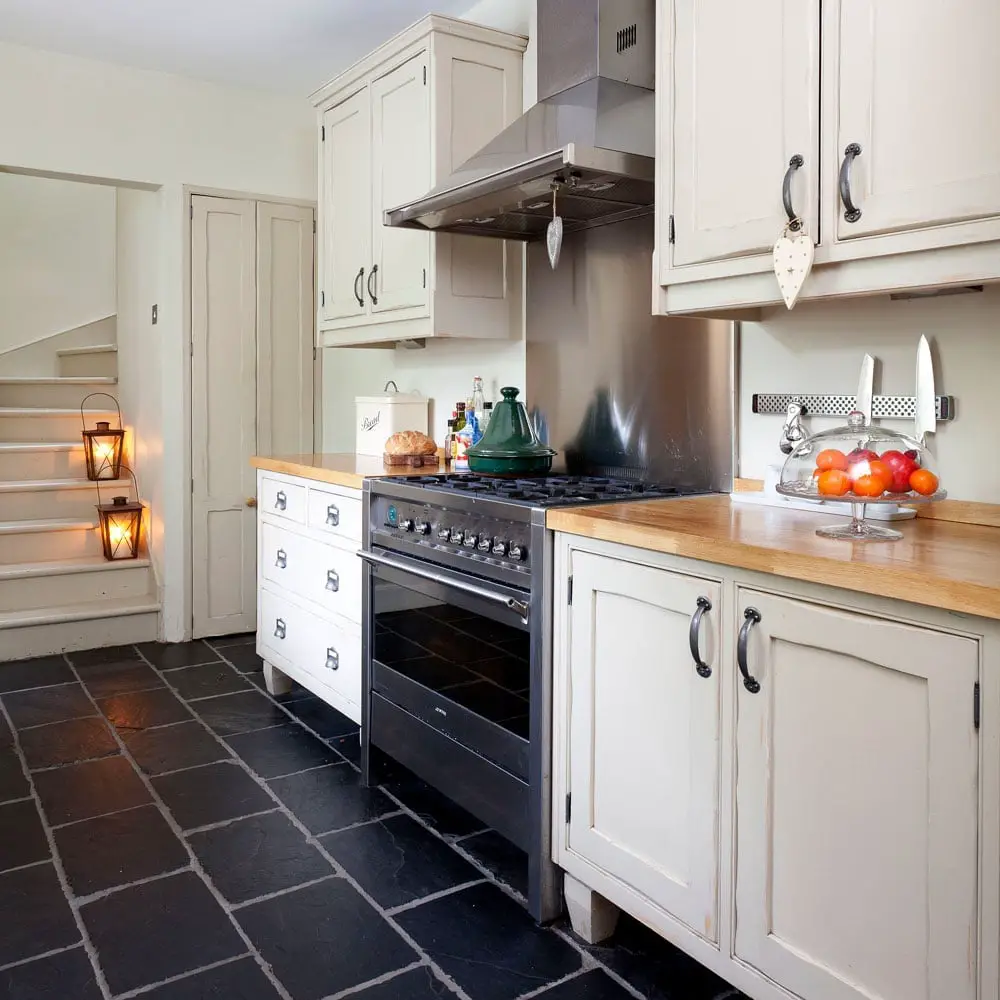
Cream cabinets with dark hardware shift the palette from sweet to grounded. In this farmhouse kitchen, the cream uppers and a stainless steel range sit against wood countertops and a stone tile floor. The lanterns overhead cast a warm glow, but it is the black pulls and handles that stop the scheme from looking too pale. The ratio here is crucial: a little dark metal goes a long way against a cream field. Stick to a single dark finish across all hardware to keep the look deliberate rather than scattered.
Modern farmhouse kitchen with wall of cream cabinets and brass accents
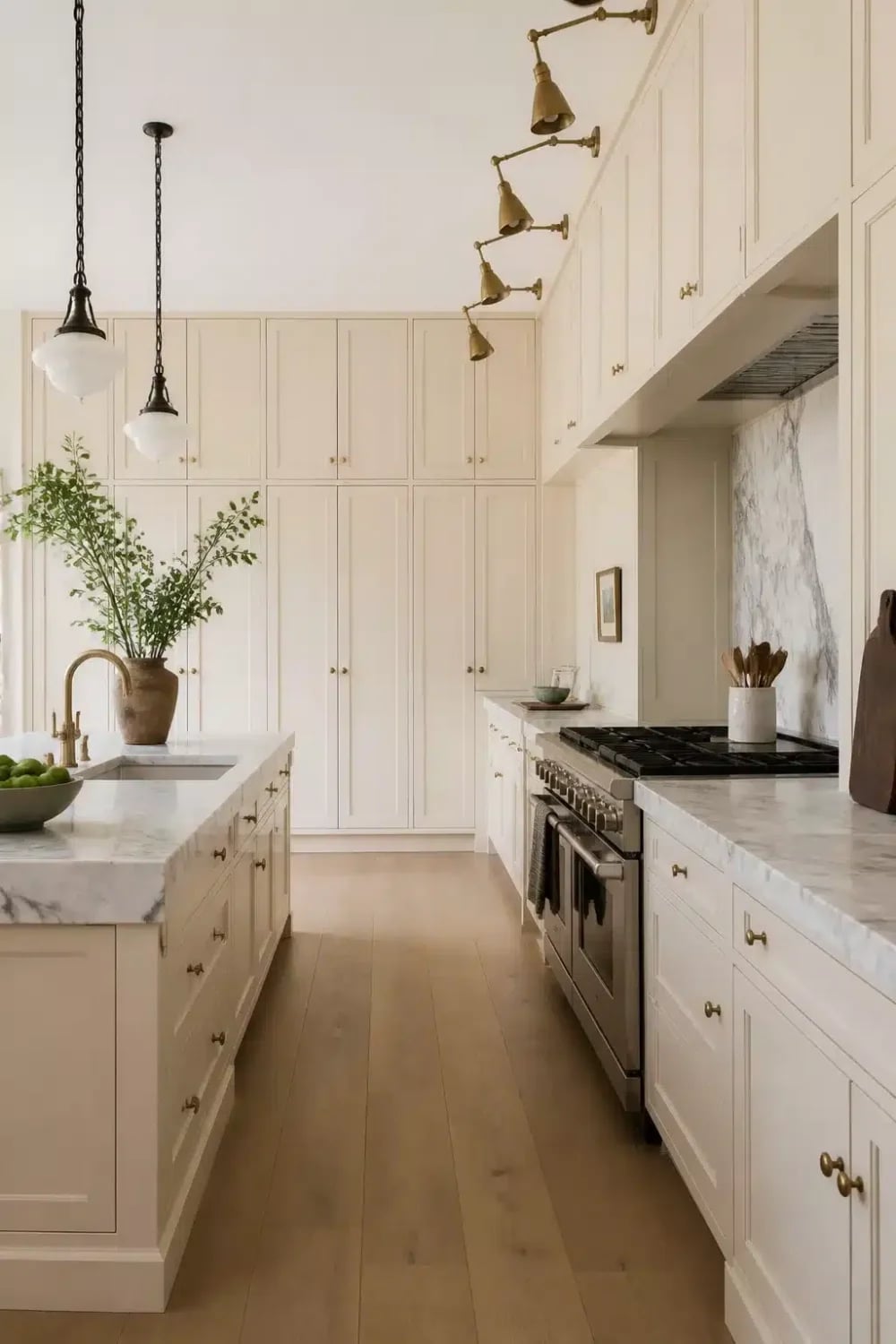
A practical rule for renters: look for ways to add visual weight without touching the cabinets. This modern farmhouse kitchen runs a full wall of cream cabinetry, a large island, and a range stove, all anchored by brass hardware on the doors and drawers. The brass pulls echo the sconces and pendant lights overhead, while the marble counter and wood tones keep the room from feeling too uniform. You can borrow this trick by swapping out standard hardware for a brass set that matches your existing lighting. No painting, no drilling into tile, just a weekend of screwdriver work that changes how the cream reads.
Island has built-in wine rack
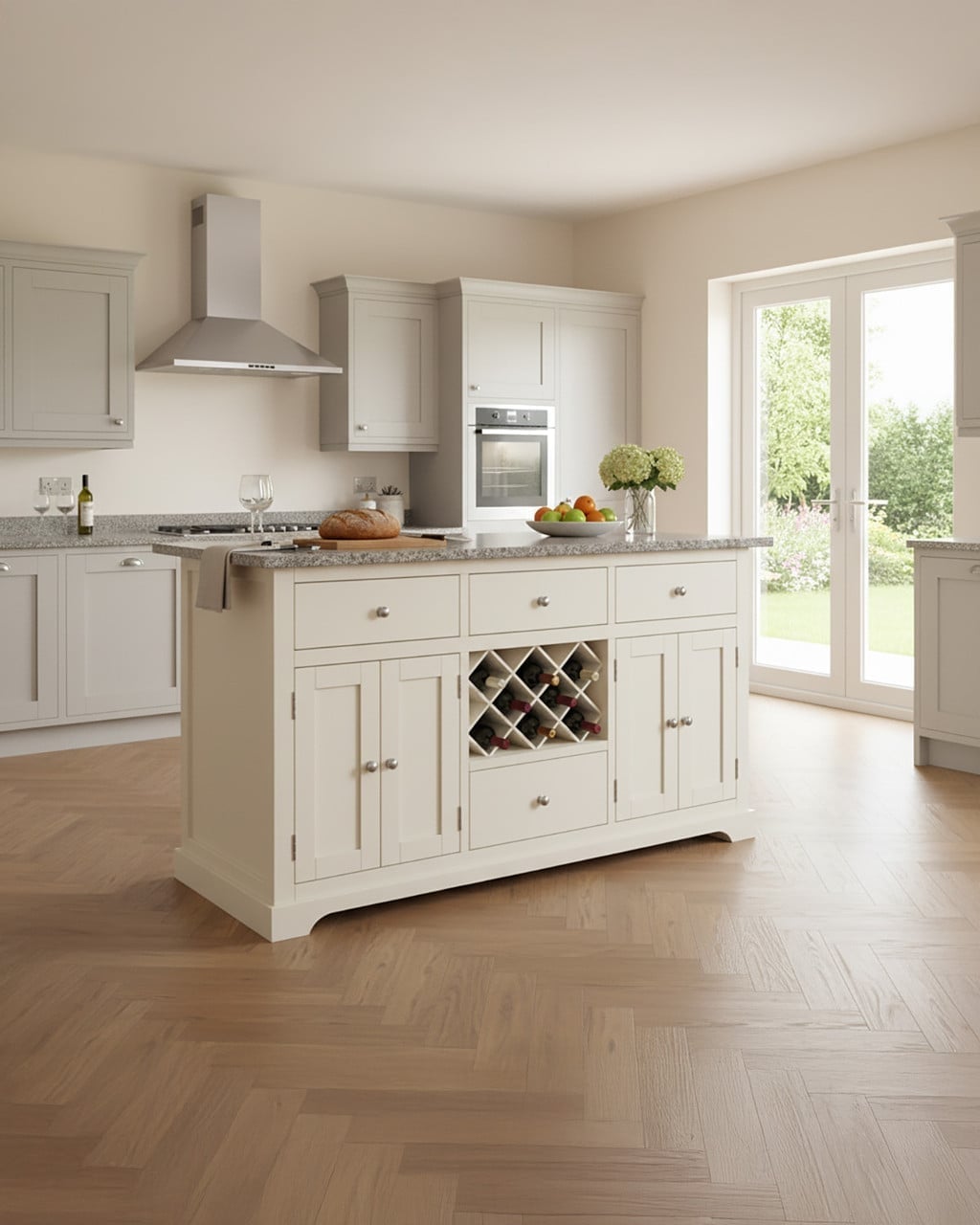
A kitchen island with a built-in wine rack sounds like a luxury, but it solves a problem that open shelving cannot. The cream island sits at the center, its wine rack tucked into the side facing the French doors. The L-shaped cabinetry and range hood work around it, and the doors let in plenty of daylight, keeping the room from feeling closed in. What sets this apart from a standalone wine cooler is the integration: the rack follows the island’s wood and granite finish, so it looks like part of the furniture. For a kitchen that hosts often, that built-in look saves floor space and keeps bottles within reach without a separate cart.
Spacious kitchen with cream cabinet wall and marble island
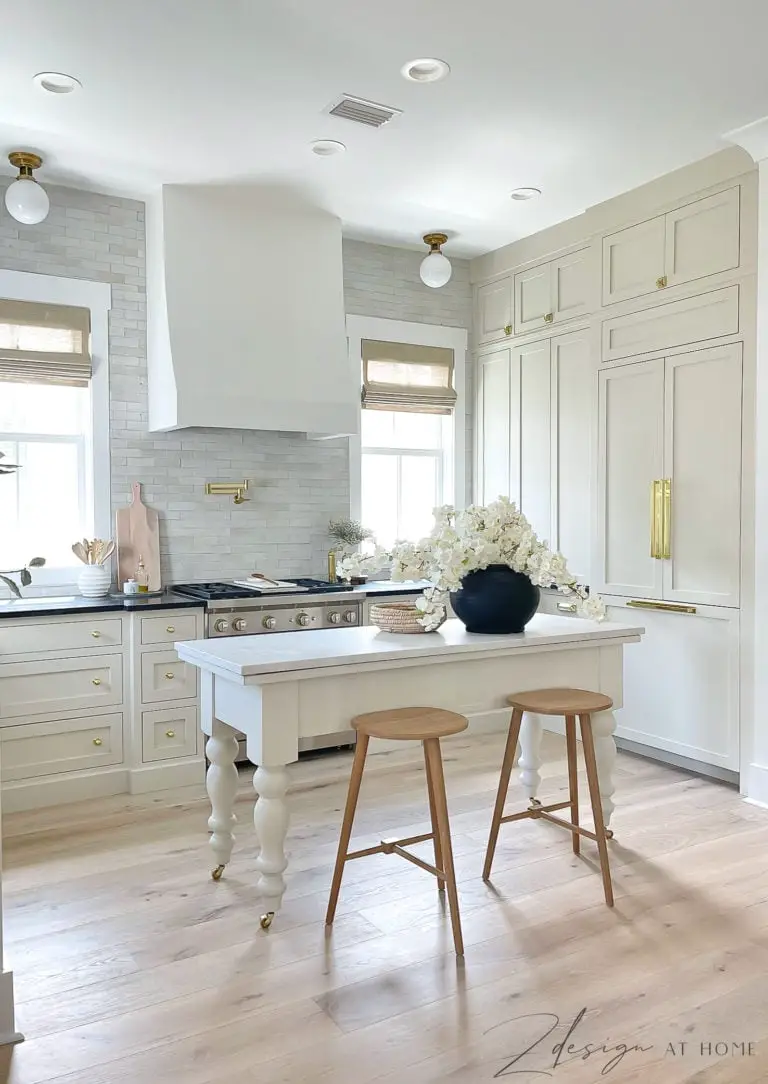
A wall of cream cabinets with brass hardware stretches across one side of this modern farmhouse kitchen, while a marble island with wood stools anchors the center. The recessed ceiling lights and globe pendants keep the room bright without competing with the cabinet color. The layout uses the perimeter for storage and the island for prep and seating, a split that works when the cabinet wall is tall enough to hold everything from dishes to small appliances. The brass pulls repeat across both the upper and lower cabinets, tying the long run together into one deliberate line.
Cabinet displays decorative items
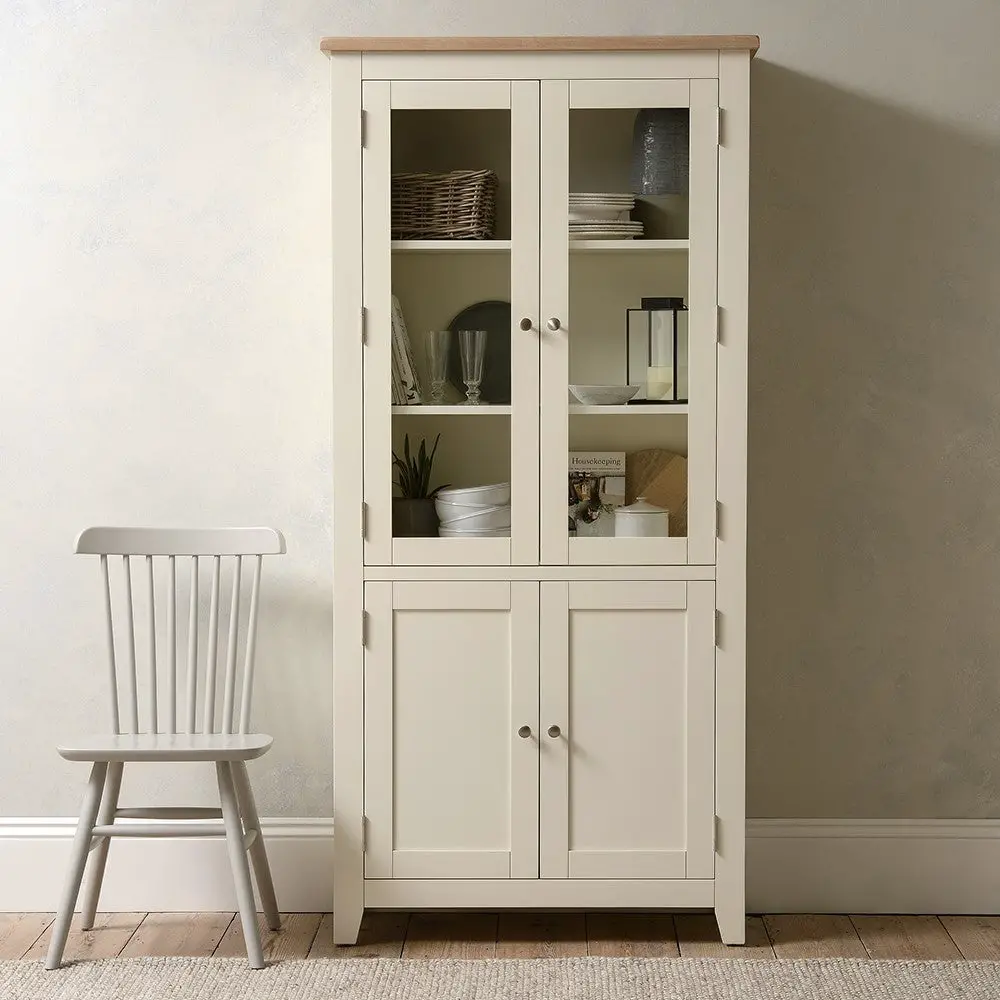
A glass-fronted cream cabinet works best when what is inside earns the visibility. In this traditional dining room, the cabinet holds ceramic dishes and wicker baskets against a pale gray wall, with a spindle-back chair pulled to the side. Light hits the glass but does not fade the cream finish. The trick is editing: leave some shelves open so the eye rests between objects, and group ceramics by color or shape to avoid a cluttered look. A cabinet like this works as a display case, not a catchall, so reserve it for pieces you want to see every day.
Farmhouse kitchen with cream cabinets and brass faucet
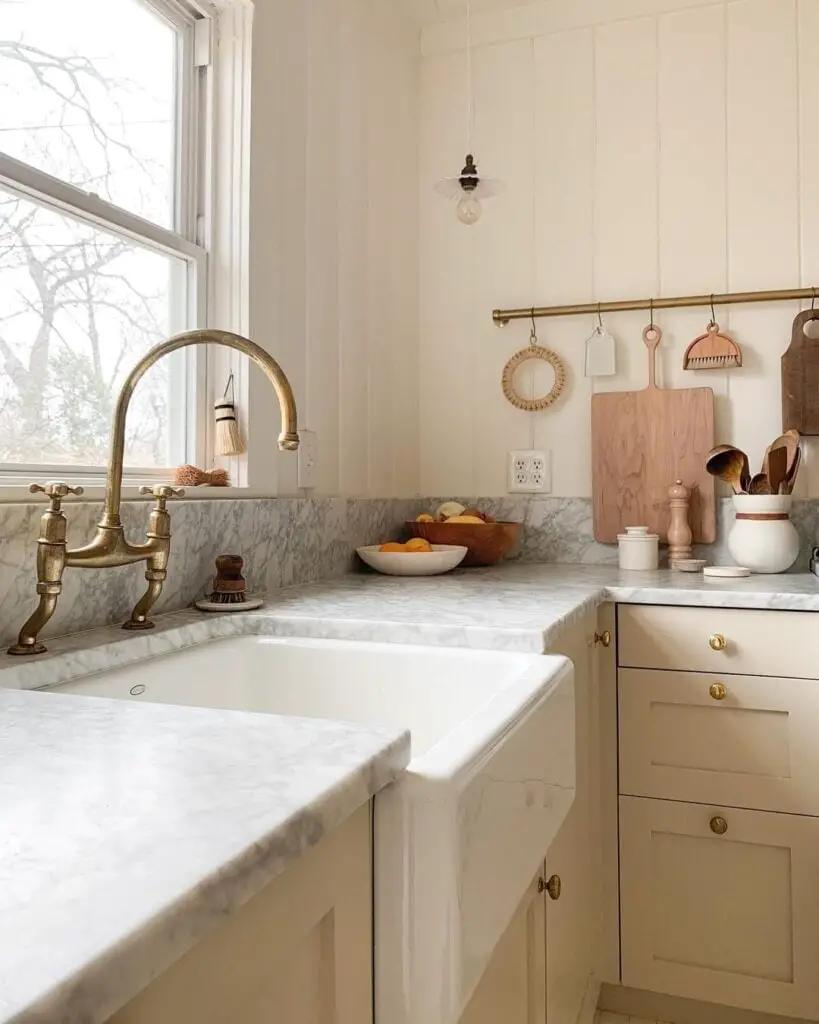
When you pick one metallic finish and repeat it, the room looks finished. This farmhouse kitchen keeps the palette narrow: cream cabinets, a white marble counter, and wood tones from the cutting boards and a nearby window frame. The brass faucet over the apron sink is the only warm metal, so it becomes a focal point without competing. A ceramic jug on the counter adds a soft curve against the square cabinet fronts. The layout tucks the sink into a corner, which makes a compact footprint feel spacious. Light from the window hits the brass and keeps the cream from looking flat.
Patterned lamp adds stylish vignette
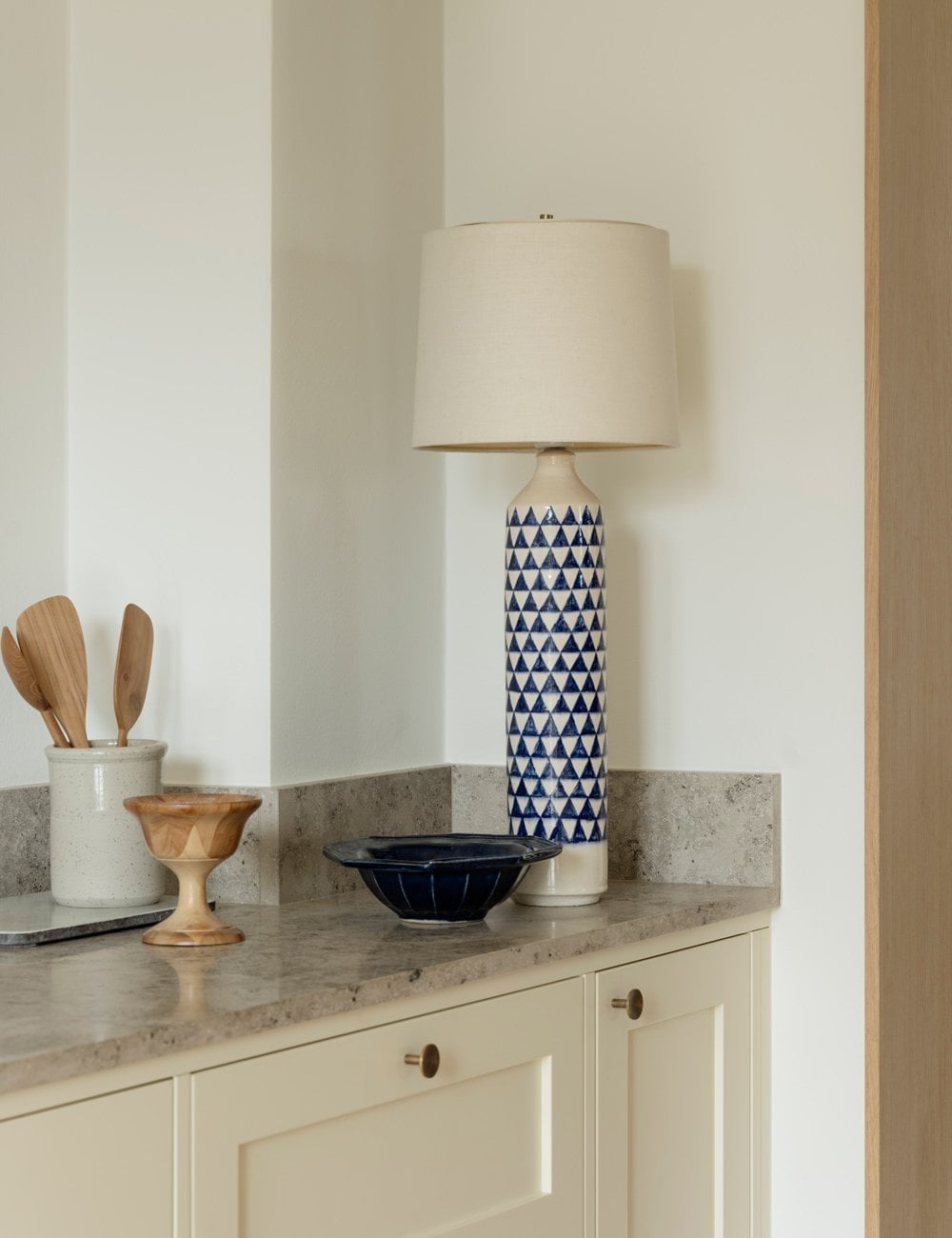
A patterned table lamp with a blue-and-white ceramic base turns a counter corner into a focal point. The cream cabinets above stay plain, so the pattern becomes the accent. A dark blue bowl and a wooden bowl sit beside it, linking the blue back to the lamp and the wood back to the cutting board. The vignette works because the lamp is the tallest object on the counter, which keeps the arrangement anchored.
Marble island adds luxury
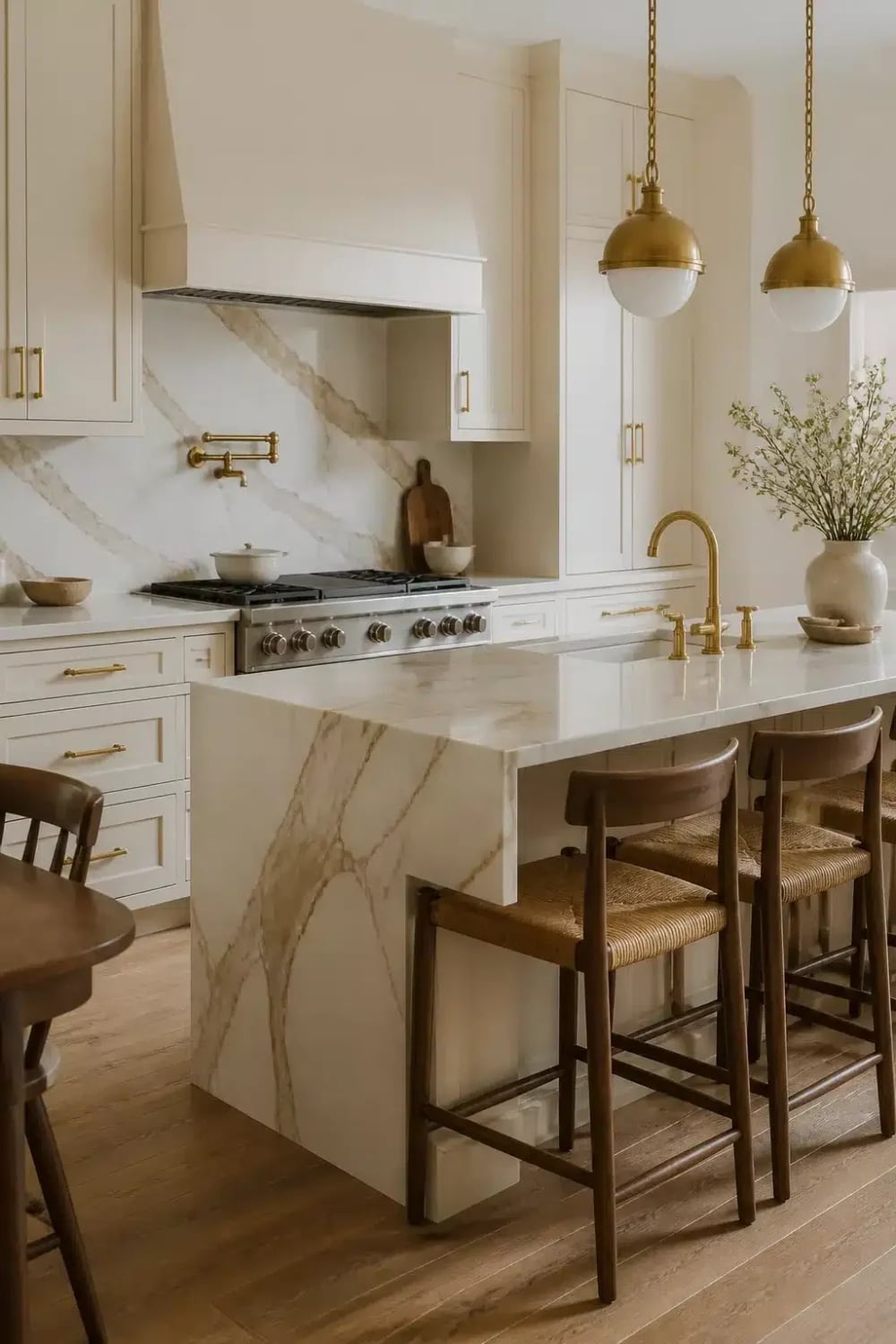
A single rich material can set the tone for the whole kitchen, and here the marble waterfall island does that. The cream cabinets along the wall stay simple, letting the island with its veined stone surface become the visual anchor. Three brass pendant lights hang above it, matching the island metal to the cabinet hardware. Wooden stools with woven seats tuck under the overhang, adding warmth that stone alone would not supply. The layout works because the island sits between the range wall and the dining area, so it functions as both prep surface and casual seating without blocking traffic.
Modern kitchen with cream cabinets, integrated appliances, and wood
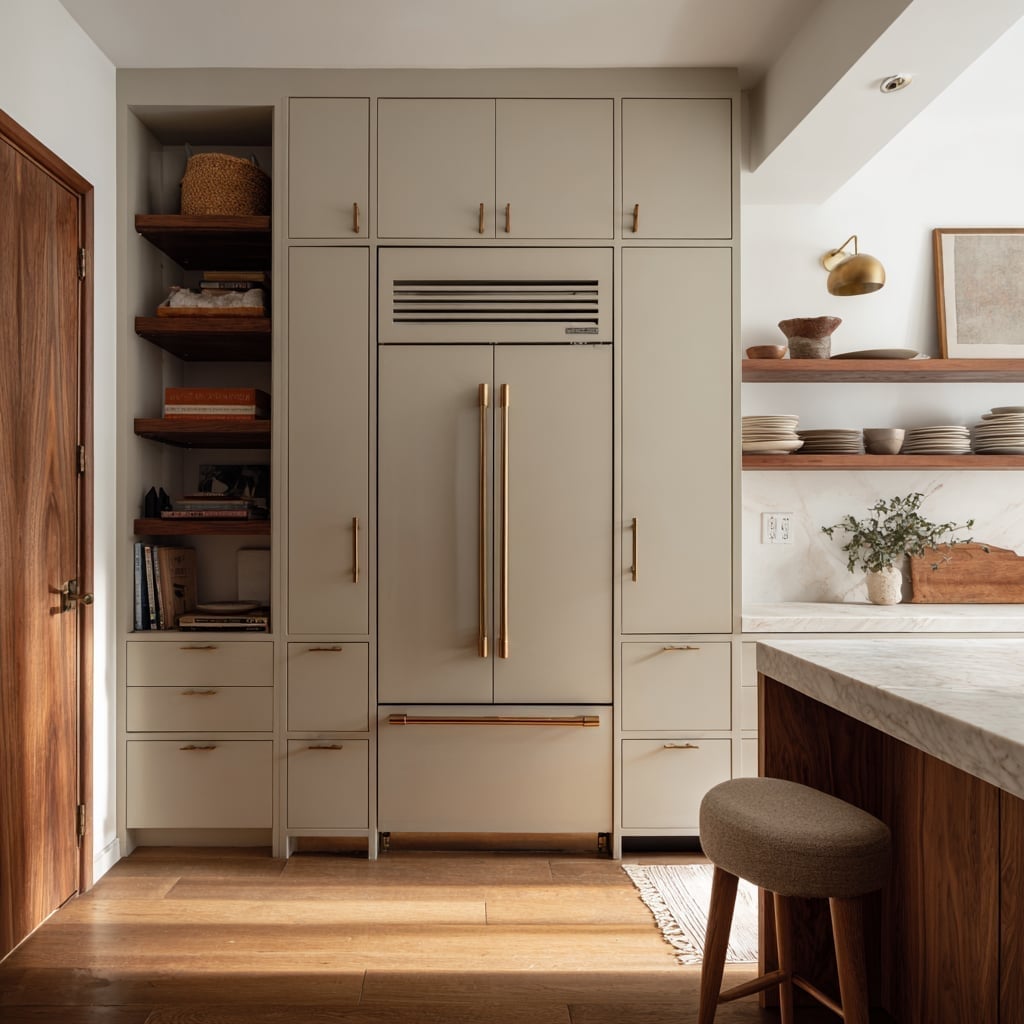
An integrated refrigerator becomes part of the cabinetry, not an appliance, and that changes how the whole wall feels. The cream panels on the fridge match the surrounding cabinets, so the wall becomes a continuous surface broken only by the brass pull handles. Open shelving above adds a spot for everyday dishes and a woven basket, which keeps the space from feeling too sleek. A marble-topped island sits opposite, and a wall sconce above the shelving provides task light without taking counter space. The trick is that the storage stays closed where you need bulk (refrigerator, lower cabinets) and open where you want reach (shelves).
Modern kitchen with cream and dark gray tall cabinets
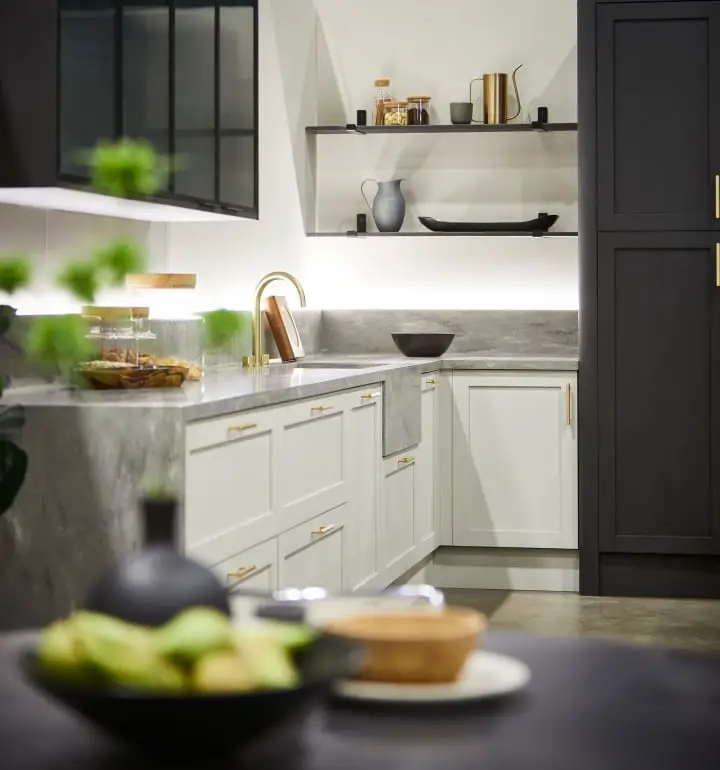
One tall cabinet in dark gray breaks the cream run and creates a natural stop for the eye. The cream cabinets wrap the rest of the L-shaped counter, with a brass faucet and marble countertop keeping the finish level consistent. Floating shelves above add open storage for glassware, which lightens the visual weight of the tall gray piece. The palette stays in a narrow range: cream, gray, white, and brass, with no third color competing. The dark gray cabinet functions as a punctuation mark, defining the end of the cabinet run and giving the kitchen a clear boundary.
Farmhouse kitchen with cream shaker cabinets and glass-front display
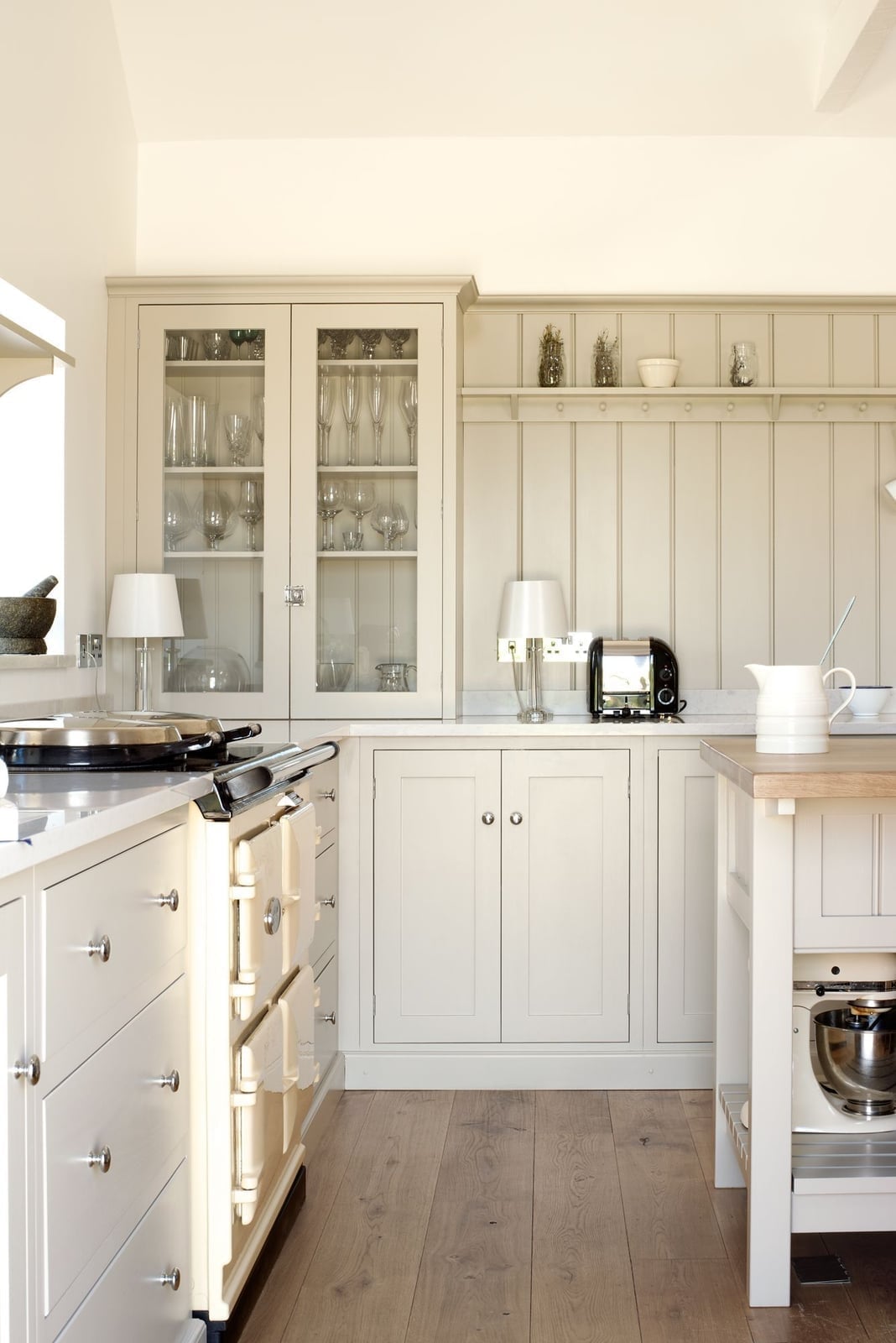
Glass-front upper cabinets turn everyday glassware into decor without requiring you to style open shelves every week. In this farmhouse kitchen, cream shaker cabinets with glass fronts sit above a marble countertop, filled with matching glassware that creates a curated look. A range cooker anchors one wall, while the central island adds prep space and casual seating. The combination of wood tones and cream keeps the room warm and avoids a cold feel. For a similar look with standard cabinets, swap solid upper doors for glass inserts or have a local shop cut openings and add glass panels. It gives you the display factor without a full custom order.
Matching refrigerator completes cabinets
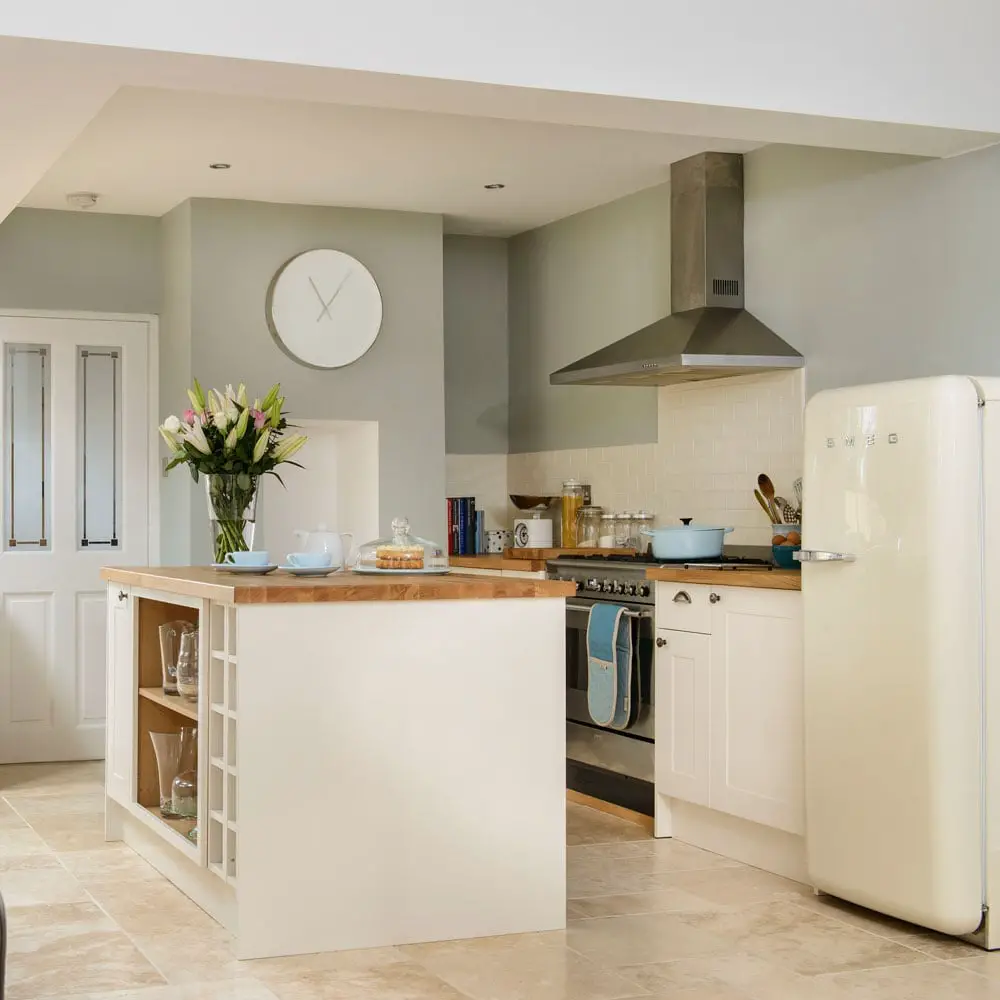
A panel-ready refrigerator that matches the cabinets is the obvious upgrade, but a cream refrigerator that stands on its own can look just as cohesive for less effort. In this modern farmhouse kitchen, the cream refrigerator sits flush with cream cabinets along one wall, while white subway tile backsplash and a range hood break up the expanse. The kitchen island in the foreground repeats the cream tone, so the appliance doesn’t feel like an afterthought. Overhead ceiling lights keep the room bright and even.
Matching the appliance finish to the cabinet color works because the eye reads them as one unit, not as separate pieces fighting for attention. If you rent and cannot swap the refrigerator, try painting the cabinet doors around it in a cream that echoes the appliance. It is a weekend project that ties the wall together without touching the landlord’s refrigerator.
Classic kitchen with cream cabinets and marble backsplash
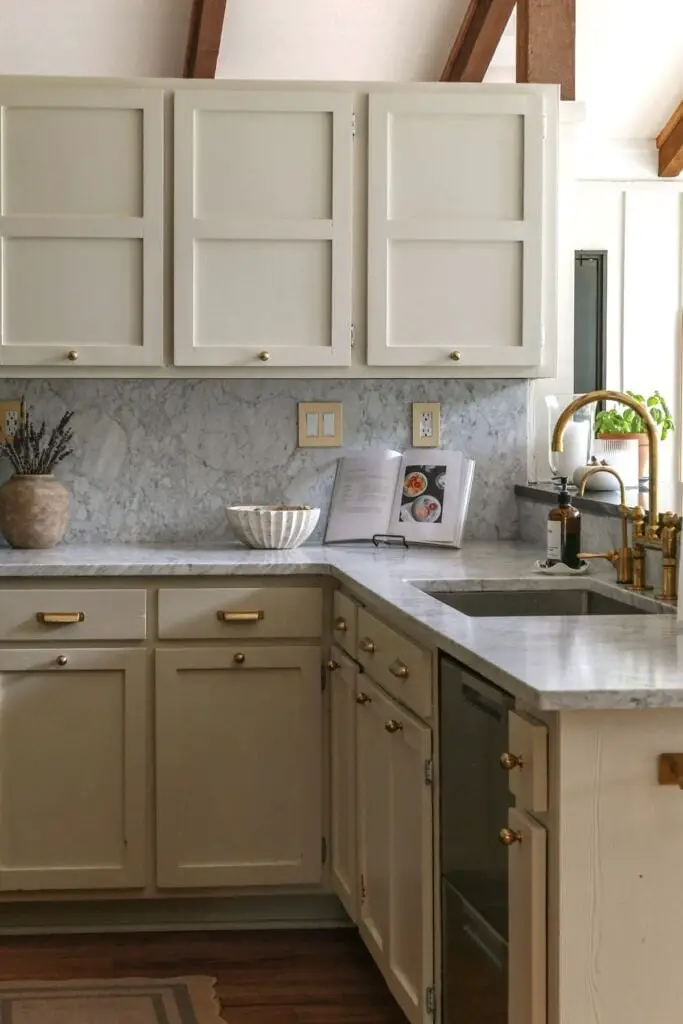
A marble backsplash that runs from counter to upper cabinets gives a compact corner kitchen a neat, continuous look. Here, cream cabinets and a marble countertop pair with a brass faucet for subtle contrast. Natural light from a nearby window hits the marble veining, while a cookbook and a few ceramic pieces on the counter add lived-in detail without clutter. The palette stays in the cream, gray, and brass range, with green accents from a small plant or vase. It is a straightforward formula: one stone, one metal, one cabinet color. That restraint keeps the kitchen feeling intentional, not busy.
Final Thoughts
Cream cabinets earn their place by staying adaptable. A switch in hardware or a new backsplash can change the whole feel without a full redo. The real takeaway is that cream works as a long term neutral, not a trend. Keep the palette clean, choose one accent finish, and let the storage do the work. A simple wipe with mild soap and water keeps the finish looking new. Dust open shelves weekly, and check hinges every season for smooth action. That is all it takes to keep 28 looks feeling current.