Rustic decor is shifting for 2027. It’s less about rough-hewn logs and more about refined natural textures, warm neutrals, and purposeful asymmetry. We’re seeing farmhouse roots meet a cleaner, more curated look that feels lived-in but intentional.
This collection of 34 ideas shows how to blend stone, wood, and soft fabrics into spaces that feel grounded without feeling dated. From vaulted beam ceilings to freestanding tubs, each look offers a practical way to bring that balance home.
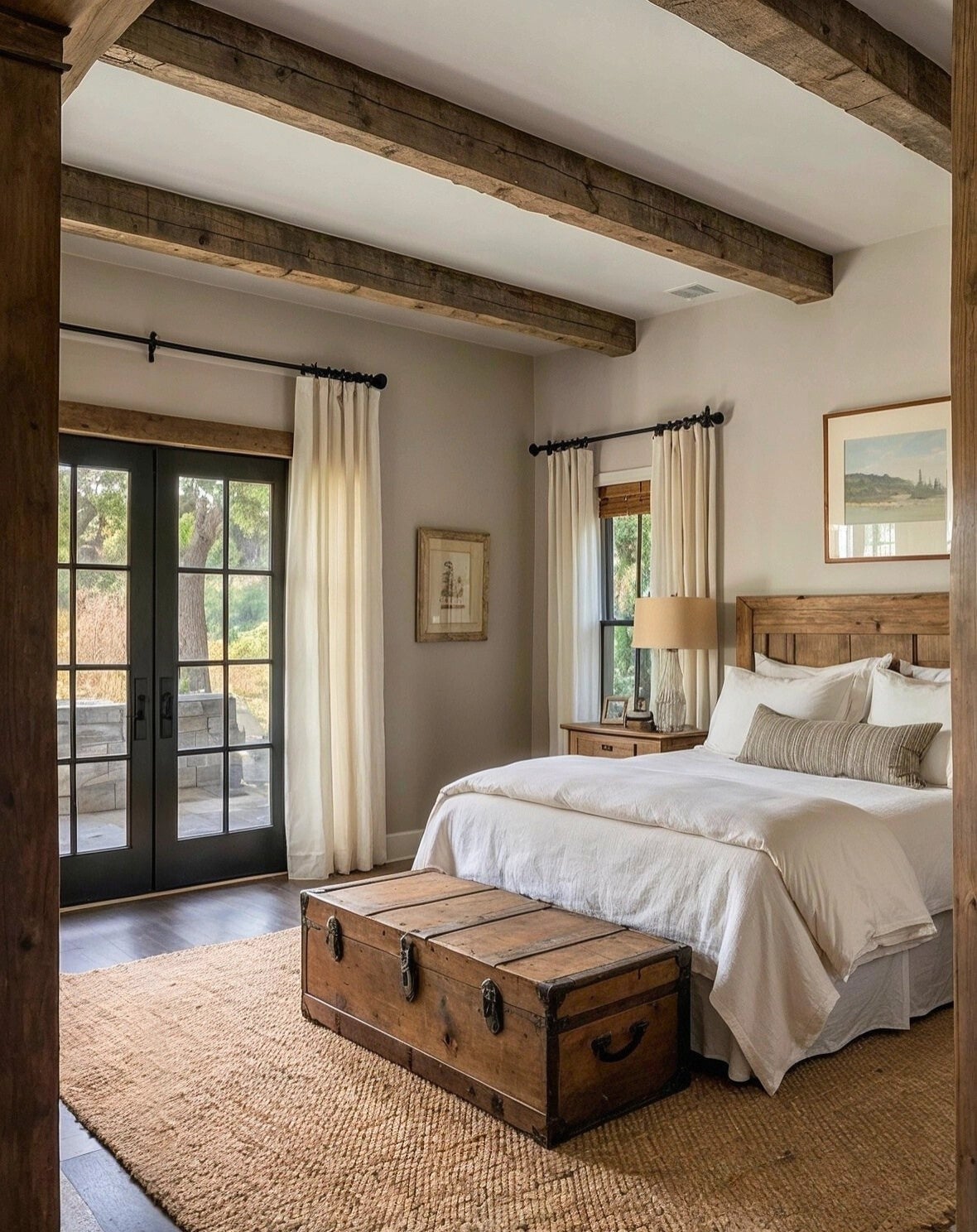
A rustic bedroom oasis with exposed beams and natural light
The way the wood beams sit low over the bed turns a high ceiling into something intimate rather than grand. This bedroom works because the palette stays quiet, beige, white, and wood tones, letting the exposed structure do the talking. A jute rug underfoot adds texture without competing with the antique trunk at the foot of the bed. The table lamp and natural light from the windows layer warmth, so the room never feels like a cabin set piece. It looks soft and lived-in, which is the whole point of modern rustic style: the materials define the look, and the look breaks only if you clutter it.
Grand rustic living room centered around a stone fireplace
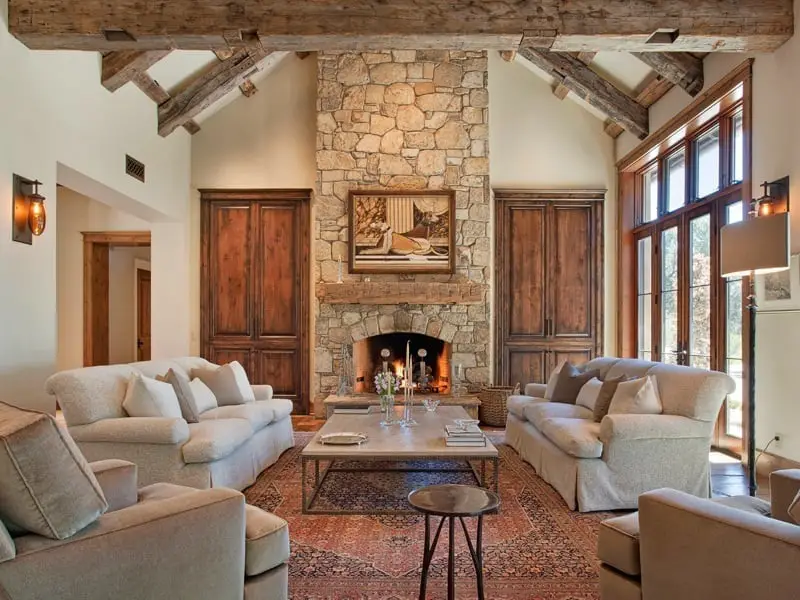
This room is about one thing: the stone fireplace. Everything else, from the neutral sofas to the patterned rug, steps back and lets the fireplace hold the center. The layout is straightforward, seating arranged around a coffee table, all facing the hearth, which makes the space feel generous without being scattered. Wall sconces and a floor lamp add light that the fireplace glow warms up. The wooden doors and exposed beams keep the palette grounded in stone and wood tones, with cream softening the mix. When the fireplace is the anchor, you do not need much else. A room this calm looks intentional rather than empty.
Open-plan rustic living area with vaulted wood beam ceiling
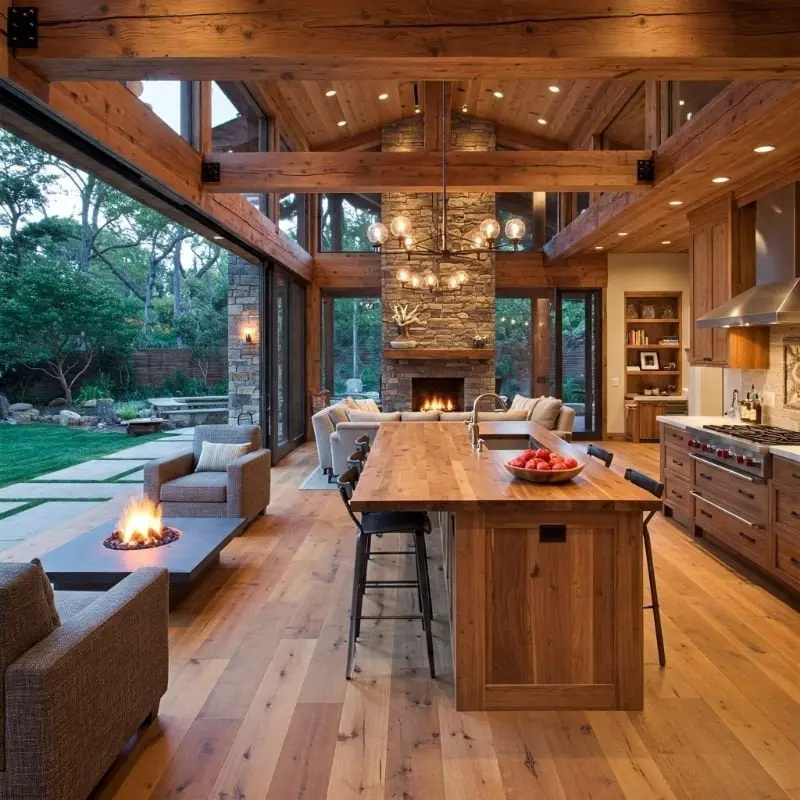
How do you make a room this big feel cozy without blocking the view? The vaulted wood beam ceiling is the trick here. It draws the eye up, then the stone fireplace pulls it back down. The open plan connects the living room to the kitchen, with a large island acting as a subtle divider. A sectional sofa and armchairs face the fireplace, while the statement chandelier hangs low enough to feel present but not intrusive. The palette stays in wood tones, gray, stone, and white, so nothing fights for attention.
The recessed lights handle general brightness, but the fireplace glow does the emotional work. This layout works because the scale is honest: big beams, big fireplace, big windows. If you have a vaulted space, match the furniture scale to the ceiling height. A dainty sofa would look lost here, but the sectional fills the zone without crowding it.
Loft bed and leather sofa below
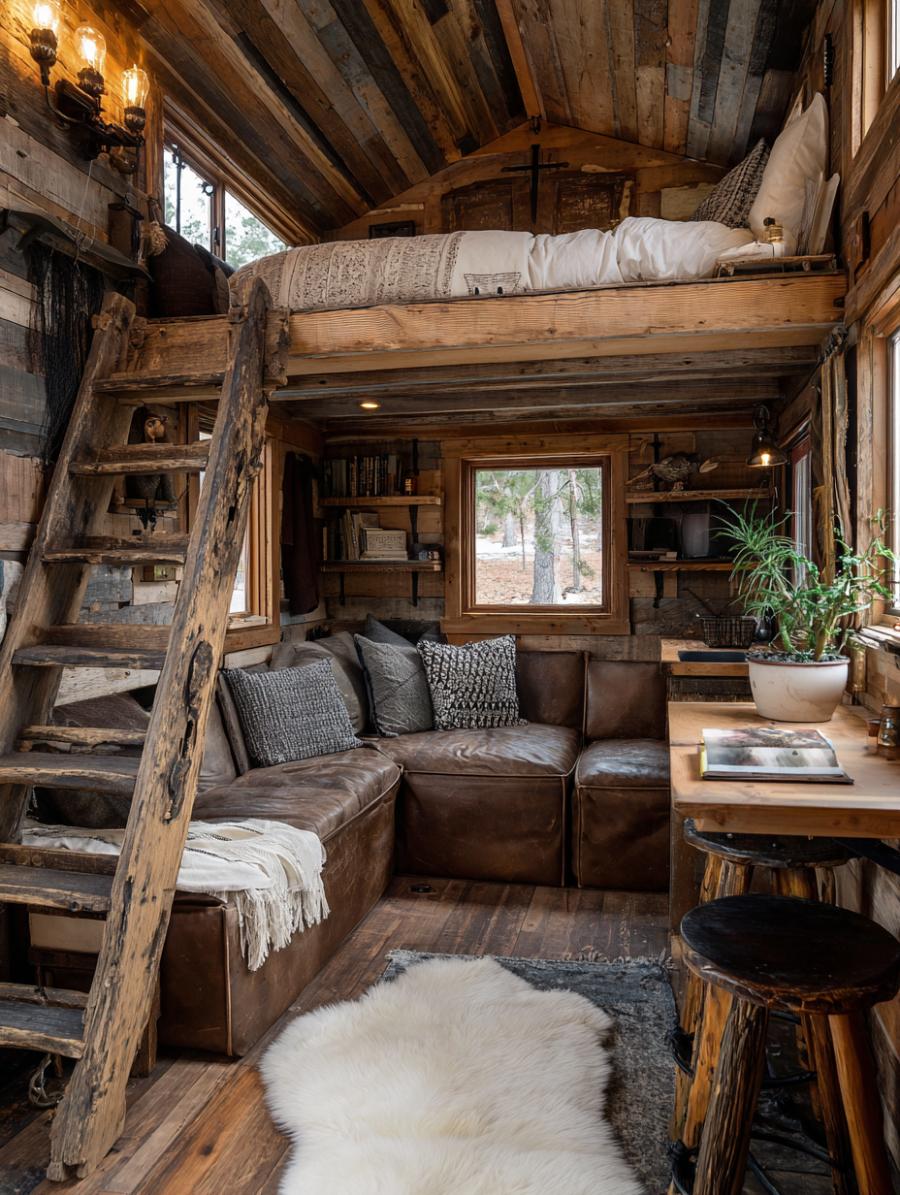
A loft bed above a sectional sofa solves two problems at once: sleeping space and seating in one footprint. The reclaimed wood walls and ceiling make the compact room feel like a hideaway rather than a squeeze. A wooden ladder leans against the loft, and the leather sofa below is softened by a sheepskin throw. Wall sconces with Edison bulbs cast a warm glow that suits the brown and gray palette. This setup works best when every piece earns its spot. The wooden stools can double as side tables or extra seating. For storage, think about what fits under the loft, baskets or low cabinets keep the floor clear.
Massive fireplace on the patio
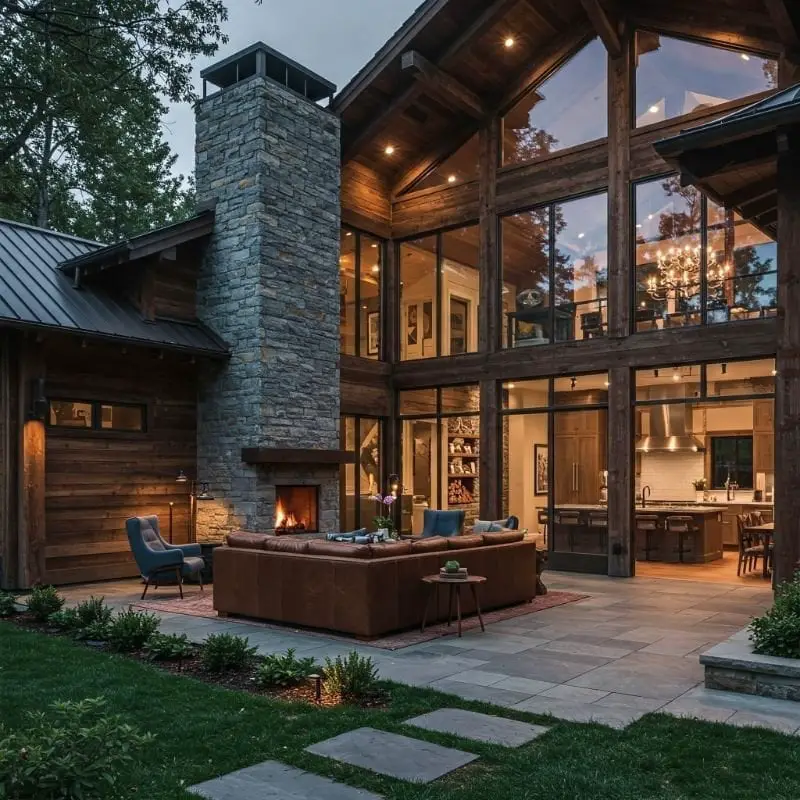
For an outdoor room, build a fireplace big enough to anchor the space. This patio does exactly that, with a massive stone fireplace anchoring a wide seating area. A large sectional and armchairs face the hearth, and the adjacent interior living and kitchen make the patio feel like an extension of the house. The palette uses brown, gray, and natural wood tones, with ambient interior lights and exterior lamps keeping the glow layered. For your own patio, choose outdoor fabrics and materials that handle weather well. Stone and metal handle weather well; leather needs shade or covers.
Live-edge table anchors the room
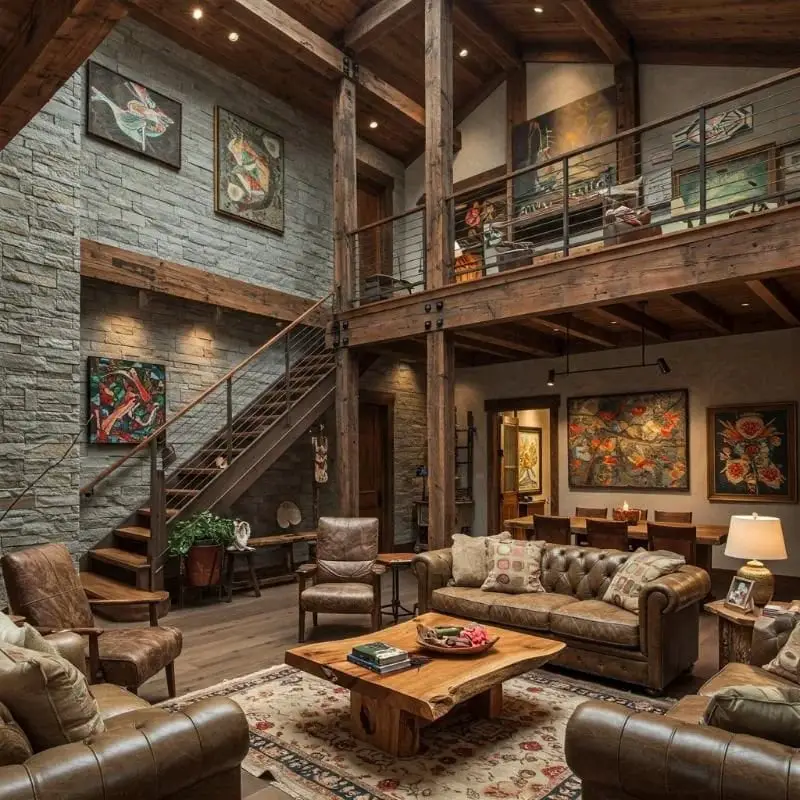
A neat stone floor and track lighting might sound more commercial than cozy, but swap in a live-edge coffee table and the whole room looks grounded. The raw wood edge softens the sheen of the tile and the metal of the recessed lights overhead. That contrast is what keeps a rustic living room from leaning too industrial. The palette stays warm browns, grays, and cream, with red and green accents pulled from the tufted leather sofa and the armchair. The live-edge table becomes the natural center of gravity, and everything else the seating, the rug, the multi-level mezzanine beyond arranges itself around that one piece. What defines this look is the ratio of refined to raw: neat surfaces balance one substantial organic form. A plain slab table would not have the same effect.
Blue cooker and hanging plants
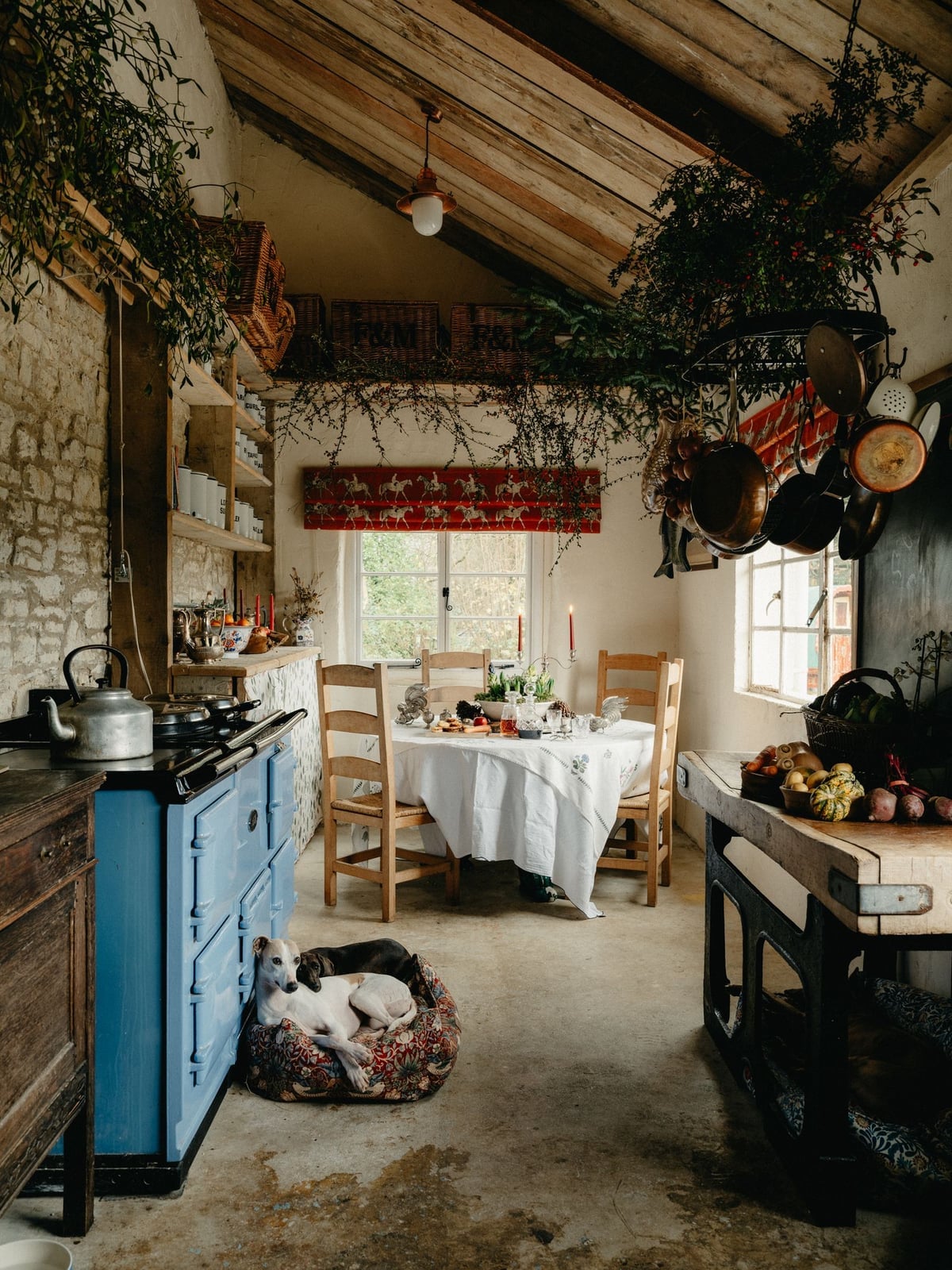
A blue range cooker stands out against natural wood and stone because it introduces a clear, deliberate color anchor. White cabinets, butcher block, and a round wooden table keep the kitchen neutral so the blue becomes a focal point. Copper pots and hanging plants add warmth while the cooker remains the center of attention. For a renter, the same logic works with a blue stove you own or a blue freestanding island that can move with you. The palette uses one tight family: white, blue, red, green, and natural wood. A second bold color would break the simplicity.
Symmetrical seating welcomes light
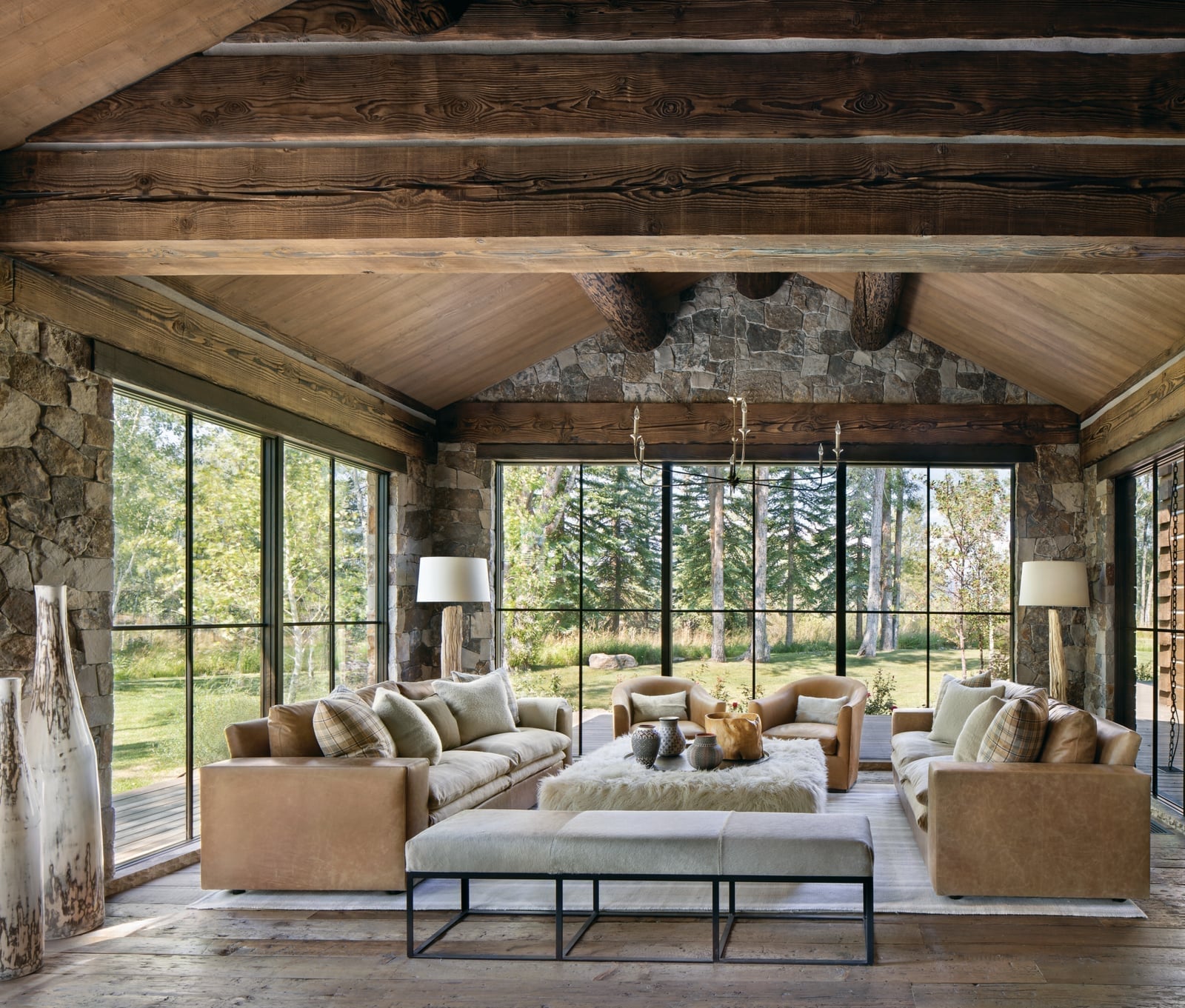
Symmetrical seating is the most direct way to make a room with a stone accent wall and wood beam ceiling feel calm rather than cavernous. Two sofas face each other across a coffee table, with armchairs and an ottoman completing the square. Floor lamps flank the arrangement, and windows fill the center with light. The layout works because the symmetry creates a clear path: seating frames the rug, the rug frames the table, and the table becomes the destination. A rustic living room this roomy can feel empty fast, but matched furniture anchors the space without needing more pieces. The stone wall and beams provide enough texture, so the seating can stay neutral in brown, beige, and gray.
Green lantern hangs overhead
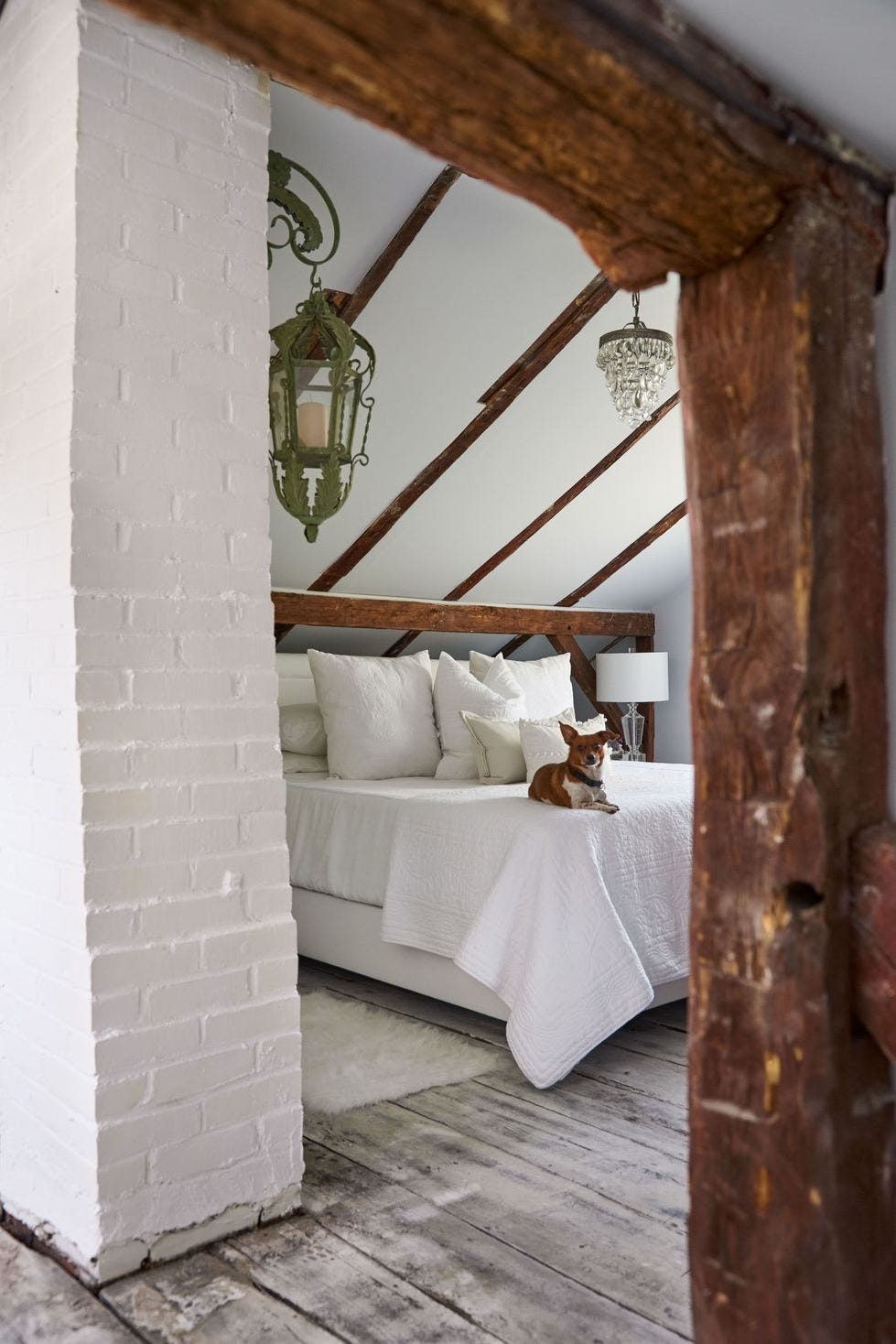
Can a bedroom with exposed wooden beams and a brick wall feel light instead of heavy? Yes, when the lighting layers in three tones. A crystal chandelier adds spark near the ceiling, a green lantern hangs at eye level, and a bedside lamp grounds the light at table height. The green of the lantern picks up the beams and the aged floor without matching them exactly. The white linens on the centered bed keep the palette from turning too dark. The mix of materials includes aged wood, brick, linen, crystal, and painted metal. The ratio leans heavily on natural textures, with the crystal and lantern green providing the break. A room with this much wood needs those lighter, brighter elements to breathe.
Wicker chair and decorative plates
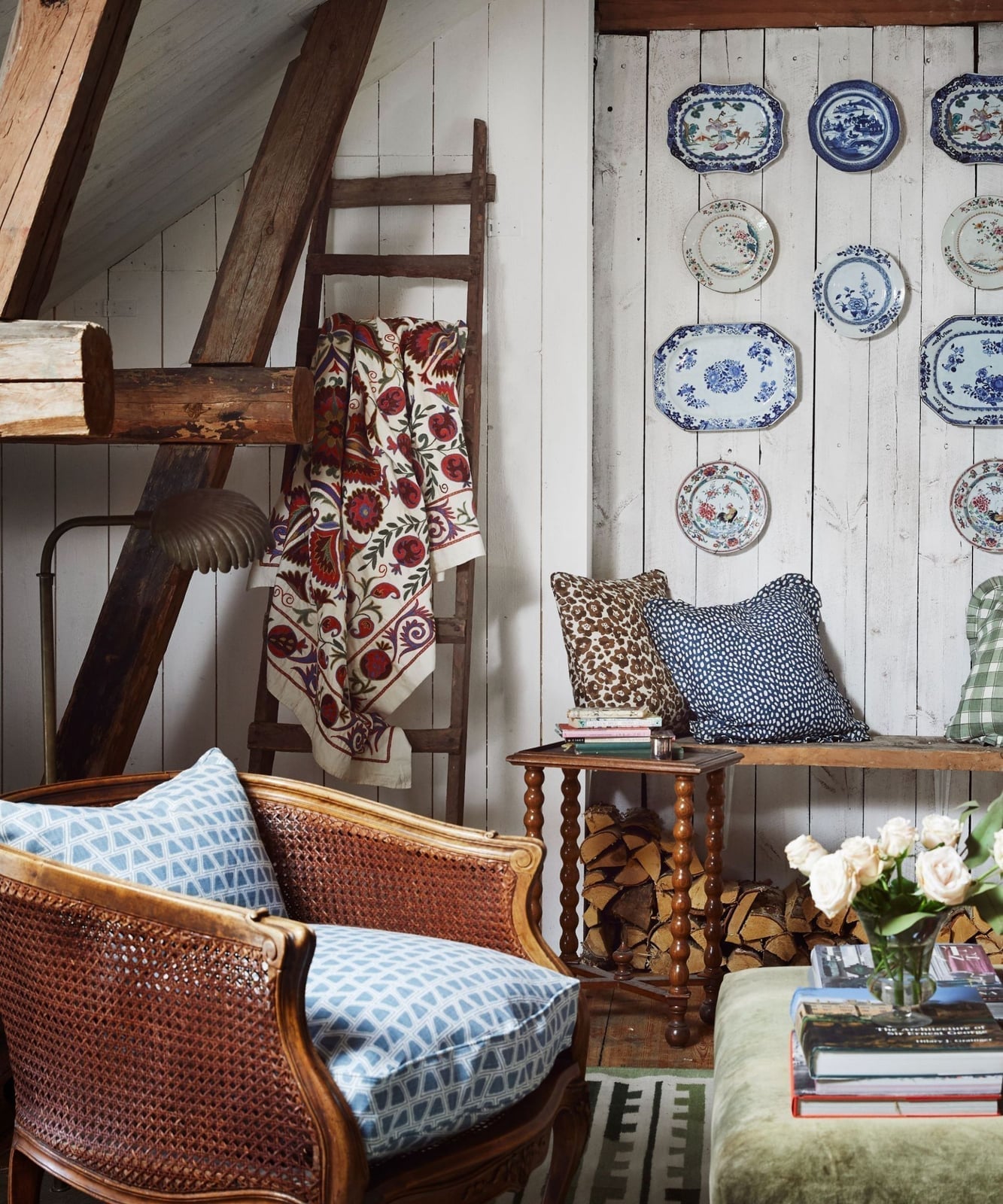
A collection of blue and white decorative plates turns a corner vignette into a display that looks curated, not cluttered. The key is scale: the plates hang above a wooden bench and a wicker armchair, with a floor lamp and a wooden ladder filling the vertical space. The ladder leans against the wall, breaking the rectangle of the plates without competing with them. The palette stays white, blue, red, brown, and green, with the rattan of the chair adding texture that the ceramic plates lack. For a compact corner, keeping the seating low and the display high prevents the arrangement from feeling top-heavy. The plates work because they are grouped tightly a scattered arrangement would lose the impact.
Floral sofa and landscape Art
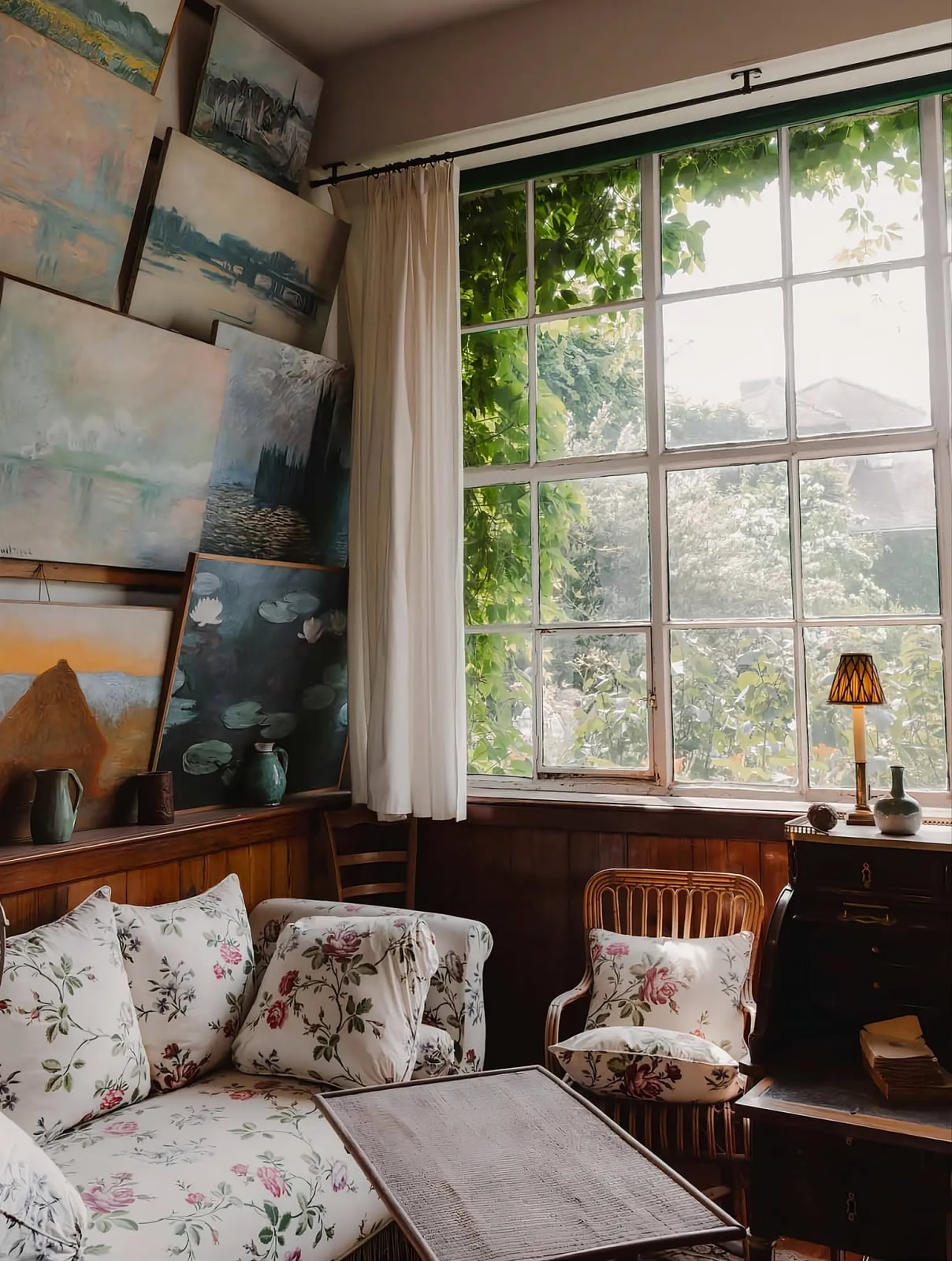
A living room with wood paneling and a gallery wall of stacked landscape paintings proves that a floral sofa can feel collected instead of busy when the palette stays muted. The linen upholstery looks cream, brown, and soft blue, so the pattern settles into the room rather than shouting over it. A rattan chair and wooden desk keep the materials natural, and the table lamp adds a warm glow that keeps the corner from feeling shadow-heavy. The principle here is that a strong pattern works when everything else in the room stays quiet in color and texture.
Arched window frames the greenery
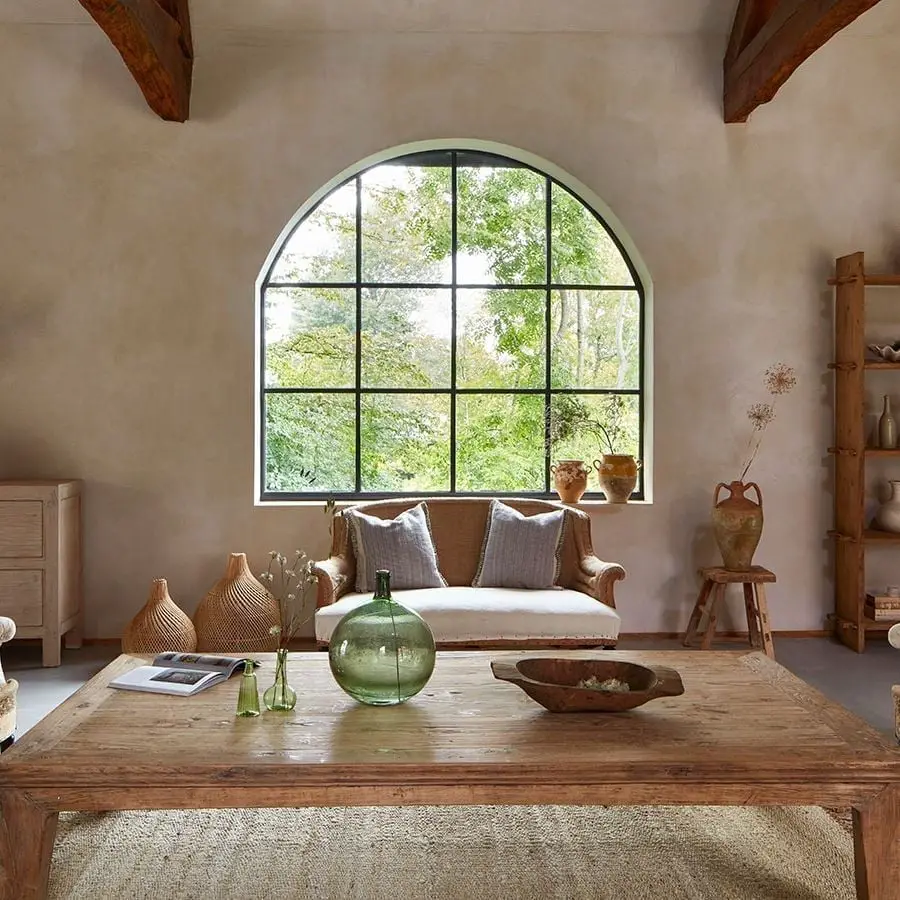
An arched window with a grid could look formal, but in this living room it feels relaxed because the palette stays all earth tones: beige, cream, wood, and green. The sofa faces the window directly, so the view becomes the main event and the furniture steps back. Wicker and linen keep the textures soft, and a wooden coffee table grounds the center of the room.
Natural light from the window travels across the whole space, which means the room does not need a lot of artificial light during the day. A practical takeaway is that an arched window works best when you keep the furniture low and the palette neutral, letting the architecture carry the character.
Red lights illuminate the table
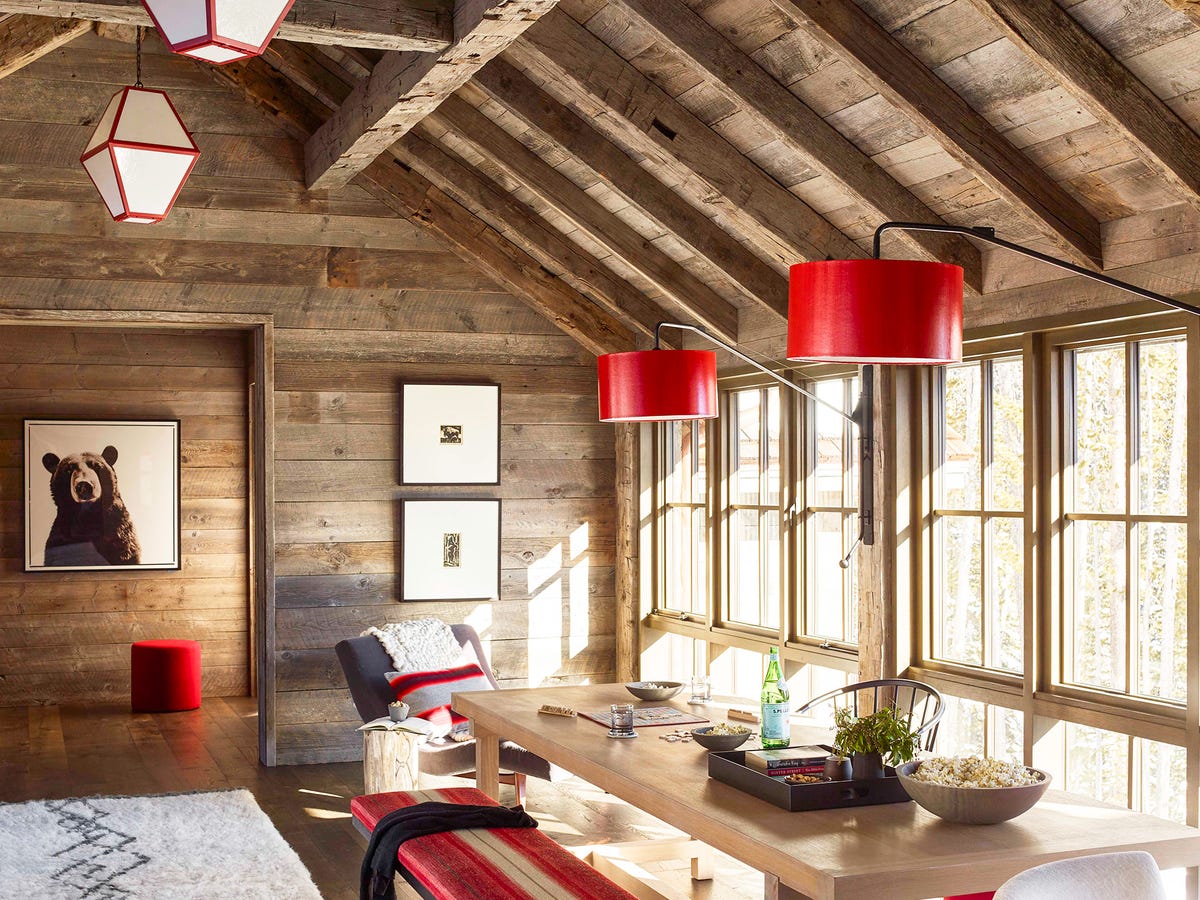
The red pendants are the first thing you notice, and they work because the dining room stays quiet. A long wooden table sits centered near windows, with framed art on the walls and a sloped wooden ceiling overhead. The red metal shades add light that balances the gray and white tones from the windows and walls. That is the trick: a bold fixture color needs a neutral background to look deliberate.
Farmhouse living room with distressed mantel and antlers
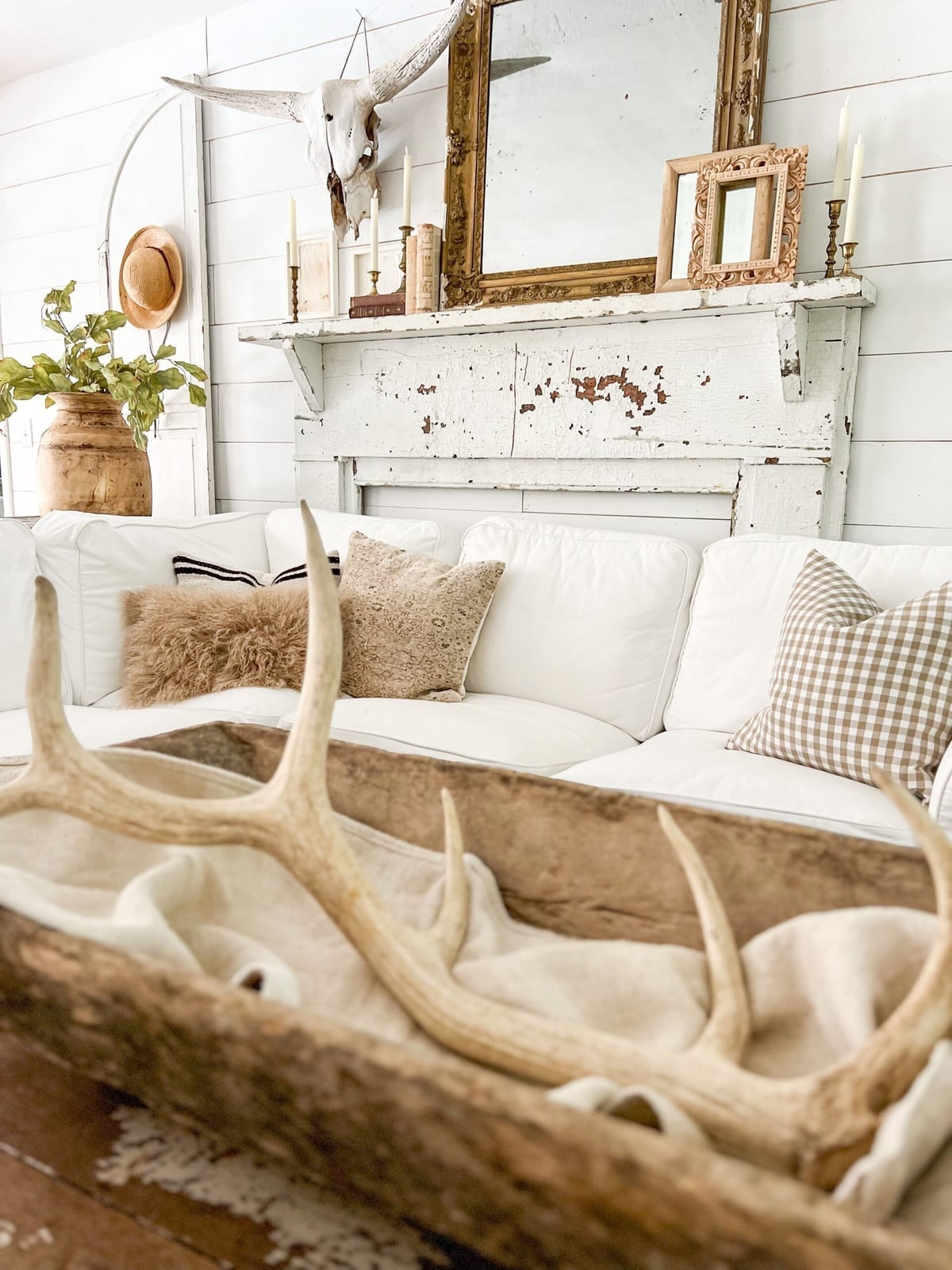
This living room gets its character from contrast: a white sofa and cream linen upholstery sit across from a dark distressed mantel with a bull skull and antlers in a wooden bowl. The natural daylight is the only light source, and it softens the dark wood and bone so the room feels airy instead of heavy. An ornate mirror above the mantel reflects that light back into the space. The one-line assessment is that farmhouse style works best when you balance rough elements with light, soft surfaces.
Antlers create a bedroom focal point
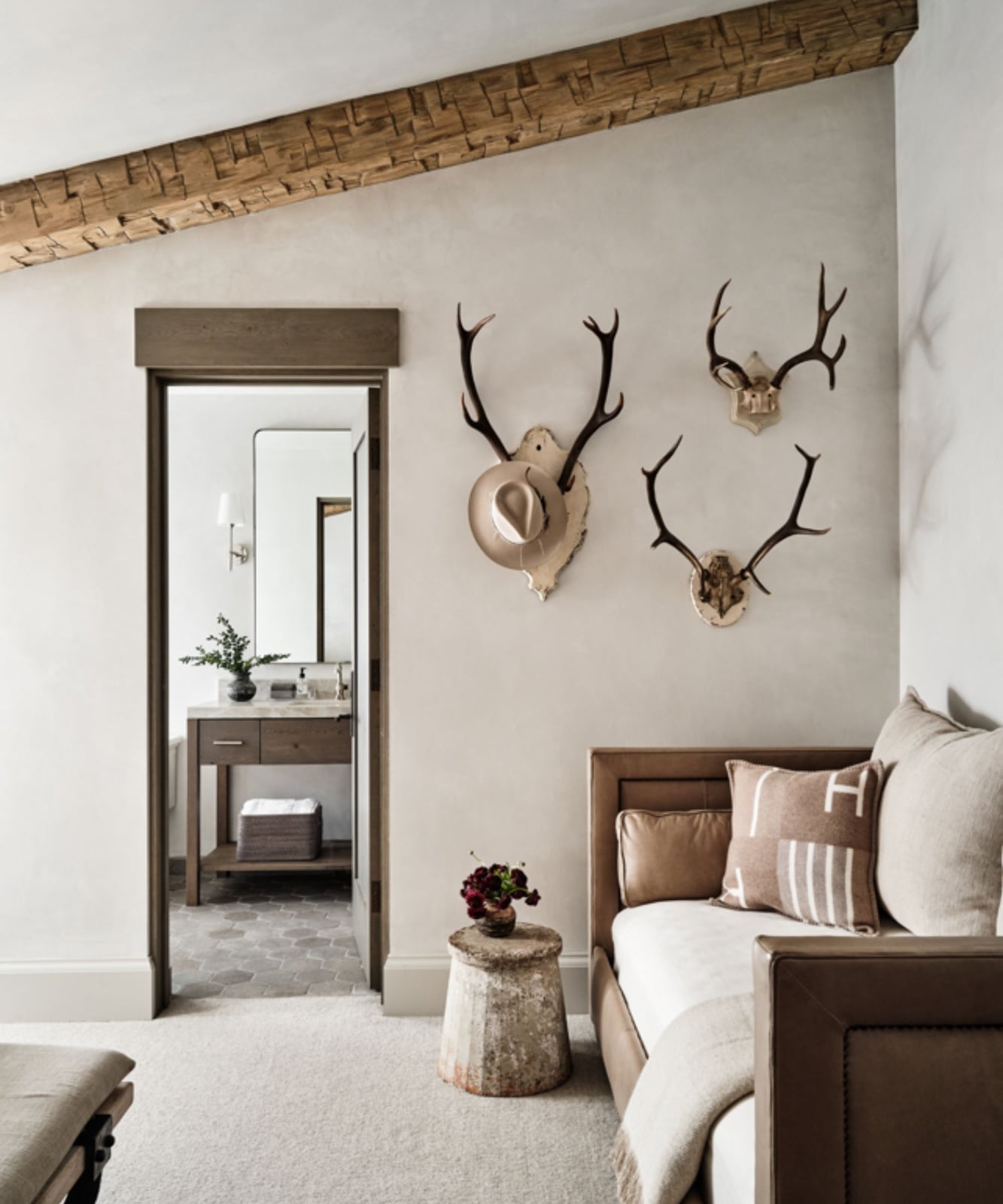
A practical rule for a bedroom with a low ceiling or wide wall is to let one large object do the work. In this room, mounted antlers sit above a leather daybed, with a stone side table beside it. The antlers draw the eye up, making the wall feel taller and giving the room a clear center. The palette stays beige, brown, cream, and gray, so nothing fights for attention.
Storage in a room like this can stay hidden. A daybed with a low profile leaves the floor open, and a stone side table offers a surface without adding visual clutter. The antlers themselves are not storage, but they replace the need for a headboard or a large piece of art, which keeps the room simple and the focus clear.
Slipcovered sofas in open plan
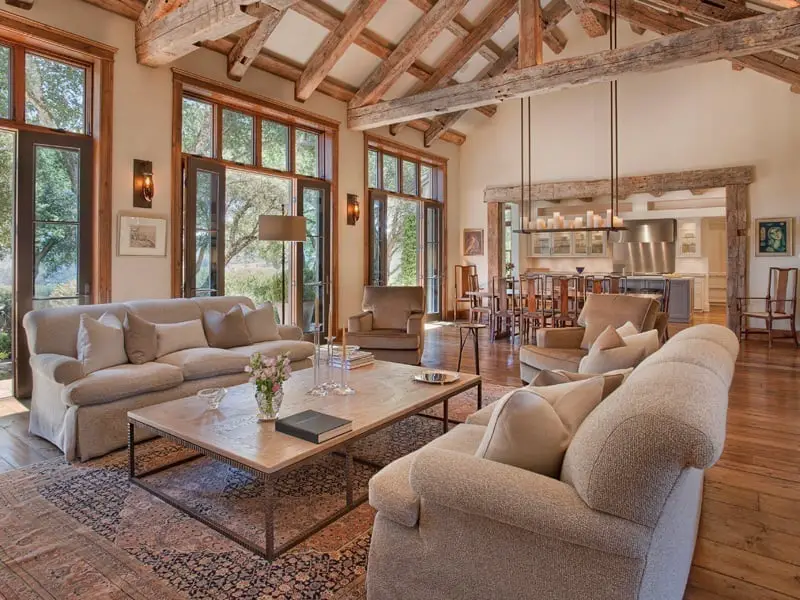
Slipcovered sofas define this rustic living room by softening the heavier materials around them. The beige linen upholstery sits against dark wood ceiling beams and a large wood coffee table, creating a clear contrast between soft and solid. A patterned rug anchors the seating area within the open plan layout, while wall sconces and a modern chandelier provide layered light. The style relies on that balance: the linen feels relaxed, the beams feel permanent, and neither one outweighs the other.
Geometric window frames trees
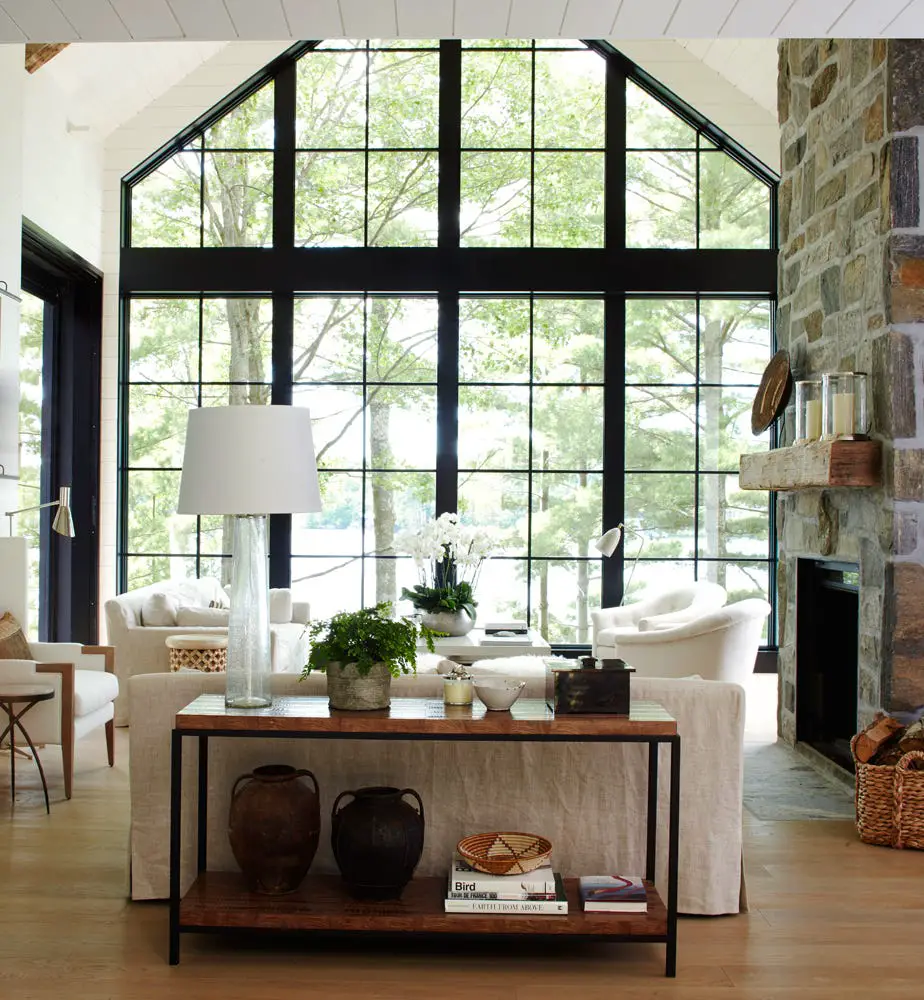
A practical rule for an open plan room is to let one architectural feature set the layout. Here, an expansive geometric window frames the view and pulls the seating area toward it. The sofa and armchair face the glass, with a console table and fireplace anchoring the opposite wall. The palette stays neutral with stone, wood, and linen, so the green outside becomes the main accent. For a renter-safe version, arrange furniture to face the best window in the room rather than the wall. Floor lamps and a table lamp keep the light warm when the sun goes down.
Cream stove in a small kitchen
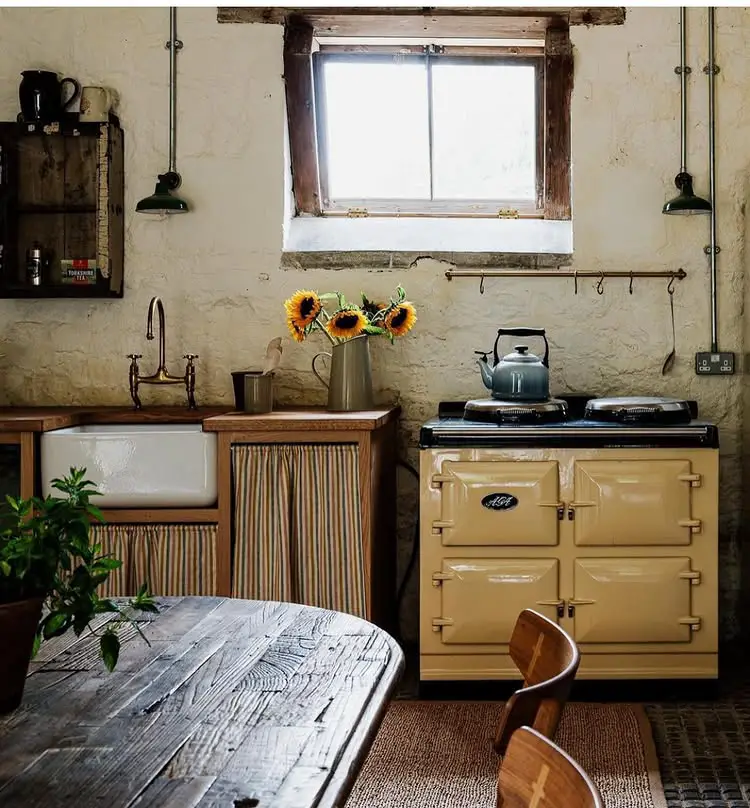
A cream range stove might seem like a choice for a sprawling farmhouse, but it works just as well in a compact kitchen. The key is letting it anchor the room without adding more visual weight. Here, the stove and a farmhouse sink sit along one wall, while a wooden table and chairs fill the foreground. The palette stays restrained: cream, beige, and brown, with small hits of green from wall-mounted lamps and yellow from the natural light.
Stone walls and wood surfaces keep the look grounded, so the cream finish is a deliberate choice. The compact layout means every piece earns its place, and the stove earns it by being the room’s main event.
Freestanding tub and brick walls
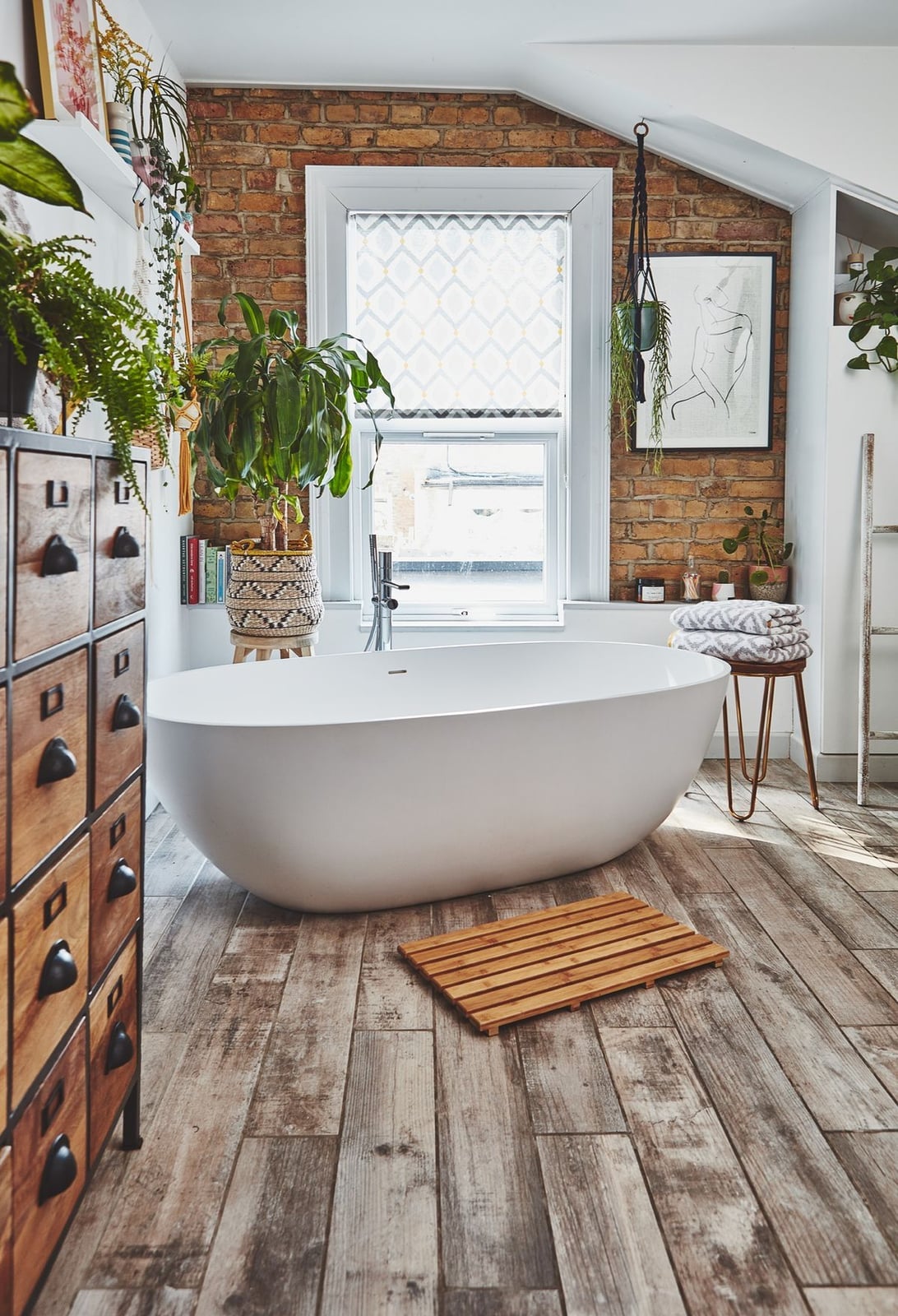
The exposed brick wall in this bathroom does more than add texture: it sets the durability standard for the whole room. A freestanding white bathtub sits centered, with a wooden cabinet and stool on either side. The brick, wood, and bamboo materials all handle moisture well, and the natural light from the window keeps the space from feeling too dark. A metal ladder adds a practical touch for hanging towels. The palette stays simple: white, brick red, wood tones, and green plants, which makes the room feel cohesive without effort.
Console table with holiday decor
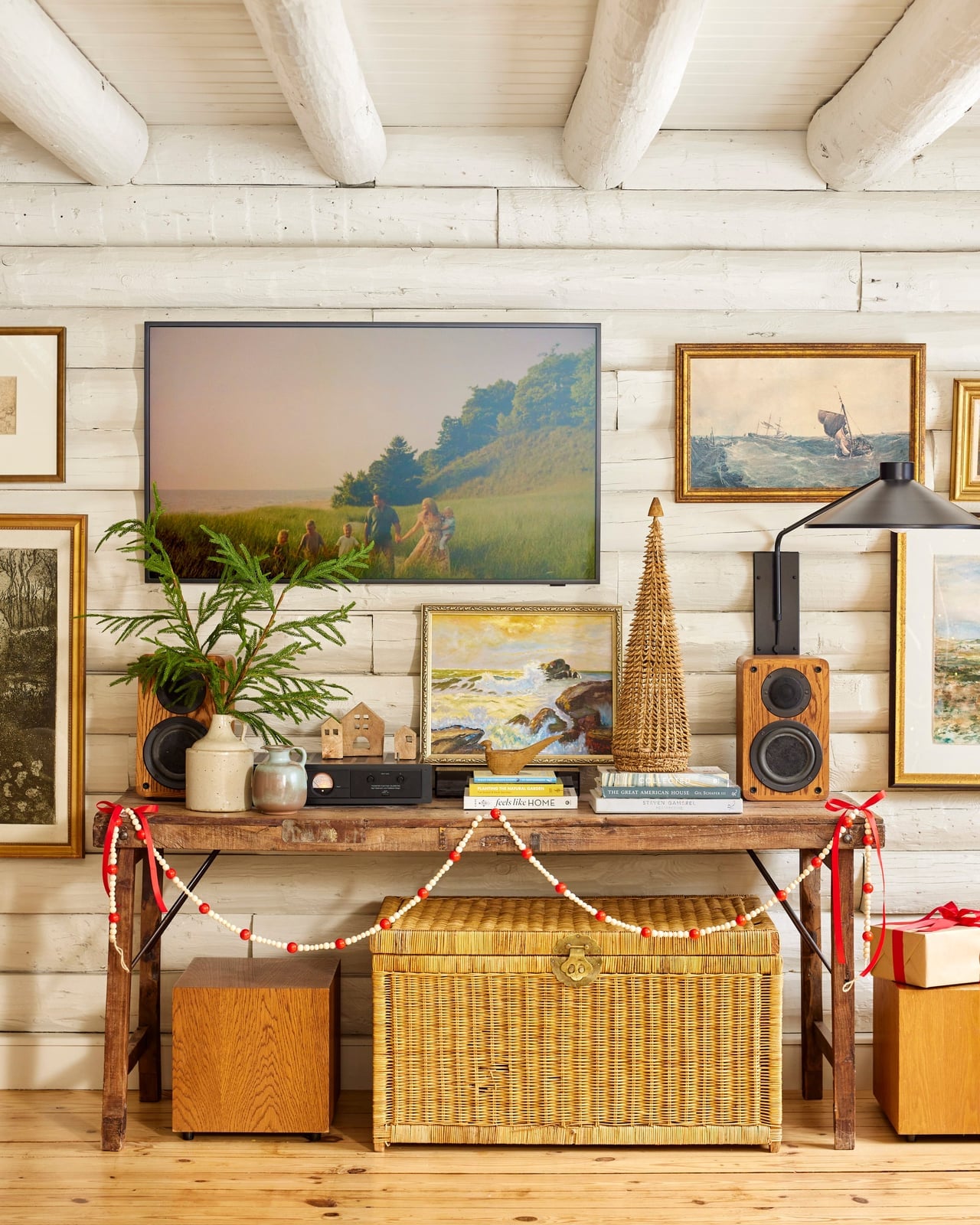
This compact vignette shows how a console table can hold seasonal style without overwhelming a room. The table sits against the wall with a wicker trunk below and framed art above. A beaded garland with red ribbons adds holiday color, while gold accents in the table and decor keep it from feeling too casual. The palette stays white, wood tones, gold, and red, so the display looks festive but not cluttered. A task lamp provides focused light on the arrangement. The lesson is that a small surface can carry a big seasonal moment if the colors stay limited and the pieces are edited well.
Towering stone and wood fireplace
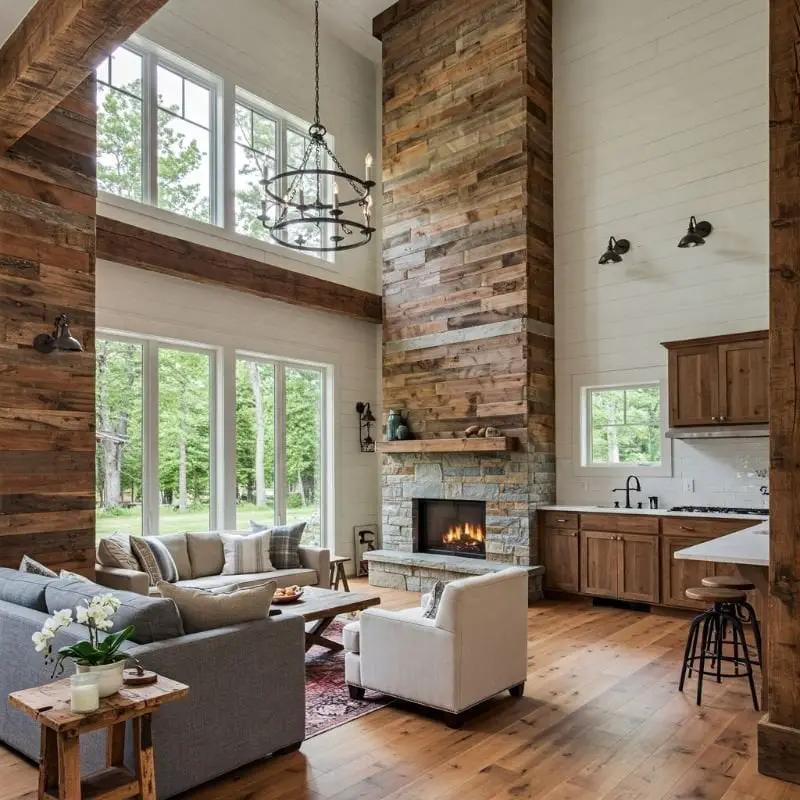
A towering multi-material fireplace divides an open plan without blocking sight lines. The stone base and wood upper face anchor the living area, while the kitchen cabinets sit behind it, each zone keeping its own purpose. A pair of sofas and an armchair face the hearth, and the chandelier hangs high enough to clear the chimney breast. The color palette is brown, gray, white and green, so the fireplace adds texture without clutter. The mix of rough stone and smooth wood on one vertical surface is key, with tile adding a third finish near the firebox. The ratio is about three parts stone to one part wood, and the white kitchen cabinets break the dark mass so the room does not feel like a cave.
Floor-to-ceiling fireplace anchors space
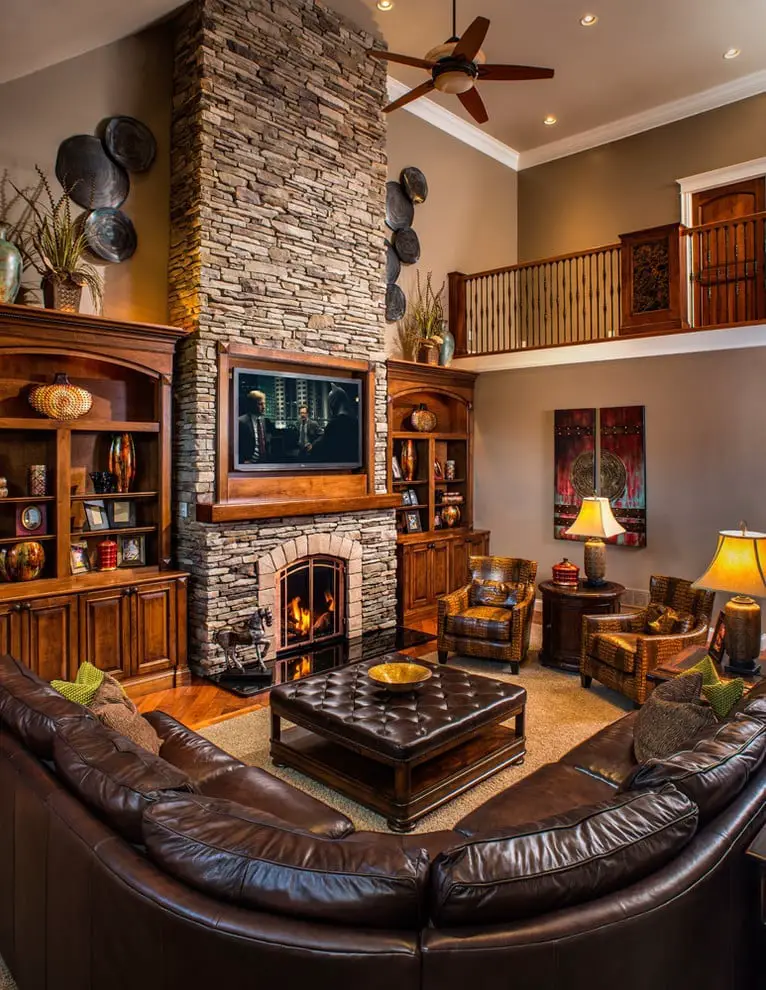
A floor-to-ceiling stone fireplace gives a roomy open plan a clear anchor point. The curved leather sofa and tufted ottoman face it directly, with a matching armchair and built-in bookshelves completing the seating zone. Recessed lights and table lamps add warmth, while the fireplace glow does the heavy work after dark. The palette of brown, beige, stone gray and gold keeps the stone neutral, and the brass accents lift the wood tones so the room never feels flat.
Wood stove draped with ivy
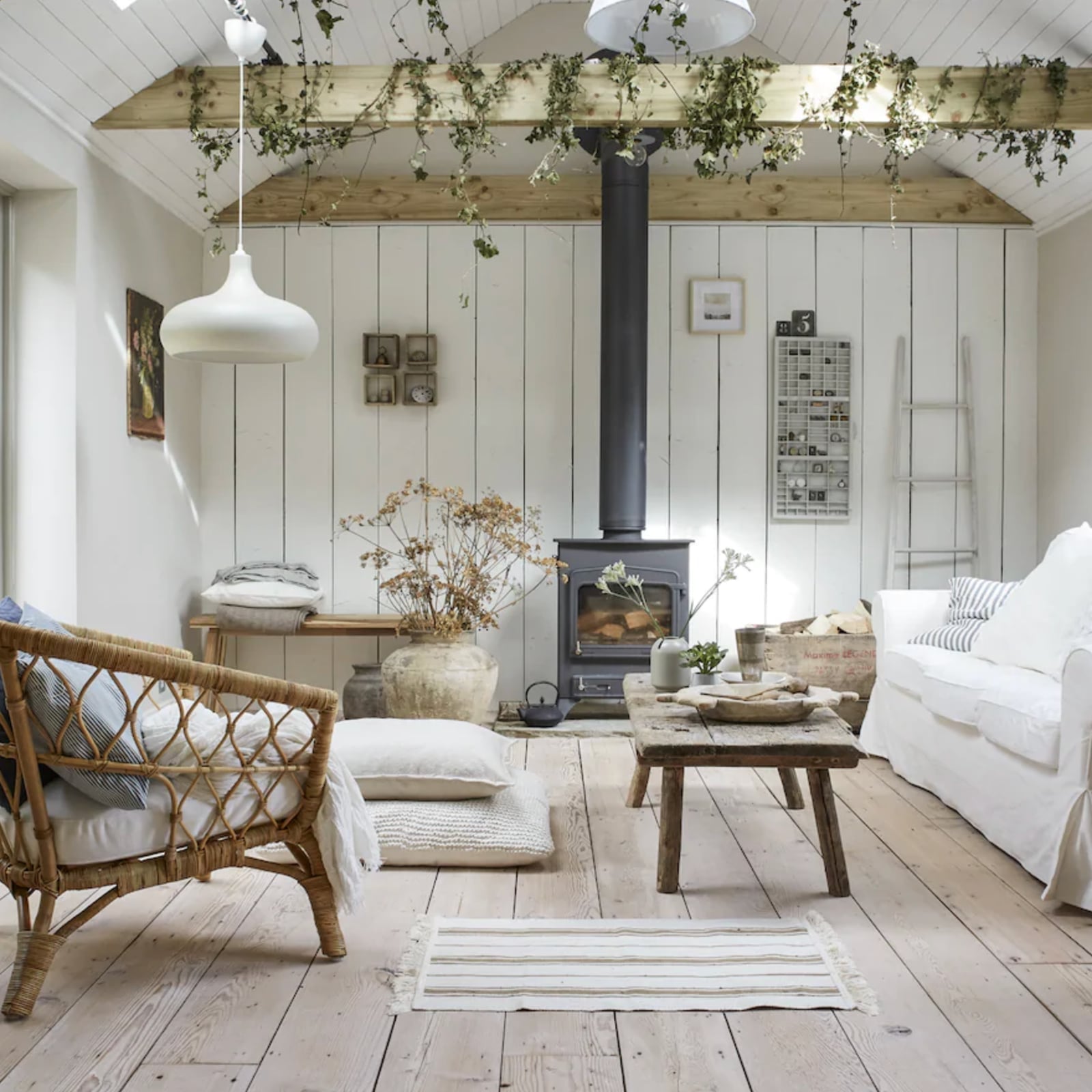
A wood stove in a rustic room works best when treated like a piece of furniture. The stove sits at the center, with a rattan armchair, white sofa and wooden bench arranged around the coffee table so each seat has a view of the fire. The ivy draped from the ceiling beams softens the metal and wood, and the pendant light hangs low enough to read by. The materials here are rattan, ceramic, linen and metal, and the white walls keep the palette from going too dark. The rough stove contrasts with the living ivy, and the green leaves break the wood tones so the room stays fresh.
Cowboy portrait and live-edge table
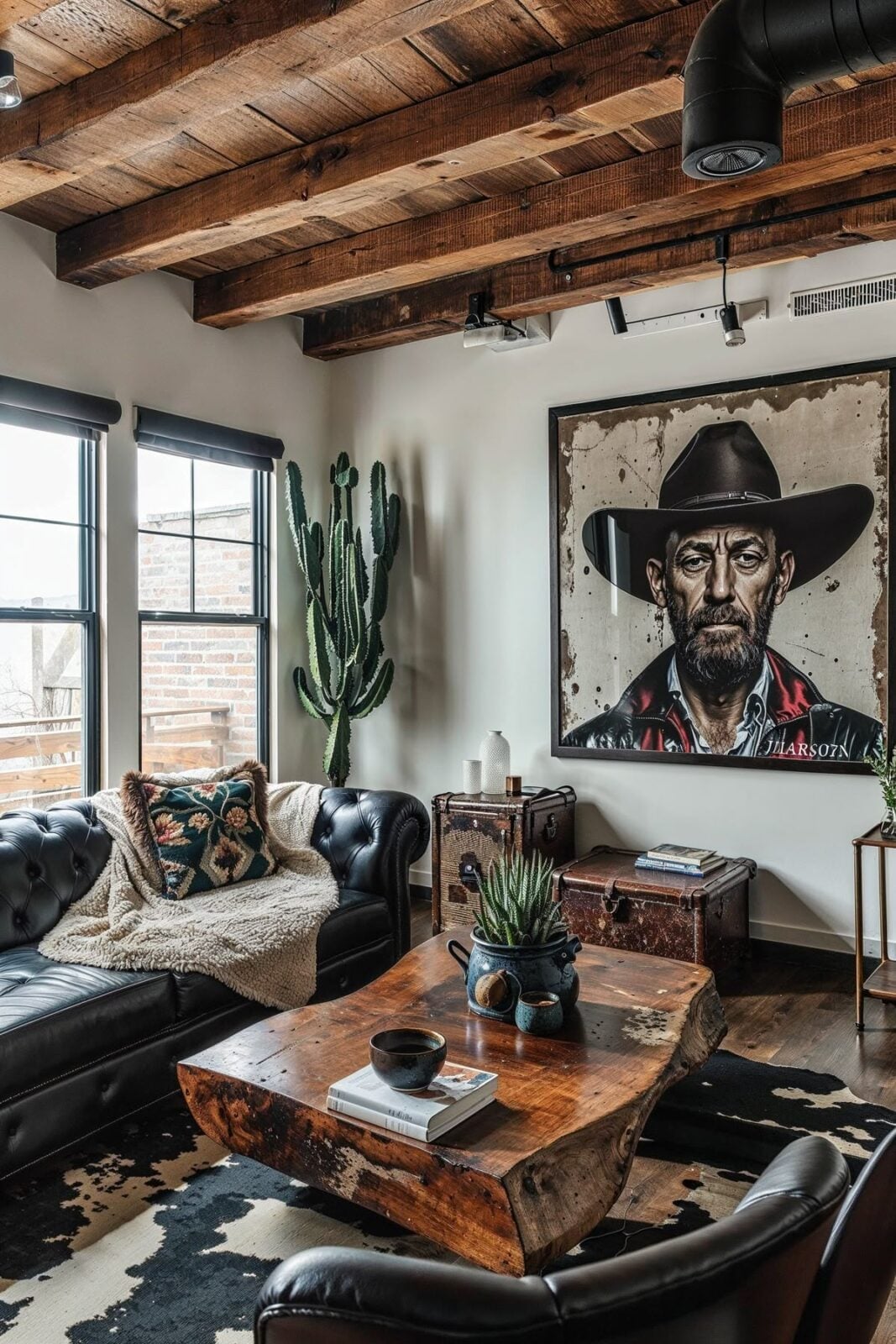
A large portrait can anchor a living room when paired with low, grounded furniture so the art floats without looming. The oversized portrait of a man in a cowboy hat hangs above a sofa, and the live-edge coffee table in front of it repeats the natural wood tones. Track lighting hits the canvas directly, while natural light keeps the room neutral. The palette of neutral, brown, black and green lets the portrait hold the color, and the large cactus adds a sculptural shape without competing. The trunks used as side tables bring in more wood texture, and the rattan accents balance the weight. What defines this style is the balance between the formal art and the raw wood, and the ratio is one bold portrait to several low, natural pieces.
Carved table holds plaid lamp
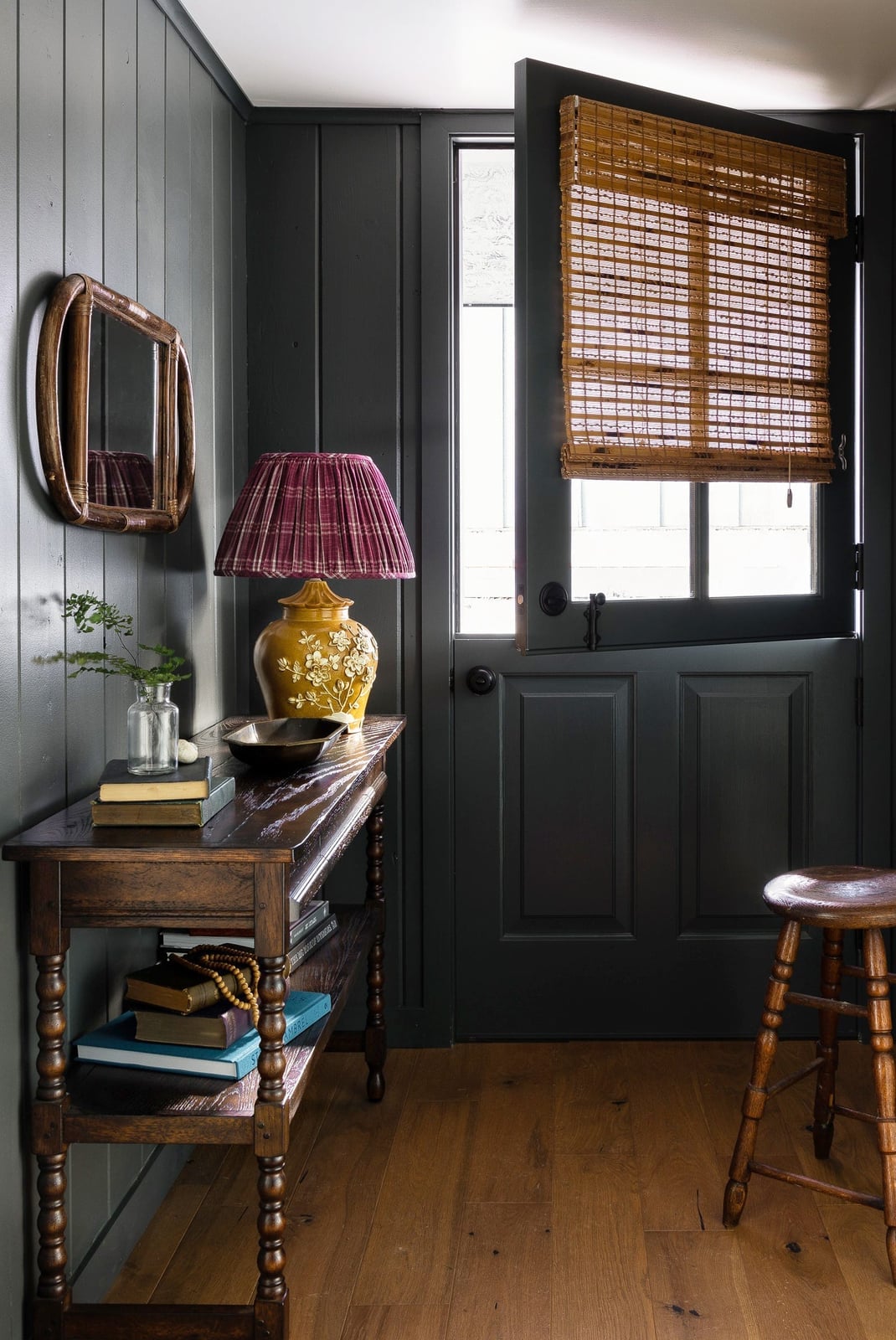
A carved wood console table in an entryway gives you a surface that does the decorating on its own. The plaid lamp shade adds pattern without extra clutter, and the ceramic lamp base repeats the warm wood tone. A bamboo blind at the window keeps the light soft, and the wooden stool beside the door offers a place to sit while putting on shoes. The palette of dark gray, wood tones, yellow and burgundy is grounded by the dark wall paneling, and the glass objects on the table keep the vignette from feeling too heavy.
Stone fireplace with roaring fire
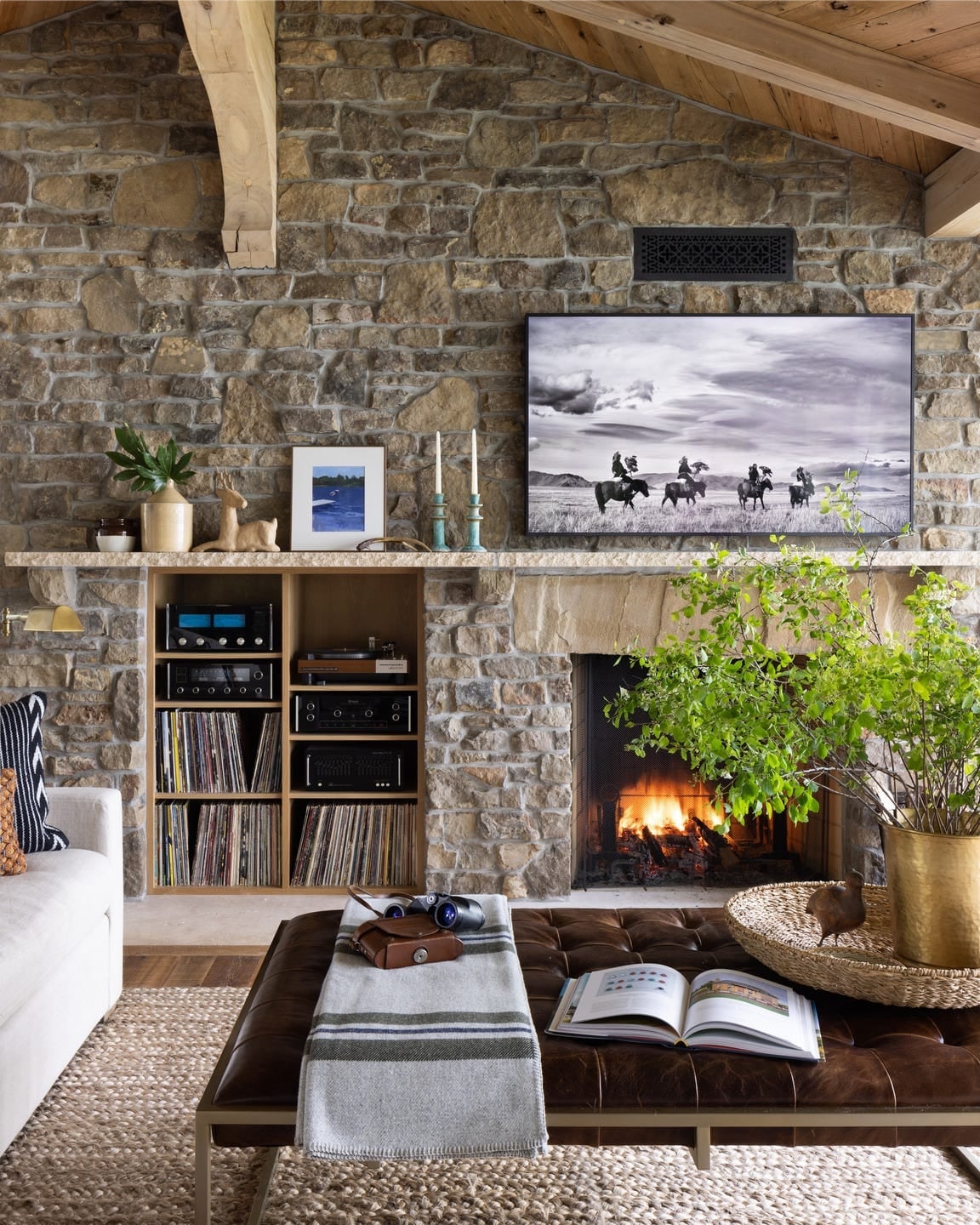
An expansive stone fireplace built from floor to ceiling sets the tone here, and the rest of the room follows its lead. The stone itself is the main material, and the palette stays in the brown, gray, beige and green range. A leather ottoman and built-in shelving to the left keep the seating zone simple so the fireplace stays central. The hearth glow plus ambient wall sconces handle the lighting, which means the fire is the main source. This is style driven by one strong element: the stone defines the look, and nothing else in the room tries to compete with it. What breaks it would be adding a second oversized feature, because the whole point is that the fireplace carries the weight.
White sectional complements stone fireplace
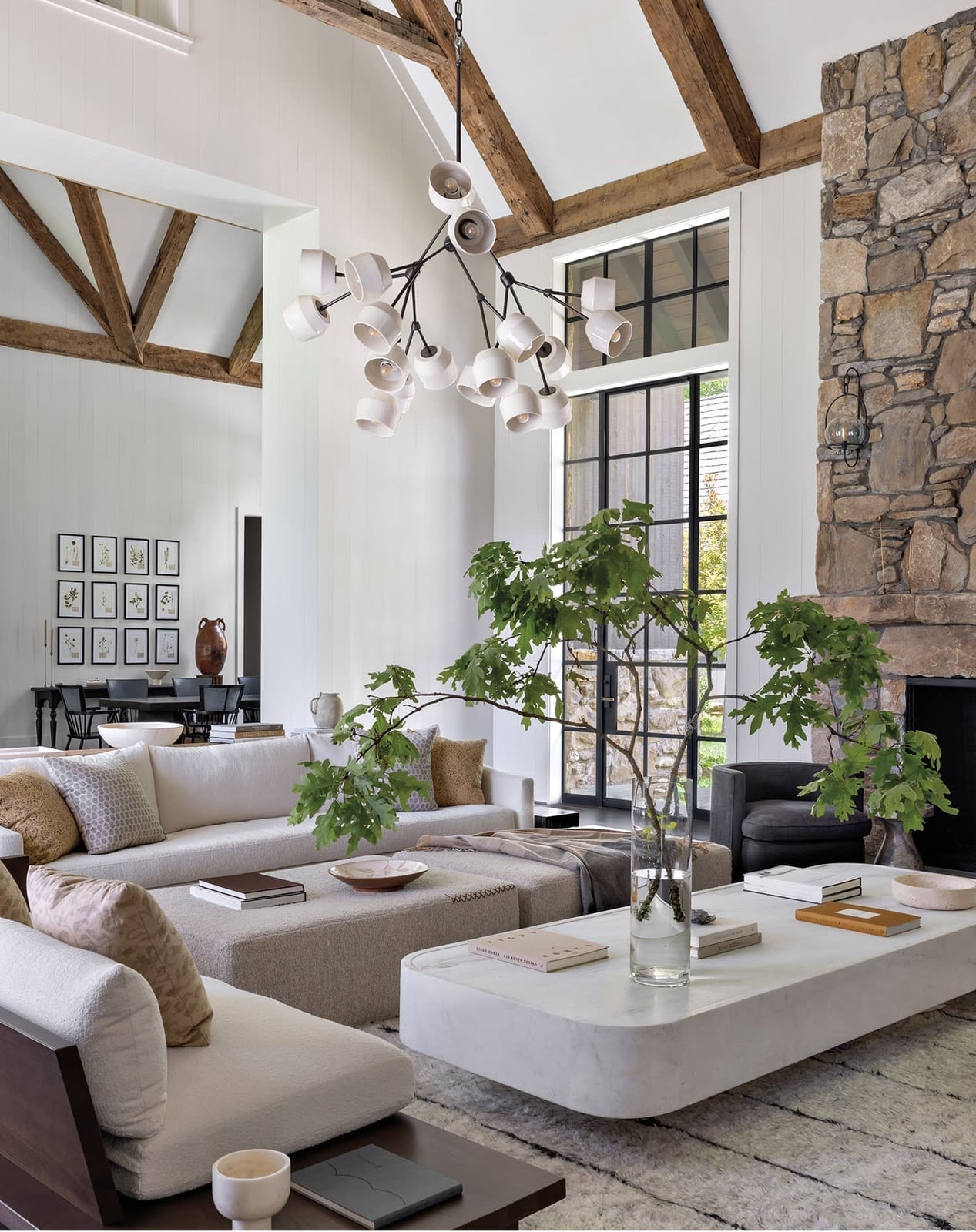
Pairing upholstery with a heavy stone fireplace works best when the lighter piece leads the palette. Here a large white sectional sofa sits across from a stone fireplace, and the contrast keeps the room from feeling too dark. The palette is white, beige, stone gray and wood brown, which is a split of about 60 percent light upholstery and 40 percent dark stone and wood.
The marble coffee table and modern chandelier add a cleaner edge, so the rustic stone does not look old-fashioned. Natural light from large windows helps the white stay bright. The open plan living area has seating arranged around the fireplace, which makes the layout work for conversation. What defines this rustic modern style is the balance: heavy stone and light linen, rough and smooth, warm and cool. Adding too many dark pieces would make the white sectional look out of place.
Wooden chairs fill the space
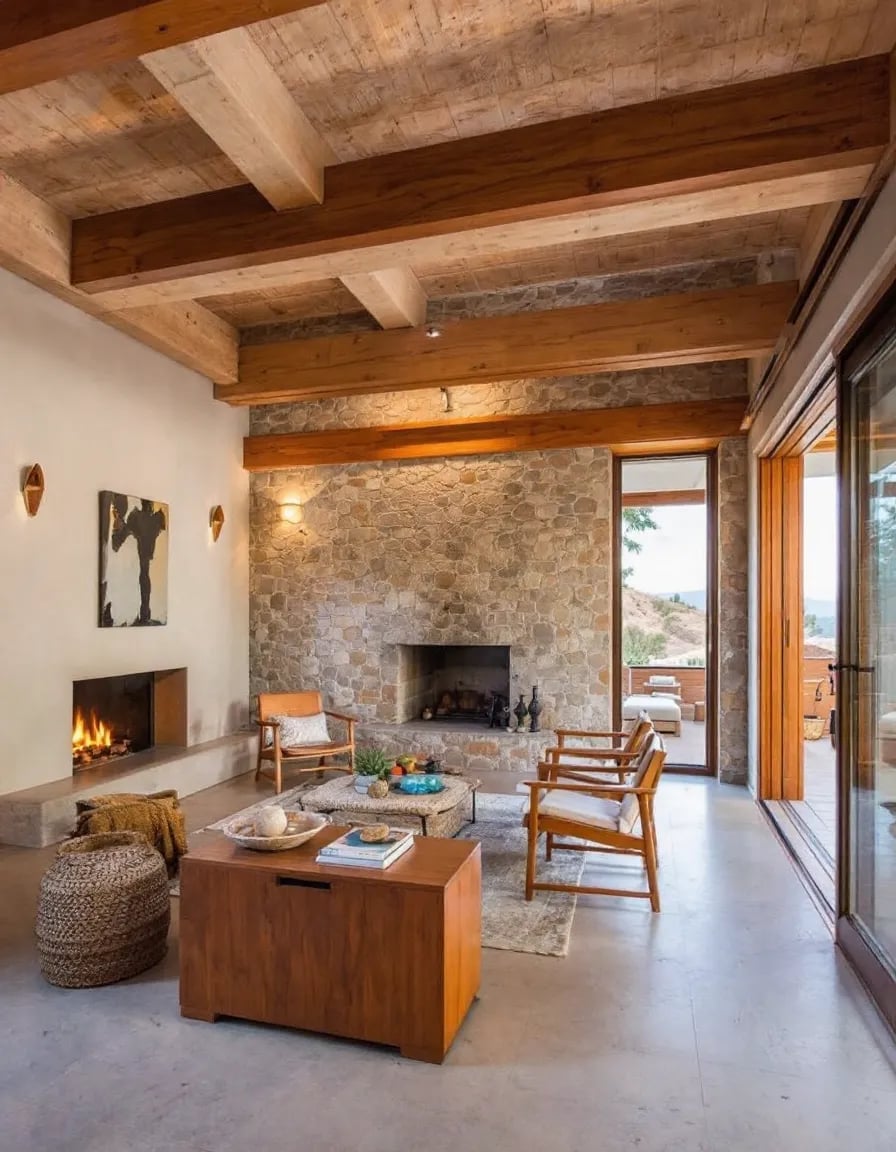
The stone fireplace with exposed wooden beams overhead sets a strong rustic frame, and the wooden chairs and chest in beige, brown and gray respond to it. The materials are stone, wood, concrete and linen, and the ratio favors wood as the secondary texture. Wall sconces and recessed ceiling lights work with the fireplace glow to keep the room lit without a single bright source. A central seating area around the fireplace and coffee table makes the layout feel natural. What defines this style is the repetition of wood in the chairs, chest and woven baskets, which echoes the beams above. What breaks it would be switching to metal or plastic chairs, because the wood is what ties the ceiling to the floor.
Light wood sofa and stone fireplace
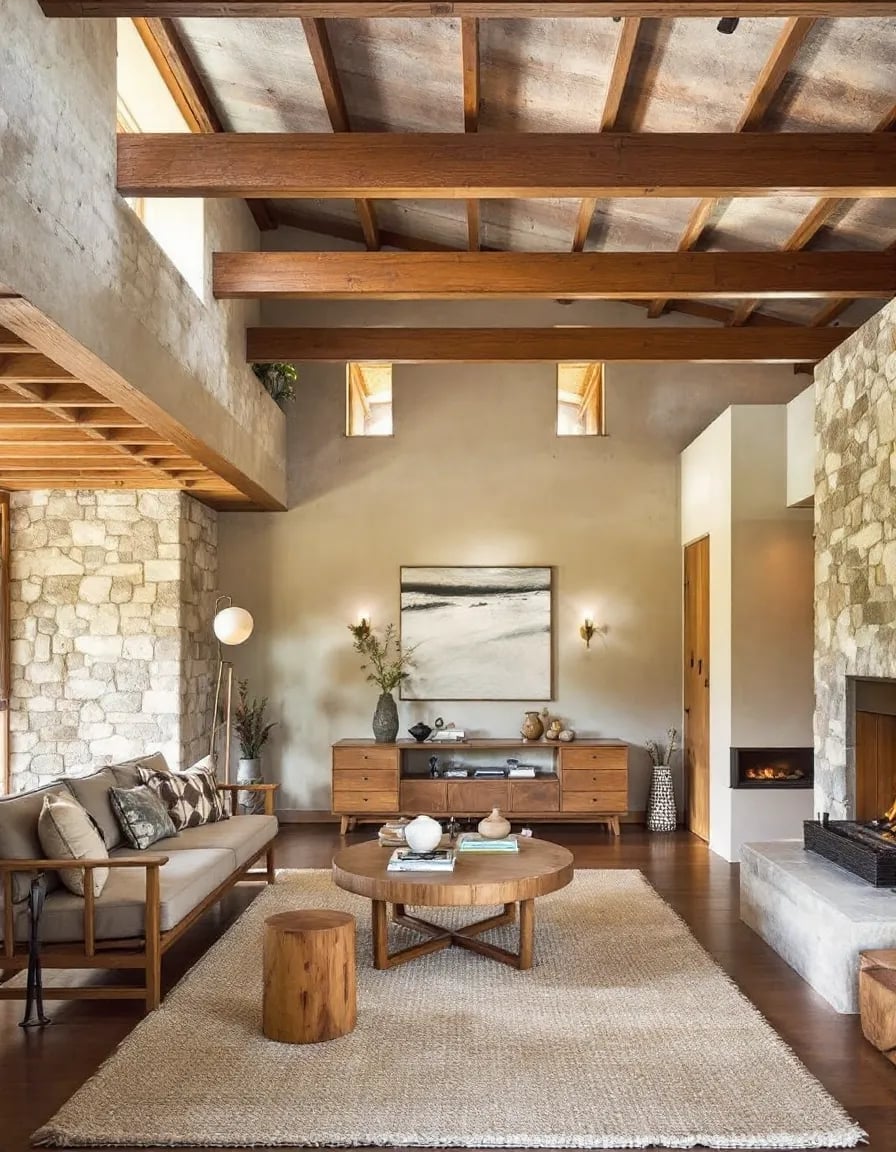
The coffee table is round and sits between a light wood sofa and a stone fireplace, and its scale matters. In a roomy open plan with exposed wooden beams, a large table would crowd the path, while a small one would get lost. The palette is beige, wood tones and stone gray, and the materials are wood, stone, linen and concrete. Natural light from windows, wall sconces and a floor lamp keep the space evenly lit. The seating area is centered on the coffee table, which makes the layout work for flow. What defines this rustic modern style is the proportion: the table is big enough to anchor the seating but leaves room to walk around it. A table that matches the sofa exactly would break the balance, because the contrast between the round wood top and the straight stone fireplace is what gives the room its balance.
Patchwork quilt on wooden bed
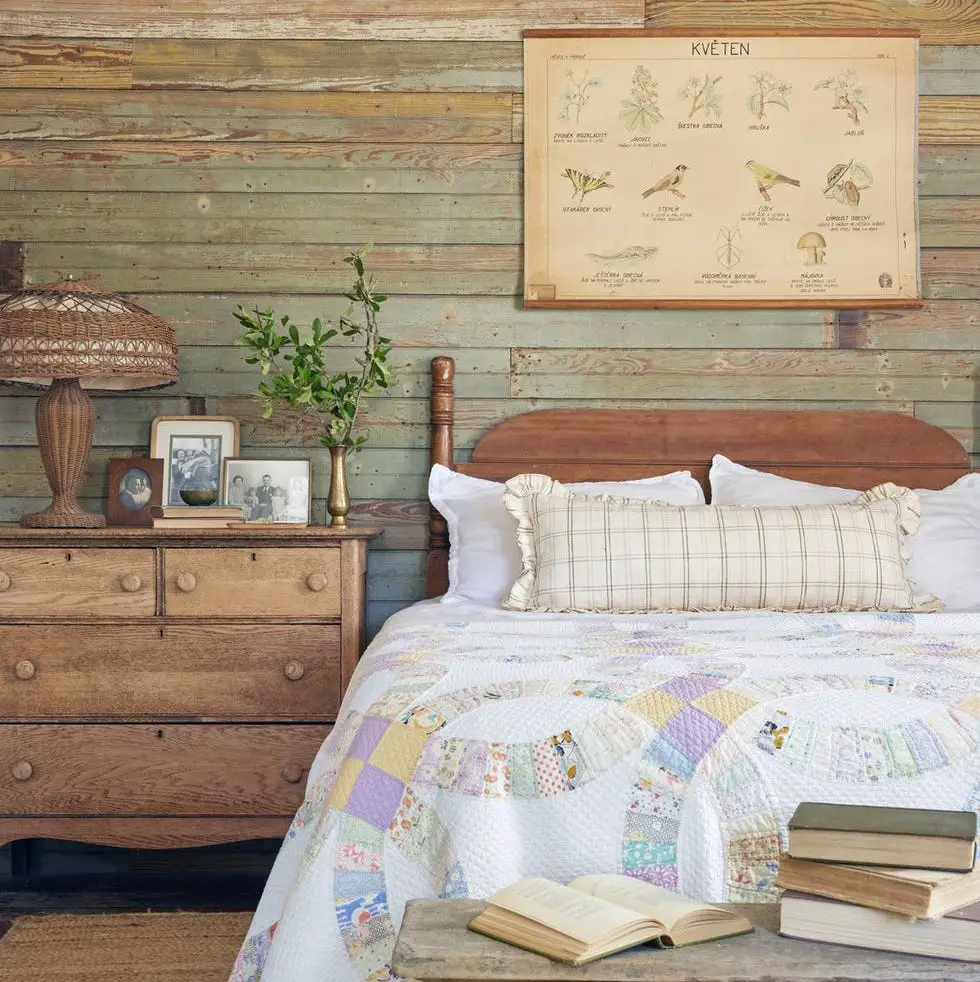
A patchwork quilt on a wooden bed could look too busy for a small bedroom, but the palette stays simple with wood tones, green, white and pastel patchwork. The materials are wood, wicker, linen, cotton and brass. The dresser to the left and the framed photos and botanical chart keep the walls quiet, so the quilt is the only patterned piece.
A window and a wicker table lamp keep the lighting soft. The layout has the bed centered, which makes the quilt the natural focal point. What defines this rustic farmhouse style is that one textile carries the color and pattern. A second patterned textile would make the quilt compete for attention. The corner vignette framing means the bed is the main event, and the dresser and wall decor are supporting players.
Grand rustic living room with vaulted wood beam ceiling
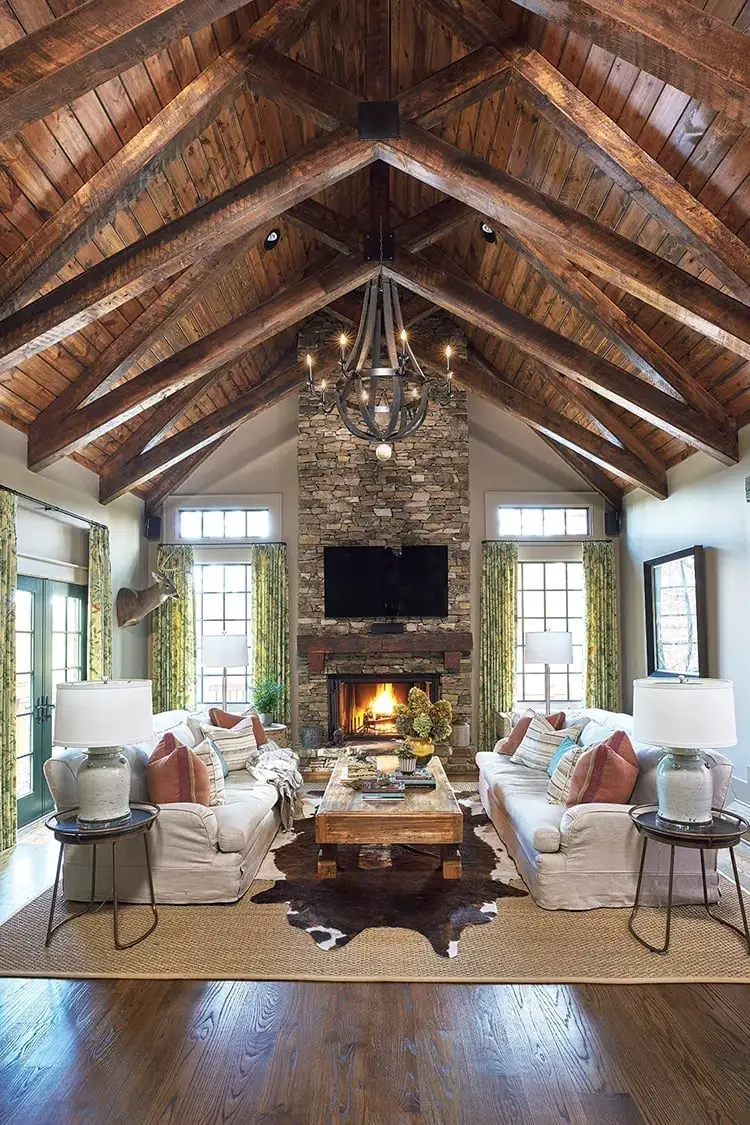
A vaulted wood beam ceiling sets the scale in a room this size. The stone fireplace anchors one end, while symmetrical sofas face each other across a wooden coffee table. A chandelier hangs overhead, and lamps add softer light near the seating. The palette stays with brown, beige, green and white, letting the architecture lead. Linen upholstery and a cowhide rug keep the materials natural and grounded. The layout works because the fireplace is the clear center, and everything else arranges around it without competing for attention.
Grand rustic home exterior with stone and wood facade
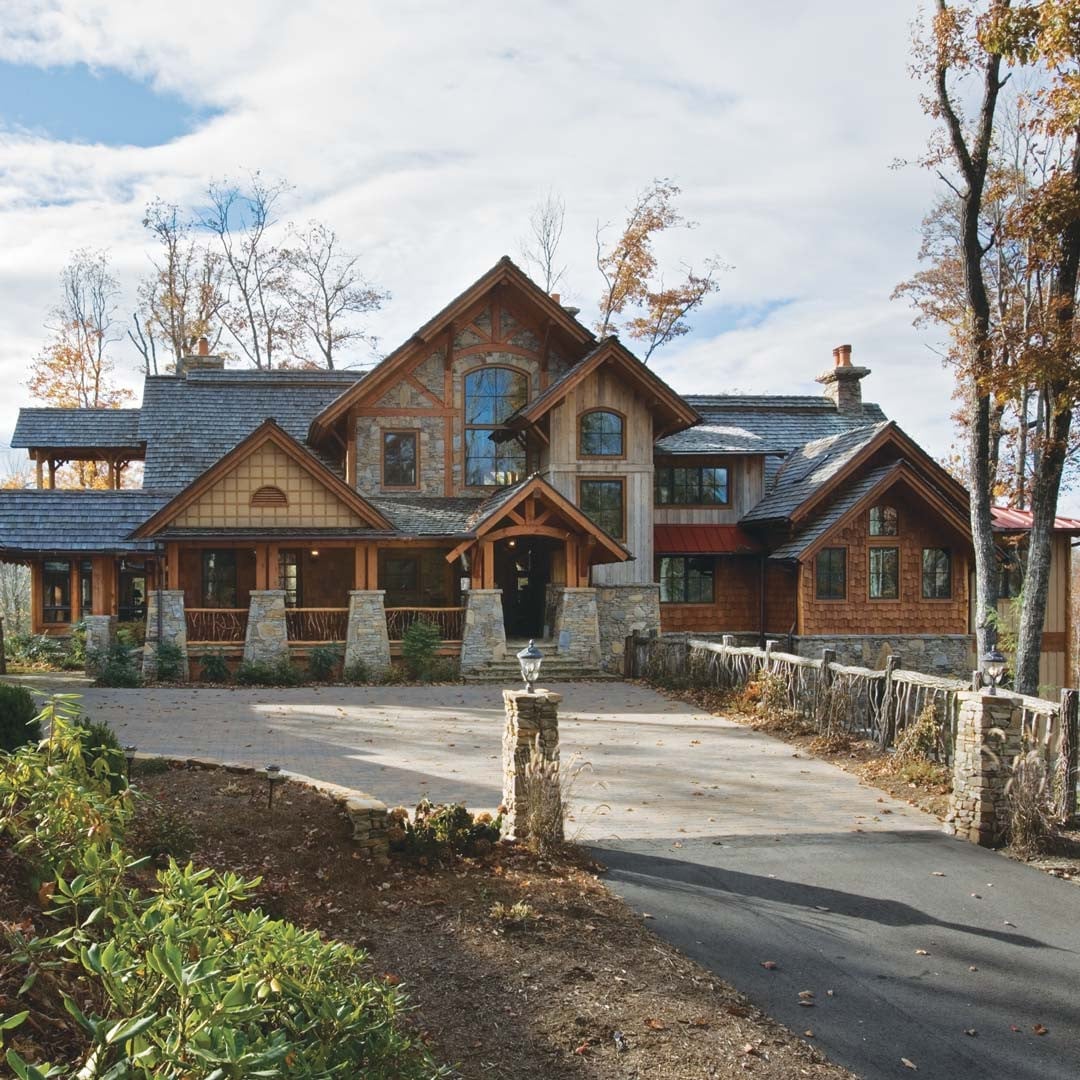
This facade is a straight read on rustic: stone, wood and shingles in browns, grays and tans. The timber framing is visible and honest, and the stone pillars at the entrance give it weight. A driveway curves toward the door, and outdoor lamps flank the approach. The palette is pulled from the site itself, which is how this look stays grounded. It is not trying to be a cabin or a lodge, but something in between that looks built for the land. For anyone planning a new build or a major re-siding, the ratio of stone to wood here is worth studying. The stone anchors the lower half, and the wood above keeps the mass from feeling too heavy.
Gallery wall above wooden mantel
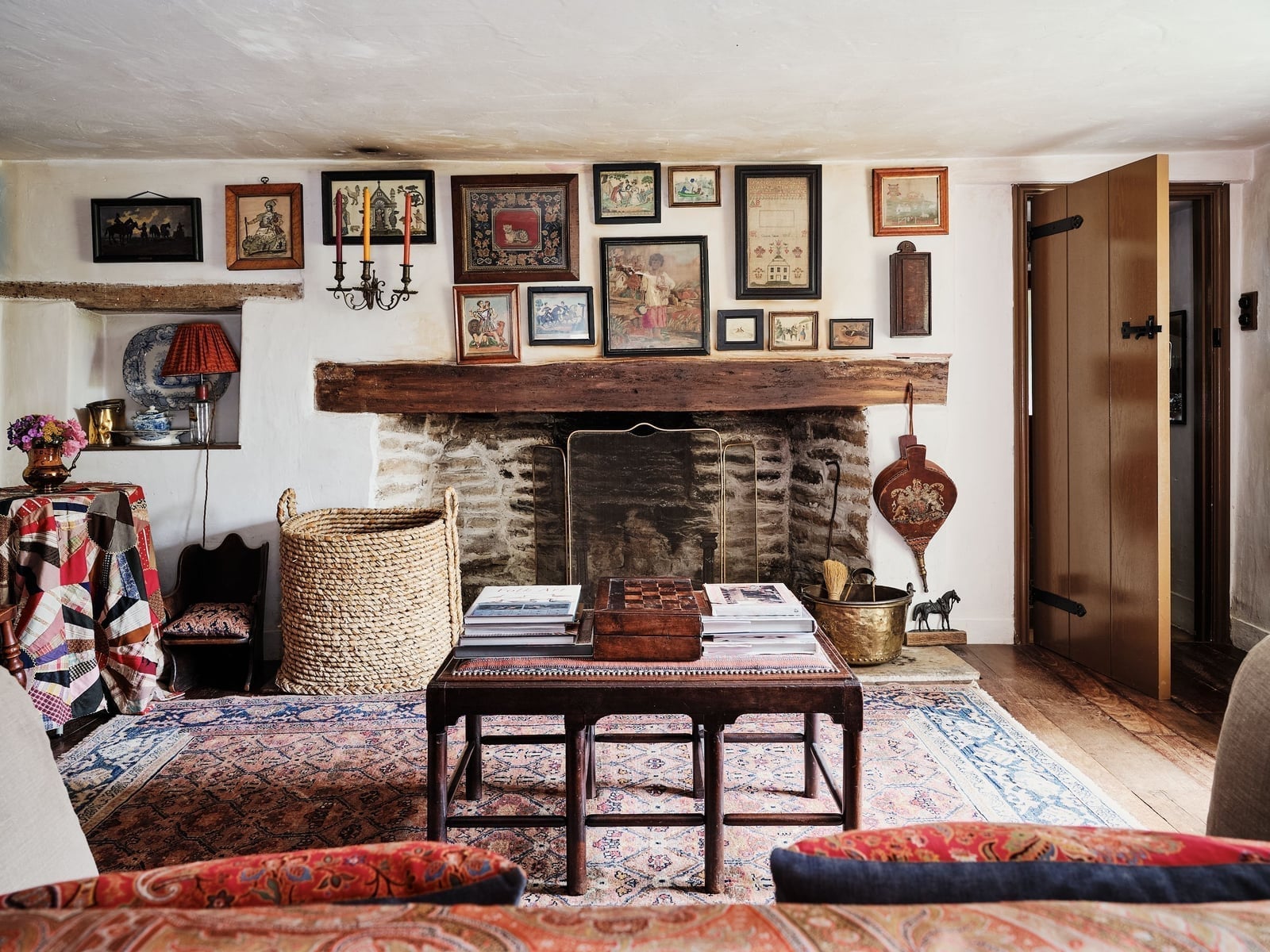
A gallery wall can feel busy above a stone fireplace, but this one does not. The mantel is wood, which softens the transition between rough stone and framed art. The collection mixes red, blue and gold tones into a palette of white, wood and stone. A woven basket and a patterned rug add texture at ground level, and the wooden coffee table keeps things consistent.
Light comes from a doorway and a wall sconce, so the gallery wall does not rely on overhead glare. The arrangement avoids symmetry, which keeps it from looking too deliberate. For anyone who wants art in a rustic room, the trick is keeping the frames simple and letting the mantel act as a buffer between the stone and the pieces.
Rustic dining room with red pendant lights and striped bench
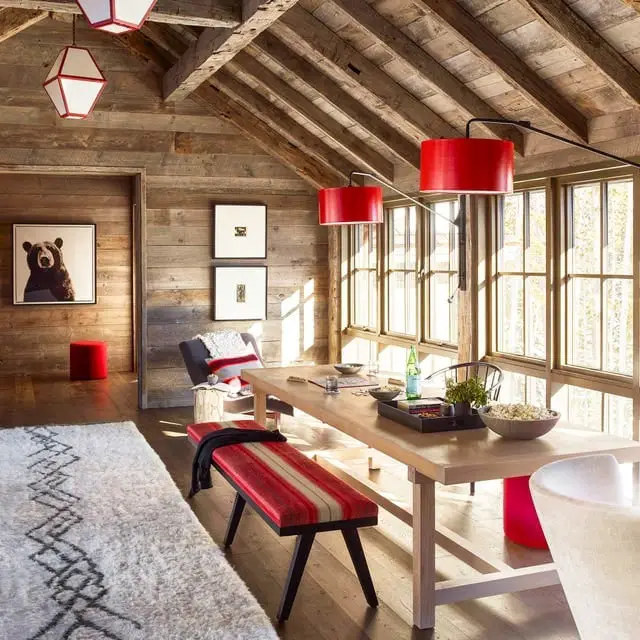
Three red pendant lights hang low over a long wooden table. That is the first thing you notice, and it sets the tone for the whole room. A striped bench runs along one side, with chairs opposite. Natural light from the windows balances the strong red, and the wood tones keep the palette from going too bright. The pendants are the main light source here, and they drop the visual center of the room to table height. That makes the space feel intimate even with a high ceiling. For a dining room, this kind of focused overhead light works better than trying to light the whole room evenly.
Final Thoughts
What ties these 34 looks together is a respect for materials. Stone, wood, leather, and linen do the work. You don’t need a full renovation to join in. Swap in a live-edge coffee table, hang a pair of iron sconces, or let a stone fireplace be the only focal point. The best rustic rooms feel like they evolved, not like they were decorated in a weekend. Keep surfaces clear, let texture lead, and remember that patina is a feature, not a flaw.