Dark bathrooms are having a moment in 2027, and it’s not just about black paint. These 31 trendy dark bathroom ideas prove that deep colors and rich materials can make a small space feel cozy and luxurious, not cramped.
Whether you’re drawn to moody marble, deep green tiles, or warm wood accents, you’ll find a look that fits your style and your home. This roundup covers the essentials: what makes each design work, how the palette and layout function, and the practical details that keep a dark bathroom from feeling like a cave.
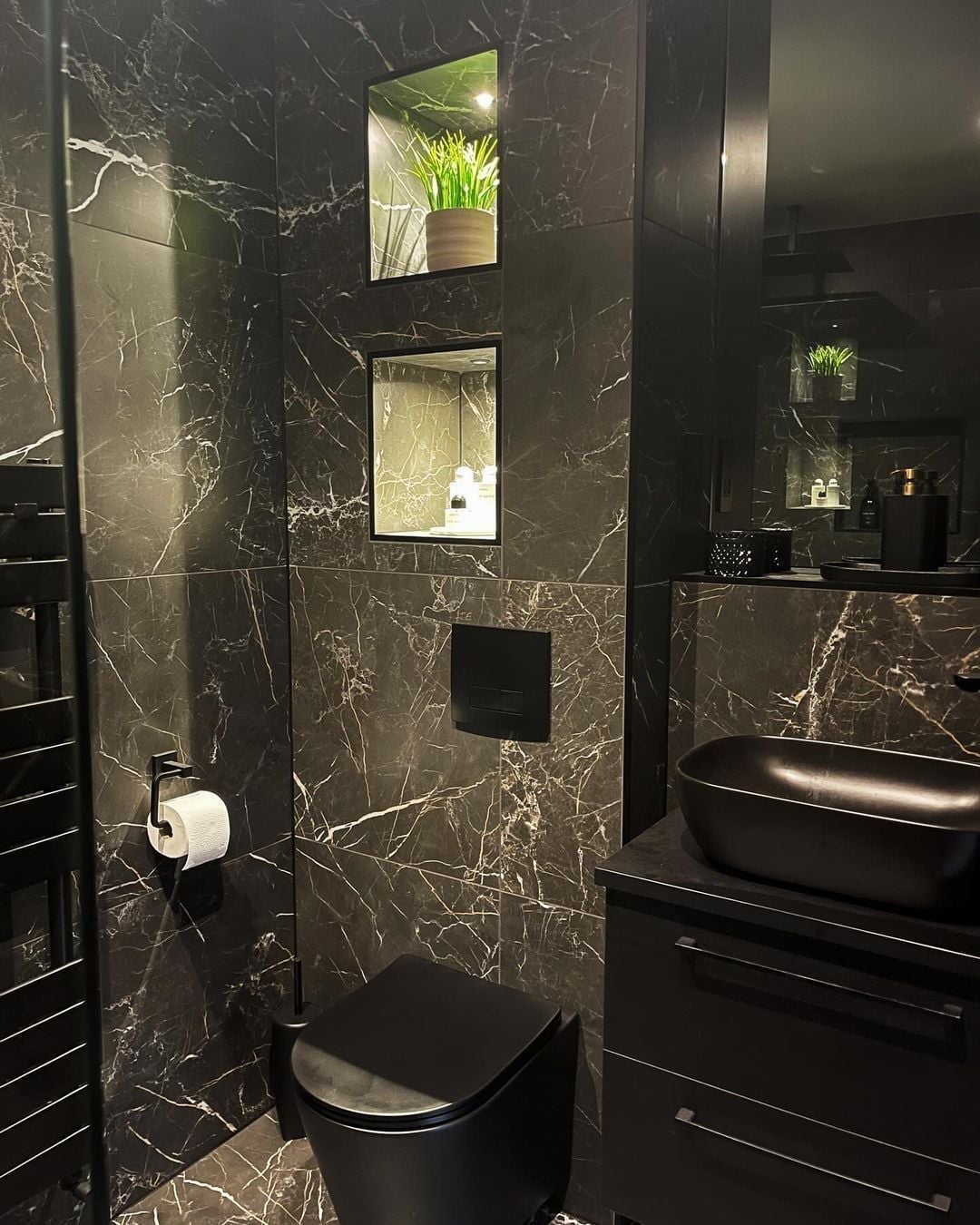
Dramatic black marble tile for a moody bathroom
Black marble tile wraps this compact corner, setting the whole room in a dark, glossy mood. The black toilet, vanity and vessel sink blend into the wall, while a white towel warmer and shelf lighting add just enough contrast. Recessed ceiling lights keep the ceiling clean. The green tint in the marble keeps the palette from looking flat black. One useful decor principle here: when using dark tile floor to ceiling, let the lighting work in layers. Recessed lights handle general brightness, but shelf lighting on the towel warmer gives the eye a resting point. Without that second layer, a small dark bathroom can feel closed in. 31 looks that actually work.
Dark marble accent wall behind a modern vanity
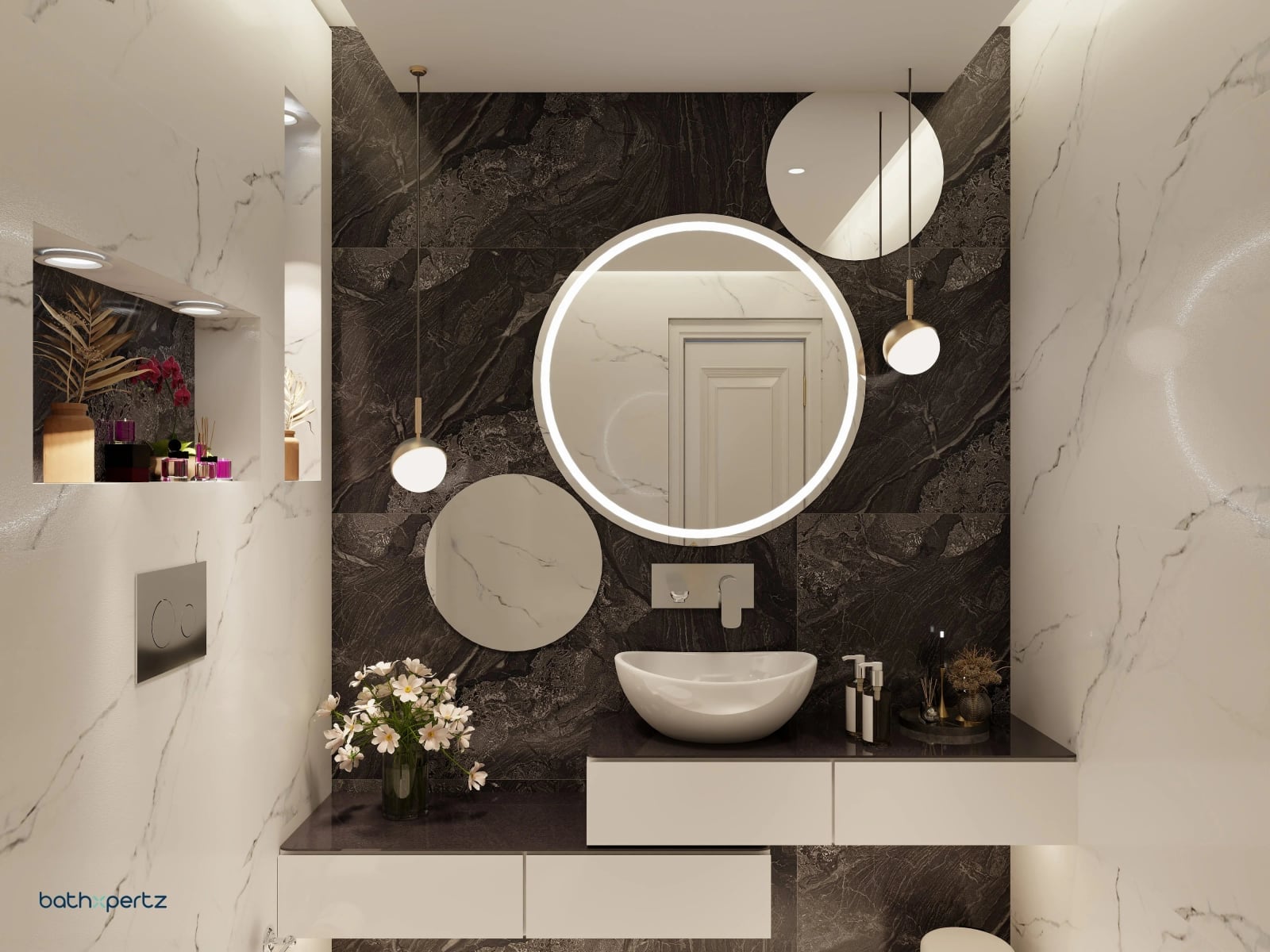
This vanity area keeps the room light and lets the dark marble accent wall do the work. The marble runs behind the vessel sink and round mirrors, stopping at the ceiling height of the vanity. Brass pendant lights and a backlit mirror add warm metallic points that break up the dark stone. The palette here is black, white, gray and gold accents. For palette balance: when one wall is dark and veined, the other surfaces should stay neutral and matte. The white tile floor and pale wall opposite prevent a top-heavy look. Gold accents appear only on the hardware and lighting, so they look intentional rather than scattered.
Deep green walls for a serene modern bathroom
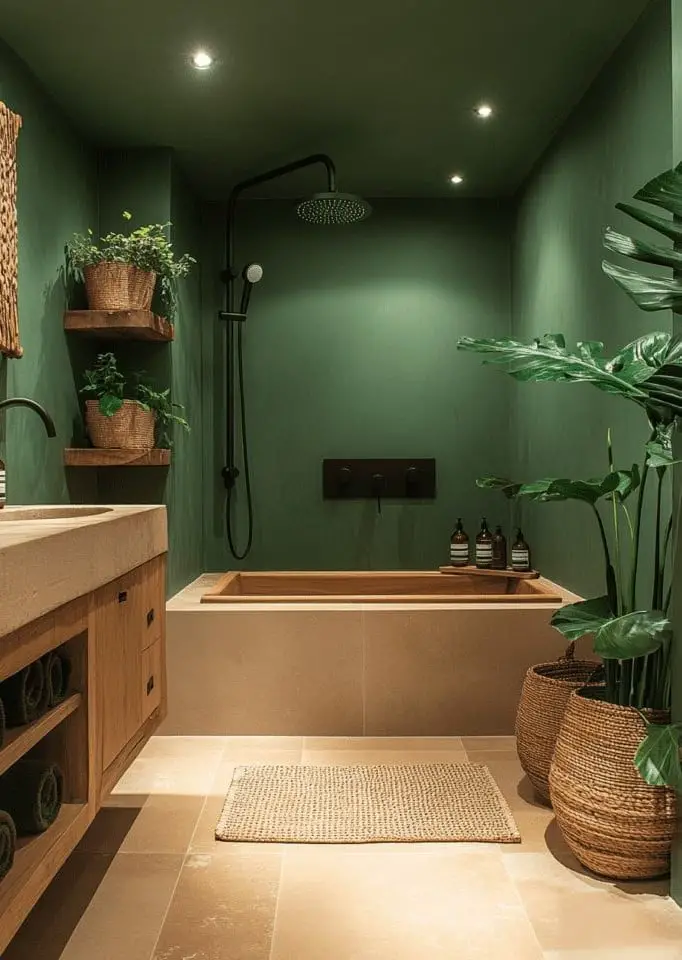
How do you keep a dark wall color from making a bathroom feel smaller than it is? This roomy space uses deep green walls, a freestanding wooden tub and a concrete sink vanity to prove it can work. The green covers the walls but stops at the white ceiling, which keeps the room vertical. A beige stone floor and woven baskets add texture without competing for color.
The palette relies on a simple ratio: one dark wall color, one light floor, and a natural material for the fixtures. The wood tub and concrete vanity sit in the green rather than against it, so they feel grounded. Large potted plants flank the tub, adding organic shape. A useful decor principle for palette: let the dark color cover the vertical surfaces and keep the floor and ceiling light. That single swap stops the room from looking a cave.
Floating black vanity with stone tile walls
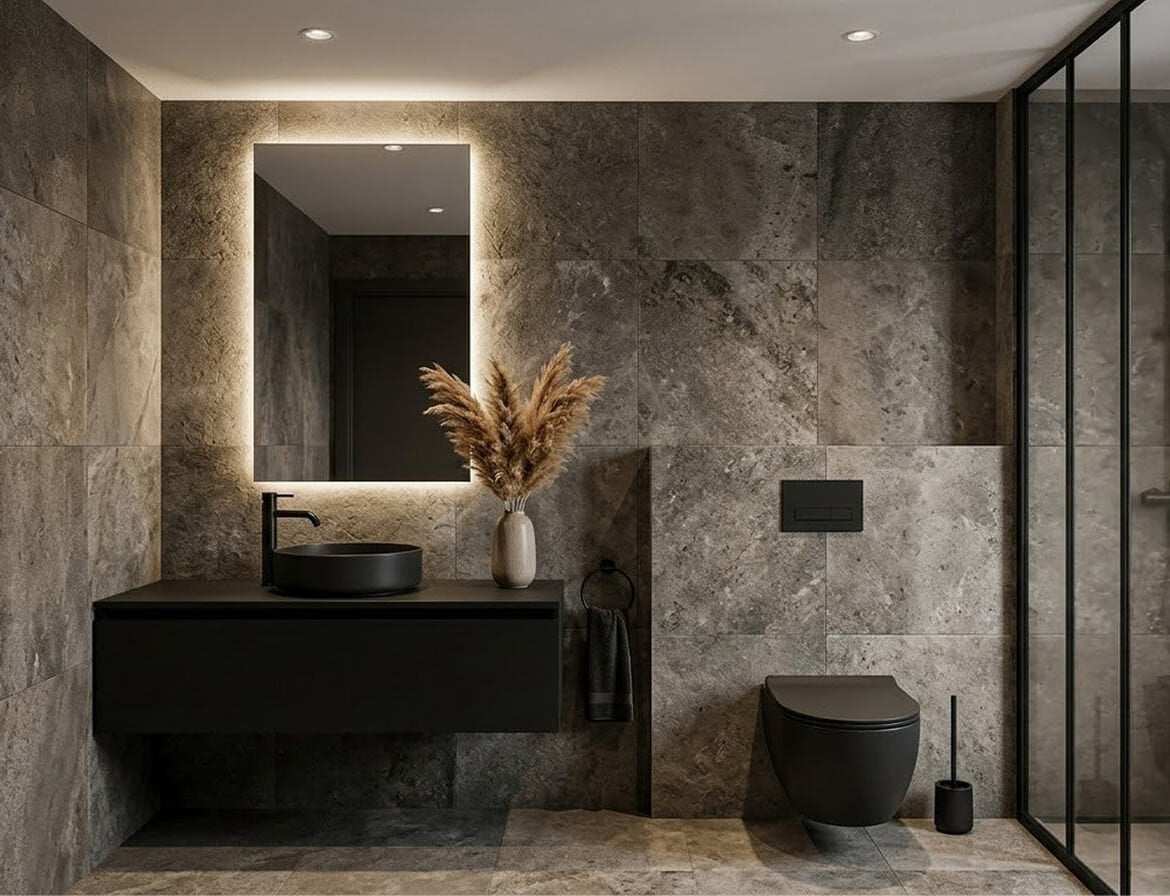
A floating black vanity with a vessel sink sits against dark gray stone tile walls in this modern bathroom. The backlit mirror above it casts soft light across the counter, while recessed ceiling lights handle the general brightness. A glass shower enclosure and a modern toilet complete the layout. One useful decor principle for storage: a floating vanity makes the floor visible underneath, which helps a dark walled bathroom feel larger. The open space below the sink also gives you a spot for a small basket or a folded towel. The stone tile adds texture without pattern, so the room stays calm. The backlit mirror is the key light source for the vanity area.
Dark gray tiled shower wall contrast
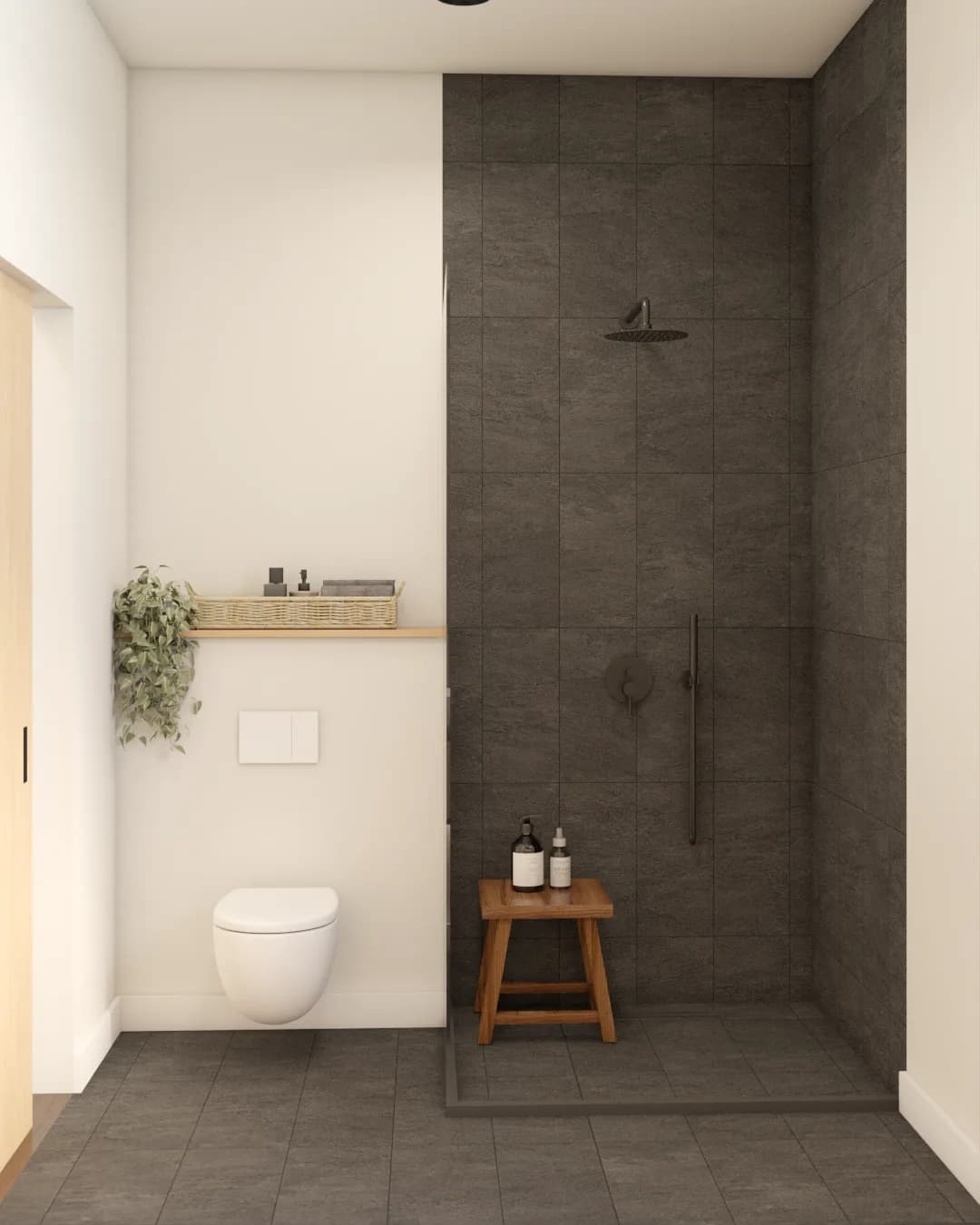
For a compact bathroom, keep one material as the focal point and let everything else recede. Here the dark gray tile covers the shower wall from floor to ceiling, while the rest of the room uses lighter wood and white walls. A wall-mounted toilet and a wooden stool add contrast without fighting the tile. The recessed ceiling light keeps the fixture out of sight. Pair dark shower tile with a lighter floor tile in the same size or shape. The visual connection between the two surfaces makes the room feel longer. The wood stool adds a warm, natural element that breaks up the cool gray tile.
Compact vanity with gold hardware and patterned floor, close-up take
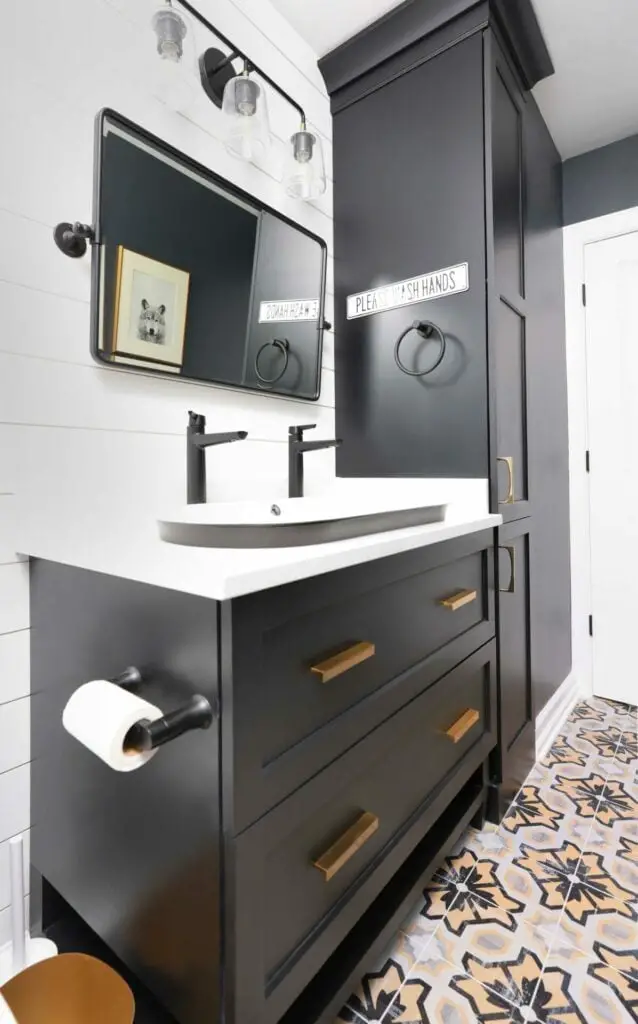
A full vanity cabinet can make a small bathroom feel crowded, but a compact version with open floor space around it keeps the room functional. In this corner layout, a dark vanity with drawers pairs with a tall cabinet next to it, which gives storage without needing a separate piece elsewhere. The gold hardware on the vanity and the black faucets match the tones in the patterned floor tiles, which run from wall to wall and become the room’s main visual element. A framed mirror above the vanity reflects the overhead light, which keeps the dark wood from making the room feel too low. The tile pattern works because the vanity stays simple: no carved details, just flat fronts and clean lines. If the floor pattern feels too bold for a full renovation, a removable rug with a similar geometric print can test the look before any tile work starts.
Stone vessel sinks create a grown-up mood, close-up take
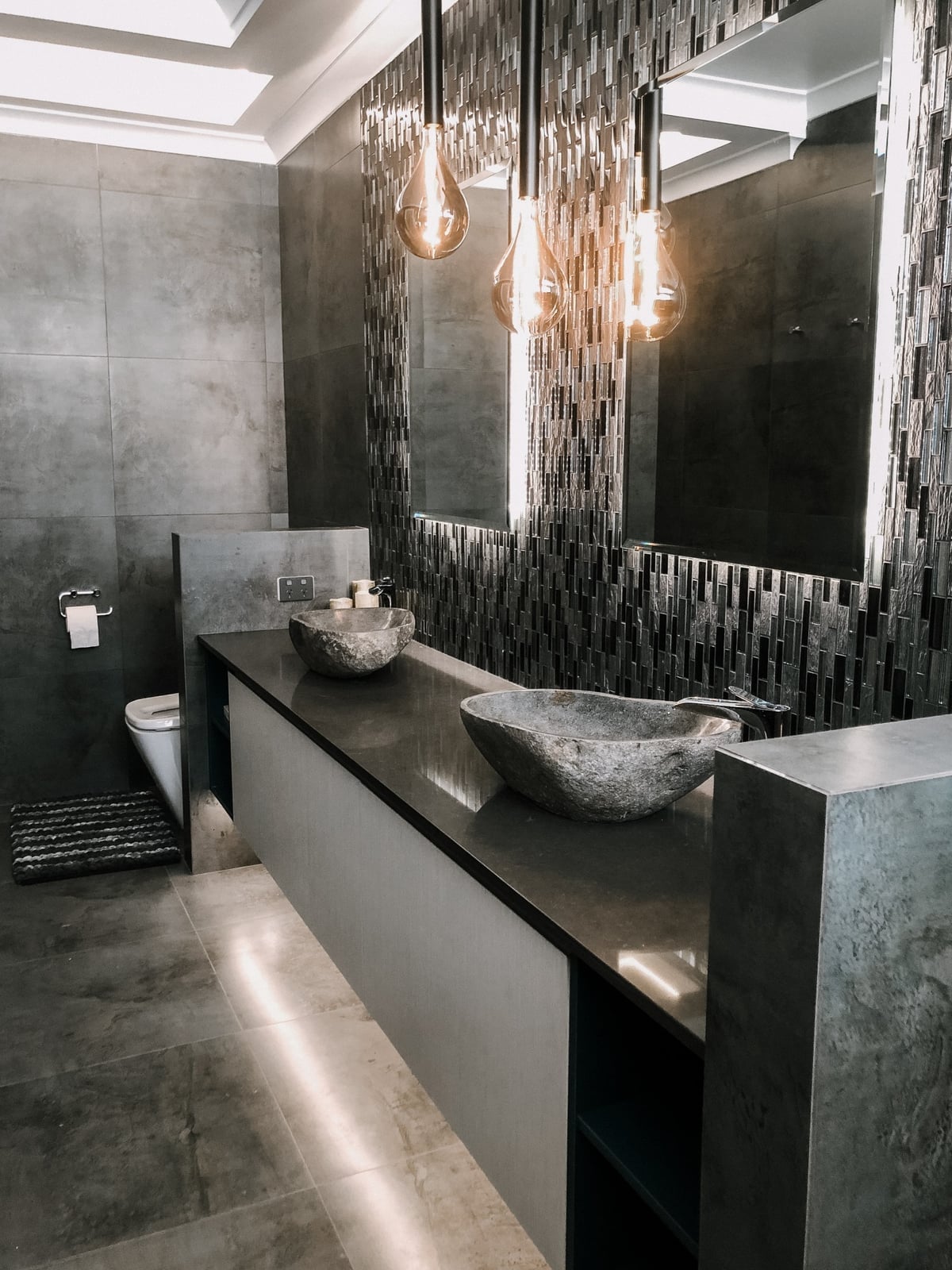
Stone vessel sinks on a double vanity bring a natural texture that looks grounded rather than glossy. The gray stone tops sit on a floating vanity, with pendant lights above each sink and ambient floor lighting that softens the edges of the stone. For a renter-friendly approach, a single stone vessel sink on a standalone vanity can introduce that same tactile weight without changing the plumbing layout. The warm amber light from the pendants keeps the gray palette from feeling cold, which matters in a room where the sinks are the main event.
Checkerboard floor tiles in a dark wood bathroom, close-up take
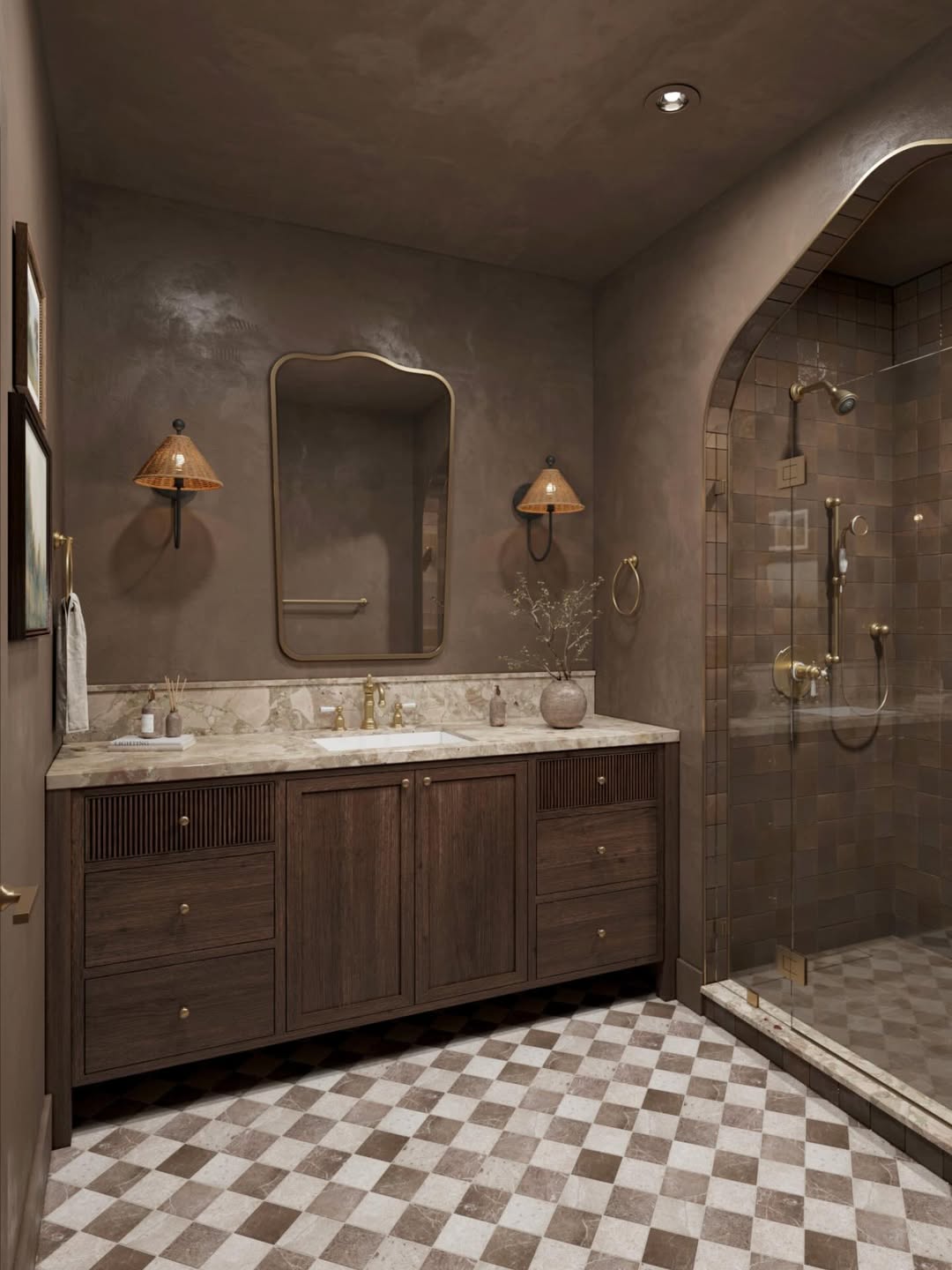
Checkerboard floor tiles in a compact bathroom with dark wood cabinetry create a classic contrast. The dark wood vanity and an arched glass shower enclosure sit against the black and white checkerboard floor, which extends wall to wall and anchors the layout. Recessed ceiling lights and wall sconces cast enough brightness to keep the tile pattern clear without glare. The wood tones warm the black and white grid, which can otherwise feel stark on its own. Brass hardware and a rattan accent add a natural element that softens the geometry of the floor. A vinyl checkerboard floor tile offers the same look with less commitment to a permanent pattern.
Moody stone tile bathroom with pampas grass, close-up take
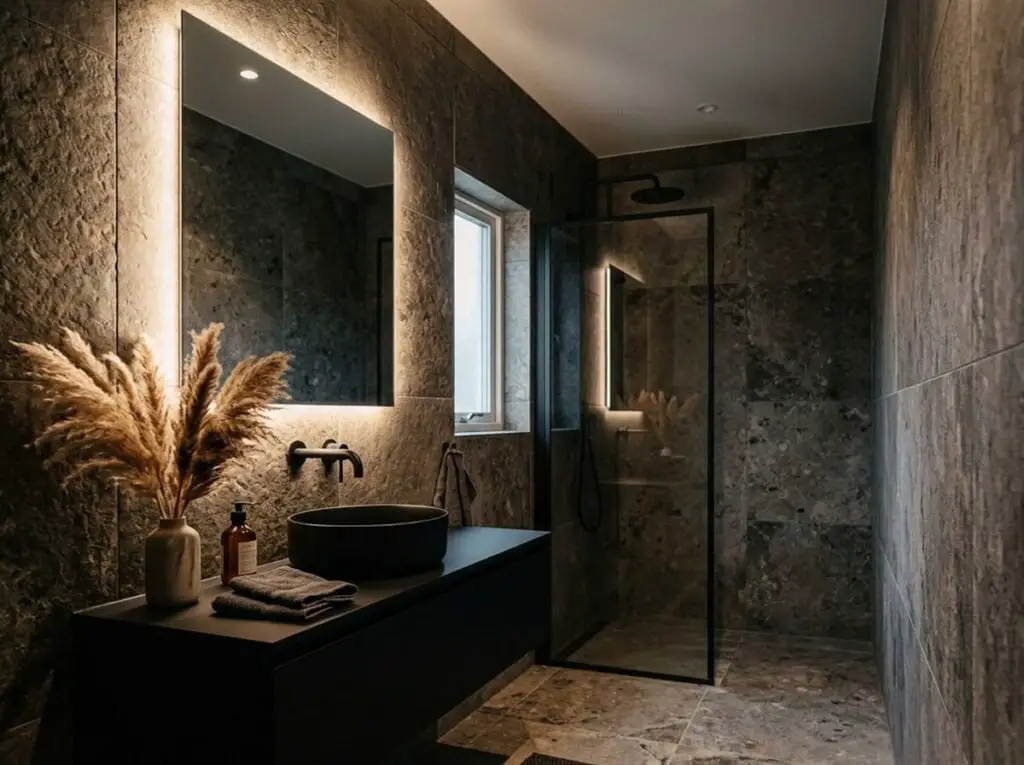
Can a dark vanity still feel airy in a compact bathroom? A floating vanity with a vessel sink helps, because the open floor space underneath keeps the room from feeling boxed in. The dark gray stone tile walls and matte black fixtures set a moody tone, while the backlit mirror casts a soft glow across the counter. A clear shower enclosure lets light pass through instead of blocking it. The pampas grass adds a natural texture that softens the hard surfaces, and its pale beige tone contrasts against the dark gray palette. To recreate it, look for a floating vanity and a clear shower enclosure so the dark tile does not overwhelm the square footage.
Stacked wood vanity against dark tile, close-up take
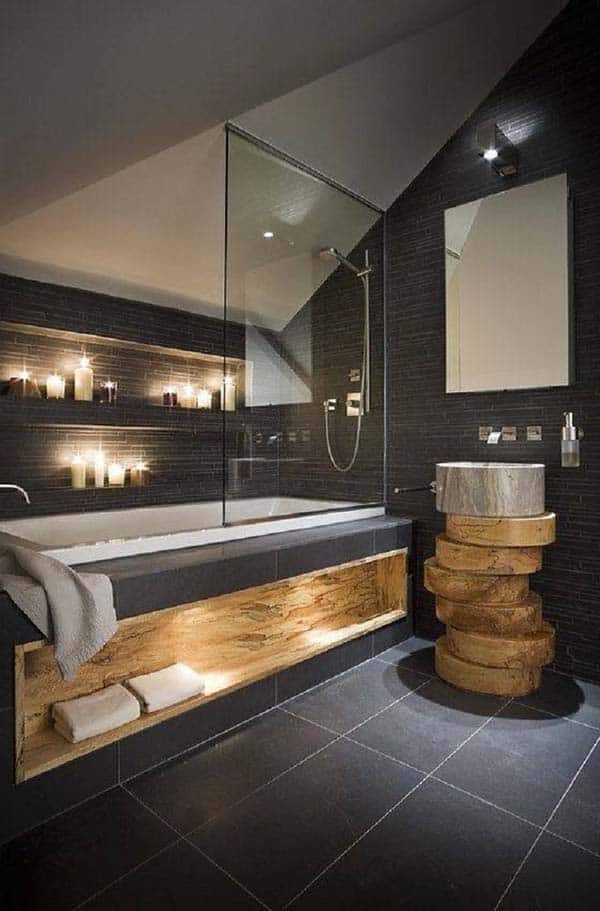
A stacked wood vanity against dark gray tile creates a textural contrast that anchors the compact bathroom. The warm wood tones break up the dark gray and black palette, and the recessed lighting and candles on the built-in shelving add a soft glow that keeps the room from feeling flat. The bathtub sits with the stacked wood vanity nearby, and the clear shower enclosure lets the tile and wood both stay visible. The key is the ratio: one warm material against a cool dark surface, with accent lighting to bridge the two.
Fluted wood vanity with dark green marble backsplash
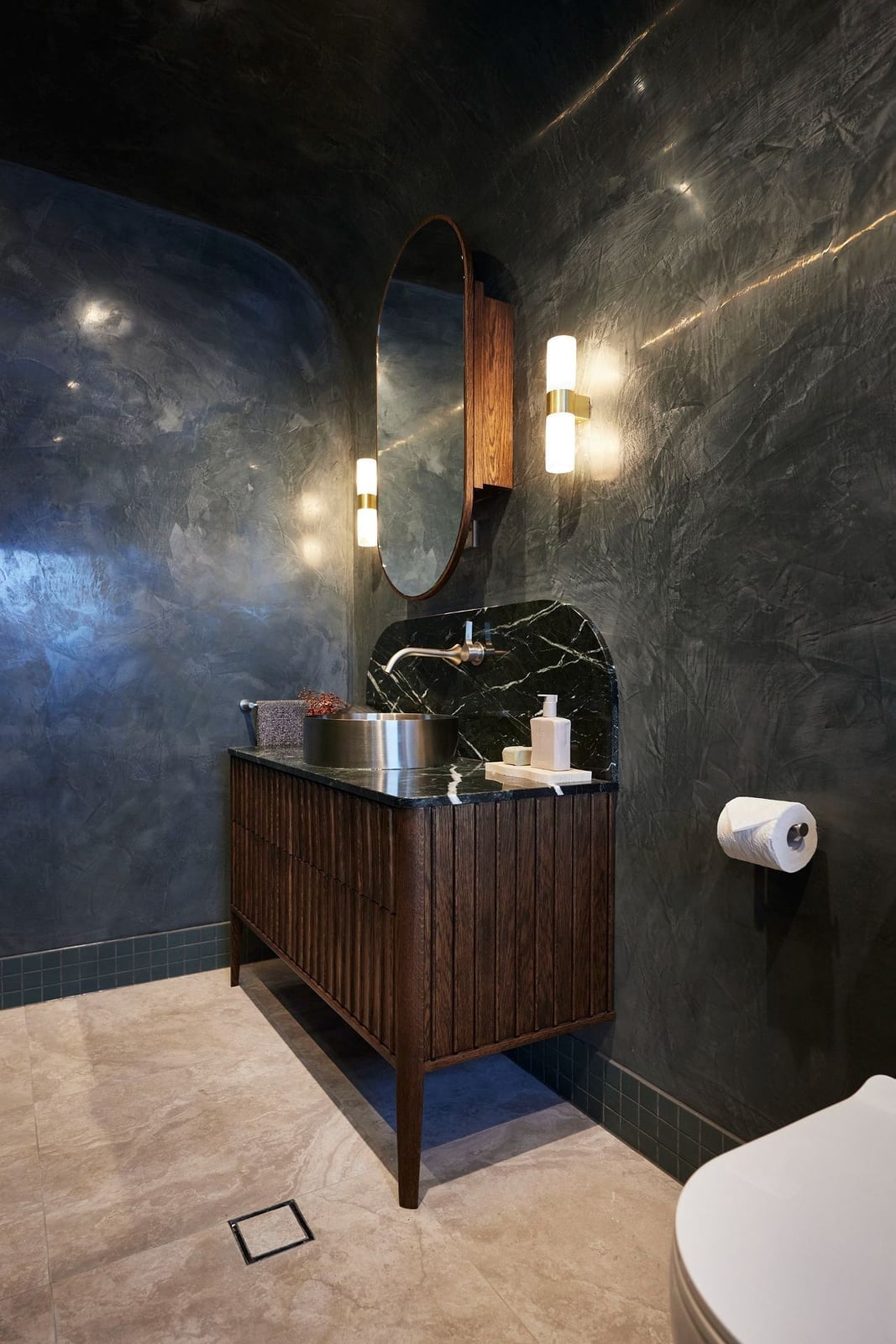
A good rule for a compact bathroom is to let one material do the talking. Here the fluted wood vanity takes center stage, paired with a vessel sink and an oval mirror. The dark green marble backsplash adds a subtle contrast against the textured dark gray walls. Brass-accented wall sconces provide warm light without taking up counter space. The toilet sits to the right, keeping the layout clean and functional. This setup works because the vanity’s vertical grooves draw the eye upward, making the room feel taller than it is.
Industrial bathroom with exposed copper piping
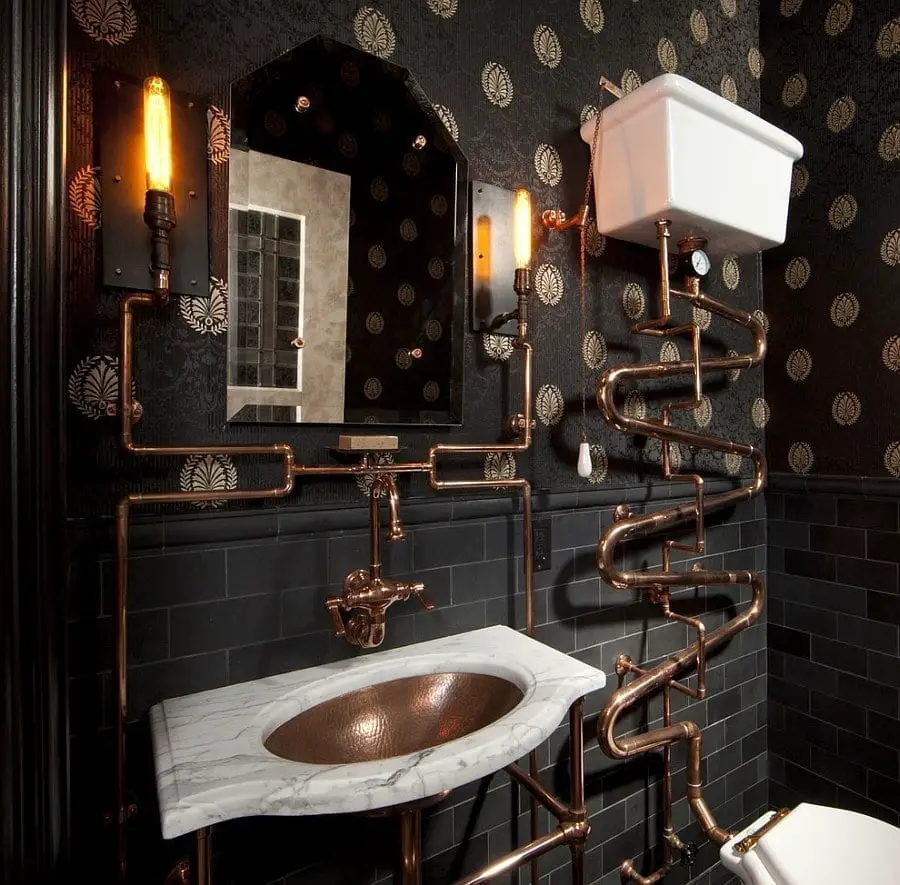
Industrial style often leans toward cold metals and raw surfaces, but exposed copper piping changes that equation. The warm copper tones soften the black and white palette, while the marble vanity keeps things refined. An exposed cistern and visible plumbing turn functional parts into design features. Wall sconces with Edison bulbs cast a warm glow that plays nicely off the copper.
The key is balance. Too much copper looks a plumbing showroom, but here the marble vanity anchors the room. The ornate copper pipework becomes jewelry rather than infrastructure. The compact layout means every pipe serves a purpose, with the sink and toilet arranged for easy access.
Glamorous copper clawfoot tub with marble wallpaper
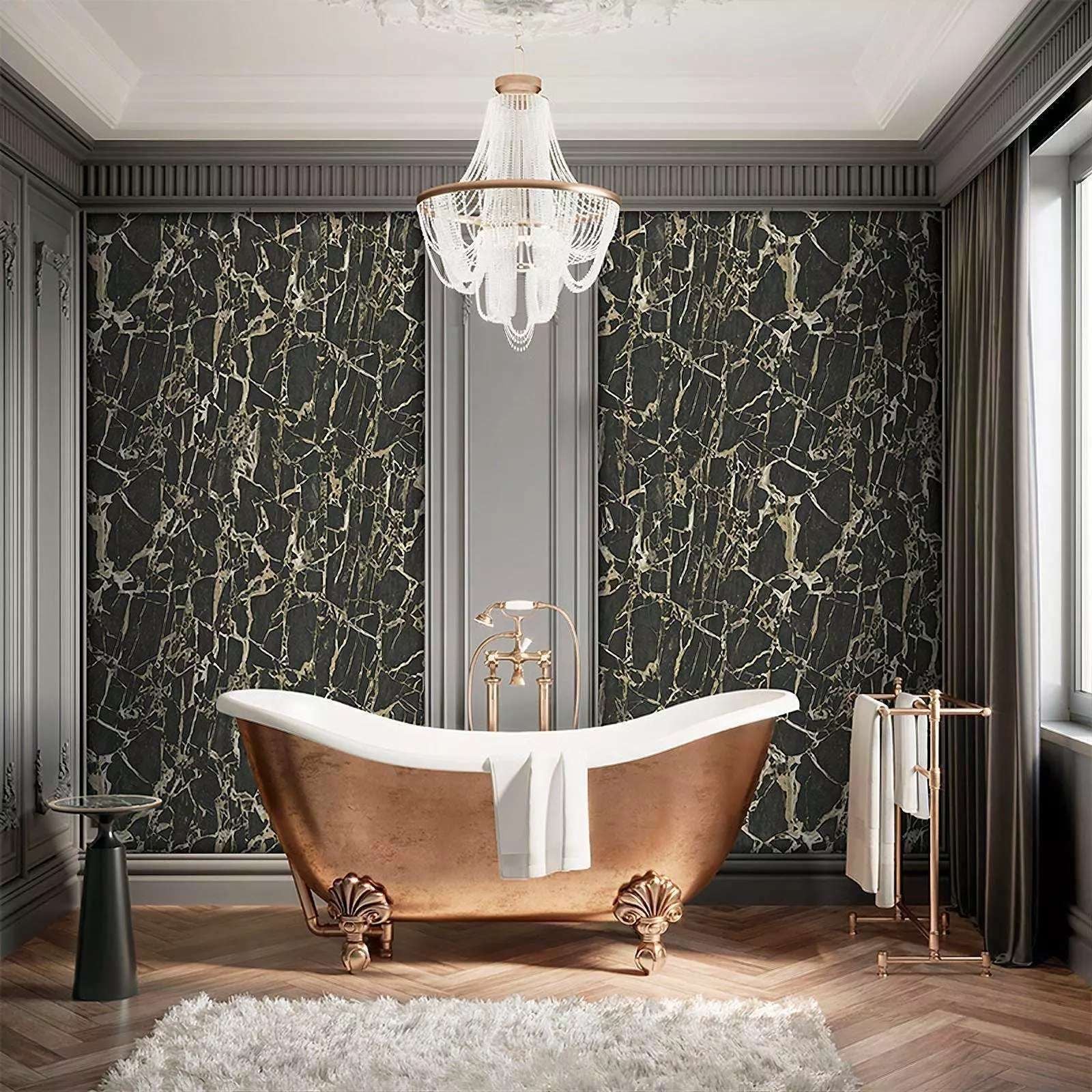
A copper clawfoot tub is the kind of piece that defines a room all on its own. Placed centrally, it draws attention immediately, and the marble wallpaper behind it keeps the backdrop dramatic without competing. The ornate chandelier overhead and natural light from a window give the space a layered glow. This is a room where the tub is the art, and everything else supports that role.
Dark wood pedestal sink in a moody bathroom
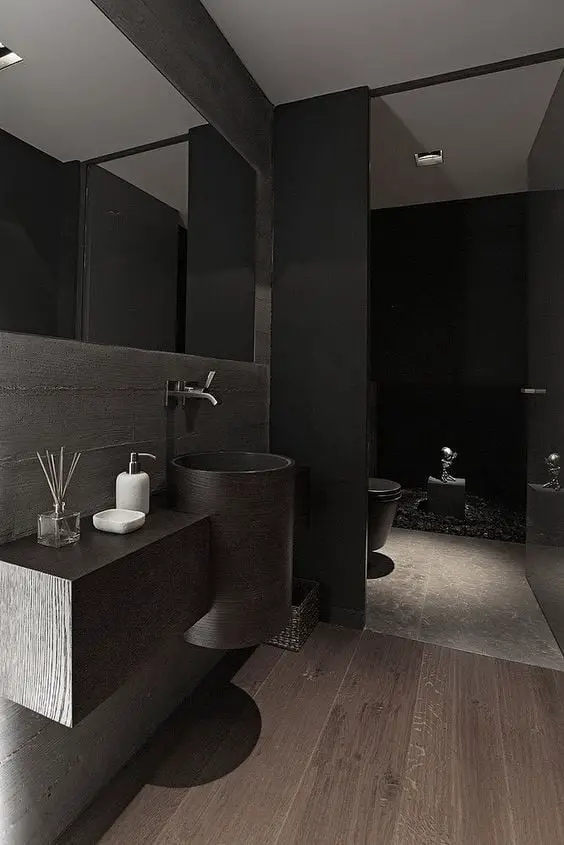
A dark wood pedestal sink is a strong choice for a moody bathroom. It brings warmth and texture without the bulk of a full vanity. The roomy layout allows for a corner vanity placement, with overhead recessed lighting keeping the space functional. The black, dark wood, and gray palette stays cohesive, and the pedestal sink’s open base makes the floor feel more spacious. A floating vanity nearby provides extra storage without breaking the visual line.
Gold ribbed vanity with black marble walls
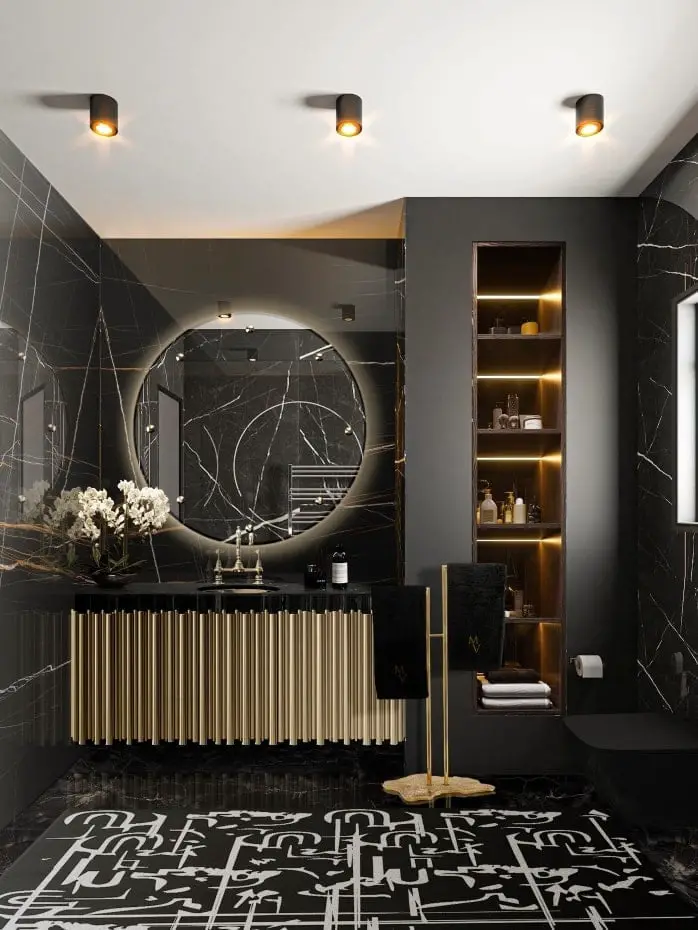
A practical rule for a small bathroom with dark walls is to introduce a reflective surface that catches the eye. The gold ribbed vanity does exactly that, with its textured front adding depth against the black marble. A round mirror above it keeps the look soft, while ceiling spotlights and recessed shelf lights ensure the vanity is well-lit without shadows.
The shelving unit to the side offers storage without crowding the vanity area. The black, white, and gold palette stays consistent, and the ribbed texture on the vanity prevents the dark marble from feeling too heavy. This setup proves that even a compact bathroom can feel luxurious when the finishes work together.
Light blue tiled wall with pedestal sink and hanging plants
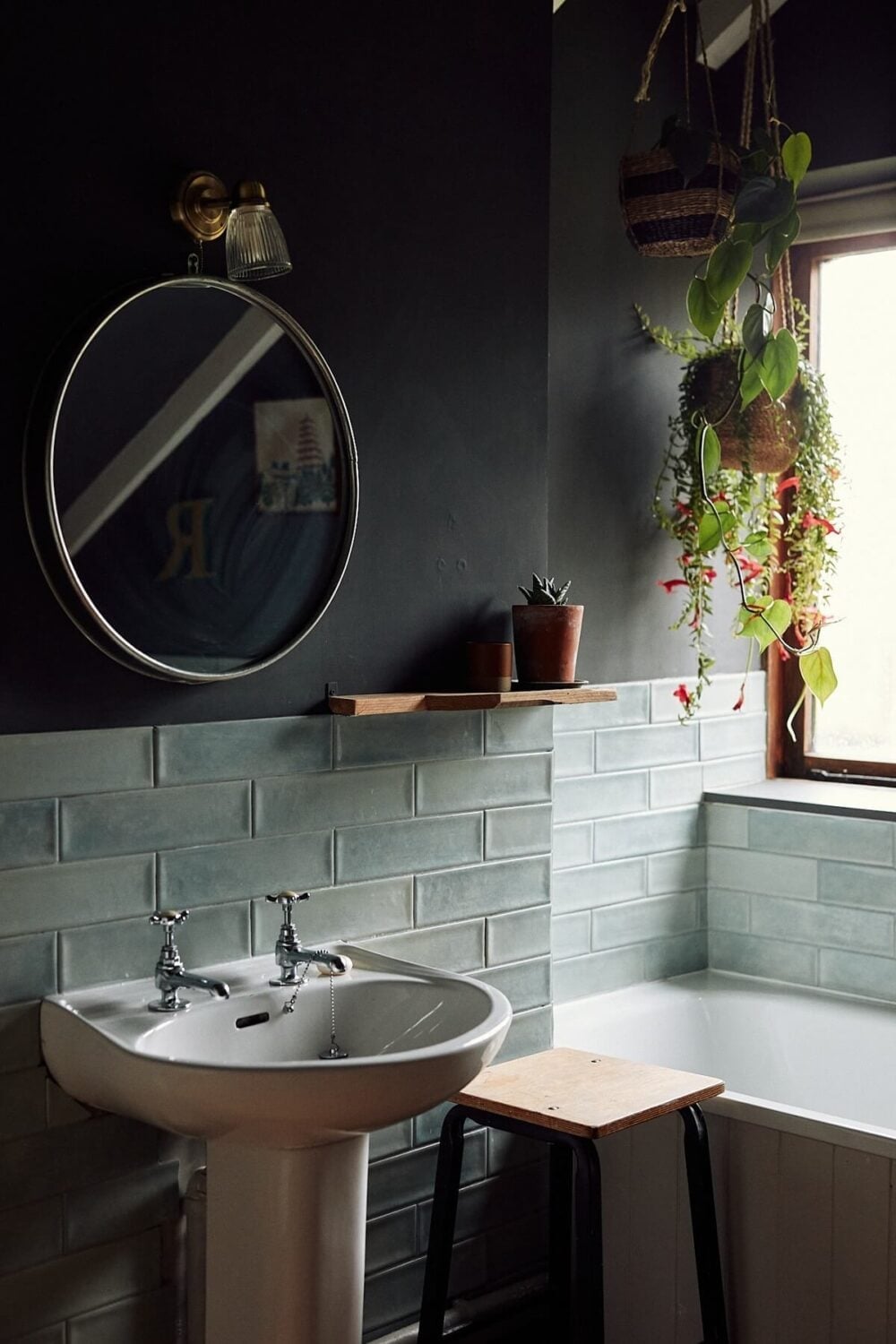
A compact corner bathroom pairs a pedestal sink with a bathtub right next to it, the dark gray and light blue palette softened by wood tones and hanging plants. The round mirror and shelf above the sink keep the layout practical for a tight space. For a budget-friendly swap, a pedestal sink frees up floor area that a vanity would claim, making the room feel bigger than it is.
Glossy emerald green tiles with curved drawer vanity
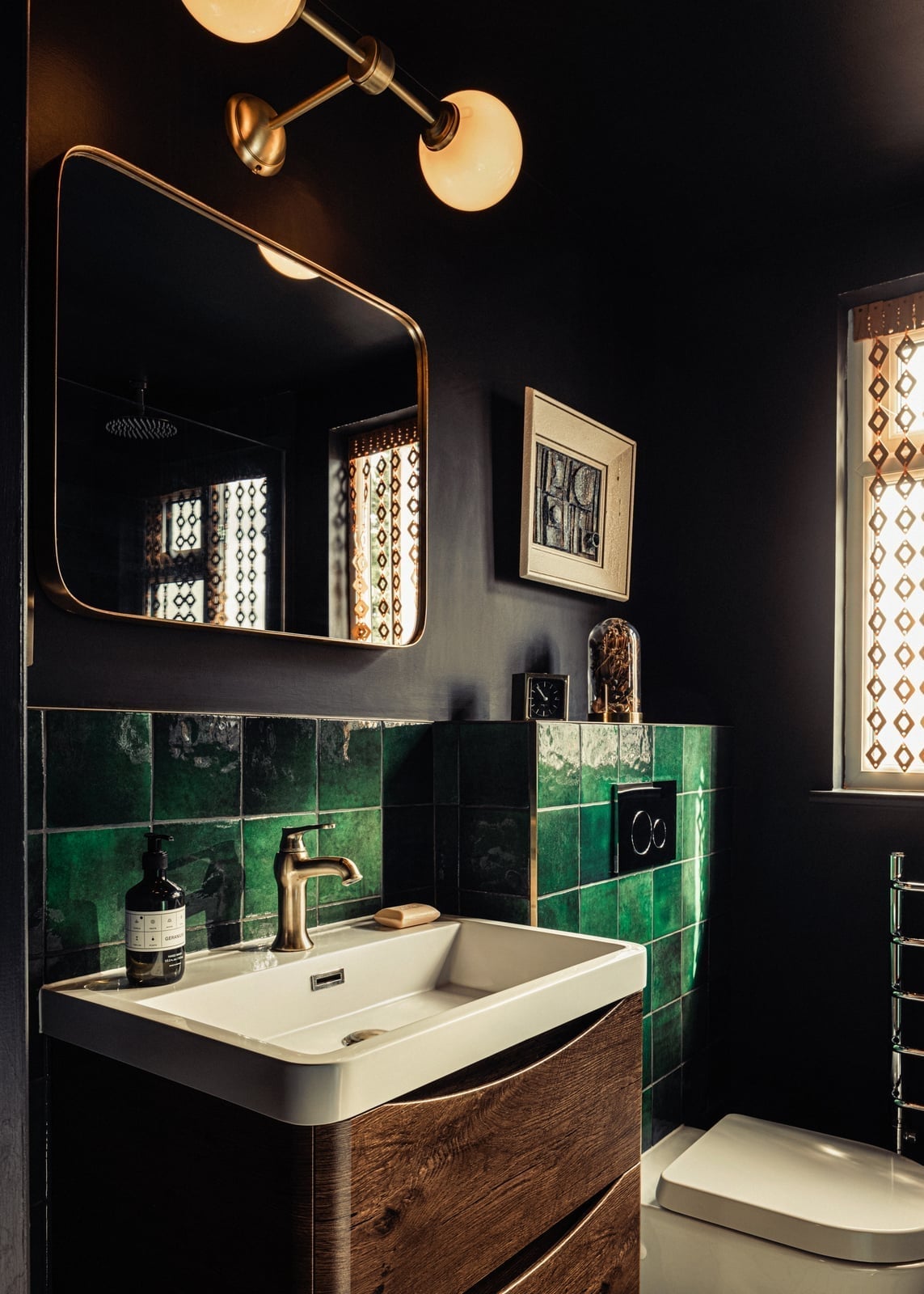
In a small bathroom, glossy tile on one wall reflects light and adds depth. Here, emerald green glossy tiles cover the wall behind a vanity with curved drawer fronts, paired with a brass faucet and a square sink. An overhead fixture with globe lights and ambient light keep the room from feeling closed in. The curved drawers are a renter-friendly detail because they can be swapped out without altering the plumbing or wall tile.
Black vessel sink on warm wooden vanity
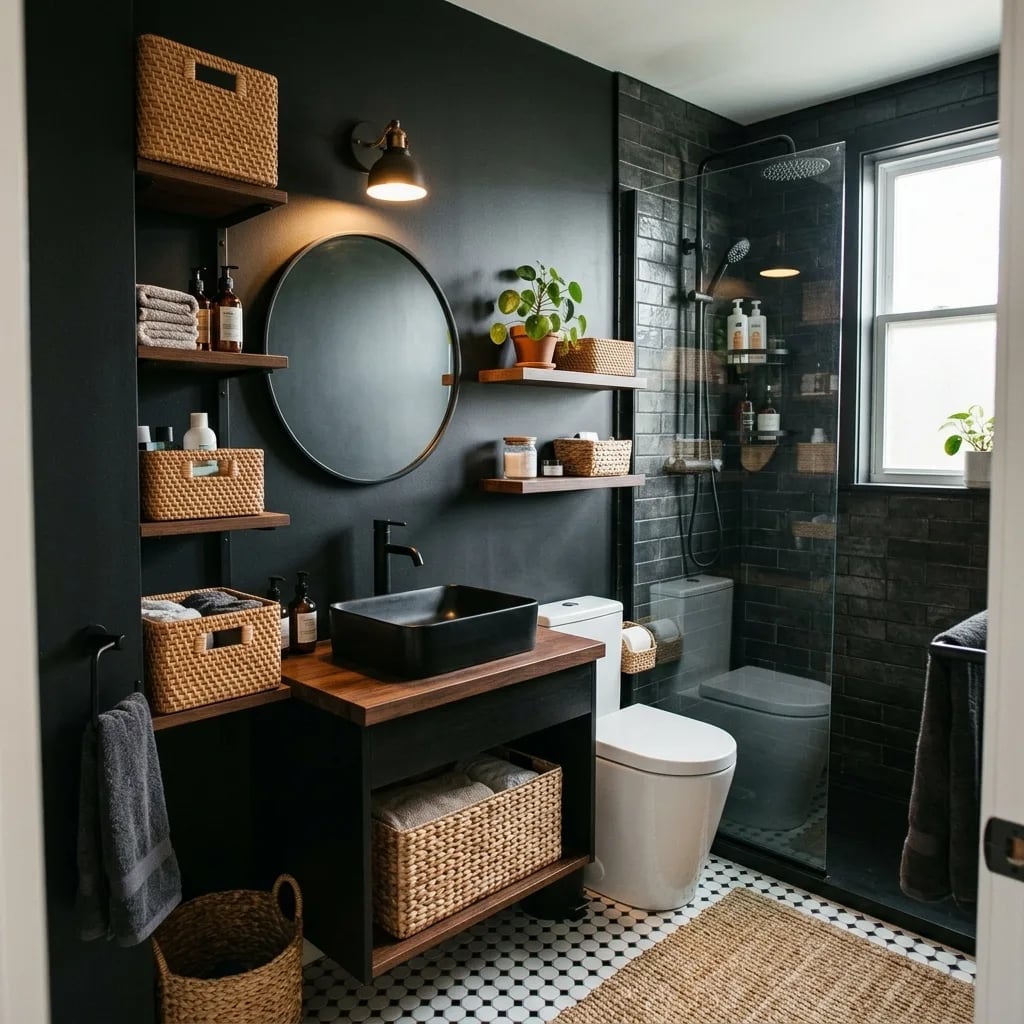
A black vessel sink sits on a warm wooden vanity, and the contrast is what makes the look. Where a white sink might blend into the wall, the black one becomes the focal point against the wood tones and green accents. The vanity has open shelving with woven baskets, which offers storage without the bulk of closed cabinets.
The separate shower stall with an overhead light keeps the wet zone distinct. The round mirror above the sink and the wall sconce provide task lighting. For a similar effect, a wood vanity in a medium tone like oak or walnut pairs well with a matte black vessel sink.
Gleaming copper bathtub in a dark green setting
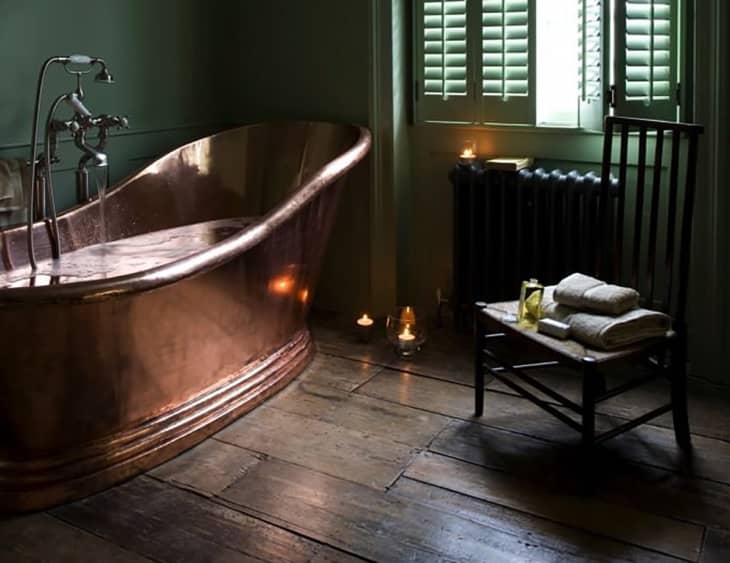
A freestanding copper tub sits centered in a roomy bathroom with dark green walls, a wooden chair beside the window offering a spot to set a towel. The copper finish reflects the ambient light and candles, standing out against the deep wall color. Copper develops a patina over time, which can be part of the appeal if you like a lived-in look.
Dark green subway tile wall with clawfoot tub
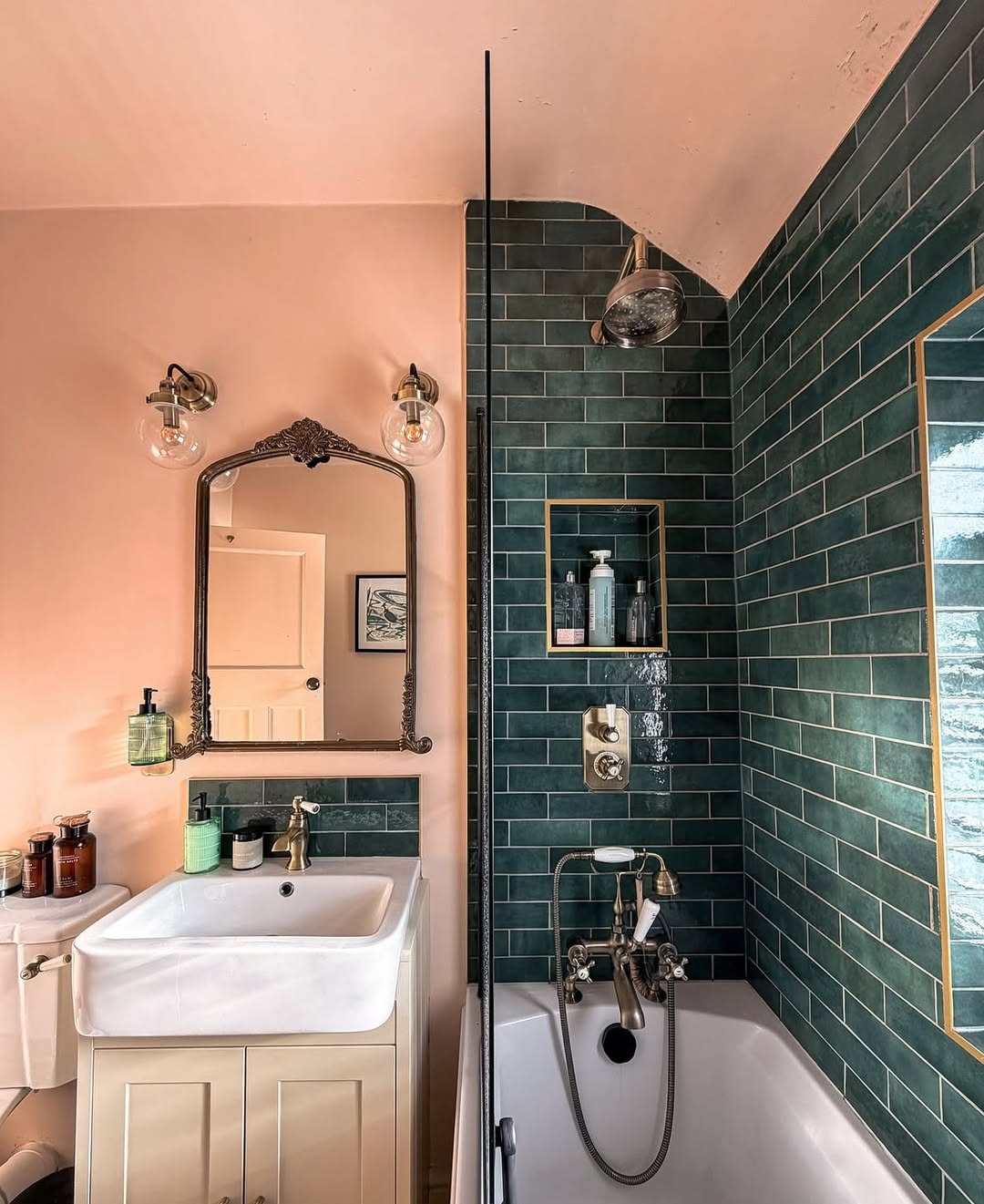
A dark green subway tile wall makes a strong statement in a compact eclectic bathroom. The tile runs from floor to ceiling, with a clawfoot tub and a pedestal sink set adjacent to it. Wall sconces with globe bulbs cast light across the green surface, while peach and cream accents in the room soften the look. The proportion of the tall tile wall balances the lower profile of the tub and sink, keeping the room from feeling top-heavy.
Dark freestanding bathtub with rustic wood accent wall
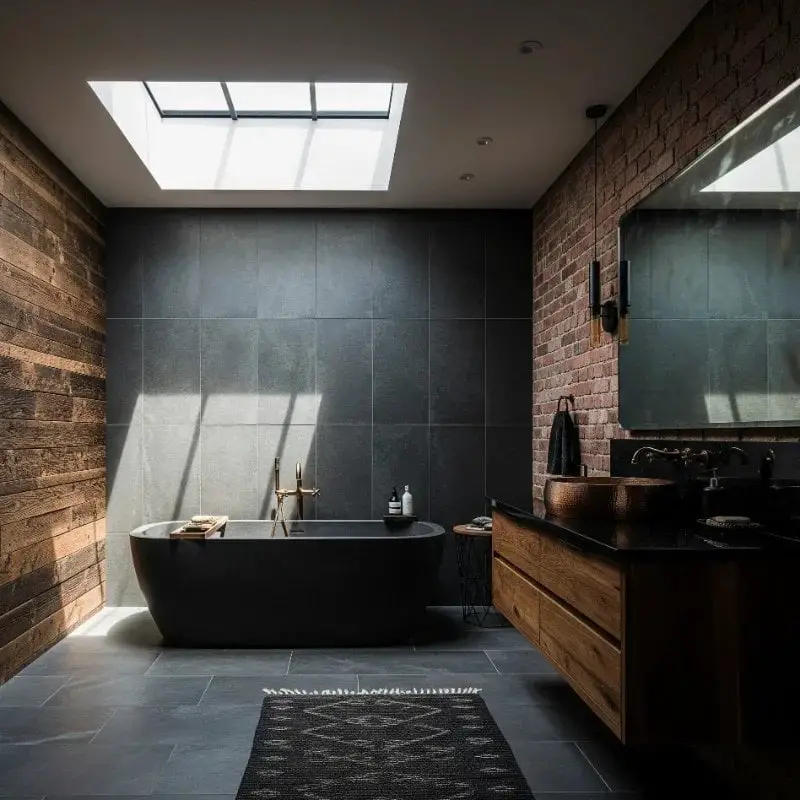
To mix dark tile and wood, choose matte finishes so the surfaces feel solid. In this industrial bathroom, the freestanding dark bathtub sits centered in the room with a wooden vanity and a copper sink along the wall. The room feels anchored by the heavy dark tub while the wood and brick red tones warm the space.
A patterned rug on the floor adds a soft layer between the stone tile and the metal fixtures. Pendant lights and a skylight bring in natural light, which keeps the dark palette from closing in. The mix of dark gray, wood tones, and brick red gives the room depth without needing extra color. A dark freestanding bathtub with a wood accent wall or vanity is a layout choice that works best when the finishes stay in the same muted range.
Copper bathtub against dark green subway tiles and wood paneling
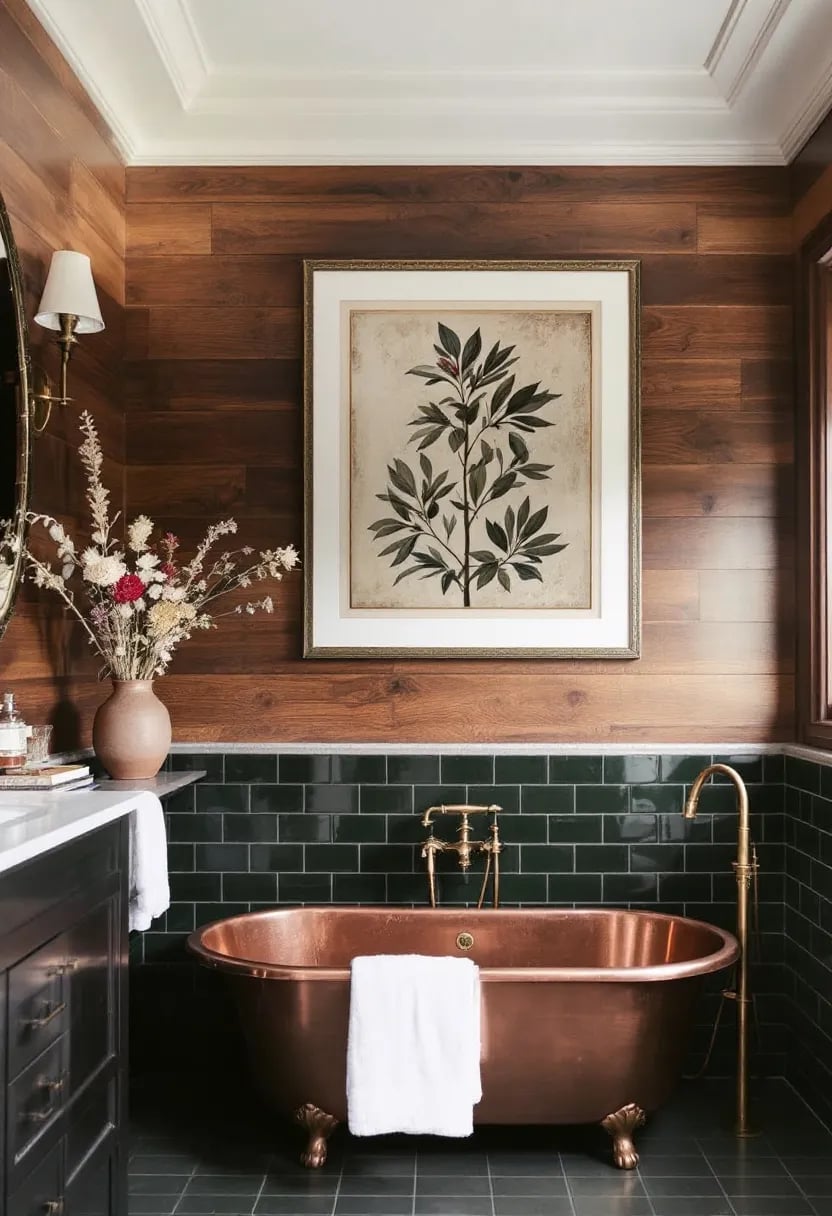
A copper clawfoot tub with a brass faucet sits against a wall of dark green subway tile, with wood paneling and a dark vanity in this compact bathroom. A wall sconce and natural light keep the space from feeling too closed in. The palette of dark green, copper, wood tones, and white is a modern take on traditional materials. The copper bathtub is the standout piece because it reflects light from the sconce, making the dark green tile feel richer. If you are planning a similar setup, let the metal finish lead the palette. Copper and brass add warmth to dark green tile in a way that brushed nickel or chrome cannot.
Dark teal paneled bathroom with black clawfoot bathtub
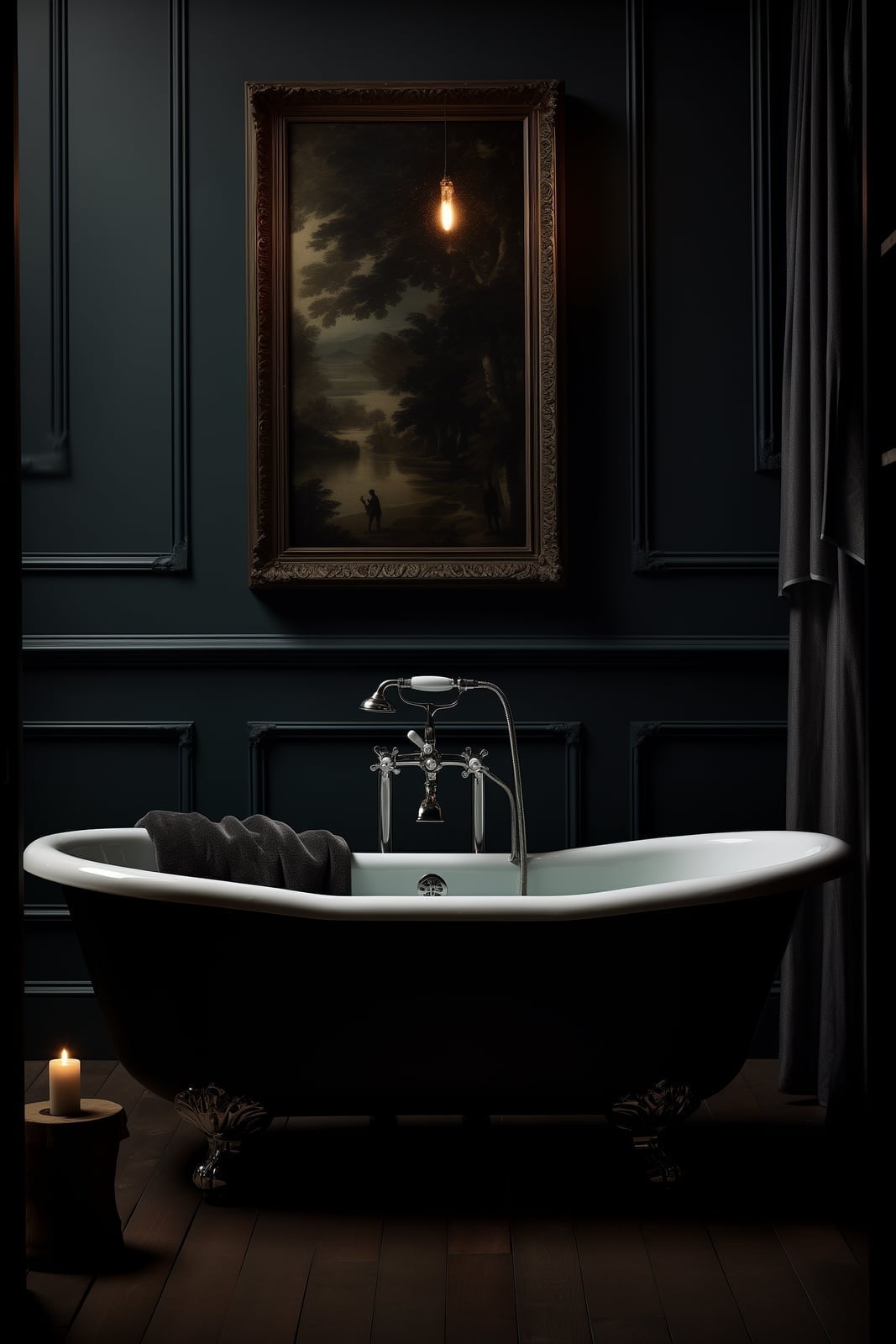
Paneled walls in a small bathroom work best when the color is deep and the finish is flat. Dark teal paneled walls wrap a compact bathroom with a black clawfoot bathtub centered in the room. A vintage painting hangs above the tub, and a pendant light with candle light creates a soft evening glow. The palette includes dark teal, black, brown, and gold, with the gold coming from the pendant light fitting. The dark teal paneled walls are the standout element because they add texture and a traditional feel without needing tile. For renters, peel-and-stick paneling in a dark teal shade can give a similar look without a permanent change.
Freestanding bathtub surrounded by white pebbles
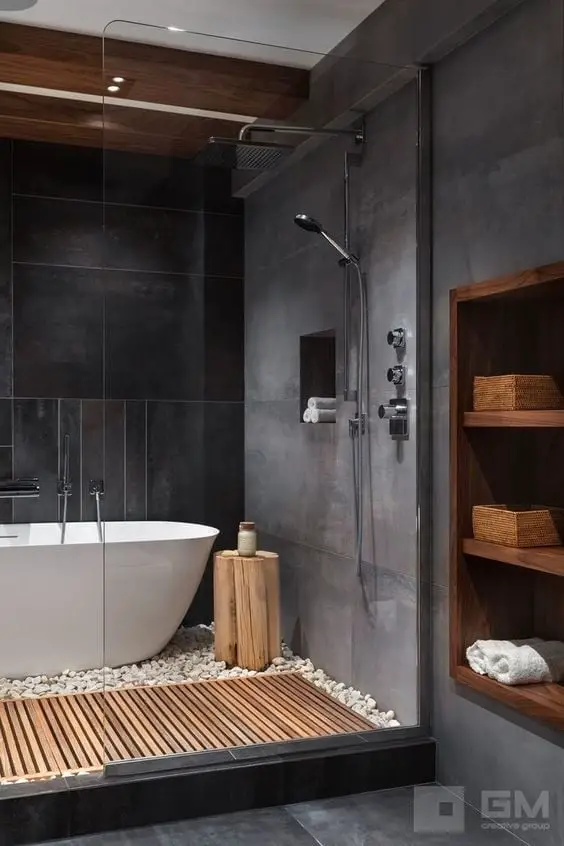
A freestanding bathtub surrounded by white pebbles might sound like a spa detail, but it is about the dark tub and the light stone. In this modern bathroom, the dark gray freestanding tub sits in a separate area from the rain shower, with open wooden shelving and a wooden stool nearby. The floor is tile, but the white pebbles are arranged around the tub base, creating a defined zone. Ambient ceiling lights and recessed lighting keep the room bright without glare. The wooden slatted floor mat adds a natural texture that connects the pebbles to the space. The palette of dark gray, white, and natural wood is simple and relies on the texture of the stone and wood to do the work. This setup works best in a room with good drainage and a floor that can handle occasional splashes from the tub.
White vanities flank a freestanding tub
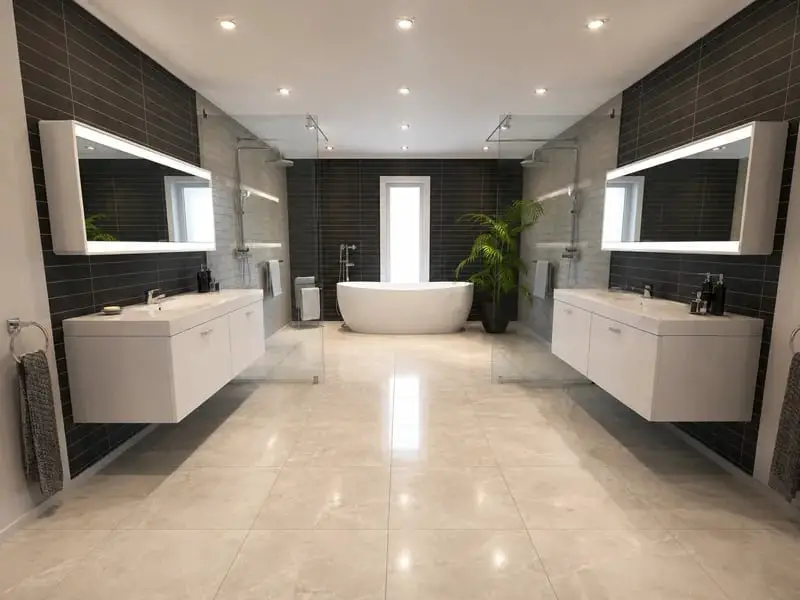
A symmetrical layout with a freestanding bathtub centered between two white vanities is a classic way to make a roomy bathroom feel intentional. Dark gray tiled walls and a dark tiled accent wall behind the tub provide the backdrop, while the white vanities and large mirrors keep the space bright. Overhead fixtures and vanity lights add task lighting for grooming and ambient light for the tub area. The palette of dark gray, white, beige, and green comes from the tile, vanities, and a plant placed near the tub. The dark tiled accent wall is the standout feature because it draws the eye to the tub without competing with the vanities. If you have the floor space, flanking a tub with vanities gives you plenty of storage and a balanced look that feels calm.
Vertical deep green glossy tiles in a shower-over-tub combo
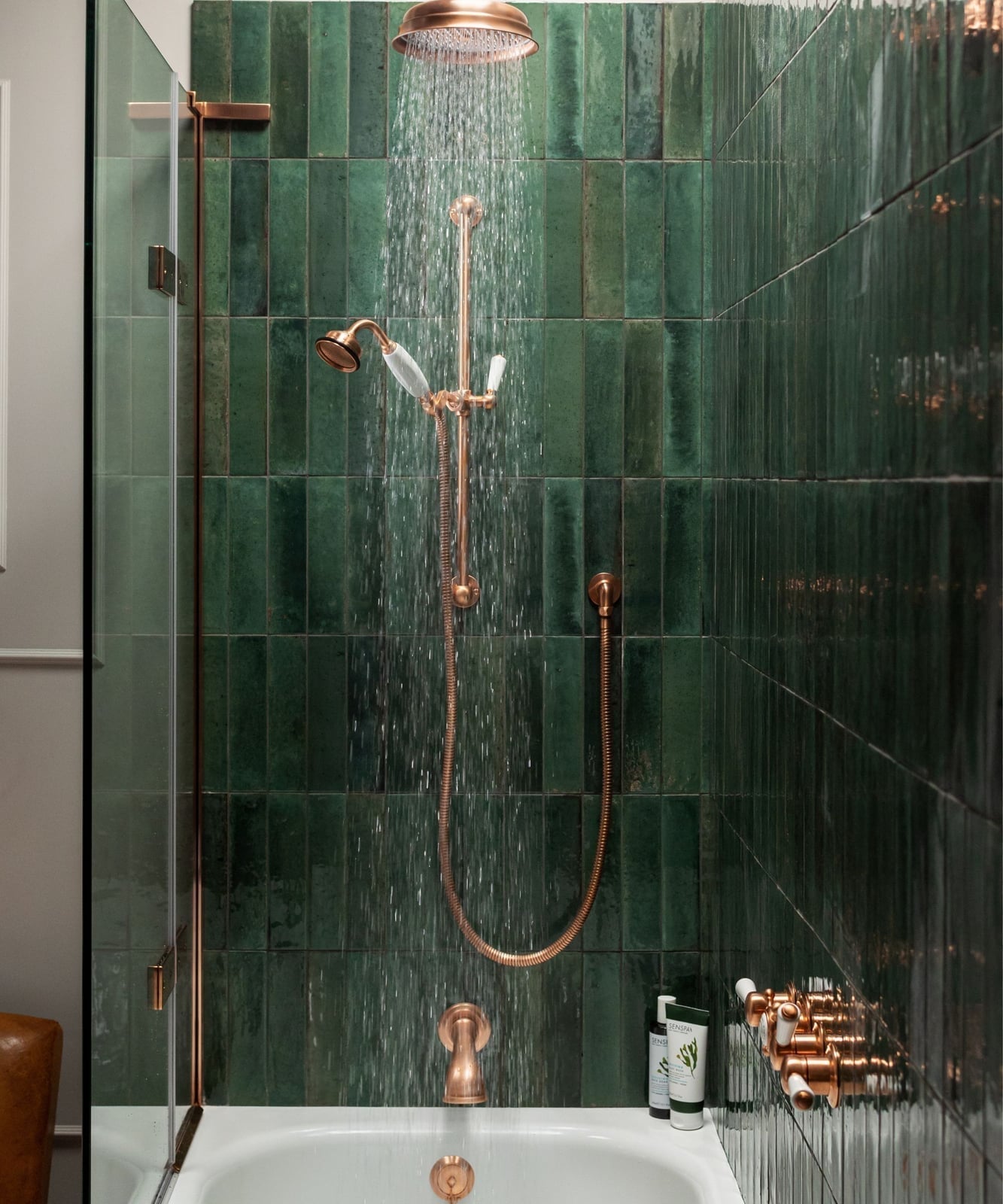
A shower-over-tub combo saves floor space, and running deep green glossy tiles vertically instead of horizontally makes a compact bathroom feel taller. The glossy surface reflects light from the shower water and ambient room lighting, preventing the dark color from feeling heavy. Copper fixtures on the showerhead and faucet add a warm contrast that stops the palette from feeling cold. White porcelain on the tub and glass shower enclosure keep the look clean. The vertical layout of the tiles is a simple trick that works with any dark glossy tile and is worth considering if your bathroom has a lower ceiling.
Dramatic black marble walls and tile flooring
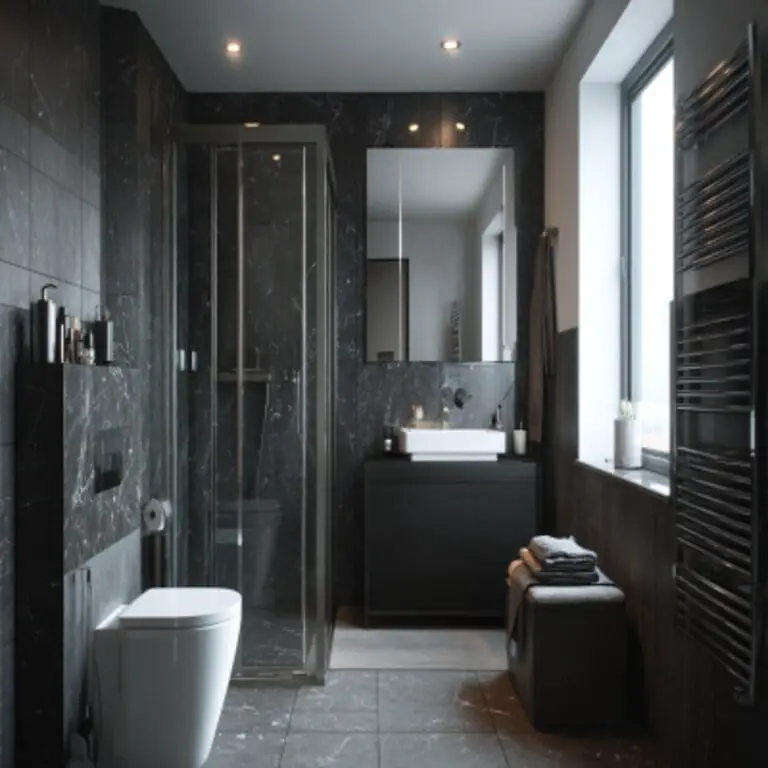
To make a small bathroom feel dramatic, use one dominant dark material on the walls and keep the floor and fixtures neutral. Black marble covers the walls, while the floor tile is a lighter gray. The vanity is a simple white piece, and the toilet and shower enclosure follow the same light palette. Overhead fixtures and natural light from a window provide enough brightness to balance the dark marble. For a renter-friendly version, consider large-format peel-and-stick marble-pattern panels on one wall instead of real stone tile, paired with light flooring and white fixtures. The dark walls and lighter elements create a dramatic look without making the room feel cramped.
Dark paneled walls with wooden vanity
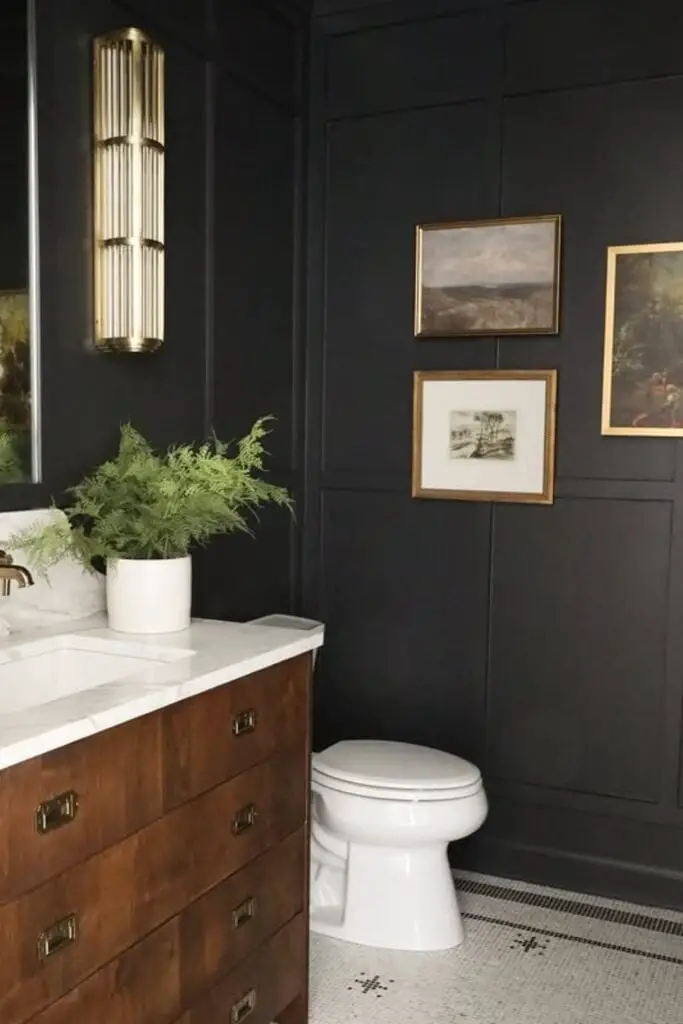
Dark paneled walls create a textured backdrop that looks more finished than flat paint, especially in a compact bathroom where the walls are close. The wooden vanity with a white sink and brass wall sconce adds warmth and a natural element that balances the dark wall treatment. A potted plant and a piece of framed art bring in green accents and visual softness. The toilet sits beside the vanity, and the paneling runs behind both, which makes the whole wall feel intentional. This setup works well for renters who can install lightweight paneling over existing tile or paint with adhesive strips, avoiding permanent changes.
Glossy emerald green subway tile with mosaic floor
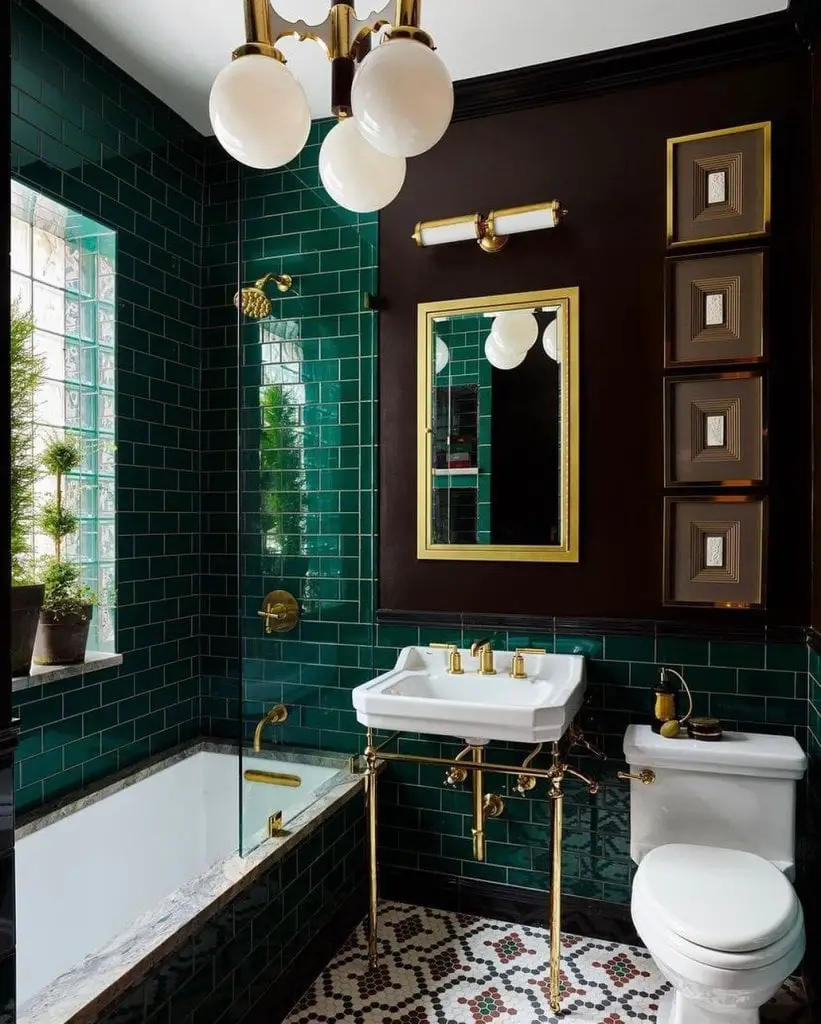
The glossy emerald green subway tile covers the wall and catches both the chandelier light and natural light, giving the compact bathroom a jewel-like quality. The mosaic floor tile in brown and white tones grounds the space and adds a patterned surface that contrasts with the straightforward subway layout. A clawfoot tub sits in the corner, and a pedestal sink with a gold mirror is opposite. The combination of glossy wall tile and a darker, textured floor is a durable choice for a bathroom that gets daily use: the tile is easy to wipe down, and the mosaic pattern hides wear better than a solid color floor. The brass fixtures tie the green and gold together.
Floating vanity with ambient candle light
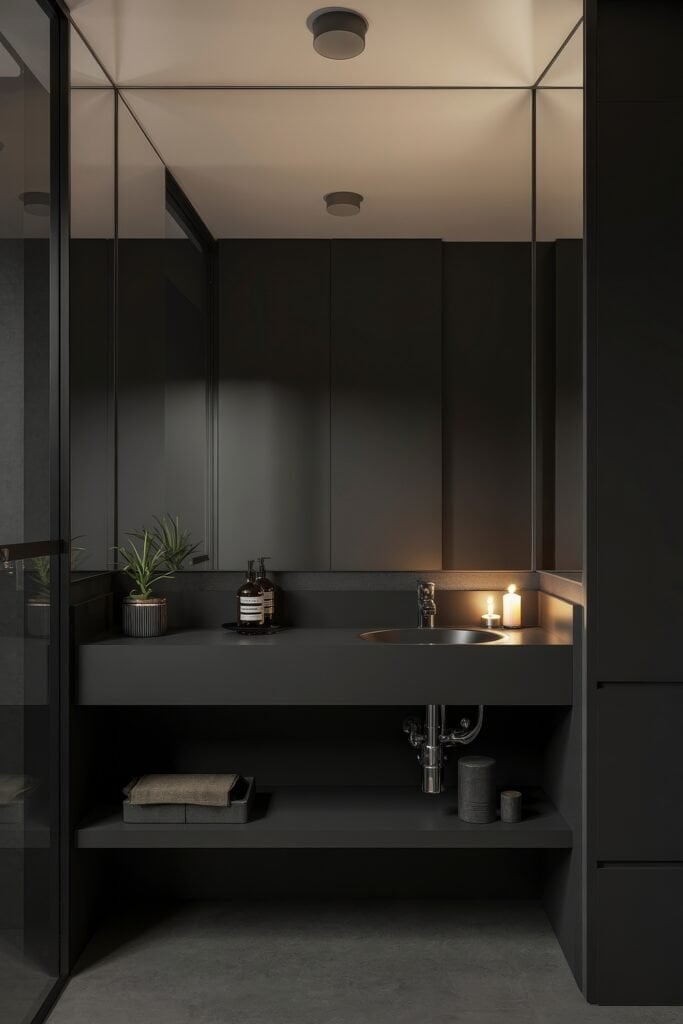
A floating vanity feels lighter than a cabinet model, and in a compact modern bathroom that difference matters. The matte finish on the vanity and the concrete-style wall keeps the palette subdued, while the metal faucet and glass vessel sink add a clean, minimalist line. The key difference here is the lighting approach: overhead fixtures provide the main task light, but candles on the vanity and shelf create a softer, warmer glow that changes the mood entirely. This layered lighting setup lets the room shift from practical morning use to a calm evening soak. The open shelving below the vanity is a practical spot for folded towels or a small plant, keeping the floor clear and the room feeling more open.
Copper bathtub against black hexagonal tile wall
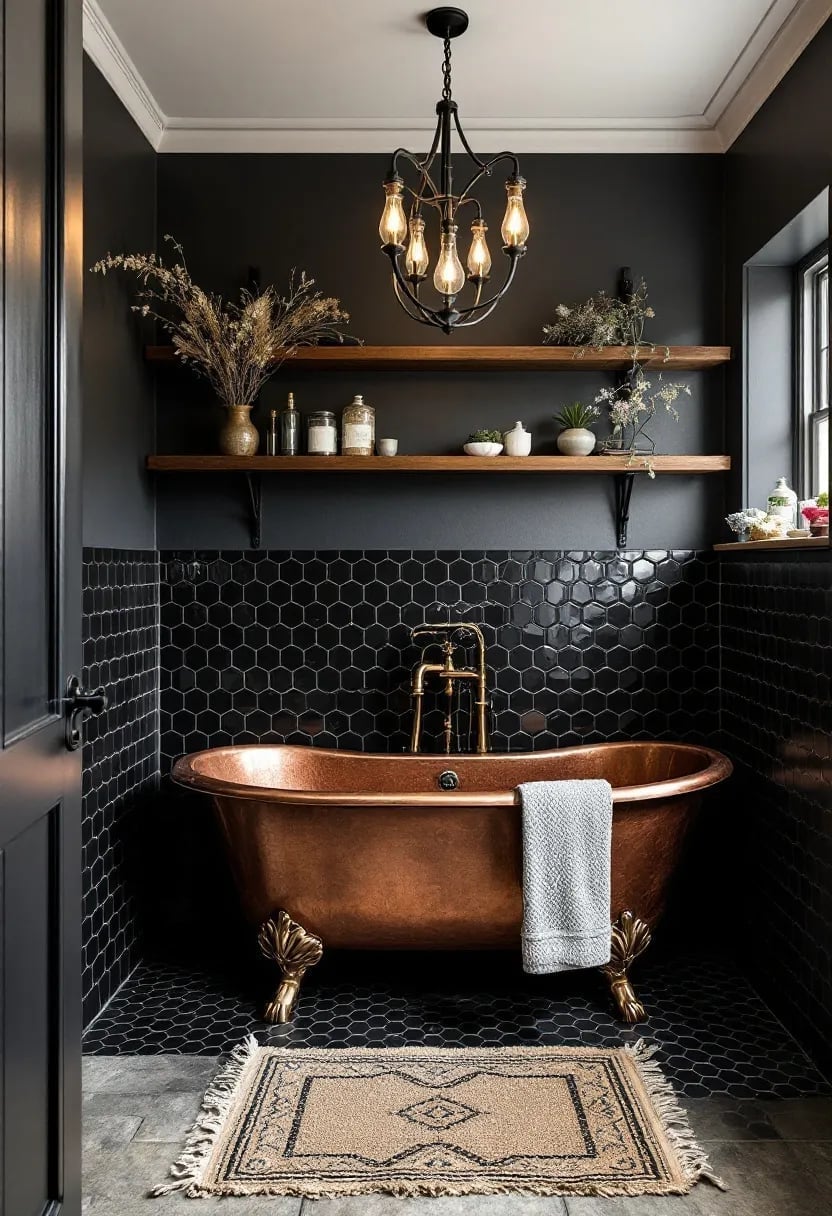
A copper clawfoot tub set against a wall of dark gray hexagonal tile creates a compact layout where the metal finish looks the room’s anchor. Wooden shelves and an ornate chandelier with Edison bulbs soften the tile’s geometric edge. The copper surface reflects warm light, which stops the dark palette from feeling too flat. For a similar effect in a smaller bathroom, keep the tile to one wall and let the tub sit centered on it. That single wall of pattern is enough to define the space without making it feel crowded.
Final Thoughts
A dark bathroom does not have to feel small or cold. The key is contrast: light fixtures, warm metals, or natural textures keep the room grounded. For upkeep, dark tiles show water spots and dust more than white, so plan for regular wiping. If you rent, focus on swap-out items like vanity hardware, mirrors, and bath mats. For owners, tile and paint are longer commitments but offer the biggest payoff. Whichever route you take, the best dark bathroom looks a calm, curated space that works with your daily routine.