A kitchen doesn’t need a full renovation to feel fresh. The simplest update, a new cabinet color, a patterned backsplash, or a single unexpected accent, can shift the whole room’s energy. These 28 kitchens prove that color is the easiest way to make a space feel like yours, without overcomplicating the layout or the budget.
Whether you lean toward sage green, deep teal, or a playful pastel, the goal is the same: a kitchen that feels lived-in and personal. Here’s what each one does differently, and what you can borrow for your own home.
Eclectic kitchen with vibrant green cabinetry and floral mosaic
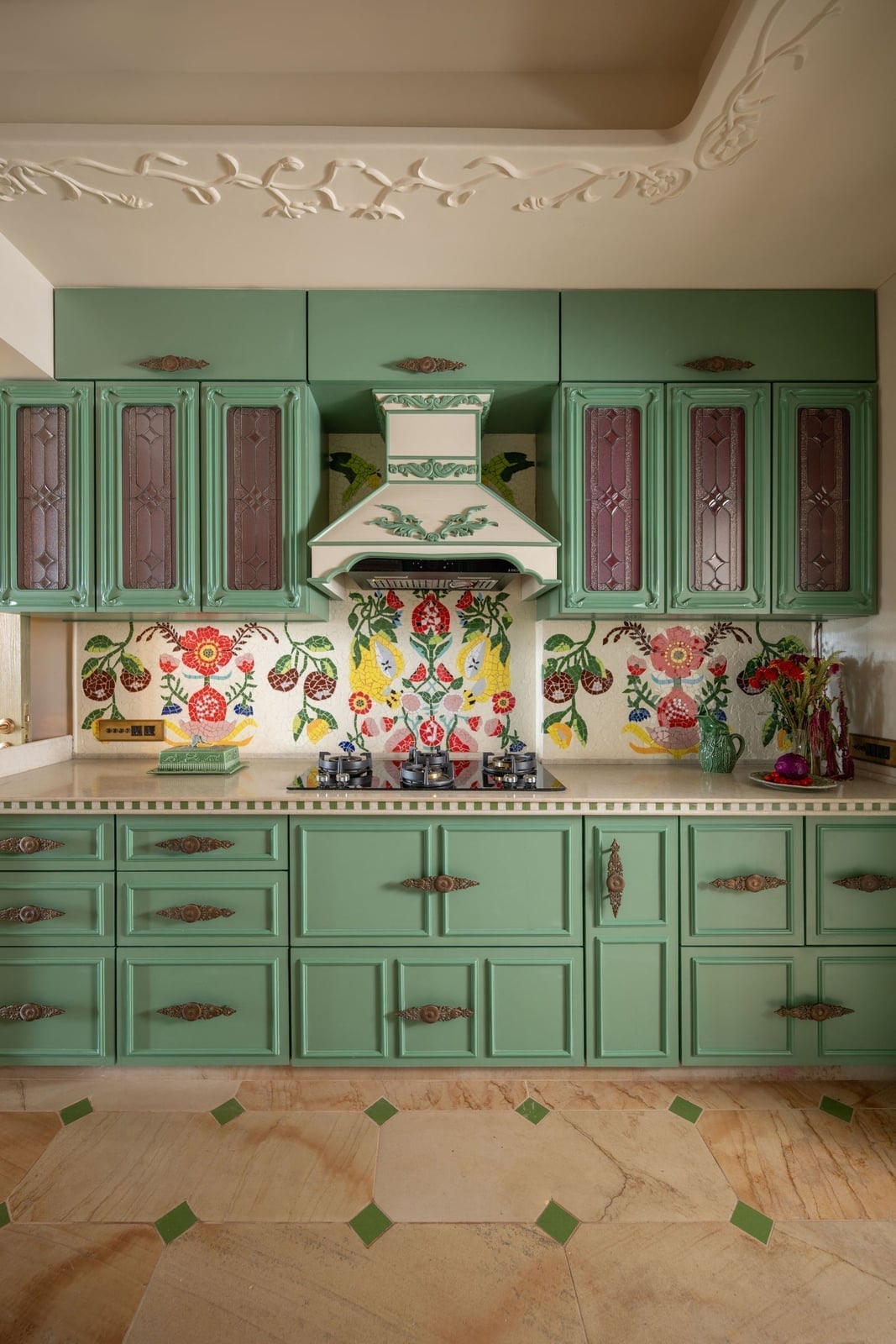
A colorful floral mosaic backsplash turns a compact kitchen into a gallery of pattern and hue. Set against vibrant green cabinetry and a range hood, the tiles mix cream, red, yellow, blue, and purple into a dense, joyful composition. Glass cabinet doors above the counter let a few dishes share the visual load, while the overhead light keeps the tiny space clear and even. The palette here is the whole room, not just an accent wall.
Compact galley kitchen with sage green cabinets and blue floral
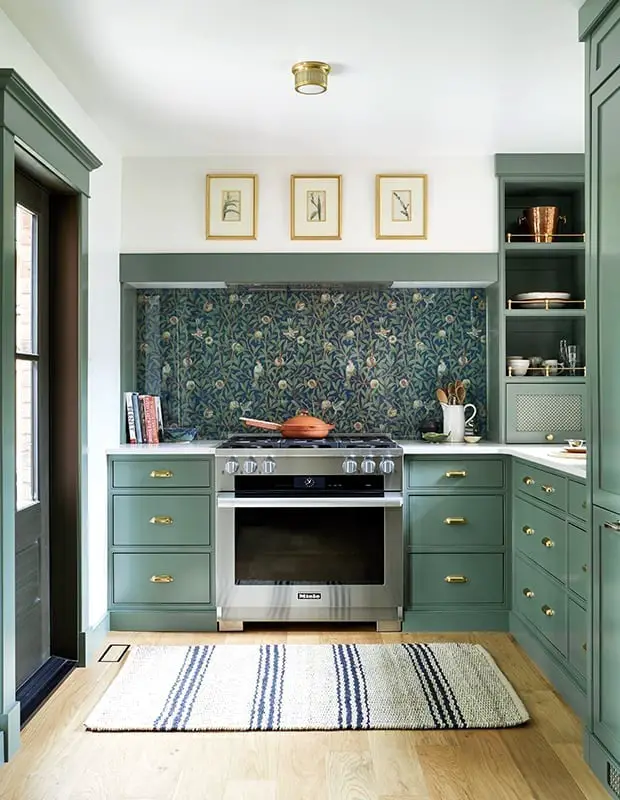
This galley layout makes every inch count. Sage green cabinets run both walls, with a stainless steel range centered under a flush mount light. The floral backsplash in blue and white draws the eye straight ahead, giving the narrow room a focal point that feels deliberate rather than crowded. A striped rug runs the length of the floor, softening the hard surfaces without eating up walking space. Brass hardware on the cabinets adds a warm gold accent that connects the green and blue without competing. In a galley, one strong pattern is enough to anchor the whole room.
Farmhouse kitchen with sage green cabinets and floral window blind
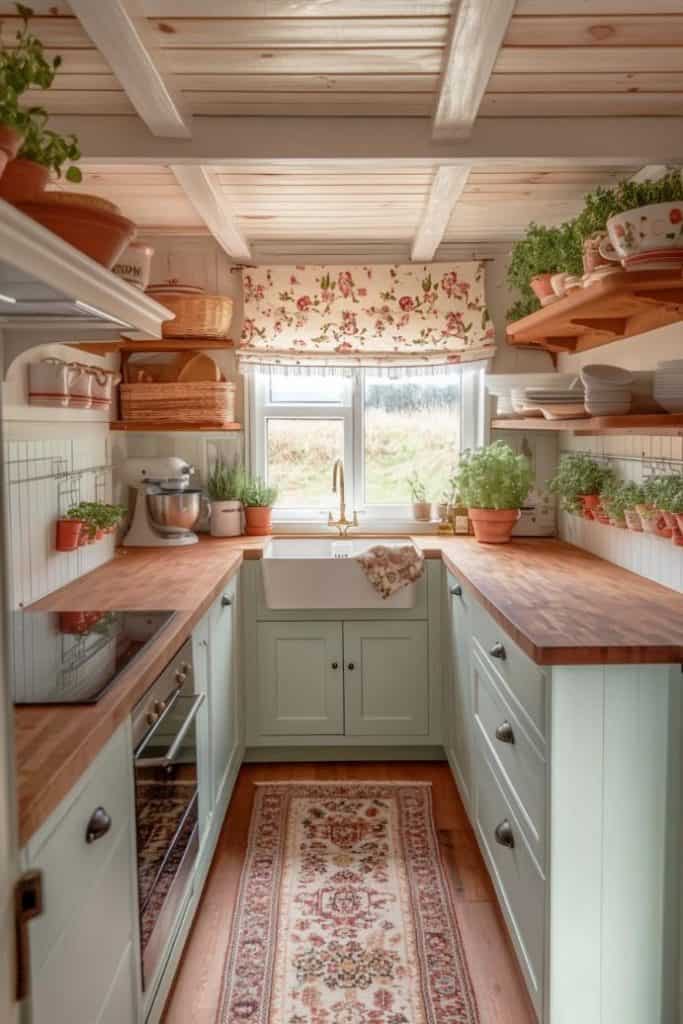
How do you add pattern to a compact farmhouse kitchen without making it feel busy? A floral print window blind handles the job without touching the walls. Sage green cabinets and open shelving frame the window, while the blind’s soft floral print repeats the green and adds cream and pink tones. An apron sink sits below, with a mixer and range nearby on the counters. The U-shaped layout keeps everything in reach, and the natural light from the window bounces off the white ceramic surfaces. Overhead beams add structure without darkening the room. The blind is a renter-safe swap that changes the whole mood without paint or tile.
Roomy traditional kitchen featuring a colorful tile mural
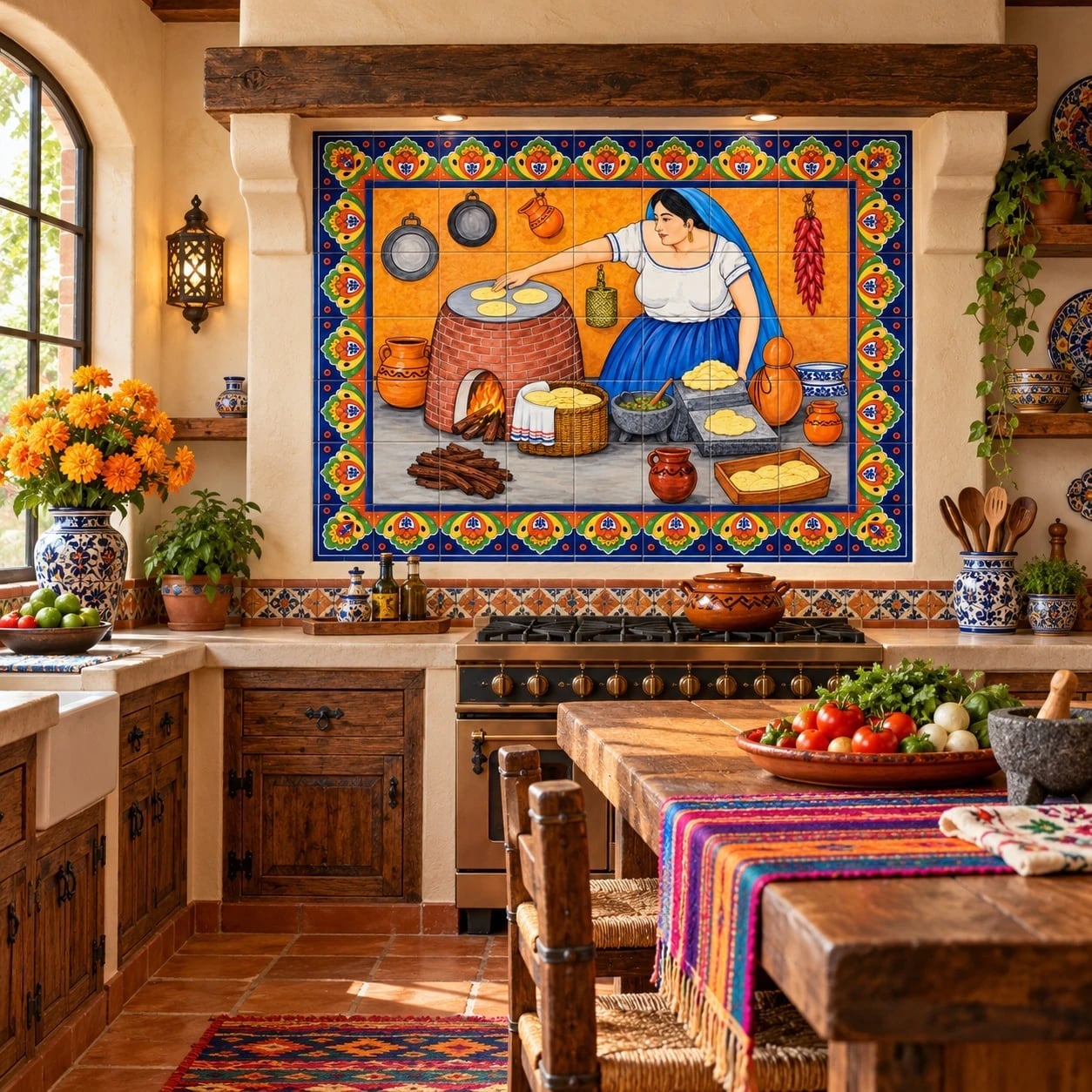
A tile mural in orange, blue, yellow, red, and green becomes the heart of this traditional kitchen. Set above the farmhouse sink and below a wall sconce, the mural mixes terracotta and stone tones into a composition that feels permanent and warm. Wooden cabinets and a matching table keep the palette grounded, while natural light from the window lets the mural shift through the day. The mural is a hero element that needs little else around it.
Checkerboard marble floor and vibrant teal backsplash
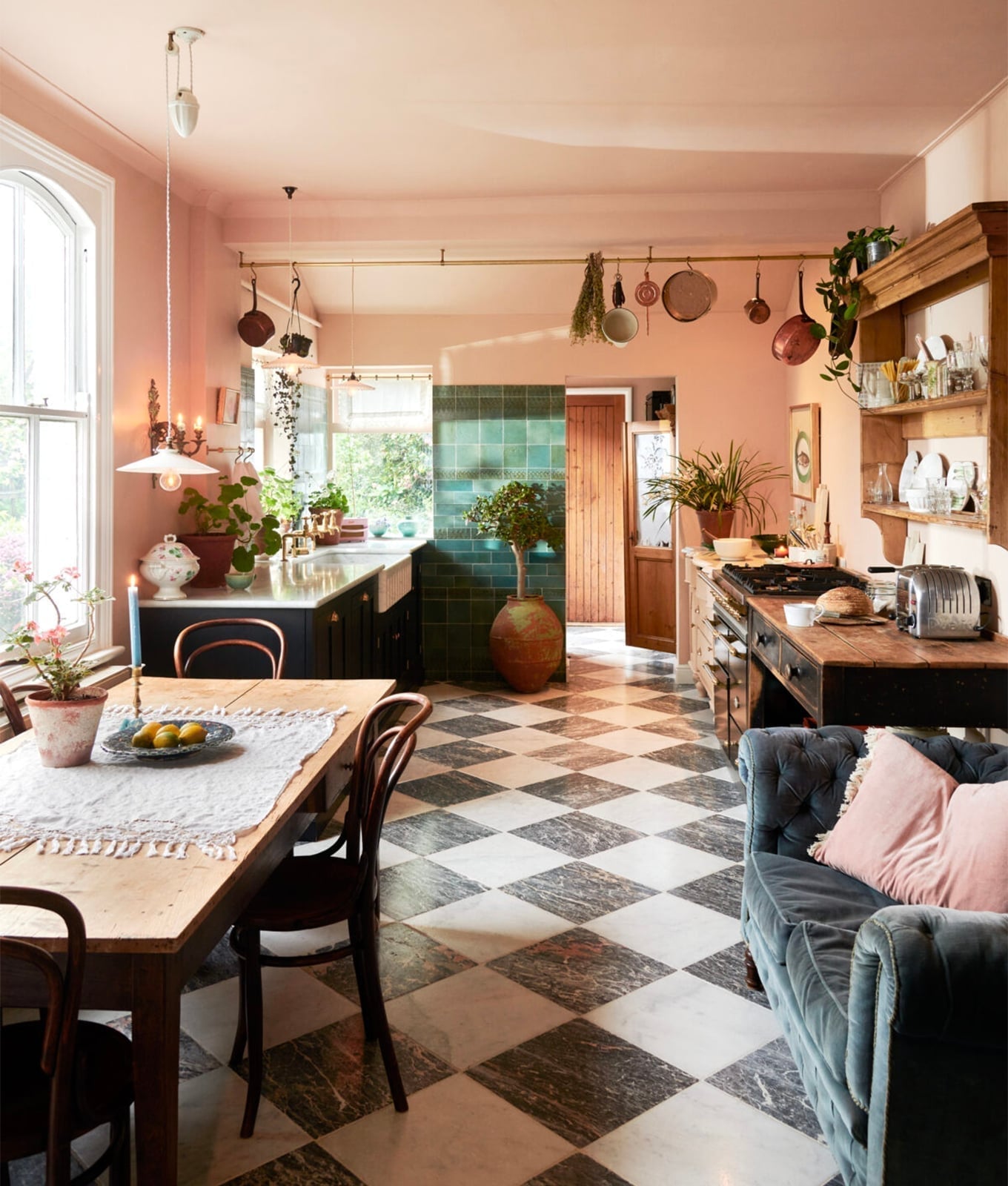
A checkerboard marble floor sets the stage for an open plan that mixes pink, teal, and dark green without apology. The vibrant teal backsplash runs along an L-shaped counter, while a wooden dining table with bentwood chairs sits nearby. A dark green cabinetry run and a wooden shelving unit add storage without closing off the room. A velvet sofa in the adjoining seating area pulls the pink tones from the floor. Pendant lights and wall sconces layer the light, and side windows provide daylight to balance the room. The material mix here is the structure: tile, wood, marble, velvet, and copper work because each has a clear job.
Vibrant teal kitchen with dramatic bronze range hood
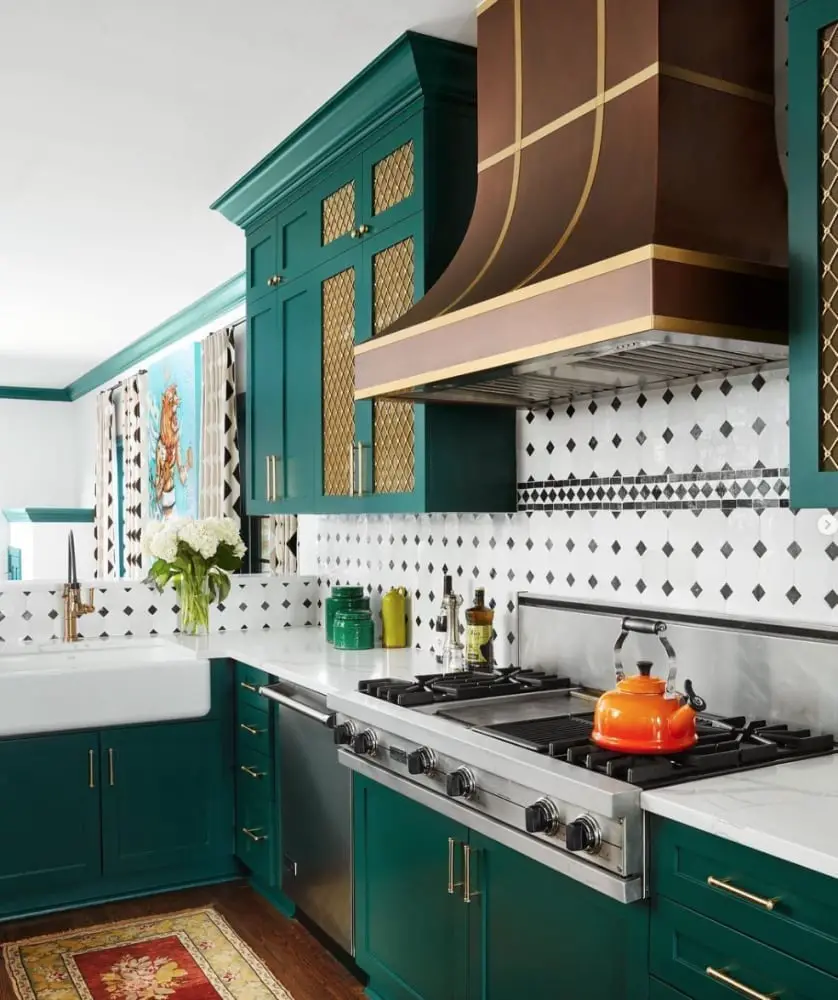
A stainless steel range hood is the usual default, but a bronze one changes the whole room. Here the teal cabinets and brass accents feel intentional because the dark metal hood anchors them. The white farmhouse sink and black countertops keep the palette grounded, so the color looks confident rather than chaotic. A roomy kitchen can handle this much saturation because the natural light and overhead lighting balance the deep tones. The principle at work: one oversized dark element can make a bright palette feel settled instead of scattered.
Mint green cabinets with contrasting colorful fronts
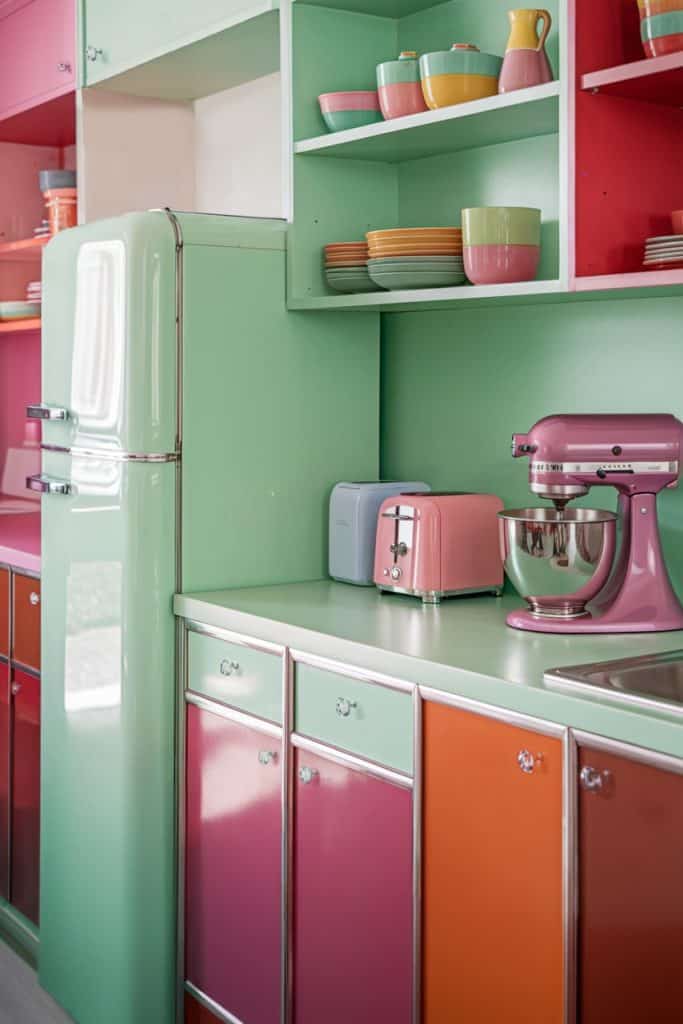
The mint green cabinets are the backdrop, but the real move is the cabinet fronts themselves. Pink, orange, red, yellow, and blue panels turn a row of storage into a composition. The retro refrigerator and stand mixer match the energy, but it is the mix of solid colors on the doors that makes the room feel designed. Open shelving keeps the compact corner airy. For a renter, swapping out cabinet fronts is not an option, but painting just the doors of a single cabinet bank in a bold hue creates a similar jolt.
Sage green cabinets with coral tile backsplash
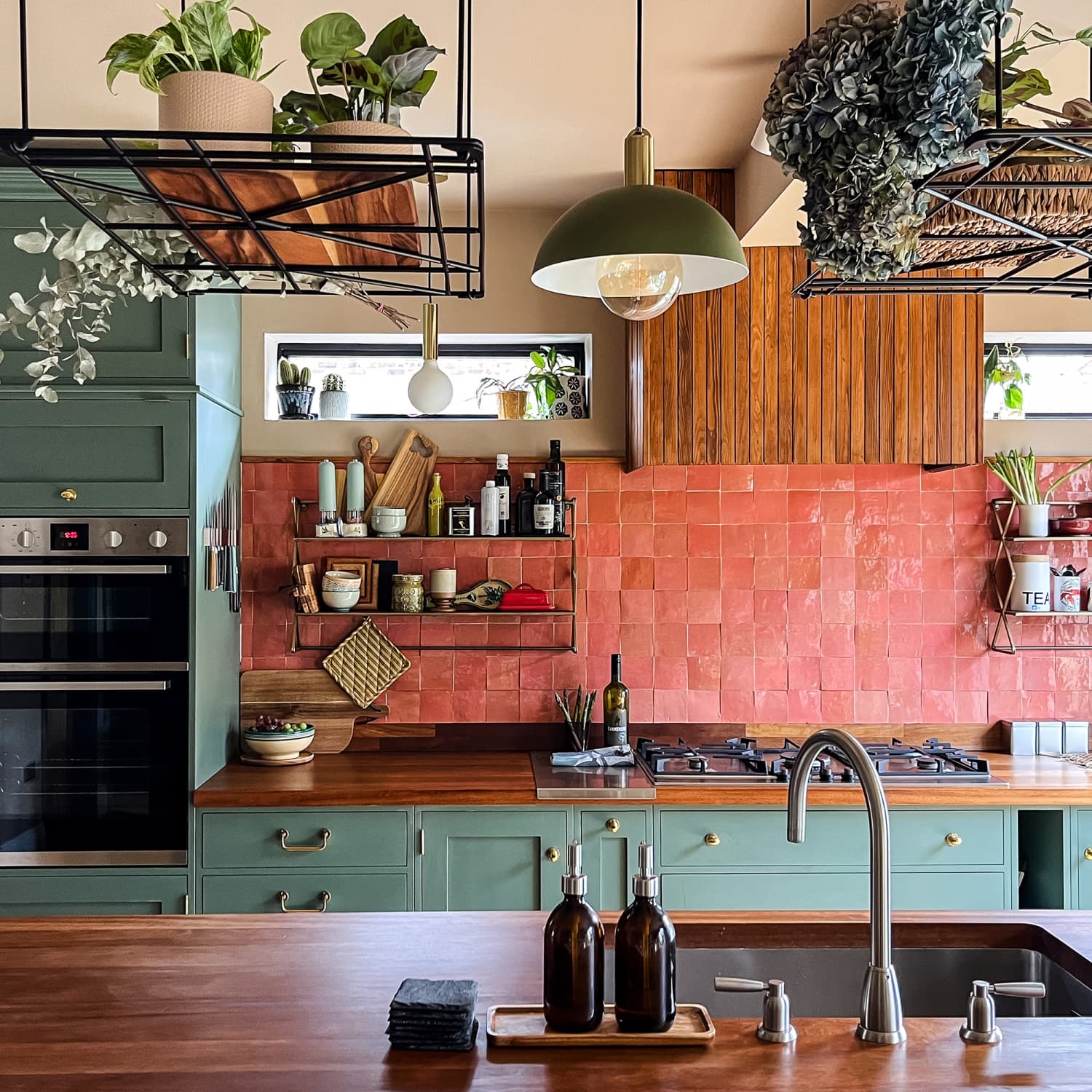
This is a combination that sounds risky on paper but lands well in practice. Sage green cabinetry is quiet and earthy, while the coral square tile backsplash adds warmth. Wood countertops and beige tones in the room balance the palette. The pendant lights and natural light from windows help the coral appear as a natural accent. When you pair a muted color with a saturated one, let the muted color dominate the surface area and the saturated one stay as a concentrated band.
Terracotta cabinet wall with wood accents
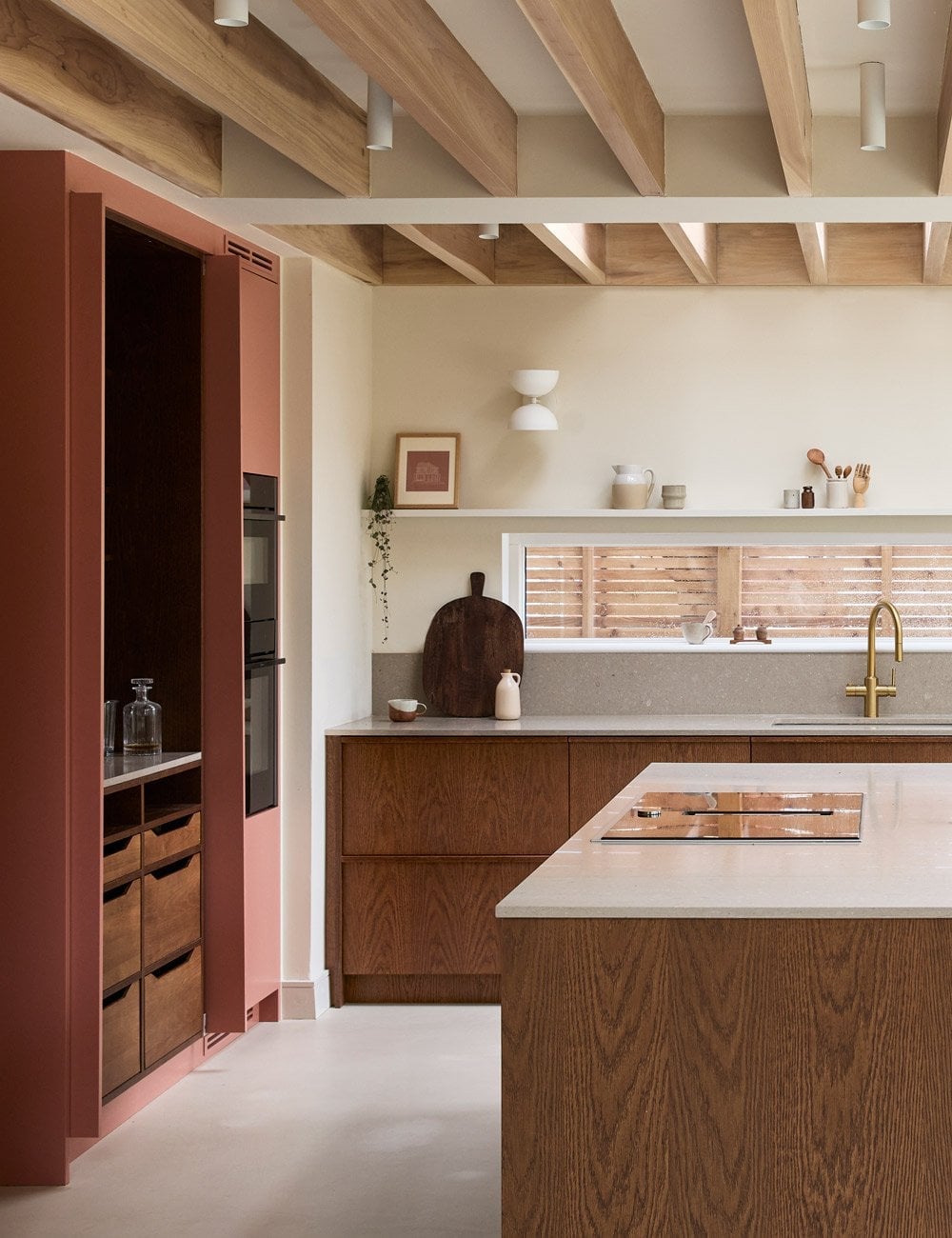
How do you keep a warm terracotta cabinet wall from feeling heavy in a modern kitchen? The answer here is contrast and air. The island with its cooktop and built-in oven sits in the center of an open plan, and the wooden drawers add texture without adding weight. Cream and gray tones in the stone and concrete surfaces break up the warmth, while brass accents provide a reflective lift. Recessed and track lighting keep the room evenly lit so no corner falls into shadow. The material principle: terracotta looks modern when it is paired with cool neutrals and metallic points, not more warm wood.
Yellow upper cabinets contrasting mint green lower cabinets
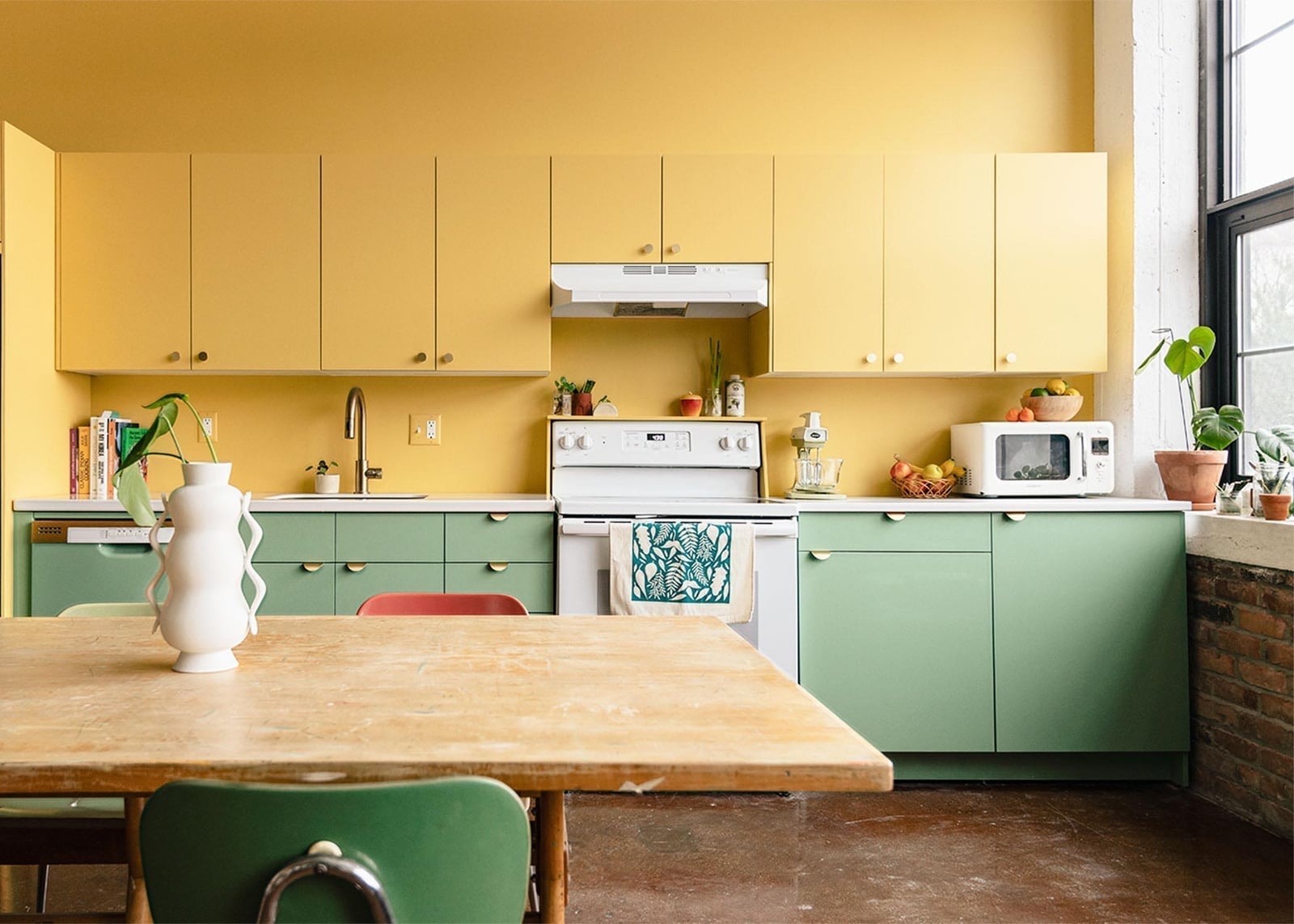
Yellow above and mint green below is a two-tone strategy that works because the yellow uppers feel buoyant, while the mint green lowers ground the room. The white range and wooden table add neutral breaks so the contrast does not feel like a competition. When using two saturated colors on cabinets, put the lighter one on top and the darker one on bottom to match how the eye reads weight.
Marble island with purple bar stools
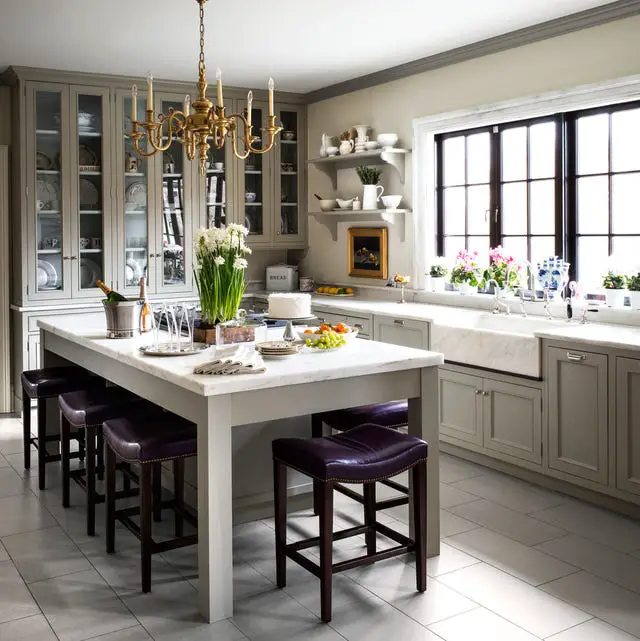
In a roomy transitional kitchen, the island anchors the layout with a generous marble top and a fluted wood base. Four purple leather bar stools pull up along one side, their saturated hue a deliberate counterpoint to the cool white marble and soft gray cabinetry. A chandelier hangs overhead, while natural light from a window balances the scheme. The lesson for a room where the island is the centerpiece: let it claim the most durable surface, then treat the seating as the color move.
Deep green cabinets with brass hardware
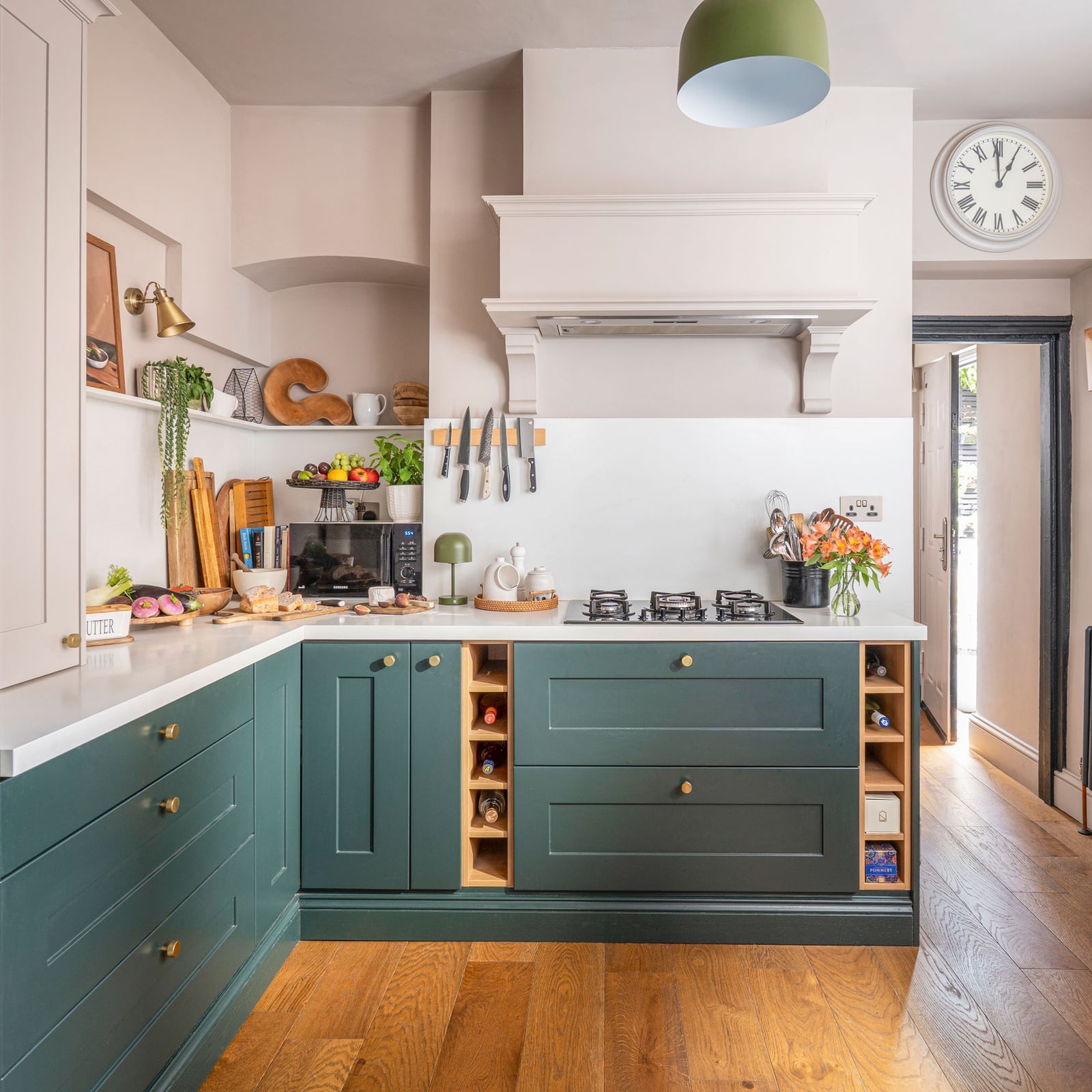
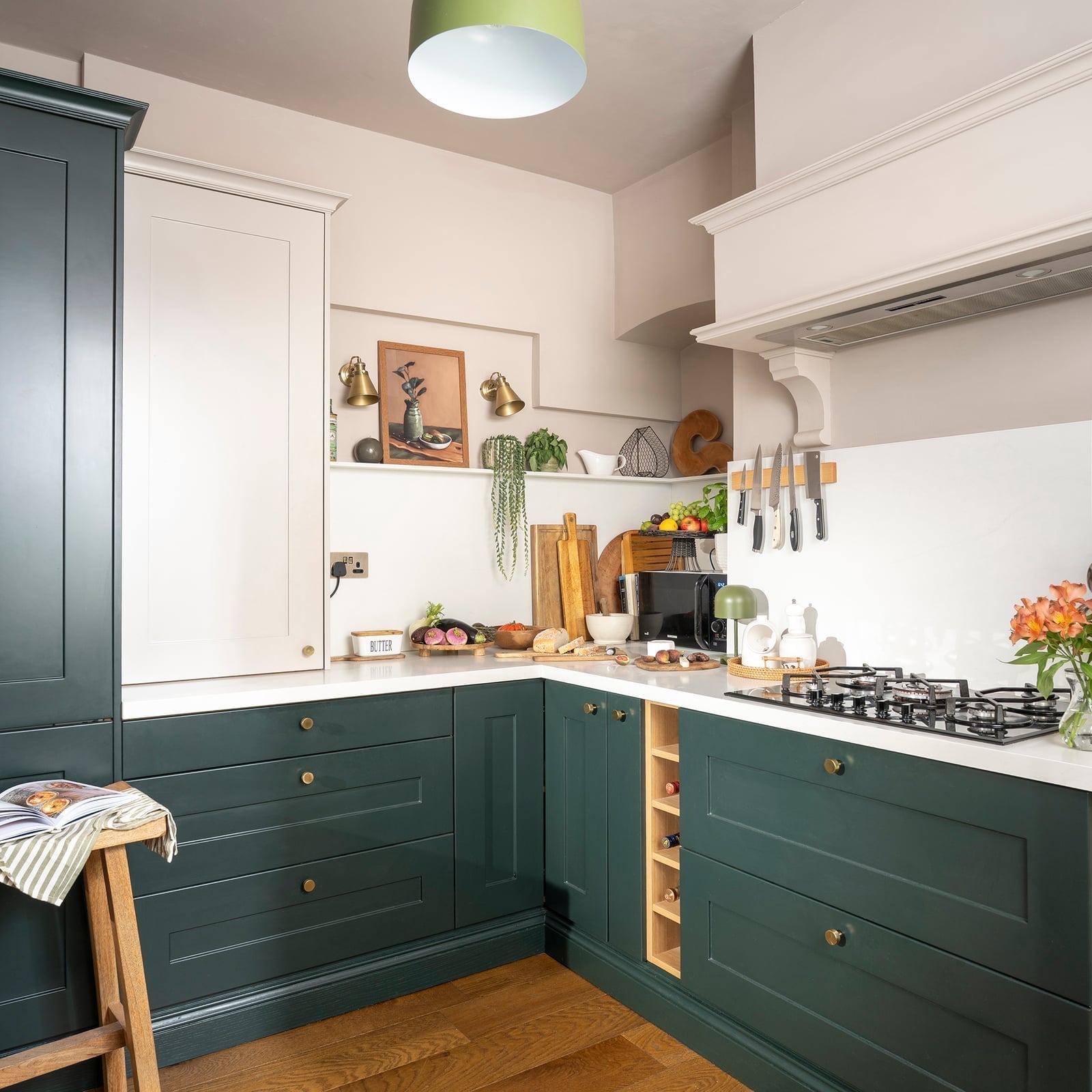
Deep green cabinetry risks feeling heavy in a compact kitchen, but this modern corner layout proves the opposite. The rich paint acts as a neutral backdrop against the beige wall, white countertops, and warm wood open shelving. Brass hardware and a matching green pendant light add just enough gleam to prevent a flat look. A built-in wine rack tucks into the corner, and a wall sconce by the sink makes prep tasks easier.
The palette works because the green is deep enough to hold its own yet quiet enough to let brass, marble, and tile share the stage. The countertop stays white, and the backsplash tile keeps things simple. That ratio, one strong color, one warm metal, one pale surface, is what makes the look feel balanced.
Island with fluted wood base
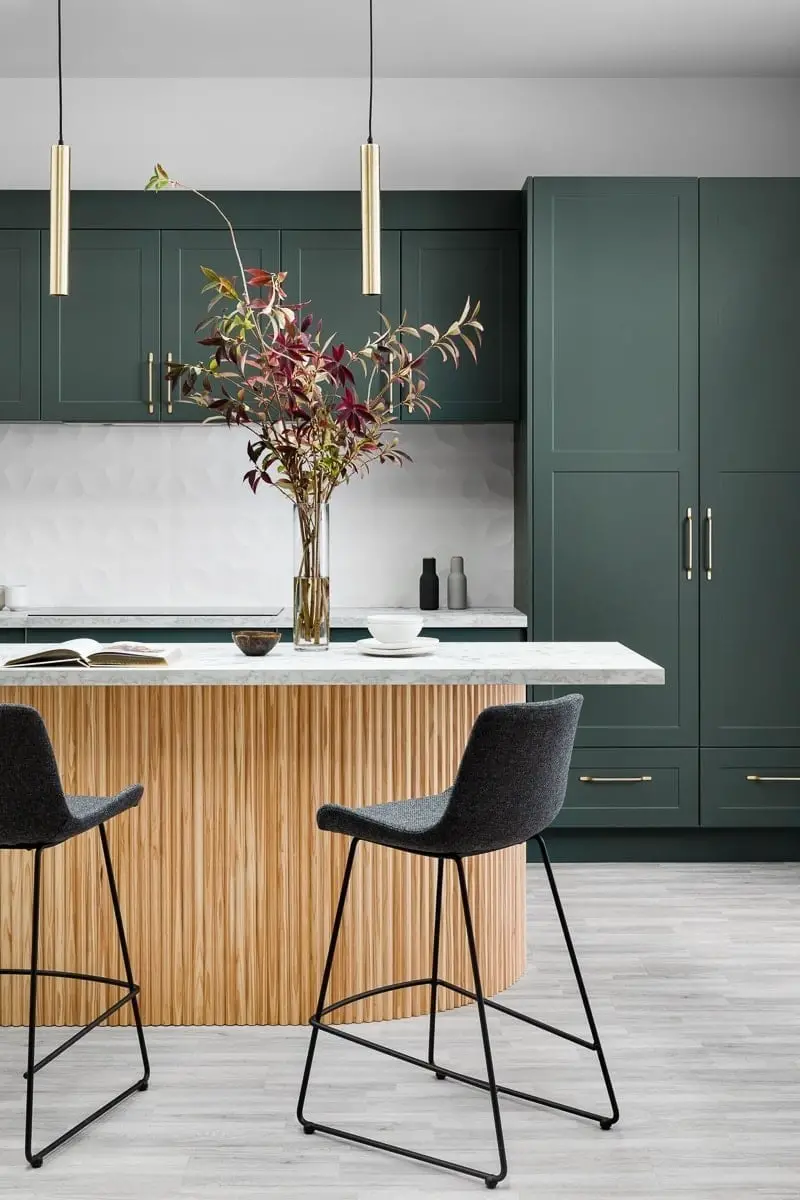
A fluted wood base turns the kitchen island into a sculptural piece rather than just a work surface. The vertical grooves add texture against the dark green cabinetry and the white marble top, and the natural wood tone warms the gray tile floor. Two bar stools tuck under the overhang, and pendant lights hang above to define the zone. The takeaway: a single textured detail on the island is enough to give the whole room a moment of character.
Turquoise cabinets with patterned tile
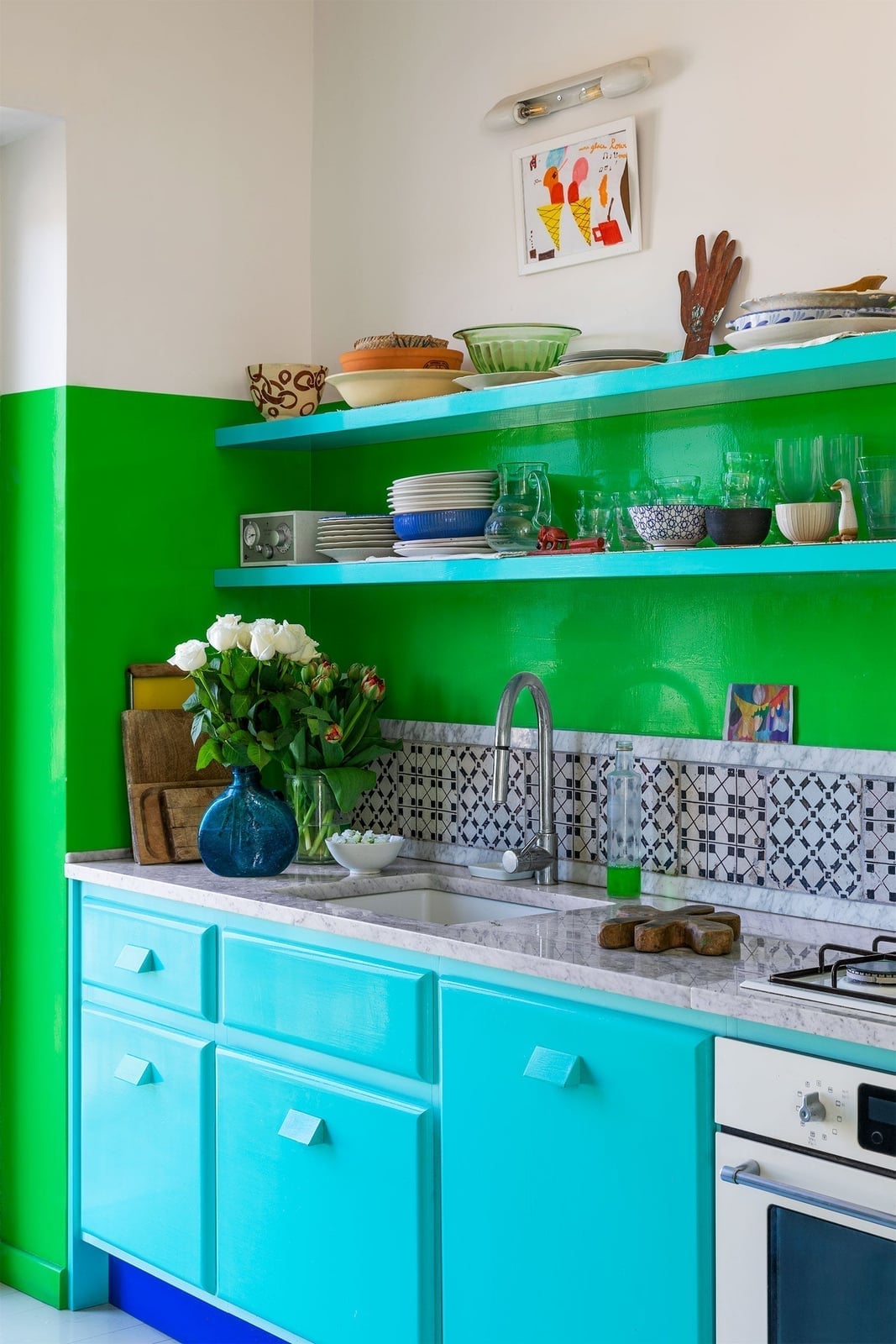
Bright turquoise cabinets can overwhelm a kitchen. This compact eclectic kitchen gets it right: the upper cabinets are turquoise, the lower ones are white, and the backsplash uses a small-scale patterned tile in black, white, and blue that echoes the cabinet color without competing. Open shelves above the sink break up the mass of color, and the marble countertop keeps things calm. The overhead fluorescent light is practical for a corner kitchen, but swapping it for a warmer fixture would soften the space.
Light blue cabinets with marble countertops
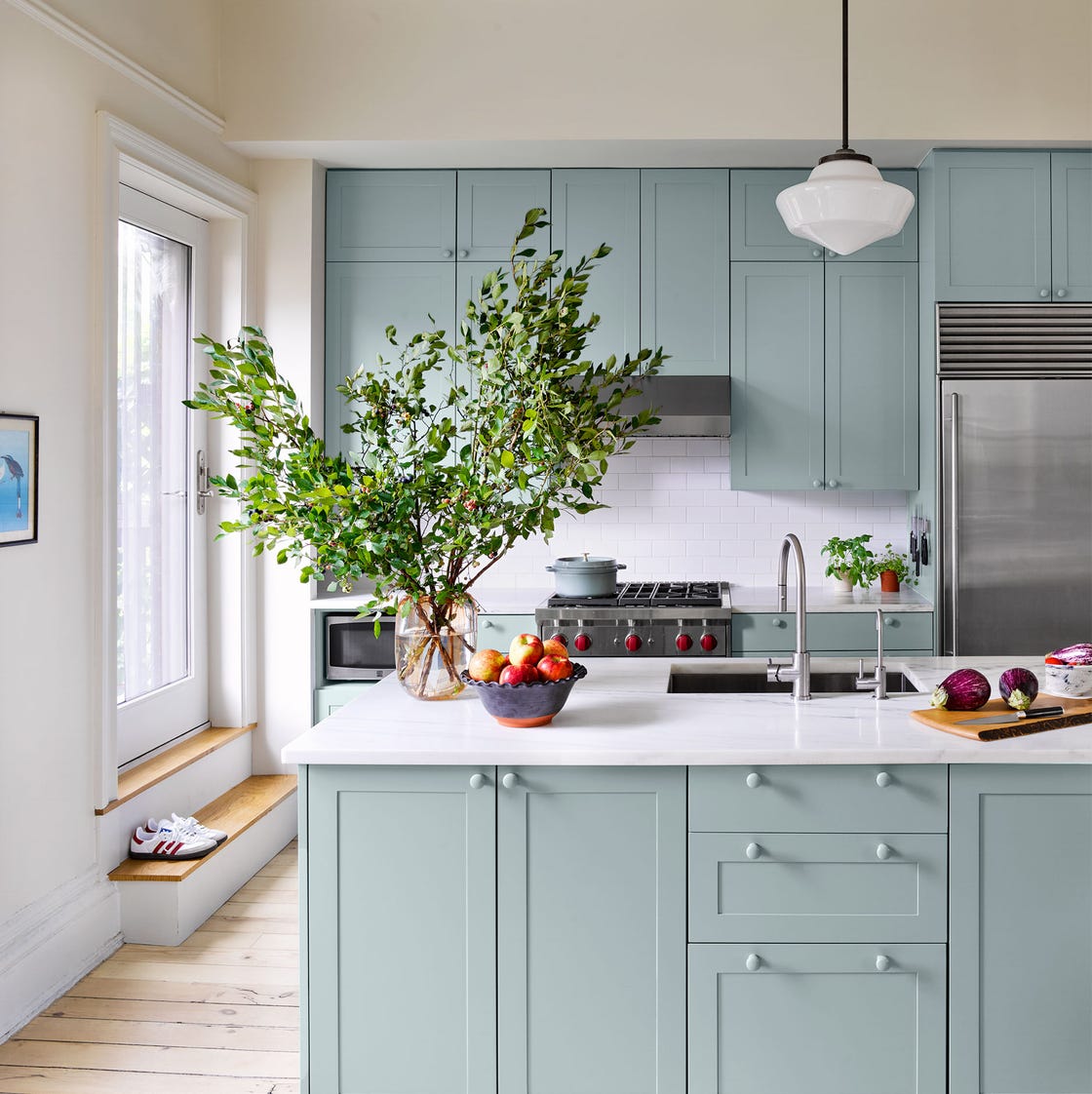
A roomy modern kitchen with light blue cabinetry shows how a pale color can define the whole space without overwhelming it. The perimeter cabinets wrap the room in a soft hue, while the island gets a darker wood tone for contrast. White marble countertops and a white backsplash keep the look airy, and the stainless steel appliances blend into the background. A pendant light over the island and natural light from a window make the blue feel fresh and warm.
The practical rule for storage in a kitchen this size: keep the perimeter cabinets closed and use the island for open storage. The island here has a sink and likely drawers below, which keeps prep tools handy but out of sight. That balance, closed storage on the walls, open access at the center, keeps the room feeling clean without sacrificing function.
Narrow galley kitchen with yellow walls and green, close-up take
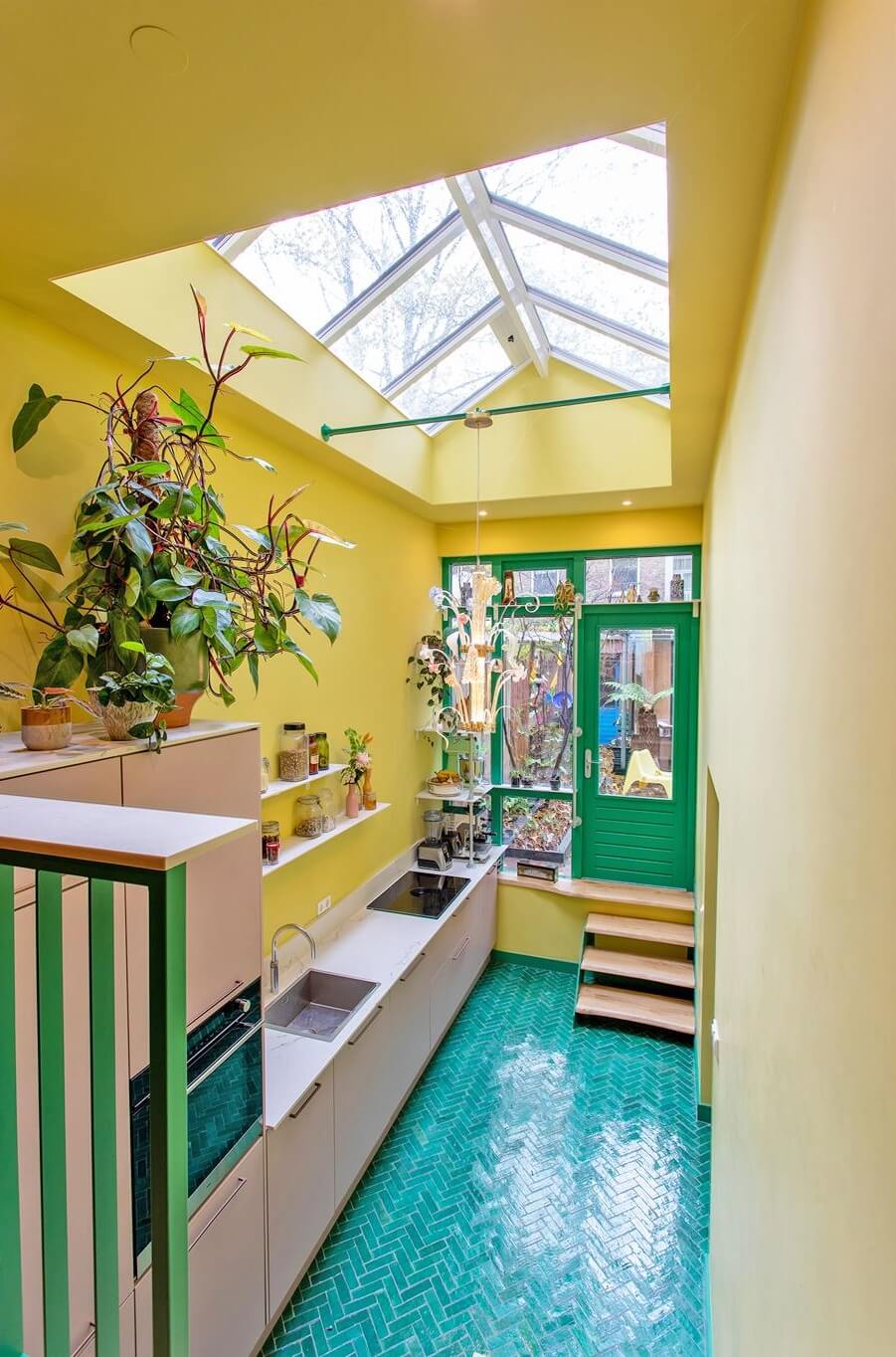
A vibrant green herringbone tiled floor runs the length of this narrow galley kitchen, turning the most walked-on surface into the main event. Yellow walls and beige cabinets keep the vertical planes light, so the floor gets to be the bold one without the room feeling chaotic. Light from a skylight and a green door helps the tile feel fresh and not heavy. The material lesson here is that a patterned floor can carry a room’s color when the walls and cabinets stay simple.
Modern kitchen with sage green cabinets and woven, close-up take
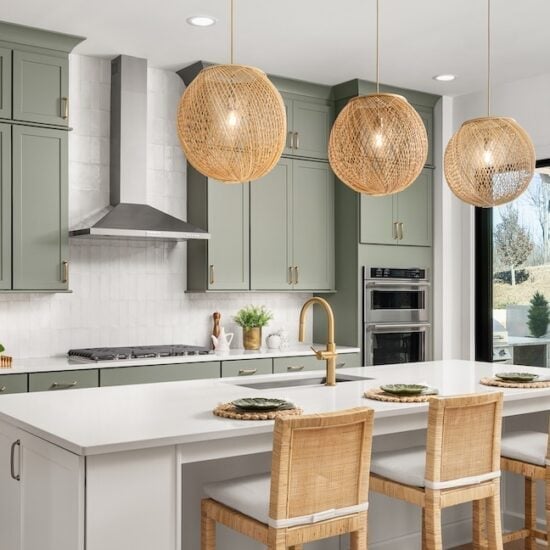
A practical rule for renters who want to change a kitchen’s feel without touching cabinets or counters is to swap the overhead lighting. In this roomy modern kitchen, large woven pendant lights hang above an island with seating, adding warmth and texture against sage green cabinets and white quartz countertops. The natural rattan softens the clean lines of the range hood and double oven, and the pendants draw the eye upward, making the space feel taller. Recessed lights handle the general brightness, so the pendants work as sculptural accents rather than the sole light source.
Teal cart and patterned rug with round dining table
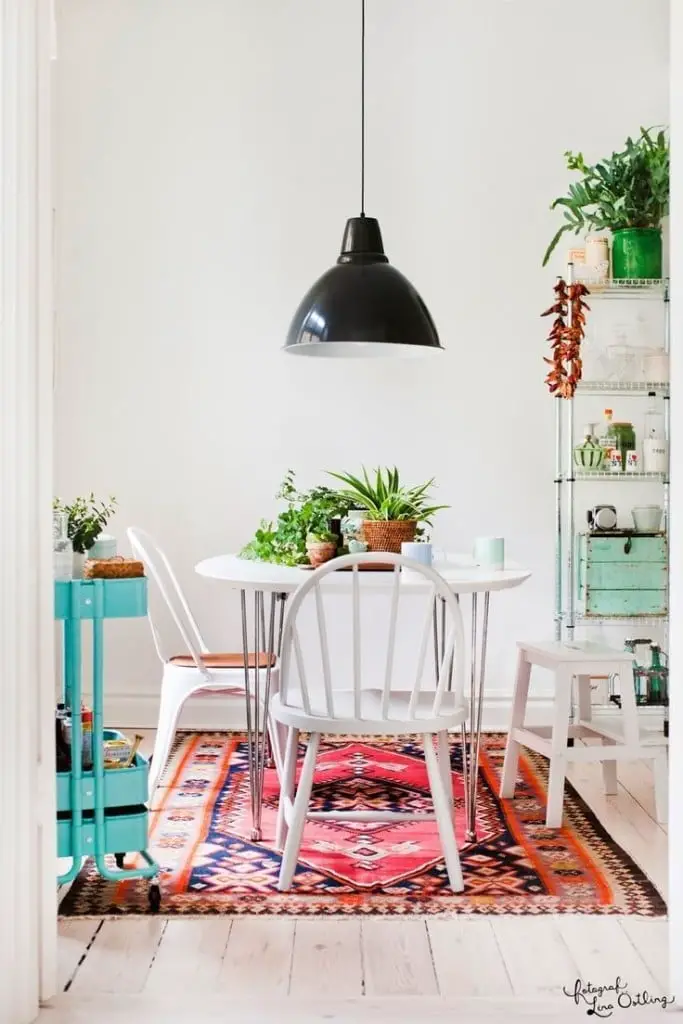
A colorful patterned rug in white, teal, pink, orange, and green sits under a round dining table with white chairs in a compact kitchen dining area. The rug defines the zone clearly, so the table and chairs feel intentional rather than squeezed in. A teal cart and a metal shelving unit stand against the wall nearby, adding more storage and repeating the rug’s teal accent.
The alternative would be to skip the rug and let the dining set float, but the rug pulls the colors from the cart and shelving into one connected moment. A pendant light above the table reinforces the dining area as a separate spot within the kitchen, and the woven basket on the cart adds a natural texture that keeps all those bright colors grounded.
Spacious kitchen with light green cabinets and granite, close-up take
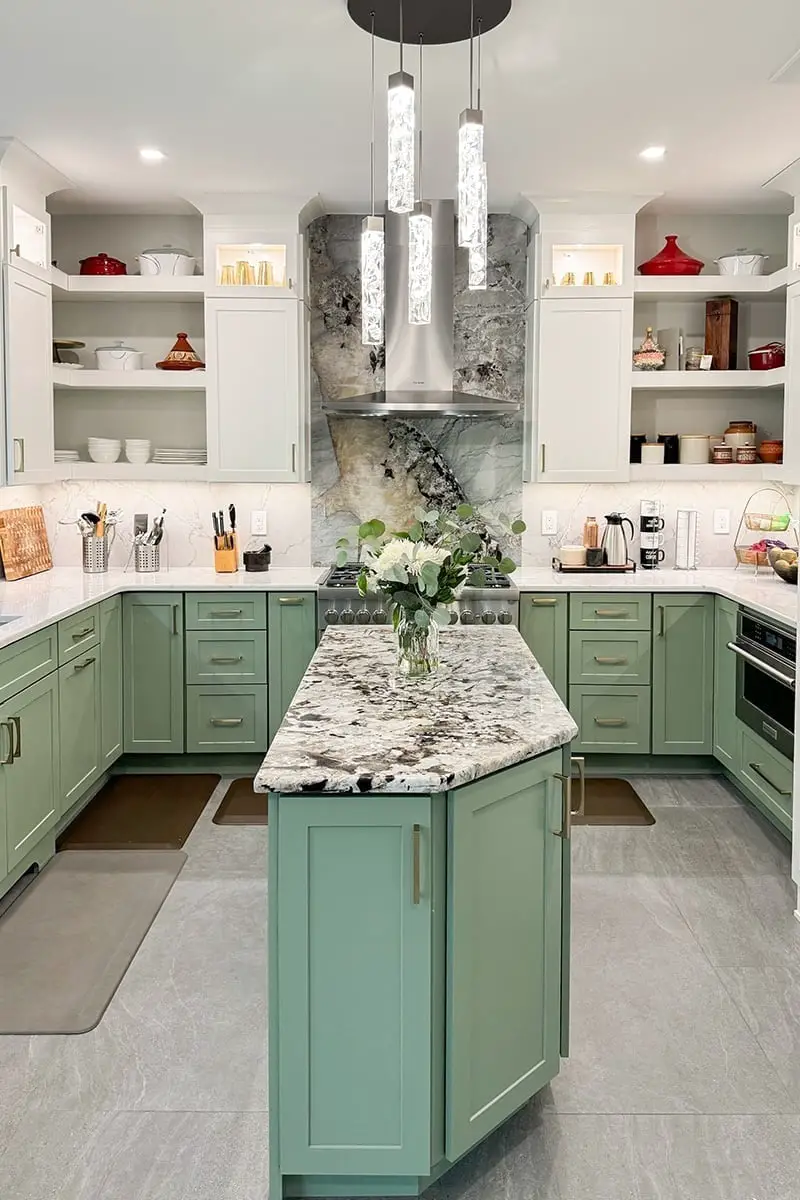
The green cabinetry in this modern kitchen forms a soft wall of color, but the granite-topped island in the center is what gives the room its gravity. The island provides a solid work zone and gathering spot, while the recessed lighting and pendant lights keep the room from feeling cavernous. The white marble countertops on the perimeter balance the darker stone of the island, and the beige tones in the floor and backsplash tie the palette together. The palette works because the green cabinets are the only saturated color, so the gray and black accents stay grounded. A roomy layout needs one anchor piece, and this island handles the job.
Blue cabinets and floral wallpaper with apron sink
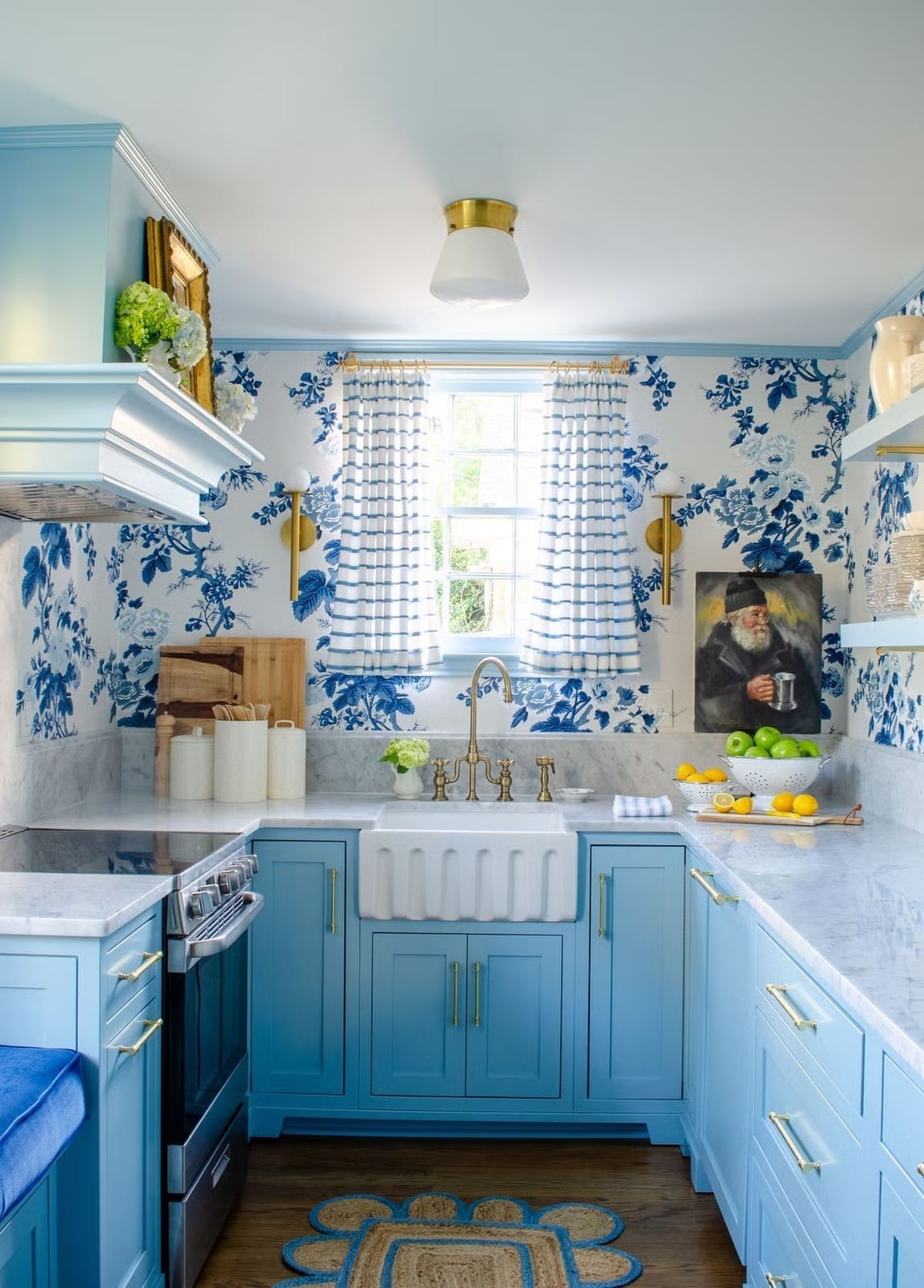
This compact corner kitchen makes a case for floral wallpaper as a structural decision. The blue floral paper wraps the walls above the cabinetry, turning the entire upper plane into a pattern that covers the wall rather than acting as a backsplash. The blue cabinets below anchor the room, while the white marble countertop and apron sink provide a neutral zone between the two patterned areas. Brass hardware and wall sconces add warm metallic notes without clashing with the floral print. The key to making wallpaper work in a small kitchen is to let it own one zone. Here the floral runs the walls, so the cabinets, counter, and range stay quiet. A single pattern at full strength looks intentional rather than cluttered.
Pastel green pink and lavender cabinets
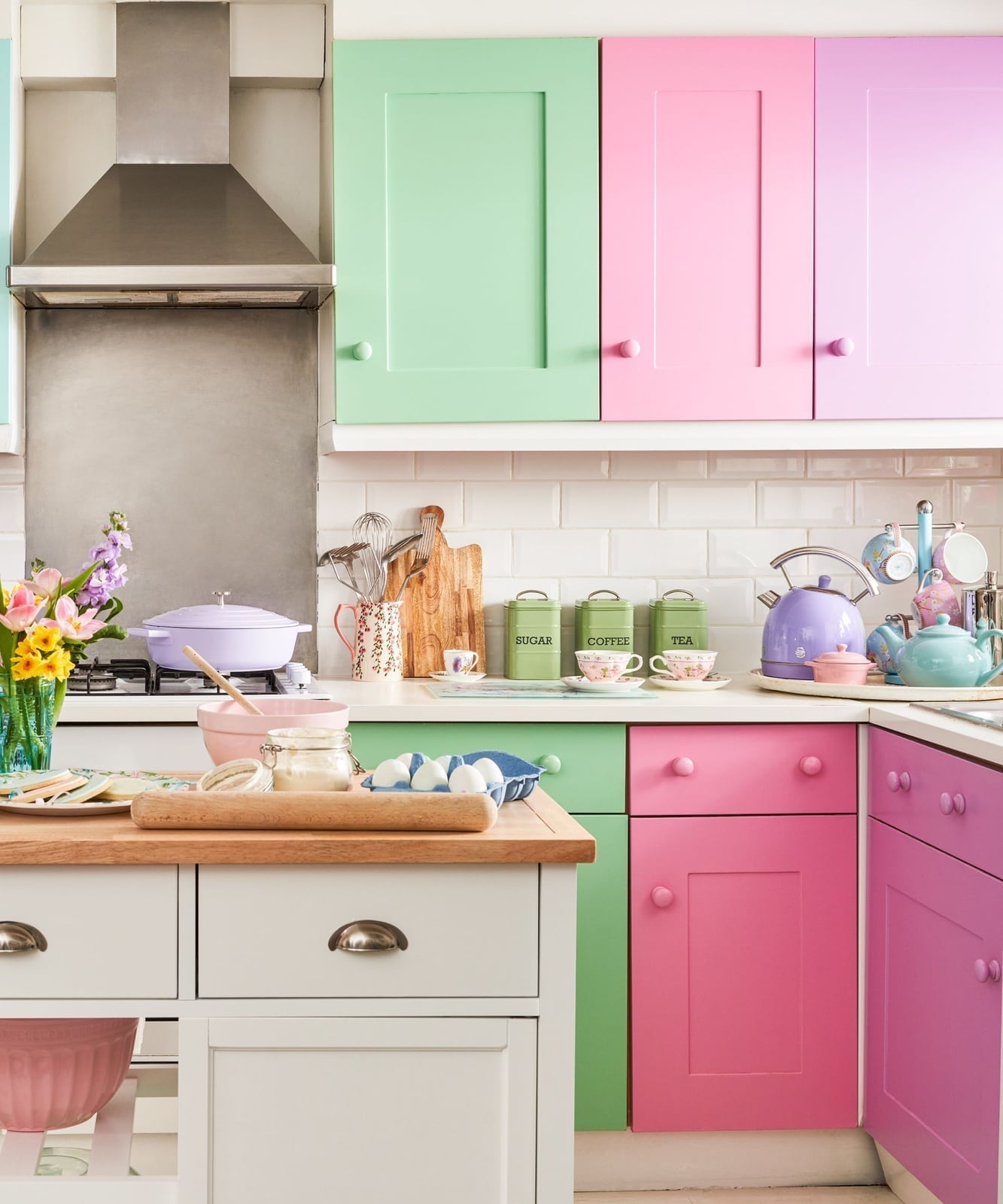
A practical rule for mixing multiple pastels is to keep the undertones consistent. In this compact corner kitchen, the cabinetry shifts from pale green to soft pink to lavender, all with a similar milky finish that stops the collection from feeling chaotic. White counters and a white tile backsplash give the eye a place to rest between each color block. The island picks up the lightest shade, so the layout stays grounded rather than top-heavy. Overhead fixtures and a window add enough daylight to keep pastels from looking washed out. The result is a kitchen that feels playful without requiring every surface to match.
Retro kitchen with pastel pink and mint green cabinets
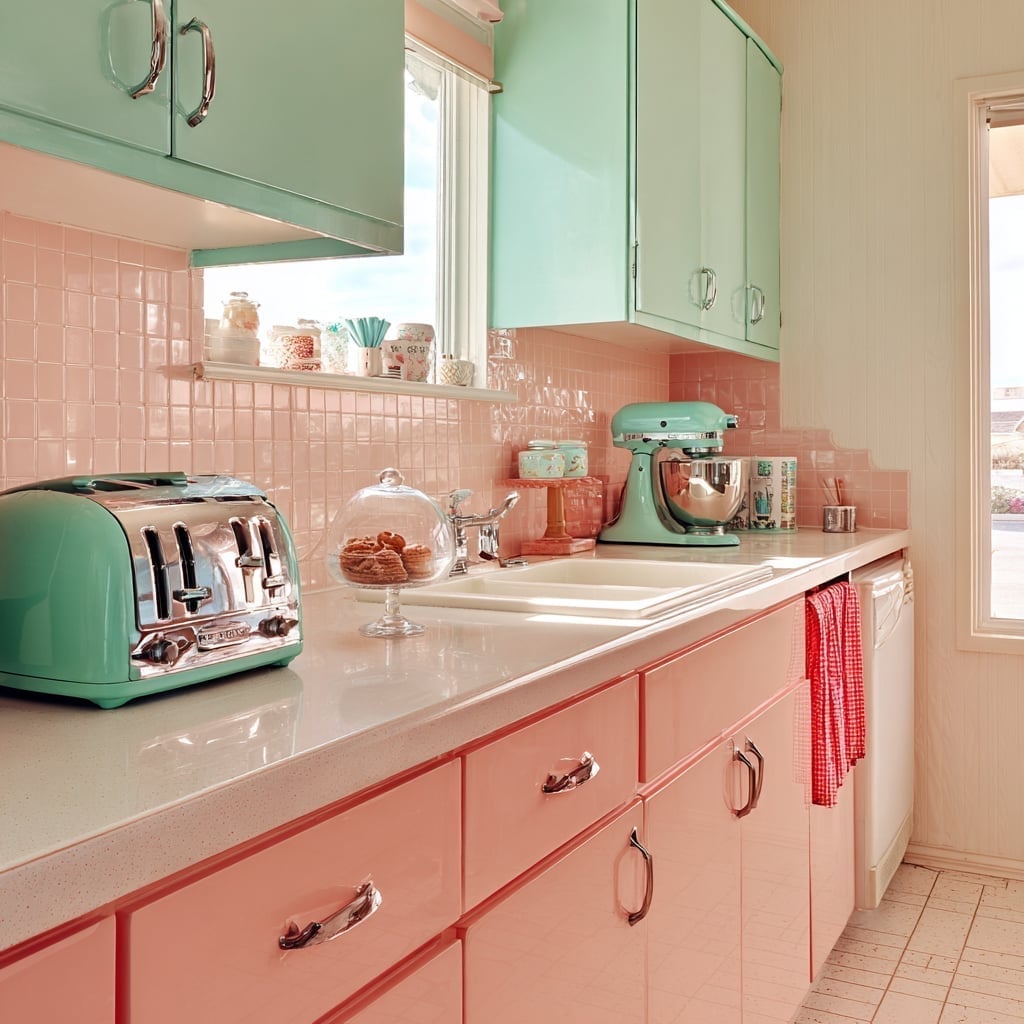
Pastel pink upper cabinets sit above mint green lowers, with a white tile backsplash and chrome accents that reinforce the mid-century feel. A mint green stand mixer and chrome toaster sit on the counter, while a glass cloche adds a vintage touch. Natural light from the window keeps the pink and green from feeling too sweet. The palette defines the room, and the white and chrome break it just enough to keep it from looking a candy shop.
Copper pots above butcher block island
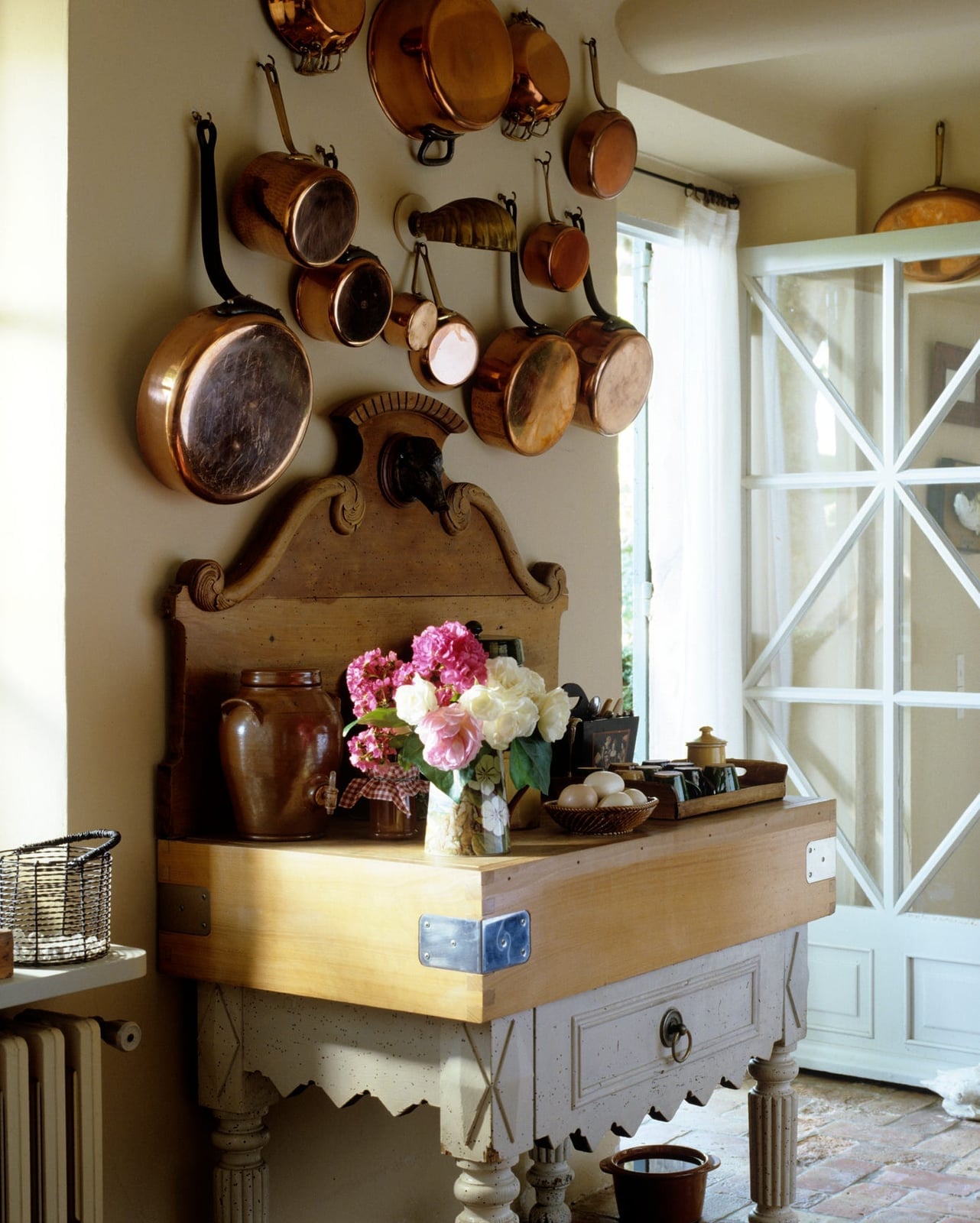
A practical rule for hanging cookware is to keep it within arm’s reach of where you prep. In this farmhouse kitchen, a collection of copper pots hangs on the wall directly above a butcher block island, so each piece is easy to grab without crossing the room. The warm copper tones stand out against the beige wall, while a floral arrangement on the island adds a soft pink and green counterpoint. Natural light from the window catches the metal surfaces and keeps the corner from feeling too heavy. The pots do double duty as storage and decor, freeing up cabinet space below.
Emerald green cabinets with gold tile backsplash
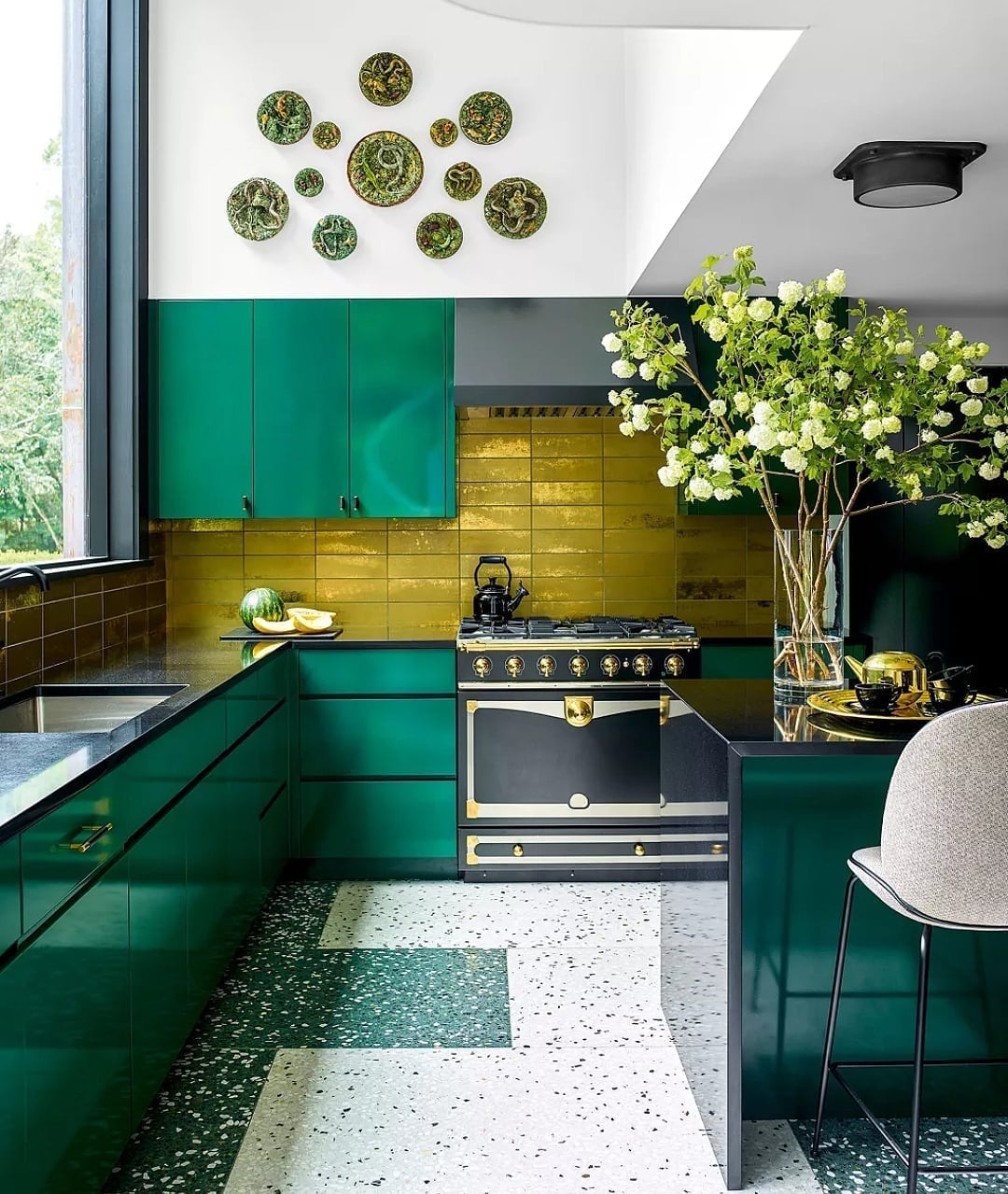
Emerald green cabinets can feel formal or moody depending on what sits next to them. In this open plan kitchen, a gold tile backsplash shifts the feel toward warm and lively. The L-shaped counter wraps around a small island with seating, and the black range and bar stools anchor the bright green and gold. Overhead light plus natural light keep the lacquer finish from looking flat. The palette here is the room: deep green defines the perimeter, gold tile adds texture, and black and gray ground it all. White walls would have made the green feel isolated, but the gold connects it to the space.
Geometric wallpaper and built-in bench
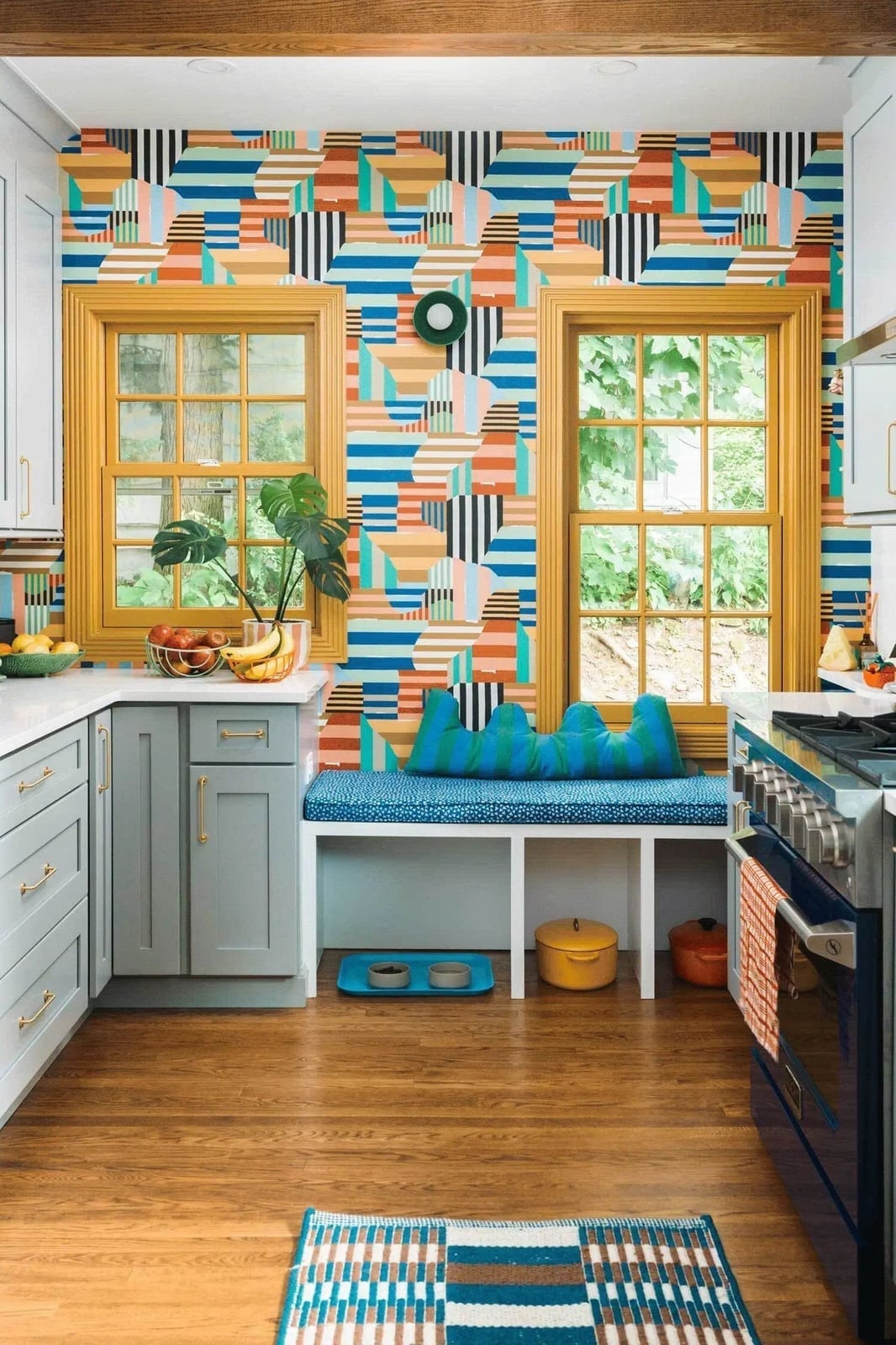
A bold geometric wallpaper in multicolor orange, blue, and teal covers one wall of this compact corner kitchen, while a built-in bench with a patterned rug turns the window area into a seating nook. The wallpaper becomes the room’s anchor, so the rest stays simple: white upper cabinets, a neutral tile floor, and colorful pots on the counter that echo the wall without competing. Natural light from the windows and overhead fixtures keeps the pattern from overwhelming the space. The built-in bench adds storage underneath without taking up extra floor area.
Dark teal walls with gallery wall
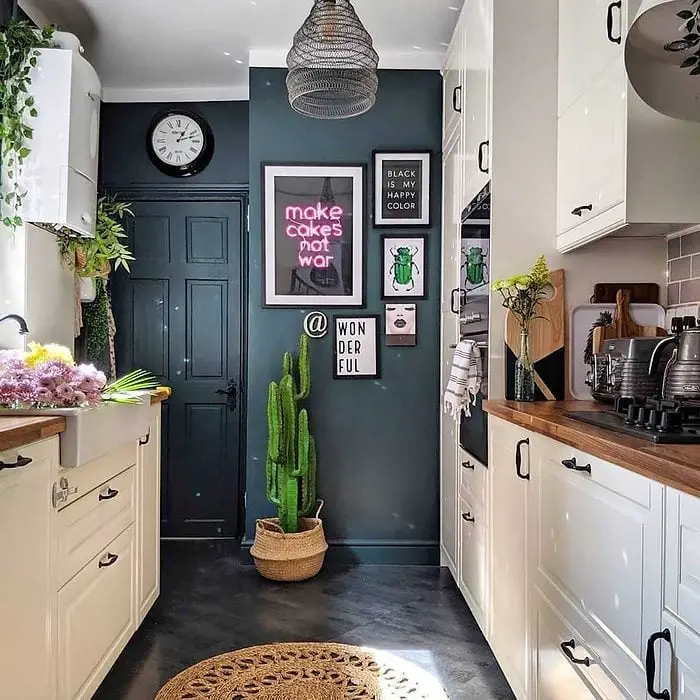
A dark teal galley kitchen proves that deep wall color can anchor a compact space without closing it in, especially when the rest of the decor leans light and personal. The painted walls look a rich backdrop for a gallery wall that mixes a neon sign, framed art, and a large cactus, so the eye moves around instead of stopping at one spot. A farmhouse sink and pendant light keep the room functional, while cream, pink, and green accents in the art and objects prevent the teal from feeling heavy. For a similar effect, balance one saturated wall color with varied wall decor that includes both bright and neutral pieces.
Cozy cottagecore kitchen corner with vintage decor
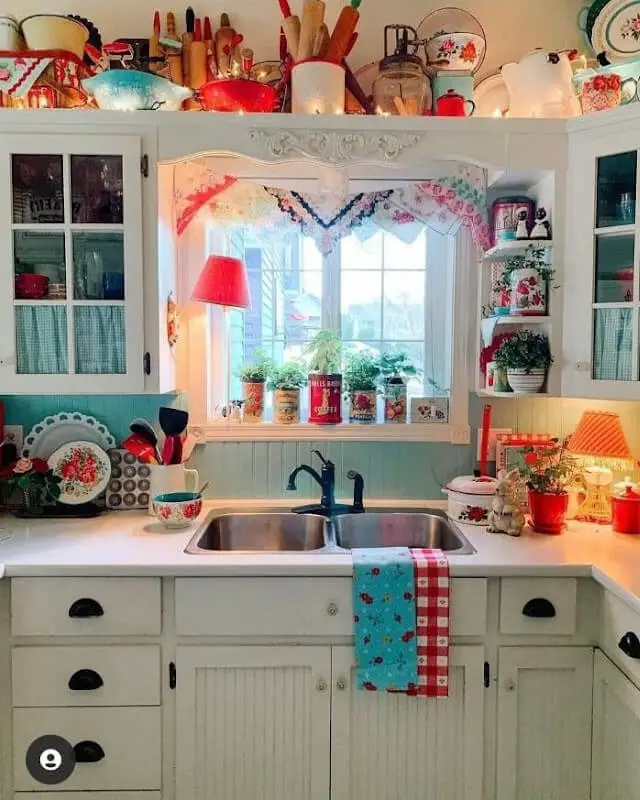
Cottagecore often leans on floral wallpaper or ruffled curtains, but a compact kitchen sink corner can get the same cozy feel through a white cabinet base and a collection of vintage-style items on open shelves. The palette here stays grounded in white, red, blue, green, and teal, so the patterned textiles and ceramic pieces pop without clashing. A double sink and natural light from the window keep the area practical, while lamps add a soft glow that suits the style.
A renter-friendly way to try this look is to swap permanent fixtures for removable shelf decor and textiles. The white cabinets act as a neutral anchor, so you can change out the colored accents whenever you want a new palette without touching the walls or counters.
Colorful subway tile backsplash
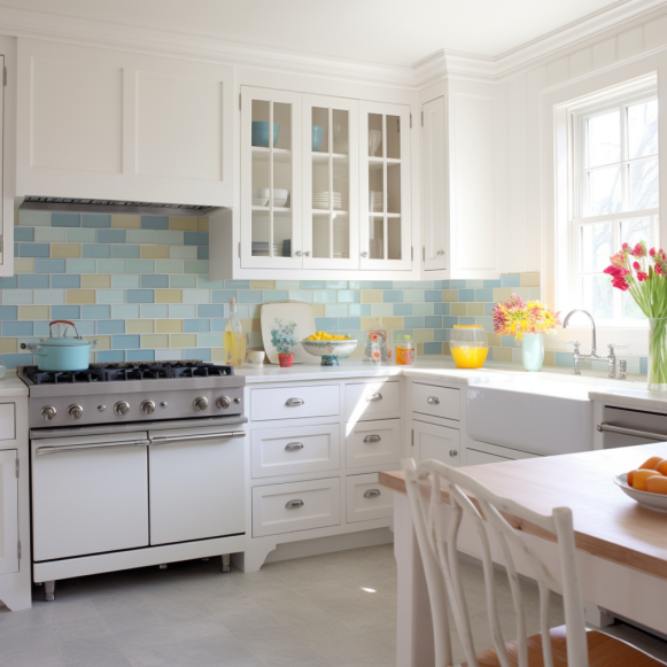
A colorful subway tile backsplash in blue, yellow, green, and pink turns a standard kitchen layout into a focal point without requiring a full renovation. The tiles sit between a range stove and a farmhouse sink, with glass-front cabinets above and a wooden table nearby, so the bright pattern has neutral companions. The window brings in daylight that keeps the colors fresh. The key to making a multicolor backsplash work is to keep the countertops and cabinets simple, letting the tile carry the personality.
Final Thoughts
The takeaway from these 28 kitchens is that color works best when it has a clear partner. A bright cabinet needs a neutral countertop. A busy tile needs a calm wall. A bold floor needs simple cabinets above. The balance is what keeps the room from feeling chaotic. If you’re planning an update, pick one element to lead, cabinets, backsplash, or floor, and let everything else support it. That one rule will save you from second-guessing. And if you’re renting, peel-and-stick tile or a colorful rug can give you the same effect without a permanent change. Check your climate before adding plants near a window, and test paint samples in morning and afternoon light before committing.