Store-bought baubles are fine, but homemade ornaments carry a different kind of charm. This collection of 20 DIY Christmas ornaments proves that a little time and creativity can turn simple materials into holiday keepsakes you’ll look forward to hanging year after year.
From delicate dried flowers to rustic wood slices, each idea offers a fresh way to personalize your tree without a trip to the mall.
Delicate Dried Flowers Inside Clear Glass Ornaments
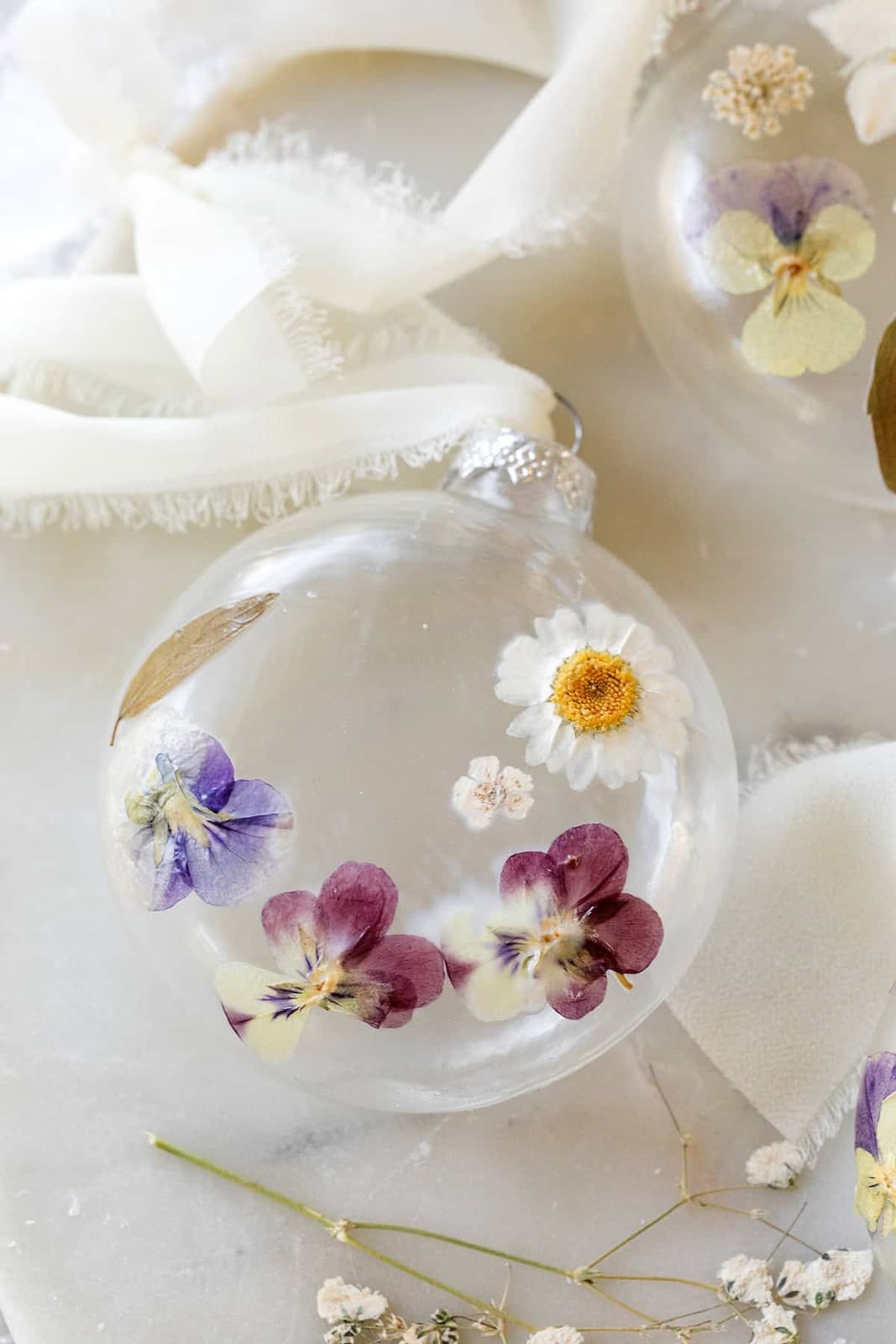
A clear glass ornament with dried flowers inside reads as both natural and elegant. The round glass shape shows off pink, purple and white petals suspended inside, held by a simple ribbon at the top. Soft, bright tree lights catch the glass and make the flowers glow. This is style mode: the hero element is the ornament itself, and the background stays simple so nothing competes with that delicate interior. The ratio of clear glass to flower is about two thirds open space, which keeps it from looking crowded. A busy tree background or heavy ribbon that hides the view can spoil the effect.
Hexagon Resin Ornaments with Pressed Flowers
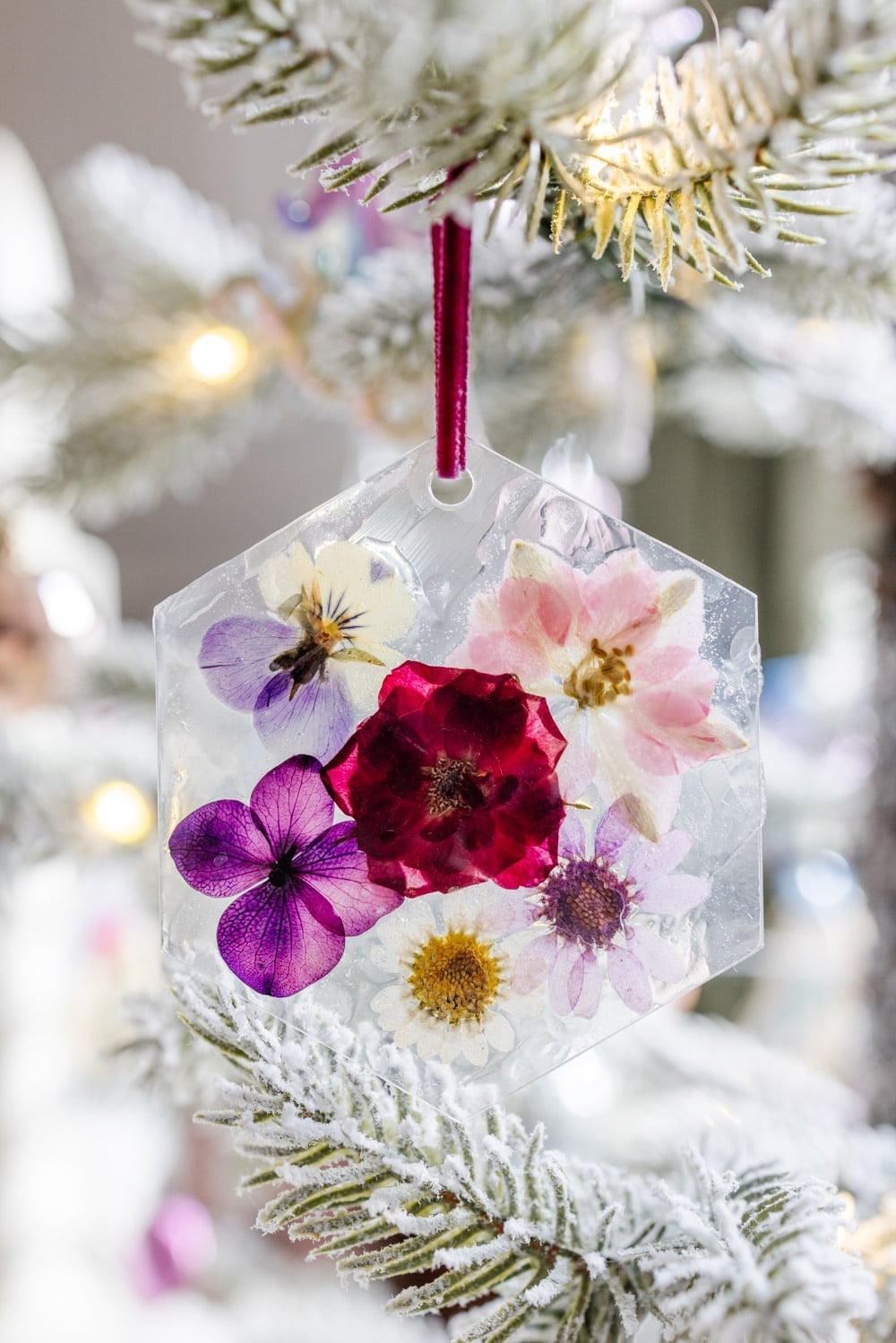
The hexagon shape gives these resin ornaments with pressed flowers a clean, modern edge. The palette is clear resin with pink, purple, red and white flowers inside, read against warm fairy lights on the tree. The ratio of resin to flower is about three quarters clear, so the pressed blooms float rather than crowd. A warm-toned tree base that washes out the cool resin can be avoided by choosing a cooler tree or background. The hexagon defines the look, and the simple ribbon hanger keeps the focus on the geometry. The flowers stay visible from every angle, so the ornament works best hung at eye level where the facets reflect light.
Rustic Dried Orange Slice and Cinnamon Stick Ornaments
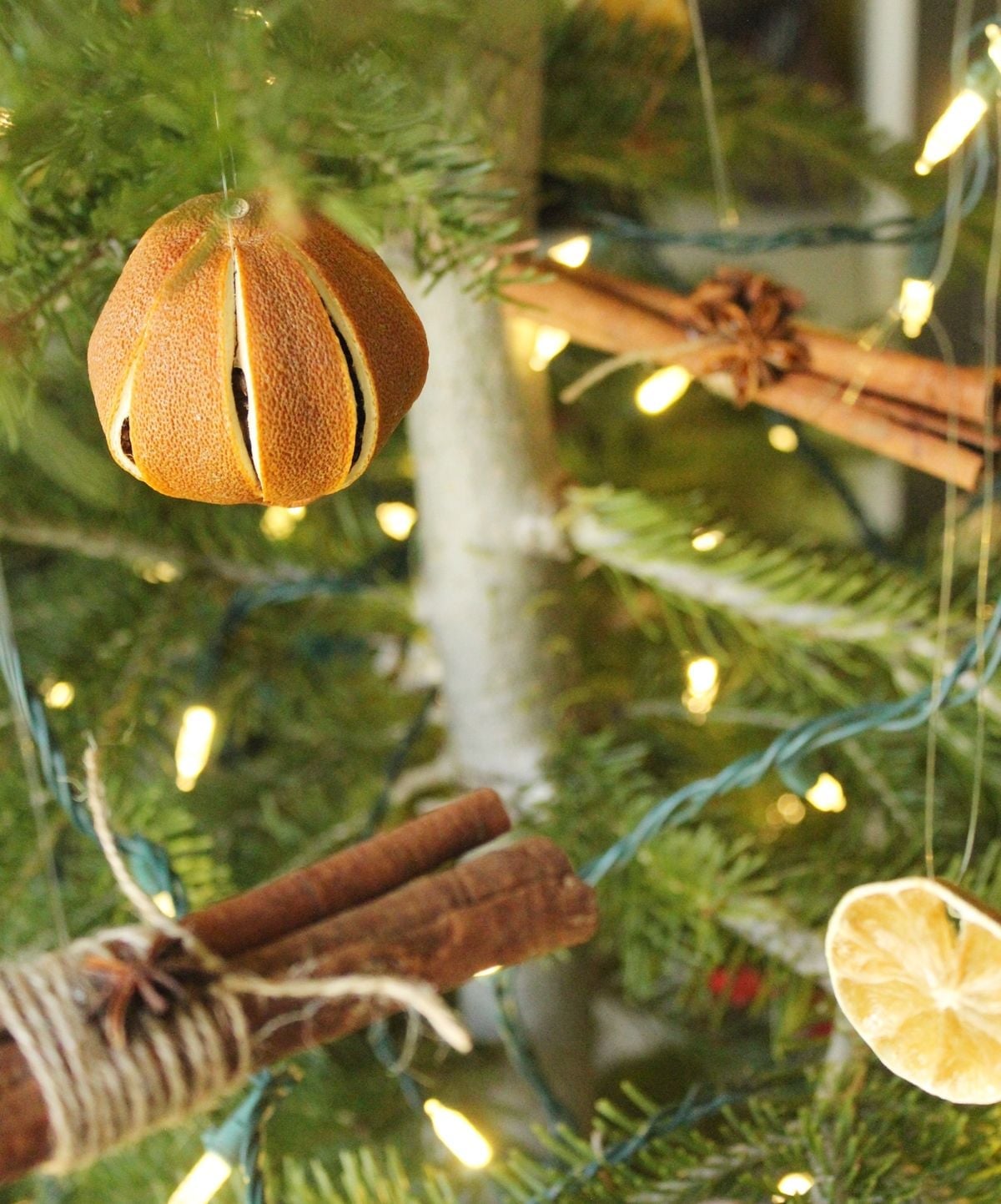
How do you get a natural Christmas look without spending a lot on decor? Dried orange slice ornaments paired with cinnamon sticks and greenery deliver that rustic feel with materials you likely have on hand. The palette is orange, brown and green, with twine tying it all together. Ambient string lights warm up the dried citrus and make the cinnamon stick bundles cast a soft shadow on the tree. The hero element is the orange slice, and the room around it keeps a simple, farmhouse feel. The ratio of organic material to twine is about four to one, so the natural shapes stay dominant. Adding anything glossy or metallic nearby disrupts the look.
Miniature Yarn-Wrapped Wreath Ornaments
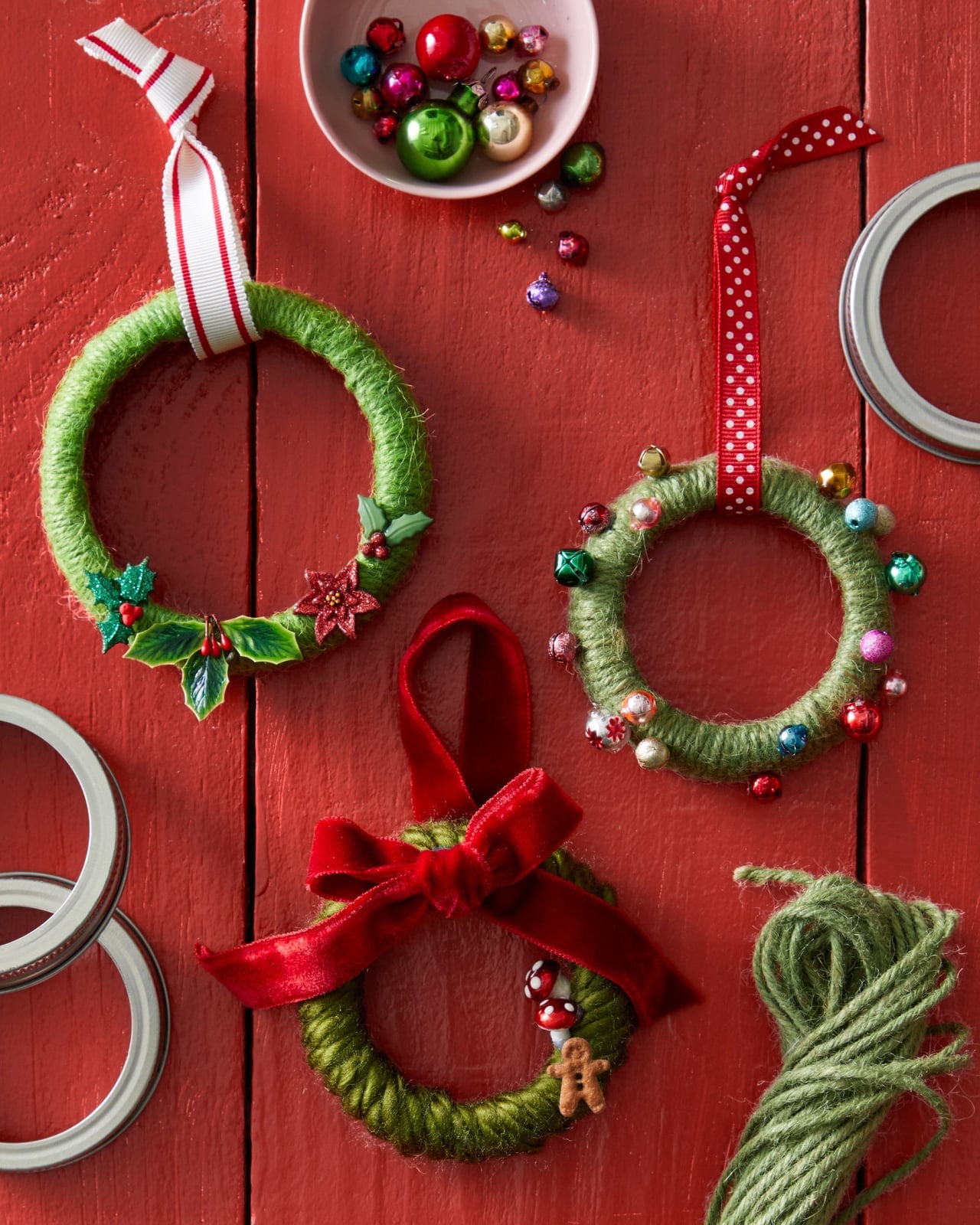
A miniature yarn-wrapped wreath ornament uses about two feet of yarn per inch of wreath form. The palette is green yarn with red and white accents, plus a tiny felt gingerbread man as the centerpiece. Bright, even light shows the texture of the wrapped yarn and the matte finish of the felt. The wreath is the hero element, and the flat lay arrangement keeps the focus on the craft detail. The ratio of yarn to wreath base is about one to one, so the wrapping is dense but not bulky. Uneven wrapping that leaves gaps in the yarn or a ribbon that overpowers the small scale can ruin the look.
Whimsical Diorama Ornaments with Winter Scenes
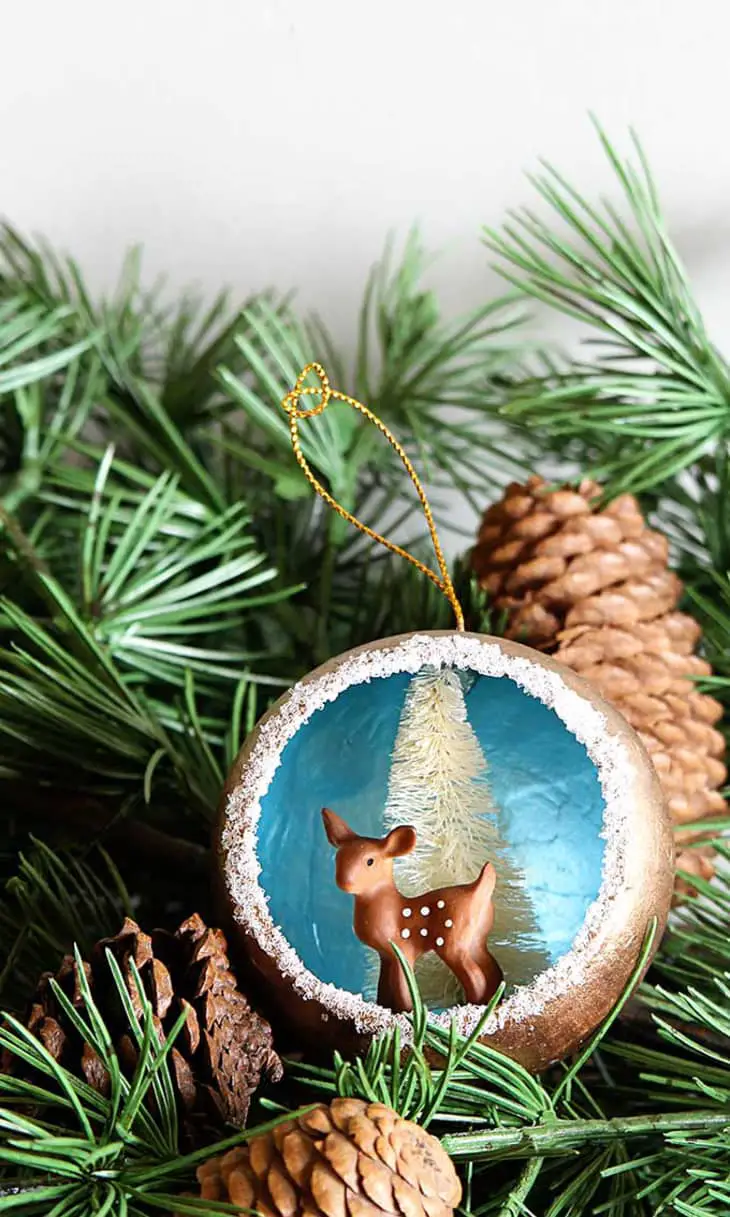
Store diorama ornaments with winter scenes in individual compartments or padded sections to keep the miniature pieces from shifting. The palette is blue, brown, green and gold, with a tiny deer and tree inside a glass ornament. Soft, ambient light lets the scene read as a tiny world rather than a collection of parts. The ornament is the hero element, and the room around it stays dark to make the scene pop. The ratio of scene to empty space is about half and half, which gives the eye room to explore. A tree with strong colored lights can compete with the gold accents inside the ornament.
Modern Abstract Painted Glass Baubles
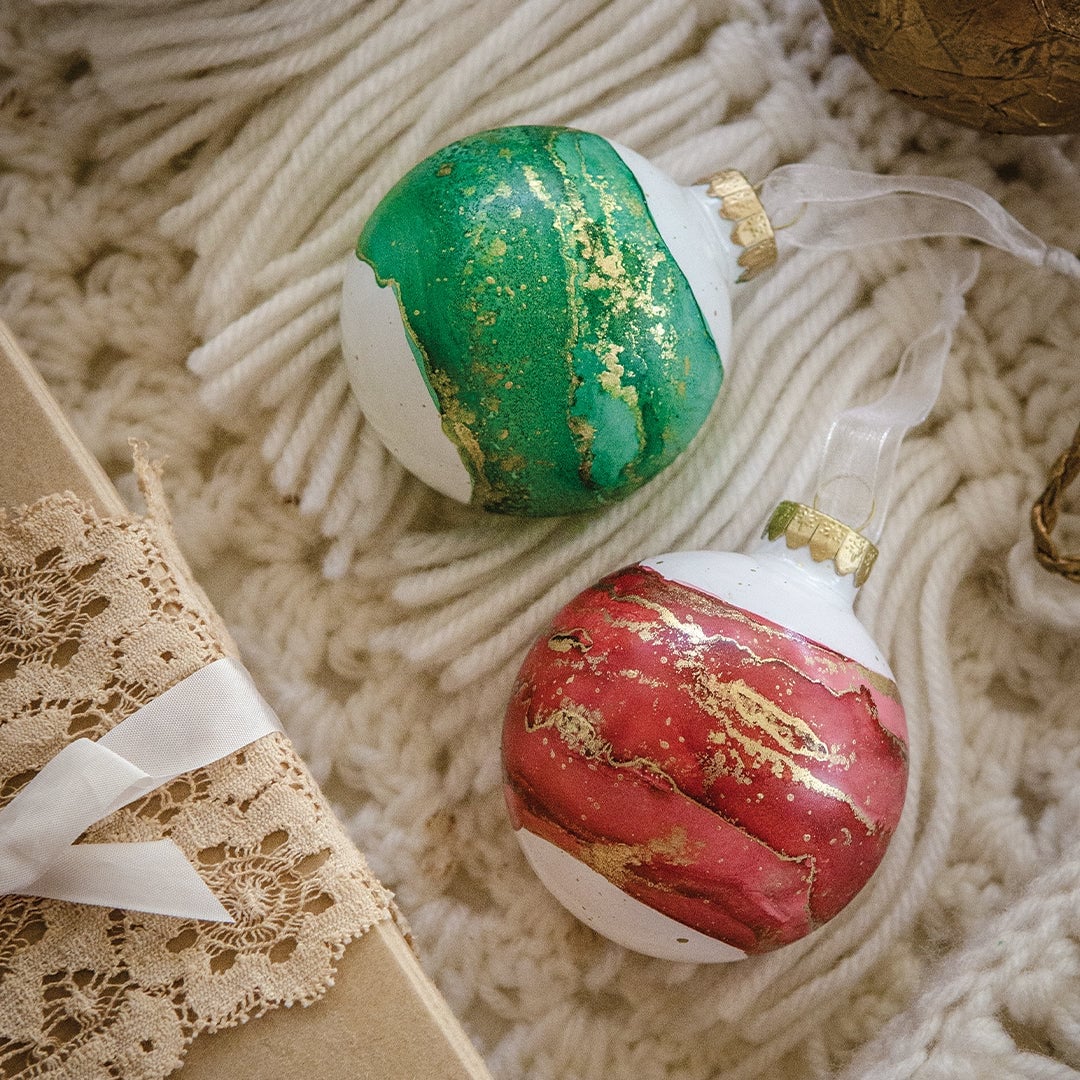
Store-bought glass baubles can feel impersonal, but a set of abstract painted ones brings back the handmade touch without looking like a school project. The palette here mixes white, green, red, and gold across the ornaments, with some baubles painted in loose, modern patterns and others left plain to balance the look. A few ornaments get wrapped in yarn or lace for extra texture, while the rest stay smooth and glossy. The ratio of painted to plain matters: aim for about one decorated bauble for every two solids. Overcrowding disrupts the arrangement, so space them out on the tree or group them in a shallow bowl where the soft natural light catches the paint strokes.
Handmade Felt Snowman Ornaments
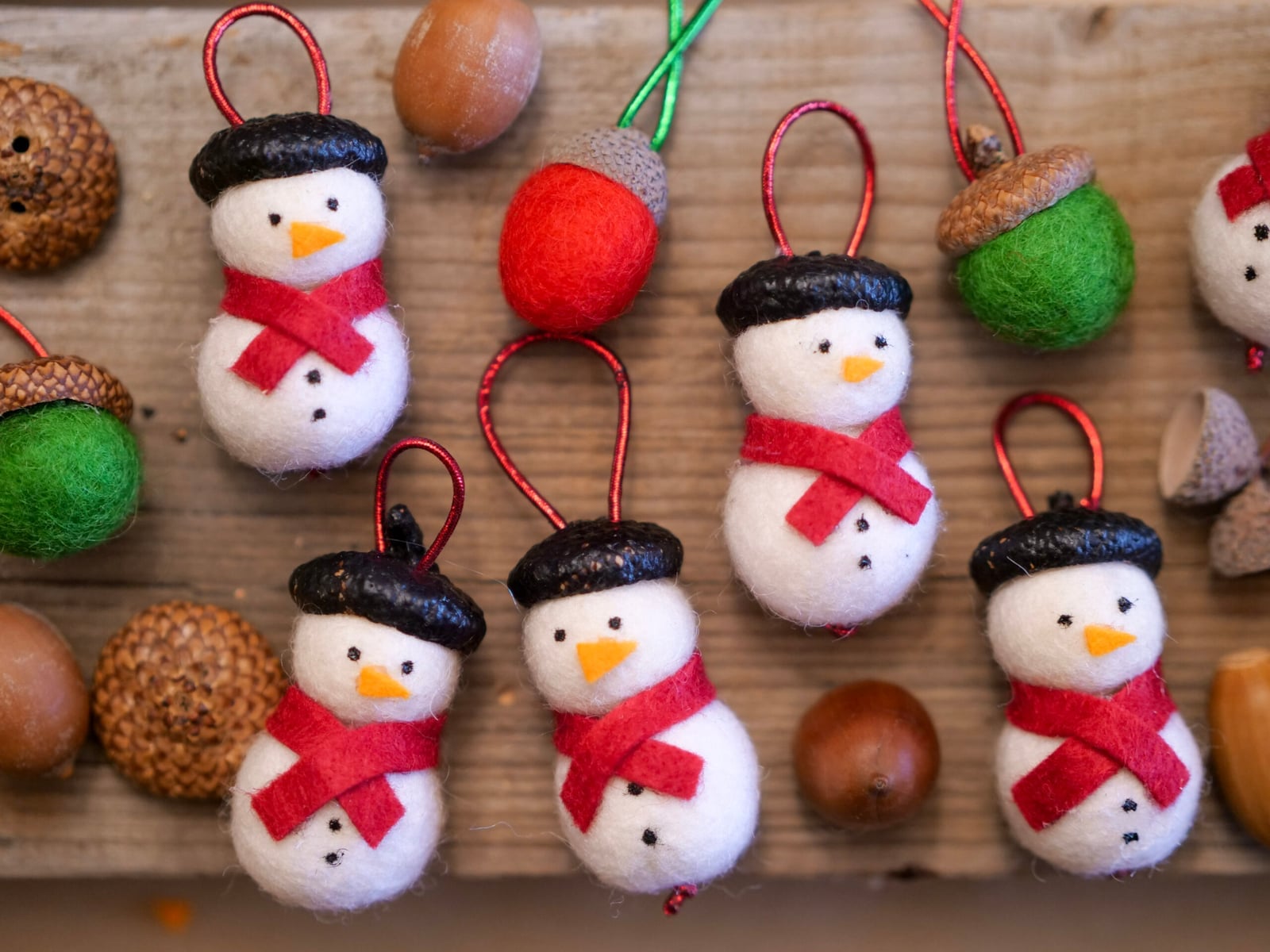
A row of felt snowman ornaments lined up on a flat surface shows how consistent sizing creates a tidy, intentional display. Each snowman uses white felt for the body, with red, black, and brown accents for the scarf, eyes, and stick arms. A few acorn caps sit nearby as natural toppers or extra embellishments. The materials, felt, wood, and yarn, are all renter-friendly since nothing requires drilling, gluing to walls, or permanent hardware. These ornaments hang from ribbon or twine and pack away flat at the end of the season.
Minimalist Kraft Paper Honeycomb Ornaments
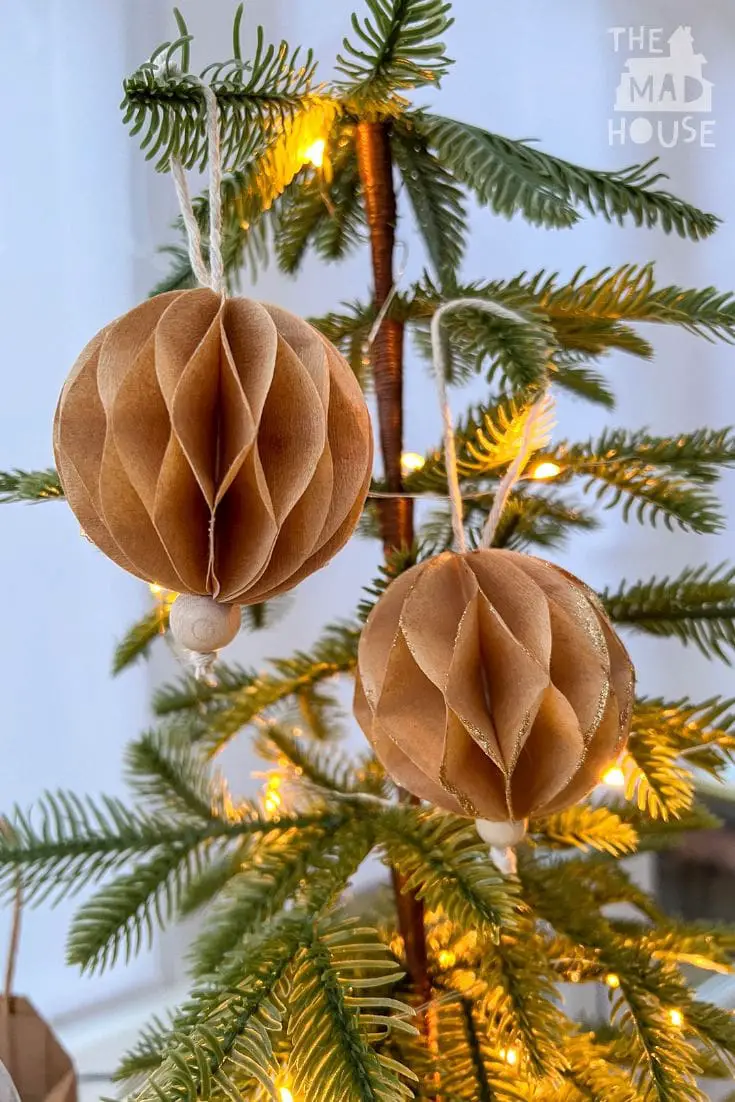
Honeycomb paper ornaments in kraft brown, gold, and white offer a clean, understated look that works on any tree style. The paper expands into a rounded honeycomb shape when you open it, then folds flat for storage. A wood bead or small dowel at the center adds a subtle natural touch. The minimalist palette prevents visual clutter, so these ornaments suit a modern or Scandinavian-inspired setup. Avoid mixing them with overly shiny or glitter-heavy decorations, since the matte paper reads best against soft ambient light and simple greenery.
Rustic Popsicle Stick Sled Ornaments
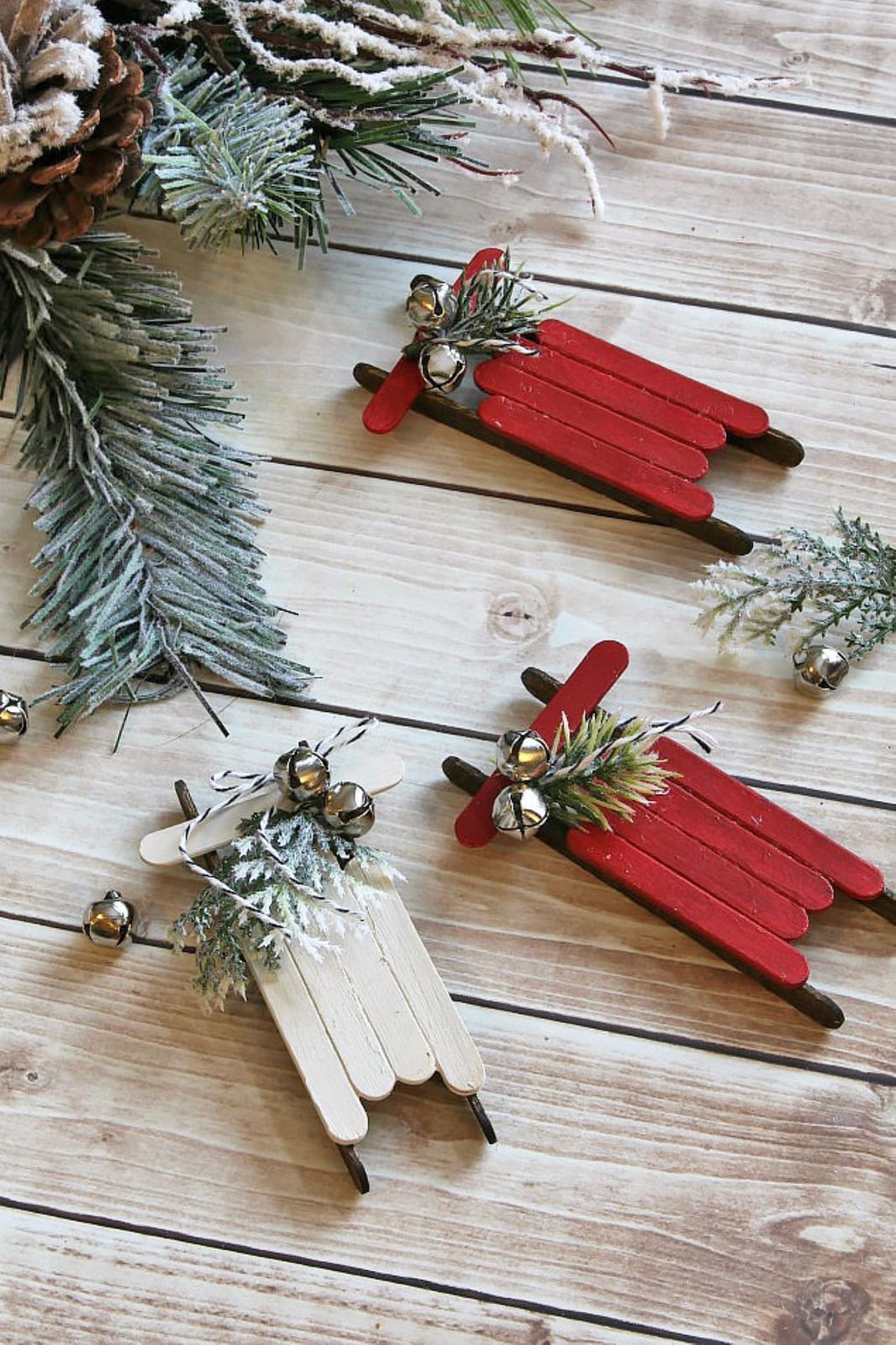
Can a craft stick ornament really hold up year after year? Yes, if you reinforce the joints and use a sturdy ribbon hanger. These miniature painted sleds come in red, white, and silver, with small bells and faux greenery tucked into the seat area. The flat lay arrangement shows how the wood grain and metal accents give each sled a handmade feel that still looks polished. The key to durability is letting the paint cure fully before adding the hanger, and storing them in a padded container so the bells and greenery don’t get crushed. A line of these sleds along a mantel or hung from a low branch keeps the rustic theme going without looking cluttered.
Natural Wood Slice and Pine Cone Ornaments
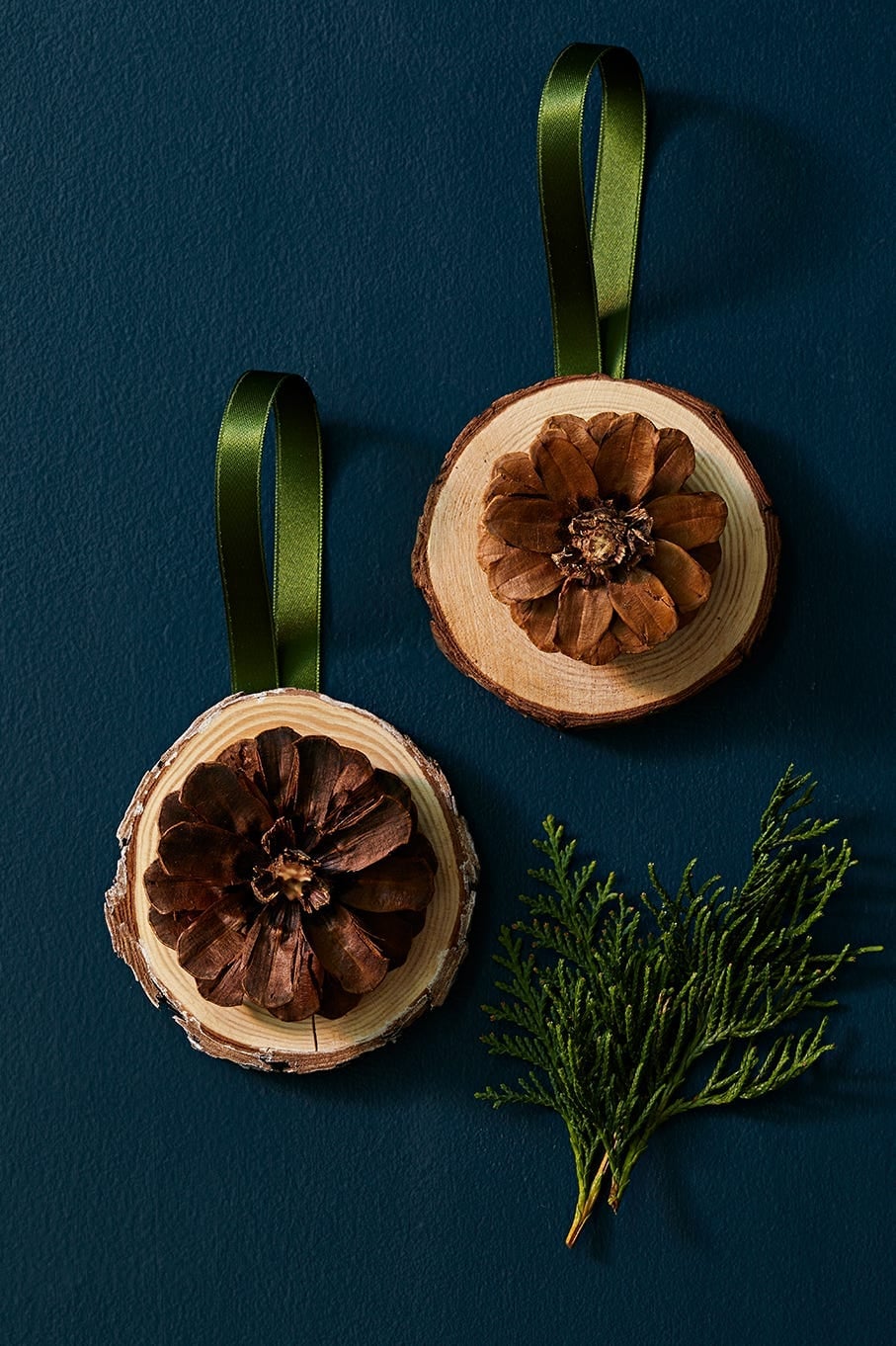
A wood slice paired with a pine cone and tied with ribbon creates an ornament that is almost entirely from natural materials. The brown, green, and wood-tone palette blends into a rustic tree without competing with the lights or other decorations. These ornaments tend to be heavier than paper or felt versions, so use a sturdy branch or a strong hook. The ribbon adds a soft contrast to the rough bark of the pine cone and the smooth cut of the wood slice.
Glittered Acorn Ornaments with Ribbon Bows
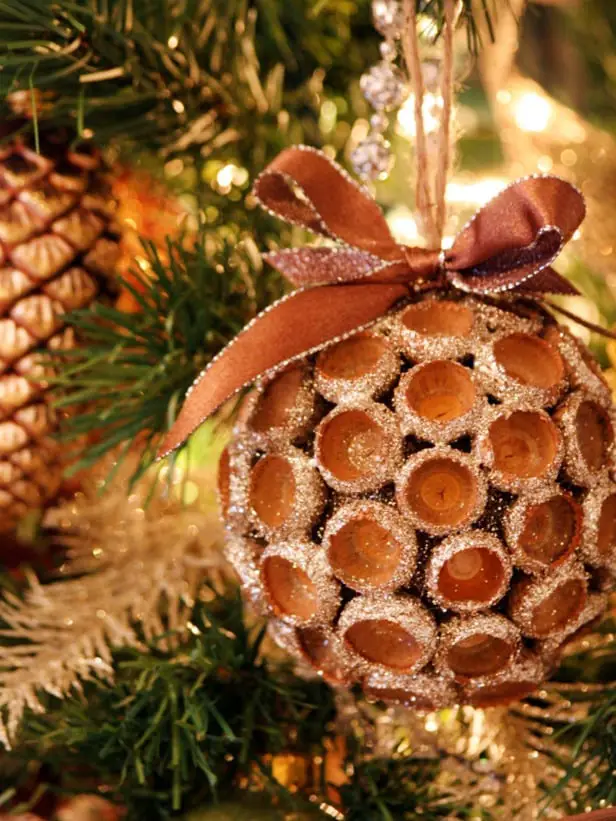
A natural acorn keeps its shape best when you apply a thin layer of craft glue before rolling it in fine glitter. The brown shell peeks through the gold sparkle, so the ornament still reads as something from the yard rather than a factory bin. A small ribbon bow tied at the stem adds a soft texture against the gritty finish, and a few pine needles tucked behind the bow reinforce the woodland feel. This style works well on a tree with warm string lights, because the amber glow catches the glitter without washing out the acorn’s natural silhouette. The palette stays grounded in brown and gold, with green needles providing a subtle contrast.
Embossed Green Baubles and Deer Silhouette Ornaments
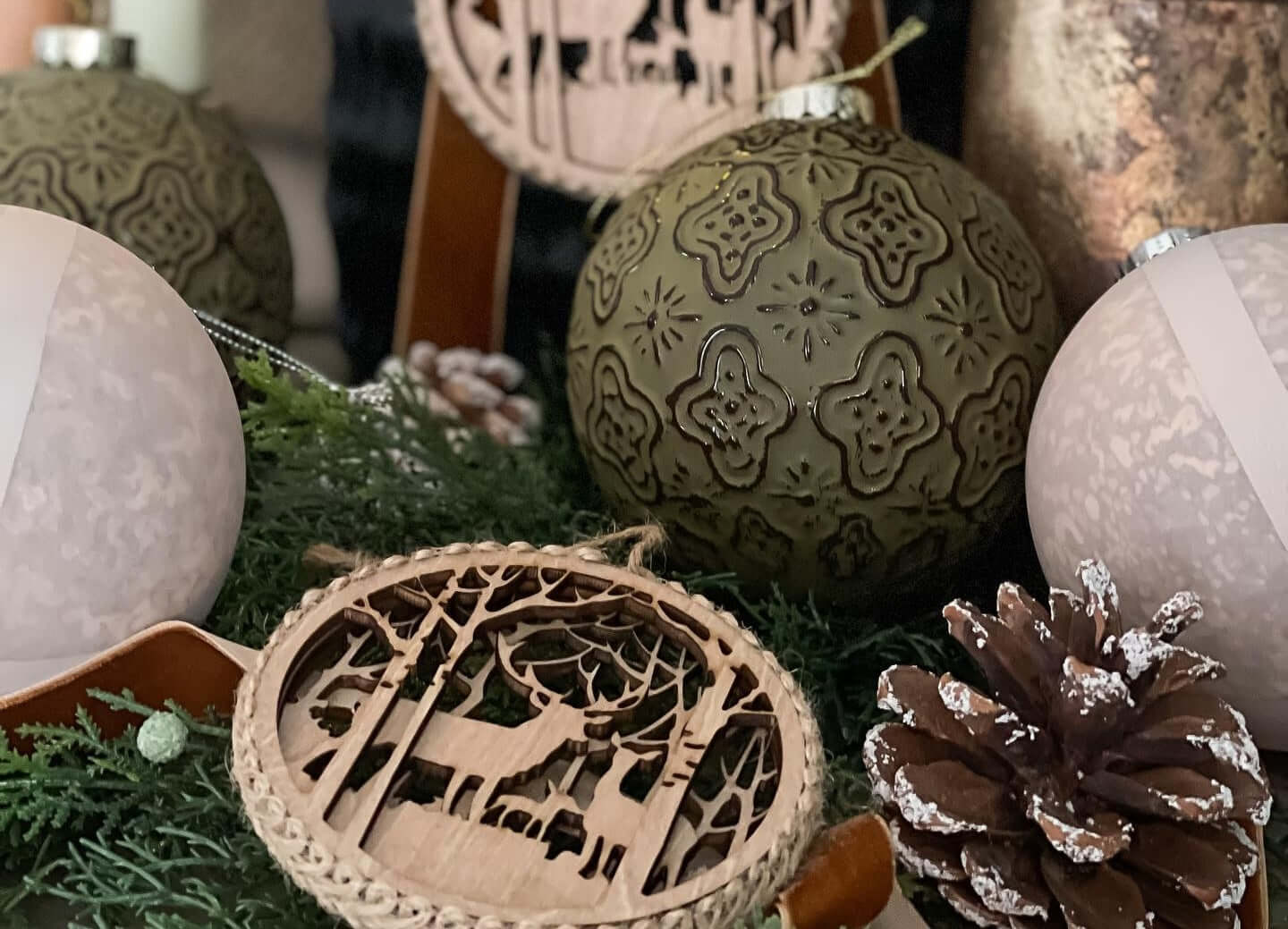
Green glass baubles with embossed patterns and pink accents feel traditional, but they land differently than a flat matte finish. The embossing catches soft ambient light, so the ornament has a layered rather than uniform appearance. A deer silhouette ornament in a similar green adds a woodland note without veering into rustic territory.
Gold accents tie the group together, and a natural pine cone placed nearby introduces a texture the glass cannot supply. This arrangement works because the palette stays contained: green, gold, and a single pink note. Adding more colors undermines the display. Keep the display tight, and the embossed details get the attention they deserve.
Whimsical Paper Santa Hat Ornaments
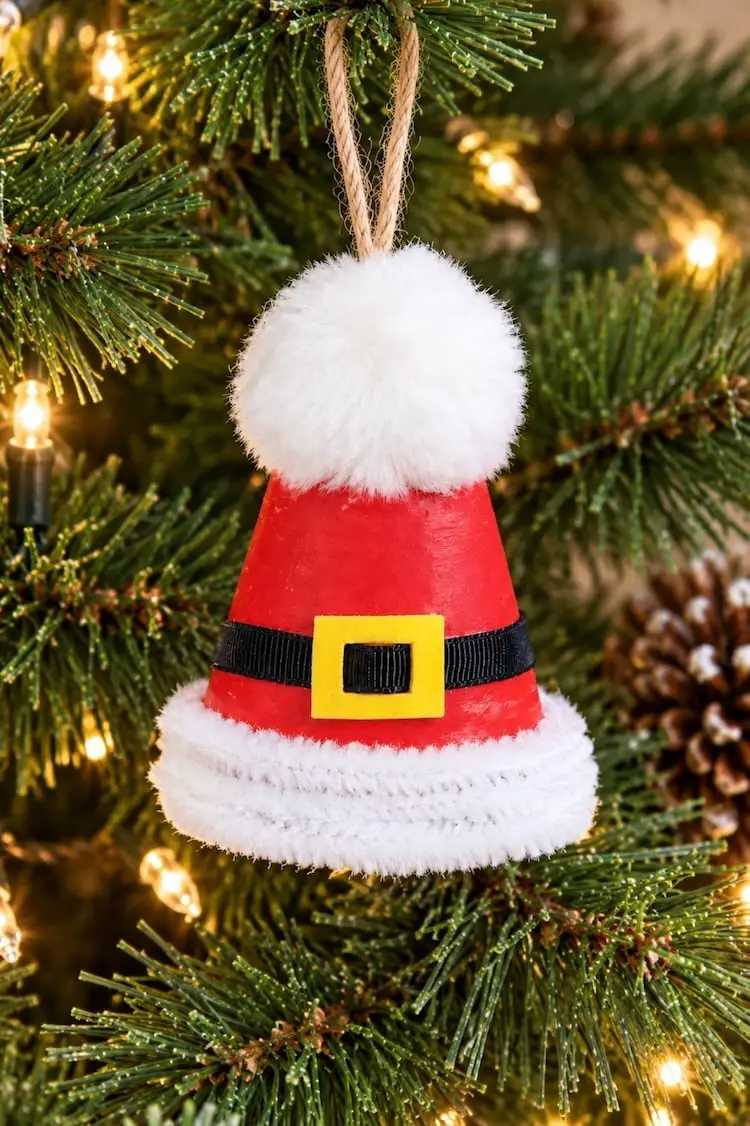
The white pompom should be slightly oversized so it reads clearly against the tree’s green needles. A yellow buckle or accent on the black band adds a small surprise that keeps the design from looking flat. Hanging several of these on the same branch creates a repeating pattern that feels intentional.
Eclectic Fabric and Textured Paper Ornaments
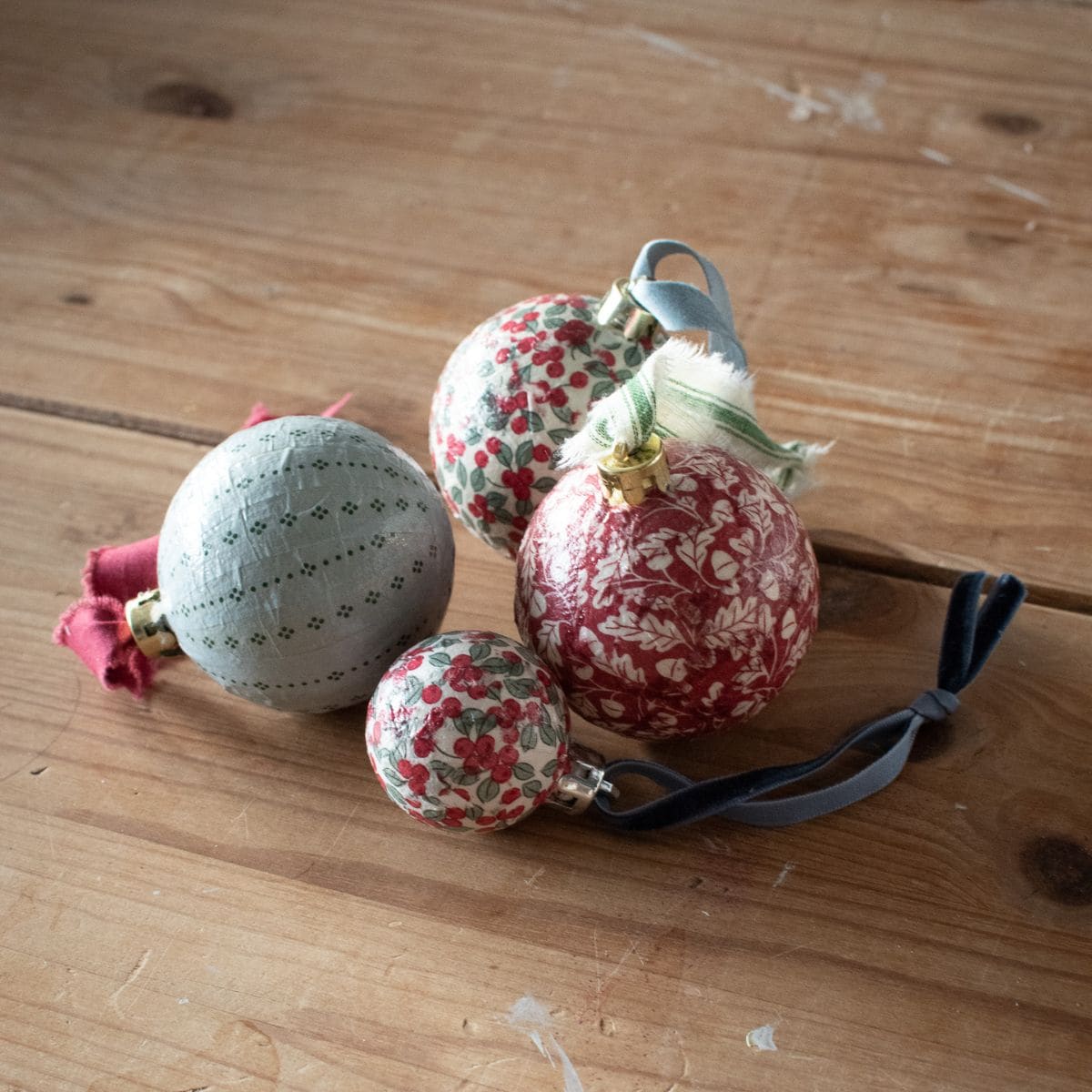
Grouping fabric and textured paper ornaments on a flat surface shows off their variety better than hanging them individually. Blue, red, white, and green pieces in stripes, florals, and solids create a busy but cohesive mix when the materials share a handmade quality. The soft natural light from a nearby window keeps the textures readable without glare. Metal ribbon or wire hangers add a subtle shine that breaks up the matte paper and fabric surfaces. This kind of collection works best when the pieces are similar in size, so no single ornament dominates the group.
Traditional Felt Santa Claus Face Ornaments
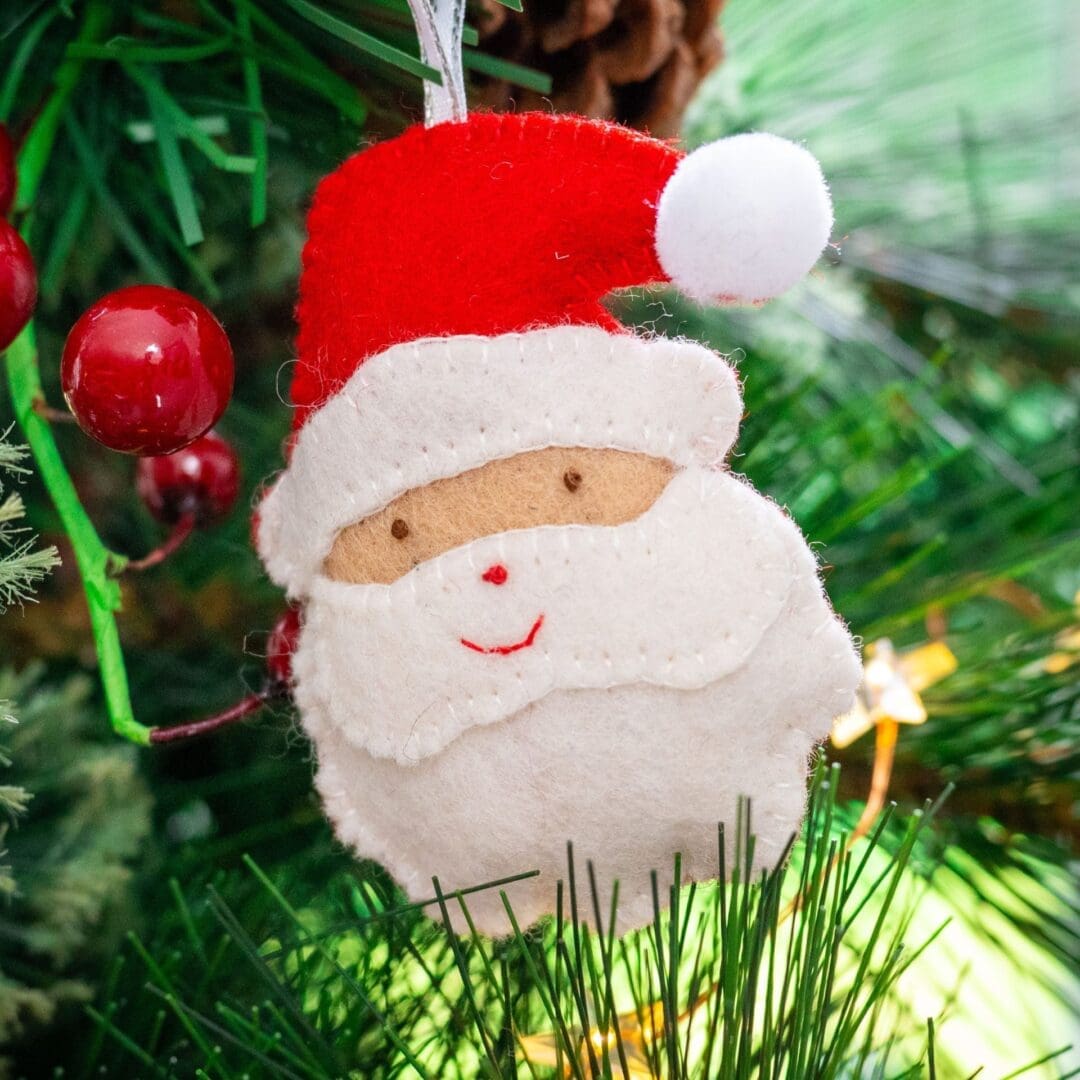
A felt Santa face ornament needs more than a red hat and white beard to look finished. Small black beads for eyes and a pink felt nose add detail. The beige felt skin tone keeps the face neutral. These ornaments store well in a shallow box with tissue layers, because the felt can flatten if stacked under heavier decorations. A soft, warm light on the tree helps the white beard look fluffy. The charm comes from the handmade quality, so a slightly uneven stitch or bead placement adds character.
Farmhouse Twine-Wrapped and Plaid Ornaments
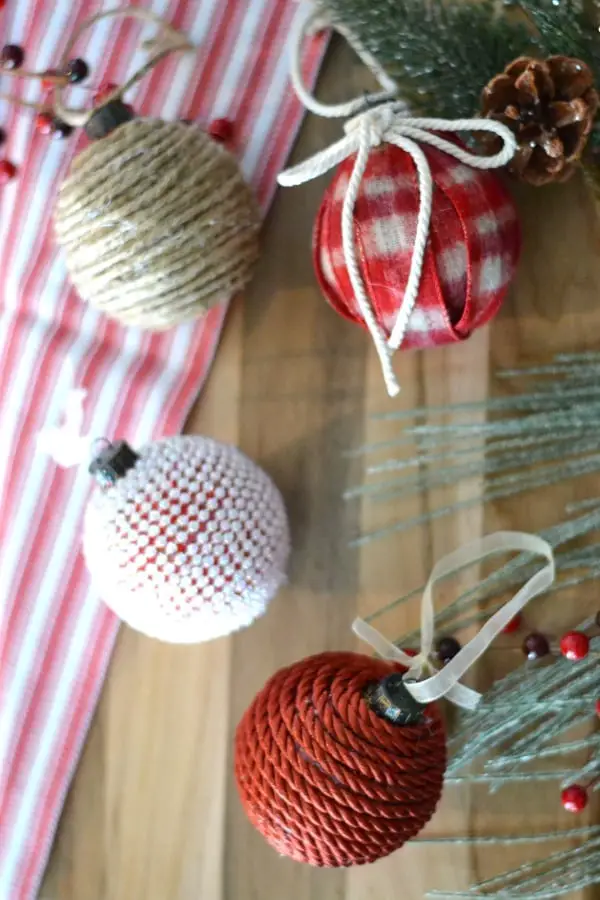
A farmhouse tree calls for layers of natural texture, and this collection of twine-wrapped ornaments delivers just that. The palette stays grounded in red, white, beige, and brown, with wood bead garlands adding a rustic thread between the shapes. A plaid fabric ornament introduces a soft pattern break without overwhelming the neutral base. What defines this look is the mix of materials: rough twine against smooth wood beads, matte fabric against raw wood. The ratio leans heavily on twine-wrapped pieces, with just one or two patterned accents to keep the eye moving. Too many plaids would tip the balance toward busy, so let the twine do the heavy work.
Shabby Chic Wine Cork Angel Ornaments
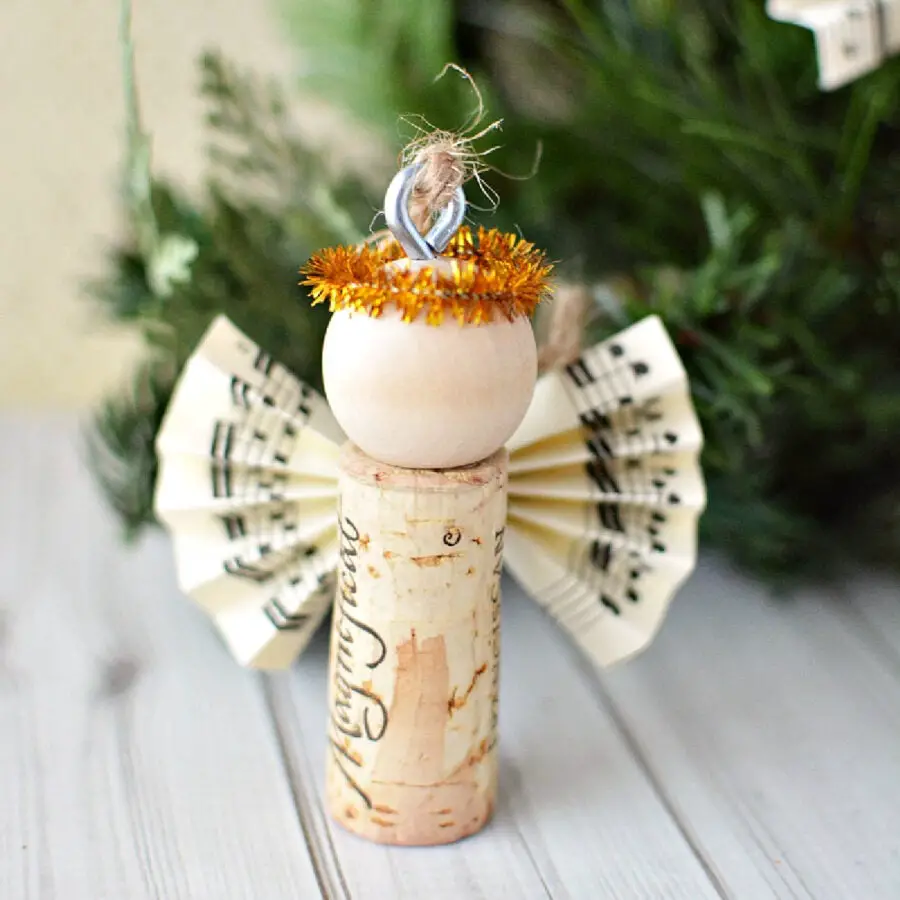
A practical rule for renter-friendly decor is to choose pieces that leave no trace, and a wine cork angel ornament fits that bill perfectly. The body is a natural wine cork, topped with a wood bead head and small paper wings, all tied with twine. The shabby chic style comes through in the cream and gold accents against the raw cork, with natural light softening the whole look. Because the ornament uses only glue and string, it can be undone in seconds, making it ideal for apartments where you want holiday charm without permanent changes. The single-object focus keeps the design from feeling cluttered, so it works as a standalone gift topper or tucked into a small tree.
Eclectic Fabric Ornaments with Floral and Stripe Patterns
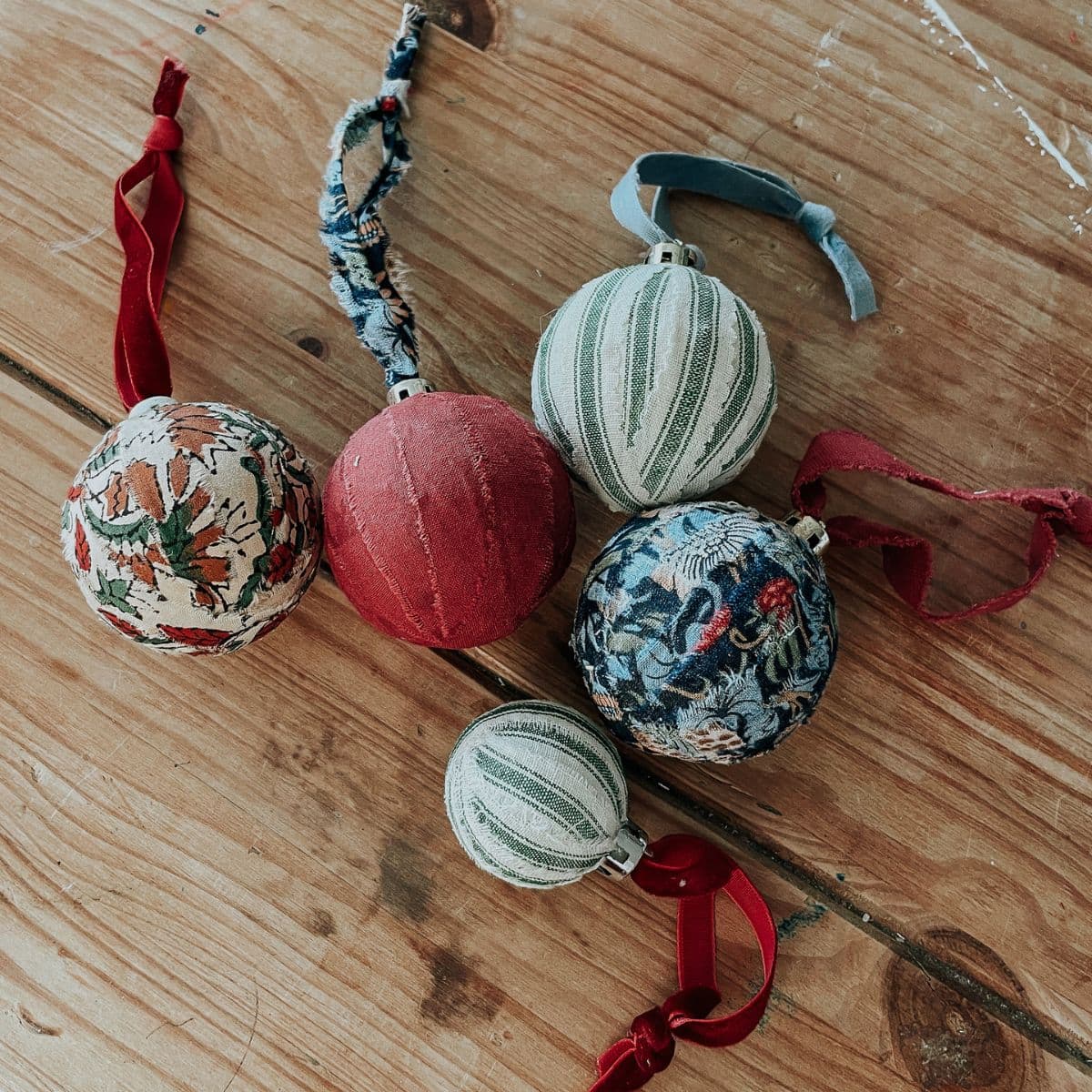
Where plain baubles play it safe, fabric-covered ornaments bring a whole different energy to the tree. An overhead shot shows a scattered arrangement of these pieces on a wood surface, with floral, striped, and multi-colored fabrics catching soft natural light. The palette is deliberately mixed, and that is the point.
What defines this eclectic style is the ratio of prints: no single pattern dominates, so the eye travels from a rose print to a ticking stripe without landing hard on either. The metal caps and ribbon loops add a uniform anchor across the variety. If the mix feels too chaotic, pull back to two or three patterns that share a common color, like red florals paired with red stripes. The key is to let the fabrics feel collected over time rather than bought in a set.
Playful Felt Cupcake Ornaments
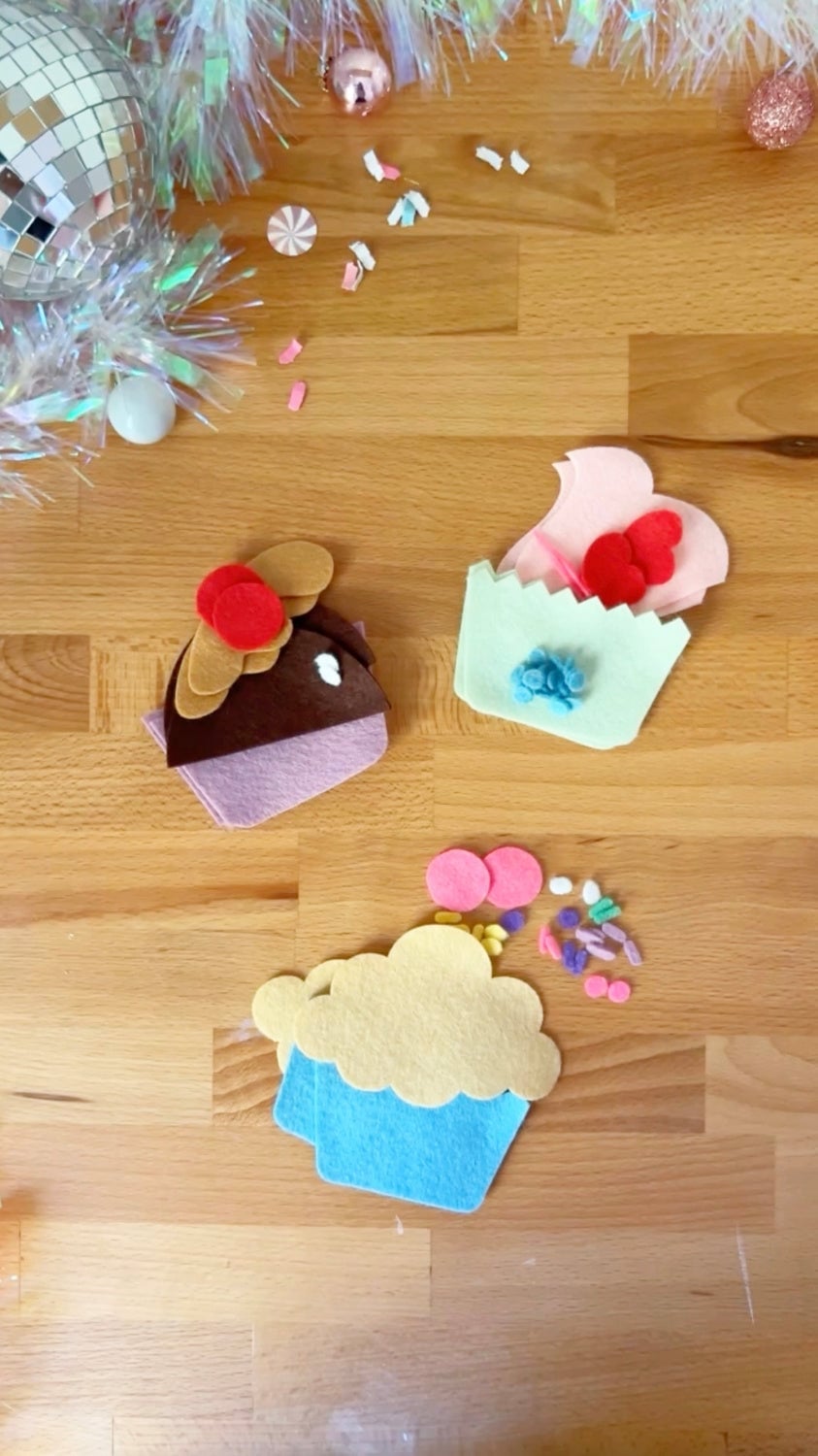
Three felt cupcake ornaments sit on a wooden tabletop, each one a tiny dessert shape with confetti sprinkles stitched onto the frosting. The palette is unabashedly candy-like: pink, brown, blue, and yellow, with no attempt at subtlety. What makes felt a smart choice for ornaments is its durability: it does not shatter like glass or dent like paper, so these can survive a tumble off a low branch. The playful crafty style means they work best on a tree in a family room or a child’s bedroom, where the whimsy lands naturally. The simple silhouette and bright colors keep them readable even from across the room, which is the whole point.
Natural Acorn Cap Ornaments with Glitter
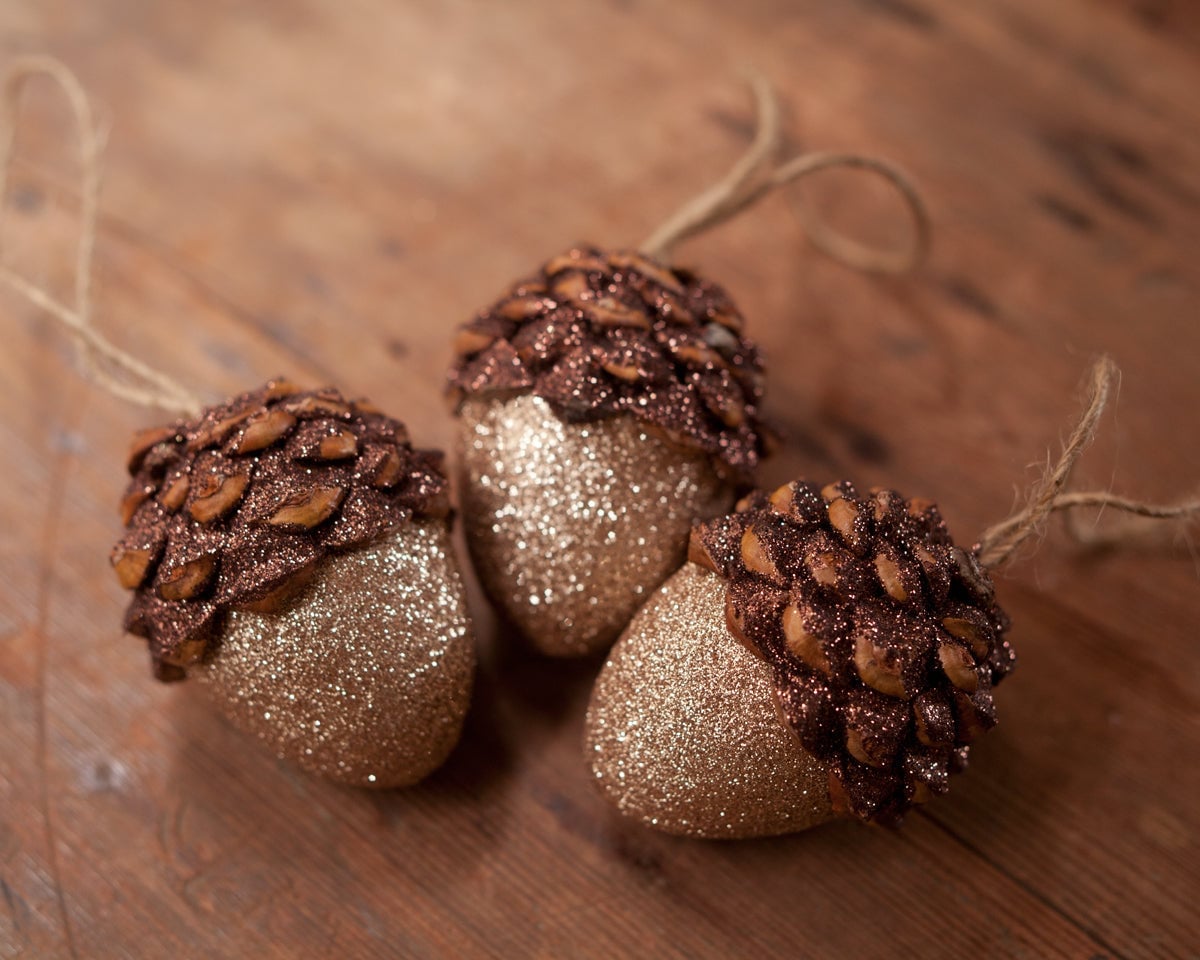
A small acorn cap ornament is a fast way to add natural texture with a touch of sparkle. The acorn caps are left in their natural brown state, with a light dusting of gold glitter on the top edge and a simple twine hanger. The scale is the key: these are tiny, so a group of them reads as a delicate accent rather than a statement. On a full-size tree, cluster a dozen of them on a single branch for visual weight. The natural style means the brown cap grounds the glitter, preventing it from reading as overly shiny. Avoid pairing them with other heavily glittered ornaments, or the contrast that makes them special gets lost.
Final Thoughts
Making your own Christmas ornaments doesn’t require a studio full of fancy tools or a degree in fine arts. What it takes is a bit of patience, a willingness to try something new, and maybe a glue gun that you promise to unplug when you’re done. The ornaments that end up meaning the most are rarely the most polished ones. They’re the ones that remind you of a quiet afternoon with your kids, or the year you decided to dry oranges just to see if it would work. Keep a few things in mind as you go. Store delicate ornaments in tissue paper, not a tangled heap. Test paint or glue on a scrap first. And don’t try to make all 20 in one night unless you enjoy living on caffeine and regret. Pick two or three that fit your style and your schedule, and let the rest wait until next December.