Green walls are having a serious moment in 2027, and it’s not about a single shade. From deep emerald to soft sage, this color family offers a surprising range of moods.
If you’re looking to add a grown-up, grounded feel to any room or outdoor space, these 32 ideas show how to make green walls work without looking like a theme park. Expect a mix of painted walls, paneling, and living plant walls, each with a different personality.
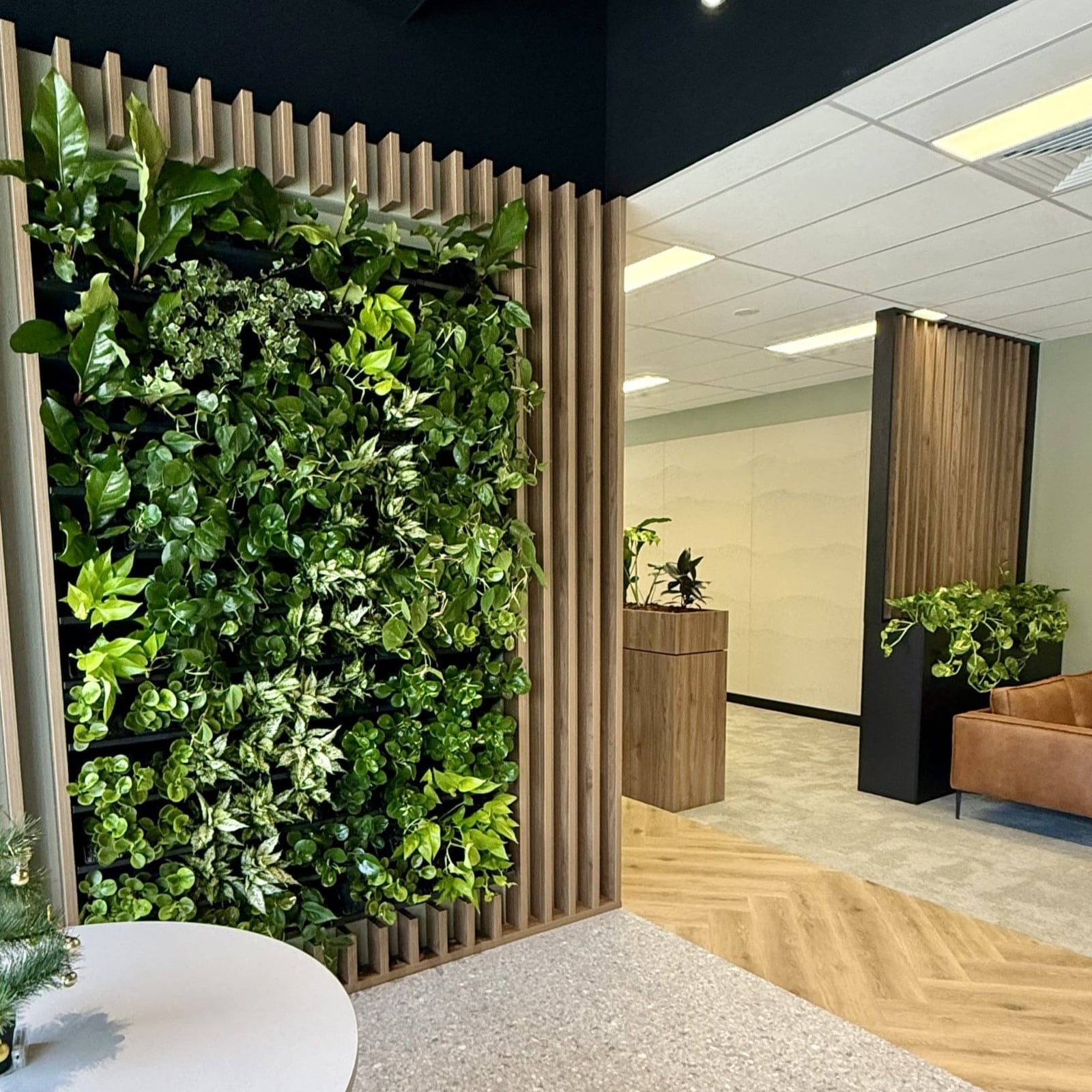
A modern office oasis with a living green wall
A living green wall turns an open-plan office into a place where the air feels different. The vertical garden spans a full wall in a deep, layered green, with a wooden planter at its base. A leather sofa in tan sits opposite, while wood slats on the ceiling and a tile floor keep the look clean. Recessed lights and daylight hit the leaves without glare. The layout keeps the hero element central and everything else simple. That one lush wall does the work.
Grown-up bedroom with olive green walls
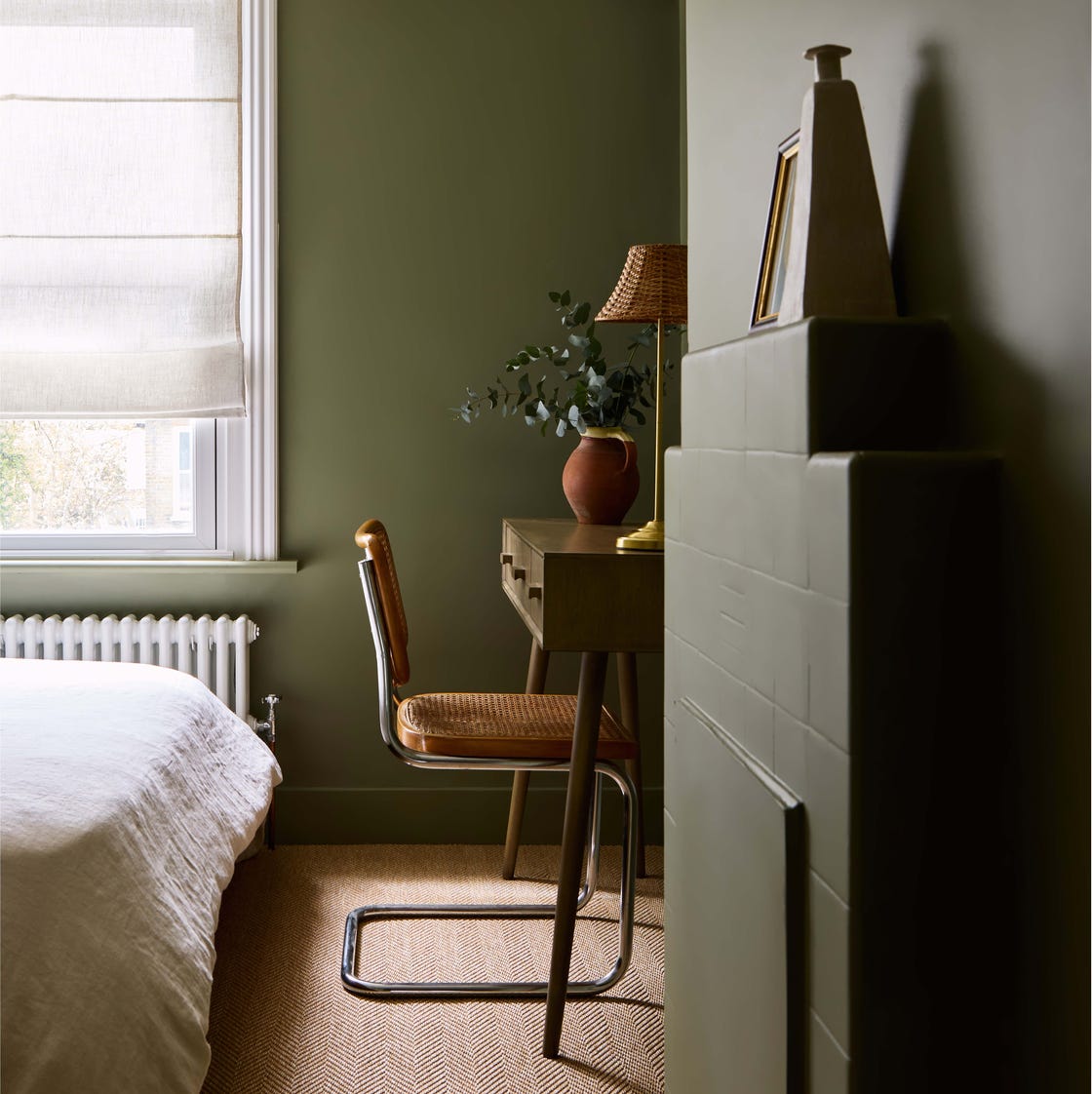
Olive green walls give this compact bedroom a quiet confidence. The palette runs from the tan rug and terracotta vase to the brass lamp on the desk, with the olive as the anchor. A mid-century modern desk and a cane-back rattan chair sit near the window, where natural light and a table lamp keep the corner from feeling dim. The eucalyptus spilling from the terracotta vase picks up the green without matching it. The look stays in one warm, earthy family. What breaks it would be a cool blue or a stark white trim that pulls the room in two directions.
Traditional living room with sage green walls and ornate fireplace
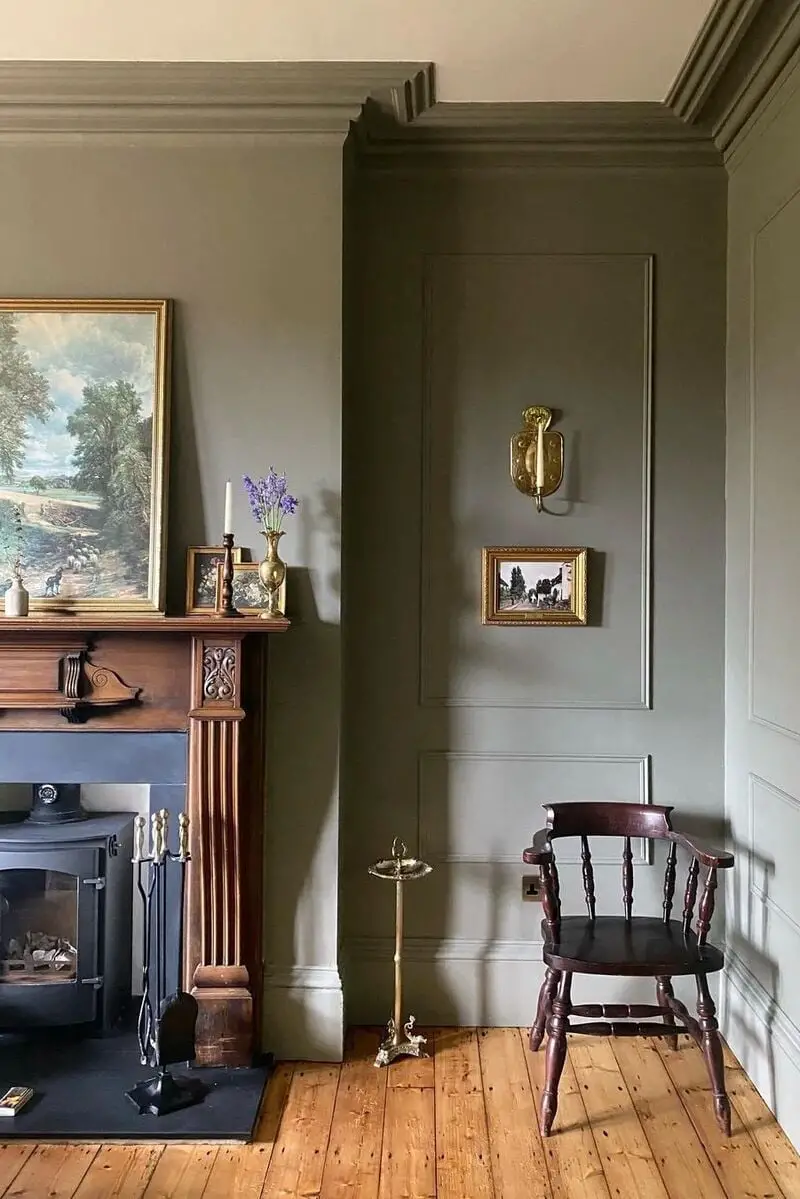
How do you make sage green walls feel rich rather than soft? Pair them with dark wood and brass. The traditional living room here centers on an ornate wooden fireplace with a brass stand and tools beside it. A wooden armchair sits nearby, and wall sconces cast warm light over the sage. The materials matter: the carved wood of the fireplace has weight, the brass brings a neat note, and the glass in the sconces keeps the look from turning heavy. The sage green walls hold it all together without competing.
Sage green paneled walls with blush pink ceiling contrast
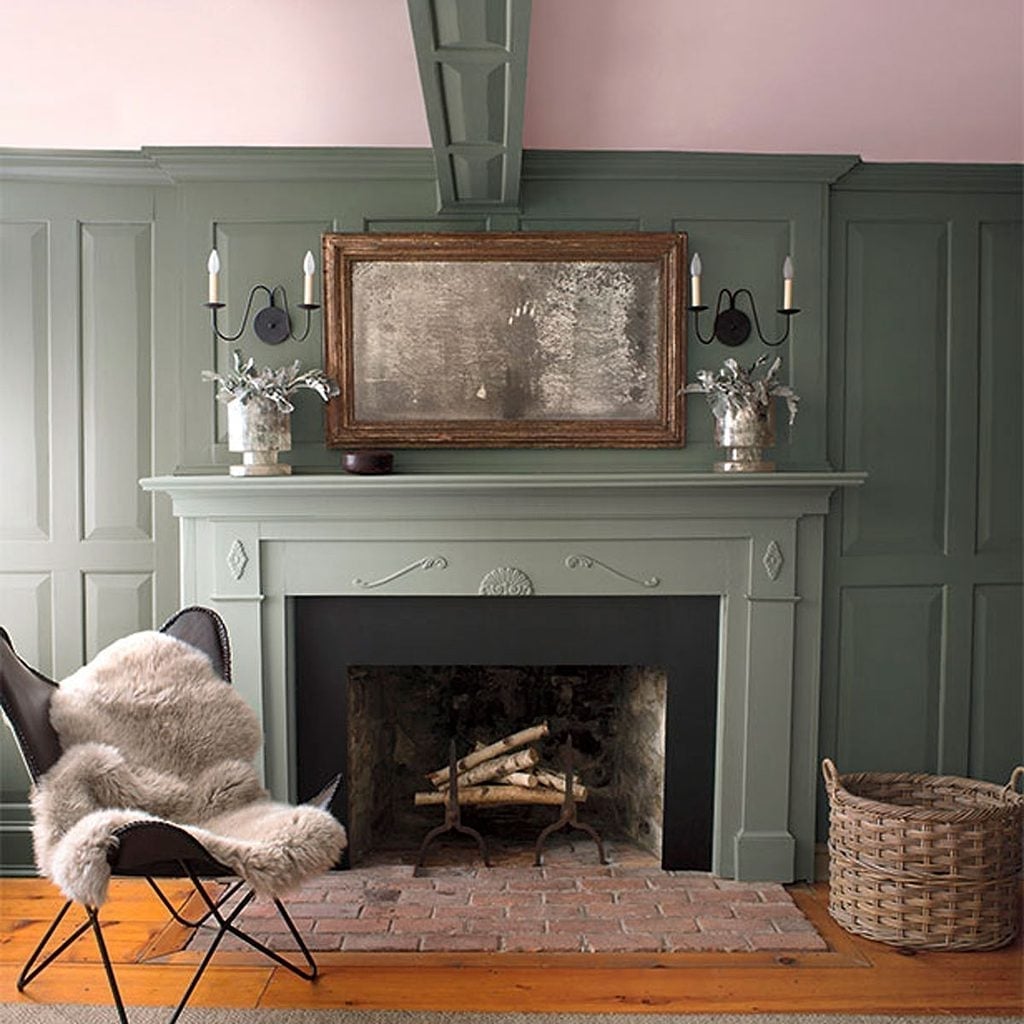
The ceiling is blush pink, and the walls are sage green paneling. That contrast gives the room its energy. A brick fireplace anchors the center, with a butterfly chair on one side and a wicker basket on the other. An antique mirror above the fireplace reflects the pink upward. Wall sconces add a soft glow, and natural light from the windows keeps the palette from feeling theatrical. The ratio of pink to green is what makes it work: the ceiling is a surprise, not a takeover.
Modern outdoor vertical garden with lush basil
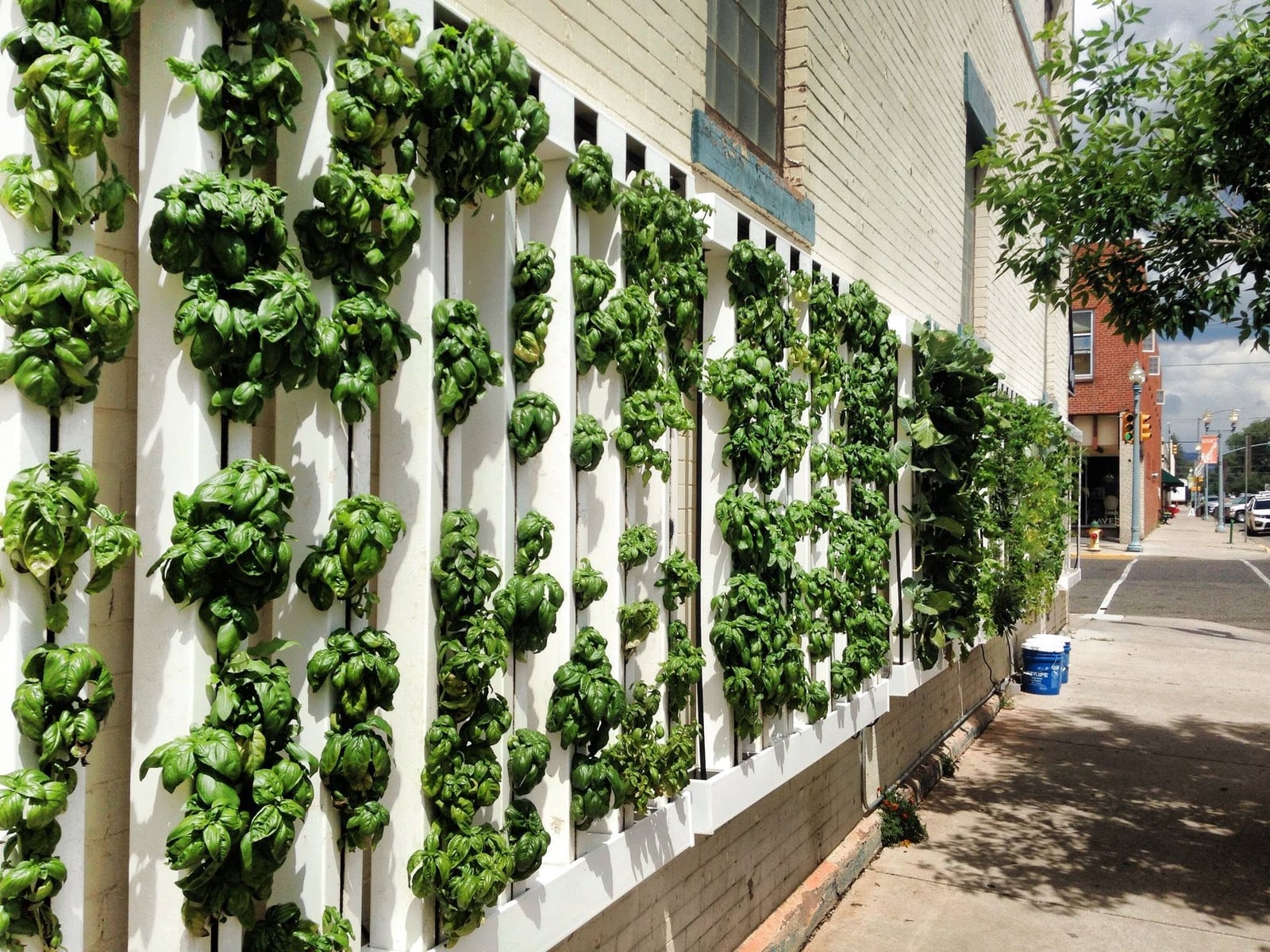
A practical rule for an outdoor vertical garden: keep the system simple so the plants do the showing off. This one uses a modular plastic grid mounted on a brick wall, with basil growing thick and green across the surface. A blue bucket sits on the ground below, ready for watering. The beige brick and white grid fade into the background. Check your USDA zone before planting basil outdoors, since it needs warmth and sun. The vertical layout saves floor space and turns a plain wall into something useful.
Cozy bedroom corner with sage green built-in wardrobe
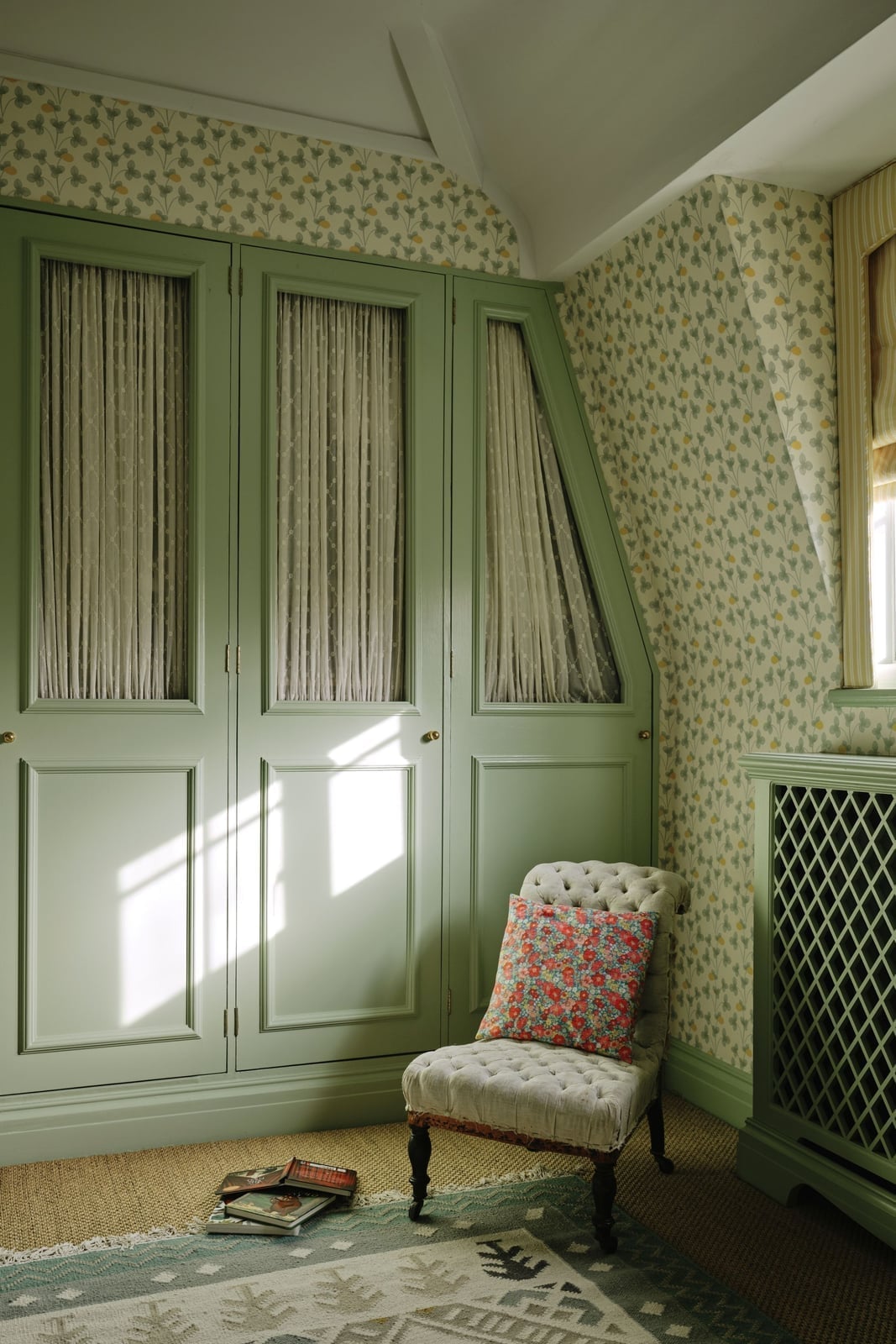
A freestanding armoire might come to mind first, but a built-in wardrobe uses the same footprint more completely. Here the sage green cabinetry wraps the corner, leaving the rest of the wall free for a tufted accent chair and patterned wallpaper. The cream-and-yellow tones in the rug and fabric keep the palette from turning heavy. The one-line takeaway: a built-in looks furniture, not just storage, so it earns its place as the room’s visual anchor without needing extra trim or handles to make it feel intentional.
Minimalist living room with deep green wall
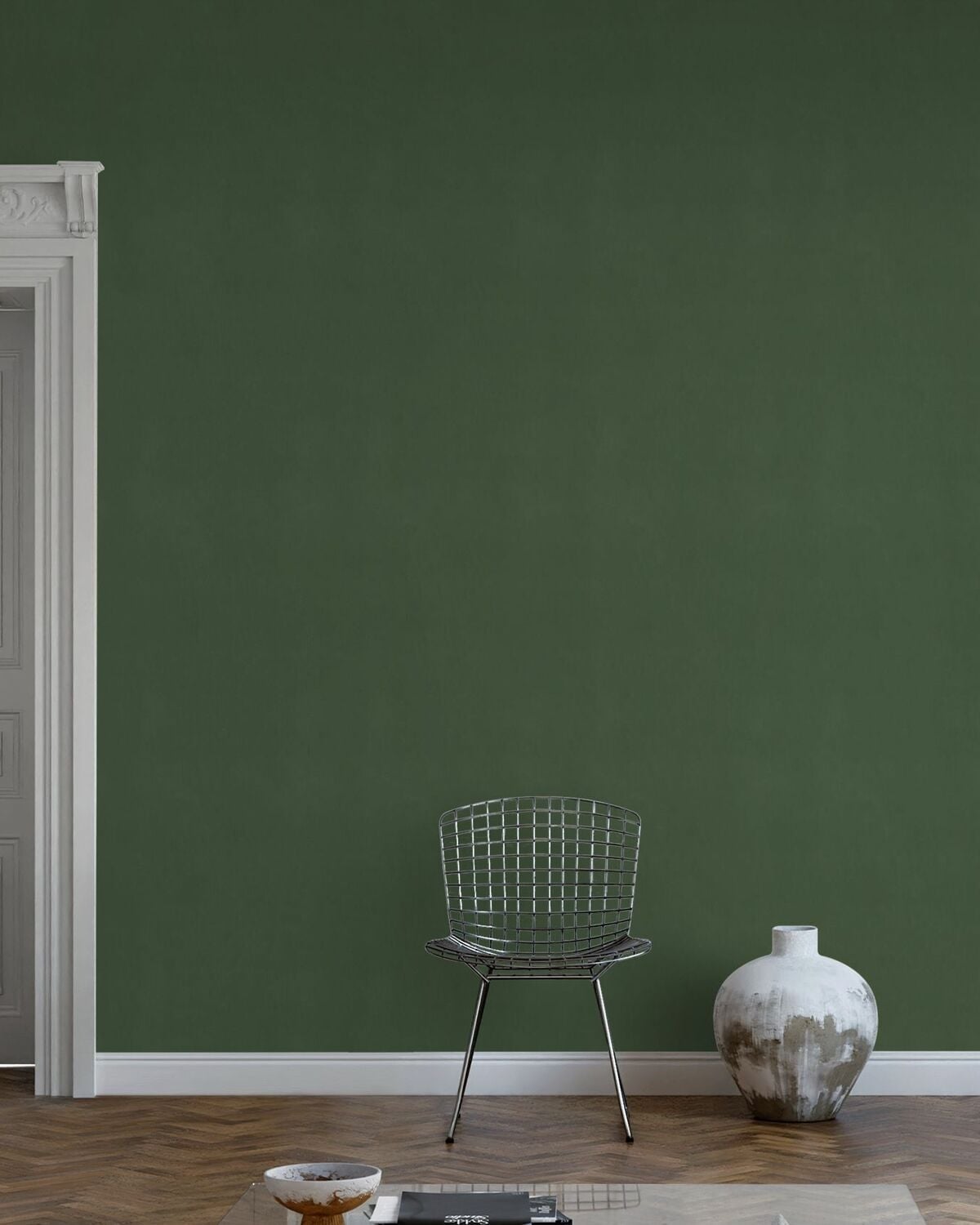
The deep green wall does not ask for company. A single wireframe chair, a large ceramic vase, and a low coffee table are all the room holds, and the white floor and pale wood keep the green from shrinking the space. The style works because the ratio is clear: one painted surface, the rest neutral. What breaks it would be adding a second accent color or another piece of furniture within reach of the wall. Minimalism here is not about emptiness; it is about letting one element hold the focus.
Vibrant patio living wall with diverse green foliage
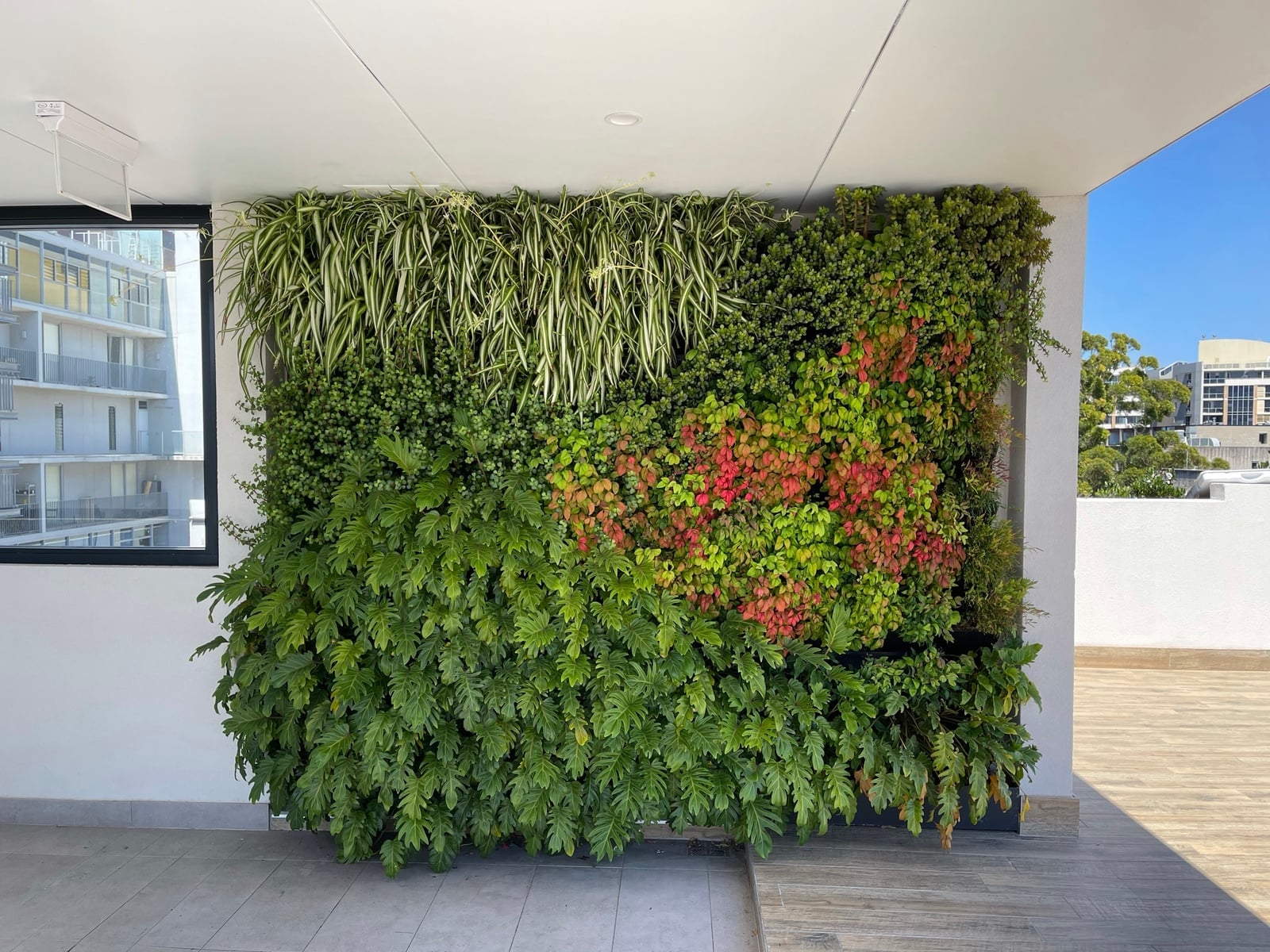
This is a living wall that earns its description as vibrant. The mix of leaf sizes and textures creates depth, and the red and white accents among the green keep it from looking a single flat mass. The tile and concrete surround ground the plants so the wall feels like architecture rather than a planter that got out of hand. For a patio, the key is choosing a system that lets you reach every plant easily, because a living wall this dense needs regular trimming to keep the variety visible.
Deep green panels with light green linens
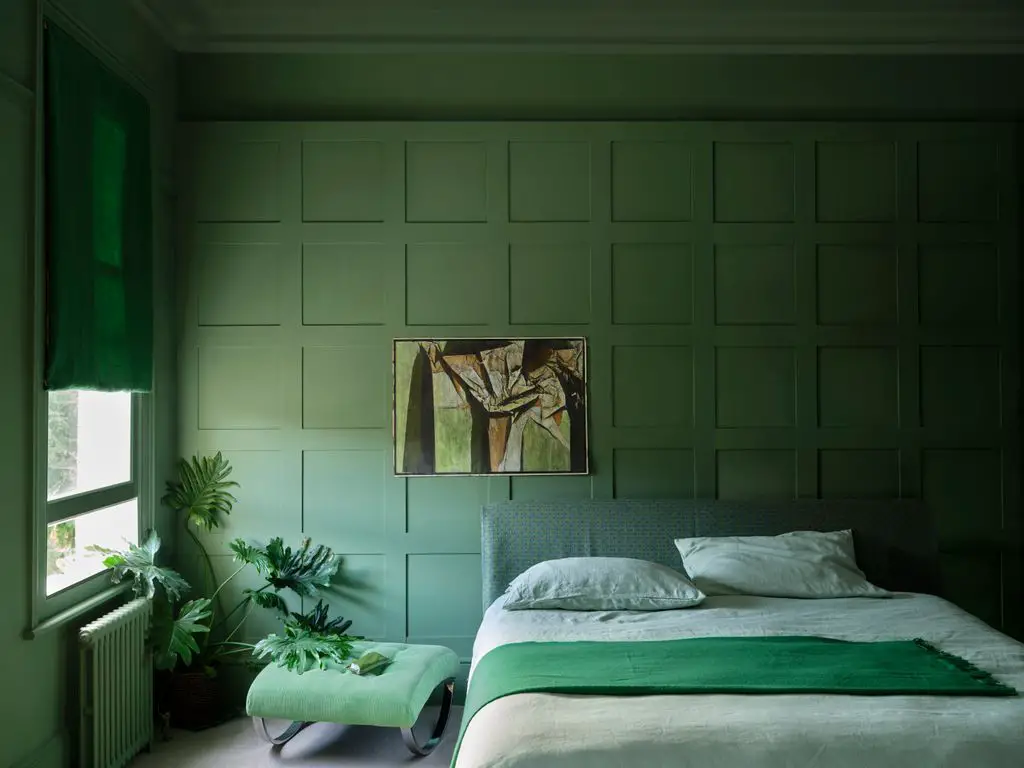
Can a bedroom handle two shades of green without looking like a garden center? The trick is separation. Here the wall panels are a deep, almost forest green, while the bed linens and ottoman fabric are a much lighter green. The window light hits the lighter fabrics first, so the eye travels from the pale bed to the darker walls instead of competing with them. The metal bed frame and the glass of the plant add just enough hard surface to balance the soft fabrics. The palette stays in the same color family, but the value contrast between the panels and the linens makes the combination feel planned.
Spacious dining room featuring a lush living wall
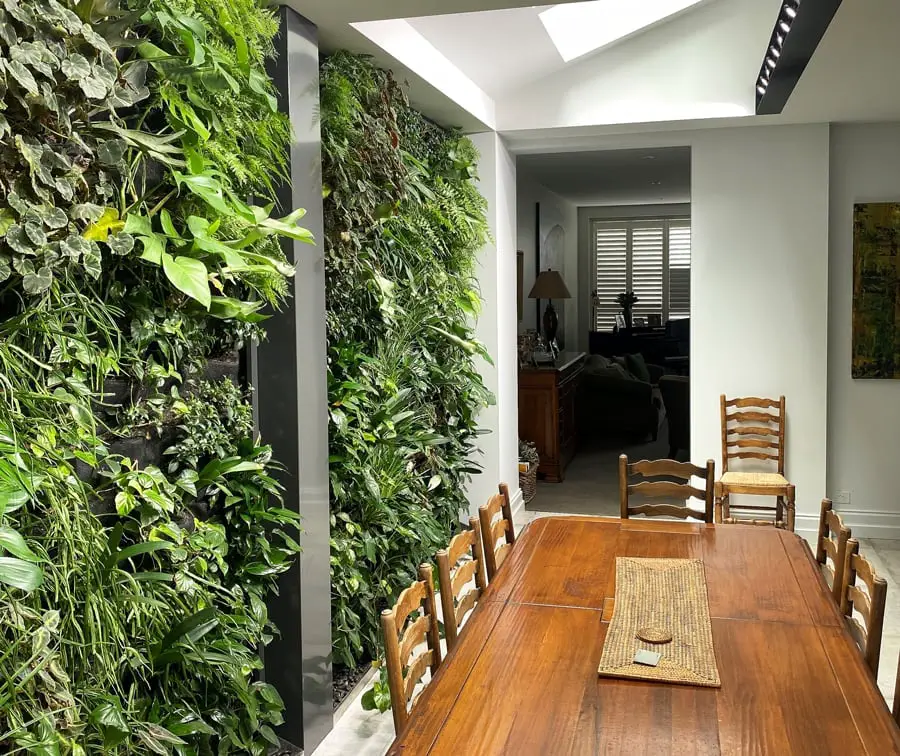
A dining table centered in the room with a living wall running along one side creates a natural focal point without blocking the view across the space. The skylight above and the track lighting let the wall stay visible at dinner hour, and the wood table and ladder-back chairs keep the room grounded so the plants do not float. The layout works because the wall is a backdrop, not an obstacle; guests can still walk around the table and reach their seats. For a room this size, keeping the living wall to one side preserves the open feel that made you pick the space in the first place.
Gray planters create a vibrant living wall
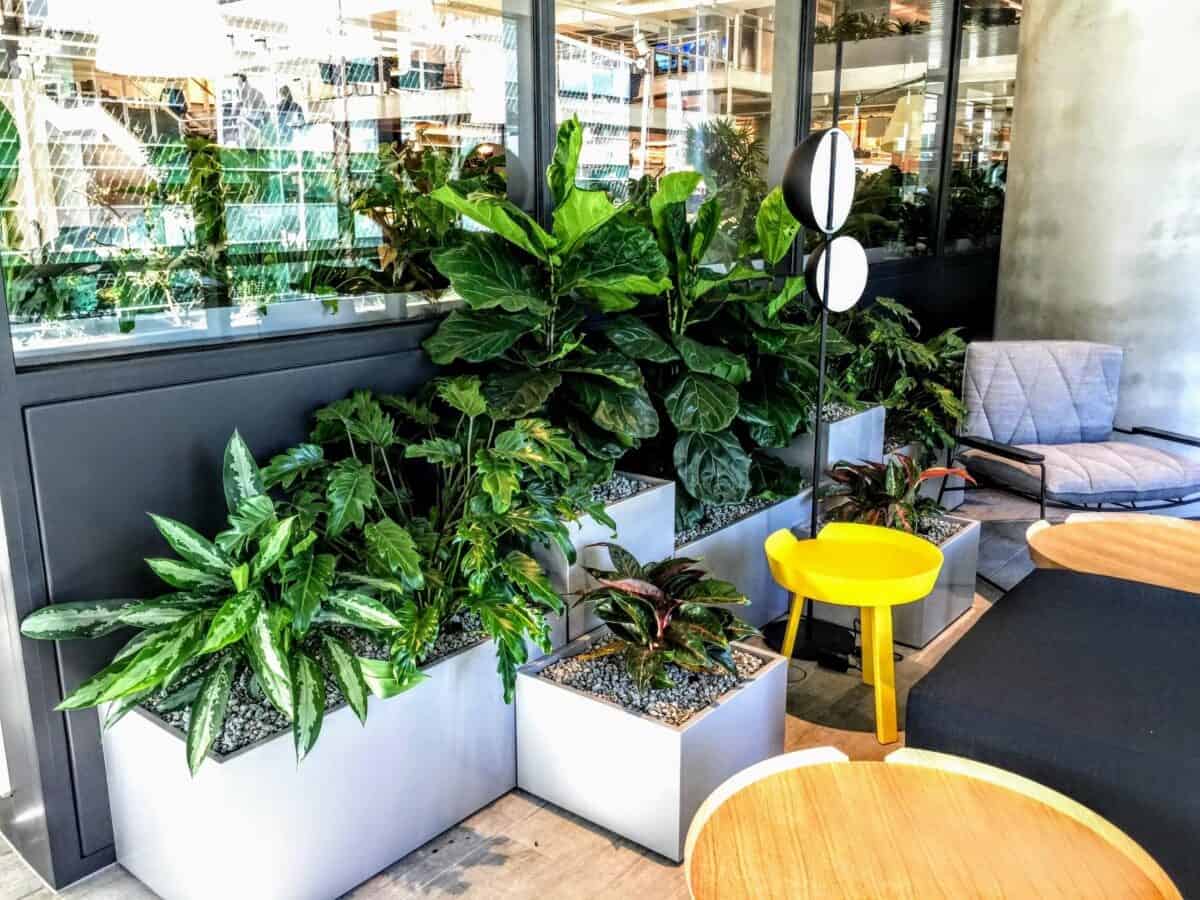
A modern patio proves that a living wall is as much about the containers as the greenery. Large gray planters line up in a linear arrangement, holding lush green plants that soften the concrete and metal surroundings. A modern chair and a round table create a compact seating area, while a yellow side table and a modern floor lamp add unexpected hits of warmth. The palette stays grounded in green, gray, and black, with wood tones and yellow breaking the coolness. The style looks intentionally curated rather than accidental, thanks to the balance of hard materials and soft foliage.
Expansive exterior living green wall on modern building
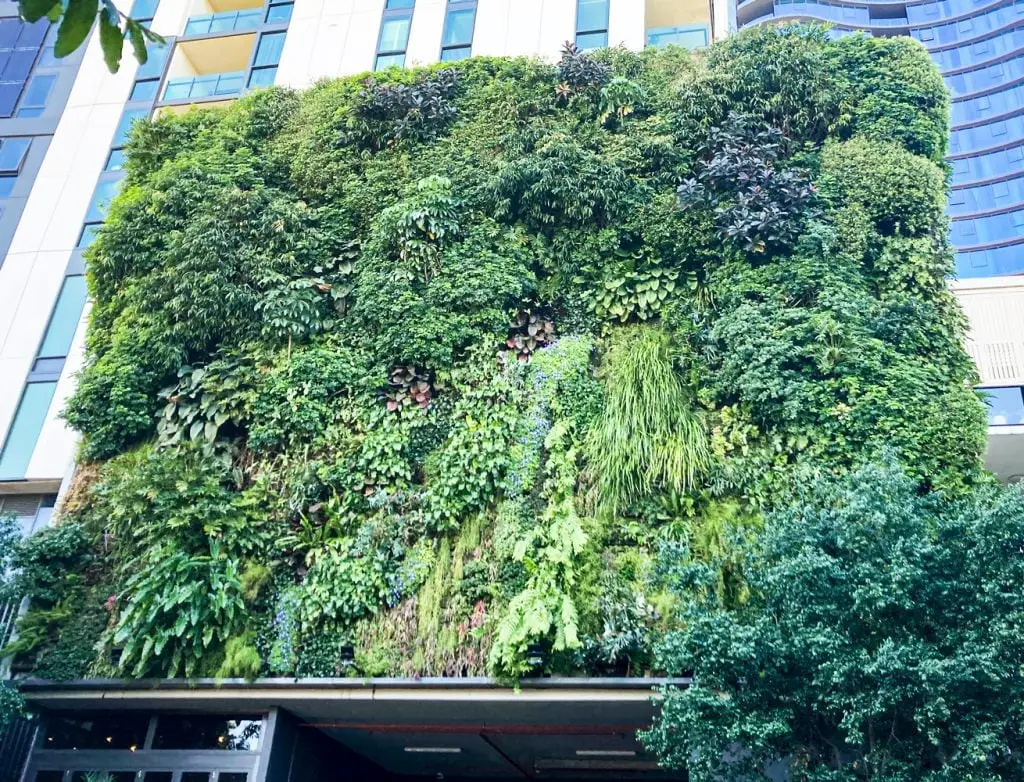
A single potted plant on a balcony can feel like a small gesture. An exterior living green wall covering an entire building facade is the opposite of that. This modern approach uses a vertical garden planted directly into the structure, with shades of green and dark blue creating a dense, layered tapestry against concrete, glass, and metal. The wide outdoor view shows how a living wall can transform a plain exterior into something alive and textural. The style is bold and architectural, relying on the contrast between organic plant forms and the clean lines of modern materials. What breaks the monochrome potential is the inclusion of dark blue tones within the greenery, adding depth and preventing the wall from looking a single flat color.
Compact bathroom with Ombre deep green walls
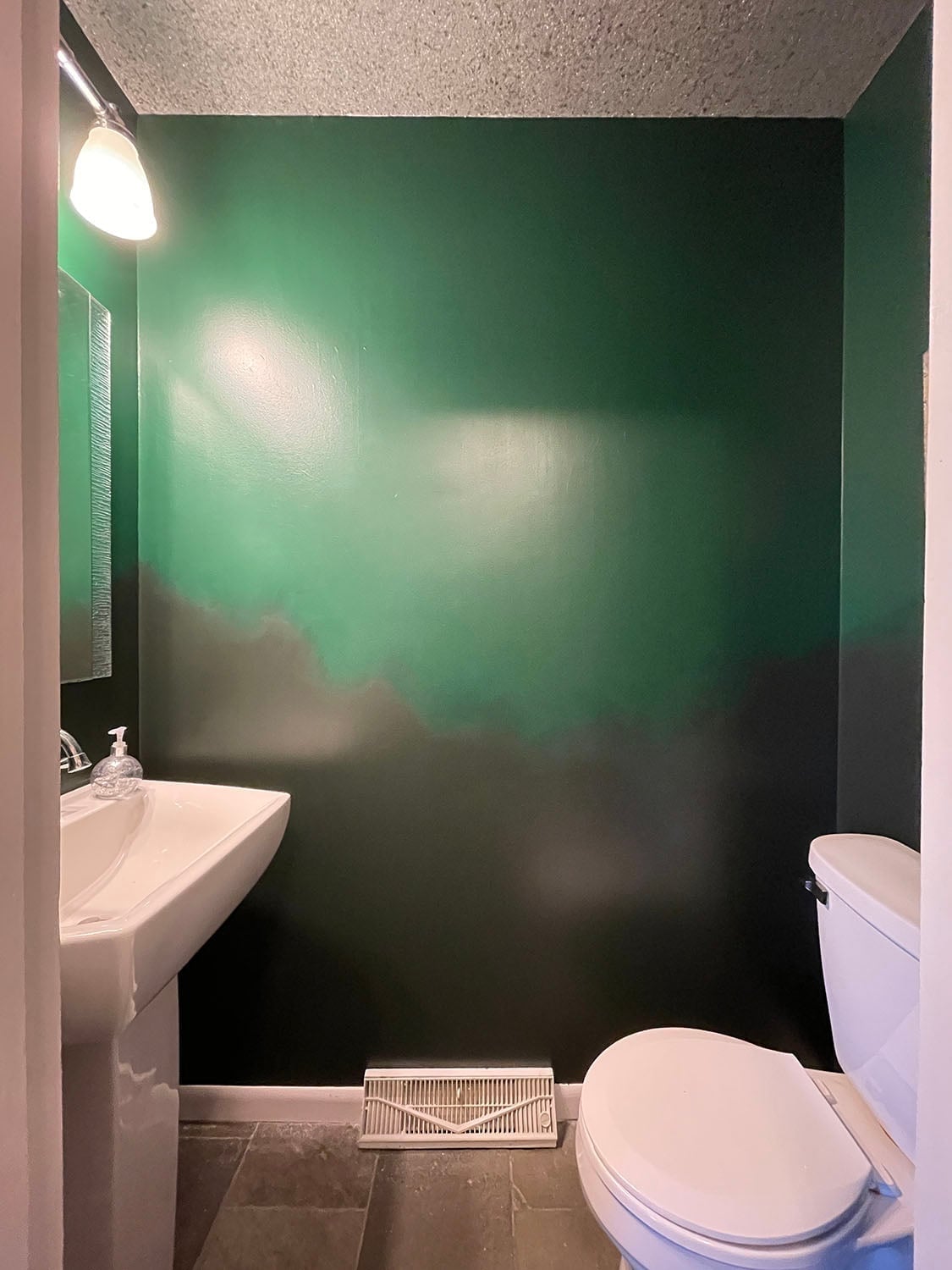
An ombre finish on the walls turns a compact bathroom into a study in depth. The deep green paint shifts from darker at the bottom to lighter near the ceiling, drawing the eye upward and making the small room feel taller. A pedestal sink and toilet in white keep the layout simple, while black tile on the floor anchors the space. The overhead light fixture provides enough illumination to show the gradient. The palette is restrained to deep green, black, and white, letting the ombre effect do the work.
Plush olive green sofa anchors the room
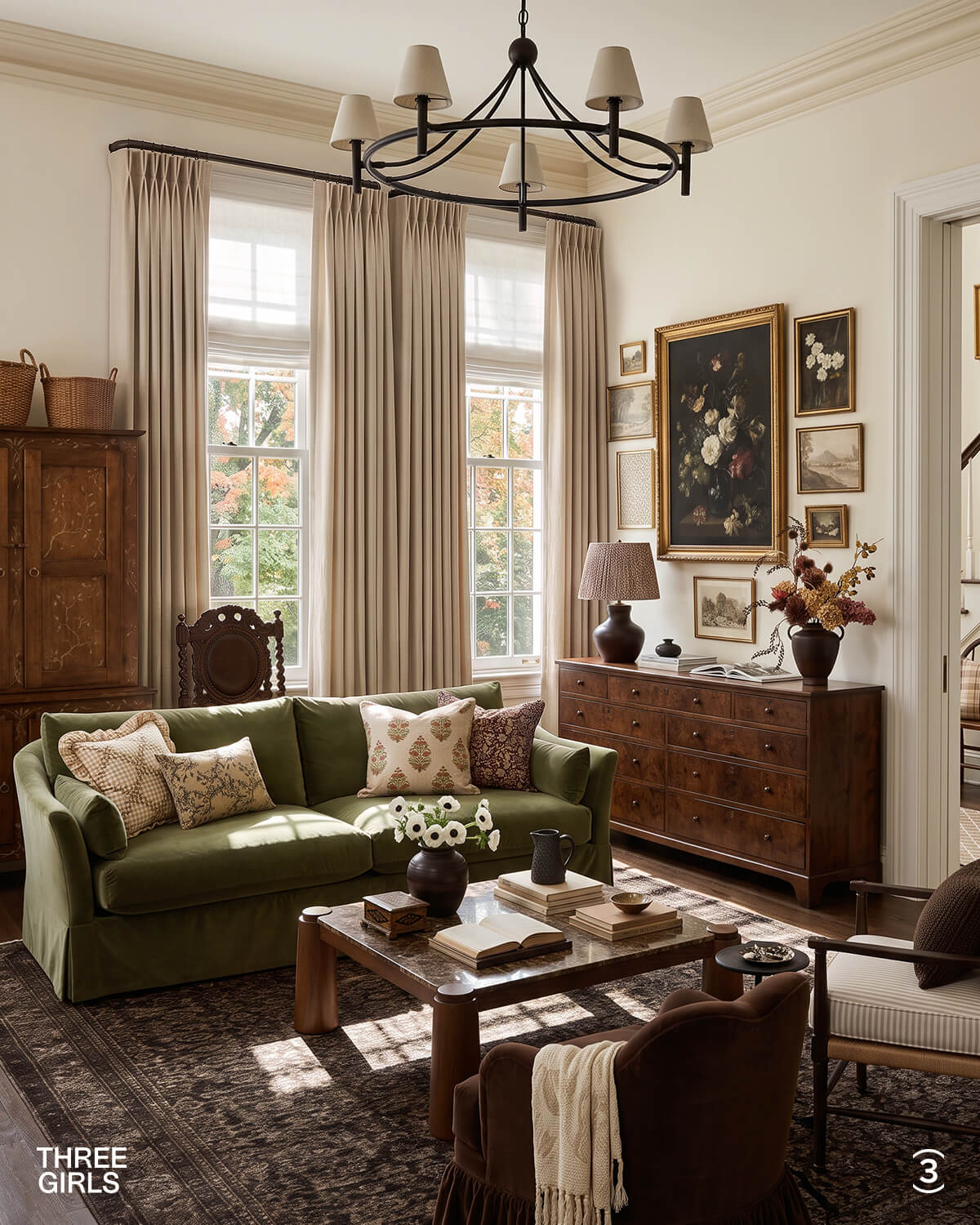
An olive green slipcovered sofa is the centerpiece here, and it earns the role. The traditional living room pairs it with a marble coffee table, a wooden dresser, and upholstered armchairs in beige and cream. Natural light from windows combines with a chandelier and a table lamp to keep the space feeling bright without washing out the olive tone. The layout has the sofa facing the coffee table, with the dresser against the wall for balance. The palette of olive, beige, brown, and cream looks cohesive and grounded. What breaks the formality is the slipcover itself, which adds a relaxed, lived-in feel to an otherwise neat room.
Modern living room with deep green walls and sofa
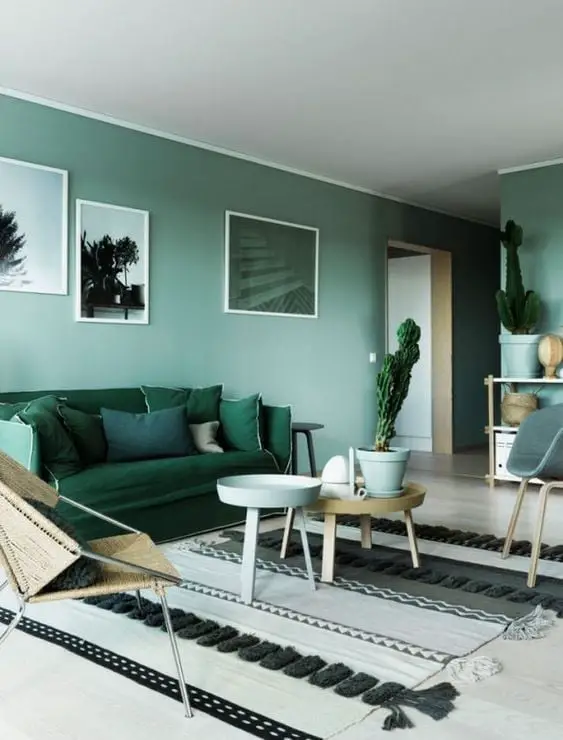
A monochrome room benefits from varied textures to give the eye a place to rest. This modern living room uses deep green walls and a green sofa that are close in hue but differ in material. The fabric sofa is soft, while a woven accent chair and a patterned rug add visual weight. A round coffee table in wood and framed art on the wall break up the green without introducing a competing color. Gray accents and a white ceiling keep the palette from feeling heavy. The layout has the sofa facing the wall art, with the accent chair angled toward the sofa for conversation. Daylight and overhead lighting keep the room feeling open. The style is modern and relies on the ratio of green to neutral to feel grown-up.
Home office with abstract green wave artwork
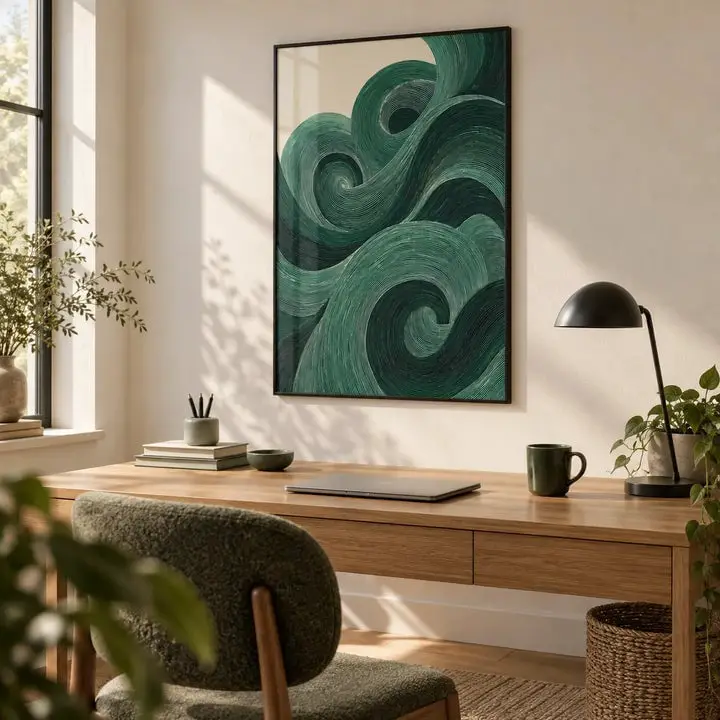
A compact home office gains personality from an abstract artwork in layered green tones, its wave-like forms breaking up the beige wall behind the desk. The palette stays grounded with warm wood on the desk and black metal on the chair, so the art becomes the focal point. Natural light hits the canvas differently through the day, shifting how the greens appear. In a rental, swap a permanent wall treatment for a large canvas or framed print. It delivers the same visual punch without altering the wall finish.
Living room featuring textured green and gold artwork
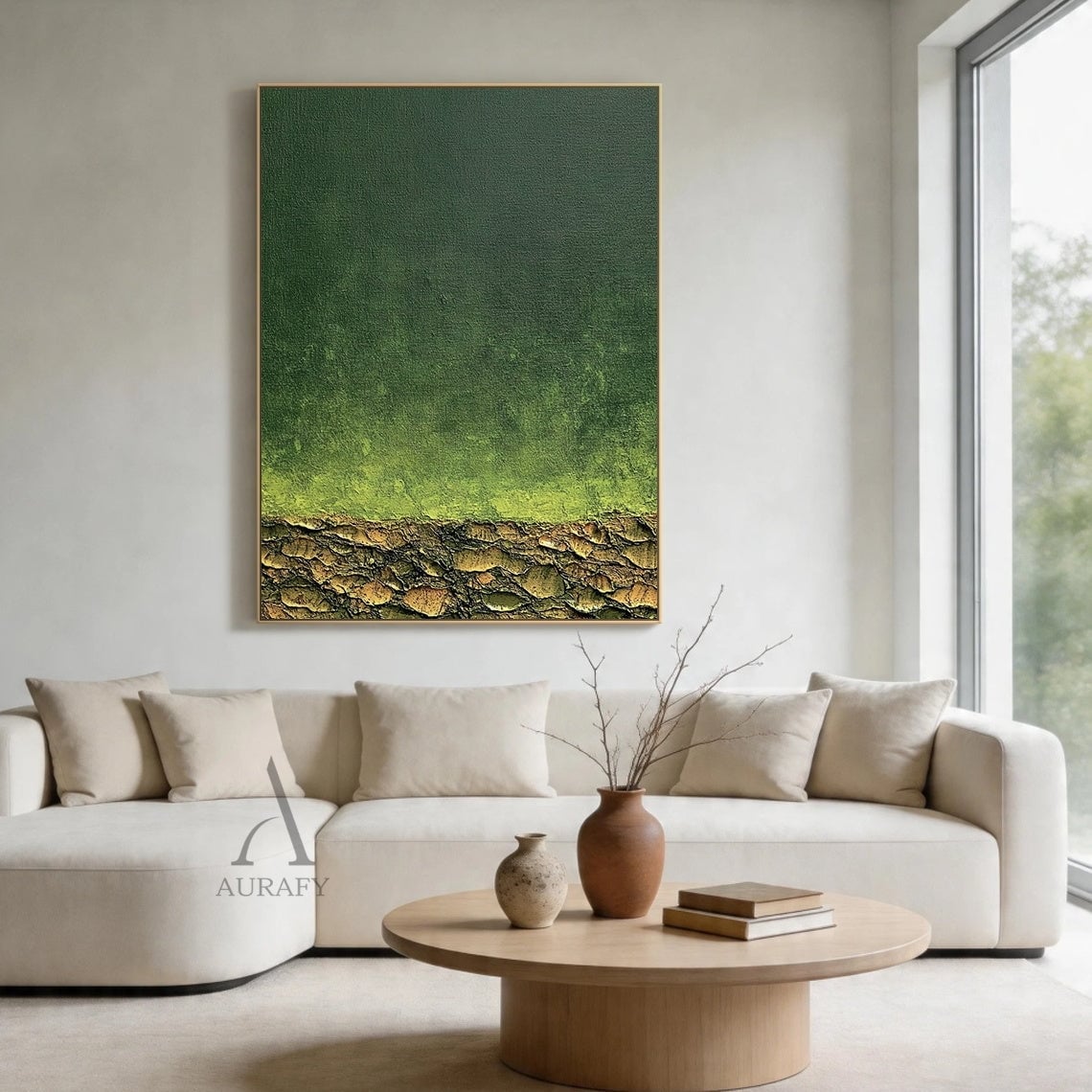
Hang large art so the piece sets the room’s palette, not the other way around. In this living room, a textured canvas in deep green and lime green with gold accents anchors the seating area. The sectional and round coffee table stay neutral in beige and cream, so the artwork serves as both decor and color source. The gold frame and small ceramic vases echo each other without matching. For a renter, this approach means you can change the whole look by swapping the art. No paint, no wallpaper, just one well-chosen piece that defines the room.
Naturalistic outdoor wall with dense green foliage

A living wall can feel like a curated garden or a wild tangle, and this one leans toward the latter with a dense mix of foliage and small white flowers spilling over a stone base. The difference is in the planting density: tight clusters of varied leaf shapes create the lush, naturalistic look rather than a manicured grid. The stone base keeps the soil contained and adds a visual anchor so the wall does not float visually.
For outdoor walls, the material of the base matters. Stone holds up to weather and drainage better than wood in damp climates. Check your USDA zone before selecting plants, since full-sun species will struggle in shade and vice versa. The goal is a wall that looks easy, but the planning happens well before the first plant goes in.
Modular containers form a rich natural tapestry
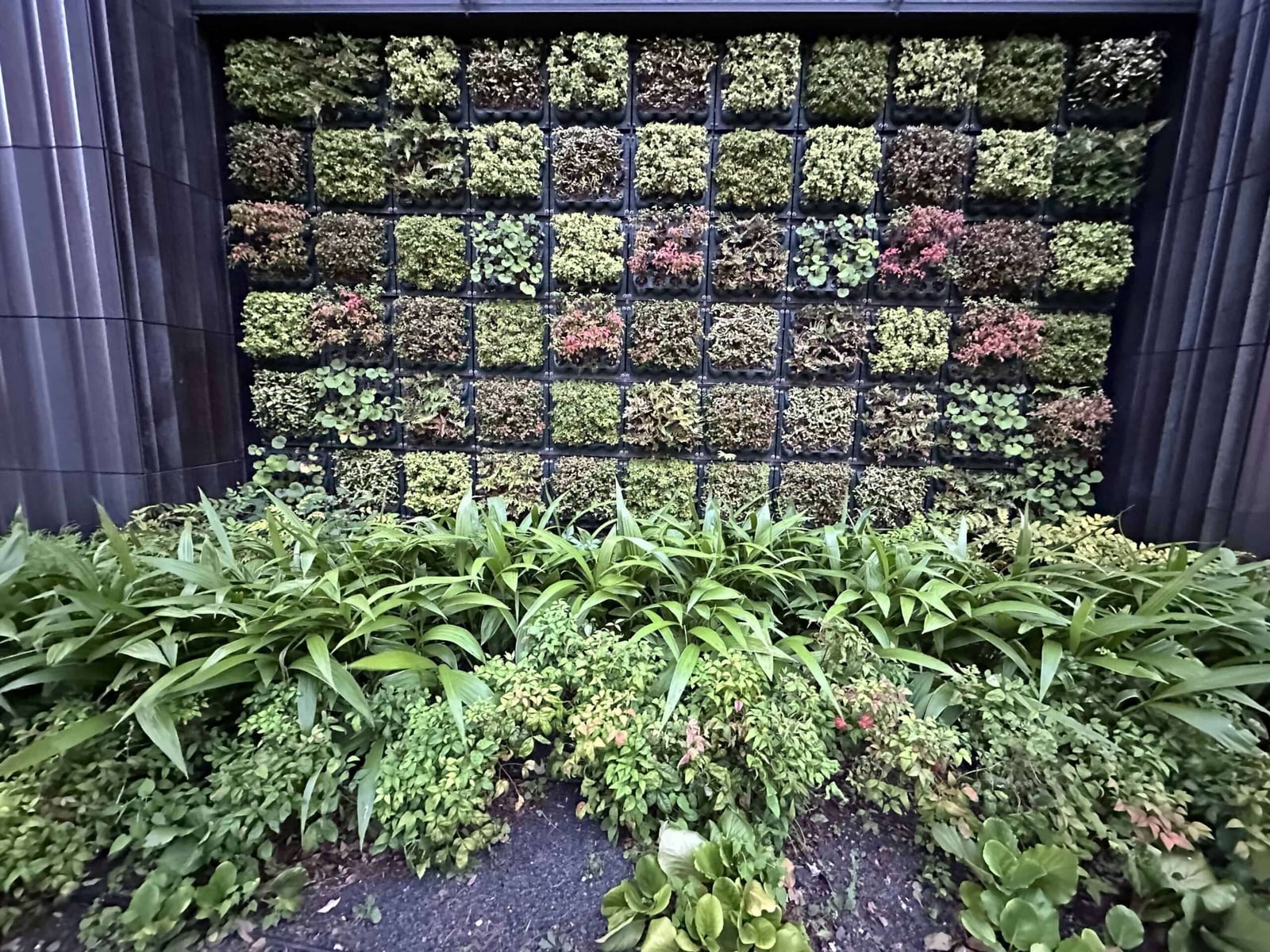
Modular plant containers in dark metal create a clean grid across this exterior wall, but the planting itself softens the geometry into something closer to a tapestry. Trailing and upright species mix in each module, so no single plant dominates. The overcast light mutes the contrast and lets the varied greens, pink blooms, and brown foliage look one cohesive surface. The layout works because the grid is regular enough to feel intentional but varied enough to avoid looking like a product display.
Abstract painting with green hues above armchairs
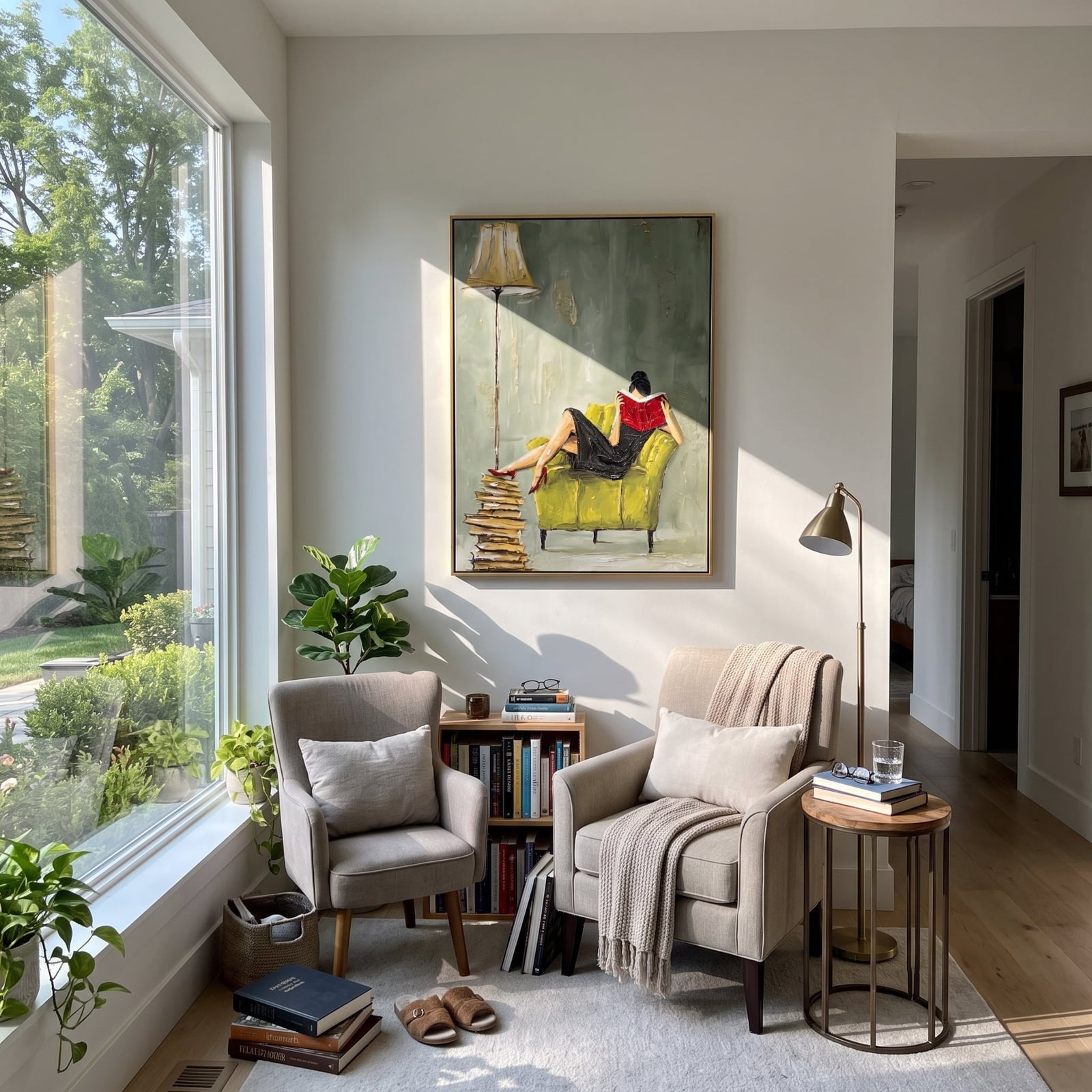
This room proves that a large abstract painting in green hues can define a seating area without overwhelming it. The canvas hangs above two armchairs, its scale matching the width of the furniture below. The palette stays restrained: beige walls, white trim, and wood tones on the side table and bookshelf keep the eye on the art. A floor lamp adds warm light for reading, and natural light from the window balances the room during the day. For a similar setup, match the width of the art to the furniture beneath it. Too narrow and the piece feels lost; too wide and it crowds the chairs.
Serene bathroom with abstract green artwork
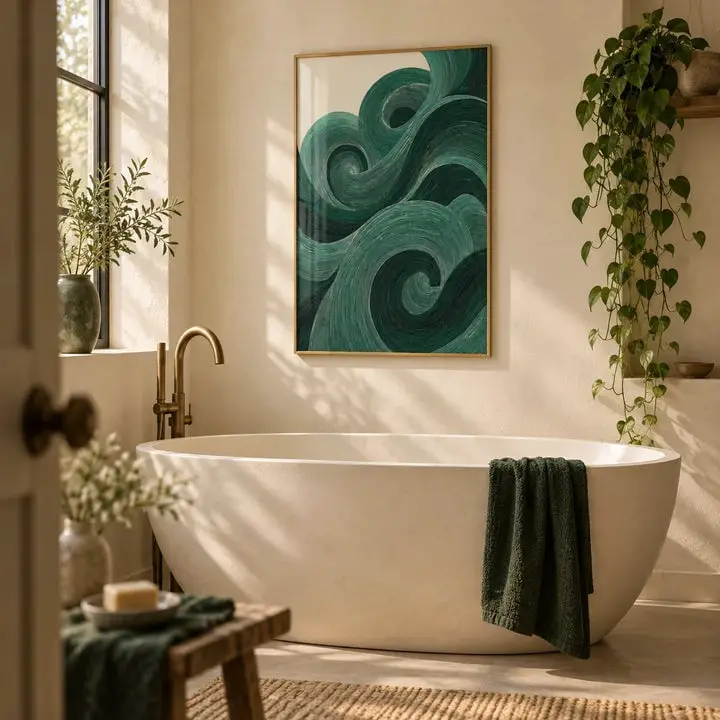
A single piece of art can set the whole mood of a bathroom, especially when it brings in a green hue. The abstract green artwork hangs above a freestanding bathtub, making it the natural focal point in a room with cream walls and beige stone. Gold, brass, and wood accents appear in the frame, the stool, and a small shelf, adding warmth without clutter. Natural light keeps the space feeling open, even as the art draws the eye. The style here is modern but not cold, with the green artwork providing the main color anchor. What defines this look is the restraint: the palette stays within green, cream, gold, and beige, so the art appears as a deliberate choice.
Modern patio vertical garden against corrugated metal
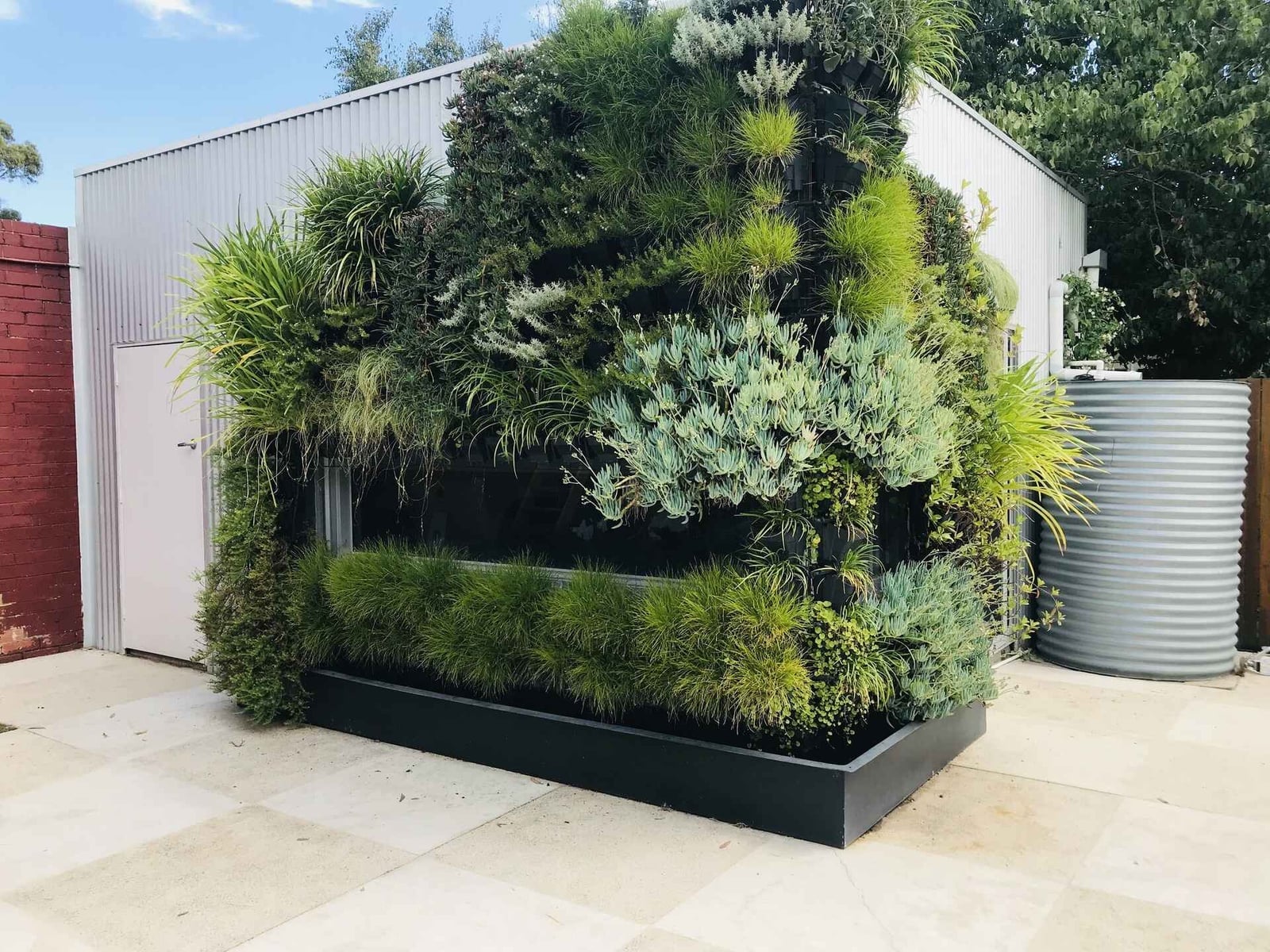
A lush vertical garden set against corrugated metal creates a modern contrast that is both practical and visually striking. The shades of green foliage pop against the gray metal and beige stone, making the plants the clear hero of the patio. A water tank nearby suggests the system is self-contained, which matters for outdoor setups where consistent watering can be a challenge. The metal surface adds an industrial edge, while the dense planting softens it. For a similar effect, check your USDA zone for plants that thrive in your climate and sun exposure before choosing varieties.
Outdoor wall with tiered green vertical garden
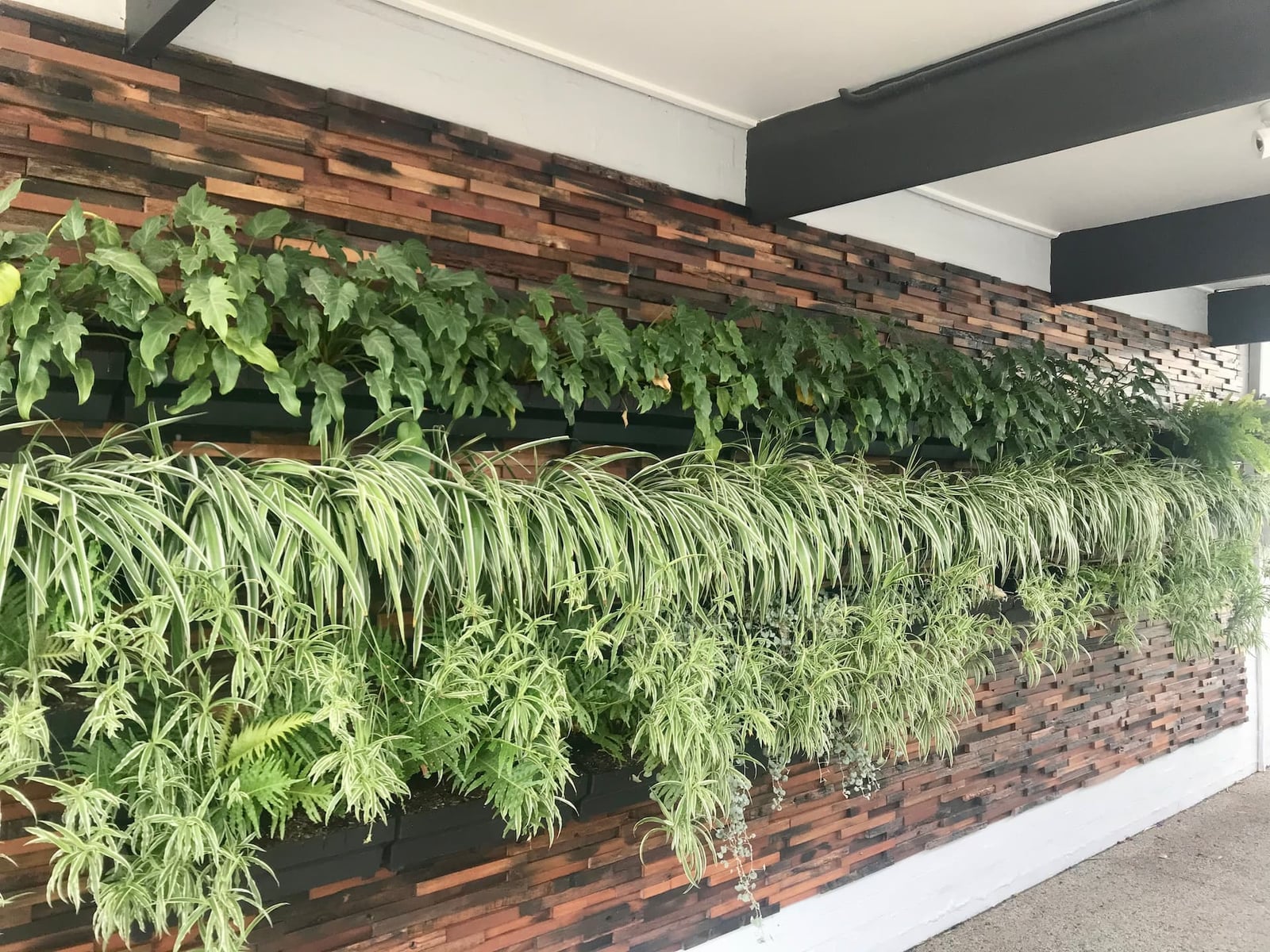
A practical rule for outdoor vertical gardens is to use tiered planting on a slatted wall, which gives each plant its own space and light access. Here, black planters are mounted on a wood slatted wall, holding lush green and variegated foliage in a mix of textures. The tiered layout means taller plants do not shade the lower ones, a common pitfall with ground-level beds. Brown wood and white accents keep the look natural, while the black planters recede so the foliage stays the focus. This arrangement works for renters too, since the planters can be removed without altering the wall structure.
Eclectic office with deep green walls and brass shelving
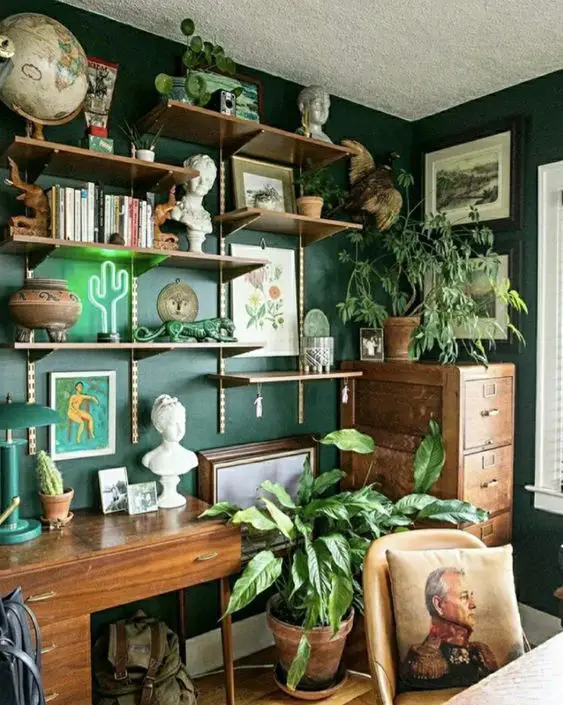
A deep green wall might feel heavy in a compact room, but this corner office balances it with brass and warm wood. The wall-mounted shelves hold a mix of ceramics, glass, books, and a globe, while a neon cactus light adds a playful note. A desk lamp provides task lighting and daylight keeps the green from feeling too dark. What breaks the potential heaviness is the brass: it reflects light and adds a golden tone that lifts the whole palette. The wooden desk and filing cabinet ground the space, making the deep green wall feel like a backdrop instead of a burden. For a compact room, keeping the shelves open and the surfaces uncluttered helps the green work as a backdrop instead of a burden.
Vertical living wall with olive green sofas
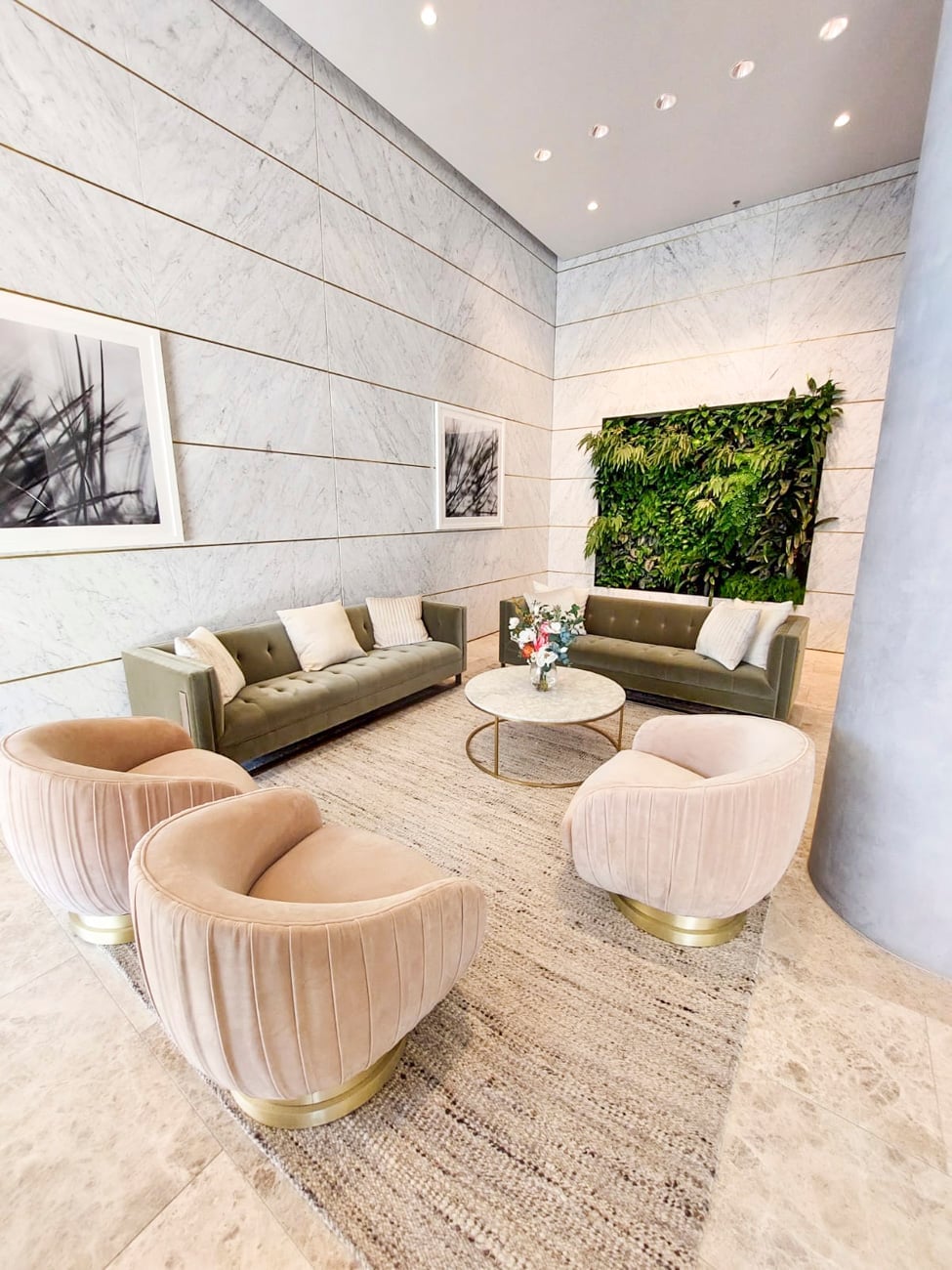
A vertical living wall in a lobby does more than add greenery; it creates a natural focal point that anchors the whole seating area. Olive green sofas and armchairs arranged around a coffee table pick up the green tones from the wall, tying the room together. Marble surfaces and brass accents add a neat contrast, while recessed ceiling lights keep the wall evenly lit. What defines this look is the color echo: the sofa fabric matches the dominant green in the living wall, so the seating feels connected to the architecture rather than separate from it.
Long white desk against a classy green wall
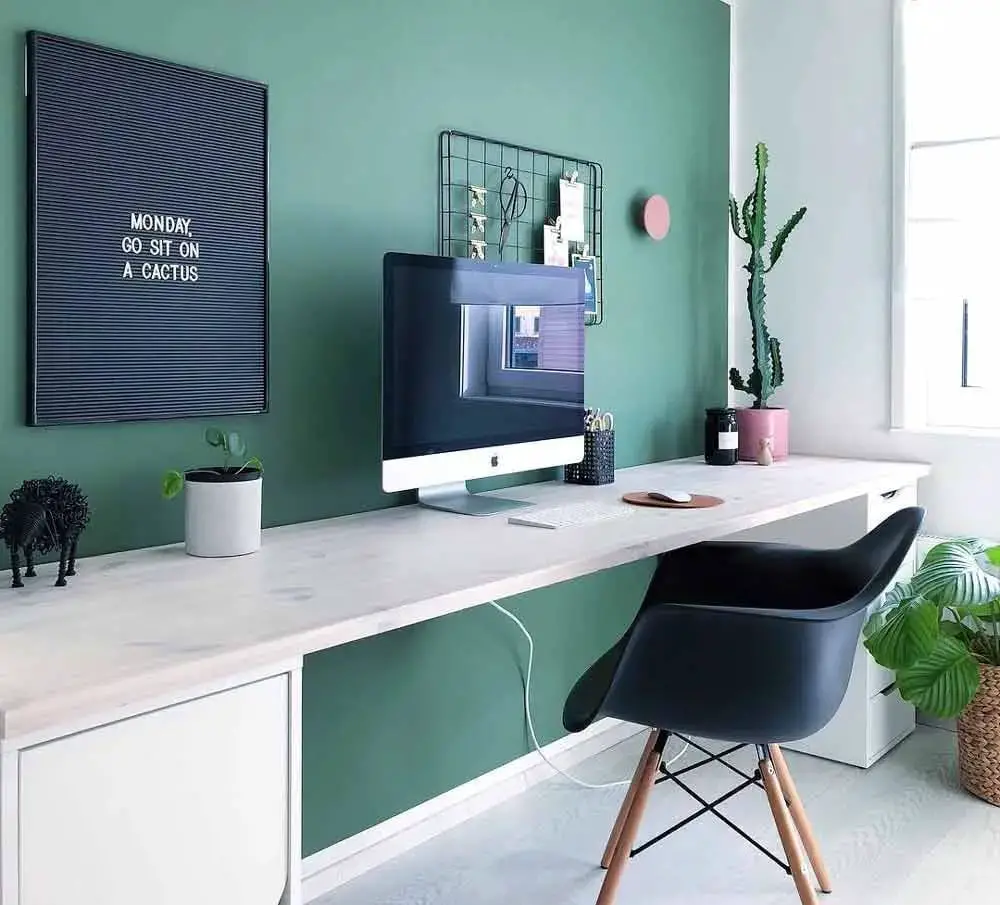
A green accent wall gives a home office a clear focal point without needing much else. The long white desk runs the length of the wall, keeping the work surface clean and uncluttered. A black chair and a computer monitor add contrast, while a potted cactus on the desk brings in a small natural element. The palette uses greens, white, black, and wood tones for a modern and grounded look. The key here is ratio: the green wall takes up enough visual space that the white desk feels like a deliberate counterpoint, not a leftover. Wood tones in the desk or floor warm the look without competing.
Grown-up living room with deep green walls and blush sofa
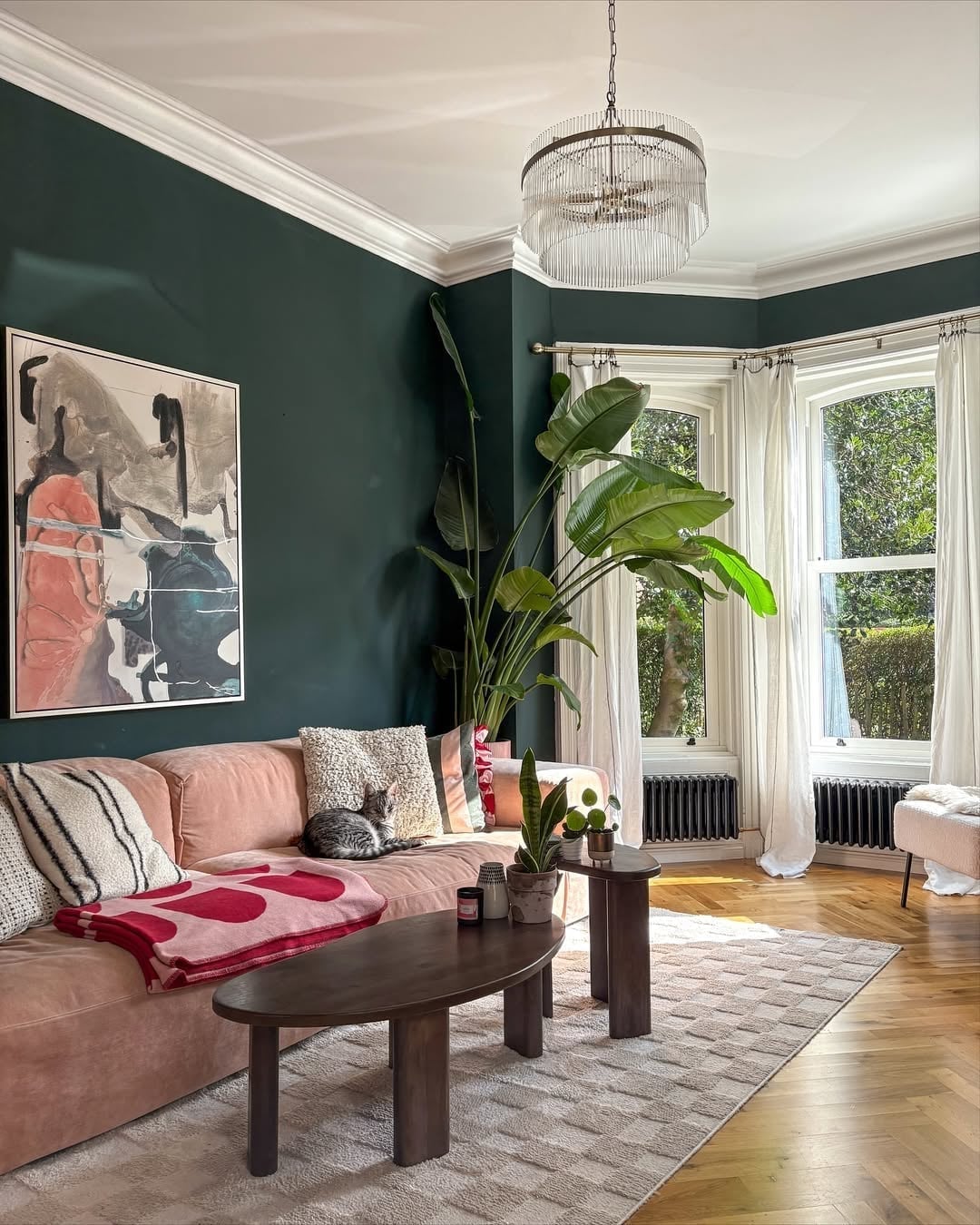
For a renter, the wall color can set the tone so furniture stays neutral and moveable. Deep green walls in this living room create a rich backdrop for a blush pink sofa, which sits directly against the green. An oval coffee table in wood tones sits in front, and a large potted plant near the window adds height. Abstract art on the wall picks up the same blush and green, tying the palette together.
Light from the window and a chandelier overhead keep the room from feeling too dark. The deep green looks grown-up because the pink and cream pieces break up the color. For a renter, this means you can paint one wall a strong shade and let the rest of the room stay light, so you get the drama without committing every surface.
Bedroom with calming sage green accent wall
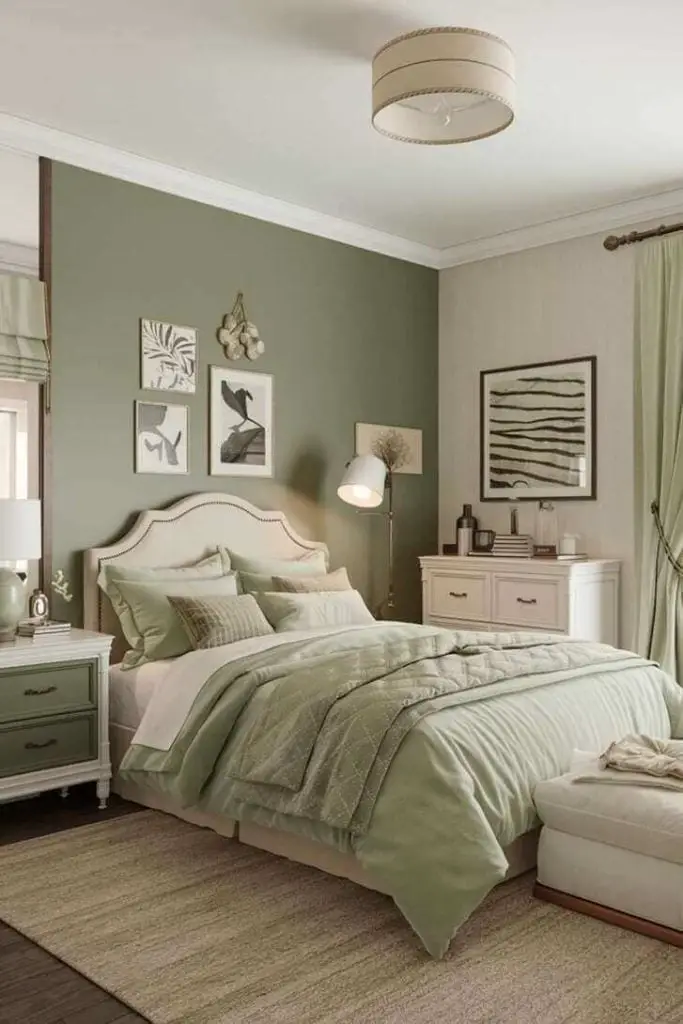
The sage green accent wall sits behind the bed, making the upholstered headboard and cream bedding the natural focus. Two nightstands flank the bed, each with a lamp, and a dresser sits to the side. An overhead drum light and a floor lamp provide ambient light. The sage green is soft enough that the cream and beige fabrics look warm, not washed out. The style depends on that balance: the accent wall defines the room, but the bedding is the hero element, so the green stays in the background where it belongs.
Emerald green accent wall with neutral sofa
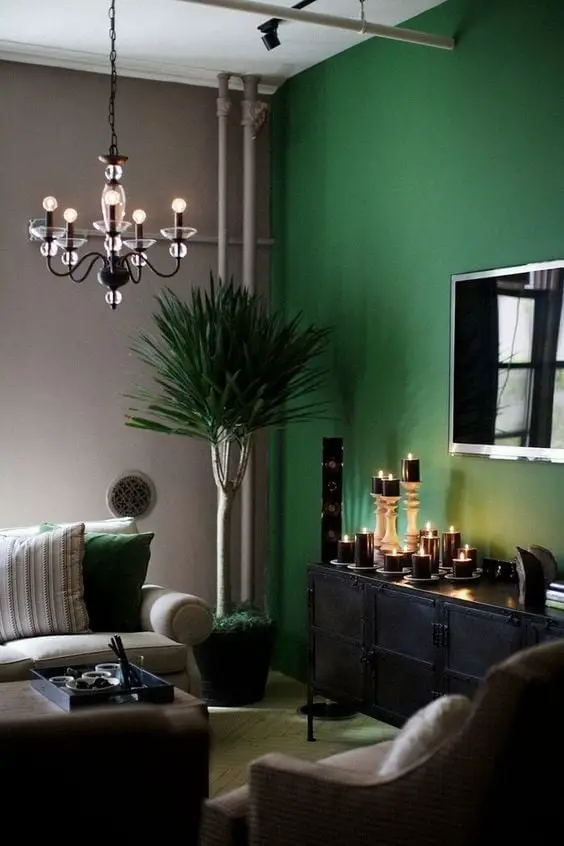
An emerald green accent wall turns a corner of the living room into a deliberate color moment. The wall is vibrant and saturated, while the sofa stays in a neutral beige and the console table adds black. A chandelier overhead and track lighting highlight the wall, and candles on the console add a softer glow. The palette works because the green is the only saturated color, so the beige and black pieces support it without competing. A large plant near the wall echoes the green in a natural form. The takeaway is that a single bold wall can anchor a room when everything else stays restrained.
Living room with sage green walls and fireplace
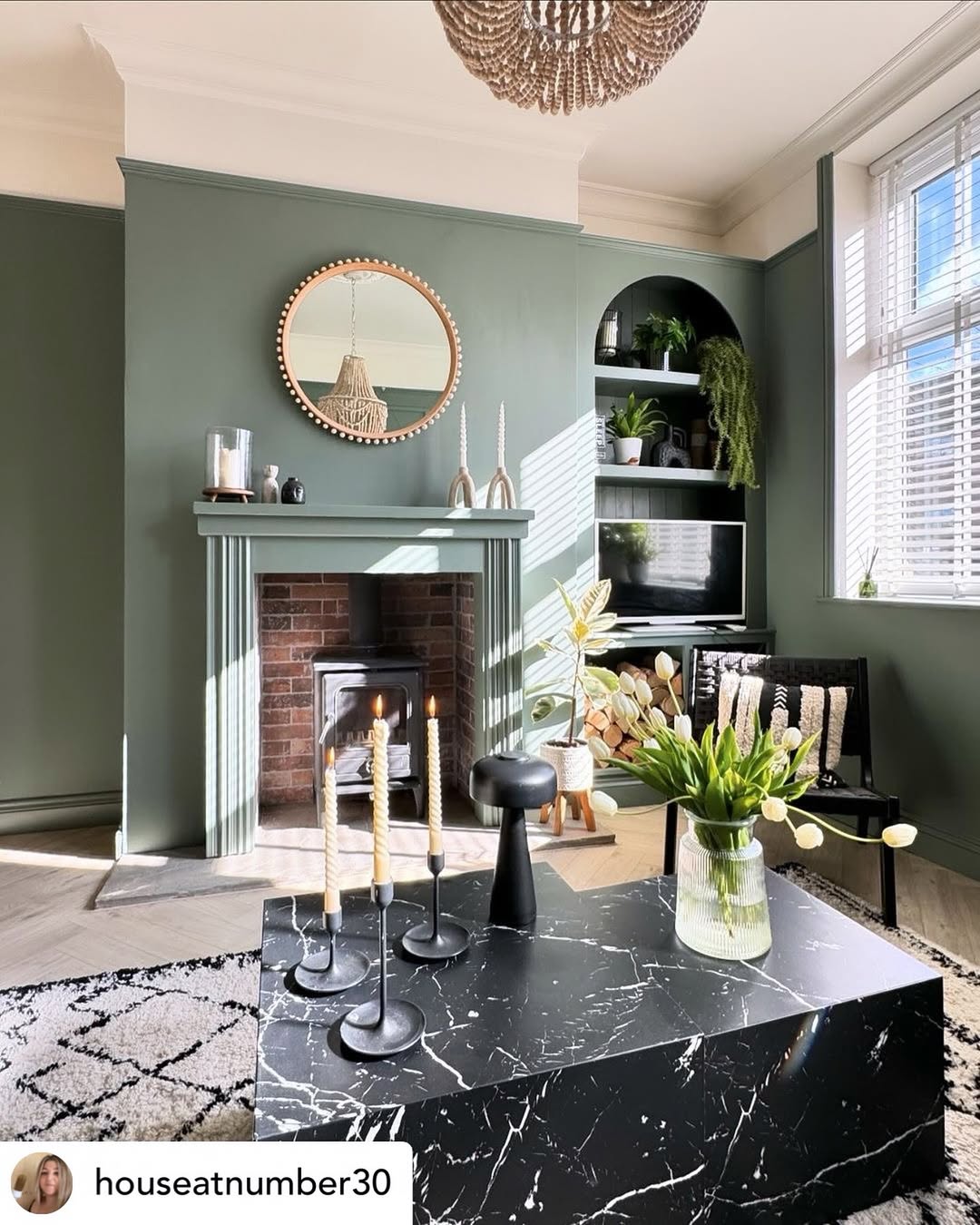
Sage green walls can feel safe, but here they get weight from a fireplace and built-in shelving on the same wall. The fireplace has a wood burning stove with a brick surround and a marble hearth, so the green becomes a calm backdrop. A coffee table in wood and glass sits in front, and the built-in shelves hold books and objects in black and white. Natural light from windows and a chandelier overhead keep the room bright.
The difference between sage that works and sage that falls flat is the materials around it. Brick, marble, and dark wood give the green something to push against. Without those heavier elements, the same paint can feel unfinished. Candles on the mantel add a soft light that warms the green in the evening.
Living room with deep green walls and velvet sofa, indoor
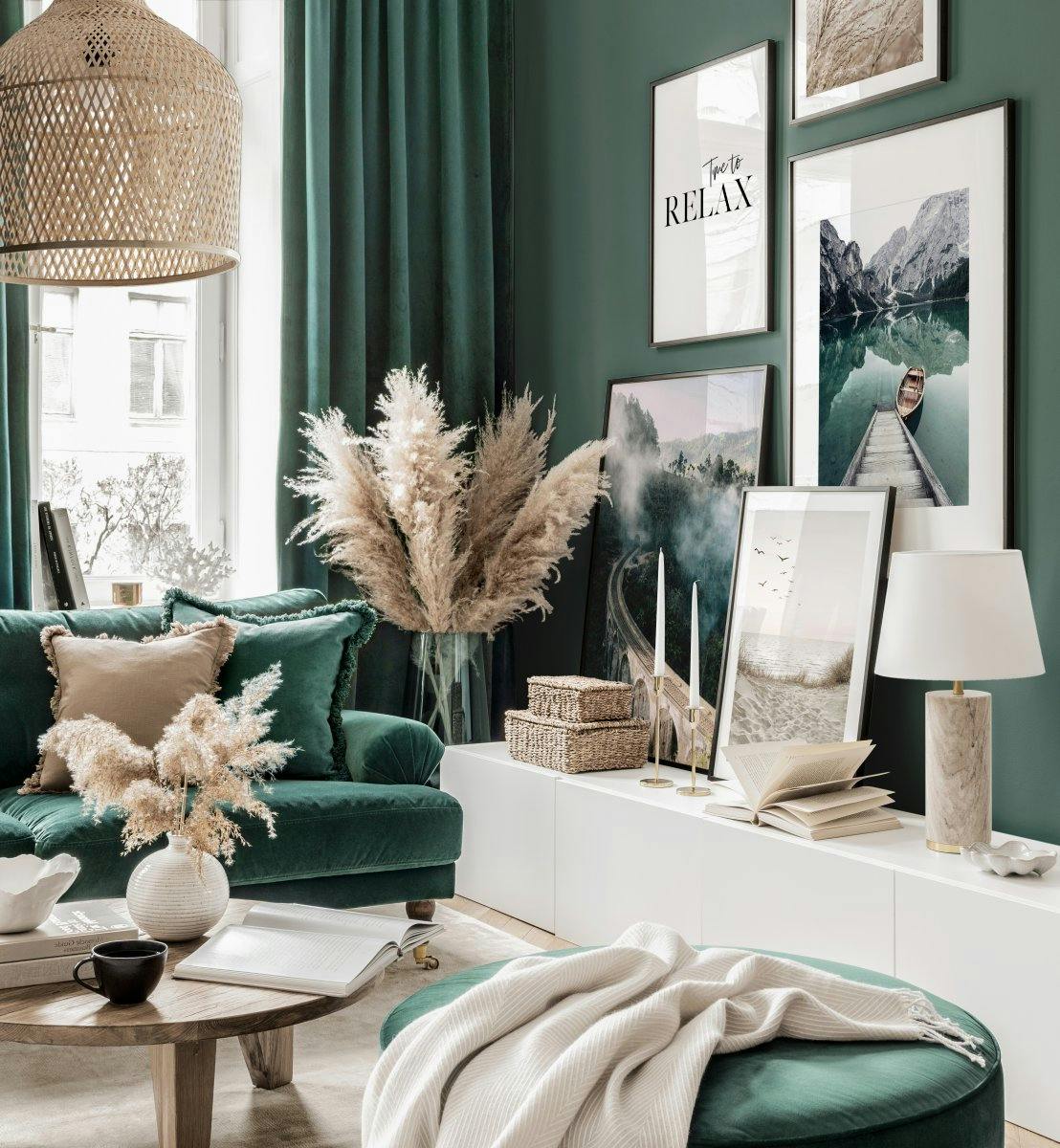
A gallery wall above a white media console is the natural focal point here, but the deep green walls give the whole room its weight. Beige, white, and natural wood tones keep the green from feeling heavy. A green velvet sofa, round coffee table, and large pampas grass arrangement create a cohesive look without competing. Natural light from a window, a table lamp, and a pendant light layer the room so it stays bright throughout the day. Wood, marble, glass, and wicker keep the texture interesting without adding more color.
Mid-century living room with green grasscloth wallpaper
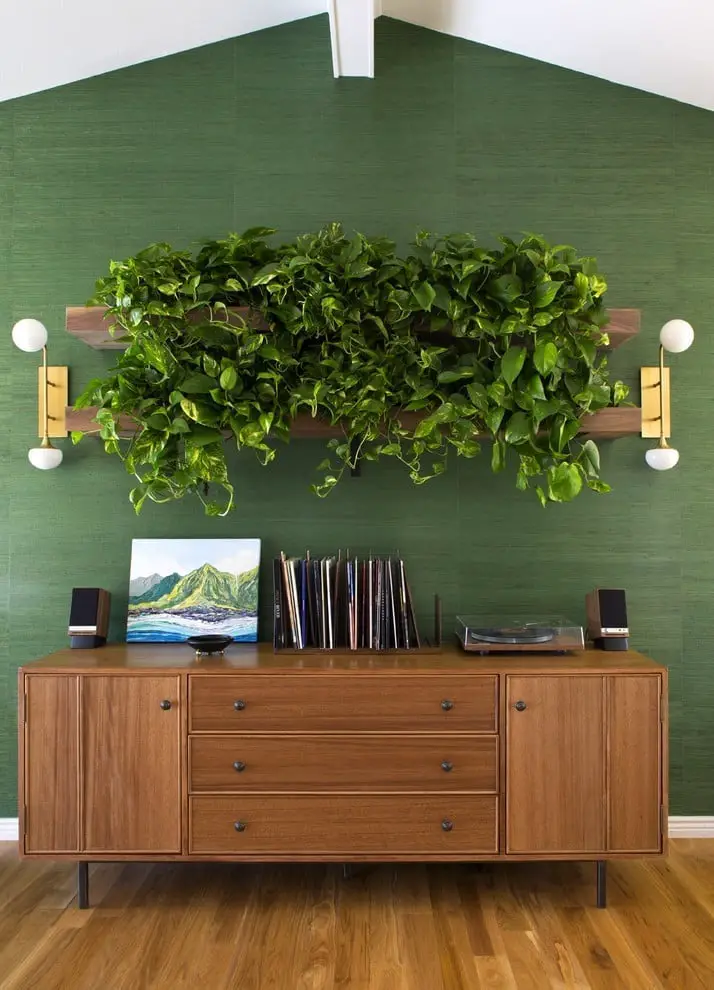
The green grasscloth wallpaper sets the tone here. A walnut credenza and a hanging planter create a clean vertical line, while wall sconces add warm brass accents against the textured wall. The palette stays in deep green, wood tones, brass, and white for a mid-century modern look. The hanging plant breaks the straight lines of the credenza below it, giving the room a natural, lived-in quality. Ambient light from the sconces softens the grasscloth texture so the wall feels rich without being overwhelming.
Final Thoughts
Green walls work because they offer a natural anchor for a room without overwhelming it. The key is choosing the right shade and texture for your space, then letting the rest of the decor stay simple. A living wall needs consistent watering and light, so check your climate and commitment level. Painted walls are lower upkeep but benefit from good primer and proper sheen. Either way, green brings a calm, grounded feel that ages well. Take your time picking the version that fits your daily life.