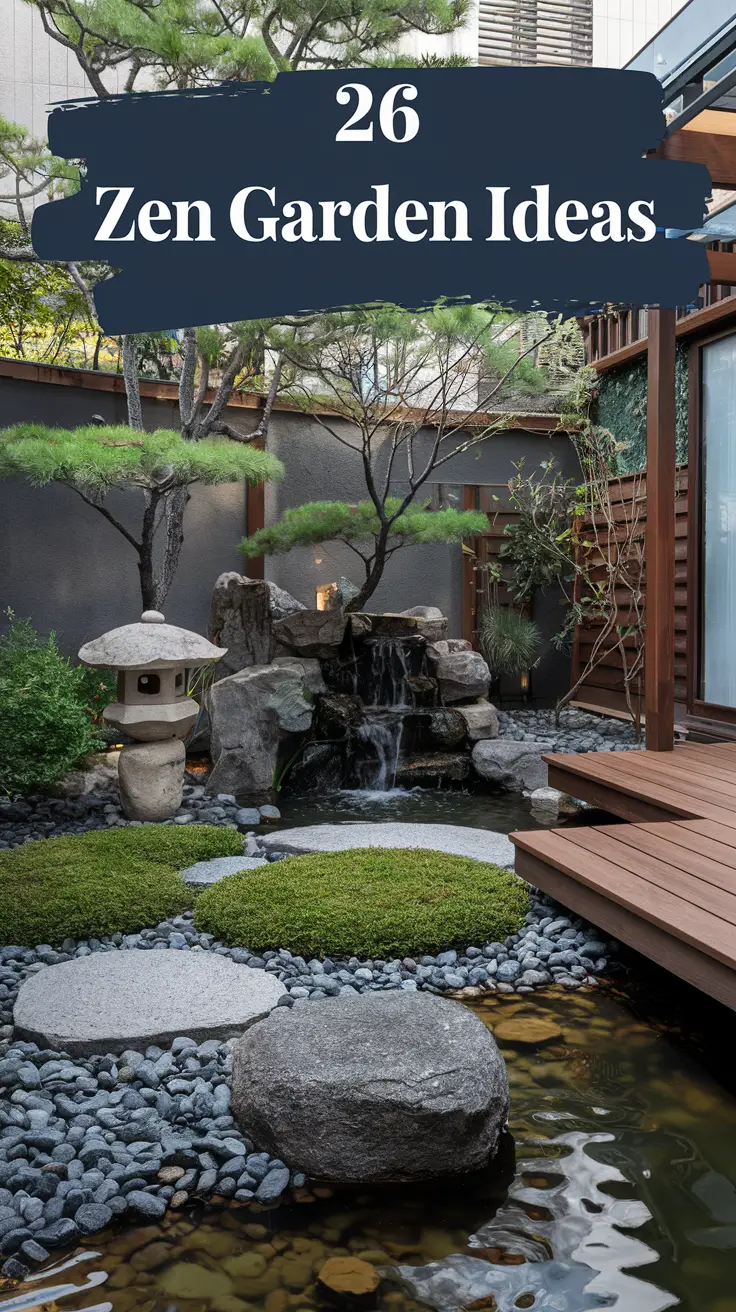
A rock garden can feel like an afterthought, but these 30 sharp rock garden ideas for 2027 prove otherwise. From a naturalistic slope with flowering accents to a compact balcony with a stone pathway, each look treats rock as a design element, not a filler.
You will get practical takes on layout, plant pairings, and material choices that make a gravel bed or boulder border feel intentional, not accidental.
Naturalistic rock garden with flowering accents
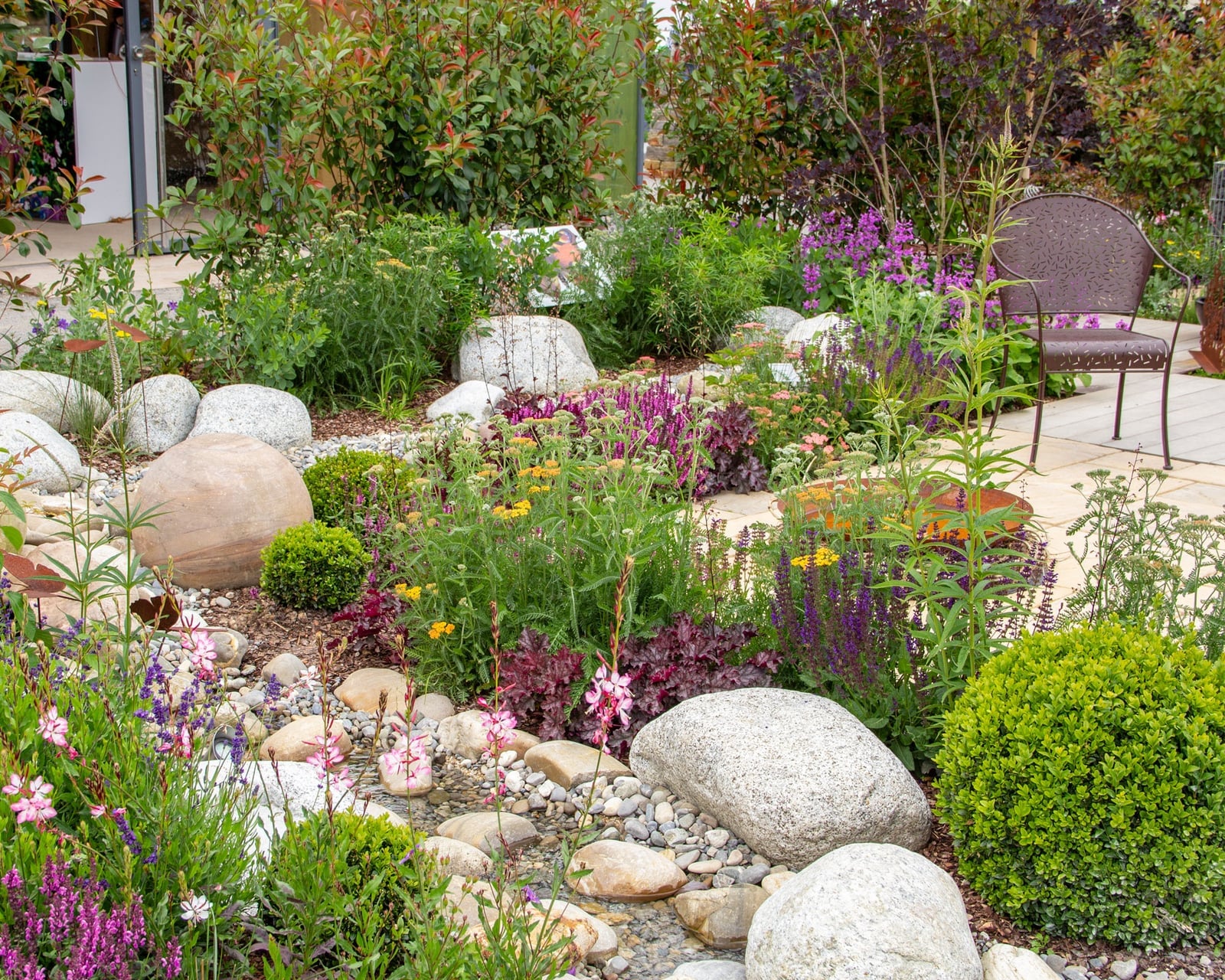
A roomy garden with a naturalistic layout relies on large boulders to anchor the scene, while ornamental grasses and flowering plants in pink, purple, and yellow soften the stone. A round metal chair tucked among the beds gives the space a place to pause. The palette stays grounded in green and beige, so the blooms look accents rather than a riot. For a similar effect, let one smooth boulder act as the visual center, then build the planting beds around it in informal clusters.
Serene patio with stone steps and seating
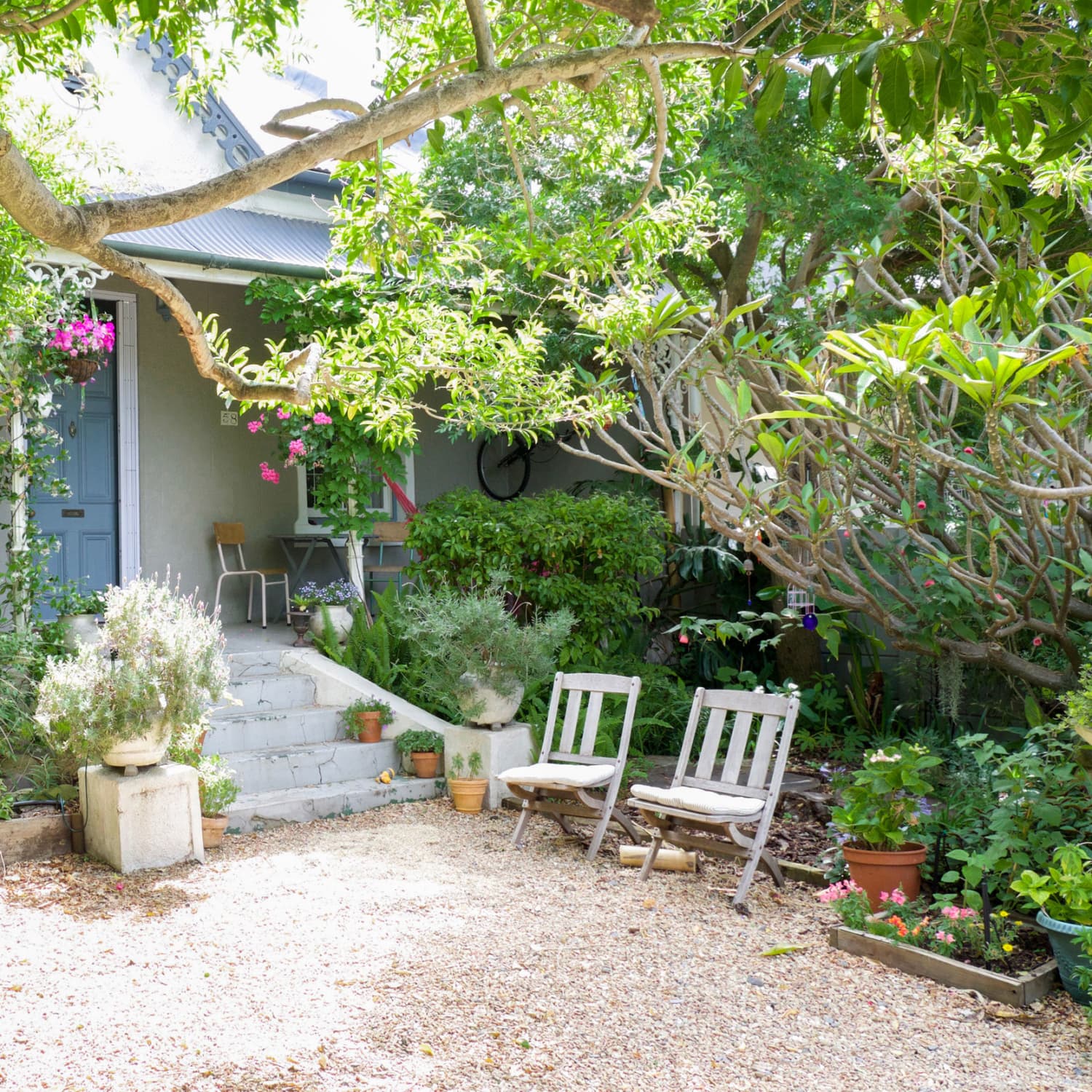
This patio earns its serene feel from a clear layout: a gravel path leads to stone steps, then opens into a seating area with folding chairs. The palette of green, gray, white, and pink keeps things calm, with potted plants adding softness without clutter. Dappled shade from overhanging greenery prevents the stone and concrete from feeling harsh. For a similar setup, place the seating where the path ends, so the walk becomes a transition into relaxation rather than just a route.
Winding river stone path with lush ferns
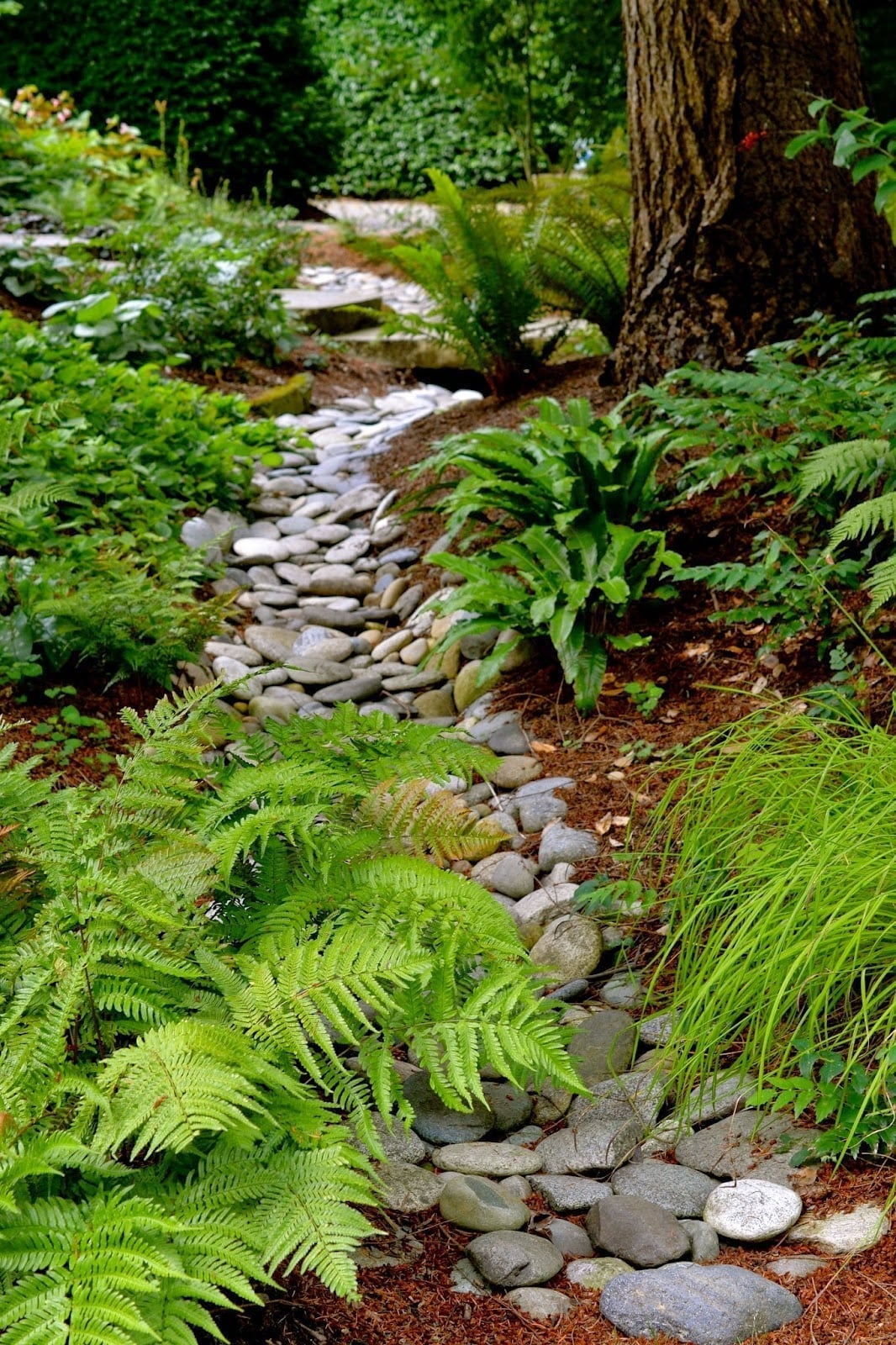
How do you make a path feel like it belongs in the garden rather than cutting through it? Use river stones set into a winding line, with bark mulch filling the gaps to keep weeds down. Dense ferns and ornamental grass on both sides soften the edges, so the stone looks part of the landscape. A large tree nearby adds vertical weight and shade.
To blend the path in, choose stones in muted grays and browns that match the local soil. The curve matters more than the width; a gentle S-shape slows the walk and reveals the planting in stages. Skip straight lines here, they would fight the naturalistic style.
Orange geum contrast with purple alliums and blue irises
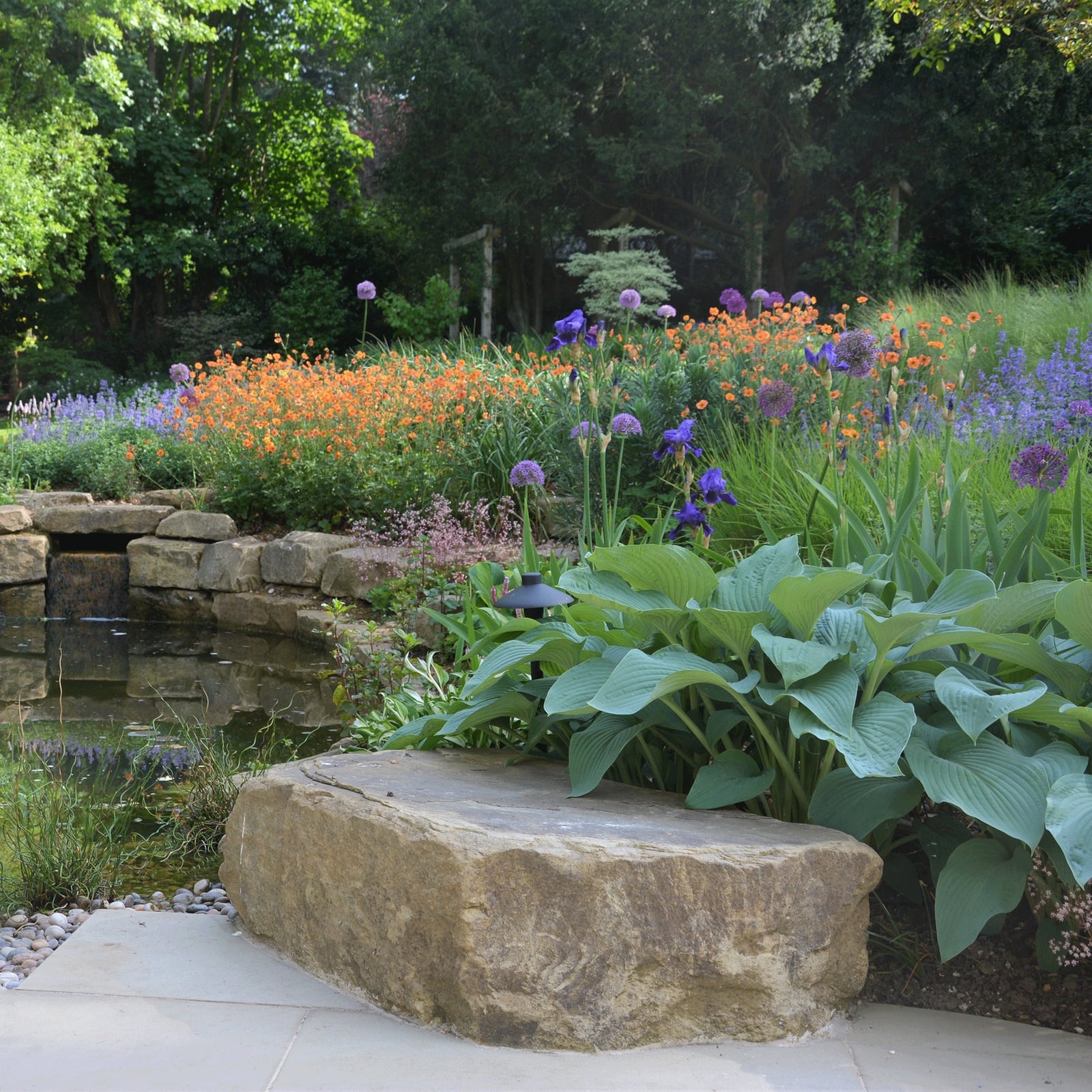
A rock garden with a pond gains energy from color contrast. Orange geum flowers sit near purple alliums and blue irises, creating a warm-cool tension that draws the eye. A large boulder and hosta plants anchor the tiered planting beds, while a stone seat offers a spot to take it in. A garden lantern nearby hints at evening use. To get this palette, repeat the orange and purple in clusters so the contrast is clear.
Rustic backyard with tiered raised beds
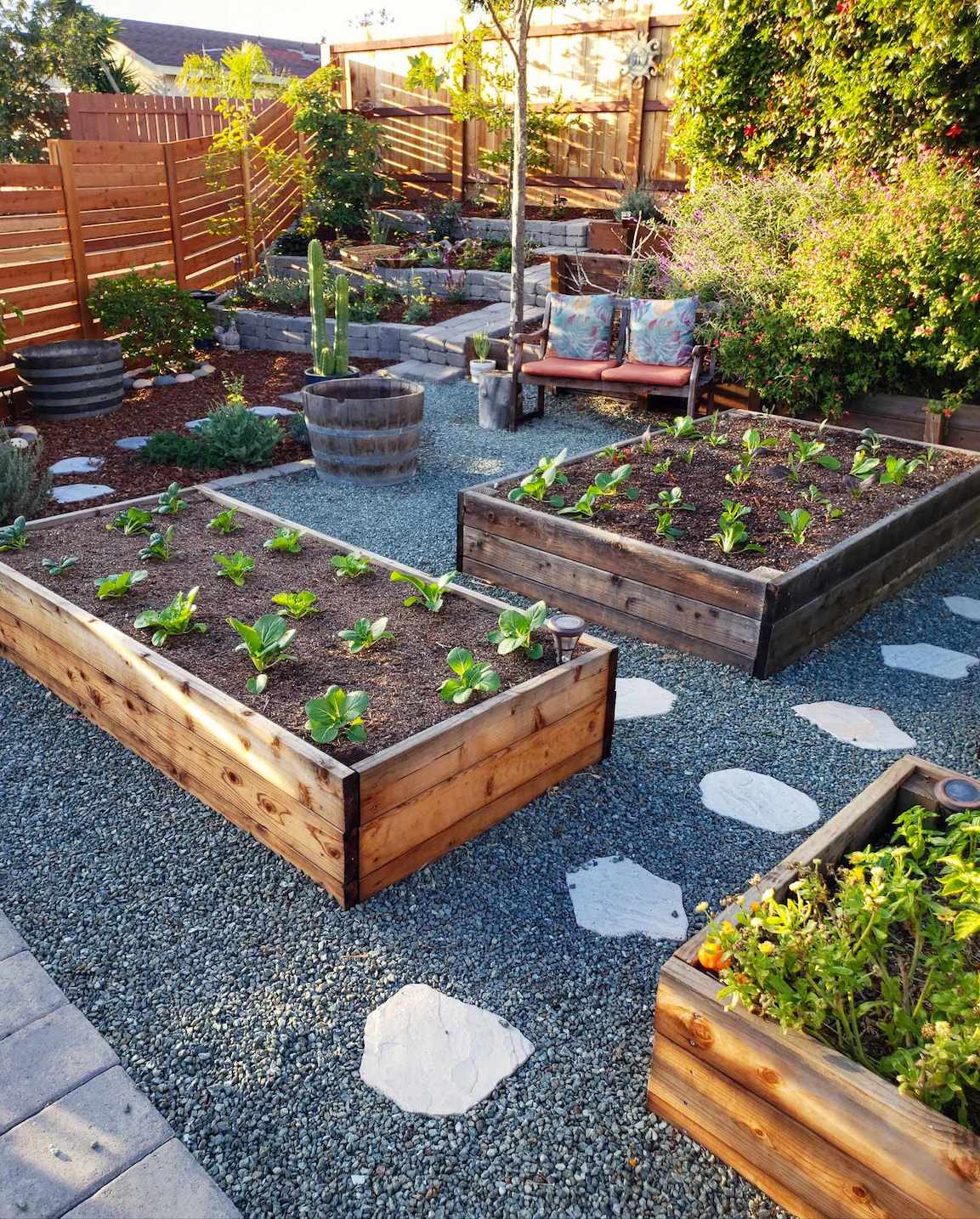
A sloped backyard can be transformed with tiered raised beds to turn grade into growing space. Here, wooden raised beds step up the hill, with gravel pathways and stone stepping stones connecting each level. A wooden bench and barrel planters add storage for tools or pots without crowding the layout. The rustic palette of brown, green, and gray keeps attention on the plants, while orange accents from flowers or foliage add warmth. To replicate this setup, keep the path wide enough for a wheelbarrow.
Modern garden with sculptural succulents and vases
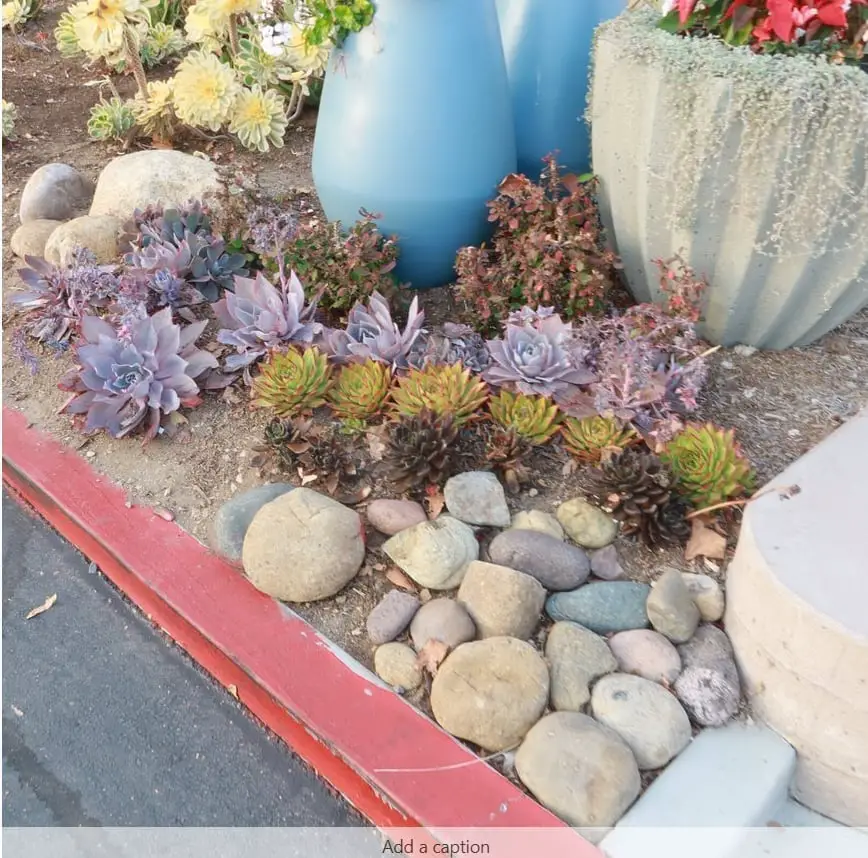
A modern rock garden does not need a sprawling footprint or a full-time gardener. This compact vignette proves the point with a ground-level planting of succulents in varied shapes and colors, from spiky blues to rounded purples. A concrete planter and a pair of large blue ceramic vases add structure. Decorative stones fill the gaps between the succulents, creating a clean, dry surface that defines the modern succulent garden style. The palette uses cool grays and blues, with the red tones in a few succulents providing a deliberate break. For a similar effect on a balcony or a narrow side yard, start with one concrete container and a mix of rosette and trailing succulents, then spread pebbles around the base.
Clean border transitions lawn to beige tiled patio
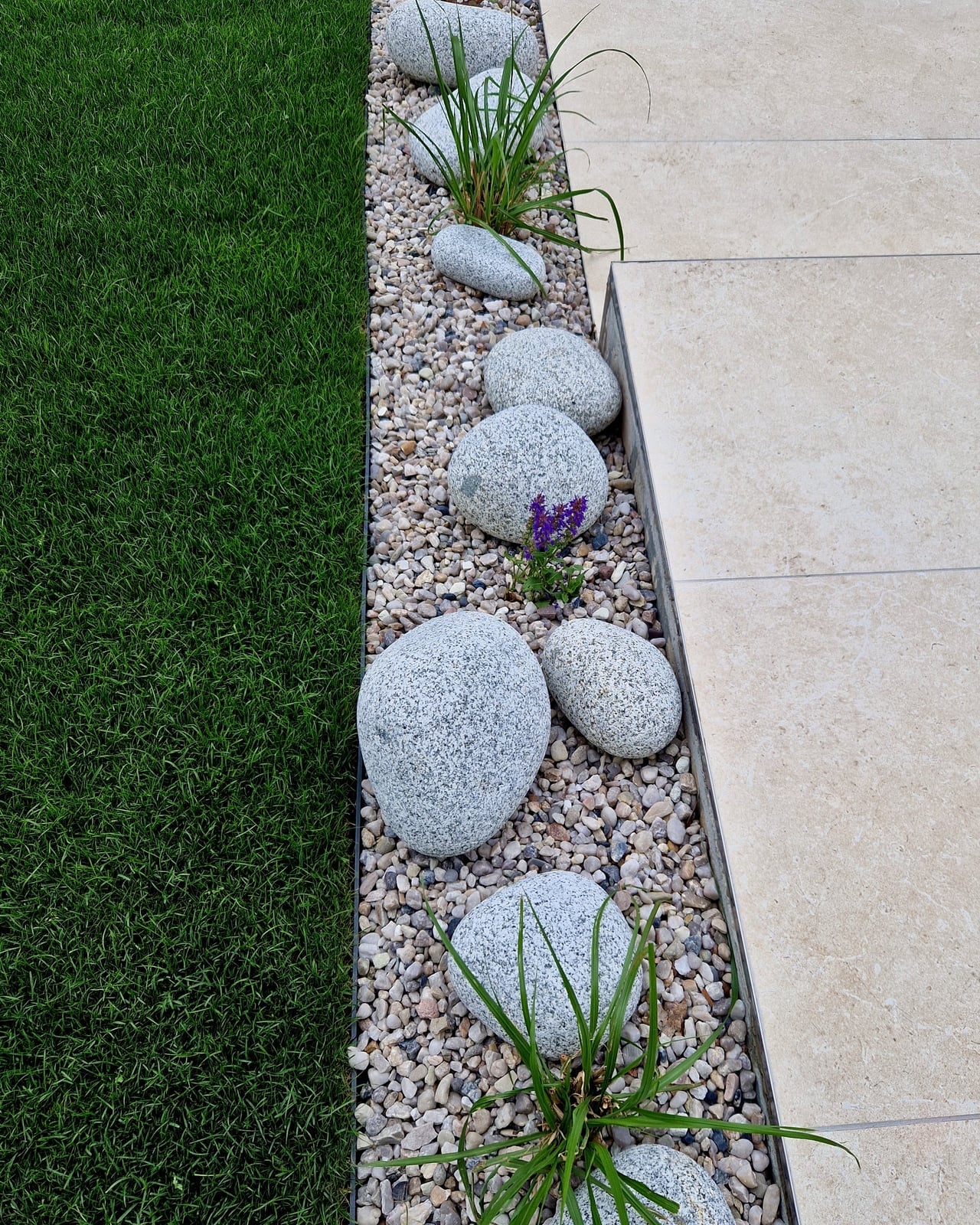
A clean border between lawn and patio makes both areas look planned. This design uses large rounded gray stones as a transitional edge, with smaller pebbles filling the gaps and a line of ornamental grass and purple flowers softening the hardscape. The beige tile patio feels like an extension of the house, while the rock garden border keeps the lawn from creeping onto the tiles. For a renter, this effect is achievable with a row of bagged pebbles and a few potted grasses placed along the patio edge.
Purple allium and pink rhododendrons frame pergola
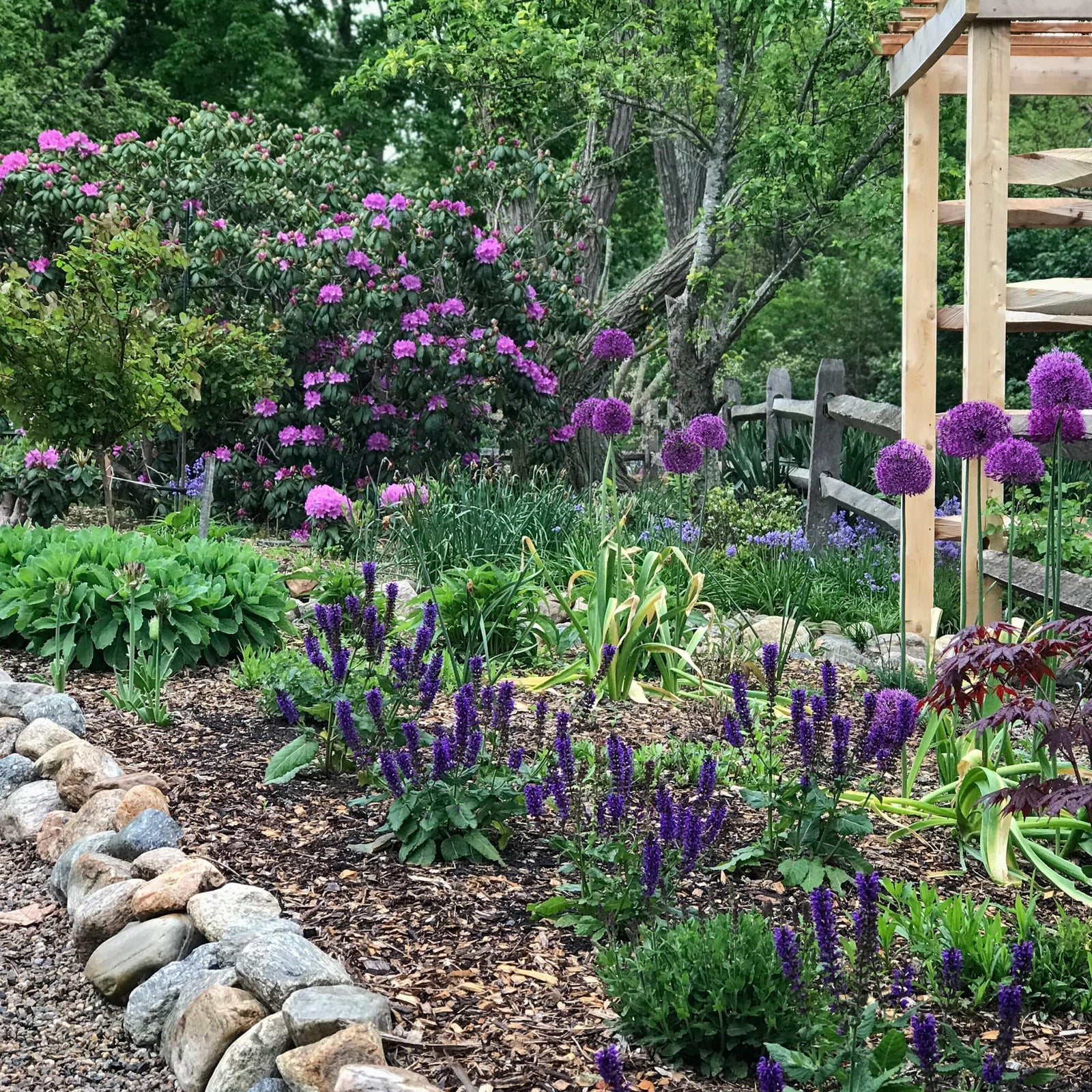
This cottage garden leans into contrast. Spherical purple allium blooms rise above a dense rhododendron bush, while pink rhododendron flowers echo the wood tones of the pergola overhead. A stone border defines the planting bed, and a layer of mulch keeps the soil moist and the weeds down. The palette is a straightforward mix of purple, pink, and green, with the spherical alliums adding a structural element that the softer rhododendron shapes lack. If your garden leans too green, adding a cluster of alliums is a low-effort way to introduce a clear color anchor.
Multi-tiered waterfall with cascading water and boulders
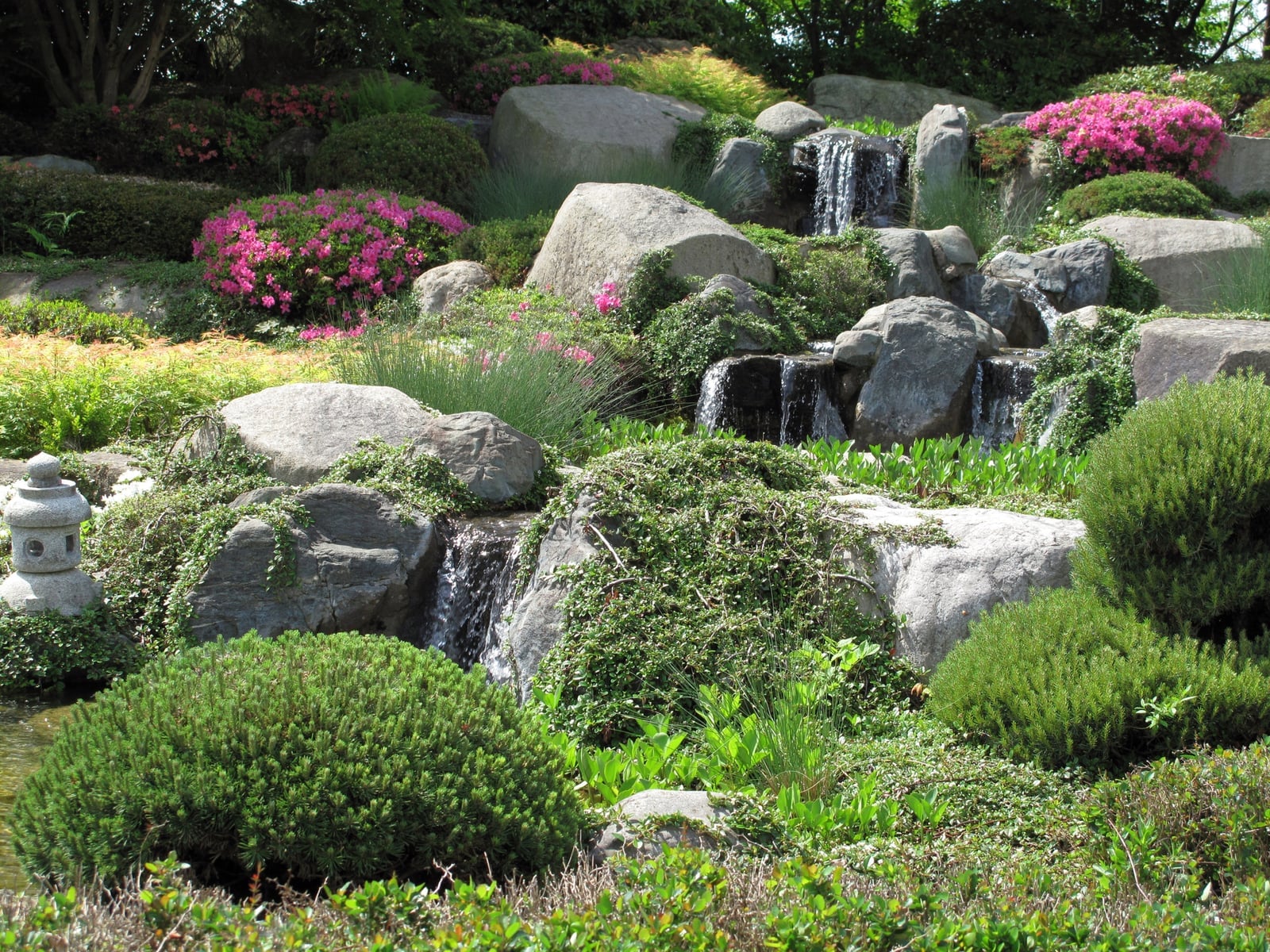
Can a water feature feel natural without looking like a swimming pool spillover? This Japanese-style waterfall answers with a multi-tiered rock formation where water cascades over boulders into a lower basin. Manicured shrubs and a stone lantern anchor the scene, while the sound of moving water masks street noise. The layout uses large boulders to create the tiers, with smaller stones filling the gaps. A pump recirculates the water, so the feature runs without a constant water supply.
The trick to making a multi-tiered waterfall look natural is varying the boulder sizes. If every rock is the same scale, the waterfall looks like a stack. Mix in a few flat stones to create ledges where the water can spread before dropping to the next level. A licensed landscape contractor should handle the pump and plumbing, but you can plan the rock placement yourself by arranging dry-laid boulders until the water path looks right.
Romantic cottage garden with rose-covered arch
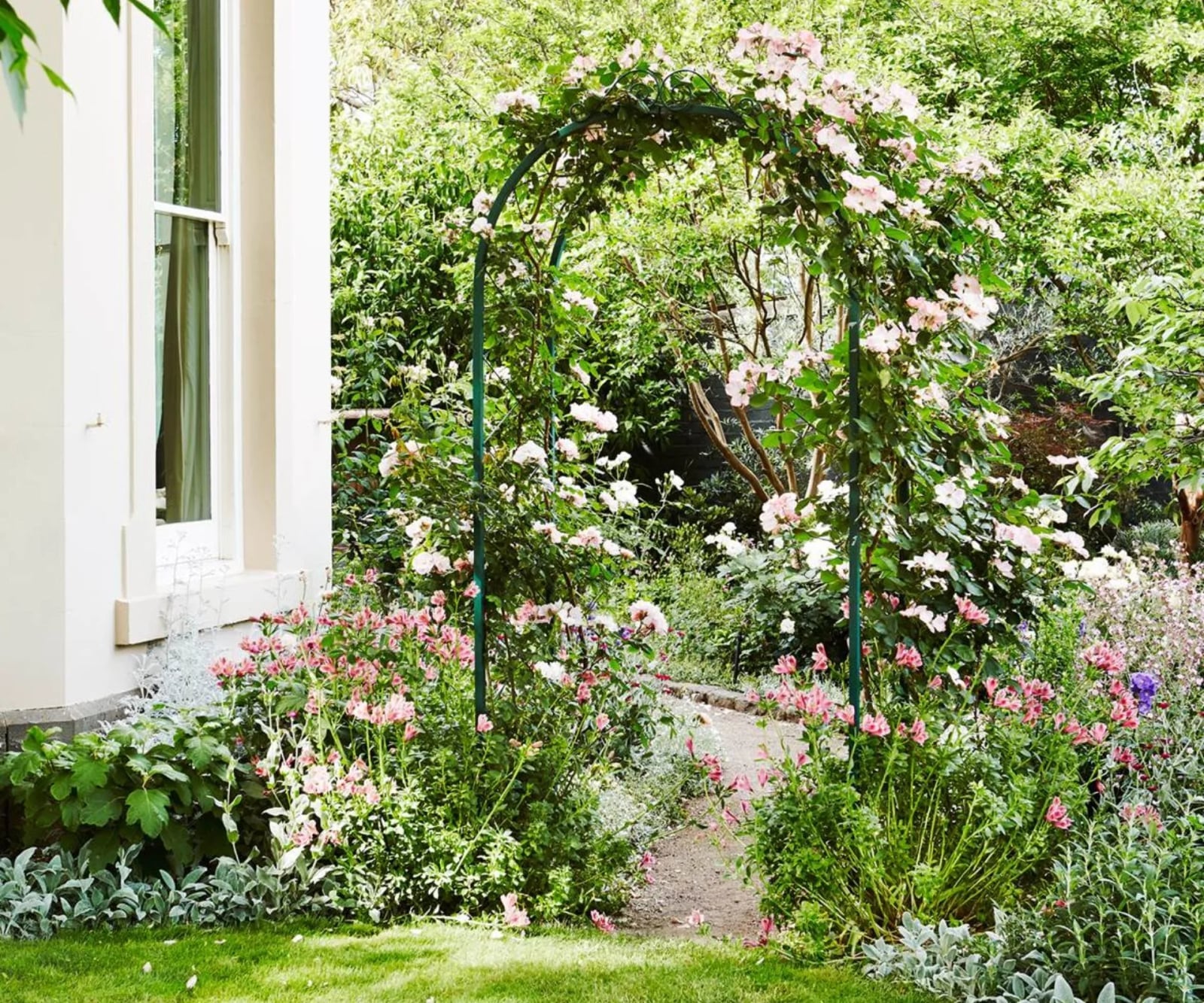
A metal garden arch covered in climbing roses creates a natural gateway between garden zones. In this design, the arch frames a gravel pathway, with flowering plants layered on both sides. The palette stays in soft pinks, whites, and creams against green foliage. The arch itself is a simple metal structure, letting the roses do the work. To get a similar effect, choose a climbing rose suited to your USDA zone and train it along the arch during the first growing season. The gravel path keeps feet dry and defines the route through the planting beds.
Concrete fountain surrounded by ornamental grasses
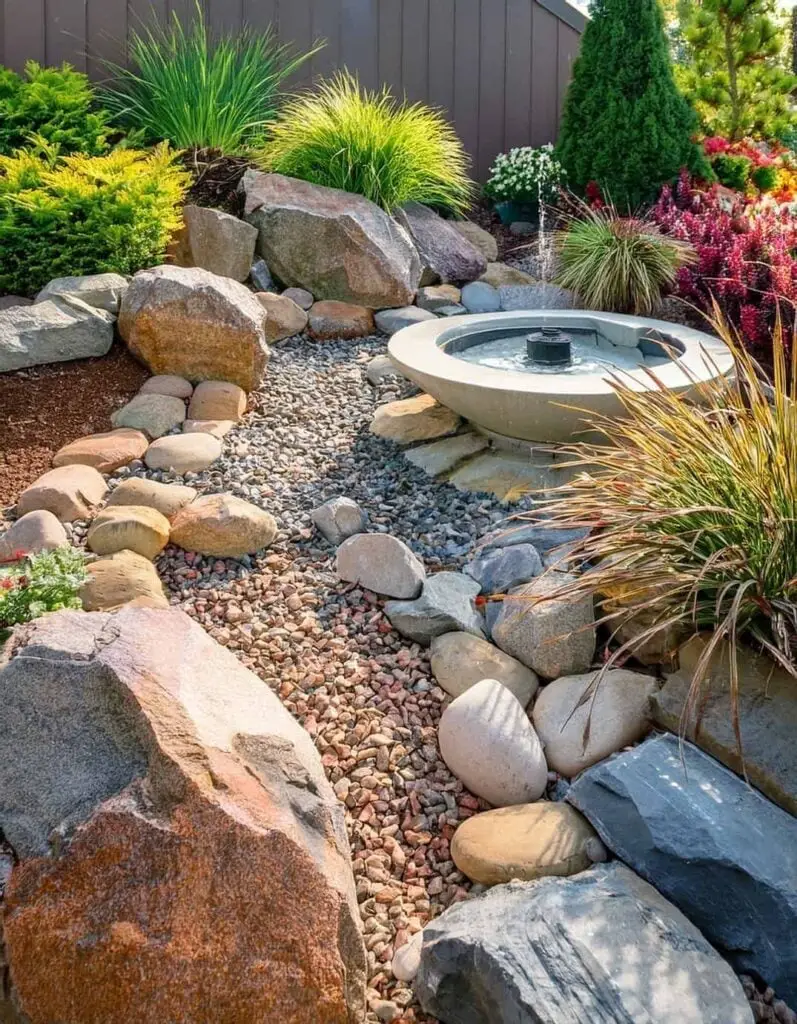
To place a water feature, let the hardscape lead the eye toward it without forcing a straight line. In this contemporary backyard, a concrete basin fountain sits at the center of a winding path made from gravel and a mix of large boulders and small river stones. The path curves naturally, drawing attention to the fountain while the tiered planting of ornamental grasses and flowering plants softens the stone edges. The palette uses grays, browns, greens, and touches of pink and yellow, so the fountain fits naturally into the garden. The layout keeps the walkway generous enough to move around comfortably, and the boulders anchor the space so the water feature does not feel out of place.
Rusted metal beds hold leafy greens and vegetables
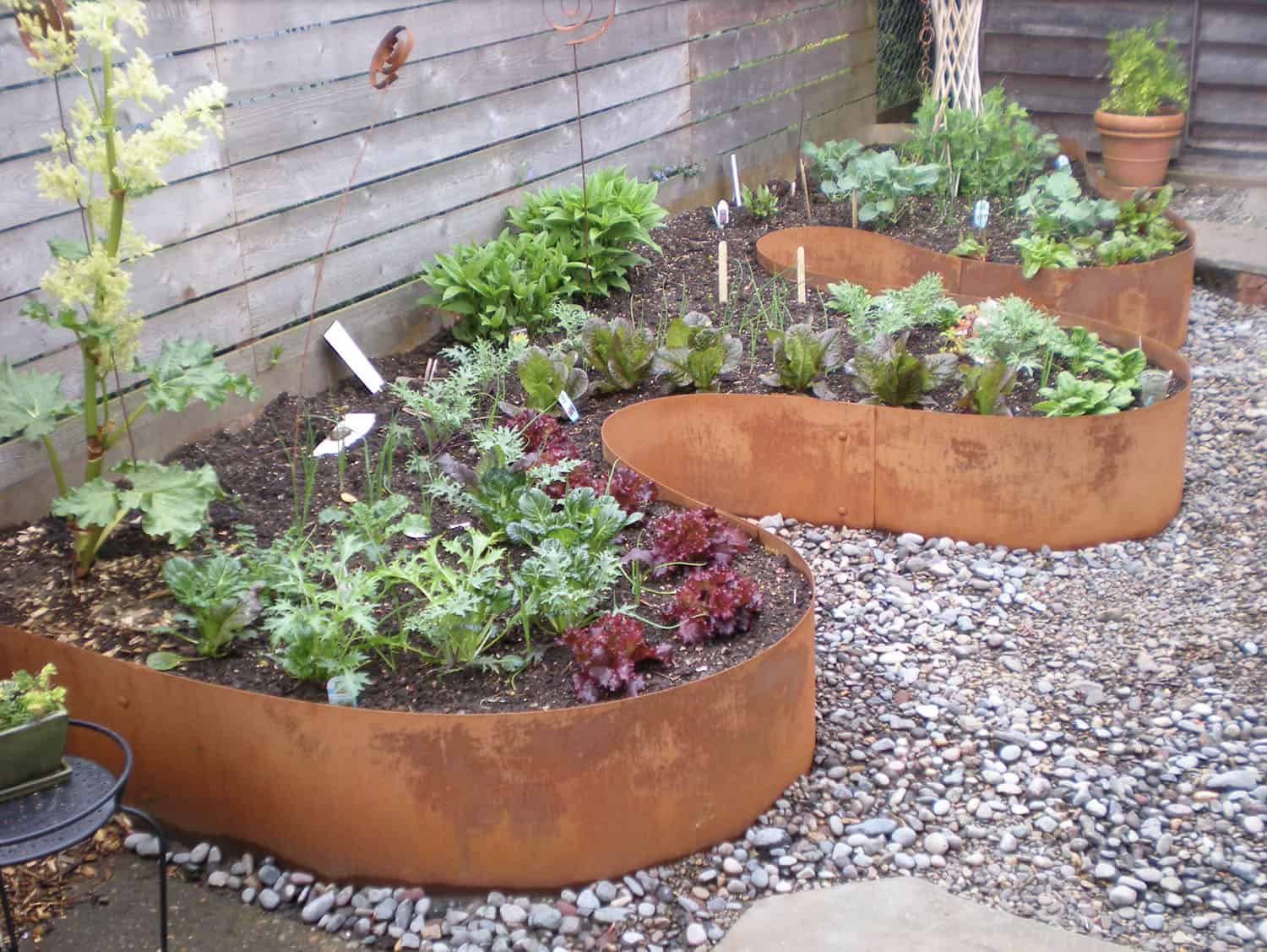
Raised beds in a vegetable garden often default to straight wooden boxes, but curved metal planters offer a different rhythm. In this compact backyard, rusted metal beds form serpentine, tiered rows that hold leafy greens and a rhubarb plant. The warm brown and red tones of the metal contrast with the green leaves, making the planting beds feel like designed elements rather than utility boxes.
Irregular stepping stones set in gravel overlook city
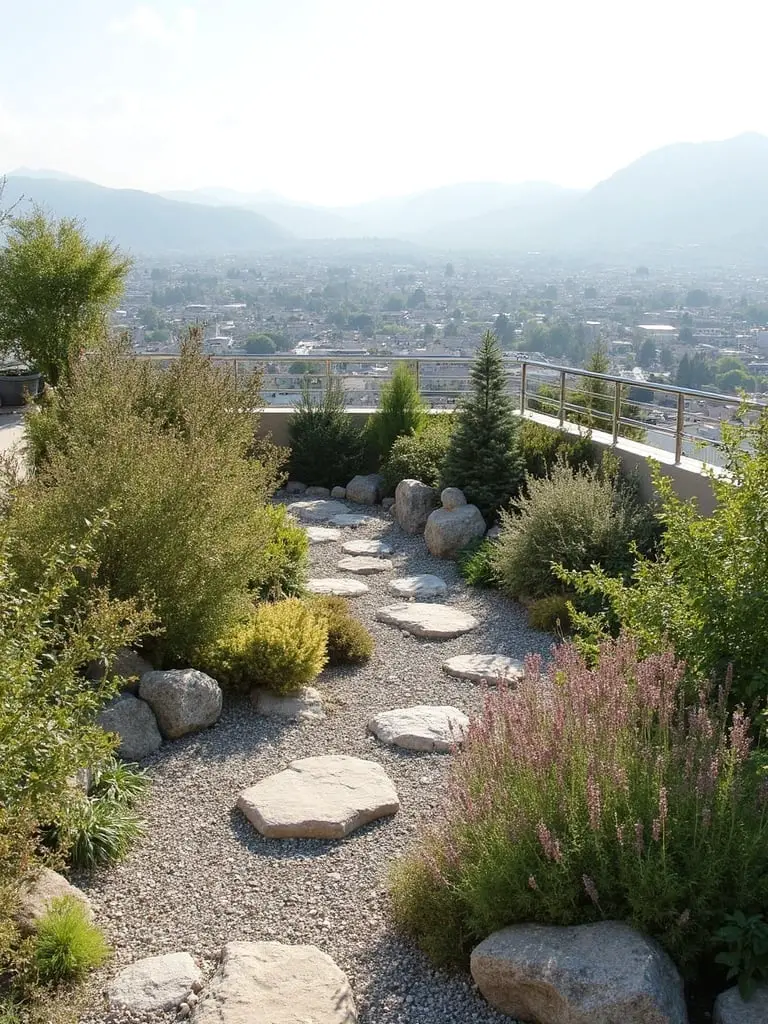
The pathway here uses large, irregular stepping stones set into a gravel bed, winding past evergreen shrubs and flowering plants toward a metal railing that frames a panoramic city view. The layout keeps the path generous enough for comfortable walking while the planting stays low so the view remains the focus. Gravel fills the gaps between stones, which keeps weeds down and gives the path a clean, settled look.
Desert modern garden with painted rocks
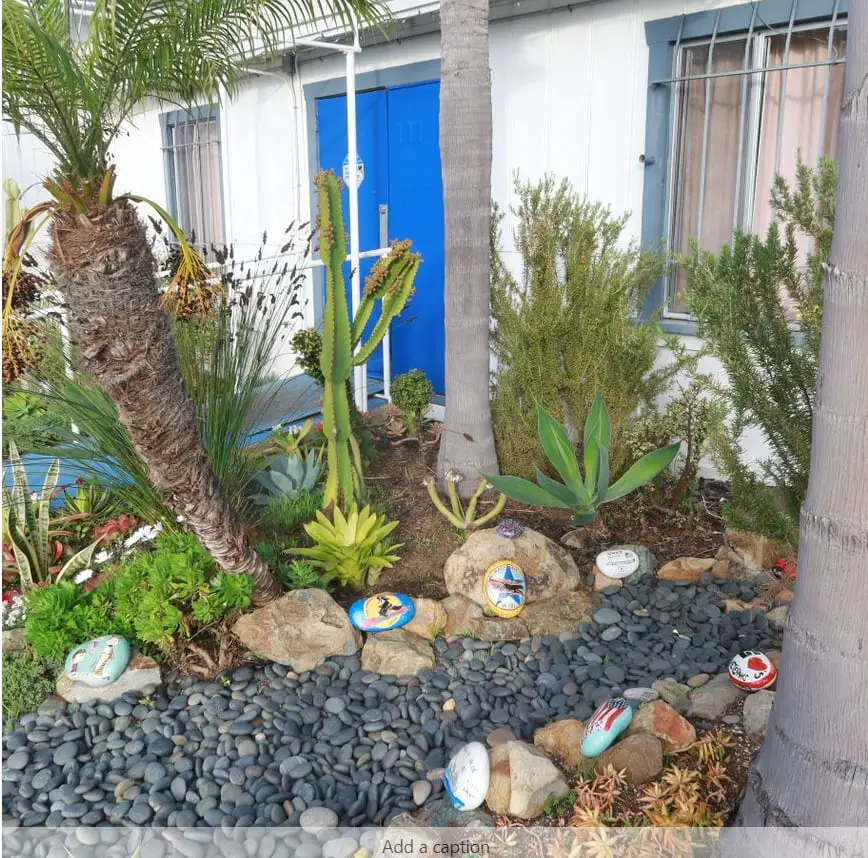
This compact garden leans into a desert modern look with agave, cactus, and a palm set among layers of stone and gravel. The palette is restrained, greens, grays, and touches of blue and white, but the painted rocks break that restraint. Some rocks carry nautical themes, which adds a playful note without overwhelming the clean lines of the planting. The painted stones work because they stay within a limited color range and cluster near the base of larger plants, so they appear as intentional accents.
Stone pathway and lantern create tranquil Japanese feel
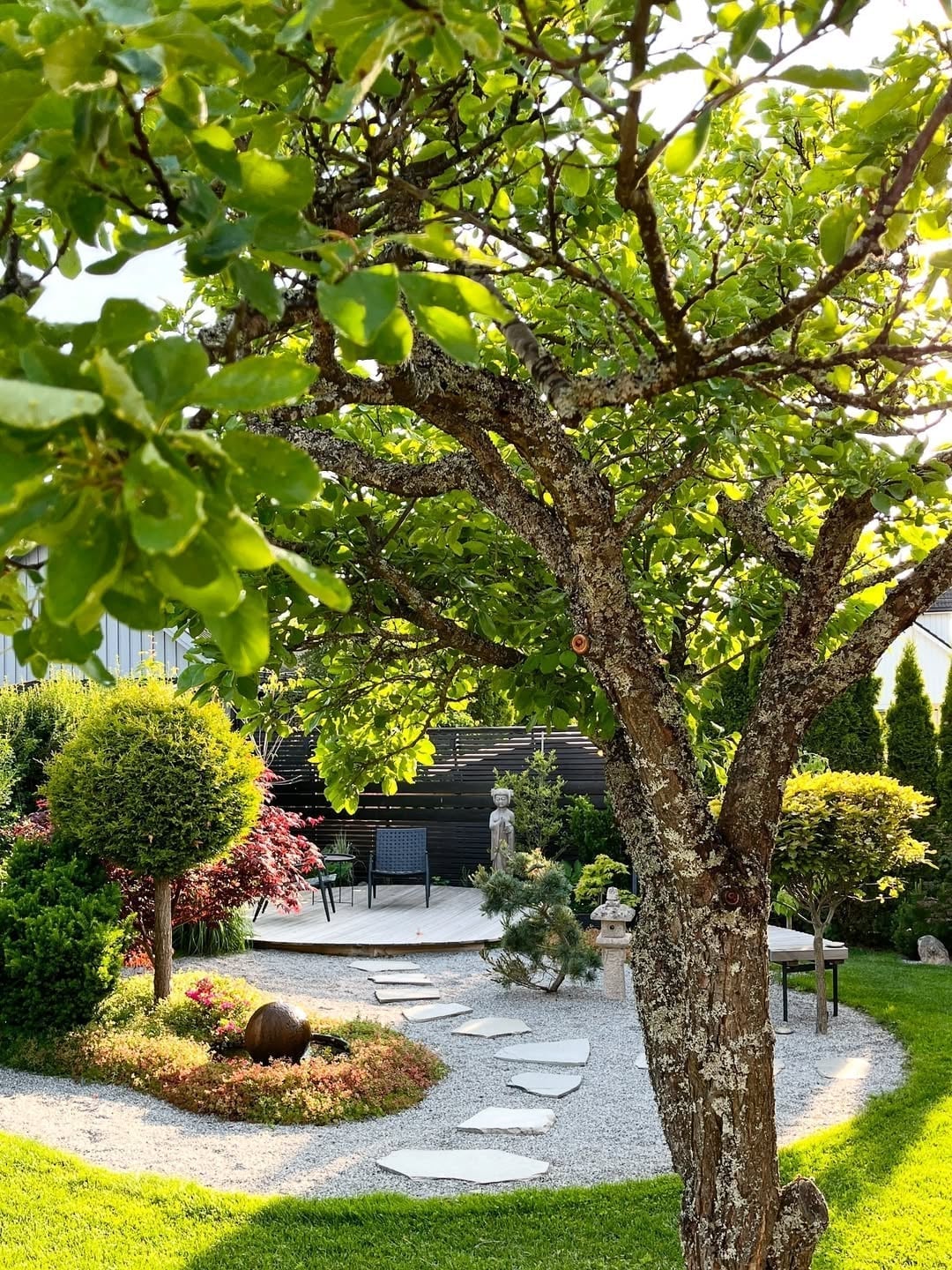
In a Japanese-inspired garden, the path dictates the pace. In this roomy backyard, a winding stone pathway leads through gravel beds past a stone lantern and sculpted trees toward a wooden deck. The path does not take the shortest route, which encourages slower movement and gives each planting along the way its own moment.
Wood and metal sign reads enchanted garden
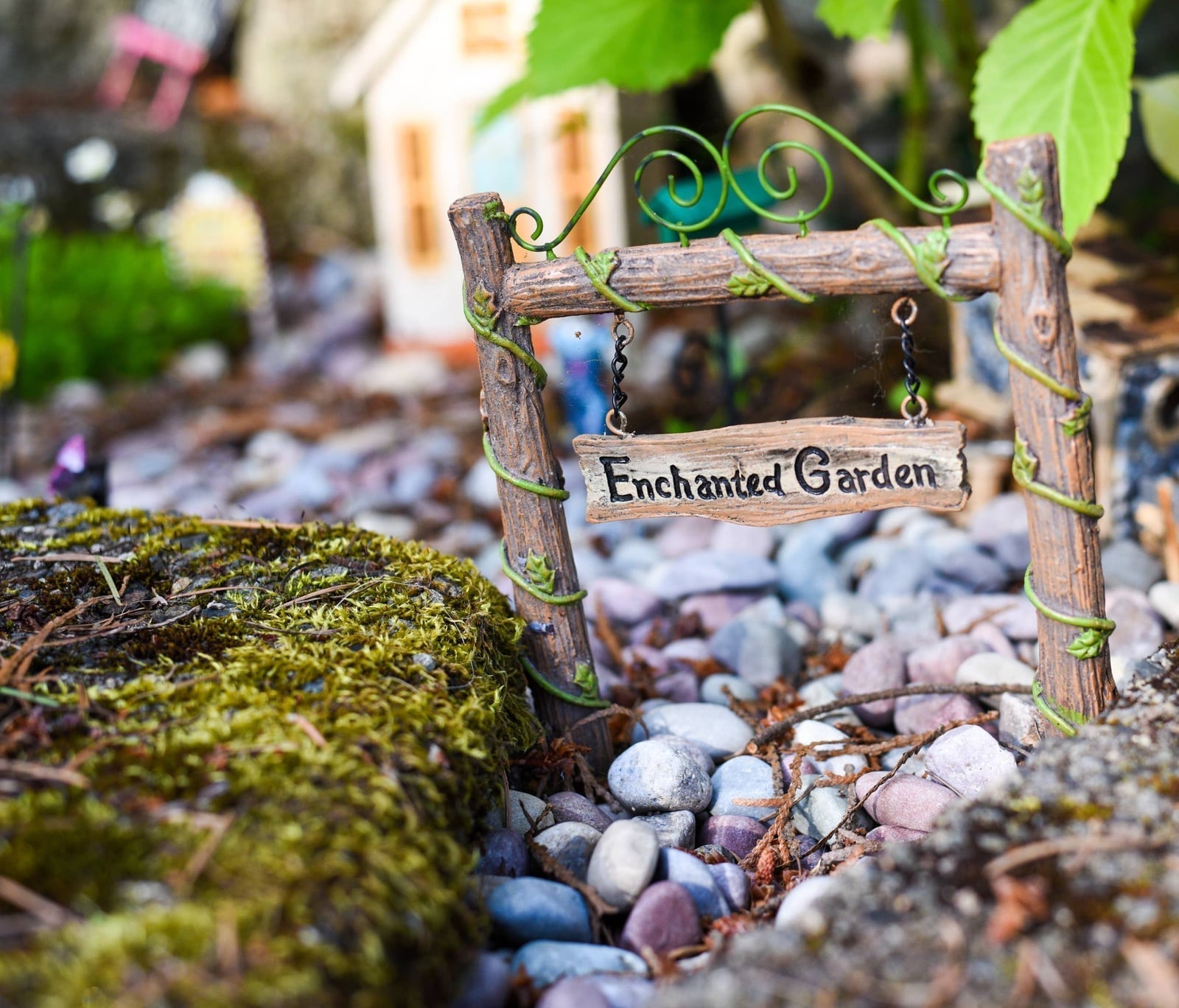
A small wooden sign reading Enchanted Garden sits propped against a mossy rock, creating a miniature vignette at ground level. The dark brown lettering and gray metal details feel like a found object rather than a store-bought tag. What makes the whole scene work is the scale: the sign is small enough to feel like a secret, not a billboard. Pairing it with purple flowers and a low stone border keeps the look whimsical without tipping into theme park territory.
Vertical garden wall with cascading rock waterfall
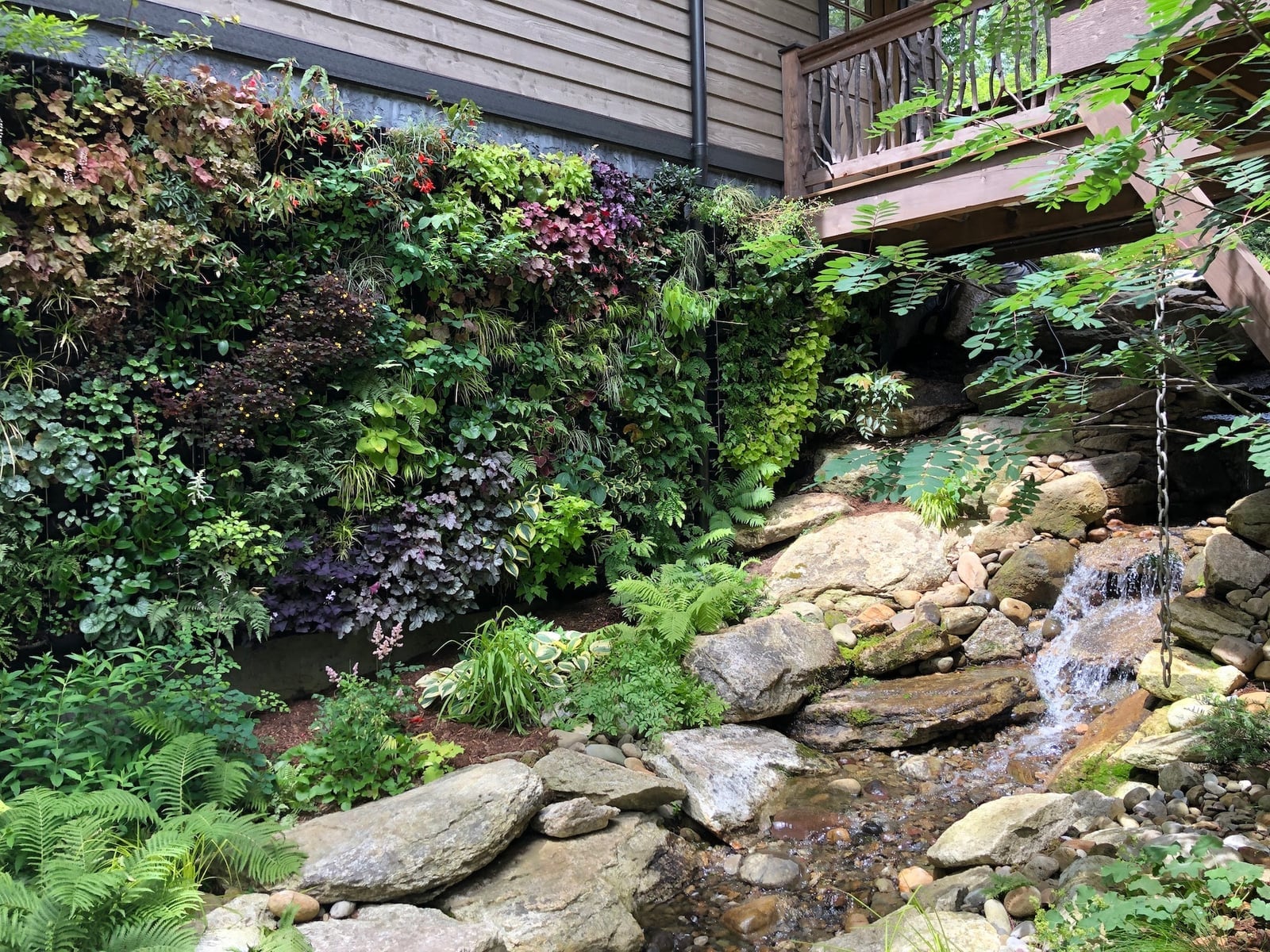
To add greenery to a rented yard, work with the vertical plane instead of digging into the ground. This layout uses a wooden structure attached to an existing fence to hold a vertical garden wall, with a rock waterfall built at its base. The water cascading over stacked stones gives sound and motion without needing a permanent pond. Greens, purples, and reds fill the planters, softening the hard edges of the stone and wood. The wooden deck below turns the whole arrangement into a usable seating area. For renters, the key is that the vertical wall can be removed and the waterfall filled in when the lease ends.
Curving path with pathway lights and diverse plantings
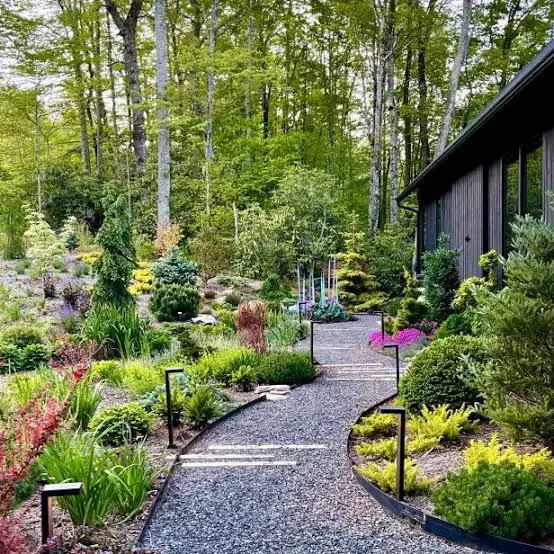
A straight gravel path gets visitors from point A to point B quickly, but a curving one slows them down and makes the garden feel larger. This modern version winds through layers of conifers, ornamental grasses, and flowering shrubs, with low pathway lights tucked along the edge. The lights are placed at irregular intervals, which looks more natural than a straight row of identical fixtures. Gravel is the right surface here because it crunches underfoot and defines the route without needing a solid border. The pink and red blooms break up the gray stone and green foliage, keeping the eye moving as the path bends.
Flagstone steps lead uphill flanked by boulders
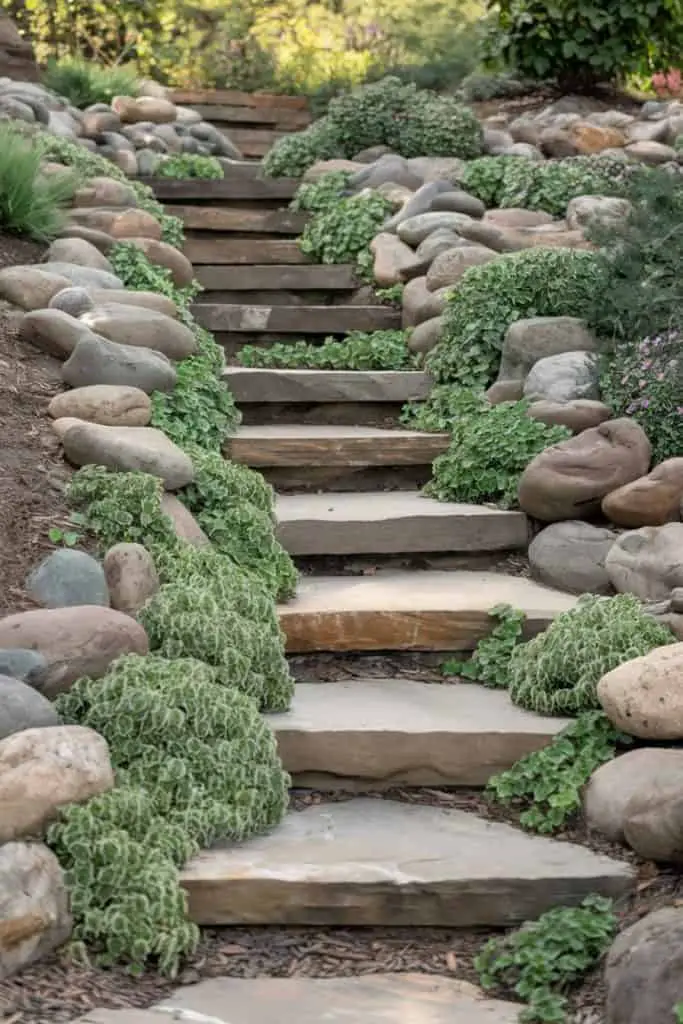
The flagstone steps here are set into a gentle slope, with large boulders placed on either side like natural bookends. The tan and gray tones of the stone match the mulch path that winds between them, so the whole route feels like one continuous surface rather than a set of disconnected pieces. Ground cover plants soften the edges where stone meets soil. The boulders serve a practical purpose: they prevent erosion on the uphill side and create a visual anchor that keeps the steps from floating in the landscape.
Spacious Japanese rock garden with sculpted bushes
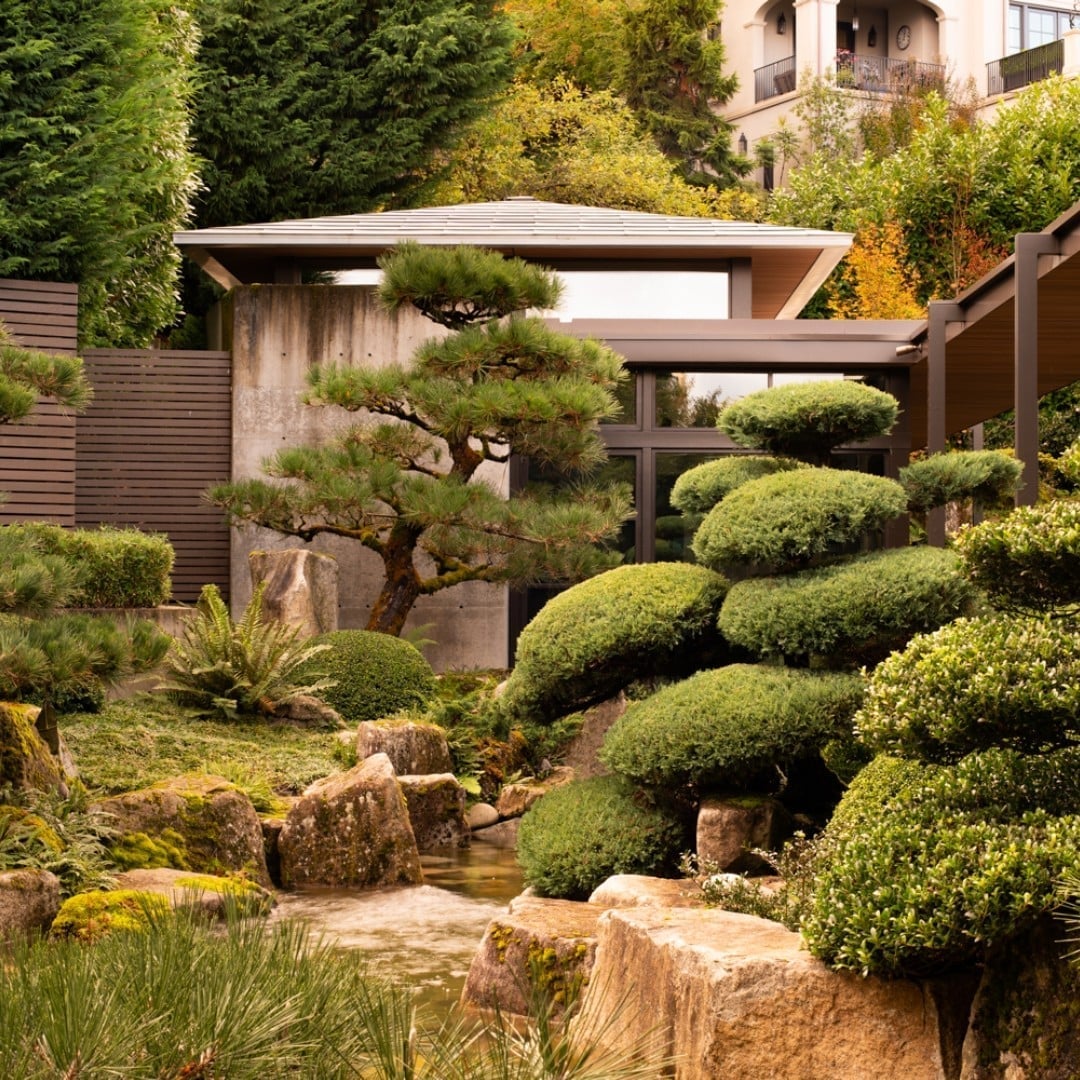
A spacious Japanese rock garden relies on proportion more than decoration. Here, sculpted green bushes frame a central arrangement of gray rocks and a single pine tree, with a concrete path and wooden slat bench providing structure without clutter. The bushes are trimmed into rounded forms that echo the shapes of the stones below. The open space around them lets each element breathe. For a garden this size, the balance is critical: too many rocks and the path feels cluttered, too few and the pine tree becomes a lonely focal point rather than part of a composition.
Gabion walls with purple agapanthus and spiky yucca
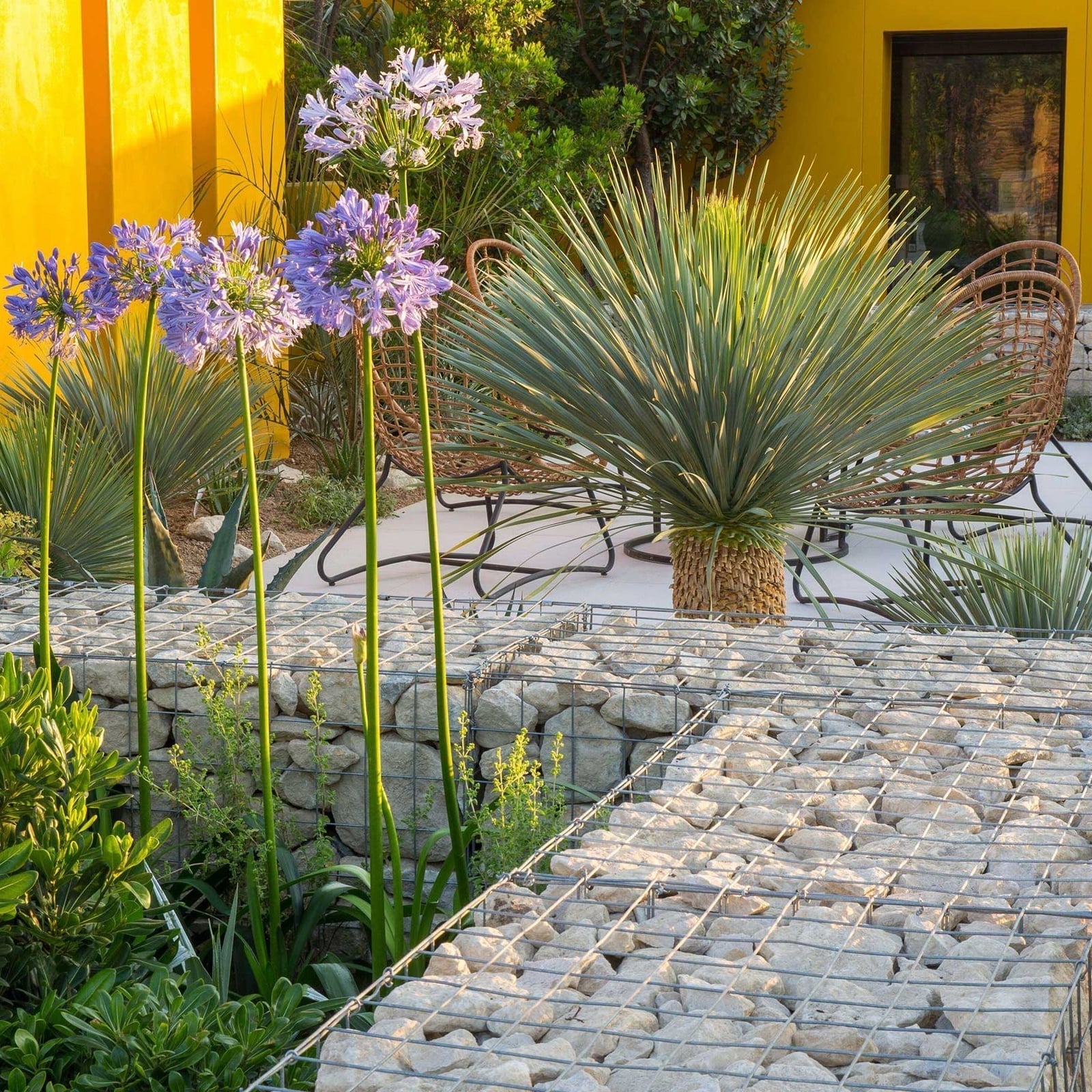
A palette that starts with a bold wall color sets the whole patio mood. Here a vibrant yellow gabion wall holds purple agapanthus and spiky yucca, with wicker chairs and natural stone keeping the look grounded. The ratio tilts heavily toward the wall and structural stone, with the yellow acting as a clear accent against the green and purple plants. What breaks it is the neutral beige of the stone and wicker, which keeps the yellow from overwhelming the space. To get a similar effect, paint one structure a strong color and let the rest of the patio stay in earthy tones.
Dark concrete staircase bordered by pavers and flowers
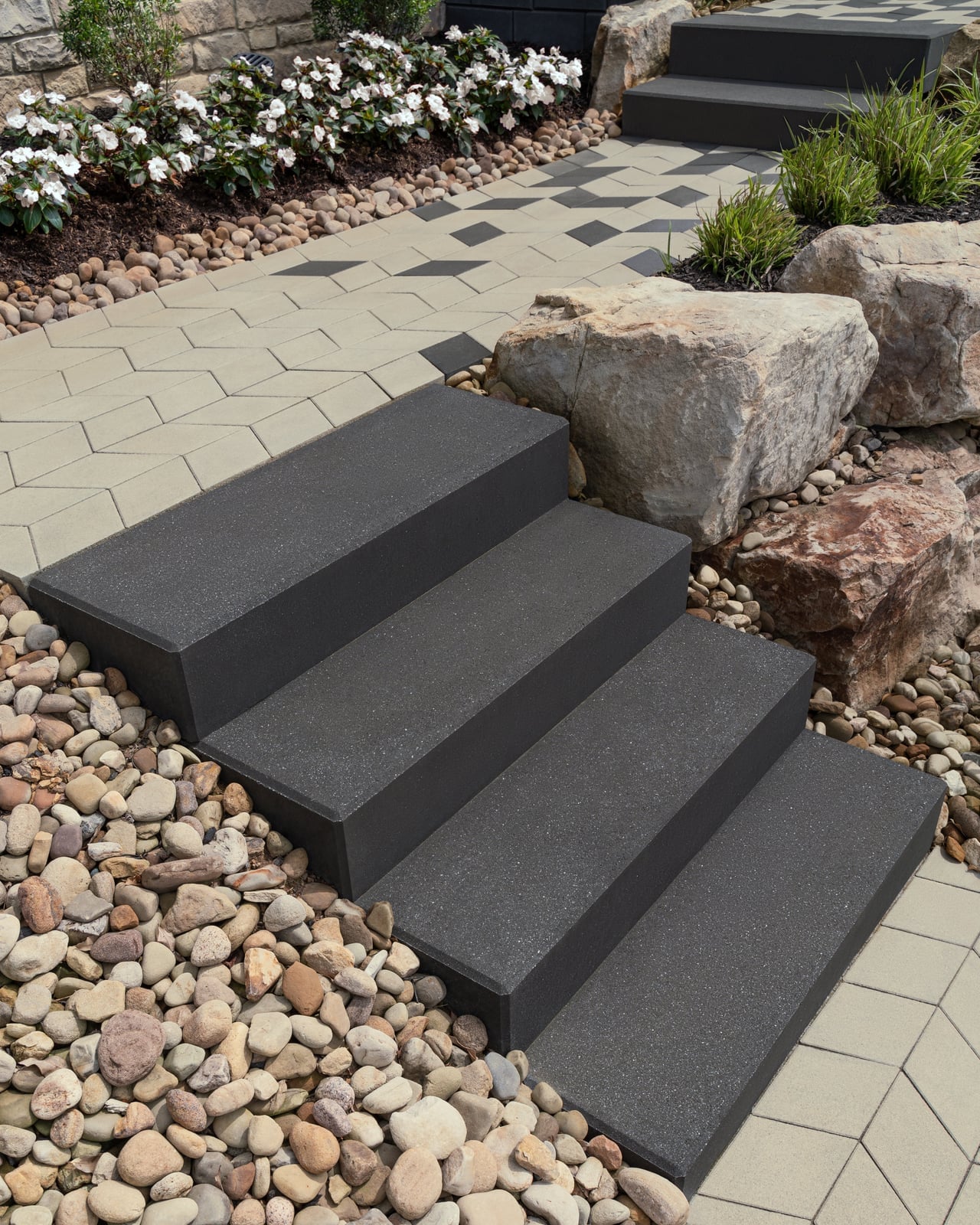
Dark gray concrete steps climb a slope with large boulders and river stones on each side, while light pavers and white flowers line the edges. The contrast between the modern staircase and the natural stone is what gives this backyard its contemporary feel. The concrete looks the intentional structure, while the boulders and gravel soften the transition into the planted areas.
Compact balcony garden with stone pathway
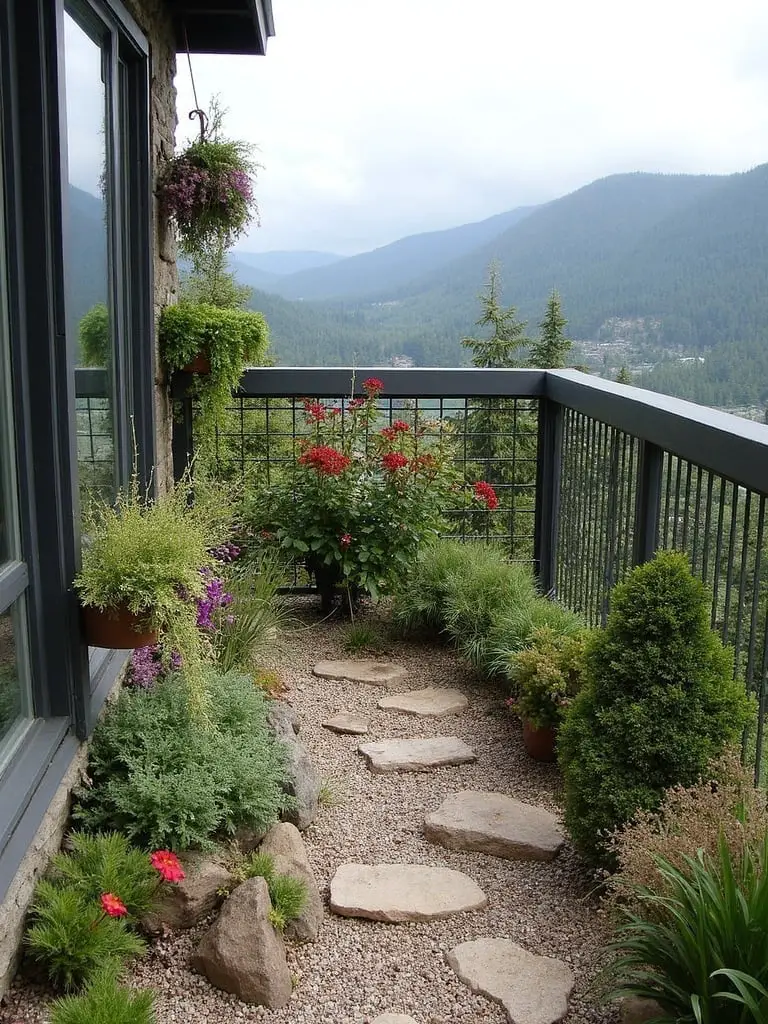
A winding stone pathway across a compact balcony proves that even a small outdoor space can feel like a garden. The stepping stones set in gravel create a clear route, while potted plants fill in around the edges. This layout works because the path organizes the floor plan, so the balcony never looks cluttered. Stick to one material for the path and let the plants provide the texture.
Naturalistic rock wall with tiered planting
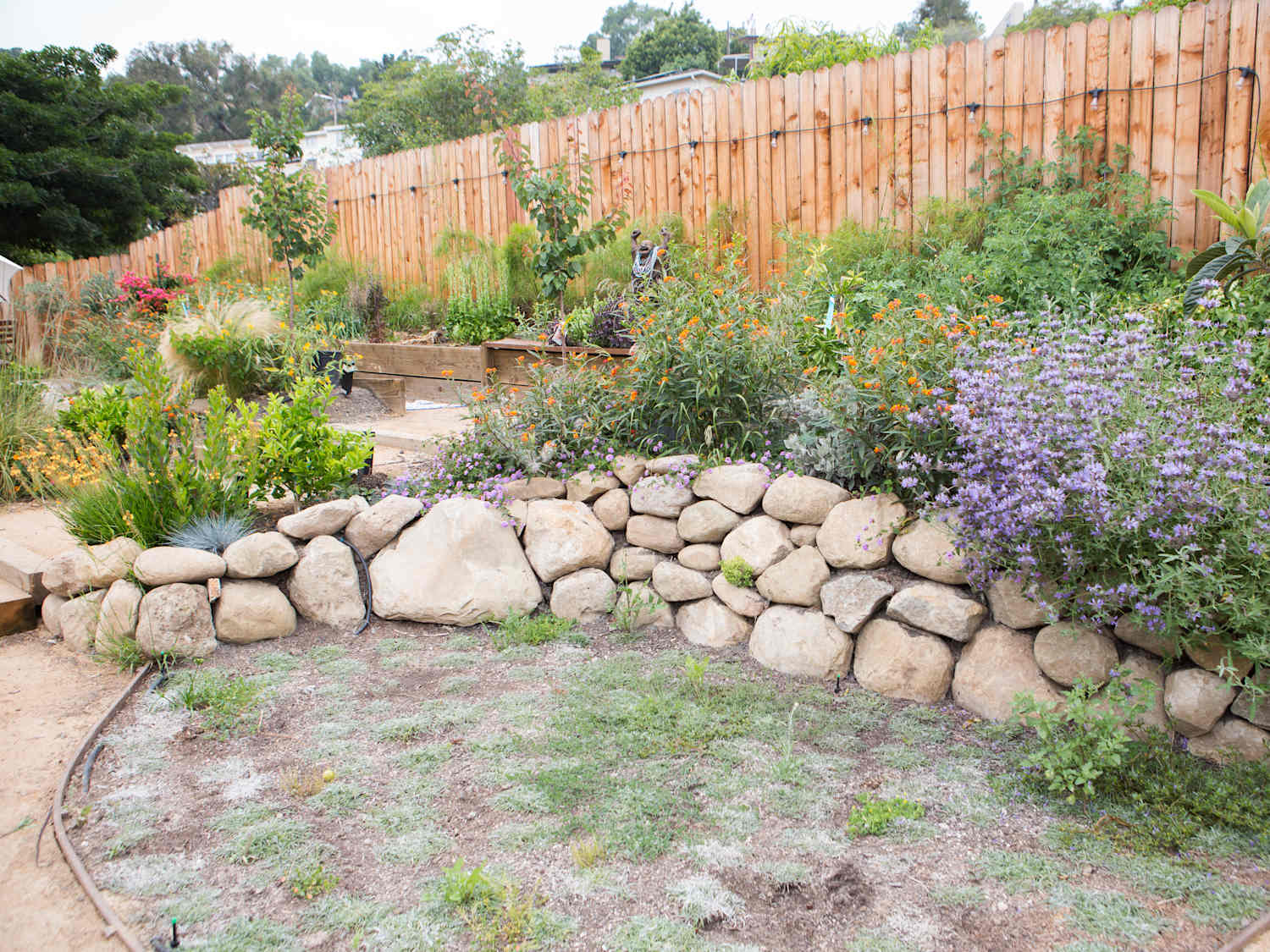
A natural stone retaining wall with tiered garden beds above and below it is a practical way to handle a sloped backyard. The boulders and wooden fence frame the planting areas, and string lights overhead extend the usable hours into evening. The wall does the work of holding the slope, so the tiers can focus on plants in tan, green, purple, and orange. For a renter, a stacked stone veneer or modular blocks can create a similar look without permanent construction.
Gray stone slabs set in gravel create serene space
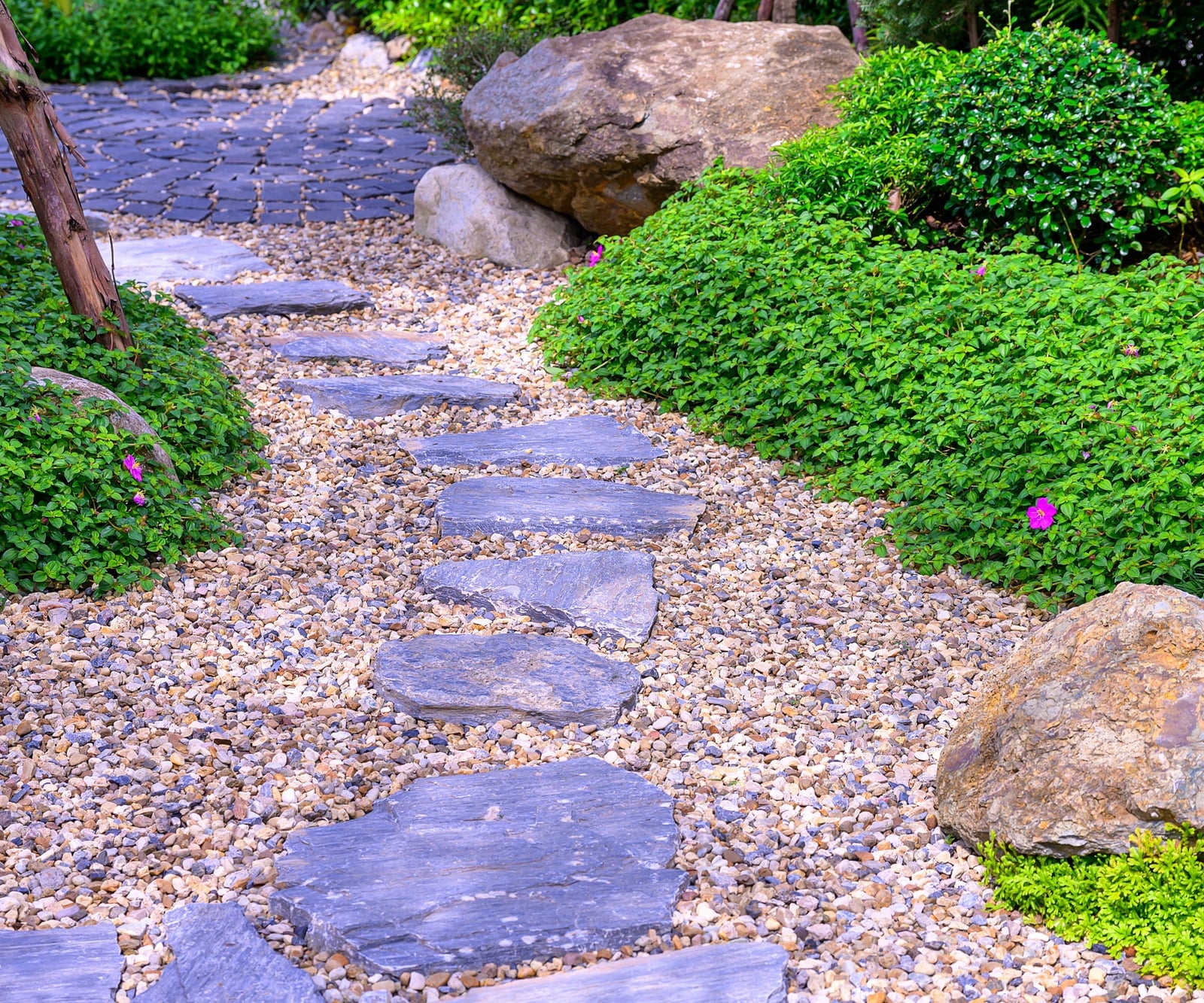
Irregular gray stone slabs set in gravel wind through lush greenery and large rocks, creating a calm, open garden. The palette stays in green, gray, beige, and pink, with the stone slabs as the only hard surface. This style is defined by its restraint: the plants and rocks do the shaping, and the path simply follows. What breaks the formality is the irregular spacing of the slabs, which keeps the garden from feeling rigid.
Red picnic table and benches illuminated by lights
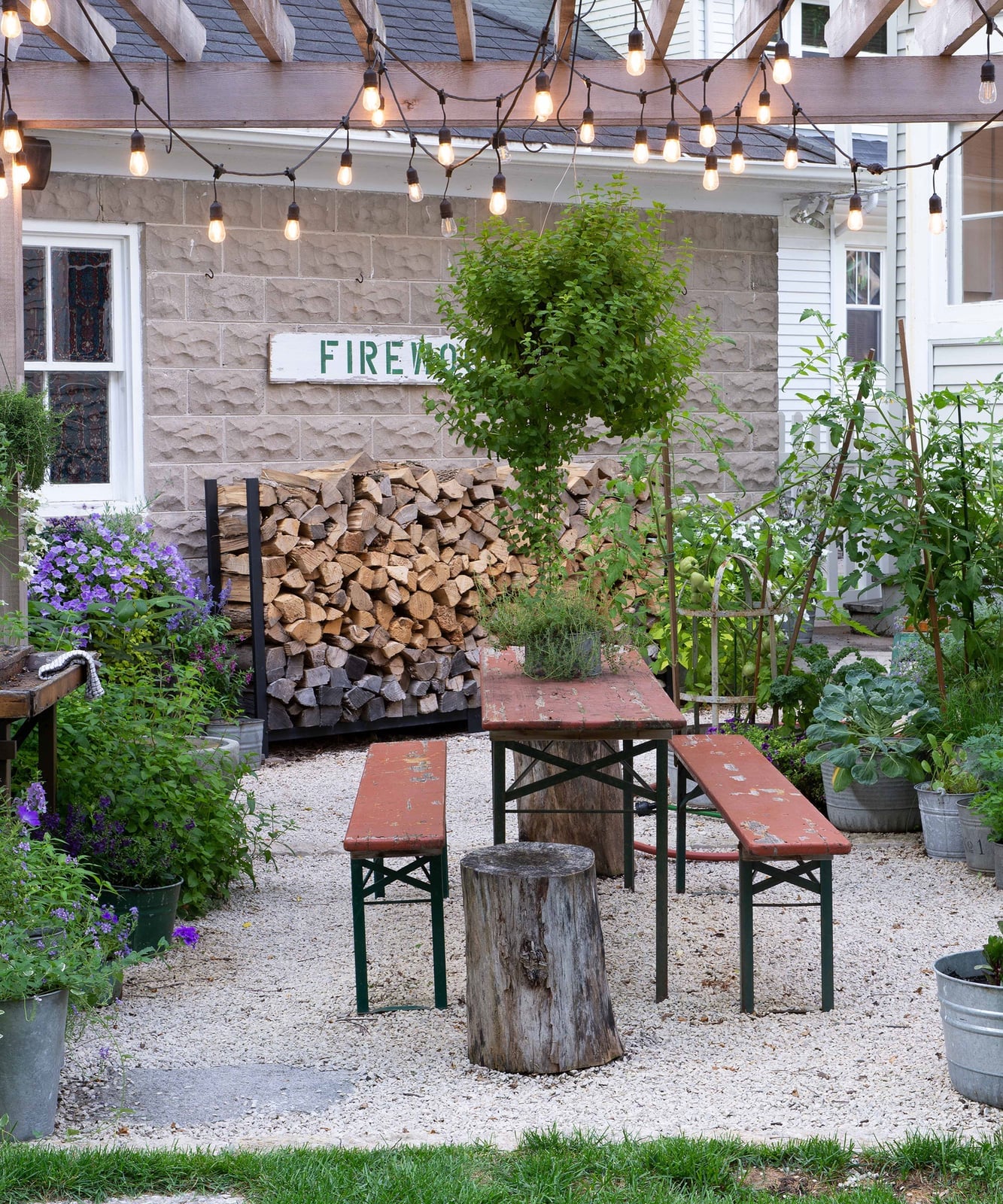
A red picnic table and matching benches anchor this patio with a no-nonsense rustic feel, and the string lights overhead turn it into a place you actually want to sit after dark. A log stump and stacked firewood reinforce the outdoor camp look, but the real trick is the lighting placement. String lights hung above a dining area define the zone without a single fence or wall, which matters on an open patio. The warm glow softens the gravel underfoot and makes the green and brown palette feel deliberate.
Wicker furniture set enhances relaxing patio ambiance
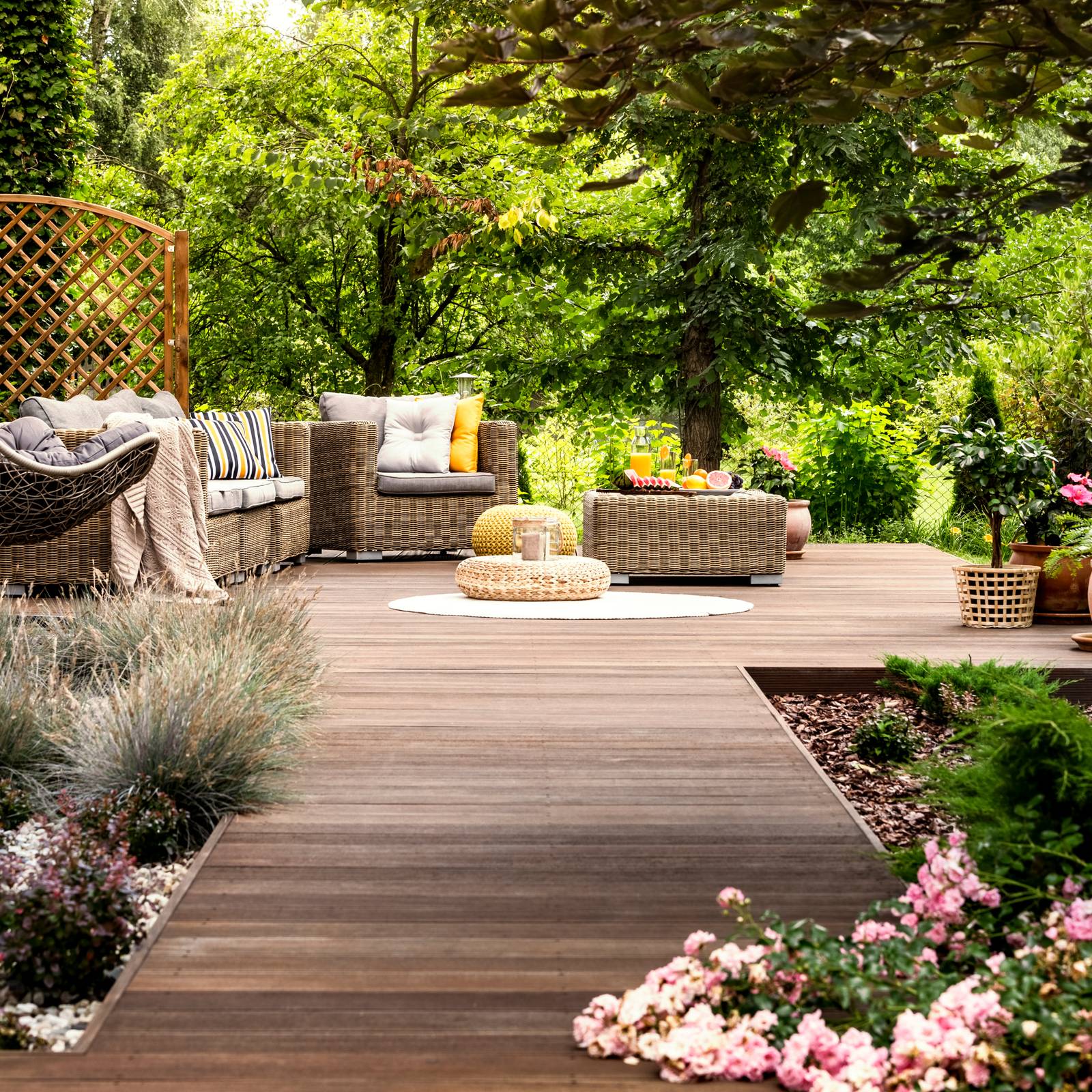
A full wicker seating set might sound like a splurge for a rental, but this patio proves it works just as well on a wooden deck you cannot modify. The sofa, armchair, and coffee table sit on the existing deck surface without a single permanent change, and the hanging chair adds a playful touch that makes the space feel lived in, not staged.
Natural daylight washes the brown and gray wicker so the yellow, green, and pink accents in the cushions pop against the stone surroundings. The layout is roomy but not sprawling: the furniture clusters around the coffee table, creating a conversation zone that feels separate from the rest of the yard. For renters, wicker is forgiving to move and easy to store off-season, which matters when you cannot build a permanent structure.
Cottage-style rock garden with flower clusters
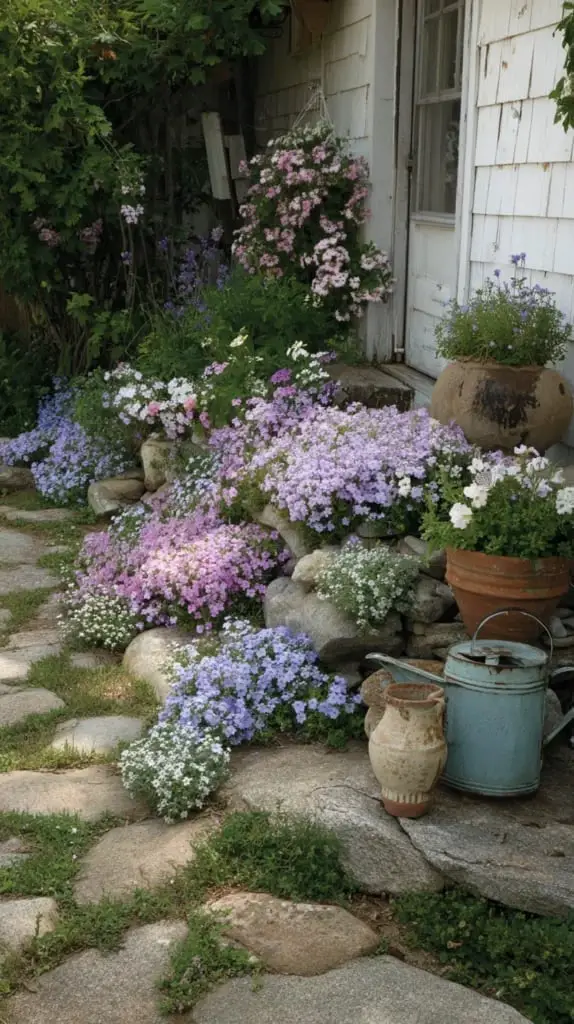
A stone pathway cuts through this compact backyard, leading past potted plants, a watering can, and a ceramic jug tucked among the rocks. The cascading purple and pink flowers spill over the gray stone and terracotta edges, softening the hardscape into something that looks more like a found garden than a built one. The palette of purple, pink, white, blue, green, and gray stays cohesive because the flowers repeat in clusters rather than scattering single stems everywhere. A few metal accents keep the cottage feel from tipping into precious.
Textured boulders interspersed with vibrant flowering plants
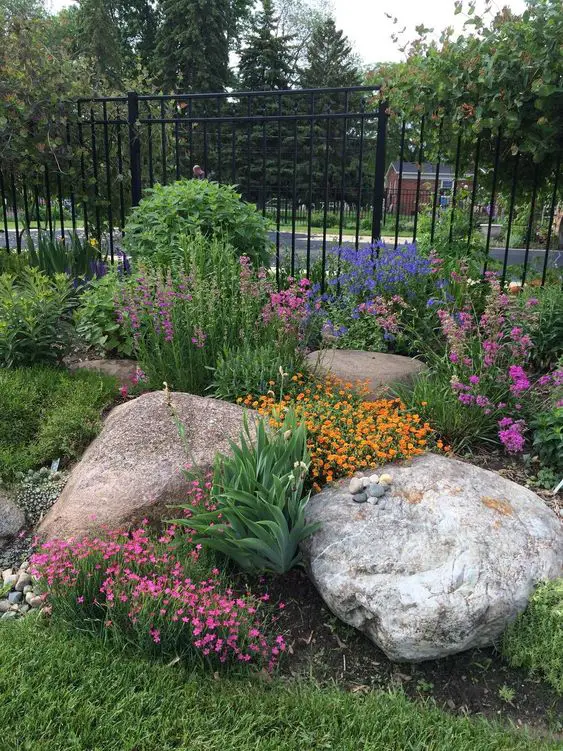
Large textured boulders step down through this open garden, and the flowering plants in pink, purple, and orange weave around them instead of lining up in rows. The contrast between rough stone and soft petals is the whole point, so the boulders stay as the anchor while the flowers change with the season. Green foliage fills the gaps between blooms, keeping the garden full even when nothing is flowering. The informal layout means you can swap out plants as you learn what thrives without reworking the entire bed.
Japanese garden with stone lantern and bonsai
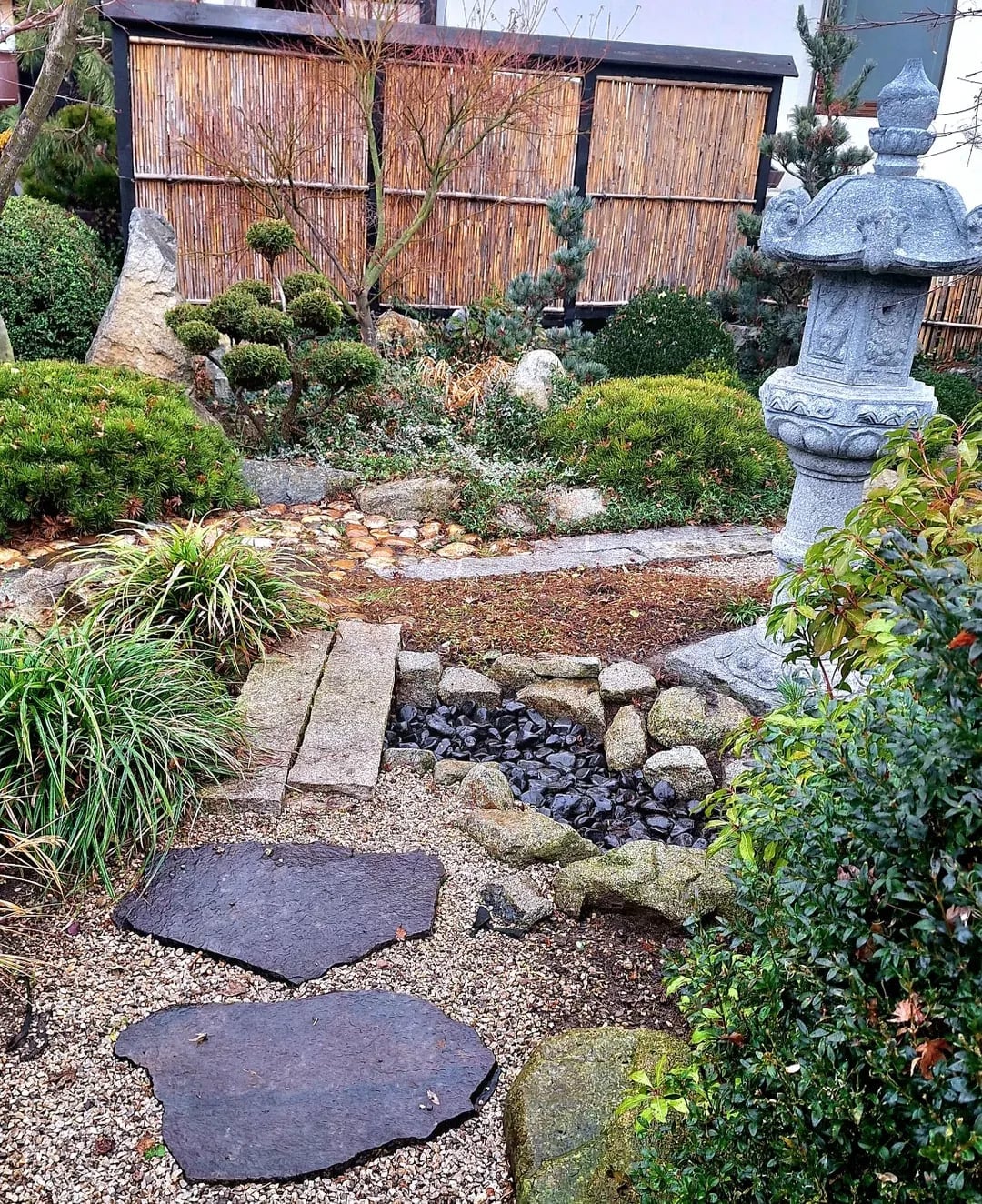
A full Japanese rock garden with a stone lantern might feel too grand for a compact yard, but this one proves scale is everything. The ornate stone lantern sits at the turn of a gravel path, with stepping stones leading past a bonsai tree and a bamboo screen that hides the fence line. The green, gray, brown, and beige palette ensures nothing competes with the lantern.
Proportion matters here: the lantern is tall enough to be a focal point but not so large that it overwhelms the bonsai or the path. The bamboo screen breaks the sightline, making the garden feel larger than its actual footprint. Choose one stone element as the anchor and keep everything else lower and simpler.
Final Thoughts
A well-planned rock garden blends hardscape and planting in a way that feels classic. The key is choosing stones that complement your home and plants that thrive in your local climate, so check your USDA zone before buying. Keep paths clear of debris and refresh gravel every few years to maintain that clean look. With the right balance of texture and greenery, your outdoor space becomes a calm, inviting escape.