If you think sharp garden design means fussy topiaries and a lawn that looks like a golf green, 2027 has other plans. This year’s outdoor spaces lean into personality, from cottage-style archways dripping with blooms to geometric raised beds that double as sculpture. The shift is toward gardens that feel lived in, not just looked at.
We’ve rounded up 30 ideas that balance practicality with a healthy dose of charm, whether you’re starting from scratch or tweaking an existing layout. Think layered planting beds, winding stone paths, and water features that actually fit the scale of your yard. No matter your climate or space, there’s a look here that brings the outside in without the upkeep becoming a second job.
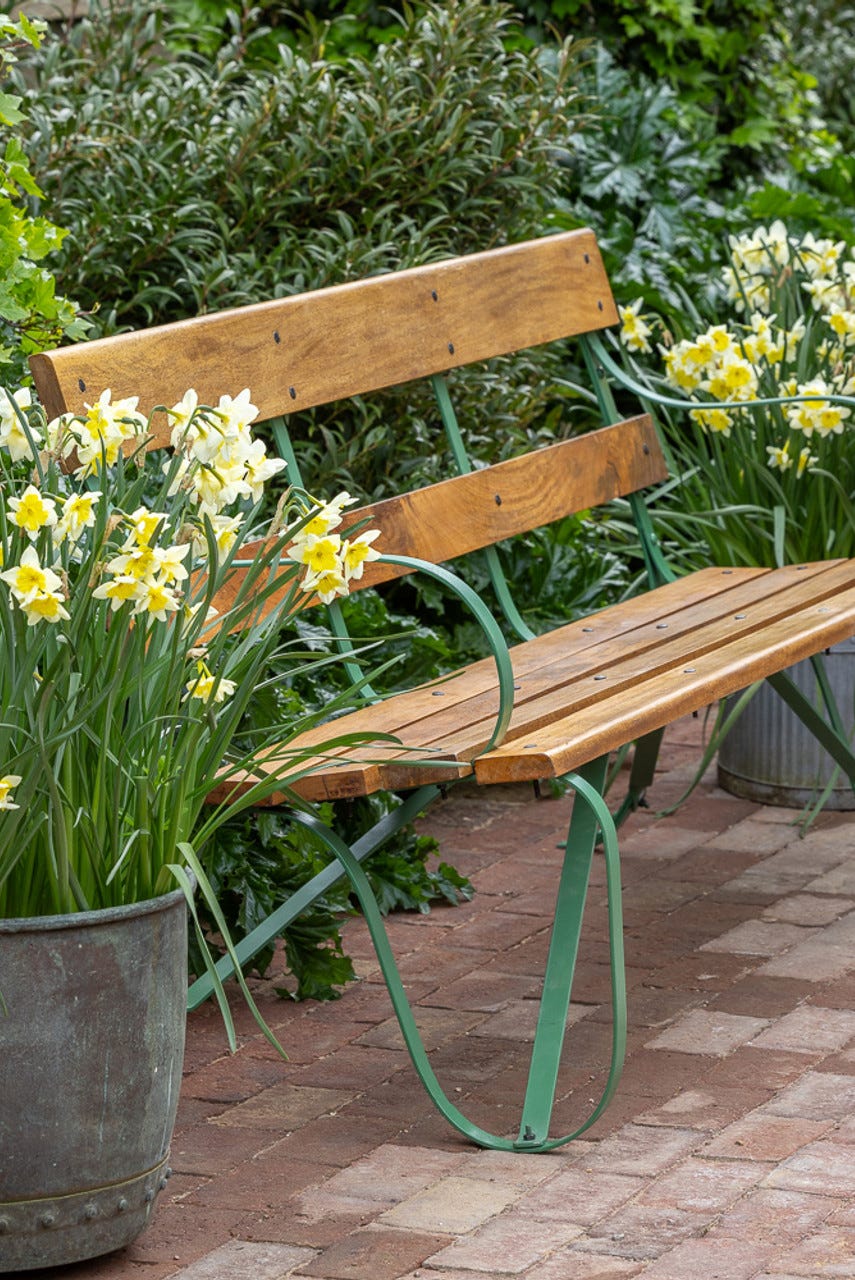
Traditional garden bench with potted daffodils
A wooden bench with green metal legs sits right on a brick path, so the garden itself becomes the room. The daffodils stay in pots, which means you can swap them for tulips or alliums when the season shifts without digging up the border. Keeping the bench on a hard surface also saves you from sinking legs in wet soil. This layout works because the path gives the bench a clear spot while the greenery wraps around it like living walls.
Layered planting beds with lamb’s ear and lavender
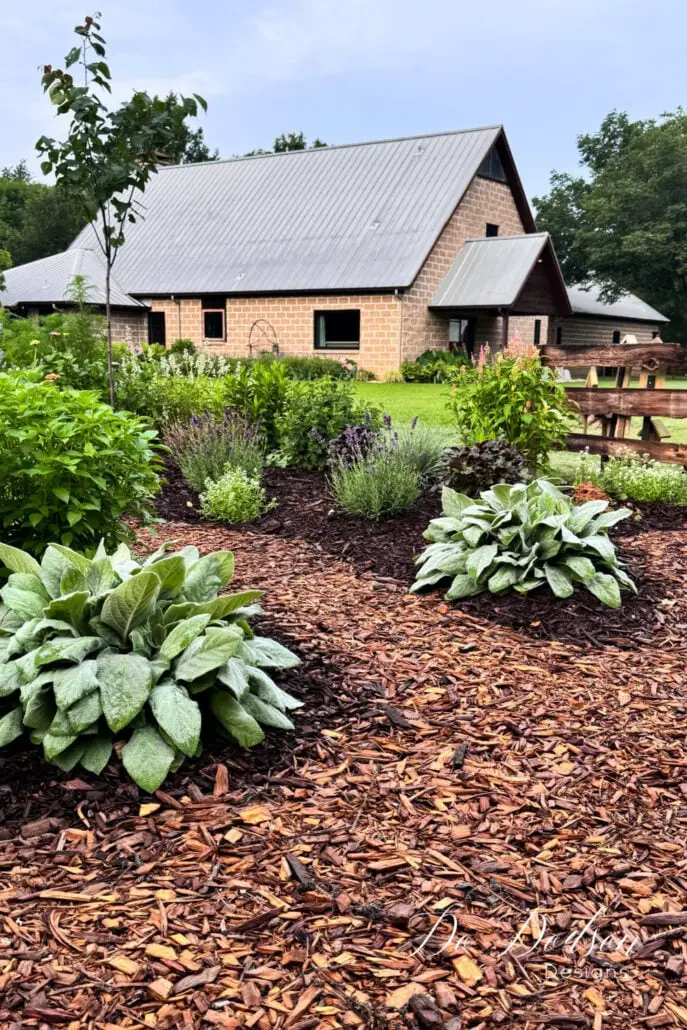
The palette here is soft and deliberate: silver-green lamb’s ear, purple lavender, brown wood chip mulch and beige brick. Layering plants by height is the move that makes this look designed. Lamb’s ear stays low and fluffy at the front, while lavender rises behind it. The wood chip mulch does double duty by holding moisture and tying the browns together. A country garden like this one leans on texture rather than hard lines, so the fluffy lamb’s ear breaks up what could be a flat row of lavender.
Conservatory garden with wicker chair and flowers
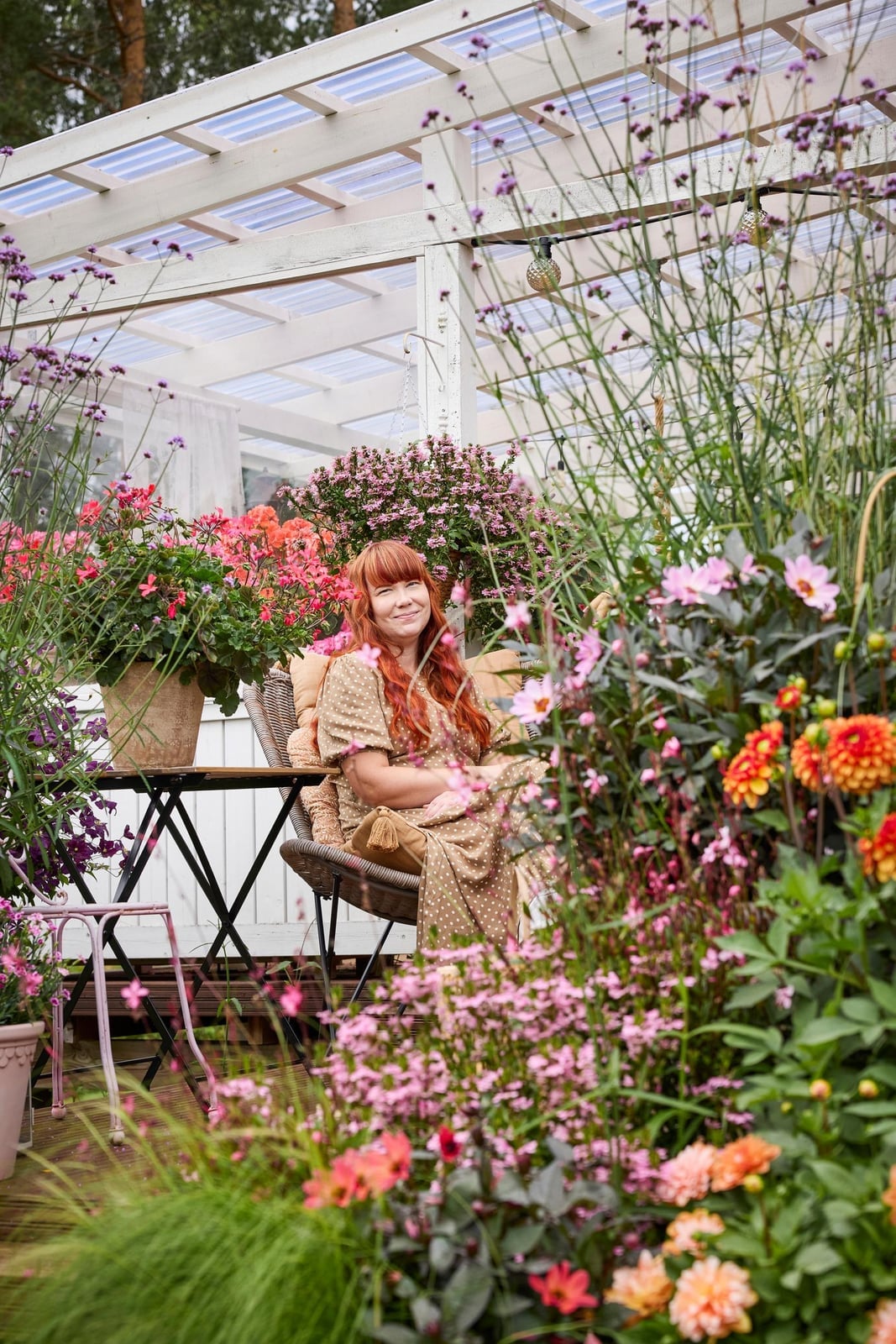
Can a conservatory feel like a garden rather than a greenhouse? This one does, because the planting is dense enough to surround the seating area. A wicker chair and a small folding table sit right in the middle of pink, orange and purple flowers. The string lights overhead add a second layer of light for evenings, but during the day the daylight filters through the glass and hits the terracotta pots. The layout is compact, so every surface holds a pot or a plant. This setup suits someone who wants to sit inside the garden rather than just look at it.
Cottage garden archway overflowing with blooms
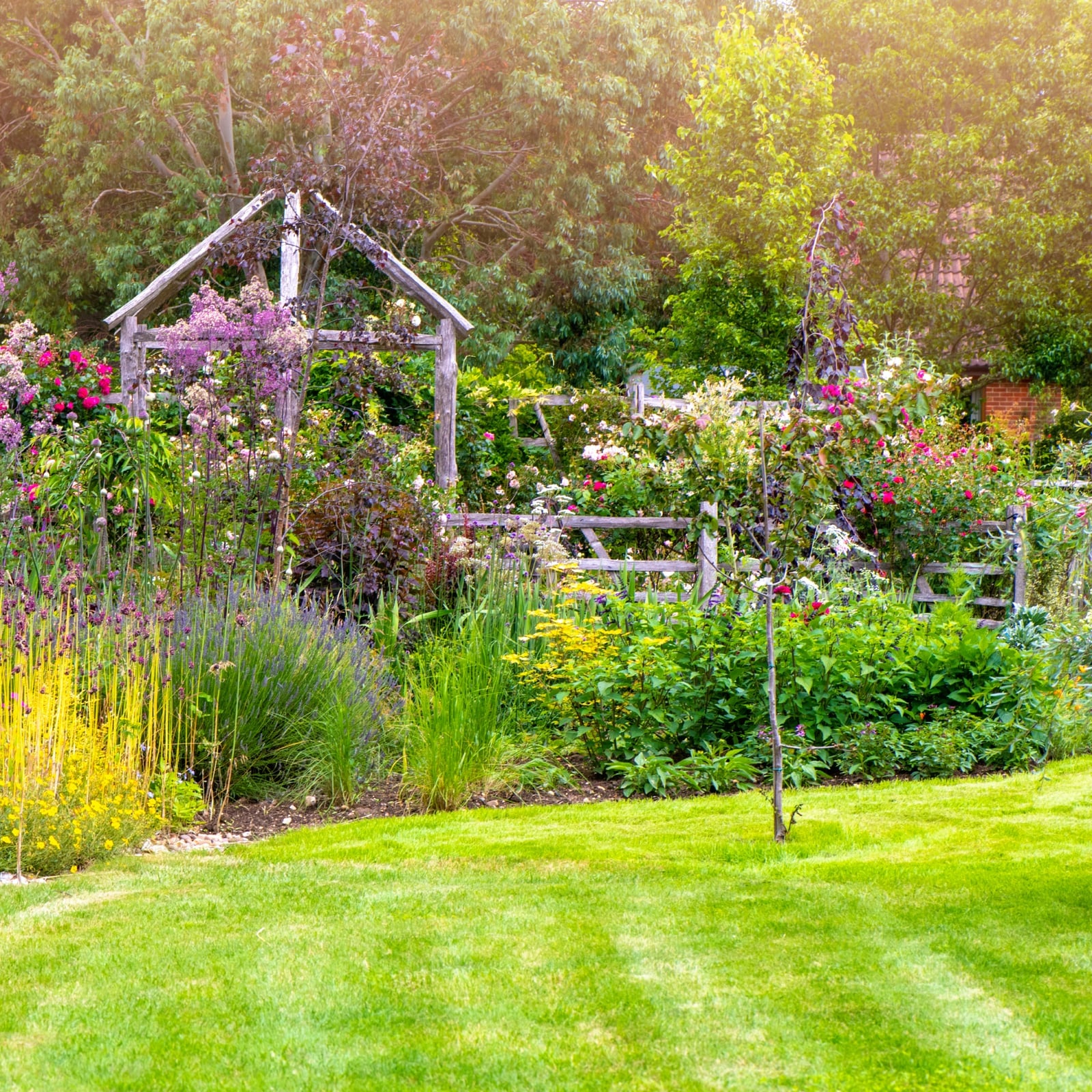
A wooden archway covered in climbing plants acts as the frame for the whole backyard view. The materials stay simple: wood for the arch and fence, stone and brick for the path. The sun flare in the photo is a happy accident, but you can plan for it by placing an arch where the afternoon light hits. The layered planting around the base hides the arch’s supports and makes it look like the blooms are holding it up. Ornamental grasses add movement at the bottom while the climbing plants take the top.
Stone pathway curves through ornamental grasses
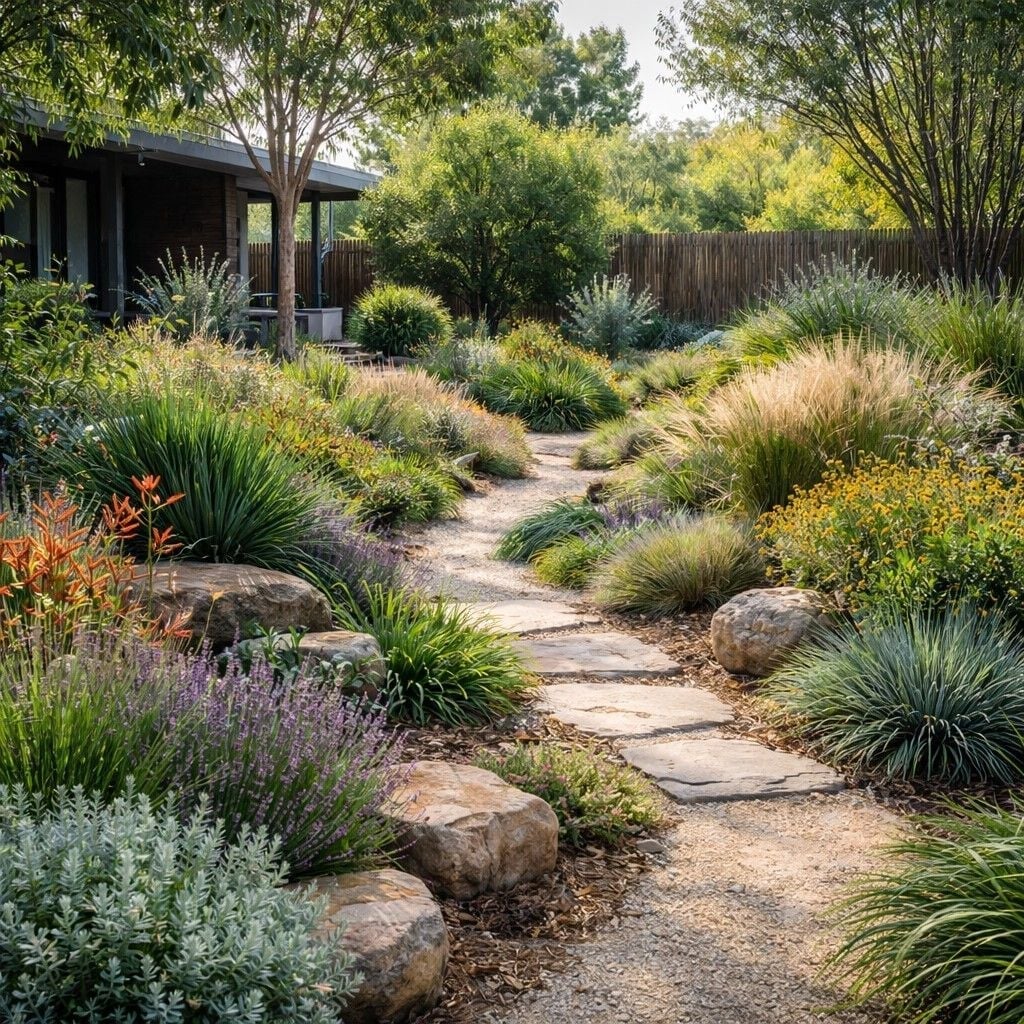
A winding stone path pulls you through the garden rather than rushing you to the end. The curve is the trick: a straight path would make the space feel shorter, but a curve reveals new planting with each step. Ornamental grasses and boulders line the edges, so the path feels carved into the landscape rather than laid on top of it. Gravel fills the gaps between stones, which handles drainage and keeps weeds down. This material choice works for a modern garden because the stone and gravel look clean without being rigid.
Curving pond with pink anthuriums and bromeliads
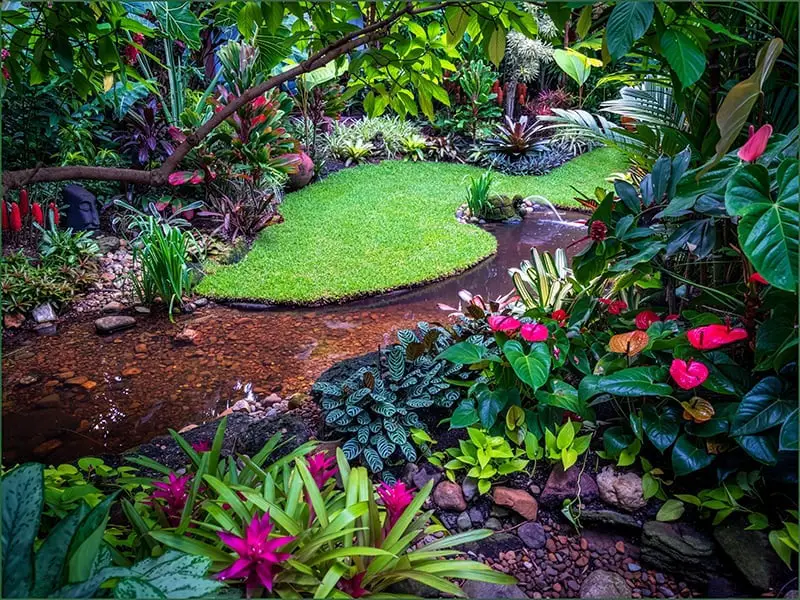
A tropical pond might sound like a project that requires a crew and a budget to match, but this curving water feature proves otherwise. The shape follows a natural, organic line instead of a rigid rectangle, which lets it nestle into a standard backyard without looking like an afterthought. Dense planting does the heavy work here: bromeliads cluster at the edges, and vibrant pink anthuriums provide a bold bright accent against all that green. A small fountain keeps the water moving, which helps with circulation and adds a gentle sound. The layout works because the pond is the hero element, and everything around it stays simple. Gravel paths and grass keep the ground plane clean so the eye goes straight to the water and the tropical foliage.
Raised beds overflowing with vegetables and flowers
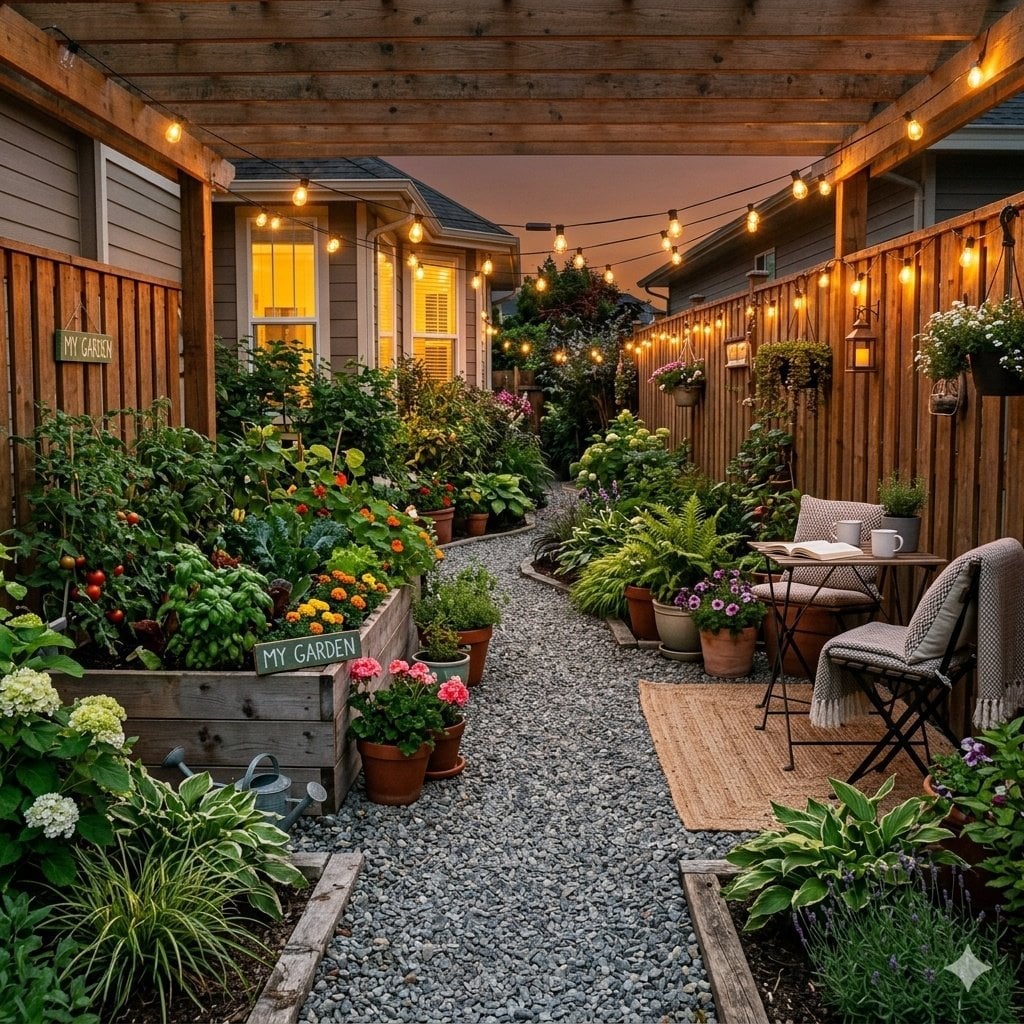
This compact backyard packs a lot into a small footprint: a raised garden bed brimming with vegetables and flowers sits right next to a bistro set with string lights overhead. The layout puts the pathway between the bed and the seating area, so you can step from weeding to sitting without crossing muddy ground. A terracotta watering can and a metal lantern reinforce the cottage garden feel without adding clutter. For renters, the takeaway is that raised beds are portable. You build them on gravel, fill them with soil, and when you move, the bed can come with you or the next tenant gets a nice head start.
Geometric raised beds on a gravel base
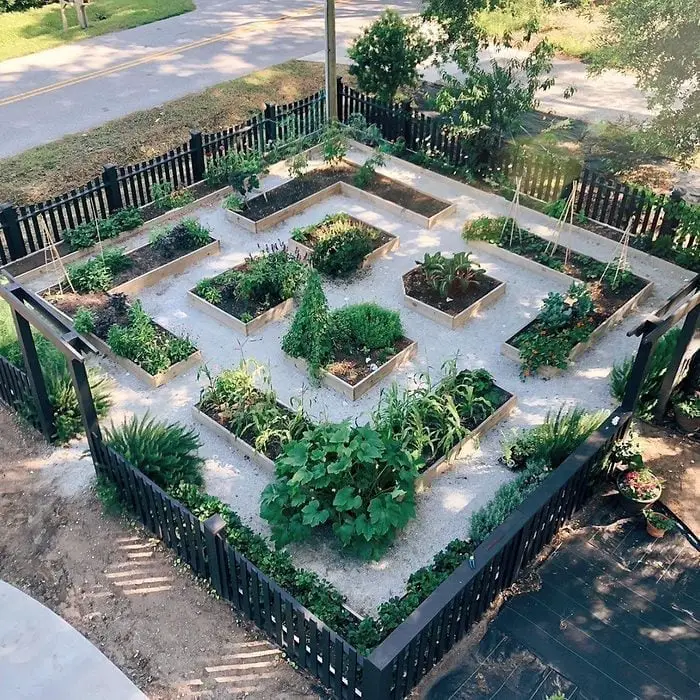
Geometric raised garden beds are a straightforward way to bring order to a vegetable patch. The layout here uses multiple beds arranged in a clear geometric pattern on a gravel base, which keeps weeds down and drainage high. The wood and metal construction gives a clean, modern look that does not compete with the plants. Black metal edging defines each bed sharply, while the beige gravel provides a neutral backdrop. For anyone who wants a tidy garden that still produces food, this system works. The beds are narrow enough to reach across without stepping into the soil, and the gravel path means you never deal with mud between rows.
Pink purple white blooms along winding stone paths
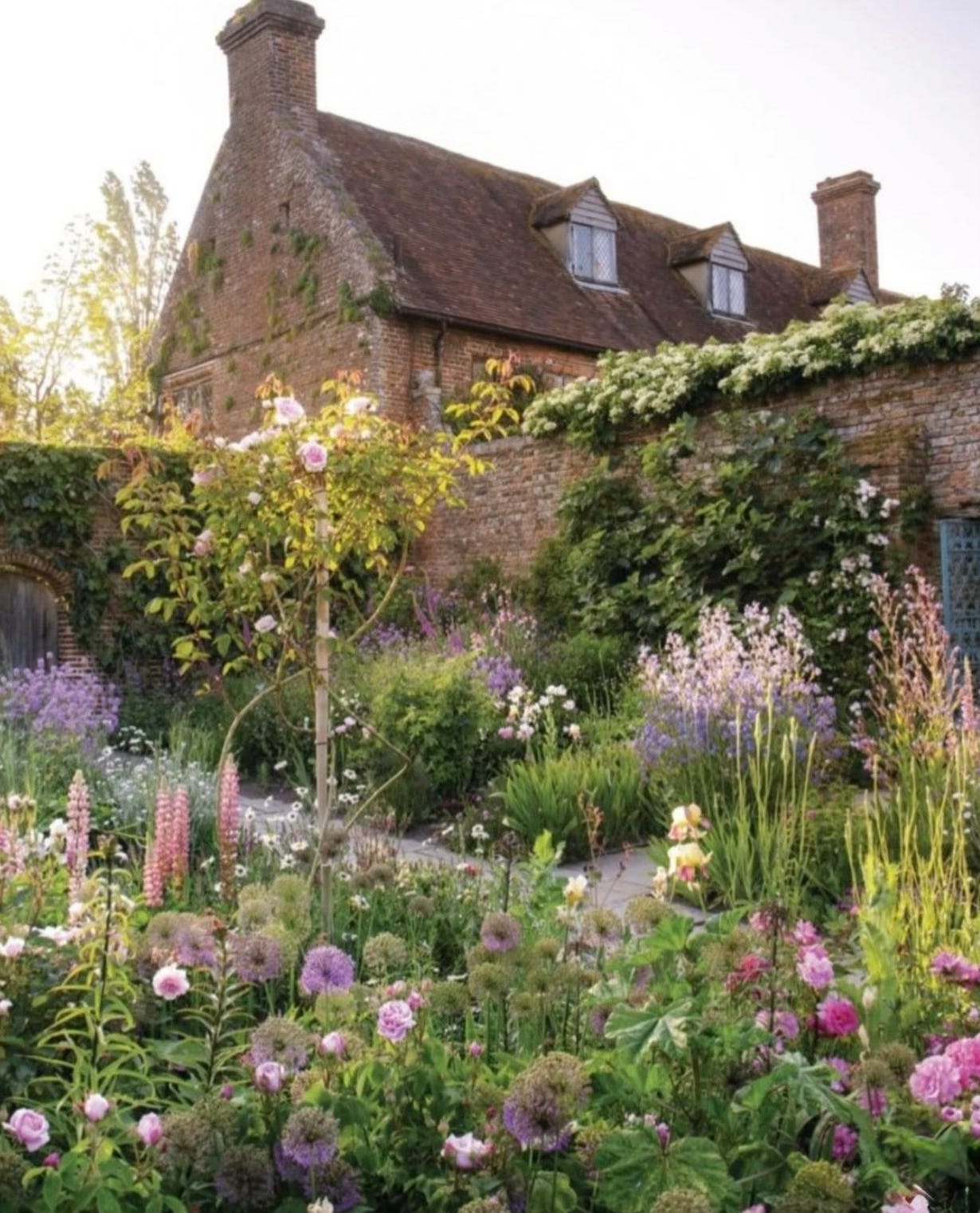
Can a cottage garden path handle heavy foot traffic without turning into a mess? Yes, if the path is wide enough and the planting beds are informal. This garden uses a winding stone path bordered by brick and wood edges, with rose bushes, allium flowers, and lupines spilling over the sides. The pink, purple, and white blooms feel cohesive even when the plants are at different heights. The soft natural light helps the flowers look like a single flowing mass. The key to making this durable is the path width. A narrow path gets overgrown fast, but a roomy one gives you room to walk and trim without crushing the flowers.
Rectangular pond reflects an arched stone structure

A rectangular pond with water lilies creates a strong central axis in a formal garden. The straight edges and still surface reflect the arched stone structure behind it, doubling the visual height without adding a single stone. Manicured hedges frame the pond on both sides, reinforcing the symmetry. The layout follows a clear line: the arch draws the eye, the pond mirrors it, and the hedges keep everything contained. This kind of design works best when the pond is the focal point and nothing else competes. A single rectangular shape is easier to maintain than a naturalistic pond, and the reflective surface adds a sense of depth to a relatively flat garden.
Square stepping stone path with wooden pergolas
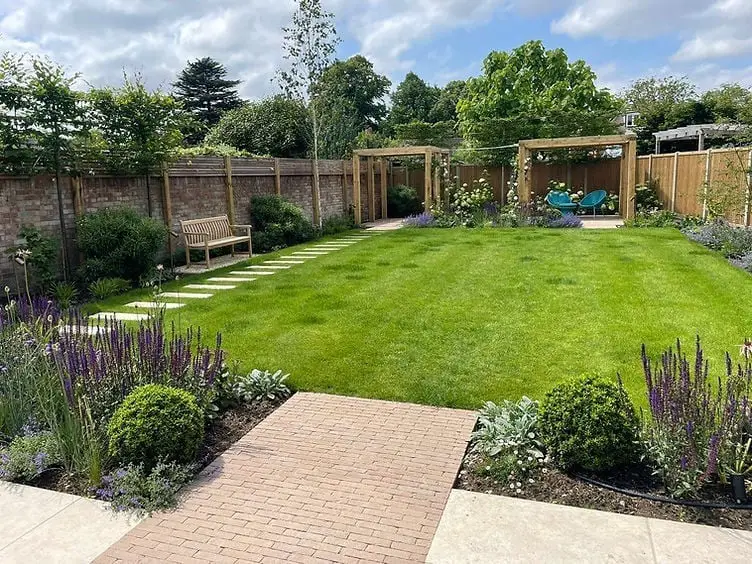
A garden path works best when it leads somewhere worth arriving at. Here, square stone slabs create a clean route through the lawn toward a seating area framed by two wooden pergolas and a bench. The pergolas add vertical structure without blocking the view, while a pair of blue chairs introduces a color note that adds contrast. The layout creates a series of outdoor zones: the path, the lawn, then the sitting area. That separation makes even a roomy backyard feel purposeful.
Terracotta obelisk stands central to rose bushes
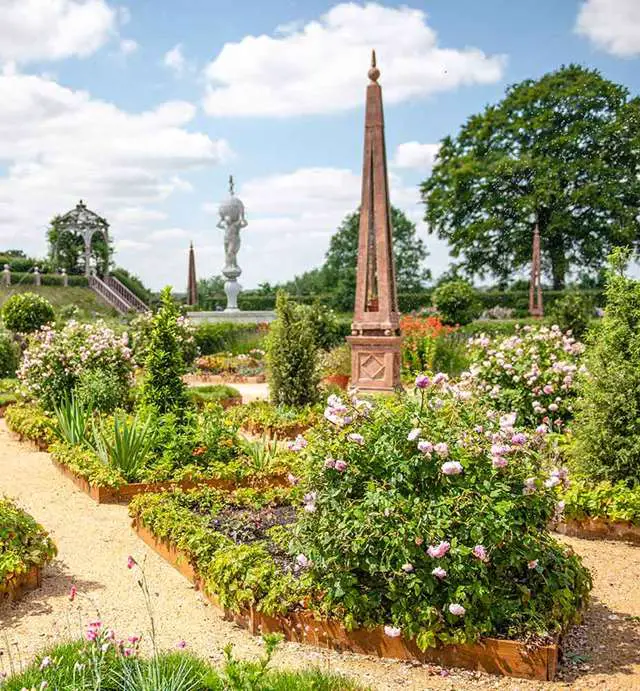
A formal garden can lean heavy on symmetry, so a single tall terracotta obelisk offers a softer focal point than a statue. The obelisk rises above pink rose bushes in a tiered landscape with gravel paths and a sculpted fountain. The terracotta echoes the warm tones in the stonework and contrasts with the green hedges and blue sky. The obelisk anchors a view that includes a gazebo at the far end, so the eye travels through the garden instead of stopping at one spot.
The palette here is restrained: green, pink, terracotta, and sky blue. That limited range keeps the formal beds from feeling busy. The obelisk breaks the green line just enough to draw attention. A formal layout like this works because the hero element stands at the right distance from the surrounding plantings.
Modern garden pathway with stone slabs and hedges
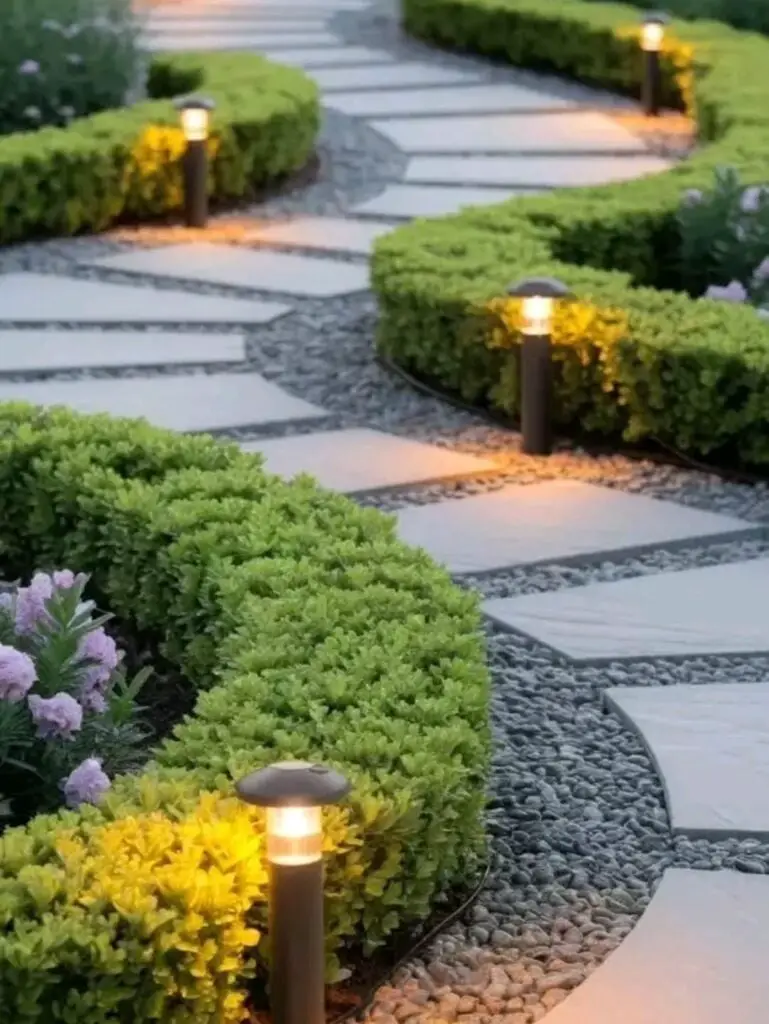
Pathway lights set low along a curving stone walkway change how a garden reads after dusk. The slabs are bordered by clipped hedges that keep the route defined, and the lights pick up the gray of the stone against the green. The warm glow also catches the purple and yellow flowers planted along the edge, extending the garden’s usable hours without flooding the space.
Eclectic patio with head-shaped planter and terracotta pots
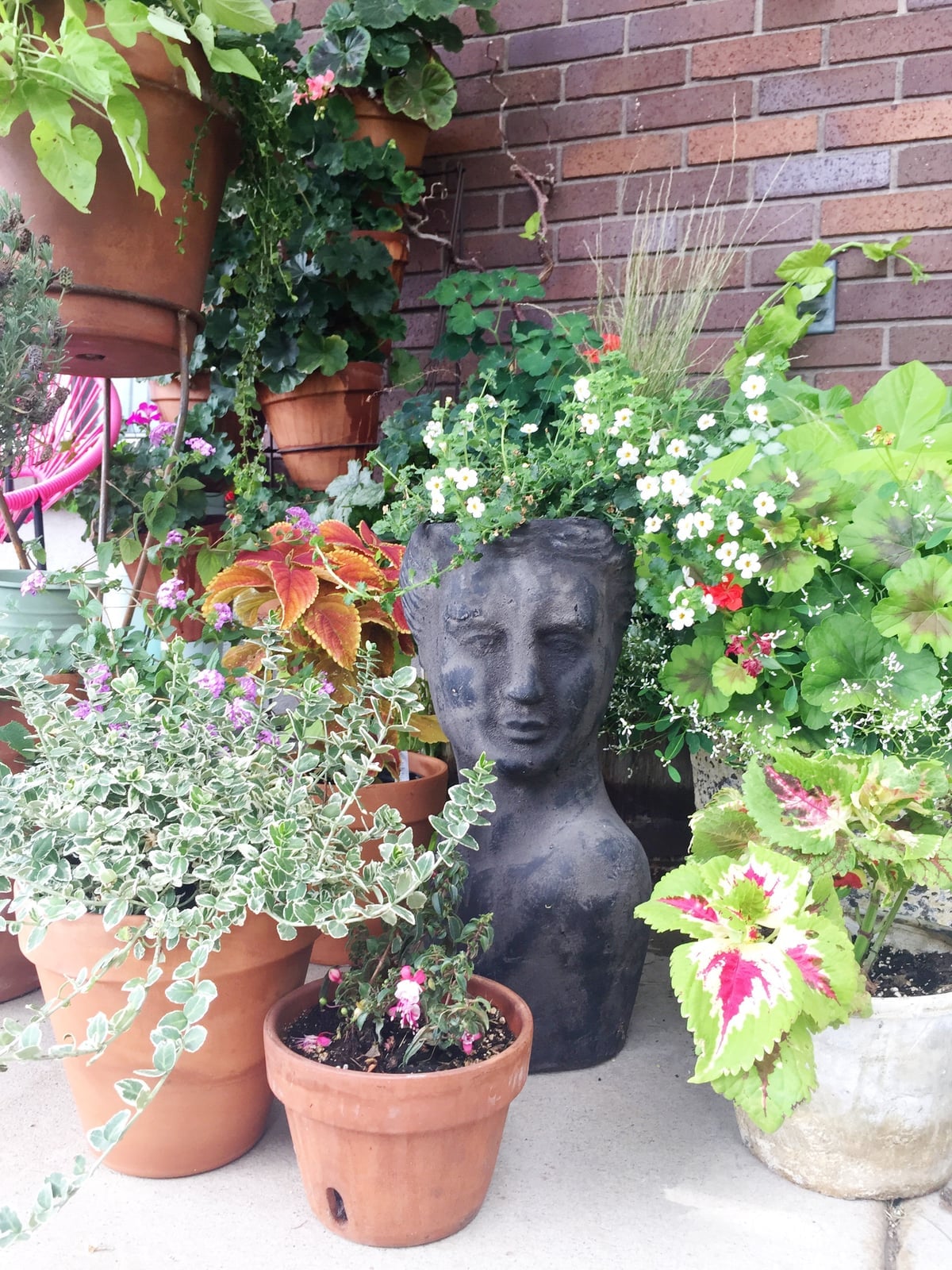
A single sculptural planter can shift a patio from predictable to personal. Here, a head-shaped concrete planter anchors a compact corner filled with coleus, geraniums, and trailing plants in terracotta pots. The gray concrete breaks up the warm brick and stone of the patio, while the pink and red blooms echo the terracotta tones. Layering plants vertically keeps a small space from feeling crowded. The head planter works because the rest of the arrangement stays simple, letting the unusual shape land without competing for attention.
Formal garden with stone sculpture and tiered steps
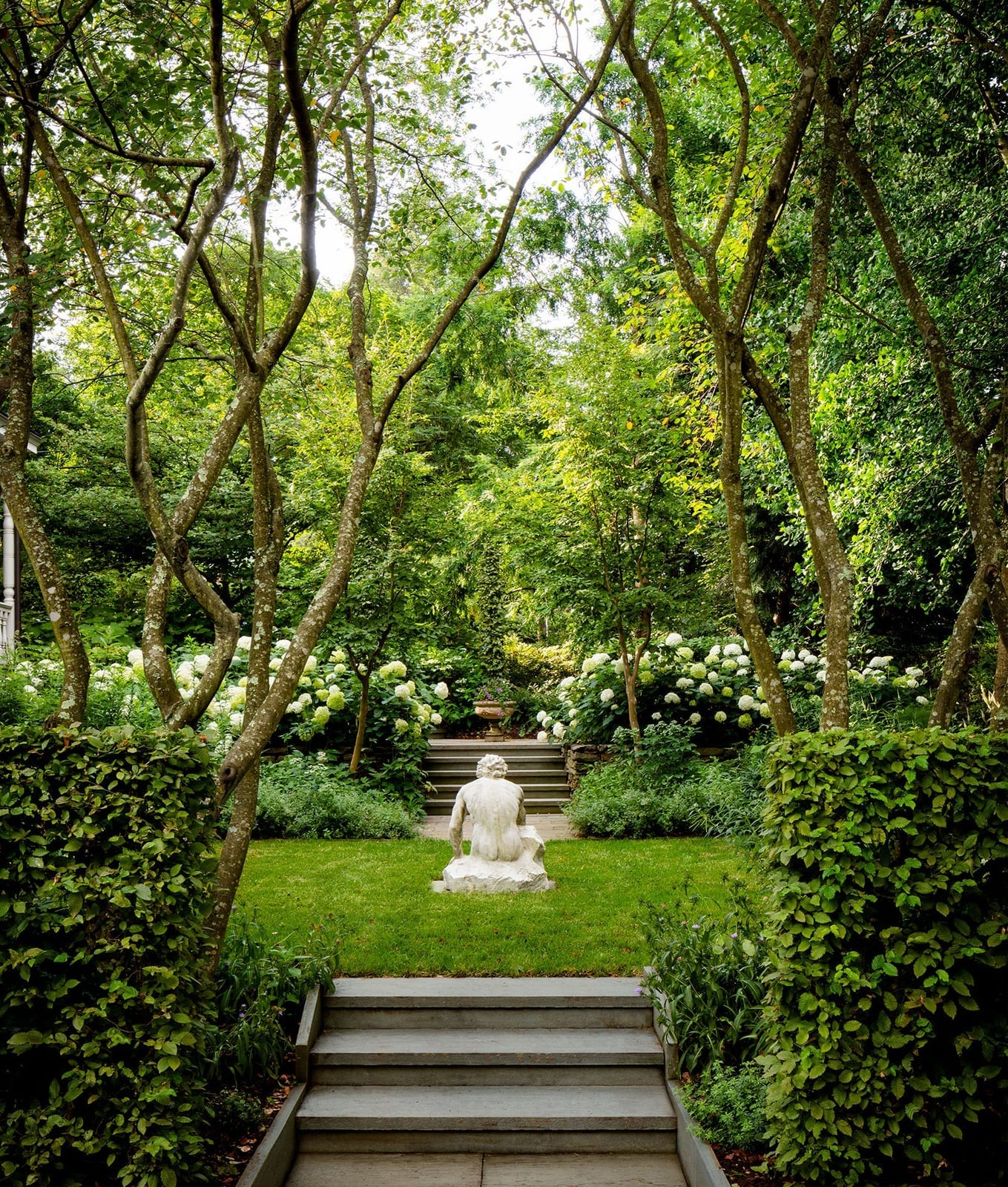
A central lawn gains structure when a focal point sits at the far end. Here, a stone sculpture stands on a raised tier behind tiered steps, with hydrangeas flanking the approach. The white of the sculpture stands out against the green hedge and grass, so the eye lands there first. The steps create a natural pause before the sculpture, making the walk across the lawn feel paced.
That sequence matters in a formal layout. The sculpture is not tucked into a bed; it occupies its own plane, framed by trees and clipped hedges. The open lawn around it keeps the view clean. A formal garden like this uses negative space as much as planting, giving the hero element room to hold the composition without clutter.
Japanese zen garden with moss mounds and bamboo
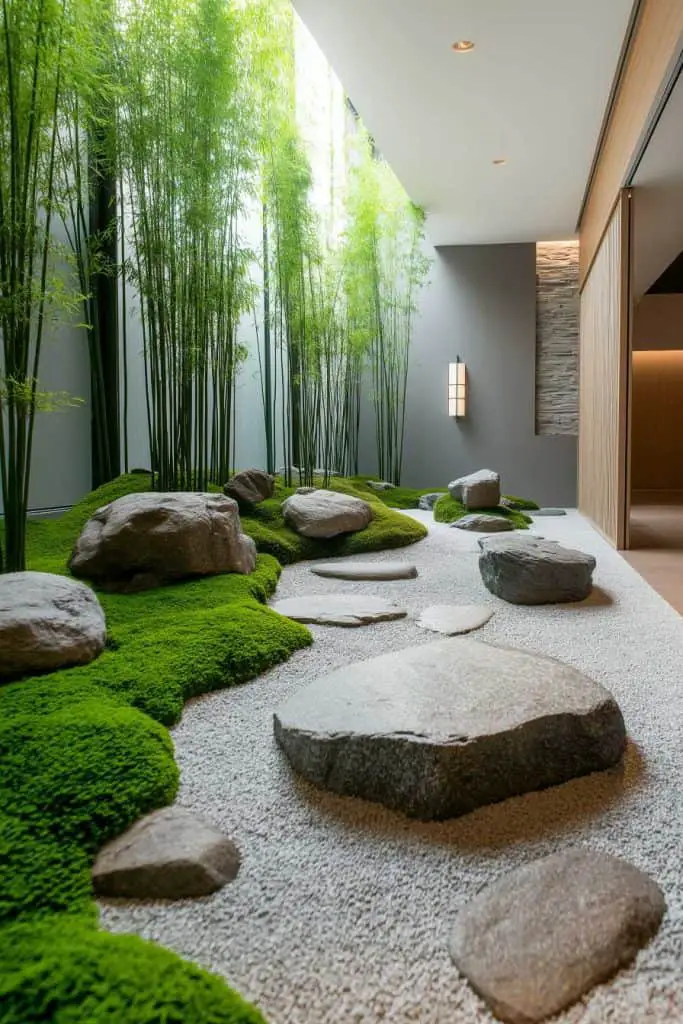
A courtyard zen garden uses moss mounds and bamboo to create a quiet focal point. Green, gray, and white dominate, with large rocks and stepping stones forming a pathway through the moss. A skylight and wall sconce provide the light, so the space works even on overcast days. The layout keeps the center open, which makes the garden feel larger than its actual footprint. For a similar effect, choose one material, here it is moss, and let it dominate the ground plane.
Bonsai trees surround a tranquil water feature
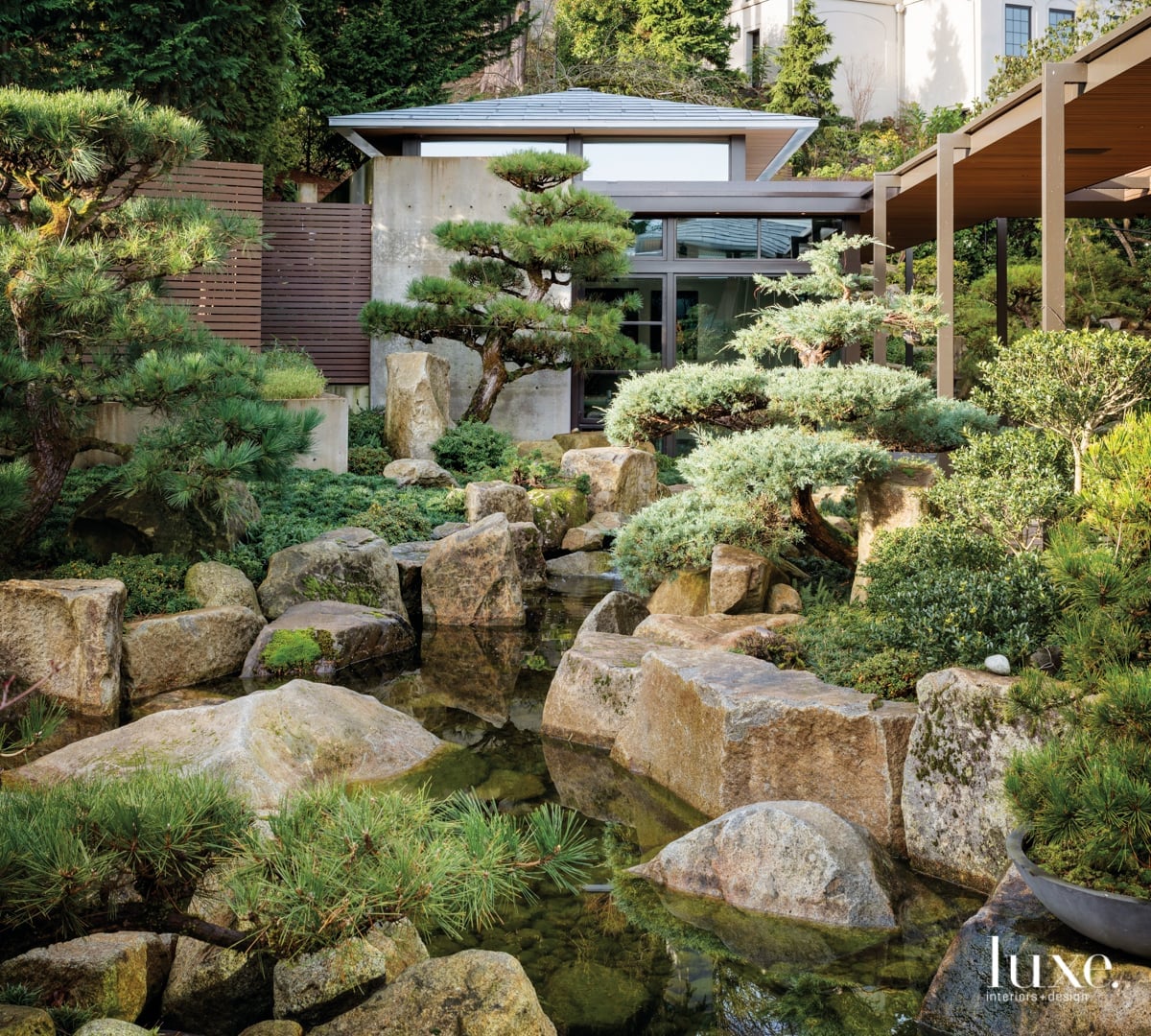
In a zen garden, the water feature sets the rhythm, and everything else is placed around it. Here, bonsai trees and large rocks cluster around a concrete basin, with the water anchoring the whole composition. The palette uses green, gray, brown, and beige, so nothing competes with the trees. The style works because the elements feel deliberate. To adapt this for a rental, use a portable water feature and potted bonsai instead of in-ground planting. The layout stays flexible, and you can take it with you when you move.
Multi-level waterfall flows into a serene pond
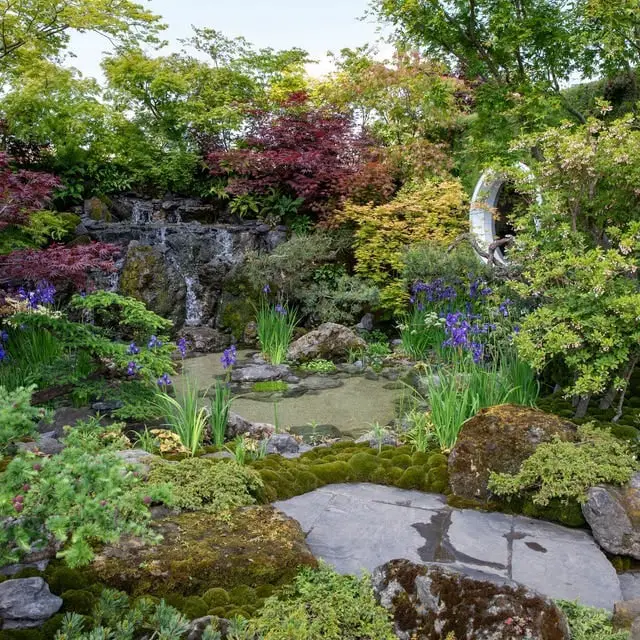
A close alternative to a single-level pond is a multi-level waterfall that adds both sound and visual depth. Here, water cascades over rocks into a pond edged with blue irises and diverse trees. The palette includes green, red, yellow, blue, and gray, which keeps the planting lively without feeling chaotic.
The layout uses the waterfall as the main axis, with the pond below and trees framing the sides. The multi-level design breaks up the garden into distinct zones: the top of the fall, the splash zone, and the calm water below. For a smaller yard, a single-level pond with a recirculating pump gives a similar effect without the vertical space.
Patio with lush garden planting and bistro set
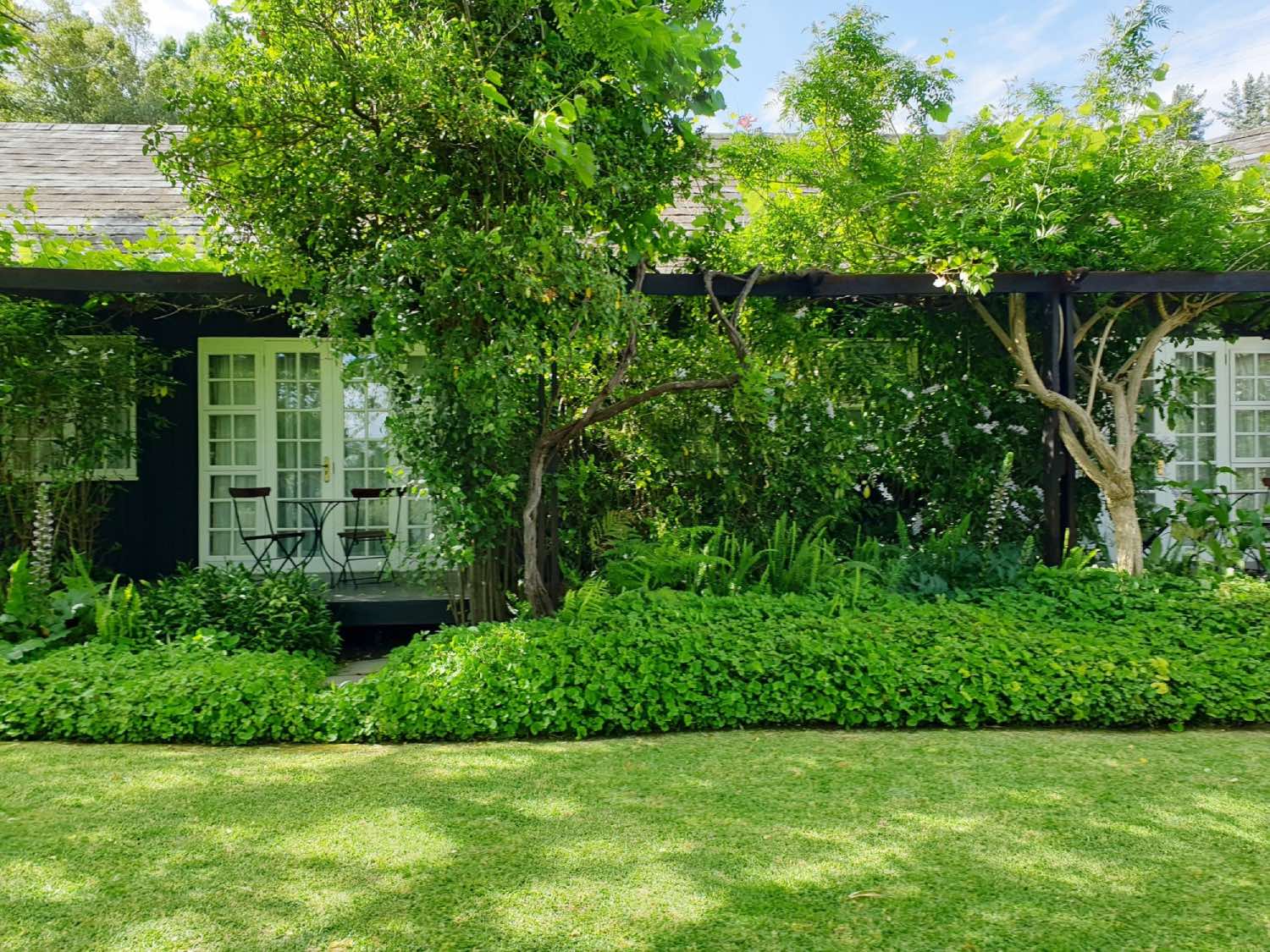
A patio with dense ground cover and climbing plants creates the feeling of a cottage garden, even in a compact space. The bistro set sits on a manicured lawn, with layered planting in front of the house. Greens, white, and dark brown keep the look cohesive. The layout puts the seating at the edge of the planting, so you are surrounded by greenery without losing the patio. For durability, choose metal or treated wood furniture that can handle rain and sun without constant refinishing.
Japanese garden with stone water basin and bamboo spout
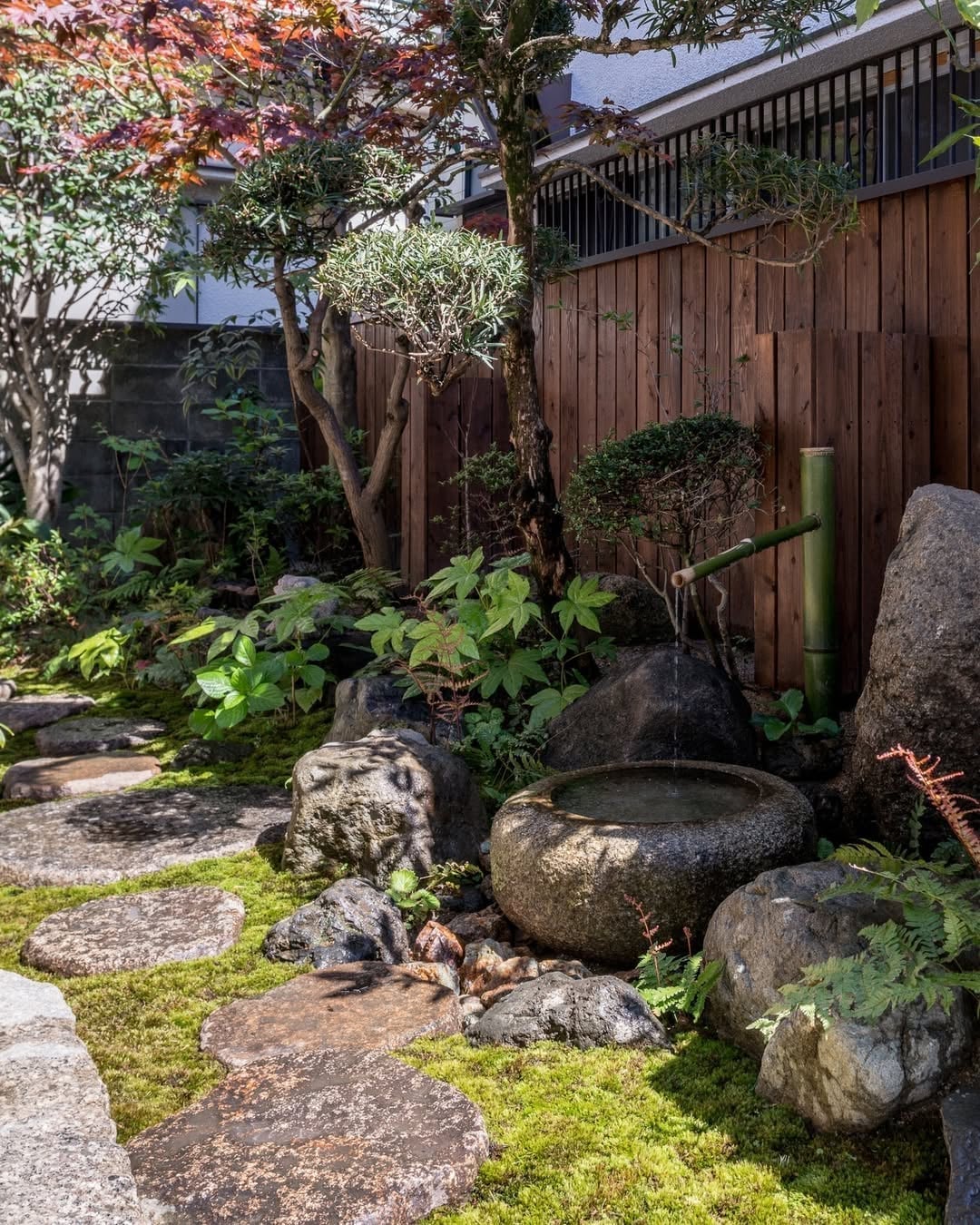
A stone water basin with a bamboo spout works best when it serves as the clear focal point. Here, the basin sits at the end of a pathway made of stepping stones, with a Japanese maple adding a red accent. The palette uses green, brown, gray, and red, so the maple stands out against the stone and moss. The layout is compact, which makes the detail vignette feel intimate. For proportion, keep the basin roughly one-third the width of the path leading to it. That ratio gives the eye a clear destination without overwhelming the space.
Winding stone path showcases raised beds
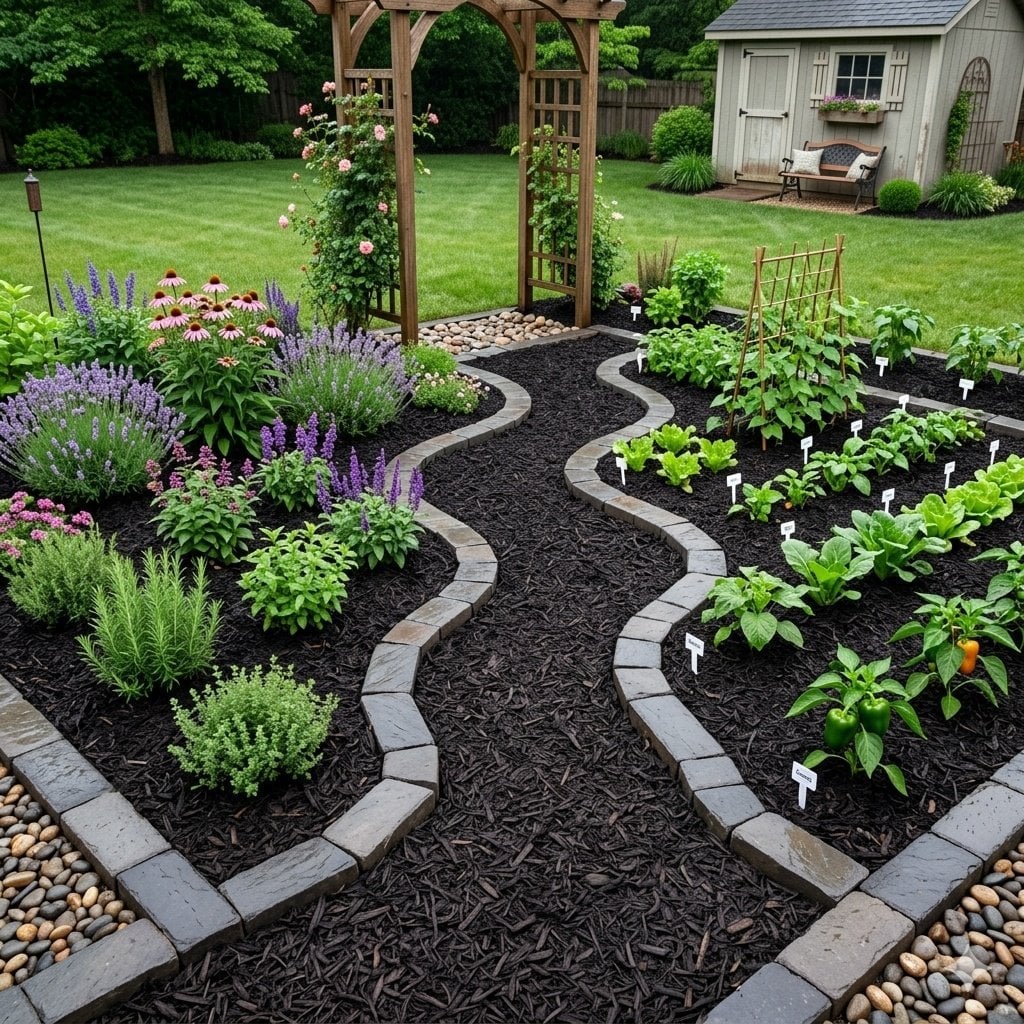
A curving path changes how you move through a garden. This cottage garden layout uses a winding stone walkway that pulls you from one planting zone to the next. The raised beds flank the path, making each cluster of flowers and vegetables feel like its own room. A wooden arbor frames the view ahead, which gives the eye a place to rest. The mulch and gravel between the stones soften the walkway and help define the beds without adding hard edges. The path becomes the spine of the garden, and every turn reveals something new.
When planning a similar layout, start with the path shape before placing the beds. A straight walkway pushes you through fast. A curve slows you down and gives each bed a front and a back. Keep the beds narrow enough to reach across for planting and weeding. That way the path works as both a route and a work aisle.
Teal mosaic Art adorns a rustic shed
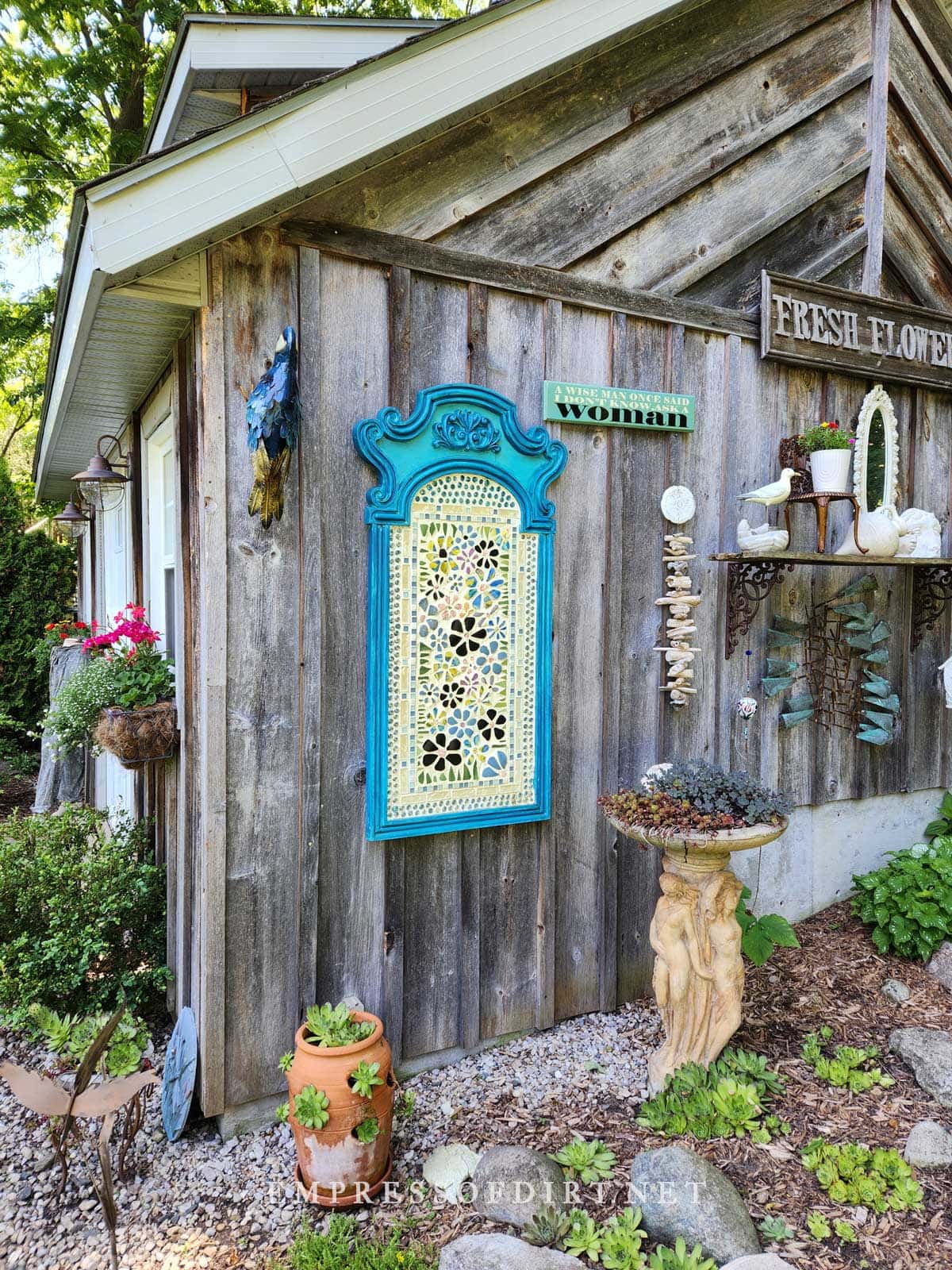
A teal mosaic panel turns a plain shed wall into the focal point of an eclectic backyard. The tile work mixes shades of teal, yellow, and black, which stand out against the weathered wood behind it. A terracotta planter and hanging baskets add green and pink nearby, so the art feels connected to the garden. The bird bath at ground level repeats the rounded forms in the mosaic. Keeping the shed neutral lets the tile work carry the color without competition. If you add a bold art piece outdoors, echo one or two of its colors in the plants or pots around it.
Outdoor kitchen and waterfall feature
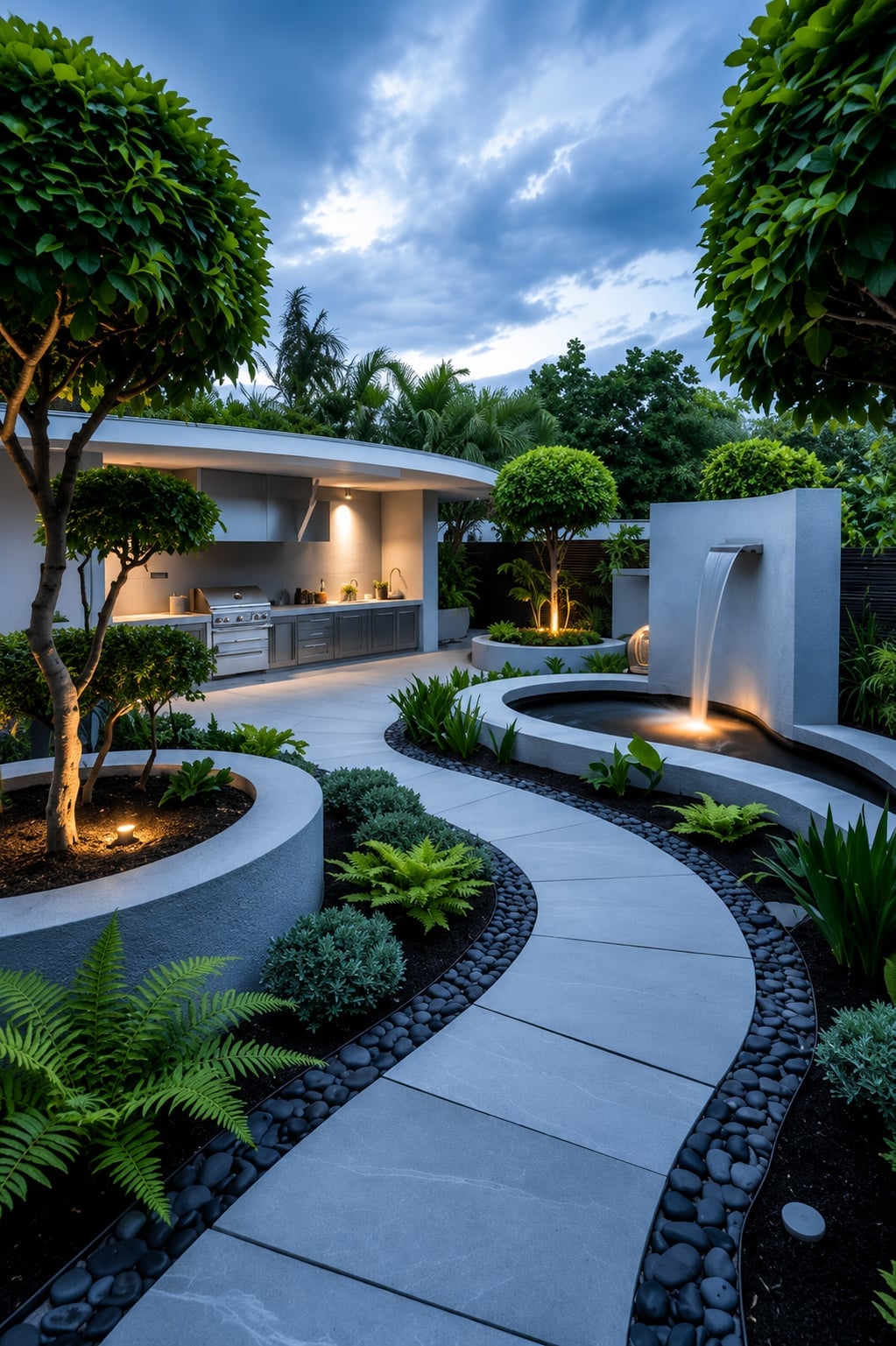
Stone and concrete give an outdoor room its bones. This modern backyard pairs a built-in kitchen with a waterfall feature, and both rely on the same cool gray palette to feel like part of the same scheme. The waterfall drops into a curved planter, which wraps the water sound around the seating and cooking area. Stainless steel appliances keep the look clean and tie back to the stone tones. Integrated garden lights come on in the evening, so the kitchen stays usable and the water feature stays visible after dark. When combining a kitchen with a water element, match the surface finishes so one does not look an add-on.
Gray stepping stones lead to artificial turf
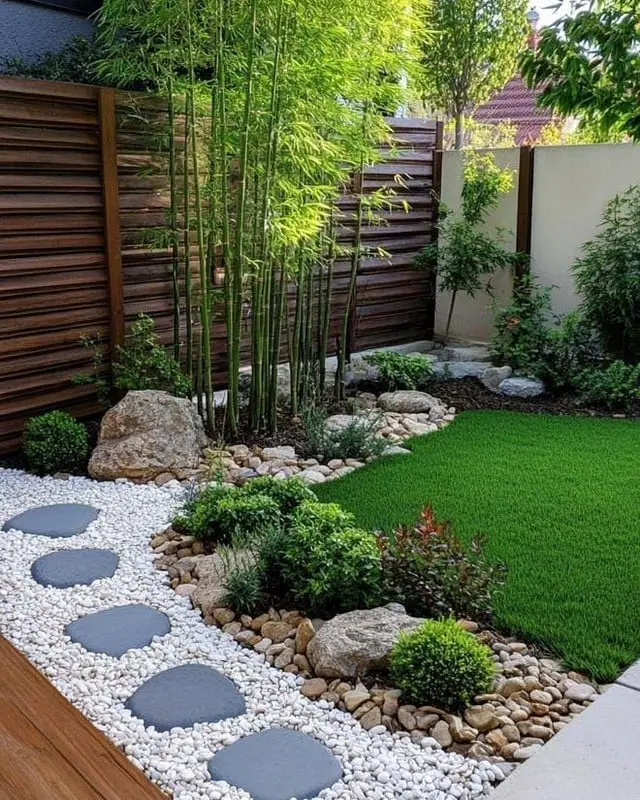
Artificial turf solves the muddy patch problem, but it can look flat without the right surround. This compact backyard pairs a turf lawn with gray stepping stones that lead from the house to the green area. Tall bamboo stalks rise behind the stones, adding vertical texture and a soft rustle that real grass would provide. Decorative rocks and manicured shrubs break up the edge where stone meets turf, so the transition looks planned and not abrupt. The bamboo also screens the fence line, which makes the small yard feel deeper. If you choose artificial turf, plant something tall and layered around it to stop the eye from landing on the synthetic surface all at once.
Pathway illuminated by dramatic uplighting
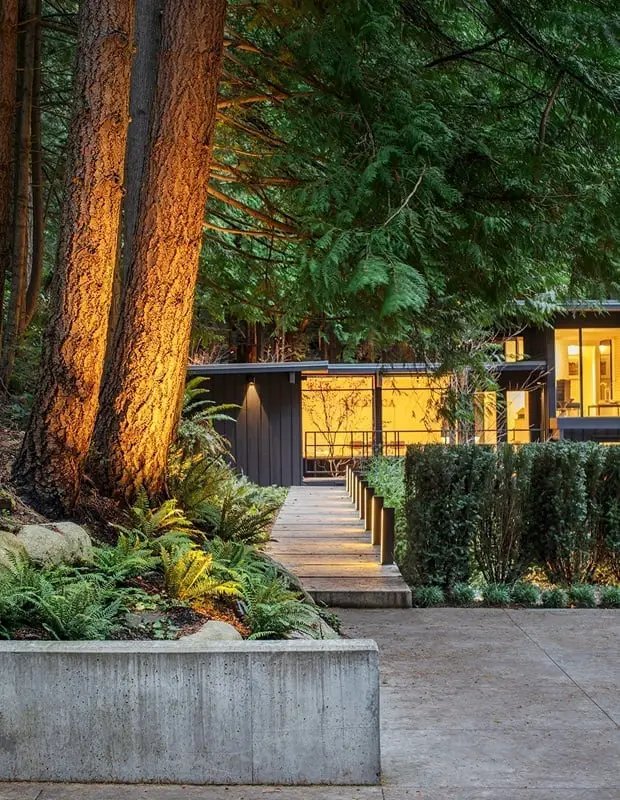
Uplighting changes a garden after dark without changing the plants themselves. This modern pathway uses fixtures aimed up into the trees, which cast leaf shadows across the stone and concrete below. The warm glow from the house spills onto the path from the interior side, so the light feels layered rather than harsh. Minimalist planters and clipped hedges stay dark at the base, which keeps the eye moving along the walkway instead of stopping at the ground. For a similar effect, place uplights at the base of mature trees or tall shrubs and aim them at the trunk or lower canopy. That one move gives the whole yard a new shape after sunset.
Barrel cacti cluster in a gravel bed

A cluster of barrel cacti turns a gravel bed into a living sculpture. The rounded forms, ribbed and yellow-green, sit among agave and rust-colored stone in a modern xeriscape layout. A winding path of flat stones cuts through the gravel, giving the eye a place to rest. For a room-mode read, the palette stays tight: green, yellow, gray, and rust, which keeps the space from feeling busy. The trick here is letting the hero element dictate the rhythm. When the plants are this sculptural, everything else steps back. Gravel and a few boulders are all the support they need. Check your USDA zone before planting barrel cactus, and expect a slow, steady grower that asks for almost no water once established.
Wooden dining set graces a stone pathway
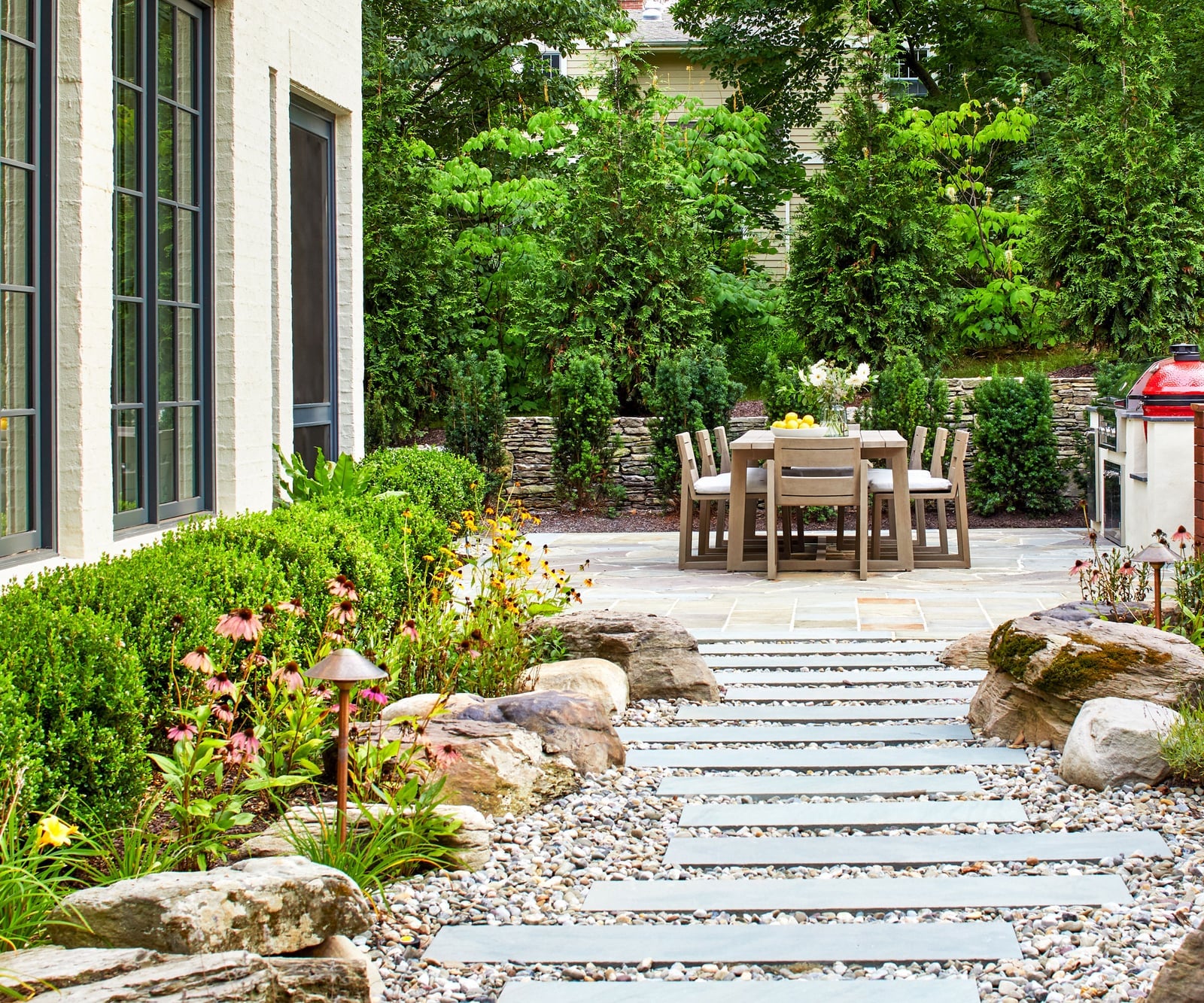
A full patio dining set can feel like too much for a narrow yard. This layout solves that by placing the table and chairs at the end of a stone pathway, not in the middle of the lawn. The path, made of flat stone slabs set into gravel and brick, draws you toward the dining area like a visual invitation. Low-level garden lights along the edges keep the route visible after dusk without flooding the space. The wooden table and matching chairs sit on a stone pad, anchored by an outdoor grill off to one side. The effect is a roomy outdoor room that still feels intentional.
The layout works because the path does double duty. It leads you somewhere, and it also defines the zones. Gravel underfoot looks a natural transition between the planting beds and the dining area. For renters, a path like this can be laid with loose stone or stepping tiles that lift out at the end of a lease. No permanent pour required.
Domed pizza oven anchors multi-level layout
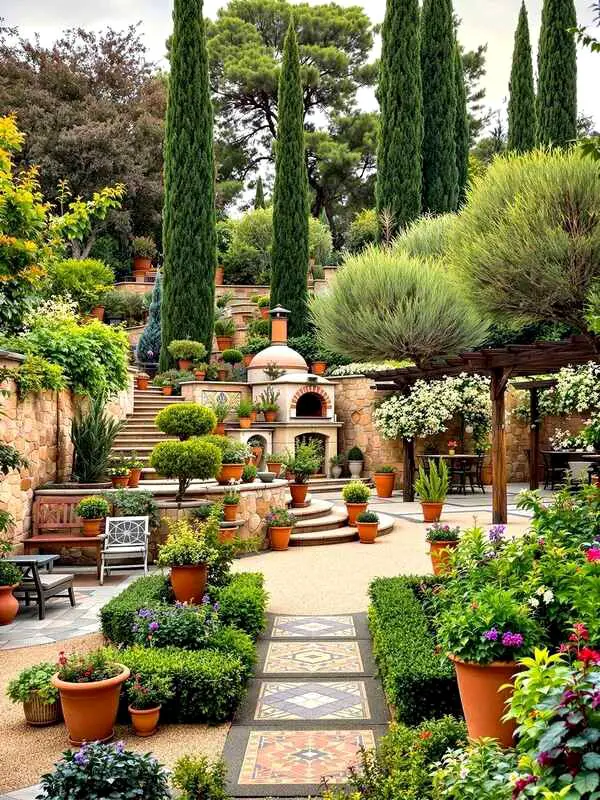
A domed pizza oven in cream and terracotta tile anchors a terraced Mediterranean garden. Cypress trees rise behind it, and a stone bench offers a spot to sit while you wait for the crust to crisp. The oven sits on its own level, a few steps up from the main pathway, which gives it the presence of a small outdoor room. Potted plants in terracotta cluster around the base, softening the hard edges. This is a layout built for gathering: the oven draws people to one spot, and the multi-level design keeps the rest of the garden from feeling like a waiting area.
Rustic vertical herb garden on a pallet
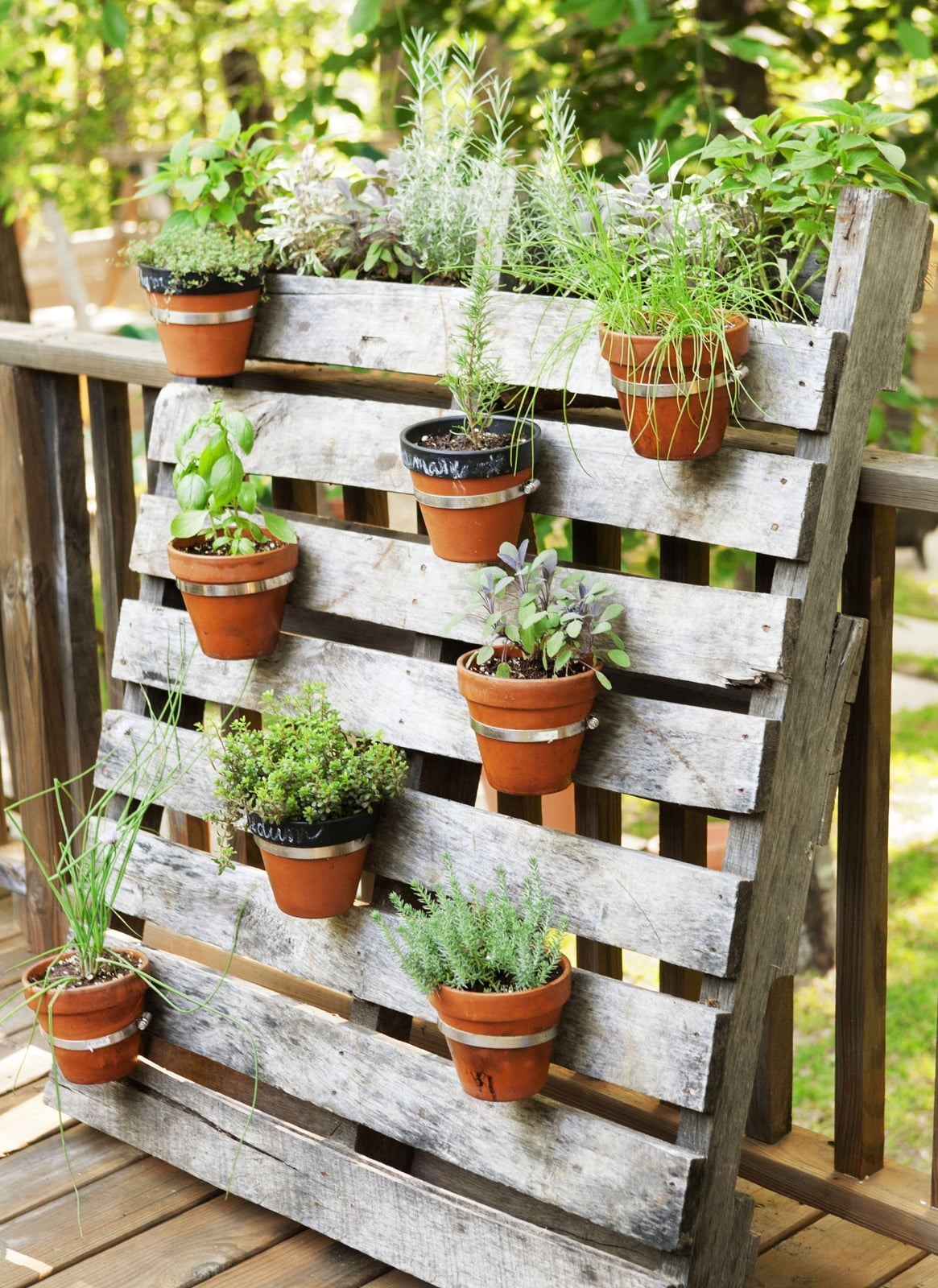
A repurposed wooden pallet mounted on a patio wall holds a row of terracotta pots filled with herbs. The vertical layout saves floor space while putting basil, mint, and rosemary at arm’s reach from the kitchen door. The wood has a weathered gray-brown tone, and the metal brackets that hold the pots add a subtle industrial note. For a compact patio, this kind of vertical planter turns a blank wall into a working garden. The layout is the point: by going up instead of out, you free up the ground for a small table or a chair. The pallet itself is a durable base, but check the wood for splinters and seal it if you want it to last more than a season or two.
Modern farmhouse garden with raised vegetable beds
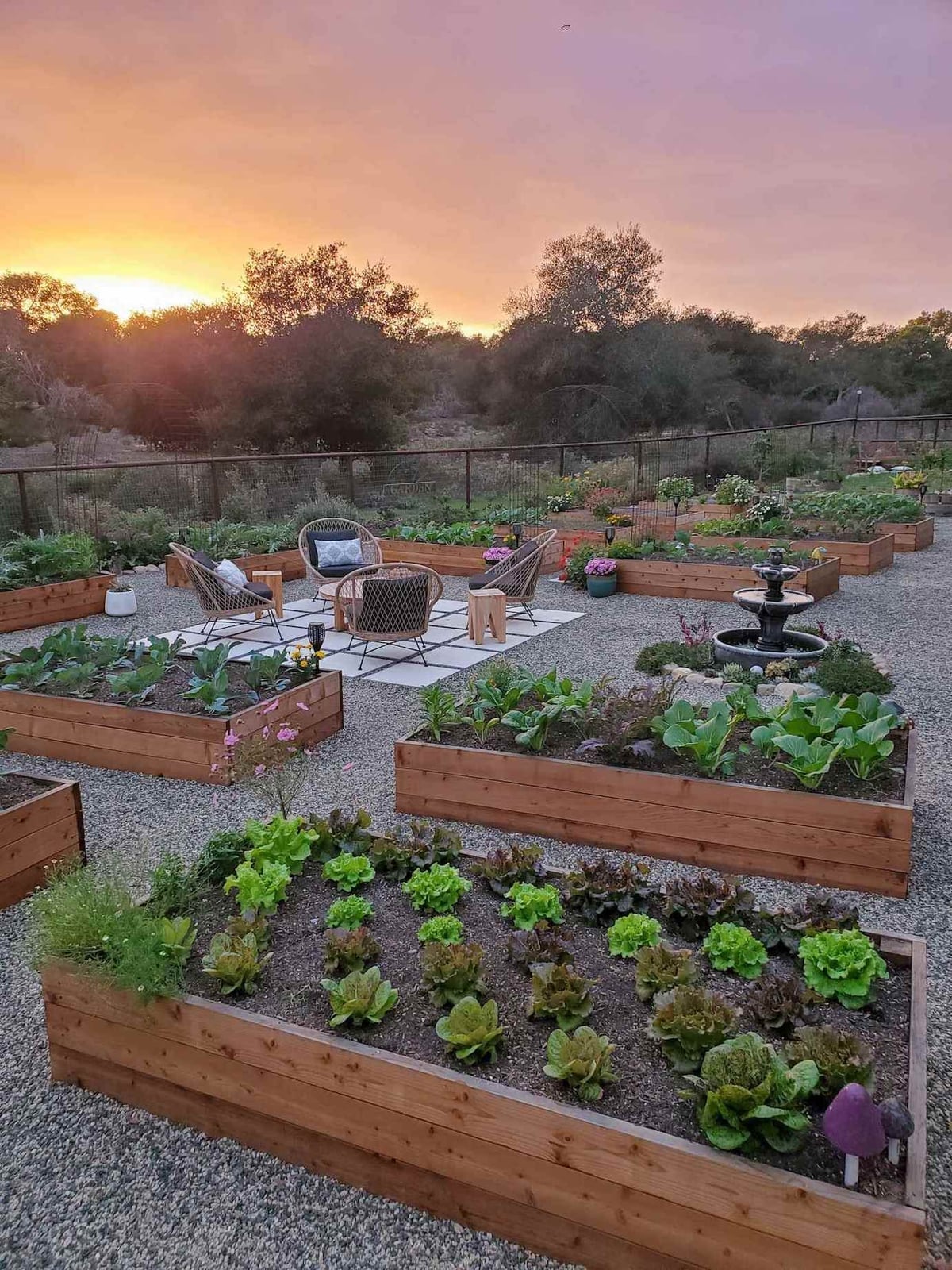
A full vegetable garden can look purely utilitarian. This modern farmhouse version softens that with a seating area and a small fountain, turning the backyard into a space for both growing and lingering. The raised beds are built from wood, set in organized rows on a gravel base with stone tile paths between them. Wicker chairs sit under the warm orange light of sunset, facing the beds rather than turning away from them.
The scale and proportion here matter. The beds are wide enough to hold a serious crop but narrow enough that you can reach the center from either side. The gravel paths keep mud from tracking onto the stone tile, and the fountain adds a quiet sound that masks street noise. For anyone who wants a garden that doubles as a place to sit with coffee, this layout proves you do not have to choose between productivity and comfort.
Final Thoughts
From tidy geometric beds to rambling cottage paths, these gardens share one thing: they treat the outdoors like a real room. A bench, a bench, a water feature, or even a well-placed planter can anchor the whole space. Start with one idea that fits your climate and your eye, then let the rest grow from there.