White bedding is the quiet constant in a room that changes with the seasons. The 2027 take on it isn’t about stark minimalism; it is about texture, contrast, and the small details that keep a neutral bed from feeling flat. Whether you lean toward crisp linen or a chunky knit, the goal is depth without color.
This article covers 27 ways to style white bedding so it feels intentional, not unfinished. From natural accents to bold headboard pairings, each idea keeps the bed as the focal point while the room stays simple and supportive.
Textured white quilts with creamy pillow layers
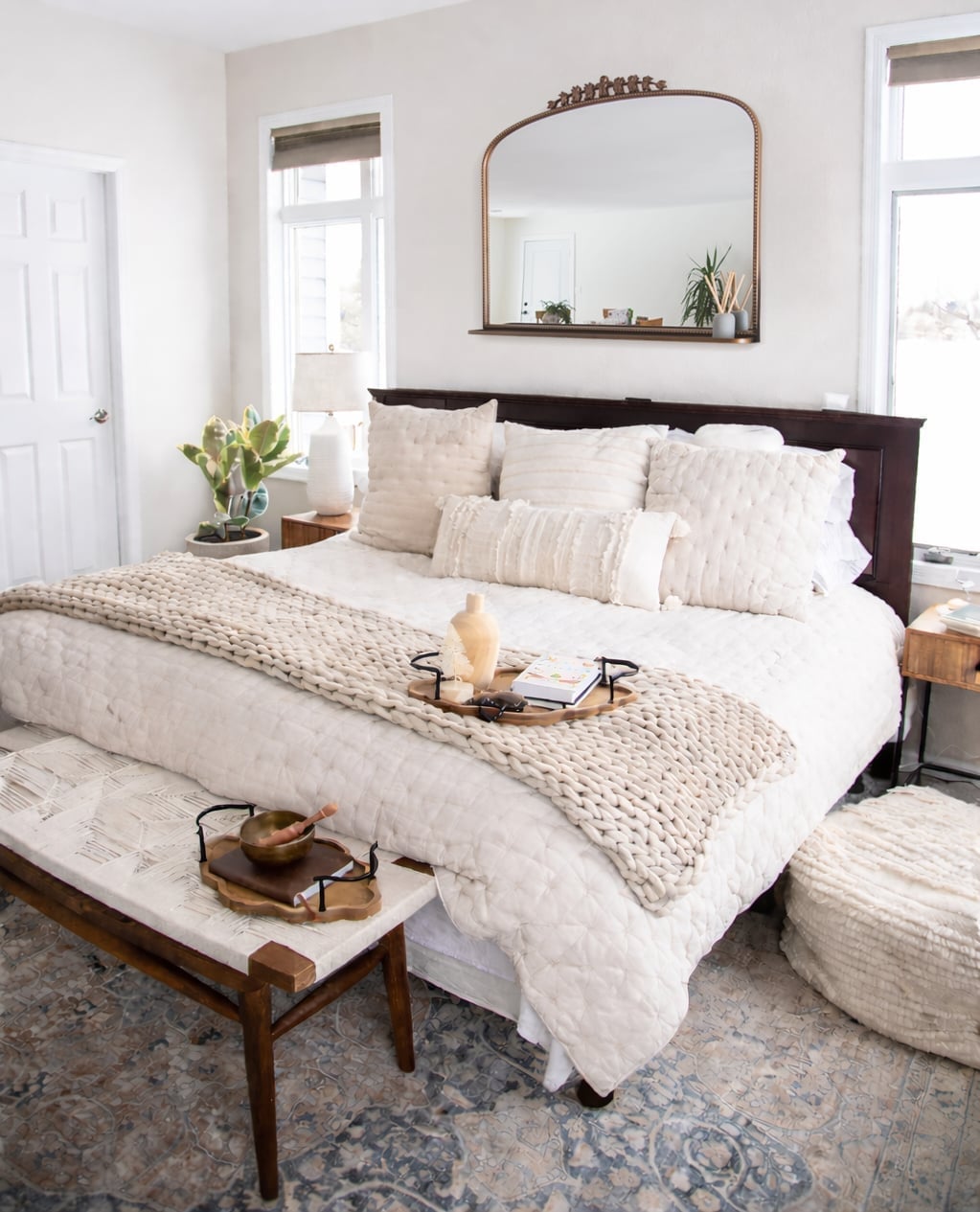
A king size bed centered in the room with a wooden bench at the foot and an arched mirror above the headboard sets a balanced foundation. The textured white bedding anchors the palette of cream, beige, dark wood, and a hint of blue. A knit throw and decorative pillows add layers without crowding the look. Natural light from windows and a table lamp makes the space feel open and airy.
Waffle weave duvet with natural accents
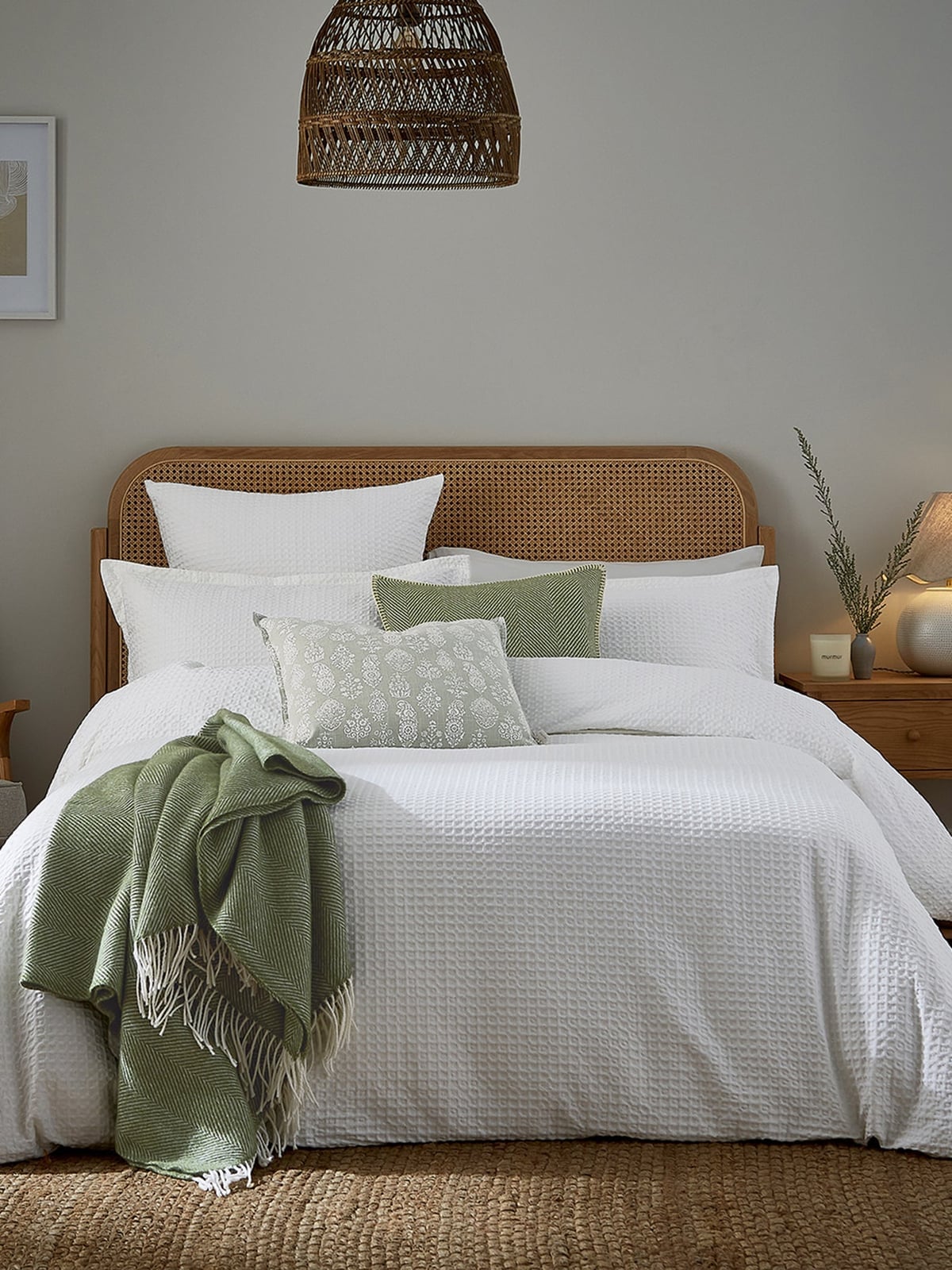
A waffle weave white duvet cover brings texture without pattern. The bed with a rattan headboard centers the room, with a green throw blanket and decorative pillows adding contrast. Natural wood, jute, and rattan keep the palette grounded. An overhead pendant light and bedside lamp balance the natural light from the window. The result is a bedroom that feels layered but not busy.
Modern farmhouse stripes with ruffled accents
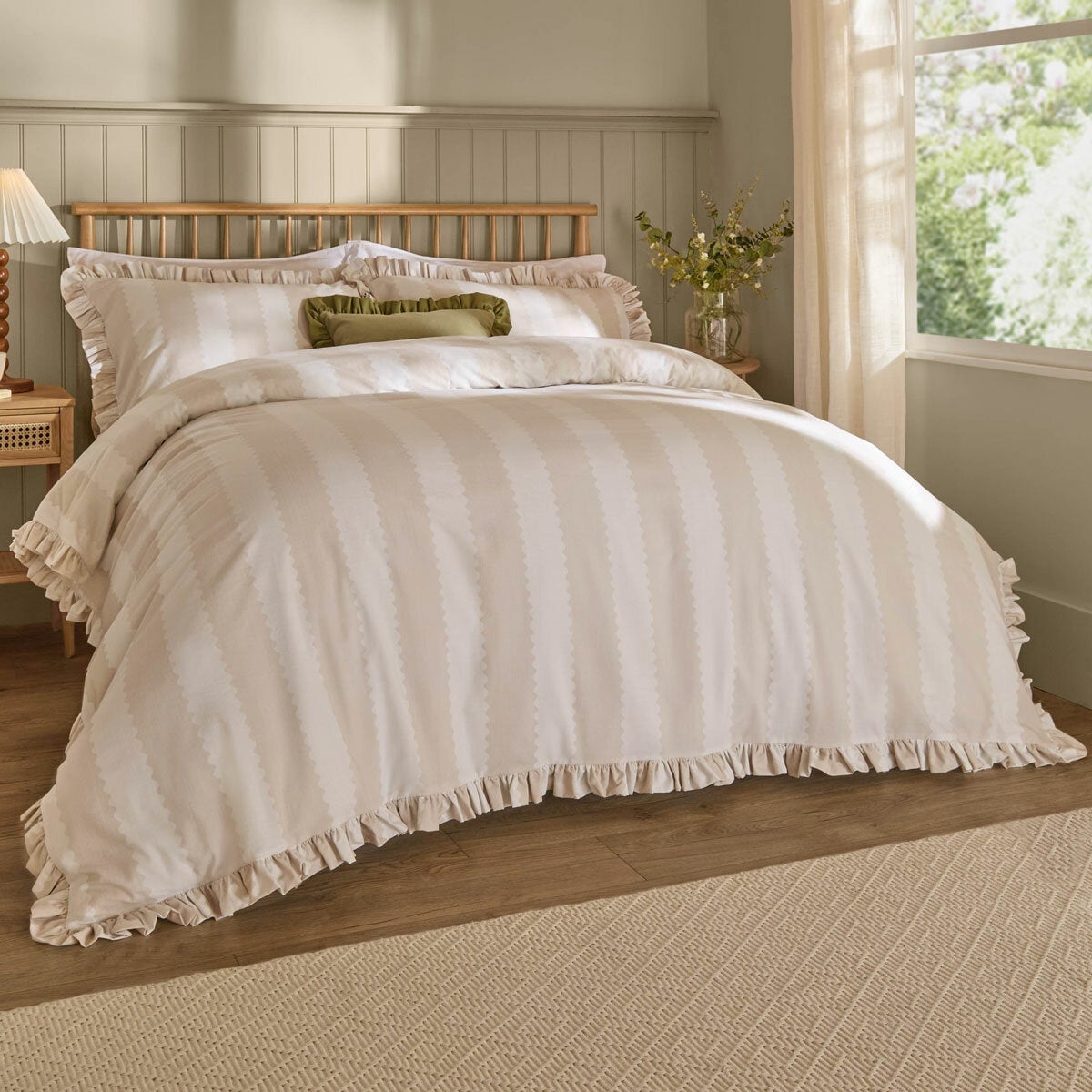
How do you keep farmhouse bedding from feeling too sweet? The trick is in the mix. A wooden bed frame holds a striped duvet in beige and cream, with ruffled pillows adding softness. Sage green accents balance the warm tones. The room feels relaxed with linen and woven textiles. The ruffled details add character without overwhelming the stripes.
Crisp linen on light gray upholstery
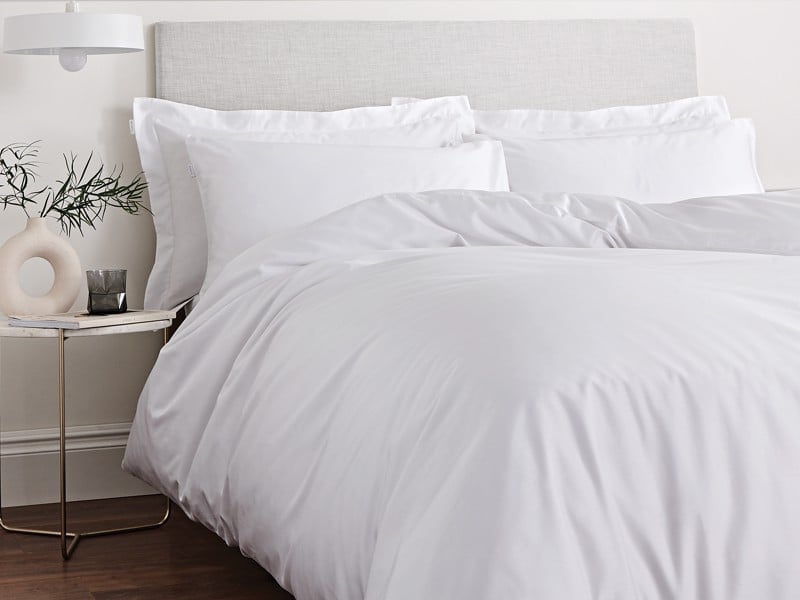
A white duvet cover on a light gray upholstered headboard creates a clean contrast. Linen fabric brings a natural texture that softens the look. Marble and brass on the nightstand add a subtle shine. Ambient light from a pendant light keeps the room feeling calm. The palette stays in white, light gray, and beige, which makes the space feel larger and more open.
Beige knit throw on neutral headboard
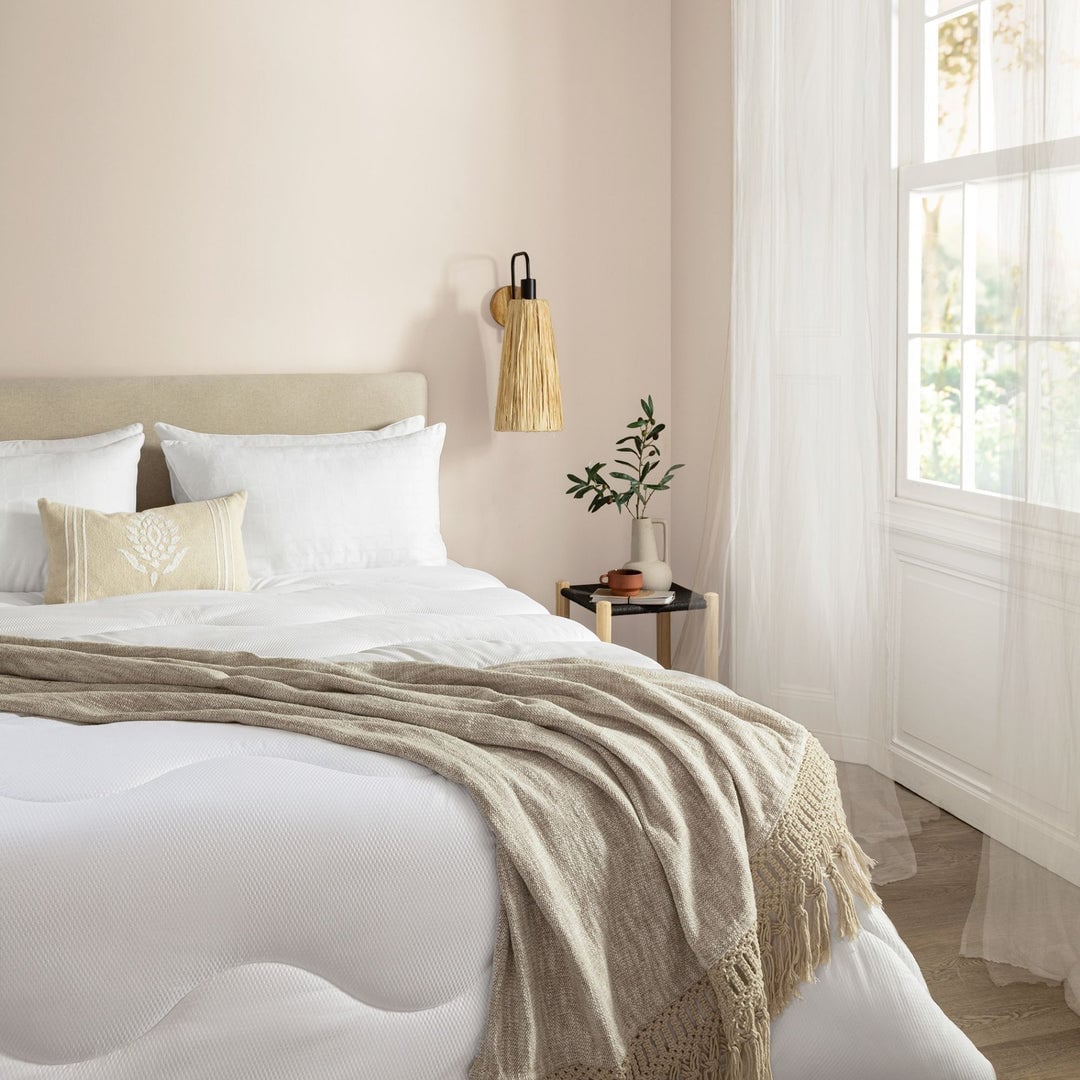
To layer white bedding, start with one textured piece. A beige knit throw draped over a neutral headboard adds warmth without bulk. The bed sits centered with a nightstand beside it, lit by a window and a wall sconce. Linen bedding in white and light pink keeps the palette soft. Woven straw and wood accents tie the look to natural materials.
Abstract patterned white duvet with greenery
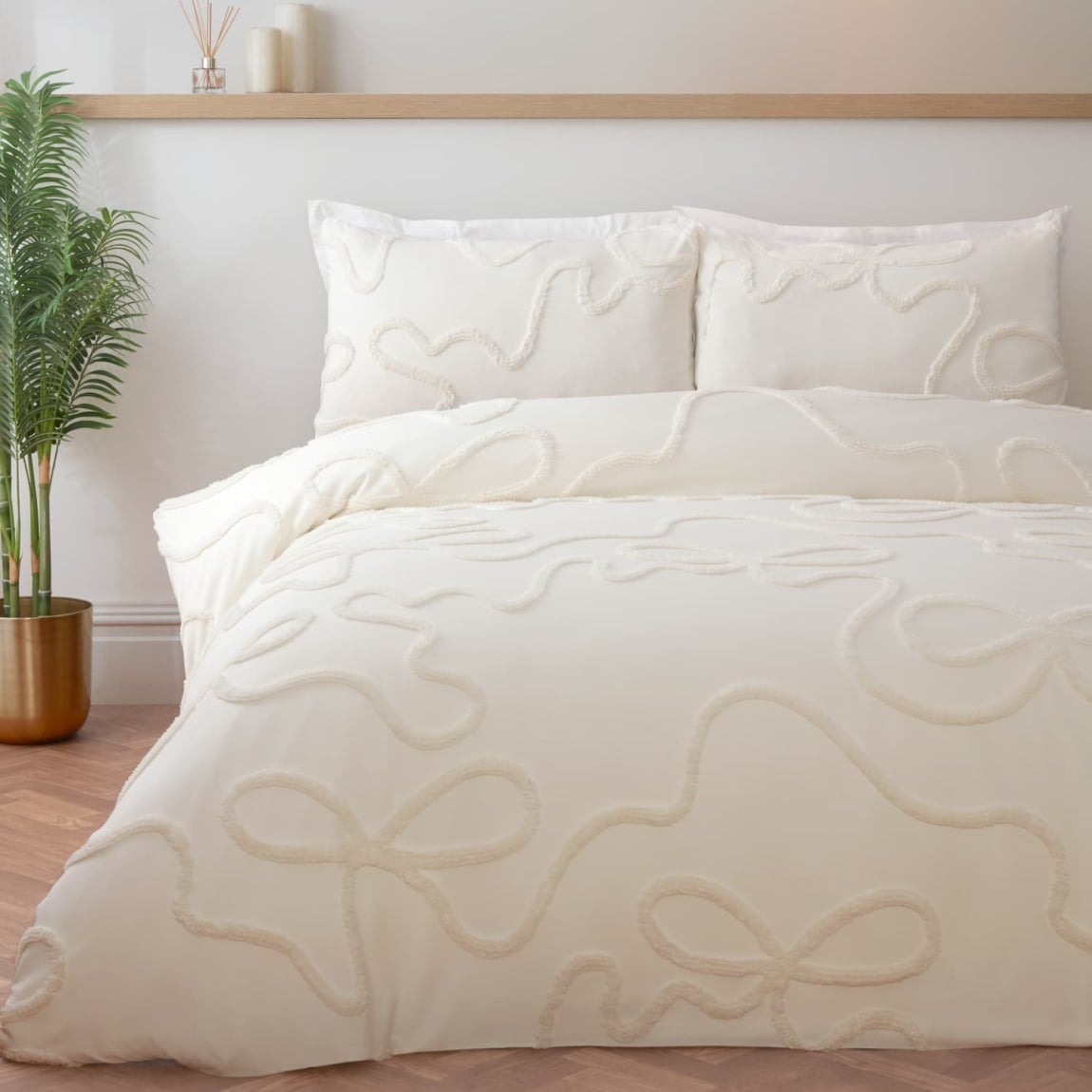
A solid white duvet can look a blank wall, but an abstract pattern gives the eye something to land on without breaking the calm. In a modern bedroom with a centered bed and a plant off to the side, the textured white duvet cover becomes the hero element. The palette stays in white, cream, light wood, and gold, so the pattern adds movement rather than noise. A linen duvet with subtle geometric or brushstroke marks keeps the space feeling roomy and uncluttered. The greenery beside the bed pulls the eye across the space, balancing the visual weight of the patterned textile. This setup works for anyone who wants white bedding with a little more going on, without sacrificing the serene feel.
White bedding with bold orange headboard contrast
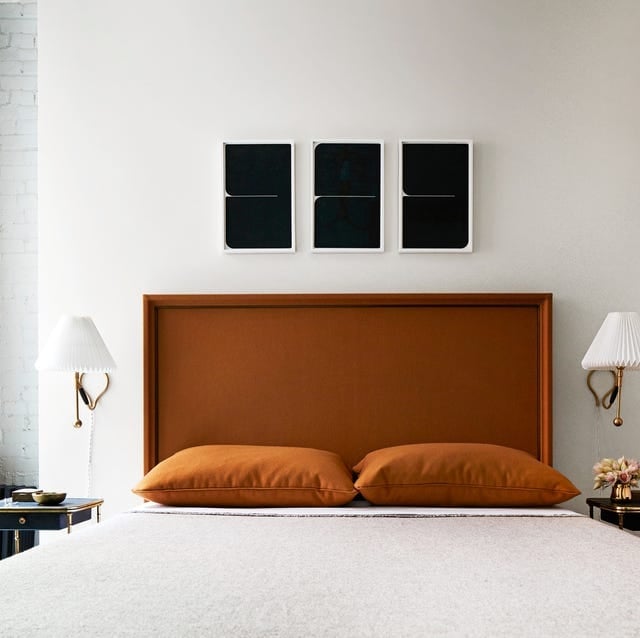
An orange headboard is the kind of move that makes white bedding look deliberate rather than default. In a symmetrical layout with a centered bed, wall sconces, and matching nightstands, the bright upholstered panel becomes the focal point. The white linens and neutral palette of brown, black, and gold let the orange do its job without competition. For renters, this is a smart swap: a headboard is easy to change when you move, and it transforms a plain white bed into a styled setup. Ambient light from the sconces softens the contrast, so the room feels warm rather than loud.
Low platform bed for a light filled room
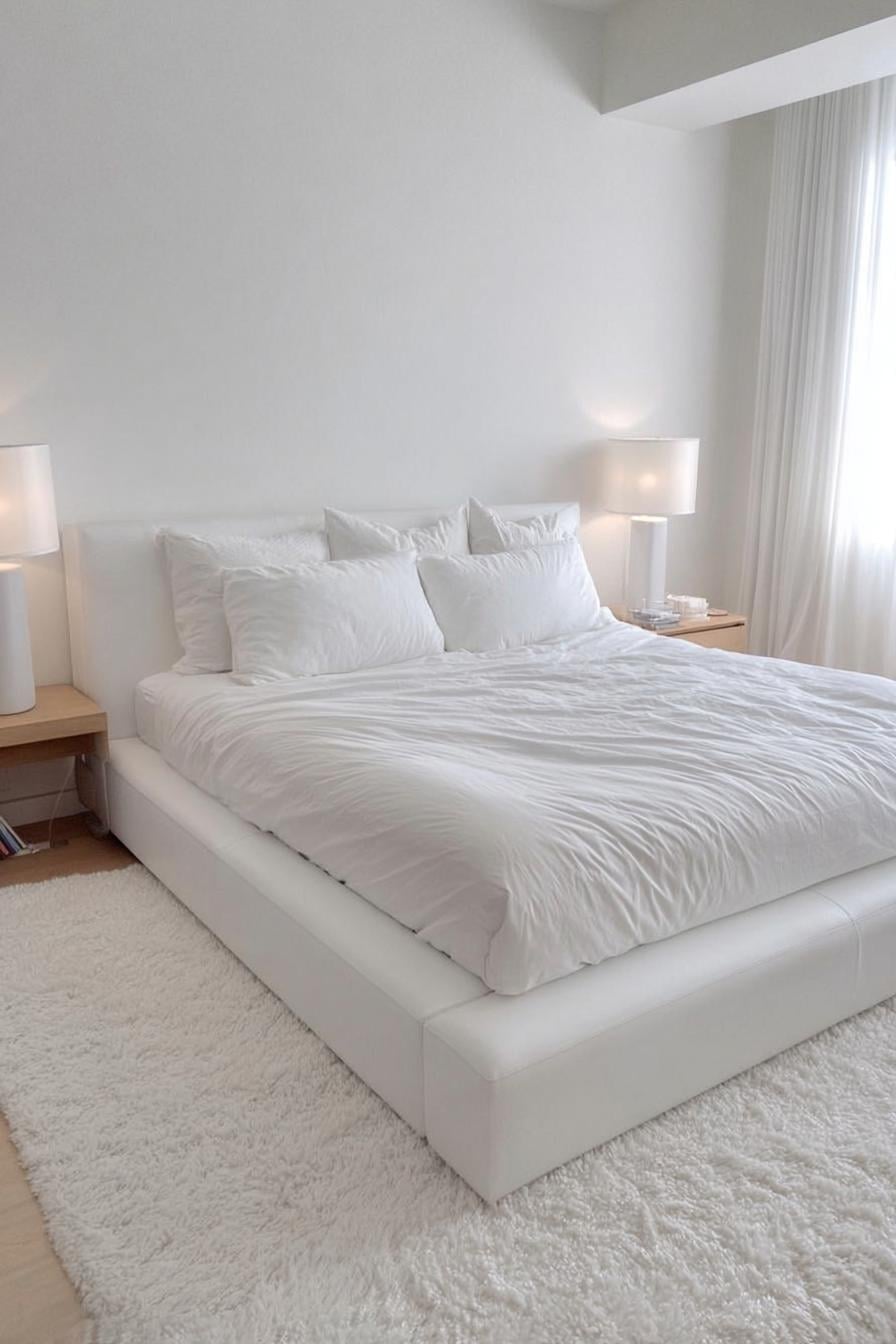
A low platform bed does one thing well: it keeps the sightline open. In a roomy bedroom with daylight and table lamps on flanking bedside tables, the low profile lets the eye travel across the space without interruption. The white palette and linen bedding reinforce the airy feel, while the fluffy shag rug adds texture underfoot. The layout works best when the bed stays centered and the furniture around it stays simple. The platform frame itself becomes almost invisible, which is the point. The room feels larger because nothing blocks the light or the view.
Cable-knit lumbar pillow on black metal bed
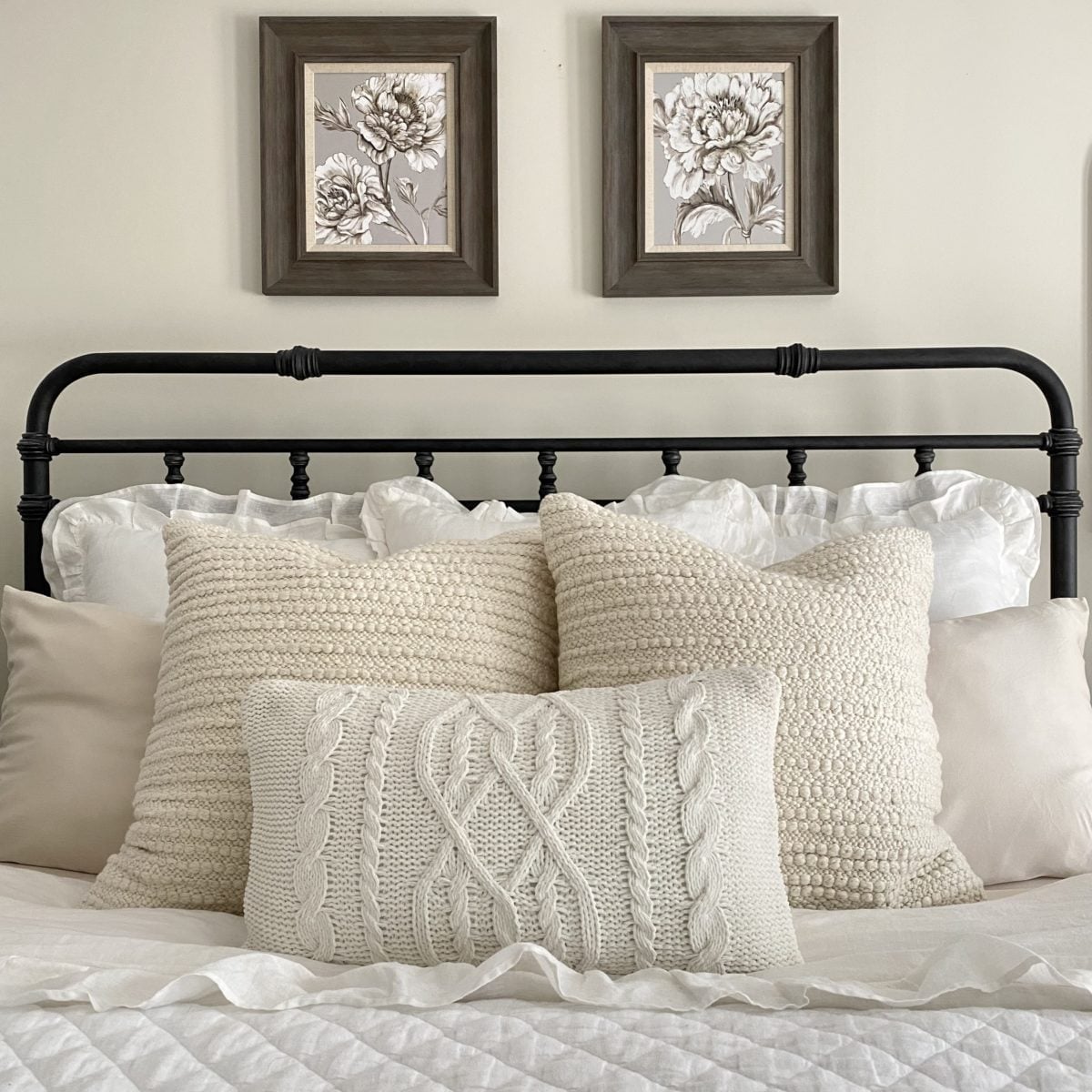
Can white bedding hold its own against a black metal bed frame? It can when texture does the heavy lifting. In a modern farmhouse bedroom with daylight and soft ambient lighting, the bed is centered and layered with pillows in white, cream, beige, and gray. The standout pieces are the textured knit pillows, including a cable-knit lumbar that breaks up the smooth linen surfaces. The black frame provides a crisp edge, while the knit fabrics soften it. Framed floral art on the wall ties the palette together. The trick is to let the textiles create contrast instead of relying on color. A quilted white duvet or a chunky knit throw can do the same job on any dark bed frame.
Serene coastal white bedding with jute rug
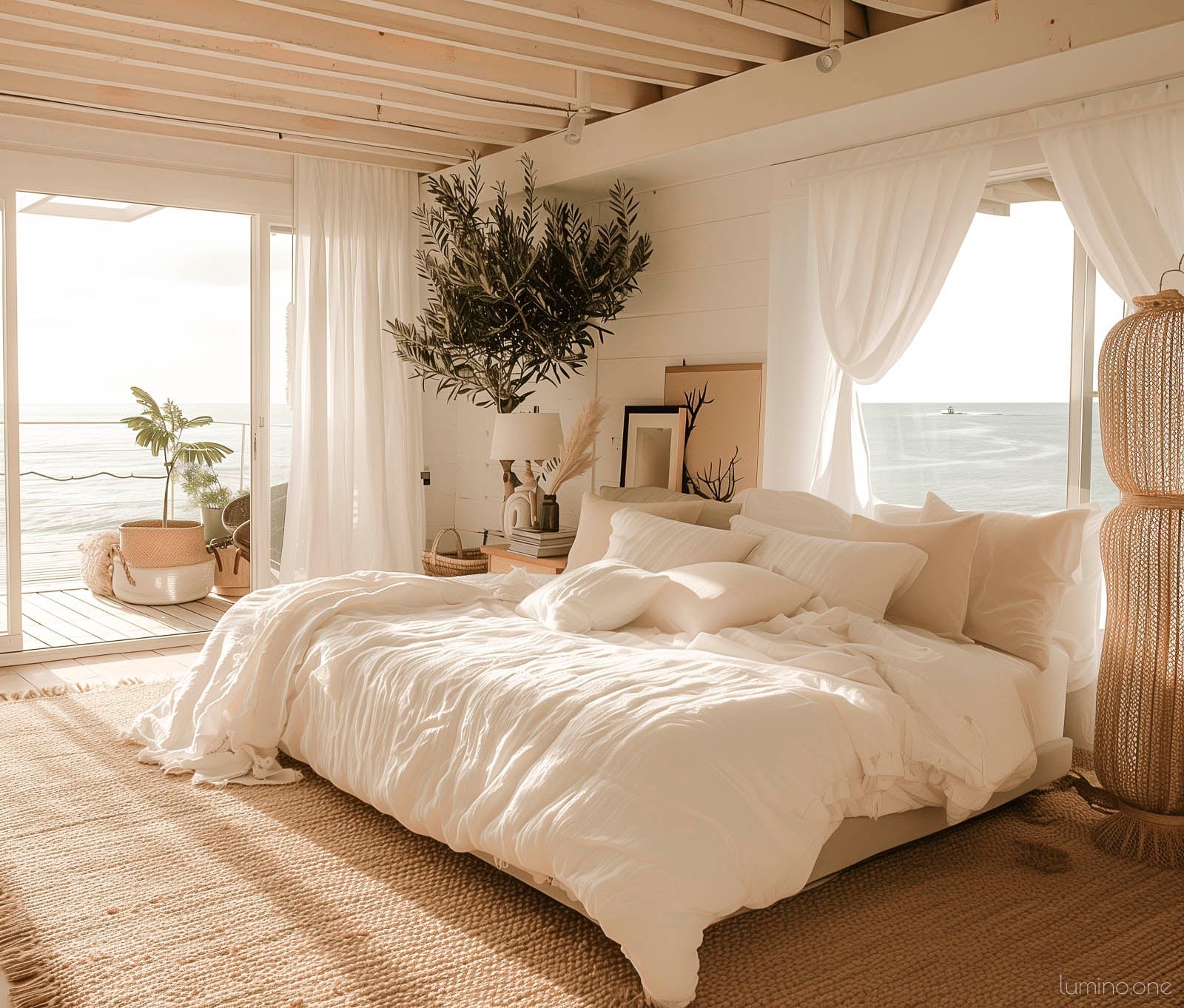
Coastal style relies on texture more than color, and white bedding is the perfect base for it. In a roomy bedroom with daylight from windows and a sliding door, the large bed sits centered, facing an ocean view. The palette of white, beige, natural wood, and ocean blue keeps things calm. A jute rug underfoot and a woven floor lamp add the rough texture that balances the smooth linen bedding. A potted olive tree brings in organic shape without fighting the view. The white duvet looks crisp and clean, while the natural materials keep it from feeling sterile.
Minimalist stacked white linen textiles

To stack white bedding, vary the fold depth. A duvet sits at the base, pillows lean against the headboard, and a folded blanket rests across the foot. The palette is white and beige, and the linen texture keeps each layer distinct even when the color is nearly the same. Soft, diffused light lands on the fabric so the folds look deliberate. The result is a bed that looks neat without feeling stiff.
Sage green accents on a white bed
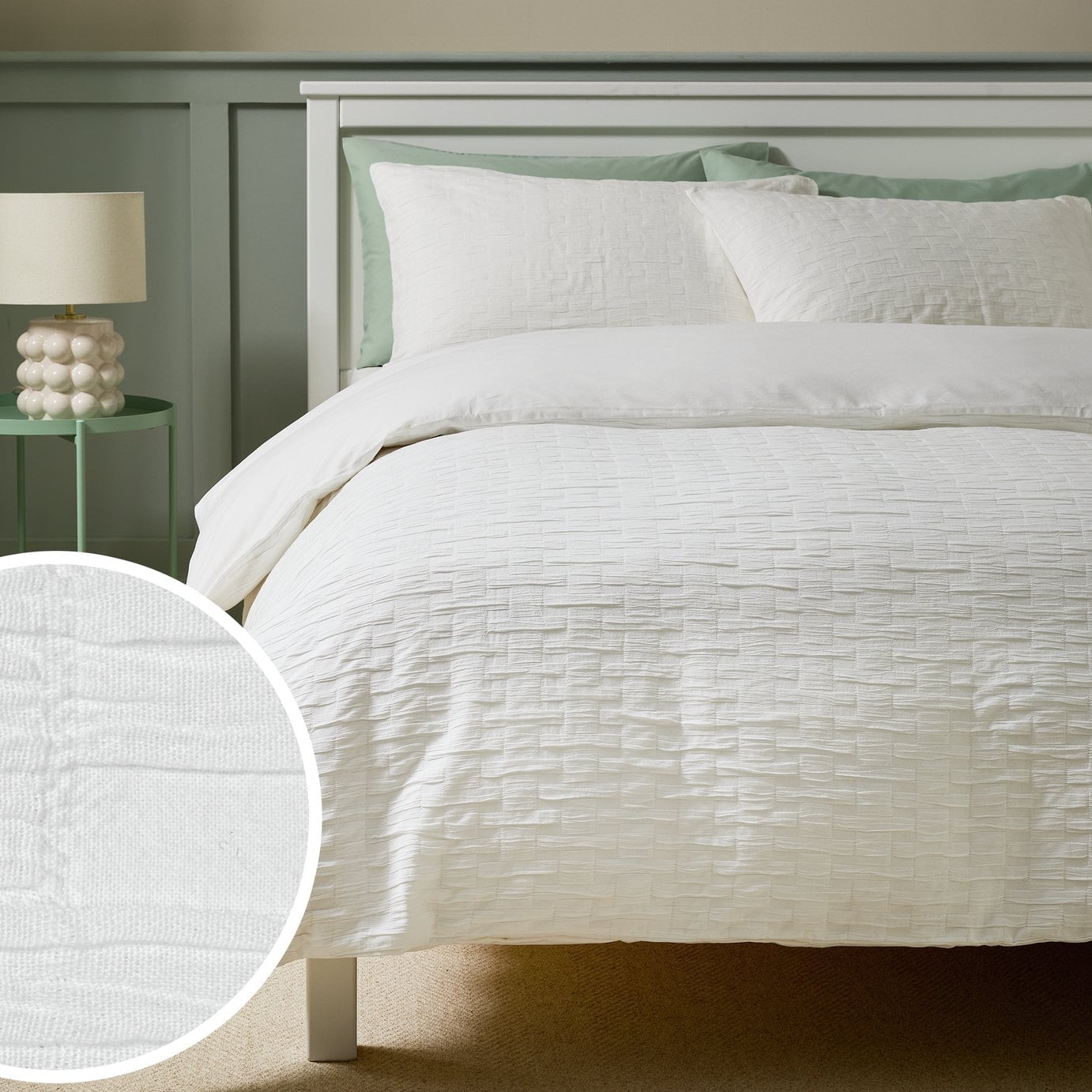
Sage green on a white bed is softer than a mint or emerald accent. The white duvet cover has a textured weave, which keeps the look from falling into sterile territory. A beige fabric headboard and a table lamp with a warm shade pull the palette together. The green sits in a throw pillow and a small vase, so the ratio stays mostly neutral. Adding a second bright color disrupts the calm. Keeping the accent to one shade lets the white bedding hold its place as the main event.
Wicker side table on beige upholstered bed
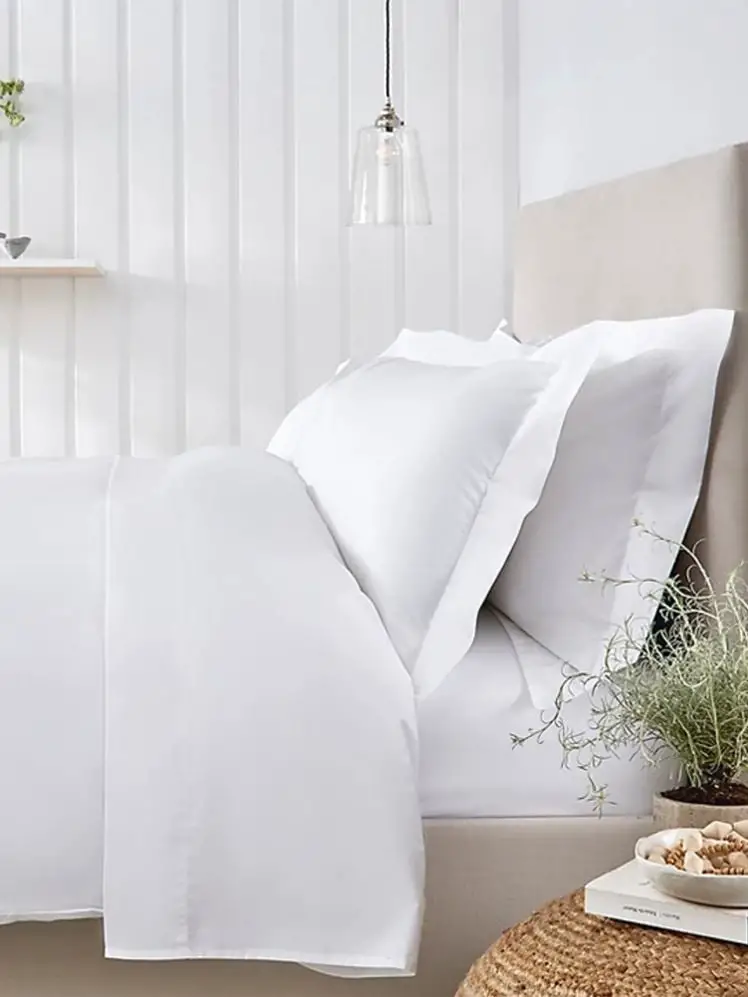
The wicker side table introduces a natural weave next to the smooth beige upholstery of the bed. Crisp white linen bedding and a glass lamp base keep the materials from feeling too heavy. A pendant light lands on the wicker so its texture shows clearly. The mix of soft fabric and woven fiber makes the bedside feel layered without clutter.
Geometric textured white bedding with pink tones
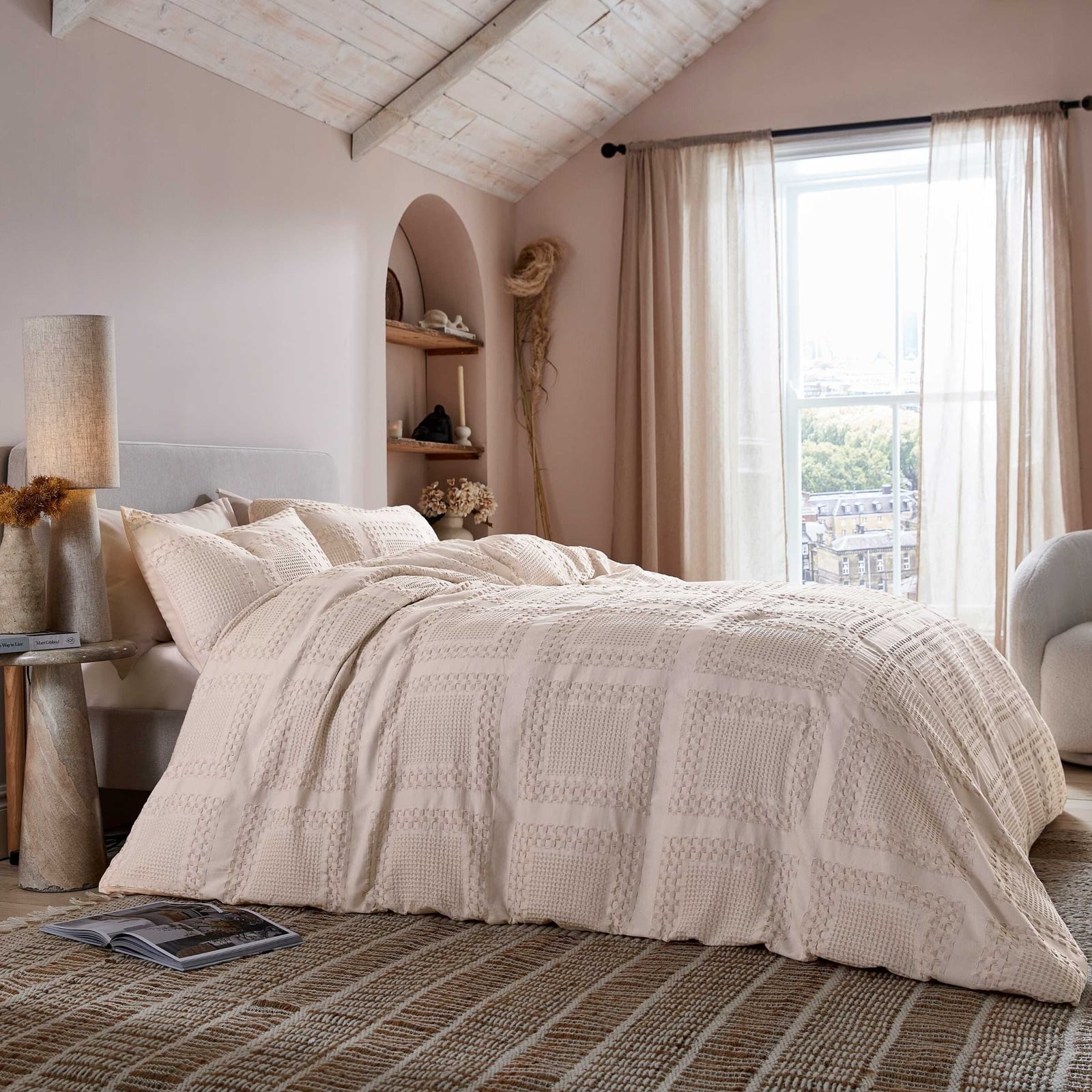
The white bedding carries a geometric texture that gives the bed presence without pattern. Light pink tones appear in a throw and an accent pillow, so the palette is beige, white, and blush. Daylight and a lamp soften the contrast. A rug under the bed and a wooden armchair in the corner keep the room grounded. What defines the style is the ratio of texture to color: the white bedding does the work, and the pink stays as a supporting note.
Black throw on white bedding makes contrast
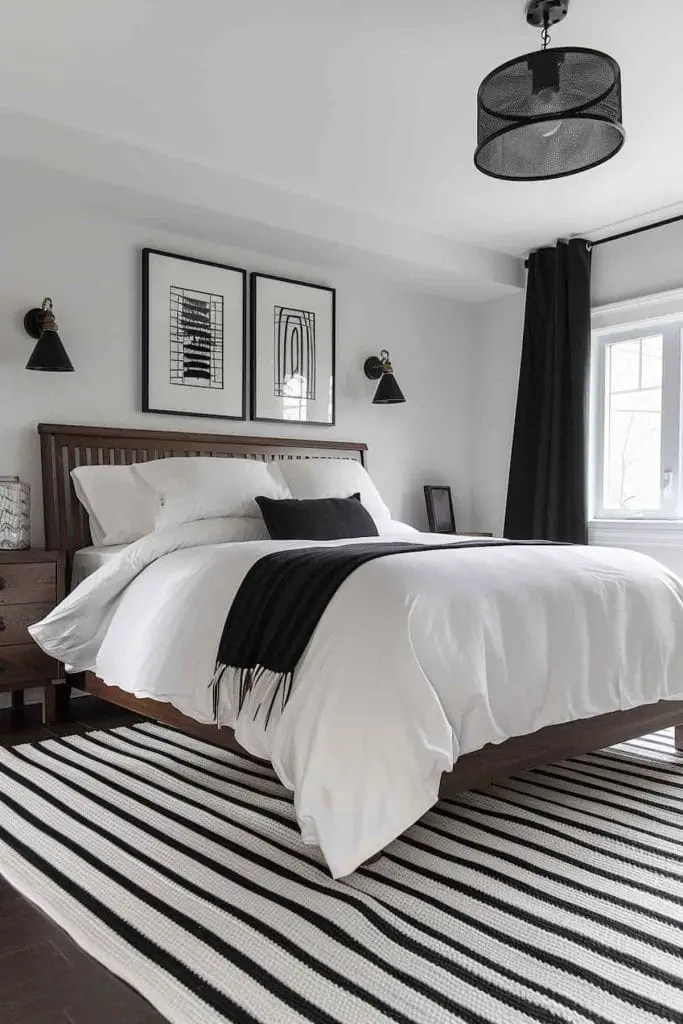
Contrast on a white bed works best with dark accents limited to one layer. A black throw blanket draped across a white duvet gives the bed a clear focal point without pulling in extra colors. The wooden bed frame and a striped rug under the bed keep the room warm. Wall sconces and a ceiling light add general brightness, and daylight lands on the black fabric so it stands out as a deliberate choice. Adding a second dark piece on the bed, like black pillows or a dark coverlet, makes the contrast compete with itself. The single dark layer keeps the white bedding crisp and the space feeling open.
Gray armchair beside a wooden headboard
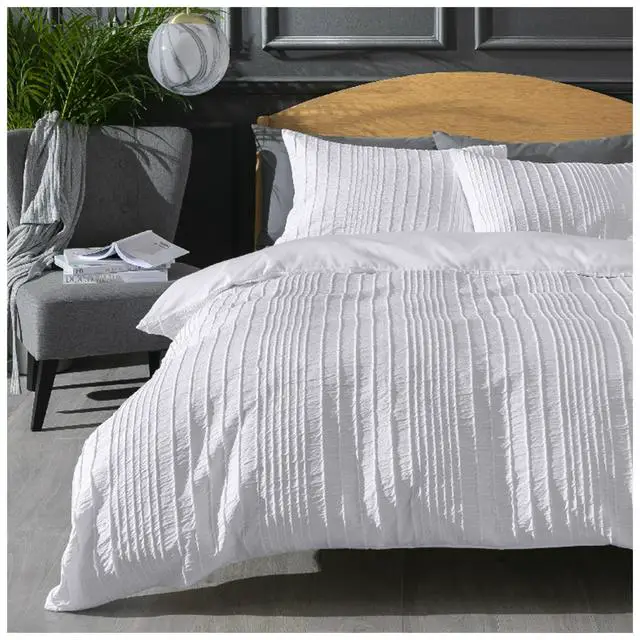
A textured white duvet cover keeps the bed from blending into a room with gray walls and a dark gray chair. The wooden headboard adds warmth, while the layered white bedding provides visual weight on its own. A pendant light overhead and ambient light from the room keep the palette balanced without extra color. The gray chair looks a separate zone, not a competing element, because the bedding stays in the white family.
Red side table beside wooden bed frame
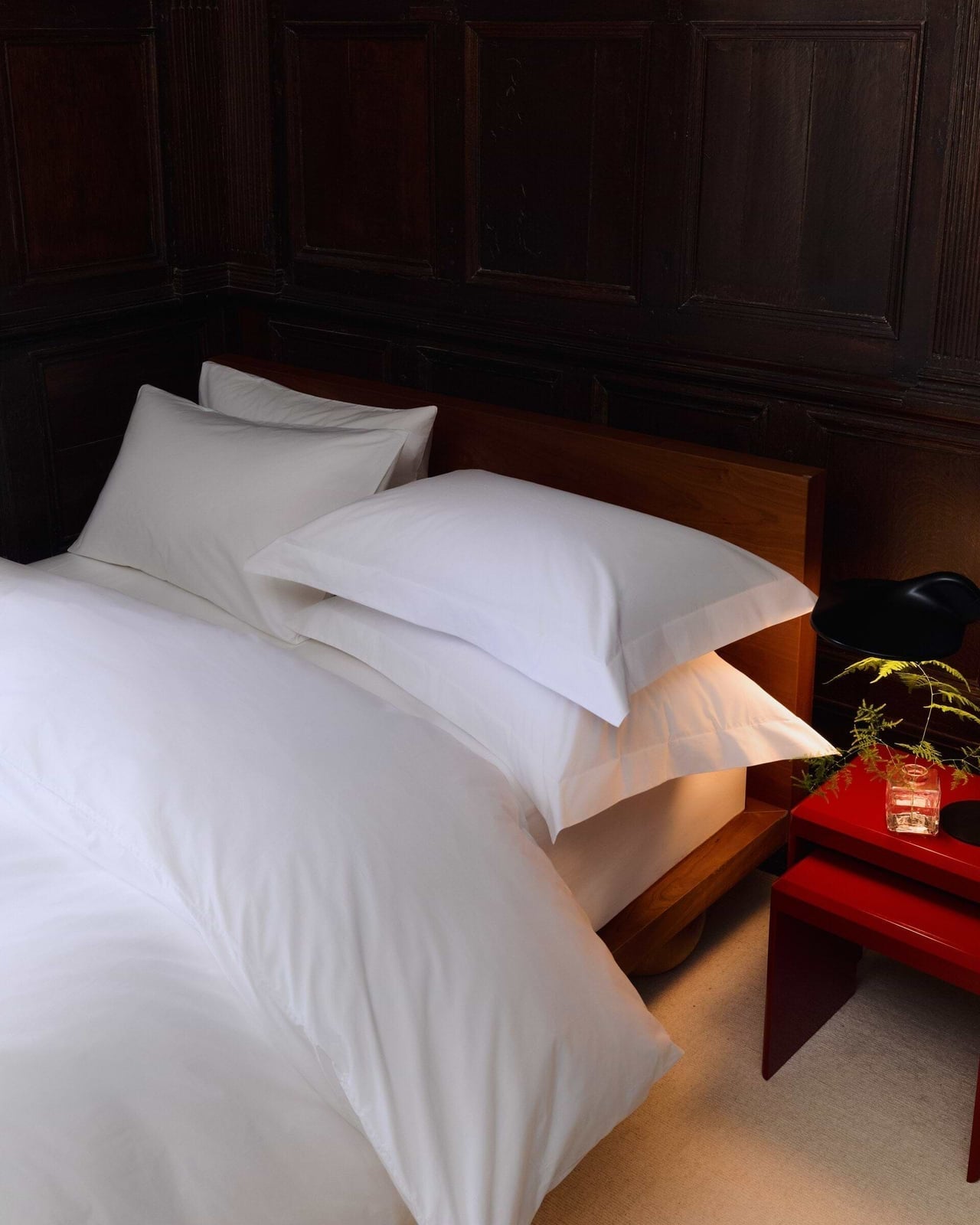
To add bold color, choose a small piece placed low. A bright red side table next to a wooden bed frame brings energy without overwhelming the room. White linen bedding stays neutral, so the red works as a deliberate accent. A black lamp on the table echoes the dark brown wood tones and anchors the vignette. This approach works well for renters: a single painted table or thrifted find can shift the whole palette without touching walls or flooring.
Rattan headboard with crisp white bedding
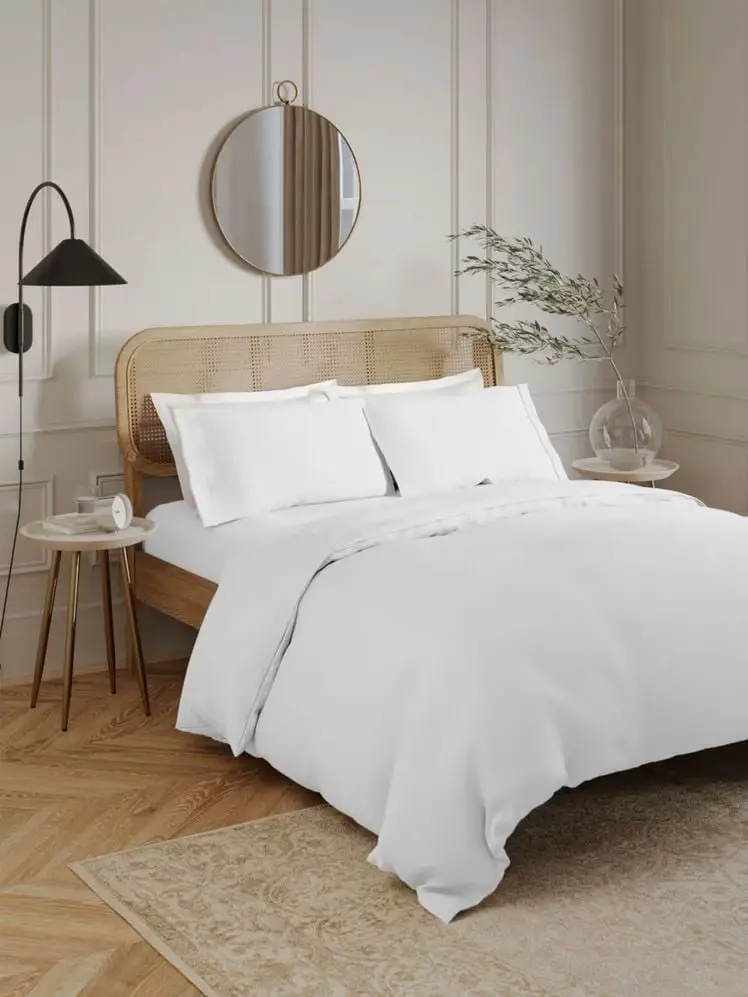
Crisp white bedding on a rattan headboard can lean modern because of the materials around it. A round mirror with a thin metal frame and a wall lamp with a clean shade keep the look tailored. The side table in light wood and the glass lamp base add transparency, so the room feels open.
Daylight softens the white linens and the black lamp base. The rattan texture adds warmth without adding color, which makes the bedding the clear focal point. A beige rug or floor finish would complete the palette, but the existing mix already avoids the cottage feel that rattan can sometimes bring.
Tufted headboard with cozy white bedding
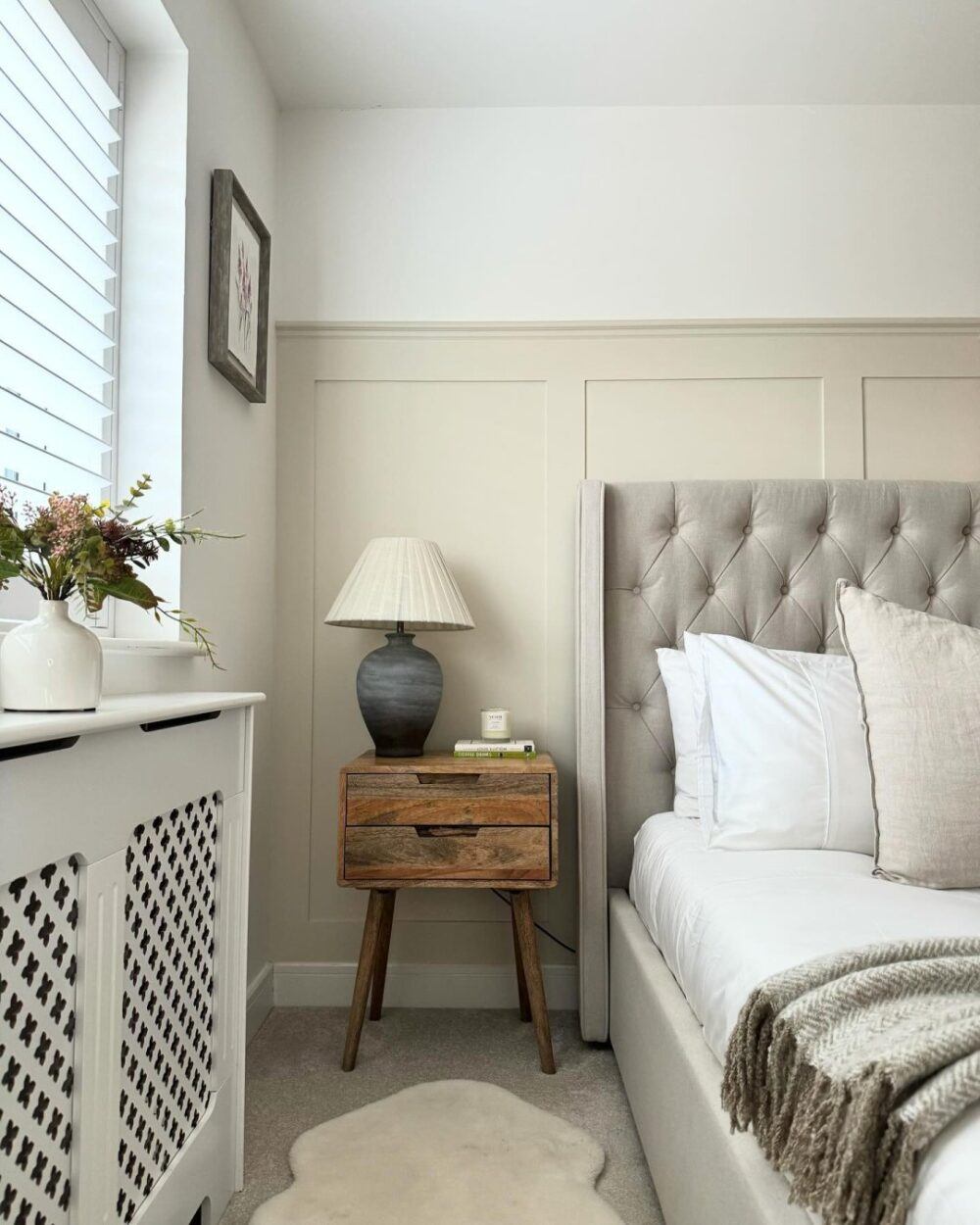
A tufted headboard in a neutral beige or gray fabric gives the white bedding a soft backdrop without fighting for attention. The tufting adds vertical lines that break up the solid headboard surface, which keeps the eye moving. A table lamp on a wooden nightstand and daylight from a window provide enough glow to read the texture in both the headboard and the white duvet. A sheepskin rug at the foot of the bed adds a layer that feels cozy without adding pattern.
Cane bed frame with black and white bedding
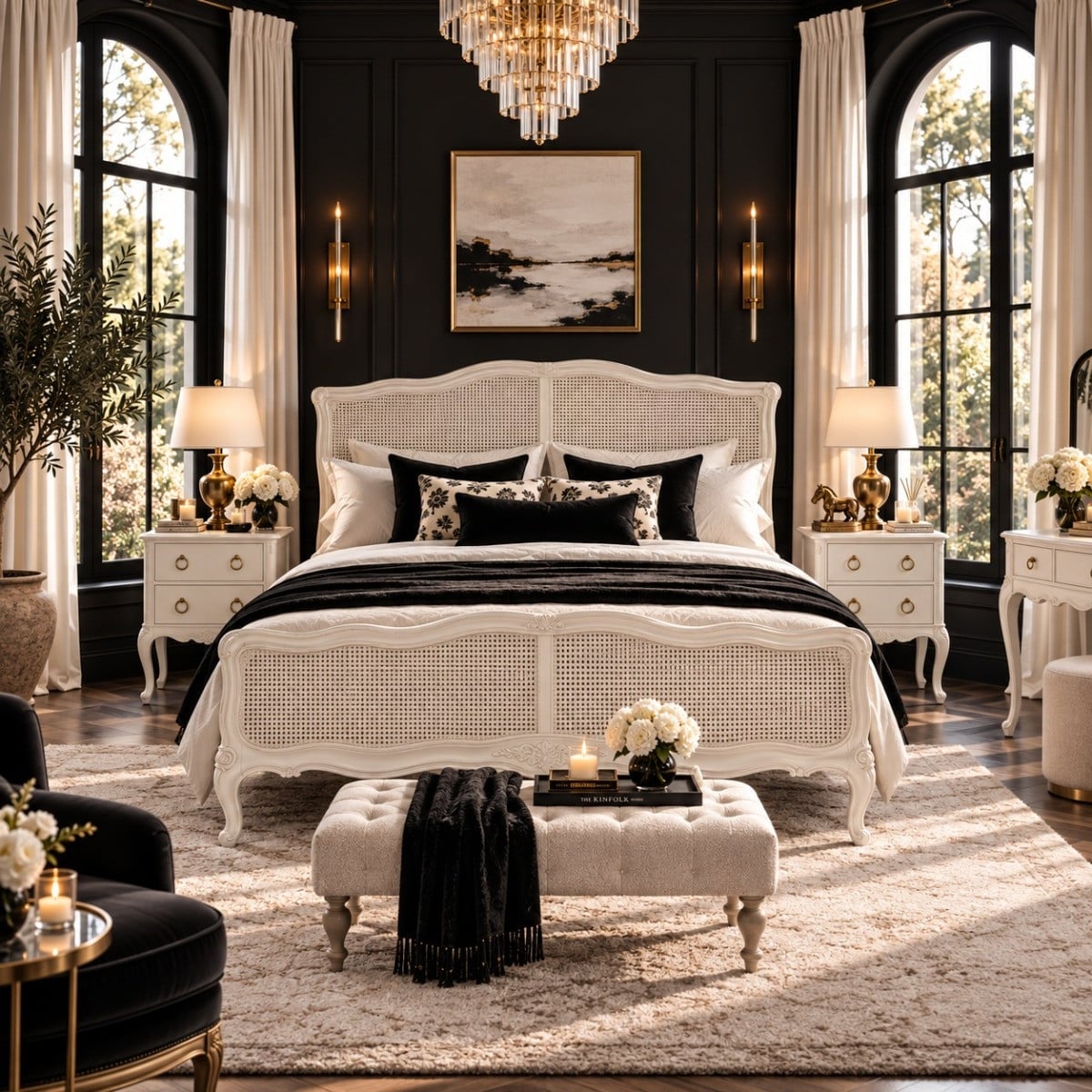
This room is a clear example of black-and-white done right: the cane bed frame in a dark finish anchors the bed, while white bedding keeps the look airy. The symmetry of matching nightstands, table lamps, and a tufted bench makes the layout feel formal but not stiff. Gold accents in the chandelier and wall sconces add a warm note that stops the palette from looking cold. The cane material brings texture without a pattern, so the bedding stays the star. A room this balanced has the bed as the center of the layout with everything else supporting it.
Fabric headboard with crisp white duvet and lilies

A crisp white duvet cover works best when the room around it stays simple. In this modern bedroom the bedding is the focal point, with a fabric headboard in a soft neutral tone and a nightstand in natural wood. A glass vase with flowers on the nightstand adds a fresh organic detail without fighting the bed. Daylight from the side keeps the white linens bright and the space feeling open. Keeping the palette to white, light gray, and wood tones lets the duvet cover hold the visual weight.
Tufted headboard with white linens and gold pendant
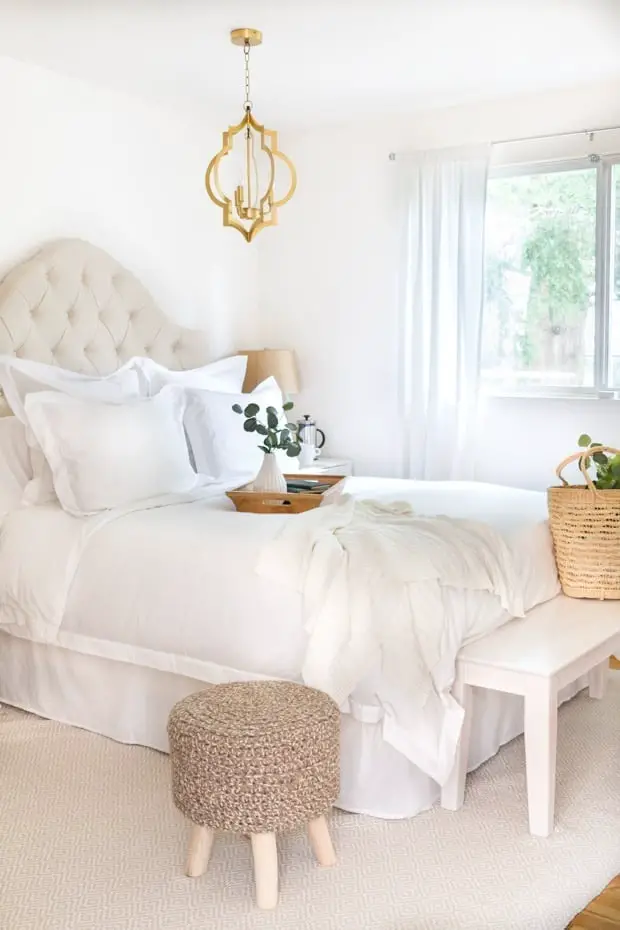
A gold geometric pendant light hangs above the bed and draws the eye upward in this roomy modern bedroom. The tufted headboard in a neutral fabric anchors the white linens, while a table lamp on a woven stool adds a second light source at bedside. A white bench at the foot of the bed and a straw basket keep the palette in white, beige, and warm wood tones. The gold pendant light brings a metallic accent that breaks the all-neutral look without color.
Green nightstand accents white duvet

A green nightstand is a straightforward way to add color beside a textured white duvet cover. The modern bedroom keeps the palette mostly white, gray, and beige, with the nightstand in a deep green tone as the main accent. A lamp on the nightstand and ambient light from the side keep the look soft. Pink and wood tones in the room come from smaller items, but the green piece does the heavy work of breaking up the neutral bedding.
Boucle headboard with textured white bedding
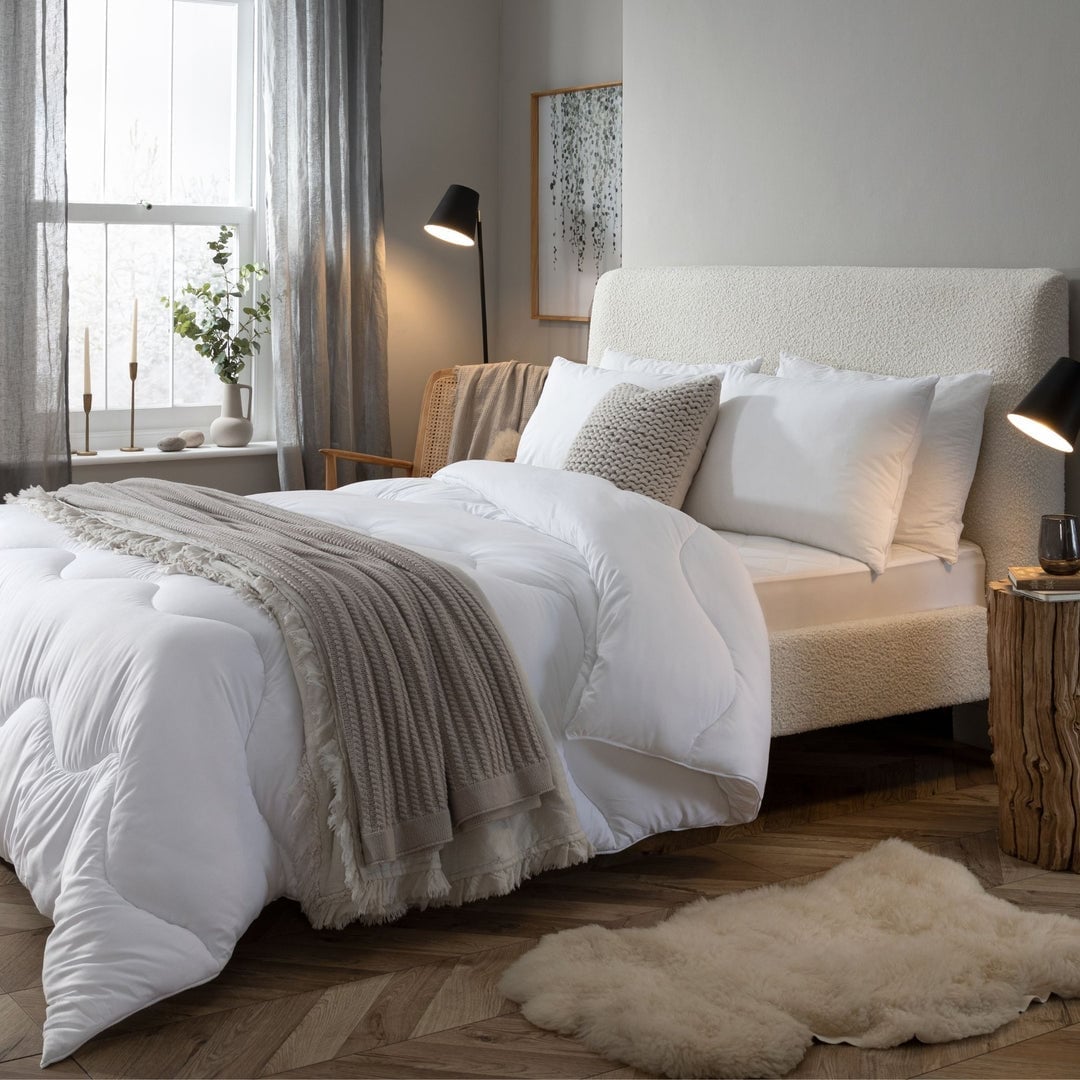
A boucle headboard adds soft texture without the crispness of linen or the weight of velvet. In this modern bedroom the boucle upholstery sits behind a textured white duvet cover, with a sheepskin rug on the floor and a throw blanket on the bed. A floor lamp and a bedside lamp provide layered light from both sides. The natural wood bedside table and wood tones in the room keep the look grounded. The boucle headboard works with the sheepskin to create a cozy tactile feel that a smooth headboard would not offer.
Subtly textured white duvet with botanical Art
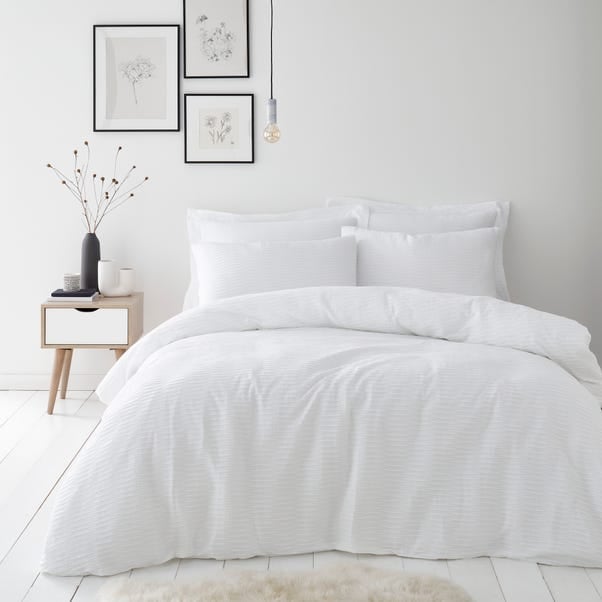
A framed botanical art piece hangs above the bed and gives the eye a place to rest beyond the bedding. The textured white duvet cover is the main element, with a nightstand in light wood and a simple pendant light overhead. The palette stays in white, black, and light wood tones, keeping the room calm. The botanical art breaks the all-white look with a natural motif that matches the clean lines of the duvet cover.
Plush tufted headboard with layered white textures
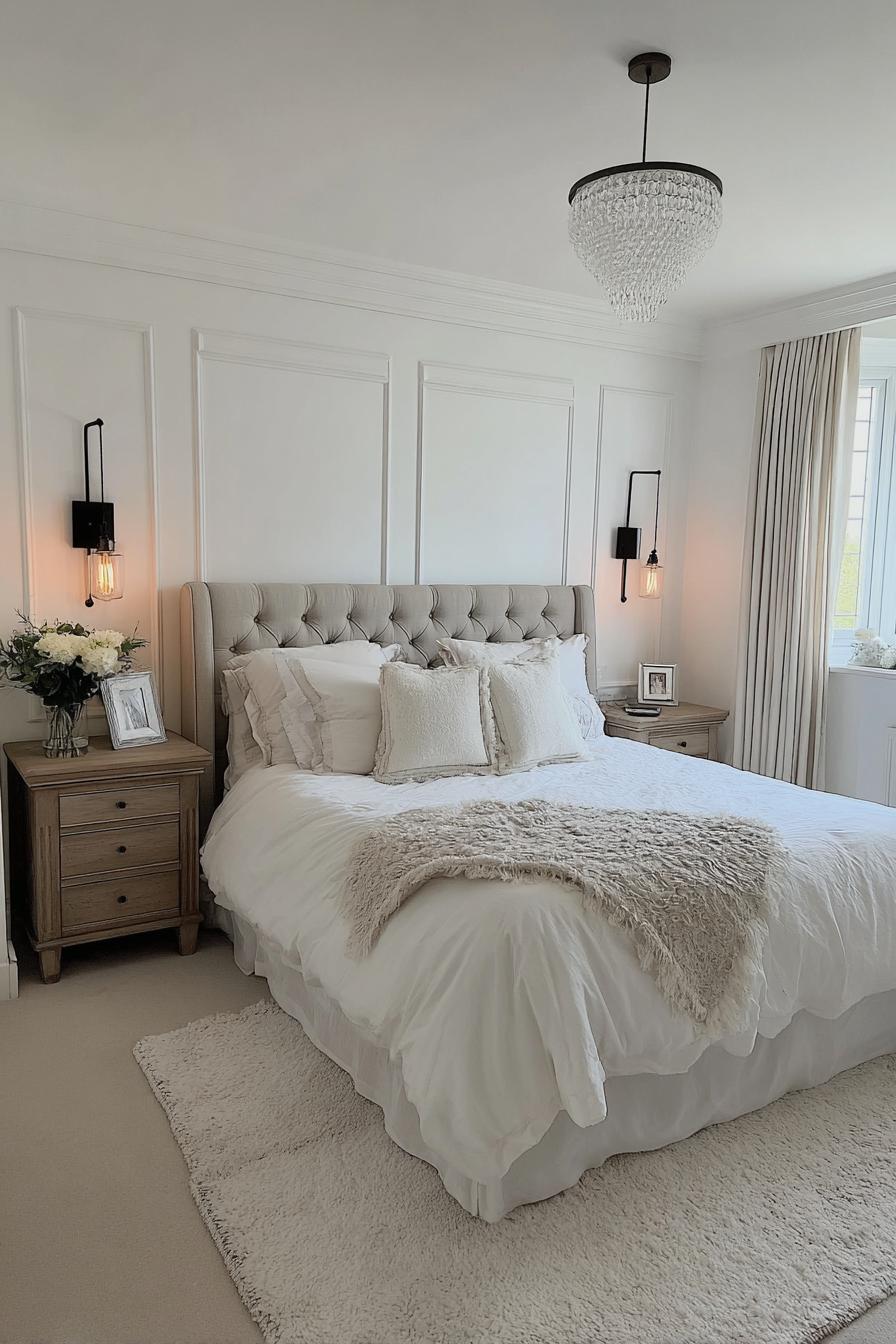
A tufted headboard brings enough presence that the bedding can stay in a quiet range of white, beige, and light gray without looking flat. The bed is centered, with nightstands on both sides and a chandelier plus wall sconces overhead, so the eye moves up through the layers. Linen duvets and shams add natural texture, while a glass or crystal accent on the nightstand catches the daylight. The key is scale: the headboard is plush and tall enough to anchor the room, and the bedding repeats that softness in lighter weights. Stick to two or three fabric textures on the bed, a smooth duvet, a ribbed throw, a nubby sham, and the palette stays calm because the shapes do the work.
Velvet headboard on pinstripe duvet

A pinstripe duvet can feel a little formal on its own, but a velvet headboard softens the look into something you can live with every day. The stripe stays subtle in white and taupe, so it adds texture without becoming a pattern, and the velvet brings a matte depth that stops the bed from feeling too crisp. The daylight helps the linen pillows and duvet catch the room’s beige and brown accents. A rug underfoot in a similar neutral tone ties the materials together. For renters, this is a practical swap: a velvet headboard that leans against the wall or attaches with brackets avoids permanent changes, while the duvet and shams can be washed or replaced as the space evolves.
Final Thoughts
White bedding works because it adapts. The same white duvet can look coastal with jute, modern with black accents, or soft with a knit throw. The key is texture and contrast. A waffle weave, a cable knit, or a ruffled edge adds the interest that flat white cannot. Keep the bed itself simple, and let the bedding do the work. Care is straightforward: wash in warm water, avoid bleach, and dry on low to keep linen and cotton looking crisp. A white bed is not boring when you build in layers.