Traditional kitchens are having a quiet renaissance in 2027, where classic details like marble range hoods, beadboard paneling, and farmhouse sinks meet modern practicality. If you are dreaming of a space that feels classic yet livable, this collection of 28 aesthetic traditional kitchen ideas will guide you. Each look focuses on the room as a whole, from cabinetry and counters to lighting and layout, so you can see how the pieces work together.
Expect grounded palettes, natural materials, and storage solutions that actually function for daily cooking. Whether you own or rent, these ideas offer adaptable inspiration for your next refresh.
A marble-clad statement range hood anchors a grown-up traditional
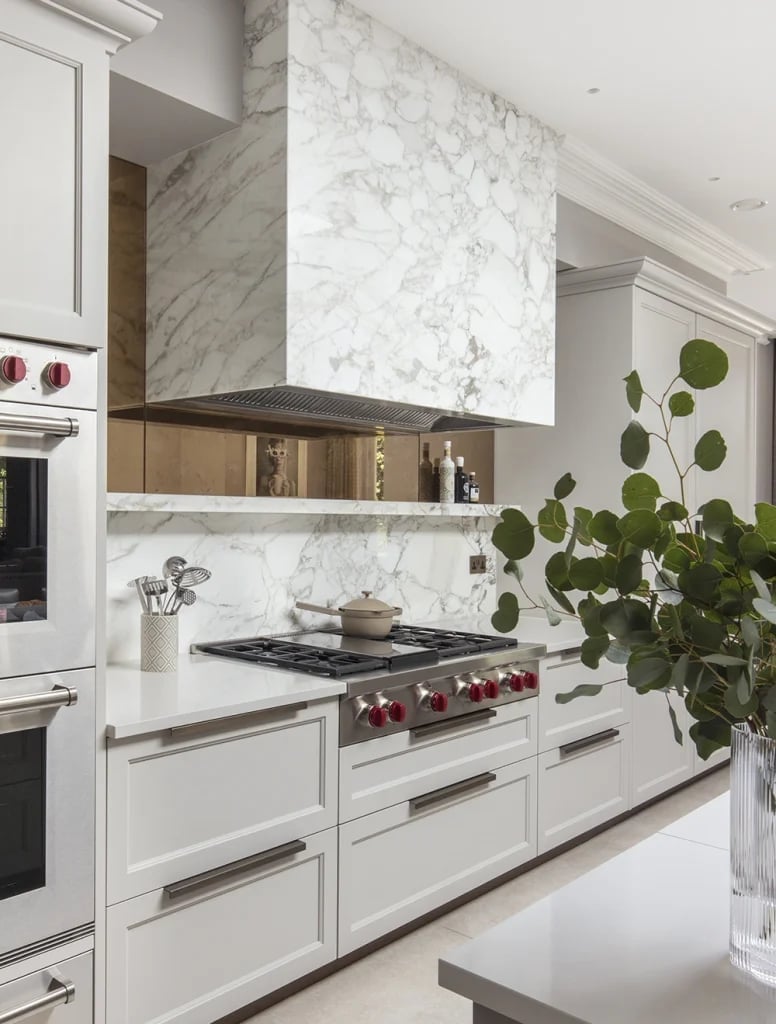
The marble range hood draws the eye before anything else in the room. Its veined surface contrasts with the stainless steel of the professional range below, while the surrounding cabinetry stays in a quiet white and beige palette. The linear layout places the range at the center of the kitchen, making the hood the natural focal point. Under cabinet lighting keeps the countertop workable without competing with the overhead fixtures. For a similar effect, choose a natural stone that has enough variation to look a deliberate feature rather than an afterthought.
Central island with granite countertops sharpens a light gray
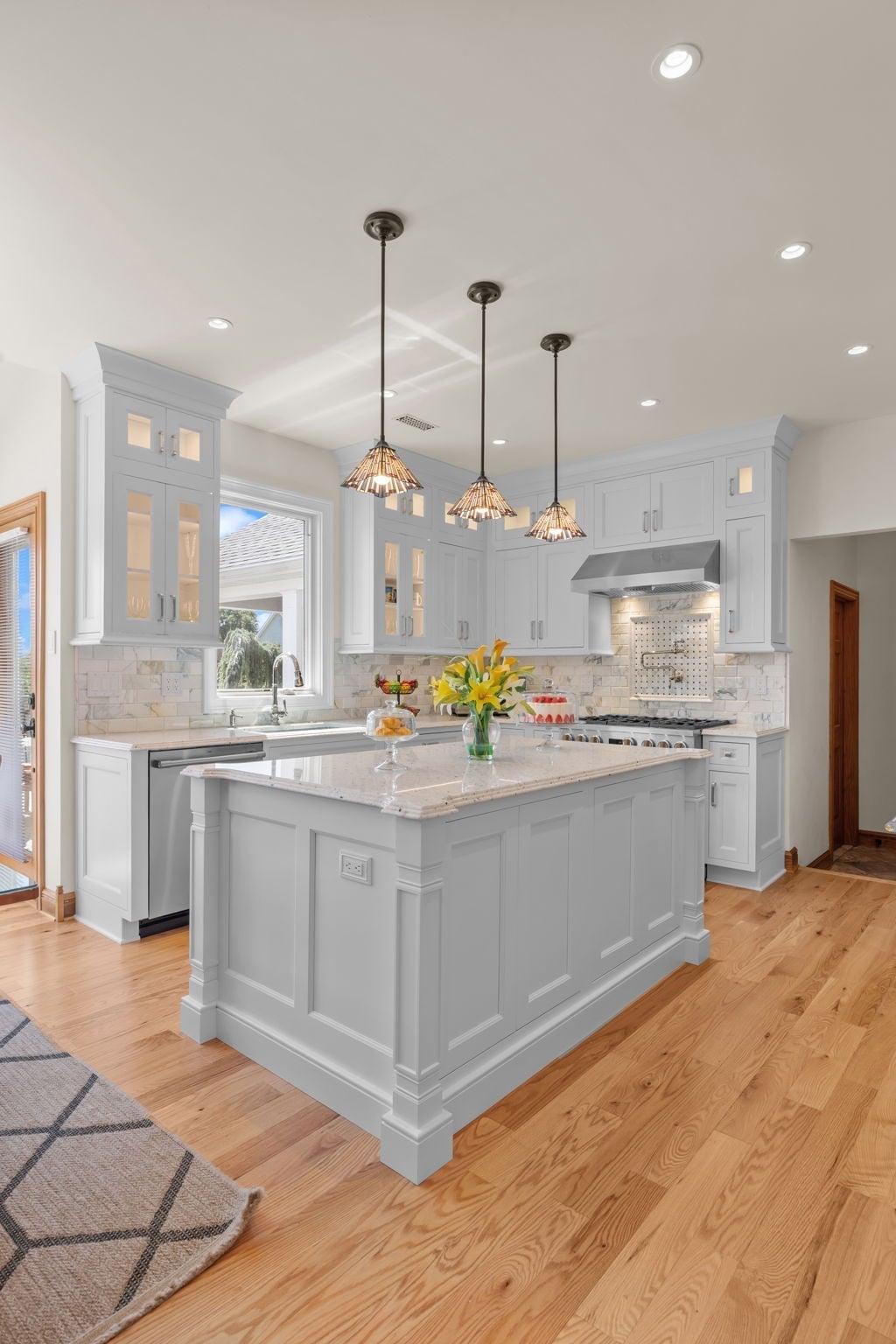
A light gray palette sets a calm backdrop, but the island gives the room its structure. The granite countertop adds a subtle yellow-beige tone that keeps the space from feeling cold, while the ornate carved base of the island introduces a traditional detail that flat-front cabinetry would miss. Pendant lights hang above the island, and recessed ceiling lights handle the rest of the room. A central island works best when the walkway around it is wide enough for two people to pass. That clearance, not the island size, determines how well the layout lives.
Farmhouse sink overflowing with flowers in a cream traditional kitchen
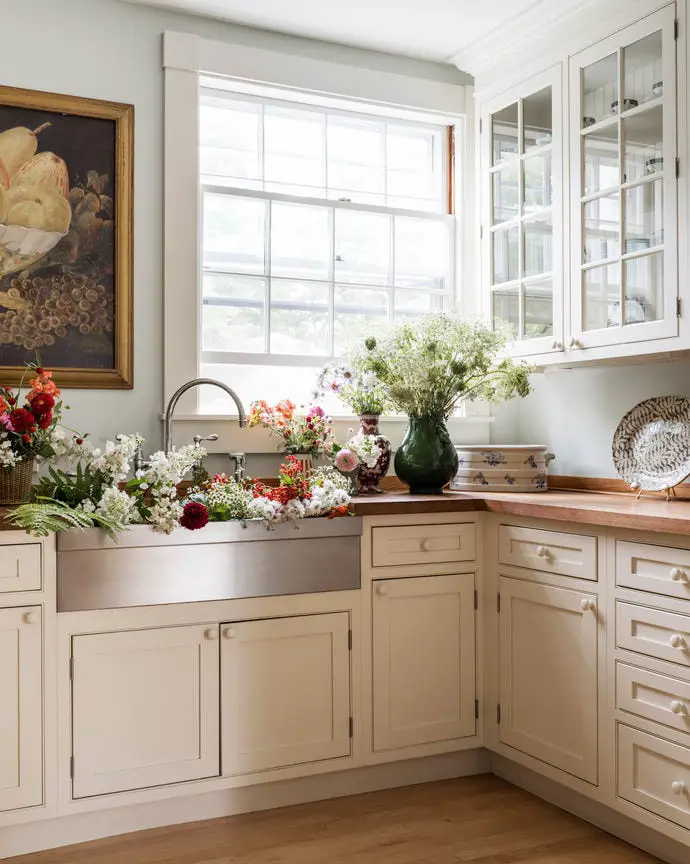
How do you make a farmhouse sink feel like more than just a utility spot? Fill it with flowers. In this cream traditional kitchen, the sink sits beneath a window that brings in natural light, with glass-front cabinets above and a wooden countertop beside it. The floral arrangements are abundant enough to soften the hard edges of the ceramic basin and the metal fixtures. The wooden countertop adds warmth to the cream cabinetry, and the glass-front cabinets let the contents become part of the decor. If your kitchen gets good daylight, a sink full of seasonal blooms can shift the whole room’s feel without changing a single cabinet door.
Elegant white traditional kitchen with dark marble island and bar
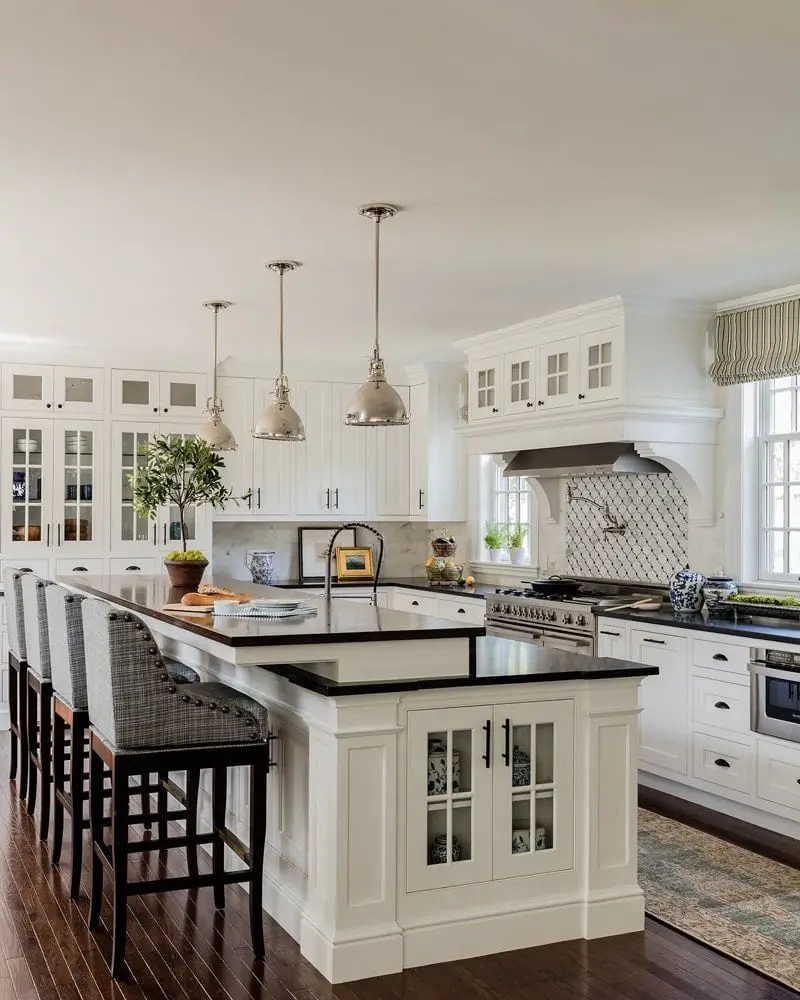
White perimeter cabinetry and a dark marble island create a palette that looks deliberate without being complicated. The island includes bar seating, with stools tucked under the overhang, and pendant lights provide task lighting above. Natural light from a nearby window balances the darker stone. An ornate range hood at the back of the room repeats the white of the cabinets and keeps the dark island from dominating the space. A two-tone palette like this works because the ratio favors the lighter color, with the darker element used only where it needs to anchor the layout.
Bold black pendant lights define a traditional kitchen with a dark
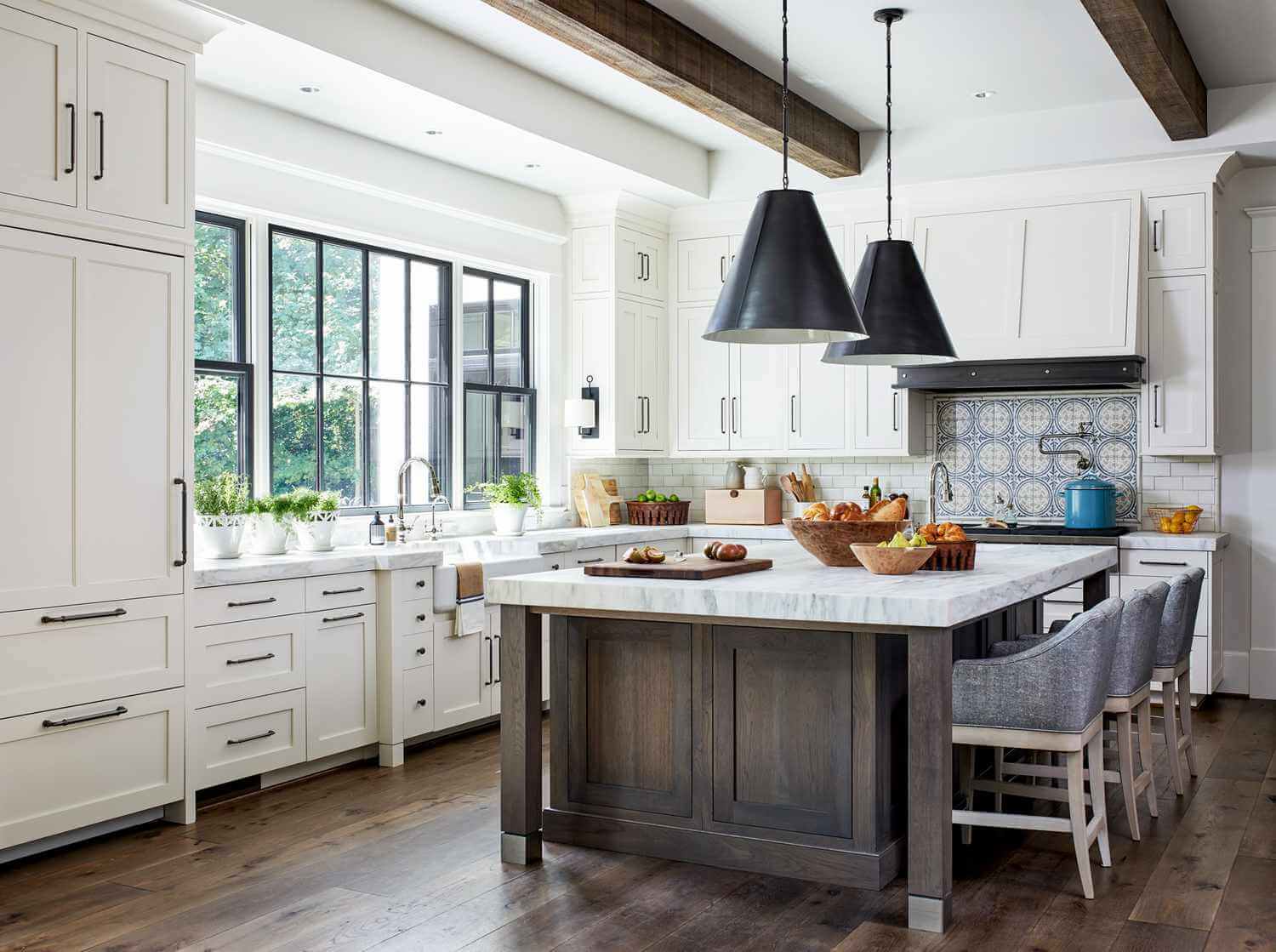
A practical rule for pendant lights: hang them low enough to define the island but high enough to see across it. In this kitchen, large black pendant lights do both. They hang above a central island with a farmhouse sink, and their dark shade contrasts with the white cabinetry and the blue-gray tile work behind them. The dark wood perimeter cabinets and marble countertop keep the palette grounded, while the pendants provide the visual anchor. For rooms with high ceilings, larger shades keep the scale right. Three pendants over a long island create a stronger line than two spaced wide apart.
Deep forest green cabinetry creates a rich traditional kitchen
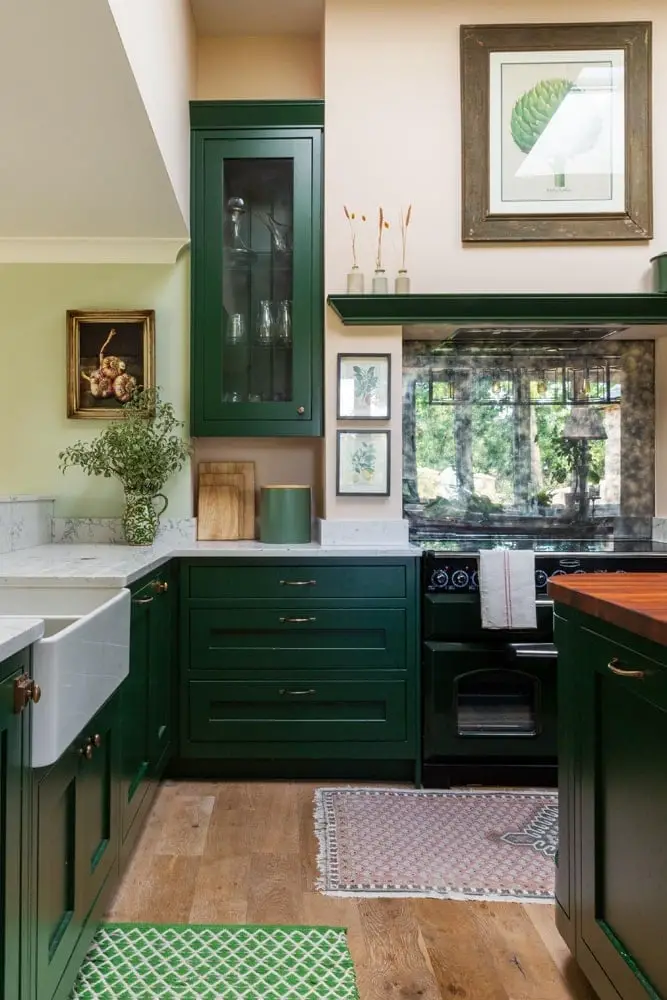
Deep forest green cabinetry can feel heavy if the room does not breathe. This kitchen balances it with cream countertops and light green tile, letting the wood tones and brass hardware come through without competition. The glass-front cabinet breaks up the solid color and shows off cutting boards and dishes, which keeps the look deliberate. A farmhouse sink and dark range sit against the L-shaped layout, and natural light from the window keeps the green from going flat. The palette stays in the green family: the lighter backsplash tile and cream accents lift the darker cabinets. What defines this look is the ratio of dark to light, roughly two parts forest green to one part cream.
Striking red and white striped backsplash in a dark blue traditional
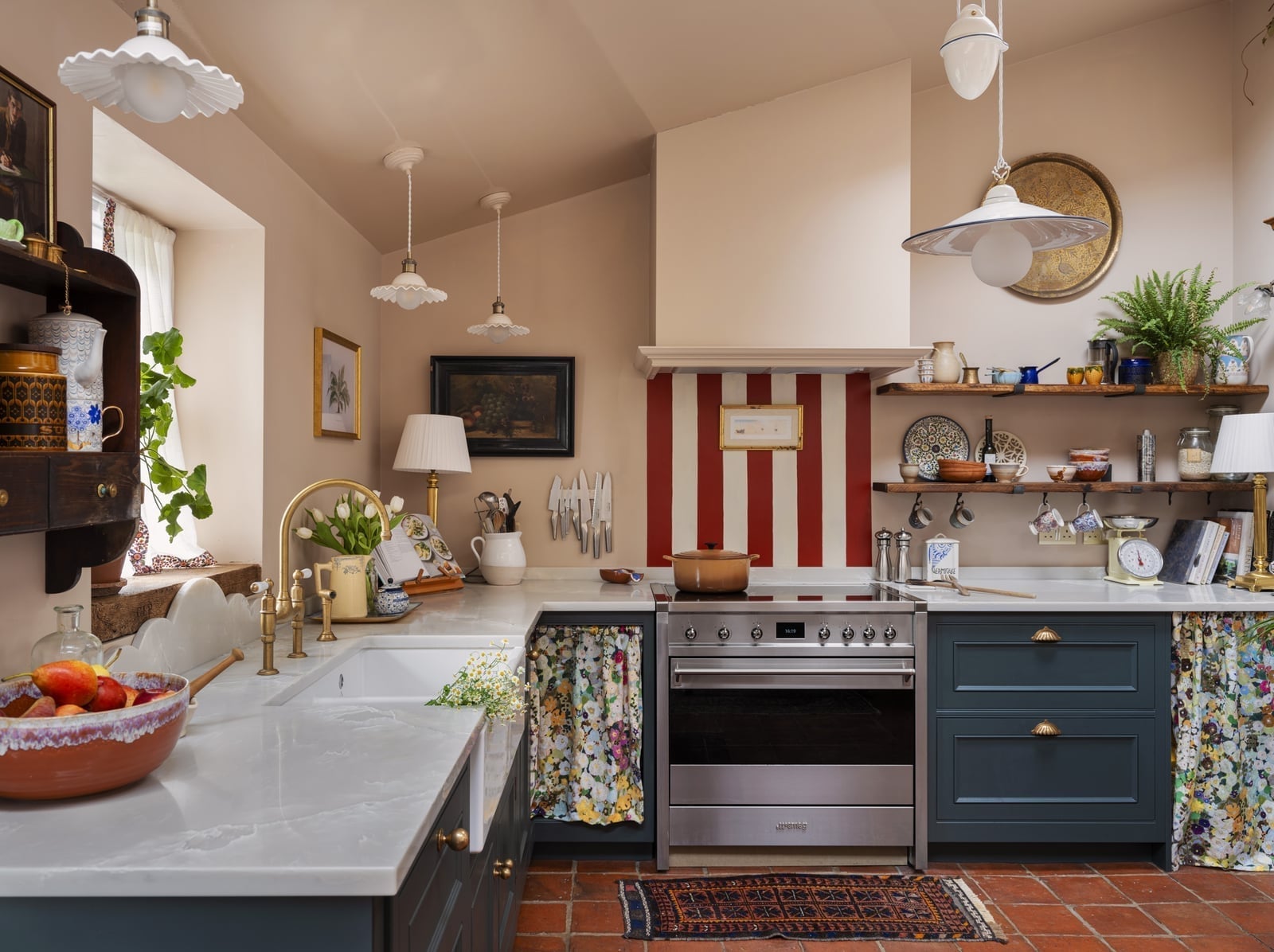
The red and white striped backsplash runs behind the range stove and farmhouse sink, drawing the eye right to the cooking zone. It breaks up the dark blue and beige palette without overwhelming the room, because the stripe pattern stays contained between counter and open shelving. The terracotta notes in the tile pick up the warmth in the wood and brass, while the white keeps the look crisp. For a renter-safe swap, a peel-and-stick tile in a similar stripe pattern gives the same visual pop without altering the wall.
Luxurious crystal chandeliers illuminate a black island traditional
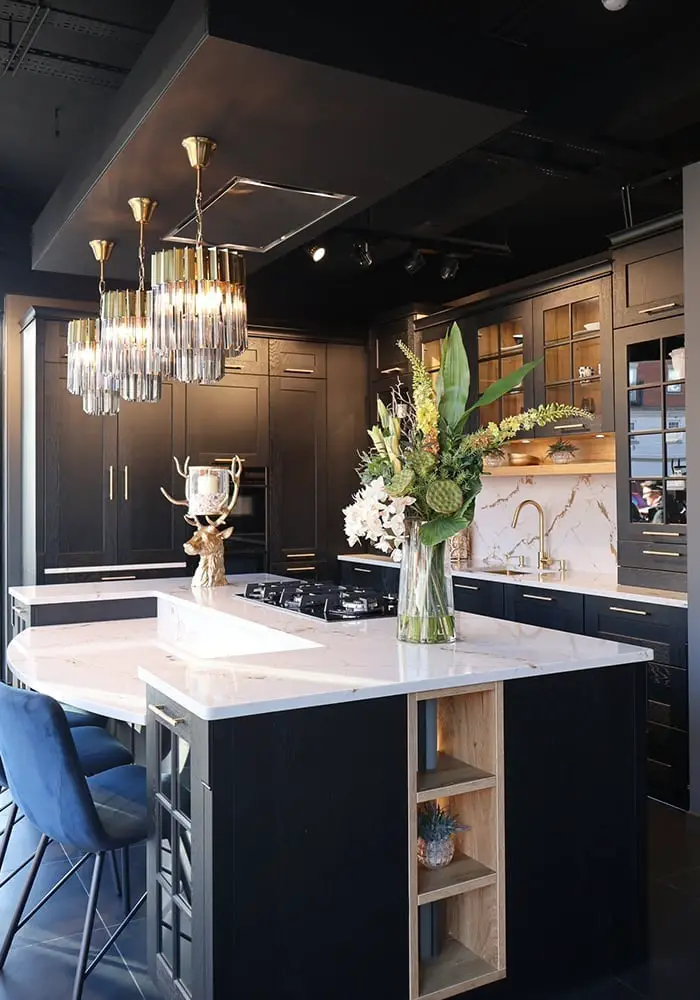
Crystal and brass chandeliers over a black marble island set the tone before you notice anything else. The island holds a gas hob and velvet stools, so the chandeliers are not just decorative, they light the work zone directly. The glass-fronted cabinets and white perimeter keep the black island from feeling like a dark hole in the center of the room. The ratio here matters: three parts white and glass to one part black and marble, with gold as the connector. The chandeliers define the look, and what breaks it would be swapping them for plain pendants, which would lose the contrast between the sparkle and the matte black island.
Large picture window overlooks garden in a light gray traditional
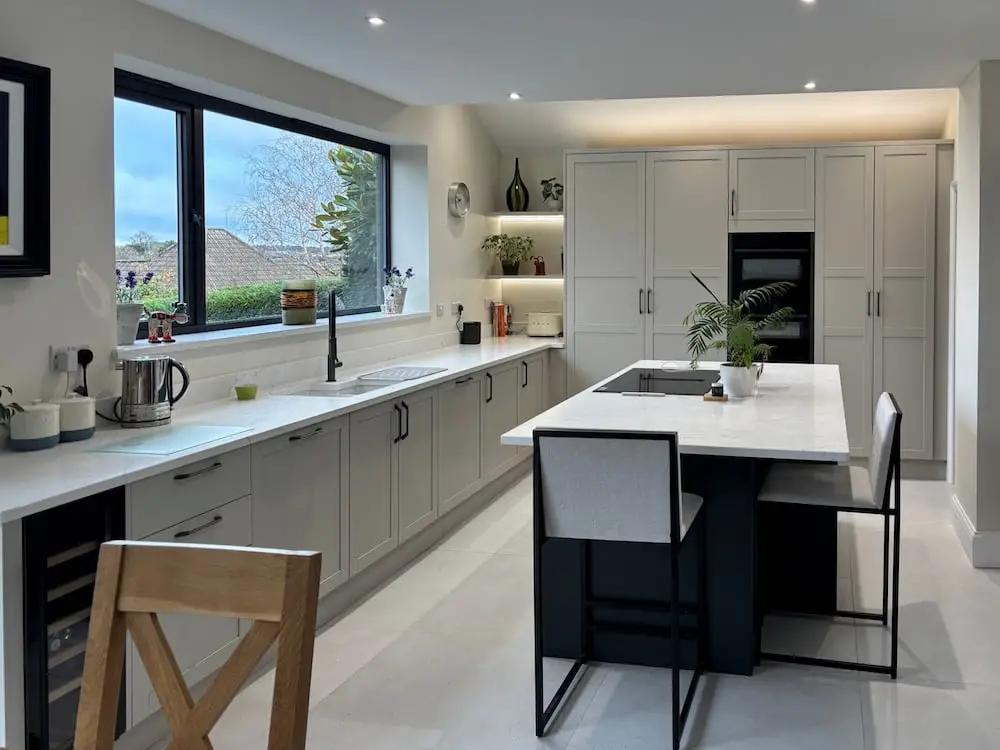
Can a picture window make a galley kitchen feel bigger without changing the footprint? Yes, because the view draws the eye outward and the natural light stretches the space. This kitchen uses a light gray palette with dark blue and white accents, so the window becomes the focal point rather than competing with the cabinetry. The central island holds bar stools and sits opposite an integrated oven and wine fridge, making the layout work for both cooking and casual meals. Recessed ceiling lights and under-cabinet lighting handle the evening hours, but the window is the main source during the day. The styling variation here is that the window does not have curtains, which keeps the line clean and the garden fully visible.
Ornate geometric backsplash adds detail to a navy and white
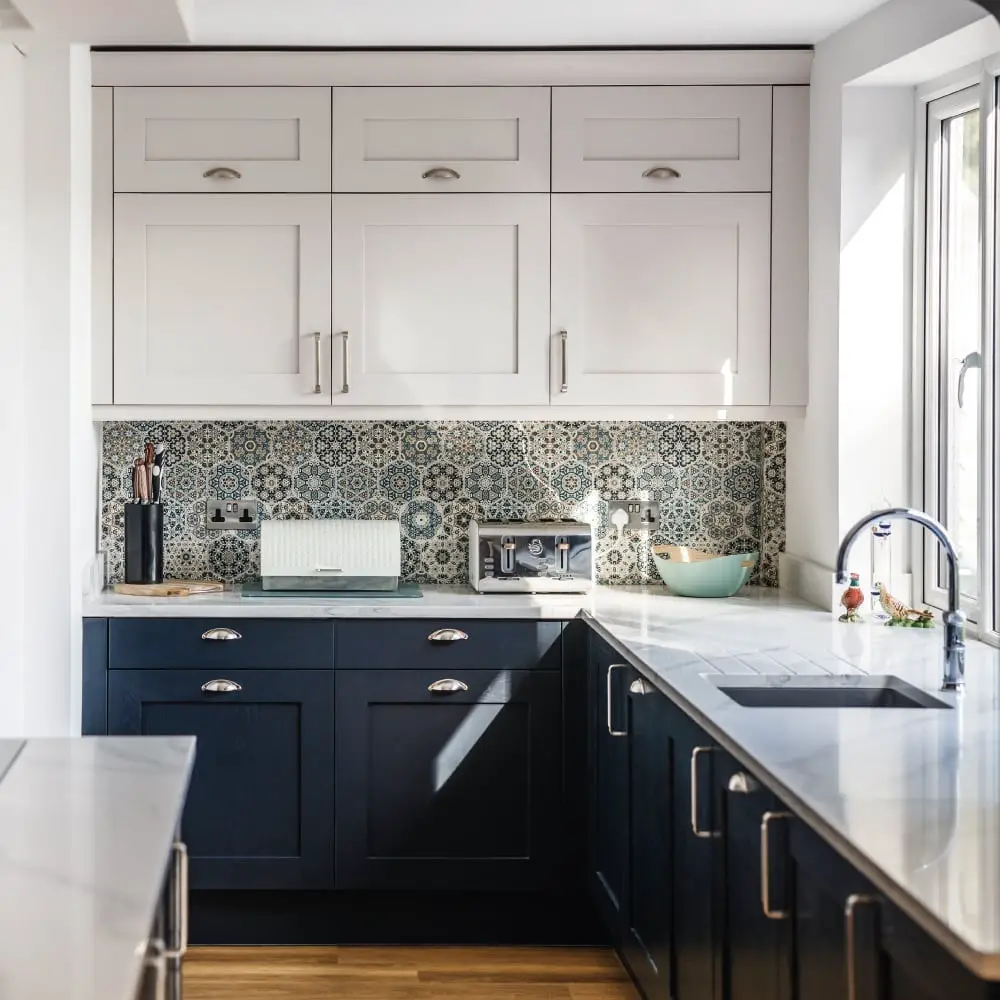
The ornate geometric backsplash in navy and white tile adds pattern without adding clutter. It runs between the white upper cabinets and the navy lower cabinets, so it acts as a transition zone that ties the two colors together. The beige and gray counter and floor keep the palette grounded, letting the tile do the work. Sunlight from the window hits the tile and picks up the metallic hints in the pattern, which gives the room a subtle shimmer. The material lesson here is that a high-contrast patterned tile works best when the surrounding surfaces stay solid and neutral.
Dark teal glass-front cabinets anchor a traditional kitchen
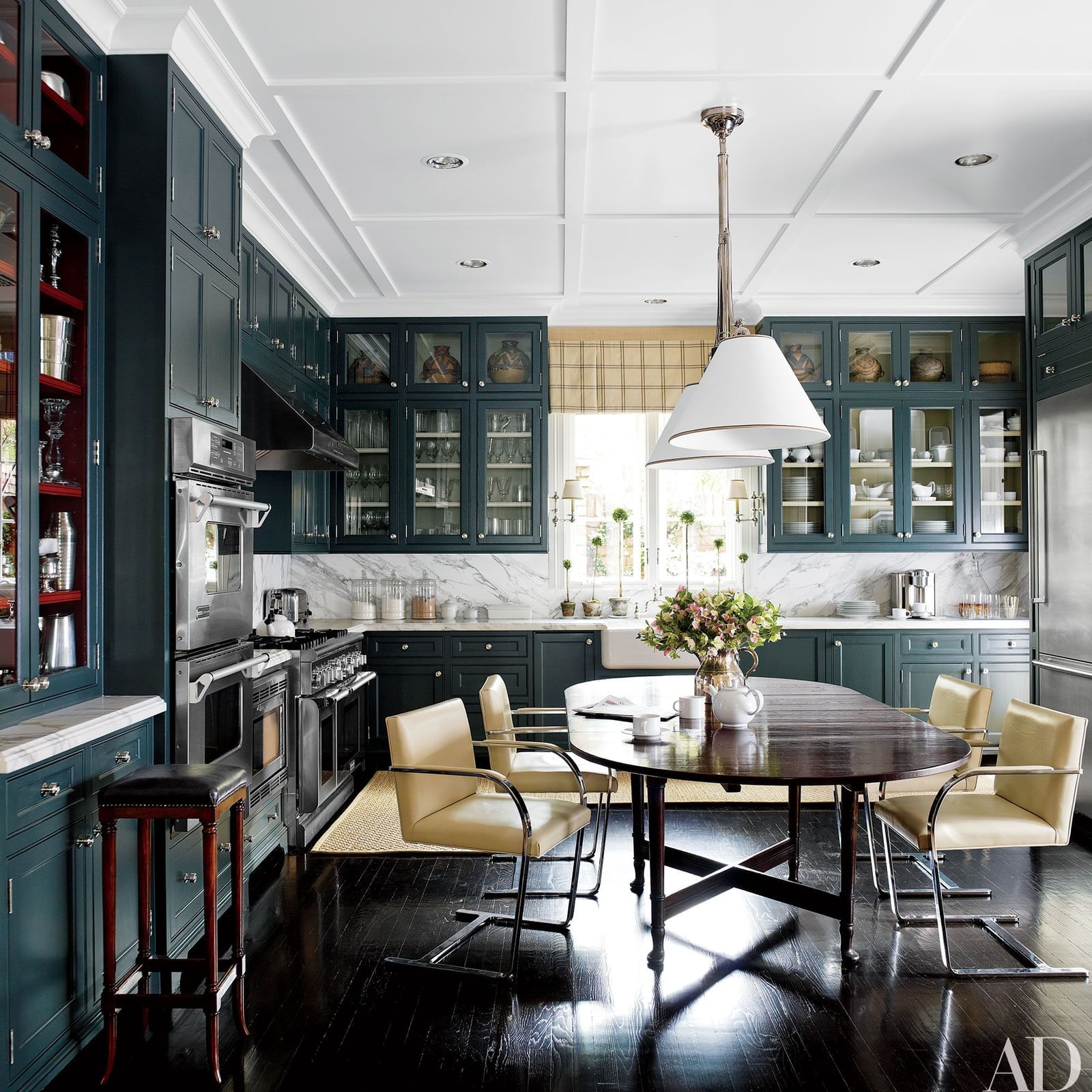
A kitchen with dark teal glass-front cabinets feels anchored when the surrounding finishes stay restrained. Here the cabinetry commands the room, while a white marble countertop, beige walls, and a dark wood oval dining table let the color lead. The glass fronts break up the mass of cabinetry and show what is inside, which makes the storage feel less dense. A pair of leather armchairs at the oval table adds warmth against the teal. A single pendant light over the table and recessed ceiling lights keep the illumination even, and natural light from a window softens the darker tones. The palette stays in the cool range, so the dark wood table and leather chairs look a deliberate choice.
Glass-front cabinets displaying dishware in an off-white traditional
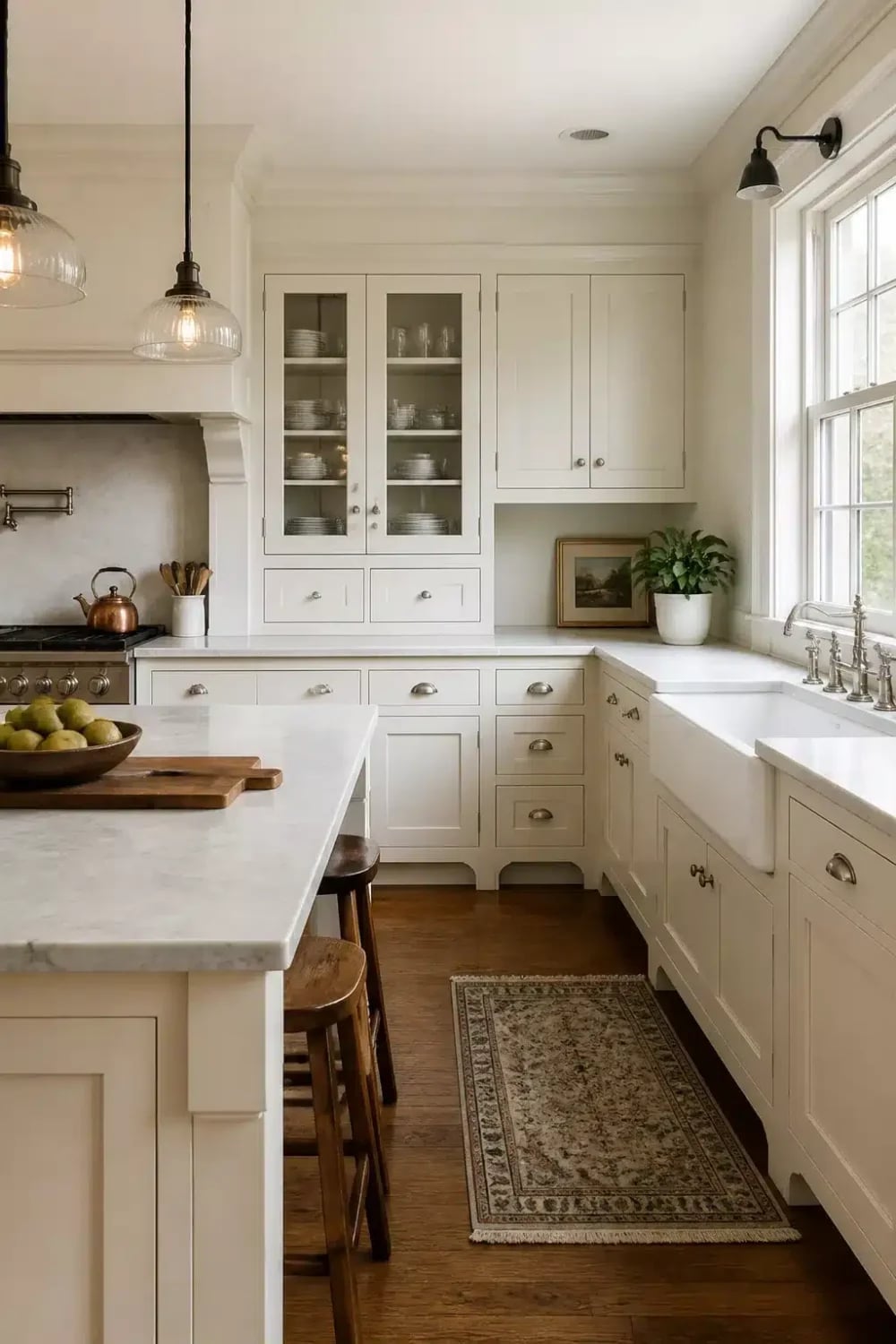
Glass-front cabinets often look like they belong in a showroom, but this off-white version sidesteps that problem. The cabinets sit above an apron sink and alongside open wooden stools, so the room feels lived-in from the start. The off-white finish keeps the glass fronts from feeling heavy, and the dishware inside becomes part of the decor instead of something hidden behind solid doors.
A pair of pendant lights and a wall sconce provide layered illumination. The brass hardware on the cabinets and the wooden stools add warmth to the muted earth tones. The marble countertop and ceramic dishware keep the surface palette simple, so the glass fronts show off the collection without the room feeling cluttered.
Cream range cooker as focal point in a bright traditional kitchen
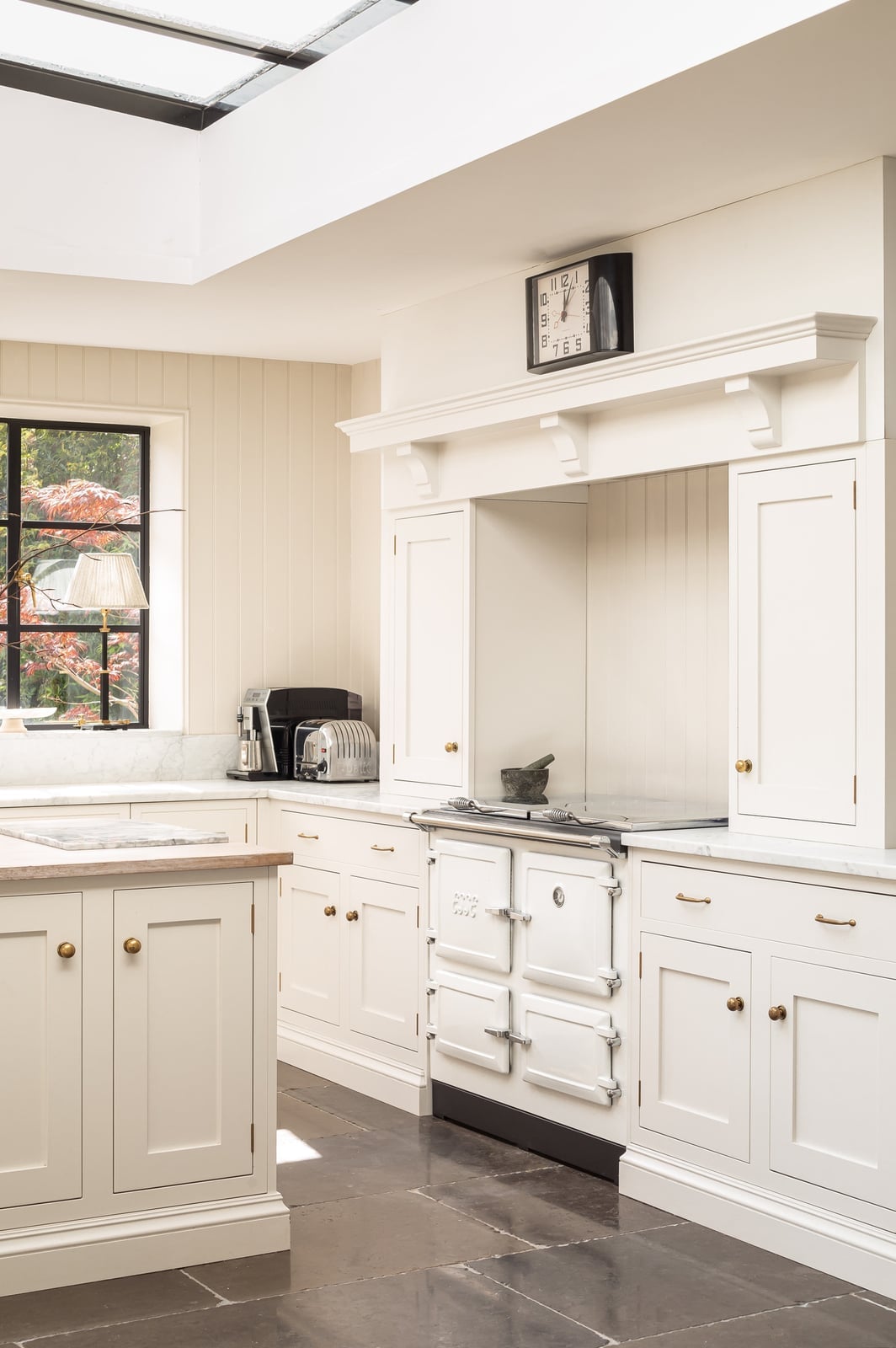
A cream range cooker stands out in this traditional kitchen because it is the only large appliance in a pale finish. The surrounding cabinetry and countertops stay in white and gray, so the cream tone looks warm without being heavy. The cooker sits at the center of an L-shaped counter layout, and the skylight above it draws the eye upward. A square clock and a pendant lamp frame the cooking zone without competing with it. The black toaster and coffee machine on the counter provide contrast, but they are small enough that the cream range cooker remains the hero element. Natural light from the skylight and window keeps the whole room bright, which helps the cream finish look clean rather than creamy in a way that might feel dated.
Lilac island stools add a bright accent to a wood traditional kitchen
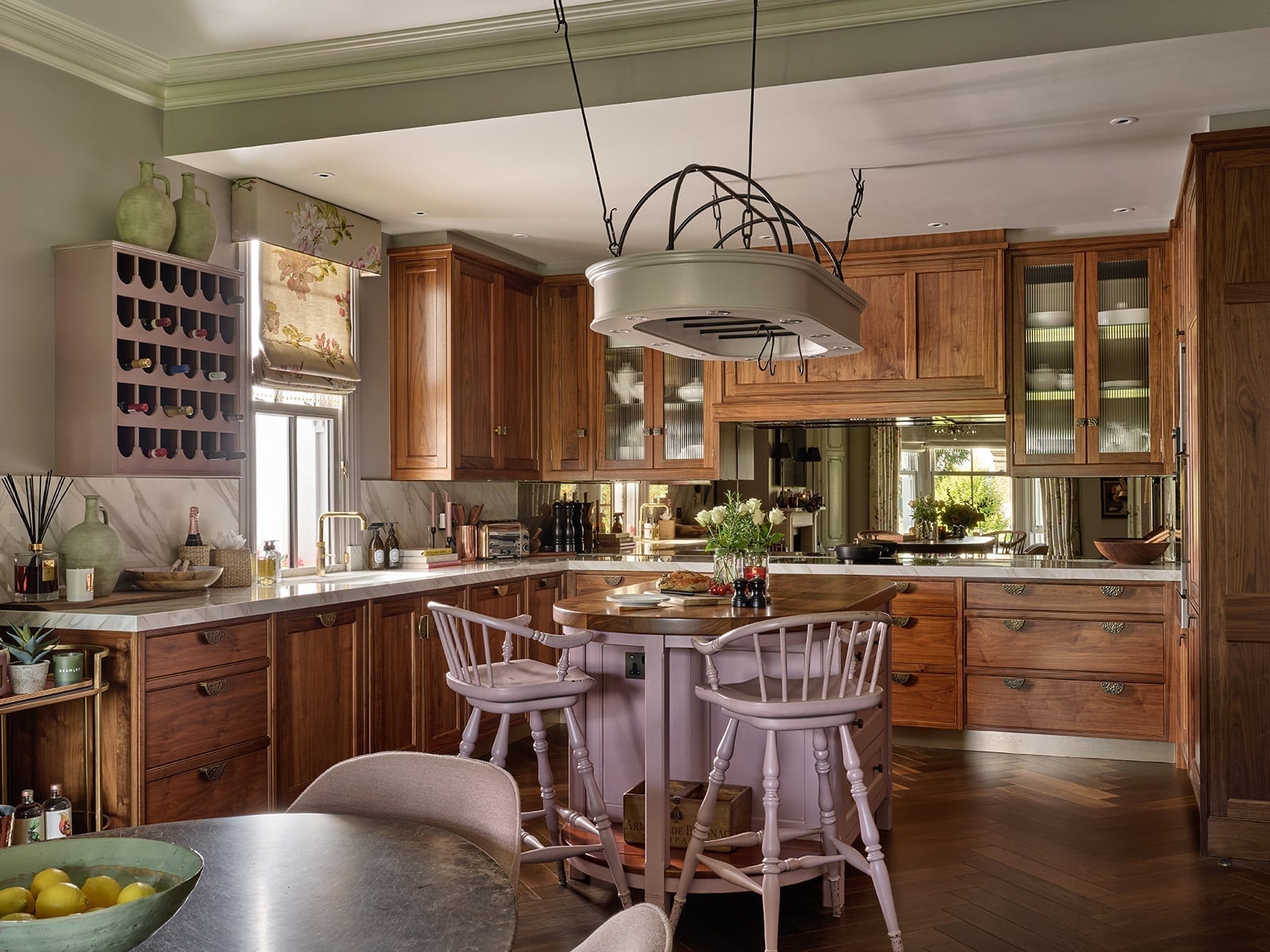
Lilac island stools are a one-note addition that works because the kitchen stays neutral. Wood cabinetry and cream walls provide a quiet backdrop, and the green range hood adds a secondary color without overwhelming the lilac. The stools sit at an island with a wine rack, and the overhead pendant light and recessed ceiling lights keep the focus on the seating area. The lilac is isolated to the stools and not repeated across the room. Wood tones and cream surfaces keep the palette grounded, so the lilac feels like a choice. The marble countertop on the island ties the wood and lilac together without introducing another competing color.
Natural wood cabinetry with open shelving in a traditional kitchen
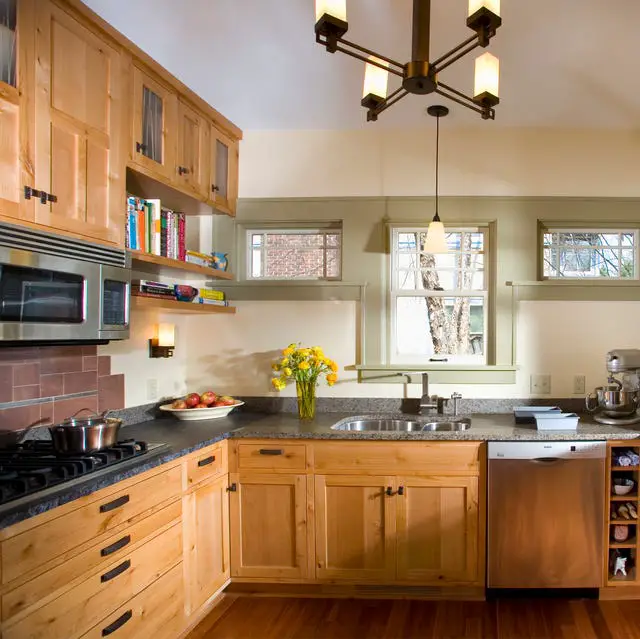
Natural wood cabinetry with open shelving looks cohesive when the wood tones are consistent across the upper and lower cabinets. Here the wood finish is warm and even, and the green trim on the open shelving adds a subtle boundary without breaking the natural feel. The L-shaped counter layout keeps the cooking zone compact, and the stainless steel appliances provide a neutral contrast to the wood. The granite countertop is dark enough to ground the wood without competing with it.
An overhead chandelier and a pendant light provide layered lighting, and sunlight from the windows keeps the wood from feeling too dark. The open shelving allows for easy access to daily dishware, and the upper wood cabinets keep less-used items out of sight. The cream walls and gray trim on the shelving prevent the wood from dominating the room, so the natural finish appears warm and intentional.
Unique cane cabinet door adds texture to rich brown traditional
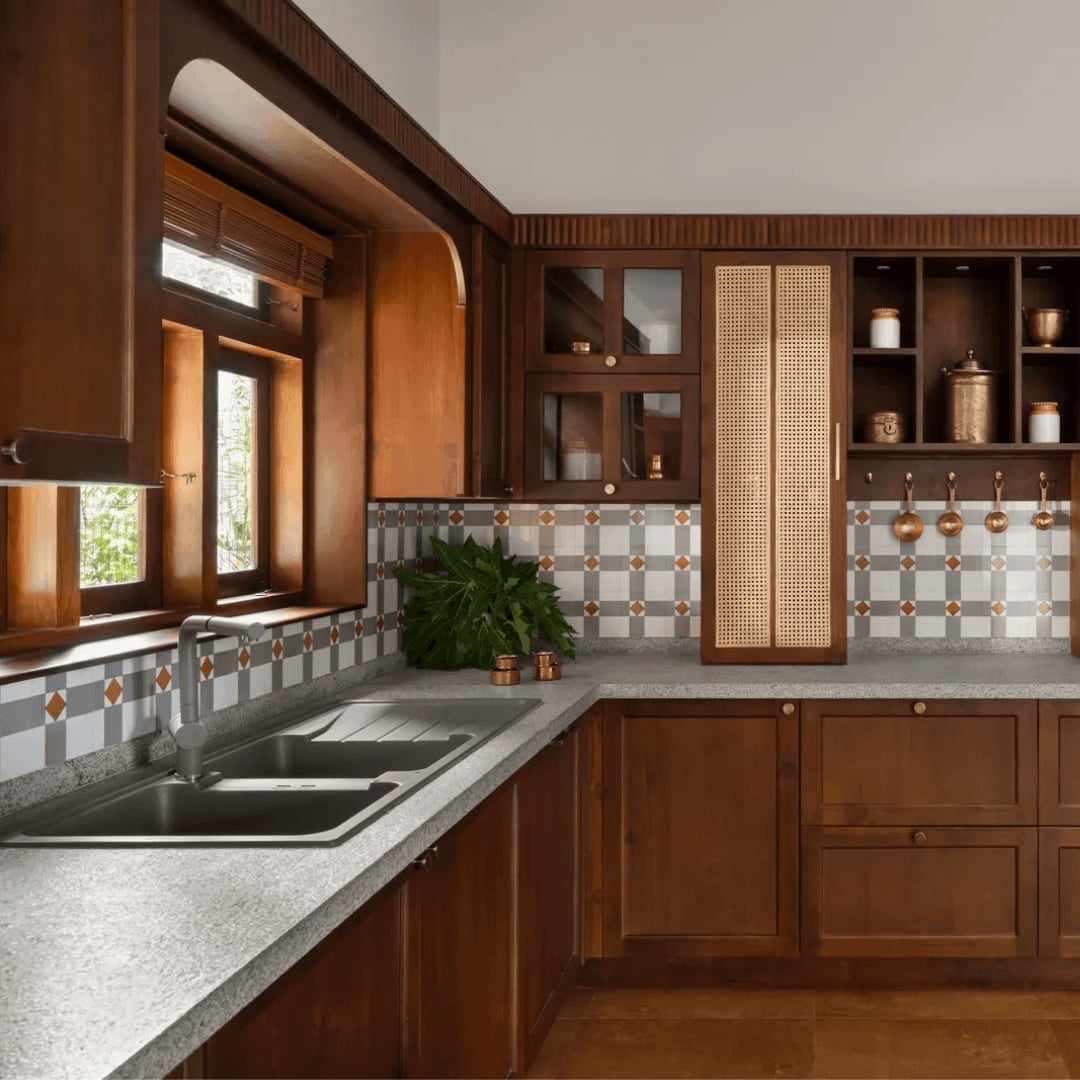
A single cane cabinet door breaks up a run of rich brown wood cabinetry without changing the cabinet structure itself. The woven texture sits on a lower cabinet, while glass-fronted uppers and a gray granite counter keep the room feeling open. The L-shaped layout places the double sink at the corner, with pendant lights above and a window behind. The cane panel adds visual weight at eye level, grounding the warm brown and white palette. A useful tip for materials is to use one tactile surface per zone, here the cane door, so the texture feels deliberate.
Exposed wooden beams enhance rustic charm, close-up take
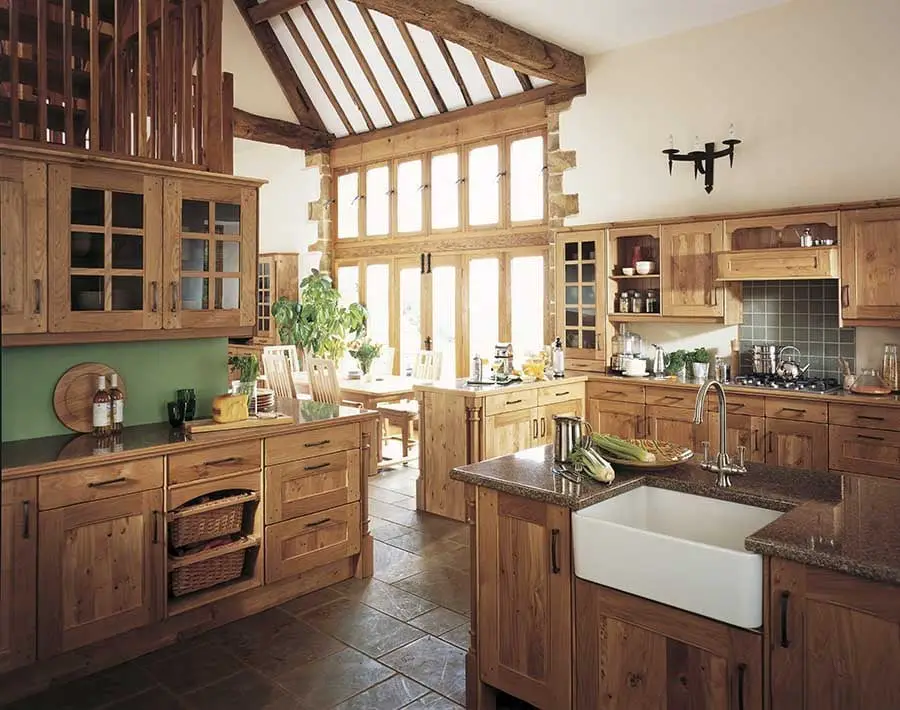
A practical rule for adding character to a rental kitchen is to look up. Exposed wooden beams and a vaulted ceiling create instant architectural interest without touching the walls or floors. In this roomy open-plan kitchen, the beams draw the eye upward, balancing the weight of the wood cabinetry and granite counters. A farmhouse sink sits in the island, with a dining table nearby and wall sconces providing warm light. The green and white palette keeps the space from feeling too dark, while the beams add a rustic layer that suits the traditional cabinetry. For a renter-safe approach, check with your landlord before painting or adding faux beams, as adhesive options can damage ceiling finishes.
Teal glass-front cabinets showcase ingredients, close-up take
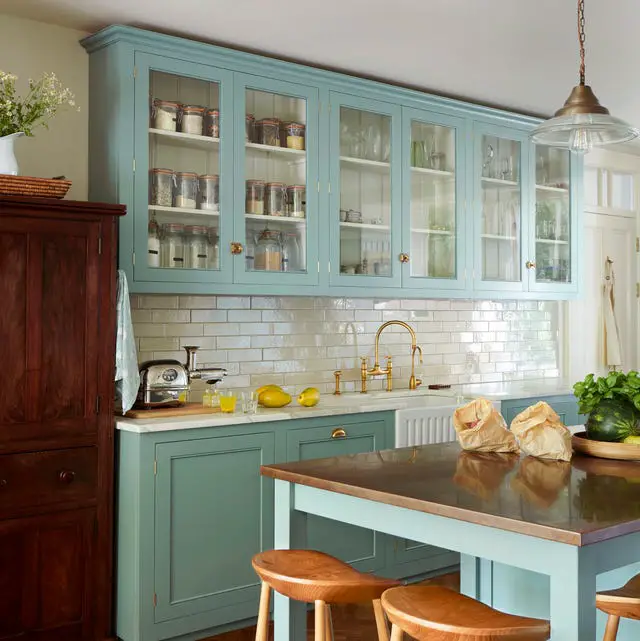
Glass-front cabinets often feel like a display-only feature, but teal glass-front cabinets make the case for using them as everyday storage. The teal frames add color while the glass keeps the contents visible, so the room stays practical and decorative at once. A brass faucet and copper accents warm up the cool teal, while the white marble counter and wood island stools keep the palette balanced. The island adds seating, making the kitchen feel like a gathering spot.
The second layer here is the lighting. A pendant light hangs above the island and hits the glass fronts, making the teal shift throughout the day. Choose glass-front cabinets in a color that contrasts with the wall, so the cabinets look furniture. The teal works because it is deep enough to hold its own against the white marble.
Open shelving displays glassware and plants above, office-safe version
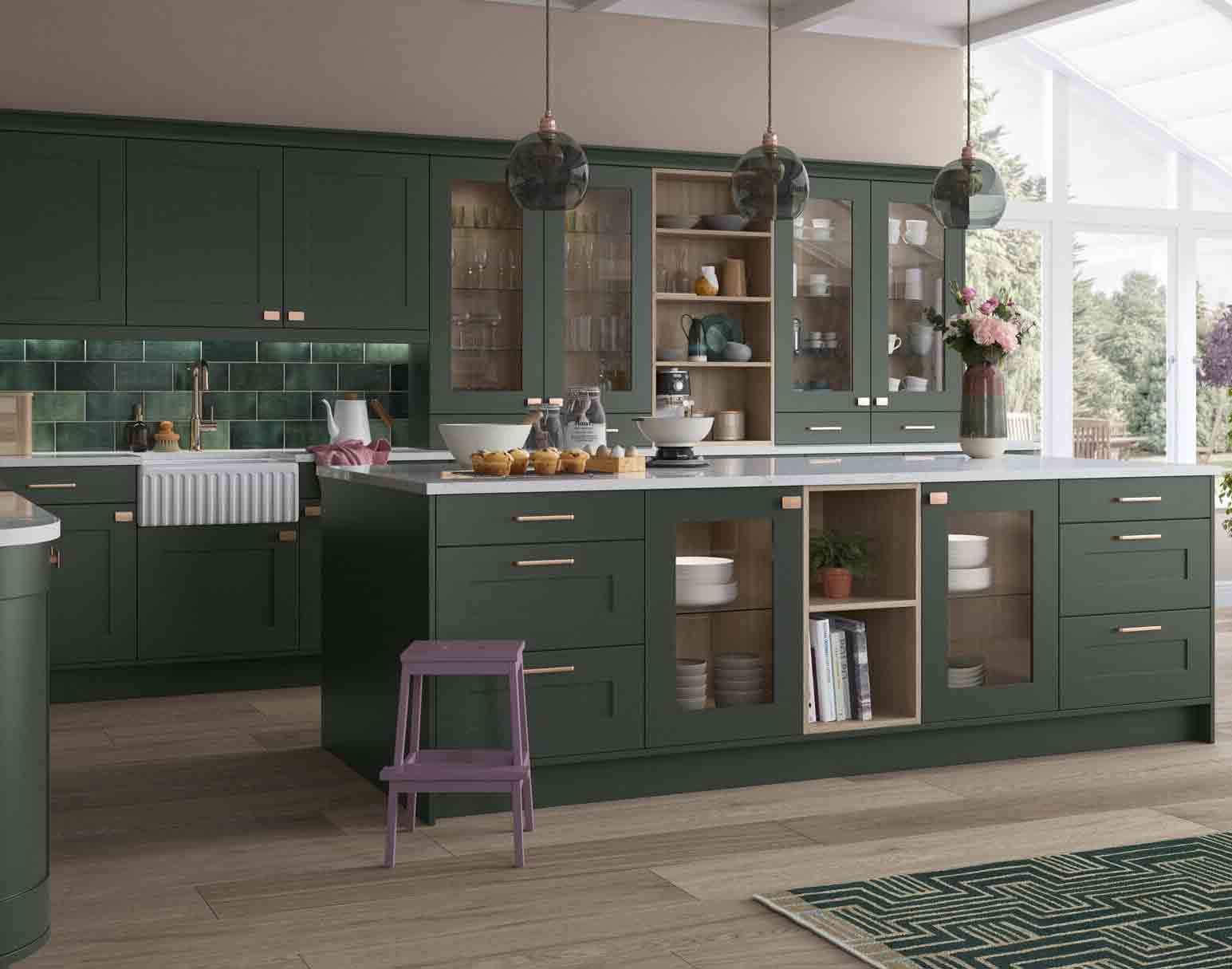
Deep green cabinetry on the lower half of the room sets a grounded base, but the real trick is what happens above it. Open shelving runs along the wall above the green cabinets, holding glassware and small potted plants that add lightness and color. The wooden shelving unit stands out against the white tile backsplash, and the purple step stool nearby hints at easy access. A central island with a farmhouse sink and pendant lights overhead keeps the layout practical, while the glass-front cabinets on the wall echo the open shelving’s display function. A useful storage principle is to pair open shelving with closed cabinetry in the same zone, so you get the visual break of displayed items without losing hidden storage for everyday clutter.
Black and white checkered marble floor defines, close-up take
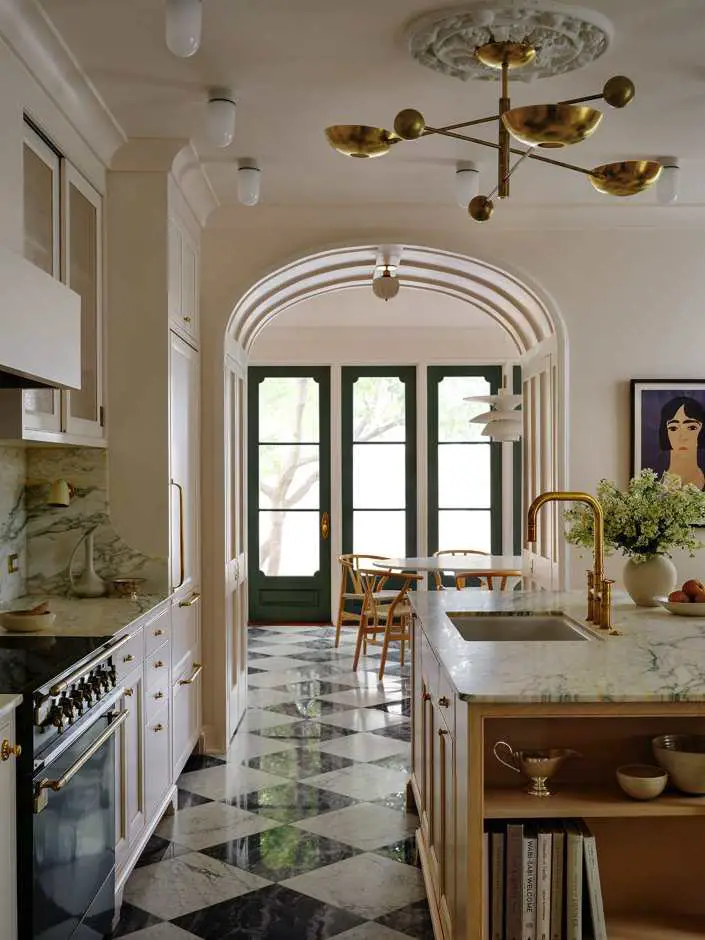
A black and white checkered marble floor is the defining feature of this roomy galley kitchen. The pattern anchors the space with a classic contrast that works with the cream cabinetry, green accents, and brass faucet. An ornate chandelier hangs above the island, and an arched doorway leads to a dining area, adding architectural detail. The marble countertops and wood elements keep the palette grounded, while natural light balances the dark and light tiles. A practical approach is to let a strong floor pattern set the room’s personality and keep the walls and counters quieter, so the floor leads the eye without overwhelming the finishes.
Velvet bar stools add softness to a marble range hood traditional
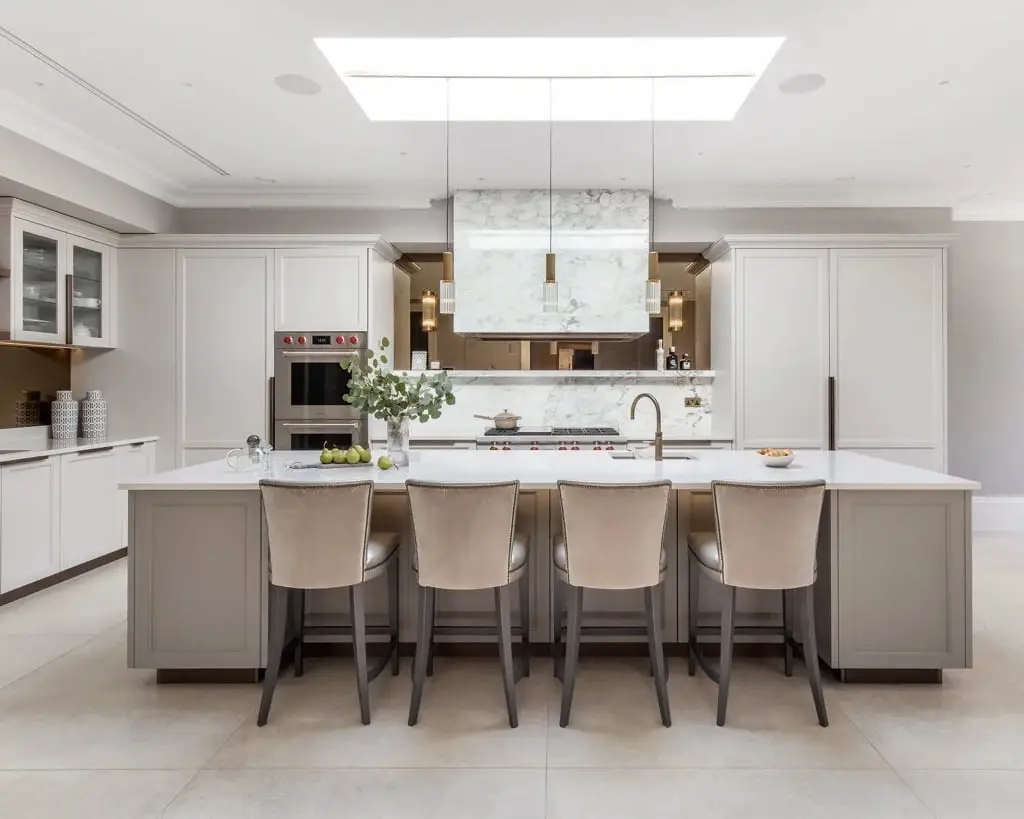
A roomy traditional kitchen benefits from a mix of hard and soft surfaces. The central island here pairs a marble countertop with velvet bar stools in a neutral beige, creating a spot that invites lingering without disrupting the neat look. The marble range hood and stainless steel double oven anchor the space, while the island seating softens the overall feel. Pendant lights and a skylight layer the light, keeping the room bright. This layout works well for anyone who wants a kitchen that feels both formal and approachable, with seating that adds comfort without competing with the stone and metal finishes.
Spacious farmhouse sink for busy meal preparation
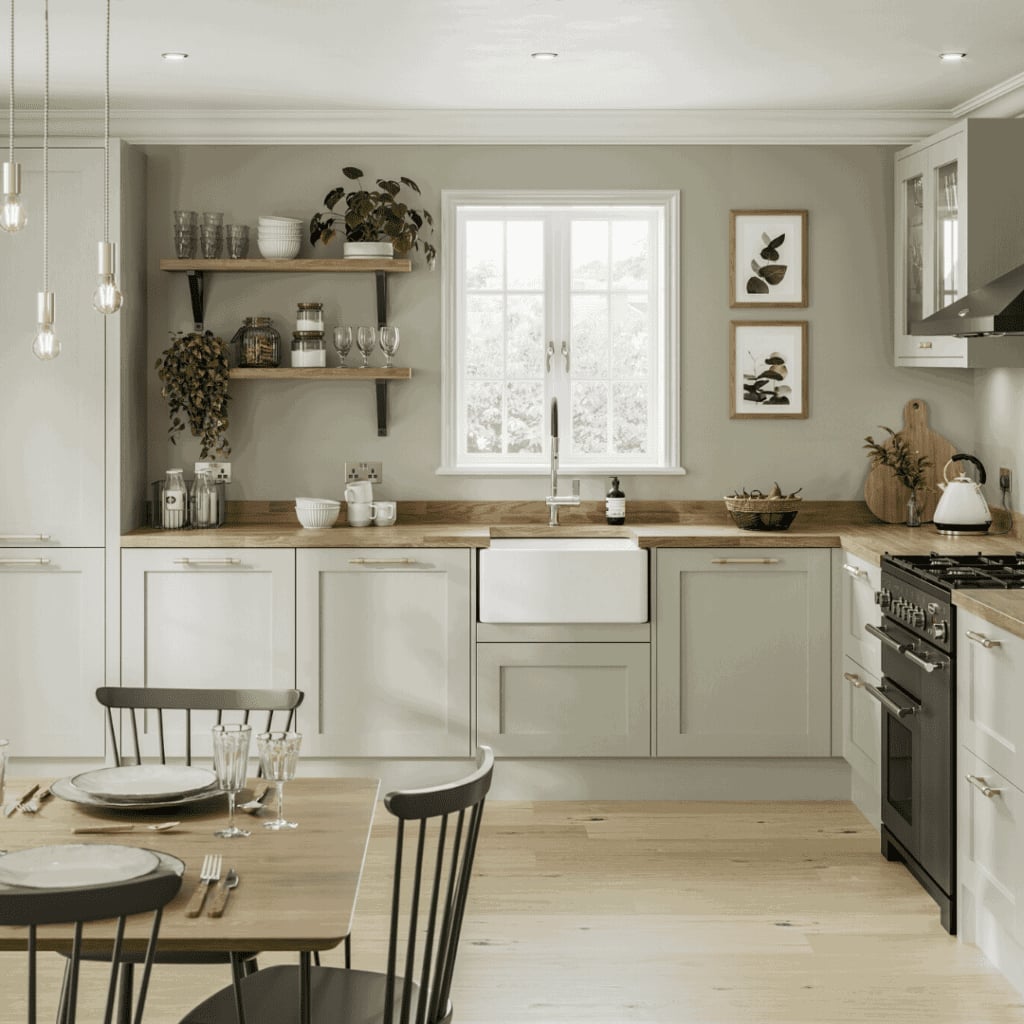
A large white farmhouse sink sits in a light gray kitchen with wood tones and black accents. The L-shaped layout places the sink and black stove along one wall, with a wooden dining table in the foreground. Pendant lights and recessed ceiling fixtures provide general illumination, while natural light from the window brightens the sink area. The open shelving above keeps everyday dishware within reach, making this a practical setup for meal prep that requires frequent rinsing and stacking.
Sage green paneled cabinetry with brass hardware in a traditional
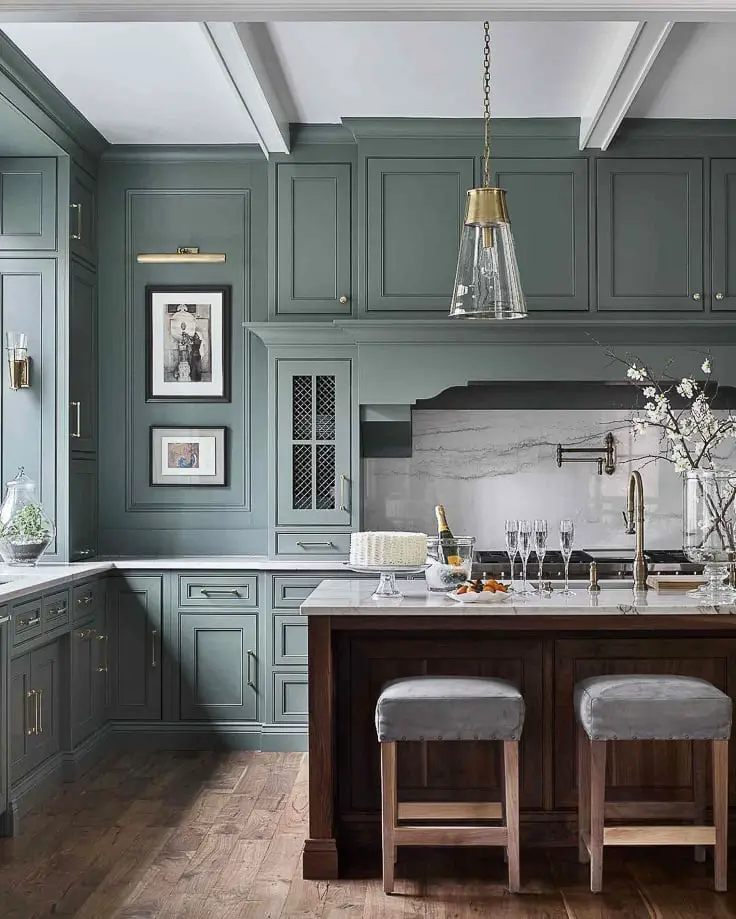
A roomy kitchen with sage green paneled cabinetry and brass hardware combines grounded and refined elements. The palette pairs the green with dark wood on the central island and white marble countertops, creating a layered traditional look. Wood flooring ties the room together, while a glass pendant light and wall sconces add warm illumination. This combination of sage, brass, and marble keeps the green as the dominant color with the other materials as accents, ensuring a cohesive palette.
Blue and white tiled backsplash accents a cream range cooker
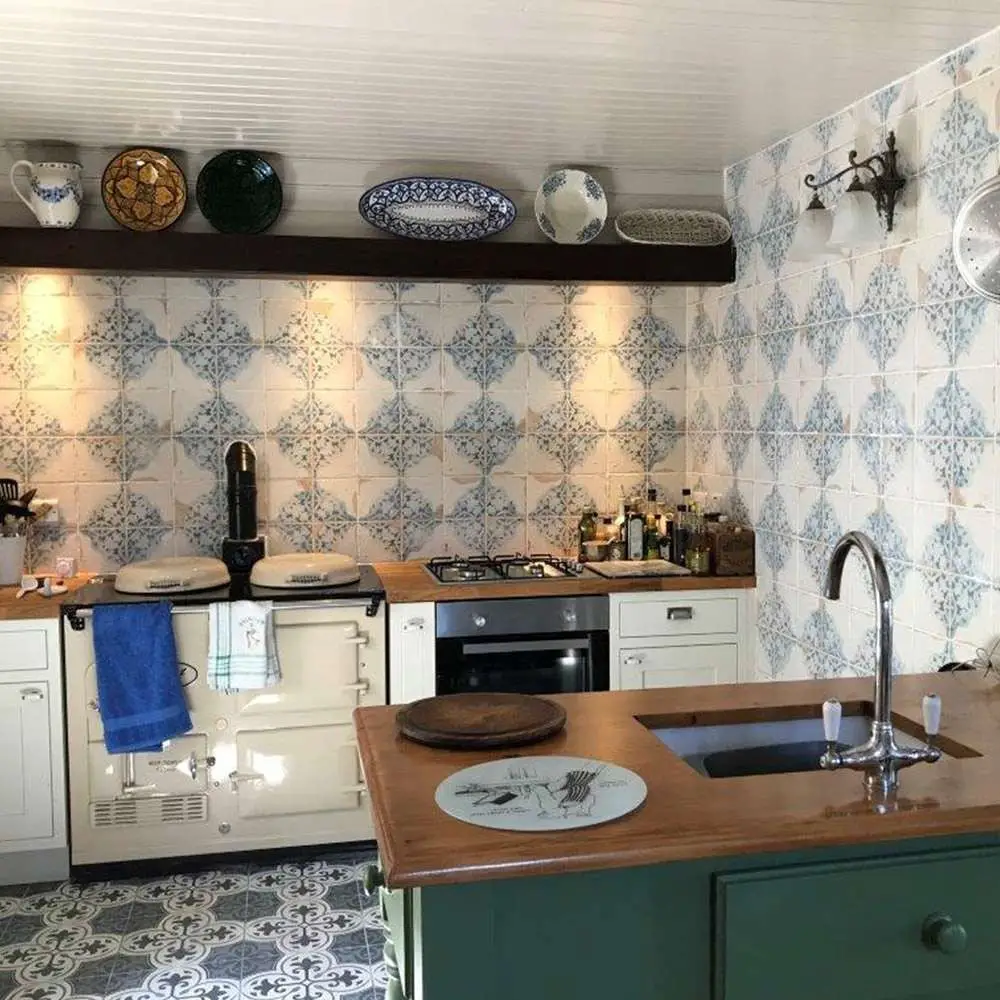
A cream range cooker might feel understated on its own, but setting it against an ornate blue and white tile backsplash gives it presence. In this galley-style kitchen with an island, the backsplash draws the eye while the cream cooker stays calm and approachable. The wooden countertop and green accents add warmth, and wall sconces with under-cabinet lighting keep the tile visible after dark. This approach suits a kitchen where you want one patterned surface to do the work, letting the range and cabinetry stay in a neutral palette.
The tile pattern here is detailed enough to look decorative from across the room, but the blue and white palette keeps it from feeling busy. For a similar effect, choose a backsplash with a repeating motif and pair it with a single light-colored appliance rather than multiple competing patterns. The galley layout with an island gives you counter space on both sides, making the range a natural focal point without blocking traffic.
Glass doors showcase dishware on oak cabinetry
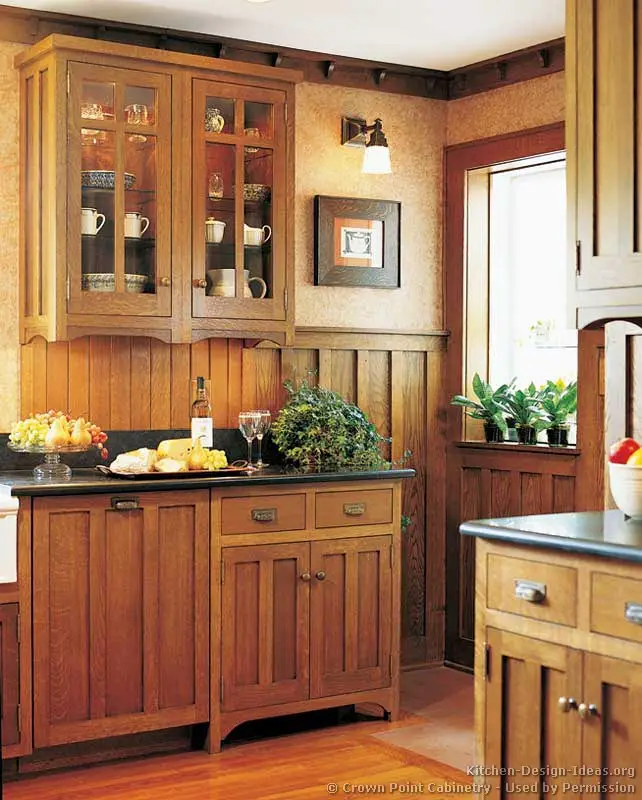
Glass-front upper cabinets with detailed mullions sit above paneled lower cabinets in this compact corner vignette. The oak cabinetry is paired with cream and green accents, and a wall sconce adds task lighting. The glass doors turn dishware into a display, making the storage itself part of the decor. This works best for everyday pieces you use often, since the contents stay visible and accessible. Keep the shelves organized with matching plates or glassware to maintain a clean look behind the glass.
Crystal pendant lights enhance a marble-topped island traditional
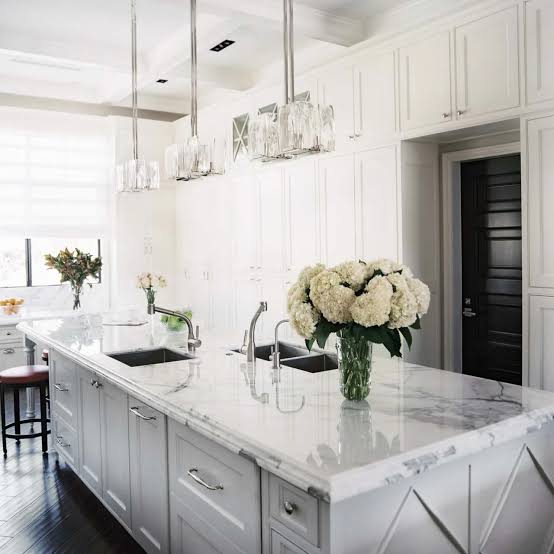
A roomy traditional kitchen gains its focal point from a large island topped in marble and fitted with double sinks, but the real draw is the lighting above it. Crystal pendant lights hang in a cluster, catching the natural light from windows and adding a layer of sparkle that the dark wood cabinetry and gray palette otherwise keep subdued. The room feels balanced because the hero element is central and the surrounding layout stays simple: ample cabinet storage lines the walls, and the island itself becomes the workstation and gathering spot. A useful decor principle for lighting is to match the fixture scale to the island size, a single small pendant would feel lost here, while the cluster fills the visual space without overwhelming the marble surface.
Vibrant pink SMEG range cooker in a traditional farmhouse kitchen
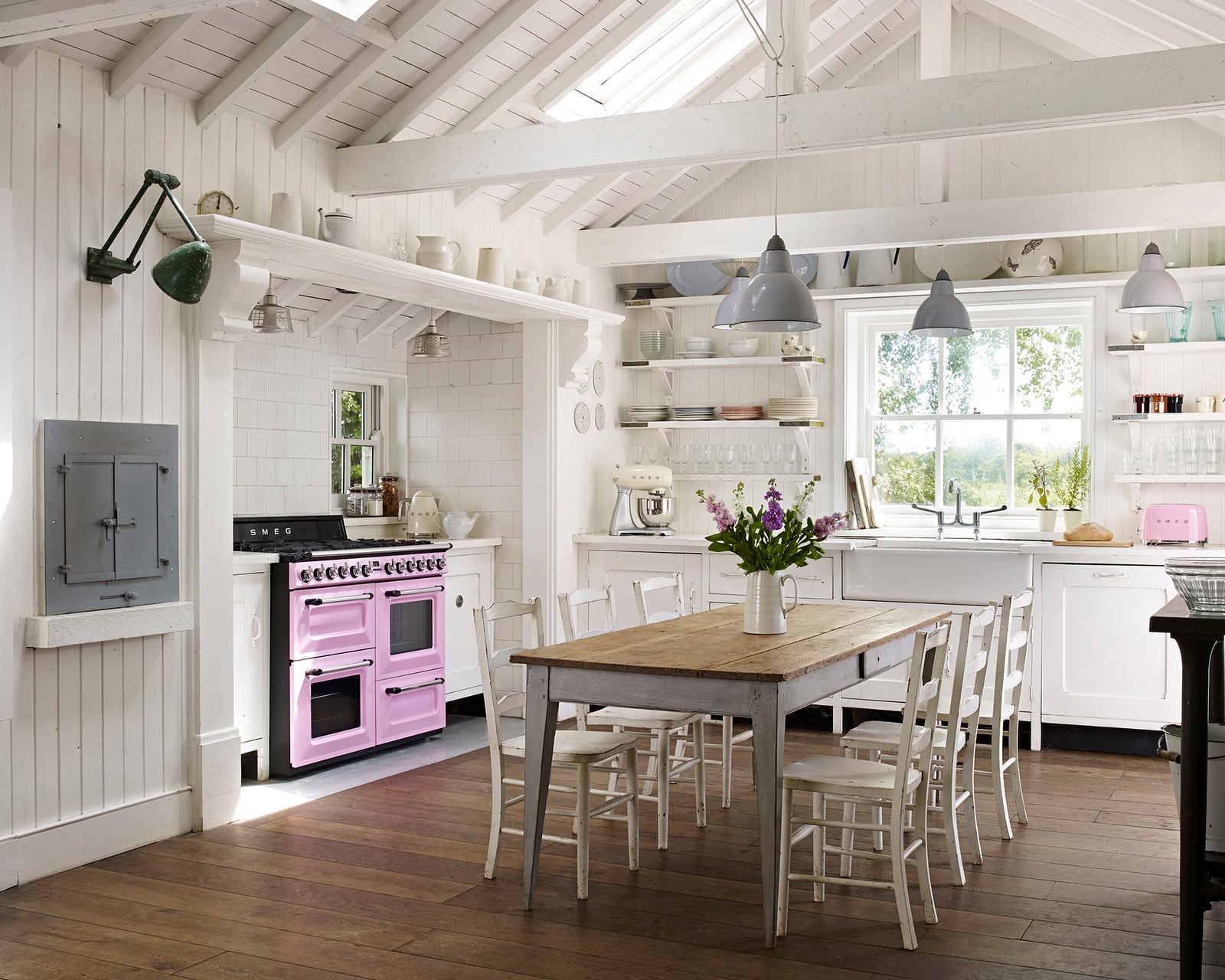
A cream or white range cooker is the expected choice for a traditional farmhouse kitchen, but a vibrant pink one changes the entire mood. Here, the pink range cooker sits along the back wall in an open-plan room, with a wooden dining table and white chairs in the foreground and a farmhouse sink nearby. Natural light from skylights and a window keeps the space feeling airy, while pendant lights provide warmth after dark. The layout works because the range cooker is the clear hero element, and pale wood tones, gray tiles, white cabinetry stays simple so the color looks deliberate. For a renter-safe swap, choose a bold-colored appliance that can be moved to a new home, instead of painting cabinetry that would need to be repainted before moving out. The pink range cooker brings personality without any permanent changes to the room.
Ornate brass range cooker anchors a sage green traditional kitchen
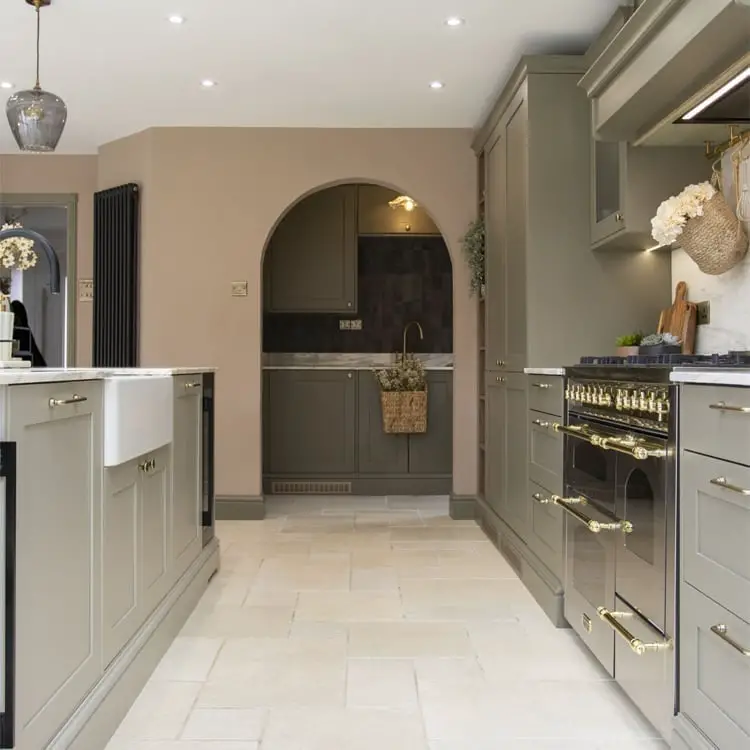
An ornate brass range cooker anchors a roomy kitchen with sage green cabinetry, a farmhouse sink, and an arched alcove that adds architectural interest. The palette stays in a tight range of taupe, cream, and brass against the green, so the cooker stands out without competing with the wood cabinetry or stone tile backsplash. Recessed ceiling lights and under-cabinet lighting keep the workspace bright while letting the brass finish catch the eye naturally. A useful decor principle for materials is to repeat the hero finish in smaller details, here, the brass on the cooker is echoed in hardware elsewhere, which keeps the room from feeling like the range cooker is the only metallic element.
Final Thoughts
A traditional kitchen doesn’t have to be predictable. These 28 looks show that classic bones handle color, texture, and personal touches well. Keep the layout functional, choose finishes that wear gracefully, and let one or two bold elements carry the personality. The rest can stay quiet and practical.