Sage green walls are set to define the 2027 aesthetic, offering a calm yet characterful backdrop that works in any room. This shade sits between a cool gray and a warm green, making it adaptable to everything from boho bedrooms to modern living spaces.
If you are looking for inspiration that goes beyond a simple paint swatch, these 34 ideas show how to style sage green walls with purpose. Each look brings out a different side of the color, proving it can be both a quiet neutral and a bold statement.
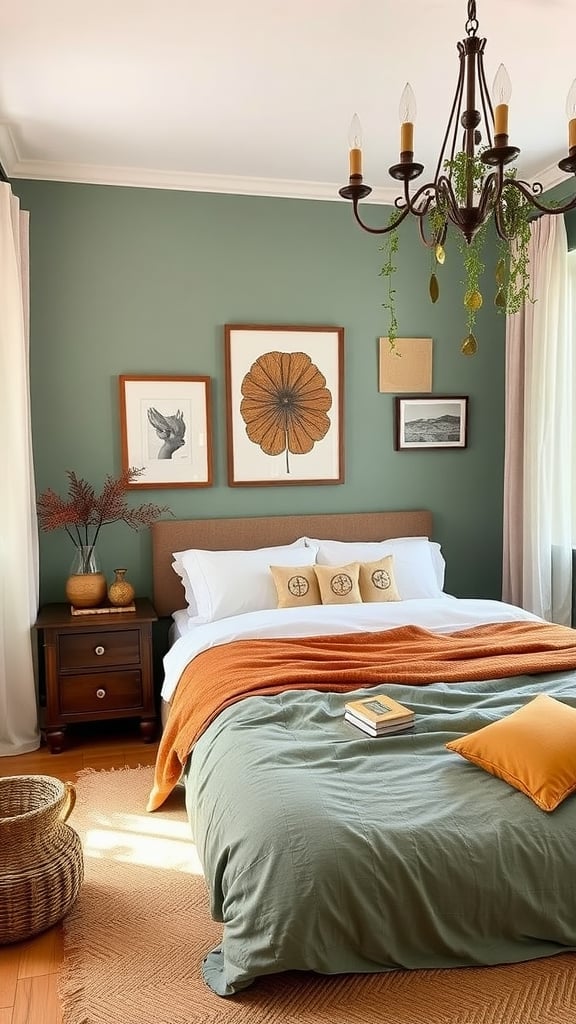
Boho bedroom with sage green walls and earthy accents
Sage green walls set a calm stage, but the orange throw on the bed is what gives this boho bedroom its pulse. The palette pairs a muted green with warm orange, white, brown, and tan, keeping the room grounded rather than precious. A wooden bed frame, a woven basket, and a chandelier add texture without crowding the centered layout. The window brings in natural light, and the metal of the chandelier offers a slight industrial edge. What defines this look is the ratio: one saturated accent against a mostly neutral backdrop. The orange breaks the sage just enough to keep it from looking too quiet.
Modern living room with sage green walls and minimalist furniture
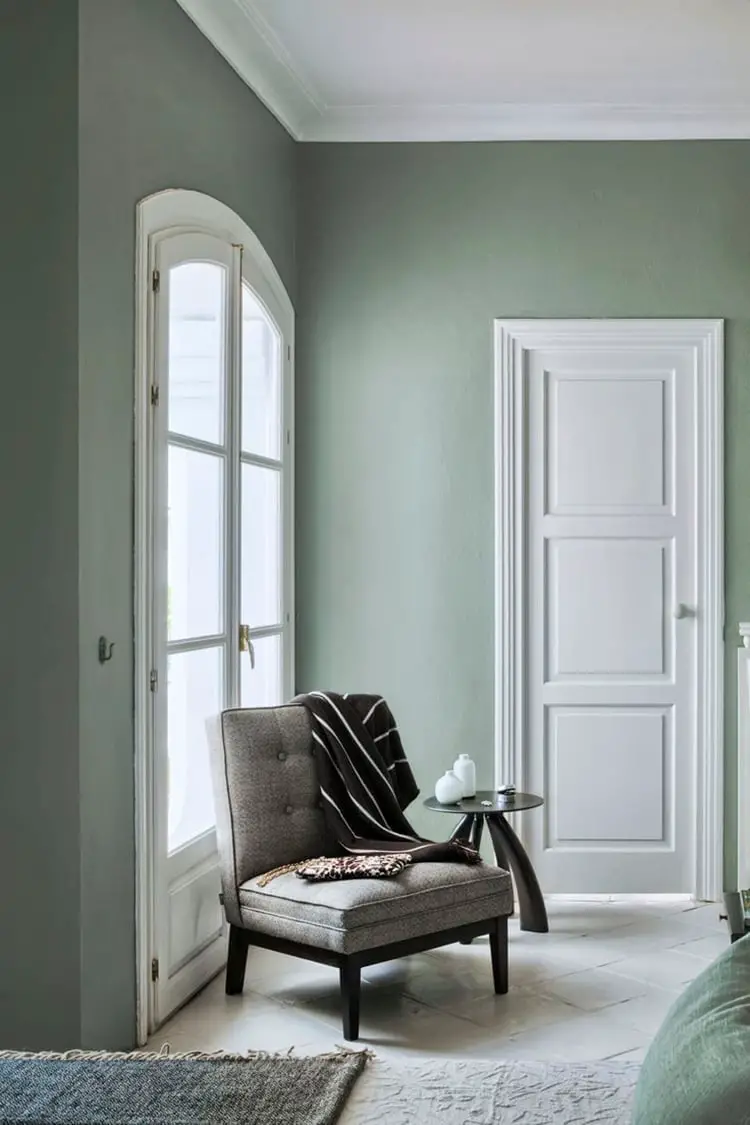
This living room works because the layout follows the light. The corner seating area places a gray armchair near the window, letting natural light land on the fabric and the wood side table beside it. A folded blanket and a rug add softness without clutter. The sage green walls stay in the background, and the white, gray, and black palette keeps the room clean. The hero element here is the armchair, but the real move is how the room lives: the furniture anchors the corner without blocking the flow. For a similar effect, keep the seating low and the surfaces simple so the wall color does the work.
Cozy bedroom corner featuring sage green walls and gallery Art
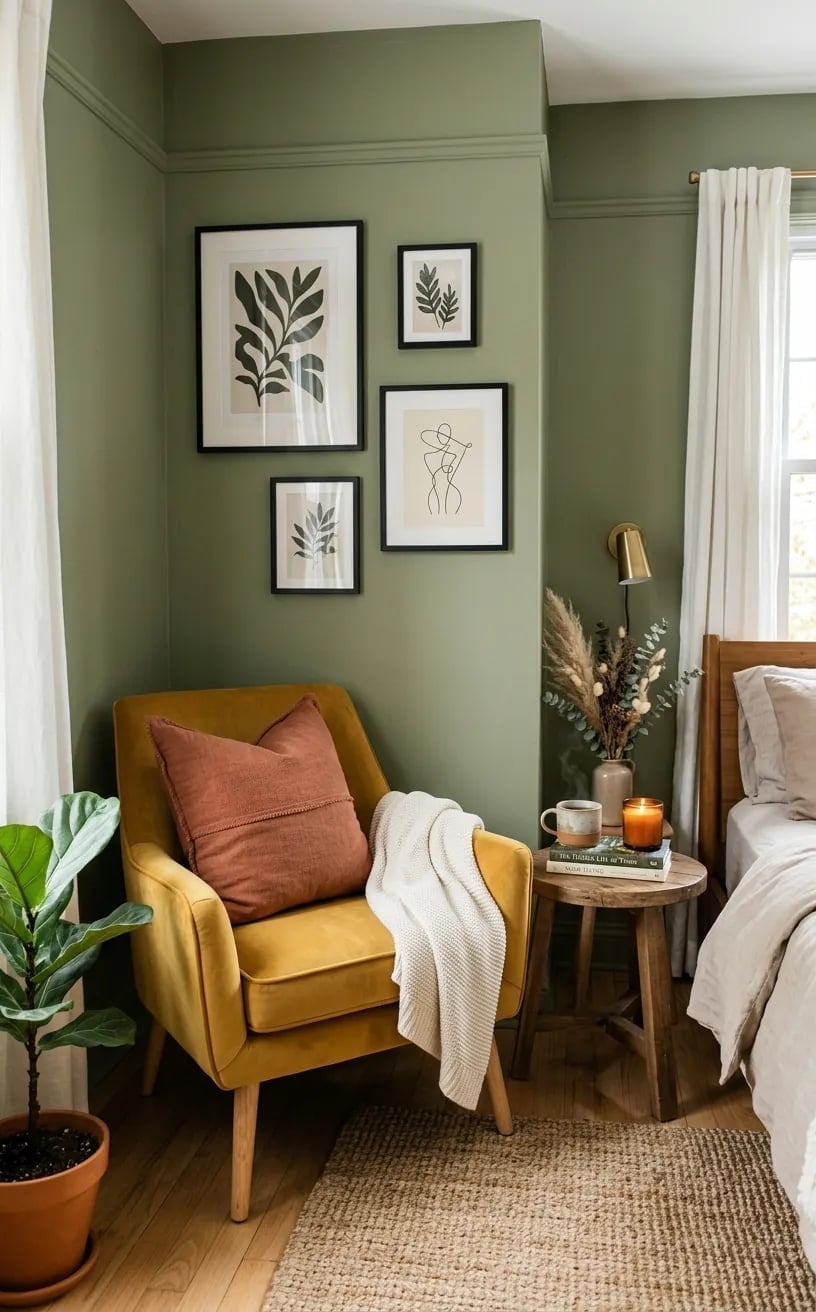
A compact corner can feel larger with a gallery wall. In this modern boho bedroom, framed botanical prints sit against sage green walls, with a mustard yellow armchair and a wooden side table tucked beside the bed. A wall-mounted brass sconce adds task light without taking floor space, and the vignette stays open and airy. The materials mix velvet, wood, jute, linen, ceramic, and glass, which gives the corner depth without needing more furniture.
Treat the corner as a destination. The armchair is small enough to fit, and the side table holds just a ceramic piece and a glass of water. The brass sconce echoes the warm tones in the terracotta and cream palette, tying the art to the furniture.
Serene bedroom with sage green walls and neutral tones
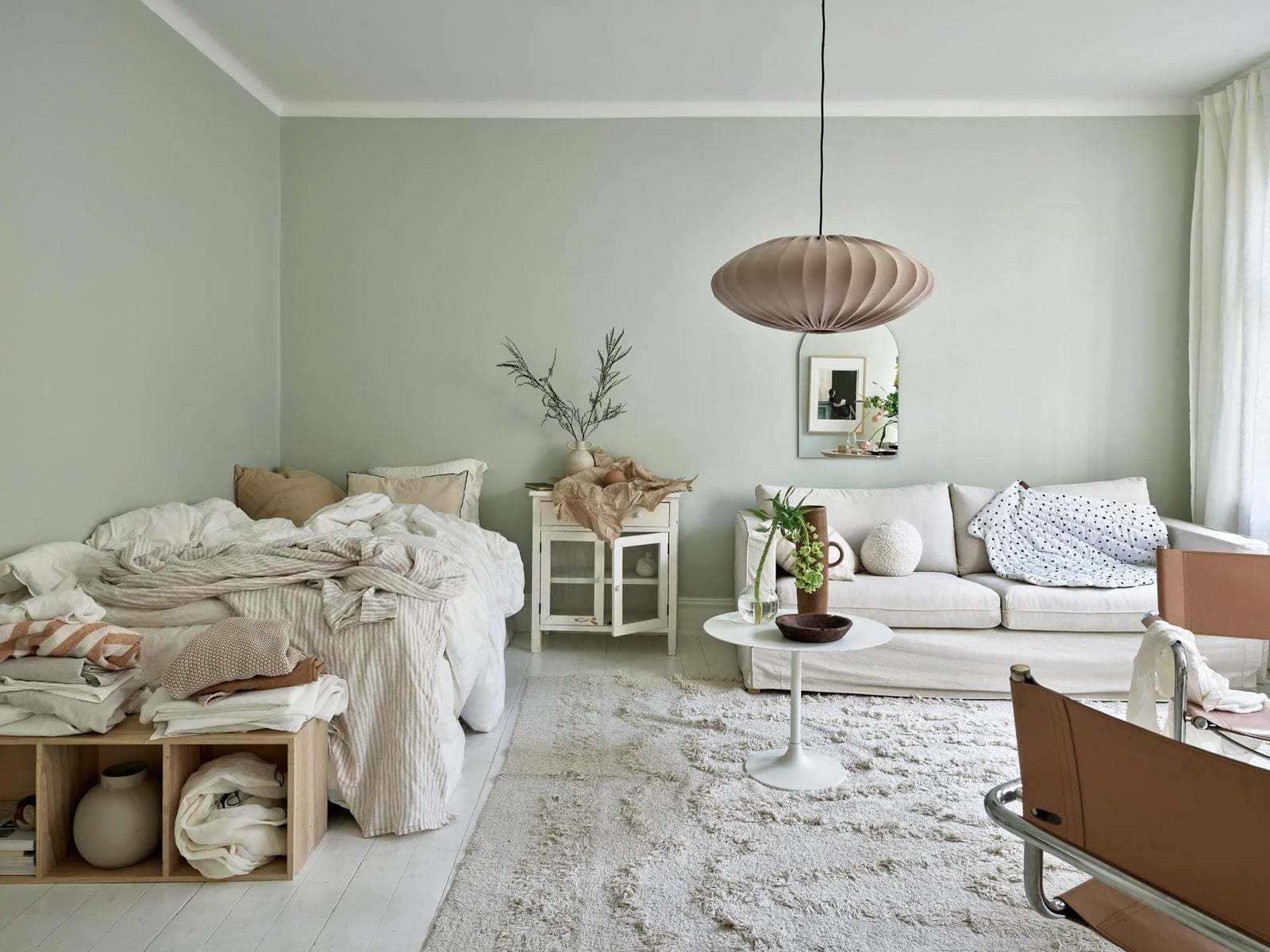
The palette here is almost all neutrals: white, beige, and brown, with sage green as the only color on the walls. A bed sits on the left, a small sofa on the right, and a white coffee table in the center, which gives the room a living room feel inside a bedroom. The wooden shelving unit and linen bedding keep the textures soft. A pendant light hangs overhead, and natural light comes in from the window. What makes this work is that the sage green never competes with the furniture. The white side table and coffee table stay quiet, and the brown wood adds warmth without breaking the calm.
Airy living room with sage green walls and light wood accents
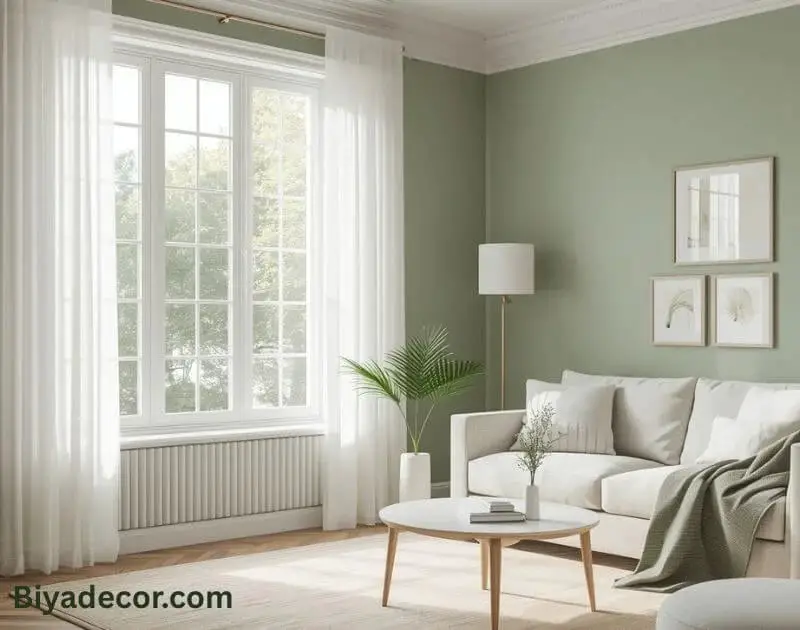
To keep a room with sage green walls from feeling heavy, use light wood and plenty of natural light. This living room pairs the green with white, beige, and light wood tones. A large window brings in daylight that hits the sofa and the floor lamp. The coffee table is wood and glass, which keeps the center of the room visually light. The framed art on the wall adds a focal point without competing with the wall color. The floor lamp provides a second light source for evening, so the room stays bright even after the sun goes down. The palette is simple, and the materials stay natural, which lets the sage green do its job without help.
Inviting living room with sage green walls and fireplace warmth
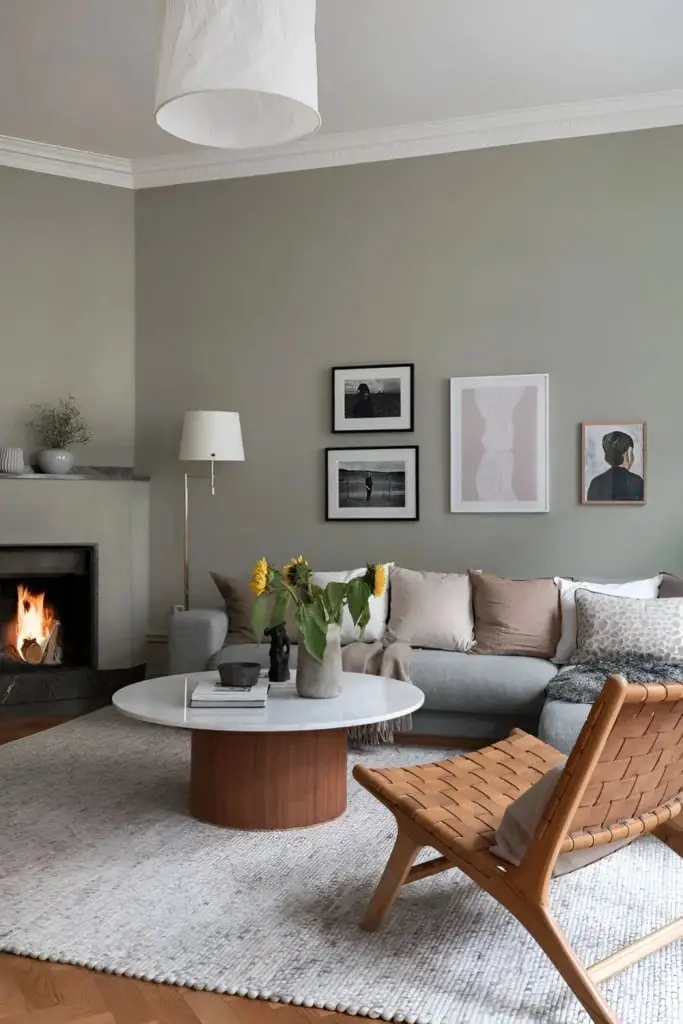
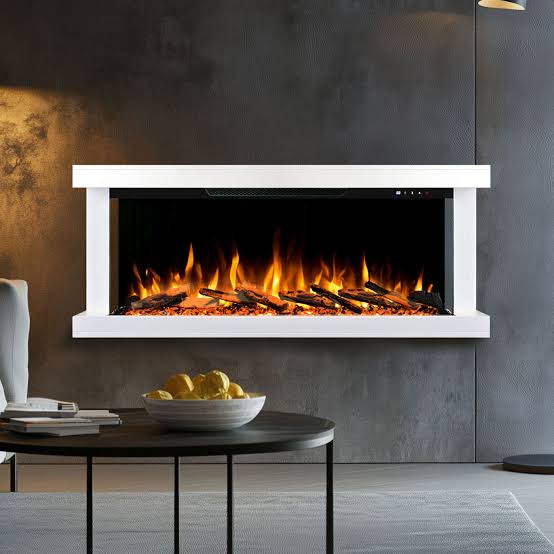
A marble coffee table might have look too cool against a fireplace, but here the round wood version keeps the room grounded. The sectional sofa faces the hearth directly, with a leather accent chair off to one side, so the layout pulls everyone toward the warmth without forcing a formal circle. Sage green walls bridge the gray stone of the fireplace and the beige linen upholstery, making the whole palette feel deliberate rather than pieced together. A floor lamp adds task light without competing with the fire glow, and the overhead fixture keeps the ceiling from going dark. This is a room built for conversation, not just for show.
Gallery wall Art on sage green walls
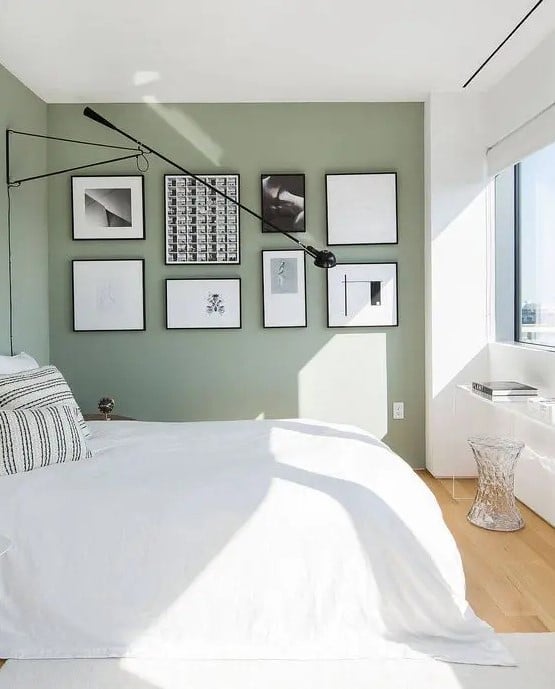
A gallery wall against sage green works because the wall color sits back just enough to let black and white art lead. The framed pieces here are spaced evenly above the bed, with a clear stool below that does not block the view. An articulated wall lamp points directly at the art, so the window light and the lamp work together instead of fighting. The mix of wood frames and glass keeps the arrangement from feeling heavy.
Compact bedroom with sage green walls and built-in bookshelves
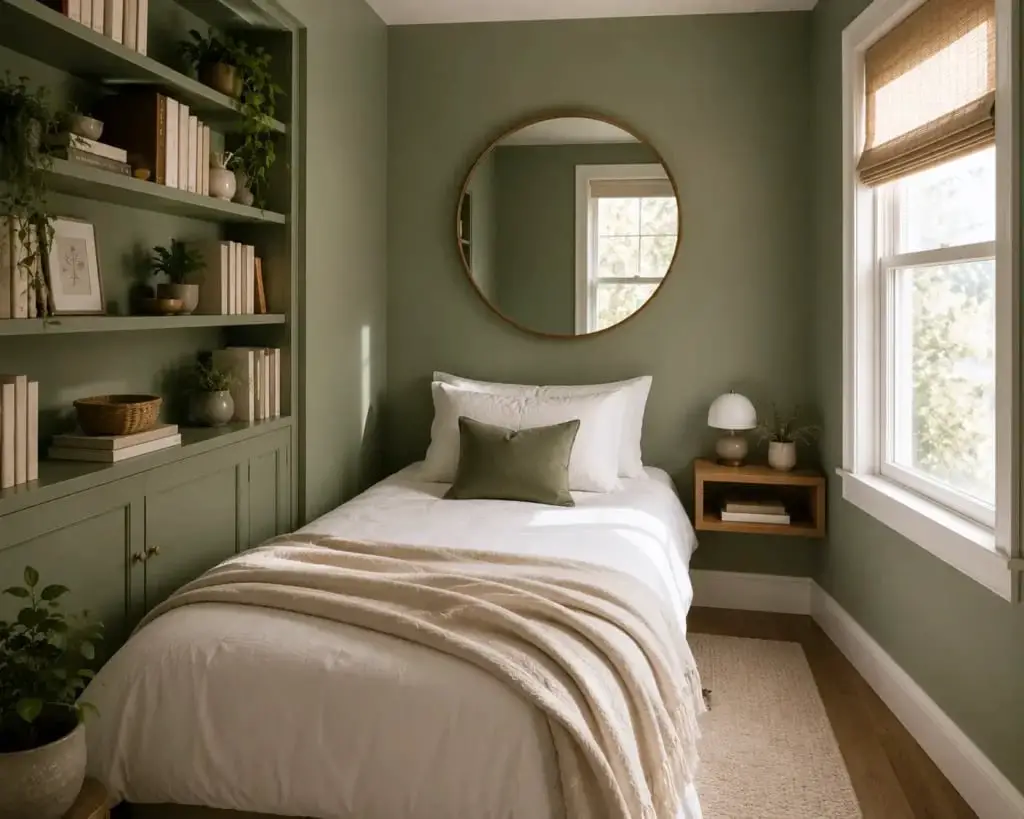
A compact bedroom needs every surface to earn its place, and the sage green built-in bookshelf here does double duty as storage and focal point. The twin bed sits centered opposite the shelving, with a round mirror above the nightstand to bounce light across the room. Painted wood keeps the built-in from feeling massive, while the woven baskets and glass objects on the shelves add texture without clutter. A bedside lamp on the floating nightstand gives reading light without taking floor space. The beige linen bedding and wood tones soften the green, keeping the room calm and cohesive.
Wood nightstand with large rubber plant
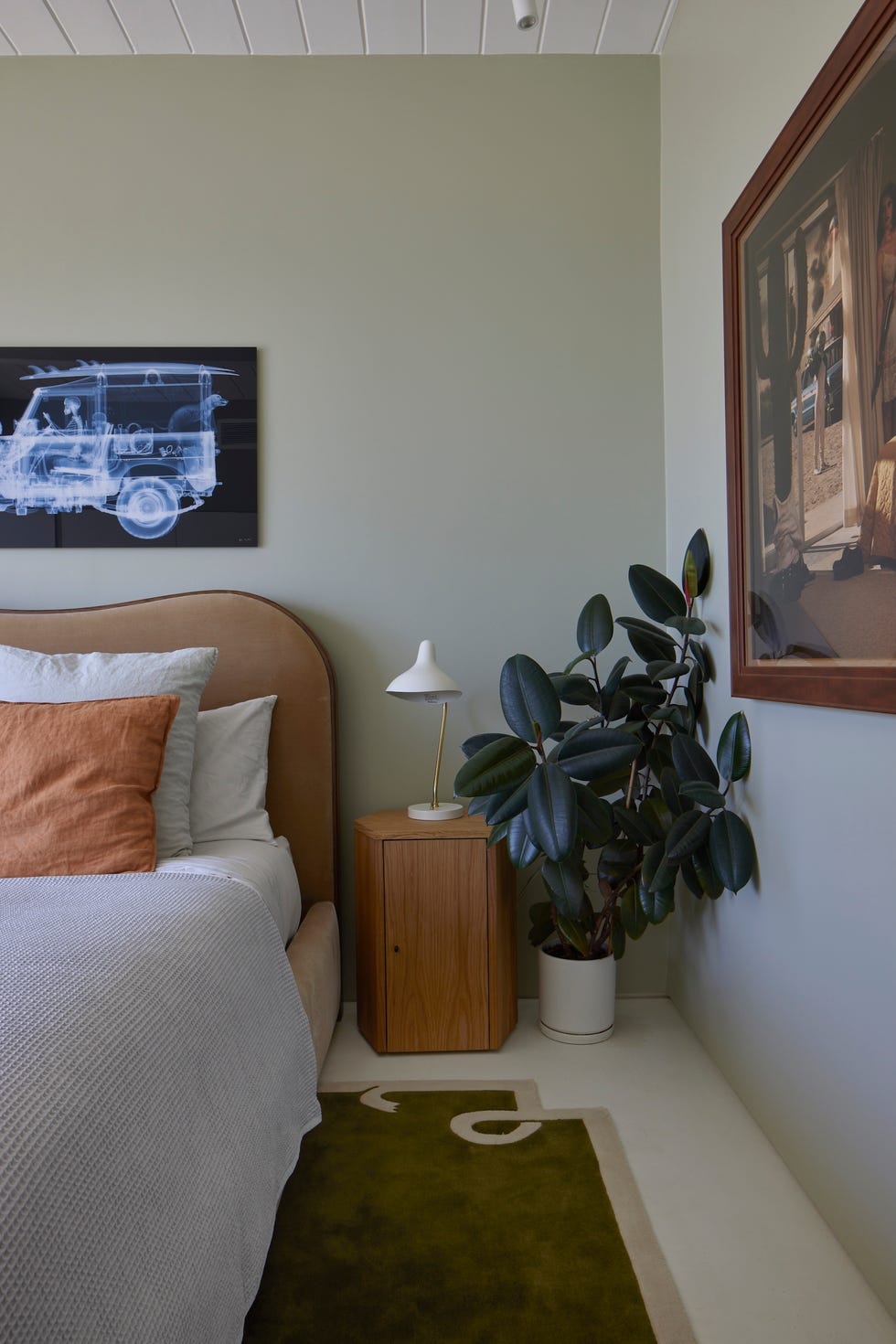
Can sage green walls handle a pop of orange without looking themed? The abstract rug here proves they can, as long as the orange stays on the floor and the rest of the room stays neutral. The wood nightstand and large rubber plant in a ceramic pot bring in natural tones that echo the green without matching it exactly. White bedding and a simple fabric headboard keep the wall color as the main event, while overhead track lighting makes sure the room does not go dim in the evening. The palette works because the green is the constant and every other color is a smaller dose.
Stylish bedroom with sage green walls and sculptural Art
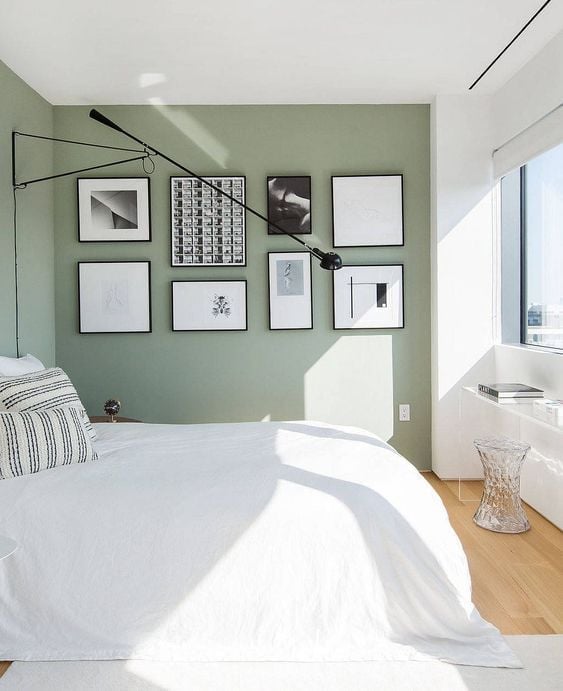
The gallery wall here mixes wood and glass frames with metal accents, and the articulating lamp mounted beside it lets you change the light angle without moving furniture. Sage green walls hold the arrangement together without competing, because the art has enough contrast in black and white to stand out. A clear stool below the art keeps the floor line open, and the natural light from the window softens the whole setup. The style works because the wall color is the backdrop, not the show.
Eclectic living room with sage green built-in shelves and mustard sofa
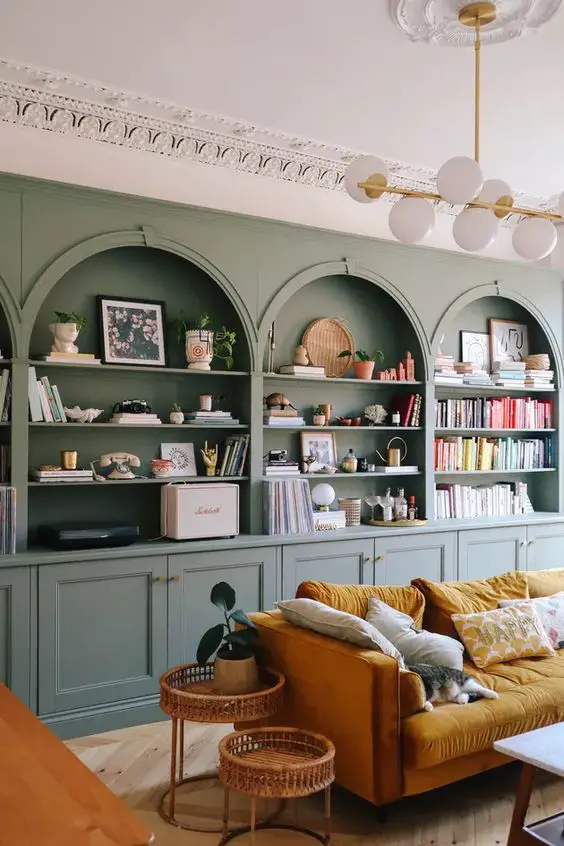
The painted wood of the built-in shelves and the rattan side tables bring different textures to the same palette, so the room feels layered. An arched built-in unit painted sage green anchors one wall, with its alcoves holding books and small objects. A mustard yellow sofa sits opposite the shelves, creating a clear focal point. The modern brass chandelier above adds a metallic note that picks up the glass details on the side tables. The ratio of color is one bold furniture piece against a neutral backdrop of white and wood tones, with the sage green acting as the connecting thread. The brass breaks the softness and keeps the room from feeling too casual.
Cream sofa and armchair with geometric rug
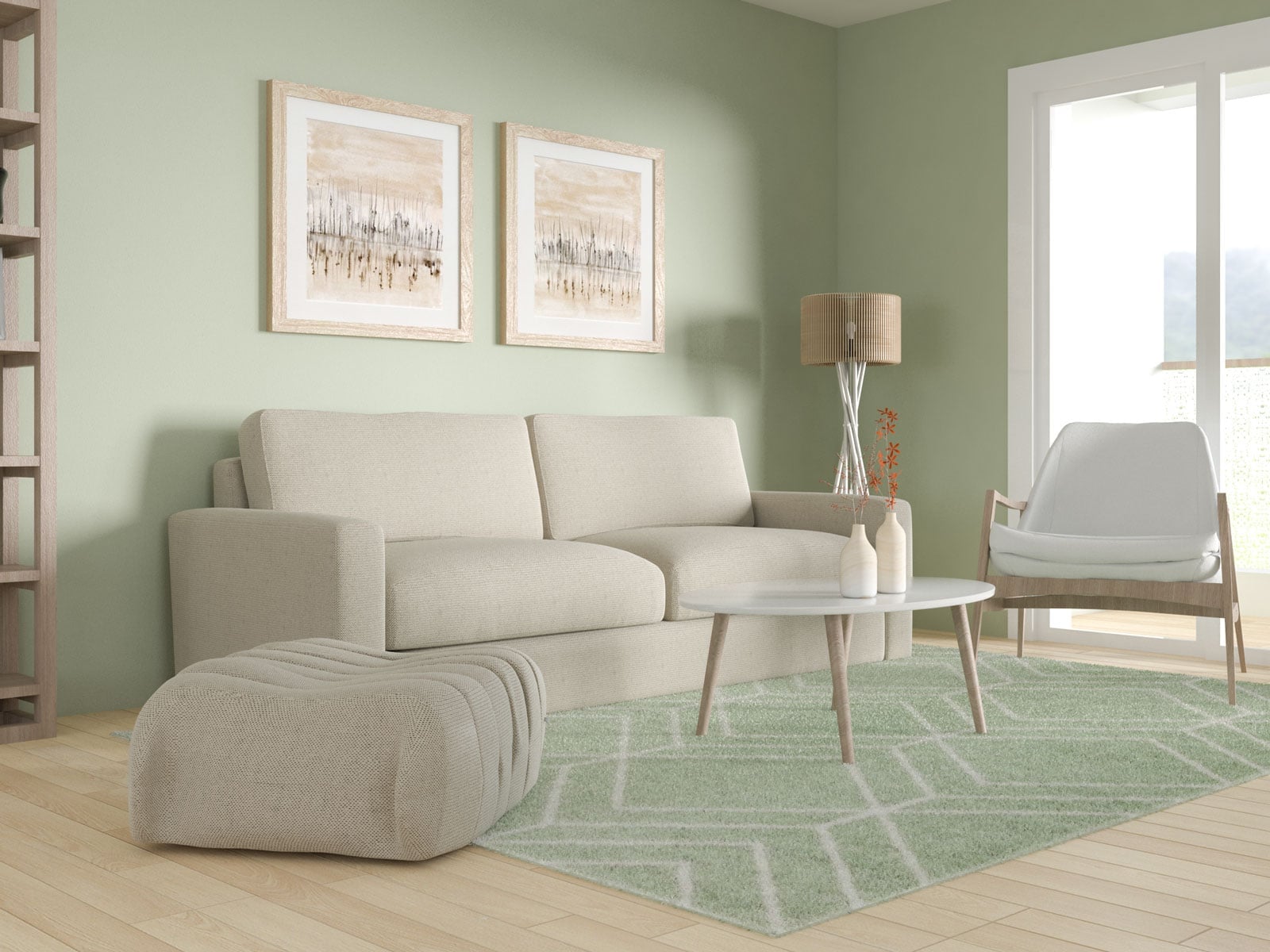
Sage green walls can feel cool and reserved, but pairing them with a cream sofa and a geometric rug shifts the room toward something more grounded. The cream upholstery keeps the seating light, while the rug introduces pattern without adding a new color family. A wood coffee table and a ceramic table lamp stay in the same neutral zone, letting the sage green hold its own as the dominant hue.
The palette works because the ratio leans heavily on cream and light wood, with sage green as the anchor rather than the accent. A darker green would have made the same arrangement feel heavy. What breaks the monotony is the geometric pattern on the rug, which adds visual movement without competing with the wall color. Natural light from the large window helps the sage green look softer and more muted than it would in a dimmer room.
Natural wood cabinetry with sage green walls
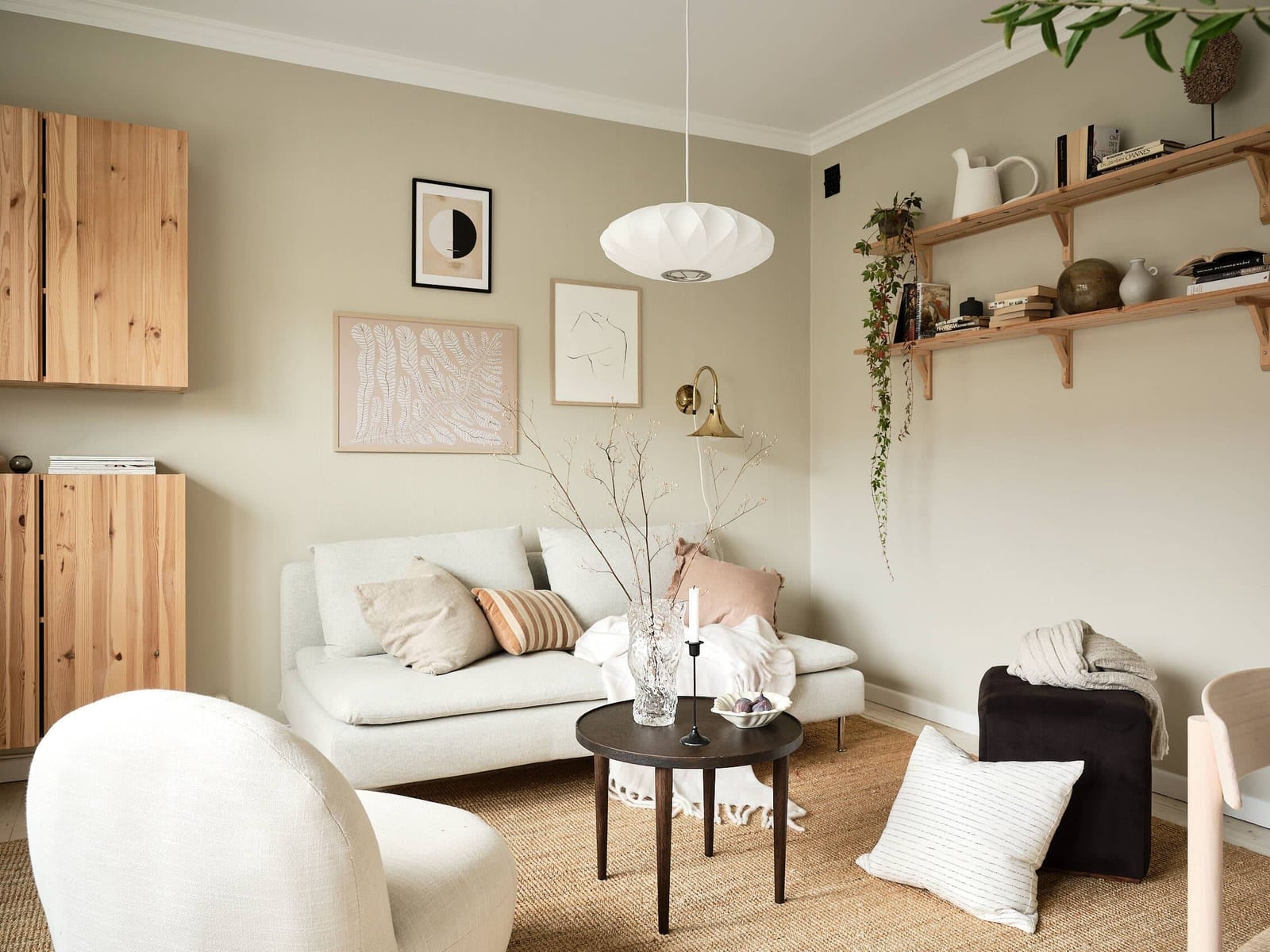
The layout here uses the sage green walls as a backdrop for two seating pieces that face each other, with a round coffee table centered between them. This arrangement works well in a compact room because it creates a conversation zone without needing a large sofa. The wooden cabinets against the wall provide closed storage, while the wall shelves above them keep the vertical space from feeling empty. A pendant light hangs low enough to define the seating area, and the wall sconce adds a secondary light source that keeps the corners from going dark. The natural wood tones in the cabinetry and the linen fabric on the armchair prevent the sage green from dominating the room too much.
Calming living room with sage green paneled walls and botanical Art
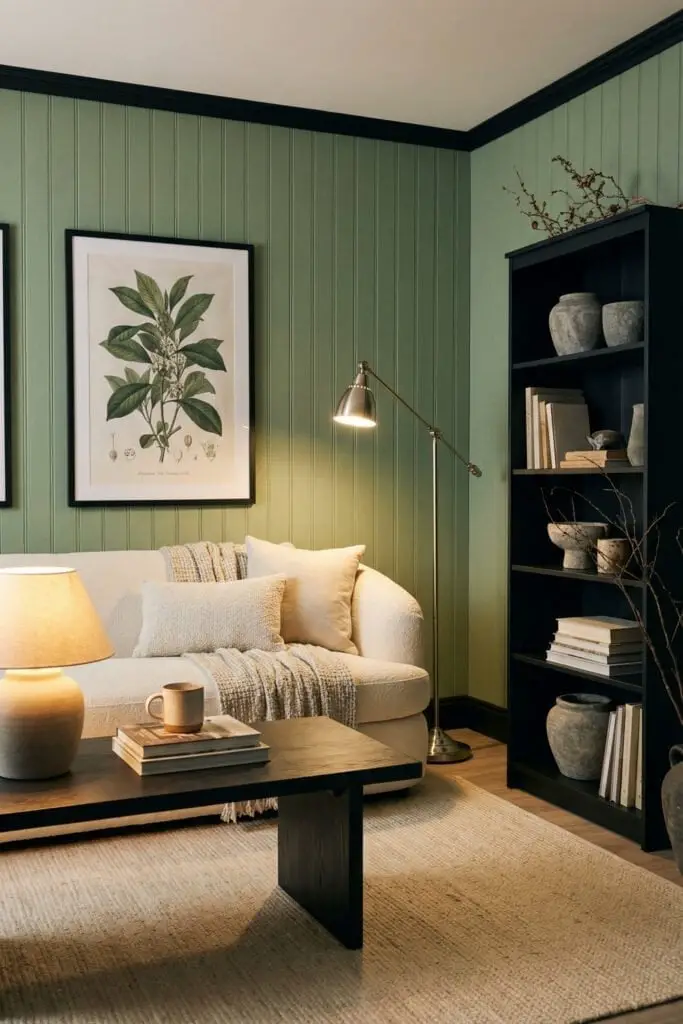
The paneled sage green walls give this living room a structured calmness that flat paint would not achieve. The vertical lines of the paneling add visual height, while the botanical art on the walls echoes the green without repeating it exactly. A cream sofa sits in front of a bookshelf, with a coffee table between them, keeping the layout open and walkable. The floor lamp and table lamp provide ambient light at two different heights, which softens the shadows that paneling can create. The black frames in the art and the metal lamp bases add just enough contrast to keep the room from feeling too monochromatic. The linen and ceramic materials in the furniture keep the overall feel grounded and quiet.
Farmhouse bedroom with sage green walls and metal bed
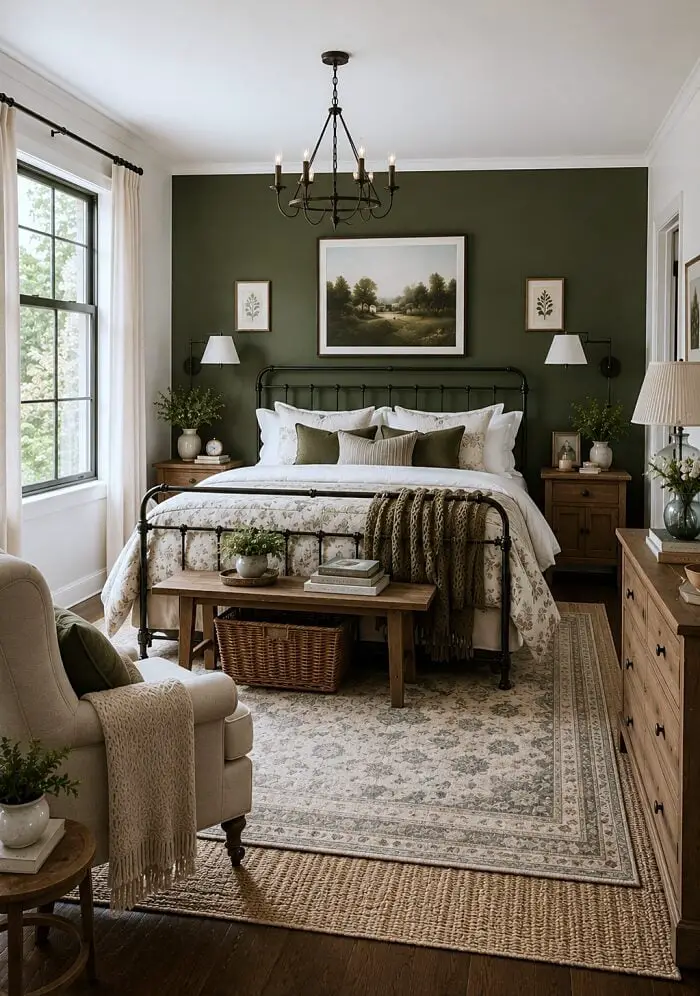
In a farmhouse bedroom, the bed defines the layout. Here, the metal bed frame sits centered on the main wall, with a wooden bench at its foot for extra seating or laying out a quilt. The sage green walls provide a soft backdrop that tones down the industrial look of the metal frame. To the right, a dresser offers drawer storage for folded items, while a woven basket near the armchair holds blankets or pillows. The chandelier above the bed adds a decorative focal point, and the wall sconces on either side free up the nightstand surfaces for a lamp and a book. The cream bedding and brown wood accents keep the palette warm alongside the sage green. What defines this farmhouse style is the mix of the metal bed with the wood furniture and woven textures, which balances a neat look with rustic charm.
White cabinetry and subway tile backsplash
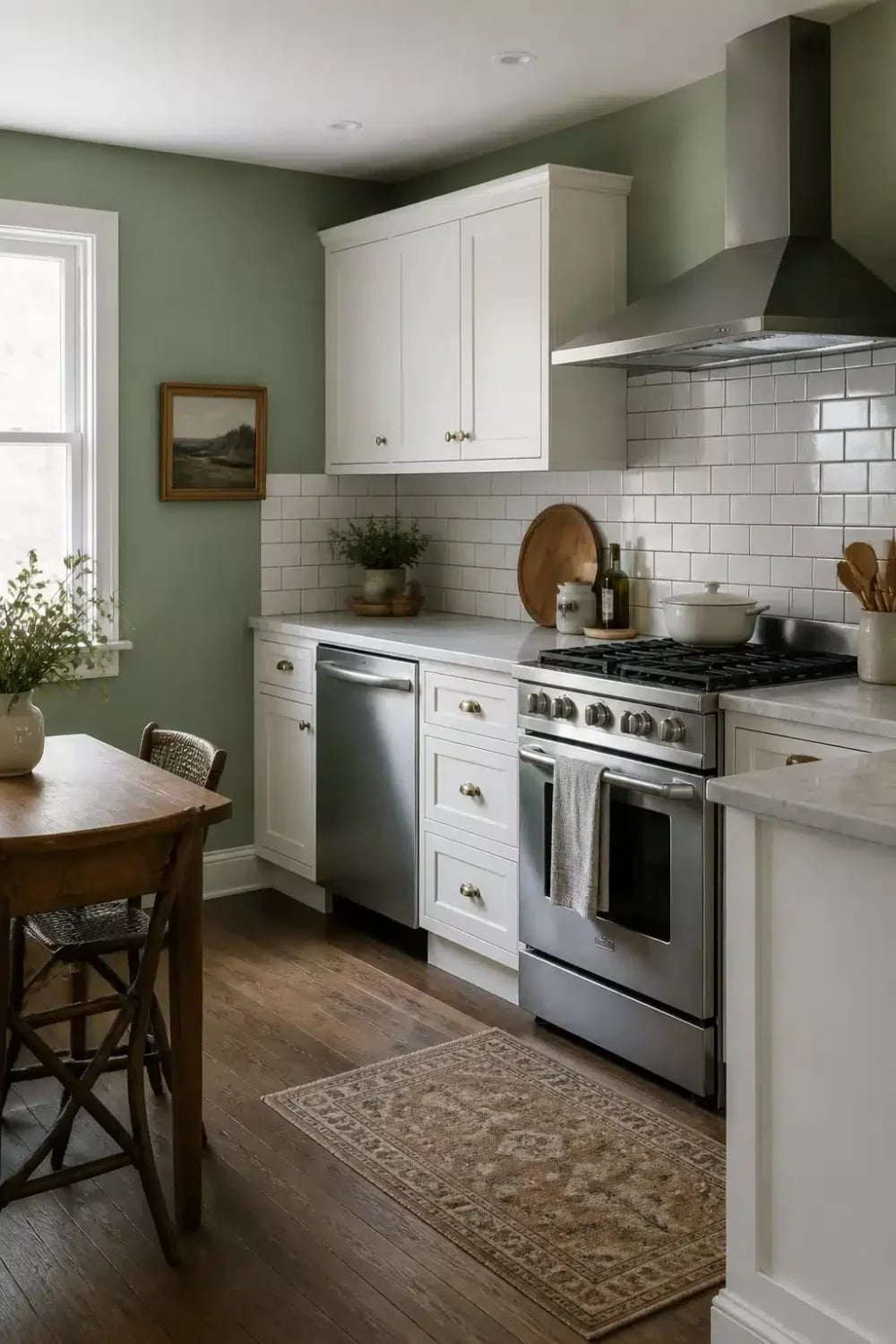
Sage green walls in a compact kitchen create a backdrop that makes white cabinetry and subway tile stand out without feeling stark. The wood dining table and woven chairs add warmth, while stainless steel appliances keep the look practical. The palette here is sage green, white, stainless steel, and wood tones. What defines this farmhouse style is the ratio: roughly two-thirds white surfaces to one-third sage green wall space. The wood elements break the crispness, keeping the room from looking too clinical.
Modern living room with sage green walls and natural wood floors
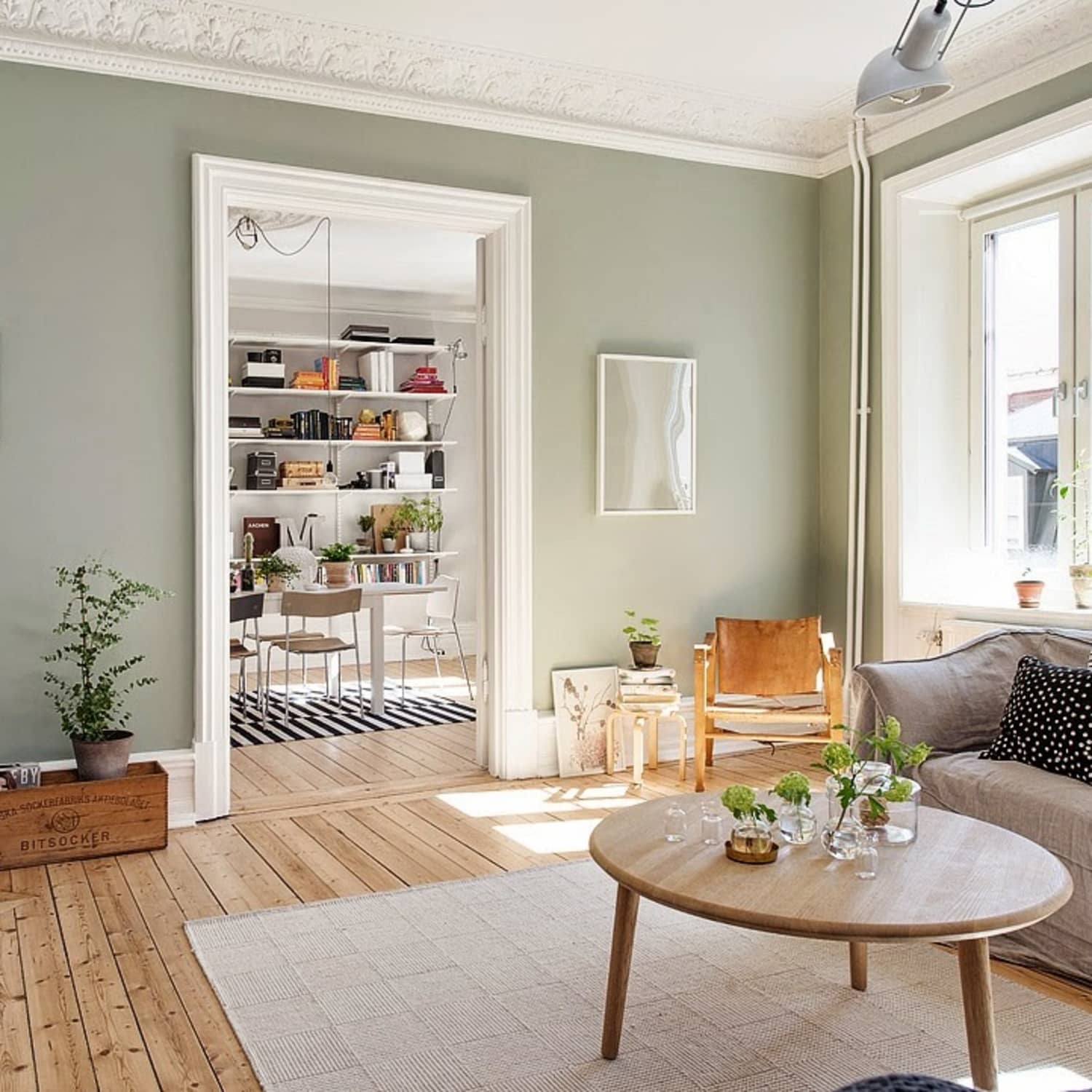
For a modern living room with sage green walls and natural wood floors, the wood sets the warmth level. The round coffee table and shelving unit are in light wood, while the sofa and armchair are in linen and gray. The palette is sage green, white, wood tones, and gray. The look uses a ratio of about half sage green walls to half natural wood and neutral furniture. The glass accents on the coffee table break the softness, adding a crisp edge. For a renter, peel-and-stick wallpaper in a sage green pattern can mimic the wall color without permanent paint.
Subtle white stripes on sage green walls
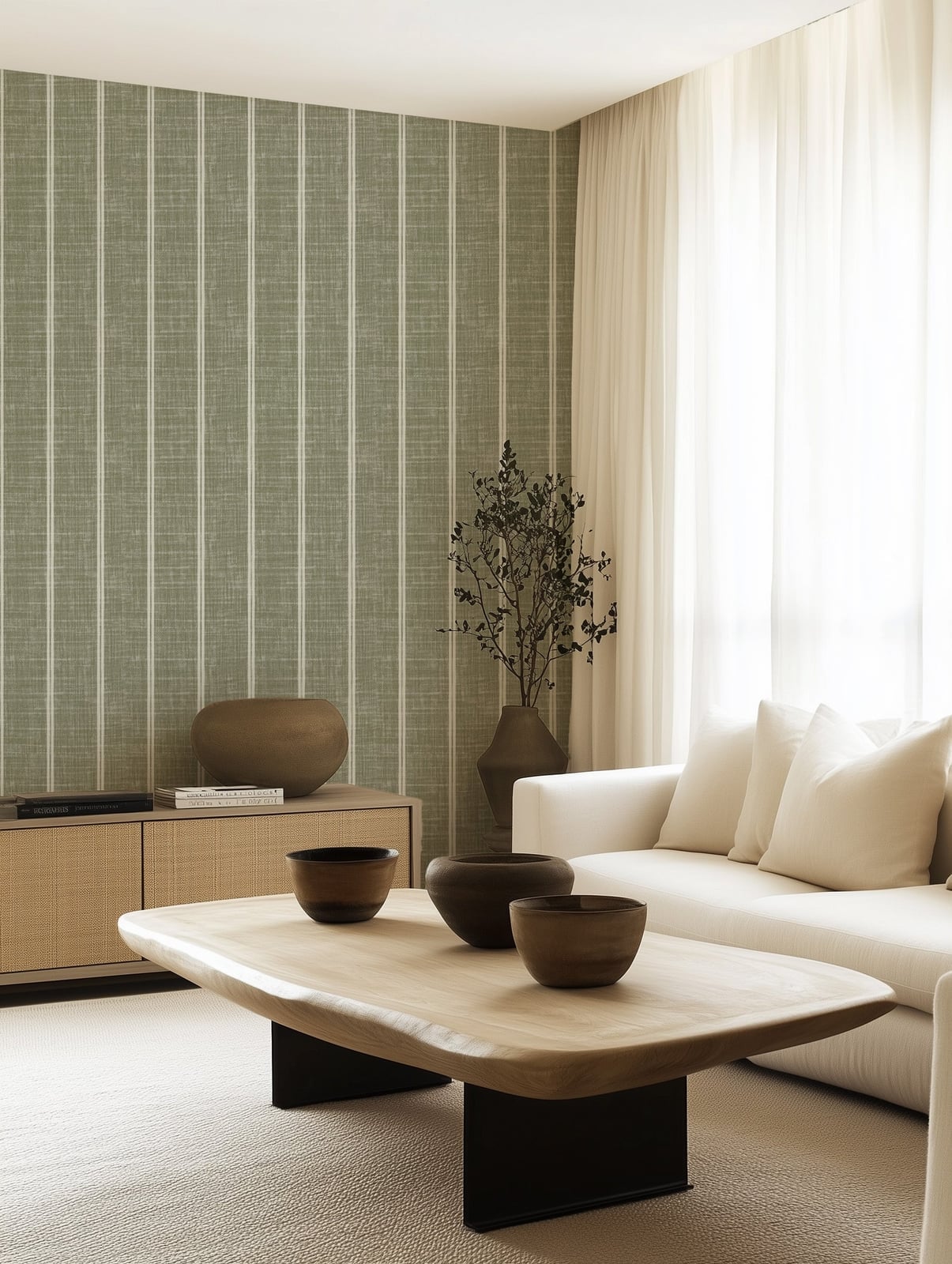
A solid sage green wall is a safe choice, but subtle white stripes on sage green walls add a layer of visual texture that feels more deliberate. The wallpaper in this roomy living room has a vertical stripe pattern in sage green and white. The sofa, coffee table, and sideboard are in beige, brown, and wood tones. What defines this modern style is the ratio: the stripes take up about half the wall surface, with the white lines breaking the green into sections. The woven vases and bowls break the geometry, softening the pattern.
Neutral linens on paneled sage green walls
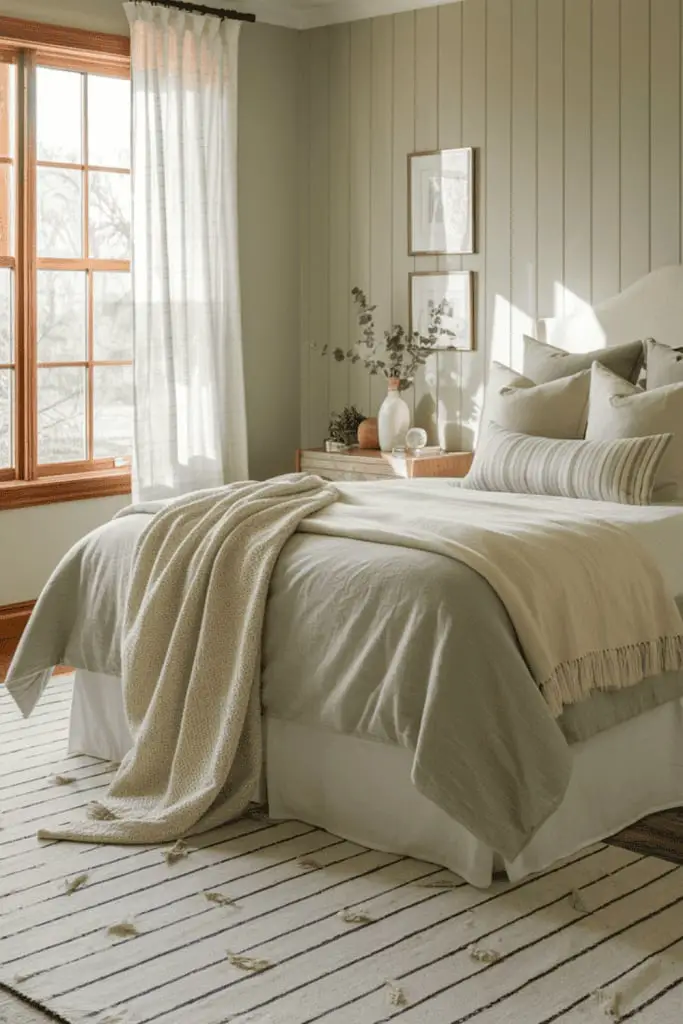
The paneled sage green walls in this modern farmhouse bedroom give the room a structured feel. The bed has an upholstered headboard, and the neutral bedding in cream and linen softens the look. The palette is sage green, neutral bedding, cream curtains, and wood tones. What defines this style is the contrast: the crisp panel lines against the soft, rumpled linen. The framed art on the wall breaks the symmetry, adding a personal touch. The sunbeams from the window highlight the texture of the paneling.
Geometric accent wall with low platform bed
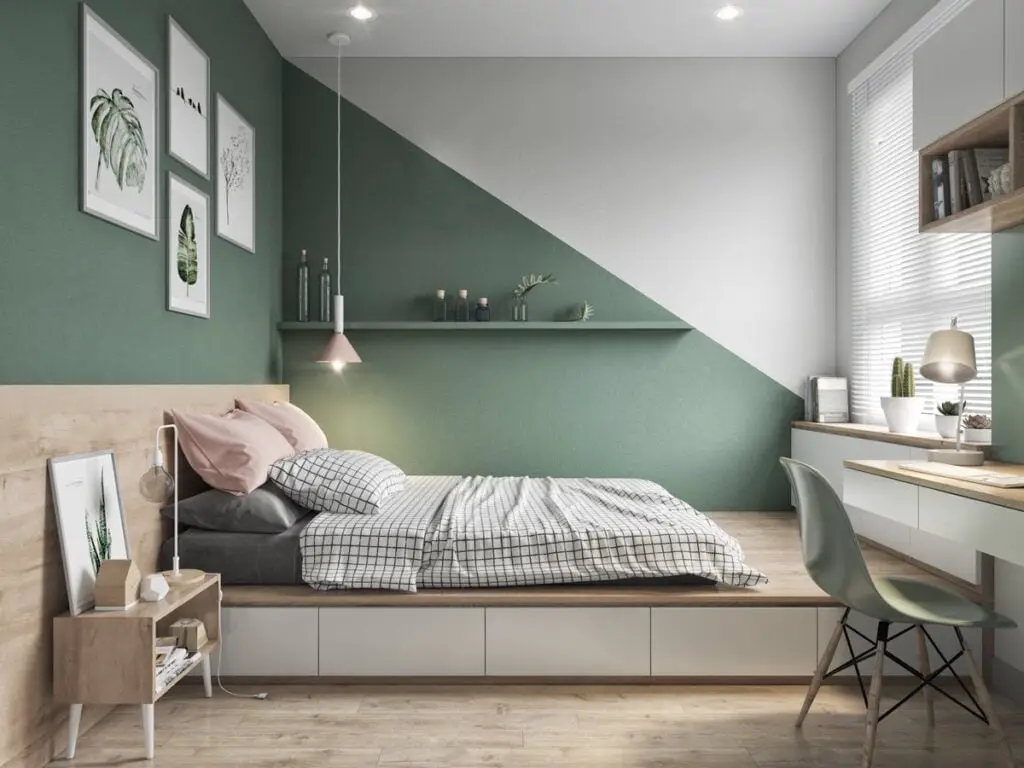
A geometric accent wall in sage green and white sets the tone for this modern bedroom. The low platform bed keeps the visual weight low, which balances the bold wall pattern. The palette is sage green, white, wood tones, and pink accents. What defines this style is the scale: the geometric shapes cover one wall, while the rest of the room stays simple. The pink accents in the bedding and decor break the green-and-white scheme, adding a subtle pop. The desk and chair along the opposite wall keep the layout functional.
Textured sage green wall with copper lights
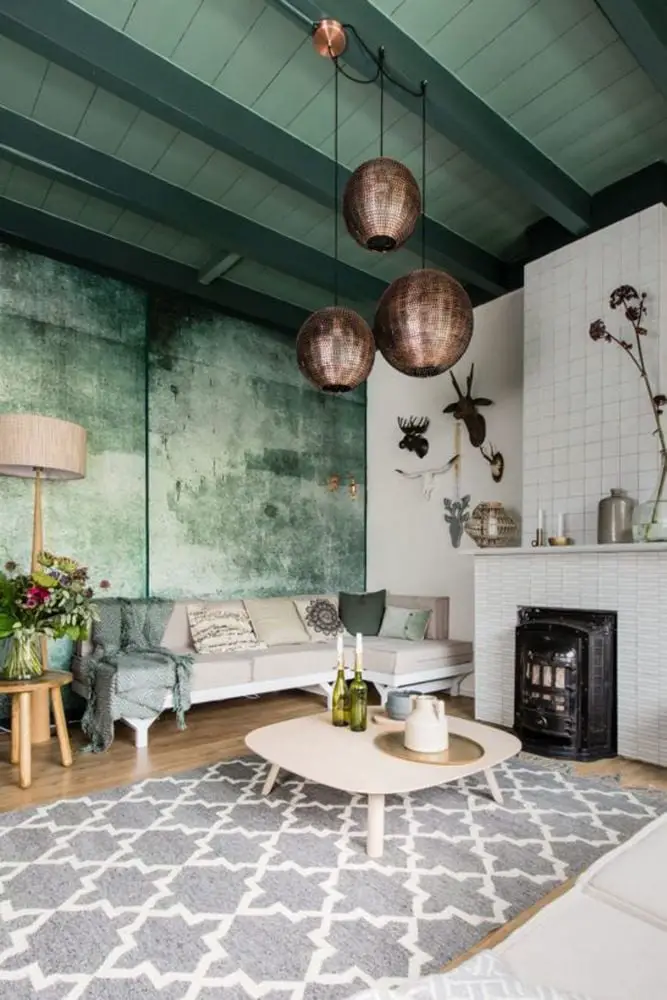
A room with one strongly textured wall benefits from keeping the remaining surfaces quiet. Here the large sage green wall panel provides the visual weight, so the sofa, coffee table and fireplace stay in neutral beige and gray tones. Copper pendant lights and a floor lamp add warm metallic points that pull the eye upward without competing with the texture. The eclectic mix works because the palette repeats just three notes: sage, copper and neutral. Anything beyond that would crowd the wall’s effect.
Serene bedroom with sage green wall and minimalist decor
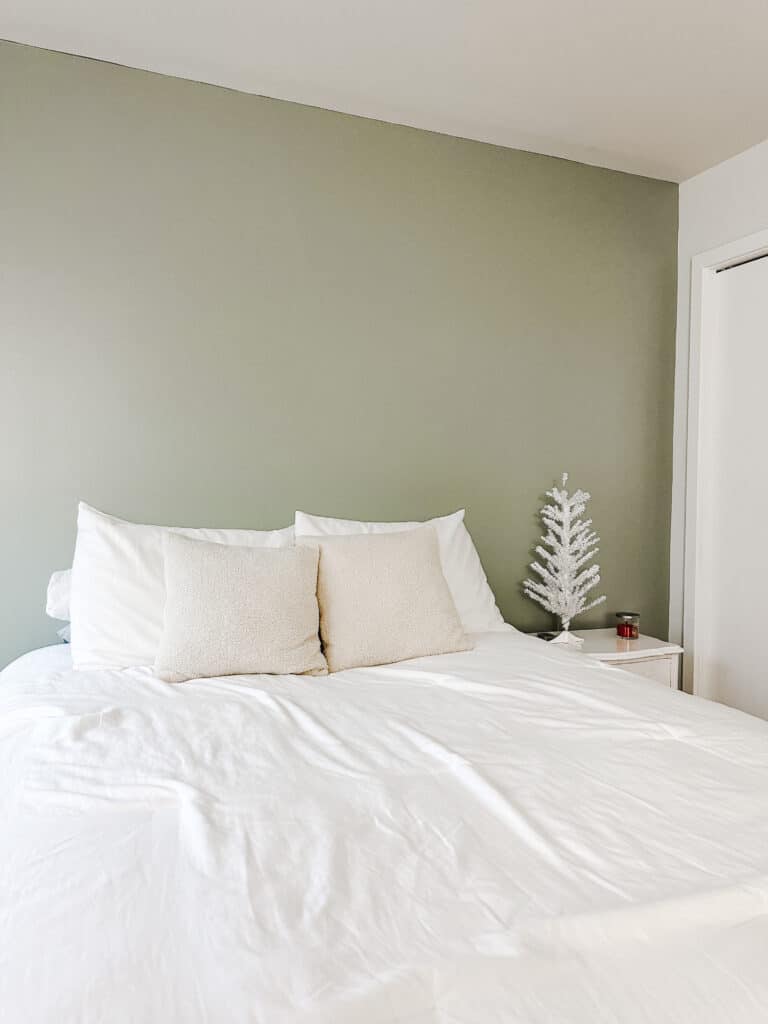
A single sage green wall sets the mood, while the bed, nightstand and decorative tree stay white and cream. The color ratio is roughly one part green to three parts light neutral, which keeps the room from feeling heavy. What breaks the scheme is the absence of pattern or accent color; the restraint itself defines the look.
Watercolor wallpaper with plush sage rug
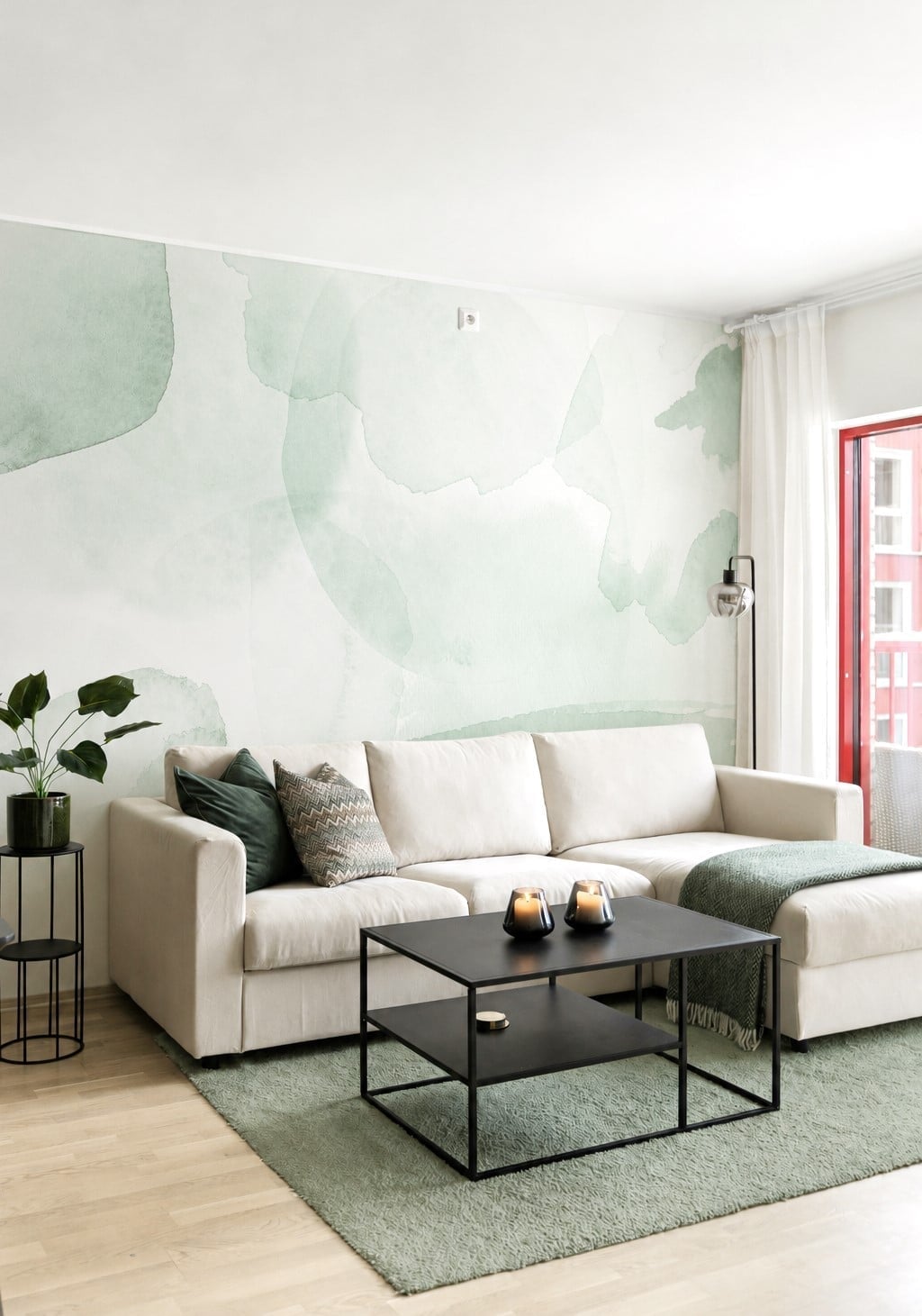
A sage green watercolor wallpaper sets the tone when the room pulls from its palest tones. Here the sectional sofa in beige and the black coffee table let the abstract pattern lead, while a plush sage rug echoes the wall color without matching it exactly. The floor lamp and window keep the wash of green looking airy. The trick is in the saturation difference: the wallpaper has movement, the rug is solid, so the eye reads them as related but not repetitive.
Rattan lights with sage green textured walls
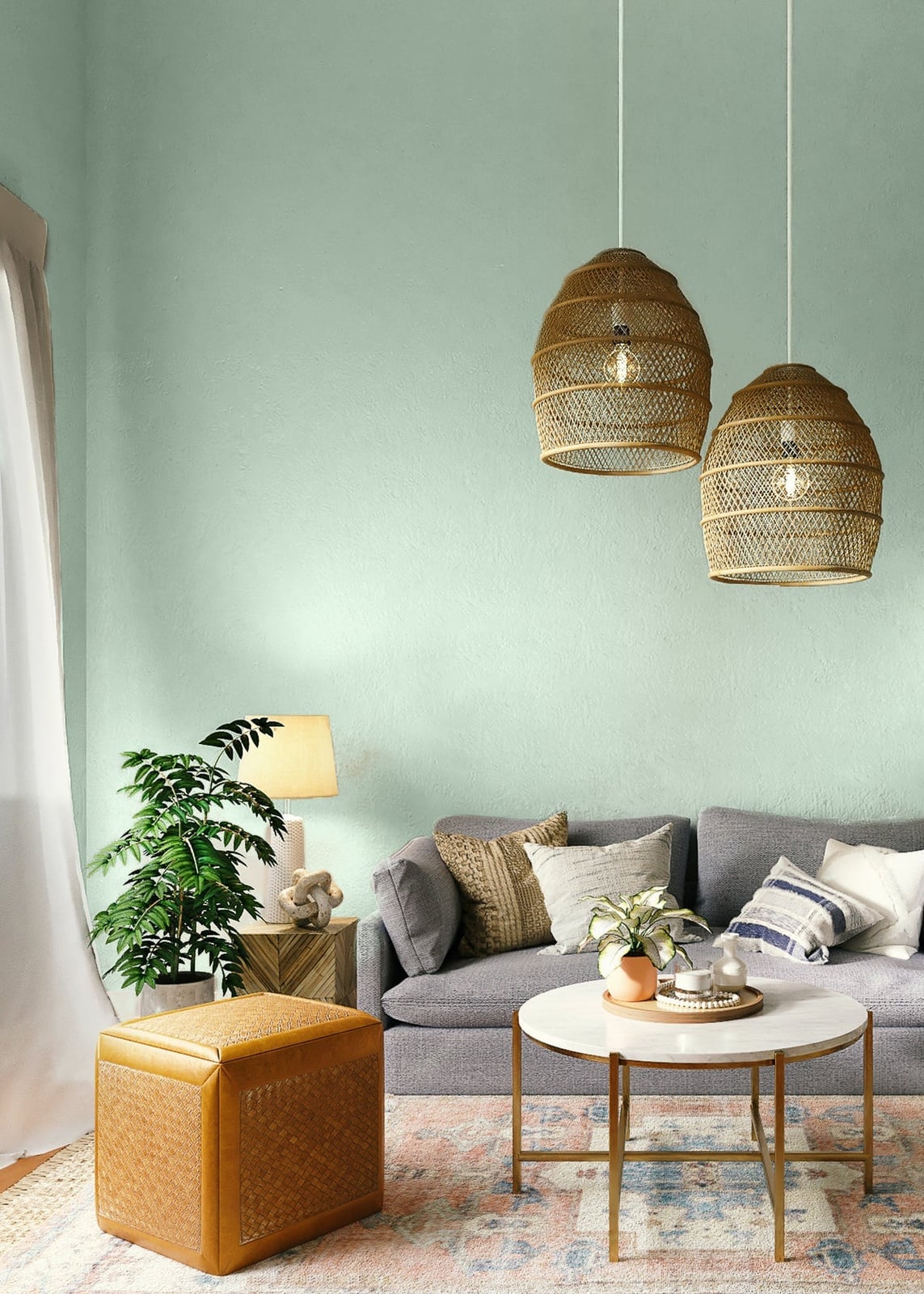
Sage green walls can appear calm or heavy depending on the light source. A flat warm white ceiling fixture would leave the walls looking flat. Here the woven rattan pendant lights cast soft, scattered light across the textured sage finish, so the green looks dimensional. The gray sofa and marble coffee table stay low and neutral, letting the overhead lighting and the wall texture do the work. The pink accent in the room breaks the earthy scheme and prevents it from turning too rustic.
Boho bedroom with sage green walls and natural wood wardrobe
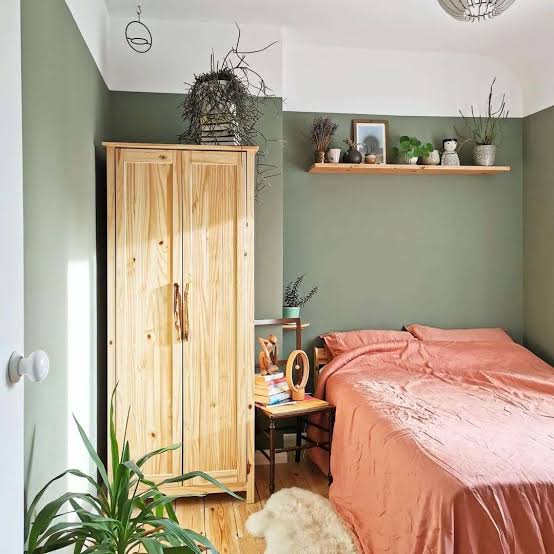
The natural wood wardrobe against sage green walls creates a clear division: storage on one side, rest on the other. The peach duvet on the bed adds a soft warm note that stops the wood and green from feeling too cool. The floating shelf keeps the wall above the bed uncluttered, which matters in a boho room where layers can quickly tip into visual noise.
Pink and gray bedding on paneled walls
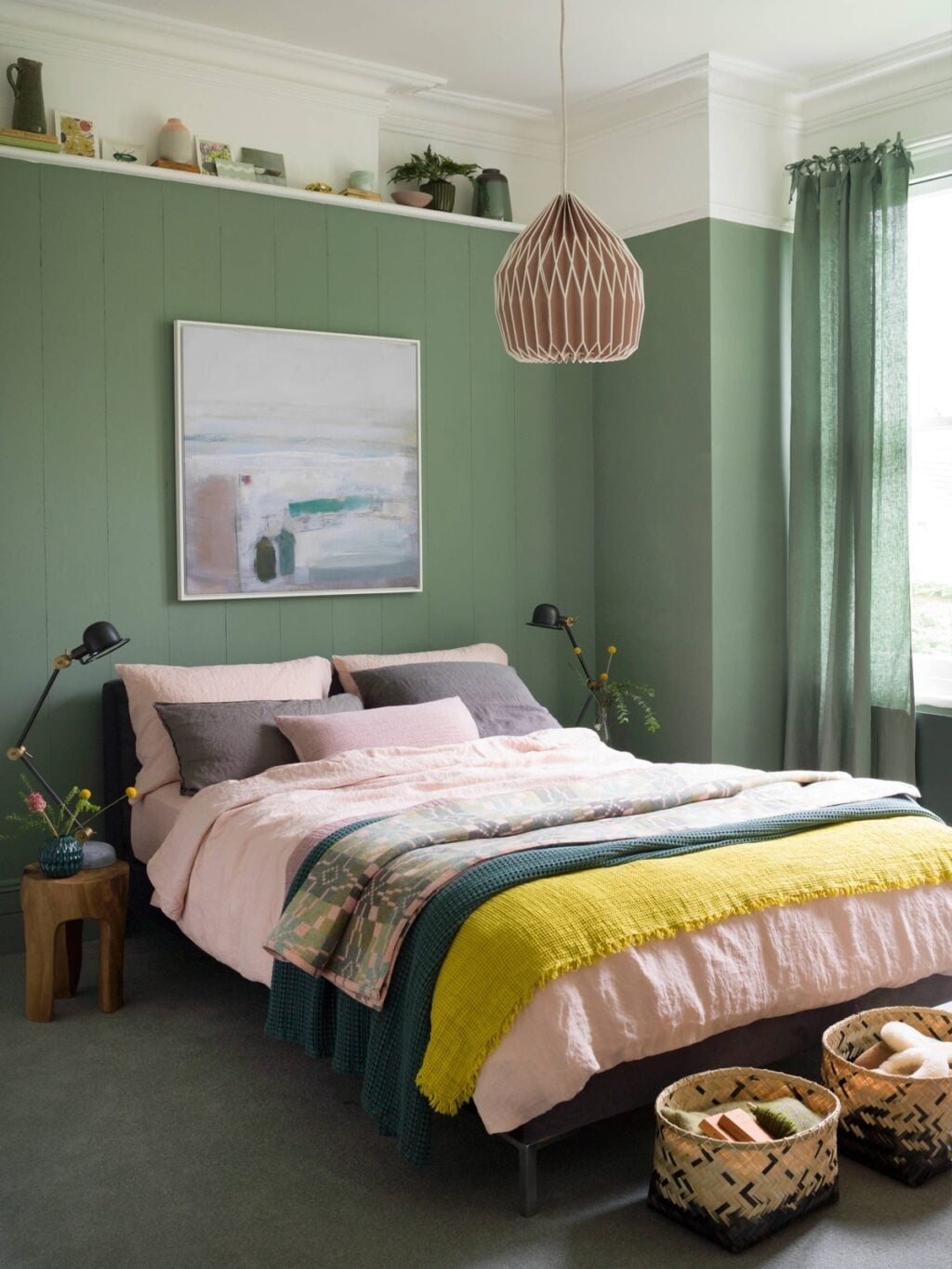
This bedroom is a lesson in trusting your palette. The sage green paneled walls provide a calm backdrop that lets the pink, yellow, and gray bedding look intentional rather than chaotic. The teal accent in the artwork ties back to the green, while the woven basket and wood bedside table keep the look grounded. The style works because the ratio is roughly 60 percent green wall to 20 percent bedding color to 20 percent neutrals. What breaks the rule is the yellow throw pillow, which adds a jolt of warmth that keeps the whole scheme from turning too cool.
Modern living room with sage green walls and rattan armchair
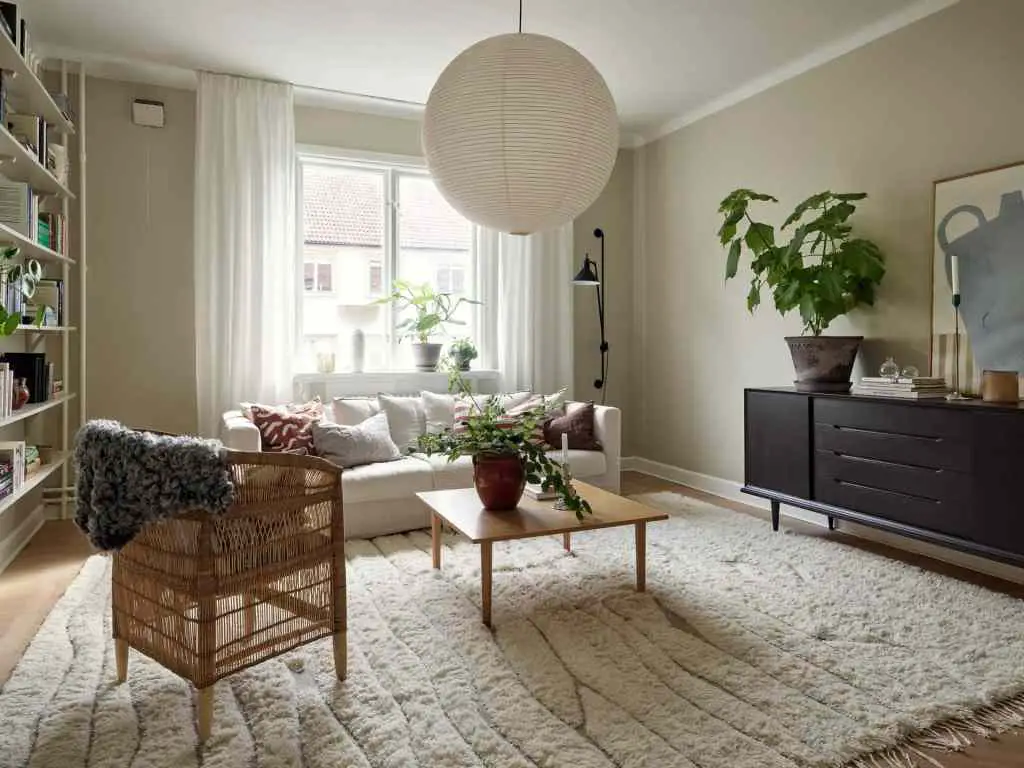
To arrange a living room with sage green walls, use furniture to create zones without blocking the perimeter. The sofa faces the window, the rattan armchair sits to the left, and the sideboard anchors the right wall. This layout opens up the floor for movement while still defining a conversation area. The pendant light and floor lamp provide layered lighting, which keeps the room bright when natural light fades. The style is modern, defined by clean lines and a restrained palette of white, cream, brown, and black. What breaks the formality is the rattan armchair, whose woven texture adds a casual, organic note that softens the whole room.
Two-tone sage green wall with rattan headboard
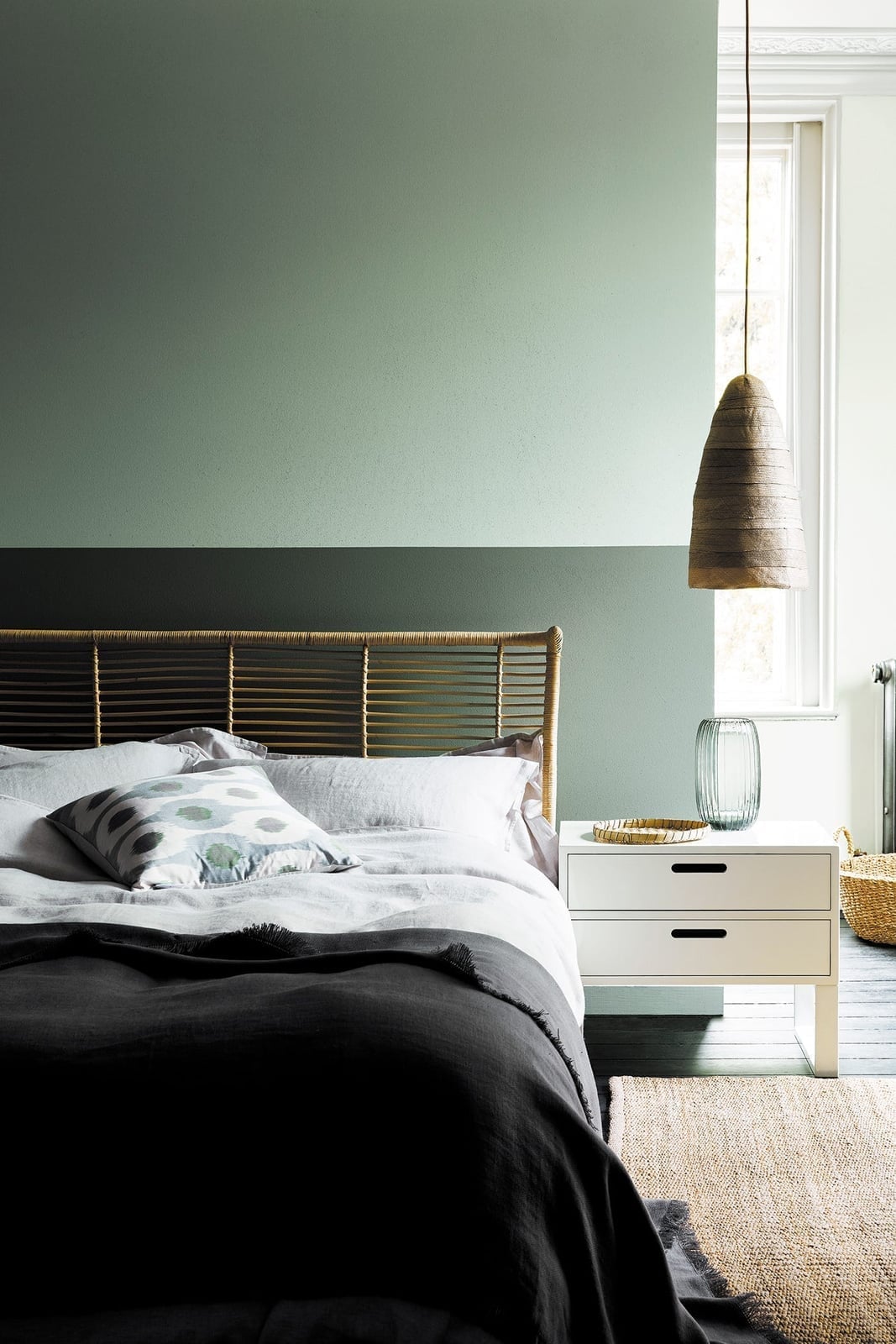
The two-tone sage green wall uses a darker green on the bottom half and a lighter shade above, creating a subtle chair-rail effect without actual molding. The rattan headboard sits against the lower section, its natural weave picking up the warmth in the jute rug and the glass nightstand lamp. White bedding and a beige linen throw keep the palette calm, while the woven pendant light echoes the headboard’s texture. This trick gives a roomy bedroom visual structure without needing built-in millwork.
Sage green tiles with wood cabinetry
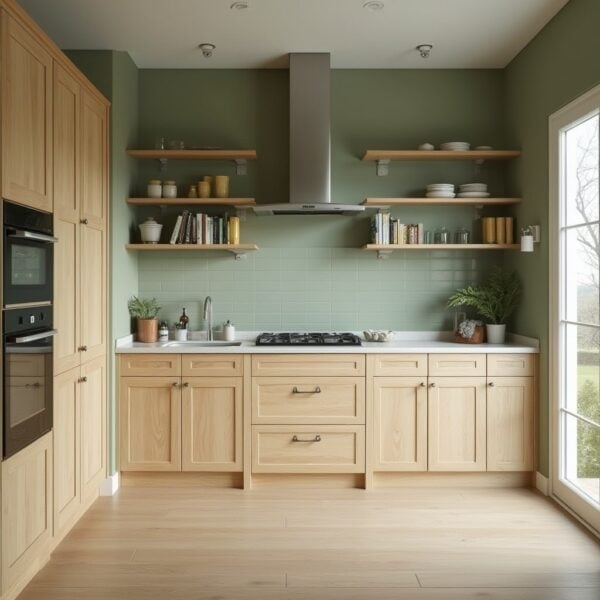
The sage green tiled backsplash runs behind a stainless steel range hood and open shelving, with light wood cabinetry below and a marble countertop above. The tile introduces a subtle pattern that breaks up the solid wood tones, while the stainless steel adds a reflective element that keeps the kitchen from feeling too earthy. The linear layout with an island means the backsplash acts as a visual anchor, pulling the eye across the workspace. The green and wood family is balanced by the marble and steel, which provide neutral breathing room. The balance between natural materials and modern finishes relies on the tile acting as the bridge.
Shiplap sage green walls in compact bathroom
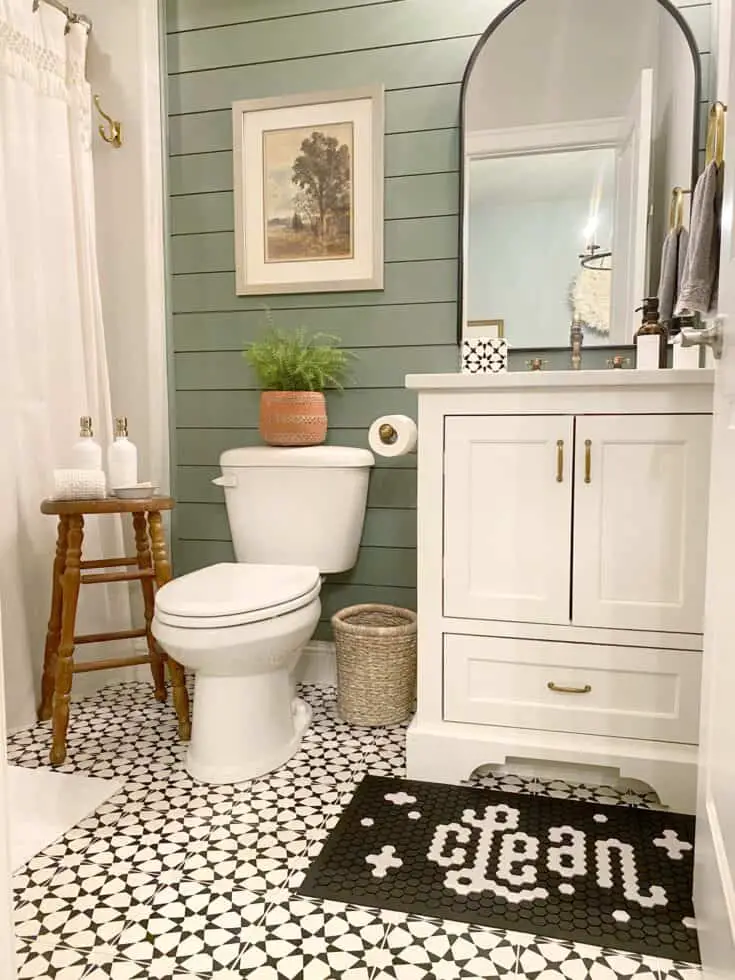
In a compact bathroom, shiplap sage green walls could feel heavy, but here they work because the white vanity, toilet, and arched mirror keep the room airy. The black metal accents on the vanity hardware and the woven basket add contrast without clutter. The wooden stool introduces a natural element that prevents the space from looking too crisp. The style is modern farmhouse, defined by the shiplap and the arched mirror. What breaks the formula is the terracotta accent in the palette, which adds a warm, unexpected note that keeps the bathroom from feeling like a catalog page. For a small room, the key is letting the wall color take center stage while keeping the fixtures simple and the accessories minimal.
Art Deco living room with sage green velvet and brass accents
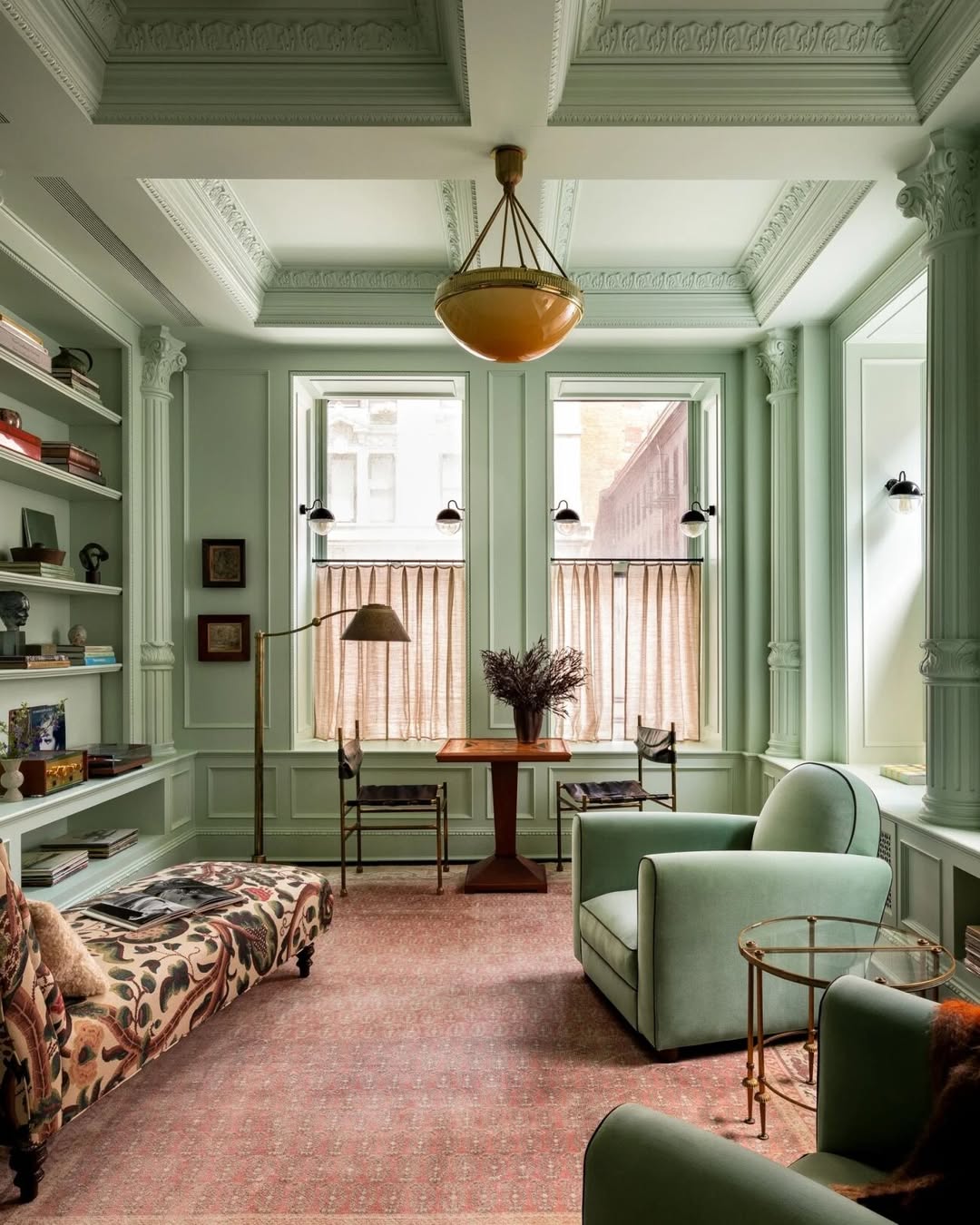
Those ornate coffered ceilings deserve a room that knows how to dress. Sage green velvet armchairs anchor the seating area while a patterned chaise lounge introduces blush pink and amber into the mix. A brass floor lamp and wall sconces cast warm light across the velvet, glass, and wood surfaces. Sage green holds the base, and the amber and blush act as accents, not competitors. That ratio keeps the art deco feel intact. A small wood table breaks the symmetry.
Modern living room with sage green walls and abstract gallery wall
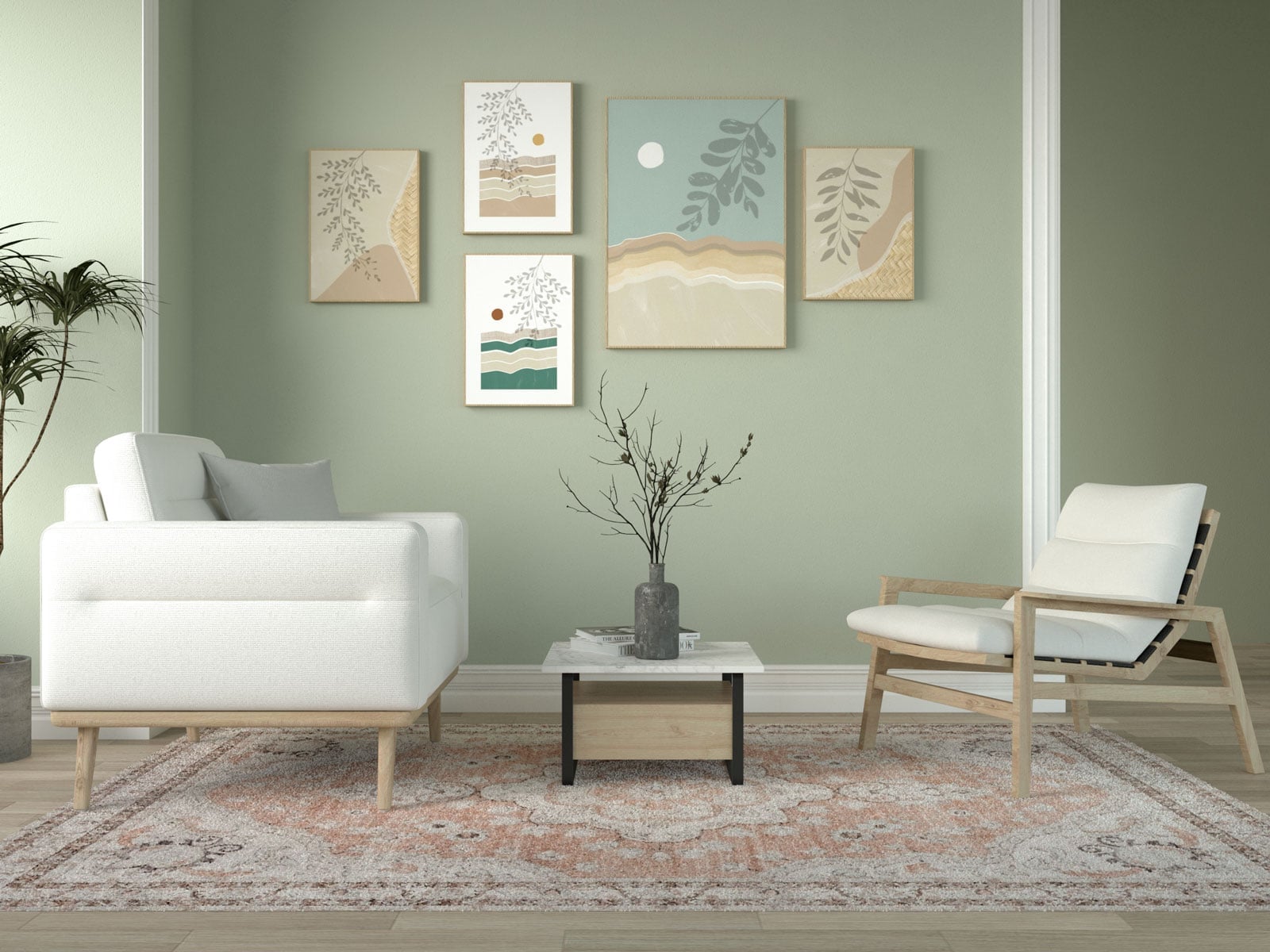
This room proves a gallery wall does not need to be the loudest thing in the space. The abstract nature art in teal, blush pink, and beige pulls color from the sage green walls without repeating them exactly. A white sofa and wooden armchair keep the furniture restrained so the wall can lead the conversation. The patterned rug adds a layer of texture underfoot but stays within the beige and sage family. What makes the arrangement work is the ratio: the art covers enough wall to feel intentional, but the negative space around each piece lets the sage green breathe. The palette breaks only with the teal, and that one departure is what gives the wall its energy.
Modern farmhouse living room with sage green walls and marble
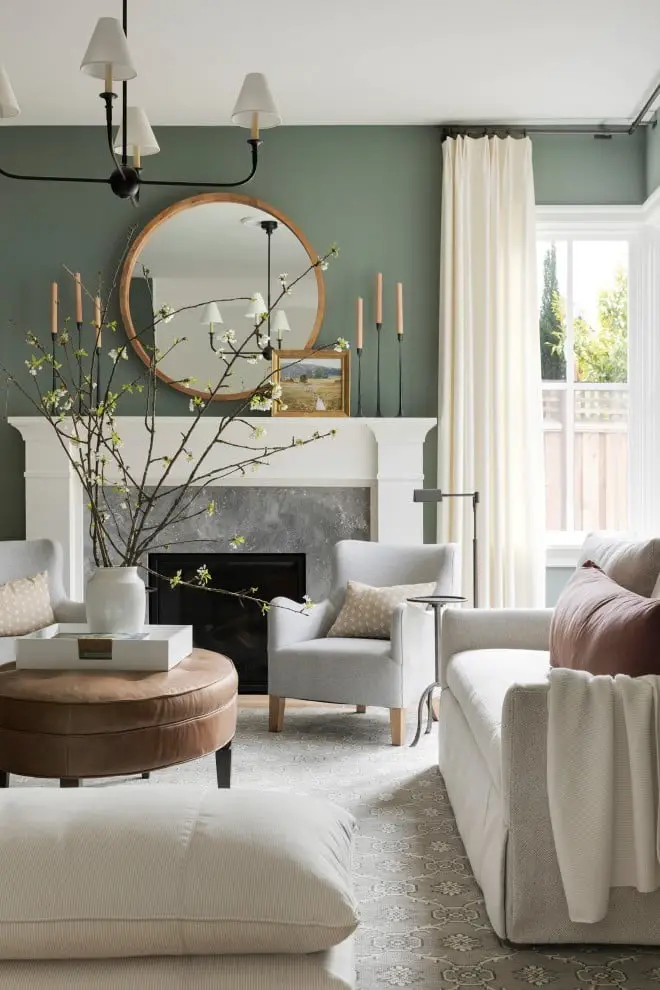
Modern farmhouse often leans heavily on white shiplap and reclaimed wood. This version swaps that formula by putting sage green walls in the lead and letting the fireplace take a supporting role. The white mantel and gray stone surround provide the clean lines farmhouse demands, while the sage green adds warmth without starkness.
The seating arrangement circles the tufted leather ottoman, which doubles as a surface and a footrest. A round mirror above the mantel reflects daylight and pulls the cream curtains and brown leather into the same visual plane. The chandelier and floor lamp introduce warm metal that complements the marble. The sage green walls act as the neutral here, letting the wood, leather, and stone each have their moment.
Two snake plants in terracotta pots
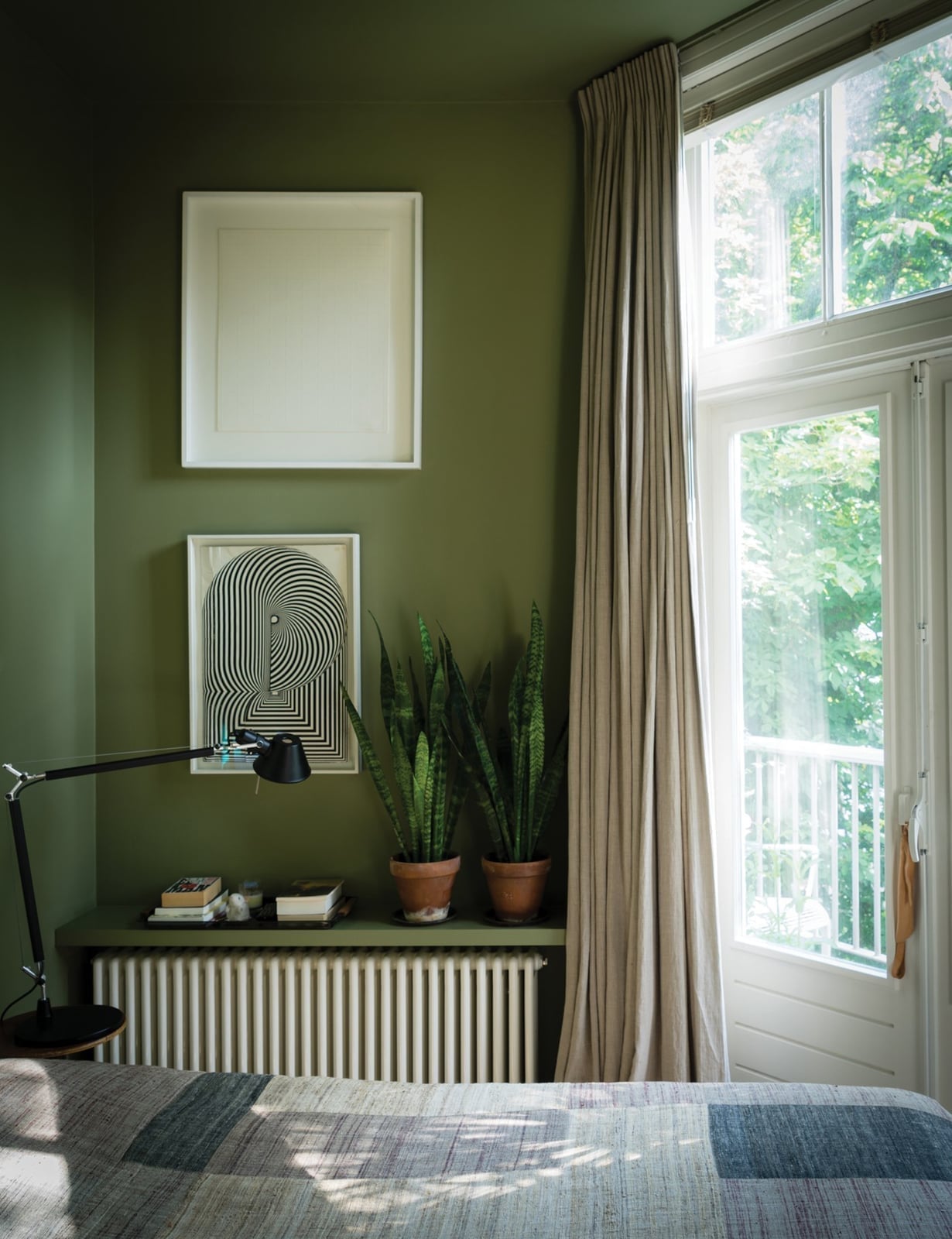
A compact corner gets its moment with two snake plants in terracotta pots sitting on a wall-mounted shelf above the radiator. The sage green walls provide a calm backdrop that lets the upright green leaves and warm terracotta stand out without competing. An adjustable task lamp directs light exactly where needed, and the framed art arranged vertically above the shelf draws the eye upward, making the small space feel taller. The metal radiator cover keeps the look clean and gives the plants a stable surface nearby. For a rental, this shelf setup requires no permanent changes and can shift with your light conditions.
Final Thoughts
Sage green walls work best when you let the shade lead the room. Stick to one or two supporting colors so the green stays central. Natural textures like wood, rattan, and linen keep the look grounded. For upkeep, a matte finish hides scuffs well but needs gentle cleaning. Touch up paint chips promptly so the wall looks one field of color. Check your light at different times of day before you commit to a shade. The right sage makes the whole room feel settled.