Retaining walls don’t have to be purely functional. In 2027, the trend is toward structures that blend into the landscape or make a deliberate style statement. Whether you’re dealing with a sloped yard or just want to define different zones, these 32 aesthetic retaining wall ideas offer real inspiration for turning a practical necessity into a design feature.
From modern gabion cages filled with river rock to tiered cottage gardens bursting with flowers, the options go beyond basic concrete blocks. This collection covers a range of materials, shapes, and planting combinations so you can find a look that fits your home’s exterior without sacrificing stability. Each idea focuses on the visible result, not the engineering behind it.
Modern gabion walls with stone fill and multi-level deck
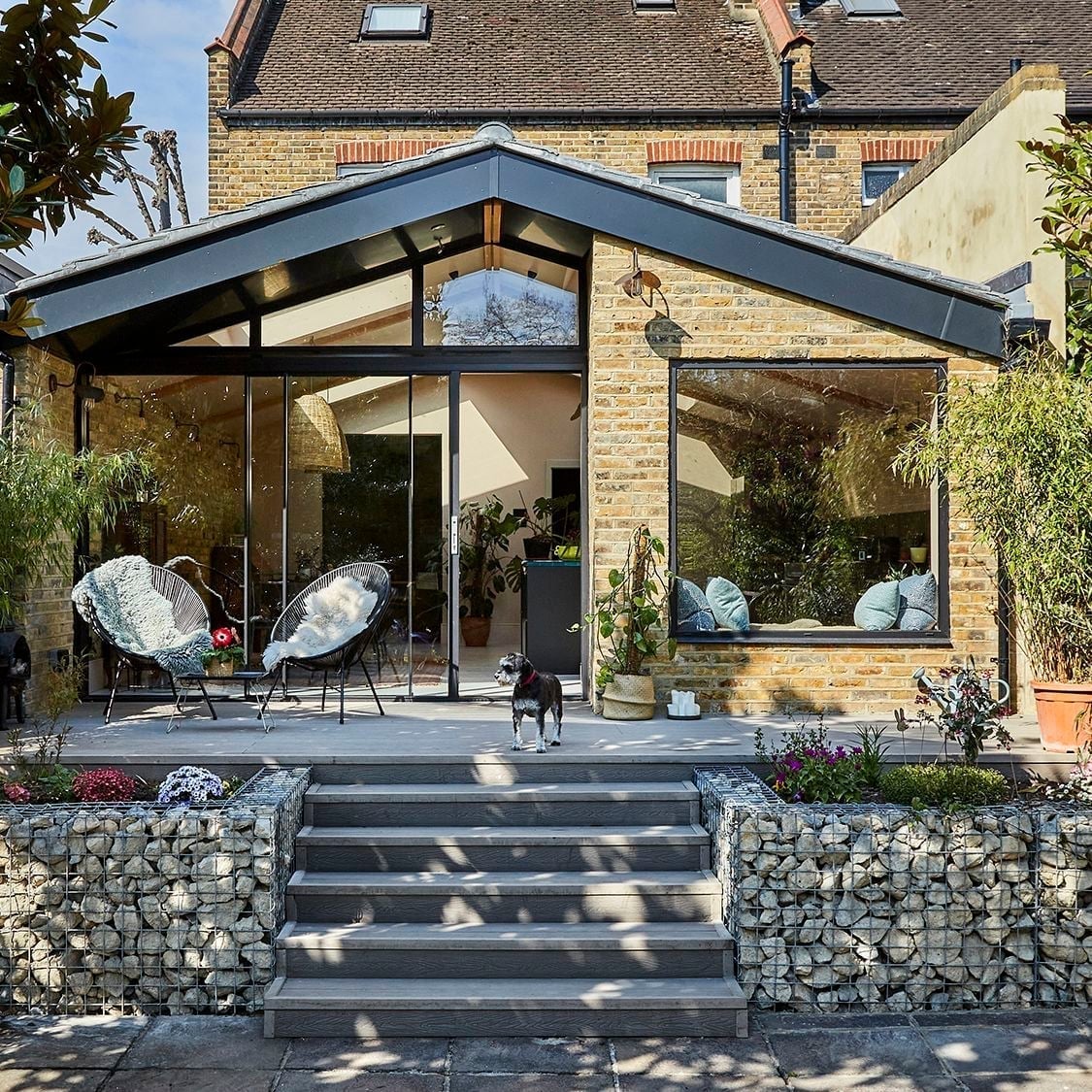
A stacked stone gabion wall, the metal cage packed with rounded stone fill, sets the tone for a modern backyard. The palette stays restrained in gray, beige, and green, so the wall looks a neutral texture rather than a loud feature. A multi-level wood deck with stairs works around it, and a few simple chairs keep the focus on the landscape. What defines the style is the ratio of hardscape to soft: stone and decking cover most of the ground, with measured green plants as accents. The metal cage breaks the solid mass, letting light pass through the gaps.
Natural stone retaining wall with integrated concrete steps
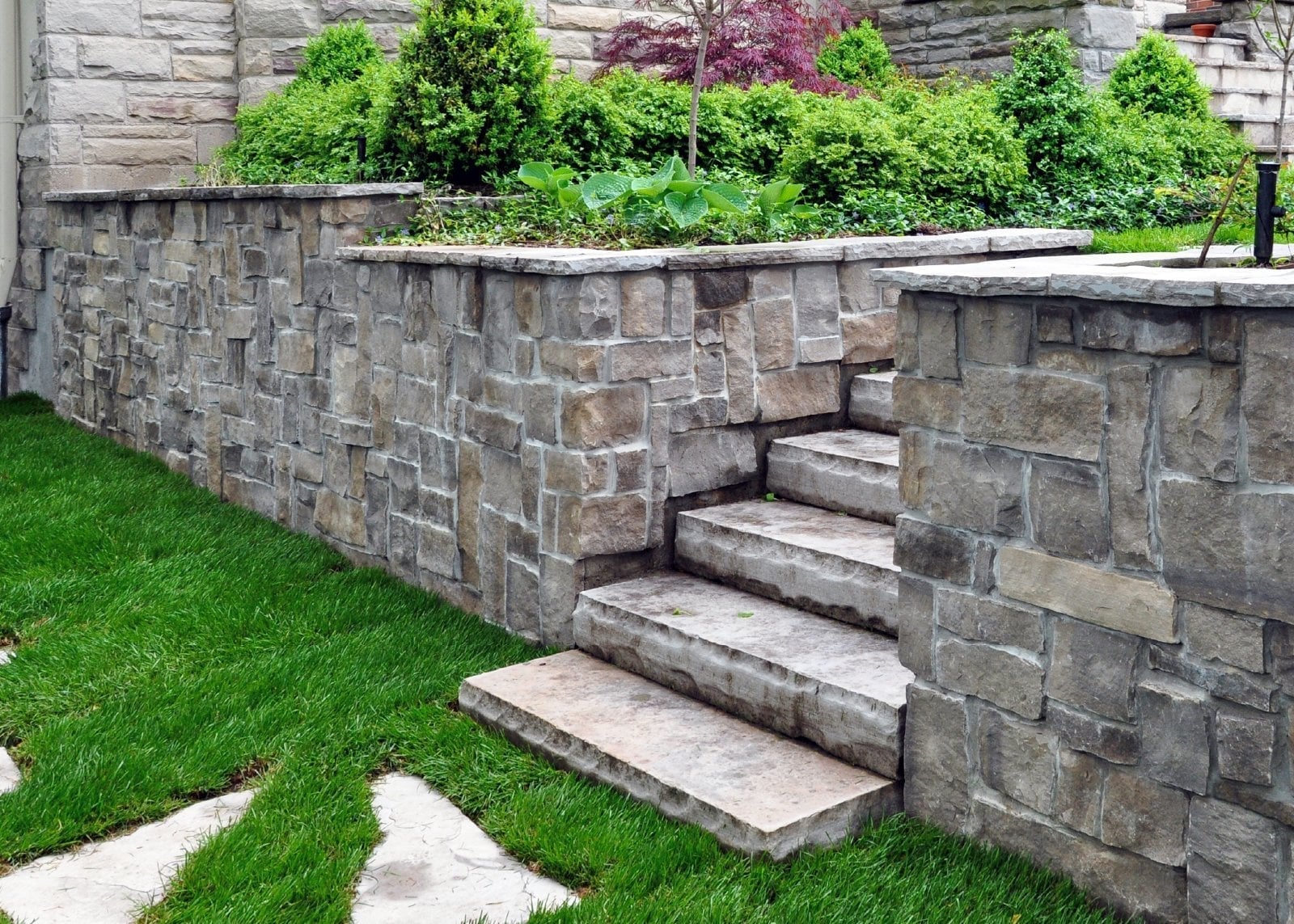
This wall does double duty: retaining soil and carrying foot traffic. The natural stone blocks are stacked in a tiered layout, and concrete steps are set directly into the slope, so the path up feels built into the structure rather than added later. The gray, beige, and green palette is visible, with the rough stone surface catching daylight differently across each face. To recreate it, look for modular stone blocks that can be stacked without mortar in a smaller yard. The integrated steps break the long horizontal line of the wall, creating a natural pause where the eye can rest.
Sleek concrete retaining wall with stone staircase
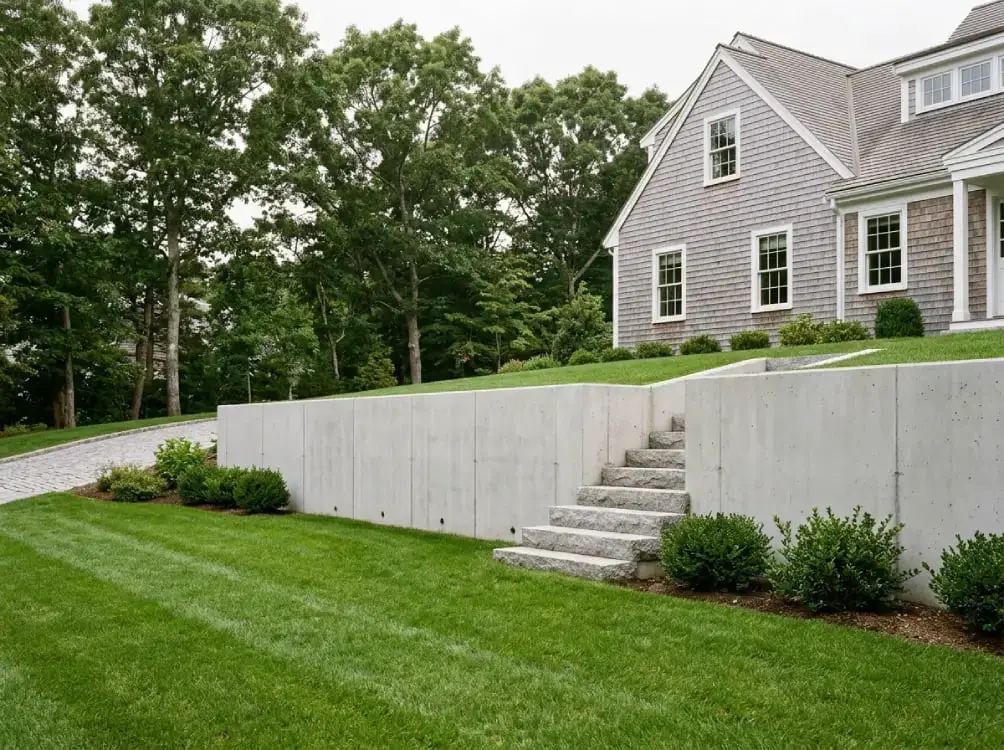
Can a concrete wall feel refined? Yes, when the finish is smooth and the line is clean. This design pairs a poured concrete retaining wall with a stone staircase that climbs the grade in measured steps. The gray palette keeps the two materials in harmony, while manicured bushes soften the base. The layout gives the wall a clear vertical presence without overwhelming the yard.
The style works because the concrete is the main event, and the stone stairs are a supporting texture, not a competing pattern. The ratio is about three parts smooth surface to one part rough stone, which keeps the eye moving. What breaks the look would be adding a second wall color or a busy planting scheme. Stick to one accent material and repeat it in the steps.
Cottage garden style tiered wall with vibrant flowers
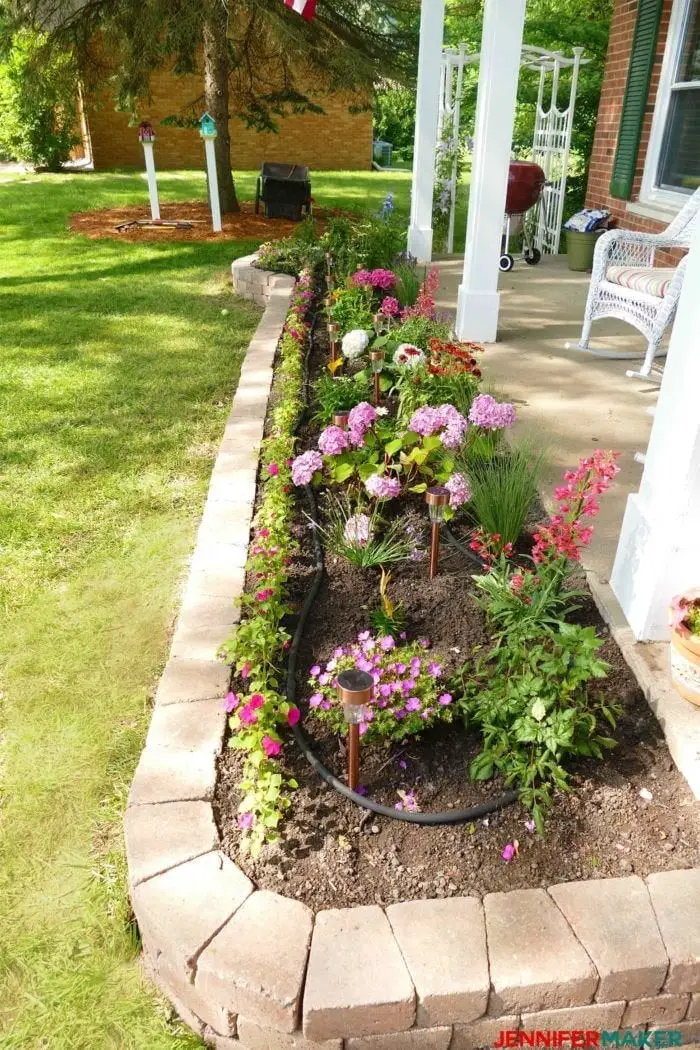
A low stone and brick retaining wall becomes the backbone for a cottage garden bed that curves along the lawn. Layered pink and white hydrangeas and impatiens spill over the edge, turning the wall into a blooming shelf. Solar path lights are tucked into the soil, so the flowers catch some glow after dusk. The palette is heavy on pink, white, and green, with the brown stone and mulch keeping it grounded. For a renter-safe swap, use stacked concrete edging blocks instead of mortared stone, and plant in containers placed on top of the wall rather than digging into the slope.
Modern gabion wall with ornamental grasses and agave
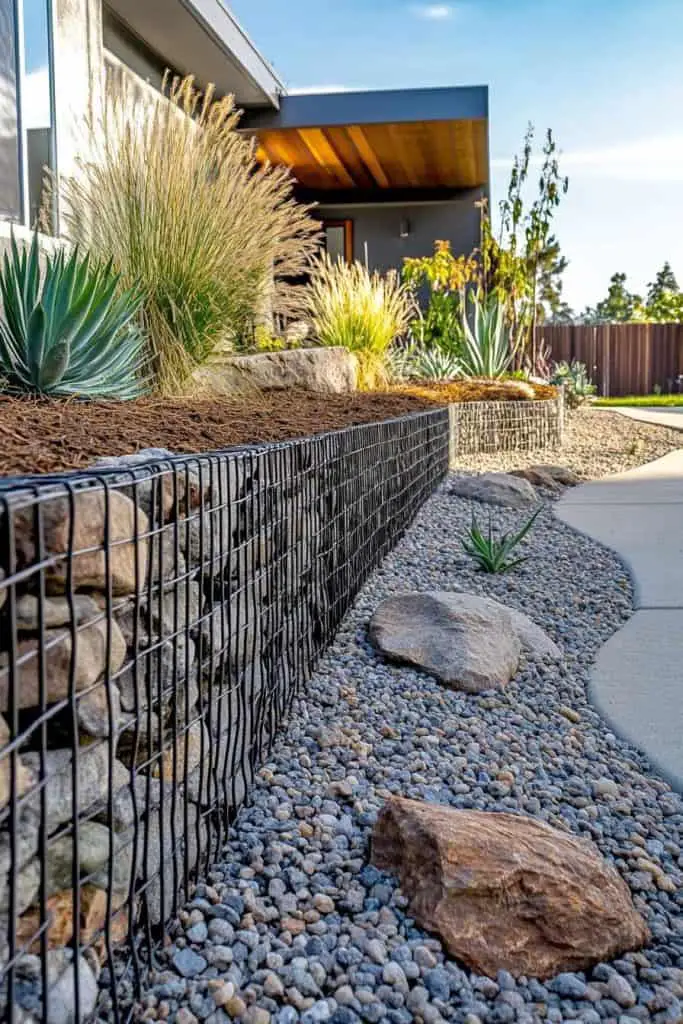
A practical rule for gabion walls: the fill dictates the feel. Here, rounded gray stone in a metal cage creates a neutral backdrop, while large boulders placed at the base anchor the wall to the ground. Ornamental grasses and agave plants rise above the structure in soft green and beige tones, so the hardscape never dominates. The layout is tiered, with a curved walkway leading through the space. Storage is built right in: the gabion cage itself can hold extra stone or yard debris at the core, hidden by the visible fill. This makes the wall functional beyond its retaining job.
Multi-level retaining wall with textured concrete and stacked stone
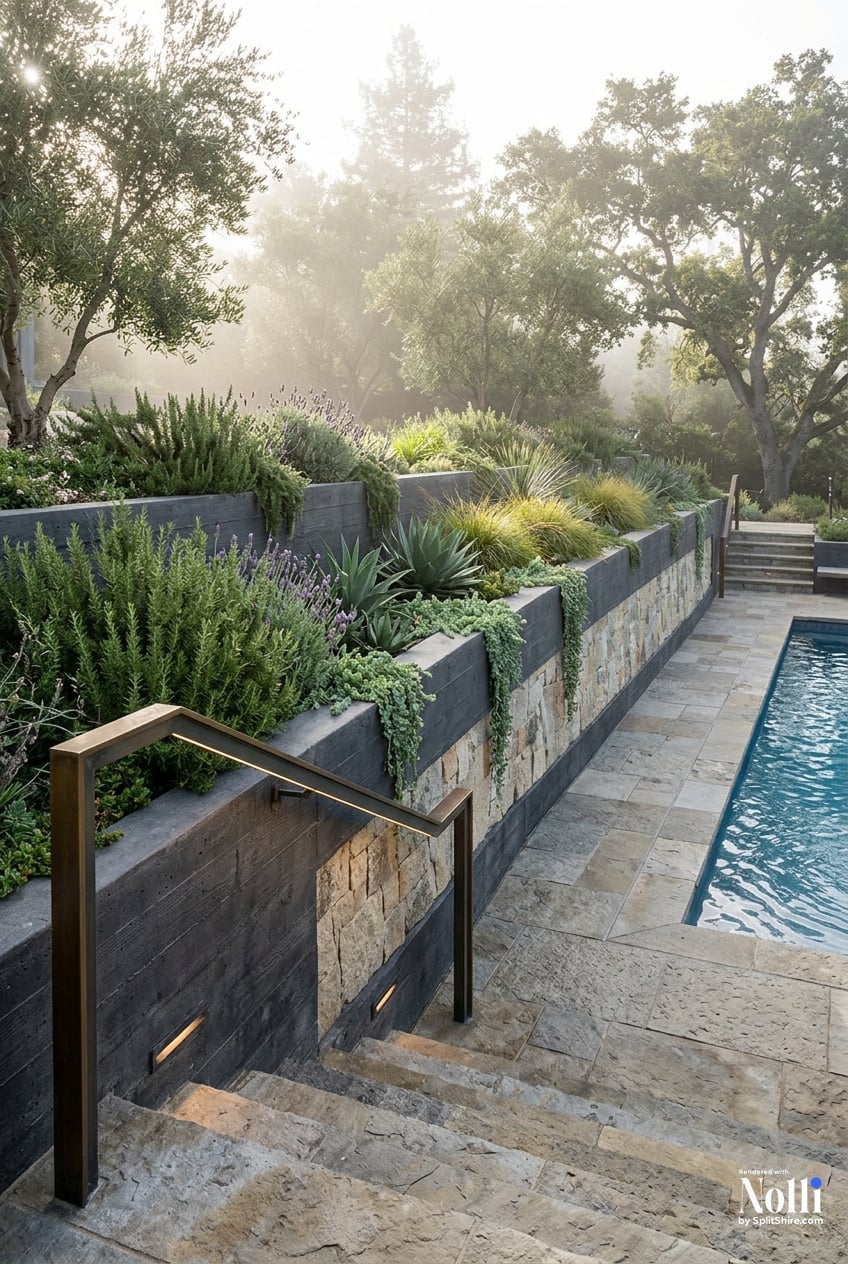
A solid concrete wall feels like the obvious choice for a terraced yard, but mixing textures changes the whole read. Here, stacked stone panels break up the gray concrete across multiple levels, with a metal railing and integrated stair lights that make the slope feel intentional. The palette stays in the gray and beige range, so the pool and the blue-green plants do the color work. The ratio of smooth concrete to rough stone is roughly two to one, which keeps the wall from looking like a single material sample. What breaks the modern feel is the soft planting: trailing greenery and shrubs that spill over the hard edges. On a single-level yard, try a stone veneer on the lower half of a concrete wall and leave the top band smooth.
Stacked gray concrete block retaining walls with integrated steps
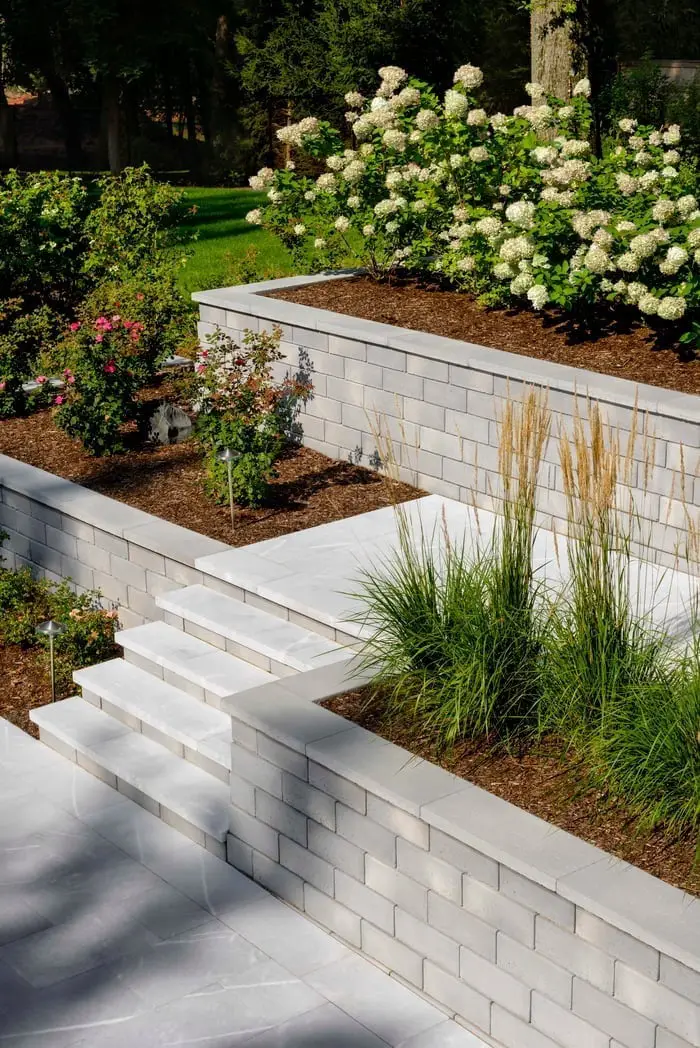
The design stacks gray concrete blocks in a clean grid, with stone tile steps cutting through the middle and in-ground landscape lights aimed up at the wall. This is a renter-friendly look because the blocks are essentially modular: you can adjust the layout or remove sections without demolition. The mulch beds and flowering shrubs soften the geometry, and the white ornamental grass adds a vertical accent that mirrors the block shape. The style is modern but not cold, thanks to the warm brown mulch and the green foliage breaking the gray. If you want to test this on a small scale, use a single row of concrete blocks as a raised bed border and add stone tile stepping stones through the middle.
Gray stone retaining wall with built-in seating ledge
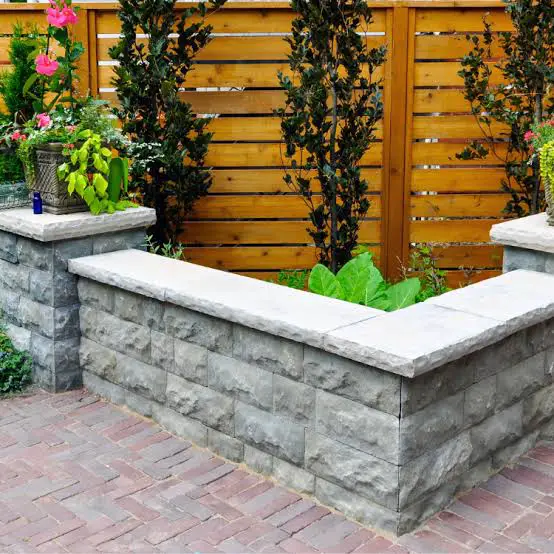
This is a retaining wall that doubles as a bench. The gray stone blocks are stacked to form a corner wall with a wide, flat top ledge, flanked by a wooden fence and concrete pavers on the ground. The layout works because the seating ledge sits at a comfortable height for a quick sit or a place to set a drink. The palette is gray stone with warm wood tones from the fence, plus pink and green from potted plants on the ledge. The rough stone contrasts with the smooth wood planks. If your yard has a slope that needs a wall, ask your contractor to cap the top row with a wider block or a stone slab to create a perch.
Beige concrete block retaining wall with xeriscape plants
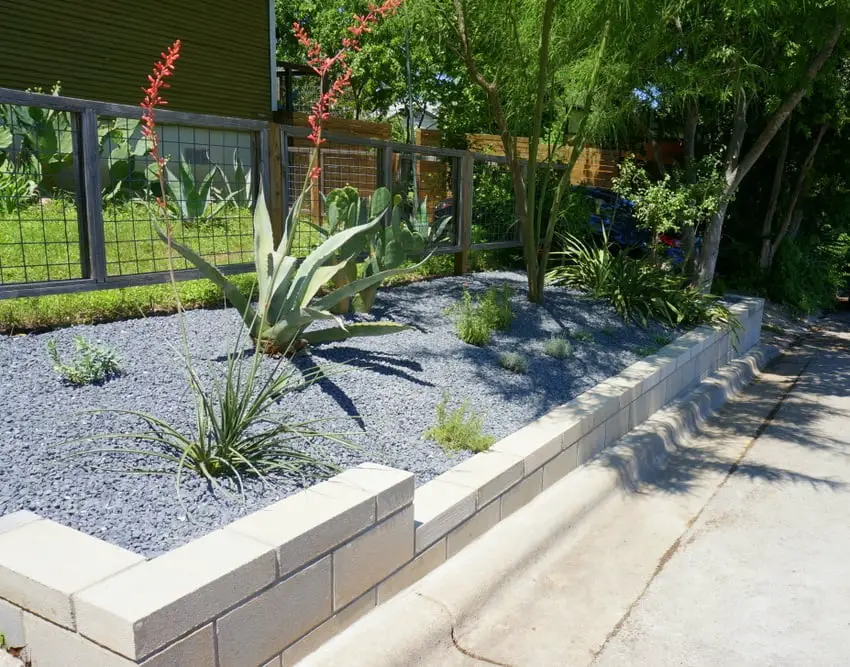
Does a retaining wall have to be gray? Not here. Beige concrete blocks create a base that reads warmer than standard gray, and the tiered layout follows a sloped terrain with gravel paths between levels. The beige, green, and orange range includes agave, cactus, and shrubs that need little water. The style is modern xeriscape: the wall is the backbone, but the plants are the main event. Hardscape is balanced by plenty of plants, which keeps the concrete from dominating. What breaks the uniformity is the dappled sunlight hitting the different leaf shapes. If you live in a dry climate, this setup means less watering and less weeding along the wall base.
Raised wooden retaining wall filled with vibrant flowers
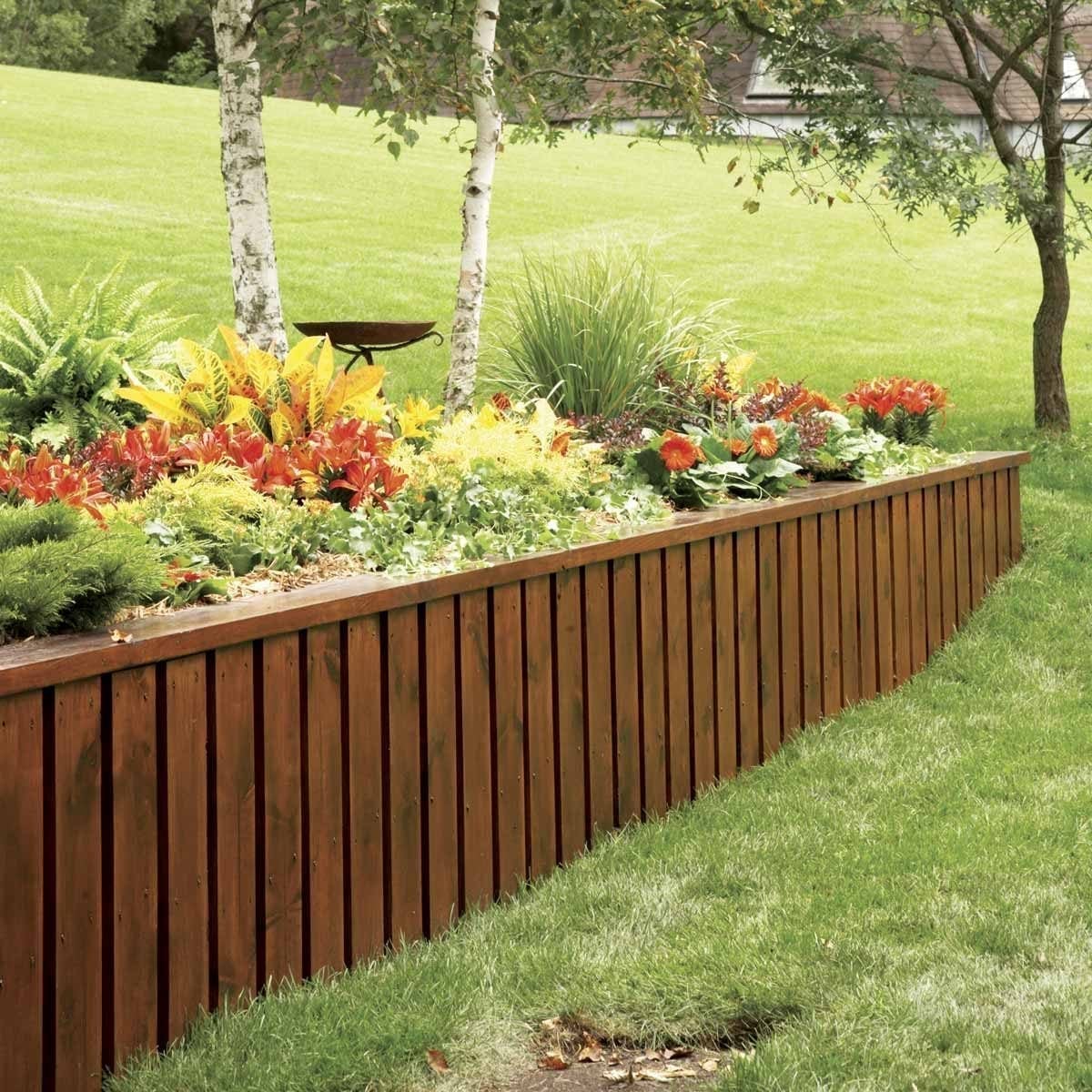
The wall uses vertical wooden planks to create a raised flower bed, with birch trees behind it and a bird bath nearby. The palette is all about the flowers: yellow, orange, and red against the brown wood and green grass. This is a traditional look, but the vertical planks add a modern twist by drawing the eye upward. The scale works because the raised bed is deep enough to hold a mix of annuals and perennials without looking crowded. If you want a quick seasonal update, swap the flowers for fall mums or spring bulbs and leave the wood structure in place.
Tiered stone block retaining wall with integrated lighting
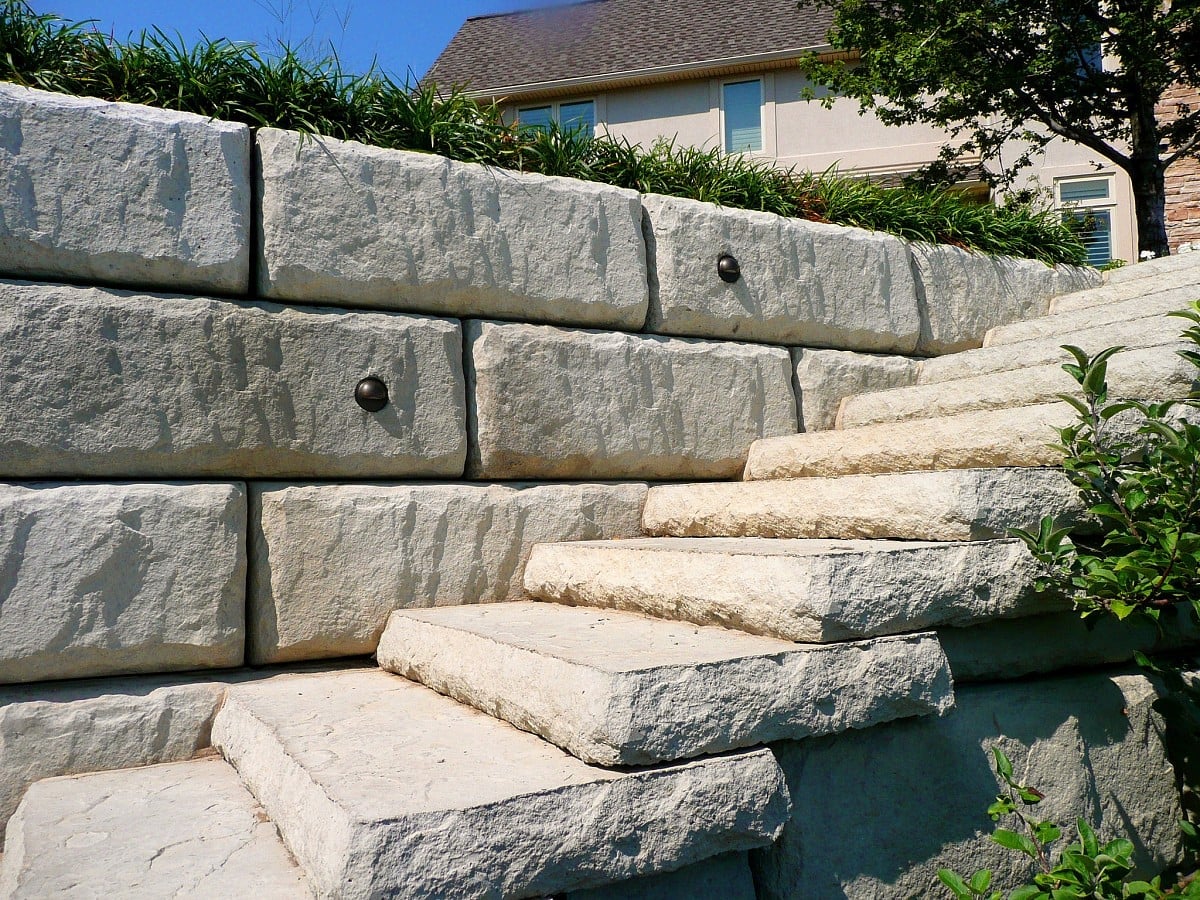
A good lighting plan starts before the wall goes in. This tiered stone block wall has recessed lights set into the face of the blocks, casting a soft glow across the steps and the greenery above. The warm light against the cool gray and beige stone keeps the wall from disappearing at night while it defines the path upward. The lights sit flush with the surface, so they do not interrupt the clean horizontal lines of the stacked blocks. For a similar effect, plan the fixture locations during the layout phase and run conduit before the fill goes in. Surface-mount options exist for existing walls, but the integrated look comes from building the light into the structure itself.
Brown and gray stone block retaining wall with dynamic steps
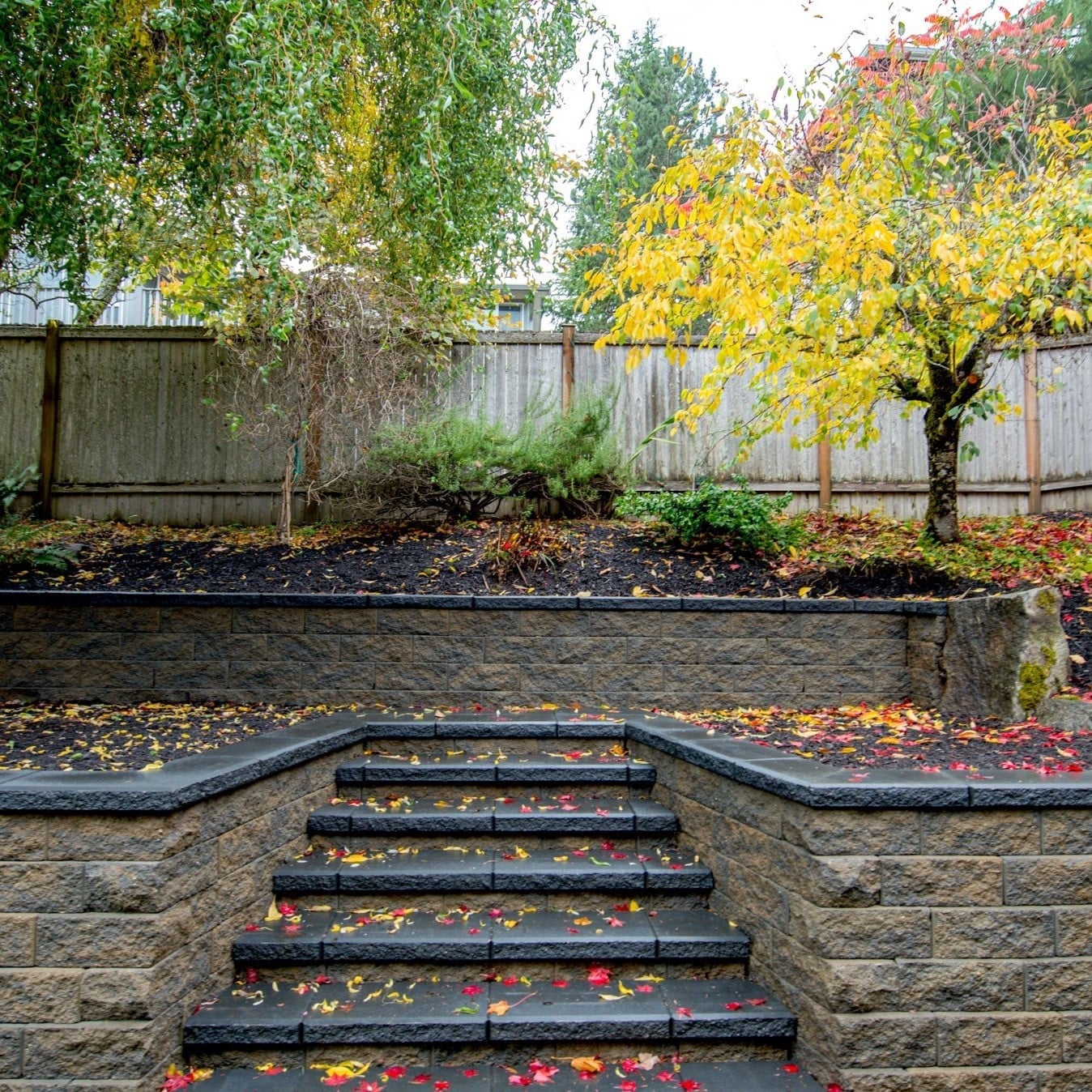
A single-tone tiered wall can feel static, but this design uses a brown and gray stone block palette that mimics natural variation. The steps are wide and central, breaking the wall into two distinct sections and making the climb feel like a deliberate path through the yard. Trees and shrubs soften the edges on either side, and the yellow-green foliage provides a contrast against the cool stone tones.
The palette works because the brown and gray blocks are close in value, so the wall looks a single structure with texture. The steps anchor the composition and create a natural focal point. For a similar approach, choose stone blocks within the same tonal range and let the steps interrupt the horizontal line. The wall feels built for the site, not dropped onto it.
Traditional red brick retaining wall with gravel infill
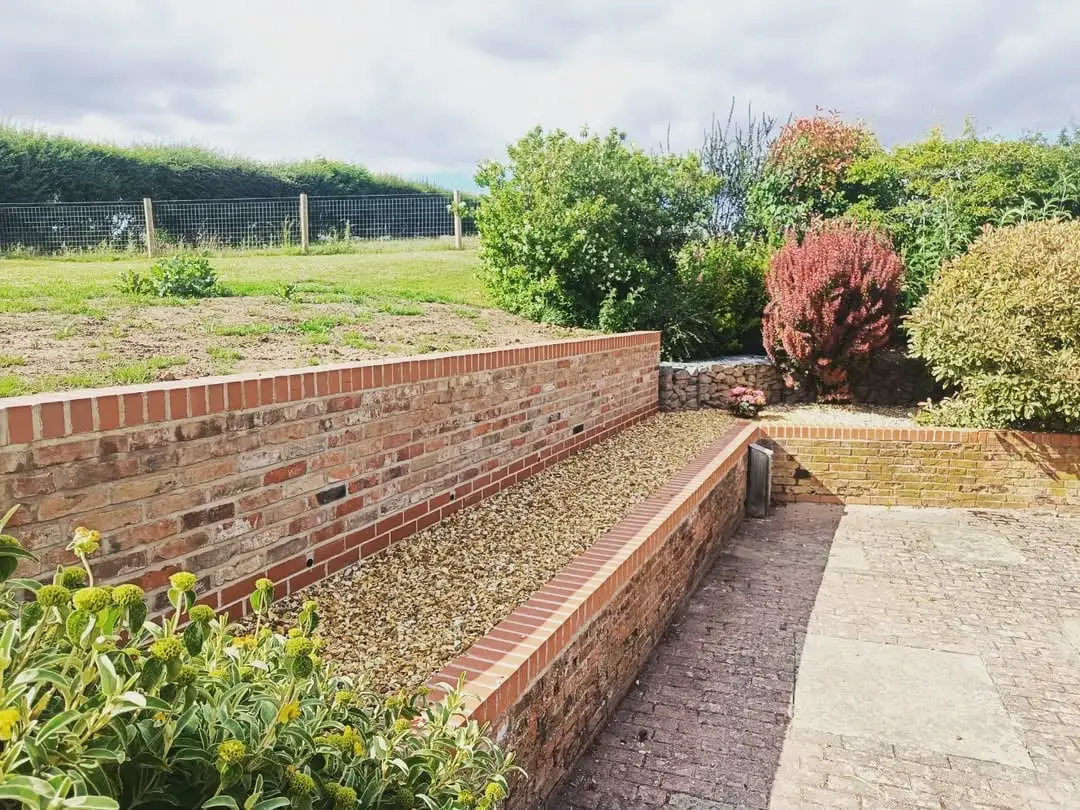
This red brick retaining wall uses a gravel infill bed at the base rather than planting directly against the brick. The beige gravel catches the daylight and keeps the brick from sitting directly on soil, which helps with drainage and reduces splash-back against the wall during rain. The paved patio above continues the traditional feel, and the green foliage provides the only color contrast. The brick looks warm and established, while the gravel keeps the maintenance zone clear and tidy.
Smooth concrete retaining wall with stepping stone path
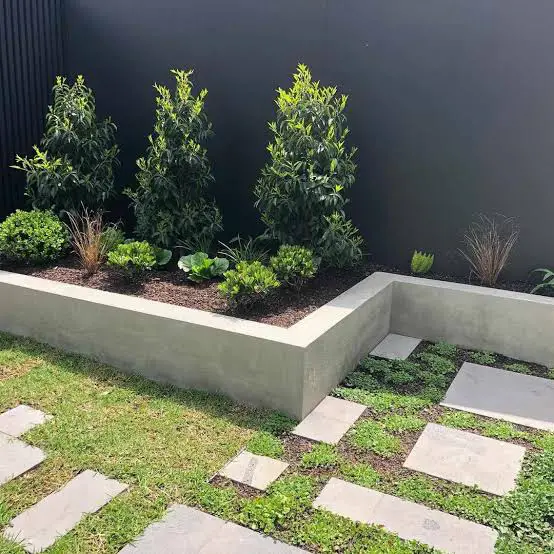
This wall does the job without calling attention to itself. A smooth gray concrete retaining wall holds back a tiered bed, and a path of dark gray stepping stones leads across the lawn and up alongside it. The wall is low enough that the plants above it become the visual focus, while the path creates a clear route through the space. The contrast is simple: smooth wall against rough stone path, gray concrete against green grass. For a yard where the grade changes are modest, a low concrete wall paired with a distinct path keeps the landscape functional without dominating it.
Boulder walls in earthy tones create tiered landscapes
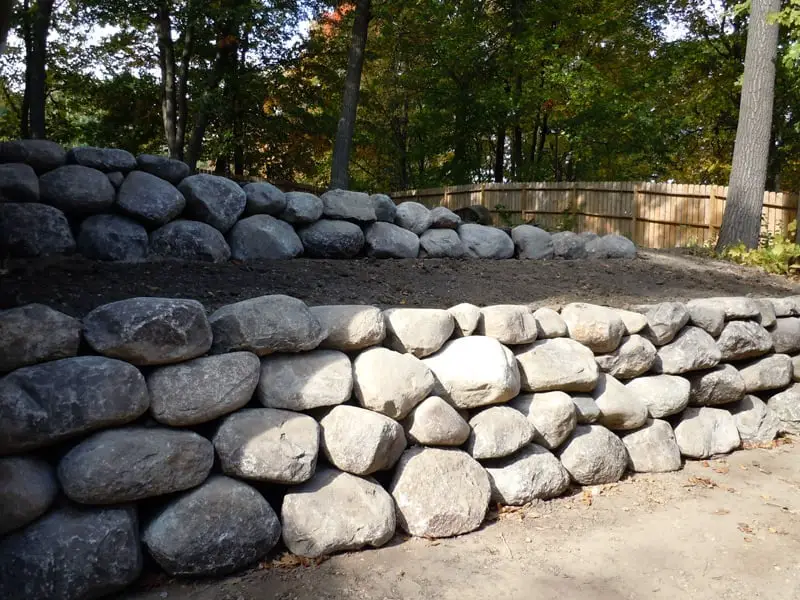
A boulder wall asks you to work with what the land gives you. Large natural stones in gray, beige, and brown are stacked in a tiered layout that follows the slope of the yard. The boulders are irregular in size and shape, so the wall has a natural feel that a cut-stone block wall cannot match. The gaps between the boulders are left open, which allows for drainage and creates planting pockets.
For a tiered landscape with significant grade changes, boulders are a practical choice because they hold their position without mortar if the base is prepared correctly. The earthy tones blend into the surrounding soil and foliage, so the wall feels like it was always there. Check your USDA zone before selecting plants for the pockets, but the wall itself needs only a stable base and a careful fit of the largest stones.
Curved naturalistic stone wall with flagstone path
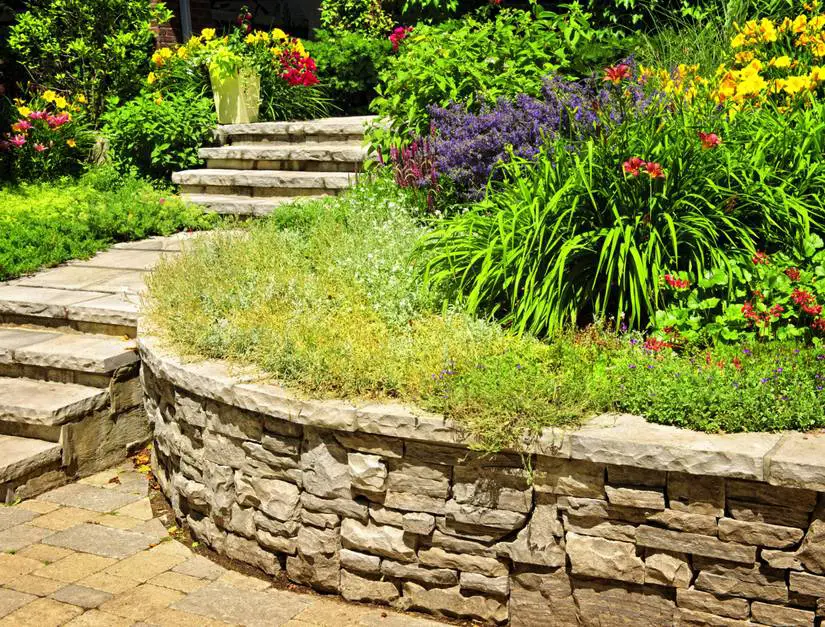
A curved stone retaining wall does more than hold back soil; it leads the eye through the yard. This version uses a mix of irregular stone blocks in layered grays, with stone steps climbing one side and a flagstone path curving away from the base. The path meets a small patio of brick pavers at the bottom, softening the transition from wall to lawn. Flowering plants in yellow, red, and purple spill over the top edge, breaking up the stone line. The naturalistic look works because the materials match the local landscape. What keeps it from looking messy is the clear path geometry. Even with a casual stone stack, a defined route gives the layout purpose.
Slate waterfall feature enhances a naturalistic garden
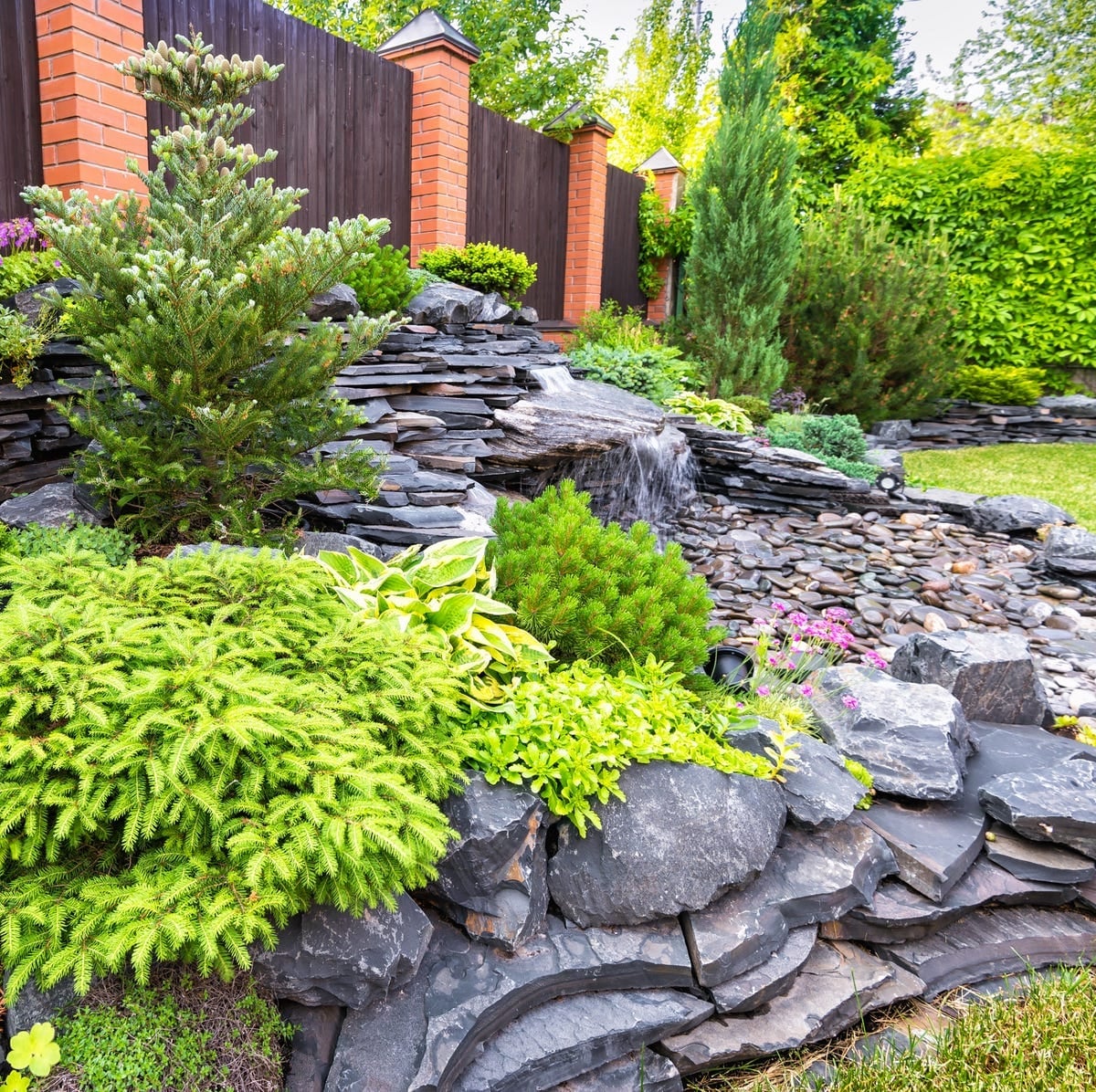
A practical rule for garden features: water sounds best when it falls over a hard surface. This slate waterfall uses stacked gray stone slabs set into a tiered rock garden, with water cascading from the top level into a small basin below. Surrounding greenery in lush green tones softens the hard edges, while a few pink flowers add contrast. Subtle garden lights tucked among the rocks pick up the slate texture after dark. The style looks naturalistic rather than formal because the stone placement is irregular and the plants grow freely around the edges. What breaks the wild look is the clear water path. The cascade stays within a defined channel, so the garden feels curated without losing its organic character. Check your USDA zone before selecting moisture-loving plants for the base.
Gabion retaining wall with integrated wooden bench and planters
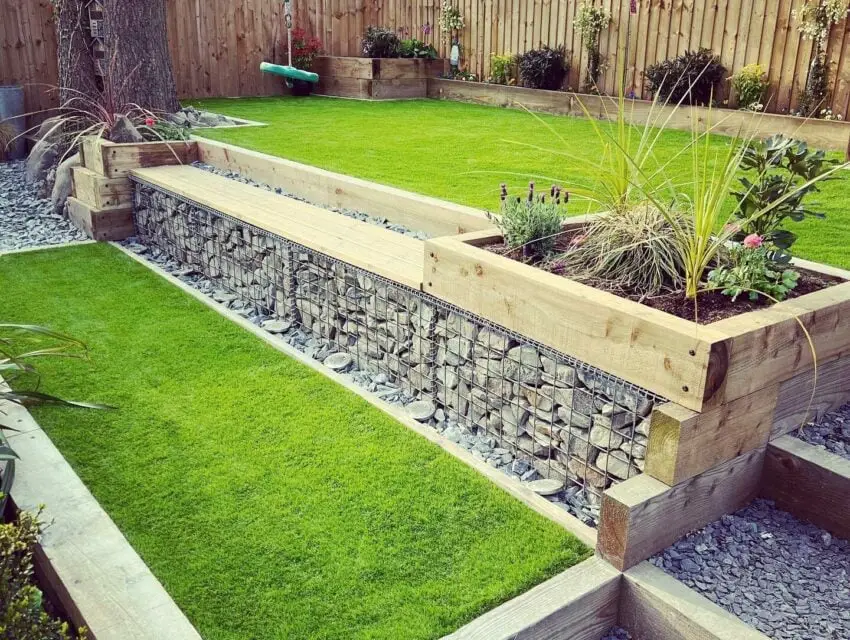
Gabion walls look industrial by default. This one avoids that by adding a solid wooden bench across the front and raised planters on top. The metal cages are filled with gray stone, which gives the wall a neutral base. The bench sits at a comfortable height for sitting, and the wood warms up the metal and stone. Above the bench, the planters hold greenery that trails down slightly, softening the cage lines. Gravel spreads across the ground at the wall’s base, creating a clean edge between the seating zone and the lawn.
The layout uses the wall as both a structure and a place to pause. The bench turns a purely functional retaining wall into a spot for morning coffee or garden breaks. The planters keep the greenery contained, so the wall stays tidy without requiring constant weeding. For renters, this setup is not a quick project. Gabion cages are heavy and not easy to move. A lighter alternative is a wooden bench placed against an existing stone wall with potted plants on top.
Rustic tan stone block retaining wall with gravel border
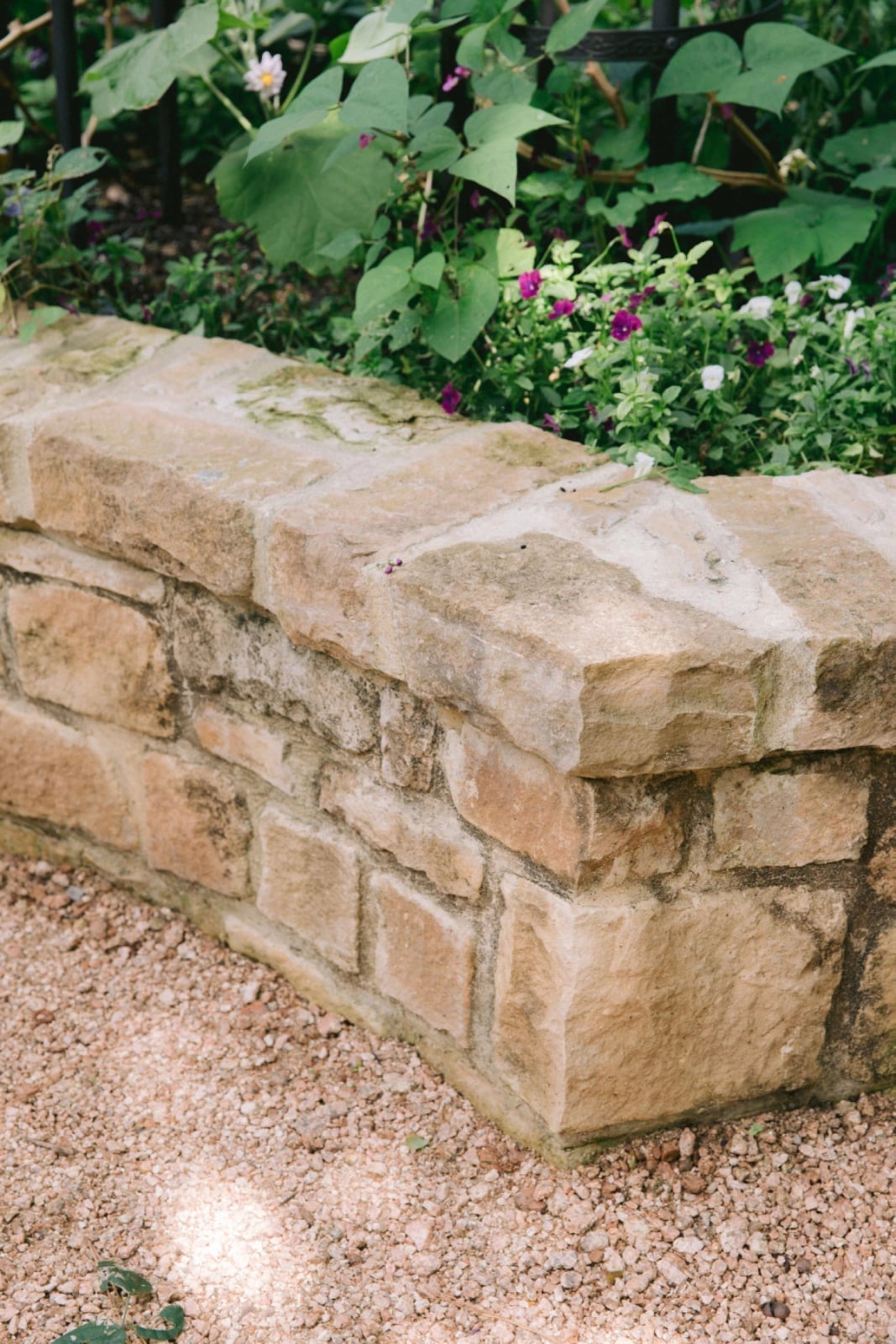
The tan stone blocks in this wall are cut in uneven rectangles, giving each row a slightly different texture. The wall sits in a corner of the backyard, with a gravel border running along its base. That gravel strip is the detail that matters. It creates a dry zone between the wall and the lawn, so soil stays off the stone and water drains away from the base. Flowering plants in purple and white grow from the top edge, adding color without hiding the stone. The palette stays in the warm tan and green range, with the flowers as the only bright note. This rustic stone retaining wall idea works best for compact yards where a single wall defines the garden edge. No mulch, no soil splash, just clean gravel.
Concrete steps ascend through a tiered landscape
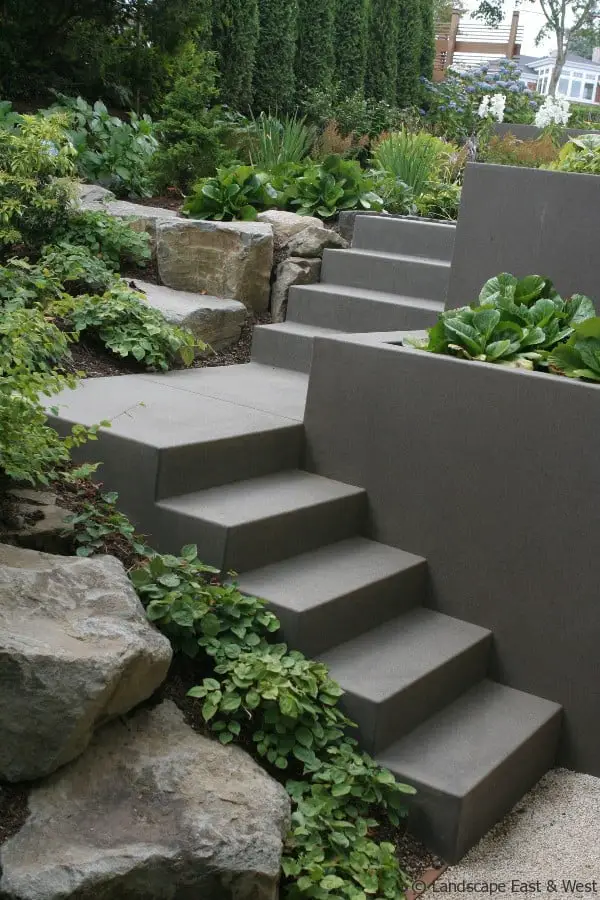
This design gets the proportions right. Wide concrete steps climb through a tiered landscape, with each step landing at a new planting level. The steps are broad enough for two people to walk side by side, and the risers are low, making the climb feel gradual. Gray concrete walls flank the steps on both sides, creating a clean corridor through the greenery. Beige gravel fills the planting beds on each tier, contrasting with the dark green shrubs. The modern concrete steps and tiered yard work together because the hard materials stay simple and the plants provide the texture. What keeps the layout from feeling like a construction site is the planting density. The greenery overhangs the wall edges just enough to soften the concrete without hiding it.
Stone block walls create layered gravel pathways
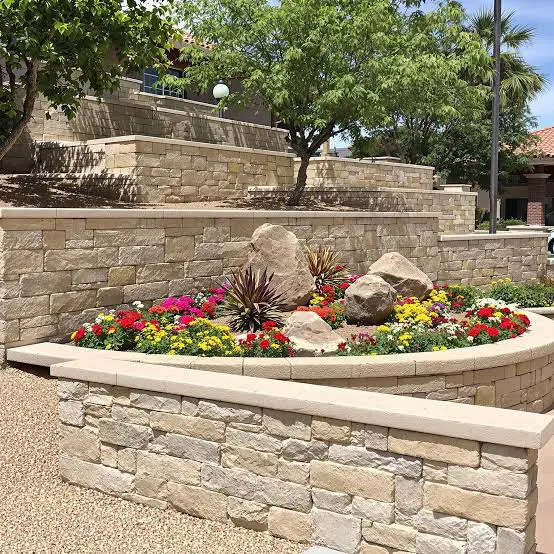
A tiered stone wall looks more deliberate when the gravel path follows the same curve as the planting beds above it. Here, tan stone blocks stack in two levels, with large boulders anchoring the corners and soft mounds of pink, yellow, and red flowers spilling over the edge. The gravel below stays clean and loose, which keeps the eye moving along the wall instead of stopping at a hard line. Ornamental grasses add height without blocking the stonework. The hardscape to plants ratio runs about 60-40, and that balance keeps the garden from looking unfinished.
Curving natural stone retaining wall alongside paver walkway
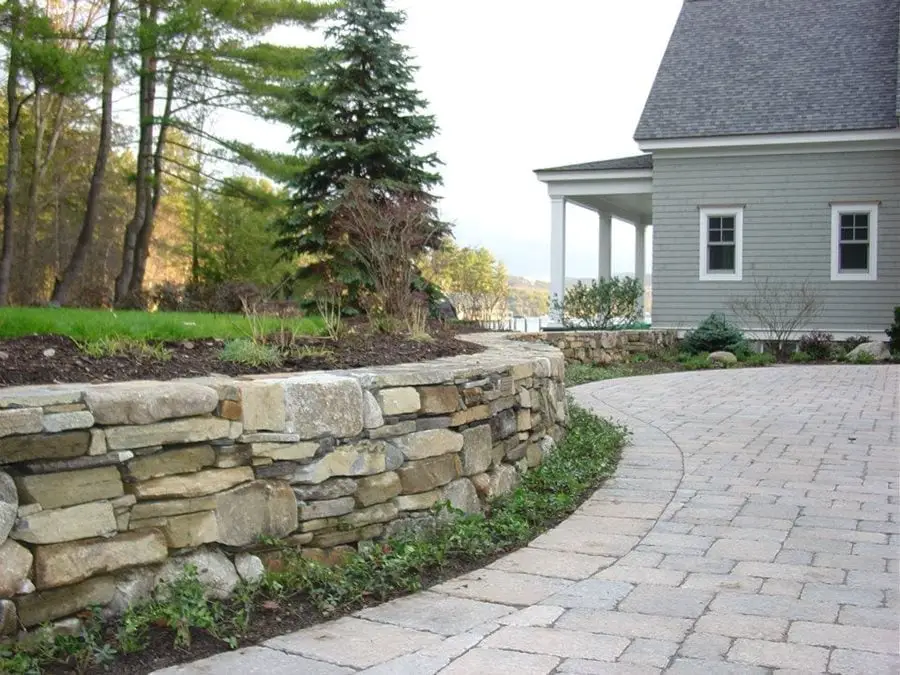
A curving natural stone retaining wall paired with a paver walkway creates a clear path through the yard without competing with the landscape. The gray and beige stones blend into the existing soil and wood siding, so the wall supports the grade change rather than dominating it. The curve softens the transition between lawn and hardscape, and the pavers keep foot traffic off the grass. This setup works for sloped backyards where a straight wall would feel too rigid.
Traditional curving stone wall with terraced garden beds
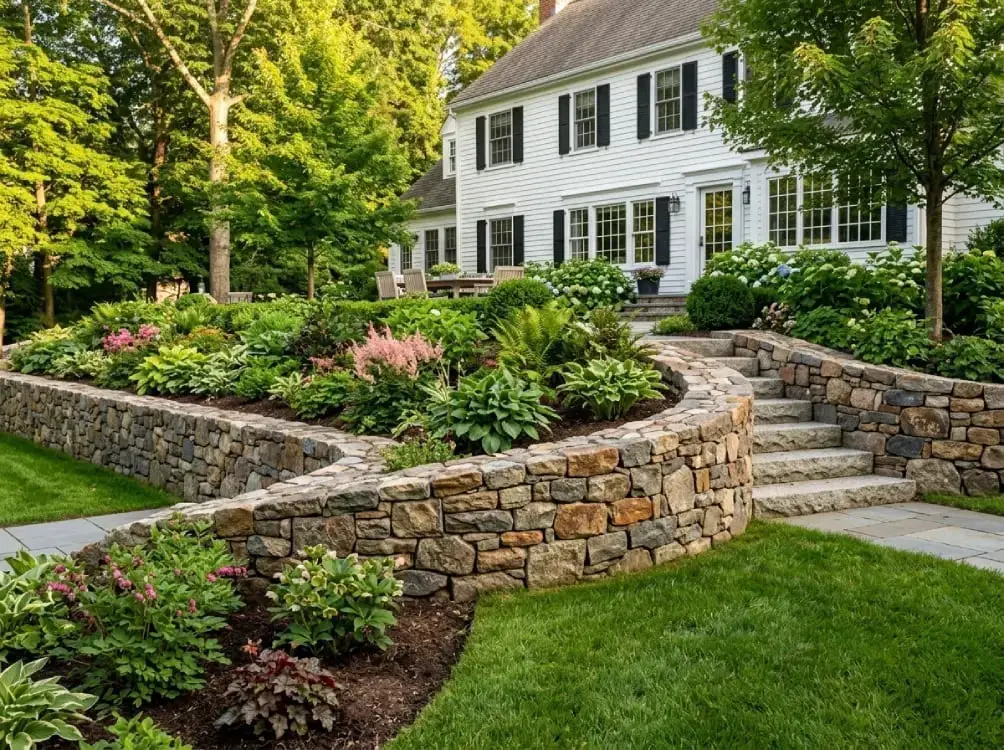
A traditional stone wall works best when the planting beds above it feel just as established as the stone itself. Here, a curving wall of stacked fieldstone creates two terraced levels, with stone steps cut through the middle so you can walk from the lawn up to the upper garden. The beds hold a mix of white and pink flowers and low shrubs, which soften the hard edge of the stone. The grass path at the base keeps the layout connected. A rule of thumb: keep the top of the wall visible by planting lower-growing varieties near the edge.
Connect patio levels with stone retaining walls
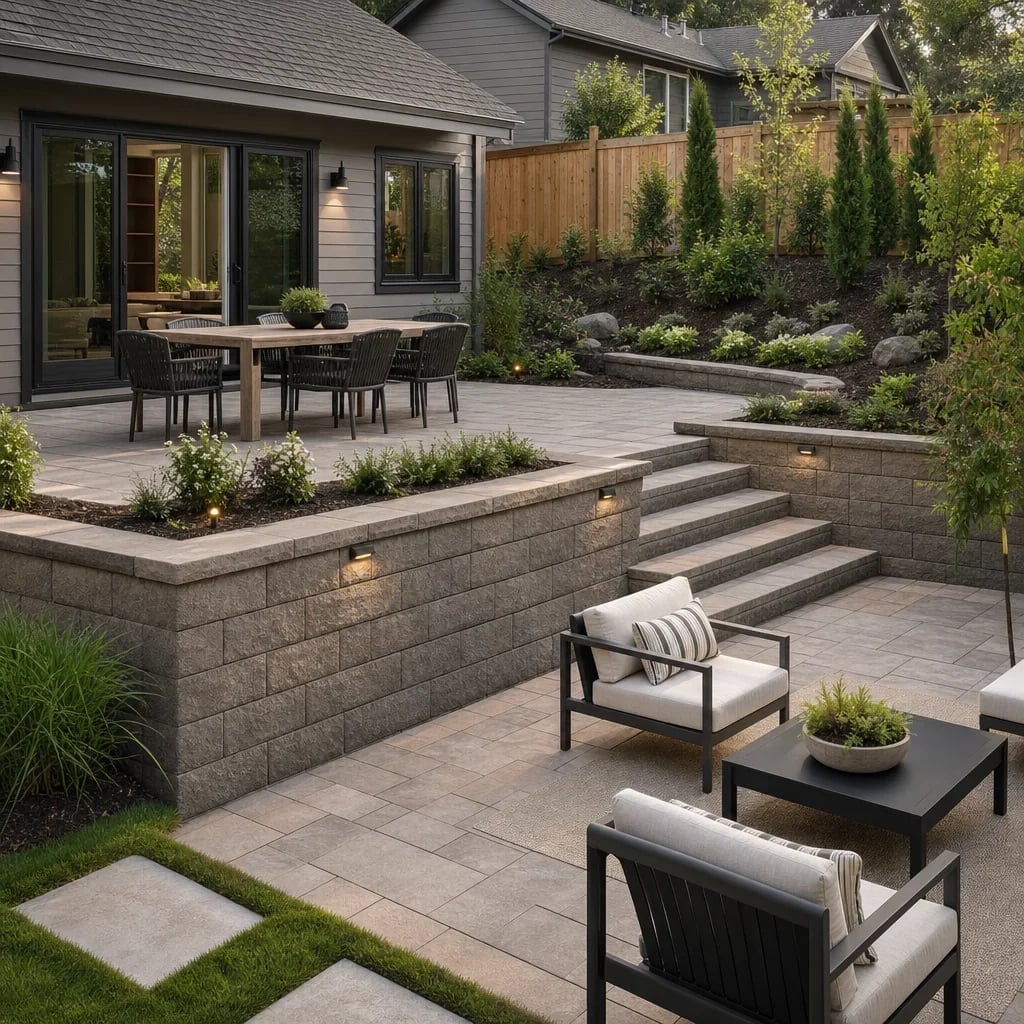
A multi-level patio risks feeling like two separate spaces, but a stone retaining wall with integrated lighting can tie them together. Here, the lower level holds a dining table and chairs, while the upper level has lounge chairs and a coffee table. The wall between them is faced in gray stone, with recessed wall lights and exterior sconces placed at intervals along the cap. At night, the lights define the edge without overwhelming the yard. The tile floor on the upper patio and the wood decking below give each zone its own texture, but the consistent stone wall keeps the layout cohesive.
Tiered concrete block garden bed with colorful salvias
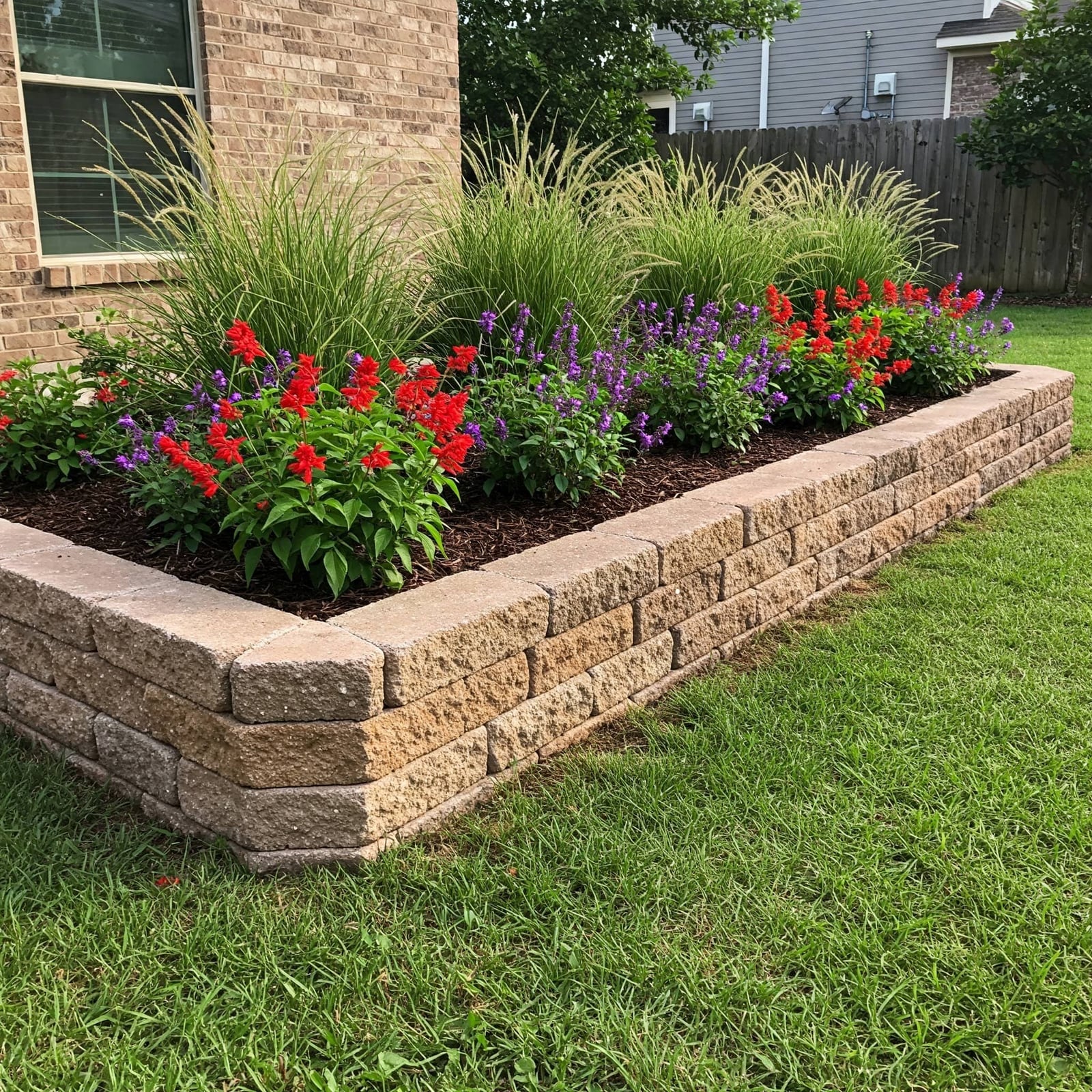
A tiered concrete block garden bed turns a slope into a series of planting pockets without the cost of cut stone. Here, two levels of tan blocks hold red and purple salvia, with ornamental grass adding texture near the brick edging below. The mulch between the blocks keeps weeds down and moisture in. The salvias bloom from midsummer through fall, so the color lasts longer than annuals. The concrete blocks are a practical choice for renters since they can be disassembled and moved, unlike a mortared wall.
Stacking concrete blocks for a garden bed
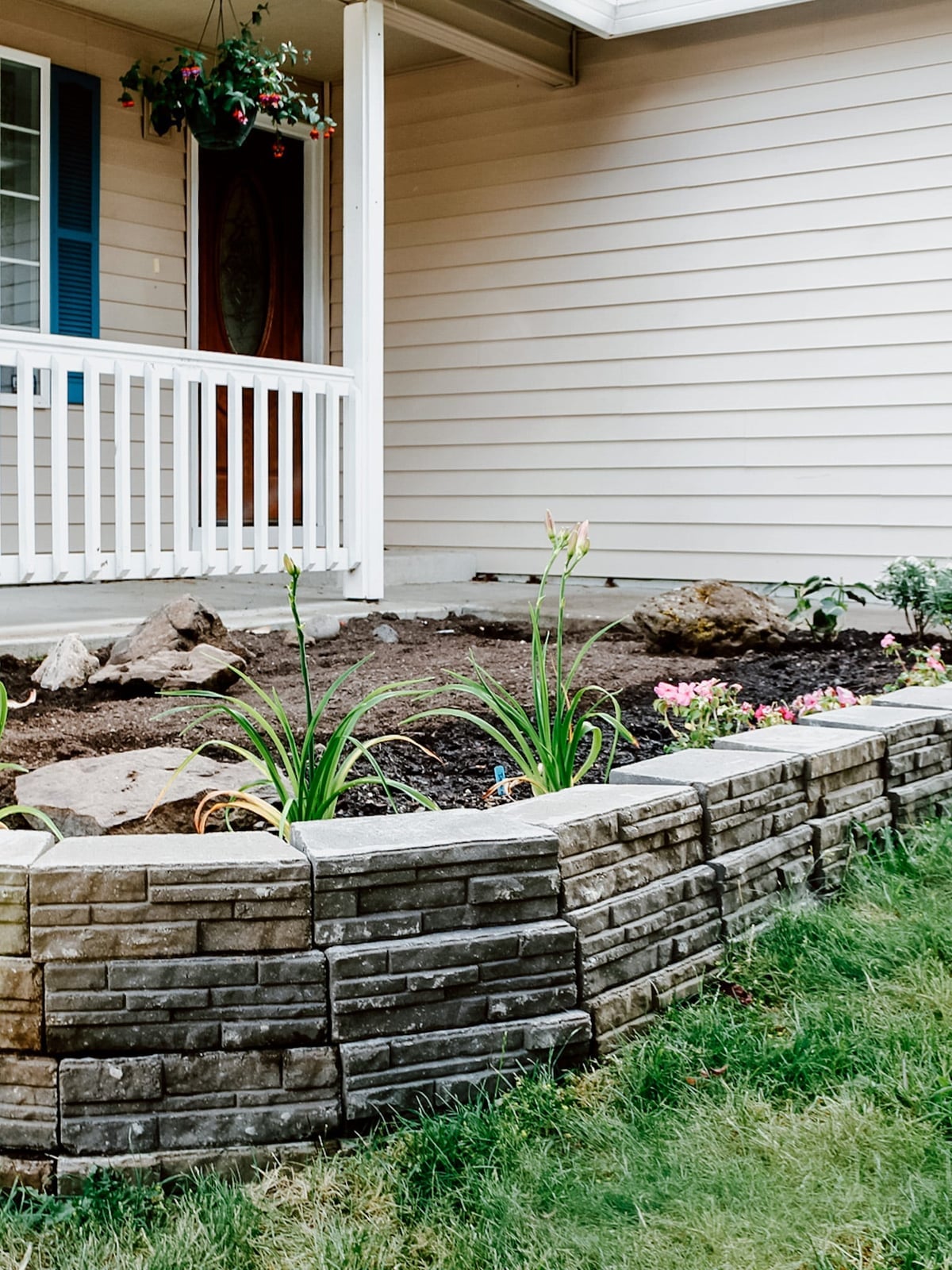
Stacking concrete blocks is one of the more straightforward ways to define a garden bed, and the result has a practical, no-fuss look. The palette here stays in the gray-beige range, with the blocks looking a neutral backdrop for green grass and a few pink flowers. A single potted plant on top of the wall keeps the hero element central, while the yard stays simple. The hardscape takes up more visual weight than the greenery, which keeps the look grounded. Adding too many decorative accents or trying to make the blocks look like something they are not would break the design.
Modern gray concrete block retaining walls with mulch beds
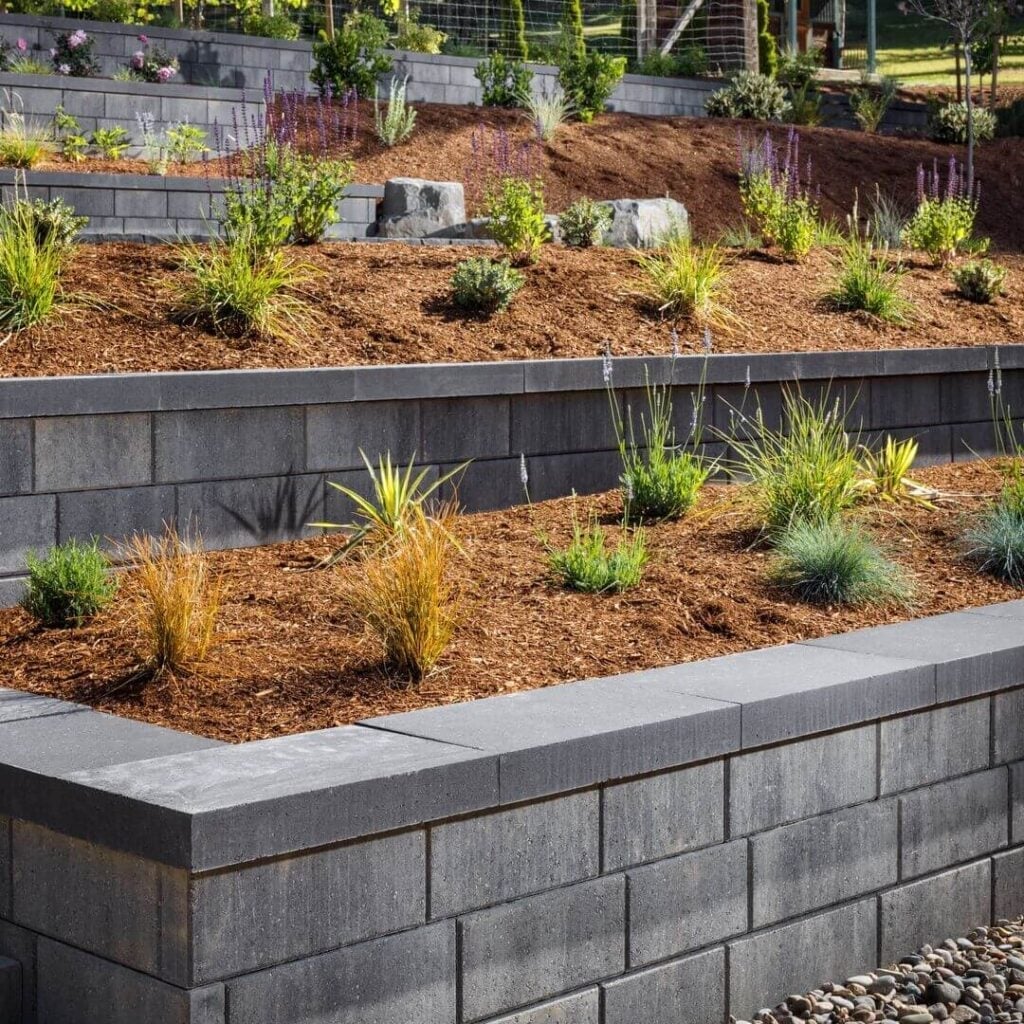
For a renter friendly retaining wall, keep the structure separate from the soil. These stacked gray concrete blocks sit as a clear boundary, with dark mulch beds in front and ornamental grasses and flowering plants adding height above. The palette is gray, green, brown and a hint of purple.
What defines the modern style here is the clean horizontal line of the blocks against the looser shape of the plants. The ratio leans heavily on the hardscape, with the greenery serving as a soft edge. Mixing in a second wall material or adding a decorative border would compete with the block’s straight edge.
Wooden wall creates tiered planting beds
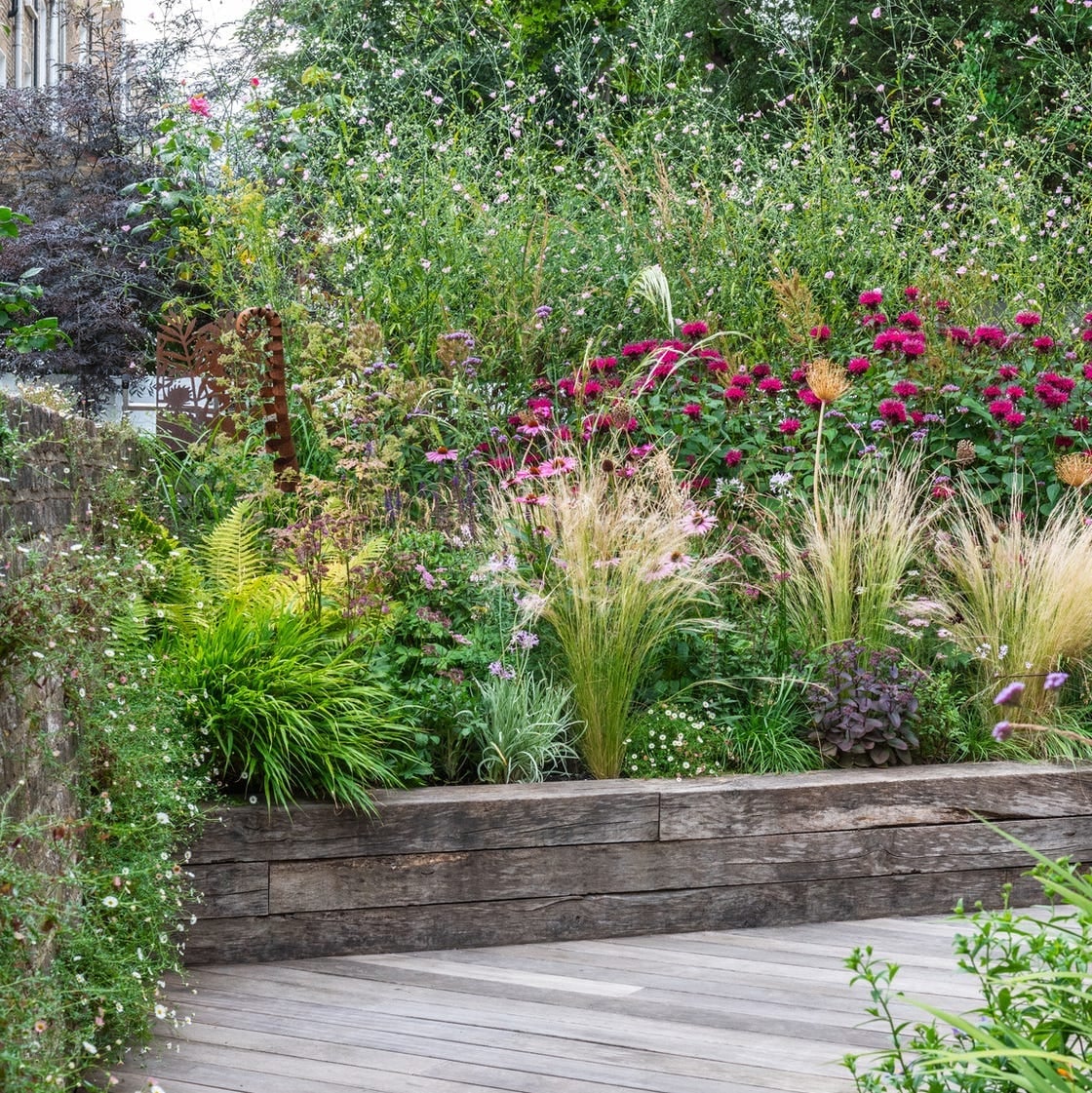
The wooden retaining wall here is built from horizontal planks that create a clear separation between two planting levels, with ornamental grasses and flowering plants in pink and purple spilling over the top. The palette is mostly green, beige and brown, which keeps the wall from looking overly rustic. The naturalistic style comes from the straight wood line paired with the organic shapes of the plants. The wall and greenery each hold their own ground. Painting the wood a bright color or adding a metal cap that interrupts the grain would break the look.
Textured gray stone wall with succulent and shrubbery
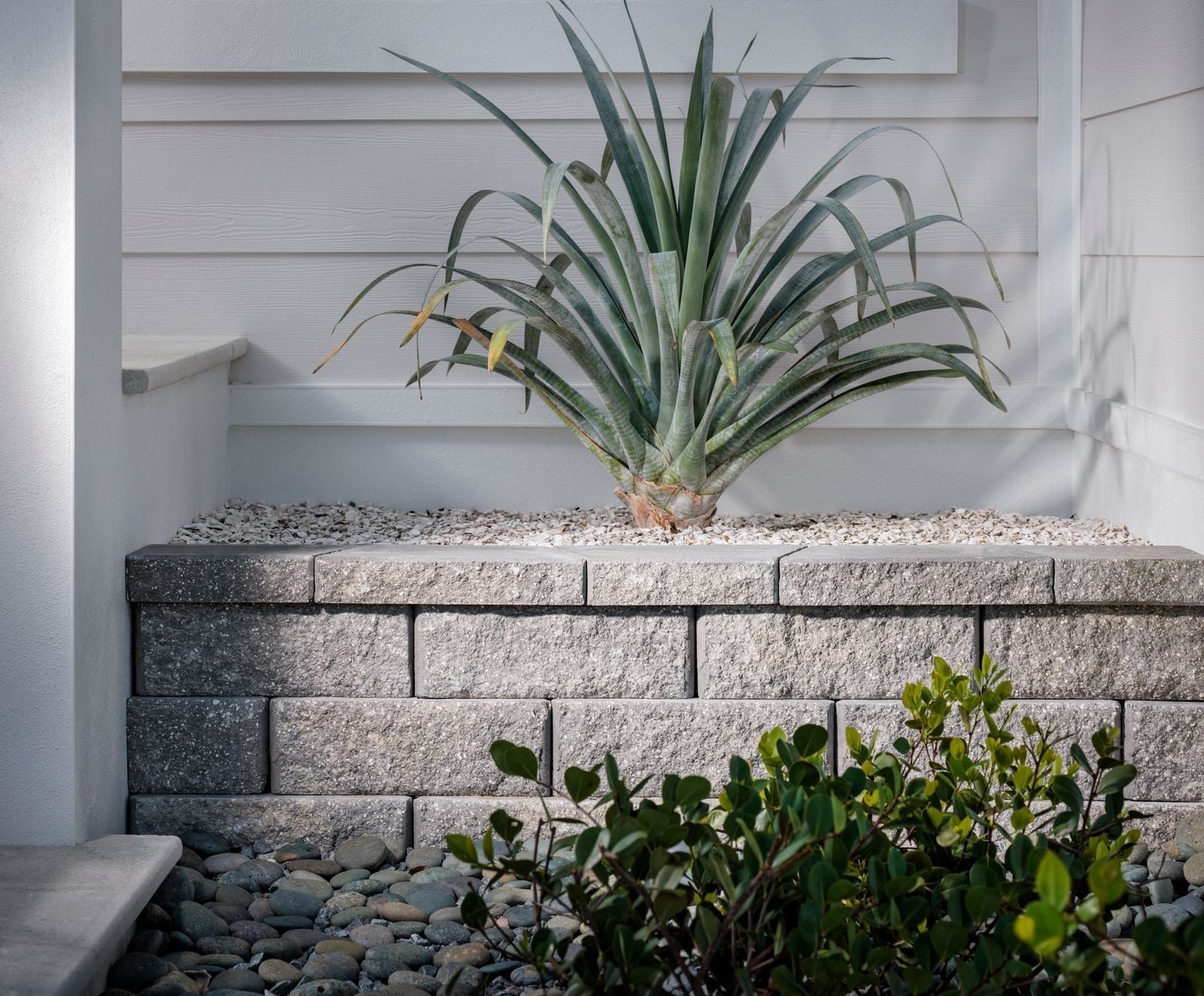
The textured gray stone blocks here have a rough surface that adds depth to a compact tiered planting bed. A single large succulent and some green shrubbery sit in front of the wall, with gravel and a wood-sided house behind. What defines the modern style is the focus on the stone’s texture as the main visual interest. The hardscape takes up about 70 percent of the space and the greenery about 30 percent, which keeps the wall as the main element. Adding a second stone type or a bright planter pulls attention away from the block’s surface.
Stacked stone blocks with tiered landscaping and ornamental grasses
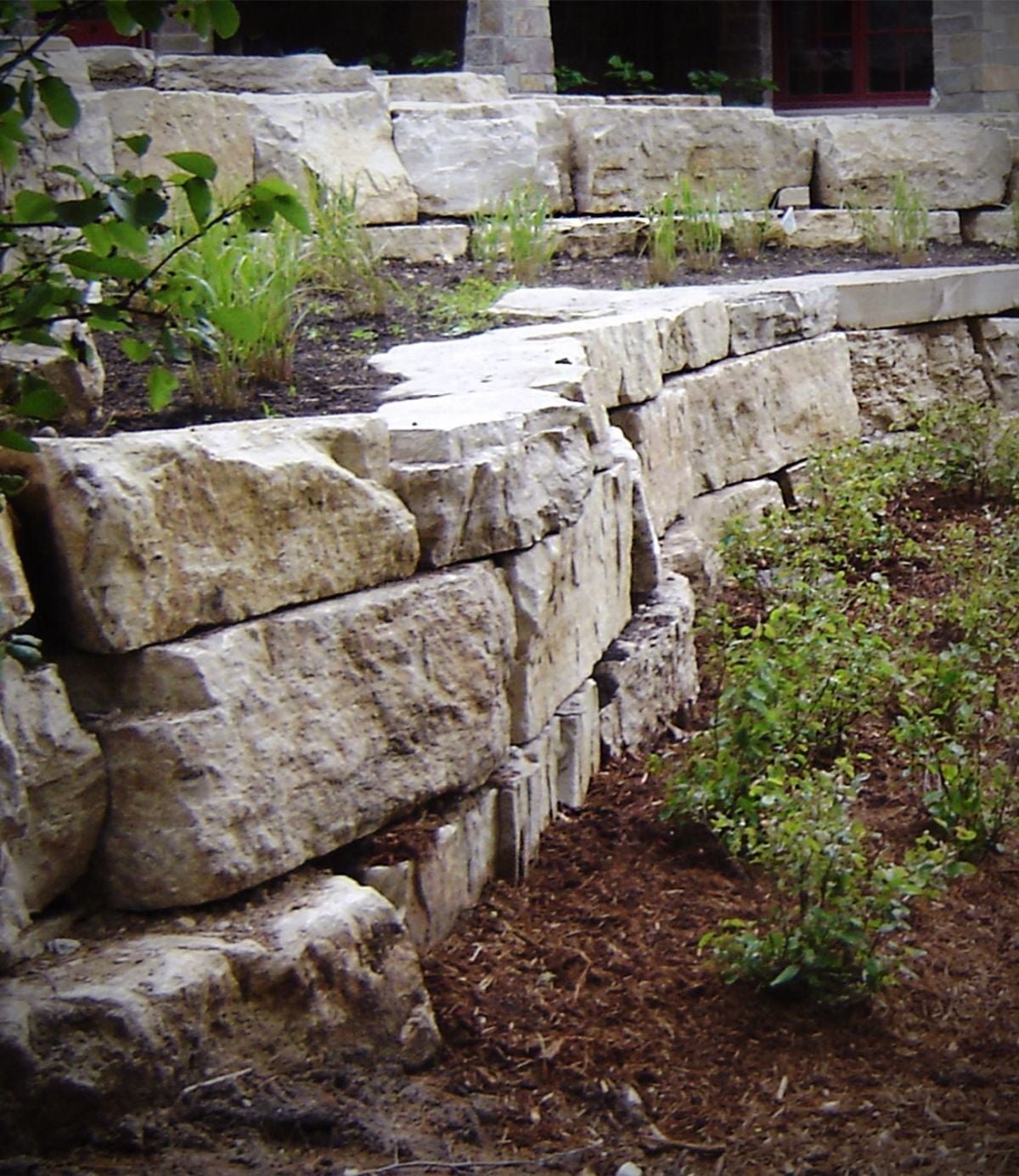
Where a smooth concrete wall might look too clean for a naturalistic yard, these large, rough-hewn stacked stone blocks lean into an uneven, hand-placed look. The beige and tan tones of the stone blend with the brown mulch and green ornamental grasses and small shrubs planted in tiers above and below the wall. The warm earth range ties the materials together.
What defines the naturalistic style is the scale of the blocks relative to the plants: the stones are large enough to hold their own, so the greenery does not need to be dense to balance them. The ratio is roughly half wall, half planting. A uniform capstone or trimming the grasses into tidy shapes would contradict the rough stone.
Metal walls define tiered garden beds
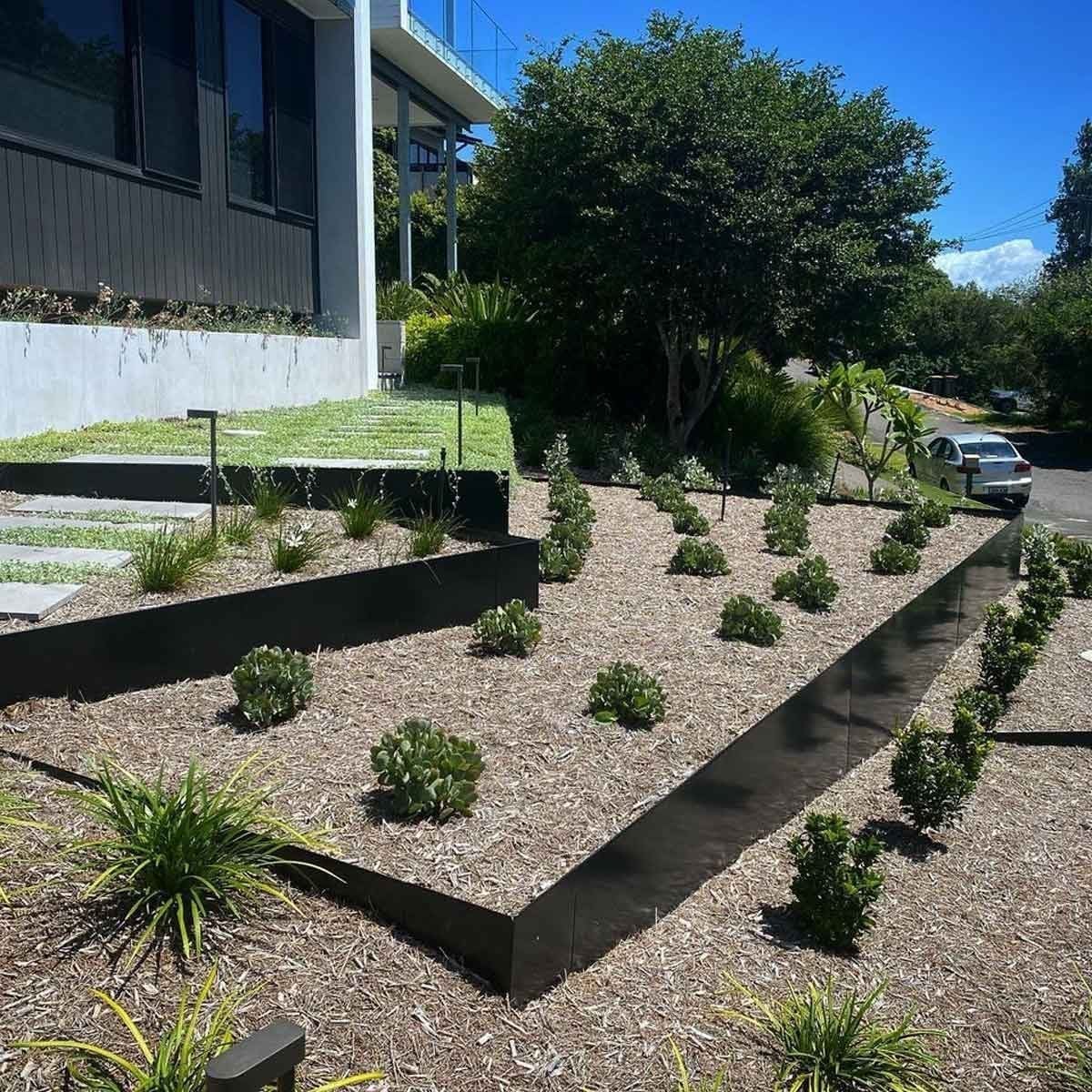
Black metal retaining walls create clean lines that separate the garden into distinct levels. The dark finish contrasts with the green of low planters and the gray of concrete and stone accents. A stepped pathway weaves through the tiers, while pathway lights guide the way after sunset. The modern house in the background keeps the palette restrained. What breaks the look is the wood chip mulch. Its warm, organic texture softens the industrial edge of the metal, keeping the yard from feeling too cold.
Brick wall leads to a patio area
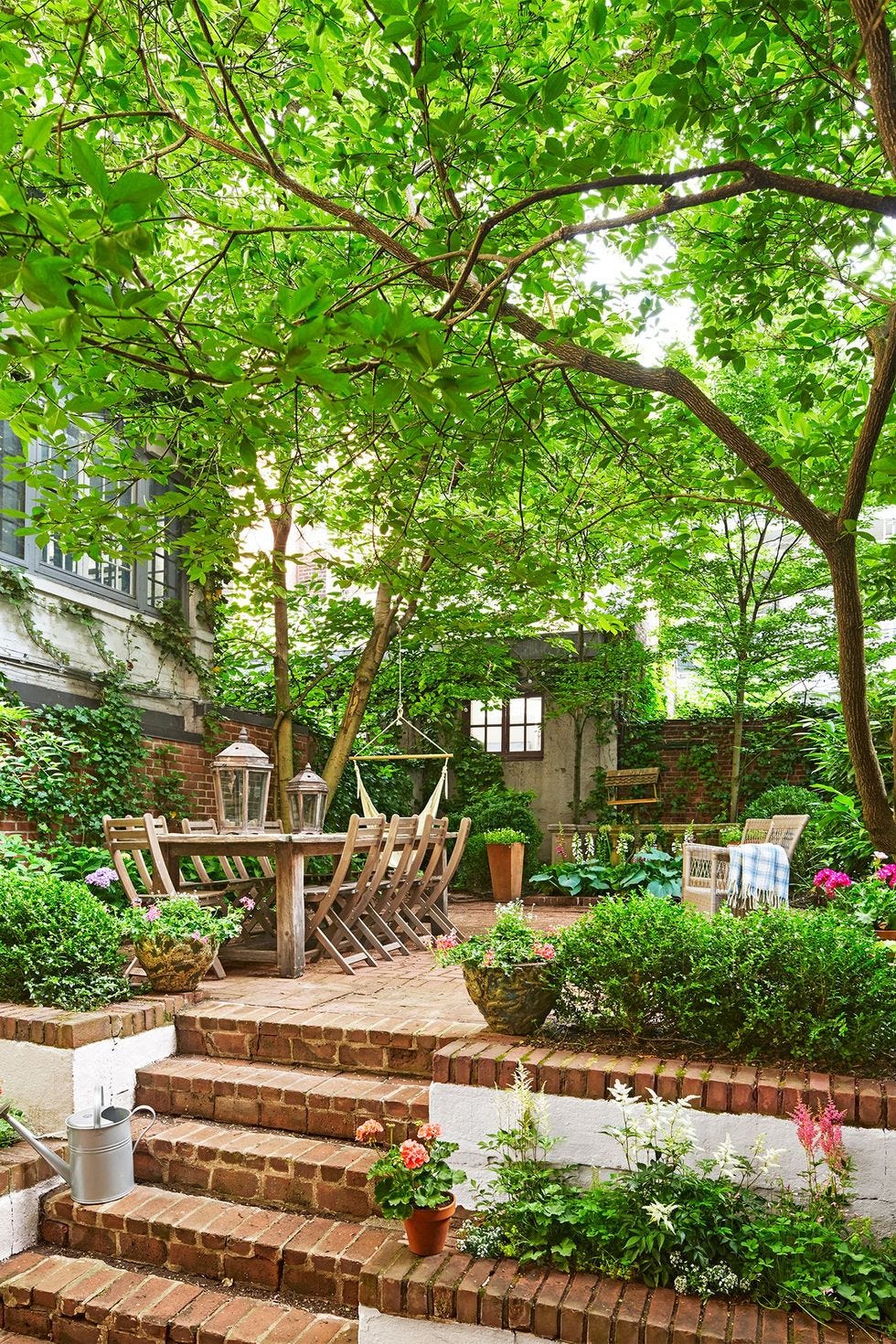
This brick retaining wall with white trim sets a cottage garden tone from the start. The brick red anchors the green of the surrounding plants and the white of the trim and wicker furniture. A dining table and chairs sit on the patio, with a hammock nearby for lounging. The tiered layout creates separate zones for planting and seating. The brick to green ratio gives the wall enough visual presence to anchor the space, while the plants soften the structure. The white trim breaks the heaviness of the brick, giving the whole yard a lighter feel.
Final Thoughts
The right retaining wall turns a practical need into a design opportunity. Each of these 32 ideas proves that material choice, shape, and planting make all the difference. A gabion wall suits modern yards, while natural stone fits rustic settings. Concrete blocks work for clean lines, and wood adds warmth. Keep drainage in mind and pick plants suited to your USDA zone. A well-built wall lasts for years with little upkeep. The takeaway is simple: let your wall do its job and look good doing it.