Farmhouse style is holding steady in 2027, but the look has softened. White shiplap and barn doors are still around, but now they share space with olive green vanities, copper sinks, and geometric floor tile.
The aesthetic is less about recreating a pioneer kitchen and more about mixing warm wood with unexpected color and texture. This roundup of 28 farmhouse bathrooms shows how the style is evolving.
Spacious farmhouse bathroom with marble vanity and exposed beams
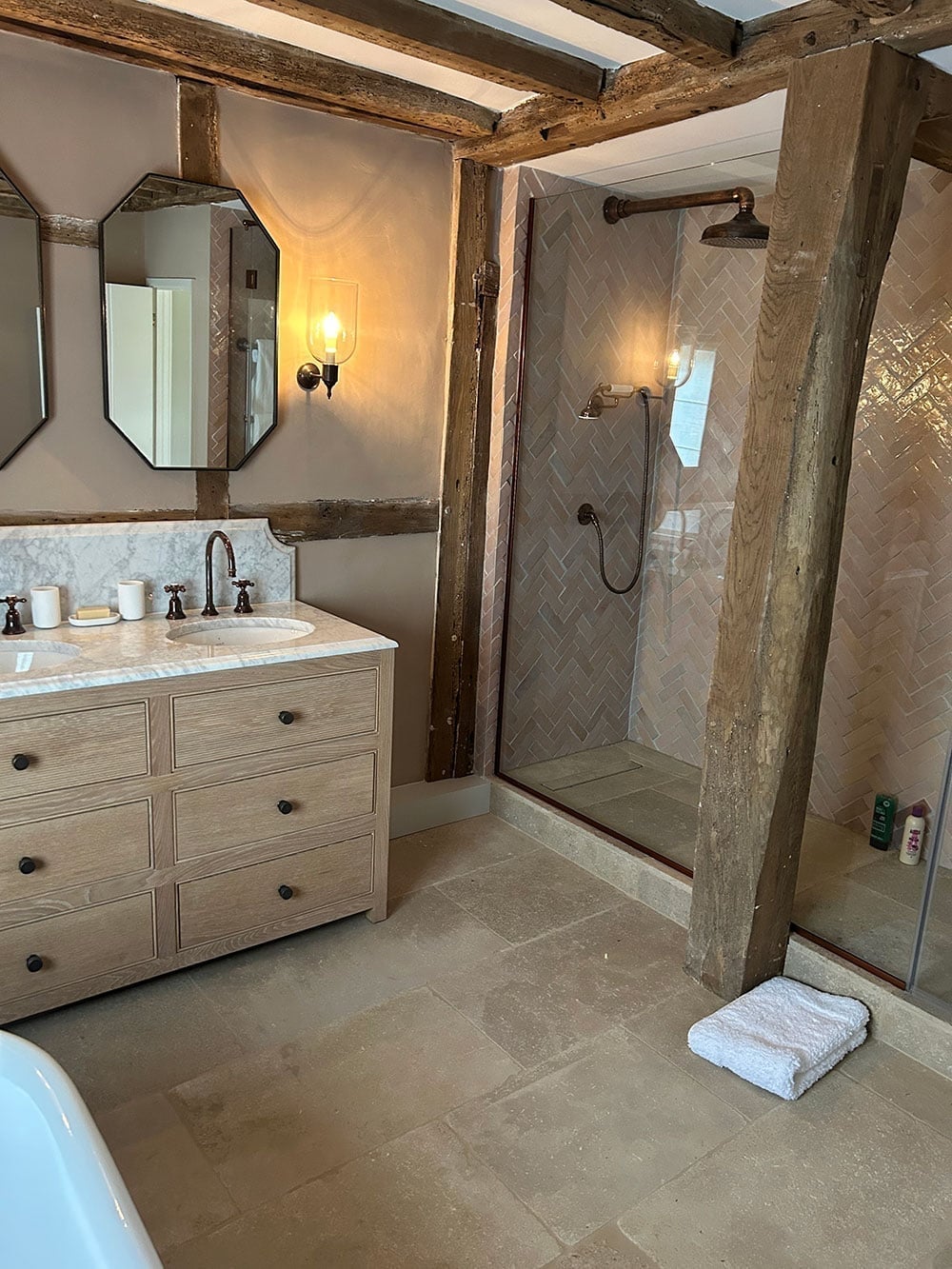
A double vanity stretches across one wall with a marble countertop, while octagonal mirrors hang above. Opposite, a glass shower enclosure keeps the sightlines open, and the whole room sits under exposed wooden beams. The layout plants the vanity and the shower on opposite sides, which creates a natural walkway down the center. That central path makes the room feel even roomier than its square footage suggests, and the beams overhead anchor the space so it never looks a blank box.
Rustic farmhouse bathroom with clawfoot tub and wood paneling
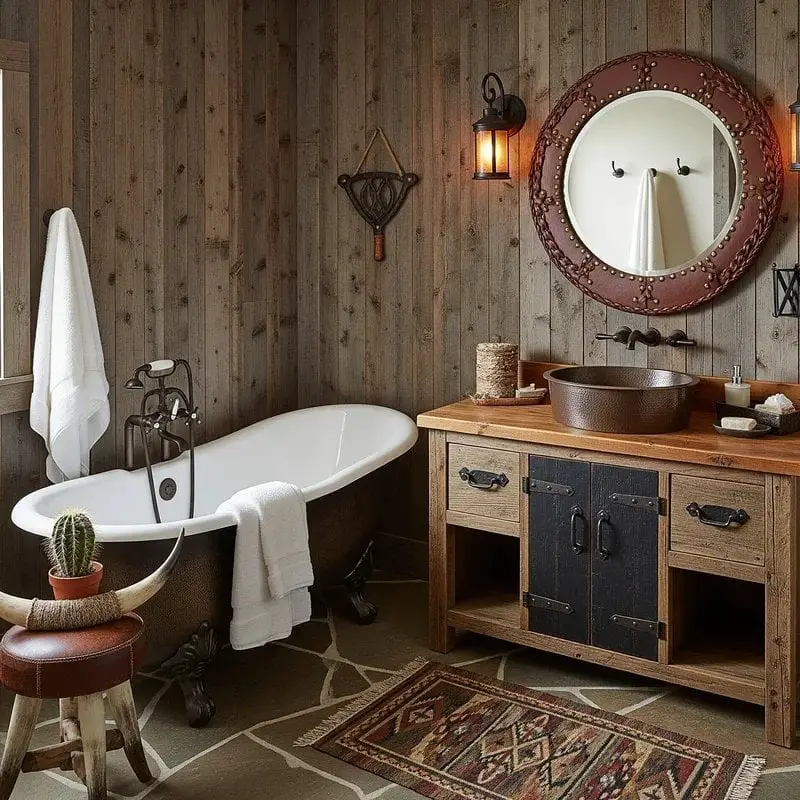
This bathroom leans hard on materials rather than color. The walls are rough wood paneling, the floor is stone, and the clawfoot tub sits on the left side with a wooden vanity and round mirror on the right. Copper fixtures and a leather stool add warmth without competing with the wood. The mix works because the finishes share a similar age: none of them look new or neat. That patina across the stone, the wood grain, and the copper gives the room a settled quality. A room with this many natural surfaces needs a consistent level of wear, or else one shiny piece would pull focus.
Compact farmhouse bathroom with shiplap walls and black accents
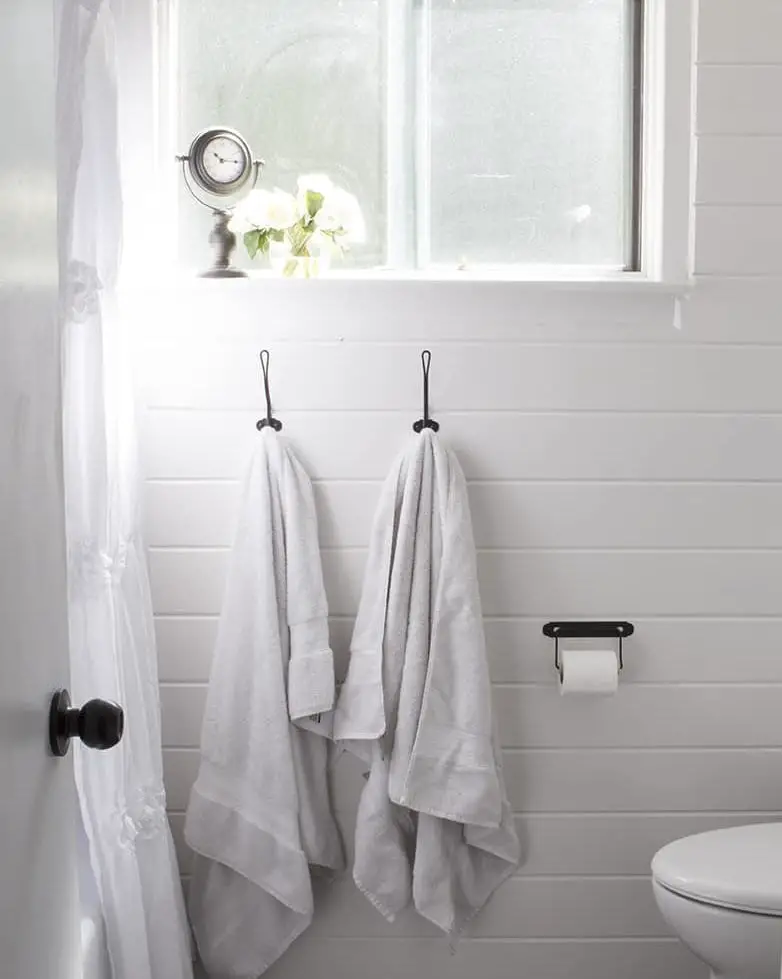
How do you keep a small bathroom from feeling like a closet without gaining square footage? By letting the palette do the work. The walls are white shiplap, the accents are black, and there is no third color to muddy the contrast. Towels hang on black hooks beside a black toilet paper holder, and a decorative clock sits on the windowsill for a touch of shape. The high contrast between white and black defines every edge, which helps a compact space look deliberate rather than cramped. White walls stay bright even with the dark hardware.
Copper sink on a wooden shelf
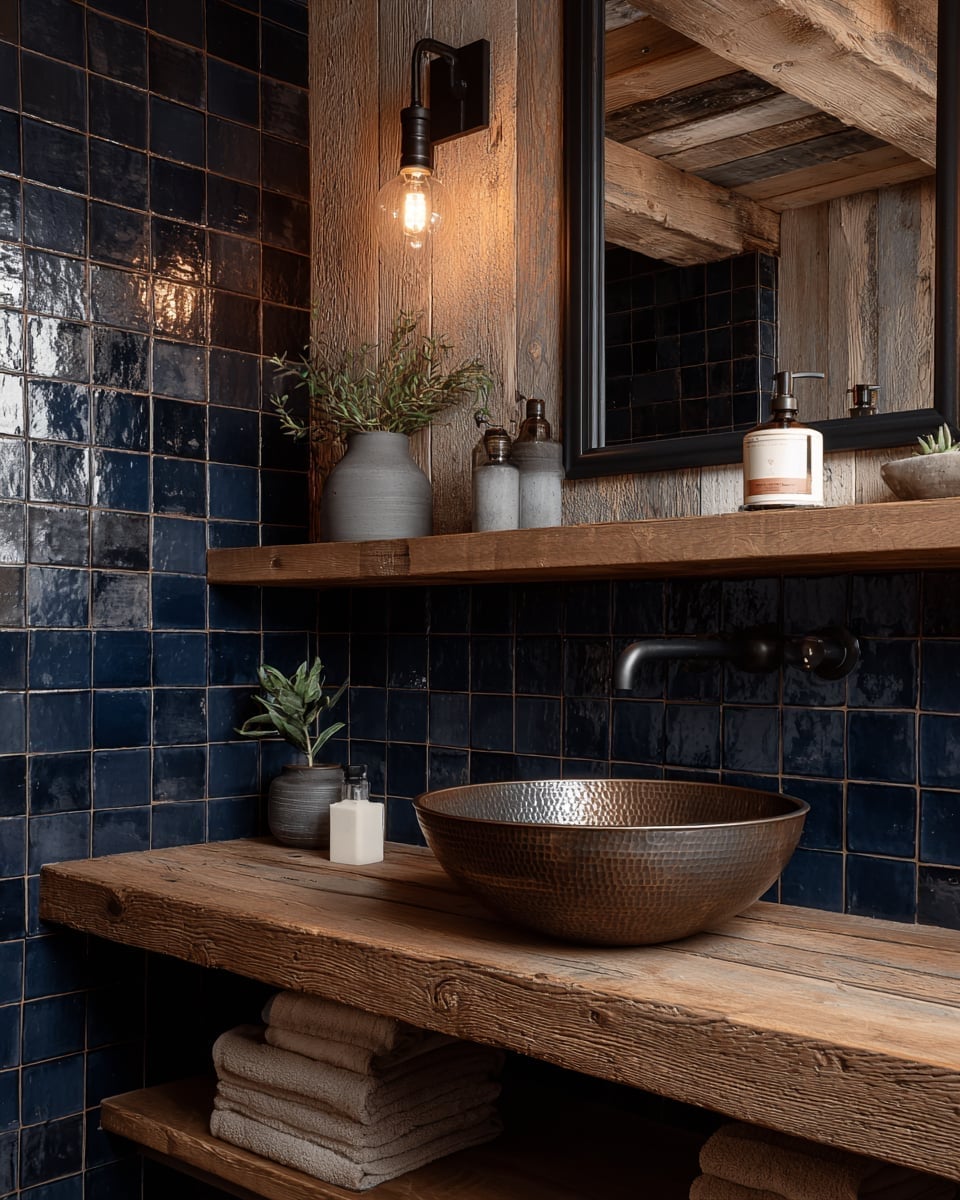
A hammered copper vessel sink sits on a lower wooden shelf, with a second shelf above holding a small jar. An Edison bulb wall sconce casts warm light directly onto the copper, which makes the hammered texture catch the glow. The sink becomes the focal point because the light hits it first and the blue tile behind it stays quiet. Warm light on raw metal creates a natural highlight that no amount of polish can fake. If the sink were under cool daylight, the copper would look brown rather than golden, so the bulb temperature matters as much as the sink itself.
Olive green towel on white subway tile
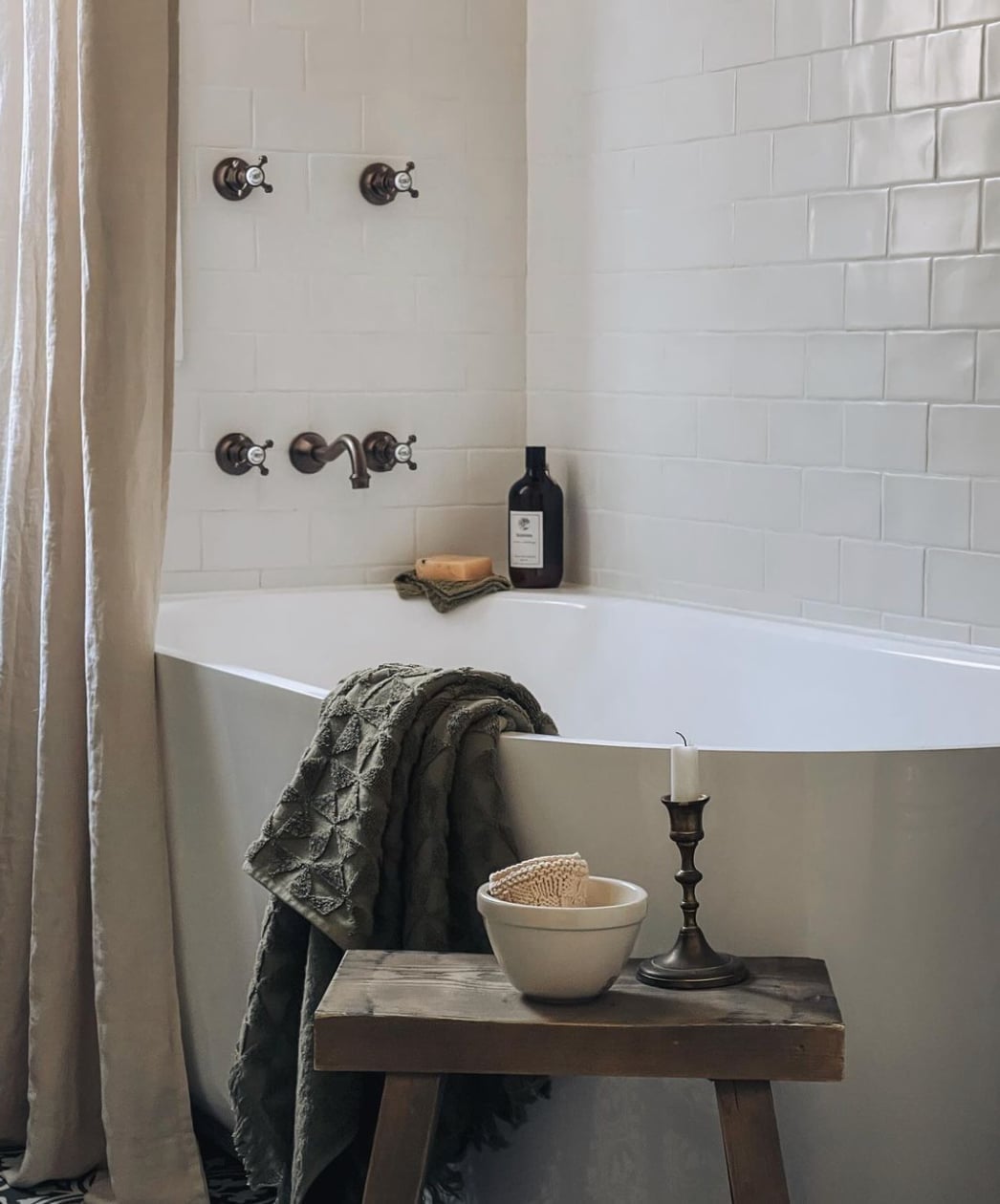
A freestanding bathtub sits against a wall of white subway tile, with a textured olive green towel draped over the side. A wooden stool stands beside the tub holding a candle, and brass fixtures connect the warm notes. The olive green towel is the only saturated color in the room, so it pulls the eye immediately. One strong color in an otherwise neutral space keeps the look from feeling sterile without requiring a full palette. A single towel or a small stool can shift the whole tone of a bathroom, and it costs nothing to swap the towel when the season changes.
Starburst floor tiles on a dresser vanity
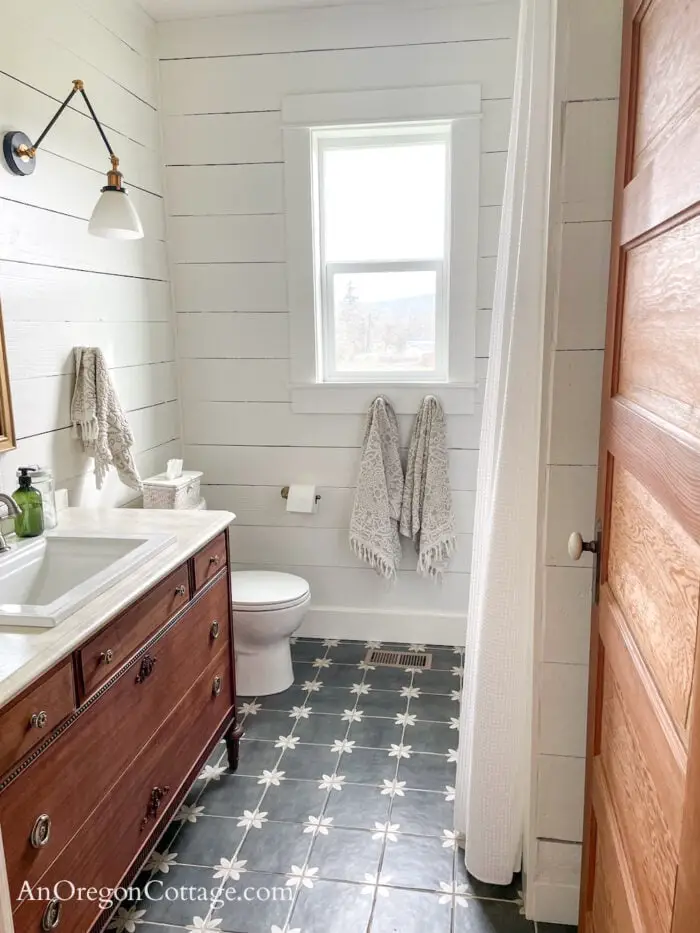
A vintage dresser turned vanity avoids the boxy look of a standard cabinet while adding character. The starburst floor tiles in dark gray and white anchor the compact room, while the wood dresser, marble top, and brass wall sconce keep the farmhouse palette intact. Room mode: the layout works because the vanity sits on the left, the toilet centers, and the shower curtain on the right balances the sightline. The palette stays restrained, letting the floor pattern lead without competing. Useful principle: in a small bathroom, let one element be the star and keep everything else neutral to avoid visual clutter.
Geometric floor tile in green and gray
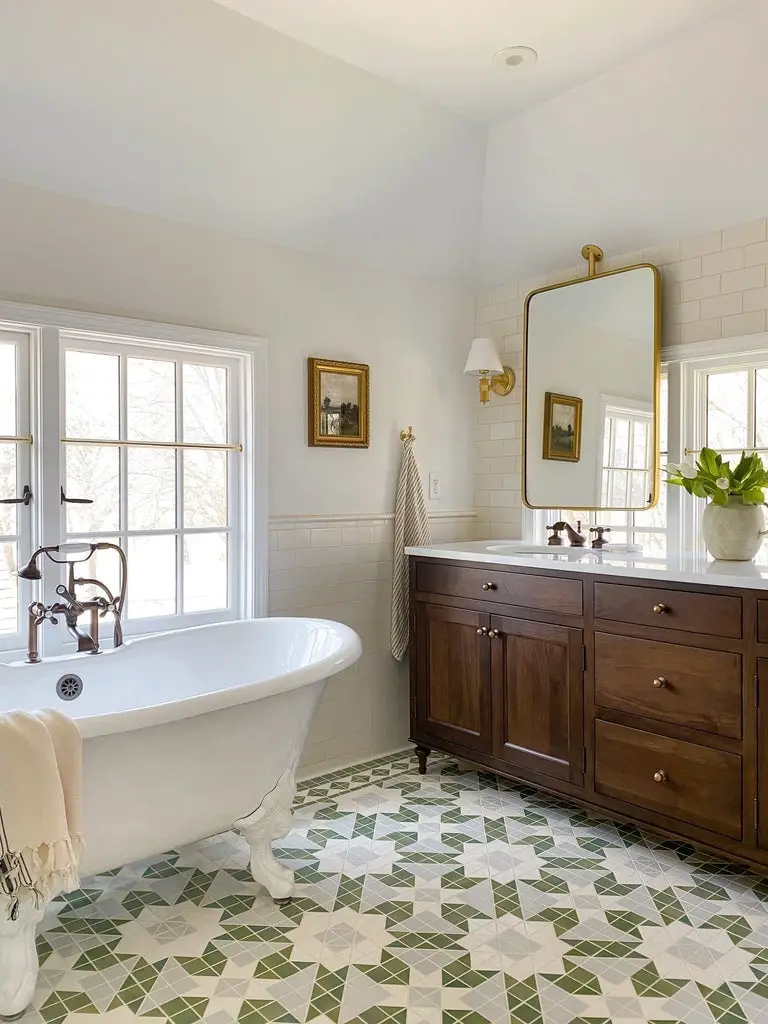
The geometric tiles in green and gray do something smart: they introduce color without painting a single wall. The clawfoot tub and wood vanity stay light, and the brass sconce adds a warm point. Room mode: the freestanding tub sits opposite the vanity, leaving the floor as the main event. The palette divides cleanly, white and wood from the fixtures, green and gray from the tile. Renter-friendly take: if you cannot change the floor, use a washable rug with a geometric pattern. It gives the same visual lift without a permanent swap.
Stone vessel sinks with rattan baskets
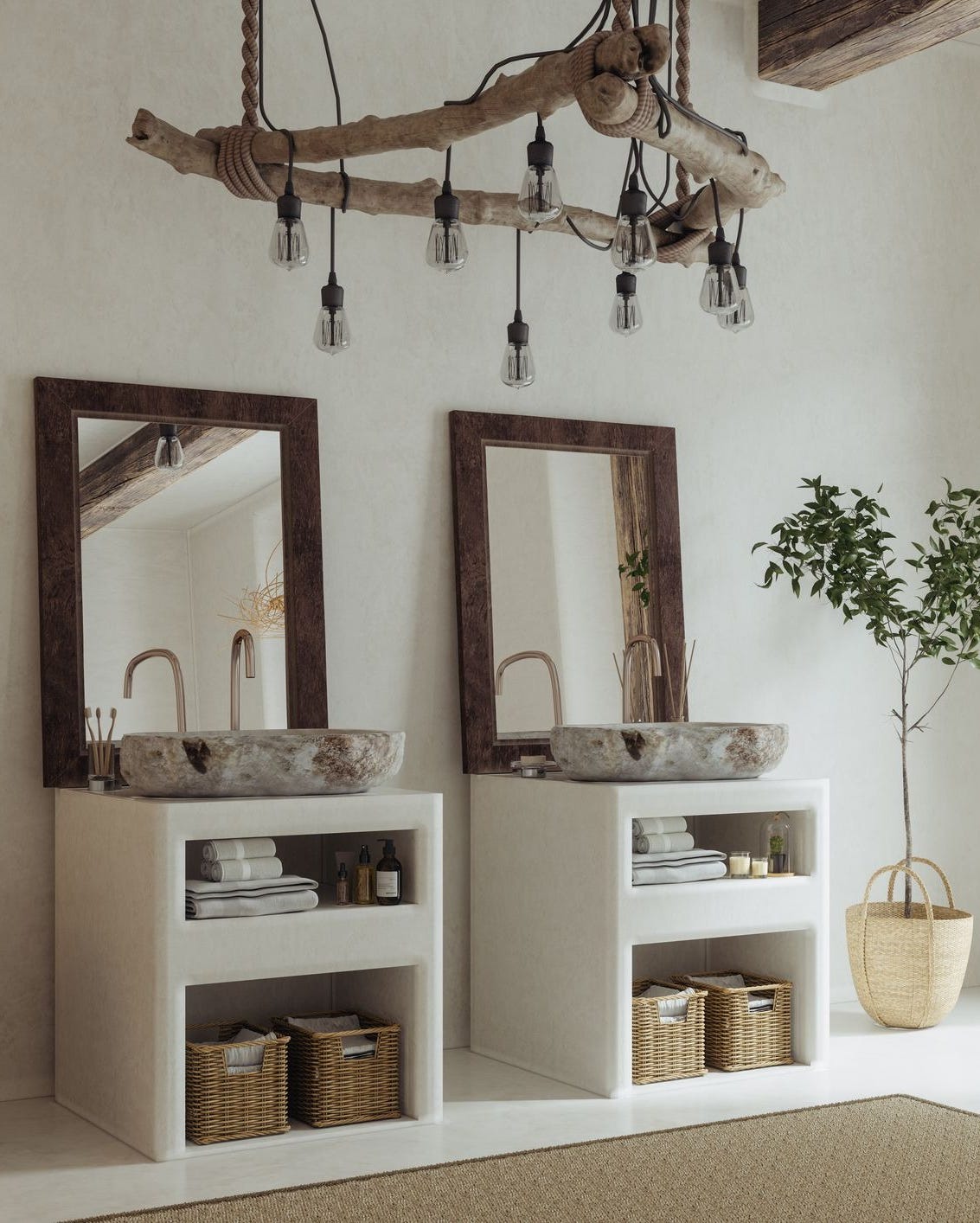
Stone vessel sinks on a double vanity look best when the surrounding materials stay textural but quiet. Rattan baskets under each sink add storage without closing off the space, and the branch chandelier with exposed bulbs hangs low enough to feel sculptural. Room mode: the two identical vanities sit side by side, and the wooden framed mirrors repeat the warm tone. The palette runs white, beige, brown, and gray, no harsh jumps. Lighting tip: exposed bulb pendants work here because the room has natural light during the day; in a darker room, choose fixtures with shades to soften the glare.
Herringbone brick floor with a clawfoot tub
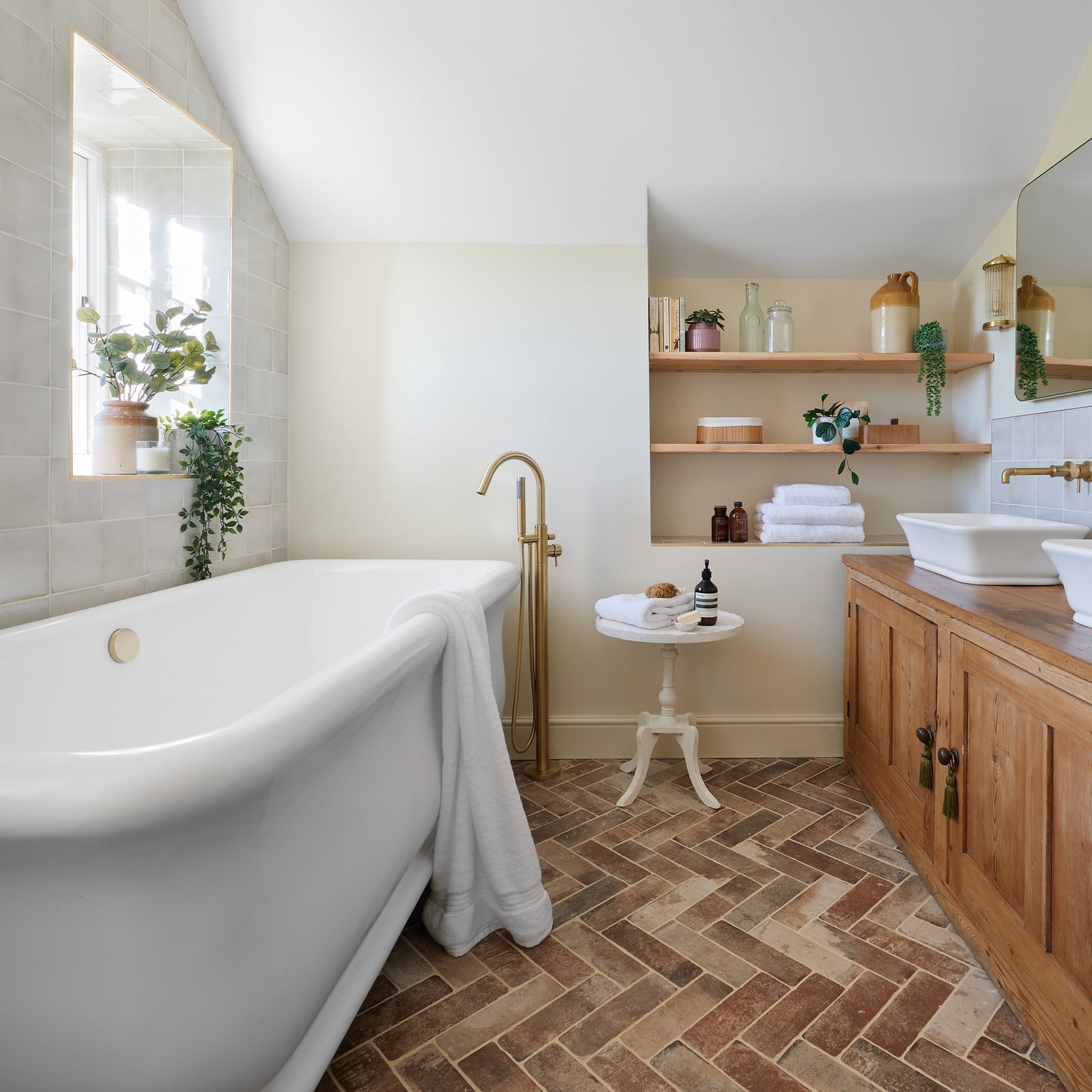
Can a herringbone brick floor handle a bathroom’s moisture? Yes, when the brick is sealed properly. The clawfoot tub on the left and the wooden vanity on the right leave the center open, and the pedestal table beside the tub holds a towel or a candle. Room mode: the open shelving above the vanity keeps everyday items within reach without filling the counter. The palette mixes cream, white, wood tones, brass, and terracotta. Storage principle: a pedestal table works as a temporary caddy in a rental where you cannot install a built-in shelf.
Gold mirror above a floral wallpaper vanity, close-up take
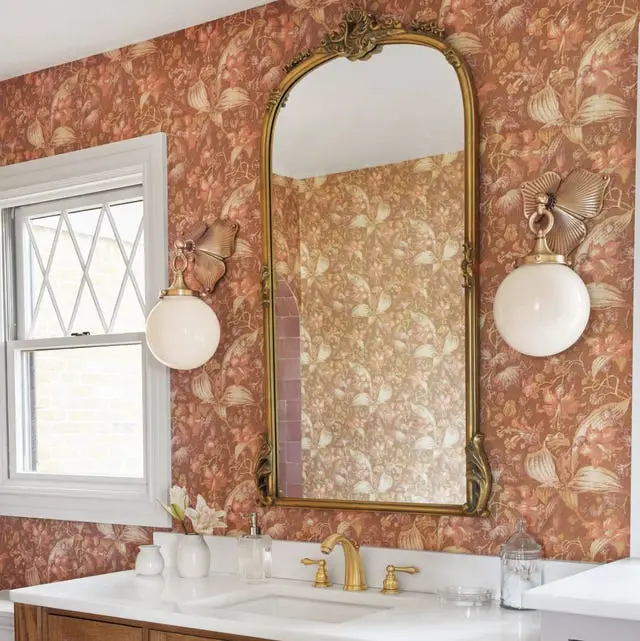
A roomy corner layout lets an ornate gold mirror and a double vanity with marble take center stage without feeling crowded. The floral wallpaper behind the vanity brings in pattern without needing artwork, and the globe sconces provide task lighting for daily grooming. The brown and cream palette from the wallpaper ties the brass mirror and wood tones together, so the gold finish becomes a warm accent. The key here is matching the mirror scale to the double vanity width, which keeps the arrangement balanced.
Antique dresser vanity with an arched mirror
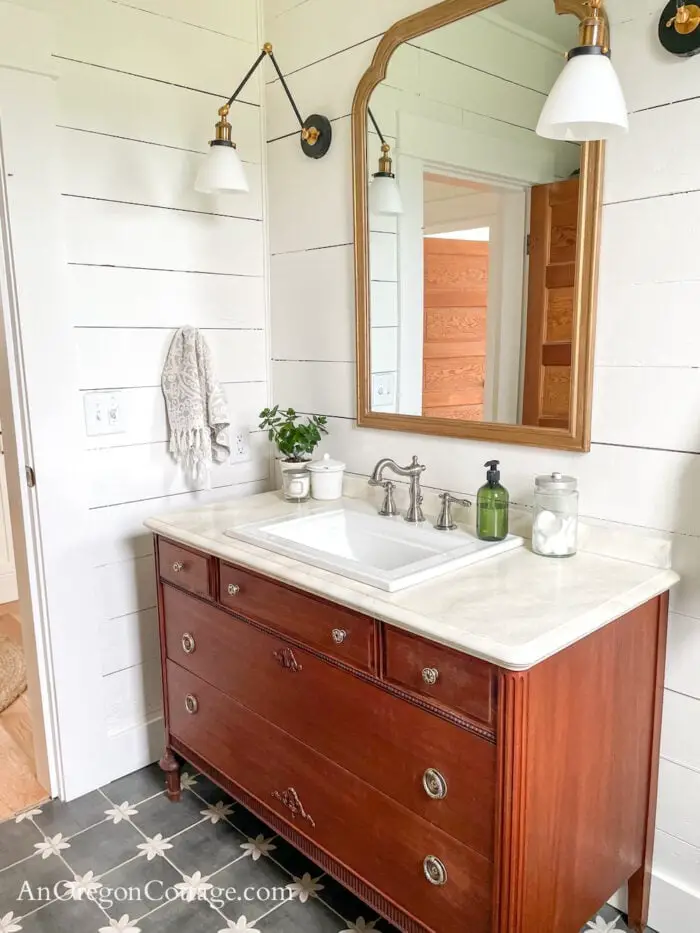
A repurposed antique dresser gives a bathroom immediate character without the boxy feel of a standard vanity. In this compact corner setup, the wood dresser sits under a white marble top with a sink basin, while an arched mirror above and wall sconces on either side keep the look balanced. The mix of wood tones, gray, and green looks collected rather than planned. For a similar swap, any solid vintage dresser can work as long as the height fits your sink rough-in and you seal the top against moisture. A furniture piece this simple handles the layout by doing double duty as storage and style anchor.
Farmhouse bathroom with copper bathtub and stained glass windows
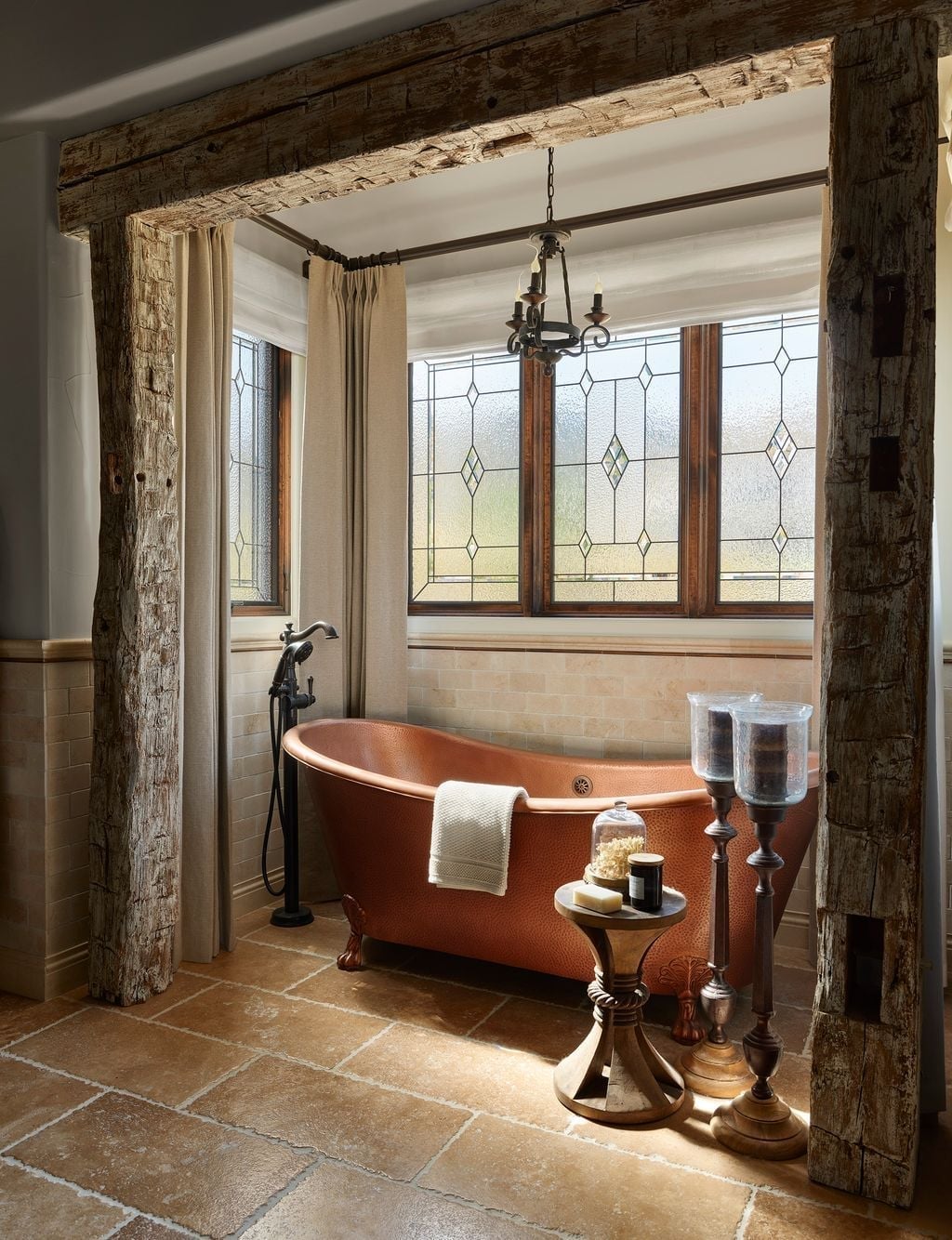
A copper bathtub could easily tip a room toward the ornate, but here stained glass windows and wooden beams keep it grounded. The tub sits centered near the window, its warm copper tone echoed by the beige and cream palette of the tile and stone. A small side table holds decorative candlesticks, while a chandelier overhead adds soft light to complement the natural light from the windows.
The palette stays in a narrow range of copper, beige, cream, and brown, so the materials do the work instead of the colors. The stained glass introduces pattern and color without adding clutter, and the wood beams break the formality of the metal tub. This roomy bathroom feels warm and inviting.
Blue and white patterned tile floor
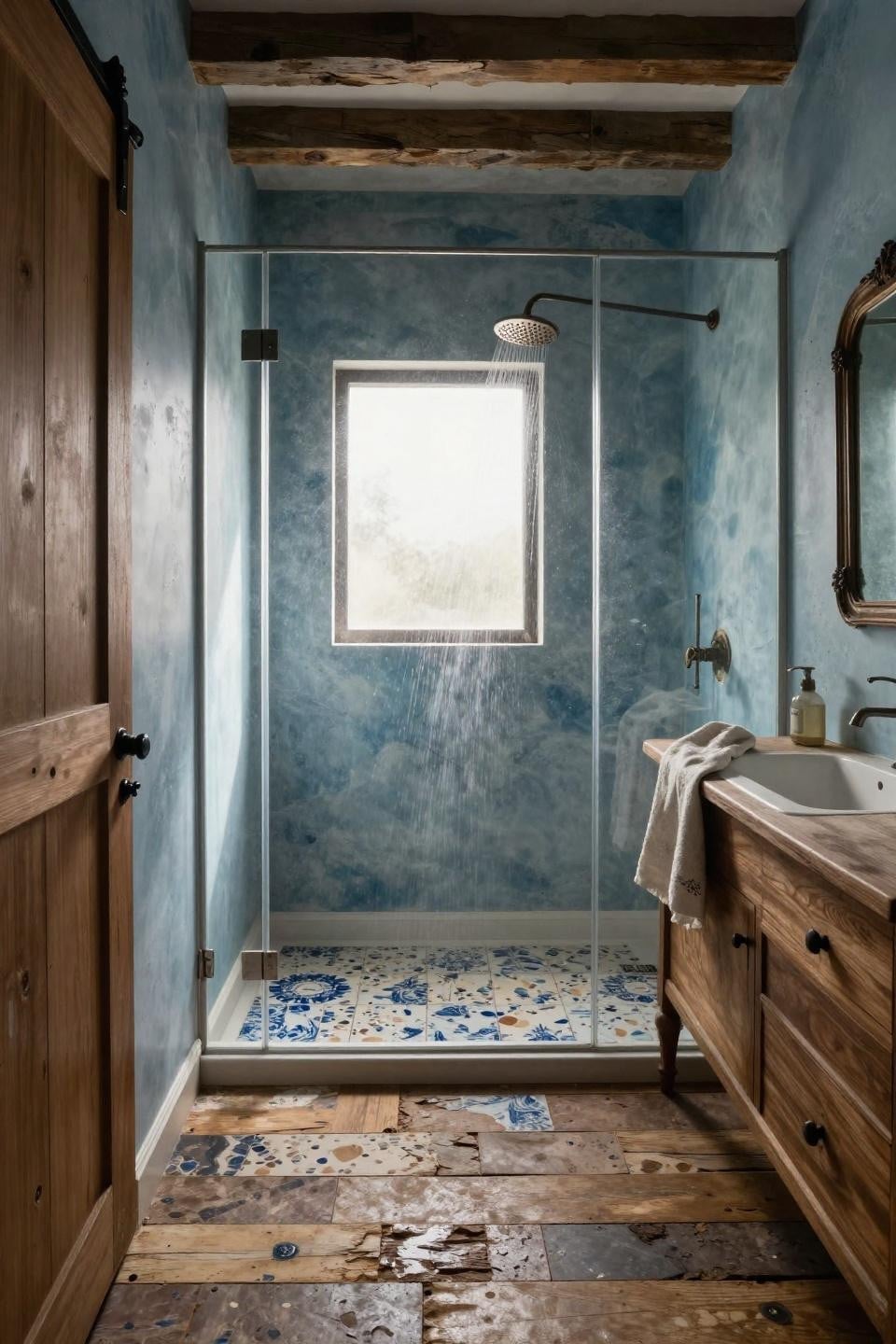
Ornate blue and white patterned tile on the floor does not overwhelm this compact bathroom because the rest of the room stays quiet. A wooden vanity and a glass shower stall let the floor take center stage, while natural light from a window keeps the space from feeling closed in. The tile pattern looks intentional rather than busy when the wall and counter finishes are plain. For a similar effect, choose a floor tile with a tight repeat pattern so it looks texture from a distance and only reveals its detail up close.
Two bathtubs with brick accents
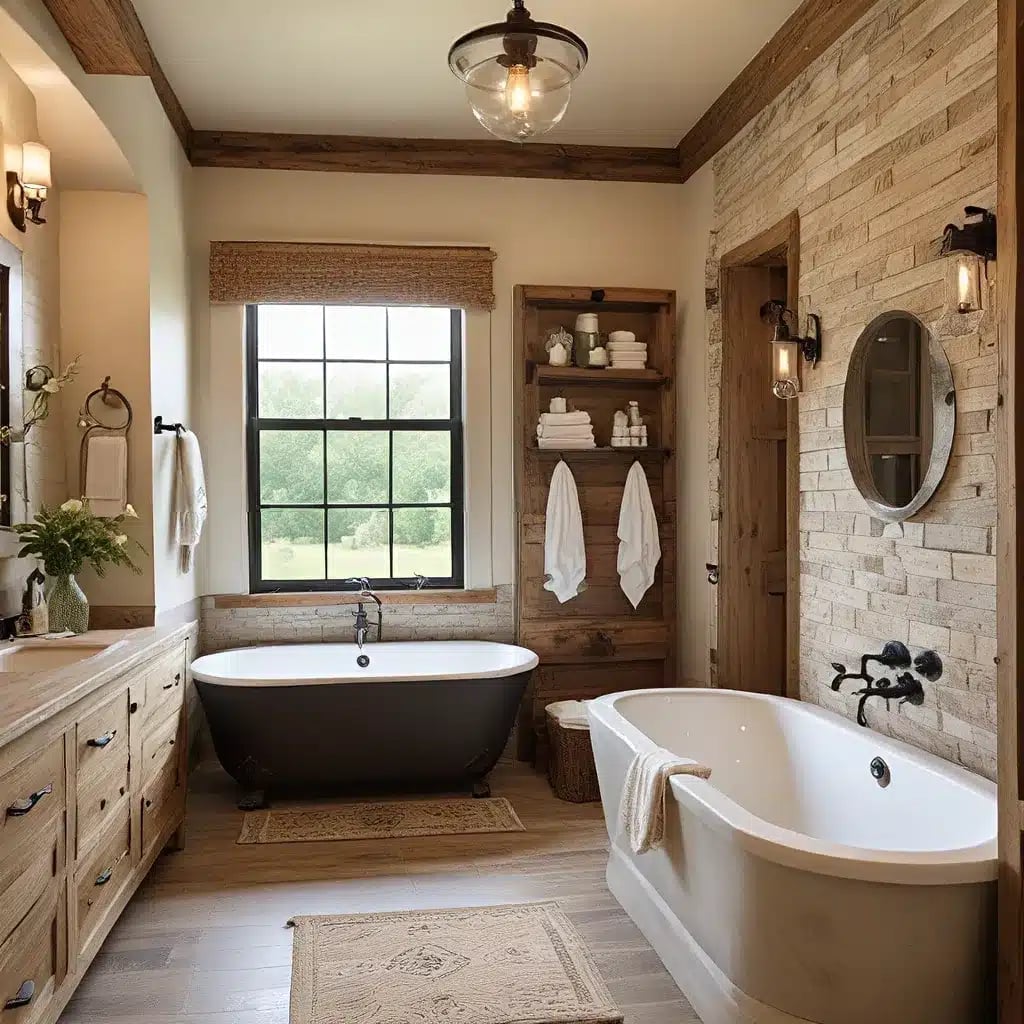
Two tubs in one bathroom is a statement of luxury, but the brick accents and wood vanity keep it from feeling excessive. A clawfoot tub and a freestanding tub sit in a roomy layout with a wood vanity, open shelving, and brick detailing on the walls. Pendant lights and wall sconces provide layered lighting that works for both bathing and cleaning. The scale works because the room is large enough to give each tub its own zone, and the brick and wood tones tie them together. For anyone with the square footage, two tubs make sense for a household where two people want to soak at the same time.
Corner tub with eucalyptus in vase
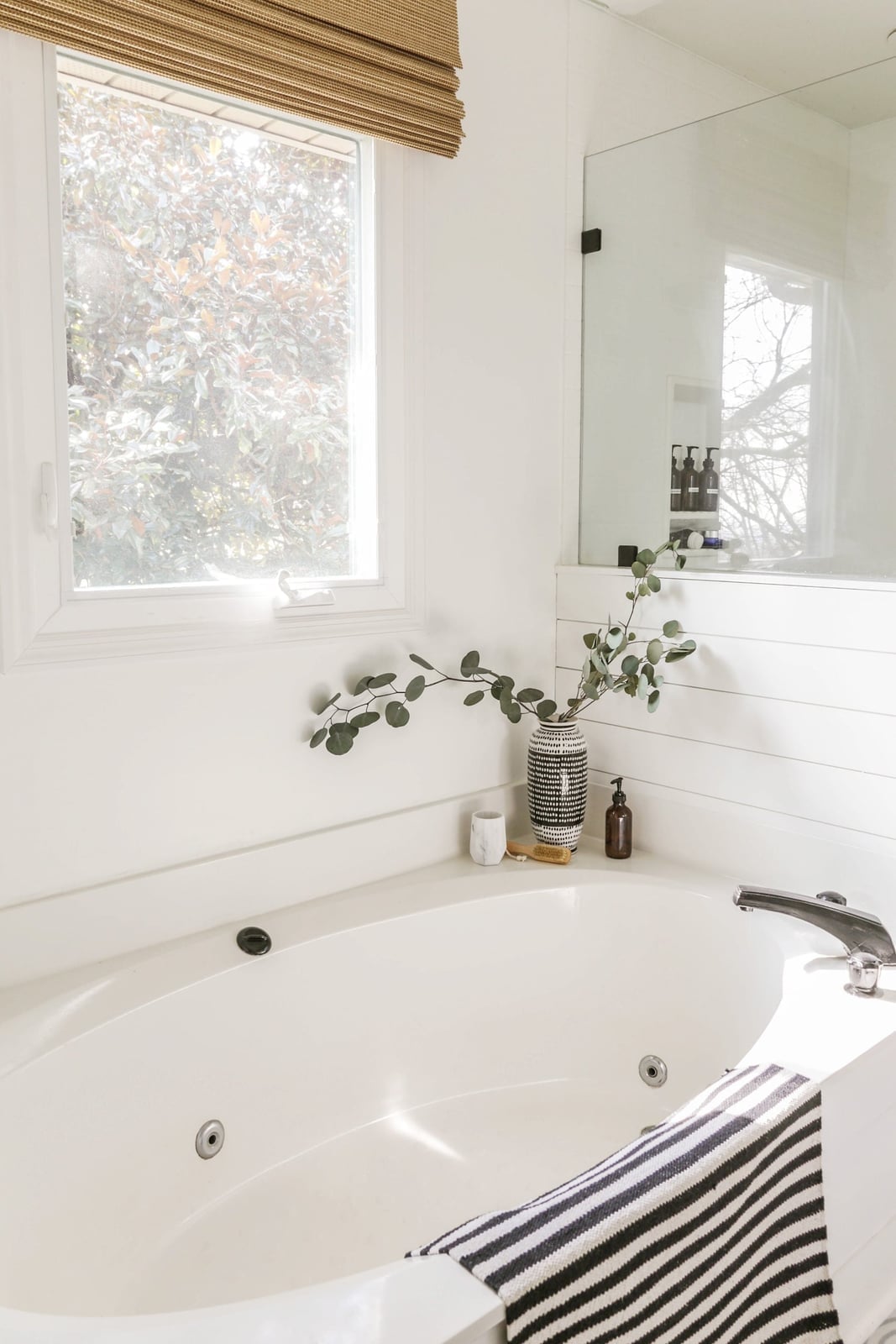
A corner bathtub tucked inside a glass shower enclosure solves the problem of a wet room without sacrificing floor space. In this roomy bathroom, the tub sits in the corner with the glass enclosure wrapping around it, while a patterned vase with eucalyptus on a nearby surface and a striped towel add soft color. The palette of white, black, natural wood, and green keeps the look calm.
For storage, a corner tub layout leaves the opposite walls free for a vanity or shelving. The eucalyptus in a ceramic vase works as a styling trick that adds height and life without taking up counter space. A single towel in a contrasting stripe breaks the neutral palette and gives the room a point of focus.
Farmhouse bathroom with blue vanity and patterned floor tiles
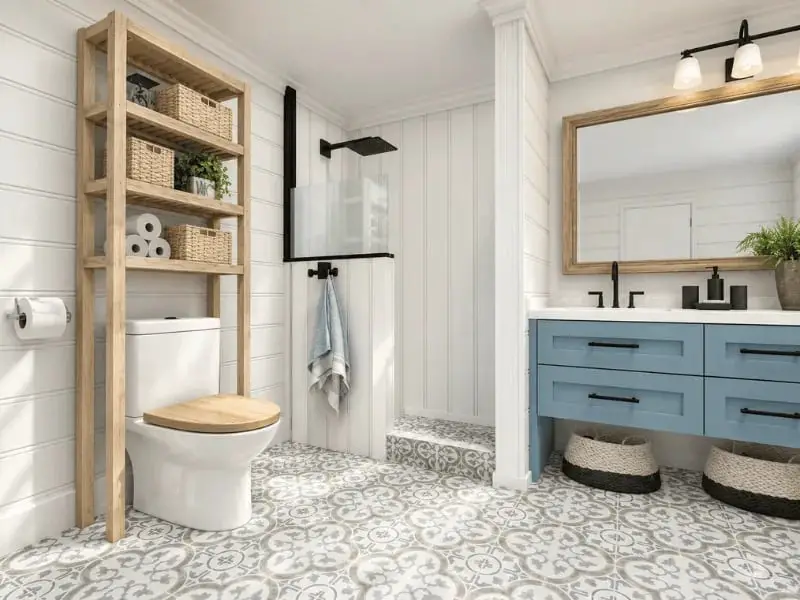
A blue vanity with black hardware becomes the anchor in this roomy farmhouse bathroom. The white countertop and mirror keep the palette clean, while the patterned gray floor tiles add movement underfoot. Wood tones from the shelving unit and wicker baskets warm the space. The palette works because the blue looks the main color, the floor pattern stays neutral, and the wood provides contrast. A roomy layout with the vanity and toilet on opposite walls keeps the visual weight balanced.
Mason jar light fixture on beadboard
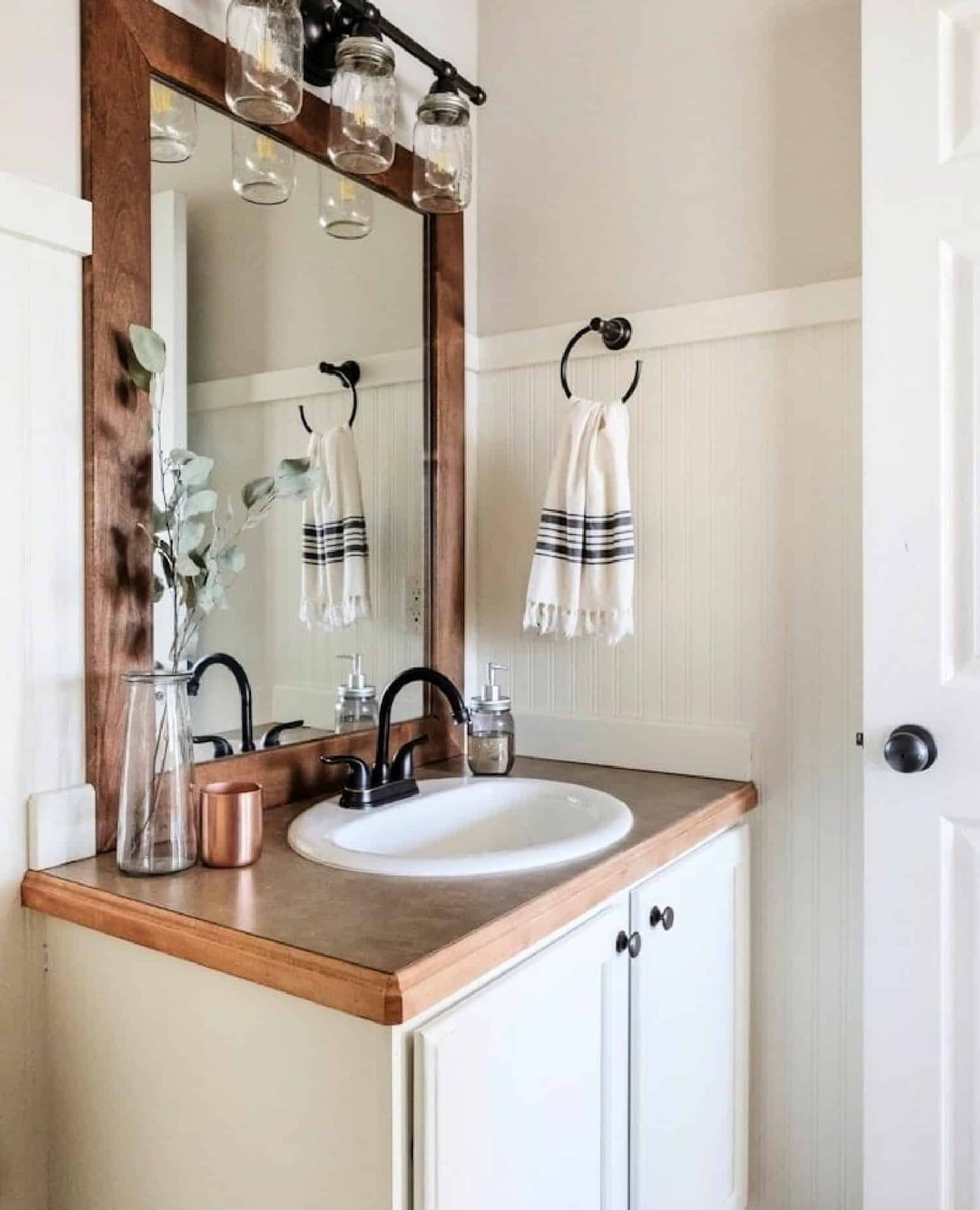
A practical rule for renter-friendly lighting is to use fixtures that mount to existing junction boxes without rewiring. The mason jar light fixture over this compact vanity does exactly that, with glass shades that give off warm light against the beadboard walls. The wood-framed mirror and white vanity keep the look consistent. The black accents in the fixture and towel ring tie the metal elements together. A swap like this changes the feel of the room without touching the walls or floor. The corner layout works well for a small bathroom, keeping the vanity as the main focus.
Compact farmhouse bathroom with olive green vanity and round mirror
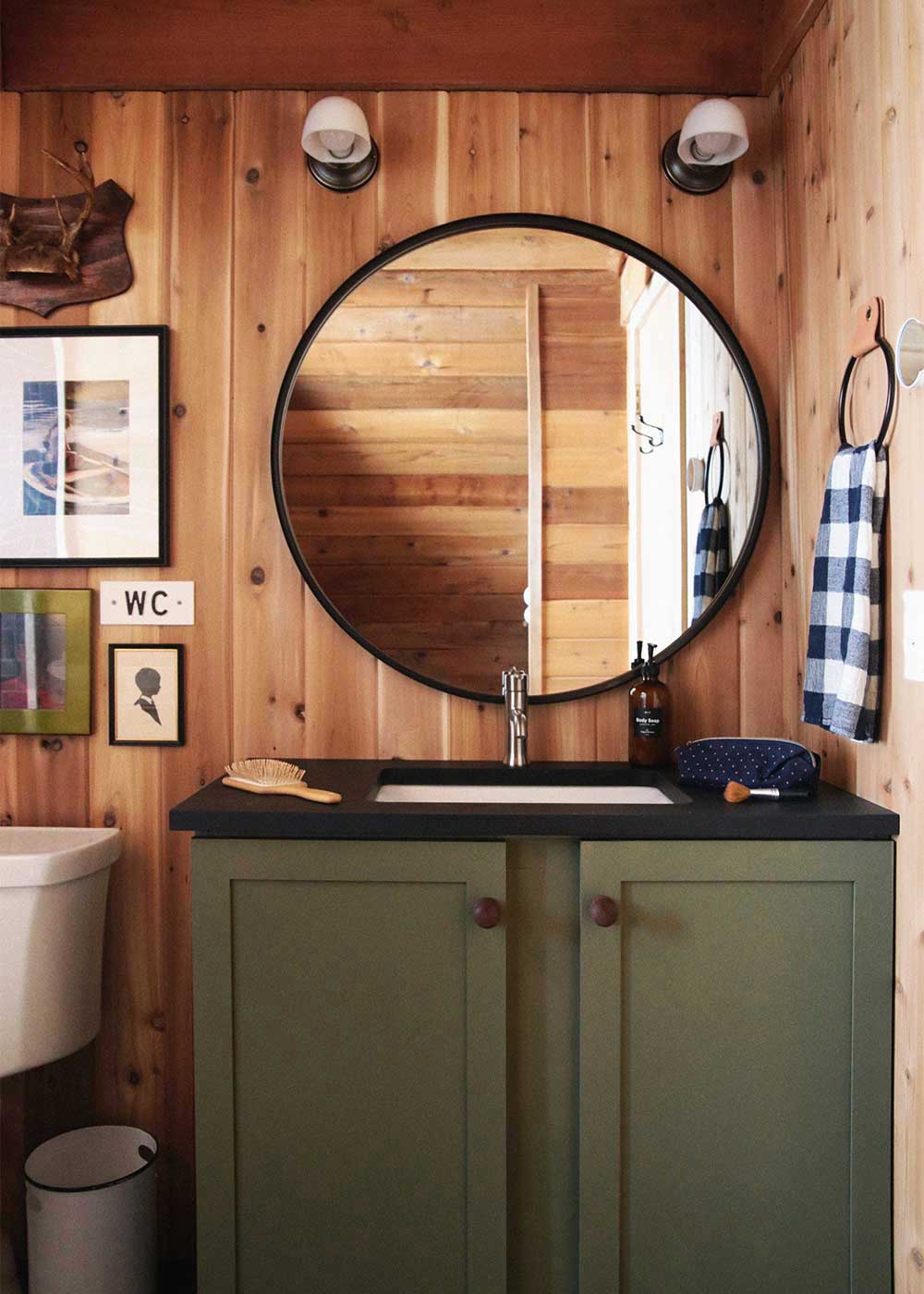
A round mirror feels softer against the straight lines of wood paneling and a dark countertop, compared to a rectangular mirror that would echo the vanity shape. In this compact bathroom, the large round mirror above the olive green vanity becomes the focal point. The wood paneling on the walls keeps the farmhouse feel, while the black and blue accents add depth. Two wall sconces flank the mirror, providing task lighting without taking up counter space. The vanity centered with the mirror above creates a strong focal point, with the toilet tucked to the left. The olive green works as a natural tone against the wood, making the room feel grounded.
Farmhouse bathroom with herringbone tile wall and brass fixtures
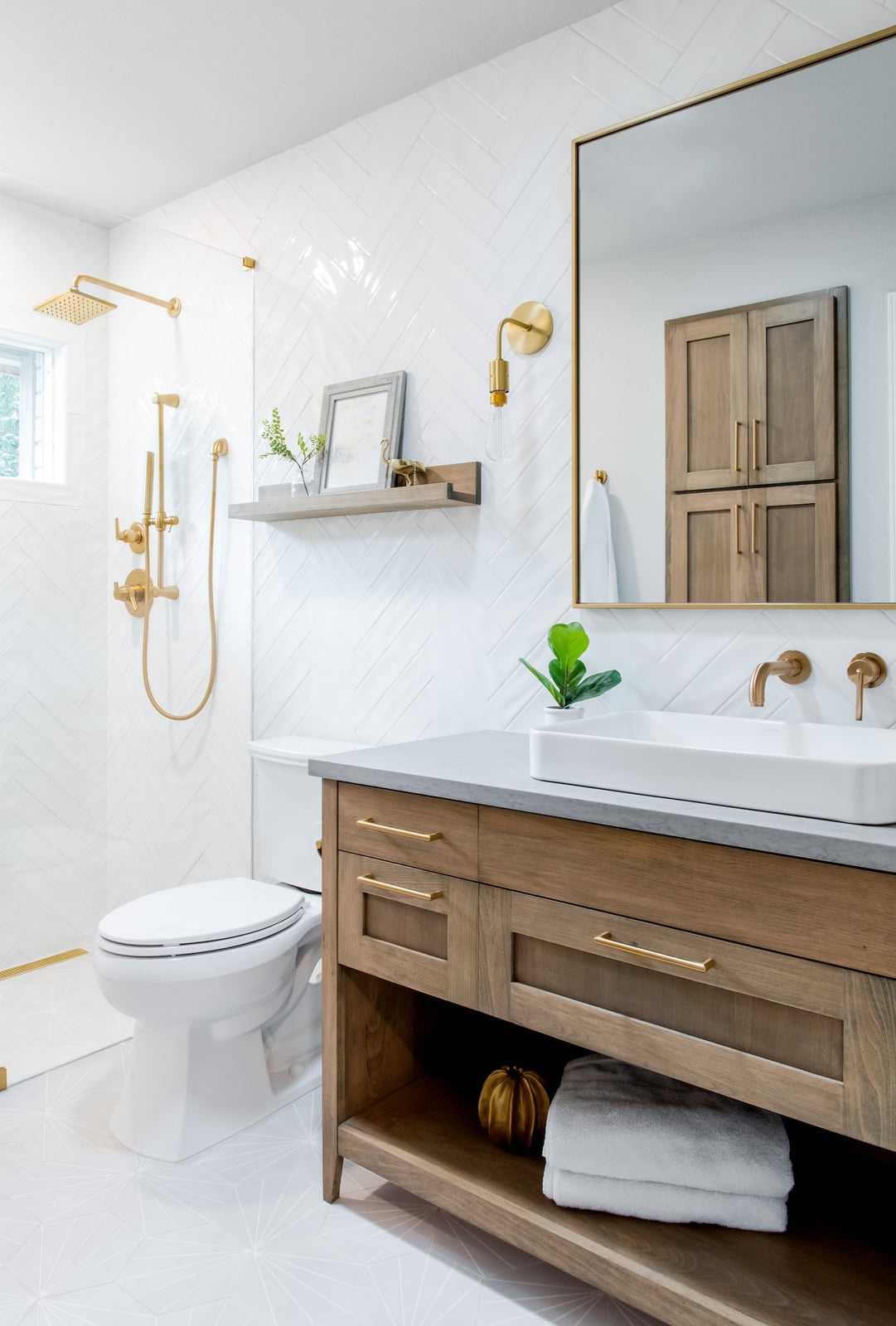
The herringbone tile wall behind the vanity sets a precise rhythm that draws the eye across the room. The wood vanity with its vessel sink and brass fixtures gives the space a warm, crafted feel. Natural light from the window hits the tile pattern, creating subtle shifts in shadow. The open shelving below the vanity keeps the layout from feeling heavy. Brass fixtures hold up well in a bathroom because the finish hides water spots better than neat chrome. The roomy corner layout allows the shower area to stay separate, so the tile wall remains the main visual feature.
Distressed wood paneling with stone floor
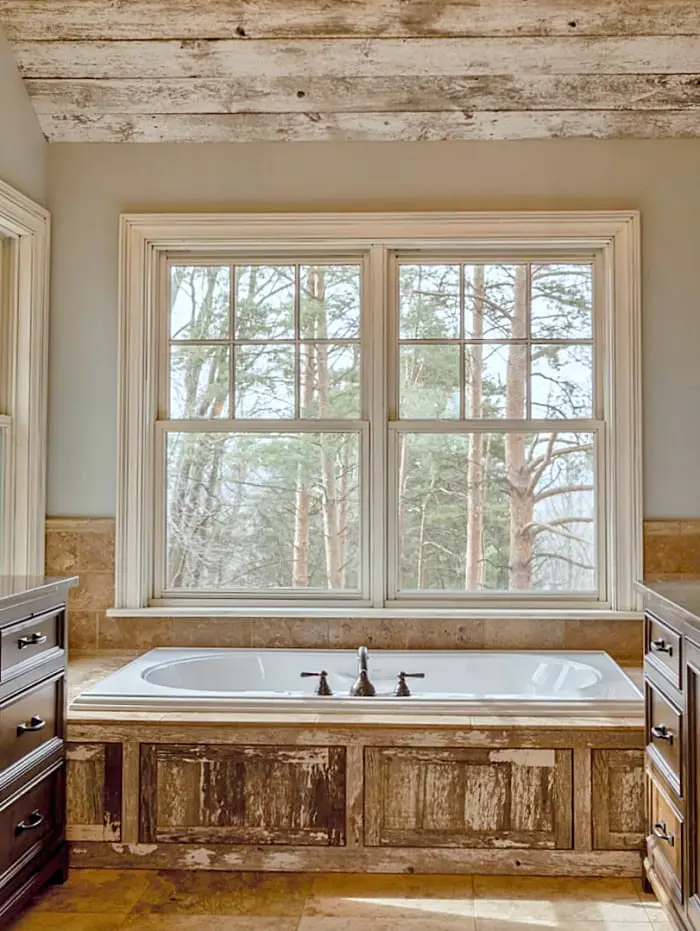
This room feels larger than it might otherwise because the distressed wood paneling around the bathtub draws the eye upward. The gray stone floor and marble accents keep the palette grounded, while the white vanity cabinets and windows prevent the room from feeling too dark. The bathtub centered under the window creates a symmetrical focal point, with vanities on either side. The distressed finish on the wood adds texture without making the room feel rough. The stone floor provides a durable surface that handles moisture well, and the neutral beige and brown tones in the wood tie the whole palette together.
Metallic bathtub with a wood stump table
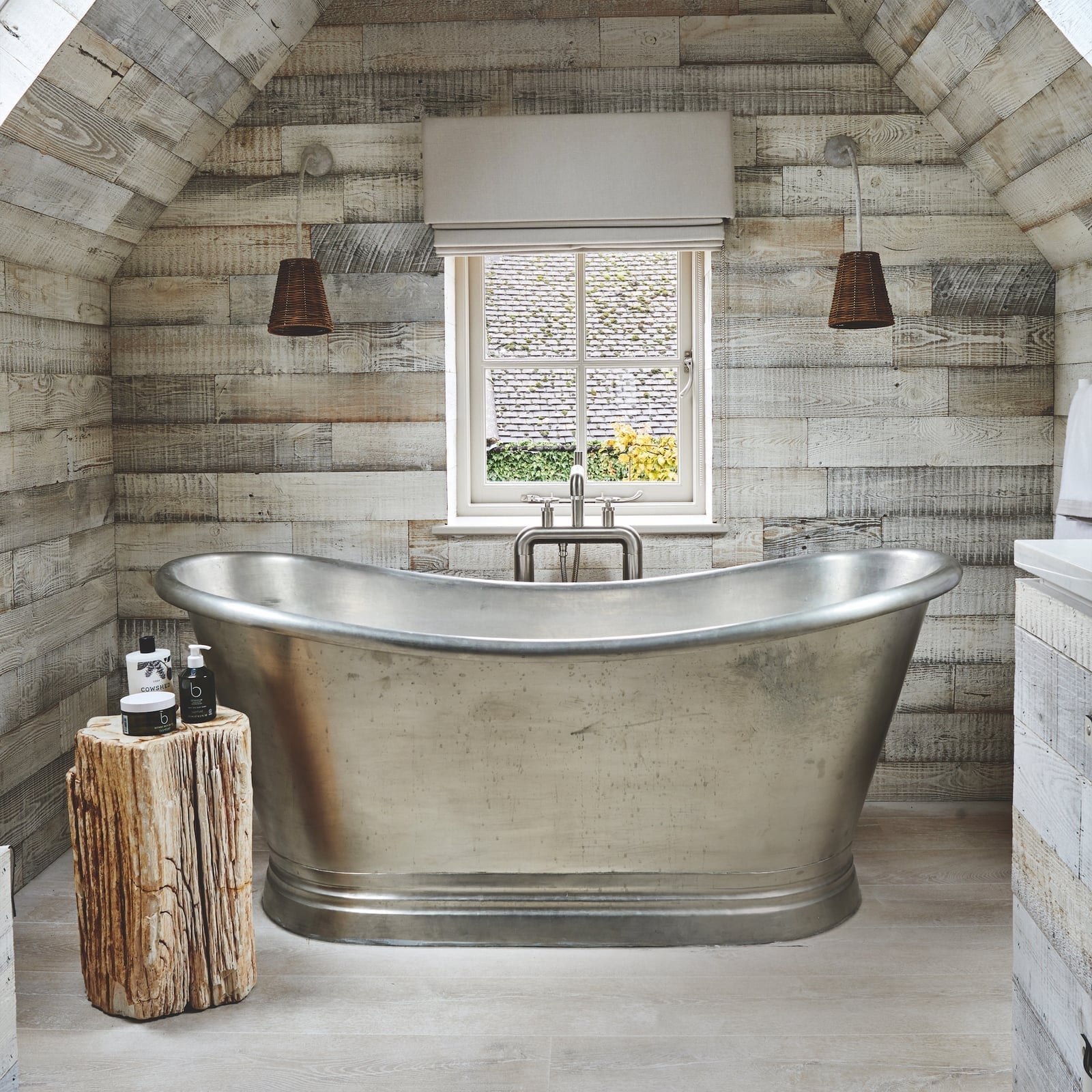
A freestanding bathtub works best when nothing competes with its silhouette. In this roomy farmhouse bathroom, a metal tub sits centered with a wood stump side table to the left. The palette is gray, white, and natural wood tones, so the metallic finish becomes the focal point. Pendant lights above mirror the weight of the tub without pulling focus. A room this open can handle a single substantial piece of furniture beside the tub, but keep the floor clear. That wood stump table is the only companion the tub needs, and the quiet stone floor helps both pieces feel grounded.
Horse painting above a patterned backsplash
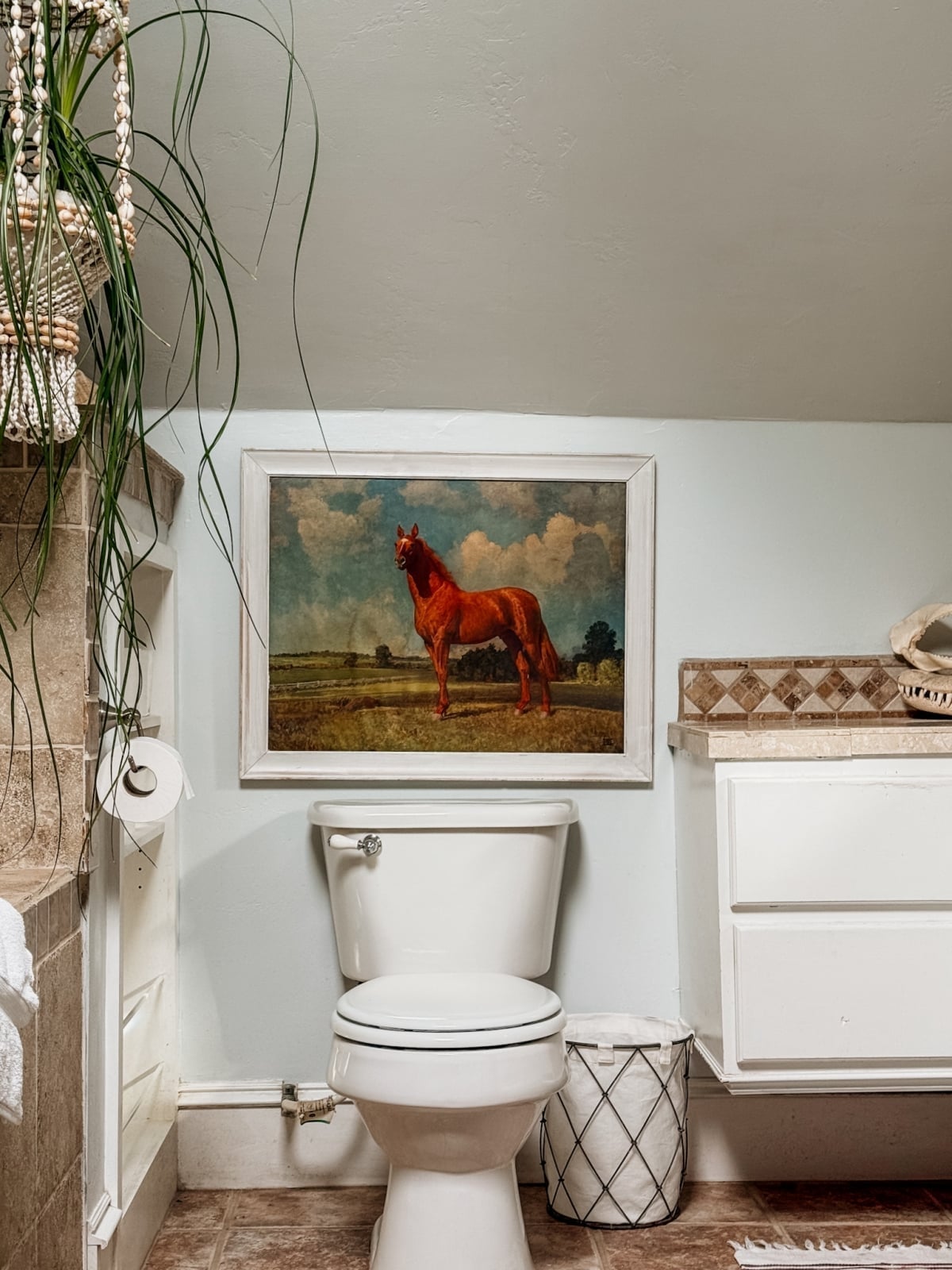
A framed painting of a horse hangs above the toilet in this compact farmhouse bathroom, with a vanity to the right and a hanging plant in the corner. The palette runs light blue, white, brown, beige, and green, and the patterned backsplash tile picks up the earthy tones from the artwork. That connection between wall art and wall tile is what makes the horse painting feel intentional rather than random. When you hang a piece above a toilet, keep the frame within the width of the fixture below. A painting that is wider than the toilet will look top-heavy in a small room.
Glass-front cabinet with an oriental rug
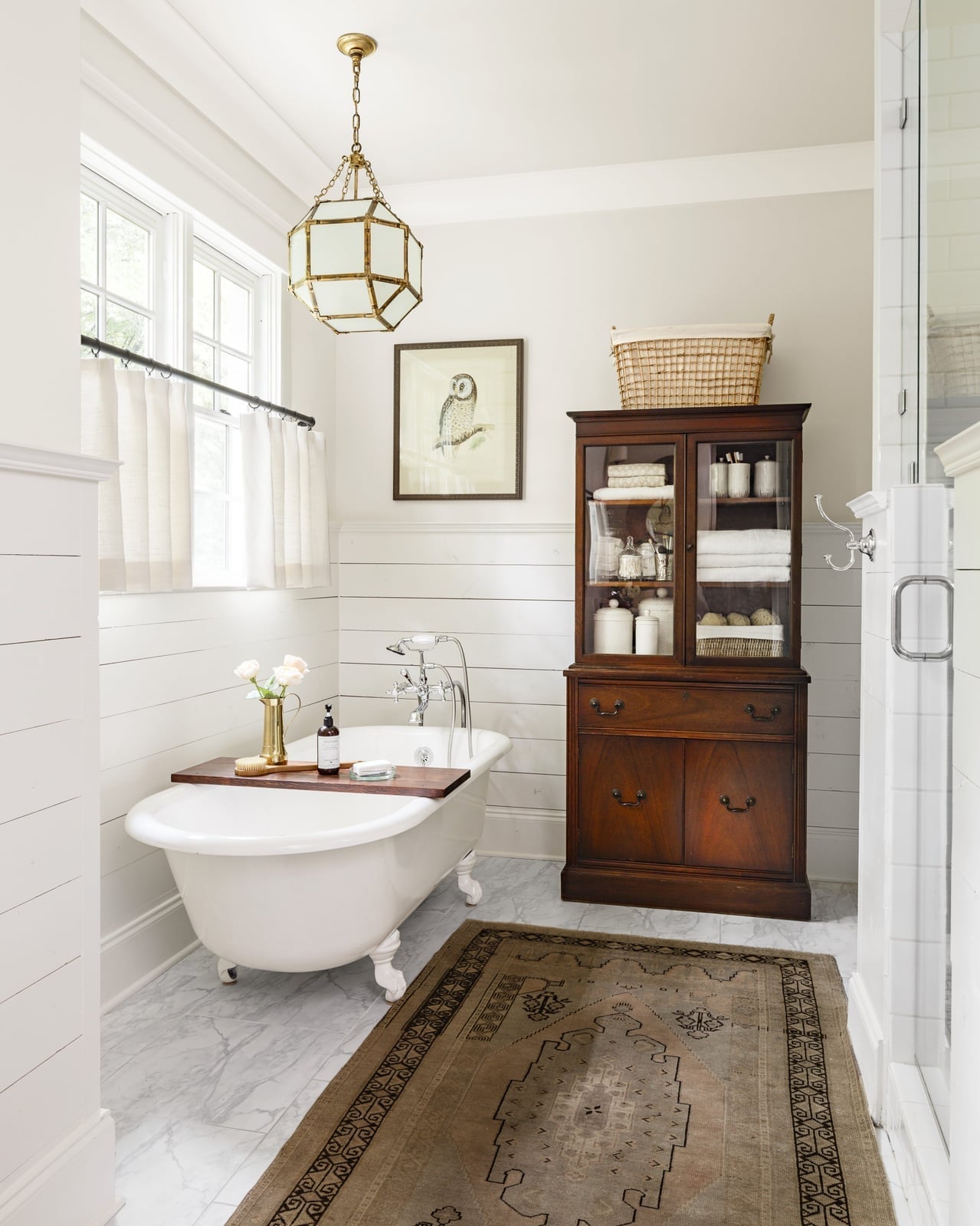
A vintage glass-front cabinet is an easy upgrade for a farmhouse bathroom that needs closed storage without losing the airy feel. In this roomy space, the cabinet sits to the right of a clawfoot bathtub, with an oriental rug on the floor and a window. The glass doors mean you need to keep the contents neat, but that same transparency stops the cabinet from feeling like a heavy block of wood. Marble tile on the floor and brass details on the cabinet tie the room together. The rug softens the hard surfaces and adds a pattern that the glass cabinet reflects without competing with it.
Potted palm next to an ornate mirror
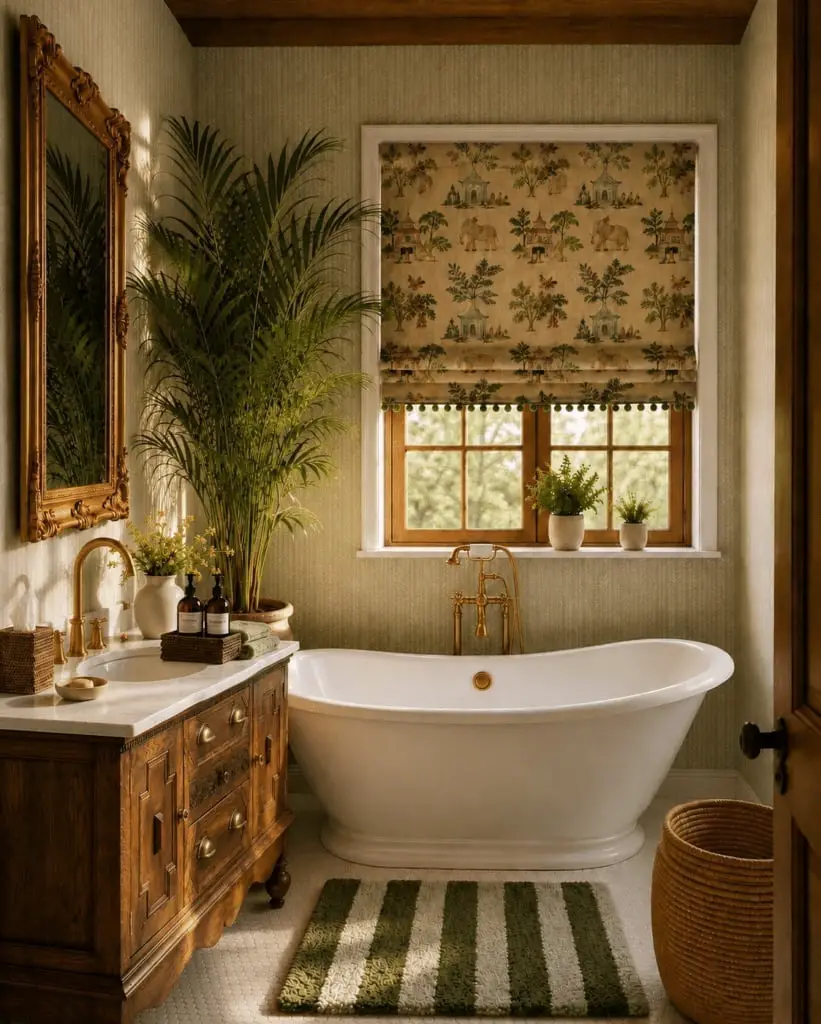
An ornate gold mirror can look too formal for a farmhouse bathroom unless you place something loose and organic next to it. Here a potted palm stands beside a clawfoot tub, with a vintage vanity and the mirror on the wall above. The roomy layout has the vanity and tub flanking a window, so natural light hits both the gold frame and the broad palm leaves. The rigid, detailed mirror and the soft, irregular plant shape keep the look balanced. Overhead beams add warmth. The palette of beige, green, white, and wood tones lets the green of the palm stand out.
Wooden crate shelving with an oval mirror
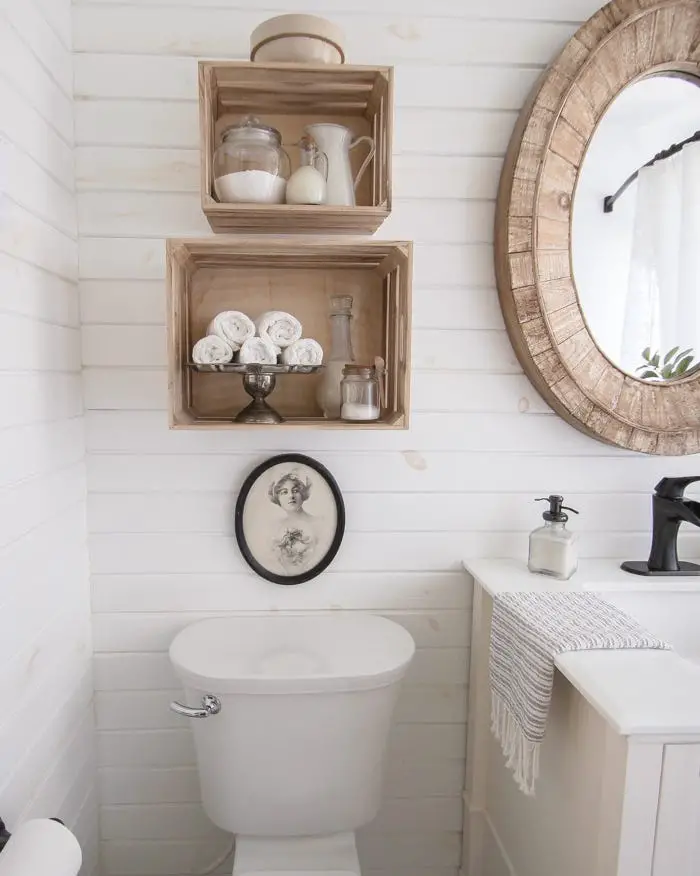
Wooden crates mounted above a toilet turn unused wall space into storage without the permanence of built-in shelves. In this compact farmhouse bathroom, the crates sit above the toilet with an oval mirror and a sink to the right. The wood tones and black accents against white walls keep the look clean. Because the crates are open, you see everything stored inside, so stick to items that look planned: rolled towels, clear glass jars, a small plant. An oval mirror softens the straight lines of the crates and the toilet below, and daylight keeps the shelves from casting the room into shadow.
Dark green vanity with a copper sink
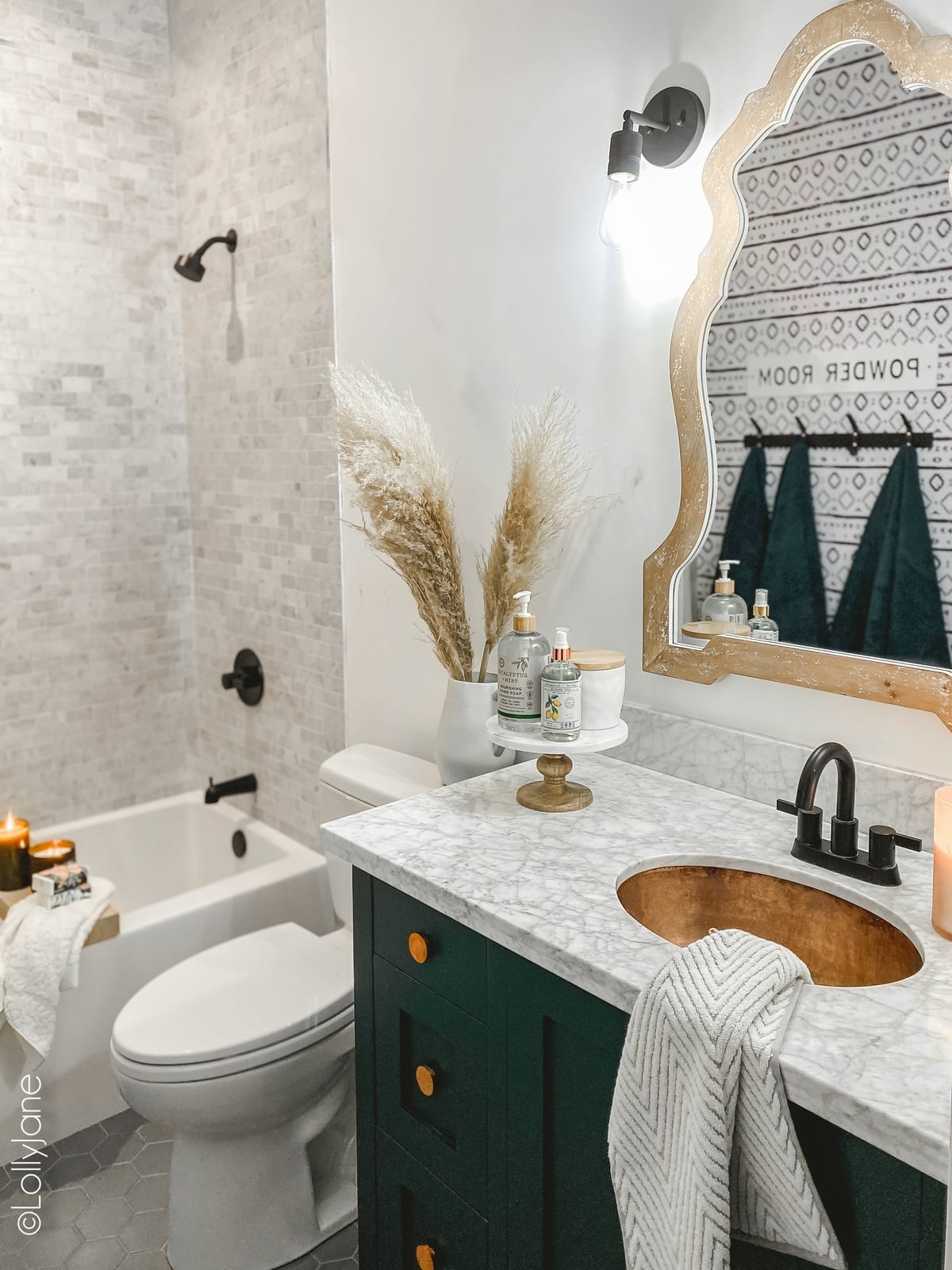
A dark green vanity paired with a copper sink brings a grounded, earthy focal point to a compact farmhouse bathroom. The deep green cabinet anchors the room, while the warm copper basin adds a reflective contrast against white marble and gray tile. A wall sconce with an exposed bulb casts soft light across the sink, balancing the dark cabinetry. The palette stays in a narrow range of cool whites, warm metal, and deep green, which keeps the small layout from feeling busy. A beige-toned ornate mirror above the vanity echoes the copper’s warmth without matching it exactly. This setup works because the vanity acts as the color anchor, and every other surface stays neutral.
Wall-mounted double sink with yellow ceiling
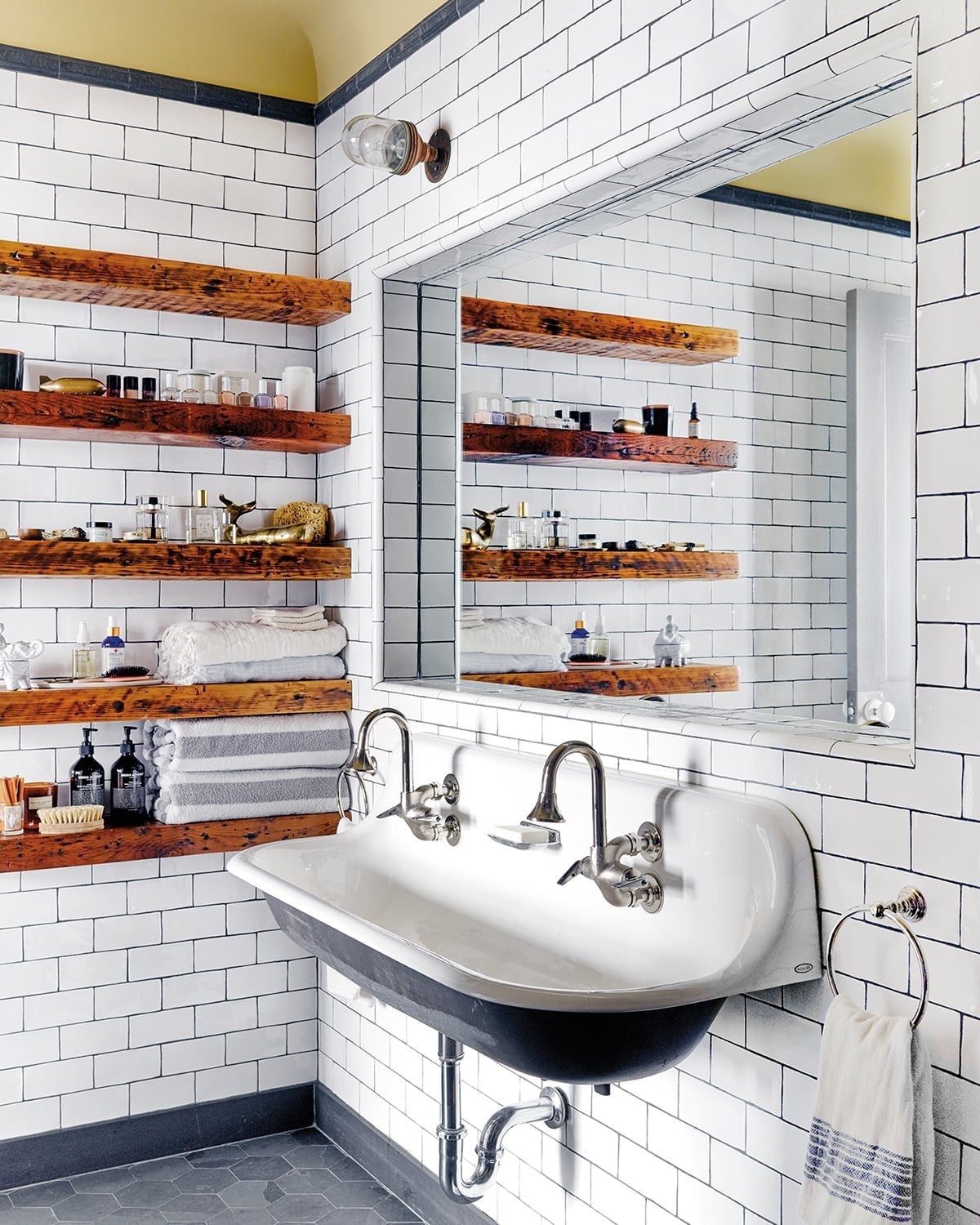
A wall-mounted double sink offers a space-saving option for a compact farmhouse bathroom, especially when a full vanity would crowd the floor. The open space underneath keeps the room feeling larger and easier to clean. Above the sinks, rustic wooden shelves provide storage without adding bulk. A vintage light fixture with exposed bulbs hangs overhead, casting light across the ceramic sinks and subway tile wall.
The unexpected element here is the yellow ceiling. It adds warmth and personality without touching walls or floors, making it a renter-safe swap if done with removable paint or peel-and-stick wallpaper. The shelves and mirror frame tie the ceiling color back into the room. The palette stays simple: white tile, black metal, natural wood, and that single punch of yellow above.
Arched mirrors with a floral roman shade
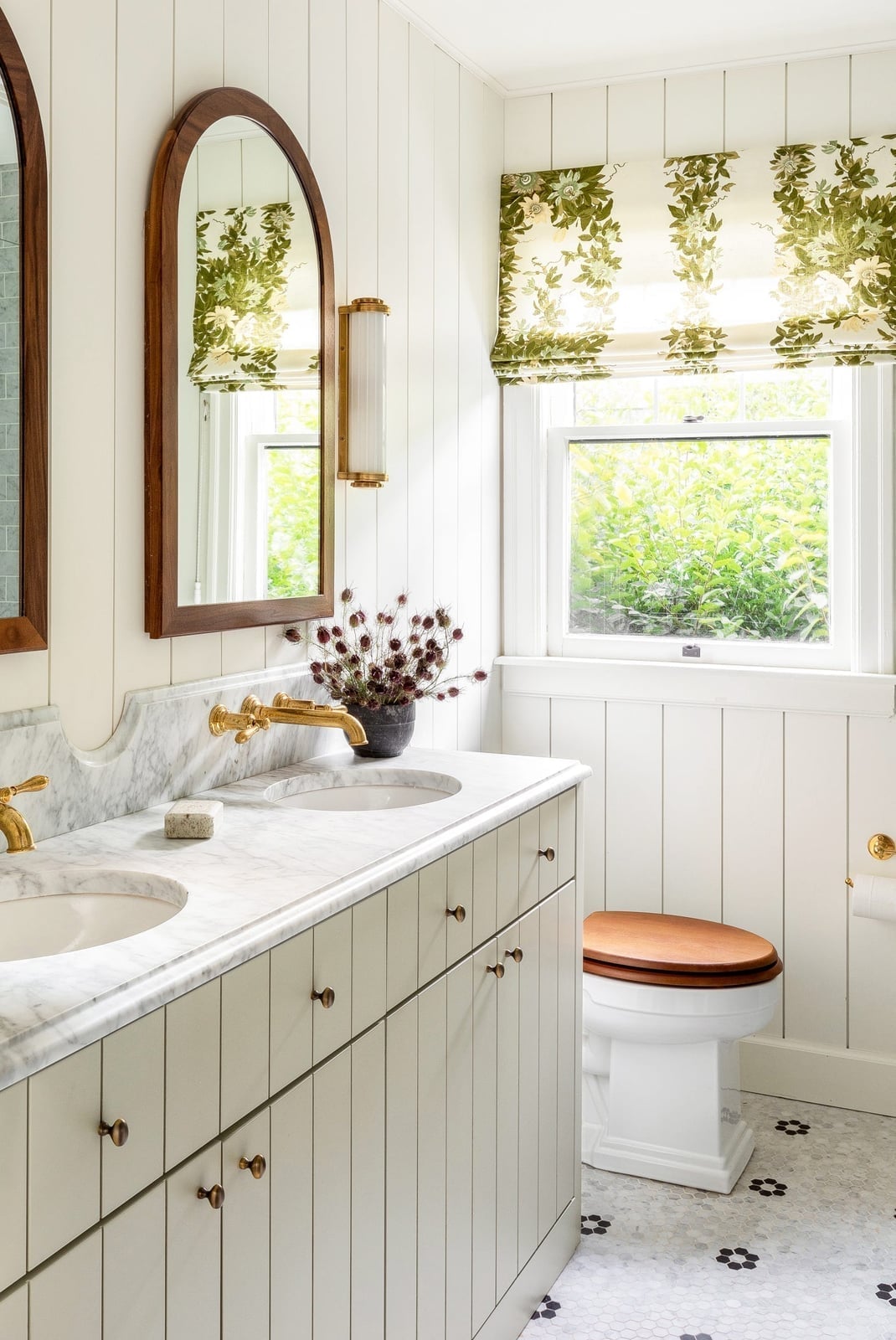
Arched mirrors above a double vanity soften the straight lines of a farmhouse bathroom, adding a curve that echoes traditional detailing. The floral roman shade at the window brings in a pattern that feels organic, pairing well with the marble countertop and brass sconces. The wood toilet seat and beige walls keep the look from leaning too formal. A key styling move here is letting the shade be the only pattern in the room. The marble, mirrors, and brass all stay clean and solid, so the floral print becomes a deliberate accent.
Final Thoughts
The farmhouse bathroom in 2027 is less a strict formula and more a flexible toolkit. You can pair a copper sink with blue tile, set a clawfoot tub on geometric tile, or hang a gold mirror over floral wallpaper. What ties it together is a preference for natural materials, visible craftsmanship, and a layout that works for real mornings and evenings. Keep the palette grounded, let one element lead, and don’t be afraid of a little pattern or color. That balance between rustic and refined is what keeps the look from feeling dated or too precious. It’s a room meant to be used, not just photographed.